IUI – What is essential to know?
Dr Sachin J Dalal
Madhu Hospital, Bhandup (W),
Embrion IVF, Vikhroli (W)
98330 32120, dalalsj@gmail.com
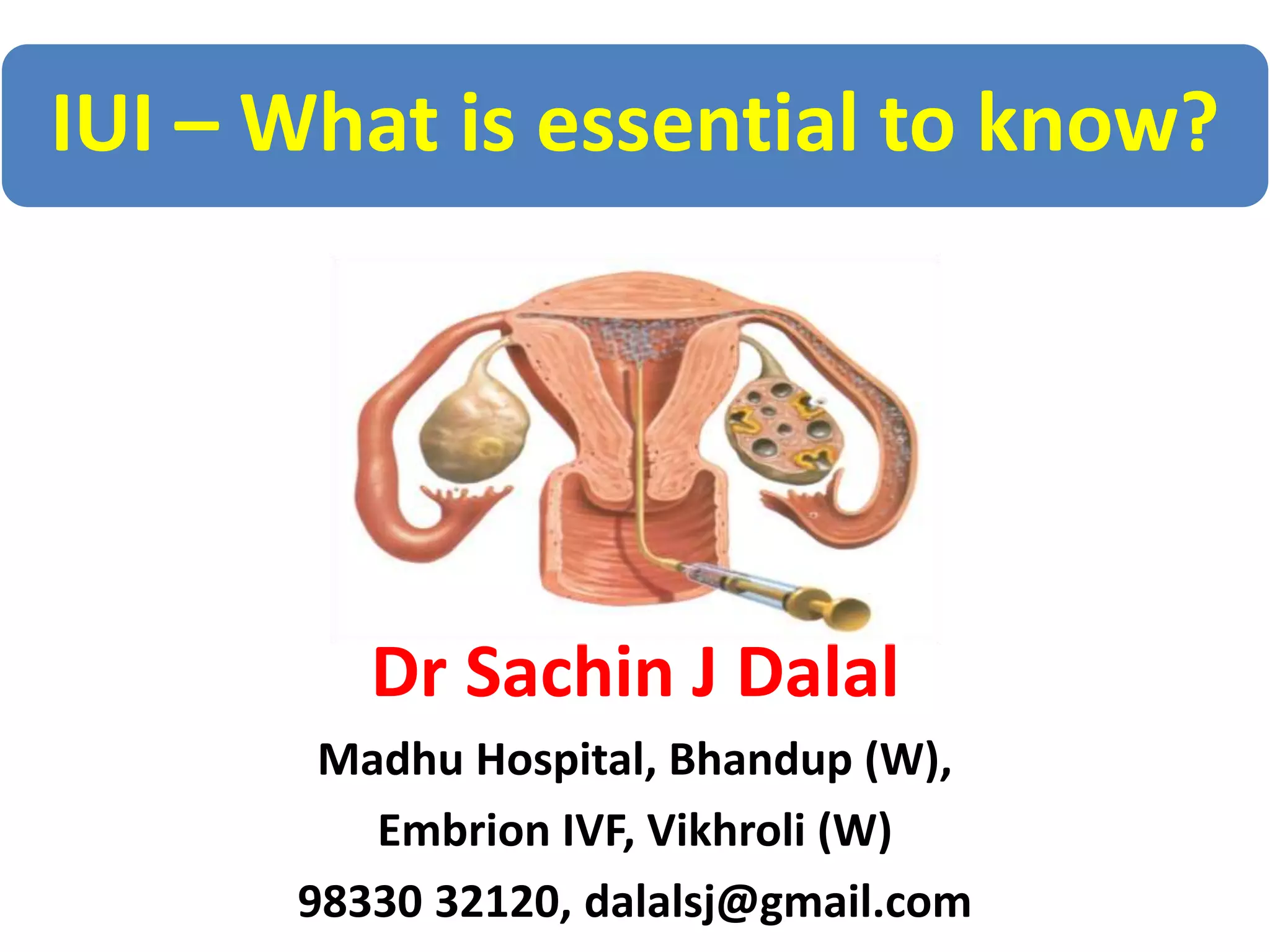
Intra Uterine Insemination (IUI)
• Basic fertility treatment involving the
deposition of the processed semen in the
uterine cavity.
• Globally used.
• Under used.
• Over used.
• Abused.
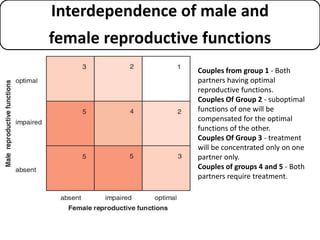
Interdependence of male and
female reproductive functions
Couples from group 1 - Both
partners having optimal
reproductive functions.
Couples Of Group 2 - suboptimal
functions of one will be
compensated for the optimal
functions of the other.
Couples Of Group 3 - treatment
will be concentrated only on one
partner only.
Couples of groups 4 and 5 - Both
partners require treatment.
Indications - Male
• Oligospermia, Oligo astheno spermia (OAS),
pyospermia, Asthenospermia, viscous sample,
hypospermia.
• Retrograde ejaculation.
• Ejaculatory failure –
i. Anatomical (Hypospadias, micropenis, etc)
ii. Neurological (Spinal cord injury, MS)
iii. Psychological (ED, PE, Impotence)
• Absentee husband
• Varicocoele
• Seropositive partner / discordant couple.
Indications - Female
• Anovulation
• Unexplained infertility
• Endometriosis – Stage 1 & 2
• Cervical factor
• Vaginismus – deposition of unprocessed sample
with a syringe in the vagina can be done
• Allergy to seminal plasma
• Age >30 <38 years
IUI – Donor sperms
• Azoospermia
• Severe OAS not affording IVF
• Hereditary disease in the male and not
affording / wanting PGT –A
• Repeat IUI / IVF failure with husband’s sperms.
• Husband’s sperms with high DFI.
• Single women.
• Single sex couples.
Contraindications
• Absolute:
• Tubal pathology – blocked tubes, hydrosalpinx, etc.
• Genital tract infections – PID, TB.
• Stage 3 & 4 endometriosis
• Relative:
• Genetic abnormality in the husband
• Women > 38 years of age
• Women AMH < 1
• > 6 IUI done.
• Uterine pathology – septate uterus, polyps, fibroids.
IUI in HIV discordant couples
• AIDS Care 2020 Mar 16:1-8
• Prevention of HIV transmission with sperm washing within fertile
serodiscordant couples undergoing non-stimulated IUI.
• Carvalho WAP et al.
• 69 fertile couples in which male was HIV +ve ; a total of 180 IUI cycles.
• Triple sperm washing followed by viral RNA purification and real-time PCR
was performed prior to IUI intervention.
• There were 16 clinical pregnancies (CPR /cycle 9.0%, CPR/patient 23.2%).
• No seroconversion was detected in the 69 women treated or in any of the
newborns (tested at birth and at 3 months of age).
• Sperm washing followed by IUI is a safe and effective treatment option for
serodiscordant couples wishing to conceive and to prevent HIV virus
transmission to the mothers and newborns.
IUI v/s IVF
• Bahadur G et al. BMJ Open 2020
• Observational retrospective study of UK national success,
risks and costs for 319,105 IVF / ICSI and 30,669 IUI
treatment cycles.
• To compare success rates, associated risks and cost-
effectiveness between IUI and IVF,
• IVF LB/cycle success was significantly better than IUI at
26.96% versus 11.49%.
• IUI success is much closer to IVF at 2.35:1.
• IUI is more cost-effective in delivering 1 LB, lower risk of
complications for maternal and neonatal complications.
• It is prudent to offer IUI before IVF nationally.
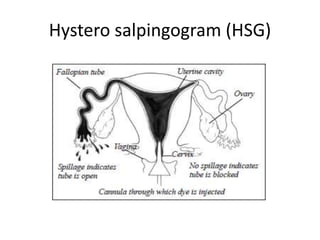
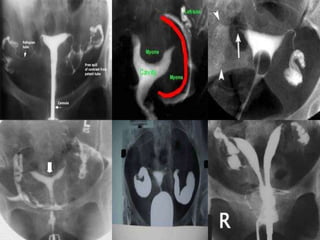
Hystero salpingogram (HSG)
STEPS
1 • Minimal Stimulation of ovaries
2 • Follicular Study +/- doppler studies
3 • Trigger with HCG / GnRha
4 • IUI – husband / Donor after 36 - 40 hrs
5 • Progesterone LPS
6 • UPT / B-hcg after 14 days
Ovulation Induction in IUI
• Anovulatory women – monofolliculogenesis.
• Ovulatory women – COH with Gn
• Previous IUI with natural cycle / oral drugs.
• Higher E2 levels which will increase the
chances of pregnancy.
COH
• Ovarian stimulation protocols for intrauterine
insemination (IUI) in women with subfertility
• Cochrane Systematic Review - 18 April 2007
• Gn alone are more effective than with the
addition of a GnRH agonist.
• No evidence of adding antagonist to Gn.
• No evidene of benefit in doubling the dose of Gn.
• Multiple pregnancy and OHSS were increased.
• Gn are the most effective drugs when IUI + COH
• Gn to be applied on a daily basis.
• Arch Gynecol Obstet 2019 Dec;300(6):1767-17, Kaur J et al
• Prospective randomized trial comparing letrozole step-up protocol with
letrozole + Gn for COS & IUI in patients with unexplained infertility.
• Group A COS was done by step-up protocol of letrozole from day 2 or 3 of
menstrual cycle, starting with 2.5 mg and increased to 5, 7.5, 10 mg.
• Group B Letrozole 2.5 mg BID was given for 5 days and IM hMG 150 IU was
given every alternate day from day 7 and titrated according to response.
• HCG was given when leading follicle was 17 mm and IUI > 36 h.
• Ovulation rate of 90.9% (40/44) in group A, 100% (55/55) in group B.
• CPR / Pt , 3/28 (10.7%) in group A versus 5/30 (16.67%) in group B. (NS)
• The mean (SD) cost of medicines was significantly lower in group A Rs.
345.00 (00) compared to group B Rs. 2148.64 (515.67) [p < 0.0001].
• It is possible to achieve multifollicular development with use of letrozole
step-up protocol, even without addition of Gn, at significantly lower cost.
Stimulation in non PCOS
• Scan on day 2 / 3
• Start with HMG – HP 75 / 150 IU daily.
• Not to combine with oral ovulogens.
• Normally 6 – 8 doses required.
• Follicular studies + / - doppler studies for PSV.
• Trigger with HCG 5000 / 10,000 IU
• IUI after 32 – 40 hours
• Single IUI in self cycles prefer before rupture.
• Double IUI in OAS and donor IUI. – 24 & 48 hrs.
COH - PCOS
• In women with PCOS who are anovulatory – to
give Metformin +/- Inositol for minimum 2 – 3
months before attempting OI.
• Extended dose letrozole 2.5 / 5 mg OD gives
excellent results.
• Avoid Clomiphene citrate.
• Low dose step up / step down protocol of rFSH.
• Develop 1 – 2 eggs.
• Antagonist usage in IUI stimulation.
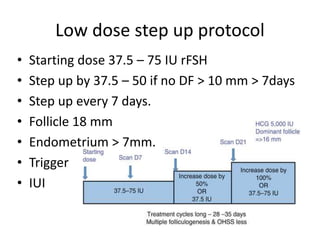
Low dose step up protocol
• Starting dose 37.5 – 75 IU rFSH
• Step up by 37.5 – 50 if no DF > 10 mm > 7days
• Step up every 7 days.
• Follicle 18 mm
• Endometrium > 7mm.
• Trigger
• IUI
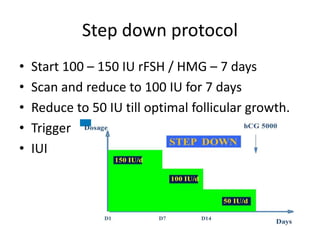
Step down protocol
• Start 100 – 150 IU rFSH / HMG – 7 days
• Scan and reduce to 100 IU for 7 days
• Reduce to 50 IU till optimal follicular growth.
• Trigger
• IUI
Antagonist in IUI
• Timing ovulation for IUI with antagonist
• Gómez-Palomares et al
• Human Reproduction, Volume 20,
Issue 2, February 2005, Pages 368–
372
• Adding the GnRH antagonist to the COS
protocol for IUI cycles significantly
increased pregnancy rates.
Antagonists in IUI
• Jain S, Majumdar A.
• Impact of gonadotropin-releasing hormone
antagonist addition on pregnancy rates in
gonadotropin-stimulated IUI cycles.
• J Hum Reprod Sci 2016 ;9:151-8.
• Addition of GnRH antagonist to Gn IUI cycles results
in no significant difference in clinical pregnancy rate.
• Fertil Steril 2020 Jan;113(1):114-120. Hawkins Bressler L
• Does empiric superovulation improve fecundity in
healthy women undergoing therapeutic donor
insemination (DI) without a male partner?
• Healthy women aged 23-45 years with no history of or
risk factors for infertility who underwent 152 medicated
and 104 unmedicated DI cycles from 2013 to 2018.
• Patients undergoing unmedicated DI cycles had higher
fecundity and no incidence of twin gestations.
• Older women, with low AMH, and who fail to conceive
after 3 unmedicated cycles may benefit from medication.
Length of OS and IUI results
• Reprod Biomed Online 2020 Mar;40(3):362-368. Bakkensen JB
• The effect of follicular phase length (FPL) on cycle outcomes and
endometrial development in Gn - IUI cycles.
• 4773 OS/IUI cycles among 2054 patients.
• FPL of 8 days to divide cycles into shorter and longer FPL groups.
• CPR increased by 6.0% with each additional follicular phase day.
• Cycles with a longer FPL resulted in higher CPR with 45% higher
odds of clinical pregnancy.
• E T increased by 0.09 mm with each additional day and was
increased in the longer compared with the shorter FPL group.
• In Gn IUI cycles, FPL might impact both chance of CPR and ET,
independent of maternal age and ovarian reserve.
Endometrial Thickness & IUI results
• J Family Med Prim Care 2019 Sep 30;8(9):2845-2849. Masrour MJ
• Effect of Endometrial thickness and endometrial blood flow on
pregnancy outcome in IUI cycles.
• Endometrial blood flow was significantly greater in the cycle in
which pregnancy was obtained on the day of hCG administration.
• It was realized that the ET and pattern of sonography did not have
any predictive values for endometrial receptivity.
• The pregnancy rate was affected by the duration of infertility, the
women's age, the type and number of IUI cycles, the number of
injections to stimulate dominant follicles and the sperm count.
• In the current study, the variability was realized to be of no
predictive values for the IUI outcome.
• Endometrial flow in color Doppler was found to be positively
connected with the pregnancy outcome.
Endometrial Thickness and IUI results
• Reprod Biol Endocrinol 2019 Jan 23;17(1):14.
• The association between ET and pregnancy outcome in Gn –
IUI cycles. Liu Y et al
• 1065 IUI cycles in 548 patients with a 16.9% CPR and 20.5%
conception rate divided in 4 groups on the basis of peak ET.
• 4 groups of < 7 mm, 7 -10.4 mm, 10.5-13.9 mm & ≥ 14 mm
• Non-linear relationship between peak ET and outcome,
highest rates of positive outcomes between 10.5-13.9 mm
• The odds of clinical pregnancy and conception increased by
38 and 44% respectively with each subsequent peak ET
category up to 10.5-13.9 mm, after which they declined.
Indian Study on ET and IUI
• J Hum Reprod Sci.2018 Jul-Sep;11(3):279-285. Wadhwa L et al
• An IUI audit at Tertiary Care Hospital: A 4½ years retrospective analysis.
• In 800 cycles in 651 couples, the total outcome was 113 pregnancies
(14.1%) per cycle with overall pregnancy rate (PR) per couple of 17.3%.
• The highest PR were in the patients with ovulatory dysfunction (21.2%),
followed by patients with combined factor (15.1%) male factor (14.7%).
• In the study, a higher PR was achieved in the female ≤25 years, duration of
infertility ≤5 years, having primary infertility, with low BMI <25 .
• IUI success rates - 14.6% in the 1st cycle ,14 % in 2nd & 3.5 % in 3rd cycle.
• This study identifies the factors that can predict improved pregnancy
outcome in women age ≤25 years
• Highest CPR was noted in endometrial thickness between 9 - 11 mm.
Trigger in IUI
• HCG 5000 / 10,000 IU
• Recombinant HCG / biosimilar
• GnRH agonist – Triptorelin / Luprolide
• Dual trigger – HCG + GnRHa
• No trigger and checking for the natural LH
surge by LH kits / serum levels.
Trigger in IUI
• Zhonghua Yi Xue Za Zhi. 2019 Sep3; 99(33):
• The effect of three trigger methods on
pregnancy outcome of IUI
• Li M et al.
• The study suggested that all the three
methods - HCG trigger, GnRHa trigger,
dual trigger) could induce ovulation.
• Their effects on IUI CPR outcome were similar.
HCG trigger v/s natural LH surge
• BJOG 2019 Aug;126 Suppl 4:58-65.
• Effectiveness of spontaneous ovulation as
monitored by urinary LH versus induced
ovulation by administration of HCG in couples
undergoing Gn IUI: a RCT
• Thomas S et al.
• There was no significant difference in CPR when
urinary LH and hCG trigger were compared as
methods to time insemination in women
undergoing Gn IUI.
IUI with trigger
• Reprod Biomed Online 2019 Aug;39(2):262-68
• Intrauterine insemination: simultaneous with or 36 h after
HCG? A randomized clinical trial. Rijsdijk et al
• Multicentric RCT at 7 dutch centres.
• The CPR after 4 cycles was 26.2% for simultaneous IUI (43
ongoing pregnancies) and 33.7% for regular IUI (70 ongoing
pregnancies) (RR 0.78 95% CI 0.57 to 1.07).
• CPR per cycle in the simultaneous IUI group were 6.8%,
10.5%, 9.5% and 7.4% for the 1st, 2nd, 3rd, 4th IUI cycle.
• In the regular IUI group, CPR were 8.3%, 16.4%, 13.5% and
9.0% for the 1st , 2nd , 3rd and 4th IUI cycle.
• IUI at trigger has similar rates as IUI at regular time
• Single versus double intrauterine insemination
(IUI) in stimulated cycles for subfertile couples
• Cochrane Systematic Review - 20 Jan 2003
• Double IUI resulted in significant benefit over
single IUI in the treatment of subfertile couples
with husband semen.
• Optimal window of several hours seems to exist
in which IUI can be performed.
• A second IUI in the same cycle will add to the
cost of treatment.
• But it may be cost‐effective if the number
needed to treat with double IUI is low.
Semen Washing
• Total elimination of the seminal plasma, dead
sperms, WBCs, RBCs, prostaglandins.
• Chemical activation of the acrosome membrane
• Increasing sperm motility
• Minimises wastage as direct deposition in the
uterine cavity at the time of follicular rupture.
• Pre – wash and post – wash comparison.
• Incubation at 37 C for 30 – 45 min before IUI.
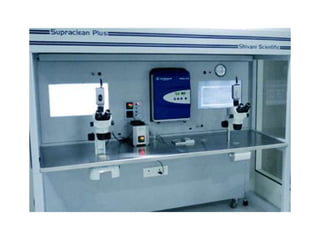
Lab setup for IUI
• Makler’s counting chamber
• Phase contrast microscope
• Centrifuge machine
• Laminar flow hood workstation
• 5% CO2 incubator with gas cylinder.
• Disposables for semen collection, processing and
IUI.
• Trained personnel / embryologist.
• Patients.
Conventional wash method
• The semen sample is diluted with a medium
and centrifuged.
• Pellet is resuspended in a small amount of
medium.
• Incubated until the time of insemination.
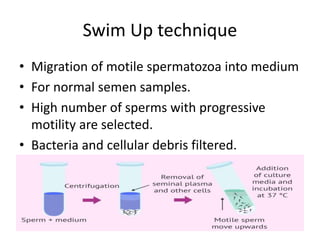
Swim Up technique
• Migration of motile spermatozoa into medium
• For normal semen samples.
• High number of sperms with progressive
motility are selected.
• Bacteria and cellular debris filtered.
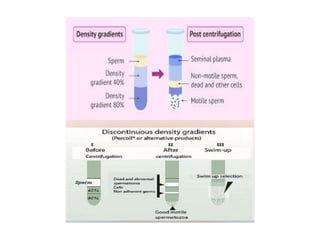
Density Gradient technique
• Severe oligozoospermia, teratozoospermia,
asthenozoospermia.
• In a conical tube the gradients are layered.
• 1 - 2 ml of neat liquified semen is layered.
• Centrifuged for 15 min at 1200 rpm
• Pellet visualised at the bottom of the tube.
• Pellet is aspirated without disturbing the gradient and
mixed with 1 ml of fresh sperm media.
• Centrifuged, supernatant discarded and swim up.
• Supernatant aspirated, mixed with media and
incubated.
• Semen preparation techniques for IUI
• Cochrane Systematic Review - 15 Oct 2019
• To compare the effectiveness of gradient;
swim‐up; wash and centrifugation on live birth
rate; clinical pregnancy rate in subfertile
couples undergoing IUI.
• Uncertain whether there is a difference in
clinical pregnancy rates, ongoing pregnancy
rates, multiple pregnancy rates or miscarriage
rates per couple between the three sperm
preparation techniques.
• Fertil Steril 2019 Nov;112(5):842-848
• Comparison of microfluidic sperm sorting chip and density
gradient method for use in IUI cycles. Gode F et al
• TMSC was lower in the microfluidic sperm sorting group at
baseline.
• Motility was higher in the microfluidic group.
• Pregnancy rates were 18.04% in the microfluid group and
15.15% in the density gradient group,
• Ongoing PRs were 15.03% and 9.09%, respectively.
• After stastical analysis, there was a significant increase in
ongoing PRs in the microfluid sperm sorting group.
• OR 3.49 (95% confidence interval 1.12-10.89).
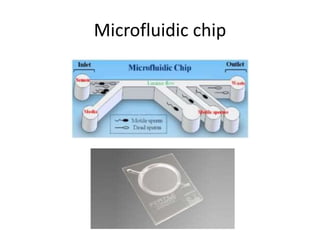
• The microfluid sperm sorting method significantly
increased the ongoing PRs compared with the density
gradient group in IUI cycles.
Microfluidic chip
Points to ponder
• Preparation by embryologist in an IUI /
andrology lab and not a pathology lab.
• Use of Makler’s chamber for analysis.
• Incubation at 37 C for 30 – 40 min for
capacitation of the sperm.
• IUI to be done within 1 hour of washing.
• Long distance travelling of the sample avoided
• IUI by trained personnel with due precautions.
IUI sample volume and pregnancy
• Hum Reprod Open 2018 Feb 15;2018Rodriguez-Purata J et al
• Clinical success of IUI cycles with donor sperm is not affected by
total inseminated volume: a RCT.
• dIUI cycles (293) were randomized to undergo IUI with 0.2 mL
(control) or 0.5 mL (study).
• Similar CPR (18.9% v/s 19.8% NS), LBRs (15.4% v/s 19.0%, NS) and
miscarriage rates (18.5% v/s 4.0%, NS) observed in the 2 groups.
• If the lower miscarriage rate observed in the 0.5 mL group is
confirmed, this could be related to the presence of uterine
contractions similar of those generated during intercourse, which
may be implicated in the inception of early biochemical embryo-
endometrium communication.
Timing -1
• Does The Time Interval Between Semen
Collection, Processing & Insemination affect
results of IUI? Allahabadia G
• JOGI Vol. 59, No. 5 : Sep/Oct2009 pg 407-409
• Semen specimens be collected at the clinic and
processed as soon as just after liquefaction and
within 30 minutes of collection.
• IUI should be performed as soon as within 90
minutes of semen collection.
Timing -2
• Fertil Steril 2017 Nov;108(5):764-769, Jansen CHJR et al
• Longer time interval between semen processing and IUI does not
affect pregnancy outcome
• IUI done the day after in 24 hours of semen collection & processing.
• IUI done immediately after sperm collection and processing.
• In 77 of 547 couples (14%) an ongoing pregnancy in delayed IUI.
• 77 of 589 couples (13%) ongoing pregnancy immediate IUI .
• There is no negative effect on pregnancy rate when IUI of processed
sperm is delayed until the next day.
• This approach allows additional flexibility for couples when the
male partner is not available on the day of ovulation, and it allows
for a spread of workload in the laboratory.
IUI procedure
• Bladder emptied, head low position.
• Cervix visualised with speculum.
• Mucus wiped till os clearly seen.
• IUI catheter – soft / rigid navigated beyond
the internal os taking care not to touch fundus
• 0.4 ml of processed sample injected slowly
taking care to avoid trauma / bleeding.
• Patient made to lie for 10 – 15 mins.
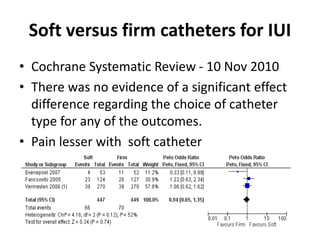
Soft versus firm catheters for IUI
• Cochrane Systematic Review - 10 Nov 2010
• There was no evidence of a significant effect
difference regarding the choice of catheter
type for any of the outcomes.
• Pain lesser with soft catheter
IUI procedure
• Clin Exp Reprod Med 2019 Jun;46(2):87-94.
• Ultrasound guidance versus the blind method for
intrauterine catheter insemination: A randomized
controlled trial. Mubarak S et al
• 10 % CPR in both groups
• The conventional blind method for intrauterine
catheter insemination is recommended for patients
undergoing IUI treatment.
• The use of ultrasound during the insemination
procedure increased the need for trained personnel to
perform ultrasonography and increased the cost, but
added no extra benefits for patients or clinicians.
Diurnal variations
• Syst Biol Reprod Med 2020 Apr;66(2):147-150.
• Comparison between semen parameters in specimens collected
early in the morning and in the evening.
• Shimomura Y et al
• Fertile males had a significantly higher TMSC and total sperm count
in the evening collection group than in morning collection group.
• Male infertility patients showed no significant difference in total
sperm count between the two collection times; however, the TMSC
was significantly higher in the evening collection group than the
morning collection group.
• From a male side perspective, successful IUI might be easier to
achieve using semen collected in the evening than in the morning.
Seasons & IUI success rates
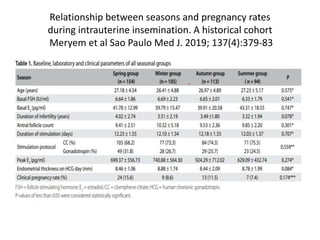
• Sao Paulo Med J 2019 Oct 31;137(4):379-383.
• Relationship between seasons and pregnancyrates
during IUI. A historical cohort. Pekcan MK et al
• The patients were divided into 4 groups according to
season (spring, winter, autumn & summer).
• Ovulation induction & IUI was done with CC & Gn.
• CPR for spring -15.6% (24), winter 8.6% (9), autumn
11.5% (13) and summer 7.4% (7).
• Although the spring group had highest pregnancy rate,
the rates of successful IUI did not differ significantly
between the seasonal groups.
Relationship between seasons and pregnancy rates
during intrauterine insemination. A historical cohort
Meryem et al Sao Paulo Med J. 2019; 137(4):379-83
Points to ponder
• Full bladder IUI in cases of acutely anteverted uteri.
• Avoid dilatation if difficulty in navigating the internal os.
• Perform Intra – cervical insemination.
• Hysteroscopy D&C and dilatation with lineation of the
cavity to be noted so as to facilitate IUI next time.
• Misoprostol for cervical priming to be avoided.
• IUI to be done irrespective of follicular collapse.
• Couple to be given a realistic success rates.
• 4 cycles ceiling to be strictly maintained.
• Only exception – donor IUI for azoospermia – 6 tries.
IUI v/s ICI in donor sperm insemination
• Cochrane Systematic Review - 25 Jan 2018.
• Insufficient evidence to determine whether there
was any clear difference in live birth rate between
IUI and ICI in natural cycles.
• IUI may result in higher CPR than ICI.
• IUI may be associated with higher multiple
pregnancy rates than ICI.
• Higher CPR when IUI was done 1 day after a rise
in LH c/w IUI done 2 days after a rise in LH.
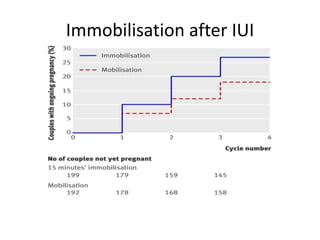
Immobilisation after IUI
• Custers IM et al. BMJ. 2009;339:b4080
• Immobilisation versus immediate mobilisation
after IUI: randomised controlled trial.
• The ongoing pregnancy rate per couple was
significantly higher in the immobilisation
group than in the control group.
• Immobilisation for 15 minutes should be
offered to all women treated with IUI.
Immobilisation after IUI
IUI in unilateral tubal occlusion
• BJOG 2019 Jan;126(2):227-235. Tan J et al
• The effect of unilateral tubal block diagnosed by HSG
on CPR in IUI cycles: systematic review and meta-
analysis.
• Infertile patients with proximal UTB diagnosed by HSG
can expect similar pregnancy rates after COH-IUI,
compared with those with bilateral tubal patency and
unexplained infertility.
• Patients with distal UTB have lower odds of pregnancy.
• These differences may reflect inherent diagnostic
limitations of HSG or differences in underlying
pathologies.
IUI in women with low AMH
• Fertil Steril 2020 Apr;113(4):788-796
• Comparison of pregnancy outcomes following
IUI in young women with decreased versus
normal ovarian reserve.
• Tiegs AW et al
• 3019 patients included: 370 with AMH <1.0
ng/mL and 2649 with AMH ≥1.0 ng/mL
• Young patients (<35 years) with DOR conceived as
often and had per-cycle and CPR similar to those
of age-matched controls after IUI, regardless of
treatment strategy.
Progesterone for LPS in IUI
• Fertil Steril 2017 Apr;107(4):924-933, Green KA et al
• Progesterone luteal support after ovulation induction
and IUI : a systematic review and meta-analysis.
• 11 trials were identified that met inclusion criteria and
constituted 2,842 patients undergoing 4,065 cycles.
• Progesterone LPS is beneficial to patients undergoing
OI with Gn in IUI cycles.
• The number needed to treat is 11 patients to have one
additional live birth.
• Progesterone support did not benefit patients
undergoing OI with C C or C C + Gn.
Progesterone for LPS in IUI
• Gynecol Endocrinol 2020 Jan;36(1):77-80. Taş M et al
• Comparison of oral dydrogesterone and vaginal
micronised progesterone for LPS in IUI.
• Dydrogesterone was used in 233 women (54%) and 337 cycles,
while 199 women (46%) and 233 cycles received vaginal
micronized progesterone capsule.
• The proportion of clinical pregnancies (7.4% vs. 10.2%, p = .213),
live births (68% vs. 73%, p = .286) were similar in the two groups.
• Oral dydrogesterone and vaginal micronized progesterone provide
similar pregnancy outcomes in terms of CPR and LBR in women
undergoing IUI in conjunction with ovarian stimulation with rFSH.
IUI for in vivo blastocyst
• Hum Reprod 2020 Jan 1;35(1):70-80.
• First PGT-A using human in vivo blastocysts
recovered by uterine lavage: comparison with
matched IVF embryo controls.
• Munné S
• After COS and IUI, is it clinically feasible to
recover in vivo conceived & matured human
blastocysts by uterine lavage from fertile women
for PGT-A and compare their PGT-A and Gardner
scale morphology scores with paired blastocysts
from IVF control cycles?
• 134 cycles using Gn IUI in 81 women, uterine lavage recovered 136
embryos in 42% (56/134) of study cycles, with comparable in vivo &
in vitro euploidy rates but better morphology in in vivo embryos.
• 40 (30%) multi-cell embryos and 96 (70%) blastocysts.
• Blastocysts were of good quality, with 74% (70/95) being Gardener
grade 3BB or higher grade.
• Lavage blastocysts had significantly higher morphology scores than
the control IVF embryos as determined by chi-square analysis
(P < 0.05).
• This is the first study to recover in vivo derived human blastocysts
following ovarian stimulation for embryo genetic characterization.
• Recovered blastocysts showed rates of chromosome euploidy
similar to the rates found in the control IVF embryos.
• In 11 cycles (8.2%), detectable levels of hCG were present 13 days
after IUI, which regressed spontaneously in two cases and declined
after an endometrial curettage in two cases.
• Persistent hCG levels were resolved after methotrexate in three
cases and four cases received both curettage and methotrexate.
• Uterine lavage offers a nonsurgical, minimally
invasive strategy for recovery of embryos from
fertile women who do not want or need IVF and
who desire PGT, fertility preservation of embryos
or reciprocal IVF for lesbian couples.
• From a research and potential clinical
perspective, this technique provides a novel
platform for the use of in vivo conceived human
embryos as the ultimate benchmark standard for
future and current ART methods.
• So why is it that these embryos are not
implanting and giving a higher pregnancy rates
after IUI?
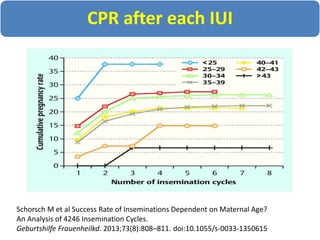
CPR after each IUI
Schorsch M et al Success Rate of Inseminations Dependent on Maternal Age?
An Analysis of 4246 Insemination Cycles.
Geburtshilfe Frauenheilkd. 2013;73(8):808–811. doi:10.1055/s-0033-1350615
Factors affecting IUI results
• Age, Age, Age.
• Sperm quality
• Causes of infertility
• Response to ovulation induction
• Lab quality
• IUI technique
• Luteal phase support
Dr Sachin Dalal
98330 32120, dalalsj@gmail.com

Iui - newer concepts

  • 1.
    IUI – Whatis essential to know? Dr Sachin J Dalal Madhu Hospital, Bhandup (W), Embrion IVF, Vikhroli (W) 98330 32120, dalalsj@gmail.com
  • 2.
    Intra Uterine Insemination(IUI) • Basic fertility treatment involving the deposition of the processed semen in the uterine cavity. • Globally used. • Under used. • Over used. • Abused.
  • 3.
    Interdependence of maleand female reproductive functions Couples from group 1 - Both partners having optimal reproductive functions. Couples Of Group 2 - suboptimal functions of one will be compensated for the optimal functions of the other. Couples Of Group 3 - treatment will be concentrated only on one partner only. Couples of groups 4 and 5 - Both partners require treatment.
  • 4.
    Indications - Male •Oligospermia, Oligo astheno spermia (OAS), pyospermia, Asthenospermia, viscous sample, hypospermia. • Retrograde ejaculation. • Ejaculatory failure – i. Anatomical (Hypospadias, micropenis, etc) ii. Neurological (Spinal cord injury, MS) iii. Psychological (ED, PE, Impotence) • Absentee husband • Varicocoele • Seropositive partner / discordant couple.
  • 5.
    Indications - Female •Anovulation • Unexplained infertility • Endometriosis – Stage 1 & 2 • Cervical factor • Vaginismus – deposition of unprocessed sample with a syringe in the vagina can be done • Allergy to seminal plasma • Age >30 <38 years
  • 6.
    IUI – Donorsperms • Azoospermia • Severe OAS not affording IVF • Hereditary disease in the male and not affording / wanting PGT –A • Repeat IUI / IVF failure with husband’s sperms. • Husband’s sperms with high DFI. • Single women. • Single sex couples.
  • 7.
    Contraindications • Absolute: • Tubalpathology – blocked tubes, hydrosalpinx, etc. • Genital tract infections – PID, TB. • Stage 3 & 4 endometriosis • Relative: • Genetic abnormality in the husband • Women > 38 years of age • Women AMH < 1 • > 6 IUI done. • Uterine pathology – septate uterus, polyps, fibroids.
  • 8.
    IUI in HIVdiscordant couples • AIDS Care 2020 Mar 16:1-8 • Prevention of HIV transmission with sperm washing within fertile serodiscordant couples undergoing non-stimulated IUI. • Carvalho WAP et al. • 69 fertile couples in which male was HIV +ve ; a total of 180 IUI cycles. • Triple sperm washing followed by viral RNA purification and real-time PCR was performed prior to IUI intervention. • There were 16 clinical pregnancies (CPR /cycle 9.0%, CPR/patient 23.2%). • No seroconversion was detected in the 69 women treated or in any of the newborns (tested at birth and at 3 months of age). • Sperm washing followed by IUI is a safe and effective treatment option for serodiscordant couples wishing to conceive and to prevent HIV virus transmission to the mothers and newborns.
  • 9.
    IUI v/s IVF •Bahadur G et al. BMJ Open 2020 • Observational retrospective study of UK national success, risks and costs for 319,105 IVF / ICSI and 30,669 IUI treatment cycles. • To compare success rates, associated risks and cost- effectiveness between IUI and IVF, • IVF LB/cycle success was significantly better than IUI at 26.96% versus 11.49%. • IUI success is much closer to IVF at 2.35:1. • IUI is more cost-effective in delivering 1 LB, lower risk of complications for maternal and neonatal complications. • It is prudent to offer IUI before IVF nationally.
  • 10.
  • 13.
    STEPS 1 • MinimalStimulation of ovaries 2 • Follicular Study +/- doppler studies 3 • Trigger with HCG / GnRha 4 • IUI – husband / Donor after 36 - 40 hrs 5 • Progesterone LPS 6 • UPT / B-hcg after 14 days
  • 14.
    Ovulation Induction inIUI • Anovulatory women – monofolliculogenesis. • Ovulatory women – COH with Gn • Previous IUI with natural cycle / oral drugs. • Higher E2 levels which will increase the chances of pregnancy.
  • 15.
    COH • Ovarian stimulationprotocols for intrauterine insemination (IUI) in women with subfertility • Cochrane Systematic Review - 18 April 2007 • Gn alone are more effective than with the addition of a GnRH agonist. • No evidence of adding antagonist to Gn. • No evidene of benefit in doubling the dose of Gn. • Multiple pregnancy and OHSS were increased. • Gn are the most effective drugs when IUI + COH • Gn to be applied on a daily basis.
  • 16.
    • Arch GynecolObstet 2019 Dec;300(6):1767-17, Kaur J et al • Prospective randomized trial comparing letrozole step-up protocol with letrozole + Gn for COS & IUI in patients with unexplained infertility. • Group A COS was done by step-up protocol of letrozole from day 2 or 3 of menstrual cycle, starting with 2.5 mg and increased to 5, 7.5, 10 mg. • Group B Letrozole 2.5 mg BID was given for 5 days and IM hMG 150 IU was given every alternate day from day 7 and titrated according to response. • HCG was given when leading follicle was 17 mm and IUI > 36 h. • Ovulation rate of 90.9% (40/44) in group A, 100% (55/55) in group B. • CPR / Pt , 3/28 (10.7%) in group A versus 5/30 (16.67%) in group B. (NS) • The mean (SD) cost of medicines was significantly lower in group A Rs. 345.00 (00) compared to group B Rs. 2148.64 (515.67) [p < 0.0001]. • It is possible to achieve multifollicular development with use of letrozole step-up protocol, even without addition of Gn, at significantly lower cost.
  • 17.
    Stimulation in nonPCOS • Scan on day 2 / 3 • Start with HMG – HP 75 / 150 IU daily. • Not to combine with oral ovulogens. • Normally 6 – 8 doses required. • Follicular studies + / - doppler studies for PSV. • Trigger with HCG 5000 / 10,000 IU • IUI after 32 – 40 hours • Single IUI in self cycles prefer before rupture. • Double IUI in OAS and donor IUI. – 24 & 48 hrs.
  • 18.
    COH - PCOS •In women with PCOS who are anovulatory – to give Metformin +/- Inositol for minimum 2 – 3 months before attempting OI. • Extended dose letrozole 2.5 / 5 mg OD gives excellent results. • Avoid Clomiphene citrate. • Low dose step up / step down protocol of rFSH. • Develop 1 – 2 eggs. • Antagonist usage in IUI stimulation.
  • 19.
    Low dose stepup protocol • Starting dose 37.5 – 75 IU rFSH • Step up by 37.5 – 50 if no DF > 10 mm > 7days • Step up every 7 days. • Follicle 18 mm • Endometrium > 7mm. • Trigger • IUI
  • 20.
    Step down protocol •Start 100 – 150 IU rFSH / HMG – 7 days • Scan and reduce to 100 IU for 7 days • Reduce to 50 IU till optimal follicular growth. • Trigger • IUI
  • 21.
    Antagonist in IUI •Timing ovulation for IUI with antagonist • Gómez-Palomares et al • Human Reproduction, Volume 20, Issue 2, February 2005, Pages 368– 372 • Adding the GnRH antagonist to the COS protocol for IUI cycles significantly increased pregnancy rates.
  • 22.
    Antagonists in IUI •Jain S, Majumdar A. • Impact of gonadotropin-releasing hormone antagonist addition on pregnancy rates in gonadotropin-stimulated IUI cycles. • J Hum Reprod Sci 2016 ;9:151-8. • Addition of GnRH antagonist to Gn IUI cycles results in no significant difference in clinical pregnancy rate.
  • 23.
    • Fertil Steril2020 Jan;113(1):114-120. Hawkins Bressler L • Does empiric superovulation improve fecundity in healthy women undergoing therapeutic donor insemination (DI) without a male partner? • Healthy women aged 23-45 years with no history of or risk factors for infertility who underwent 152 medicated and 104 unmedicated DI cycles from 2013 to 2018. • Patients undergoing unmedicated DI cycles had higher fecundity and no incidence of twin gestations. • Older women, with low AMH, and who fail to conceive after 3 unmedicated cycles may benefit from medication.
  • 24.
    Length of OSand IUI results • Reprod Biomed Online 2020 Mar;40(3):362-368. Bakkensen JB • The effect of follicular phase length (FPL) on cycle outcomes and endometrial development in Gn - IUI cycles. • 4773 OS/IUI cycles among 2054 patients. • FPL of 8 days to divide cycles into shorter and longer FPL groups. • CPR increased by 6.0% with each additional follicular phase day. • Cycles with a longer FPL resulted in higher CPR with 45% higher odds of clinical pregnancy. • E T increased by 0.09 mm with each additional day and was increased in the longer compared with the shorter FPL group. • In Gn IUI cycles, FPL might impact both chance of CPR and ET, independent of maternal age and ovarian reserve.
  • 25.
    Endometrial Thickness &IUI results • J Family Med Prim Care 2019 Sep 30;8(9):2845-2849. Masrour MJ • Effect of Endometrial thickness and endometrial blood flow on pregnancy outcome in IUI cycles. • Endometrial blood flow was significantly greater in the cycle in which pregnancy was obtained on the day of hCG administration. • It was realized that the ET and pattern of sonography did not have any predictive values for endometrial receptivity. • The pregnancy rate was affected by the duration of infertility, the women's age, the type and number of IUI cycles, the number of injections to stimulate dominant follicles and the sperm count. • In the current study, the variability was realized to be of no predictive values for the IUI outcome. • Endometrial flow in color Doppler was found to be positively connected with the pregnancy outcome.
  • 26.
    Endometrial Thickness andIUI results • Reprod Biol Endocrinol 2019 Jan 23;17(1):14. • The association between ET and pregnancy outcome in Gn – IUI cycles. Liu Y et al • 1065 IUI cycles in 548 patients with a 16.9% CPR and 20.5% conception rate divided in 4 groups on the basis of peak ET. • 4 groups of < 7 mm, 7 -10.4 mm, 10.5-13.9 mm & ≥ 14 mm • Non-linear relationship between peak ET and outcome, highest rates of positive outcomes between 10.5-13.9 mm • The odds of clinical pregnancy and conception increased by 38 and 44% respectively with each subsequent peak ET category up to 10.5-13.9 mm, after which they declined.
  • 27.
    Indian Study onET and IUI • J Hum Reprod Sci.2018 Jul-Sep;11(3):279-285. Wadhwa L et al • An IUI audit at Tertiary Care Hospital: A 4½ years retrospective analysis. • In 800 cycles in 651 couples, the total outcome was 113 pregnancies (14.1%) per cycle with overall pregnancy rate (PR) per couple of 17.3%. • The highest PR were in the patients with ovulatory dysfunction (21.2%), followed by patients with combined factor (15.1%) male factor (14.7%). • In the study, a higher PR was achieved in the female ≤25 years, duration of infertility ≤5 years, having primary infertility, with low BMI <25 . • IUI success rates - 14.6% in the 1st cycle ,14 % in 2nd & 3.5 % in 3rd cycle. • This study identifies the factors that can predict improved pregnancy outcome in women age ≤25 years • Highest CPR was noted in endometrial thickness between 9 - 11 mm.
  • 28.
    Trigger in IUI •HCG 5000 / 10,000 IU • Recombinant HCG / biosimilar • GnRH agonist – Triptorelin / Luprolide • Dual trigger – HCG + GnRHa • No trigger and checking for the natural LH surge by LH kits / serum levels.
  • 29.
    Trigger in IUI •Zhonghua Yi Xue Za Zhi. 2019 Sep3; 99(33): • The effect of three trigger methods on pregnancy outcome of IUI • Li M et al. • The study suggested that all the three methods - HCG trigger, GnRHa trigger, dual trigger) could induce ovulation. • Their effects on IUI CPR outcome were similar.
  • 30.
    HCG trigger v/snatural LH surge • BJOG 2019 Aug;126 Suppl 4:58-65. • Effectiveness of spontaneous ovulation as monitored by urinary LH versus induced ovulation by administration of HCG in couples undergoing Gn IUI: a RCT • Thomas S et al. • There was no significant difference in CPR when urinary LH and hCG trigger were compared as methods to time insemination in women undergoing Gn IUI.
  • 31.
    IUI with trigger •Reprod Biomed Online 2019 Aug;39(2):262-68 • Intrauterine insemination: simultaneous with or 36 h after HCG? A randomized clinical trial. Rijsdijk et al • Multicentric RCT at 7 dutch centres. • The CPR after 4 cycles was 26.2% for simultaneous IUI (43 ongoing pregnancies) and 33.7% for regular IUI (70 ongoing pregnancies) (RR 0.78 95% CI 0.57 to 1.07). • CPR per cycle in the simultaneous IUI group were 6.8%, 10.5%, 9.5% and 7.4% for the 1st, 2nd, 3rd, 4th IUI cycle. • In the regular IUI group, CPR were 8.3%, 16.4%, 13.5% and 9.0% for the 1st , 2nd , 3rd and 4th IUI cycle. • IUI at trigger has similar rates as IUI at regular time
  • 32.
    • Single versusdouble intrauterine insemination (IUI) in stimulated cycles for subfertile couples • Cochrane Systematic Review - 20 Jan 2003 • Double IUI resulted in significant benefit over single IUI in the treatment of subfertile couples with husband semen. • Optimal window of several hours seems to exist in which IUI can be performed. • A second IUI in the same cycle will add to the cost of treatment. • But it may be cost‐effective if the number needed to treat with double IUI is low.
  • 33.
    Semen Washing • Totalelimination of the seminal plasma, dead sperms, WBCs, RBCs, prostaglandins. • Chemical activation of the acrosome membrane • Increasing sperm motility • Minimises wastage as direct deposition in the uterine cavity at the time of follicular rupture. • Pre – wash and post – wash comparison. • Incubation at 37 C for 30 – 45 min before IUI.
  • 34.
    Lab setup forIUI • Makler’s counting chamber • Phase contrast microscope • Centrifuge machine • Laminar flow hood workstation • 5% CO2 incubator with gas cylinder. • Disposables for semen collection, processing and IUI. • Trained personnel / embryologist. • Patients.
  • 36.
    Conventional wash method •The semen sample is diluted with a medium and centrifuged. • Pellet is resuspended in a small amount of medium. • Incubated until the time of insemination.
  • 37.
    Swim Up technique •Migration of motile spermatozoa into medium • For normal semen samples. • High number of sperms with progressive motility are selected. • Bacteria and cellular debris filtered.
  • 38.
    Density Gradient technique •Severe oligozoospermia, teratozoospermia, asthenozoospermia. • In a conical tube the gradients are layered. • 1 - 2 ml of neat liquified semen is layered. • Centrifuged for 15 min at 1200 rpm • Pellet visualised at the bottom of the tube. • Pellet is aspirated without disturbing the gradient and mixed with 1 ml of fresh sperm media. • Centrifuged, supernatant discarded and swim up. • Supernatant aspirated, mixed with media and incubated.
  • 40.
    • Semen preparationtechniques for IUI • Cochrane Systematic Review - 15 Oct 2019 • To compare the effectiveness of gradient; swim‐up; wash and centrifugation on live birth rate; clinical pregnancy rate in subfertile couples undergoing IUI. • Uncertain whether there is a difference in clinical pregnancy rates, ongoing pregnancy rates, multiple pregnancy rates or miscarriage rates per couple between the three sperm preparation techniques.
  • 41.
    • Fertil Steril2019 Nov;112(5):842-848 • Comparison of microfluidic sperm sorting chip and density gradient method for use in IUI cycles. Gode F et al • TMSC was lower in the microfluidic sperm sorting group at baseline. • Motility was higher in the microfluidic group. • Pregnancy rates were 18.04% in the microfluid group and 15.15% in the density gradient group, • Ongoing PRs were 15.03% and 9.09%, respectively. • After stastical analysis, there was a significant increase in ongoing PRs in the microfluid sperm sorting group. • OR 3.49 (95% confidence interval 1.12-10.89). • The microfluid sperm sorting method significantly increased the ongoing PRs compared with the density gradient group in IUI cycles.
  • 42.
  • 43.
    Points to ponder •Preparation by embryologist in an IUI / andrology lab and not a pathology lab. • Use of Makler’s chamber for analysis. • Incubation at 37 C for 30 – 40 min for capacitation of the sperm. • IUI to be done within 1 hour of washing. • Long distance travelling of the sample avoided • IUI by trained personnel with due precautions.
  • 44.
    IUI sample volumeand pregnancy • Hum Reprod Open 2018 Feb 15;2018Rodriguez-Purata J et al • Clinical success of IUI cycles with donor sperm is not affected by total inseminated volume: a RCT. • dIUI cycles (293) were randomized to undergo IUI with 0.2 mL (control) or 0.5 mL (study). • Similar CPR (18.9% v/s 19.8% NS), LBRs (15.4% v/s 19.0%, NS) and miscarriage rates (18.5% v/s 4.0%, NS) observed in the 2 groups. • If the lower miscarriage rate observed in the 0.5 mL group is confirmed, this could be related to the presence of uterine contractions similar of those generated during intercourse, which may be implicated in the inception of early biochemical embryo- endometrium communication.
  • 45.
    Timing -1 • DoesThe Time Interval Between Semen Collection, Processing & Insemination affect results of IUI? Allahabadia G • JOGI Vol. 59, No. 5 : Sep/Oct2009 pg 407-409 • Semen specimens be collected at the clinic and processed as soon as just after liquefaction and within 30 minutes of collection. • IUI should be performed as soon as within 90 minutes of semen collection.
  • 46.
    Timing -2 • FertilSteril 2017 Nov;108(5):764-769, Jansen CHJR et al • Longer time interval between semen processing and IUI does not affect pregnancy outcome • IUI done the day after in 24 hours of semen collection & processing. • IUI done immediately after sperm collection and processing. • In 77 of 547 couples (14%) an ongoing pregnancy in delayed IUI. • 77 of 589 couples (13%) ongoing pregnancy immediate IUI . • There is no negative effect on pregnancy rate when IUI of processed sperm is delayed until the next day. • This approach allows additional flexibility for couples when the male partner is not available on the day of ovulation, and it allows for a spread of workload in the laboratory.
  • 47.
    IUI procedure • Bladderemptied, head low position. • Cervix visualised with speculum. • Mucus wiped till os clearly seen. • IUI catheter – soft / rigid navigated beyond the internal os taking care not to touch fundus • 0.4 ml of processed sample injected slowly taking care to avoid trauma / bleeding. • Patient made to lie for 10 – 15 mins.
  • 48.
    Soft versus firmcatheters for IUI • Cochrane Systematic Review - 10 Nov 2010 • There was no evidence of a significant effect difference regarding the choice of catheter type for any of the outcomes. • Pain lesser with soft catheter
  • 49.
    IUI procedure • ClinExp Reprod Med 2019 Jun;46(2):87-94. • Ultrasound guidance versus the blind method for intrauterine catheter insemination: A randomized controlled trial. Mubarak S et al • 10 % CPR in both groups • The conventional blind method for intrauterine catheter insemination is recommended for patients undergoing IUI treatment. • The use of ultrasound during the insemination procedure increased the need for trained personnel to perform ultrasonography and increased the cost, but added no extra benefits for patients or clinicians.
  • 50.
    Diurnal variations • SystBiol Reprod Med 2020 Apr;66(2):147-150. • Comparison between semen parameters in specimens collected early in the morning and in the evening. • Shimomura Y et al • Fertile males had a significantly higher TMSC and total sperm count in the evening collection group than in morning collection group. • Male infertility patients showed no significant difference in total sperm count between the two collection times; however, the TMSC was significantly higher in the evening collection group than the morning collection group. • From a male side perspective, successful IUI might be easier to achieve using semen collected in the evening than in the morning.
  • 51.
    Seasons & IUIsuccess rates • Sao Paulo Med J 2019 Oct 31;137(4):379-383. • Relationship between seasons and pregnancyrates during IUI. A historical cohort. Pekcan MK et al • The patients were divided into 4 groups according to season (spring, winter, autumn & summer). • Ovulation induction & IUI was done with CC & Gn. • CPR for spring -15.6% (24), winter 8.6% (9), autumn 11.5% (13) and summer 7.4% (7). • Although the spring group had highest pregnancy rate, the rates of successful IUI did not differ significantly between the seasonal groups.
  • 52.
    Relationship between seasonsand pregnancy rates during intrauterine insemination. A historical cohort Meryem et al Sao Paulo Med J. 2019; 137(4):379-83
  • 53.
    Points to ponder •Full bladder IUI in cases of acutely anteverted uteri. • Avoid dilatation if difficulty in navigating the internal os. • Perform Intra – cervical insemination. • Hysteroscopy D&C and dilatation with lineation of the cavity to be noted so as to facilitate IUI next time. • Misoprostol for cervical priming to be avoided. • IUI to be done irrespective of follicular collapse. • Couple to be given a realistic success rates. • 4 cycles ceiling to be strictly maintained. • Only exception – donor IUI for azoospermia – 6 tries.
  • 54.
    IUI v/s ICIin donor sperm insemination • Cochrane Systematic Review - 25 Jan 2018. • Insufficient evidence to determine whether there was any clear difference in live birth rate between IUI and ICI in natural cycles. • IUI may result in higher CPR than ICI. • IUI may be associated with higher multiple pregnancy rates than ICI. • Higher CPR when IUI was done 1 day after a rise in LH c/w IUI done 2 days after a rise in LH.
  • 55.
    Immobilisation after IUI •Custers IM et al. BMJ. 2009;339:b4080 • Immobilisation versus immediate mobilisation after IUI: randomised controlled trial. • The ongoing pregnancy rate per couple was significantly higher in the immobilisation group than in the control group. • Immobilisation for 15 minutes should be offered to all women treated with IUI.
  • 56.
  • 57.
    IUI in unilateraltubal occlusion • BJOG 2019 Jan;126(2):227-235. Tan J et al • The effect of unilateral tubal block diagnosed by HSG on CPR in IUI cycles: systematic review and meta- analysis. • Infertile patients with proximal UTB diagnosed by HSG can expect similar pregnancy rates after COH-IUI, compared with those with bilateral tubal patency and unexplained infertility. • Patients with distal UTB have lower odds of pregnancy. • These differences may reflect inherent diagnostic limitations of HSG or differences in underlying pathologies.
  • 58.
    IUI in womenwith low AMH • Fertil Steril 2020 Apr;113(4):788-796 • Comparison of pregnancy outcomes following IUI in young women with decreased versus normal ovarian reserve. • Tiegs AW et al • 3019 patients included: 370 with AMH <1.0 ng/mL and 2649 with AMH ≥1.0 ng/mL • Young patients (<35 years) with DOR conceived as often and had per-cycle and CPR similar to those of age-matched controls after IUI, regardless of treatment strategy.
  • 59.
    Progesterone for LPSin IUI • Fertil Steril 2017 Apr;107(4):924-933, Green KA et al • Progesterone luteal support after ovulation induction and IUI : a systematic review and meta-analysis. • 11 trials were identified that met inclusion criteria and constituted 2,842 patients undergoing 4,065 cycles. • Progesterone LPS is beneficial to patients undergoing OI with Gn in IUI cycles. • The number needed to treat is 11 patients to have one additional live birth. • Progesterone support did not benefit patients undergoing OI with C C or C C + Gn.
  • 60.
    Progesterone for LPSin IUI • Gynecol Endocrinol 2020 Jan;36(1):77-80. Taş M et al • Comparison of oral dydrogesterone and vaginal micronised progesterone for LPS in IUI. • Dydrogesterone was used in 233 women (54%) and 337 cycles, while 199 women (46%) and 233 cycles received vaginal micronized progesterone capsule. • The proportion of clinical pregnancies (7.4% vs. 10.2%, p = .213), live births (68% vs. 73%, p = .286) were similar in the two groups. • Oral dydrogesterone and vaginal micronized progesterone provide similar pregnancy outcomes in terms of CPR and LBR in women undergoing IUI in conjunction with ovarian stimulation with rFSH.
  • 61.
    IUI for invivo blastocyst • Hum Reprod 2020 Jan 1;35(1):70-80. • First PGT-A using human in vivo blastocysts recovered by uterine lavage: comparison with matched IVF embryo controls. • Munné S • After COS and IUI, is it clinically feasible to recover in vivo conceived & matured human blastocysts by uterine lavage from fertile women for PGT-A and compare their PGT-A and Gardner scale morphology scores with paired blastocysts from IVF control cycles?
  • 62.
    • 134 cyclesusing Gn IUI in 81 women, uterine lavage recovered 136 embryos in 42% (56/134) of study cycles, with comparable in vivo & in vitro euploidy rates but better morphology in in vivo embryos. • 40 (30%) multi-cell embryos and 96 (70%) blastocysts. • Blastocysts were of good quality, with 74% (70/95) being Gardener grade 3BB or higher grade. • Lavage blastocysts had significantly higher morphology scores than the control IVF embryos as determined by chi-square analysis (P < 0.05). • This is the first study to recover in vivo derived human blastocysts following ovarian stimulation for embryo genetic characterization. • Recovered blastocysts showed rates of chromosome euploidy similar to the rates found in the control IVF embryos. • In 11 cycles (8.2%), detectable levels of hCG were present 13 days after IUI, which regressed spontaneously in two cases and declined after an endometrial curettage in two cases. • Persistent hCG levels were resolved after methotrexate in three cases and four cases received both curettage and methotrexate.
  • 63.
    • Uterine lavageoffers a nonsurgical, minimally invasive strategy for recovery of embryos from fertile women who do not want or need IVF and who desire PGT, fertility preservation of embryos or reciprocal IVF for lesbian couples. • From a research and potential clinical perspective, this technique provides a novel platform for the use of in vivo conceived human embryos as the ultimate benchmark standard for future and current ART methods. • So why is it that these embryos are not implanting and giving a higher pregnancy rates after IUI?
  • 64.
    CPR after eachIUI Schorsch M et al Success Rate of Inseminations Dependent on Maternal Age? An Analysis of 4246 Insemination Cycles. Geburtshilfe Frauenheilkd. 2013;73(8):808–811. doi:10.1055/s-0033-1350615
  • 65.
    Factors affecting IUIresults • Age, Age, Age. • Sperm quality • Causes of infertility • Response to ovulation induction • Lab quality • IUI technique • Luteal phase support
  • 66.
    Dr Sachin Dalal 9833032120, dalalsj@gmail.com