FUNCTIONS OF THE
HUMAN RESOURCE
MANAGEMENT OFFICE
Ayanna Charles-Ford
Section 8
Objective 1
Role of the Human Resource Office
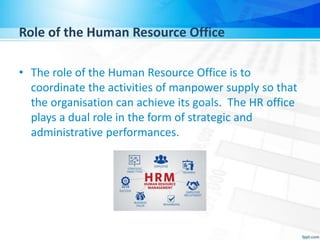
• The role of the Human Resource Office is to
coordinate the activities of manpower supply so that
the organisation can achieve its goals. The HR office
plays a dual role in the form of strategic and
administrative performances.
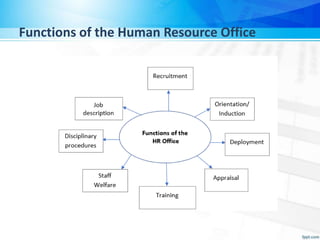
Functions of the Human Resource Office
Recruitment
• Finding the right people for the right job.
This will involving forming advertisements
for vacant positions, placing advertisements
in appropriate places, shortlisting and
interviewing applicants and appointing those
successful.
Orientation/Induction
• Organising a programme to introduce
employees to their new jobs and to
familiarise them with the overall work of the
organisation, and to introduce them to other
personnel and the work they do.
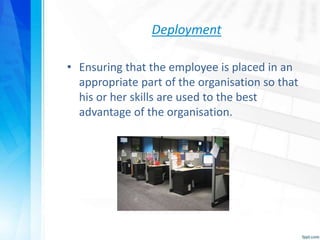
Deployment
• Ensuring that the employee is placed in an
appropriate part of the organisation so that
his or her skills are used to the best
advantage of the organisation.
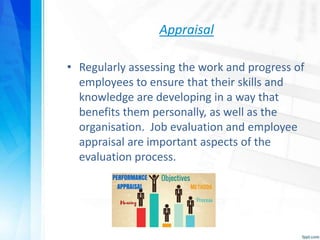
Appraisal
• Regularly assessing the work and progress of
employees to ensure that their skills and
knowledge are developing in a way that
benefits them personally, as well as the
organisation. Job evaluation and employee
appraisal are important aspects of the
evaluation process.
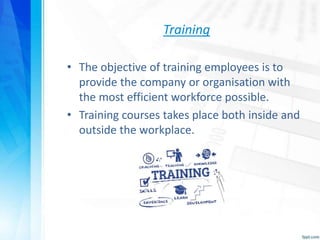
Training
• The objective of training employees is to
provide the company or organisation with
the most efficient workforce possible.
• Training courses takes place both inside and
outside the workplace.
Staff Welfare
• The HR office must ensure that the working
environment is safe, healthy, and conducive to work,
that the staff finds nothing in the environment that
impacts negatively on their performance. Aspects of
staff welfare may include:
– Subsidised health insurance
– Comfortable chairs and desks
– Free eye tests
– Free counselling in the case of personal
problems, e.g. bereavement, divorce.
Disciplinary procedures
• Ensuring that, when necessary, procedures
for disciplining employees are carried out in
a fair and correct manner. The procedures
explain the action that the employer will
take if employees break their contract of
employment, fail to comply with
organisational rules (such as those on health
and safety) or do not fulfil their
responsibilities.
Job description
• Preparation of a document that describes
the relationships within the organisation,
duties and responsibilities of a job. Usually
it includes job title, salary scale/grade,
department, job title of the immediate
supervisor and of persons whom the job
holder has authority.
Liaising with other departments
• The HR office must liaise with all other departments
in the organisation in order to recruit new staff and
sort out any problems and issues with current staff.
Above all else, the HR staff must ensure that the
workforce is happy and motivated. This is achieved
by continually monitoring what employees are saying
about their pay, job content, terms and conditions.
References
• Carysforth, C. et al (2012), Office Administration for
CSEC – A Caribbean Examinations Council Study
Guide, Nelson Thornes UK.
• Finisterre, S. et al (2005), Longman Office
Administration for CXC, Hodder Education UK
• Ramtahal, F. (2003), Office Administration,
Caribbean Educational Publishers Trinidad.

Office Administration

  • 1.
    FUNCTIONS OF THE HUMANRESOURCE MANAGEMENT OFFICE Ayanna Charles-Ford Section 8 Objective 1
  • 2.
    Role of theHuman Resource Office • The role of the Human Resource Office is to coordinate the activities of manpower supply so that the organisation can achieve its goals. The HR office plays a dual role in the form of strategic and administrative performances.
  • 3.
    Functions of theHuman Resource Office
  • 4.
    Recruitment • Finding theright people for the right job. This will involving forming advertisements for vacant positions, placing advertisements in appropriate places, shortlisting and interviewing applicants and appointing those successful.
  • 5.
    Orientation/Induction • Organising aprogramme to introduce employees to their new jobs and to familiarise them with the overall work of the organisation, and to introduce them to other personnel and the work they do.
  • 6.
    Deployment • Ensuring thatthe employee is placed in an appropriate part of the organisation so that his or her skills are used to the best advantage of the organisation.
  • 7.
    Appraisal • Regularly assessingthe work and progress of employees to ensure that their skills and knowledge are developing in a way that benefits them personally, as well as the organisation. Job evaluation and employee appraisal are important aspects of the evaluation process.
  • 8.
    Training • The objectiveof training employees is to provide the company or organisation with the most efficient workforce possible. • Training courses takes place both inside and outside the workplace.
  • 9.
    Staff Welfare • TheHR office must ensure that the working environment is safe, healthy, and conducive to work, that the staff finds nothing in the environment that impacts negatively on their performance. Aspects of staff welfare may include: – Subsidised health insurance – Comfortable chairs and desks – Free eye tests – Free counselling in the case of personal problems, e.g. bereavement, divorce.
  • 10.
    Disciplinary procedures • Ensuringthat, when necessary, procedures for disciplining employees are carried out in a fair and correct manner. The procedures explain the action that the employer will take if employees break their contract of employment, fail to comply with organisational rules (such as those on health and safety) or do not fulfil their responsibilities.
  • 11.
    Job description • Preparationof a document that describes the relationships within the organisation, duties and responsibilities of a job. Usually it includes job title, salary scale/grade, department, job title of the immediate supervisor and of persons whom the job holder has authority.
  • 12.
    Liaising with otherdepartments • The HR office must liaise with all other departments in the organisation in order to recruit new staff and sort out any problems and issues with current staff. Above all else, the HR staff must ensure that the workforce is happy and motivated. This is achieved by continually monitoring what employees are saying about their pay, job content, terms and conditions.
  • 13.
    References • Carysforth, C.et al (2012), Office Administration for CSEC – A Caribbean Examinations Council Study Guide, Nelson Thornes UK. • Finisterre, S. et al (2005), Longman Office Administration for CXC, Hodder Education UK • Ramtahal, F. (2003), Office Administration, Caribbean Educational Publishers Trinidad.