FUNCTIONS OF THE
DESPATCH AND
TRANSPORT OFFICES
Section 12
Objective 1
Ayanna Charles-Ford
Role of Despatch and Transport Offices
• The role of the despatch and transport
office is to pack and seal, label and
transport goods to their destinations by
the safest, most suitable and economical
means, in good condition and on time.
FUNCTIONS OF THE
DESPATCH OFFICE
Functions of the Despatch Office
• Complete and maintain documents for
despatched goods
– The despatch office receives good from
production and prepares them for
delivery to the transport office. It is
responsible for packing and labelling
these goods as well as completing the
necessary paperwork.
• Maintain a database of couriers and keep
records about their use
– A courier specializes in transporting
goods. They may use different types of
carriers including lorries, aircraft and sea
transport.
• Work in collaboration with the sales office
– The sales office receives the customer’s
order and notes specific requirements,
such as delivery address and dates/times
when deliveries can be made.
– The sales department and despatch office
must liaise to ensure deliveries are
efficient and customer requirements are
met.
• Adhere to statutory requirements
– The despatch office must know the legal
requirements relating to goods being sent
and ensure that the company complies with
these.
– The goods may include:
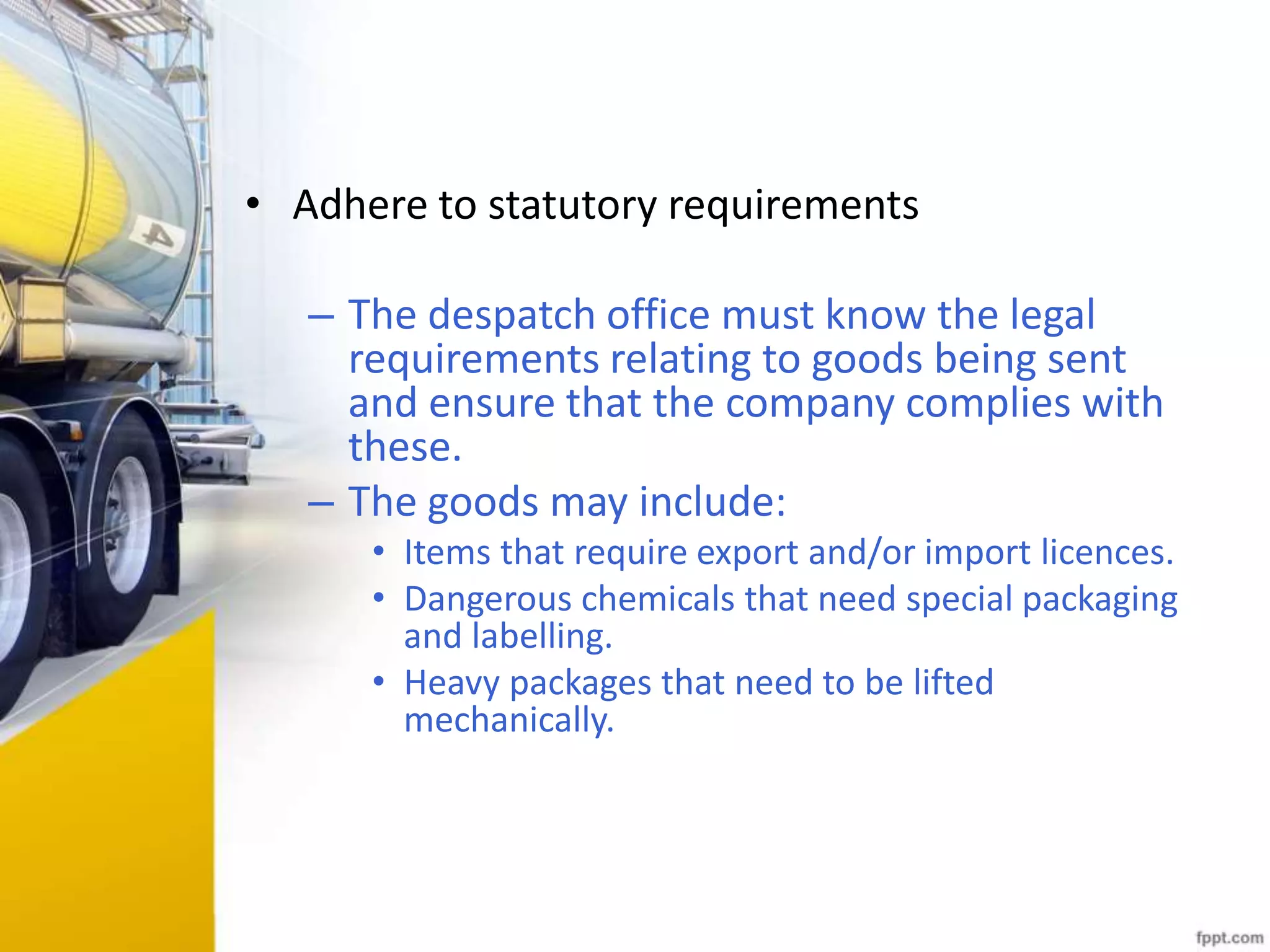
• Items that require export and/or import licences.
• Dangerous chemicals that need special packaging
and labelling.
• Heavy packages that need to be lifted
mechanically.
• Coordination of the delivery of goods
– Coordinating different methods of
delivery of goods means that goods move
smoothly and rapidly from one form of
transport to the next.
– All forms must be completed accurately
so that there are no delays.
FUNCTIONS OF THE
TRANSPORT OFFICE
Functions of the Transport Office
• Collecting relevant documents from the
despatch office and maintaining records for
transporting goods.
• Preparing destination sheets and delivery
notes and maintaining them upon delivery
of goods
• Liaising with customers
– If delivery is delayed the transport clerk
will liaise with customers to negotiate
convenient times for delivery or to ensure
someone is available to receive goods.
• Schedule maintenance of vehicles.
– Many manufacturers specify that vehicles
should be serviced at least once a year,
and this may be a condition of the
warranty. This is very important to ensure
deliveries can be made.
Additional Resource
• Check out the article below:
• http://ceducate.blogspot.com/2013/06/wha
t-are-roles-and-function-of-dispatch.html
REFERENCES
• Carysforth, C. et al (2012), Office
Administration for CSEC – A Caribbean
Examinations Council Study Guide, Nelson
Thornes UK.
• Jacob, A. (2014), Office Administration for
CSEC, Nelson Thornes, UK.
• Ramtahal, F. (2013). Office Administration,
(2nd ed.) Caribbean Educational Publishers
Trinidad.

Operations, Despatch and Transport Services

  • 1.
    FUNCTIONS OF THE DESPATCHAND TRANSPORT OFFICES Section 12 Objective 1 Ayanna Charles-Ford
  • 2.
    Role of Despatchand Transport Offices • The role of the despatch and transport office is to pack and seal, label and transport goods to their destinations by the safest, most suitable and economical means, in good condition and on time.
  • 3.
  • 4.
    Functions of theDespatch Office • Complete and maintain documents for despatched goods – The despatch office receives good from production and prepares them for delivery to the transport office. It is responsible for packing and labelling these goods as well as completing the necessary paperwork.
  • 5.
    • Maintain adatabase of couriers and keep records about their use – A courier specializes in transporting goods. They may use different types of carriers including lorries, aircraft and sea transport.
  • 6.
    • Work incollaboration with the sales office – The sales office receives the customer’s order and notes specific requirements, such as delivery address and dates/times when deliveries can be made. – The sales department and despatch office must liaise to ensure deliveries are efficient and customer requirements are met.
  • 7.
    • Adhere tostatutory requirements – The despatch office must know the legal requirements relating to goods being sent and ensure that the company complies with these. – The goods may include: • Items that require export and/or import licences. • Dangerous chemicals that need special packaging and labelling. • Heavy packages that need to be lifted mechanically.
  • 8.
    • Coordination ofthe delivery of goods – Coordinating different methods of delivery of goods means that goods move smoothly and rapidly from one form of transport to the next. – All forms must be completed accurately so that there are no delays.
  • 9.
  • 10.
    Functions of theTransport Office • Collecting relevant documents from the despatch office and maintaining records for transporting goods. • Preparing destination sheets and delivery notes and maintaining them upon delivery of goods
  • 11.
    • Liaising withcustomers – If delivery is delayed the transport clerk will liaise with customers to negotiate convenient times for delivery or to ensure someone is available to receive goods.
  • 12.
    • Schedule maintenanceof vehicles. – Many manufacturers specify that vehicles should be serviced at least once a year, and this may be a condition of the warranty. This is very important to ensure deliveries can be made.
  • 13.
    Additional Resource • Checkout the article below: • http://ceducate.blogspot.com/2013/06/wha t-are-roles-and-function-of-dispatch.html
  • 14.
    REFERENCES • Carysforth, C.et al (2012), Office Administration for CSEC – A Caribbean Examinations Council Study Guide, Nelson Thornes UK. • Jacob, A. (2014), Office Administration for CSEC, Nelson Thornes, UK. • Ramtahal, F. (2013). Office Administration, (2nd ed.) Caribbean Educational Publishers Trinidad.