Dinica Quesada, OEA Communications Specialist, quesadad@ohea.org
Jeremy Baiman, OEA Organizer, baimanj@ohea.org
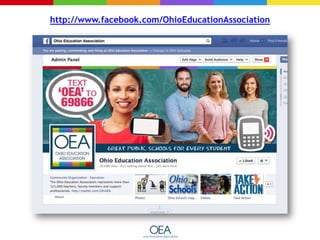
http://www.facebook.com/OhioEducationAssociation
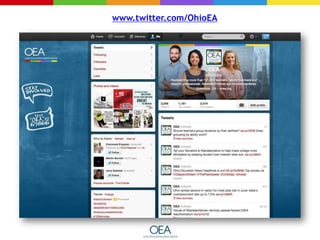
www.twitter.com/OhioEA
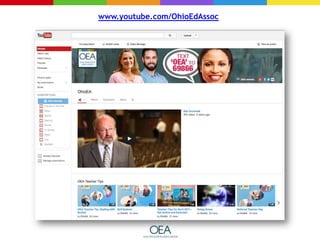
www.youtube.com/OhioEdAssoc
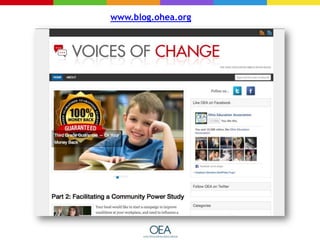
www.blog.ohea.org
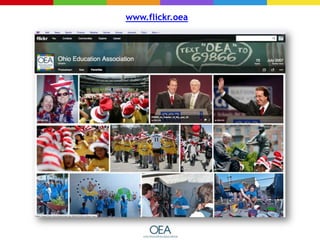
www.flickr.oea
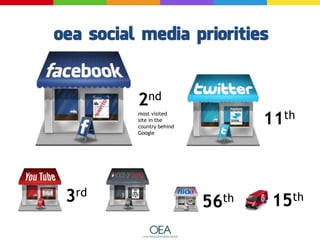
2nd
most visited
site in the
country behind
Google
11th
3rd
56th 15th
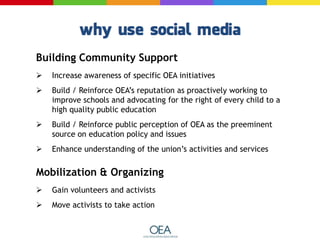
Building Community Support
 Increase awareness of specific OEA initiatives
 Build / Reinforce OEA’s reputation as proactively working to
improve schools and advocating for the right of every child to a
high quality public education
 Build / Reinforce public perception of OEA as the preeminent
source on education policy and issues
 Enhance understanding of the union’s activities and services
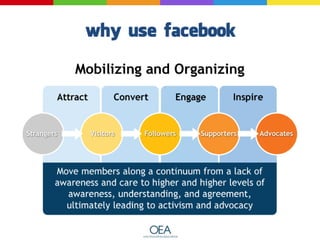
Mobilization & Organizing
 Gain volunteers and activists
 Move activists to take action
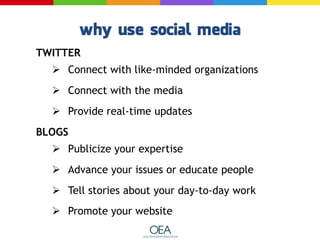
TWITTER
 Connect with like-minded organizations
 Connect with the media
 Provide real-time updates
BLOGS
 Publicize your expertise
 Advance your issues or educate people
 Tell stories about your day-to-day work
 Promote your website
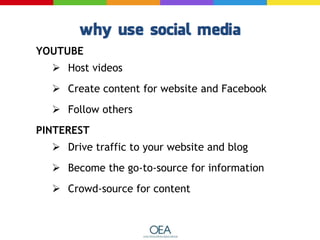
YOUTUBE
 Host videos
 Create content for website and Facebook
 Follow others
PINTEREST
 Drive traffic to your website and blog
 Become the go-to-source for information
 Crowd-source for content
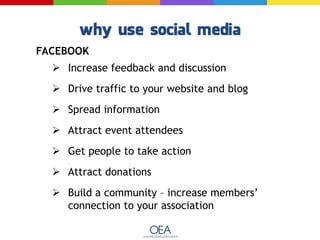
FACEBOOK
 Increase feedback and discussion
 Drive traffic to your website and blog
 Spread information
 Attract event attendees
 Get people to take action
 Attract donations
 Build a community – increase members’
connection to your association
To reach the most
people you have to
play into Facebook’s
newsfeed algorithm,
and you can do that
two ways:
 Post rich content
like photos,
videos, and links.
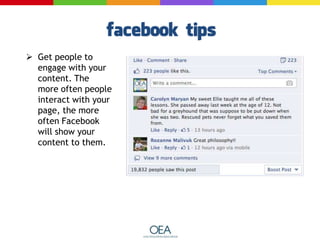
 Get people to
engage with your
content. The
more often people
interact with your
page, the more
often Facebook
will show your
content to them.
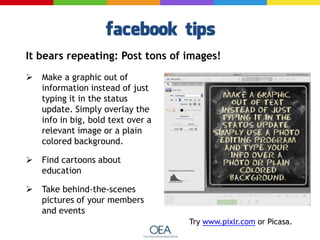
 Make a graphic out of
information instead of just
typing it in the status
update. Simply overlay the
info in big, bold text over a
relevant image or a plain
colored background.
 Find cartoons about
education
 Take behind-the-scenes
pictures of your members
and events
Try www.pixlr.com or Picasa.
It bears repeating: Post tons of images!
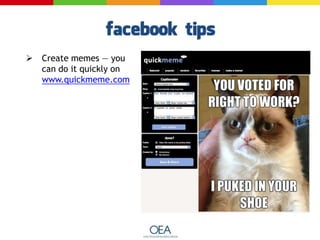
 Create memes — you
can do it quickly on
www.quickmeme.com
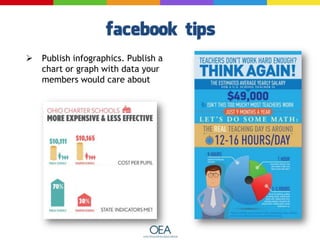
 Publish infographics. Publish a
chart or graph with data your
members would care about
 Publicize events and programs
 Share videos
 Share tools & tips
 Use petitions and other easy calls to action.
 Message discipline! Make sure all posts, even the fun ones,
further your association’s overall message.
 Make posts very short. If your info is long/complicated, link to
more information. (Note: Keep your website current — website
and social media go hand in hand)
 Be positive.
 Be informal and use organizing language. Posts with self-
referential words like ―I‖ and ―we‖ tend to get more likes.
 Posts published on Saturdays and Sundays get more likes than
those posted during the week.
 Content posted later in the day get more likes and shares —
likes peak around 8PM EST, while shares peak around 6PM EST.
 Deliberate pacing gets more attention.
 Facebook pages versus groups: no data with groups/no privacy
with pages
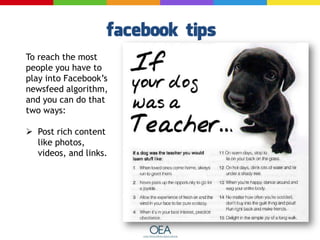
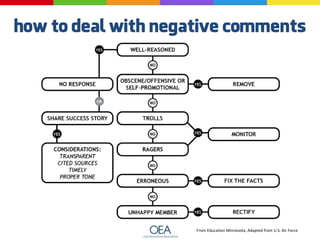
From Education Minnesota, Adapted from U.S. Air Force
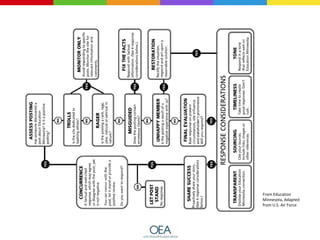
From Education
Minnesota, Adapted
from U.S. Air Force
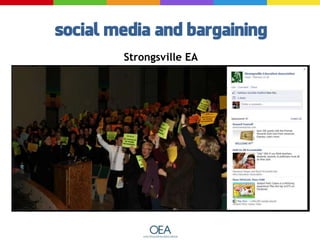
Strongsville EA
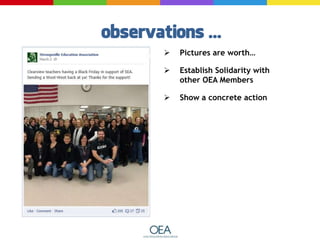
 Pictures are worth…
 Establish Solidarity with
other OEA Members
 Show a concrete action
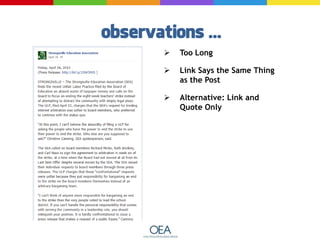
 Too Long
 Link Says the Same Thing
as the Post
 Alternative: Link and
Quote Only
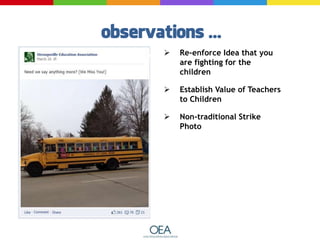
 Re-enforce Idea that you
are fighting for the
children
 Establish Value of Teachers
to Children
 Non-traditional Strike
Photo
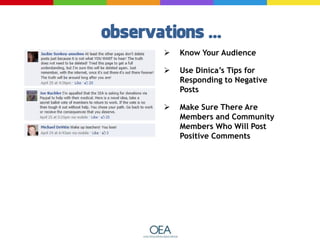
 Know Your Audience
 Use Dinica’s Tips for
Responding to Negative
Posts
 Make Sure There Are
Members and Community
Members Who Will Post
Positive Comments
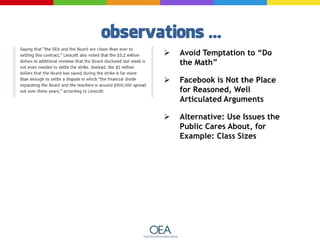
 Avoid Temptation to “Do
the Math”
 Facebook is Not the Place
for Reasoned, Well
Articulated Arguments
 Alternative: Use Issues the
Public Cares About, for
Example: Class Sizes
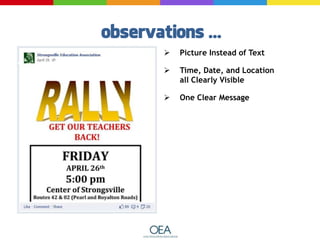
 Picture Instead of Text
 Time, Date, and Location
all Clearly Visible
 One Clear Message
 How to Get More Likes, Comments and Shares on Facebook:
http://danzarrella.com/infographic-how-to-get-more-likes-comments-and-
shares-on-facebook.html#
 Facebook for Nonprofits: Your Questions Answered [Speakeasy #18]:
http://blogs.constantcontact.com/product-blogs/social-media-
marketing/facebook-nonprofits-podcast/
 VIDEO: 5.5 Best Practices for Unions using Facebook:
http://youtu.be/EQqGjJVV6-A
 Your burning questions (& our answers) on Facebook metrics and
strategy!:
http://labs.mrss.com/your-burning-questions-our-answers-on-facebook-
metrics-and-strategy/
 Social Media Tips on Pinterest:
http://pinterest.com/dinicaq/social-media-tips/

OEA Summer Academy 2013

  • 1.
    Dinica Quesada, OEACommunications Specialist, quesadad@ohea.org Jeremy Baiman, OEA Organizer, baimanj@ohea.org
  • 2.
  • 3.
  • 4.
  • 5.
  • 6.
  • 7.
    2nd most visited site inthe country behind Google 11th 3rd 56th 15th
  • 8.
    Building Community Support Increase awareness of specific OEA initiatives  Build / Reinforce OEA’s reputation as proactively working to improve schools and advocating for the right of every child to a high quality public education  Build / Reinforce public perception of OEA as the preeminent source on education policy and issues  Enhance understanding of the union’s activities and services Mobilization & Organizing  Gain volunteers and activists  Move activists to take action
  • 9.
    TWITTER  Connect withlike-minded organizations  Connect with the media  Provide real-time updates BLOGS  Publicize your expertise  Advance your issues or educate people  Tell stories about your day-to-day work  Promote your website
  • 10.
    YOUTUBE  Host videos Create content for website and Facebook  Follow others PINTEREST  Drive traffic to your website and blog  Become the go-to-source for information  Crowd-source for content
  • 11.
    FACEBOOK  Increase feedbackand discussion  Drive traffic to your website and blog  Spread information  Attract event attendees  Get people to take action  Attract donations  Build a community – increase members’ connection to your association
  • 13.
    To reach themost people you have to play into Facebook’s newsfeed algorithm, and you can do that two ways:  Post rich content like photos, videos, and links.
  • 14.
     Get peopleto engage with your content. The more often people interact with your page, the more often Facebook will show your content to them.
  • 15.
     Make agraphic out of information instead of just typing it in the status update. Simply overlay the info in big, bold text over a relevant image or a plain colored background.  Find cartoons about education  Take behind-the-scenes pictures of your members and events Try www.pixlr.com or Picasa. It bears repeating: Post tons of images!
  • 16.
     Create memes— you can do it quickly on www.quickmeme.com
  • 17.
     Publish infographics.Publish a chart or graph with data your members would care about
  • 18.
     Publicize eventsand programs  Share videos  Share tools & tips  Use petitions and other easy calls to action.  Message discipline! Make sure all posts, even the fun ones, further your association’s overall message.  Make posts very short. If your info is long/complicated, link to more information. (Note: Keep your website current — website and social media go hand in hand)  Be positive.  Be informal and use organizing language. Posts with self- referential words like ―I‖ and ―we‖ tend to get more likes.
  • 19.
     Posts publishedon Saturdays and Sundays get more likes than those posted during the week.  Content posted later in the day get more likes and shares — likes peak around 8PM EST, while shares peak around 6PM EST.  Deliberate pacing gets more attention.  Facebook pages versus groups: no data with groups/no privacy with pages
  • 20.
    From Education Minnesota,Adapted from U.S. Air Force
  • 21.
  • 22.
  • 23.
     Pictures areworth…  Establish Solidarity with other OEA Members  Show a concrete action
  • 24.
     Too Long Link Says the Same Thing as the Post  Alternative: Link and Quote Only
  • 25.
     Re-enforce Ideathat you are fighting for the children  Establish Value of Teachers to Children  Non-traditional Strike Photo
  • 26.
     Know YourAudience  Use Dinica’s Tips for Responding to Negative Posts  Make Sure There Are Members and Community Members Who Will Post Positive Comments
  • 27.
     Avoid Temptationto “Do the Math”  Facebook is Not the Place for Reasoned, Well Articulated Arguments  Alternative: Use Issues the Public Cares About, for Example: Class Sizes
  • 28.
     Picture Insteadof Text  Time, Date, and Location all Clearly Visible  One Clear Message
  • 30.
     How toGet More Likes, Comments and Shares on Facebook: http://danzarrella.com/infographic-how-to-get-more-likes-comments-and- shares-on-facebook.html#  Facebook for Nonprofits: Your Questions Answered [Speakeasy #18]: http://blogs.constantcontact.com/product-blogs/social-media- marketing/facebook-nonprofits-podcast/  VIDEO: 5.5 Best Practices for Unions using Facebook: http://youtu.be/EQqGjJVV6-A  Your burning questions (& our answers) on Facebook metrics and strategy!: http://labs.mrss.com/your-burning-questions-our-answers-on-facebook- metrics-and-strategy/  Social Media Tips on Pinterest: http://pinterest.com/dinicaq/social-media-tips/

Editor's Notes

  • #4 Account created around February 2010The best content to publish on Twitter is, obviously, shortand sweet. Whatever piece of content you’re linking to in thetweet, find the most compelling part of the story to include inyour tweet copy. Pulling a shocking data point from your blogpost, for example, is more likely to entice followers to retweetyour content and click the link in your tweet than the title ofyour blog post.
  • #5 Nonprofit channel created on July 10, 2007Cross promote social media. Include links in all communications materials.
  • #6 Created on July 21, 2009
  • #7 Basic account created around June 15, 2007Upgraded to professional account on May 9, 2008Other photo sharing sites like Picassso and photobucket, and also directly through Facebook and Twitter.