CASBO 2012
                 Ronna Johnston
Director of Web Communications
 University of Northern Colorado
Today’s Topics
 What is Social Media?

 Why should schools and districts use social media?

 How can social media be used?

 How do you measure results?
How Many of You Personally Use…
 Use Facebook?

 Use Twitter?

 Use YouTube?


 Have a LinkedIn page?
How Many of Your Schools or
Districts Have a…
 Facebook Page?

 Twitter Account?

 Any Other Public Tool?

 Specialty Tool?
What Is Your Role?
What Is Social Media?
 Online communities created by users, including
 businesses, to share ideas, personal messages and
 other content such as photo and video.
Oh. My.
Big Three
 Facebook

 YouTube

 Twitter
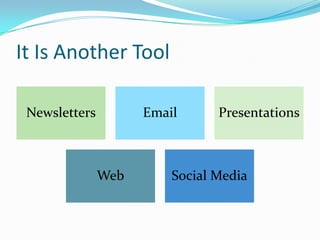
It Is Another Tool

 Newsletters         Email      Presentations


               Web       Social Media
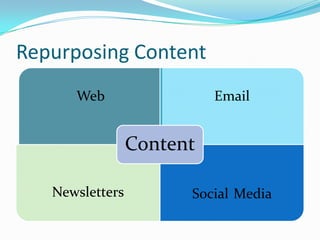
Repurposing Content
      Web                  Email


                 Content

   Newsletters         Social Media
Why Use Social Media?
 Want to be where your users are

 If Facebook was a country, would be third most
 populated

 Facebook – 900 million people worldwide
              163 million in the US.
               http://www.checkfacebook.com/

 Twitter – 500 million users
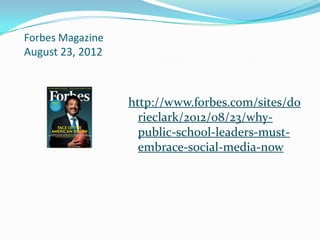
Forbes Magazine
August 23, 2012


                  http://www.forbes.com/sites/do
                    rieclark/2012/08/23/why-
                    public-school-leaders-must-
                    embrace-social-media-now
Branding
 Overlooked aspect

 Consistent image, tone and message

 You want to influence your school’s image

 We used to be able to control image

 Social media has drastically changed our control
Public Relations
 Closely related to branding

 Media may pick up tweets

 You can point back to positive media stories
Communications
 This is the main reason

 Quiz
  A. Newsletters
  B. Emails
  C. Texts
  D. Website
  E. Social Media
Foundations for Success

Policy
Planning
Persistence
Who Is Involved?
 Yes, it’s a resource issue

 Can have multiple Facebook administrators

 Must share Twitter account logon and password

 Can a parent committee help?

 Can a student help?

 Ask for posts to be sent to the administrator

 Need a structure, can’t be an afterthought
Get Started
 Social Media Policy or Guidelines

 http://www.unco.edu/websupport/social/social_medi
 a_guidelines.html

 http://www.facebook.com/communitystandards

 http://support.twitter.com/articles/18311-the-twitter-
 rules#
Planning a Page
 Who is our audience?
   Parents
   Students
   Community members
   Lawmakers
   School Board members
   Prospective employees
   School employees
What Are Our Goals?
 Overall goal: Increasing engagement, awareness and
  understanding
 Specific strategies
    Creating buzz about events
    Help people keep up with deadlines
    Announcing awards and highlights
    Fundraising
    Providing safety information
    Connecting people
    Getting feedback and ideas
    Answering questions
How Will We Keep Content Fresh?
 Set up a schedule for posts and tweets

 Don’t spam followers/fans

 Blue Fuego: three times per week acceptable
How Will We Keep Audiences Engaged?
 Conversational tone

 Call to action posts and tweets

 Questions

 Photos

 Polls


Ask them what they want
Specific Ideas
 Sporting events
 School closures
 New teachers
 Educational news and relevant articles
 Facilities changes
 Fundraisers
 Student highlights
 Crisis communications
Your Ideas


How can you contribute to
 content?
Examples
 http://www.facebook.com/GreeleyEvansSchools

 http://www.facebook.com/pages/Thompson-School-
 District/146384645373800?ref=ts

 http://www.facebook.com/pages/Bethke-Elementary-
 School/141914602496111

 http://www.facebook.com/pages/Katy-
 ISD/113148448705253
More Advice About Content
 Court your champions

 Don’t try to be everything and everywhere

 Pay attention to the page and account

 Don’t panic about negative comments

 Have a set of internal guidelines about negative comments
Specific to Twitter
 Retweet other tweets

 Watch for mentions about your school

 Search for your school using the #

 Use it in breaking news situations


 Learn the language @, RT, #,shoutout
Promote
 Add links to
       Website
       Newsletter
       Emails
 Ask your teachers and parents to help you by posting
  to their pages
 Like other pages
 Announce it at events and meetings
 Partner with community entities like the Chamber
How To Measure
 Hot topic
 Not a retail site
 # likes or followers
 # retweets
 Comments
 Tone
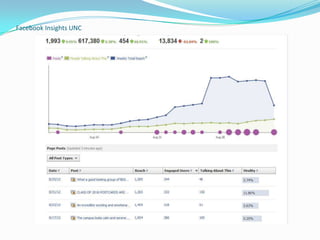
 Facebook Insights
Facebook Insights UNC
Resources
 Listening
    http://www.socialmention.com/
    http://technorati.com/
    http://www.google.com/alerts
 Management
    http://hootsuite.com/
    https://www.postling.com/
    http://sproutsocial.com/
General Information
 http://mashable.com/
 http://www.seomoz.org
 http://www.socialmediaexaminer.com/
 http://dagamawebstudio.com/


 http://www.getfreshpr.com/2011/04/how-school-
  districts-can-use-social-media-to-build-community/
 http://www.slideshare.net/vandda/what-every-
  school-districts-needs-to-know-about-social-media
Questions

Presenation csbo

  • 1.
    CASBO 2012 Ronna Johnston Director of Web Communications University of Northern Colorado
  • 2.
    Today’s Topics  Whatis Social Media?  Why should schools and districts use social media?  How can social media be used?  How do you measure results?
  • 3.
    How Many ofYou Personally Use…  Use Facebook?  Use Twitter?  Use YouTube?  Have a LinkedIn page?
  • 4.
    How Many ofYour Schools or Districts Have a…  Facebook Page?  Twitter Account?  Any Other Public Tool?  Specialty Tool?
  • 5.
  • 6.
    What Is SocialMedia?  Online communities created by users, including businesses, to share ideas, personal messages and other content such as photo and video.
  • 7.
  • 8.
    Big Three  Facebook YouTube  Twitter
  • 9.
    It Is AnotherTool Newsletters Email Presentations Web Social Media
  • 10.
    Repurposing Content Web Email Content Newsletters Social Media
  • 11.
    Why Use SocialMedia?  Want to be where your users are  If Facebook was a country, would be third most populated  Facebook – 900 million people worldwide 163 million in the US. http://www.checkfacebook.com/  Twitter – 500 million users
  • 12.
    Forbes Magazine August 23,2012 http://www.forbes.com/sites/do rieclark/2012/08/23/why- public-school-leaders-must- embrace-social-media-now
  • 13.
    Branding  Overlooked aspect Consistent image, tone and message  You want to influence your school’s image  We used to be able to control image  Social media has drastically changed our control
  • 14.
    Public Relations  Closelyrelated to branding  Media may pick up tweets  You can point back to positive media stories
  • 15.
    Communications  This isthe main reason  Quiz A. Newsletters B. Emails C. Texts D. Website E. Social Media
  • 16.
  • 17.
    Who Is Involved? Yes, it’s a resource issue  Can have multiple Facebook administrators  Must share Twitter account logon and password  Can a parent committee help?  Can a student help?  Ask for posts to be sent to the administrator  Need a structure, can’t be an afterthought
  • 18.
    Get Started  SocialMedia Policy or Guidelines  http://www.unco.edu/websupport/social/social_medi a_guidelines.html  http://www.facebook.com/communitystandards  http://support.twitter.com/articles/18311-the-twitter- rules#
  • 19.
    Planning a Page Who is our audience?  Parents  Students  Community members  Lawmakers  School Board members  Prospective employees  School employees
  • 20.
    What Are OurGoals?  Overall goal: Increasing engagement, awareness and understanding  Specific strategies  Creating buzz about events  Help people keep up with deadlines  Announcing awards and highlights  Fundraising  Providing safety information  Connecting people  Getting feedback and ideas  Answering questions
  • 21.
    How Will WeKeep Content Fresh?  Set up a schedule for posts and tweets  Don’t spam followers/fans  Blue Fuego: three times per week acceptable
  • 22.
    How Will WeKeep Audiences Engaged?  Conversational tone  Call to action posts and tweets  Questions  Photos  Polls Ask them what they want
  • 23.
    Specific Ideas  Sportingevents  School closures  New teachers  Educational news and relevant articles  Facilities changes  Fundraisers  Student highlights  Crisis communications
  • 24.
    Your Ideas How canyou contribute to content?
  • 25.
    Examples  http://www.facebook.com/GreeleyEvansSchools  http://www.facebook.com/pages/Thompson-School- District/146384645373800?ref=ts  http://www.facebook.com/pages/Bethke-Elementary- School/141914602496111  http://www.facebook.com/pages/Katy- ISD/113148448705253
  • 26.
    More Advice AboutContent  Court your champions  Don’t try to be everything and everywhere  Pay attention to the page and account  Don’t panic about negative comments  Have a set of internal guidelines about negative comments
  • 27.
    Specific to Twitter Retweet other tweets  Watch for mentions about your school  Search for your school using the #  Use it in breaking news situations  Learn the language @, RT, #,shoutout
  • 28.
    Promote  Add linksto  Website  Newsletter  Emails  Ask your teachers and parents to help you by posting to their pages  Like other pages  Announce it at events and meetings  Partner with community entities like the Chamber
  • 29.
    How To Measure Hot topic  Not a retail site  # likes or followers  # retweets  Comments  Tone  Facebook Insights
  • 30.
  • 31.
    Resources  Listening  http://www.socialmention.com/  http://technorati.com/  http://www.google.com/alerts  Management  http://hootsuite.com/  https://www.postling.com/  http://sproutsocial.com/
  • 32.
    General Information  http://mashable.com/ http://www.seomoz.org  http://www.socialmediaexaminer.com/  http://dagamawebstudio.com/  http://www.getfreshpr.com/2011/04/how-school- districts-can-use-social-media-to-build-community/  http://www.slideshare.net/vandda/what-every- school-districts-needs-to-know-about-social-media
  • 33.

Editor's Notes

  • #2 Colo Association of School Business OfficialsSocial Media is part of Web Communications but many other people are involvedDir of MarketingAdmissions, Alumni, Student Actvities, Grad SchoolMany Facebook and Twitter accounts at UNCNiche interestsOne main site, picking up tractionLate startShow UNC SocialWHO ARE YOU?
  • #3 Resources scattered throughout
  • #4 Published to YouTube?LinkedIn necessary for job searches – whole other presentation
  • #5 Pinterest, Instagraminternal message boards, discussion tool
  • #9 What do you think they are?We will focus on Facebook and TwitterUsers can comment on You Tube but the conversation is much less active. YouTube is a great support platform for the other two.
  • #10 Back up to 30,000 foot level firstLots of places to get your communication and message across
  • #11 Note about efficiencyStart with the content you want to tell your audiences, choose and schedule out what tools to use
  • #12 Behind China and India, ahead of US
  • #14 We used to control our image to some degreeCommunications people – newsletters, web sites, flyers, maybe newspaper Op edsThose times are goneHow many have look at Amazon, Yelp, Urban Spoon, Angie’s list, rate your doctor?It’s all about peer opinionsYou want to join that conversation in an authentic wayUNC Collective
  • #15 Why do we care about our public image?District 6 dress codeFunding cuts
  • #16 What is the item that is different from others in this listHow are they the sameNot just image, it’s SERVICE.
  • #17 Given the conversation nature of social mediaGiven the lack of controlHow do you succeed?
  • #18 Be organized if multiple adminsOFFICIAL POSTS go to news feedsBe careful abut SECURITYOnce the system is in place, it gains momentumNeed an enthusiastNeed more than one person, have advisory boardBe on the same page as much as possible
  • #19 How many have these?Google it but write your ownSocial media has a much higher risk factor and guidelines can help set the standards and make difficult issues easier to solveFacebook has good standardsTwitter has “rules”
  • #20 Audience answers
  • #21 Need to talk about goalsEasy to get too broad in your use of social mediaKeep branding in mind as your foundation
  • #22 Blue Fuego is higher ed consultantKnow what types of things you want to post Don’t try to be everything to everyoneDon’t often post stuffy news items – make it a balance
  • #23 UNC experience -PRIDELet us know, what do you think, contribute now, buy ticketsPolls must be interesting topics – color of hallway, logo, Remember to keep it impersonalLook at demographics in Insight
  • #25 Polls on hallway color, logo, best lunch, best creature comforts to bring to soccer gameSchool business officials
  • #26 Bad examples:Didn’t respond to a parent concern about the curriculum and the parent posted an irritated message on the timeline.
  • #27 Pay Attention!Negative comments – have a set f internal guidelines
  • #30 Goal is engagement
  • #31 People talking about this – posts comments, sharesTotal reach- adds anyone who saw yor postVirality – how shared was this?