Cognitive Functional Evaluation
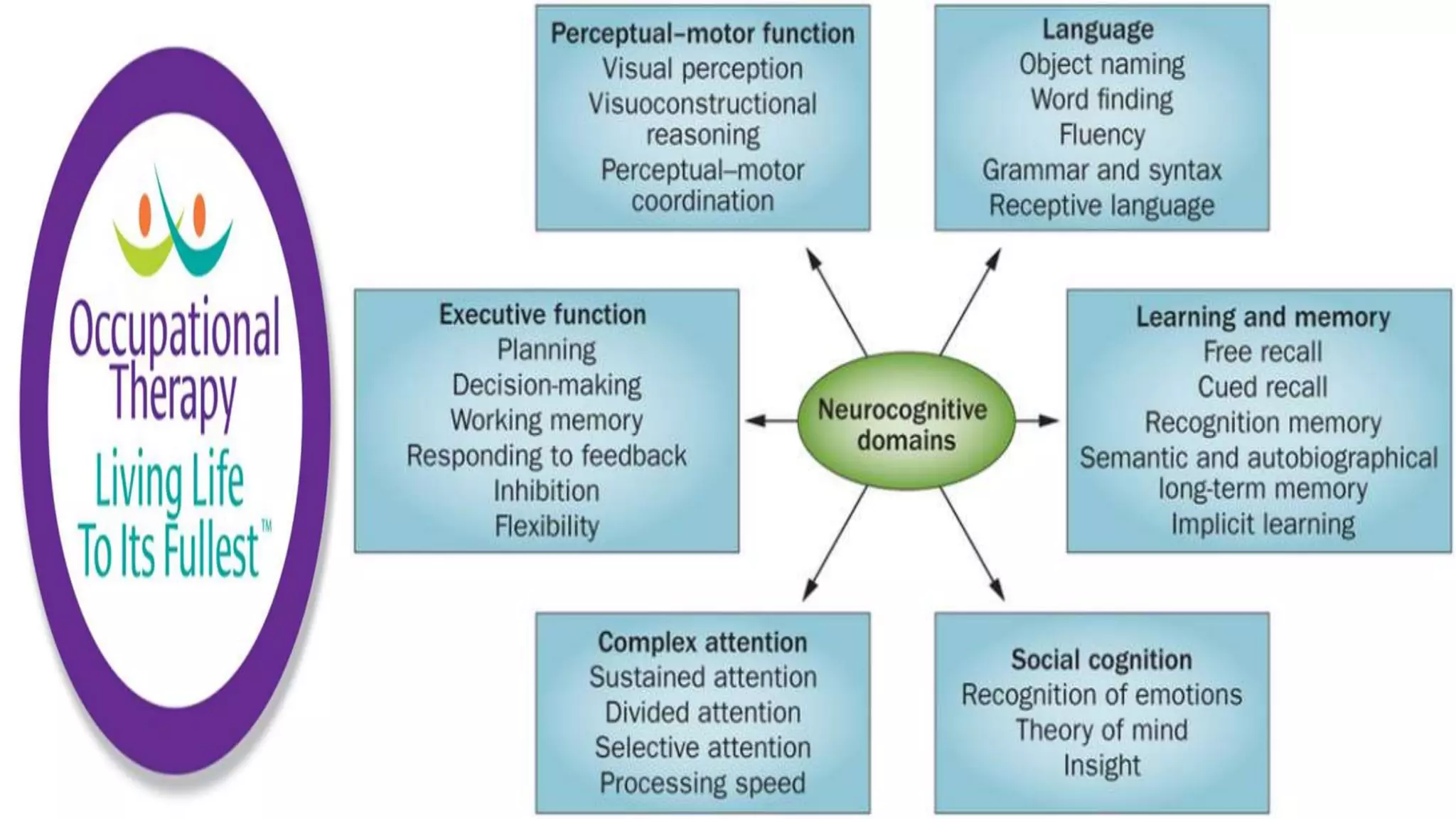
Cognition is a complex and dynamic system of
interrelated parts which allows us to organize
and use knowledge in order to function in the
environment in which we live
Perception is making sense of the senses; or the
ability to process and interpret information from
the environment to make a meaningful whole
Cognition refers to the “information-processing
functions carried out by the brain that include attention,
memory, executive functions, comprehension and formation
of speech ,calculation ability, visual perception and
praxis skills
“Cognitive Functional Evaluation (CFE) process”
Multifaceted approach that is customized to client needs
1. Interview
2. Cognitive Screening
3. Measures of specific cognitive functions (Domain-specific)
4. Performance-based (occupation-embedded) assessments
5. Specific measures of cognitive impairment in the context of
specific occupations (occupation-embedded & domain specific)
6. Environmental assessment
INCOG Recommendations
Neuropsychologist: to conduct a formal cognitive
assessment using validated neuropsychological tests,
including the presence of emotional and behavioral
problems as well as effort.
Occupational therapist: to assess the impact of cognitive
impairments on performance of meaningful activities and
participation
Speech-language pathologist: to assess the impact of
cognitive impairments on communication (listening,
speaking, reading, writing).
Practice Solution
Framing practice in line with core constructs of
occupational therapy
- Thinking
- Reasoning
- Assessing
- Intervening
- Reporting
- Describing
‘Through our lens’
Cognition and Occupational Therapy
1. Functional approach
Foundation: OT focus on improved ADL
Assessment: Identify ADL performance difficulties
Intervention: Train ADLs
Outcome: Independent in ADLs
Testing of Cognitive Functions.
Cognition involves mental processes of knowing, thinking,
remembering, perceiving, awareness, learning, judging, and
understanding of ideas.
Skills specifically assessed in the CPM battery include levels
of attention, short-term visual memory, short-term linguistic
memory, encoding and decoding of information, incidental
and intentional learning, logical and mathematical
reasoning, problem solving, decision-making, organization,
and planning.
Testing of Motor Functions.
The individual’s upper extremities are examined for muscle
tone, joint range of motion, and muscular strength and
endurance.
The therapist evaluates areas such as motor planning, motor
control, gross motor coordination, fine motor coordination,
hand/eye coordination, bilateral coordination, motor
sequencing, and motor speed.
Balance and equilibrium functions are assessed due to the
requirement for balance during activities of daily living.
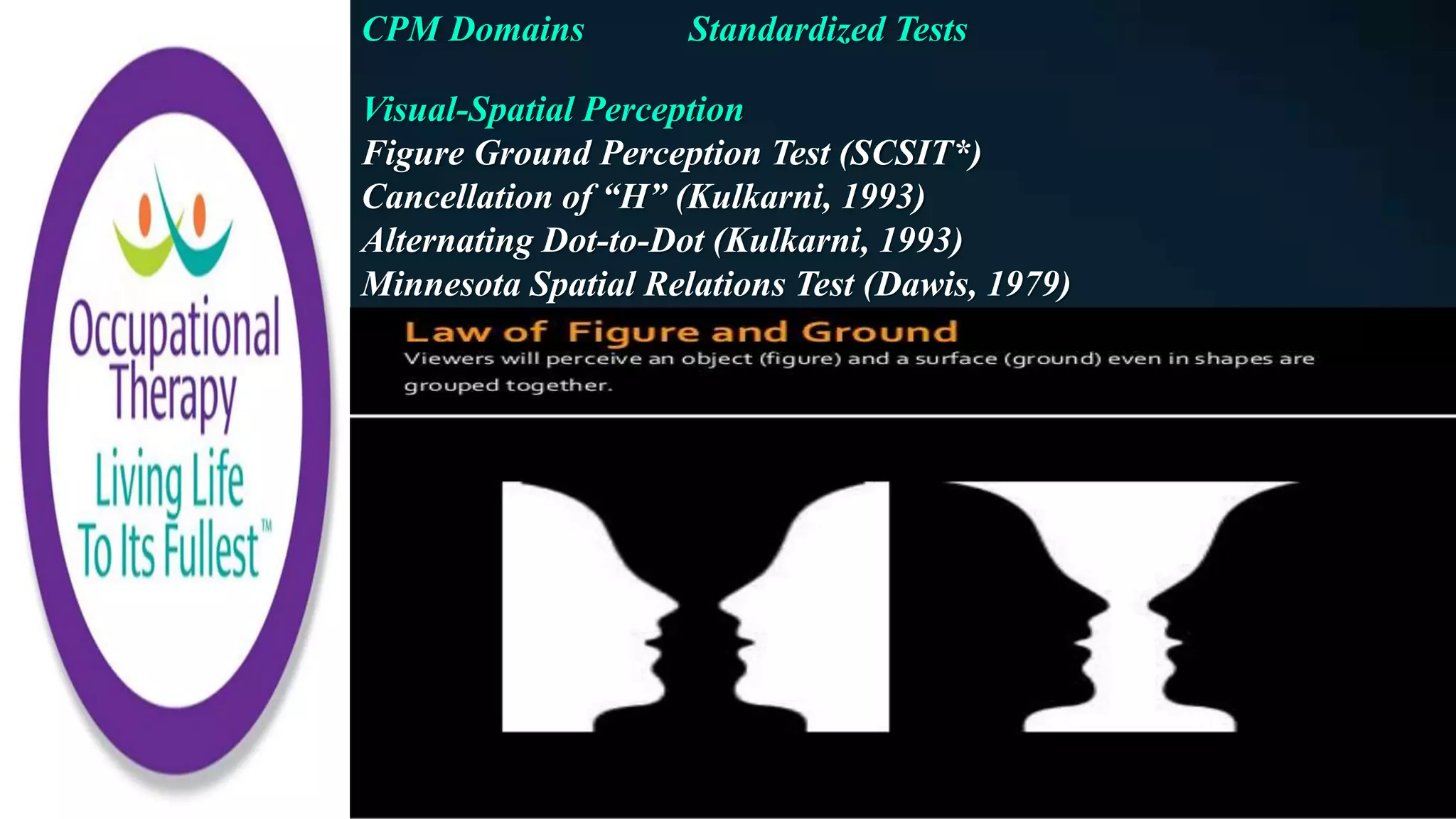
CPM Domains Standardized Tests
Visual-Spatial Perception
Figure Ground Perception Test (SCSIT*)
Cancellation of “H” (Kulkarni, 1993)
Alternating Dot-to-Dot (Kulkarni, 1993)
Minnesota Spatial Relations Test (Dawis, 1979)
CPM Domains Standardized Tests
Tactile-Kinesthetic Perception
Graphesthesia Test (SCSIT*)
Manual Form Perception (SCSIT*)
CPM Domains Standardized Tests
Motor Skills
Slosson Visual Motor Performance Test (Slosson, 1996)
Purdue Pegboard (Tiffin, 1948)
Grip and Pinch Strength (Mathiowetz, 1985)
Standing Balance Eyes Open/Eyes Closed (SCSIT*) Imitation of
Posture (SCSIT*)
CPM Domains Standardized Tests
Cognitive-Perceptual
Symbol Digit Modalities Test (Smith, 1991)
Detroit Tests of Learning Aptitude-2 (Hammil, 1985)
Subtest: Object Sequences
Subtest: Letter Sequences
Useful Field of View (Ball & Roenker, 1988)
Clinical observation could also yield assessments of:
orientation, problem solving, organization, planning,
initiation/termination, judgment, sequencing,
concrete/abstract reasoning, following directions, and
procedural memory.
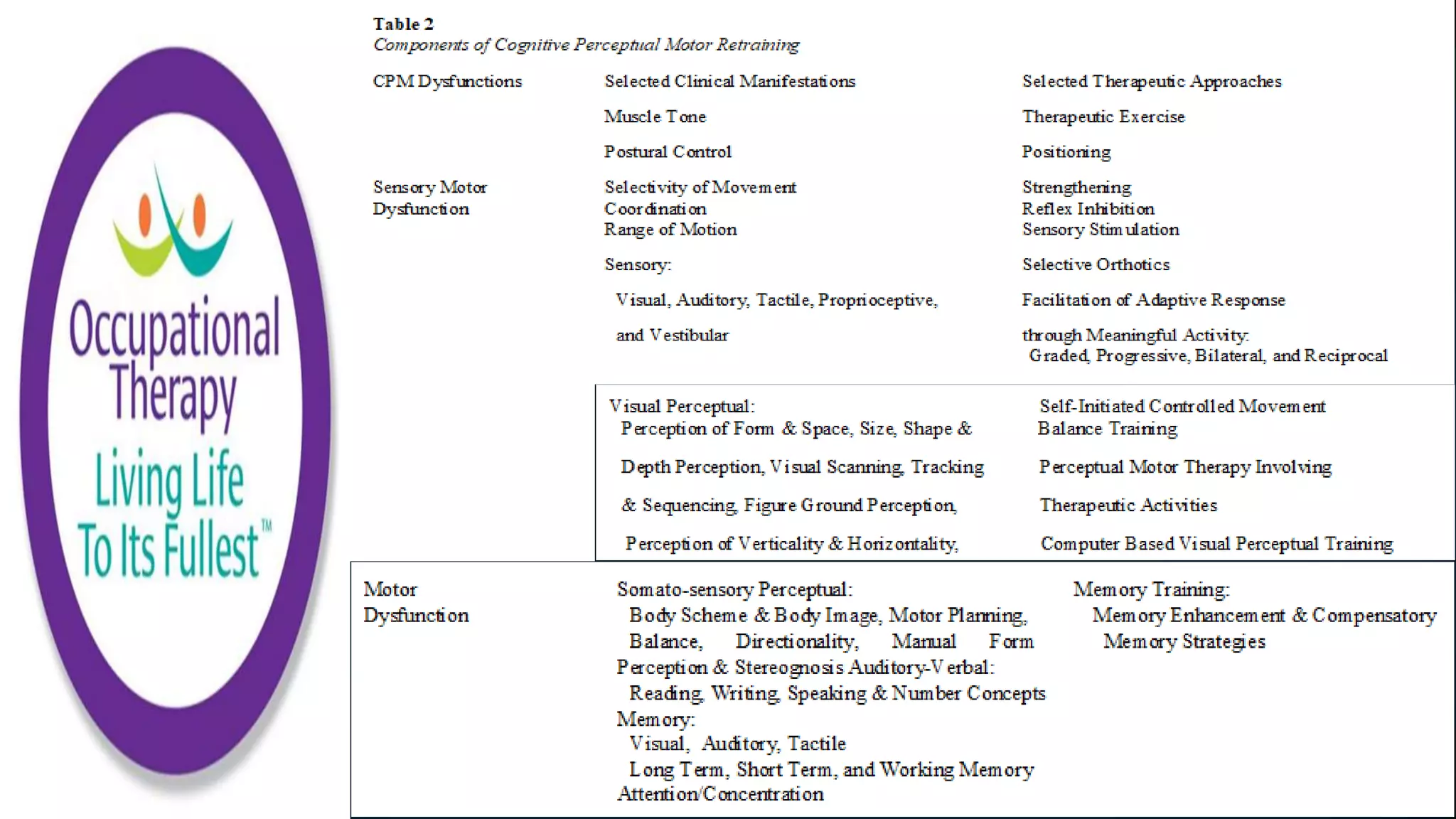
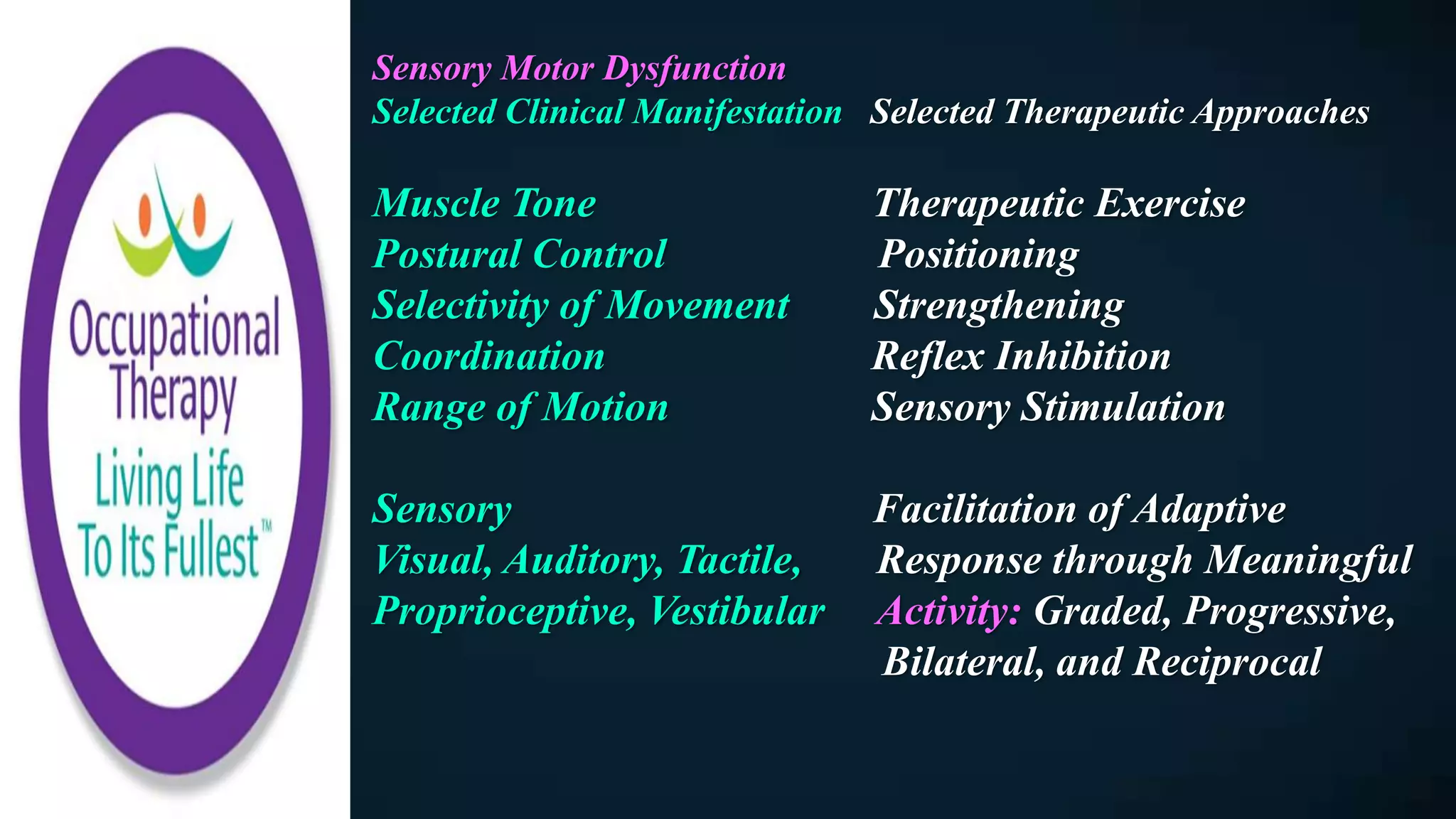
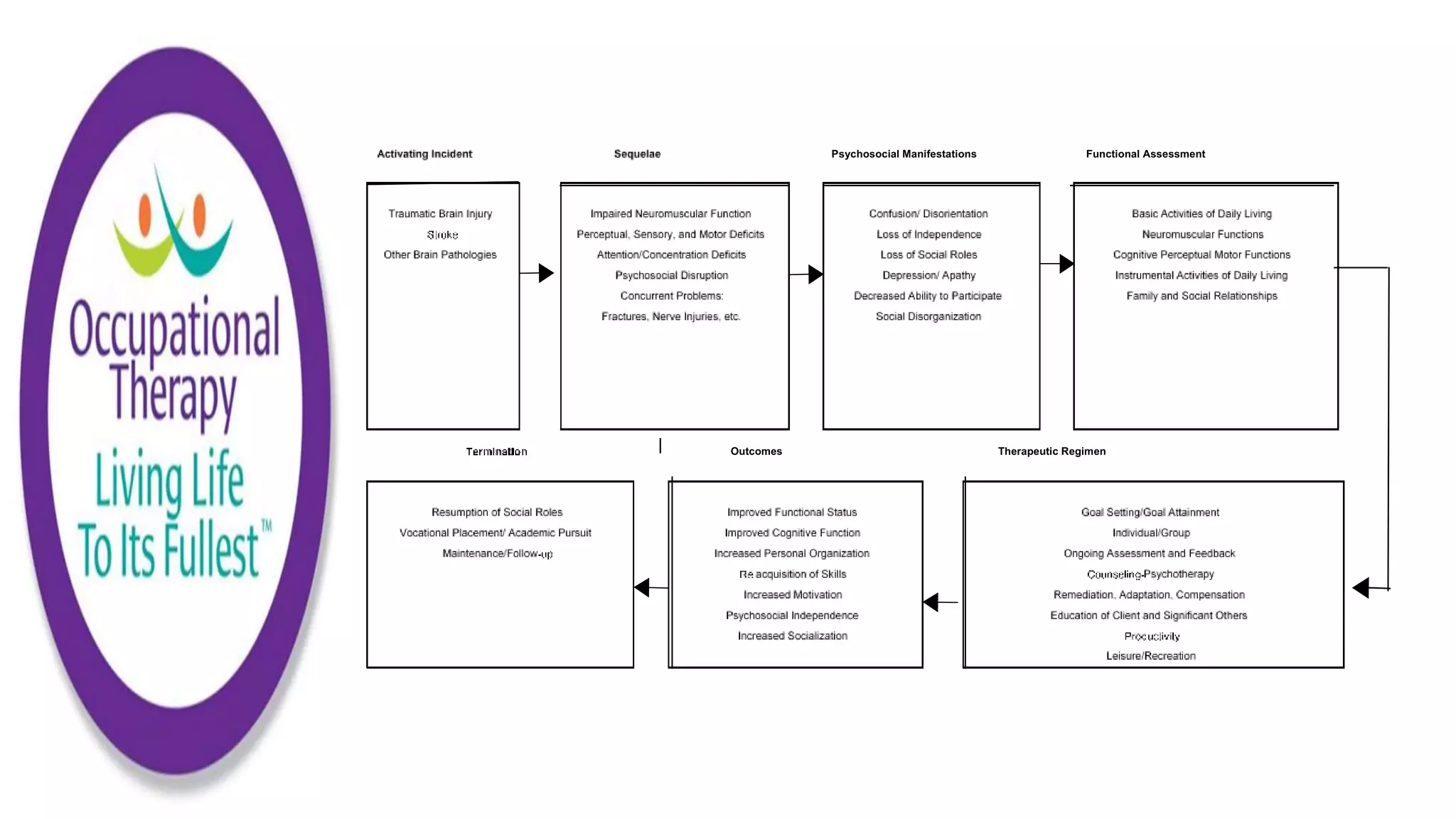
Sensory Motor Dysfunction
Selected Clinical Manifestation Selected Therapeutic Approaches
Muscle Tone Therapeutic Exercise
Postural Control Positioning
Selectivity of Movement Strengthening
Coordination Reflex Inhibition
Range of Motion Sensory Stimulation
Sensory Facilitation of Adaptive
Visual, Auditory, Tactile, Response through Meaningful
Proprioceptive, Vestibular Activity: Graded, Progressive,
Bilateral, and Reciprocal
Cognitive Dysfunction
Selected Clinical Manifestation Selected Therapeutic Approaches
Problem Solving Computer Based Cognitive Retraining
Decision Making Problem Solving, Logical Thinking &
Planning Decision Making
Organizing Exercises in Reading, Writing &
Mathematical Concepts
Divergent/Convergent/
Abstract Reasoning
Cognitive Behavioral Job Related Cognitive Retraining
Self-Regulation, Behavior Modification
Self-Correction Individual & Group Counseling
Education of Client and Significant others
OCCUPATION ANALYSIS
PREPARATION / SET UP TIME REQUIRED
‘STEPS’ TIME REQUIRED
1:
2
3
4
5
6
7
CLEAN UP / PUT AWAY TIME REQUIRED
TOTAL TIME:
‘Steps – Tasks - Routines’ Errors
1. X
2. X
3. X
4. X
5.
6.
7.
8.
PERFORMANCE ANALYSIS
4/8 error free = 50% Mastery
Performance-based assessments
PURPOSE
Identify functional performance concerns to address –
occupation-embedded
EXAMPLES
•Assessment of Motor and Process Skills (AMPS)**
•Routine Task Inventory (RTI)
•PRPP Stage One
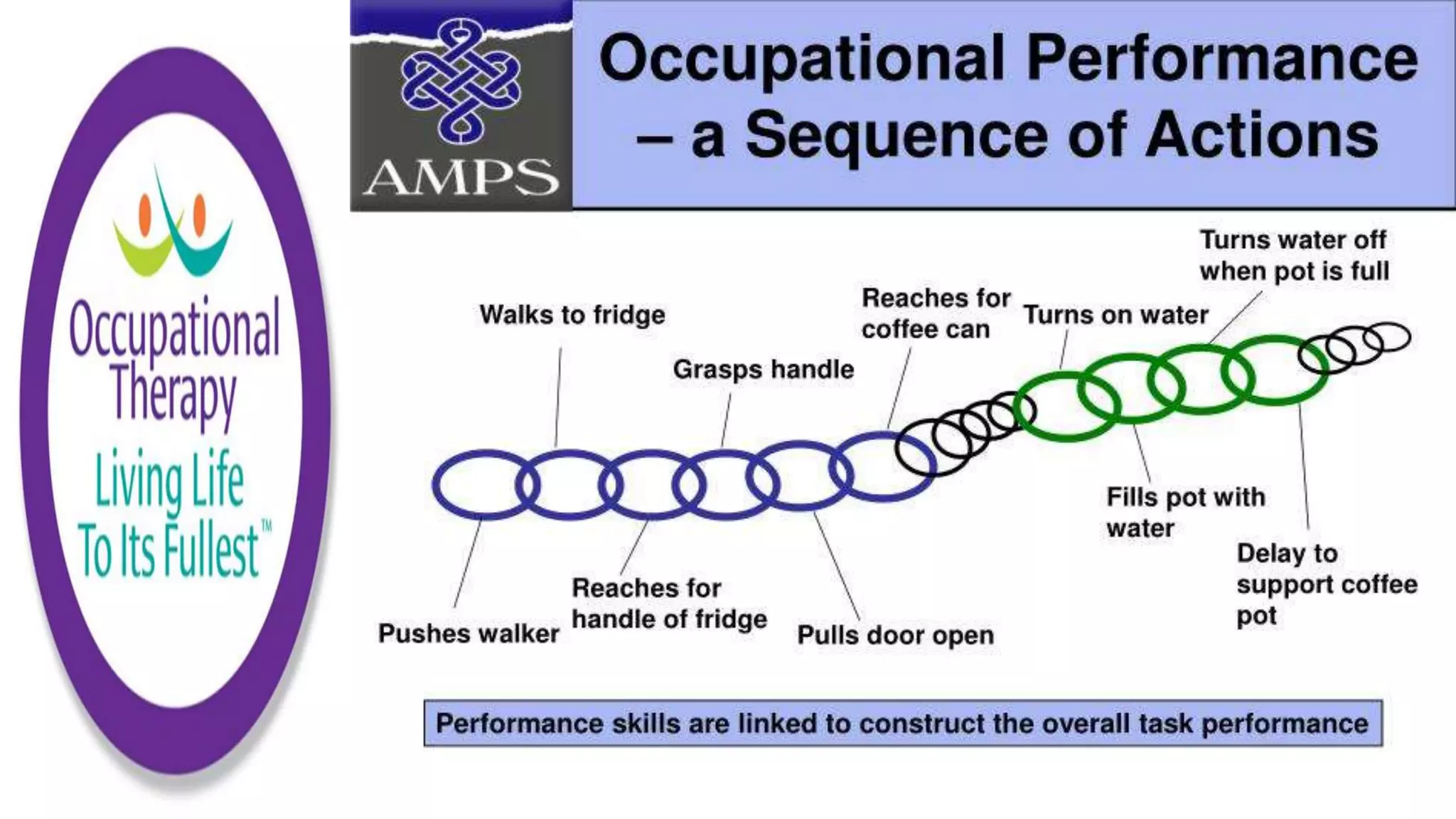
Assessment of Motor & Process Skills (AMPS)
Origin: USA
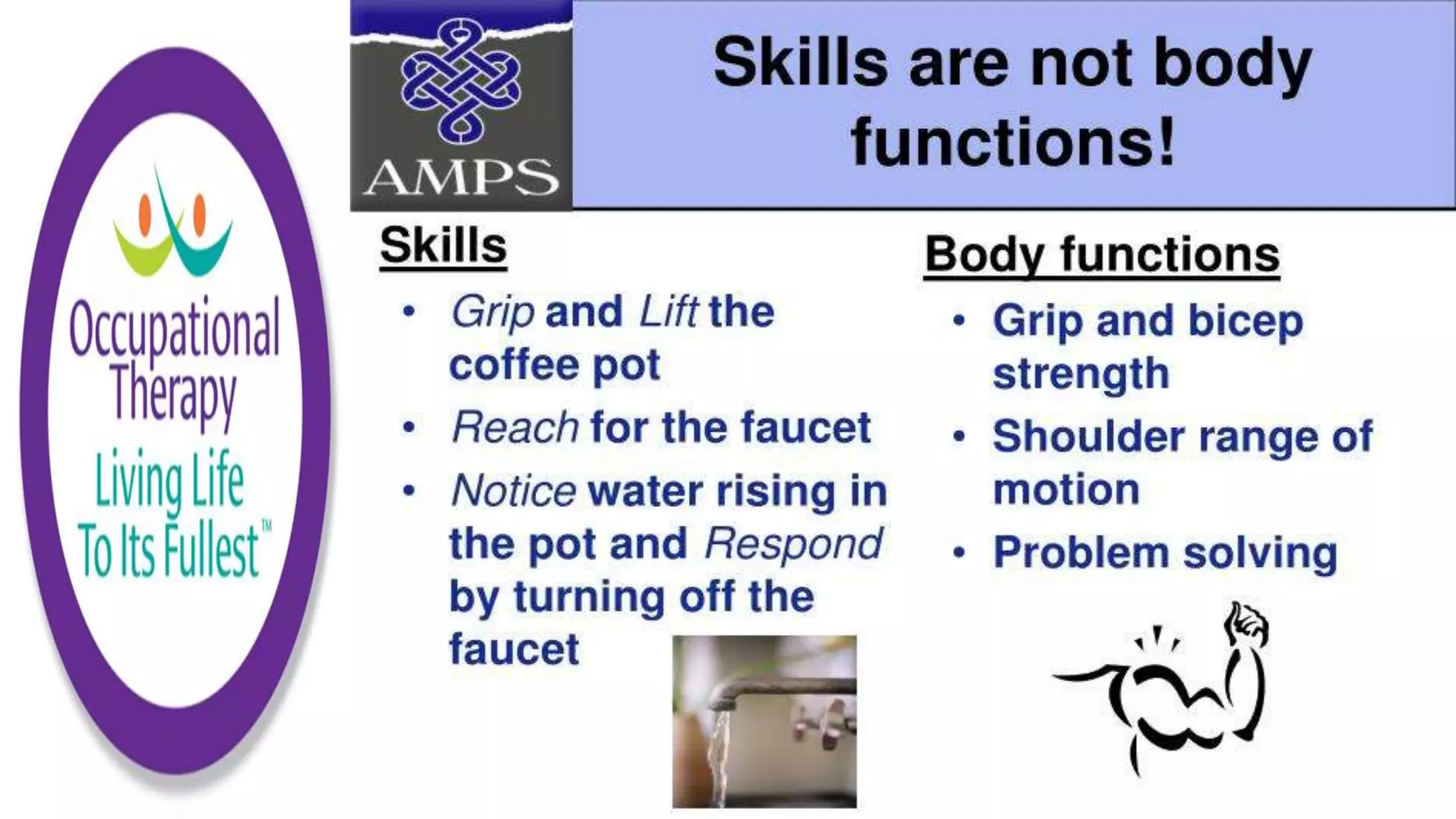
Purpose: To identify occupational performance skill
conceptualized as ability to complete the motor and process
elements of everyday tasks
Client group: Anyone who has the capacity to attempt
standardized task test items but has difficulty doing so
Occupation Focus: IADL selected from the list
of those that have been standardized
Performance Assessed:
Motor skill units of the task
Process skill units of the task
Cognition & OT
2. Remedial – Cognitive Retraining Approach
Foundation: Emergence of neuropsychology
Assessment: Detect dimensions of disordered cognition
Intervention: Cognitive retraining
Outcome: Generalization to ADL
Cognitive Screening Tools
PURPOSE
Create a preliminary overview of a person’s cognitive
impairments & strengths
EXAMPLES
•Rowland Universal Dementia Assessment Scale
•Montreal Cognitive Assessment
•Cognistat
•Kimberley Indigenous Cognitive Assessment
•Mini Mental Status Exam
Specific Cognitive Domains Tests
PURPOSE
Develop a detailed understanding of specific cognitive
impairments & inform design of intervention
EXAMPLES
•Rivermead Behavioral Memory Test (RBMT)
•Contextual Memory Test (CMT)
•Test of Everyday Attention (TEA)
•Post Traumatic Amnesia Scale (PTA Scale)
•Wessex Head Injury Scale
•Line Bisection Test
Wessex Head Injury Matrix (WHIM)
A 62-item hierarchical scale designed to
measure (predict) recovery from coma.
Observe behaviors covering an individual's
level responsiveness and interaction with their
Environment
Sub-sets: Communication, Attention, Social Behaviour,
Concentration, Visual Awareness, and Cognition
Westmead Post Traumatic Amnesia
Scales (PTA Scales)
A set of 12 questions designed to measure the
length of post-traumatic amnesia (PTA) in TBI
patients – able to participate in standardized testing.
Questions cover orientation to person, place, time & the
consistent ability to retain new information from one day to
the next.
Requires perfect score for 3 consecutive days
Rowland Universal Dementia
Assessment Scale (RUDAS)
Series of questions designed to screen for dementia –
applicable to people from diverse cultural and linguistic
backgrounds
Domains assessed: Memory, Visuospatial Orientation,
Praxis, Visuoconstructional Drawing, Judgement,
Memory/Recall, Language
Montreal Cognitive Assessment
(MoCA)
A one-page, 30-point rapid screening instrument for mild
cognitive dysfunction.
Domains assessed: Attention & Concentration, Executive
functions, Memory, Language, Visuoconstructional skills,
Conceptual thinking, Calculations and Orientation.
Kimberley Indigenous Cognitive
Assessment (KiCA)
Series of questions designed to assess cognitive status in
Indigenous people of the Kimberley.
Domains assessed: Orientation, Recognition & naming,
Registration, Verbal comprehension, Verbal fluency, Recall,
Visual naming, Frontal/Executive function, Free recall,
Cued recall, Praxis
Lowenstein Occupational Therapy
Cognitive Assessment (LOTCA)
A standardized set of 25 subtests in 6 cognitive areas
required for everyday function. Used to assess adults with
neurological deficits and mental health disorders.
Domains assessed: Orientation, Visual and Spatial
perception, Motor praxis, Visuomotor organization and
Thinking operations
Cognistat
A rapid analysis of major cognitive impairments in
medical and psychiatric settings. Shortened version: rapid
screen for delirium, MCI & dementia.
Domains assessed: orientation, attention, language, spatial
skills, memory, constructions and reasoning.
Illustrated as a graphic profile of cognitive +/-
Cognition & OT
3. Combined Approach: Cognitive domains assessed within
the context of task performance
Foundation: Occupational Performance
Assessment: Detect dimensions of disordered cognition
during performance of pre-set tasks
Intervention: ??
Outcome: Optimum performance
Specific tests of cognitive impairment in context of specific
occupations
PURPOSE
Determine how specific cognitive deficits manifest
themselves in occupational performance
EXAMPLES
•ADL-focuced Occupation-based Neurobehavioral
Evaluation (A-ONE)
•Executive Function Performance Test (EFPT)
•Kettle Test
•ADL Checklist of Neglect
ADL-focused Occupation-based Neurobehavioral
Evaluation (A-ONE)
Formerly: Árnadóttir Occupational Therapy
Neurobehavioral Evaluation (A-ONE)
Origin: Iceland
Purpose: To diagnose neurobehavioral impairments that
directly impact occupational performance
Client Group: Adults who have had a stroke and have
difficulty with basic ADL
Occupation Focus:
Standardized basic personal care tasks
Performance Assessed:
Part 1: Independence
Dressing
Grooming & Hygiene
Transfers & Mobility
Feeding
Communication
Part 2:
Neurobehavioral impairments impacting performance
A-ONE: PART 2
APRAXIA
Motor
Ideational
Oral
AGNOSIA
Astereognosis
Visual object agnosia
Visual spatial agnosia
Associative visual agnosia
Anosognosia
BODY SCHEME DISORDERS
Unilateral body neglect
Somatoagnosia
R/L discrimination
SPATIAL RELATIONS
Unilateral spatial neglect
Spatial relations
Topographical disorientation
MOTORIC
Perseveration
Abnormal tone: Right side
Abnormal tone: Left side
Other:
APHASIA:
Wernicke’s aphasia
Jargon aphasia
Anomia
Paraphasia
Peservation
Broca’s aphasia
Dysarthria
Other
EMOTION:
Lability
Euphoria
Apathy
Depression
Aggressiveness
Irritability
Frustration
Restlessness
Executive Function Performance Test
TEST ITEMS: Tasks (Sequential order)
Hand Washing (severe cog. impairment)
Oatmeal Preparation
Telephone
Taking Medication
Paying Bills
TEST ITEMS: Executive function components
Initiation
Execution
• Organization
• Sequencing
• Judgement & Safety Completion
SCORING:
Based on the amount of cueing provided.
Scoring grid
Executive Function Performance Test
Independent
Verbal Guidance
Gestural Guidance
Verbal Direct
Instruction
Physical Assistance
Do for Participant
5 EF components (max 20 points)
Each of 4 tasks (max 25 points per task) = Total score
INTERPRETATION:
Determine supports needed at home
The Kettle Test
Purpose: Evaluate ability for independent community
living of people with suspected cognitive impairment
Task:
Comprises 1 task x 13 steps
Prepare a hot drink for 2 (self & therapist).
Therapist requests a drink that differs x2 elements
Scoring:
Number of cues required
Specific tests of cognitive impairment in context of specific
occupations
UTILITY
Pros
Questions raised
Cognition & OT
4. Environmental approach
Foundation: Contextual
Assessment: Identify contextual features and their impact on
performance.
Intervention: Adapt or select optimum context
Outcome: Performance in context
Environmental Assessment
PURPOSE
Collect information about the environment and context in
which the person needs to function
EXAMPLES
•Safety Assessment of Function and the Environment
for Rehabilitation (SAFER)
•Home Environmental Assessment Protocol (HEAP)
•Analysis of Cognitive Environmental Support (ACES)
Psychology:
Human cognition operates in service of individuals as they
interact with an everchanging, naturalistic environment
Contemporary Paradigm Shift
New methods to study “the behavior of an embodied
individual interacting with his or her environment” are
required
Focus [in psychology] should be on what the active, engaged
person is doing in the environment, and what information is
available to that person to support purposeful behavior.
Ecological valid practice = how people function in real
world situations
5. Ecological approach
Foundation: OPM(A) - Occupational Therapy
Assessment: Person-centred, Occupation-embedded,
Performance-focused, Contextually relevant
Intervention: Develop mastery by prompting application of
cognitive strategies
Outcome: Enhanced occupational performance
Occupational Performance
The ability to perceive, recall, plan and/or carry out
occupations for specific purposes in response to internal
or external demands or motivations to the satisfaction of
self and/or significant role partners
The Perceive, Recall, Plan & Perform (PRPP)
System of Task Analysis: Assessment & Intervention
Origin: Australia
Purpose:
To identify OP mastery
To identify the cognitive strategy application reasons for
reduced mastery
To design information to improve OP
Client Group: Anyone who has difficulty meeting
the cognitive demands of everyday life
Occupation Focus: Any task, step, routine, skill set or
interaction that is needed or desired by client / situation
Performance Assessed:
Stage One:
Performance Mastery
Scoring:
Calculate % correct against criterion set
Calculate error impact
Goal-setting: Mastery
What will the client do? (Stage One task) (Skill)
Where will performance happen? (S- context)
How skillful with performance be? (Mastery level)
What Assistance is required? (aids, prompts, help)
Realistic? Relevant?
How long will it take to achieve this? (Time frame)
Performance Assessed:
Stage Two: Application of cognitive (information
processing) strategies to the occupation being performed
What are cognitive strategies?
Internally generated mental techniques which people use in
everyday task performance when faced with the need to
Understand and attend to information
Remember and retrieve information
Manipulate and apply information
Plan and modify responses using information
Cope with internal and external distractions during
participation in every day tasks
How are cognitive strategies assessed using the PRPP
Assessment?
Observation and scoring of strategy behaviors used
during occupational performance.
Conceptualized as the salient thinking and acting
behaviors one uses to plan, execute and evaluate
performance.
Labelled as “Descriptors” and operationally defined
Scoring:
Stage Two: 3-2-1 for each strategy application
behavior (3= no impact; 1= detrimental to performance)
Interpretation:
Summarize, prioritize and plot strategy application
ability / difficulty impacting on OP
Goal-setting: Strategy Application
(needed for SMART Mastery Goal)
Client will recall the steps for dressing
Client will maintain attention for duration of the meal
Client will organize notes prior to writing
Occupational Therapy Cognitive Functional Evaluation

Occupational Therapy Cognitive Functional Evaluation

  • 1.
  • 2.
    Cognition is acomplex and dynamic system of interrelated parts which allows us to organize and use knowledge in order to function in the environment in which we live Perception is making sense of the senses; or the ability to process and interpret information from the environment to make a meaningful whole Cognition refers to the “information-processing functions carried out by the brain that include attention, memory, executive functions, comprehension and formation of speech ,calculation ability, visual perception and praxis skills
  • 10.
    “Cognitive Functional Evaluation(CFE) process” Multifaceted approach that is customized to client needs 1. Interview 2. Cognitive Screening 3. Measures of specific cognitive functions (Domain-specific) 4. Performance-based (occupation-embedded) assessments 5. Specific measures of cognitive impairment in the context of specific occupations (occupation-embedded & domain specific) 6. Environmental assessment
  • 11.
    INCOG Recommendations Neuropsychologist: toconduct a formal cognitive assessment using validated neuropsychological tests, including the presence of emotional and behavioral problems as well as effort. Occupational therapist: to assess the impact of cognitive impairments on performance of meaningful activities and participation Speech-language pathologist: to assess the impact of cognitive impairments on communication (listening, speaking, reading, writing).
  • 12.
    Practice Solution Framing practicein line with core constructs of occupational therapy - Thinking - Reasoning - Assessing - Intervening - Reporting - Describing ‘Through our lens’
  • 14.
    Cognition and OccupationalTherapy 1. Functional approach Foundation: OT focus on improved ADL Assessment: Identify ADL performance difficulties Intervention: Train ADLs Outcome: Independent in ADLs
  • 16.
    Testing of CognitiveFunctions. Cognition involves mental processes of knowing, thinking, remembering, perceiving, awareness, learning, judging, and understanding of ideas. Skills specifically assessed in the CPM battery include levels of attention, short-term visual memory, short-term linguistic memory, encoding and decoding of information, incidental and intentional learning, logical and mathematical reasoning, problem solving, decision-making, organization, and planning.
  • 17.
    Testing of MotorFunctions. The individual’s upper extremities are examined for muscle tone, joint range of motion, and muscular strength and endurance. The therapist evaluates areas such as motor planning, motor control, gross motor coordination, fine motor coordination, hand/eye coordination, bilateral coordination, motor sequencing, and motor speed. Balance and equilibrium functions are assessed due to the requirement for balance during activities of daily living.
  • 18.
    CPM Domains StandardizedTests Visual-Spatial Perception Figure Ground Perception Test (SCSIT*) Cancellation of “H” (Kulkarni, 1993) Alternating Dot-to-Dot (Kulkarni, 1993) Minnesota Spatial Relations Test (Dawis, 1979)
  • 19.
    CPM Domains StandardizedTests Tactile-Kinesthetic Perception Graphesthesia Test (SCSIT*) Manual Form Perception (SCSIT*)
  • 20.
    CPM Domains StandardizedTests Motor Skills Slosson Visual Motor Performance Test (Slosson, 1996) Purdue Pegboard (Tiffin, 1948) Grip and Pinch Strength (Mathiowetz, 1985) Standing Balance Eyes Open/Eyes Closed (SCSIT*) Imitation of Posture (SCSIT*)
  • 21.
    CPM Domains StandardizedTests Cognitive-Perceptual Symbol Digit Modalities Test (Smith, 1991) Detroit Tests of Learning Aptitude-2 (Hammil, 1985) Subtest: Object Sequences Subtest: Letter Sequences Useful Field of View (Ball & Roenker, 1988)
  • 22.
    Clinical observation couldalso yield assessments of: orientation, problem solving, organization, planning, initiation/termination, judgment, sequencing, concrete/abstract reasoning, following directions, and procedural memory.
  • 24.
    Sensory Motor Dysfunction SelectedClinical Manifestation Selected Therapeutic Approaches Muscle Tone Therapeutic Exercise Postural Control Positioning Selectivity of Movement Strengthening Coordination Reflex Inhibition Range of Motion Sensory Stimulation Sensory Facilitation of Adaptive Visual, Auditory, Tactile, Response through Meaningful Proprioceptive, Vestibular Activity: Graded, Progressive, Bilateral, and Reciprocal
  • 25.
    Cognitive Dysfunction Selected ClinicalManifestation Selected Therapeutic Approaches Problem Solving Computer Based Cognitive Retraining Decision Making Problem Solving, Logical Thinking & Planning Decision Making Organizing Exercises in Reading, Writing & Mathematical Concepts Divergent/Convergent/ Abstract Reasoning Cognitive Behavioral Job Related Cognitive Retraining Self-Regulation, Behavior Modification Self-Correction Individual & Group Counseling Education of Client and Significant others
  • 27.
    OCCUPATION ANALYSIS PREPARATION /SET UP TIME REQUIRED ‘STEPS’ TIME REQUIRED 1: 2 3 4 5 6 7 CLEAN UP / PUT AWAY TIME REQUIRED TOTAL TIME:
  • 28.
    ‘Steps – Tasks- Routines’ Errors 1. X 2. X 3. X 4. X 5. 6. 7. 8. PERFORMANCE ANALYSIS 4/8 error free = 50% Mastery
  • 29.
    Performance-based assessments PURPOSE Identify functionalperformance concerns to address – occupation-embedded EXAMPLES •Assessment of Motor and Process Skills (AMPS)** •Routine Task Inventory (RTI) •PRPP Stage One
  • 30.
    Assessment of Motor& Process Skills (AMPS) Origin: USA Purpose: To identify occupational performance skill conceptualized as ability to complete the motor and process elements of everyday tasks Client group: Anyone who has the capacity to attempt standardized task test items but has difficulty doing so
  • 31.
    Occupation Focus: IADLselected from the list of those that have been standardized Performance Assessed: Motor skill units of the task Process skill units of the task
  • 71.
    Cognition & OT 2.Remedial – Cognitive Retraining Approach Foundation: Emergence of neuropsychology Assessment: Detect dimensions of disordered cognition Intervention: Cognitive retraining Outcome: Generalization to ADL
  • 72.
    Cognitive Screening Tools PURPOSE Createa preliminary overview of a person’s cognitive impairments & strengths EXAMPLES •Rowland Universal Dementia Assessment Scale •Montreal Cognitive Assessment •Cognistat •Kimberley Indigenous Cognitive Assessment •Mini Mental Status Exam
  • 73.
    Specific Cognitive DomainsTests PURPOSE Develop a detailed understanding of specific cognitive impairments & inform design of intervention EXAMPLES •Rivermead Behavioral Memory Test (RBMT) •Contextual Memory Test (CMT) •Test of Everyday Attention (TEA) •Post Traumatic Amnesia Scale (PTA Scale) •Wessex Head Injury Scale •Line Bisection Test
  • 74.
    Wessex Head InjuryMatrix (WHIM) A 62-item hierarchical scale designed to measure (predict) recovery from coma. Observe behaviors covering an individual's level responsiveness and interaction with their Environment Sub-sets: Communication, Attention, Social Behaviour, Concentration, Visual Awareness, and Cognition
  • 75.
    Westmead Post TraumaticAmnesia Scales (PTA Scales) A set of 12 questions designed to measure the length of post-traumatic amnesia (PTA) in TBI patients – able to participate in standardized testing. Questions cover orientation to person, place, time & the consistent ability to retain new information from one day to the next. Requires perfect score for 3 consecutive days
  • 76.
    Rowland Universal Dementia AssessmentScale (RUDAS) Series of questions designed to screen for dementia – applicable to people from diverse cultural and linguistic backgrounds Domains assessed: Memory, Visuospatial Orientation, Praxis, Visuoconstructional Drawing, Judgement, Memory/Recall, Language
  • 77.
    Montreal Cognitive Assessment (MoCA) Aone-page, 30-point rapid screening instrument for mild cognitive dysfunction. Domains assessed: Attention & Concentration, Executive functions, Memory, Language, Visuoconstructional skills, Conceptual thinking, Calculations and Orientation.
  • 78.
    Kimberley Indigenous Cognitive Assessment(KiCA) Series of questions designed to assess cognitive status in Indigenous people of the Kimberley. Domains assessed: Orientation, Recognition & naming, Registration, Verbal comprehension, Verbal fluency, Recall, Visual naming, Frontal/Executive function, Free recall, Cued recall, Praxis
  • 79.
    Lowenstein Occupational Therapy CognitiveAssessment (LOTCA) A standardized set of 25 subtests in 6 cognitive areas required for everyday function. Used to assess adults with neurological deficits and mental health disorders. Domains assessed: Orientation, Visual and Spatial perception, Motor praxis, Visuomotor organization and Thinking operations
  • 80.
    Cognistat A rapid analysisof major cognitive impairments in medical and psychiatric settings. Shortened version: rapid screen for delirium, MCI & dementia. Domains assessed: orientation, attention, language, spatial skills, memory, constructions and reasoning. Illustrated as a graphic profile of cognitive +/-
  • 81.
    Cognition & OT 3.Combined Approach: Cognitive domains assessed within the context of task performance Foundation: Occupational Performance Assessment: Detect dimensions of disordered cognition during performance of pre-set tasks Intervention: ?? Outcome: Optimum performance
  • 82.
    Specific tests ofcognitive impairment in context of specific occupations PURPOSE Determine how specific cognitive deficits manifest themselves in occupational performance EXAMPLES •ADL-focuced Occupation-based Neurobehavioral Evaluation (A-ONE) •Executive Function Performance Test (EFPT) •Kettle Test •ADL Checklist of Neglect
  • 83.
    ADL-focused Occupation-based Neurobehavioral Evaluation(A-ONE) Formerly: Árnadóttir Occupational Therapy Neurobehavioral Evaluation (A-ONE) Origin: Iceland Purpose: To diagnose neurobehavioral impairments that directly impact occupational performance Client Group: Adults who have had a stroke and have difficulty with basic ADL
  • 84.
    Occupation Focus: Standardized basicpersonal care tasks Performance Assessed: Part 1: Independence Dressing Grooming & Hygiene Transfers & Mobility Feeding Communication Part 2: Neurobehavioral impairments impacting performance
  • 85.
    A-ONE: PART 2 APRAXIA Motor Ideational Oral AGNOSIA Astereognosis Visualobject agnosia Visual spatial agnosia Associative visual agnosia Anosognosia BODY SCHEME DISORDERS Unilateral body neglect Somatoagnosia R/L discrimination SPATIAL RELATIONS Unilateral spatial neglect Spatial relations Topographical disorientation
  • 86.
    MOTORIC Perseveration Abnormal tone: Rightside Abnormal tone: Left side Other: APHASIA: Wernicke’s aphasia Jargon aphasia Anomia Paraphasia Peservation Broca’s aphasia Dysarthria Other EMOTION: Lability Euphoria Apathy Depression Aggressiveness Irritability Frustration Restlessness
  • 87.
    Executive Function PerformanceTest TEST ITEMS: Tasks (Sequential order) Hand Washing (severe cog. impairment) Oatmeal Preparation Telephone Taking Medication Paying Bills TEST ITEMS: Executive function components Initiation Execution • Organization • Sequencing • Judgement & Safety Completion
  • 88.
    SCORING: Based on theamount of cueing provided. Scoring grid Executive Function Performance Test Independent Verbal Guidance Gestural Guidance Verbal Direct Instruction Physical Assistance Do for Participant 5 EF components (max 20 points) Each of 4 tasks (max 25 points per task) = Total score INTERPRETATION: Determine supports needed at home
  • 89.
    The Kettle Test Purpose:Evaluate ability for independent community living of people with suspected cognitive impairment Task: Comprises 1 task x 13 steps Prepare a hot drink for 2 (self & therapist). Therapist requests a drink that differs x2 elements Scoring: Number of cues required
  • 90.
    Specific tests ofcognitive impairment in context of specific occupations UTILITY Pros Questions raised
  • 91.
    Cognition & OT 4.Environmental approach Foundation: Contextual Assessment: Identify contextual features and their impact on performance. Intervention: Adapt or select optimum context Outcome: Performance in context
  • 92.
    Environmental Assessment PURPOSE Collect informationabout the environment and context in which the person needs to function EXAMPLES •Safety Assessment of Function and the Environment for Rehabilitation (SAFER) •Home Environmental Assessment Protocol (HEAP) •Analysis of Cognitive Environmental Support (ACES)
  • 93.
    Psychology: Human cognition operatesin service of individuals as they interact with an everchanging, naturalistic environment Contemporary Paradigm Shift New methods to study “the behavior of an embodied individual interacting with his or her environment” are required Focus [in psychology] should be on what the active, engaged person is doing in the environment, and what information is available to that person to support purposeful behavior.
  • 94.
    Ecological valid practice= how people function in real world situations
  • 95.
    5. Ecological approach Foundation:OPM(A) - Occupational Therapy Assessment: Person-centred, Occupation-embedded, Performance-focused, Contextually relevant Intervention: Develop mastery by prompting application of cognitive strategies Outcome: Enhanced occupational performance
  • 96.
    Occupational Performance The abilityto perceive, recall, plan and/or carry out occupations for specific purposes in response to internal or external demands or motivations to the satisfaction of self and/or significant role partners The Perceive, Recall, Plan & Perform (PRPP) System of Task Analysis: Assessment & Intervention Origin: Australia Purpose: To identify OP mastery To identify the cognitive strategy application reasons for reduced mastery To design information to improve OP Client Group: Anyone who has difficulty meeting the cognitive demands of everyday life
  • 97.
    Occupation Focus: Anytask, step, routine, skill set or interaction that is needed or desired by client / situation Performance Assessed: Stage One: Performance Mastery Scoring: Calculate % correct against criterion set Calculate error impact
  • 98.
    Goal-setting: Mastery What willthe client do? (Stage One task) (Skill) Where will performance happen? (S- context) How skillful with performance be? (Mastery level) What Assistance is required? (aids, prompts, help) Realistic? Relevant? How long will it take to achieve this? (Time frame)
  • 99.
    Performance Assessed: Stage Two:Application of cognitive (information processing) strategies to the occupation being performed
  • 100.
    What are cognitivestrategies? Internally generated mental techniques which people use in everyday task performance when faced with the need to Understand and attend to information Remember and retrieve information Manipulate and apply information Plan and modify responses using information Cope with internal and external distractions during participation in every day tasks
  • 101.
    How are cognitivestrategies assessed using the PRPP Assessment? Observation and scoring of strategy behaviors used during occupational performance. Conceptualized as the salient thinking and acting behaviors one uses to plan, execute and evaluate performance. Labelled as “Descriptors” and operationally defined
  • 102.
    Scoring: Stage Two: 3-2-1for each strategy application behavior (3= no impact; 1= detrimental to performance) Interpretation: Summarize, prioritize and plot strategy application ability / difficulty impacting on OP
  • 103.
    Goal-setting: Strategy Application (neededfor SMART Mastery Goal) Client will recall the steps for dressing Client will maintain attention for duration of the meal Client will organize notes prior to writing