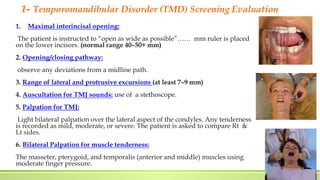
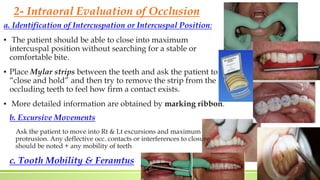
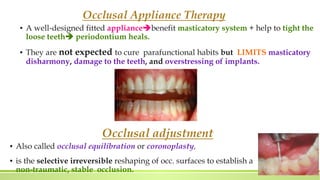
This document discusses requirements for occlusal stability including having light anterior contacts, well-distributed posterior contacts, coupled contacts between opposing teeth, and forces directed along the long axis of each tooth. It also discusses screening evaluations for temporomandibular disorders including range of motion tests and palpation of the jaw joints and muscles. An intraoral evaluation of occlusion includes identifying the intercuspal position and examining excursive movements and tooth mobility. Bruxism can cause tooth wear, fractures, and pain and is treated with occlusal appliances or adjustment to limit damage.






![occlusion mmmmmmmm- Copy [Autosaved].pptx](https://cdn.slidesharecdn.com/ss_thumbnails/occlusion-copyautosaved-240715160312-7fd34768-thumbnail.jpg?width=640&height=640&fit=bounds)


