Download to read offline
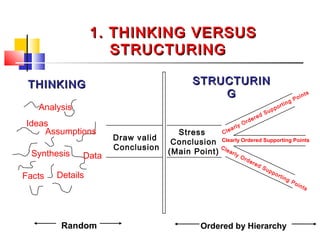
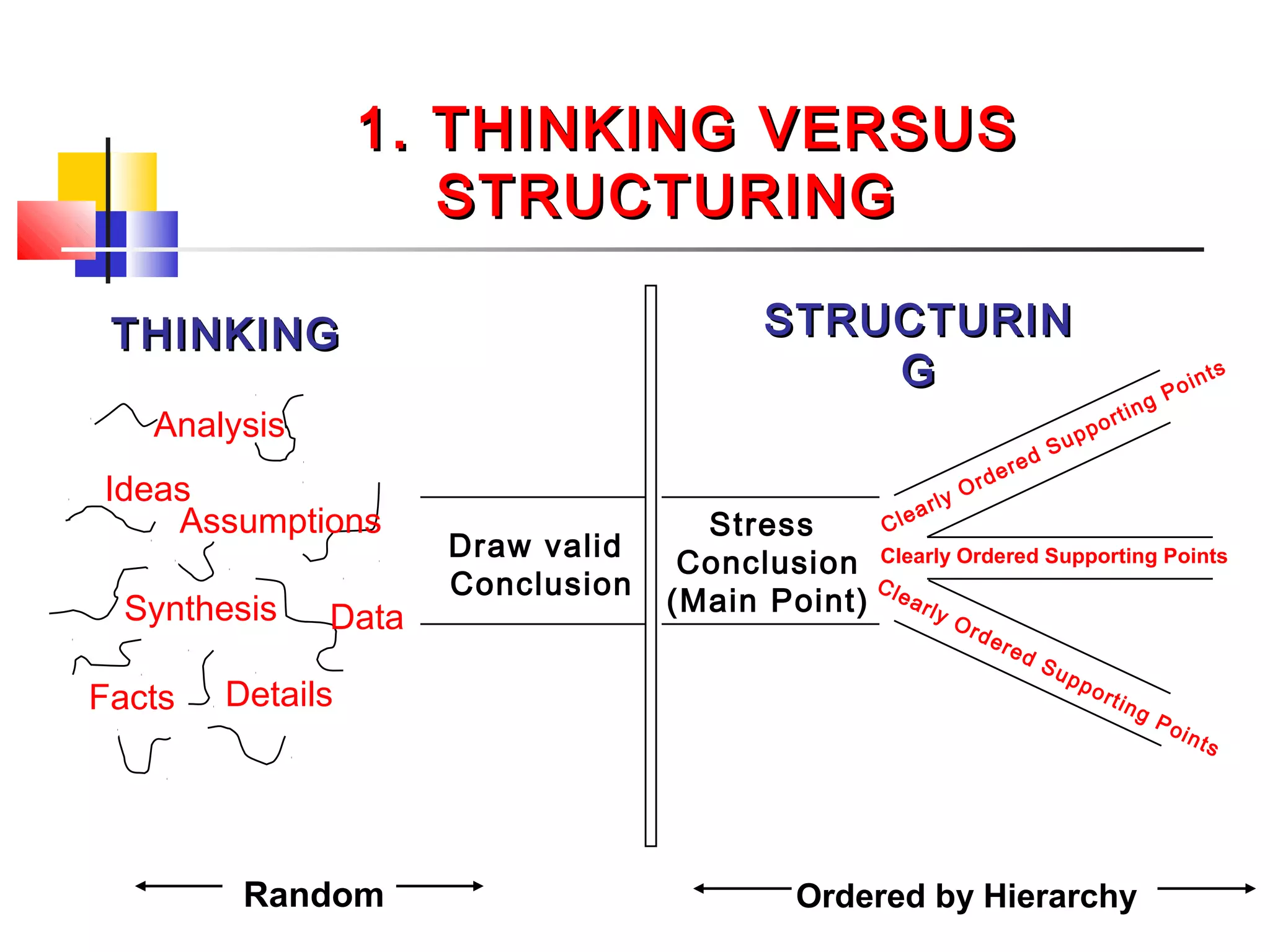
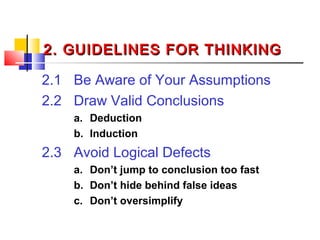
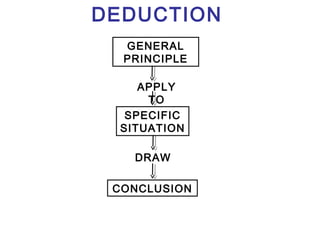
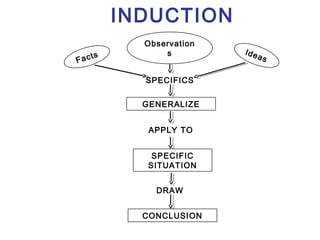
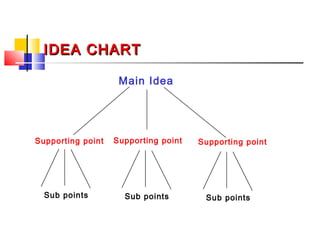
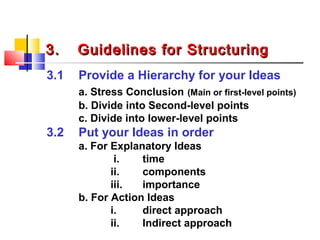

1. The document discusses the differences between thinking and structuring when presenting ideas. Thinking involves drawing valid conclusions from facts and data through deduction or induction, while avoiding logical defects. Structuring provides a clear hierarchy and order for ideas with the main conclusion first and supporting points ordered below. 2. Guidelines are provided for both thinking and structuring information. For thinking, one should be aware of assumptions, draw valid conclusions through logical reasoning, and avoid jumping to conclusions or oversimplifying. For structuring, a hierarchy from main ideas to specific supporting points should be used and ideas ordered by importance, time, or a direct approach.


