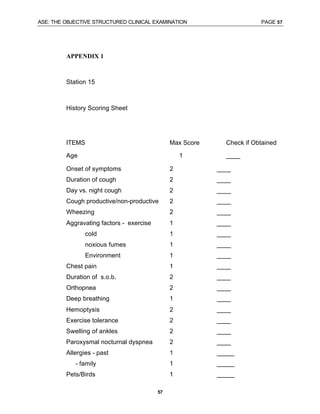
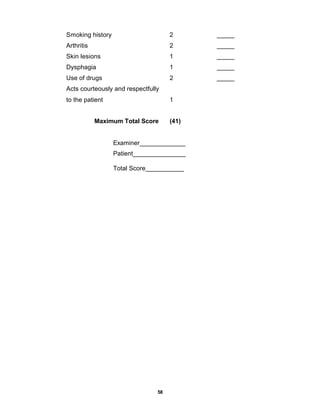
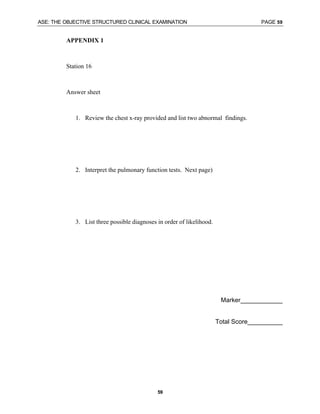
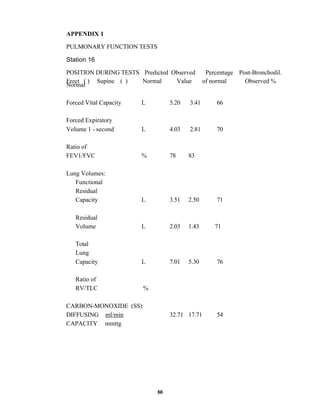
..........
. . . . . . . . . .
association for surgical education
TheObjectiveStructured
ClinicalExamination
2nd
Edition
PREPARED BY
THE COMMITTEE ON TESTING AND EVALUATION
ASSOCIATION FOR SURGICAL EDUCATION
Copyright 2001 - Association for Surgical Education
www.surgicaleducation.com
2
EDITORS
James A. McCoy, M.D.
Hollis W. Merrick, M.D.
3
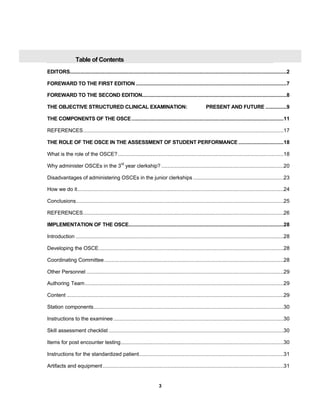
Table of Contents
EDITORS................................................................................................................................................2
FOREWARD TO THE FIRST EDITION ....................................................................................................7
FOREWARD TO THE SECOND EDITION................................................................................................8
THE OBJECTIVE STRUCTURED CLINICAL EXAMINATION: PRESENT AND FUTURE ..............9
THE COMPONENTS OF THE OSCE.....................................................................................................11
REFERENCES.....................................................................................................................................17
THE ROLE OF THE OSCE IN THE ASSESSMENT OF STUDENT PERFORMANCE ..............................18
What is the role of the OSCE?..............................................................................................................18
Why administer OSCEs in the 3rd
year clerkship? .................................................................................20
Disadvantages of administering OSCEs in the junior clerkships ............................................................23
How we do it.........................................................................................................................................24
Conclusions..........................................................................................................................................25
REFERENCES.....................................................................................................................................26
IMPLEMENTATION OF THE OSCE.......................................................................................................28
Introduction ..........................................................................................................................................28
Developing the OSCE...........................................................................................................................28
Coordinating Committee.......................................................................................................................28
Other Personnel ...................................................................................................................................29
Authoring Team....................................................................................................................................29
Content ................................................................................................................................................29
Station components..............................................................................................................................30
Instructions to the examinee.................................................................................................................30
Skill assessment checklist ....................................................................................................................30
Items for post encounter testing............................................................................................................30
Instructions for the standardized patient................................................................................................31
Artifacts and equipment........................................................................................................................31
4
Patient recruitment and training ............................................................................................................31
Costs/Budgeting...................................................................................................................................32
Administering the OSCE.......................................................................................................................32
Location ...............................................................................................................................................32
Personnel.............................................................................................................................................33
Setting up the OSCE ............................................................................................................................33
Examination Day ..................................................................................................................................33
References...........................................................................................................................................35
IMPLEMENTATION AND USES OF OBJECTIVE STRUCTURED CLINICAL EXAMINATIONS
(OSCE).................................................................................................................................................36
Organization of an OSCE .....................................................................................................................36
Conducting an OSCE ...........................................................................................................................39
OSCE Results ......................................................................................................................................39
Disadvantages/Limitations of OSCE .....................................................................................................40
Applications of OSCE ...........................................................................................................................41
References...........................................................................................................................................42
HOW TO PREPARE AND IMPLEMENT AN OBJECTIVE STRUCTURED CLINICAL
EXAMINATION.....................................................................................................................................43
Introduction ..........................................................................................................................................43
An Example: The 1987 CSAU-OSCE....................................................................................................44
How to Develop an OSCE ....................................................................................................................45
The Coordinating Committee ................................................................................................................45
The First Meeting..................................................................................................................................45
The Authoring Team.............................................................................................................................46
Guide for Creating a Station..................................................................................................................47
The Instructions to the Candidate .........................................................................................................47
The History/Physical Examination Checklist (The First Five Minutes) ..................................................47
The Problem-Solving Questions ( The Second Five Minutes)...............................................................48
Instruction for the Standardized Patient.................................................................................................48
Equipment Listing for Stations ..............................................................................................................49
5
Patients for the OSCE: Real or Simulated.............................................................................................49
Follow-up Meeting ................................................................................................................................49
The Training of the Examiners..............................................................................................................49
Choosing a Site for the OSCE ..............................................................................................................50
Running the OSCE...............................................................................................................................50
Setting up the OSCE ............................................................................................................................51
REFERENCES.....................................................................................................................................53
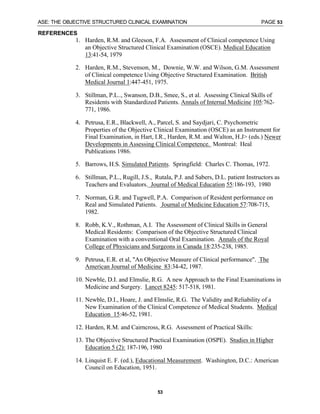
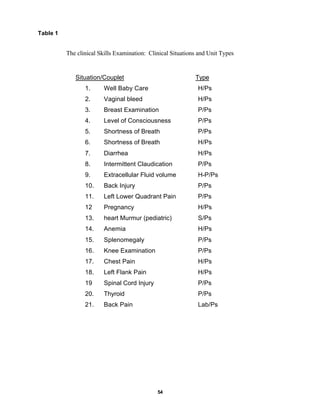
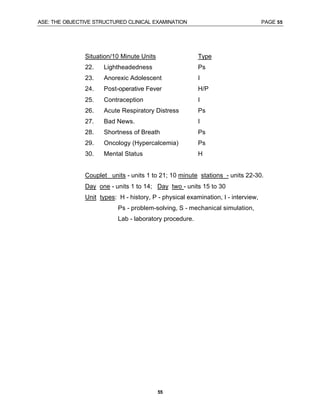
Table 1.................................................................................................................................................54
ADDITIONAL USES FOR OSCES.........................................................................................................80
References:..........................................................................................................................................85
EARLY FEEDBACK FOR AN OSCE .....................................................................................................90
MEASUREMENT CONSIDERATIONS IN PLANNING AND EVALUATING AN OSCE............................95
REFERENCES...................................................................................................................................104
..........
. . . . . . . . . .
Acknowledgements
We thank the Association for Surgical
Education and its founders for
making this work possible. We thank
the authors and member institutions
for their expertise in the preparation
of this manual. Our special thanks to
the coordinators and administrative
support staff who have processed,
edited and reprocessed this
manuscript. Lastly, we are grateful to
the many patients who entrust us with
their lives daily in practice, teaching
and research. May we always strive
to serve you with our very best skill,
dedication,integrityandcompassion.
ASE: THE OBJECTIVE STRUCTURED CLINICAL EXAMINATION PAGE 7
7
FOREWARD TO THE FIRST EDITION
This Manual is designed to describe some of the basic principles and
concepts of the Objective Structured Clinical Examination (OSCE). We
hope that it will be useful not only to the Departments of Surgery of our
member institutions, but to other clinical disciplines as well.
Hollis W. Merrick, M.D.
Editor
8
FOREWARD TO THE SECOND EDITION
When the first edition of this Manual was published in 1989, the
Objective Structured Clinical Examination (OSCE) was a relatively new
tool in the effort to obtain an accurate measurement of medical student
knowledge and the effectiveness of the surgical clerkship curriculum.
Eleven years later, as more and more institutions have accepted its validity
and have initiated their own OSCE programs, the need remains for a basic
guidebook on the principles and concepts of the OSCE. It is our combined
hope that this Manual will prove helpful to all users, novice and
experienced alike.
James A. McCoy, M.D.
Hollis W. Merrick, M.D.
Editors
ASE: THE OBJECTIVE STRUCTURED CLINICAL EXAMINATION PAGE 9
9
THE OBJECTIVE STRUCTURED CLINICAL EXAMINATION:
PRESENT AND FUTURE
Hollis W. Merrick, M.D.
James A. McCoy, M.D.
The advent of the Objective Structured Clinical Examination (OSCE) has offered a
strikingly new and exciting way of making valid assessments of the clinical performance of
medical students, residents, and fellows. Since its introduction by Dr. Harden and colleagues in
1975, the technique has gained steady and widespread acceptance around the world. Reports in
the literature concerning its use come from England, Scotland, Australia, South Africa, Nigeria,
the Netherlands, Canada and the United States.
The advantages of the examination are greatly apparent when one reviews the wide
spectrum of clinical tests that can be incorporated into the OSCE. Such tests include multiple
choice written questions, reviews of radiographs, use of models, and examination of simulated or
real patients. The breadth of data that can be encompassed in this type of examination is limited
only by the imagination of the examiners.
Nevertheless, there are drawbacks to the OSCE. It is cumbersome and expensive to set
up, and it requires a great deal of personnel for its implementation. The expense involved in
obtaining the examination site, the use of models or simulated patients, and the time of the
examiners, can often be intimidating factors for those considering using an OSCE format for
evaluating students, residents, and fellows.
The Objective Structured Clinical Examination (OSCE) has in some institutions become
a finely tuned instrument used to evaluate clinical skills, attitudes and behaviors that are
considered standards used by practitioners in the care of their patients. It is hoped that the
competencies demonstrated by students, residents and fellows in the OSCE will be manifested
daily in the lives of their patients as the medical profession struggles to maintain skillful, high
quality, competent health care in the United States as managed care continues to erode the
doctor-patient relationship.
10
This 2nd
edition will offer different perspectives and implementation protocols from
different institutions. Whereas the core components are the same, the philosophy and
implementation by different institutions with varying resources are different. An innovative
addition, the Early Feedback OSCE, is presented by the Medical College of Ohio. Merrick, et al.
used the computer to compute the student and the residents assessments throughout the
examination. Thus shortly following completion of the examination, the examinees receive their
objective computer generated assessment.
The objective of this Manual is to summarize the state of the art as it exists in the United
States and Canada at this point, and to make this information available to our member
institutions. Many of the authors in the Manual have had extensive experience with the OSCE.
The NBME/USMLE continues on a path to introduce the OSCE as a part of the USMLE
sometime in the future. This represents a massive undertaking. Even though the Royal College of
Physicians and Surgeons of Canada uses the OSCE as standard to evaluate its foreign medical
graduates, the number of examinees is small in comparison to the 15,000 plus American Medical
Graduates. The ASE should, perhaps, help medical schools establish OSCE standards that could
be approved by the NBME/USMLE and implemented by local or regional medical schools.
The OSCE does allow examiners to document competencies in clinical skills, behaviors
and attitudes in an examination setting. There is no question that these objective measures should
be made. What impact has this had on improving care of our patients? How do we measure
commitment integrity and dedication?
Who will take the time to obtain the history, do the physical exam, generate and execute
the appropriate diagnostic and treatment plans that are evidenced-based? How do we measure
commitment, integrity, and dedication?
ASE: THE OBJECTIVE STRUCTURED CLINICAL EXAMINATION PAGE 11
11
THE COMPONENTS OF THE OSCE
James A. McCoy, M.D.
The OSCE (Objective Structured Clinical Examination) has reached a stage of
development that allows clear recognition of key components that bring structure and
organization to its construction, implementation and assessment of its performance.
The major components are:
1. The (examination) coordinating committee
2. The examination coordinator
3. Lists of skills, behaviors and attitudes to be assessed
4. Criteria for scoring the assessment (marking scheme of checklist)
5. The examinees
6. The examiners
7. Examination site
8. Examination stations
8.1 Time and time allocation between stations
8.2 Anatomic models for repetitive examinations (Breast,
Pelvic/Rectum)
8.3 Couplet Station
8.4 Examination Questions
8.5 Environment of Exam Station
8.6 Examination Station Circuit (Figure 1.)
9. Patients Standardized or Simulated
9.1 Instruction to Patients
10. Timekeeper, time clock and time signal
11. Contingency Plans
12. Assessment of Performance of the OSCE
12
Since its introduction into clinical medicine by Harden, et al. 1975, the OSCE has
been widely used to evaluate students in virtually all areas of medicine with extension
into the formative evaluation of residents. Its final form may be simply supported on
a shoestring budget as described by Poenaru, et al. or as elaborate and sophisticated as
administered by the Faculty of Medicine, University of Toronto (1, 2, 3, 4). It is
clear, unless the major components are used as a foundation for the OSCE’s structure,
it will be severely flawed and its implementation fraught with difficulty and hardship.
In order to develop and conduct an OSCE, appropriate clerical support through all
phases of development and implementation is essential.
1. The Examination Coordinating Committee
An examination coordinating committee is made up of members who are committed
to the evaluative and educational process and whether appointed or volunteered must
give this effort high priority in order for the OSCE to be developed and implemented.
The number of members who make up this committee is not as important as the
intensity of the investment of each member. It is the responsibility of the
examination committee to determine the content of the examination, development and
implementation. It is important that this committee has the capacity and personnel to
address decisions related to reliability and validity (5).
2. The Examination Coordinator
The functions of the examination coordinator (M.D. or Ph.D. educator) are the
catalyst that facilitates the smooth working of the committee in developing,
implementing and assessing the performance of the OSCE. For examinations
conducted at different sites, a local site coordinator must work closely with the
examination coordinator and the coordinating committee.
3. Lists of Skills, Behaviors and Attitudes to be Assessed
The examination will measure objectively the competencies in specific areas of
behavior, techniques, attitudes and decision-making strategies based on the objectives
of the course or the requirement of the licensing body. The OSCE should be able to
reliably assess clinical competence in history taking, physical examination,
laboratory, radiographic and other data interpretation, technical and procedural skills
as well as counseling and attitudinal behaviors.
4. Criteria for Scoring the Assessment (Marking Scheme or Checklist)
A marking scheme or checklist is prepared for each station. Preparation of the
checklist requires predetermined objective criteria that are agreed upon by the
examination committee, based on faculty input. Marking scheme/checklist should be
concise, unambiguous and written to contribute to the reliability of the station. The
more focused the checklist, the greater the power of the station to differentiate
effectively among the abilities of students. It is helpful to include instructions to the
examiners at the top of each checklist/marking scheme. The series of marking
ASE: THE OBJECTIVE STRUCTURED CLINICAL EXAMINATION PAGE 13
13
schemes/checklist may be presented to each examinee in bound form also noting the
order in which the examinee will proceed through the examination stations.
As Papp stated, “The competence of students entering the “real world” of
medical practice may truly determine life or death for their patients. The
development of more accurate methods of assessing clinical competence works to the
benefit of the patient, the new doctor, and the medical profession in general (6)”.
5. The Examinees
The examinee is the student, resident, or fellow in training or at the end of training of
a prescribed course designed to teach certain clinical competencies that the examinee
can use in a clinical situation to make an assessment and develop a diagnostic
formulation that culminates in a therapeutic plan.
6. The Examiners
Most stations will require an examiner, although some stations do not. The examiner
at the station where clinical skills (history-taking, physical examination, interviewing
and communication) are assessed, may be either a physician or a standardized patient.
Research has shown that an acceptable level of reliability can be achieved with either
a physician or standardized patient as the examiner (7,8,9). Harden recommends
using examiners from a range of specialties and disciplines, for example, a dietitian at
a station for nutrition. (10).
7. The Examination Site
The examination site is part of a special teaching facility in some institutions. When
such facilities are not available, the examination may be conducted in an outpatient
facility or other space where offices are available in close proximity to each other.
8. Examinations Station
The total number of stations will vary based on a function of the number of skills,
behaviors and attitudinal items to be tested. For most clerkships or courses, the total
will vary from 10-25. Fewer than 10 are probably inadequate and greater than 25
become from most unwieldy (11). Larger numbers of stations are located in
Provinces in Canada.
8.1 Time Allocation and Time between Stations
The competency being assessed in particular station will define how much time
should be allotted per station. The length of time will range from 5-20 minutes.
However, the time per station is constrained by the total duration of the examination.
The time allocated per station should be as uniform as possible thus facilitating the
smooth movement of examinees from station to station. Transit time must be built
into the total time allocated for each station, e.g., a 10 minute station, 9 minutes is
14
allocated for the task and one minute transit time to the next station. The examiner
can complete the checklist prior to the entry of the next examinee.
Examination station content:
8.2 Anatomic Models for Repetitive Examinations (Breast,
Pelvic/Rectum
The skill, behavior or attitude to be tested in a station determines whether the station
requires a real patient, simulated patient, laboratory data roentgenographic sticker,
other clinical data, patient records, or examining equipment (stethoscope,
opthalmoscope, etc.) Chronic patients (stable) may serve well in this situation with
proper training. Simulated patients who are well-trained offer reliability and
consistency in the quality of their presentations. A complete material and equipment
list must be generated. Specially constructed plastic models or simulations may be
used, i.e. rectal or breast models, where the repetitive and intimate nature of the task
makes the use of patients inappropriate. When examination equipment is a part of the
station, it must be in good repair and replacement parts must be readily available.
8.3 Couplet Station
Some competencies may best be assessed by coupled or linked stations. For example,
a couplet station may consist of a history-physical examination combined with a
problem-solving station.
8.4Examination Questions
Examination questions are designed to assess the ability to interpret information and
critical thinking. The questions deal with diagnostic investigations, differential
diagnostic and management plans.
8.5 Environment of Exam Station
The Examination Station environment should be conducive to the competency to be
tested, including adjustable lighting for fundoscopic examinations and appropriate
examination tables for focused physical skills assessment. Stations where
auscultatory skills are being assessed should be either well insulated or in
appropriately quiet areas of the examination site. Clearly marked directions leading
from one station to the next should be displayed.
8.6 Examination Stations Circuit Stations
The Examination stations should be clearly marked in a logical sequence that allows
easy, unimpeded transit from one station to the next.
9. Patient (Real) or Simulated
A standardized patient is an individual with a health problem that is in a chronic but
stable condition. Standardized or simulated patient may be used when properly trained
for history and physical assessments. Simulated patients may come from the ranks of
ASE: THE OBJECTIVE STRUCTURED CLINICAL EXAMINATION PAGE 15
15
volunteers, or acting guilds. They too, must be trained. Whether real or simulated, more
training is required for patients used in history taking than for patients used for physical
examinations.
9.1 Detailed instruction package is provided for both the standardized
and simulated patient. The instructions describe how the patient
responds to historical questions and physical exam, as well as how
the patient should dress.
16
10.Timekeeper, Time Clock and Time Signal
Appropriate personnel for the position of official timekeeper and exam facilitators
need to be identified and properly instructed. A well functioning time clock and time
signal are critical. The time signal should be unambiguous and clearly audible
throughout the examination site. (11). One support person per three stations is
recommended.
11.Contingency Plans
A contingency plan includes reserve standardized patients who are trained to assume
a number of roles, and a patient trainer who circulates to deal with any patient
problems that arise. A number of reserve stations should be available. A contingency
plan must be developed for students who must leave the exam when the situation
arises.
12.Assessment of the Performance of the OSCE
It is the responsibility of the Examination Committee to address the numerous
measurement issues related to the OSCE. DaRosa cites five key areas that should be
addressed (12):
1. The OSCE should be tested for appropriate measurement characteristics such
as validity, reliability, feasibility and credibility.
2. The different types of validity for which an OSCE can be tested include
predictive validity, concurrent validity and content validity (8).
3. A valid OSCE station measures what it was designed to measure. A reliable
station measures it consistently (13).
4. Item analysis should be completed for an OSCE to provide indications
concerning the difficulty of each station in relation to the overall exam and
how each station discriminates among various levels of performance.
5. Grading can be based on a criterion-referenced system, norm-referenced
system, or a combination of both. The Examination committee needs to
decide in advance which system best meets its fundamental purposes for the
exam.
ASE: THE OBJECTIVE STRUCTURED CLINICAL EXAMINATION PAGE 17
17
REFERENCES
1. Harden, R.M. Stevenson, M. Downie, W.W, Wilson, G.M., Assessment of
Clinical Competence Using Objective structured Examinations. British
Medical Journal 1 447-451, 1975.
2. Poenaru, D., Morales, D., Richards, A., O’Connor, H.M. Running on
Objective Structured Clinical Examination on a Shoestring Budget. American
Journal of Surgery, 173 538-541, 1997.
3. Sloan, DA, Strodel, WE, Blue AV, Felts JL Schwartz RW, Dannelly, MB.
The Use of Objective Structured Clinical Examination (OSCE) for Evaluation
and Instruction in Graduate Medical Education. Journal of Surgery Resident
63 (1) 225-30. ’96
4. Cohen, R. MacInnes, A, Finkelstein J. Rothman AI. Robb BA How to
Prepare and Impement An Objective Structured Clinical Examination. OSCE
Ed. Merrick HW, Prater MA pp 24-40 1989.
5. Sachdeva, AK. Implementation and Uses of Objective Structured Clinical
Examination from Merrick HW, and Prater, MA. Ed. OSCE pp, 11-23, 1989.
6. Papp, KK, The Role of the OSCE in the Assessment of Clinical Competence.
OSCE, ed. Merrick HW. Prater MA 4-10 1989.
7. Stillman, P.L., Swanson, D.B., Smec, S., et al. Assessing Clinical Skills of
Residents with Standardized Patients. Annals of Internal Medicine 105: 762-
771, 1986.
8. Robb, K.V., Rothman, A.I. The Assessment of Clinical Skills in General
Medical Residents: Comparison of the Objective Structured Clinical
Examination with a Conventional Oral Examination. Annals of the Royal
College of Physicians and Surgeons in Canada 18:235-238. 1985.
9. Amiel, G.E., Tann, M. Krausz, M.M., Bitterman, A. Cohen, R., Incurring
Examiner Involvement in an Objective Structured Clinical Examination by
Intergrating A Structured Oral Examination, American Journal of Surgery,
173 546-549, 1997.
10. Harden, RM. Twelve Tips for Organizing an Objective Structured Clinical
Examinations. (OSCE) Medical Teacher 12 #314, 259-264, 1990.
11. Selby, C., Osman, L., Davis, M., Lee, M. Set Up and Run and Objective
Structured Clinical Exam. British Medical Journal 310 1187-1190, 1995.
12. DaRosa, FA Measurement Considerations and Planning and Evaluating An
OSCE. OSCE, Ed. Merrick, HW. Prater MA p 71-83. 1989.
13. Skinner, B.D., Newton W.P., Curtis P. The Value of an OSCE in a Family
Practice Residency. Academic Medicine 72 #8 722-724, 1997.
18
THE ROLE OF THE OSCE IN THE ASSESSMENT OF STUDENT PERFORMANCE
Sally L. Hodder, M.D.
Klara K. Papp, Ph.D.
What is the role of the OSCE?
The importance of having multiple measures to evaluate the complex multi-
dimensional facets of clinical performance has long been recognized. The multiple-
choice test alone is inadequate. The following excerpt from the “Flexner Report”
makes this point (Flexner, 1910):
“There is only one sort of licensing test that is significant, viz., a test that ascertains
the practical ability of the student confronting a concrete case to collect all relevant
data and to suggest the positive procedure applicable to the conditions disclosed. A
written examination may have some incident value; it does not touch the heart of the
matter”.
The corollary of this point in surgical terms follows: “…those who evaluate
students must have adequate biopsies from each competency domain. Paper-and-
pencil examinations such as the surgery part of the National Board of Medical
Examiners (USMLE Step 2) subtest make no pretense of evaluating all aspects of
students competence in surgery. Evaluation of the overall competence of students as
part of the process of assigning a clerkship grade is deficient if only knowledge is
measured, but is equally deficient if these other important attributes [motor skills
including coordination, interpersonal skills, drive, and honesty] are not evaluated
(2).”
The Objective Clinical Examination (OSCE) is designed to assess clinical
competence. It was developed in Dundee, Scotland in the early 1970’s (3). The
OSCE is a group of different stations (typically 20 to 30) through which each student
must rotate. The competencies to be tested are distributed among the different
stations. Stations are characteristically of three types: a) history-taking stations, b)
physical examination stations, and c) short answer stations. At each station, the
student is given a very brief (one to two sentence) clinical vignette and instructed to
perform a specific task. For example, the student may be asked to take the history of
a young woman presenting with a breast lump. In a subsequent station, the student
may be requested to perform the breast examination on a standardized patient (or on
the provided breast model). A list of questions to be asked (in the case of the physical
examination station) constitute the “correct answers” and are specified by the faculty
prior to the examination. These examinations are carefully timed, with 4 to 5 minutes
usually allotted for the performance of each station. A one minute feedback sessions
during which the faculty member gives the student formative instruction on their
ASE: THE OBJECTIVE STRUCTURED CLINICAL EXAMINATION PAGE 19
19
performance is optional. Students are generally given less than a minute to change
stations.
The purpose of this chapter is to review the arguments for and against including
the OSCE in the evaluation of third-year surgical clerkship students. At the same
time, we will try to determine whether this form of assessment, growing in popularity
over the past three decades, is merely a passing trend (4) or a method of medical
student evaluation that is here to stay. We would like the reader to know that our
discourse is grounded in experience; our department administers the OSCE
examination regularly after each clerkship and had done so for the past twelve years.
We describe some of the practical issues involved.
20
Why administer OSCEs in the 3rd
year clerkship?
The OSCE offers many advantages to medical students as well as to faculty who
direct educational programs for students. Five reasons for administering OSCEs to
junior clerkship students are discussed.
⇒ Provides a opportunity to test a student’s ability to integrate knowledge, clinical
skills, and communication with the patient
Practicing physicians integrate medical knowledge with clinical skills and
effective patient communication to solve clinical problems (5). Rarely, however, is
this integrative ability ever objectively assessed in the third-year medical student.
Though student-patient interactions may be observed by faculty members serving as
attending physicians in the inpatient setting or as preceptors in the ambulatory venue,
those observations frequently lack an agreed upon objective list of items on which the
student is checked. OSCEs provide a uniform objective upon which students are
evaluated. For example, a student is asked to elicit a history from a patient with
chronic cough. The student’s ability to elicit an appropriate history is determined by
the number of questions, from a pre-determined faculty generated list of items; the
student actually asks the patient. The more questions that the student omits, the
poorer his/her performance. Student performance may also be assessed by a list of
desirable physician behaviors to be exhibited. The student’s capacity to communicate
clearly, make the appropriate introductions, put the patient at ease, establish eye
contact, and ask sensitive relevant questions in a compassionate manner may also be
assessed in an OSCE station in which a patient history is being elicited.
⇒ Provides the faculty with an assessment tool that is custom-fit to the goals of a
specific education program
In the not-too-distant past, a student’s knowledge of a discipline was largely
dependent on the clinical material with which the student came into contact. A core-
curriculum now exists for many of the disciplines through which junior students are
required to rotate. However, within a core-curriculum, there exists considerable
liberty for topic choice and emphasis. Even within a single curriculum item, there
may be many potential competencies for students to master. For example, breast
cancer is a ubiquitous disease that third-year students could be expected to develop
competence. Eliciting an appropriate history of a breast lump, performing an accurate
breast examination, and informing a patient that she has a diagnosis of breast cancer
with various treatment options are all examples of competencies that third-year
students may be asked to master in regards to breast cancer. Mastery of any one of
these competencies requires demonstration of successful completion of multiple
elements. Administration of a OSCE requires the faculty to define those domains in
which it is crucial for a third-year student to be competent. Moreover, within each
domain, a list of items to be performed must be generated. This process has been
termed examination blueprint development (6). As Page, et al describe, an
examination blueprint may seek to distribute various tasks among various body
systems (cardiac, endocrine), various venues (ambulatory vs. inpatient), or various
ASE: THE OBJECTIVE STRUCTURED CLINICAL EXAMINATION PAGE 21
21
skill categories (eliciting a patient history or performance of physical examination).
By development of an examination blueprint, faculty have the latitude to determine
the distribution of tasks which best fits with the goals of their specific educational
program. After determination of the distribution of tasks, the faculty must then
develop for each task, and objective list of items by which the student will be
evaluated. Essential items may be weighted to be worth more points than items
considered preferable but not essential (7). OSCE examination development presents
an excellent way for faculty to focus the goals of an educational program by clearly
defining the domains of clinical competence important for students to master.
Though many important skills such as putting the patient at ease or asking
sensitive questions in a compassionate manner are not directly taught, they are
essential to the practicing clinician. An OSCE provides the opportunity to direct the
students’ attention to mastering skills that may otherwise receive little, if any,
attention elsewhere in the educational program. A major motivation to develop
OSCEs provided not by the actual scores obtained using them, but because of its
influence on what is taught and what is learned. The assessment tail wags the
curriculum dog, is a well known saying in medical education. Testing procedures
guide students year-to-year to focus on what faculty consider important and essential
to learn throughout a course of study.
⇒ Renders an occasion for individualized instruction and feedback
The third-year of medical school is a time of intense learning of skills that will be
used throughout a physician’s lifetime. During this formative period, it is crucial that
proper methods be learned to avoid the establishment of incorrect techniques which
pave the way for a professional lifetime of bad habits that may compromise clinical
care. The OSCE provides an opportunity to reinforce properly performed skills and
to correct improper skills at a time when the student is still in a formative phase. For
example, OSCE stations that require students to perform a particular part of the
physical examination such as the breast examination, provide the opportunity to
assure that the student is using an appropriate technique and performing complete
examination (7). A student’s error such as failure to examine the entire breast in an
orderly fashion may be remedied immediately. A strategy that we have successfully
used to integrate individualized instruction into the examination is to provide one
minute of feedback at each station to immediately follow the five-minute period that
students are given to complete an assigned task. Student welcome the feedback and
report this experience to be an outstanding learning experience (Unpublished data).
Integrating feedback into the OSCE also provides the faculty evaluators at each
station with the opportunity to be actively involved. Amiel, et al recently reported a
“high level of dissatisfaction” among faculty examiners due to their passive role
during examinations utilizing standardized patients (8). The same authors report
improved examiner satisfaction when they were given a more active role during the
examination. By establishing a feedback time at each OSCE station, faculty
evaluators are active participants who administer individualized instruction while
performing the summative evaluative aspect of this examination. Concerns arise
concerning the security of an examination when feedback on student performance is
given and identical stations are reused. However, conflicting results have been
published on the effect upon student OSCE scores of reusing standardized patient
22
based examinations (6, 9, 10). While these concerns are legitimate, their significance
is unclear. It is our conclusion that the positive effects of giving individualized
student feedback during OSCEs currently outweigh the uncertain effect on security.
⇒ Offers an additional parameter by which to evaluate student performance
A student’s core-clerkship evaluations are an important determinant of where a
student will be accepted for post-graduate training and occasionally will even effect a
student’s career choice. It is important to have multiple data points from which to
determine a student’s final grade for several reasons. Given the “high-stakes” of final
clerkship grades, the presence of multiple data points decreases the likelihood that a
student’s grade will be adversely affected by a spurious evaluation that my not
accurately reflect the student’s true performance. Furthermore, student anxiety may
be diminished by eliminating schemes of evaluation where performance on only one
or two occasions may determine the final grade. Much clerkship use clinical
evaluations completed by attending physicians and residents who have worked with
the student in the clinical setting. Written multiple choice questions are used by
many programs to determine a student’s final grade. The OSCE provides an
additional useful parameter by which to evaluate students.
⇒ Provides unique programmatic evaluation
OSCEs provide unique opportunities for programmatic evaluation in several
ways. Student group performance on a given station or group of stations may
indicate weaknesses or strengths of the educational program. For example, poor
overall student performance on a specific station such as the abdominal examination
may indicate to the Clerkship Director the need to add specific instructional sessions
to improve this skill.
The effectiveness of specific educational innovations added to a program may
also be assessed using the OSCE. For example, one-half the class may receive
additional didactic sessions while a control group proceeds through the conventional
clerkship. An OSCE given near the completion of the clerkship may contain one or
more stations seeking to assess students’ knowledge, skills, and/or attitudes relevant
to the educational innovation. Data may be generated that not only assesses the
global effect of the innovation, but may assess the innovation’s effect on certain
aspects of the content area. This may be accomplished by using item list analysis to
dissect student performance relative to specific points of knowledge, precise skills, or
certain attitudes.
Not only may the effectiveness of innovative educational programs be assessed,
but one may evaluate the effect of various methods of educational delivery. The
OSCE has been used to demonstrated superior performance on various asthma related
tasks by students having completed a multi-disciplinary asthma clinic as compared to
students given didactic sessions but nonspecific clinic experience (11). Clearly the
OSCE is a valuable resource for effective programmatic evaluation.
ASE: THE OBJECTIVE STRUCTURED CLINICAL EXAMINATION PAGE 23
23
Disadvantages of administering OSCEs in the junior clerkships
⇒ Provides assessment of case-specific skills, knowledge, and/or attitudes
Though examinees are tested in a clinical situation using “real” or “scripted”
patients, the domains that are assessed are often specific to a certain clinical problem
rather than to a skill that may be generalized across clinical problems. For example,
if one purpose of the test is to measure students’ physical examination skills, it should
be possible to develop a list of skills students need to master and situations in which
those skills are required with sampling from among those situations. Summing
across those stations should allow faculty to make inferences about students’ physical
examination skills in those contexts. Unfortunately, it is not that simple. Physical
examination skills are multifaceted and, depending upon the sampling plan, markedly
different scores could be obtained for individual examinees.
The research in this area is consistent. No evidence for underlying fundamental
competence, such as history taking, physical examinations stations, would be well
advised to concentrate efforts on improvement of physical examination skills in the
cases examined. We have no way of knowing whether the student’s examination
skills in situations not presented on the OSCE are adequate or not, however, we do
know that the student’s performance on those stations tested was below his/her
performance level on other parts of the OSCE. This information is an important piece
of formative evaluation f or students.
⇒ Development and administration are time consuming and costly.
Developing OSCEs is time-intensive and costly. In a world of shrinking
resources, faculty must consider the cost and energy invested into this examination
whose cost has been estimated to range from $21 to $1000 per examinee (12). Even
on a “shoestring budget”, OSCEs were estimated to cost $50 - $70 per student (14).
While this may appear to be “expensive”, OSCE costs are certainly within the same
ballpark as standardized multiple choice tests that are administered in many
departments. Moreover, there are those intangible benefits such as active faculty
involvement that may provide many added values (e.g., focusing the curriculum,
providing individualized student instruction) to the educational program.
⇒ Offers opportunity for compromised test security
Legitimate concerns exist about the security of an examination in which stations
are used repeatedly. Providing students feedback on the answers or skill
demonstration that is sought intensifies those concerns.
Several studies have failed to show higher scores on reuse of performance-based
assessments. Stillman et al examined the effect on the mean scores of successive
testing of multiple student/resident populations (10). Though these data suggest that
security is not significantly compromised by administering performance-based
examinations at different times, the authors discuss that the low-risk stakes of their
examinations are well a the dispersal of test takers may have resulted in less
dissemination of the test questions. Colliver et al were also unable to demonstrate
24
significant increases in scores of an examination administered at different times (13).
Using the Wilcoxon matched-pairs sign-test, Cohen et al found an increase in mean
scores of reused OSCE stations (9). The authors suggest that candidates’ scores may
improve as a result of concentration of their efforts on subjects repeatedly used in the
examination rather than of sharing the answer key. These authors further conclude,
“Inclusion of a limited number of stations used repeatedly over a number of years
appears to have minimal impact on total scores on the examination (9)”.
The degree if at all, to which reusing OSCE stations compromises the integrity of
the examination is not established. Repeated reuse of an OSCE station should prompt
longitudinal analysis of the scores obtained on the station used on repeated occasions
should raise the possibility of compromised security and thought should be given to
retiring the station. However, improved scores may also indicate, as proposed by
Cohen et al (9), that students are focusing their efforts on topics present in past
examinations. This may be a desirable effect for a limited number of stations.
In our experience, reusing short answer stations (rather than history taking or
physical examination stations) has raised the greatest concern for security of the
examination. Therefore, answers to short answer stations are neither discussed with
the student at the time of the practice.
Student performance information generated by OSCE examinations should not be
used in a vacuum. As we have discussed, multiple evaluation parameters are
preferable and information from clinical evaluations of the student while in the clinic
and operation room need to be used with the OSCE data to generate a legitimate
profile of student performance.
How we do it
Scores at each station are derived from faculty-scored 3-point rating scales (1=full
credit, .25=patial credit, 0=no credit). The maximum number of points achievable at
each station may vary considerably. On our last OSCE (22 stations), the maximum
total points ranged from a high of 46 to a low of 5.
We calculate a % correct raw score for each student on each station. The scores
are then standardized to mean=500, standard deviation=100. Overall any students
who scores below two standard deviations of the mean of the group is required to
retake the OSCE exam at a subsequent administration. An individualized student
performance sheet as shown in Table I is sent to each student following the OSCE.
ASE: THE OBJECTIVE STRUCTURED CLINICAL EXAMINATION PAGE 25
25
The standardized OSCE score is weighted with other clerkship measures in the
calculation of the students final grade as follows:
% weight
NBME subject examination .25
OSCE examination .25
Inpatient evaluation .40
Ambulatory evaluation .10
Conclusions
Use of performance-based testing appears to be expanding. The NBME’s
Strategic Plan calls for the development of a performance-based test of clinical skills
using Standardized Patients. The project is beyond the test development phase and
into the implementation planning (NBME Annual Report, 1996, p. 43). In Canada,
successful completion of a performance-based examination is already a requirement
for licensure (15). The Liaison Committee on standards of medical schools in 1991
(16). If performance-based assessment is merely a new fashion and latest trend in
medical education, it has many prominent advocates. Our guess is that its success
may be partially explained by Abraham Flexner’s comment quoted in the beginning
of this chapter; the OSCE ascertains the practical ability of the student confronting a
concrete case. It touches the heart of the matter.
We are not certain whether the institution of OSCEs during medical school will
result in graduating better physicians. However, institution of OSCEs into
educational programs provides unique opportunities for student education and
evaluation as well as for programmatic assessment. Clerkship directors are well
advised to seriously consider the advantages, disadvantages, and feasibility of
introducing performance-based assessment into their educational programs.
26
REFERENCES
1. Flexner A. 1910 quoted in Swanson DB, Norman GR, Linn RL. Performance
assessment: Lessons from the health professions. Educational Researcher 24:
5-11, 1995.
2. Chase RA. Paper and pencil examinations – What they can and cannot do.
Surgery 94: 771-772, 1981.
3. Harden RM, Stevenson M, Downie WW. Assessment of clinical competence
using objective structured clinical examinations. British Medical Journal 2975
1: 447-449.
4. Mavis BE, Henry RC, Ogle KS, Hoppe RB. The Emperor’s New Clothes:
The OSCE Reassessed. Academic Medicine71: 447-453, 1996.
5. Sloan DA, Donnelly MB, Johnson SB, Schwartz RW, Strodel WE. Assessing
surgical residents’ and medical students’ interpersonal skills. Journal of
Surgical Research 57: 613-618,1994a.
6. Page G, Bordage G, and Allen T. Developing Key-Feature Problems and
Examinations to Assess Clinical-Decision-making Skills. Academic Medicine
70: 194-201, 1995.
7. Sloan DA, Donnelly MB, Johnson SB, Schwartz RW, Munch LC, Wells MD,
Johnson SB, and Strodel WE. Assessing Medical Students’ and Surgery
Residents’ Clinical Competence in Problem Solving in Surgical Oncology.
Annals of Surgical Oncology 1:204-212, 1994b.
8. Amiel GE, Tann M, Krausz MM, Bitterman A, and Cohen R. Increasing
Examiner Involvement in an Objective Structured Clinical Examination by
Integrating a Structured Oral Examination. American Journal of Surgery 173:
546-549, 1997.
9. Cohen R, Rothman A, Ross J, and Poldre P. Security Issues in Standardized-
Patient Examinations. Academic Medicine 68(supp): S73-S75, 1993.
10. Stillman PL, Haley HA, Sutnick AI, Philbin MM, Smith SR, O Donnell J, and
Pohl H. Is test security an issue in a multi-station clinical assessment? - A
preliminary study. Academic Medicine 66 (supp.): S25-S27, 1991.
11. Gilbert IA, Aucott J, Hull AL, Hodder SL. Traditional Internal Medicine
Clerkship Training Does Not Prepare Students in Practical Issues of Asthma
Diagnosis and Management. American Journal Respiratory Critical Care
Medicine153: A277, 1996.
12. Carpenter JL. Cost analysis of Objective Structured Clinical Examinations.
Academic Medicine 70: 828-833, 1995.
ASE: THE OBJECTIVE STRUCTURED CLINICAL EXAMINATION PAGE 27
27
13. Colliver JA, Barrows HS, Vu NV, Verhulst SJ, Mast TA, Travis TA. Test
Security in Examinations that use Standardized Patient Examinations.
Academic Medicine 66: 279-282, 1991.
14. Poenaru D, Morales D, Richards A, O’Connor M. Running an Objective
Structured Clinical Examination on a shoestring budget. American Journal of
Surgery173: 538-541, 1997.
15. Reznick RK, Blackmore D, Cohen R, et al. An objective structured clinical
examination for the licentiate of the Medical Council of Canada: from
research to reality. Academic Medicine 68 (suppl): S4-S6, 1993.
16. Liaison Committee of Medical Education. Functions and Structure of a
Medical School. Chicago, IL: Council on Medical Education, American
Medical Association, 1991.
28
IMPLEMENTATION OF THE OSCE
Walter E. Pofahl, M.D.
David A. Sloan, M.D.
Introduction
The objective structured clinical examination (OSCE) is a valuable tool for assessing
skills that are not easily evaluated by other testing methods. Uses of this examination
range from small intradepartmental evaluations to large-scale examinations required
for licensure. The purpose of this chapter is to provide the reader with the “nuts and
bolts” of developing and administering an OSCE. This chapter is directed toward
educators planning the initiation of an OSCE at their institution. This chapter will
orient the reader to the steps necessary to successfully develop an OSCE and the
logistics associated with administering the examination.
Developing the OSCE
Administrative Structure
Coordinator
The key to a successful OSCE is careful planning. This is especially true for the
initial administration of the examination. While decisions such as the content and
scope of the examination require input from a committee, there must be a single
leader to coordinate the development and implementation of the examination. The
coordinator is responsible for overseeing the development, organization,
administration, and grading of the examination. In the case of multisite examinations,
there should also be local coordinators available for each individual site. The
coordinator should be identified as early as possible in the planning of an OSCE.
Ideally, this person should have experience with this examination, especially if the
OSCE is being administered for the first time.
Coordinating Committee
Because of the time and energy required, a committee should be formed to develop
and implement the examination. At a minimum, the committee should consist of the
coordinator, a small number of faculty familiar with the curriculum and objectives,
the patient coordinator/trainer, and an educator familiar with performance based
testing. This group determines the content of the examination and develops
ASE: THE OBJECTIVE STRUCTURED CLINICAL EXAMINATION PAGE 29
29
appropriate stations to test this content. At the initial committee meetings. A timeline
for the development of the examination should be formulated. A recommended
schedule follows: 3-6 months prior: need for an OSCE identified; coordinator
appointed; committee formulated. 2-3 months prior: content finalized; stations
developed; standardized patients recruited 1 month prior: stations finalized; artifacts
obtained; standardized patients trained 7 days prior: walk-through; standardized
patients confirmed; faculty confirmed.
Other Personnel
An OSCE requires considerable clerical support for successful development and
implementation. It has been estimated that approximately 80 hours of secretarial time
is required to organize a large scale OSCE for the first time in an institution [8]. The
majority of the time is spent on the development of the examination. Other personnel
include trainers, standardized patients, and additional support personnel used during
OSCE administration. The roles of these personnel will be discussed in the
appropriate sections of this chapter.
Authoring Team
When the examination content has been decided, the task of developing stations can
begin. This should be handled by a larger group of physicians who are familiar with
the curriculum and its objectives. Station authors should be provided with a detailed
explanation of the OSCE format, the examination objectives, and guidelines for
authoring a station. As individual stations are developed, these should be reviewed,
edited, and accepted by the coordinating committee.
Content
The content of the examination is determined by the coordinating committee based on
the curriculum, course objectives, and examination goals. If the OSCE is to be used
as a reliable tool to assess clinical competence, a broad sampling of curricular
material encompassing a variety of skills (history-taking, physical examination,
laboratory data interpretation, problem-solving, procedural, counseling, attitudinal) is
absolutely necessary [8]. To assure this broad sampling there must be an adequate
number of stations of appropriate duration. In general, there should be no more than
25 stations of 5 to 20 minutes in length. In order to ensure smooth flow, all stations
should be of the same duration. Stations lasting approximately 10 minutes are usually
the best compromise. The time required to move from station to station must be
factored into the station length and duration of the examination. For example, with
10 minutes stations, the actual encounter lasts 9 minutes while one minute is allotted
to changeovers between stations. This allows the examinee time to move to the next
station and read the instructions regarding the task to be performed at each station.
This additional time also allows examiners to complete their checklists prior to entry
of the next examine.
30
Station components
The following components must be developed by the station authors for each station
[2]:
An instructions sheet for the examinee.
A checklist for the assessment of the skill being examined at that station.
Items (including answers) for any post encounter testing.
A detailed patient profile for the standardized patient.
A list of the equipment and artifacts required at the station.
Instructions to the examinee
Complete instructions must be written for the examinee, stating clearly and concisely
what skill the examinee is expected to demonstrate at that station. This is typically in
the form of a clinical vignette. For example: a 54 year old lady presents to your
office with a breast mass. Obtain a history. Another option for this station would be
to ask the student to perform a breast examination on the same patient.
Skill assessment checklist
To evaluate the history taking, physical examination or interviewing skills of the
students in those stations where patients are utilized, the examiner will use a
checklist. Checklists can contain specific items (making whether or not they were
performed) and/or more subjective global ratings. The coordinating committee must
decide the format so that there is uniformity throughout the examination.
Items for post encounter testing
Combining two stations is typically referred to as a couplet. Typically the first station
tests a clinical skill, while the second station (frequently referred to as a post
encounter probe) tests data synthesis. For example, at the first station the student
might be asked to obtain a history from a patient with a breast mass. Possibilities for
the post encounter probe (i.e. the second station of the couplet) include interpreting
mammograms or photomicrographs, outlining a diagnostic plan, or writing a note
outlining the history with a differential diagnosis. When the station is being
developed, correct answers to the post encounter test must be determined and a
scoring method defined.
ASE: THE OBJECTIVE STRUCTURED CLINICAL EXAMINATION PAGE 31
31
Instructions for the standardized patient
A detailed patient profile, understandable to a layperson presenting the role, should be
written (typically in the form of a clinical vignette). This should contain detailed
instructions on how the patient should dress and act during his/her interactions with
the examinees. All of the historical information that the patient may be required to
provide must be documented. Similarly, a detailed description of examination
findings to be elicited must be provided.
Artifacts and equipment
Artifacts such as radiographs or pathology slides enhance the experience of the
examination. These are most useful in post encounter testing. Separate stations that
require interpretations of anatomic drawings, radiographs, or photomicrographs can
also be used. In obtaining these artifacts, there must be strict attention to patient
confidentiality. A list of other equipment, such as blood pressure cuffs, otoscopes,
and ophthalmoscopes, must be provided by the station authors.
Patient recruitment and training
Because a goal of the OSCE is to simulate an actual clinical encounter as realistically
as possible, the use of actual and simulated patients is an essential component to the
examination. Although real patients with acute problems do not lend themselves to
this type of examination, those with chronic stable findings (fundoscopic changes,
goiters, adventitious pulmonary sounds, cardiac murmurs, abdominal organomegaly,
ostomies, skin changes, deformities) can be used very effectively. These patients are
best obtained through the assistance and cooperation of their primary physicians.
Standardized patients have several distinct advantages over real patients. They can be
carefully controlled and their history is more reproducible [5]. Also, their simulation
of physical findings can be standardized. These patients are especially useful in the
evaluation of skills where participation of real patients would cause them undue
distress or embarrassment. Using standardized patients, the level of difficulty of the
examination system can be more readily controlled and their use during subsequent
examinations can allow accurate comparison between the standards of performance of
different students [4]. Standardized Patients can also be trained to evaluate firsthand
and provide feedback on such issues as display of professionalism, respect, and
gentleness of technique [8]. Standardized patients can be recruited from local actors
or others with an interest in medical education.
The first step in training standardized patients is the development of the patient
profile. This is the blueprint for the patient interaction with the examinees. As
previously noted, this must document every aspect of the interaction such as patient
dress, position, behavior, mannerisms, etc. With the profile as a template, the patient
coordinator works with the patient to develop a standardized, reproducible clinical
32
encounter. When a patient has been adequately trained for a particular station, the
portrayal can be videotaped to assist in the training of subsequent patients for the
station. In general, training a patient to present a history requires two to five hours,
while training a patient for a physical examination station requires five to ten hours of
training.
Costs/Budgeting
Costs associated with developing and implementing an OSCE can vary widely.
There are both indirect (hidden) and direct costs associated with the examination.
Variables associated with these costs include the magnitude of the examination, its
frequency, the use of standardized patients, the use of volunteer faculty. Estimates
for the costs of the examination vary from $28 to over $1000 per student [1,3,6,7].
The overwhelming source of expense for developing and administering these
examinations is personnel expenses. This can take the form of indirect or direct costs.
Cusimano, el al [3] found that development and administration of a six station OSCE
to 40 students required a total of 327.5 hours. Approximately 50% of this time was
during the development phase of the examination. It is reasonable to assume that
academic faculty will not be directly reimbursed for their participation in the
development and administration of an OSCE at their own institution. Similarly,
secretarial support during normal hours will not require additional direct
expenditures. However, the loss of clinical revenue represents a true cost and is
especially important as practice income is being monitored closely in academic
faculty. The other source of direct expenditure for personnel costs is in the use of
standardized patients. The hourly expense for the use of standardized patients,
excluding training, ranges from $7.50 to $50.00 depending on the level of interaction
with the examinee (obtaining a history vs. physical examination) [9]. Expenditures
for artifacts should be only a fraction of overall expenditures. Aside from the indirect
costs associated with identifying and locating the appropriate materials, there are
costs associated with reproducing the material. There should be no direct costs
associated with the use of clinic space for administration of the examination. Post
examination clean up will require direct expenditures only if janitorial services are
required.
Administering the OSCE
Location
Ideally the examination should recreate a clinical encounter in as realistic of a fashion
as possible. The examination should be administered in an area comfortable for
patients, examinees, and supervisors. Outpatient clinics are the most effective
locations for several reasons. Most are planned to allow smooth flow from station to
station. Furthermore, there are provisions for patient privacy. These same provisions
also contribute to examination security. Amenities such as rest rooms and handicap
access are available. The main disadvantage to using outpatient clinics is the need to
schedule the examination so that it does not conflict with normal patient care
activities. Thus most examinations that utilize clinic facilities must occur during the
evening hours or on weekends. When planning an OSCE, the testing area should be
diagrammed, stations noted and flow patterns shown. The layout should be such that
ASE: THE OBJECTIVE STRUCTURED CLINICAL EXAMINATION PAGE 33
33
the bell or buzzer used to indicate the time to switch stations can be heard throughout
the examination area.
Personnel
In addition to the faculty and staff required to develop the OSCE, other
supplementary personnel are required to administer the examination. Assistance is
necessary for setting up the examination (distributing materials, setting up individual
stations,), during the examination (collecting answer sheets, attending to needs of
standardized patients, examiners, and examinees), and following the examination
(cleanup, collating checklists and answer sheets). In many cases, these tasks can be
consolidated. The patient coordinator should be available to deal with any patient
problems. Depending on the duration of the examination, more than one patient may
be required for each station.
Setting up the OSCE
The week prior to the examination, detailed instructions should be sent to all
examiners, examinees, and patients. The appropriate number of copies of all
examination materials including checklists, examinee response sheets and instruction
sheets must be made. Equipment and artifacts required for the examination must be
obtained at this time. All personnel participating in the examination should be sent
reminders and equipment items, as well as examination materials, must be rechecked
[8]. Several additional stations that do not require standardized patients should be
developed and available in case of difficulties with other stations.
Examination Day
About 1 hour prior to commencement of the examination, each station should be set
up with the appropriate equipment and examination materials. Instructions defining
the student task at each station are left outside the room or at an appropriate place
inside. Each station is numbered and the buzzer or bell checked. The movement
from station to station should be clearly marked for the examinees. Examiners,
examinees and patients are asked to arrive at the examination site at least 30 minutes
prior to the examination. Orientation sessions are given to all three groups separately.
Prior dissemination of detailed information relating to this examination greatly
facilitates this process [8]. When all examination materials are in place and patients
as well as examiners ready, examinees are asked to go to their pre-assigned stations.
They are told to wait in front of their respective stations until the sound of the buzzer
or bell indicating they may begin the station. At each subsequent sound of the buzzer
or bell, examinees move to the next station. The process stops only when students
have rotated through all stations. If the first station assigned to an examinee is based
on information that the examinee should have obtained at the previous station, the
examinee does not start the examination until the next rotation of stations. This
34
person will finish the examination at the first assigned station, a little later than the
other examinees. To avoid cueing the examinees, questions or response sheets for
any post encounter testing should be provided at a separate station following the
station where the specified task has been carried out. If a test station is followed by a
feedback station the examiner moves with the examinee to the feedback station and
another examiner takes his/her place in the test station. When this latter examiner
moves, in turn, to the feedback station, the former goes back to the test station and the
cycle continues [8]. Patients, whether real or simulated, may be able to tolerate only
a certain number of physical examinations. Hence, at appropriate intervals, the
assistants may be required to relieve them by bringing in other patients with similar
findings. This change can be accomplished smoothly during the time examinees are
moving from one station to the next. It is also the responsibility of these assistants to
attend to other needs of patients while the examination is in process [8]. At the
completion of the examination, checklists and answer sheets to post encounter-testing
stations are collected and collated. Grades are determined based on a predetermined
scoring method.
ASE: THE OBJECTIVE STRUCTURED CLINICAL EXAMINATION PAGE 35
35
References
Carpenter JL. Cost Analysis Objective Structured Clinical Examinations. Academic
Medicine 70: 828-833, 1995.
Cohen, R., MacInnes, A., Finkelstein, J., Rothman, A.I., and Robb, A. How to
Prepare and Implement an Objective Structured Clinical Examination. In: OSCE
Manual: 24-44, 1989. ASE Educational Clearinghouse.
Cusimano MD, Cohen R, Tucker W, Murnaghan J., Kodama R, and Reznick R. A
Comparative Analysis Of The Costs Of Administration Of An OSCE (Objective
Structured Clinical Examination). Academic Medicine 69:571-576, 1994.
Harden RM. Gleeson FA. Assessment Of Clinical Competence Using An
Objective Structured Clinical Examination. Medical Education, 13:41-54, 1979.
Harden RM, Stevenson M, Downie WW, and Wilson GM. Assessment Of
Clinical Competence Using Objective Structured Examination. British Medical
Journal 1: 451, 1975.
Hasle JL, Anderson DS, and Szerlip HM. Analysis Of The Costs And Benefits Of
Using Standardized Patients To Help Teach Physical Diagnosis. Academic Medicine
69: 567-570, 1994.
Poenaru D, Morales D, Richards A, and O’Connor MH. Running An Objective
Structured Clinical Examination On A Shoestring Budget. American Journal of
Surgery 173: 538-541, 1997.
Sachdeva, A.K. Implementation And Uses Of Objective Structured Clinical
Examinations (OSCE). In: OSCE Manual: 11-23, 1989. ASE Educational
Clearinghouse.
Stillman PL. Technical issues: logistics. AAMC Consensus Conference on the Use of
Standardized Patients in the Teaching and Evaluation of Clinical Skills. Academic
Medicine 68(6): 464-470, 1993.
36
IMPLEMENTATION AND USES OF OBJECTIVE STRUCTURED CLINICAL
EXAMINATIONS (OSCE)
Ajit K. Sachdeva, M.D., F.R.C.S.C., F.A.C.S.
The Objective Structured Clinical Examination (OSCE) format can be used to test
process as well as product. Prior to implementation of an OSCE, it is important to
determine what clinical skills one wants to test and whether OSCE is the best way to
test those particular skills. Once it has been decided to implement an OSCE, careful
organization and execution of a series of well planned steps are absolutely essential
for successful conduction of the examination. Even the most minute detail must be
carefully considered to reduce the risk of a catastrophe occurring on the day of the
examination. Adequate time, as well as resources, must be allocated for the different
stages of implementation of the examination (1).
Organization of an OSCE
An examination coordinator should be appointed approximately 6-8 weeks prior to
the scheduled examination. This person plays a pivotal role throughout the planning
and conduction of the examination. The examination coordinator should be assisted
by a committee of key faculty members who are familiar with the curriculum, course
objectives and goals of the examination. If the examination is to be conducted at
different sites, each site must have a local coordinator who will work closely with the
examination coordinator responsible for the entire examination.
It is the responsibility of the examination committee to determine the content of the
examination and select appropriate stations for the examination. If the OSCE is to be
used as a reliable tool to assess clinical competence, a broad sampling of curricular
material encompassing a variety of skills (history-taking, physical examination,
laboratory data interpretation, problem-solving, procedural, counseling, attitudinal) is
absolutely essential. Sequential stations may be set up dealing with the same clinical
problem; a history-taking station may be followed by a physical examination station
and then a laboratory/x-ray interpretation station. One may, however, limit the scope
of the examination to a specific area, depending upon the course objectives and time
allocation for the examination.
Once the examination content has been determined, the individual stations must be
selected. The total number of stations can vary from 10 to 25, depending upon the
different items to be tested, as well as the number of candidates. Handling more than
25 stations at any one time can become a logistical nightmare. If large numbers of
candidates are to be tested, the examination may need to be repeated or a second
examination site set up with identical stations, allowing two groups of examinees to
be tested simultaneously. Time allocated for each station can vary from 5-20
minutes, depending upon the skill to be tested and the task the examinee is asked to
ASE: THE OBJECTIVE STRUCTURED CLINICAL EXAMINATION PAGE 37
37
carry out at the station. At the Medical College of Pennsylvania, we have found 10
minutes stations quite appropriate to test basic skills of our junior medical students.
Time constraints posed by the total duration of the examination must be carefully
considered, otherwise lengthy stations will lead to limited sampling of the curricular
content and clinical skills. It is also advisable to allocate the same time for each
station, thus facilitating the smooth movement of examinees from one station to the
next. Transit time must be built into the total time allocation for each station, e.g. for
a 10 minute station, 9 minutes may be allocated for the task given to the examinee
and 1 minute for the examinee to move to the next station. This additional time also
allows examiners to complete their checklists prior to entry of the next examinee.
Feedback stations may be included to provide examinees with immediate feedback on
performance at the previous station. “Rest stations” may be incorporated between
distant examination stations, to allow smooth transition from one station to the next.
It is also prudent to prepare an extra station for each examination which can be set up
with minimal effort at the last minute in case one of the regular stations fails to
materialize, e.g. a real patient may not be available, a standardize patient may be
sick, etc. This additional reserve station may incorporate the use of a plastic model or
laboratory/x-ray studies.
Each examination station requires a number of details to be addressed. The skill to be
assessed at that station will determine whether one requires a real patient, a
standardized patient, laboratory data, roentgenographic studies or other props. Real
patients with acute problems do not lend themselves well to this type of examination;
however, those with chronic stable physical findings (funduscopic changes, goiters,
adventitious pulmonary sounds, cardiac murmurs, abdominal organomegaly,
ostomies, skin changes, deformities) can be used very effectively. They may also be
used in history-taking stations. Real patients are best obtained through the assistance
and cooperation of their primary physicians. Standardized patients have several
distinct advantages over real patients. They can be carefully controlled and their
history is more reproducible (2). Also, their simulation of physical findings can be
standardized. These patients are especially useful in the evaluation of skills where
participation of real patients would cause them undue distress or embarrassment.
Using standardized patients, the level of difficulty of the examination station can be
more readily controlled and their use during subsequent examinations can allow
accurate comparison between the standards of performance of different students (1).
Standardized patients can also be trained to evaluate firsthand and provide feedback
on such issues as display of professionalism, respect, and gentleness of technique.
Complete instructions must be written for the examinee, stating clearly what the
examinee is expected to carry out at that station. These must provide all relevant
information in a concise, unambiguous fashion. Instructions must also be written for
the patient (real or standardized) conveying to the patient what he/she is required to
do and how much information is to be given to the examinee during the course of the
examination. Another set of instructions must also be prepared for the faculty
members who will be evaluating student performance during the OSCE.
Performance of examinees is usually evaluated by faculty or trained standardized
patients using a checklist. Such checklists must be prepared for each station where
they will be used. Preparation of checklists requires predetermined objective criteria
38
that are agreed upon by the examination committee, based on faculty input. A
typical checklists has the key items listed which the examinee is expected to perform
at the station. Different columns allow a check mark to be placed in one column if
the item was satisfactorily carried out and in the other column if it was attempted but
not carried out satisfactorily. At the completion of the examination, the total number
of checks in each column are added to determine the overall performance of the
student at that station. Additional bonus points may be given for overall technique
and the examinee’s attitude towards the patient. These points should, however, be
limited owing to the somewhat more subjective nature of such evaluations. Scoring
of each checklist, must be carefully considered and agreed upon by the examination
committee. Measurement issues relating to the OSCE have been covered elsewhere in
this manual.
If the examinee is required to answer multiple choice questions or fill in appropriate
responses on an answer sheet, these too must be prepared for the examination station.
To avoid cueing of the examinees, ideally these questions or response sheets should
be provided at a separate station following the station where the specified task has
been carried out (2).
A list of items required for each station must be prepared. This should be
comprehensive and include all medical equipment and stationary needs.
It is also the responsibility of the examination committee to select an appropriate site
to conduct the OSCE. Some institutions have special teaching/evaluation facilities,
specially designed and equipped for this purpose. If such a facility is not available,
the examination may be conducted in the outpatient department or any other space
where several offices are available in close proximity to each other. Some stations,
where the examinee only has to answer written questions, may be set up in the
hallway. While selecting a suitable site it must be borne in mind that the buzzer or
bell used to indicate the time to switch stations must be clearly audible at all stations.
An OSCE requires considerable clerical support through all phases of
implementation. It has been estimated that approximately 80 hours of secretarial time
is required to organize a large scale OSCE for the first time in an institution. This
clerical assistance is absolutely essential and must be provided to the examination
committee.
Additional funds required to support such an examination must also be considered.
Use of standardized patients can add substantial cost to this endeavor. In some
places, Collaboration with local amateur actors and actresses has yielded good results,
without the need for hiring the more expensive standardized patients for the same
purpose.
The examination committee must meet regularly and should have all personnel
Involved with the examination – examiners, patients, etc. – identified and committed
four weeks prior to the scheduled OSCE. During the subsequent three weeks, all
standardized patients should be trained and validated.
Detailed instructions relating to the examination should be sent to all examiners,
examinees and patients. Also, all examination materials including checklists,
ASE: THE OBJECTIVE STRUCTURED CLINICAL EXAMINATION PAGE 39
39
examinee response sheets and instruction sheets must be finalized. Additional
equipment required for the examination must be obtained at this time. Approximately
one week prior to the examination, all personnel participating in the examination
should be sent reminders and equipment items, as well as examination materials, must
be rechecked.
Conducting an OSCE
About 1 hour prior to commencement of the examination, each station should be set
up with the appropriate equipment and examination materials. Instructions defining
the student task at each station are left outside the room or at an appropriate place
inside. Each station is numbered and the buzzer or bell checked. Examiners,
examinees and patients are asked to arrive at the examination site at least ½hour prior
to the examination. Orientation sessions are given to all 3 groups separately. Prior
dissemination of detailed information relating to this examination greatly facilitates
this process.
When all examination materials are in place and patients as well as examiners ready,
examinees are asked to go to their pre-assigned stations. They are told to wait in
front of their respective stations until the sound of the buzzer or bell indicating they
may begin the station. At each subsequent sound of the buzzer or bell, examinees
move to the next station. The process stops only when students have rotated through
all stations. If the first station assigned to an examinee is based on information that
the examinee should have obtained at the previous station, the examinee does not
start the examination until the next rotation of stations. This person will finish the
examination at the first assigned station, a little later than the others. If a test station
is followed by a feedback station, the examiner moves with the examinee to the
feedback station and another examiner takes his/her place in the test station. When
this latter examiner moves, in turn, to the feedback station, the former goes back to
the test station and the cycle continues.
Patients, whether real or simulated, may be able to tolerate only a certain number of
physical examinations. Hence, at appropriate intervals, the clerical assistants may be
required to relieve them by bringing in other patients with similar findings. This
change can be accomplished smoothly during the time examinees are moving from
one station to the next. It is also the responsibility of these assistants to attend to
other needs of patients while the examination is in process.
Checklists, as well as student answer sheets, are collected by the clerical assistants
either during the course of the examination or at the completion of the examination.
OSCE Results
Results of the examination are based on previously determined criteria. If
performance of an examinee is graded by more than one examiner at a station, the
grades of the examiners should be averaged. Generally, good correlation has been
found between these sets of grades. Computers may be used to obtain results in an
40
expeditious fashion. Thus detailed feedback may be provided to examinees soon
after the examination. Generally students have favored receiving immediate
feedback. Experience has shown that this can be provided during the course of the
examination without adversely effecting the performance at subsequent stations.
At the Medical College of Pennsylvania, we have sent the results of student
performance at each station back to the faculty member who designed that station.
Likewise, dissemination of this information to appropriate course directors can
provide invaluable information relating to the effectiveness of different courses. The
OSCE can serve as a very powerful tool to drive the curriculum.
Advantages of OSCE
The OSCE format allows a wide variety of clinical skills to be within a relatively
short period of time (1,3,4). The content and complexity of individual stations can be
specifically tailored to meet the educational needs of a course or an institution. All
examinees are exposed to similar clinical material and valid comparison between the
performances of different examinees can be drawn both efficiently and accurately.
The objective and standardized nature of this examination helps to minimize
examiner bias, resulting in greater inter-examiner reliability (3). Thus more junior or
relatively inexperienced examiners may be used, if required, without jeopardizing the
reliability of evaluations. (1). As examinees are exposed to a number of different
stations, with different Examiners, each station is in effect a separate “mini-
examination”. Consequently, poor performance at one station results in less stress for
the examinee, who knows that the negative effect on overall performance may be
minimized by performing better at other stations. Immediate feedback may be
provided during the OSCE (5). Thus, OSCE can function as a powerful learning tool.
OSCE has been found to be a valid, reliable and practical method to assess clinical
competence (1,3,4,6). It has been generally well received by both examiners as well
as examinees (3,4,7).
Disadvantages/Limitations of OSCE
As components of clinical competence are broken down for examination at
different stations, the OSCE format leads to their assessment in a compartmentalized
fashion. There is no opportunity to observe the examinee carrying out a complete
evaluation of the patient (1,8). If stations are too short, the problem may get
compounded resulting in difficulty with assessment of even the more simple clinical
skills. It may also be difficult to assess certain skills, since repeated patient
examinations may result in too much discomfort to the patient. Emergency situations
do not lend themselves to this format of skills assessment and examinee attitudes are
very difficult to assess during an OSCE. One might get some idea about examinee
attitudes during his/her performance at a station, but generally these are better
evaluated over a prolonged period of close observation (9). Although the OSCE is
ASE: THE OBJECTIVE STRUCTURED CLINICAL EXAMINATION PAGE 41
41
generally accepted as a valid and reliable method of evaluation, the overall validity
and reliability of the examination is totally dependent upon the quality of individual
stations.
The setting of OSCE is somewhat “artificial”. Hence, faculty, as well as students,
need to be acquainted with this format for better acceptance of the methodology.
An adequate pool of stations is required for repeated examinations. This may be
limited owing to financial constraints or other logistical difficulties.
Although some examinees have expressed greater pre-examination, as well as
Intra-examination, tension during an OSCE as compared with other forms of
Examination (8), familiarity with this format decreases examinee anxiety. We have
observed the students more at ease after rotating through the first few examination
stations. An improvement in the scores of examinees has also been observed the
course of rotations through OSCE stations, possible as a result of decreasing anxiety
or increasing familiarity with the examination format (10). The OSCE can be quite
fatiguing for the patients. Hence, patients should be selected carefully and several
patients may be required for a single station if there is a large number of examinees or
the examination particularly taxing (1). Examiners may also find this to be a grueling
exercise, but the more efficient use of examiners’ time adequately compensates for
this disadvantage (3).
In addition, compared with other traditional methods of evaluation, OSCE
requires more preparation time and considerable clerical support (1,3,4).
Applications of OSCE
This examination format has been used both for in-training evaluations, as well as
final examinations by many medical and surgical disciplines. It may be utilized to
assess clinical competence of undergraduate or postgraduate students. In-training
evaluation using the OSCE can specifically identify areas of weak performance,
facilitating remedial action to correct deficiencies.
OSCE may provide valuable information relating to whether course objectives are
being accomplished. Thus appropriate changes in the curriculum can be made to
better address the needs of students. This approach has been effectively utilized at
our medical school.
Clinical skills of students form different institutions have been compared using
OSCE stations (11) and these stations have been placed in databanks. Such OSCE
databanks have been established to pool resources and allow easy access to available
material. Ideally, OSCE should be used in conjunction with other methods of
evaluation to provide comprehensive information on the clinical skills of examinees.
42
References
1. Harden, R.M. and Gleeson, F.A. Assessment of Clinical Competence Using
an Objective Structured Clinical Examination (OSCE). Medical Education 13:
41-54, 1979.
2. Harden, R.M. Stevenson, M., Downie, W.W., and Wilson, G.M. Assessment
of Clinical Competence Using Objective Structured Examination. British
Medical Journal 1:447-451, 1975.
3. Cuschieri, A., Gleeson, F.A., Harden, R.M. and Wood, R.A.B. A New
Approach to a Final Examination in Surgery. Annals of Royal College of
Surgeons of England 61:400-405, 1979.
4. Watson, A.R., Houston, I.B. and Close, G.C. Evaluation of an Objective
Structured Clinical Examination. Archives of Disease in Childhood 57: 390-
398, 1982.
5. Back, N.M.I. and Harden, R.M. Providing Feedback to Students on Clinical
Skills by Using the Objective Structured Clinical Examination. Medical
Education 20:48-52, 1986.
6. Hart, I.R., Cairncross, R.G., Harden, R.M. An Objective Structured
Examination of Clinical Competence. Annals of Royal College of Physicians
and Surgeons of Canada 12: 58, 1979.
7. Lazarus, J. and Kent, A.P. Student Attitudes Towards the Objective
Structured Clinical Examination (OSCE) and Conventional Methods of
Assessment. South African Medical Journal 64 (11): 390-394, 1983.
8. Kirby, R.L. and Curry L. Introduction of an Objective Structured Clinical
Examination (OSCE) to an Undergraduate Clinical Skills Programme.
Medical Education 16: 362-364, 1982.
9. Sachdeva, A.K. Objective Structured Clinical Examinations (OSCE). In:
Merrick, H.W. (ed.), Manual of Evaluation Techniques for Medical Students.
Springfield: Association for Surgical Education, 91-103, 1987.
10. Ross, J.R., Syal, S., Hutcheon, M.A., Cohen, R. Second-Year Students’ Score
Improvement During an Objective Structured Clinical Examination. Journal
of Medical Education 62 (10) 857-858, 1987.
11.Hart, I.R., Cairncross, R.G. and Harden, R.M. The Use of the Objective
Structured Clinical Examination to Compare Clinical Skills in Two Medical
Schools. Medical Education 15: 64, 1981.
ASE: THE OBJECTIVE STRUCTURED CLINICAL EXAMINATION PAGE 43
43
HOW TO PREPARE AND IMPLEMENT AN OBJECTIVE STRUCTURED
CLINICAL EXAMINATION
R. Cohen, Ph.D., A MacInnes, B.Sc.,
J. Finkelstein, RNNP, A. I. Rothman Ed. D.,
A. Robb, BA
Introduction
Concern about the quality of the assessment of clinical skills has given rise to
intensive research into the development of methodologies to better evaluate these
skills. Harden et al, 1979, are credited with the introduction of the Objective
Structured Clinical Examination (OSCE) as an evaluation method which is viewed as
having greater potential for producing both reliable and valid assessments of these
skills.
The OSCE is a testing format that facilitates the assessment of relatively large
number of students on numerous clinical cases. Standardized clinical situations are
organized into a circuit of stations, half of which require the student to interview or
physically examine patients, and half requiring the student to answer questions about
the patients that were seen or similar cases. The time at each station is limited, thus
allowing a large number of students to be assessed in a relatively short period of
time. Students at each of the patient-based stations are observed by physicians who
make use of pre-formulated checklists to evaluate either the history-taking or physical
examination skills.
Since its introduction, there has been increasing interest in the OSCE by medical
educators in both North American and other parts of the world. The OSCE has been
used to evaluation the clinical skills of medical students in Introduction to Clinical
Methods courses, in systems teaching, interviewing and communication courses, in
clinical clerkships and in residency programs as both formative and summative
instruments.
While much more research is required to assess its reliability and validity, there
is little doubt that the OSCE provides medical educators with a more reliable source
of information concerning the clinical performance of both undergraduate medical
students and residents. It has been shown to be superior to the more traditional
methods of global assessments and long case oral examinations. In addition, the
OSCE provides both student and faculty with in-depth feedback. For the student, the
almost instantaneous feedback provides the information necessary for remedial work
when the OSCE is used as a formative assessment tool. For the faculty, it provides
insights into the effectiveness of the teaching of clinical skills and identifies areas of
omission in the curriculum. The original OSCE, introduced by Harden et al, was
based upon the use of multiple short (3 to 5 minute) stations. Subsequent
developments in the OSCE have led to diversity, both in terms of the duration of the
station, and in terms of skills that can be assessed at one station. Most recently,
medical educators at Southern Illinois University, University of Manitoba and the
University of Massachusetts have implemented the Multiple Long Station
44
examination. This variation on the OSCE theme has students spending up to 45
minutes at a station. This type of examination is viewed as being more representative
of the interaction that takes place between doctor and patient than is the short (5-
minute) station. The question of which of these is the better testing format has yet to
be answered.
The OSCE which is described in this chapter is based on the experience of the
Clinical Skills Assessment Unit of the Faculty of Medicine at the University of
Toronto. This Unit is responsible for the development and implementation of an
evaluation program for the selection of Foreign Medical Graduates for a
government-sponsored licensing program.
An Example: The 1987 CSAU-OSCE
The OSCE consisted of both 5 and 10-minutes stations as well as 10-minute rest
stations. The 5-minute stations were arranged in twenty-one couplets (pairs). In each
couplet, history or physical examination skills were assessed in the first part, data
interpretation and problem-solving skills in the second part. The nine 10-minute
problem-solving stations required the candidates to respond to short open-ended
questions relating to written scenarios and relevant artifacts (X-rays, 35-mm slides,
and photographs). In Table 1, the clinical situations used in the OSCE , as well as the
more general skill areas. (History-taking, physical examination, problem-solving,
interviewing, etc.), are listed.
Standardized patients were used in those stations where history-taking, physical
examination interviewing skills were assessed. At least two patients were provided
for each station. The patients were rotated systematically according to a preset
schedule. History-taking, physical examination and interviewing skills were
evaluated by physicians utilizing checklists. Each station was staffed by at least two
physicians, although only one physician at a time served as an evaluator. Previous
research has demonstrated that inter-rater agreement between qualified examiners is
high (2)
The seventy-two candidates were randomly assigned to two groups of equal size
that were examined separately in the two day Clinical Skills Examination. Group one
did Part One of the examination in the morning of the first day, and Part Two in the
morning of the second day. Total examination time per candidate, excluding rest
stations, was five hours (2 1/2 hours per day). The twenty-one couplets and nine 10-
minutes stations provided thirty 10-minute units; each scaled to provide a twenty
point maximum score. The thirty scores were summed to provide a total score with a
maximum possible value of 600.
ASE: THE OBJECTIVE STRUCTURED CLINICAL EXAMINATION PAGE 45
45
How to Develop an OSCE
The decision to run an OSCE generally begins when one or two faculty members
decide that they want to pilot test the use of the OSCE as a means of assessing the
clinical skills of students. If the OSCE is developed and implemented by one person,
it will in all probability not be attempted again. The process of developing an OSCE
is one that is best accomplished by a team.
The Coordinating Committee
Ideally, this Committee is made up of a coordinator (either M.D. or educator). a
small number of physicians who will serve as the key decision makers, a larger group
of physicians who will be given responsibility for the writing of stations, and a patient
coordinator/trainer who will assume the responsibility for the training of both real and
simulated patients. Secretarial and clerical assistance is essential for typing and
reproducing the material to be used in the examination. The presence of an educator
who is skilled in the area of testing and who is able to contribute to the decisions that
need to be made relating to the issues of reliability and validity is important.
The First Meeting
One of the first issues that needs to be dealt with is the objective of the
examination. The purpose of the examination plays a role in determining the number
of stations that makeup the examination. If the examination is a pilot test, or if it is to
be used as a diagnostic tool rather than a final assessment of students clinical
competence, the number of stations is less of an issue. If, however, the examination
is to be used for a comprehensive summative evaluation, the number of stations is
important. Research that has been carried out on the OSCE format reveals that in
order to achieve an acceptable level of reliability (>0.80) for the assessment of history
and physical examination skills, it is necessary to have at least a day to 1 1/2 days of
testing time (3,4).
Once the number of stations has been decided, the Committee needs to select the
skills that are to be evaluated, the topic areas that are to be covered, and the level of
difficulty of each station in the examination. This factor plays an important role in
determining the overall reliability of the examination. Stations that are too easy will
provide an examination with an unacceptable level of reliability. The number of
history and physical examination stations must be set. For example, if the
examination is to test surgical content only, the distribution of stations by
subspecialty must be determined. Harden et al designated 50% of the stations to
history-taking and physical examinations skills, and the remainder to testing problem-
solving skills related to the patient problem seen.
Finally, if the examination is to be used to determine whether a student passes or
fails, criteria and standards must be established. It may, for example, be decided that
the student must satisfactorily complete a certain percentage of the stations in order to
pass the examination. The student may be expected to achieve a certain minimum
46
mark on each of the stations in order to pass. It is also possible to determine what
remedial action will be demanded of a student who fails to meet the prescribed
standards.
In the case of the CSAU 1987 OSCE, the skills tested were as follows:
Data gathering skills
Data interpretation skills (X-rays, lab results, etc.)
Ability to formulate investigation and management plans
Problem-solving skills
Interpersonal skills
Due to the fact that selection decisions had to be made in this examination, the
number of stations had to be sufficient to provide a level of reliability >0.80. The
decision was made to have 21 couplets (42x5-minute stations) and nine 10-minute
stations. Based on this number of stations, each candidate spent 2 1/2 hours of testing
time on each of two testing days. Once the decisions had been made by the
Coordinating Committee relating to the number of stations, the content of the
stations, and the skills to be tested t each station, the group of physicians who were to
be given the responsibility of authoring the stations was convened.
The Authoring Team
The Authoring Team consists of physicians from all of the specialties that are to
be included in the examination, the educator patient coordinator, and an
administrative assistant. Members of the Authoring Team should be provided with a
detailed explanation of the OSCE format and relevant readings prior to the meeting.
At an orientation meeting, the Team should be presented with a discussion and
clarification of the OSCE format. The purpose of the examination as envisaged by
the Coordinating Committee should be discussed and the rationale for the distribution
of topics and skills should be explained.
In all probability, the physicians called upon to participate in the authoring of
questions will have had minimal experience in writing OSCE stations. It is essential
that these physicians be given adequate guidelines for authoring a station.
It is also essential to dispel the idea that the station can be written in one short
sitting. There are a number of ways of assisting the author is in their task. The most
simple way is to provide them with copies of stations that have been used effectively
in other OSCEs. Ian hart at the University of Ottawa has developed a bank of OSCE
stations covering many specialties. This bank of stations can be purchased, and if
necessary, may be used freely. However, the exercise of creating stations locally has
benefits that outweigh the intensive time requirements necessary for this process.
ASE: THE OBJECTIVE STRUCTURED CLINICAL EXAMINATION PAGE 47
47
Guide for Creating a Station
A couplet station (2x5-minute stations) consists of the following sections: (Note-
Appendix No. 1 contains examples of a history-taking. station, physical examination
station, 10-minute interviewing station and a 10-minute problem-solving station.)
A sheet of instructions to the candidate.
A checklist for the assessment of the history/physical examination with a
scoring/weighting scheme.
A set of questions to test the problem-solving skills of the candidate. These should
not be M.C.Q questions.
Answers to the questions asked and a scoring scheme.
A detailed patient profile for the training of a standardized patient, if such a patient is
to be used.
A listing of the equipment and artifacts (X-rays, lab result, and instruments) that will
be required at the station.
The Instructions to the Candidate
This sheet contains a brief statement of the problem that the student will
encounter at the station. It should be stated in clear and unambiguous terms and
should not be too long. The student will have no longer than one to one and a half
minutes between to read the instructions and prepare him/herself for the demands of
the station.
The History/Physical Examination Checklist (The First Five Minutes)
The checklist will be used by the observing physician to evaluate the history-
taking, physical examination or interviewing skills of the students in those station
where patients are utilized. The manner in which the checklist is written can
contribute to the reliability of the station. To some degree, the more detailed the
checklist the greater the power of the station to differentiate effectively among the
abilities of students. Each item on the checklist should be followed by a suggested
score. The score given to each item should reflect its' relative important. Each
station can have its own total score which can be scaled appropriately when the
results are entered for analysis. It is also appropriate to leave the evaluator to
comment regarding the student's skills.
48
The Problem-Solving Questions ( The Second Five Minutes)
The second part of the couplet is devoted to assessing the ability to interpret
information. The information provided here could be any of the following: X-rays,
C.T. scan, I.V.P. results, laboratory results, slides, or any other type of medical test or
specimen. The questions asked in this section should not be of the MCQ type, but
rather short-answer type questions. (See Appendix 1). The questions in this section
may also deal with investigations, management plan, or differential diagnosis.
To facilitate the marking of the problem-solving component, a complete answer
for each question must be provided together will with the scoring scheme. This is
essential if the station is to be marked by someone other than the author of the station.
Instruction for the Standardized Patient
Standardized patients can be either healthy people who are trained to simulate a
particular disease entity or chronically ill patients with stable findings who are trained
to present their problem in a consistent and reliable manner. Regardless of whether a
healthy or chronically ill standardized patient is to be used at a station, a detailed
patient profile needs to be written by the author of the station. The profile must be
written so that it is understandable to the lay person who may be presenting the role.
An important component of the instruction package is a fact sheet. This must contain
all of the historical information which the patient may be required to provide. In the
case of a physical examination station, the package should contain a description of the
signs to be elicited on examination, and a listing of the responses to be given by the
patient when he/she is being palpated or examined for movement, etc. The
instruction package must also contain information documenting how the patient
should dress and behave in the station.
The sequence of training session that the patient trainer must implement in the
process of preparing patients for the OSCE is outlined in Appendix 2 (Standardized
Patients: The Training Process). It is essential that the patient trainer meet with each
of the station authors to discuss the patient profiles and thereby obtain a detailed
understanding of the problem to be presented. It is also desirable for the author of the
station to meet with the standardized patient during the training period. This is
especially important when a patient is being trained to undergo a physical
examination.
The number of hours required to train standardized patients is discussed in greater
detail in Appendix 2. Our experience indicates that a standardized patient can be
trained in two-hour sessions to present a history. For a physical examination (eg.
examination of the knee), one session is required. A more complex physical
examination would require an additional one or two sessions. The training of patients
for a 10-minute interviewing station may require between 3-4 hours.
ASE: THE OBJECTIVE STRUCTURED CLINICAL EXAMINATION PAGE 49
49
Equipment Listing for Stations
The station authors must provide a detailed list of the artifacts (X-rays, C.T scans,
laboratory results, photographs, etc.) that will be required for each station. The
listing of equipment such as blood pressure cuff, stethoscope, etc., must also be
provided.
Patients for the OSCE: Real or Simulated
Each OSCE station that has as its objective the assessment of history-taking or
physical examination skills will require the presence of a standardized patient. A
standardized patient is either a healthy individual or a person with a real health
problem that is characterized by stable chronic findings. In both cases, the individual
must be trained to present their problem repeatedly and consistently (5).
In recent years, the validity of assessment procedures that have utilized healthy
individuals as standardized patients has been well documented (3,6,7). It has also
been shown that a well-trained standardized patient can be used not only to present
the patient problem in a consistent and reliable manner, but also to evaluate the
clinical skills of the student. Standardized patients have been used to evaluate student
clinical skills in OSCEs in a number of medical schools (3,4).
Follow-up Meeting
A critical path for the development of an OSCE examination should be drawn up.
It is essential that deadlines be set and kept in the development stage. An important
feature of the development phase is the maintenance of contact between the OSCE
coordinator and the authoring team. Once the authors have completed their first draft,
they should be typed in a uniform format. The draft OSCE station should then be
reviewed by the OSCE coordinating team. The review is guided by the objective of
the examination. All components of every station must be listed for each station
author. This process should continue until the OSCE coordinating committee is
satisfied that each station is representative of the objective set for the examination and
meets the criteria set out for a 5 or 10 minute station.
The Training of the Examiners
At the station where clinical skills (history-taking, physical examination,
interviewing and communication) are assessed, the evaluation may be done by either
a physician or a standardized patient. If a standardized patient is used, he/she is
trained to present both the role and do the evaluation. In both cases, the use of a
predetermined checklist is essential for the maintenance of reliability. Research has
shown that an acceptable level of reliability can be achieved with either a physician or
standardized patient as the examiner (3,4,8).
50
In the case of the CSAU 1987 OSCE, station authors were requested to provide
two physician examiners for their stations. Only one physician at a time served as an
evaluator. A number of weeks prior to the examination, the two examiners were
provided with a complete description of their respective stations. A meeting between
them and the station author was held during which each item on the checklist was
reviewed and criteria for awarding the candidate the allocated marks were identified.
It is essential that there be agreement between the examiners and the authors about
the criteria to be used for assessing the candidates.
Ideally, a training session should beheld for the two examiners together with the
standardized patients for that station. The examiners together with the standardized
patients for the station. The examiners should be given the opportunity to observed
the history-taking or the physical examination to be conducted, to score the event
independently, and then to compare their individual scores. This process provides the
two examiners with the opportunity to achieve agreement on the agreement on the
criteria to be used. It also enables the standardized patients and the patient trainer to
gain a better understanding of the expectations for the successful implementation of
the role.
Choosing a Site for the OSCE
The setting that has been found to be most suitable for the running of an OSCE is
an outpatient department or a clinic. These settings generally consist of a large
number of small offices and examination rooms that are ideal for the OSCE. They
are generally laid out in a physical plan that places then in close proximity to one
another and they are equipped with the instruments that are needed. It is important to
keep in mind that students are required to move from station to station during the
examination. If the rooms are not physically close, change-over periods will be
hectic and their coordination will be difficult. It has been our experience that when
an OSCE is planned for a large number of students, an outpatient department setting
on a weekend provides the ideal environment.
Running the OSCE
The number of support staff required to run the OSCE is dependent upon the
number of stations in the examination. The personnel that are essential for the
efficient running of the OSCE are:
1. An official timer, with two stop watches, a bell, or whistle.
2. One support person per three stations. The responsibility of these individuals
is to collect completed answer sheets and generally see that the station is
ready for the next candidate during the change-over period.
3. A clerical person at a central desk who is responsible for the sorting of the
completed checklists and answer sheets.
ASE: THE OBJECTIVE STRUCTURED CLINICAL EXAMINATION PAGE 51
51
4. A chaperone for each of the rest stations. It is their responsibility to
accompany the candidates to the washrooms and to provide refreshments.
5. The patient trainer who should be circulating to deal with any patient
problems.
6. At least two reserve standardized patients who have been trained to assume a
number of roles.
7. A number of reserve stations that can be substituted in event of difficulties.
These can be stations that do not require the use of patients.
Setting up the OSCE
The examination setting must be prepared in advance. The following steps should
be carried out in the weeks prior to the examination day:
1. A map of the clinic should be drawn. The map should identify the exact
location of each office and examination room.
2. Stations should be allocated and marked on the map, so that stations can be
easily identified and marked on the examination day.
3. The traffic flow of the student through the stations should be outlined on the
map. This can be easily marked on the appropriate spots in the clinic on the
examination day.
4. All material for identifying the stations should be prepared. Each station
should be identified with a sign that gives the station number. Rest stations
must be clearly marked.
5. All stations that require special equipment should be prepared and the
equipment placed in the station.
6. An examination booklet should be prepared for each candidate. This booklet
should contain the Instruction to Candidate Sheets for each station. On the
front sheet, the student name and the number of the station at which he/she
will start the examination is recorded. This allows the student to read the
appropriate instruction to Candidate Sheet during the change-over period in
preparation for the upcoming station. This sheet briefly identifies the task to
be carried out at the station. The student may also record information
obtained from the patient for use in the second part of the couplet.
7. Contingency plans need to be drawn up for situations where a student is
required to leave the examination. Examiners, helpers and standardized
patients should all be aware of how the examination will progress. Once the
bell has sounded the start of the OSCE, it should run until its completion
without interruption.
52
8. Students should be randomly allocated to the stations they will begin at the
start of the examination. If two groups of students are to be rotated, they
should be randomly assigned to groups.
ASE: THE OBJECTIVE STRUCTURED CLINICAL EXAMINATION PAGE 53
53
REFERENCES
1. Harden, R.M. and Gleeson, F.A. Assessment of Clinical competence Using
an Objective Structured Clinical Examination (OSCE). Medical Education
13:41-54, 1979
2. Harden, R.M., Stevenson, M., Downie, W.W. and Wilson, G.M. Assessment
of Clinical competence Using Objective Structured Examination. British
Medical Journal 1:447-451, 1975.
3. Stillman, P.L.., Swanson, D.B., Smee, S., et al. Assessing Clinical Skills of
Residents with Standardized Patients. Annals of Internal Medicine 105:762-
771, 1986.
4. Petrusa, E.R., Blackwell, A., Parcel, S. and Saydjari, C. Psychometric
Properties of the Objective Clinical Examination (OSCE) as an Instrument for
Final Examination, in Hart, I.R., Harden, R.M. and Walton, H.J> (eds.) Newer
Developments in Assessing Clinical Competence. Montreal: Heal
Publications 1986.
5. Barrows, H.S. Simulated Patients. Springfield: Charles C. Thomas, 1972.
6. Stillman, P.L., Rugill, J.S., Rutala, P.J. and Sabers, D.L. patient Instructors as
Teachers and Evaluators. Journal of Medical Education 55:186-193, 1980
7. Norman, G.R. and Tugwell, P.A. Comparison of Resident performance on
Real and Simulated Patients. Journal of Medicine Education 57:708-715,
1982.
8. Robb, K.V., Rothman, A.I. The Assessment of Clinical Skills in General
Medical Residents: Comparison of the Objective Structured Clinical
Examination with a conventional Oral Examination. Annals of the Royal
College of Physicians and Surgeons in Canada 18:235-238, 1985.
9. Petrusa, E.R. et al, "An Objective Measure of Clinical performance". The
American Journal of Medicine 83:34-42, 1987.
10. Newble, D.I. and Elmslie, R.G. A new Approach to the Final Examinations in
Medicine and Surgery. Lancet 8245: 517-518, 1981.
11. Newble, D.I., Hoare, J. and Elmslie, R.G. The Validity and Reliability of a
New Examination of the Clinical Competence of Medical Students. Medical
Education 15:46-52, 1981.
12. Harden, R.M. and Cairncross, R.G. Assessment of Practical Skills:
13. The Objective Structured Practical Examination (OSPE). Studies in Higher
Education 5 (2): 187-196, 1980
14. Linquist E. F. (ed.), Educational Measurement. Washington, D.C.: American
Council on Education, 1951.
54
Table 1
The clinical Skills Examination: Clinical Situations and Unit Types
Situation/Couplet Type
1. Well Baby Care H/Ps
2. Vaginal bleed H/Ps
3. Breast Examination P/Ps
4. Level of Consciousness P/Ps
5. Shortness of Breath P/Ps
6. Shortness of Breath H/Ps
7. Diarrhea H/Ps
8. Intermittent Claudication P/Ps
9. Extracellular Fluid volume H-P/Ps
10. Back Injury P/Ps
11. Left Lower Quadrant Pain P/Ps
12 Pregnancy H/Ps
13. heart Murmur (pediatric) S/Ps
14. Anemia H/Ps
15. Splenomegaly P/Ps
16. Knee Examination P/Ps
17. Chest Pain H/Ps
18. Left Flank Pain H/Ps
19 Spinal Cord Injury P/Ps
20. Thyroid P/Ps
21. Back Pain Lab/Ps
ASE: THE OBJECTIVE STRUCTURED CLINICAL EXAMINATION PAGE 55
55
Situation/10 Minute Units Type
22. Lightheadedness Ps
23. Anorexic Adolescent I
24. Post-operative Fever H/P
25. Contraception I
26. Acute Respiratory Distress Ps
27. Bad News. I
28. Shortness of Breath Ps
29. Oncology (Hypercalcemia) Ps
30. Mental Status H
Couplet units - units 1 to 21; 10 minute stations - units 22-30.
Day one - units 1 to 14; Day two - units 15 to 30
Unit types: H - history, P - physical examination, I - interview,
Ps - problem-solving, S - mechanical simulation,
Lab - laboratory procedure.
56
APPENDIX 1
Station 15 - Day 1
Instructions to Candidate
This woman presents to your office with a complaint of cough and shortness of
breath.
OBTAIN A FOCUSED HISTORY.
At the next station you will be asked to answer some questions from information you
have acquired from this patient or from information that will be provided.
ASE: THE OBJECTIVE STRUCTURED CLINICAL EXAMINATION PAGE 57
57
APPENDIX 1
Station 15
History Scoring Sheet
ITEMS Max Score Check if Obtained
Age 1 ____
Onset of symptoms 2 ____
Duration of cough 2 ____
Day vs. night cough 2 ____
Cough productive/non-productive 2 ____
Wheezing 2 ____
Aggravating factors - exercise 1 ____
cold 1 ____
noxious fumes 1 ____
Environment 1 ____
Chest pain 1 ____
Duration of s.o.b. 2 ____
Orthopnea 2 ____
Deep breathing 1 ____
Hemoptysis 2 ____
Exercise tolerance 2 ____
Swelling of ankles 2 ____
Paroxysmal nocturnal dyspnea 2 ____
Allergies - past 1 _____
- family 1 _____
Pets/Birds 1 _____
58
Smoking history 2 _____
Arthritis 2 _____
Skin lesions 1 _____
Dysphagia 1 _____
Use of drugs 2 _____
Acts courteously and respectfully
to the patient 1
Maximum Total Score (41)
Examiner_____________
Patient_______________
Total Score___________
ASE: THE OBJECTIVE STRUCTURED CLINICAL EXAMINATION PAGE 59
59
APPENDIX 1
Station 16
Answer sheet
1. Review the chest x-ray provided and list two abnormal findings.
2. Interpret the pulmonary function tests. Next page)
3. List three possible diagnoses in order of likelihood.
Marker____________
Total Score__________
60
APPENDIX 1
PULMONARY FUNCTION TESTS
Station 16
POSITION DURING TESTS Predicted Observed Percentage Post-Bronchodil.
Erect ( ) Supine ( ) Normal Value of normal Observed %
Normal
Forced Vital Capacity L 5.20 3.41 66
Forced Expiratory
Volume 1 - second L 4.03 2.81 70
Ratio of
FEV1/FVC % 78 83
Lung Volumes:
Functional
Residual
Capacity L 3.51 2.50 71
Residual
Volume L 2.03 1.43 71
Total
Lung
Capacity L 7.01 5.30 76
Ratio of
RV/TLC %
CARBON-MONOXIDE (SS)
DIFFUSING ml/min 32.71 17.71 54
CAPACITY mmttg
ASE: THE OBJECTIVE STRUCTURED CLINICAL EXAMINATION PAGE 61
61
APPENDIX 1
ANSWER SHEET
Station 16
1. Review the chest x-ray provided and list two abnormal findings.
Interstitial lung disease 5
Bilateral hilar lymphadenopathy 5
2. Interpret the Pulmonary Function tests.
Normal expiratory flows 1
Decreased lung volumes 1
Low DLCO 1
Restrictive disease 1
3. List three possible diagnoses in order of likelihood.
Sarcoidosis 4
Lymphoma 3
Lymphangitic carcinomatosis 2
Collagen vascular disease, Wagner's 1
External allergic alveolitis 1
Idiopathic pulmonary fibrosis 1
Maximum Total Score (28)
If sarcoidosis is the #1 diagnosis - score 2 additional marks.
If lymphoma or lymphangitic carcinomatosis is #1 diagnosis -
score 1 additional mark.
If others are #1 diagnosis - no additional marks.
62
APPENDIX 1
Station 16 – Respirology
Instructions to Simulated Patient
Mrs. Jones, who is approximately 60 years old, presents to your office with a 4-month
history of gradually progressive shortness of breath associated with a non-productive
cough. Her present problem of cough and shortness of breath seemed to follow a 4-
day flu-like illness approximately four months ago. The cold seemed "settle" in her
chest afterwards.
She had worked as a saleswoman at Eatons for 30 years, but 3 months ago she had to
take an early retirement because of her poor health. She just couldn't keep up the
pace any longer.
She has no unusual hobbies, occupational exposure or pets including, budgies (she
has never had any pets in her house). She has never smoked.
Her past health has been excellent. Hospitalizations have been for childbirth only.
She has two married daughters. She has never had any surgery and no history of
chronic illness.
No childhood history of allergies, eczema or skin rashes. She has no symptoms to
suggest and seasonal or perennial rhinitis (running nose) or post nasal drip. She
denies any history of hives or drug allergies. No history of arthritis, arthralgias, skin
rashes or Rheynaud's phenomenon.
The cough is primarily a problem during the daytime and seems to be precipitated by
breathing or exercise. Exposure to strong fumes such as care exhausts, cleaning
agents and second hand smoke also bring on the cough. It is a dry cough, so there has
been no sputum and also no hemoptysis (coughing up blood). The cough is also
troublesome when she first lies down but, once she falls asleep, she is able to sleep
through the night without any problems. She sleeps on one pillow and denies any
orthopnea (difficulty breathing when lying flat), paroxysmal nocturnal dyspnea
(shortness of breath during sleep). She denies any swelling of ankles, wheezing or
chest pain.
One year ago she was able to play eighteen holes of golf, albeit with a golf cart,
but walking at least half the holes. She was also playing doubles tennis without any
problems.
At the present time, she is only able to walk approximately two blocks on level
ground, without being significantly dyspneic, at a pace which holds up her husband.
She has considerable problems with housework which was formerly not a problem.
Activities requiring her to bend over are now very difficult and have to be done by
her husband.
ASE: THE OBJECTIVE STRUCTURED CLINICAL EXAMINATION PAGE 63
63
APPENDIX 1
Station 7
Instructions to Candidate
This woman is concerned about a possible lump in her left breast.
CONDUCT A SYSTEMATIC PHYSICAL EXAMINATION OF BOTH BREASTS.
DESCRIBE TO THE EXAMINER WHAT YOU ARE DOING AND YOUR
FINDINGS.
At the next station you will be asked questions related to the patient's problem.
64
APPENDIX 1
Station 7
Breast Lump
Scoring Key
ITEM Done Done Comments
Correctly Incorrectly
1. INSPECTION
Patient sitting, arms at slides 1 0
Patient sitting, arms above head 1 0
Patient leaning forward 1 0
If only one breast examined -1
2. PALPATION
Patient supine, arms behind head 1 0
Systemic palpation of the four
quadrants and tail 3 0
Palpation of nipple, areola 1 0
Palpation of axillary nodes 2 0
Palpation of supraclavicular fossa 1 0
If only one breast examined -1
Maximum Total Score (11)
Examiner____________
Patient______________
Total Mark___________
ASE: THE OBJECTIVE STRUCTURED CLINICAL EXAMINATION PAGE 65
65
APPENDIX 1
Station 8
Instructions to Candidate:
A 42-year-old premenopausal woman presents to your office with a tender mass
in her left breast. It is not associated with any other symptoms or signs. She has had
"cysts" in the breasts in the past but is now concerned because her Mother (age 62)
has recently had a mastectomy for carcinoma.
Your examination shows multiple thickenings in both breasts with a discrete,
smooth, well-defined in the upper outer quadrant of the left breast. There are no other
findings.
QUESTIONS
1. What is your differential diagnosis? Which is most likely?
2. What action should a specialist take at this time?
3. Review the mammogram. Describe the abnormality seen, and state the
most likely diagnosis.
Marker________
Total Score_____
66
APPENDIX I
Station 8
Scoring Key
A 42-year-old premenopausal woman presents to your office with a tender mass
in her left breast. It is not associated with any other symptoms or signs. She has had
"cysts" in the breasts in the past but is now concerned because her Mother (age 62)
has recently had a mastectomy for carcinoma.
Your examination shows multiple thickenings in both breasts with a discrete,
smooth, well-defined nodule in the upper outer quadrant of the left breast. There are
no other findings.
QUESTIONS
1. What is your differential diagnosis? Which is most likely?
FIBROCYSTIC DEASE (1)
CARCINOMA (1)
FIBROCYSTIC DIEASE MOST LIKELY (1)
2. What action should a specialist take at this time?
ASPIRATION (1)
MAMMOGRAPHY OF BOTH BREASTS (1)
BIOPSY IF ASPIRATION UNSUCCESSFUL (1)
3. Review the mammogram. Describe the abnormality seen, and state the most
likely diagnosis.
IRREGULAR 2 CM MASS IN BREAST (1)
CARCINOMA (1)
Maximum Total Score (8)
ASE: THE OBJECTIVE STRUCTURED CLINICAL EXAMINATION PAGE 67
67
APPENDIX 1
INSTRUCTIONS TO CANDIDATE
STATION B1
This is a problem-solving station.
Your task will be outlined in the information and/or materials provided.
YOU HAVE 10 MINUTES TO READ THE INFORMATION AND ANSWER THE
QUESTIONS. PLEASE ANSWER EACH QUESTION ON THE PAGE
PROVIDED.
WRITE CLEARLY.
68
APPENDIX 1
STATION B1
NEUROSCIENCE PROBLEM-SOLVING QUESTIONS
A 34-year old right-handed lawyer comes to your office complaining of a five-
week history of lightheadedness and unsteadiness on her feet. Over the last ten days,
she has had mild incoordination of the left side of the body. Yesterday her left side
became noticeably weaker and more clumsy. She has been able to continue working
at her job without any significant loss of efficiency. She is able to compensate for the
left-sided clumsiness most of the time, tending only to scuff the left foot when she
walks rapidly. She has some difficulty in the exercise classes that she attends three
times per week. She denies headache.
On examination, she appears in good general health. You confirm that the
abnormal physical findings are limited to the central nervous system. She is alert,
oriented and cooperative. The visual fields are full to confrontation testing. There is
no inattention to bilateral visual stimuli. The optic fundi are normal and good venous
pulsations are seen. The pupils are equal and react to light. The external ocular
movements are full and conjugate and there is no nystagmus.
With the arms in the outstretched posture, there is a mild drift of the left hand.
The left grip is slightly weaker than the right. Strength in the legs is normal. The
tendon reflexes in left are slightly accelerated with respect to the others which are
normal. The plantar responses are flexor. On walking briskly in the hall she tends to
scuff the left good and does not swing the left arm as much as the fright.
The sensory examination to light touch and pin prick sensation is normal. There
is slight impairment of position sense in the left hand and she is intermittently
inattentive to the left-sided stimulus on bilateral tactile sensory testing.
Her CT scan is provided.
ASE: THE OBJECTIVE STRUCTURED CLINICAL EXAMINATION PAGE 69
69
ANSWER THE FOUR QUESTIONS THAT FOLLOW IN THE SPACE
PROVIDED.
PLEASE REMEMBER TO WRITE CLEARLY AND TO PLACE YOUR NAME
AND I.D. NUMBER ON EACH PAGE.
1. List 5 possible diagnoses.
2. What is the most likely lesion?
3. Why is this lesion your first choice?
4. Give 2 management options open to a specialists.
Maker______________
Total Score___________
70
APPENDIX 1
STATION B4
INSTRUCTIONS TO CANDIDATE
This 20-year-old woman comes to office requesting information regarding
contraception.
TAKE A RELEVANT HISTORY AND ADVISE THE PATIENT ON
CONTRACEPTION OPTIONS.
ASE: THE OBJECTIVE STRUCTURED CLINICAL EXAMINATION PAGE 71
71
APPENDIX 1
Station B4
This 20-year-old woman comes to your office requesting information regarding
contraception. TAKE A RELEVANT HISTORY AND ADVISE THE PATIENT
ON CONTRACEPTION OPTIONS.
THIS RATING SCALE TO BE USED FOR CATEGORIES A TO H:
3 marks - carried out all or most of the item under this
heading in an adequate manner
2 marks - carried out at least half of the item under this
heading in an adequate manner.
1 mark - carried out less than half of the items under this heading
in an adequate manner.
1 ,marks - did not carry out any of the item and/or behaved
in the incompetent and inefficient manner.
A. Initiation of the interview
- introduces self to patient 3_______
- Uses name of patient in greeting 2_______
- presents in a positive and attentive 1_______
manner , establishes rapport
- attends to patient's comfort 0_______
- defines the purpose of the interview
- is at ease with the patient
- places patient at ease
B. Listening Skills Non/Verbal Communication
- maintains good eye contact
- has appropriate body posture 3_____
- makes empathic gestures 2_____
- uses silence appropriately 1_____
72
- is attentive to patient's agenda 0_____
- avoids distracting activities
C. Attitude
- avoids condescending, sychophantic or 3_____
rude behavior 2_____
1_____
- appropriately congenial and 0_____
non-judgmental
D. Questioning Skills
- speaks clearly and fluently
- uses language understandable to patient 3_____
- asks open-ended questions 2_____
- asks one question at a time 1_____
- asks appropriate probing questions 0_____
- uses facilitating techniques
- controls the pace of the interview
E. Organization
- controls the direction of the interview 3_____
- logical flow of questions 2_____
- does not discuss management until history 1_____
obtained 0_____
F. Management Style
- does not make incorrect statements
- determines patient's level of knowledge 3_____
and educates appropriately 2_____
1_____
- appropriate instructions are given 0_____
in a readily understood manner
G. Management Content
- summarizes risks of oral contraceptive,
IUD and barrier methods accurately and
ASE: THE OBJECTIVE STRUCTURED CLINICAL EXAMINATION PAGE 73
73
Succinctly
- recommends oral contraceptives and discusses 3_____
common and important side effects, breakthrough2_____
bleeding, missed pills, drug interactions 1_____
0_____
- recommends using condoms until protected by
oral contraceptive
- recommends quitting smoking
- should follow-up patient with complete
physical and pap smear, as well as checking for
compliance with, side effects of medication
H. Closing of Interview
- summarizes what has been said
- formulates a problem list (birth control,
smoking, tension headaches)
- checks out problem list with the patient 3_____
- books appropriate follow-up appointment 2_____
- reassures the patient appropriately 1_____
- checks if there are any patient questions 0_____
- closes with a social amenity
74
APPENDIX 1
Station B4
Rating Scale
3 marks - obtains all "must" and "should" items thoroughly
2 marks - obtains most "must" item adequately
1 mark - obtains most "must" items but incomplete
0 marks - omits several "must" items
I. Content of the Interview
a) "must includes:
- attitudes and knowledge regarding
Contraception
- gynecological history
- inquiry regarding contraindications to
oral contraceptive including smoking 3_____
- past health 2_____
- medications taken at present (none) 1_____
- drug allergies 0_____
b) "should" includes:
- appropriate functional enquiry
- brief social and family history
Examiner________
Patient__________
Total Score_______
ASE: THE OBJECTIVE STRUCTURED CLINICAL EXAMINATION PAGE 75
75
APPENDIX 1
INTERVIEWING-PATIENT EDUCATION
CONTRACEPTION
ACTOR'S INSTRUCTIONS
You are playing the part of Mary Jenkins, a 20-year-old secretary who presents
requesting information regarding contraception. You are single and live alone in an
apartment. Your boyfriend of 2 months, Bob Peterson, is not happy using condoms
and, as a result, you have had unprotected intercourse on several occasions. Your last
period was 2 weeks ago. Menarche occurred at age 14. Your period are regular
every 28-30 days and last 4-5 days. You have never been pregnant. You have not
intermenstrual bleeding, no vaginal discharge, and only mild cramps during menses
for which you do not take any medications. Coitarche occurred at age 17 and Bob is
your third partner. You have no history of sexually transmitted diseases. You have
frequent headaches which are nuchal-occipital, bilateral, come on with fatigue,
tension and hunger and are relieved by Tylenol. They are not associated with nausea
or visual disturbances. You have no contraindications to the oral contraceptive pill.
You believe you would be very compliant in taking the "pill" if asked. You have
never had an internal examination or a Pap test. You have not been to a doctor in
years.
Past History
You smoke 10 cigarettes a day and drink only socially (2-3 bee/week).
You have no hospital admissions and no surgery.
Functional Enquiry
Negative aside from headaches.
Family History
Your parents, in their 50's and sister, 23, have no medical problems. You
are not aware of cancer, diabetes, heart attacks or strokes in your extended
family. "Everyone seems to die of old age".
Social History
You have lived in Toronto all your life and decided to get your own
apartment closer to work when you got your present job at an insurance
company two years ago. You get along reasonably well with your family and
see them for Sunday dinner every two weeks. You have a large circle of
friends, most of them you met in a commercial high school where you finished
grade 12. You spend most of your spare time socializing, enjoy dancing and
read romance and mystery novels.
76
Acting Instructions
You are very shy and tend to answer direct questions with direct answers. Open-
ended questions are rewarded with relatively extensive answers. You knowledge of
reproductive biology and contraception is quite limited. If advised to quit smoking
you say you will try. You are will t come back on another occasion for a physical
examination. You will go along with whatever advice and candidate recommends but
you have major reservations about every contraceptive method. You do not like
taking medications and are concerned about side effects but are not aware of any
specific problems associated with the "pill". You have heard that IUD is painful and
condoms and diaphragms are too messy. No matter what is suggested, you ask about
potential side effects. If you are asked t decide you say, "I don't know. You're the
doctor."
ASE: THE OBJECTIVE STRUCTURED CLINICAL EXAMINATION PAGE 77
77
APPENDIX 2
STANDARDIZED PATIENTS: THE TRAINING PROCESS
PREPARATION:
A number of areas require some preparation prior to beginning the actual training.
These include:
The Profiles – Each profile or role must be read carefully and translated into lay terms
where necessary. A fact sheet should be provided for every role, therefore, it may be
necessary for the trainer to develop one. Any questions arising from the content
should be noted and discussed with the physician-author prior to beginning the
training sessions.
Recruiting – It is important that one attempt to match up standardized patients to their
roles. This provides more reality to the OSCE. We try to select those people who
most resemble the profile according to their sex, age, stature, and any specific
physical characteristics as well as ethnic origin. Other qualities we look for in our
standardized patients are a sense of responsibility and reliability, a professional
attitude, and an ability to absorb the material accurately and quickly. A time sheet is
kept for each standardized patient and is submitted to the executive assistant upon
completion of the simulation for payment.
Training:
Two sessions of approximately 1 hour each are usually required for our OSCE
focused history profiles. Only one session is necessary for the straight physical
assessment profiles.
The Initial Session – It is ideal to have all of the standardized patients for a particular
role attend the session together. This saves time, and more importantly, ensures
standardization of the key points.
Initially, the standardized patients are oriented for the purpose of the exercise
including an understanding of what an OSCE is. The purpose of this session is to
familiarize the standardized patients with the profile they will be simulating. With
everyone sitting together we first read the profile and discuss its content, much in the
same way you would approach a script for a play. Various aspects of the profile are
discussed, such as the “patient”, and all of the characteristics and details pertaining to
the role.
A lot of time is spent on the actual content of the profile, making sure the people
understand the terminology and the fact making sure the people understand the
terminology and the fact sheet. No details are left to change. This is a good
opportunity to standardize anything that could be ambiguous. Once the standardized
patients feel comfortable with the profile, an interview is carried out so that they will
get a feeling of how it flows. At this point questions may be asked and arrangements
for follow-up meetings made. It is a good idea to space the two sessions a few days
78
apart but not longer than one week apart. Each person is asked to read over the role at
home, to memorize the fact sheet, and to practice with it.
The Second Session – This session is held several days after the first session but no
later than one week if possible. It usually lasts for one hour. The purpose is to review
the material that was discussed in the initial meeting, to go over and discuss
collectively any points that are unclear, and most importantly, it provides the
standardized patients with an opportunity to rehearse their role in the form of a
practice run.
The Trainer should be well versed in the art of history-taking. With everyone present
the trainer provides an opportunity for each person to go through their profile. The
standardized patient who is not playing the “patient” should act as an observer, and
give feedback where indicated. It is helpful if the trainer can take the history in
different ways. For example: in an organized manner to begin with, then in a slightly
disorganized way. Occasionally, throwing in questions that might not be terribly
relevant to the situation is helpful during training. This helps to prepare the
standardized patient for the unpredictable and allows them to develop their ad libbing
skills without getting too flustered. One must remind the standardized patient that the
OSCE candidates will be extremely nervous and that the stress level is very high.
Under that kind of pressure even the best students are likely to have some problems.
The trainer should be able to prepare the standardized patients for unpredictable
situations.
It is also helpful if the standardized patients have an opportunity to reverse roles with
the trainer. Therefore, they take the history and observe the trainer in the “patient
role”. That way, if there are any specific mannerisms or responses the trainer wants to
elaborate on, these can be demonstrated.
Unless it was a very difficult role or problems arose, no further sessions were set up
prior to the simulation.
C. LOGISTICS:
The logistics involved in putting together an OSCE are complex. Because the
timing is so vital to the smooth running of the exam, everything needs to be thought
out in advance. These preparations can be broken down into two areas with include:
a) pre – OSCE and b) OSCE day.
PRE – OSCE
A Letter is sent to each standardized patient at least one week prior to the OSCE.
This letter contains pertinent information relating to the exam, such as exact hospital
location, time and place registration, instruction regarding what to bring to the
hospital (reading material was suggested) and any other specifics relevant to the day.
Each standardized patients reported one hour prior to the start of the OSCE. The
orientation is then begun by the trainer. This includes any changes in the instructions
previously given to them, as well as an opportunity to ask any questions they have.
They are then taken on a tour of the exam area, which ahas been set up as a restricted
area. Rest stations providing refreshments have been set up so patients do not have to
ASE: THE OBJECTIVE STRUCTURED CLINICAL EXAMINATION PAGE 79
79
leave the area except for lunch which is provided for them in the cafeteria. We also
show them which washrooms we want them to use. A half hour before the exam, they
are asked to go to their stations where they have an opportunity to meet with the
authors and the examiners. They spend approximately 20 minutes together going over
their roles and discussing any pertinent issues. Ten minutes before the exam, the
Group B patients are asked to leave their stations and go to the lounge that has been
set up for them. The Group A patients remain in their stations to begin the exam.
Once the exam begins, the trainers circulate throughout the day between the lounge
and the exam area. It is helpful to talk to the groups as they finish their stint so as to
pick up on any problems. We then communicate relevant information to the opposite
group. There is no opportunity for the Group A’s to communicate with the Group B’s
except at the lunch break.
80
ADDITIONAL USES FOR OSCES
Lecia Apartaku, M.D.
The assessment of students clinical skills is an important responsibility of the
medical school faculty. The Liaison Committee on Medical Education requires
institutions to develop a system of assessment which assures that students have
acquired and can demonstrate on direct on direct observation the core clinical skills
and behaviors needed in subsequent medical training. In response to increasing
concerns about the prevalence of knowledge-based assessments of medical student
competency, leaders in medical education have emphasized the importance of
methods that quantity student performance. As a result, the use of OSCEs is viewed
by many as the newest and most promising technique for assessing students abilities.
Fifty six percent of 1997 medical school graduates reported their school used an
OSCE (1). Besides the third year clerkship, OSCEs and standardized patients (SPs)
are used throughout training. They are used or proposed for use in the first and second
years, the fourth year, as part of licensure, and to teach and evaluate residents and
practicing physicians.
First and Second Year
A common use of SPs in medical schools continues to be in training students in
breast and pelvic examination. Seventy five percent of schools have such a program
and use it for both teaching and evaluation, although it is used primarily for teaching.
The program is offered most often in the second year, often as part of the introduction
to clinical medicine course. SPs are also used to teach the male genital urinary
examination at 48.6% of schools, almost exclusively in the second year (2).
Fifty three percent of schools use their SPs to teach students the skills of medical
history taking. The program is offered predominately in the first and second years.
Feedback to the student is provided by both faculty and SPs in majority of the
schools. Most of the schools give immediate feedback in both writing and oral
formats. Forty seven percent of the schools use SPs for focused encounters. This
category was defined as a brief history and physical examination. Focused encounters
are used most frequently for teaching and evaluating second and third year students
(3).
The College of Human Medicine at Michigan State University, uses an OSCE
(incorporating SPs) at the end of the second year as a means of assessing students
communication and physical examination skills acquired during clinical training. The
year 2 OSCE has been used not as a formal evaluation gateway that students must
past before continuing on to their clinical years but rather as a formative assessment
with no past/fail consequences attached to the outcome. Third year students describe
the OSCE experience as stressful but also report that it contributes to a growing sense
of competence in their clinical skills. Since students consider the OSCEs to be highly
instructive, they often express a desire for these exercises to take place earlier as part
ASE: THE OBJECTIVE STRUCTURED CLINICAL EXAMINATION PAGE 81
81
of their primary instruction. Faculty say they enjoy the student contact that comes
with the OSCEs, and between expected and actual student performances. Although
such discrepancies occur relatively frequently, they only occasionally result in
curricular changes (3).
A study of SPs in medical interviewing look at the skills of first year medical
students receiving feedback primarily from faculty students. Students at the
University of Oklahoma College of Medicine were video-taped to assess baseline and
post-instruction interviewing. All the students attended two four-hour workshops on
interviewing skills. Instruction in the groups was as similar as possible except in the
matter of who provided higher for the “types of questions used” and “use of empathy”
items in the SP-led feedback group (4).
Additional Third Year
A women’s health workshop at the University of Kentucky College of Medicine
integrates new knowledge and reinforces history-taking skills necessary for women’s
medical surgical care. The two-hour workshop follows an OSCE format. Small
groups of two or three students with feedback regarding their interviewing and
diagnostic skills at each station. Chest pain, abdominal pain, and trauma cases are
utilized (5).
The standardized patient allows the student to practice with simulated emergency
situations and difficult and sensitive medical conditions that you would not allow the
student to work with in real patient settings. It is far better that students make their
mistakes in working with a dying patient, a comatose patient, or a sexually abused
patient in a simulated setting rather than in the real setting. The standardized patient,
unlike the real patient, can be manipulated for educational purposes. One particularly
powerful technique is the so called “time in-time out” technique. After a group of
students has been working with a standardized patient for a period of time, the
instructor can call “time out”. At this point the standardized patient remains in
“suspended animation,” appearing in the patient role but pretending no awareness of
what is happening in the room. The instructor and the students can then discuss
what’s going on in their thinking, what they think might be going on in the patient,
what they plan to do in the future, their interpersonal skills, and a whole variety of
other things that they would not discuss in front of a real patient (6).
“The stimulated recall.” Is a powerful technique for evaluating the reasoning process
of physicians when combined with a standardized patient. After the patient encounter,
which is videotaped, the clinician is carefully interviewed during a replay of the
videotape to probe his or her thinking during the encounter. Seeing the encounter on
videotape is a very strong stimulus for recalling thoughts and ideas that occurred
during the workup. I was subsequently able to expand this technique to evaluate the
reasoning of medical students and also that of the residents who have difficulty with
their clinical performances. This is yet another use for the standardized patient (6).
Fourth Year
The Clinical Practice Examination, a 17-to 18-patient examination using
standardized patients that is given to all senior students when they have finished their
82
clinical clerkships. After a 20-minutes encounter with the standardized patient, the
student goes to a computer terminal to record his or her database, diagnostic ideas,
and treatment plan, and to order labor laboratory tests. The student then has an
opportunity to review the results of the laboratory tests and change diagnostic and
treatment plans. This examination simulates the entire encounter with a patient from
beginning to end and allows assessment of students’ clinical skills in a valid,
comprehensive, and powerful way (6).
The traditional role of physician examination in an OSCE is relatively passive. At
Israel Institute of Technology examiners criticized the passive nature of their role.
They added a structured oral examination to an OSCE. Ten 24-minutes stations
consisted of three parts. Part I: 12 minutes-patient encounter. II: 6 minutes-oral
presentation covering findings, examination (SOE), containing 5 predetermined
questions. The SOE was a reliable component of an OSCE and contributed to the
overall reliability. Examiners reported a higher degree of satisfaction with the
examination (7).
Four clinical progress exercises (CPEs) are given every three months during the third
year of medical school, at North Western followed by a comprehensive fourth-year
examination as a graduation requirement. The CPEs are formative in nature, without a
grade but with the provision of immediate feedback to the student concerning his or
her performance. The CPEs consist of both long (comprehensive SP evaluation) and
short (15-20 minutes) stations, with SP checklists and videotapes provided to the
student upon completion. Where a post-encounter challenge (e.g; the construction of
a problem list for the patient) is required, a key to this is also given for self-
assessment. The videotapes are accompanied by a checklist of common mistakes to
guide student review, and SPs provide assistance to the students in that review. The
final, fourth-year comprehensive examination is based on the preceding CPEs and
requires students to demonstrate the acquisition of basic clinical skills that are
requisite for graduation. Failure of this examination requires remediation (8).
Higher Stakes Testing
The National Board of Medical Examiners’ SP examination was designed to assess a
physicians’ bedside clinical skills in a multiple station (case) exam using SPs. The
assessment is targeted for use with medical students who are about to enter their first
postgraduate year (PGYI) of training. Four clinical skill areas are assessed: history-
taking, physical examination, communication, and interpersonal. Each case is
designed to measure interpersonal skills and one or more of the remaining clinical
skills. Case selection is based on a structured test blueprint that samples the content
and skills that reflect current PGYI experience. History-taking, physical examination,
and communication skills are evaluated using case specific, dichotomously-scored
checklists containing a maximum of 25 checklist items for each case. Interpersonal
skills are assessed using the Patient Perception Questionnaire (PPQ), a six-item rating
scale. The case-specific checklist and PPQ are completed by the SP after each
student-patient encounter. Percent-correct scores are produced for cases, skills, and
the total test to reflect students’ performances on the checklists and PPQs (9).
The Medical Council of Canada Qualifying Examination Part II is a 20-station OSCE
consisting of ten 10-minutes patient encounters and ten couplet stations, which are
ASE: THE OBJECTIVE STRUCTURED CLINICAL EXAMINATION PAGE 83
83
five-minute encounters followed by five-minute paper-and-pencil exercises known as
encounters. During the candidate-SP encounter, examinee performance is scored
using a candidate’s performance was satisfactory. The PEPs are scored shortly after
completion of a central authority who arbitrates on problematic answers and ensures
uniformity of marking (10).
The 1989-1991 ECFMG Clinical Competence Assessments study defined a process
that includes 15-minutes integrated clinical encounter (ICE) with an SP. The examine
is asked to obtain a focused history, perform a relevant physical examination, and
communicate the initial diagnosis and management plan to the SP. The examinee is
asked to obtain a focused history, perform a relevant physical examination, and
communicate the initial diagnosis and management plan to the SP. The SP then
completes a checklist that documents the examinee’s performance on the history and
physical examination (data gathering) and rating forms that evaluate interpersonal
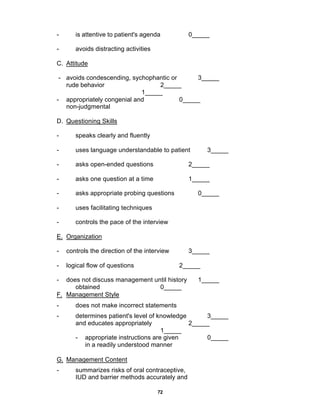
skills and spoken English-language skills. The SP encounter is followed by a 7-
minutes written exercise in which the resident is asked to record on the patient’s chart
relevant history, physical findings, and assessment (diagnosis hypothesis) and
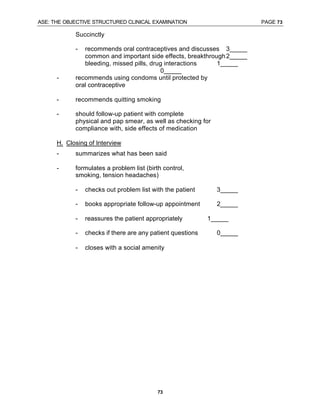
management (immediate plans for further diagnostic workup and possible treatment).
Diagnosis and management skills are assessed by clinical vignette multiple choice
questions, and assessment of interpretation of diagnostic and laboratory procedures is
made pictorials. The patient note also assesses written communication with the health
care team (11).
Residents
The Objective Structured Assessment of Technical Skills consists of six separate
tasks that a resident performs over a 90-minutes period: excision of skin lesion,
insertion of a chest-tube, abdominal wall closure, control of major bleeding, stapled
bowel anastomosis, and Sutured bowel anastomosis. A resident’s performance at each
task is assessed by a qualified surgeon using two grading methods, a task-specific
checklist and a global rating scale. The task-specific checklist identifies each action
that is necessary to perform the operation effectively, and the examiner indicates
which of these actions are performed. The global rating scale identifies seven general
rating competencies, and the examiner rates the level of each competency on a five-
point Likert scale. Two versions of the OSATS have been developed, a version using
live animals and a version using bench-model simulations (12).
The assessment of clinical competency is critical component of medical education.
The American Board of Emergency Medicine (ABEM) has been a leader in the
development of innovative assessment techniques. In 1989 ABEM introduced a new
oral recertification examination that included 3 Chart Simulated Recall (CSR) and 3
Simulation Patient Encounter (SPE) cases. CSR consists of an examiner assessing an
examinee’s diagnosis and management of an actual clinical case collected from the
examinee’s practice. Ratings are based on a structured interview conducted by the
examiner and center on the chart and other supporting documentation for the case. In
the ABEM oral recertification examination the examinee submits 6 consecutive cases
that meet specified criteria. The 3 cases examined are randomly selected. SPE
consists of an examiner role plays the patient, family members, and medical support
staff while the examinee requests history, physical, and diagnostic information and
manages the simulated patient (13).
84
Thirty residents in the first or second year in internal medicine at McGill University
could compare real patients ratings for each resident in the clinic setting-a setting a in
which the resident physician being rated would be the primary if not sole provider of
the patient’s care. Second, by booking appointments for SPs in the teaching clinics,
SP and Real Patient ratings of satisfaction under the same clinical conditions and
during the same time period could be compared. SP ratings was a valid predictor of a
resident’s ranking based on RP evaluation (14).
Major deficiencies in the physical examination skills of physician-in-training have
been documented. A survey of recent internal medicine graduates from Loyola
University Medical Center revealed their training programs did not emphasize basic
clinical skills enough to adequately prepare them for primary care practice. The
musculoskeletal examination has been identified as one such area of deficiency. To
address these deficiencies, an advanced physical diagnosis course was designed. As
part of this one-month elective, an instructional module on the musculoskeletal
examination utilizing physical therapists as patient-instructor was used. Six internal
medicine residents participating in the elective received two hours of training in the
examination of the knee and upper extremity. Training consisted of faculty
demonstrations and ample opportunity for practice of each component of the exam.
The residents received performance feedback from both faculty and two experienced
physical therapists PTs, who served as patient-instructors. Related cognitive and
psychomotor skills were assessed before and after training. The former was evaluated
by a ten-item multiple-choice exam, the latter through the use of performance
checklists. The performed the pre- and post-intervention musculoskeletal
examinations on different PTs, who were not involved in the instruction. The PTs
evaluated the residents’ psychomotor performances utilizing the same checklists (15).
The internal medicine residents at Wayne State University showed a general lack of
competence in delivering bad news to a simulated cancer patient. The skill items with
the lowest ratings were primarily related to eliciting the patient’s perspective, which
may represent a weakness on the part of the residency program in teaching the
residents to use “patient-centered” interviewing style. The results of this study formed
the basis of a curriculum to improve residents’ comfort with and skills for delivering
bad news to patients (16).
There is a wide variety of the uses of OSCE’S and SP. They are used throughout the
training of physicians from the first year through residency. The uses continue to
expand.
ASE: THE OBJECTIVE STRUCTURED CLINICAL EXAMINATION PAGE 85
85
References:
1. AAMC, The Role of Faculty Observation in Assessing Students Clinical
Skills. On Contemporary Issues in Medical Education1: Number 1, October
1997.
2. Anderson, M., Stillman, P. and Wang, Y. Growing Use of Standardized
Patients in Teaching and Evaluation in Medical Education. Teaching and
Learning in Medicine 6: Number, 15-22, 1994.
3. Mavis, B., Henry, R. Ogle, K., Hoppe, R. The Emperor’s New Clothes: The
OSCE Reassessed. Academic Medicine 71: 447-448, May 1996.
4. Vanatta, J., Smith, K., Crandall, S., Fischer, P. and Williams, K. Comparison
of Standardized Patients and Faculty in Teaching Medical Interviewing.
Academic Medicine 71: Number 12. Pages 1360.
5. Kwolek, D., Blue, A. and Griffith, C. Integrating Women’s Health Issues into
Third-year Medical and Surgical Curricula. Academic Medicine, 72: Number
5, Page 422.
6. Barrows, H. An Overview of the Uses of Standardized Patients for Teaching
and Evaluating Clinical Skills. Academic Medicine, 68:Number 6, Pages 443.
7. Amiel, G., Tann, M., Krausz, M., Bitterman, A. Cohen, R. Increasing
Examiner Involvement in an Objective Structured Clinical Examination by
Integrating a Structured Oral Examination. American Journal of Surgery 173:
Number 6 Pages 546-548.
8. Winter, R. Alternative to Clinical Practice Examinations. Academic Medicine
72 Number 5 Page 444.
9. Ross, L., Clauser, B., Margolis, M., Orr, N., Klass, D. An Expert-judgement
Approach to Settings Standards for a Standardized-patient Examination.
Academic Medicine 71: Number 10. Supplement Page 4.
10. Reznick, R., Blackmore, D., Dauphinee, D., Rothman, A., and Smee, S.
Large-scale High-stakes Testing with an OSCE: Report from the Medical
Council Canada. Academic Medicine 71 Number 1 Supplement Page 19.
11. Sutnick, A. Friedman, M., Stillman, P., Norcini, J., Wilson, M. International
Use of Standardized Patients, Teaching and Learning in Medicine 6: Number
1. Pages 33-35.
12. Faulkner, H., Regher, G., Martin, J., Reznick, R. Validation of an Objective
Structured Assessment of Technical Skill for Surgical Residents. Academic
Medicine 71: Number 12. Pages 1363-1365.
13. Solom D., Reinhart, M., Bridgham, R., Munger, B., Starnaman, S. An
Assessment of an Oral Examination Format for Evaluating Clinical
86
Competence in Emergency Medicine. Academic Medicine 65: Number 9
Supplement Pages S43.
14. Tamblyn, R., Abrahamowicz, M., Schnarch, B., Colliver, J. Benaroya, S. and
Snell, L. Can Standardized Patients Predict Real-Patient Satisfaction With the
Doctor-Patient Relationship? Teaching and Learning in Medicine 6: Number
1 Pages 33-34, 1994.
15. Stirling, J., Wood, J., Lloyd, J. An Instructional Module in Musculoskeletal
Examination for Residents Incorporating Physical Therapists as Patient-
Instructors and Evaluators. Academic Medicine 72: Number 5 Page 453.
16. Eggly, S., Afonso, N., Rojas, G., Baker, M., Cardozo, L., Robertson, S. An
Assessment of Residents’ Competence in the Delivery of Bad News to
Patients. Academic Medicine 72: Number 5 Page 397-399.
ASE: THE OBJECTIVE STRUCTURED CLINICAL EXAMINATION PAGE 87
87
THE CLERKSHIP COORDINATOR’S ROLE IN THE CREATION OF AN OSCE
EXAMINATION
Janie P. Boyer
Hollis W. Merrick, M.D.
Often, the person responsible for overseeing the hundreds of details involved in the
creation of an OSCE examination is the Surgery Clerkship Coordinator. An effective
Coordinator should be knowledgeable about OSCE examinations, utilizing written
OSCE guides and visiting other OSCE exam sites to familiarize herself with this
method of evaluation. She should attend all decision making sessions, and be aware
of exactly what skills and performance levels are being assessed by the OSCE,
whether the exam is for evaluation only or will be utilized in the grading process.
The Coordinator will play the pivotal role in the creation of a smooth and organized
examination. She usually reports directly to the Clerkship Director and acts as liaison
for the entire OSCE team. The Coordinator assists with the assembly of an OSCE
team, and helps to identify the duties and responsibilities of each member. The OSCE
team may consist of only a few people, each performing multiple tasks or it may be a
large committee with very specific duties assigned to each person. She will work
closely with the OSCE Administrator, Standardized Patient Trainer and a Statistician.
The Coordinator will be responsible for assisting in the recruitment and training of
hall proctors, timers, data entry and other clerical personnel. She must be prepared to
step into any and all of these roles at the last minute in order to guarantee the smooth
running of the OSCE. The Coordinator must be goal-oriented yet flexible, with the
ability to work diplomatically with many personalities while assuring that deadlines
are met.
The Coordinator, while not responsible for the creation and writing of individual
OSCE cases, must be thoroughly familiar with all the cases and clinical scenarios that
will be presented to the student. The needs of each individual type of case, i.e.,
physical exam, history, x-ray, practical skill, etc. must be evaluated and organized in
painstaking detail. A basic budget must be developed that will allow for examination
supplies, personnel, and standardized patients for all proposed stations, as well as a
myriad of miscellaneous expenses. Space must be assigned with the environmental
necessities of each case in mind, and lists of the necessary personnel, equipment and
supplies created.
In determining a clinical setting for the OSCE, consideration should be given to non-
clinical factors such as sufficient room for registration, administration, student
orientation, data management, and feedback sessions. Cases must be matched to
appropriate rooms, taking into consideration the equipment needed, the type of skill
being tested, whether the station is being videotaped, etc. Privacy and security are
issues to be considered when choosing and OSCE site, it is best to be out of the public
traffic pattern, and access to the area should be restricted to OSCE participants and
personnel. It is imperative that station checklists be kept in a secure location until the
88
day of the examination and provided to the rater in each station in a clearly marked
folder. Raters should hand checklists to the hall proctors after each student completes
that station. The checklists then should be given directly to the person assisting with
data entry. Students should be cautioned against conversing amongst themselves
during the OSCE, and not be allowed to move on to the next station before the
designated time. It is helpful to provide a break station where the students might be
served refreshments.
One of the major responsibilities of the Coordinator is the computation of the OSCE
grades for students. The method of grading, who does the record keeping and data
analysis, and how feedback is provided to the students are issues that usually decided
by the Director, but implemented by the Coordinator. Lengthy delay in production of
feedback is a major source of frustration for students. Providing post-examination
information as soon as possible following the exam is vital. This assures the students
that the results of the examination are important and also allows them to review the
information while the exam is still fresh. A wrap-up session facilitated by the exam
Administrator should take place immediately following the examination, including a
review of each station, allowing students to ask questions. This will enhance the
learning environment and effectiveness of the OSCE.
At the end of this session, a written record of performance can be provided to each
student. The methodology of this technique is provided in a separate chapter.
Although it is time and labor intensive to perform the necessary tabulations for output
of even basic statistical data, a quick and effective method of providing written
feedback to the student is to enter data from each station into a spreadsheet program
as the exam progresses. There are some excellent spreadsheet programs which allow
for instant calculation and statistical analysis. This can provide valuable same-day
feedback to the students. This also requires a time and labor investment on the part of
the Coordinator prior to the exam, but the benefits of immediate data make it worth
the effort. A computer needs to be set up in a quiet area apart from the exam traffic
for a data entry station. One person should be designated to perform the data entry,
with an assistant organizing the paperwork. Score sheets are taken directly from the
rater at each station and taken to the data entry location. Scores from each station are
entered into the spreadsheet. When all scores are entered, reports can be immediately
processed and printed for each student, clearly showing that student’s scores for each
station as well as for the entire examination. Preparation of the input program prior to
examination day is the key to successfully managing the scoring data and producing
clear and informative feedback. Basic knowledge of a spreadsheet program is
essential. It is necessary to insert formulas to calculate averages, totals, minimum and
maximum scores. Links are created between pages, allowing a master sheet and
individual station and student sheets, allowing information entered one time to be
reflected in several ways on separate sheets. This is time intensive and must be done
well ahead of examination day in order to provide the information needed quickly and
accurately.
The Clerkship Coordinator must be detail oriented, have well-developed
communication skills, be willing to devote a great deal of time and effort to the exam,
and able to organize and motivate a diverse group of personnel. Most of her work is
completed behind the scenes during the planning stages prior to the examination, and
ASE: THE OBJECTIVE STRUCTURED CLINICAL EXAMINATION PAGE 89
89
following up with data analysis once the exam is finished. The key to a successful
examination is preparation. The successful Coordinator will incorporate the many
lessons learned as she gains experience with the OSCE, becoming a valuable and
integral part of the examination process.
90
EARLY FEEDBACK FOR AN OSCE
Hollis W. Merrick, M.D.
George A. Nowacek, Ph.D.
Janie P. Boyer
Lengthy delay in production of feedback is a major source of frustration for students
and evaluators alike in an OSCE examination. It is time and labor intensive to
perform the necessary tabulations for output of even basic statistical data. Of the
methods of data collection and processing we analyzed, the one we chose as being
most beneficial to our needs is the direct computer entry system. Utilizing this
method, data can be entered into a computer concurrent with the administration of the
OSCE, producing immediate primary feedback. A simple spreadsheet program such
as Excel is ideal for this task.
Benefits of such a system include:
1. Students can be presented with a printout summary of their own performance
in relation to their peers within minutes of completion of the OSCE.
2. Examination facilitators can have immediate knowledge of the performance of
each individual student and the group as a whole.
3. Each station can be immediately assessed, identifying patterns of student
performance on individual test items and/or general areas of knowledge.
4. Faculty and Resident teaching staff can evaluate whether course objectives are
being met and immediately make appropriate adjustments to better address the
educational needs of students.
Method
Any system to provide student with results of their performance in an OSCE requires
two separate actions: 1) collecting the performance data and entering it into an
analysis system, and 2) generating a report and presenting the results to the students.
There are several options for both actions which can be combined in several ways.
While the system to process and report student performance in the OSCE depends on
the scheme to quantify the observed performance into an evaluation metric, this paper
will not discuss these schemes and will assume a checklist of performance elements
has been determined for each OSCE station.
Data Collection
ASE: THE OBJECTIVE STRUCTURED CLINICAL EXAMINATION PAGE 91
91
There are four ways in which student performance data can be collected and entered
for processing. These methods range from manual, paper and pencil recordings to
direct computer entry.
The manual recording method takes written comments of the raters and adds them
with the checklist of ratings from each station. The comments are from station raters
are collated for each student. This method provides insight into the performance of
exceptional and poor performers.
A second method of data collection and entry is the use of bubble answer sheets.
This is a convenient way for raters to record their assessment of students’
performance . The sheets can be overprinted with specific station checklist items; a
space for written comments will also be available. This method assumes the
equipment to scan the answer sheets is available, there are programs to generate the
report, and the expertise to administer the system. A variation of the bubble answer
sheets is the use of a flatbed scanner to read the performance data. With this
technology, any recording format can be used to record numeric or alphanumeric
ratings as checkboxes or handwritten comments. Forms are then placed on a flatbed
scanner individually or by an optional sheet reader. The software for the system uses
character recognition and graphic images to collect and store the information.
A third method is the direct computer entry of performance ratings either at the OSCE
workstation or at a central computer workstation. This method of recording students’
performance is becoming the preferred method because of the increasing availability
of computers in the testing area and the efficiency of making the performance data
available for immediate analysis and reporting. The variations on direct entry are
either having one person enter all the data in a single workstation, or to have separate
computers at each OSCE station and have the standardized patient or rater directly
enter the data. While this method requires access to computers and expertise to
develop the programs, the efficiency gained in the processing and reporting makes
this the preferred method of data entry and processing of OSCE performance data.
Table 1. Methods of data entry and resource requirements
Entry Method Clerical
Time
Computer
Expertise
Processing
Time
Manual Extensive Minimal Extensive
Bubbles Minimal Extensive Minimal
Direct Computer Moderate Moderate Minimal
Table I summarizes the methods of data entry and the resource requirements needed
for each method as amount of clerical time, level of computer expertise, and the
amount of time to process the information. An examination of the table shows there
is not a single data entry method that requires minimal clerical time, minimal
computer expertise, and minimal time.
92
Reporting
There are several ways that the OSCE performance can be reported to students.
These approaches range from individual feedback sessions with the clerkship director
to discuss station performance, to giving students a single overall rating of
performance on all stations.
At the most detailed level, students receive feedback on how they performed on each
of the individual station elements. This feedback can be given either in written form
as a report in a feedback meeting with the clerkship director. This approach provides
the student with the most detail about their performance but requires the most time to
process and feedback to the student. If the OSCE encourages raters to provide
written comments about student’s performance, a common strategy is to collate
comments for each student from each station and include them with the detailed
feedback report or meeting.
A second approach to feedback results is a report with composite scores. The
selection of stations for an OSCE is often based on the objectives of the clerkship to
measure specific skills, e.g., history-taking skills, technical skills, or physical exam
skills. Composite scores can be computed for each skill area as the weighted or
unweighted average of the common stations. The computation of skill scores should
check for internal consistency of performance on the common stations.
At the most global level, student performance in the OSCE could be reported as a
single score which is a weighted or unweighted sum of performance in all stations
added together. This approach is the least preferred because too much station
information is lost.
ASE: THE OBJECTIVE STRUCTURED CLINICAL EXAMINATION PAGE 93
93
Table 2. Feedback methods, quality of feedback, and resource requirements
Feedback
Method
Quality of
Feedback
Clerical
Time
Faculty
Input
Computer
Expertise
Processing
Time
Personal
Critique
High Extensive Extensive Minimal Extensive
Written
Comments
Medium Extensive Minimal Minimal Moderate
Composite
Scales
Medium Moderate Minimal Moderate Minimal
Single
Overall
Rating
Low Minimal None Moderate Minimal
Table II summarizes the methods of feedback, the quality of feedback obtained by
each method, and the resource requirements for each method. The method of
personal critique has the highest quality feedback but at the expense of high clerical
time to collect and process the performance data, and considerable faculty time to
discuss the results with the student. The overall rating requires minimal clerical time
and can be done very quickly, but the quality of the feedback drops because all
ratings are summed a information is lost. The composite rating approach provides a
balance of quality feedback with minimal faculty input and processing time with
moderate compute expertise and clerical time.
MCO Immediate Feedback System
The feedback system developed for the Medical College of Ohio surgery OSCE used
a direct computer entry system with a reporting of composite performance in general
skill areas. Student performance on each station is entered during the OSCE and
reports are generated for distribution to students immediately at the end of the OSCE.
The computer entry system consists of recording the student performance in each
station into a spreadsheet workbook. The workbook consists of three components: 1)
station worksheets, 2) master data worksheet, and 3) student report worksheets. The
station worksheets list the station elements as rows, and the individual students in
columns. The program sums the student’s performance for each of the elements and
the total is paste-linked into the master data worksheet. Data pertinent to each student
is concurrently paste-linked into his/her individual sheet, as is the average, maximum
and minimum for each station. The individual student worksheets are single-sheet
printouts, showing students how they performed on each station and the performance
94
of the total group taking the OSCE that day. The spreadsheet workbook is
customized for the stations and students for each OSCE.
For data entry, a computer is located near the area for the OSCE and a data entry
person is designated for the task. At the completion of each round of the OSCE,
checklists from each of the stations are collected and delivered for data entry. There
is sufficient time to enter performance data for all students in the seven-minutes
station cycle - five minutes stations and two minutes between stations. After the last
station, students are debriefed by the clerkship director during which the data from
the last cycle are entered, the data is checked, and student forms are printed. The
system also prints a report of all students in all stations for the clerkship director to
review.
ASE: THE OBJECTIVE STRUCTURED CLINICAL EXAMINATION PAGE 95
95
MEASUREMENT CONSIDERATIONS IN PLANNING
AND EVALUATING AN OSCE
Debra A. DaRosa, Ph.D.
Susan Kaiser, M.D., Ph.D.
“Collecting (evaluation) data is much like collecting garbage.
You must know in advance what you are going to do with the stuff before
you collect it.”
Mark Twain
Orienting Questions
1. If we implement an OSCE in the surgery clerkship, how
do I ensure it is a valid and reliable examination?
2. How can you tell if the OSCE helps discriminate
between weak and strong students?
3. How do we determine a score for an OSCE?
4. What kind of grade (pass/fail versus A, B, C) can be
given?
There are numerous measurement issues related to any examination. It is the
responsibility of the faculty to adequately address these issues to ensure the exam
measures what it was designed to measure and that the results are consistent. Without
appropriate attention to the various aspects of scoring and interpretation, unfair and
inaccurate judgments may be made about a student and his/her performance which
can have deleterious effects on the student, faculty, and the curriculum.
96
MEASUREMENT PROPERTIES
To ensure it is a “good” test, the OSCE must have its measurement properties
assessed. This means that evidence of validity, reliability, feasibility, and creditability
should be demonstrated. The following includes brief definitions of these terms and at
least one approach for determining whether or not your OSCE possesses each
particular measurement characteristic.
Validity
Validity is a quantitative expression that indicates if a test measures what it was
originally intended to measure. Different types of validity can be assessed. Three
options described here include predictive validity, concurrent validity, and content
validity.
Predictive Validity
An OSCE can be said to have predictive validity if the scores are related to some
actual behavior or performance of which the OSCE is supposed to be predictive. For
example, an OSCE administered in the surgery clerkship designed to test “overall
problem solving skills” could be validated by comparing the results of student’
overall OSCE scores to subjective performance ratings on problem solving as judged
by their residency program director after one year of residency. If the scores correlate
significantly, it indicates the OSCE is a valid measure of problem solving. In other
words, a test has predictive validity if the score reflecting a behavior or some aspect
of performance relates to a score from another measure of the same behavior at a later
point in time.
Concurrent Validity
A test is said to demonstrate concurrent validity if there is a significant statistical
association between the test results with another test or measure designed to assess
the same attributes or behaviors. One approach may be to compare OSCE outcomes
with results of clerkship faculty subjective ratings of the specific skills or overall
skills tested by the OSCE. Agreement between OSCE test scores and faculty would
be an indication of the OSCE’s concurrent validity. The main difference between
concurrent and predictive validity is the time element.
Content Validity
This form of validity refers to the examination’s comprehensiveness or test
appropriateness. The test should “test” what is expected students should know or be
able to do. Content validity is determined not by a statistical procedure, but rather
judgmentally. A test cannot assess every aspect of knowledge, skills, or attitudes
taught during a clerkship or residency rotation. A test simply samples these areas and
a good test will yield scores that are generalizable to the full set of areas taught. In
other words, an OSCE that has content validity consists of a sufficient number and
variety of stations that are representative of the curricular goals and objectives from
which the stations were drawn and about which generalizations are to be made.
ASE: THE OBJECTIVE STRUCTURED CLINICAL EXAMINATION PAGE 97
97
For example, let’s assume we developed an OSCE designed to evaluate the
operative technical skills or residents. The content validity of this exam could be
established by comparing the skill areas covered in the OSCE, and the number of
stations devoted to each with the skill requirements of the operating room and the
relative importance of each. If the OSCE stations are representative of the latter, then
the exam can be said to have content validity.
Reliability
The reliability of an examination refers to the stability of results. It is a numerical
expression of the reproducibility or consistency with which the test measures the
same characteristics on different occasions. A test can be reliable and not valid; but it
can not be valid without also being reliable. If you had a calculator that every time
you keyed in two plus two it gave you the sum of five, it would be consistent and
therefore reliable. However, it would not be accurate (valid). If the calculator reported
the answer “four” each time, it would be valid and reliable. If the answer was
different each time you added two plus two, it would be neither valid nor reliable.
Therefore, a test that is not reliable is not a good test, even if the test demonstrates
reasonable evidence of validity. The stations comprising an OSCE should be shown
to be reliable.
There are different types of reliability “checks.” This section will describe a few
simple approaches.
Inter-rater Reliability
If any of your stations will have different raters judging performance either
through direct observation, review of essay type answers, or performance checklists,
the consistency of ratings across raters should be established. This can be
accomplished by having raters simultaneously, but individually, observe the same
performance or score the same essay and correlate their ratings. A significant
correlation of .80 or higher is desirable, but correlations of .70 have been considered
acceptable. Discrepancies between faculty derived scores should be discussed to
clarify scoring guidelines and provide a more precise frame of reference. A more
detail account on how to enhance reliability among faculty raters is published
elsewhere (1).
Skill/Competence Reliability
The different skills or competencies your OSCE was designed to test should each
be tested for reliability to ensure it is a consistent indicator of that particular skill. For
example, in a study published by Petrusa (1), the following clinical skills or
competencies were tested in their OSCE: interviewing style, data collection,
identification of abnormalities, synthesis of data, and management plans. Each
competency was tested by several stations. For example, if highly reliable, scores on
stations designed to measure interviewing style would be very similar for an
individual across all stations, with large variance between students. The reliability is
reflected as an alpha coefficient for each competency tested. This coefficient indexes
the ratio variance to total variance. A correlation of .80 or higher is desirable. The
98
Spearman-Brown prophecy formula can then be used to estimate the increase in
stations needed to obtain an alpha coefficient of .80.
Test Reliability
Overall test reliability of the OSCE can be established by calculating a
generalizability coefficient. Keep in mind that test reliability is a function of the
number of stations used. Within limits, the more stations you have, the more precise
the exam. Readers are referred to their friendly university psychometricians for
assistance. After reading this section on reliability, you should have sufficient
understanding of reliability to communicate your needs to them more comfortably.
Feasibility
Integrating an OSCE into a clerkship will require consideration of costs, staff,
time, and logistics. Once a bank of stations has been developed and tested, the time
commitment of faculty sharply declines except to refine the stations, which, like all
evaluation methods, is an ongoing process.
The specific resources required to operate an OSCE depend on the length and
variability of the exam. For example, an OSCE designed solely to evaluate the ability
to interpret x-rays would be simpler and less extensive than an OSCE designed to
assess all aspects of clinical competence. Feasibility (or resources) and logistical
constraints should be considered while planning an OSCE.
Credibility
The credibility of an exam refers to its “face validity.” It is a subjective judgment
as to how “life-like” the stations are. Even the best planned and piloted OSCE will be
useless if the results are not considered credible by faculty and students. Faculty
should be involved as much as possible in the development and scoring of the OSCE,
to enhance confidence in the results. Those faculty uninvolved in this development
process should be given an opportunity to progress through the exam or, at a
minimum, be invited to observe. The former is strongly recommended.
ITEM ANALYSIS
If you want your OSCE scores to differentiate good from poor performers,
indexes of difficulty and discriminability should be calculated when piloting the
exam. This process is frequently referred to as an “item analysis”. The following is an
approach for determining difficulty and discrimination indexes based on guidelines
and examples from Tuckman (2).
After having students progress through the OSCE, sort the scores into three
groups: upper one-third, middle one-third, lower one-third. Count the number of
students who fall into each of three categories.
ASE: THE OBJECTIVE STRUCTURED CLINICAL EXAMINATION PAGE 99
99
An example appears as follows:
Station
No. of Upper 1/3
Who Pass
No. of Lower 1/3
Who Pass
1 10 2
2 8 9
3 3 0
4 10 3
5 9 2
6 2 4
7 7 5
8 9 6
9 10 3
10 5 5
The discriminability index is a number that reflects the extent to which a station is
responded to correctly by students who do well on the exam and incorrectly by those
who don’t do well. The purpose of this index is to help determine how well each
station separates more knowledgeable students from less knowledgeable students.
This calculation of index is:
Discriminability Index = Number of high 1/3 who pass a station
Total Number in both groups who pass a station
For station 1: 10 =10 = .83
10+2 12
100
Proceeding with our example:
Station
No. of high 1/3
Who Pass
No. of low 1/3
Who Pass
Discriminability
Index
1 10 2 .83
2 8 9 .47
3 3 0 1.0
4 10 3 .77
5 9 2 .82
6 2 4 .33
7 7 5 .58
8 9 6 .60
9 10 0 1.0
10 5 5 .50
Only five of the ten stations (1,3,4,5,9) demonstrate high levels of discriminating
power in that two-thirds (.67) or more who get them right did well overall on the
examination. This does not mean the other stations should be thrown out, because
OSCE designers may want a balance of easy and difficult stations. OSCE designers
may, however, want to ensure there are enough stations in the OSCE that do indeed
discriminate among performance levels of students.
The difficulty index refers to the “easiness” of the station. Assuming 20 students
took the 10 stations in our example, this index is arrived at as follows:
Difficulty Index = Number who fail a station
Total number of pass and fail students
For Station 1: 20-(10+0)= 10 = .50
20 20
ASE: THE OBJECTIVE STRUCTURED CLINICAL EXAMINATION PAGE 101
101
Unlike the discriminability index, the difficult index does not differentiate among
students.
Station
Difficult Index Discriminability Index
1 .40 .83
2 .15 .47
3 .85 1.00
4 .35 .77
5 .45 .82
6 .70 .33
7 .40 .58
8 .25 .60
9 .35 1.00
10 .50 .50
From reviewing our example, it is shown that stations 2 and 8 are very easy
stations because less than one-third of the twenty students failed them (below .33) and
that stations 3 and 6 are difficult stations because more than two-thirds of the students
failed them (greater than .67). There are obvious reasons for justifying a mix of easy
and difficult stations, but the OSCE developer will need to ensure the proper balance.
An OSCE with an imbalance can result in an exam that does not challenge the
students nor discriminate among performance levels. Difficulty index data can assist
faculty in reviewing content of stations and also has curricular implications. Our
example shows stations 1,4,5, and 9 demonstrate reasonable evidence of
discriminability and difficulty. Keep in mind that test reliability is affected by station
difficulty levels and that stations with difficulty levels of about .50 have been found
to be most useful.
Calculating these two indexes provides an overview of how many students failed
each station and the extent to which the students who scored well on the exam overall
did on each individual station.
102
Cumulative data for both indexes can help test developers select stations for an OSCE
with proper balance of difficulty and discriminability.
GRADING
There are different types of reference systems upon which grades are based. Two
of theses reference systems are described below. OSCE developers should discuss
this decision with faculty before establishing a grading system.
The criterion-referenced grading system does not compare students to each others
in their performance on an exam. A criterion or “pass” level is established, and
anyone who scores at or above that level passes and anyone who scores below it fails.
This is usually accomplished by using the traditional percent correct scale (0-100)
where 100 is perfect performance and some value represents the minimal passing
score. Pass/fail designations can be used or grades can be assigned in terms of
specified ranges on the percent correct scale (e.g. 100-90 = A; 89-80 = B, etc.)
There are certain strengths and weakness associated with this system. Some
experts feel that students perform better if they “compete” with each other for grades.
However, if an OSCE truly samples program objectives and has demonstrated content
validity, faculty may decide that those who pass 70-80% of the stations essentially
have “mastered” the material and should pass.
The norm-referenced grading system is the more traditional system, in which a
student’s performance is judged and reported in terms of some standard or norm
derived from all the students performance on that test.
In other words, students are assigned grades relative to the performance of other
students. There are several approaches:
1. Normal curve – grades are distributed in a symmetric normal fashion based on
a “normal curve” distribution of scores. For example, an A=10% of class,
B=20% of class, C=40% of class, D=bottom 20% of class, and F=bottom 10%
of the class. We do not advocated this approach because an OSCE seldom
yields a normal score distribution and there is no guarantee that the size of one
class is large enough to be representative of the population of students over
several years.
2. Specific class norm – this distribution assumes a certain ability level of the
class. A preset distribution of grades is then established. For example, it might
be set that 5% of the class fails, 30% are average, 40% are above average, and
25% are exceptional. The obvious disadvantage, like the normal curve
distribution, is that 25% of the students are rated exceptional regardless of
overall performance.
3. Specific class distribution – the mean and standard deviation for the class
scores are determined. The grades are then based around the mean. For
ASE: THE OBJECTIVE STRUCTURED CLINICAL EXAMINATION PAGE 103
103
example, two standard deviations above the mean is an A, one standard
deviation above the mean is a B, etc.
The principle difference between criterion and norm-referenced grading systems is
how the scores are used. In criterion-referenced grading, the student’s performance is
compared to a predetermined standard or criterion; in norm-referenced grading, the
student’s performance is compared to that of other students. Test developers can use a
combined approach whereby a minimal pass level is established before the OSCE is
administered. Those who fall below this level fail the test. For those students who
meet or exceed the preset “cut-off’ score, the standard deviation can then be used to
determine grade boundaries. It can also be designed so that certain stations must be
completed successfully in order to pass the overall exam, and advanced or more
sophisticated stations can be used to distinguish quality of passing performance.
Conclusions
Numerous measurement issues need to be explored and decided upon before
administering an OSCE.
The main points of this chapter are:
1. Before being used as a performance evaluation resource, an OSCE should be
tested for appropriate measurement characteristics such as validity, reliability,
feasibility, and credibility.
2. There are different types of validity for which an OSCE can be tested,
including predictive validity, concurrent validity, and content validity.
3. A valid OSCE station measures what it was designed to measure. A reliable
station measures it consistently.
4. Item analysis should be completed for an OSCE to provide indications
concerning the difficulty of each station in relation to the overall exam and
how well station discriminates among various levels of performance.
5. Grading can be based on a criterion-referenced system, non-referenced
system, or a combination of both. Faculty should decide in advance which
system best meets their fundamental purpose for the exam.
104
REFERENCES
1. Steiner, D. L. Global rating scales. In Assessing Clinical Competence.
Springer, New York, 1988.
2. Petrusa E.R., Blackwell T., Parcel, S., Saydjari, C. Psychometric properties of
the objective clinical exam (OCE) as an instrument for final evaluation. In
Newer Developments in Assessing Clinical Competence. Heal Publications,
Montreal, 1986.
Tuchman, B.W. Identifying and describing procedures for observation and
measurement. In Conducting Educational Research (2nd
Ed). Harcourt Brace
Jovanovich, New York, 1978.

Objective structuredclinicalexam

  • 1.
    .......... . . .. . . . . . . association for surgical education TheObjectiveStructured ClinicalExamination 2nd Edition PREPARED BY THE COMMITTEE ON TESTING AND EVALUATION ASSOCIATION FOR SURGICAL EDUCATION Copyright 2001 - Association for Surgical Education www.surgicaleducation.com
  • 2.
    2 EDITORS James A. McCoy,M.D. Hollis W. Merrick, M.D.
  • 3.
    3 Table of Contents EDITORS................................................................................................................................................2 FOREWARDTO THE FIRST EDITION ....................................................................................................7 FOREWARD TO THE SECOND EDITION................................................................................................8 THE OBJECTIVE STRUCTURED CLINICAL EXAMINATION: PRESENT AND FUTURE ..............9 THE COMPONENTS OF THE OSCE.....................................................................................................11 REFERENCES.....................................................................................................................................17 THE ROLE OF THE OSCE IN THE ASSESSMENT OF STUDENT PERFORMANCE ..............................18 What is the role of the OSCE?..............................................................................................................18 Why administer OSCEs in the 3rd year clerkship? .................................................................................20 Disadvantages of administering OSCEs in the junior clerkships ............................................................23 How we do it.........................................................................................................................................24 Conclusions..........................................................................................................................................25 REFERENCES.....................................................................................................................................26 IMPLEMENTATION OF THE OSCE.......................................................................................................28 Introduction ..........................................................................................................................................28 Developing the OSCE...........................................................................................................................28 Coordinating Committee.......................................................................................................................28 Other Personnel ...................................................................................................................................29 Authoring Team....................................................................................................................................29 Content ................................................................................................................................................29 Station components..............................................................................................................................30 Instructions to the examinee.................................................................................................................30 Skill assessment checklist ....................................................................................................................30 Items for post encounter testing............................................................................................................30 Instructions for the standardized patient................................................................................................31 Artifacts and equipment........................................................................................................................31
  • 4.
    4 Patient recruitment andtraining ............................................................................................................31 Costs/Budgeting...................................................................................................................................32 Administering the OSCE.......................................................................................................................32 Location ...............................................................................................................................................32 Personnel.............................................................................................................................................33 Setting up the OSCE ............................................................................................................................33 Examination Day ..................................................................................................................................33 References...........................................................................................................................................35 IMPLEMENTATION AND USES OF OBJECTIVE STRUCTURED CLINICAL EXAMINATIONS (OSCE).................................................................................................................................................36 Organization of an OSCE .....................................................................................................................36 Conducting an OSCE ...........................................................................................................................39 OSCE Results ......................................................................................................................................39 Disadvantages/Limitations of OSCE .....................................................................................................40 Applications of OSCE ...........................................................................................................................41 References...........................................................................................................................................42 HOW TO PREPARE AND IMPLEMENT AN OBJECTIVE STRUCTURED CLINICAL EXAMINATION.....................................................................................................................................43 Introduction ..........................................................................................................................................43 An Example: The 1987 CSAU-OSCE....................................................................................................44 How to Develop an OSCE ....................................................................................................................45 The Coordinating Committee ................................................................................................................45 The First Meeting..................................................................................................................................45 The Authoring Team.............................................................................................................................46 Guide for Creating a Station..................................................................................................................47 The Instructions to the Candidate .........................................................................................................47 The History/Physical Examination Checklist (The First Five Minutes) ..................................................47 The Problem-Solving Questions ( The Second Five Minutes)...............................................................48 Instruction for the Standardized Patient.................................................................................................48 Equipment Listing for Stations ..............................................................................................................49
  • 5.
    5 Patients for theOSCE: Real or Simulated.............................................................................................49 Follow-up Meeting ................................................................................................................................49 The Training of the Examiners..............................................................................................................49 Choosing a Site for the OSCE ..............................................................................................................50 Running the OSCE...............................................................................................................................50 Setting up the OSCE ............................................................................................................................51 REFERENCES.....................................................................................................................................53 Table 1.................................................................................................................................................54 ADDITIONAL USES FOR OSCES.........................................................................................................80 References:..........................................................................................................................................85 EARLY FEEDBACK FOR AN OSCE .....................................................................................................90 MEASUREMENT CONSIDERATIONS IN PLANNING AND EVALUATING AN OSCE............................95 REFERENCES...................................................................................................................................104
  • 6.
    .......... . . .. . . . . . . Acknowledgements We thank the Association for Surgical Education and its founders for making this work possible. We thank the authors and member institutions for their expertise in the preparation of this manual. Our special thanks to the coordinators and administrative support staff who have processed, edited and reprocessed this manuscript. Lastly, we are grateful to the many patients who entrust us with their lives daily in practice, teaching and research. May we always strive to serve you with our very best skill, dedication,integrityandcompassion.
  • 7.
    ASE: THE OBJECTIVESTRUCTURED CLINICAL EXAMINATION PAGE 7 7 FOREWARD TO THE FIRST EDITION This Manual is designed to describe some of the basic principles and concepts of the Objective Structured Clinical Examination (OSCE). We hope that it will be useful not only to the Departments of Surgery of our member institutions, but to other clinical disciplines as well. Hollis W. Merrick, M.D. Editor
  • 8.
    8 FOREWARD TO THESECOND EDITION When the first edition of this Manual was published in 1989, the Objective Structured Clinical Examination (OSCE) was a relatively new tool in the effort to obtain an accurate measurement of medical student knowledge and the effectiveness of the surgical clerkship curriculum. Eleven years later, as more and more institutions have accepted its validity and have initiated their own OSCE programs, the need remains for a basic guidebook on the principles and concepts of the OSCE. It is our combined hope that this Manual will prove helpful to all users, novice and experienced alike. James A. McCoy, M.D. Hollis W. Merrick, M.D. Editors
  • 9.
    ASE: THE OBJECTIVESTRUCTURED CLINICAL EXAMINATION PAGE 9 9 THE OBJECTIVE STRUCTURED CLINICAL EXAMINATION: PRESENT AND FUTURE Hollis W. Merrick, M.D. James A. McCoy, M.D. The advent of the Objective Structured Clinical Examination (OSCE) has offered a strikingly new and exciting way of making valid assessments of the clinical performance of medical students, residents, and fellows. Since its introduction by Dr. Harden and colleagues in 1975, the technique has gained steady and widespread acceptance around the world. Reports in the literature concerning its use come from England, Scotland, Australia, South Africa, Nigeria, the Netherlands, Canada and the United States. The advantages of the examination are greatly apparent when one reviews the wide spectrum of clinical tests that can be incorporated into the OSCE. Such tests include multiple choice written questions, reviews of radiographs, use of models, and examination of simulated or real patients. The breadth of data that can be encompassed in this type of examination is limited only by the imagination of the examiners. Nevertheless, there are drawbacks to the OSCE. It is cumbersome and expensive to set up, and it requires a great deal of personnel for its implementation. The expense involved in obtaining the examination site, the use of models or simulated patients, and the time of the examiners, can often be intimidating factors for those considering using an OSCE format for evaluating students, residents, and fellows. The Objective Structured Clinical Examination (OSCE) has in some institutions become a finely tuned instrument used to evaluate clinical skills, attitudes and behaviors that are considered standards used by practitioners in the care of their patients. It is hoped that the competencies demonstrated by students, residents and fellows in the OSCE will be manifested daily in the lives of their patients as the medical profession struggles to maintain skillful, high quality, competent health care in the United States as managed care continues to erode the doctor-patient relationship.
  • 10.
    10 This 2nd edition willoffer different perspectives and implementation protocols from different institutions. Whereas the core components are the same, the philosophy and implementation by different institutions with varying resources are different. An innovative addition, the Early Feedback OSCE, is presented by the Medical College of Ohio. Merrick, et al. used the computer to compute the student and the residents assessments throughout the examination. Thus shortly following completion of the examination, the examinees receive their objective computer generated assessment. The objective of this Manual is to summarize the state of the art as it exists in the United States and Canada at this point, and to make this information available to our member institutions. Many of the authors in the Manual have had extensive experience with the OSCE. The NBME/USMLE continues on a path to introduce the OSCE as a part of the USMLE sometime in the future. This represents a massive undertaking. Even though the Royal College of Physicians and Surgeons of Canada uses the OSCE as standard to evaluate its foreign medical graduates, the number of examinees is small in comparison to the 15,000 plus American Medical Graduates. The ASE should, perhaps, help medical schools establish OSCE standards that could be approved by the NBME/USMLE and implemented by local or regional medical schools. The OSCE does allow examiners to document competencies in clinical skills, behaviors and attitudes in an examination setting. There is no question that these objective measures should be made. What impact has this had on improving care of our patients? How do we measure commitment integrity and dedication? Who will take the time to obtain the history, do the physical exam, generate and execute the appropriate diagnostic and treatment plans that are evidenced-based? How do we measure commitment, integrity, and dedication?
  • 11.
    ASE: THE OBJECTIVESTRUCTURED CLINICAL EXAMINATION PAGE 11 11 THE COMPONENTS OF THE OSCE James A. McCoy, M.D. The OSCE (Objective Structured Clinical Examination) has reached a stage of development that allows clear recognition of key components that bring structure and organization to its construction, implementation and assessment of its performance. The major components are: 1. The (examination) coordinating committee 2. The examination coordinator 3. Lists of skills, behaviors and attitudes to be assessed 4. Criteria for scoring the assessment (marking scheme of checklist) 5. The examinees 6. The examiners 7. Examination site 8. Examination stations 8.1 Time and time allocation between stations 8.2 Anatomic models for repetitive examinations (Breast, Pelvic/Rectum) 8.3 Couplet Station 8.4 Examination Questions 8.5 Environment of Exam Station 8.6 Examination Station Circuit (Figure 1.) 9. Patients Standardized or Simulated 9.1 Instruction to Patients 10. Timekeeper, time clock and time signal 11. Contingency Plans 12. Assessment of Performance of the OSCE
  • 12.
    12 Since its introductioninto clinical medicine by Harden, et al. 1975, the OSCE has been widely used to evaluate students in virtually all areas of medicine with extension into the formative evaluation of residents. Its final form may be simply supported on a shoestring budget as described by Poenaru, et al. or as elaborate and sophisticated as administered by the Faculty of Medicine, University of Toronto (1, 2, 3, 4). It is clear, unless the major components are used as a foundation for the OSCE’s structure, it will be severely flawed and its implementation fraught with difficulty and hardship. In order to develop and conduct an OSCE, appropriate clerical support through all phases of development and implementation is essential. 1. The Examination Coordinating Committee An examination coordinating committee is made up of members who are committed to the evaluative and educational process and whether appointed or volunteered must give this effort high priority in order for the OSCE to be developed and implemented. The number of members who make up this committee is not as important as the intensity of the investment of each member. It is the responsibility of the examination committee to determine the content of the examination, development and implementation. It is important that this committee has the capacity and personnel to address decisions related to reliability and validity (5). 2. The Examination Coordinator The functions of the examination coordinator (M.D. or Ph.D. educator) are the catalyst that facilitates the smooth working of the committee in developing, implementing and assessing the performance of the OSCE. For examinations conducted at different sites, a local site coordinator must work closely with the examination coordinator and the coordinating committee. 3. Lists of Skills, Behaviors and Attitudes to be Assessed The examination will measure objectively the competencies in specific areas of behavior, techniques, attitudes and decision-making strategies based on the objectives of the course or the requirement of the licensing body. The OSCE should be able to reliably assess clinical competence in history taking, physical examination, laboratory, radiographic and other data interpretation, technical and procedural skills as well as counseling and attitudinal behaviors. 4. Criteria for Scoring the Assessment (Marking Scheme or Checklist) A marking scheme or checklist is prepared for each station. Preparation of the checklist requires predetermined objective criteria that are agreed upon by the examination committee, based on faculty input. Marking scheme/checklist should be concise, unambiguous and written to contribute to the reliability of the station. The more focused the checklist, the greater the power of the station to differentiate effectively among the abilities of students. It is helpful to include instructions to the examiners at the top of each checklist/marking scheme. The series of marking
  • 13.
    ASE: THE OBJECTIVESTRUCTURED CLINICAL EXAMINATION PAGE 13 13 schemes/checklist may be presented to each examinee in bound form also noting the order in which the examinee will proceed through the examination stations. As Papp stated, “The competence of students entering the “real world” of medical practice may truly determine life or death for their patients. The development of more accurate methods of assessing clinical competence works to the benefit of the patient, the new doctor, and the medical profession in general (6)”. 5. The Examinees The examinee is the student, resident, or fellow in training or at the end of training of a prescribed course designed to teach certain clinical competencies that the examinee can use in a clinical situation to make an assessment and develop a diagnostic formulation that culminates in a therapeutic plan. 6. The Examiners Most stations will require an examiner, although some stations do not. The examiner at the station where clinical skills (history-taking, physical examination, interviewing and communication) are assessed, may be either a physician or a standardized patient. Research has shown that an acceptable level of reliability can be achieved with either a physician or standardized patient as the examiner (7,8,9). Harden recommends using examiners from a range of specialties and disciplines, for example, a dietitian at a station for nutrition. (10). 7. The Examination Site The examination site is part of a special teaching facility in some institutions. When such facilities are not available, the examination may be conducted in an outpatient facility or other space where offices are available in close proximity to each other. 8. Examinations Station The total number of stations will vary based on a function of the number of skills, behaviors and attitudinal items to be tested. For most clerkships or courses, the total will vary from 10-25. Fewer than 10 are probably inadequate and greater than 25 become from most unwieldy (11). Larger numbers of stations are located in Provinces in Canada. 8.1 Time Allocation and Time between Stations The competency being assessed in particular station will define how much time should be allotted per station. The length of time will range from 5-20 minutes. However, the time per station is constrained by the total duration of the examination. The time allocated per station should be as uniform as possible thus facilitating the smooth movement of examinees from station to station. Transit time must be built into the total time allocated for each station, e.g., a 10 minute station, 9 minutes is
  • 14.
    14 allocated for thetask and one minute transit time to the next station. The examiner can complete the checklist prior to the entry of the next examinee. Examination station content: 8.2 Anatomic Models for Repetitive Examinations (Breast, Pelvic/Rectum The skill, behavior or attitude to be tested in a station determines whether the station requires a real patient, simulated patient, laboratory data roentgenographic sticker, other clinical data, patient records, or examining equipment (stethoscope, opthalmoscope, etc.) Chronic patients (stable) may serve well in this situation with proper training. Simulated patients who are well-trained offer reliability and consistency in the quality of their presentations. A complete material and equipment list must be generated. Specially constructed plastic models or simulations may be used, i.e. rectal or breast models, where the repetitive and intimate nature of the task makes the use of patients inappropriate. When examination equipment is a part of the station, it must be in good repair and replacement parts must be readily available. 8.3 Couplet Station Some competencies may best be assessed by coupled or linked stations. For example, a couplet station may consist of a history-physical examination combined with a problem-solving station. 8.4Examination Questions Examination questions are designed to assess the ability to interpret information and critical thinking. The questions deal with diagnostic investigations, differential diagnostic and management plans. 8.5 Environment of Exam Station The Examination Station environment should be conducive to the competency to be tested, including adjustable lighting for fundoscopic examinations and appropriate examination tables for focused physical skills assessment. Stations where auscultatory skills are being assessed should be either well insulated or in appropriately quiet areas of the examination site. Clearly marked directions leading from one station to the next should be displayed. 8.6 Examination Stations Circuit Stations The Examination stations should be clearly marked in a logical sequence that allows easy, unimpeded transit from one station to the next. 9. Patient (Real) or Simulated A standardized patient is an individual with a health problem that is in a chronic but stable condition. Standardized or simulated patient may be used when properly trained for history and physical assessments. Simulated patients may come from the ranks of
  • 15.
    ASE: THE OBJECTIVESTRUCTURED CLINICAL EXAMINATION PAGE 15 15 volunteers, or acting guilds. They too, must be trained. Whether real or simulated, more training is required for patients used in history taking than for patients used for physical examinations. 9.1 Detailed instruction package is provided for both the standardized and simulated patient. The instructions describe how the patient responds to historical questions and physical exam, as well as how the patient should dress.
  • 16.
    16 10.Timekeeper, Time Clockand Time Signal Appropriate personnel for the position of official timekeeper and exam facilitators need to be identified and properly instructed. A well functioning time clock and time signal are critical. The time signal should be unambiguous and clearly audible throughout the examination site. (11). One support person per three stations is recommended. 11.Contingency Plans A contingency plan includes reserve standardized patients who are trained to assume a number of roles, and a patient trainer who circulates to deal with any patient problems that arise. A number of reserve stations should be available. A contingency plan must be developed for students who must leave the exam when the situation arises. 12.Assessment of the Performance of the OSCE It is the responsibility of the Examination Committee to address the numerous measurement issues related to the OSCE. DaRosa cites five key areas that should be addressed (12): 1. The OSCE should be tested for appropriate measurement characteristics such as validity, reliability, feasibility and credibility. 2. The different types of validity for which an OSCE can be tested include predictive validity, concurrent validity and content validity (8). 3. A valid OSCE station measures what it was designed to measure. A reliable station measures it consistently (13). 4. Item analysis should be completed for an OSCE to provide indications concerning the difficulty of each station in relation to the overall exam and how each station discriminates among various levels of performance. 5. Grading can be based on a criterion-referenced system, norm-referenced system, or a combination of both. The Examination committee needs to decide in advance which system best meets its fundamental purposes for the exam.
  • 17.
    ASE: THE OBJECTIVESTRUCTURED CLINICAL EXAMINATION PAGE 17 17 REFERENCES 1. Harden, R.M. Stevenson, M. Downie, W.W, Wilson, G.M., Assessment of Clinical Competence Using Objective structured Examinations. British Medical Journal 1 447-451, 1975. 2. Poenaru, D., Morales, D., Richards, A., O’Connor, H.M. Running on Objective Structured Clinical Examination on a Shoestring Budget. American Journal of Surgery, 173 538-541, 1997. 3. Sloan, DA, Strodel, WE, Blue AV, Felts JL Schwartz RW, Dannelly, MB. The Use of Objective Structured Clinical Examination (OSCE) for Evaluation and Instruction in Graduate Medical Education. Journal of Surgery Resident 63 (1) 225-30. ’96 4. Cohen, R. MacInnes, A, Finkelstein J. Rothman AI. Robb BA How to Prepare and Impement An Objective Structured Clinical Examination. OSCE Ed. Merrick HW, Prater MA pp 24-40 1989. 5. Sachdeva, AK. Implementation and Uses of Objective Structured Clinical Examination from Merrick HW, and Prater, MA. Ed. OSCE pp, 11-23, 1989. 6. Papp, KK, The Role of the OSCE in the Assessment of Clinical Competence. OSCE, ed. Merrick HW. Prater MA 4-10 1989. 7. Stillman, P.L., Swanson, D.B., Smec, S., et al. Assessing Clinical Skills of Residents with Standardized Patients. Annals of Internal Medicine 105: 762- 771, 1986. 8. Robb, K.V., Rothman, A.I. The Assessment of Clinical Skills in General Medical Residents: Comparison of the Objective Structured Clinical Examination with a Conventional Oral Examination. Annals of the Royal College of Physicians and Surgeons in Canada 18:235-238. 1985. 9. Amiel, G.E., Tann, M. Krausz, M.M., Bitterman, A. Cohen, R., Incurring Examiner Involvement in an Objective Structured Clinical Examination by Intergrating A Structured Oral Examination, American Journal of Surgery, 173 546-549, 1997. 10. Harden, RM. Twelve Tips for Organizing an Objective Structured Clinical Examinations. (OSCE) Medical Teacher 12 #314, 259-264, 1990. 11. Selby, C., Osman, L., Davis, M., Lee, M. Set Up and Run and Objective Structured Clinical Exam. British Medical Journal 310 1187-1190, 1995. 12. DaRosa, FA Measurement Considerations and Planning and Evaluating An OSCE. OSCE, Ed. Merrick, HW. Prater MA p 71-83. 1989. 13. Skinner, B.D., Newton W.P., Curtis P. The Value of an OSCE in a Family Practice Residency. Academic Medicine 72 #8 722-724, 1997.
  • 18.
    18 THE ROLE OFTHE OSCE IN THE ASSESSMENT OF STUDENT PERFORMANCE Sally L. Hodder, M.D. Klara K. Papp, Ph.D. What is the role of the OSCE? The importance of having multiple measures to evaluate the complex multi- dimensional facets of clinical performance has long been recognized. The multiple- choice test alone is inadequate. The following excerpt from the “Flexner Report” makes this point (Flexner, 1910): “There is only one sort of licensing test that is significant, viz., a test that ascertains the practical ability of the student confronting a concrete case to collect all relevant data and to suggest the positive procedure applicable to the conditions disclosed. A written examination may have some incident value; it does not touch the heart of the matter”. The corollary of this point in surgical terms follows: “…those who evaluate students must have adequate biopsies from each competency domain. Paper-and- pencil examinations such as the surgery part of the National Board of Medical Examiners (USMLE Step 2) subtest make no pretense of evaluating all aspects of students competence in surgery. Evaluation of the overall competence of students as part of the process of assigning a clerkship grade is deficient if only knowledge is measured, but is equally deficient if these other important attributes [motor skills including coordination, interpersonal skills, drive, and honesty] are not evaluated (2).” The Objective Clinical Examination (OSCE) is designed to assess clinical competence. It was developed in Dundee, Scotland in the early 1970’s (3). The OSCE is a group of different stations (typically 20 to 30) through which each student must rotate. The competencies to be tested are distributed among the different stations. Stations are characteristically of three types: a) history-taking stations, b) physical examination stations, and c) short answer stations. At each station, the student is given a very brief (one to two sentence) clinical vignette and instructed to perform a specific task. For example, the student may be asked to take the history of a young woman presenting with a breast lump. In a subsequent station, the student may be requested to perform the breast examination on a standardized patient (or on the provided breast model). A list of questions to be asked (in the case of the physical examination station) constitute the “correct answers” and are specified by the faculty prior to the examination. These examinations are carefully timed, with 4 to 5 minutes usually allotted for the performance of each station. A one minute feedback sessions during which the faculty member gives the student formative instruction on their
  • 19.
    ASE: THE OBJECTIVESTRUCTURED CLINICAL EXAMINATION PAGE 19 19 performance is optional. Students are generally given less than a minute to change stations. The purpose of this chapter is to review the arguments for and against including the OSCE in the evaluation of third-year surgical clerkship students. At the same time, we will try to determine whether this form of assessment, growing in popularity over the past three decades, is merely a passing trend (4) or a method of medical student evaluation that is here to stay. We would like the reader to know that our discourse is grounded in experience; our department administers the OSCE examination regularly after each clerkship and had done so for the past twelve years. We describe some of the practical issues involved.
  • 20.
    20 Why administer OSCEsin the 3rd year clerkship? The OSCE offers many advantages to medical students as well as to faculty who direct educational programs for students. Five reasons for administering OSCEs to junior clerkship students are discussed. ⇒ Provides a opportunity to test a student’s ability to integrate knowledge, clinical skills, and communication with the patient Practicing physicians integrate medical knowledge with clinical skills and effective patient communication to solve clinical problems (5). Rarely, however, is this integrative ability ever objectively assessed in the third-year medical student. Though student-patient interactions may be observed by faculty members serving as attending physicians in the inpatient setting or as preceptors in the ambulatory venue, those observations frequently lack an agreed upon objective list of items on which the student is checked. OSCEs provide a uniform objective upon which students are evaluated. For example, a student is asked to elicit a history from a patient with chronic cough. The student’s ability to elicit an appropriate history is determined by the number of questions, from a pre-determined faculty generated list of items; the student actually asks the patient. The more questions that the student omits, the poorer his/her performance. Student performance may also be assessed by a list of desirable physician behaviors to be exhibited. The student’s capacity to communicate clearly, make the appropriate introductions, put the patient at ease, establish eye contact, and ask sensitive relevant questions in a compassionate manner may also be assessed in an OSCE station in which a patient history is being elicited. ⇒ Provides the faculty with an assessment tool that is custom-fit to the goals of a specific education program In the not-too-distant past, a student’s knowledge of a discipline was largely dependent on the clinical material with which the student came into contact. A core- curriculum now exists for many of the disciplines through which junior students are required to rotate. However, within a core-curriculum, there exists considerable liberty for topic choice and emphasis. Even within a single curriculum item, there may be many potential competencies for students to master. For example, breast cancer is a ubiquitous disease that third-year students could be expected to develop competence. Eliciting an appropriate history of a breast lump, performing an accurate breast examination, and informing a patient that she has a diagnosis of breast cancer with various treatment options are all examples of competencies that third-year students may be asked to master in regards to breast cancer. Mastery of any one of these competencies requires demonstration of successful completion of multiple elements. Administration of a OSCE requires the faculty to define those domains in which it is crucial for a third-year student to be competent. Moreover, within each domain, a list of items to be performed must be generated. This process has been termed examination blueprint development (6). As Page, et al describe, an examination blueprint may seek to distribute various tasks among various body systems (cardiac, endocrine), various venues (ambulatory vs. inpatient), or various
  • 21.
    ASE: THE OBJECTIVESTRUCTURED CLINICAL EXAMINATION PAGE 21 21 skill categories (eliciting a patient history or performance of physical examination). By development of an examination blueprint, faculty have the latitude to determine the distribution of tasks which best fits with the goals of their specific educational program. After determination of the distribution of tasks, the faculty must then develop for each task, and objective list of items by which the student will be evaluated. Essential items may be weighted to be worth more points than items considered preferable but not essential (7). OSCE examination development presents an excellent way for faculty to focus the goals of an educational program by clearly defining the domains of clinical competence important for students to master. Though many important skills such as putting the patient at ease or asking sensitive questions in a compassionate manner are not directly taught, they are essential to the practicing clinician. An OSCE provides the opportunity to direct the students’ attention to mastering skills that may otherwise receive little, if any, attention elsewhere in the educational program. A major motivation to develop OSCEs provided not by the actual scores obtained using them, but because of its influence on what is taught and what is learned. The assessment tail wags the curriculum dog, is a well known saying in medical education. Testing procedures guide students year-to-year to focus on what faculty consider important and essential to learn throughout a course of study. ⇒ Renders an occasion for individualized instruction and feedback The third-year of medical school is a time of intense learning of skills that will be used throughout a physician’s lifetime. During this formative period, it is crucial that proper methods be learned to avoid the establishment of incorrect techniques which pave the way for a professional lifetime of bad habits that may compromise clinical care. The OSCE provides an opportunity to reinforce properly performed skills and to correct improper skills at a time when the student is still in a formative phase. For example, OSCE stations that require students to perform a particular part of the physical examination such as the breast examination, provide the opportunity to assure that the student is using an appropriate technique and performing complete examination (7). A student’s error such as failure to examine the entire breast in an orderly fashion may be remedied immediately. A strategy that we have successfully used to integrate individualized instruction into the examination is to provide one minute of feedback at each station to immediately follow the five-minute period that students are given to complete an assigned task. Student welcome the feedback and report this experience to be an outstanding learning experience (Unpublished data). Integrating feedback into the OSCE also provides the faculty evaluators at each station with the opportunity to be actively involved. Amiel, et al recently reported a “high level of dissatisfaction” among faculty examiners due to their passive role during examinations utilizing standardized patients (8). The same authors report improved examiner satisfaction when they were given a more active role during the examination. By establishing a feedback time at each OSCE station, faculty evaluators are active participants who administer individualized instruction while performing the summative evaluative aspect of this examination. Concerns arise concerning the security of an examination when feedback on student performance is given and identical stations are reused. However, conflicting results have been published on the effect upon student OSCE scores of reusing standardized patient
  • 22.
    22 based examinations (6,9, 10). While these concerns are legitimate, their significance is unclear. It is our conclusion that the positive effects of giving individualized student feedback during OSCEs currently outweigh the uncertain effect on security. ⇒ Offers an additional parameter by which to evaluate student performance A student’s core-clerkship evaluations are an important determinant of where a student will be accepted for post-graduate training and occasionally will even effect a student’s career choice. It is important to have multiple data points from which to determine a student’s final grade for several reasons. Given the “high-stakes” of final clerkship grades, the presence of multiple data points decreases the likelihood that a student’s grade will be adversely affected by a spurious evaluation that my not accurately reflect the student’s true performance. Furthermore, student anxiety may be diminished by eliminating schemes of evaluation where performance on only one or two occasions may determine the final grade. Much clerkship use clinical evaluations completed by attending physicians and residents who have worked with the student in the clinical setting. Written multiple choice questions are used by many programs to determine a student’s final grade. The OSCE provides an additional useful parameter by which to evaluate students. ⇒ Provides unique programmatic evaluation OSCEs provide unique opportunities for programmatic evaluation in several ways. Student group performance on a given station or group of stations may indicate weaknesses or strengths of the educational program. For example, poor overall student performance on a specific station such as the abdominal examination may indicate to the Clerkship Director the need to add specific instructional sessions to improve this skill. The effectiveness of specific educational innovations added to a program may also be assessed using the OSCE. For example, one-half the class may receive additional didactic sessions while a control group proceeds through the conventional clerkship. An OSCE given near the completion of the clerkship may contain one or more stations seeking to assess students’ knowledge, skills, and/or attitudes relevant to the educational innovation. Data may be generated that not only assesses the global effect of the innovation, but may assess the innovation’s effect on certain aspects of the content area. This may be accomplished by using item list analysis to dissect student performance relative to specific points of knowledge, precise skills, or certain attitudes. Not only may the effectiveness of innovative educational programs be assessed, but one may evaluate the effect of various methods of educational delivery. The OSCE has been used to demonstrated superior performance on various asthma related tasks by students having completed a multi-disciplinary asthma clinic as compared to students given didactic sessions but nonspecific clinic experience (11). Clearly the OSCE is a valuable resource for effective programmatic evaluation.
  • 23.
    ASE: THE OBJECTIVESTRUCTURED CLINICAL EXAMINATION PAGE 23 23 Disadvantages of administering OSCEs in the junior clerkships ⇒ Provides assessment of case-specific skills, knowledge, and/or attitudes Though examinees are tested in a clinical situation using “real” or “scripted” patients, the domains that are assessed are often specific to a certain clinical problem rather than to a skill that may be generalized across clinical problems. For example, if one purpose of the test is to measure students’ physical examination skills, it should be possible to develop a list of skills students need to master and situations in which those skills are required with sampling from among those situations. Summing across those stations should allow faculty to make inferences about students’ physical examination skills in those contexts. Unfortunately, it is not that simple. Physical examination skills are multifaceted and, depending upon the sampling plan, markedly different scores could be obtained for individual examinees. The research in this area is consistent. No evidence for underlying fundamental competence, such as history taking, physical examinations stations, would be well advised to concentrate efforts on improvement of physical examination skills in the cases examined. We have no way of knowing whether the student’s examination skills in situations not presented on the OSCE are adequate or not, however, we do know that the student’s performance on those stations tested was below his/her performance level on other parts of the OSCE. This information is an important piece of formative evaluation f or students. ⇒ Development and administration are time consuming and costly. Developing OSCEs is time-intensive and costly. In a world of shrinking resources, faculty must consider the cost and energy invested into this examination whose cost has been estimated to range from $21 to $1000 per examinee (12). Even on a “shoestring budget”, OSCEs were estimated to cost $50 - $70 per student (14). While this may appear to be “expensive”, OSCE costs are certainly within the same ballpark as standardized multiple choice tests that are administered in many departments. Moreover, there are those intangible benefits such as active faculty involvement that may provide many added values (e.g., focusing the curriculum, providing individualized student instruction) to the educational program. ⇒ Offers opportunity for compromised test security Legitimate concerns exist about the security of an examination in which stations are used repeatedly. Providing students feedback on the answers or skill demonstration that is sought intensifies those concerns. Several studies have failed to show higher scores on reuse of performance-based assessments. Stillman et al examined the effect on the mean scores of successive testing of multiple student/resident populations (10). Though these data suggest that security is not significantly compromised by administering performance-based examinations at different times, the authors discuss that the low-risk stakes of their examinations are well a the dispersal of test takers may have resulted in less dissemination of the test questions. Colliver et al were also unable to demonstrate
  • 24.
    24 significant increases inscores of an examination administered at different times (13). Using the Wilcoxon matched-pairs sign-test, Cohen et al found an increase in mean scores of reused OSCE stations (9). The authors suggest that candidates’ scores may improve as a result of concentration of their efforts on subjects repeatedly used in the examination rather than of sharing the answer key. These authors further conclude, “Inclusion of a limited number of stations used repeatedly over a number of years appears to have minimal impact on total scores on the examination (9)”. The degree if at all, to which reusing OSCE stations compromises the integrity of the examination is not established. Repeated reuse of an OSCE station should prompt longitudinal analysis of the scores obtained on the station used on repeated occasions should raise the possibility of compromised security and thought should be given to retiring the station. However, improved scores may also indicate, as proposed by Cohen et al (9), that students are focusing their efforts on topics present in past examinations. This may be a desirable effect for a limited number of stations. In our experience, reusing short answer stations (rather than history taking or physical examination stations) has raised the greatest concern for security of the examination. Therefore, answers to short answer stations are neither discussed with the student at the time of the practice. Student performance information generated by OSCE examinations should not be used in a vacuum. As we have discussed, multiple evaluation parameters are preferable and information from clinical evaluations of the student while in the clinic and operation room need to be used with the OSCE data to generate a legitimate profile of student performance. How we do it Scores at each station are derived from faculty-scored 3-point rating scales (1=full credit, .25=patial credit, 0=no credit). The maximum number of points achievable at each station may vary considerably. On our last OSCE (22 stations), the maximum total points ranged from a high of 46 to a low of 5. We calculate a % correct raw score for each student on each station. The scores are then standardized to mean=500, standard deviation=100. Overall any students who scores below two standard deviations of the mean of the group is required to retake the OSCE exam at a subsequent administration. An individualized student performance sheet as shown in Table I is sent to each student following the OSCE.
  • 25.
    ASE: THE OBJECTIVESTRUCTURED CLINICAL EXAMINATION PAGE 25 25 The standardized OSCE score is weighted with other clerkship measures in the calculation of the students final grade as follows: % weight NBME subject examination .25 OSCE examination .25 Inpatient evaluation .40 Ambulatory evaluation .10 Conclusions Use of performance-based testing appears to be expanding. The NBME’s Strategic Plan calls for the development of a performance-based test of clinical skills using Standardized Patients. The project is beyond the test development phase and into the implementation planning (NBME Annual Report, 1996, p. 43). In Canada, successful completion of a performance-based examination is already a requirement for licensure (15). The Liaison Committee on standards of medical schools in 1991 (16). If performance-based assessment is merely a new fashion and latest trend in medical education, it has many prominent advocates. Our guess is that its success may be partially explained by Abraham Flexner’s comment quoted in the beginning of this chapter; the OSCE ascertains the practical ability of the student confronting a concrete case. It touches the heart of the matter. We are not certain whether the institution of OSCEs during medical school will result in graduating better physicians. However, institution of OSCEs into educational programs provides unique opportunities for student education and evaluation as well as for programmatic assessment. Clerkship directors are well advised to seriously consider the advantages, disadvantages, and feasibility of introducing performance-based assessment into their educational programs.
  • 26.
    26 REFERENCES 1. Flexner A.1910 quoted in Swanson DB, Norman GR, Linn RL. Performance assessment: Lessons from the health professions. Educational Researcher 24: 5-11, 1995. 2. Chase RA. Paper and pencil examinations – What they can and cannot do. Surgery 94: 771-772, 1981. 3. Harden RM, Stevenson M, Downie WW. Assessment of clinical competence using objective structured clinical examinations. British Medical Journal 2975 1: 447-449. 4. Mavis BE, Henry RC, Ogle KS, Hoppe RB. The Emperor’s New Clothes: The OSCE Reassessed. Academic Medicine71: 447-453, 1996. 5. Sloan DA, Donnelly MB, Johnson SB, Schwartz RW, Strodel WE. Assessing surgical residents’ and medical students’ interpersonal skills. Journal of Surgical Research 57: 613-618,1994a. 6. Page G, Bordage G, and Allen T. Developing Key-Feature Problems and Examinations to Assess Clinical-Decision-making Skills. Academic Medicine 70: 194-201, 1995. 7. Sloan DA, Donnelly MB, Johnson SB, Schwartz RW, Munch LC, Wells MD, Johnson SB, and Strodel WE. Assessing Medical Students’ and Surgery Residents’ Clinical Competence in Problem Solving in Surgical Oncology. Annals of Surgical Oncology 1:204-212, 1994b. 8. Amiel GE, Tann M, Krausz MM, Bitterman A, and Cohen R. Increasing Examiner Involvement in an Objective Structured Clinical Examination by Integrating a Structured Oral Examination. American Journal of Surgery 173: 546-549, 1997. 9. Cohen R, Rothman A, Ross J, and Poldre P. Security Issues in Standardized- Patient Examinations. Academic Medicine 68(supp): S73-S75, 1993. 10. Stillman PL, Haley HA, Sutnick AI, Philbin MM, Smith SR, O Donnell J, and Pohl H. Is test security an issue in a multi-station clinical assessment? - A preliminary study. Academic Medicine 66 (supp.): S25-S27, 1991. 11. Gilbert IA, Aucott J, Hull AL, Hodder SL. Traditional Internal Medicine Clerkship Training Does Not Prepare Students in Practical Issues of Asthma Diagnosis and Management. American Journal Respiratory Critical Care Medicine153: A277, 1996. 12. Carpenter JL. Cost analysis of Objective Structured Clinical Examinations. Academic Medicine 70: 828-833, 1995.
  • 27.
    ASE: THE OBJECTIVESTRUCTURED CLINICAL EXAMINATION PAGE 27 27 13. Colliver JA, Barrows HS, Vu NV, Verhulst SJ, Mast TA, Travis TA. Test Security in Examinations that use Standardized Patient Examinations. Academic Medicine 66: 279-282, 1991. 14. Poenaru D, Morales D, Richards A, O’Connor M. Running an Objective Structured Clinical Examination on a shoestring budget. American Journal of Surgery173: 538-541, 1997. 15. Reznick RK, Blackmore D, Cohen R, et al. An objective structured clinical examination for the licentiate of the Medical Council of Canada: from research to reality. Academic Medicine 68 (suppl): S4-S6, 1993. 16. Liaison Committee of Medical Education. Functions and Structure of a Medical School. Chicago, IL: Council on Medical Education, American Medical Association, 1991.
  • 28.
    28 IMPLEMENTATION OF THEOSCE Walter E. Pofahl, M.D. David A. Sloan, M.D. Introduction The objective structured clinical examination (OSCE) is a valuable tool for assessing skills that are not easily evaluated by other testing methods. Uses of this examination range from small intradepartmental evaluations to large-scale examinations required for licensure. The purpose of this chapter is to provide the reader with the “nuts and bolts” of developing and administering an OSCE. This chapter is directed toward educators planning the initiation of an OSCE at their institution. This chapter will orient the reader to the steps necessary to successfully develop an OSCE and the logistics associated with administering the examination. Developing the OSCE Administrative Structure Coordinator The key to a successful OSCE is careful planning. This is especially true for the initial administration of the examination. While decisions such as the content and scope of the examination require input from a committee, there must be a single leader to coordinate the development and implementation of the examination. The coordinator is responsible for overseeing the development, organization, administration, and grading of the examination. In the case of multisite examinations, there should also be local coordinators available for each individual site. The coordinator should be identified as early as possible in the planning of an OSCE. Ideally, this person should have experience with this examination, especially if the OSCE is being administered for the first time. Coordinating Committee Because of the time and energy required, a committee should be formed to develop and implement the examination. At a minimum, the committee should consist of the coordinator, a small number of faculty familiar with the curriculum and objectives, the patient coordinator/trainer, and an educator familiar with performance based testing. This group determines the content of the examination and develops
  • 29.
    ASE: THE OBJECTIVESTRUCTURED CLINICAL EXAMINATION PAGE 29 29 appropriate stations to test this content. At the initial committee meetings. A timeline for the development of the examination should be formulated. A recommended schedule follows: 3-6 months prior: need for an OSCE identified; coordinator appointed; committee formulated. 2-3 months prior: content finalized; stations developed; standardized patients recruited 1 month prior: stations finalized; artifacts obtained; standardized patients trained 7 days prior: walk-through; standardized patients confirmed; faculty confirmed. Other Personnel An OSCE requires considerable clerical support for successful development and implementation. It has been estimated that approximately 80 hours of secretarial time is required to organize a large scale OSCE for the first time in an institution [8]. The majority of the time is spent on the development of the examination. Other personnel include trainers, standardized patients, and additional support personnel used during OSCE administration. The roles of these personnel will be discussed in the appropriate sections of this chapter. Authoring Team When the examination content has been decided, the task of developing stations can begin. This should be handled by a larger group of physicians who are familiar with the curriculum and its objectives. Station authors should be provided with a detailed explanation of the OSCE format, the examination objectives, and guidelines for authoring a station. As individual stations are developed, these should be reviewed, edited, and accepted by the coordinating committee. Content The content of the examination is determined by the coordinating committee based on the curriculum, course objectives, and examination goals. If the OSCE is to be used as a reliable tool to assess clinical competence, a broad sampling of curricular material encompassing a variety of skills (history-taking, physical examination, laboratory data interpretation, problem-solving, procedural, counseling, attitudinal) is absolutely necessary [8]. To assure this broad sampling there must be an adequate number of stations of appropriate duration. In general, there should be no more than 25 stations of 5 to 20 minutes in length. In order to ensure smooth flow, all stations should be of the same duration. Stations lasting approximately 10 minutes are usually the best compromise. The time required to move from station to station must be factored into the station length and duration of the examination. For example, with 10 minutes stations, the actual encounter lasts 9 minutes while one minute is allotted to changeovers between stations. This allows the examinee time to move to the next station and read the instructions regarding the task to be performed at each station. This additional time also allows examiners to complete their checklists prior to entry of the next examine.
  • 30.
    30 Station components The followingcomponents must be developed by the station authors for each station [2]: An instructions sheet for the examinee. A checklist for the assessment of the skill being examined at that station. Items (including answers) for any post encounter testing. A detailed patient profile for the standardized patient. A list of the equipment and artifacts required at the station. Instructions to the examinee Complete instructions must be written for the examinee, stating clearly and concisely what skill the examinee is expected to demonstrate at that station. This is typically in the form of a clinical vignette. For example: a 54 year old lady presents to your office with a breast mass. Obtain a history. Another option for this station would be to ask the student to perform a breast examination on the same patient. Skill assessment checklist To evaluate the history taking, physical examination or interviewing skills of the students in those stations where patients are utilized, the examiner will use a checklist. Checklists can contain specific items (making whether or not they were performed) and/or more subjective global ratings. The coordinating committee must decide the format so that there is uniformity throughout the examination. Items for post encounter testing Combining two stations is typically referred to as a couplet. Typically the first station tests a clinical skill, while the second station (frequently referred to as a post encounter probe) tests data synthesis. For example, at the first station the student might be asked to obtain a history from a patient with a breast mass. Possibilities for the post encounter probe (i.e. the second station of the couplet) include interpreting mammograms or photomicrographs, outlining a diagnostic plan, or writing a note outlining the history with a differential diagnosis. When the station is being developed, correct answers to the post encounter test must be determined and a scoring method defined.
  • 31.
    ASE: THE OBJECTIVESTRUCTURED CLINICAL EXAMINATION PAGE 31 31 Instructions for the standardized patient A detailed patient profile, understandable to a layperson presenting the role, should be written (typically in the form of a clinical vignette). This should contain detailed instructions on how the patient should dress and act during his/her interactions with the examinees. All of the historical information that the patient may be required to provide must be documented. Similarly, a detailed description of examination findings to be elicited must be provided. Artifacts and equipment Artifacts such as radiographs or pathology slides enhance the experience of the examination. These are most useful in post encounter testing. Separate stations that require interpretations of anatomic drawings, radiographs, or photomicrographs can also be used. In obtaining these artifacts, there must be strict attention to patient confidentiality. A list of other equipment, such as blood pressure cuffs, otoscopes, and ophthalmoscopes, must be provided by the station authors. Patient recruitment and training Because a goal of the OSCE is to simulate an actual clinical encounter as realistically as possible, the use of actual and simulated patients is an essential component to the examination. Although real patients with acute problems do not lend themselves to this type of examination, those with chronic stable findings (fundoscopic changes, goiters, adventitious pulmonary sounds, cardiac murmurs, abdominal organomegaly, ostomies, skin changes, deformities) can be used very effectively. These patients are best obtained through the assistance and cooperation of their primary physicians. Standardized patients have several distinct advantages over real patients. They can be carefully controlled and their history is more reproducible [5]. Also, their simulation of physical findings can be standardized. These patients are especially useful in the evaluation of skills where participation of real patients would cause them undue distress or embarrassment. Using standardized patients, the level of difficulty of the examination system can be more readily controlled and their use during subsequent examinations can allow accurate comparison between the standards of performance of different students [4]. Standardized Patients can also be trained to evaluate firsthand and provide feedback on such issues as display of professionalism, respect, and gentleness of technique [8]. Standardized patients can be recruited from local actors or others with an interest in medical education. The first step in training standardized patients is the development of the patient profile. This is the blueprint for the patient interaction with the examinees. As previously noted, this must document every aspect of the interaction such as patient dress, position, behavior, mannerisms, etc. With the profile as a template, the patient coordinator works with the patient to develop a standardized, reproducible clinical
  • 32.
    32 encounter. When apatient has been adequately trained for a particular station, the portrayal can be videotaped to assist in the training of subsequent patients for the station. In general, training a patient to present a history requires two to five hours, while training a patient for a physical examination station requires five to ten hours of training. Costs/Budgeting Costs associated with developing and implementing an OSCE can vary widely. There are both indirect (hidden) and direct costs associated with the examination. Variables associated with these costs include the magnitude of the examination, its frequency, the use of standardized patients, the use of volunteer faculty. Estimates for the costs of the examination vary from $28 to over $1000 per student [1,3,6,7]. The overwhelming source of expense for developing and administering these examinations is personnel expenses. This can take the form of indirect or direct costs. Cusimano, el al [3] found that development and administration of a six station OSCE to 40 students required a total of 327.5 hours. Approximately 50% of this time was during the development phase of the examination. It is reasonable to assume that academic faculty will not be directly reimbursed for their participation in the development and administration of an OSCE at their own institution. Similarly, secretarial support during normal hours will not require additional direct expenditures. However, the loss of clinical revenue represents a true cost and is especially important as practice income is being monitored closely in academic faculty. The other source of direct expenditure for personnel costs is in the use of standardized patients. The hourly expense for the use of standardized patients, excluding training, ranges from $7.50 to $50.00 depending on the level of interaction with the examinee (obtaining a history vs. physical examination) [9]. Expenditures for artifacts should be only a fraction of overall expenditures. Aside from the indirect costs associated with identifying and locating the appropriate materials, there are costs associated with reproducing the material. There should be no direct costs associated with the use of clinic space for administration of the examination. Post examination clean up will require direct expenditures only if janitorial services are required. Administering the OSCE Location Ideally the examination should recreate a clinical encounter in as realistic of a fashion as possible. The examination should be administered in an area comfortable for patients, examinees, and supervisors. Outpatient clinics are the most effective locations for several reasons. Most are planned to allow smooth flow from station to station. Furthermore, there are provisions for patient privacy. These same provisions also contribute to examination security. Amenities such as rest rooms and handicap access are available. The main disadvantage to using outpatient clinics is the need to schedule the examination so that it does not conflict with normal patient care activities. Thus most examinations that utilize clinic facilities must occur during the evening hours or on weekends. When planning an OSCE, the testing area should be diagrammed, stations noted and flow patterns shown. The layout should be such that
  • 33.
    ASE: THE OBJECTIVESTRUCTURED CLINICAL EXAMINATION PAGE 33 33 the bell or buzzer used to indicate the time to switch stations can be heard throughout the examination area. Personnel In addition to the faculty and staff required to develop the OSCE, other supplementary personnel are required to administer the examination. Assistance is necessary for setting up the examination (distributing materials, setting up individual stations,), during the examination (collecting answer sheets, attending to needs of standardized patients, examiners, and examinees), and following the examination (cleanup, collating checklists and answer sheets). In many cases, these tasks can be consolidated. The patient coordinator should be available to deal with any patient problems. Depending on the duration of the examination, more than one patient may be required for each station. Setting up the OSCE The week prior to the examination, detailed instructions should be sent to all examiners, examinees, and patients. The appropriate number of copies of all examination materials including checklists, examinee response sheets and instruction sheets must be made. Equipment and artifacts required for the examination must be obtained at this time. All personnel participating in the examination should be sent reminders and equipment items, as well as examination materials, must be rechecked [8]. Several additional stations that do not require standardized patients should be developed and available in case of difficulties with other stations. Examination Day About 1 hour prior to commencement of the examination, each station should be set up with the appropriate equipment and examination materials. Instructions defining the student task at each station are left outside the room or at an appropriate place inside. Each station is numbered and the buzzer or bell checked. The movement from station to station should be clearly marked for the examinees. Examiners, examinees and patients are asked to arrive at the examination site at least 30 minutes prior to the examination. Orientation sessions are given to all three groups separately. Prior dissemination of detailed information relating to this examination greatly facilitates this process [8]. When all examination materials are in place and patients as well as examiners ready, examinees are asked to go to their pre-assigned stations. They are told to wait in front of their respective stations until the sound of the buzzer or bell indicating they may begin the station. At each subsequent sound of the buzzer or bell, examinees move to the next station. The process stops only when students have rotated through all stations. If the first station assigned to an examinee is based on information that the examinee should have obtained at the previous station, the examinee does not start the examination until the next rotation of stations. This
  • 34.
    34 person will finishthe examination at the first assigned station, a little later than the other examinees. To avoid cueing the examinees, questions or response sheets for any post encounter testing should be provided at a separate station following the station where the specified task has been carried out. If a test station is followed by a feedback station the examiner moves with the examinee to the feedback station and another examiner takes his/her place in the test station. When this latter examiner moves, in turn, to the feedback station, the former goes back to the test station and the cycle continues [8]. Patients, whether real or simulated, may be able to tolerate only a certain number of physical examinations. Hence, at appropriate intervals, the assistants may be required to relieve them by bringing in other patients with similar findings. This change can be accomplished smoothly during the time examinees are moving from one station to the next. It is also the responsibility of these assistants to attend to other needs of patients while the examination is in process [8]. At the completion of the examination, checklists and answer sheets to post encounter-testing stations are collected and collated. Grades are determined based on a predetermined scoring method.
  • 35.
    ASE: THE OBJECTIVESTRUCTURED CLINICAL EXAMINATION PAGE 35 35 References Carpenter JL. Cost Analysis Objective Structured Clinical Examinations. Academic Medicine 70: 828-833, 1995. Cohen, R., MacInnes, A., Finkelstein, J., Rothman, A.I., and Robb, A. How to Prepare and Implement an Objective Structured Clinical Examination. In: OSCE Manual: 24-44, 1989. ASE Educational Clearinghouse. Cusimano MD, Cohen R, Tucker W, Murnaghan J., Kodama R, and Reznick R. A Comparative Analysis Of The Costs Of Administration Of An OSCE (Objective Structured Clinical Examination). Academic Medicine 69:571-576, 1994. Harden RM. Gleeson FA. Assessment Of Clinical Competence Using An Objective Structured Clinical Examination. Medical Education, 13:41-54, 1979. Harden RM, Stevenson M, Downie WW, and Wilson GM. Assessment Of Clinical Competence Using Objective Structured Examination. British Medical Journal 1: 451, 1975. Hasle JL, Anderson DS, and Szerlip HM. Analysis Of The Costs And Benefits Of Using Standardized Patients To Help Teach Physical Diagnosis. Academic Medicine 69: 567-570, 1994. Poenaru D, Morales D, Richards A, and O’Connor MH. Running An Objective Structured Clinical Examination On A Shoestring Budget. American Journal of Surgery 173: 538-541, 1997. Sachdeva, A.K. Implementation And Uses Of Objective Structured Clinical Examinations (OSCE). In: OSCE Manual: 11-23, 1989. ASE Educational Clearinghouse. Stillman PL. Technical issues: logistics. AAMC Consensus Conference on the Use of Standardized Patients in the Teaching and Evaluation of Clinical Skills. Academic Medicine 68(6): 464-470, 1993.
  • 36.
    36 IMPLEMENTATION AND USESOF OBJECTIVE STRUCTURED CLINICAL EXAMINATIONS (OSCE) Ajit K. Sachdeva, M.D., F.R.C.S.C., F.A.C.S. The Objective Structured Clinical Examination (OSCE) format can be used to test process as well as product. Prior to implementation of an OSCE, it is important to determine what clinical skills one wants to test and whether OSCE is the best way to test those particular skills. Once it has been decided to implement an OSCE, careful organization and execution of a series of well planned steps are absolutely essential for successful conduction of the examination. Even the most minute detail must be carefully considered to reduce the risk of a catastrophe occurring on the day of the examination. Adequate time, as well as resources, must be allocated for the different stages of implementation of the examination (1). Organization of an OSCE An examination coordinator should be appointed approximately 6-8 weeks prior to the scheduled examination. This person plays a pivotal role throughout the planning and conduction of the examination. The examination coordinator should be assisted by a committee of key faculty members who are familiar with the curriculum, course objectives and goals of the examination. If the examination is to be conducted at different sites, each site must have a local coordinator who will work closely with the examination coordinator responsible for the entire examination. It is the responsibility of the examination committee to determine the content of the examination and select appropriate stations for the examination. If the OSCE is to be used as a reliable tool to assess clinical competence, a broad sampling of curricular material encompassing a variety of skills (history-taking, physical examination, laboratory data interpretation, problem-solving, procedural, counseling, attitudinal) is absolutely essential. Sequential stations may be set up dealing with the same clinical problem; a history-taking station may be followed by a physical examination station and then a laboratory/x-ray interpretation station. One may, however, limit the scope of the examination to a specific area, depending upon the course objectives and time allocation for the examination. Once the examination content has been determined, the individual stations must be selected. The total number of stations can vary from 10 to 25, depending upon the different items to be tested, as well as the number of candidates. Handling more than 25 stations at any one time can become a logistical nightmare. If large numbers of candidates are to be tested, the examination may need to be repeated or a second examination site set up with identical stations, allowing two groups of examinees to be tested simultaneously. Time allocated for each station can vary from 5-20 minutes, depending upon the skill to be tested and the task the examinee is asked to
  • 37.
    ASE: THE OBJECTIVESTRUCTURED CLINICAL EXAMINATION PAGE 37 37 carry out at the station. At the Medical College of Pennsylvania, we have found 10 minutes stations quite appropriate to test basic skills of our junior medical students. Time constraints posed by the total duration of the examination must be carefully considered, otherwise lengthy stations will lead to limited sampling of the curricular content and clinical skills. It is also advisable to allocate the same time for each station, thus facilitating the smooth movement of examinees from one station to the next. Transit time must be built into the total time allocation for each station, e.g. for a 10 minute station, 9 minutes may be allocated for the task given to the examinee and 1 minute for the examinee to move to the next station. This additional time also allows examiners to complete their checklists prior to entry of the next examinee. Feedback stations may be included to provide examinees with immediate feedback on performance at the previous station. “Rest stations” may be incorporated between distant examination stations, to allow smooth transition from one station to the next. It is also prudent to prepare an extra station for each examination which can be set up with minimal effort at the last minute in case one of the regular stations fails to materialize, e.g. a real patient may not be available, a standardize patient may be sick, etc. This additional reserve station may incorporate the use of a plastic model or laboratory/x-ray studies. Each examination station requires a number of details to be addressed. The skill to be assessed at that station will determine whether one requires a real patient, a standardized patient, laboratory data, roentgenographic studies or other props. Real patients with acute problems do not lend themselves well to this type of examination; however, those with chronic stable physical findings (funduscopic changes, goiters, adventitious pulmonary sounds, cardiac murmurs, abdominal organomegaly, ostomies, skin changes, deformities) can be used very effectively. They may also be used in history-taking stations. Real patients are best obtained through the assistance and cooperation of their primary physicians. Standardized patients have several distinct advantages over real patients. They can be carefully controlled and their history is more reproducible (2). Also, their simulation of physical findings can be standardized. These patients are especially useful in the evaluation of skills where participation of real patients would cause them undue distress or embarrassment. Using standardized patients, the level of difficulty of the examination station can be more readily controlled and their use during subsequent examinations can allow accurate comparison between the standards of performance of different students (1). Standardized patients can also be trained to evaluate firsthand and provide feedback on such issues as display of professionalism, respect, and gentleness of technique. Complete instructions must be written for the examinee, stating clearly what the examinee is expected to carry out at that station. These must provide all relevant information in a concise, unambiguous fashion. Instructions must also be written for the patient (real or standardized) conveying to the patient what he/she is required to do and how much information is to be given to the examinee during the course of the examination. Another set of instructions must also be prepared for the faculty members who will be evaluating student performance during the OSCE. Performance of examinees is usually evaluated by faculty or trained standardized patients using a checklist. Such checklists must be prepared for each station where they will be used. Preparation of checklists requires predetermined objective criteria
  • 38.
    38 that are agreedupon by the examination committee, based on faculty input. A typical checklists has the key items listed which the examinee is expected to perform at the station. Different columns allow a check mark to be placed in one column if the item was satisfactorily carried out and in the other column if it was attempted but not carried out satisfactorily. At the completion of the examination, the total number of checks in each column are added to determine the overall performance of the student at that station. Additional bonus points may be given for overall technique and the examinee’s attitude towards the patient. These points should, however, be limited owing to the somewhat more subjective nature of such evaluations. Scoring of each checklist, must be carefully considered and agreed upon by the examination committee. Measurement issues relating to the OSCE have been covered elsewhere in this manual. If the examinee is required to answer multiple choice questions or fill in appropriate responses on an answer sheet, these too must be prepared for the examination station. To avoid cueing of the examinees, ideally these questions or response sheets should be provided at a separate station following the station where the specified task has been carried out (2). A list of items required for each station must be prepared. This should be comprehensive and include all medical equipment and stationary needs. It is also the responsibility of the examination committee to select an appropriate site to conduct the OSCE. Some institutions have special teaching/evaluation facilities, specially designed and equipped for this purpose. If such a facility is not available, the examination may be conducted in the outpatient department or any other space where several offices are available in close proximity to each other. Some stations, where the examinee only has to answer written questions, may be set up in the hallway. While selecting a suitable site it must be borne in mind that the buzzer or bell used to indicate the time to switch stations must be clearly audible at all stations. An OSCE requires considerable clerical support through all phases of implementation. It has been estimated that approximately 80 hours of secretarial time is required to organize a large scale OSCE for the first time in an institution. This clerical assistance is absolutely essential and must be provided to the examination committee. Additional funds required to support such an examination must also be considered. Use of standardized patients can add substantial cost to this endeavor. In some places, Collaboration with local amateur actors and actresses has yielded good results, without the need for hiring the more expensive standardized patients for the same purpose. The examination committee must meet regularly and should have all personnel Involved with the examination – examiners, patients, etc. – identified and committed four weeks prior to the scheduled OSCE. During the subsequent three weeks, all standardized patients should be trained and validated. Detailed instructions relating to the examination should be sent to all examiners, examinees and patients. Also, all examination materials including checklists,
  • 39.
    ASE: THE OBJECTIVESTRUCTURED CLINICAL EXAMINATION PAGE 39 39 examinee response sheets and instruction sheets must be finalized. Additional equipment required for the examination must be obtained at this time. Approximately one week prior to the examination, all personnel participating in the examination should be sent reminders and equipment items, as well as examination materials, must be rechecked. Conducting an OSCE About 1 hour prior to commencement of the examination, each station should be set up with the appropriate equipment and examination materials. Instructions defining the student task at each station are left outside the room or at an appropriate place inside. Each station is numbered and the buzzer or bell checked. Examiners, examinees and patients are asked to arrive at the examination site at least ½hour prior to the examination. Orientation sessions are given to all 3 groups separately. Prior dissemination of detailed information relating to this examination greatly facilitates this process. When all examination materials are in place and patients as well as examiners ready, examinees are asked to go to their pre-assigned stations. They are told to wait in front of their respective stations until the sound of the buzzer or bell indicating they may begin the station. At each subsequent sound of the buzzer or bell, examinees move to the next station. The process stops only when students have rotated through all stations. If the first station assigned to an examinee is based on information that the examinee should have obtained at the previous station, the examinee does not start the examination until the next rotation of stations. This person will finish the examination at the first assigned station, a little later than the others. If a test station is followed by a feedback station, the examiner moves with the examinee to the feedback station and another examiner takes his/her place in the test station. When this latter examiner moves, in turn, to the feedback station, the former goes back to the test station and the cycle continues. Patients, whether real or simulated, may be able to tolerate only a certain number of physical examinations. Hence, at appropriate intervals, the clerical assistants may be required to relieve them by bringing in other patients with similar findings. This change can be accomplished smoothly during the time examinees are moving from one station to the next. It is also the responsibility of these assistants to attend to other needs of patients while the examination is in process. Checklists, as well as student answer sheets, are collected by the clerical assistants either during the course of the examination or at the completion of the examination. OSCE Results Results of the examination are based on previously determined criteria. If performance of an examinee is graded by more than one examiner at a station, the grades of the examiners should be averaged. Generally, good correlation has been found between these sets of grades. Computers may be used to obtain results in an
  • 40.
    40 expeditious fashion. Thusdetailed feedback may be provided to examinees soon after the examination. Generally students have favored receiving immediate feedback. Experience has shown that this can be provided during the course of the examination without adversely effecting the performance at subsequent stations. At the Medical College of Pennsylvania, we have sent the results of student performance at each station back to the faculty member who designed that station. Likewise, dissemination of this information to appropriate course directors can provide invaluable information relating to the effectiveness of different courses. The OSCE can serve as a very powerful tool to drive the curriculum. Advantages of OSCE The OSCE format allows a wide variety of clinical skills to be within a relatively short period of time (1,3,4). The content and complexity of individual stations can be specifically tailored to meet the educational needs of a course or an institution. All examinees are exposed to similar clinical material and valid comparison between the performances of different examinees can be drawn both efficiently and accurately. The objective and standardized nature of this examination helps to minimize examiner bias, resulting in greater inter-examiner reliability (3). Thus more junior or relatively inexperienced examiners may be used, if required, without jeopardizing the reliability of evaluations. (1). As examinees are exposed to a number of different stations, with different Examiners, each station is in effect a separate “mini- examination”. Consequently, poor performance at one station results in less stress for the examinee, who knows that the negative effect on overall performance may be minimized by performing better at other stations. Immediate feedback may be provided during the OSCE (5). Thus, OSCE can function as a powerful learning tool. OSCE has been found to be a valid, reliable and practical method to assess clinical competence (1,3,4,6). It has been generally well received by both examiners as well as examinees (3,4,7). Disadvantages/Limitations of OSCE As components of clinical competence are broken down for examination at different stations, the OSCE format leads to their assessment in a compartmentalized fashion. There is no opportunity to observe the examinee carrying out a complete evaluation of the patient (1,8). If stations are too short, the problem may get compounded resulting in difficulty with assessment of even the more simple clinical skills. It may also be difficult to assess certain skills, since repeated patient examinations may result in too much discomfort to the patient. Emergency situations do not lend themselves to this format of skills assessment and examinee attitudes are very difficult to assess during an OSCE. One might get some idea about examinee attitudes during his/her performance at a station, but generally these are better evaluated over a prolonged period of close observation (9). Although the OSCE is
  • 41.
    ASE: THE OBJECTIVESTRUCTURED CLINICAL EXAMINATION PAGE 41 41 generally accepted as a valid and reliable method of evaluation, the overall validity and reliability of the examination is totally dependent upon the quality of individual stations. The setting of OSCE is somewhat “artificial”. Hence, faculty, as well as students, need to be acquainted with this format for better acceptance of the methodology. An adequate pool of stations is required for repeated examinations. This may be limited owing to financial constraints or other logistical difficulties. Although some examinees have expressed greater pre-examination, as well as Intra-examination, tension during an OSCE as compared with other forms of Examination (8), familiarity with this format decreases examinee anxiety. We have observed the students more at ease after rotating through the first few examination stations. An improvement in the scores of examinees has also been observed the course of rotations through OSCE stations, possible as a result of decreasing anxiety or increasing familiarity with the examination format (10). The OSCE can be quite fatiguing for the patients. Hence, patients should be selected carefully and several patients may be required for a single station if there is a large number of examinees or the examination particularly taxing (1). Examiners may also find this to be a grueling exercise, but the more efficient use of examiners’ time adequately compensates for this disadvantage (3). In addition, compared with other traditional methods of evaluation, OSCE requires more preparation time and considerable clerical support (1,3,4). Applications of OSCE This examination format has been used both for in-training evaluations, as well as final examinations by many medical and surgical disciplines. It may be utilized to assess clinical competence of undergraduate or postgraduate students. In-training evaluation using the OSCE can specifically identify areas of weak performance, facilitating remedial action to correct deficiencies. OSCE may provide valuable information relating to whether course objectives are being accomplished. Thus appropriate changes in the curriculum can be made to better address the needs of students. This approach has been effectively utilized at our medical school. Clinical skills of students form different institutions have been compared using OSCE stations (11) and these stations have been placed in databanks. Such OSCE databanks have been established to pool resources and allow easy access to available material. Ideally, OSCE should be used in conjunction with other methods of evaluation to provide comprehensive information on the clinical skills of examinees.
  • 42.
    42 References 1. Harden, R.M.and Gleeson, F.A. Assessment of Clinical Competence Using an Objective Structured Clinical Examination (OSCE). Medical Education 13: 41-54, 1979. 2. Harden, R.M. Stevenson, M., Downie, W.W., and Wilson, G.M. Assessment of Clinical Competence Using Objective Structured Examination. British Medical Journal 1:447-451, 1975. 3. Cuschieri, A., Gleeson, F.A., Harden, R.M. and Wood, R.A.B. A New Approach to a Final Examination in Surgery. Annals of Royal College of Surgeons of England 61:400-405, 1979. 4. Watson, A.R., Houston, I.B. and Close, G.C. Evaluation of an Objective Structured Clinical Examination. Archives of Disease in Childhood 57: 390- 398, 1982. 5. Back, N.M.I. and Harden, R.M. Providing Feedback to Students on Clinical Skills by Using the Objective Structured Clinical Examination. Medical Education 20:48-52, 1986. 6. Hart, I.R., Cairncross, R.G., Harden, R.M. An Objective Structured Examination of Clinical Competence. Annals of Royal College of Physicians and Surgeons of Canada 12: 58, 1979. 7. Lazarus, J. and Kent, A.P. Student Attitudes Towards the Objective Structured Clinical Examination (OSCE) and Conventional Methods of Assessment. South African Medical Journal 64 (11): 390-394, 1983. 8. Kirby, R.L. and Curry L. Introduction of an Objective Structured Clinical Examination (OSCE) to an Undergraduate Clinical Skills Programme. Medical Education 16: 362-364, 1982. 9. Sachdeva, A.K. Objective Structured Clinical Examinations (OSCE). In: Merrick, H.W. (ed.), Manual of Evaluation Techniques for Medical Students. Springfield: Association for Surgical Education, 91-103, 1987. 10. Ross, J.R., Syal, S., Hutcheon, M.A., Cohen, R. Second-Year Students’ Score Improvement During an Objective Structured Clinical Examination. Journal of Medical Education 62 (10) 857-858, 1987. 11.Hart, I.R., Cairncross, R.G. and Harden, R.M. The Use of the Objective Structured Clinical Examination to Compare Clinical Skills in Two Medical Schools. Medical Education 15: 64, 1981.
  • 43.
    ASE: THE OBJECTIVESTRUCTURED CLINICAL EXAMINATION PAGE 43 43 HOW TO PREPARE AND IMPLEMENT AN OBJECTIVE STRUCTURED CLINICAL EXAMINATION R. Cohen, Ph.D., A MacInnes, B.Sc., J. Finkelstein, RNNP, A. I. Rothman Ed. D., A. Robb, BA Introduction Concern about the quality of the assessment of clinical skills has given rise to intensive research into the development of methodologies to better evaluate these skills. Harden et al, 1979, are credited with the introduction of the Objective Structured Clinical Examination (OSCE) as an evaluation method which is viewed as having greater potential for producing both reliable and valid assessments of these skills. The OSCE is a testing format that facilitates the assessment of relatively large number of students on numerous clinical cases. Standardized clinical situations are organized into a circuit of stations, half of which require the student to interview or physically examine patients, and half requiring the student to answer questions about the patients that were seen or similar cases. The time at each station is limited, thus allowing a large number of students to be assessed in a relatively short period of time. Students at each of the patient-based stations are observed by physicians who make use of pre-formulated checklists to evaluate either the history-taking or physical examination skills. Since its introduction, there has been increasing interest in the OSCE by medical educators in both North American and other parts of the world. The OSCE has been used to evaluation the clinical skills of medical students in Introduction to Clinical Methods courses, in systems teaching, interviewing and communication courses, in clinical clerkships and in residency programs as both formative and summative instruments. While much more research is required to assess its reliability and validity, there is little doubt that the OSCE provides medical educators with a more reliable source of information concerning the clinical performance of both undergraduate medical students and residents. It has been shown to be superior to the more traditional methods of global assessments and long case oral examinations. In addition, the OSCE provides both student and faculty with in-depth feedback. For the student, the almost instantaneous feedback provides the information necessary for remedial work when the OSCE is used as a formative assessment tool. For the faculty, it provides insights into the effectiveness of the teaching of clinical skills and identifies areas of omission in the curriculum. The original OSCE, introduced by Harden et al, was based upon the use of multiple short (3 to 5 minute) stations. Subsequent developments in the OSCE have led to diversity, both in terms of the duration of the station, and in terms of skills that can be assessed at one station. Most recently, medical educators at Southern Illinois University, University of Manitoba and the University of Massachusetts have implemented the Multiple Long Station
  • 44.
    44 examination. This variationon the OSCE theme has students spending up to 45 minutes at a station. This type of examination is viewed as being more representative of the interaction that takes place between doctor and patient than is the short (5- minute) station. The question of which of these is the better testing format has yet to be answered. The OSCE which is described in this chapter is based on the experience of the Clinical Skills Assessment Unit of the Faculty of Medicine at the University of Toronto. This Unit is responsible for the development and implementation of an evaluation program for the selection of Foreign Medical Graduates for a government-sponsored licensing program. An Example: The 1987 CSAU-OSCE The OSCE consisted of both 5 and 10-minutes stations as well as 10-minute rest stations. The 5-minute stations were arranged in twenty-one couplets (pairs). In each couplet, history or physical examination skills were assessed in the first part, data interpretation and problem-solving skills in the second part. The nine 10-minute problem-solving stations required the candidates to respond to short open-ended questions relating to written scenarios and relevant artifacts (X-rays, 35-mm slides, and photographs). In Table 1, the clinical situations used in the OSCE , as well as the more general skill areas. (History-taking, physical examination, problem-solving, interviewing, etc.), are listed. Standardized patients were used in those stations where history-taking, physical examination interviewing skills were assessed. At least two patients were provided for each station. The patients were rotated systematically according to a preset schedule. History-taking, physical examination and interviewing skills were evaluated by physicians utilizing checklists. Each station was staffed by at least two physicians, although only one physician at a time served as an evaluator. Previous research has demonstrated that inter-rater agreement between qualified examiners is high (2) The seventy-two candidates were randomly assigned to two groups of equal size that were examined separately in the two day Clinical Skills Examination. Group one did Part One of the examination in the morning of the first day, and Part Two in the morning of the second day. Total examination time per candidate, excluding rest stations, was five hours (2 1/2 hours per day). The twenty-one couplets and nine 10- minutes stations provided thirty 10-minute units; each scaled to provide a twenty point maximum score. The thirty scores were summed to provide a total score with a maximum possible value of 600.
  • 45.
    ASE: THE OBJECTIVESTRUCTURED CLINICAL EXAMINATION PAGE 45 45 How to Develop an OSCE The decision to run an OSCE generally begins when one or two faculty members decide that they want to pilot test the use of the OSCE as a means of assessing the clinical skills of students. If the OSCE is developed and implemented by one person, it will in all probability not be attempted again. The process of developing an OSCE is one that is best accomplished by a team. The Coordinating Committee Ideally, this Committee is made up of a coordinator (either M.D. or educator). a small number of physicians who will serve as the key decision makers, a larger group of physicians who will be given responsibility for the writing of stations, and a patient coordinator/trainer who will assume the responsibility for the training of both real and simulated patients. Secretarial and clerical assistance is essential for typing and reproducing the material to be used in the examination. The presence of an educator who is skilled in the area of testing and who is able to contribute to the decisions that need to be made relating to the issues of reliability and validity is important. The First Meeting One of the first issues that needs to be dealt with is the objective of the examination. The purpose of the examination plays a role in determining the number of stations that makeup the examination. If the examination is a pilot test, or if it is to be used as a diagnostic tool rather than a final assessment of students clinical competence, the number of stations is less of an issue. If, however, the examination is to be used for a comprehensive summative evaluation, the number of stations is important. Research that has been carried out on the OSCE format reveals that in order to achieve an acceptable level of reliability (>0.80) for the assessment of history and physical examination skills, it is necessary to have at least a day to 1 1/2 days of testing time (3,4). Once the number of stations has been decided, the Committee needs to select the skills that are to be evaluated, the topic areas that are to be covered, and the level of difficulty of each station in the examination. This factor plays an important role in determining the overall reliability of the examination. Stations that are too easy will provide an examination with an unacceptable level of reliability. The number of history and physical examination stations must be set. For example, if the examination is to test surgical content only, the distribution of stations by subspecialty must be determined. Harden et al designated 50% of the stations to history-taking and physical examinations skills, and the remainder to testing problem- solving skills related to the patient problem seen. Finally, if the examination is to be used to determine whether a student passes or fails, criteria and standards must be established. It may, for example, be decided that the student must satisfactorily complete a certain percentage of the stations in order to pass the examination. The student may be expected to achieve a certain minimum
  • 46.
    46 mark on eachof the stations in order to pass. It is also possible to determine what remedial action will be demanded of a student who fails to meet the prescribed standards. In the case of the CSAU 1987 OSCE, the skills tested were as follows: Data gathering skills Data interpretation skills (X-rays, lab results, etc.) Ability to formulate investigation and management plans Problem-solving skills Interpersonal skills Due to the fact that selection decisions had to be made in this examination, the number of stations had to be sufficient to provide a level of reliability >0.80. The decision was made to have 21 couplets (42x5-minute stations) and nine 10-minute stations. Based on this number of stations, each candidate spent 2 1/2 hours of testing time on each of two testing days. Once the decisions had been made by the Coordinating Committee relating to the number of stations, the content of the stations, and the skills to be tested t each station, the group of physicians who were to be given the responsibility of authoring the stations was convened. The Authoring Team The Authoring Team consists of physicians from all of the specialties that are to be included in the examination, the educator patient coordinator, and an administrative assistant. Members of the Authoring Team should be provided with a detailed explanation of the OSCE format and relevant readings prior to the meeting. At an orientation meeting, the Team should be presented with a discussion and clarification of the OSCE format. The purpose of the examination as envisaged by the Coordinating Committee should be discussed and the rationale for the distribution of topics and skills should be explained. In all probability, the physicians called upon to participate in the authoring of questions will have had minimal experience in writing OSCE stations. It is essential that these physicians be given adequate guidelines for authoring a station. It is also essential to dispel the idea that the station can be written in one short sitting. There are a number of ways of assisting the author is in their task. The most simple way is to provide them with copies of stations that have been used effectively in other OSCEs. Ian hart at the University of Ottawa has developed a bank of OSCE stations covering many specialties. This bank of stations can be purchased, and if necessary, may be used freely. However, the exercise of creating stations locally has benefits that outweigh the intensive time requirements necessary for this process.
  • 47.
    ASE: THE OBJECTIVESTRUCTURED CLINICAL EXAMINATION PAGE 47 47 Guide for Creating a Station A couplet station (2x5-minute stations) consists of the following sections: (Note- Appendix No. 1 contains examples of a history-taking. station, physical examination station, 10-minute interviewing station and a 10-minute problem-solving station.) A sheet of instructions to the candidate. A checklist for the assessment of the history/physical examination with a scoring/weighting scheme. A set of questions to test the problem-solving skills of the candidate. These should not be M.C.Q questions. Answers to the questions asked and a scoring scheme. A detailed patient profile for the training of a standardized patient, if such a patient is to be used. A listing of the equipment and artifacts (X-rays, lab result, and instruments) that will be required at the station. The Instructions to the Candidate This sheet contains a brief statement of the problem that the student will encounter at the station. It should be stated in clear and unambiguous terms and should not be too long. The student will have no longer than one to one and a half minutes between to read the instructions and prepare him/herself for the demands of the station. The History/Physical Examination Checklist (The First Five Minutes) The checklist will be used by the observing physician to evaluate the history- taking, physical examination or interviewing skills of the students in those station where patients are utilized. The manner in which the checklist is written can contribute to the reliability of the station. To some degree, the more detailed the checklist the greater the power of the station to differentiate effectively among the abilities of students. Each item on the checklist should be followed by a suggested score. The score given to each item should reflect its' relative important. Each station can have its own total score which can be scaled appropriately when the results are entered for analysis. It is also appropriate to leave the evaluator to comment regarding the student's skills.
  • 48.
    48 The Problem-Solving Questions( The Second Five Minutes) The second part of the couplet is devoted to assessing the ability to interpret information. The information provided here could be any of the following: X-rays, C.T. scan, I.V.P. results, laboratory results, slides, or any other type of medical test or specimen. The questions asked in this section should not be of the MCQ type, but rather short-answer type questions. (See Appendix 1). The questions in this section may also deal with investigations, management plan, or differential diagnosis. To facilitate the marking of the problem-solving component, a complete answer for each question must be provided together will with the scoring scheme. This is essential if the station is to be marked by someone other than the author of the station. Instruction for the Standardized Patient Standardized patients can be either healthy people who are trained to simulate a particular disease entity or chronically ill patients with stable findings who are trained to present their problem in a consistent and reliable manner. Regardless of whether a healthy or chronically ill standardized patient is to be used at a station, a detailed patient profile needs to be written by the author of the station. The profile must be written so that it is understandable to the lay person who may be presenting the role. An important component of the instruction package is a fact sheet. This must contain all of the historical information which the patient may be required to provide. In the case of a physical examination station, the package should contain a description of the signs to be elicited on examination, and a listing of the responses to be given by the patient when he/she is being palpated or examined for movement, etc. The instruction package must also contain information documenting how the patient should dress and behave in the station. The sequence of training session that the patient trainer must implement in the process of preparing patients for the OSCE is outlined in Appendix 2 (Standardized Patients: The Training Process). It is essential that the patient trainer meet with each of the station authors to discuss the patient profiles and thereby obtain a detailed understanding of the problem to be presented. It is also desirable for the author of the station to meet with the standardized patient during the training period. This is especially important when a patient is being trained to undergo a physical examination. The number of hours required to train standardized patients is discussed in greater detail in Appendix 2. Our experience indicates that a standardized patient can be trained in two-hour sessions to present a history. For a physical examination (eg. examination of the knee), one session is required. A more complex physical examination would require an additional one or two sessions. The training of patients for a 10-minute interviewing station may require between 3-4 hours.
  • 49.
    ASE: THE OBJECTIVESTRUCTURED CLINICAL EXAMINATION PAGE 49 49 Equipment Listing for Stations The station authors must provide a detailed list of the artifacts (X-rays, C.T scans, laboratory results, photographs, etc.) that will be required for each station. The listing of equipment such as blood pressure cuff, stethoscope, etc., must also be provided. Patients for the OSCE: Real or Simulated Each OSCE station that has as its objective the assessment of history-taking or physical examination skills will require the presence of a standardized patient. A standardized patient is either a healthy individual or a person with a real health problem that is characterized by stable chronic findings. In both cases, the individual must be trained to present their problem repeatedly and consistently (5). In recent years, the validity of assessment procedures that have utilized healthy individuals as standardized patients has been well documented (3,6,7). It has also been shown that a well-trained standardized patient can be used not only to present the patient problem in a consistent and reliable manner, but also to evaluate the clinical skills of the student. Standardized patients have been used to evaluate student clinical skills in OSCEs in a number of medical schools (3,4). Follow-up Meeting A critical path for the development of an OSCE examination should be drawn up. It is essential that deadlines be set and kept in the development stage. An important feature of the development phase is the maintenance of contact between the OSCE coordinator and the authoring team. Once the authors have completed their first draft, they should be typed in a uniform format. The draft OSCE station should then be reviewed by the OSCE coordinating team. The review is guided by the objective of the examination. All components of every station must be listed for each station author. This process should continue until the OSCE coordinating committee is satisfied that each station is representative of the objective set for the examination and meets the criteria set out for a 5 or 10 minute station. The Training of the Examiners At the station where clinical skills (history-taking, physical examination, interviewing and communication) are assessed, the evaluation may be done by either a physician or a standardized patient. If a standardized patient is used, he/she is trained to present both the role and do the evaluation. In both cases, the use of a predetermined checklist is essential for the maintenance of reliability. Research has shown that an acceptable level of reliability can be achieved with either a physician or standardized patient as the examiner (3,4,8).
  • 50.
    50 In the caseof the CSAU 1987 OSCE, station authors were requested to provide two physician examiners for their stations. Only one physician at a time served as an evaluator. A number of weeks prior to the examination, the two examiners were provided with a complete description of their respective stations. A meeting between them and the station author was held during which each item on the checklist was reviewed and criteria for awarding the candidate the allocated marks were identified. It is essential that there be agreement between the examiners and the authors about the criteria to be used for assessing the candidates. Ideally, a training session should beheld for the two examiners together with the standardized patients for that station. The examiners together with the standardized patients for the station. The examiners should be given the opportunity to observed the history-taking or the physical examination to be conducted, to score the event independently, and then to compare their individual scores. This process provides the two examiners with the opportunity to achieve agreement on the agreement on the criteria to be used. It also enables the standardized patients and the patient trainer to gain a better understanding of the expectations for the successful implementation of the role. Choosing a Site for the OSCE The setting that has been found to be most suitable for the running of an OSCE is an outpatient department or a clinic. These settings generally consist of a large number of small offices and examination rooms that are ideal for the OSCE. They are generally laid out in a physical plan that places then in close proximity to one another and they are equipped with the instruments that are needed. It is important to keep in mind that students are required to move from station to station during the examination. If the rooms are not physically close, change-over periods will be hectic and their coordination will be difficult. It has been our experience that when an OSCE is planned for a large number of students, an outpatient department setting on a weekend provides the ideal environment. Running the OSCE The number of support staff required to run the OSCE is dependent upon the number of stations in the examination. The personnel that are essential for the efficient running of the OSCE are: 1. An official timer, with two stop watches, a bell, or whistle. 2. One support person per three stations. The responsibility of these individuals is to collect completed answer sheets and generally see that the station is ready for the next candidate during the change-over period. 3. A clerical person at a central desk who is responsible for the sorting of the completed checklists and answer sheets.
  • 51.
    ASE: THE OBJECTIVESTRUCTURED CLINICAL EXAMINATION PAGE 51 51 4. A chaperone for each of the rest stations. It is their responsibility to accompany the candidates to the washrooms and to provide refreshments. 5. The patient trainer who should be circulating to deal with any patient problems. 6. At least two reserve standardized patients who have been trained to assume a number of roles. 7. A number of reserve stations that can be substituted in event of difficulties. These can be stations that do not require the use of patients. Setting up the OSCE The examination setting must be prepared in advance. The following steps should be carried out in the weeks prior to the examination day: 1. A map of the clinic should be drawn. The map should identify the exact location of each office and examination room. 2. Stations should be allocated and marked on the map, so that stations can be easily identified and marked on the examination day. 3. The traffic flow of the student through the stations should be outlined on the map. This can be easily marked on the appropriate spots in the clinic on the examination day. 4. All material for identifying the stations should be prepared. Each station should be identified with a sign that gives the station number. Rest stations must be clearly marked. 5. All stations that require special equipment should be prepared and the equipment placed in the station. 6. An examination booklet should be prepared for each candidate. This booklet should contain the Instruction to Candidate Sheets for each station. On the front sheet, the student name and the number of the station at which he/she will start the examination is recorded. This allows the student to read the appropriate instruction to Candidate Sheet during the change-over period in preparation for the upcoming station. This sheet briefly identifies the task to be carried out at the station. The student may also record information obtained from the patient for use in the second part of the couplet. 7. Contingency plans need to be drawn up for situations where a student is required to leave the examination. Examiners, helpers and standardized patients should all be aware of how the examination will progress. Once the bell has sounded the start of the OSCE, it should run until its completion without interruption.
  • 52.
    52 8. Students shouldbe randomly allocated to the stations they will begin at the start of the examination. If two groups of students are to be rotated, they should be randomly assigned to groups.
  • 53.
    ASE: THE OBJECTIVESTRUCTURED CLINICAL EXAMINATION PAGE 53 53 REFERENCES 1. Harden, R.M. and Gleeson, F.A. Assessment of Clinical competence Using an Objective Structured Clinical Examination (OSCE). Medical Education 13:41-54, 1979 2. Harden, R.M., Stevenson, M., Downie, W.W. and Wilson, G.M. Assessment of Clinical competence Using Objective Structured Examination. British Medical Journal 1:447-451, 1975. 3. Stillman, P.L.., Swanson, D.B., Smee, S., et al. Assessing Clinical Skills of Residents with Standardized Patients. Annals of Internal Medicine 105:762- 771, 1986. 4. Petrusa, E.R., Blackwell, A., Parcel, S. and Saydjari, C. Psychometric Properties of the Objective Clinical Examination (OSCE) as an Instrument for Final Examination, in Hart, I.R., Harden, R.M. and Walton, H.J> (eds.) Newer Developments in Assessing Clinical Competence. Montreal: Heal Publications 1986. 5. Barrows, H.S. Simulated Patients. Springfield: Charles C. Thomas, 1972. 6. Stillman, P.L., Rugill, J.S., Rutala, P.J. and Sabers, D.L. patient Instructors as Teachers and Evaluators. Journal of Medical Education 55:186-193, 1980 7. Norman, G.R. and Tugwell, P.A. Comparison of Resident performance on Real and Simulated Patients. Journal of Medicine Education 57:708-715, 1982. 8. Robb, K.V., Rothman, A.I. The Assessment of Clinical Skills in General Medical Residents: Comparison of the Objective Structured Clinical Examination with a conventional Oral Examination. Annals of the Royal College of Physicians and Surgeons in Canada 18:235-238, 1985. 9. Petrusa, E.R. et al, "An Objective Measure of Clinical performance". The American Journal of Medicine 83:34-42, 1987. 10. Newble, D.I. and Elmslie, R.G. A new Approach to the Final Examinations in Medicine and Surgery. Lancet 8245: 517-518, 1981. 11. Newble, D.I., Hoare, J. and Elmslie, R.G. The Validity and Reliability of a New Examination of the Clinical Competence of Medical Students. Medical Education 15:46-52, 1981. 12. Harden, R.M. and Cairncross, R.G. Assessment of Practical Skills: 13. The Objective Structured Practical Examination (OSPE). Studies in Higher Education 5 (2): 187-196, 1980 14. Linquist E. F. (ed.), Educational Measurement. Washington, D.C.: American Council on Education, 1951.
  • 54.
    54 Table 1 The clinicalSkills Examination: Clinical Situations and Unit Types Situation/Couplet Type 1. Well Baby Care H/Ps 2. Vaginal bleed H/Ps 3. Breast Examination P/Ps 4. Level of Consciousness P/Ps 5. Shortness of Breath P/Ps 6. Shortness of Breath H/Ps 7. Diarrhea H/Ps 8. Intermittent Claudication P/Ps 9. Extracellular Fluid volume H-P/Ps 10. Back Injury P/Ps 11. Left Lower Quadrant Pain P/Ps 12 Pregnancy H/Ps 13. heart Murmur (pediatric) S/Ps 14. Anemia H/Ps 15. Splenomegaly P/Ps 16. Knee Examination P/Ps 17. Chest Pain H/Ps 18. Left Flank Pain H/Ps 19 Spinal Cord Injury P/Ps 20. Thyroid P/Ps 21. Back Pain Lab/Ps
  • 55.
    ASE: THE OBJECTIVESTRUCTURED CLINICAL EXAMINATION PAGE 55 55 Situation/10 Minute Units Type 22. Lightheadedness Ps 23. Anorexic Adolescent I 24. Post-operative Fever H/P 25. Contraception I 26. Acute Respiratory Distress Ps 27. Bad News. I 28. Shortness of Breath Ps 29. Oncology (Hypercalcemia) Ps 30. Mental Status H Couplet units - units 1 to 21; 10 minute stations - units 22-30. Day one - units 1 to 14; Day two - units 15 to 30 Unit types: H - history, P - physical examination, I - interview, Ps - problem-solving, S - mechanical simulation, Lab - laboratory procedure.
  • 56.
    56 APPENDIX 1 Station 15- Day 1 Instructions to Candidate This woman presents to your office with a complaint of cough and shortness of breath. OBTAIN A FOCUSED HISTORY. At the next station you will be asked to answer some questions from information you have acquired from this patient or from information that will be provided.
  • 57.
    ASE: THE OBJECTIVESTRUCTURED CLINICAL EXAMINATION PAGE 57 57 APPENDIX 1 Station 15 History Scoring Sheet ITEMS Max Score Check if Obtained Age 1 ____ Onset of symptoms 2 ____ Duration of cough 2 ____ Day vs. night cough 2 ____ Cough productive/non-productive 2 ____ Wheezing 2 ____ Aggravating factors - exercise 1 ____ cold 1 ____ noxious fumes 1 ____ Environment 1 ____ Chest pain 1 ____ Duration of s.o.b. 2 ____ Orthopnea 2 ____ Deep breathing 1 ____ Hemoptysis 2 ____ Exercise tolerance 2 ____ Swelling of ankles 2 ____ Paroxysmal nocturnal dyspnea 2 ____ Allergies - past 1 _____ - family 1 _____ Pets/Birds 1 _____
  • 58.
    58 Smoking history 2_____ Arthritis 2 _____ Skin lesions 1 _____ Dysphagia 1 _____ Use of drugs 2 _____ Acts courteously and respectfully to the patient 1 Maximum Total Score (41) Examiner_____________ Patient_______________ Total Score___________
  • 59.
    ASE: THE OBJECTIVESTRUCTURED CLINICAL EXAMINATION PAGE 59 59 APPENDIX 1 Station 16 Answer sheet 1. Review the chest x-ray provided and list two abnormal findings. 2. Interpret the pulmonary function tests. Next page) 3. List three possible diagnoses in order of likelihood. Marker____________ Total Score__________
  • 60.
    60 APPENDIX 1 PULMONARY FUNCTIONTESTS Station 16 POSITION DURING TESTS Predicted Observed Percentage Post-Bronchodil. Erect ( ) Supine ( ) Normal Value of normal Observed % Normal Forced Vital Capacity L 5.20 3.41 66 Forced Expiratory Volume 1 - second L 4.03 2.81 70 Ratio of FEV1/FVC % 78 83 Lung Volumes: Functional Residual Capacity L 3.51 2.50 71 Residual Volume L 2.03 1.43 71 Total Lung Capacity L 7.01 5.30 76 Ratio of RV/TLC % CARBON-MONOXIDE (SS) DIFFUSING ml/min 32.71 17.71 54 CAPACITY mmttg
  • 61.
    ASE: THE OBJECTIVESTRUCTURED CLINICAL EXAMINATION PAGE 61 61 APPENDIX 1 ANSWER SHEET Station 16 1. Review the chest x-ray provided and list two abnormal findings. Interstitial lung disease 5 Bilateral hilar lymphadenopathy 5 2. Interpret the Pulmonary Function tests. Normal expiratory flows 1 Decreased lung volumes 1 Low DLCO 1 Restrictive disease 1 3. List three possible diagnoses in order of likelihood. Sarcoidosis 4 Lymphoma 3 Lymphangitic carcinomatosis 2 Collagen vascular disease, Wagner's 1 External allergic alveolitis 1 Idiopathic pulmonary fibrosis 1 Maximum Total Score (28) If sarcoidosis is the #1 diagnosis - score 2 additional marks. If lymphoma or lymphangitic carcinomatosis is #1 diagnosis - score 1 additional mark. If others are #1 diagnosis - no additional marks.
  • 62.
    62 APPENDIX 1 Station 16– Respirology Instructions to Simulated Patient Mrs. Jones, who is approximately 60 years old, presents to your office with a 4-month history of gradually progressive shortness of breath associated with a non-productive cough. Her present problem of cough and shortness of breath seemed to follow a 4- day flu-like illness approximately four months ago. The cold seemed "settle" in her chest afterwards. She had worked as a saleswoman at Eatons for 30 years, but 3 months ago she had to take an early retirement because of her poor health. She just couldn't keep up the pace any longer. She has no unusual hobbies, occupational exposure or pets including, budgies (she has never had any pets in her house). She has never smoked. Her past health has been excellent. Hospitalizations have been for childbirth only. She has two married daughters. She has never had any surgery and no history of chronic illness. No childhood history of allergies, eczema or skin rashes. She has no symptoms to suggest and seasonal or perennial rhinitis (running nose) or post nasal drip. She denies any history of hives or drug allergies. No history of arthritis, arthralgias, skin rashes or Rheynaud's phenomenon. The cough is primarily a problem during the daytime and seems to be precipitated by breathing or exercise. Exposure to strong fumes such as care exhausts, cleaning agents and second hand smoke also bring on the cough. It is a dry cough, so there has been no sputum and also no hemoptysis (coughing up blood). The cough is also troublesome when she first lies down but, once she falls asleep, she is able to sleep through the night without any problems. She sleeps on one pillow and denies any orthopnea (difficulty breathing when lying flat), paroxysmal nocturnal dyspnea (shortness of breath during sleep). She denies any swelling of ankles, wheezing or chest pain. One year ago she was able to play eighteen holes of golf, albeit with a golf cart, but walking at least half the holes. She was also playing doubles tennis without any problems. At the present time, she is only able to walk approximately two blocks on level ground, without being significantly dyspneic, at a pace which holds up her husband. She has considerable problems with housework which was formerly not a problem. Activities requiring her to bend over are now very difficult and have to be done by her husband.
  • 63.
    ASE: THE OBJECTIVESTRUCTURED CLINICAL EXAMINATION PAGE 63 63 APPENDIX 1 Station 7 Instructions to Candidate This woman is concerned about a possible lump in her left breast. CONDUCT A SYSTEMATIC PHYSICAL EXAMINATION OF BOTH BREASTS. DESCRIBE TO THE EXAMINER WHAT YOU ARE DOING AND YOUR FINDINGS. At the next station you will be asked questions related to the patient's problem.
  • 64.
    64 APPENDIX 1 Station 7 BreastLump Scoring Key ITEM Done Done Comments Correctly Incorrectly 1. INSPECTION Patient sitting, arms at slides 1 0 Patient sitting, arms above head 1 0 Patient leaning forward 1 0 If only one breast examined -1 2. PALPATION Patient supine, arms behind head 1 0 Systemic palpation of the four quadrants and tail 3 0 Palpation of nipple, areola 1 0 Palpation of axillary nodes 2 0 Palpation of supraclavicular fossa 1 0 If only one breast examined -1 Maximum Total Score (11) Examiner____________ Patient______________ Total Mark___________
  • 65.
    ASE: THE OBJECTIVESTRUCTURED CLINICAL EXAMINATION PAGE 65 65 APPENDIX 1 Station 8 Instructions to Candidate: A 42-year-old premenopausal woman presents to your office with a tender mass in her left breast. It is not associated with any other symptoms or signs. She has had "cysts" in the breasts in the past but is now concerned because her Mother (age 62) has recently had a mastectomy for carcinoma. Your examination shows multiple thickenings in both breasts with a discrete, smooth, well-defined in the upper outer quadrant of the left breast. There are no other findings. QUESTIONS 1. What is your differential diagnosis? Which is most likely? 2. What action should a specialist take at this time? 3. Review the mammogram. Describe the abnormality seen, and state the most likely diagnosis. Marker________ Total Score_____
  • 66.
    66 APPENDIX I Station 8 ScoringKey A 42-year-old premenopausal woman presents to your office with a tender mass in her left breast. It is not associated with any other symptoms or signs. She has had "cysts" in the breasts in the past but is now concerned because her Mother (age 62) has recently had a mastectomy for carcinoma. Your examination shows multiple thickenings in both breasts with a discrete, smooth, well-defined nodule in the upper outer quadrant of the left breast. There are no other findings. QUESTIONS 1. What is your differential diagnosis? Which is most likely? FIBROCYSTIC DEASE (1) CARCINOMA (1) FIBROCYSTIC DIEASE MOST LIKELY (1) 2. What action should a specialist take at this time? ASPIRATION (1) MAMMOGRAPHY OF BOTH BREASTS (1) BIOPSY IF ASPIRATION UNSUCCESSFUL (1) 3. Review the mammogram. Describe the abnormality seen, and state the most likely diagnosis. IRREGULAR 2 CM MASS IN BREAST (1) CARCINOMA (1) Maximum Total Score (8)
  • 67.
    ASE: THE OBJECTIVESTRUCTURED CLINICAL EXAMINATION PAGE 67 67 APPENDIX 1 INSTRUCTIONS TO CANDIDATE STATION B1 This is a problem-solving station. Your task will be outlined in the information and/or materials provided. YOU HAVE 10 MINUTES TO READ THE INFORMATION AND ANSWER THE QUESTIONS. PLEASE ANSWER EACH QUESTION ON THE PAGE PROVIDED. WRITE CLEARLY.
  • 68.
    68 APPENDIX 1 STATION B1 NEUROSCIENCEPROBLEM-SOLVING QUESTIONS A 34-year old right-handed lawyer comes to your office complaining of a five- week history of lightheadedness and unsteadiness on her feet. Over the last ten days, she has had mild incoordination of the left side of the body. Yesterday her left side became noticeably weaker and more clumsy. She has been able to continue working at her job without any significant loss of efficiency. She is able to compensate for the left-sided clumsiness most of the time, tending only to scuff the left foot when she walks rapidly. She has some difficulty in the exercise classes that she attends three times per week. She denies headache. On examination, she appears in good general health. You confirm that the abnormal physical findings are limited to the central nervous system. She is alert, oriented and cooperative. The visual fields are full to confrontation testing. There is no inattention to bilateral visual stimuli. The optic fundi are normal and good venous pulsations are seen. The pupils are equal and react to light. The external ocular movements are full and conjugate and there is no nystagmus. With the arms in the outstretched posture, there is a mild drift of the left hand. The left grip is slightly weaker than the right. Strength in the legs is normal. The tendon reflexes in left are slightly accelerated with respect to the others which are normal. The plantar responses are flexor. On walking briskly in the hall she tends to scuff the left good and does not swing the left arm as much as the fright. The sensory examination to light touch and pin prick sensation is normal. There is slight impairment of position sense in the left hand and she is intermittently inattentive to the left-sided stimulus on bilateral tactile sensory testing. Her CT scan is provided.
  • 69.
    ASE: THE OBJECTIVESTRUCTURED CLINICAL EXAMINATION PAGE 69 69 ANSWER THE FOUR QUESTIONS THAT FOLLOW IN THE SPACE PROVIDED. PLEASE REMEMBER TO WRITE CLEARLY AND TO PLACE YOUR NAME AND I.D. NUMBER ON EACH PAGE. 1. List 5 possible diagnoses. 2. What is the most likely lesion? 3. Why is this lesion your first choice? 4. Give 2 management options open to a specialists. Maker______________ Total Score___________
  • 70.
    70 APPENDIX 1 STATION B4 INSTRUCTIONSTO CANDIDATE This 20-year-old woman comes to office requesting information regarding contraception. TAKE A RELEVANT HISTORY AND ADVISE THE PATIENT ON CONTRACEPTION OPTIONS.
  • 71.
    ASE: THE OBJECTIVESTRUCTURED CLINICAL EXAMINATION PAGE 71 71 APPENDIX 1 Station B4 This 20-year-old woman comes to your office requesting information regarding contraception. TAKE A RELEVANT HISTORY AND ADVISE THE PATIENT ON CONTRACEPTION OPTIONS. THIS RATING SCALE TO BE USED FOR CATEGORIES A TO H: 3 marks - carried out all or most of the item under this heading in an adequate manner 2 marks - carried out at least half of the item under this heading in an adequate manner. 1 mark - carried out less than half of the items under this heading in an adequate manner. 1 ,marks - did not carry out any of the item and/or behaved in the incompetent and inefficient manner. A. Initiation of the interview - introduces self to patient 3_______ - Uses name of patient in greeting 2_______ - presents in a positive and attentive 1_______ manner , establishes rapport - attends to patient's comfort 0_______ - defines the purpose of the interview - is at ease with the patient - places patient at ease B. Listening Skills Non/Verbal Communication - maintains good eye contact - has appropriate body posture 3_____ - makes empathic gestures 2_____ - uses silence appropriately 1_____
  • 72.
    72 - is attentiveto patient's agenda 0_____ - avoids distracting activities C. Attitude - avoids condescending, sychophantic or 3_____ rude behavior 2_____ 1_____ - appropriately congenial and 0_____ non-judgmental D. Questioning Skills - speaks clearly and fluently - uses language understandable to patient 3_____ - asks open-ended questions 2_____ - asks one question at a time 1_____ - asks appropriate probing questions 0_____ - uses facilitating techniques - controls the pace of the interview E. Organization - controls the direction of the interview 3_____ - logical flow of questions 2_____ - does not discuss management until history 1_____ obtained 0_____ F. Management Style - does not make incorrect statements - determines patient's level of knowledge 3_____ and educates appropriately 2_____ 1_____ - appropriate instructions are given 0_____ in a readily understood manner G. Management Content - summarizes risks of oral contraceptive, IUD and barrier methods accurately and
  • 73.
    ASE: THE OBJECTIVESTRUCTURED CLINICAL EXAMINATION PAGE 73 73 Succinctly - recommends oral contraceptives and discusses 3_____ common and important side effects, breakthrough2_____ bleeding, missed pills, drug interactions 1_____ 0_____ - recommends using condoms until protected by oral contraceptive - recommends quitting smoking - should follow-up patient with complete physical and pap smear, as well as checking for compliance with, side effects of medication H. Closing of Interview - summarizes what has been said - formulates a problem list (birth control, smoking, tension headaches) - checks out problem list with the patient 3_____ - books appropriate follow-up appointment 2_____ - reassures the patient appropriately 1_____ - checks if there are any patient questions 0_____ - closes with a social amenity
  • 74.
    74 APPENDIX 1 Station B4 RatingScale 3 marks - obtains all "must" and "should" items thoroughly 2 marks - obtains most "must" item adequately 1 mark - obtains most "must" items but incomplete 0 marks - omits several "must" items I. Content of the Interview a) "must includes: - attitudes and knowledge regarding Contraception - gynecological history - inquiry regarding contraindications to oral contraceptive including smoking 3_____ - past health 2_____ - medications taken at present (none) 1_____ - drug allergies 0_____ b) "should" includes: - appropriate functional enquiry - brief social and family history Examiner________ Patient__________ Total Score_______
  • 75.
    ASE: THE OBJECTIVESTRUCTURED CLINICAL EXAMINATION PAGE 75 75 APPENDIX 1 INTERVIEWING-PATIENT EDUCATION CONTRACEPTION ACTOR'S INSTRUCTIONS You are playing the part of Mary Jenkins, a 20-year-old secretary who presents requesting information regarding contraception. You are single and live alone in an apartment. Your boyfriend of 2 months, Bob Peterson, is not happy using condoms and, as a result, you have had unprotected intercourse on several occasions. Your last period was 2 weeks ago. Menarche occurred at age 14. Your period are regular every 28-30 days and last 4-5 days. You have never been pregnant. You have not intermenstrual bleeding, no vaginal discharge, and only mild cramps during menses for which you do not take any medications. Coitarche occurred at age 17 and Bob is your third partner. You have no history of sexually transmitted diseases. You have frequent headaches which are nuchal-occipital, bilateral, come on with fatigue, tension and hunger and are relieved by Tylenol. They are not associated with nausea or visual disturbances. You have no contraindications to the oral contraceptive pill. You believe you would be very compliant in taking the "pill" if asked. You have never had an internal examination or a Pap test. You have not been to a doctor in years. Past History You smoke 10 cigarettes a day and drink only socially (2-3 bee/week). You have no hospital admissions and no surgery. Functional Enquiry Negative aside from headaches. Family History Your parents, in their 50's and sister, 23, have no medical problems. You are not aware of cancer, diabetes, heart attacks or strokes in your extended family. "Everyone seems to die of old age". Social History You have lived in Toronto all your life and decided to get your own apartment closer to work when you got your present job at an insurance company two years ago. You get along reasonably well with your family and see them for Sunday dinner every two weeks. You have a large circle of friends, most of them you met in a commercial high school where you finished grade 12. You spend most of your spare time socializing, enjoy dancing and read romance and mystery novels.
  • 76.
    76 Acting Instructions You arevery shy and tend to answer direct questions with direct answers. Open- ended questions are rewarded with relatively extensive answers. You knowledge of reproductive biology and contraception is quite limited. If advised to quit smoking you say you will try. You are will t come back on another occasion for a physical examination. You will go along with whatever advice and candidate recommends but you have major reservations about every contraceptive method. You do not like taking medications and are concerned about side effects but are not aware of any specific problems associated with the "pill". You have heard that IUD is painful and condoms and diaphragms are too messy. No matter what is suggested, you ask about potential side effects. If you are asked t decide you say, "I don't know. You're the doctor."
  • 77.
    ASE: THE OBJECTIVESTRUCTURED CLINICAL EXAMINATION PAGE 77 77 APPENDIX 2 STANDARDIZED PATIENTS: THE TRAINING PROCESS PREPARATION: A number of areas require some preparation prior to beginning the actual training. These include: The Profiles – Each profile or role must be read carefully and translated into lay terms where necessary. A fact sheet should be provided for every role, therefore, it may be necessary for the trainer to develop one. Any questions arising from the content should be noted and discussed with the physician-author prior to beginning the training sessions. Recruiting – It is important that one attempt to match up standardized patients to their roles. This provides more reality to the OSCE. We try to select those people who most resemble the profile according to their sex, age, stature, and any specific physical characteristics as well as ethnic origin. Other qualities we look for in our standardized patients are a sense of responsibility and reliability, a professional attitude, and an ability to absorb the material accurately and quickly. A time sheet is kept for each standardized patient and is submitted to the executive assistant upon completion of the simulation for payment. Training: Two sessions of approximately 1 hour each are usually required for our OSCE focused history profiles. Only one session is necessary for the straight physical assessment profiles. The Initial Session – It is ideal to have all of the standardized patients for a particular role attend the session together. This saves time, and more importantly, ensures standardization of the key points. Initially, the standardized patients are oriented for the purpose of the exercise including an understanding of what an OSCE is. The purpose of this session is to familiarize the standardized patients with the profile they will be simulating. With everyone sitting together we first read the profile and discuss its content, much in the same way you would approach a script for a play. Various aspects of the profile are discussed, such as the “patient”, and all of the characteristics and details pertaining to the role. A lot of time is spent on the actual content of the profile, making sure the people understand the terminology and the fact making sure the people understand the terminology and the fact sheet. No details are left to change. This is a good opportunity to standardize anything that could be ambiguous. Once the standardized patients feel comfortable with the profile, an interview is carried out so that they will get a feeling of how it flows. At this point questions may be asked and arrangements for follow-up meetings made. It is a good idea to space the two sessions a few days
  • 78.
    78 apart but notlonger than one week apart. Each person is asked to read over the role at home, to memorize the fact sheet, and to practice with it. The Second Session – This session is held several days after the first session but no later than one week if possible. It usually lasts for one hour. The purpose is to review the material that was discussed in the initial meeting, to go over and discuss collectively any points that are unclear, and most importantly, it provides the standardized patients with an opportunity to rehearse their role in the form of a practice run. The Trainer should be well versed in the art of history-taking. With everyone present the trainer provides an opportunity for each person to go through their profile. The standardized patient who is not playing the “patient” should act as an observer, and give feedback where indicated. It is helpful if the trainer can take the history in different ways. For example: in an organized manner to begin with, then in a slightly disorganized way. Occasionally, throwing in questions that might not be terribly relevant to the situation is helpful during training. This helps to prepare the standardized patient for the unpredictable and allows them to develop their ad libbing skills without getting too flustered. One must remind the standardized patient that the OSCE candidates will be extremely nervous and that the stress level is very high. Under that kind of pressure even the best students are likely to have some problems. The trainer should be able to prepare the standardized patients for unpredictable situations. It is also helpful if the standardized patients have an opportunity to reverse roles with the trainer. Therefore, they take the history and observe the trainer in the “patient role”. That way, if there are any specific mannerisms or responses the trainer wants to elaborate on, these can be demonstrated. Unless it was a very difficult role or problems arose, no further sessions were set up prior to the simulation. C. LOGISTICS: The logistics involved in putting together an OSCE are complex. Because the timing is so vital to the smooth running of the exam, everything needs to be thought out in advance. These preparations can be broken down into two areas with include: a) pre – OSCE and b) OSCE day. PRE – OSCE A Letter is sent to each standardized patient at least one week prior to the OSCE. This letter contains pertinent information relating to the exam, such as exact hospital location, time and place registration, instruction regarding what to bring to the hospital (reading material was suggested) and any other specifics relevant to the day. Each standardized patients reported one hour prior to the start of the OSCE. The orientation is then begun by the trainer. This includes any changes in the instructions previously given to them, as well as an opportunity to ask any questions they have. They are then taken on a tour of the exam area, which ahas been set up as a restricted area. Rest stations providing refreshments have been set up so patients do not have to
  • 79.
    ASE: THE OBJECTIVESTRUCTURED CLINICAL EXAMINATION PAGE 79 79 leave the area except for lunch which is provided for them in the cafeteria. We also show them which washrooms we want them to use. A half hour before the exam, they are asked to go to their stations where they have an opportunity to meet with the authors and the examiners. They spend approximately 20 minutes together going over their roles and discussing any pertinent issues. Ten minutes before the exam, the Group B patients are asked to leave their stations and go to the lounge that has been set up for them. The Group A patients remain in their stations to begin the exam. Once the exam begins, the trainers circulate throughout the day between the lounge and the exam area. It is helpful to talk to the groups as they finish their stint so as to pick up on any problems. We then communicate relevant information to the opposite group. There is no opportunity for the Group A’s to communicate with the Group B’s except at the lunch break.
  • 80.
    80 ADDITIONAL USES FOROSCES Lecia Apartaku, M.D. The assessment of students clinical skills is an important responsibility of the medical school faculty. The Liaison Committee on Medical Education requires institutions to develop a system of assessment which assures that students have acquired and can demonstrate on direct on direct observation the core clinical skills and behaviors needed in subsequent medical training. In response to increasing concerns about the prevalence of knowledge-based assessments of medical student competency, leaders in medical education have emphasized the importance of methods that quantity student performance. As a result, the use of OSCEs is viewed by many as the newest and most promising technique for assessing students abilities. Fifty six percent of 1997 medical school graduates reported their school used an OSCE (1). Besides the third year clerkship, OSCEs and standardized patients (SPs) are used throughout training. They are used or proposed for use in the first and second years, the fourth year, as part of licensure, and to teach and evaluate residents and practicing physicians. First and Second Year A common use of SPs in medical schools continues to be in training students in breast and pelvic examination. Seventy five percent of schools have such a program and use it for both teaching and evaluation, although it is used primarily for teaching. The program is offered most often in the second year, often as part of the introduction to clinical medicine course. SPs are also used to teach the male genital urinary examination at 48.6% of schools, almost exclusively in the second year (2). Fifty three percent of schools use their SPs to teach students the skills of medical history taking. The program is offered predominately in the first and second years. Feedback to the student is provided by both faculty and SPs in majority of the schools. Most of the schools give immediate feedback in both writing and oral formats. Forty seven percent of the schools use SPs for focused encounters. This category was defined as a brief history and physical examination. Focused encounters are used most frequently for teaching and evaluating second and third year students (3). The College of Human Medicine at Michigan State University, uses an OSCE (incorporating SPs) at the end of the second year as a means of assessing students communication and physical examination skills acquired during clinical training. The year 2 OSCE has been used not as a formal evaluation gateway that students must past before continuing on to their clinical years but rather as a formative assessment with no past/fail consequences attached to the outcome. Third year students describe the OSCE experience as stressful but also report that it contributes to a growing sense of competence in their clinical skills. Since students consider the OSCEs to be highly instructive, they often express a desire for these exercises to take place earlier as part
  • 81.
    ASE: THE OBJECTIVESTRUCTURED CLINICAL EXAMINATION PAGE 81 81 of their primary instruction. Faculty say they enjoy the student contact that comes with the OSCEs, and between expected and actual student performances. Although such discrepancies occur relatively frequently, they only occasionally result in curricular changes (3). A study of SPs in medical interviewing look at the skills of first year medical students receiving feedback primarily from faculty students. Students at the University of Oklahoma College of Medicine were video-taped to assess baseline and post-instruction interviewing. All the students attended two four-hour workshops on interviewing skills. Instruction in the groups was as similar as possible except in the matter of who provided higher for the “types of questions used” and “use of empathy” items in the SP-led feedback group (4). Additional Third Year A women’s health workshop at the University of Kentucky College of Medicine integrates new knowledge and reinforces history-taking skills necessary for women’s medical surgical care. The two-hour workshop follows an OSCE format. Small groups of two or three students with feedback regarding their interviewing and diagnostic skills at each station. Chest pain, abdominal pain, and trauma cases are utilized (5). The standardized patient allows the student to practice with simulated emergency situations and difficult and sensitive medical conditions that you would not allow the student to work with in real patient settings. It is far better that students make their mistakes in working with a dying patient, a comatose patient, or a sexually abused patient in a simulated setting rather than in the real setting. The standardized patient, unlike the real patient, can be manipulated for educational purposes. One particularly powerful technique is the so called “time in-time out” technique. After a group of students has been working with a standardized patient for a period of time, the instructor can call “time out”. At this point the standardized patient remains in “suspended animation,” appearing in the patient role but pretending no awareness of what is happening in the room. The instructor and the students can then discuss what’s going on in their thinking, what they think might be going on in the patient, what they plan to do in the future, their interpersonal skills, and a whole variety of other things that they would not discuss in front of a real patient (6). “The stimulated recall.” Is a powerful technique for evaluating the reasoning process of physicians when combined with a standardized patient. After the patient encounter, which is videotaped, the clinician is carefully interviewed during a replay of the videotape to probe his or her thinking during the encounter. Seeing the encounter on videotape is a very strong stimulus for recalling thoughts and ideas that occurred during the workup. I was subsequently able to expand this technique to evaluate the reasoning of medical students and also that of the residents who have difficulty with their clinical performances. This is yet another use for the standardized patient (6). Fourth Year The Clinical Practice Examination, a 17-to 18-patient examination using standardized patients that is given to all senior students when they have finished their
  • 82.
    82 clinical clerkships. Aftera 20-minutes encounter with the standardized patient, the student goes to a computer terminal to record his or her database, diagnostic ideas, and treatment plan, and to order labor laboratory tests. The student then has an opportunity to review the results of the laboratory tests and change diagnostic and treatment plans. This examination simulates the entire encounter with a patient from beginning to end and allows assessment of students’ clinical skills in a valid, comprehensive, and powerful way (6). The traditional role of physician examination in an OSCE is relatively passive. At Israel Institute of Technology examiners criticized the passive nature of their role. They added a structured oral examination to an OSCE. Ten 24-minutes stations consisted of three parts. Part I: 12 minutes-patient encounter. II: 6 minutes-oral presentation covering findings, examination (SOE), containing 5 predetermined questions. The SOE was a reliable component of an OSCE and contributed to the overall reliability. Examiners reported a higher degree of satisfaction with the examination (7). Four clinical progress exercises (CPEs) are given every three months during the third year of medical school, at North Western followed by a comprehensive fourth-year examination as a graduation requirement. The CPEs are formative in nature, without a grade but with the provision of immediate feedback to the student concerning his or her performance. The CPEs consist of both long (comprehensive SP evaluation) and short (15-20 minutes) stations, with SP checklists and videotapes provided to the student upon completion. Where a post-encounter challenge (e.g; the construction of a problem list for the patient) is required, a key to this is also given for self- assessment. The videotapes are accompanied by a checklist of common mistakes to guide student review, and SPs provide assistance to the students in that review. The final, fourth-year comprehensive examination is based on the preceding CPEs and requires students to demonstrate the acquisition of basic clinical skills that are requisite for graduation. Failure of this examination requires remediation (8). Higher Stakes Testing The National Board of Medical Examiners’ SP examination was designed to assess a physicians’ bedside clinical skills in a multiple station (case) exam using SPs. The assessment is targeted for use with medical students who are about to enter their first postgraduate year (PGYI) of training. Four clinical skill areas are assessed: history- taking, physical examination, communication, and interpersonal. Each case is designed to measure interpersonal skills and one or more of the remaining clinical skills. Case selection is based on a structured test blueprint that samples the content and skills that reflect current PGYI experience. History-taking, physical examination, and communication skills are evaluated using case specific, dichotomously-scored checklists containing a maximum of 25 checklist items for each case. Interpersonal skills are assessed using the Patient Perception Questionnaire (PPQ), a six-item rating scale. The case-specific checklist and PPQ are completed by the SP after each student-patient encounter. Percent-correct scores are produced for cases, skills, and the total test to reflect students’ performances on the checklists and PPQs (9). The Medical Council of Canada Qualifying Examination Part II is a 20-station OSCE consisting of ten 10-minutes patient encounters and ten couplet stations, which are
  • 83.
    ASE: THE OBJECTIVESTRUCTURED CLINICAL EXAMINATION PAGE 83 83 five-minute encounters followed by five-minute paper-and-pencil exercises known as encounters. During the candidate-SP encounter, examinee performance is scored using a candidate’s performance was satisfactory. The PEPs are scored shortly after completion of a central authority who arbitrates on problematic answers and ensures uniformity of marking (10). The 1989-1991 ECFMG Clinical Competence Assessments study defined a process that includes 15-minutes integrated clinical encounter (ICE) with an SP. The examine is asked to obtain a focused history, perform a relevant physical examination, and communicate the initial diagnosis and management plan to the SP. The examinee is asked to obtain a focused history, perform a relevant physical examination, and communicate the initial diagnosis and management plan to the SP. The SP then completes a checklist that documents the examinee’s performance on the history and physical examination (data gathering) and rating forms that evaluate interpersonal skills and spoken English-language skills. The SP encounter is followed by a 7- minutes written exercise in which the resident is asked to record on the patient’s chart relevant history, physical findings, and assessment (diagnosis hypothesis) and management (immediate plans for further diagnostic workup and possible treatment). Diagnosis and management skills are assessed by clinical vignette multiple choice questions, and assessment of interpretation of diagnostic and laboratory procedures is made pictorials. The patient note also assesses written communication with the health care team (11). Residents The Objective Structured Assessment of Technical Skills consists of six separate tasks that a resident performs over a 90-minutes period: excision of skin lesion, insertion of a chest-tube, abdominal wall closure, control of major bleeding, stapled bowel anastomosis, and Sutured bowel anastomosis. A resident’s performance at each task is assessed by a qualified surgeon using two grading methods, a task-specific checklist and a global rating scale. The task-specific checklist identifies each action that is necessary to perform the operation effectively, and the examiner indicates which of these actions are performed. The global rating scale identifies seven general rating competencies, and the examiner rates the level of each competency on a five- point Likert scale. Two versions of the OSATS have been developed, a version using live animals and a version using bench-model simulations (12). The assessment of clinical competency is critical component of medical education. The American Board of Emergency Medicine (ABEM) has been a leader in the development of innovative assessment techniques. In 1989 ABEM introduced a new oral recertification examination that included 3 Chart Simulated Recall (CSR) and 3 Simulation Patient Encounter (SPE) cases. CSR consists of an examiner assessing an examinee’s diagnosis and management of an actual clinical case collected from the examinee’s practice. Ratings are based on a structured interview conducted by the examiner and center on the chart and other supporting documentation for the case. In the ABEM oral recertification examination the examinee submits 6 consecutive cases that meet specified criteria. The 3 cases examined are randomly selected. SPE consists of an examiner role plays the patient, family members, and medical support staff while the examinee requests history, physical, and diagnostic information and manages the simulated patient (13).
  • 84.
    84 Thirty residents inthe first or second year in internal medicine at McGill University could compare real patients ratings for each resident in the clinic setting-a setting a in which the resident physician being rated would be the primary if not sole provider of the patient’s care. Second, by booking appointments for SPs in the teaching clinics, SP and Real Patient ratings of satisfaction under the same clinical conditions and during the same time period could be compared. SP ratings was a valid predictor of a resident’s ranking based on RP evaluation (14). Major deficiencies in the physical examination skills of physician-in-training have been documented. A survey of recent internal medicine graduates from Loyola University Medical Center revealed their training programs did not emphasize basic clinical skills enough to adequately prepare them for primary care practice. The musculoskeletal examination has been identified as one such area of deficiency. To address these deficiencies, an advanced physical diagnosis course was designed. As part of this one-month elective, an instructional module on the musculoskeletal examination utilizing physical therapists as patient-instructor was used. Six internal medicine residents participating in the elective received two hours of training in the examination of the knee and upper extremity. Training consisted of faculty demonstrations and ample opportunity for practice of each component of the exam. The residents received performance feedback from both faculty and two experienced physical therapists PTs, who served as patient-instructors. Related cognitive and psychomotor skills were assessed before and after training. The former was evaluated by a ten-item multiple-choice exam, the latter through the use of performance checklists. The performed the pre- and post-intervention musculoskeletal examinations on different PTs, who were not involved in the instruction. The PTs evaluated the residents’ psychomotor performances utilizing the same checklists (15). The internal medicine residents at Wayne State University showed a general lack of competence in delivering bad news to a simulated cancer patient. The skill items with the lowest ratings were primarily related to eliciting the patient’s perspective, which may represent a weakness on the part of the residency program in teaching the residents to use “patient-centered” interviewing style. The results of this study formed the basis of a curriculum to improve residents’ comfort with and skills for delivering bad news to patients (16). There is a wide variety of the uses of OSCE’S and SP. They are used throughout the training of physicians from the first year through residency. The uses continue to expand.
  • 85.
    ASE: THE OBJECTIVESTRUCTURED CLINICAL EXAMINATION PAGE 85 85 References: 1. AAMC, The Role of Faculty Observation in Assessing Students Clinical Skills. On Contemporary Issues in Medical Education1: Number 1, October 1997. 2. Anderson, M., Stillman, P. and Wang, Y. Growing Use of Standardized Patients in Teaching and Evaluation in Medical Education. Teaching and Learning in Medicine 6: Number, 15-22, 1994. 3. Mavis, B., Henry, R. Ogle, K., Hoppe, R. The Emperor’s New Clothes: The OSCE Reassessed. Academic Medicine 71: 447-448, May 1996. 4. Vanatta, J., Smith, K., Crandall, S., Fischer, P. and Williams, K. Comparison of Standardized Patients and Faculty in Teaching Medical Interviewing. Academic Medicine 71: Number 12. Pages 1360. 5. Kwolek, D., Blue, A. and Griffith, C. Integrating Women’s Health Issues into Third-year Medical and Surgical Curricula. Academic Medicine, 72: Number 5, Page 422. 6. Barrows, H. An Overview of the Uses of Standardized Patients for Teaching and Evaluating Clinical Skills. Academic Medicine, 68:Number 6, Pages 443. 7. Amiel, G., Tann, M., Krausz, M., Bitterman, A. Cohen, R. Increasing Examiner Involvement in an Objective Structured Clinical Examination by Integrating a Structured Oral Examination. American Journal of Surgery 173: Number 6 Pages 546-548. 8. Winter, R. Alternative to Clinical Practice Examinations. Academic Medicine 72 Number 5 Page 444. 9. Ross, L., Clauser, B., Margolis, M., Orr, N., Klass, D. An Expert-judgement Approach to Settings Standards for a Standardized-patient Examination. Academic Medicine 71: Number 10. Supplement Page 4. 10. Reznick, R., Blackmore, D., Dauphinee, D., Rothman, A., and Smee, S. Large-scale High-stakes Testing with an OSCE: Report from the Medical Council Canada. Academic Medicine 71 Number 1 Supplement Page 19. 11. Sutnick, A. Friedman, M., Stillman, P., Norcini, J., Wilson, M. International Use of Standardized Patients, Teaching and Learning in Medicine 6: Number 1. Pages 33-35. 12. Faulkner, H., Regher, G., Martin, J., Reznick, R. Validation of an Objective Structured Assessment of Technical Skill for Surgical Residents. Academic Medicine 71: Number 12. Pages 1363-1365. 13. Solom D., Reinhart, M., Bridgham, R., Munger, B., Starnaman, S. An Assessment of an Oral Examination Format for Evaluating Clinical
  • 86.
    86 Competence in EmergencyMedicine. Academic Medicine 65: Number 9 Supplement Pages S43. 14. Tamblyn, R., Abrahamowicz, M., Schnarch, B., Colliver, J. Benaroya, S. and Snell, L. Can Standardized Patients Predict Real-Patient Satisfaction With the Doctor-Patient Relationship? Teaching and Learning in Medicine 6: Number 1 Pages 33-34, 1994. 15. Stirling, J., Wood, J., Lloyd, J. An Instructional Module in Musculoskeletal Examination for Residents Incorporating Physical Therapists as Patient- Instructors and Evaluators. Academic Medicine 72: Number 5 Page 453. 16. Eggly, S., Afonso, N., Rojas, G., Baker, M., Cardozo, L., Robertson, S. An Assessment of Residents’ Competence in the Delivery of Bad News to Patients. Academic Medicine 72: Number 5 Page 397-399.
  • 87.
    ASE: THE OBJECTIVESTRUCTURED CLINICAL EXAMINATION PAGE 87 87 THE CLERKSHIP COORDINATOR’S ROLE IN THE CREATION OF AN OSCE EXAMINATION Janie P. Boyer Hollis W. Merrick, M.D. Often, the person responsible for overseeing the hundreds of details involved in the creation of an OSCE examination is the Surgery Clerkship Coordinator. An effective Coordinator should be knowledgeable about OSCE examinations, utilizing written OSCE guides and visiting other OSCE exam sites to familiarize herself with this method of evaluation. She should attend all decision making sessions, and be aware of exactly what skills and performance levels are being assessed by the OSCE, whether the exam is for evaluation only or will be utilized in the grading process. The Coordinator will play the pivotal role in the creation of a smooth and organized examination. She usually reports directly to the Clerkship Director and acts as liaison for the entire OSCE team. The Coordinator assists with the assembly of an OSCE team, and helps to identify the duties and responsibilities of each member. The OSCE team may consist of only a few people, each performing multiple tasks or it may be a large committee with very specific duties assigned to each person. She will work closely with the OSCE Administrator, Standardized Patient Trainer and a Statistician. The Coordinator will be responsible for assisting in the recruitment and training of hall proctors, timers, data entry and other clerical personnel. She must be prepared to step into any and all of these roles at the last minute in order to guarantee the smooth running of the OSCE. The Coordinator must be goal-oriented yet flexible, with the ability to work diplomatically with many personalities while assuring that deadlines are met. The Coordinator, while not responsible for the creation and writing of individual OSCE cases, must be thoroughly familiar with all the cases and clinical scenarios that will be presented to the student. The needs of each individual type of case, i.e., physical exam, history, x-ray, practical skill, etc. must be evaluated and organized in painstaking detail. A basic budget must be developed that will allow for examination supplies, personnel, and standardized patients for all proposed stations, as well as a myriad of miscellaneous expenses. Space must be assigned with the environmental necessities of each case in mind, and lists of the necessary personnel, equipment and supplies created. In determining a clinical setting for the OSCE, consideration should be given to non- clinical factors such as sufficient room for registration, administration, student orientation, data management, and feedback sessions. Cases must be matched to appropriate rooms, taking into consideration the equipment needed, the type of skill being tested, whether the station is being videotaped, etc. Privacy and security are issues to be considered when choosing and OSCE site, it is best to be out of the public traffic pattern, and access to the area should be restricted to OSCE participants and personnel. It is imperative that station checklists be kept in a secure location until the
  • 88.
    88 day of theexamination and provided to the rater in each station in a clearly marked folder. Raters should hand checklists to the hall proctors after each student completes that station. The checklists then should be given directly to the person assisting with data entry. Students should be cautioned against conversing amongst themselves during the OSCE, and not be allowed to move on to the next station before the designated time. It is helpful to provide a break station where the students might be served refreshments. One of the major responsibilities of the Coordinator is the computation of the OSCE grades for students. The method of grading, who does the record keeping and data analysis, and how feedback is provided to the students are issues that usually decided by the Director, but implemented by the Coordinator. Lengthy delay in production of feedback is a major source of frustration for students. Providing post-examination information as soon as possible following the exam is vital. This assures the students that the results of the examination are important and also allows them to review the information while the exam is still fresh. A wrap-up session facilitated by the exam Administrator should take place immediately following the examination, including a review of each station, allowing students to ask questions. This will enhance the learning environment and effectiveness of the OSCE. At the end of this session, a written record of performance can be provided to each student. The methodology of this technique is provided in a separate chapter. Although it is time and labor intensive to perform the necessary tabulations for output of even basic statistical data, a quick and effective method of providing written feedback to the student is to enter data from each station into a spreadsheet program as the exam progresses. There are some excellent spreadsheet programs which allow for instant calculation and statistical analysis. This can provide valuable same-day feedback to the students. This also requires a time and labor investment on the part of the Coordinator prior to the exam, but the benefits of immediate data make it worth the effort. A computer needs to be set up in a quiet area apart from the exam traffic for a data entry station. One person should be designated to perform the data entry, with an assistant organizing the paperwork. Score sheets are taken directly from the rater at each station and taken to the data entry location. Scores from each station are entered into the spreadsheet. When all scores are entered, reports can be immediately processed and printed for each student, clearly showing that student’s scores for each station as well as for the entire examination. Preparation of the input program prior to examination day is the key to successfully managing the scoring data and producing clear and informative feedback. Basic knowledge of a spreadsheet program is essential. It is necessary to insert formulas to calculate averages, totals, minimum and maximum scores. Links are created between pages, allowing a master sheet and individual station and student sheets, allowing information entered one time to be reflected in several ways on separate sheets. This is time intensive and must be done well ahead of examination day in order to provide the information needed quickly and accurately. The Clerkship Coordinator must be detail oriented, have well-developed communication skills, be willing to devote a great deal of time and effort to the exam, and able to organize and motivate a diverse group of personnel. Most of her work is completed behind the scenes during the planning stages prior to the examination, and
  • 89.
    ASE: THE OBJECTIVESTRUCTURED CLINICAL EXAMINATION PAGE 89 89 following up with data analysis once the exam is finished. The key to a successful examination is preparation. The successful Coordinator will incorporate the many lessons learned as she gains experience with the OSCE, becoming a valuable and integral part of the examination process.
  • 90.
    90 EARLY FEEDBACK FORAN OSCE Hollis W. Merrick, M.D. George A. Nowacek, Ph.D. Janie P. Boyer Lengthy delay in production of feedback is a major source of frustration for students and evaluators alike in an OSCE examination. It is time and labor intensive to perform the necessary tabulations for output of even basic statistical data. Of the methods of data collection and processing we analyzed, the one we chose as being most beneficial to our needs is the direct computer entry system. Utilizing this method, data can be entered into a computer concurrent with the administration of the OSCE, producing immediate primary feedback. A simple spreadsheet program such as Excel is ideal for this task. Benefits of such a system include: 1. Students can be presented with a printout summary of their own performance in relation to their peers within minutes of completion of the OSCE. 2. Examination facilitators can have immediate knowledge of the performance of each individual student and the group as a whole. 3. Each station can be immediately assessed, identifying patterns of student performance on individual test items and/or general areas of knowledge. 4. Faculty and Resident teaching staff can evaluate whether course objectives are being met and immediately make appropriate adjustments to better address the educational needs of students. Method Any system to provide student with results of their performance in an OSCE requires two separate actions: 1) collecting the performance data and entering it into an analysis system, and 2) generating a report and presenting the results to the students. There are several options for both actions which can be combined in several ways. While the system to process and report student performance in the OSCE depends on the scheme to quantify the observed performance into an evaluation metric, this paper will not discuss these schemes and will assume a checklist of performance elements has been determined for each OSCE station. Data Collection
  • 91.
    ASE: THE OBJECTIVESTRUCTURED CLINICAL EXAMINATION PAGE 91 91 There are four ways in which student performance data can be collected and entered for processing. These methods range from manual, paper and pencil recordings to direct computer entry. The manual recording method takes written comments of the raters and adds them with the checklist of ratings from each station. The comments are from station raters are collated for each student. This method provides insight into the performance of exceptional and poor performers. A second method of data collection and entry is the use of bubble answer sheets. This is a convenient way for raters to record their assessment of students’ performance . The sheets can be overprinted with specific station checklist items; a space for written comments will also be available. This method assumes the equipment to scan the answer sheets is available, there are programs to generate the report, and the expertise to administer the system. A variation of the bubble answer sheets is the use of a flatbed scanner to read the performance data. With this technology, any recording format can be used to record numeric or alphanumeric ratings as checkboxes or handwritten comments. Forms are then placed on a flatbed scanner individually or by an optional sheet reader. The software for the system uses character recognition and graphic images to collect and store the information. A third method is the direct computer entry of performance ratings either at the OSCE workstation or at a central computer workstation. This method of recording students’ performance is becoming the preferred method because of the increasing availability of computers in the testing area and the efficiency of making the performance data available for immediate analysis and reporting. The variations on direct entry are either having one person enter all the data in a single workstation, or to have separate computers at each OSCE station and have the standardized patient or rater directly enter the data. While this method requires access to computers and expertise to develop the programs, the efficiency gained in the processing and reporting makes this the preferred method of data entry and processing of OSCE performance data. Table 1. Methods of data entry and resource requirements Entry Method Clerical Time Computer Expertise Processing Time Manual Extensive Minimal Extensive Bubbles Minimal Extensive Minimal Direct Computer Moderate Moderate Minimal Table I summarizes the methods of data entry and the resource requirements needed for each method as amount of clerical time, level of computer expertise, and the amount of time to process the information. An examination of the table shows there is not a single data entry method that requires minimal clerical time, minimal computer expertise, and minimal time.
  • 92.
    92 Reporting There are severalways that the OSCE performance can be reported to students. These approaches range from individual feedback sessions with the clerkship director to discuss station performance, to giving students a single overall rating of performance on all stations. At the most detailed level, students receive feedback on how they performed on each of the individual station elements. This feedback can be given either in written form as a report in a feedback meeting with the clerkship director. This approach provides the student with the most detail about their performance but requires the most time to process and feedback to the student. If the OSCE encourages raters to provide written comments about student’s performance, a common strategy is to collate comments for each student from each station and include them with the detailed feedback report or meeting. A second approach to feedback results is a report with composite scores. The selection of stations for an OSCE is often based on the objectives of the clerkship to measure specific skills, e.g., history-taking skills, technical skills, or physical exam skills. Composite scores can be computed for each skill area as the weighted or unweighted average of the common stations. The computation of skill scores should check for internal consistency of performance on the common stations. At the most global level, student performance in the OSCE could be reported as a single score which is a weighted or unweighted sum of performance in all stations added together. This approach is the least preferred because too much station information is lost.
  • 93.
    ASE: THE OBJECTIVESTRUCTURED CLINICAL EXAMINATION PAGE 93 93 Table 2. Feedback methods, quality of feedback, and resource requirements Feedback Method Quality of Feedback Clerical Time Faculty Input Computer Expertise Processing Time Personal Critique High Extensive Extensive Minimal Extensive Written Comments Medium Extensive Minimal Minimal Moderate Composite Scales Medium Moderate Minimal Moderate Minimal Single Overall Rating Low Minimal None Moderate Minimal Table II summarizes the methods of feedback, the quality of feedback obtained by each method, and the resource requirements for each method. The method of personal critique has the highest quality feedback but at the expense of high clerical time to collect and process the performance data, and considerable faculty time to discuss the results with the student. The overall rating requires minimal clerical time and can be done very quickly, but the quality of the feedback drops because all ratings are summed a information is lost. The composite rating approach provides a balance of quality feedback with minimal faculty input and processing time with moderate compute expertise and clerical time. MCO Immediate Feedback System The feedback system developed for the Medical College of Ohio surgery OSCE used a direct computer entry system with a reporting of composite performance in general skill areas. Student performance on each station is entered during the OSCE and reports are generated for distribution to students immediately at the end of the OSCE. The computer entry system consists of recording the student performance in each station into a spreadsheet workbook. The workbook consists of three components: 1) station worksheets, 2) master data worksheet, and 3) student report worksheets. The station worksheets list the station elements as rows, and the individual students in columns. The program sums the student’s performance for each of the elements and the total is paste-linked into the master data worksheet. Data pertinent to each student is concurrently paste-linked into his/her individual sheet, as is the average, maximum and minimum for each station. The individual student worksheets are single-sheet printouts, showing students how they performed on each station and the performance
  • 94.
    94 of the totalgroup taking the OSCE that day. The spreadsheet workbook is customized for the stations and students for each OSCE. For data entry, a computer is located near the area for the OSCE and a data entry person is designated for the task. At the completion of each round of the OSCE, checklists from each of the stations are collected and delivered for data entry. There is sufficient time to enter performance data for all students in the seven-minutes station cycle - five minutes stations and two minutes between stations. After the last station, students are debriefed by the clerkship director during which the data from the last cycle are entered, the data is checked, and student forms are printed. The system also prints a report of all students in all stations for the clerkship director to review.
  • 95.
    ASE: THE OBJECTIVESTRUCTURED CLINICAL EXAMINATION PAGE 95 95 MEASUREMENT CONSIDERATIONS IN PLANNING AND EVALUATING AN OSCE Debra A. DaRosa, Ph.D. Susan Kaiser, M.D., Ph.D. “Collecting (evaluation) data is much like collecting garbage. You must know in advance what you are going to do with the stuff before you collect it.” Mark Twain Orienting Questions 1. If we implement an OSCE in the surgery clerkship, how do I ensure it is a valid and reliable examination? 2. How can you tell if the OSCE helps discriminate between weak and strong students? 3. How do we determine a score for an OSCE? 4. What kind of grade (pass/fail versus A, B, C) can be given? There are numerous measurement issues related to any examination. It is the responsibility of the faculty to adequately address these issues to ensure the exam measures what it was designed to measure and that the results are consistent. Without appropriate attention to the various aspects of scoring and interpretation, unfair and inaccurate judgments may be made about a student and his/her performance which can have deleterious effects on the student, faculty, and the curriculum.
  • 96.
    96 MEASUREMENT PROPERTIES To ensureit is a “good” test, the OSCE must have its measurement properties assessed. This means that evidence of validity, reliability, feasibility, and creditability should be demonstrated. The following includes brief definitions of these terms and at least one approach for determining whether or not your OSCE possesses each particular measurement characteristic. Validity Validity is a quantitative expression that indicates if a test measures what it was originally intended to measure. Different types of validity can be assessed. Three options described here include predictive validity, concurrent validity, and content validity. Predictive Validity An OSCE can be said to have predictive validity if the scores are related to some actual behavior or performance of which the OSCE is supposed to be predictive. For example, an OSCE administered in the surgery clerkship designed to test “overall problem solving skills” could be validated by comparing the results of student’ overall OSCE scores to subjective performance ratings on problem solving as judged by their residency program director after one year of residency. If the scores correlate significantly, it indicates the OSCE is a valid measure of problem solving. In other words, a test has predictive validity if the score reflecting a behavior or some aspect of performance relates to a score from another measure of the same behavior at a later point in time. Concurrent Validity A test is said to demonstrate concurrent validity if there is a significant statistical association between the test results with another test or measure designed to assess the same attributes or behaviors. One approach may be to compare OSCE outcomes with results of clerkship faculty subjective ratings of the specific skills or overall skills tested by the OSCE. Agreement between OSCE test scores and faculty would be an indication of the OSCE’s concurrent validity. The main difference between concurrent and predictive validity is the time element. Content Validity This form of validity refers to the examination’s comprehensiveness or test appropriateness. The test should “test” what is expected students should know or be able to do. Content validity is determined not by a statistical procedure, but rather judgmentally. A test cannot assess every aspect of knowledge, skills, or attitudes taught during a clerkship or residency rotation. A test simply samples these areas and a good test will yield scores that are generalizable to the full set of areas taught. In other words, an OSCE that has content validity consists of a sufficient number and variety of stations that are representative of the curricular goals and objectives from which the stations were drawn and about which generalizations are to be made.
  • 97.
    ASE: THE OBJECTIVESTRUCTURED CLINICAL EXAMINATION PAGE 97 97 For example, let’s assume we developed an OSCE designed to evaluate the operative technical skills or residents. The content validity of this exam could be established by comparing the skill areas covered in the OSCE, and the number of stations devoted to each with the skill requirements of the operating room and the relative importance of each. If the OSCE stations are representative of the latter, then the exam can be said to have content validity. Reliability The reliability of an examination refers to the stability of results. It is a numerical expression of the reproducibility or consistency with which the test measures the same characteristics on different occasions. A test can be reliable and not valid; but it can not be valid without also being reliable. If you had a calculator that every time you keyed in two plus two it gave you the sum of five, it would be consistent and therefore reliable. However, it would not be accurate (valid). If the calculator reported the answer “four” each time, it would be valid and reliable. If the answer was different each time you added two plus two, it would be neither valid nor reliable. Therefore, a test that is not reliable is not a good test, even if the test demonstrates reasonable evidence of validity. The stations comprising an OSCE should be shown to be reliable. There are different types of reliability “checks.” This section will describe a few simple approaches. Inter-rater Reliability If any of your stations will have different raters judging performance either through direct observation, review of essay type answers, or performance checklists, the consistency of ratings across raters should be established. This can be accomplished by having raters simultaneously, but individually, observe the same performance or score the same essay and correlate their ratings. A significant correlation of .80 or higher is desirable, but correlations of .70 have been considered acceptable. Discrepancies between faculty derived scores should be discussed to clarify scoring guidelines and provide a more precise frame of reference. A more detail account on how to enhance reliability among faculty raters is published elsewhere (1). Skill/Competence Reliability The different skills or competencies your OSCE was designed to test should each be tested for reliability to ensure it is a consistent indicator of that particular skill. For example, in a study published by Petrusa (1), the following clinical skills or competencies were tested in their OSCE: interviewing style, data collection, identification of abnormalities, synthesis of data, and management plans. Each competency was tested by several stations. For example, if highly reliable, scores on stations designed to measure interviewing style would be very similar for an individual across all stations, with large variance between students. The reliability is reflected as an alpha coefficient for each competency tested. This coefficient indexes the ratio variance to total variance. A correlation of .80 or higher is desirable. The
  • 98.
    98 Spearman-Brown prophecy formulacan then be used to estimate the increase in stations needed to obtain an alpha coefficient of .80. Test Reliability Overall test reliability of the OSCE can be established by calculating a generalizability coefficient. Keep in mind that test reliability is a function of the number of stations used. Within limits, the more stations you have, the more precise the exam. Readers are referred to their friendly university psychometricians for assistance. After reading this section on reliability, you should have sufficient understanding of reliability to communicate your needs to them more comfortably. Feasibility Integrating an OSCE into a clerkship will require consideration of costs, staff, time, and logistics. Once a bank of stations has been developed and tested, the time commitment of faculty sharply declines except to refine the stations, which, like all evaluation methods, is an ongoing process. The specific resources required to operate an OSCE depend on the length and variability of the exam. For example, an OSCE designed solely to evaluate the ability to interpret x-rays would be simpler and less extensive than an OSCE designed to assess all aspects of clinical competence. Feasibility (or resources) and logistical constraints should be considered while planning an OSCE. Credibility The credibility of an exam refers to its “face validity.” It is a subjective judgment as to how “life-like” the stations are. Even the best planned and piloted OSCE will be useless if the results are not considered credible by faculty and students. Faculty should be involved as much as possible in the development and scoring of the OSCE, to enhance confidence in the results. Those faculty uninvolved in this development process should be given an opportunity to progress through the exam or, at a minimum, be invited to observe. The former is strongly recommended. ITEM ANALYSIS If you want your OSCE scores to differentiate good from poor performers, indexes of difficulty and discriminability should be calculated when piloting the exam. This process is frequently referred to as an “item analysis”. The following is an approach for determining difficulty and discrimination indexes based on guidelines and examples from Tuckman (2). After having students progress through the OSCE, sort the scores into three groups: upper one-third, middle one-third, lower one-third. Count the number of students who fall into each of three categories.
  • 99.
    ASE: THE OBJECTIVESTRUCTURED CLINICAL EXAMINATION PAGE 99 99 An example appears as follows: Station No. of Upper 1/3 Who Pass No. of Lower 1/3 Who Pass 1 10 2 2 8 9 3 3 0 4 10 3 5 9 2 6 2 4 7 7 5 8 9 6 9 10 3 10 5 5 The discriminability index is a number that reflects the extent to which a station is responded to correctly by students who do well on the exam and incorrectly by those who don’t do well. The purpose of this index is to help determine how well each station separates more knowledgeable students from less knowledgeable students. This calculation of index is: Discriminability Index = Number of high 1/3 who pass a station Total Number in both groups who pass a station For station 1: 10 =10 = .83 10+2 12
  • 100.
    100 Proceeding with ourexample: Station No. of high 1/3 Who Pass No. of low 1/3 Who Pass Discriminability Index 1 10 2 .83 2 8 9 .47 3 3 0 1.0 4 10 3 .77 5 9 2 .82 6 2 4 .33 7 7 5 .58 8 9 6 .60 9 10 0 1.0 10 5 5 .50 Only five of the ten stations (1,3,4,5,9) demonstrate high levels of discriminating power in that two-thirds (.67) or more who get them right did well overall on the examination. This does not mean the other stations should be thrown out, because OSCE designers may want a balance of easy and difficult stations. OSCE designers may, however, want to ensure there are enough stations in the OSCE that do indeed discriminate among performance levels of students. The difficulty index refers to the “easiness” of the station. Assuming 20 students took the 10 stations in our example, this index is arrived at as follows: Difficulty Index = Number who fail a station Total number of pass and fail students For Station 1: 20-(10+0)= 10 = .50 20 20
  • 101.
    ASE: THE OBJECTIVESTRUCTURED CLINICAL EXAMINATION PAGE 101 101 Unlike the discriminability index, the difficult index does not differentiate among students. Station Difficult Index Discriminability Index 1 .40 .83 2 .15 .47 3 .85 1.00 4 .35 .77 5 .45 .82 6 .70 .33 7 .40 .58 8 .25 .60 9 .35 1.00 10 .50 .50 From reviewing our example, it is shown that stations 2 and 8 are very easy stations because less than one-third of the twenty students failed them (below .33) and that stations 3 and 6 are difficult stations because more than two-thirds of the students failed them (greater than .67). There are obvious reasons for justifying a mix of easy and difficult stations, but the OSCE developer will need to ensure the proper balance. An OSCE with an imbalance can result in an exam that does not challenge the students nor discriminate among performance levels. Difficulty index data can assist faculty in reviewing content of stations and also has curricular implications. Our example shows stations 1,4,5, and 9 demonstrate reasonable evidence of discriminability and difficulty. Keep in mind that test reliability is affected by station difficulty levels and that stations with difficulty levels of about .50 have been found to be most useful. Calculating these two indexes provides an overview of how many students failed each station and the extent to which the students who scored well on the exam overall did on each individual station.
  • 102.
    102 Cumulative data forboth indexes can help test developers select stations for an OSCE with proper balance of difficulty and discriminability. GRADING There are different types of reference systems upon which grades are based. Two of theses reference systems are described below. OSCE developers should discuss this decision with faculty before establishing a grading system. The criterion-referenced grading system does not compare students to each others in their performance on an exam. A criterion or “pass” level is established, and anyone who scores at or above that level passes and anyone who scores below it fails. This is usually accomplished by using the traditional percent correct scale (0-100) where 100 is perfect performance and some value represents the minimal passing score. Pass/fail designations can be used or grades can be assigned in terms of specified ranges on the percent correct scale (e.g. 100-90 = A; 89-80 = B, etc.) There are certain strengths and weakness associated with this system. Some experts feel that students perform better if they “compete” with each other for grades. However, if an OSCE truly samples program objectives and has demonstrated content validity, faculty may decide that those who pass 70-80% of the stations essentially have “mastered” the material and should pass. The norm-referenced grading system is the more traditional system, in which a student’s performance is judged and reported in terms of some standard or norm derived from all the students performance on that test. In other words, students are assigned grades relative to the performance of other students. There are several approaches: 1. Normal curve – grades are distributed in a symmetric normal fashion based on a “normal curve” distribution of scores. For example, an A=10% of class, B=20% of class, C=40% of class, D=bottom 20% of class, and F=bottom 10% of the class. We do not advocated this approach because an OSCE seldom yields a normal score distribution and there is no guarantee that the size of one class is large enough to be representative of the population of students over several years. 2. Specific class norm – this distribution assumes a certain ability level of the class. A preset distribution of grades is then established. For example, it might be set that 5% of the class fails, 30% are average, 40% are above average, and 25% are exceptional. The obvious disadvantage, like the normal curve distribution, is that 25% of the students are rated exceptional regardless of overall performance. 3. Specific class distribution – the mean and standard deviation for the class scores are determined. The grades are then based around the mean. For
  • 103.
    ASE: THE OBJECTIVESTRUCTURED CLINICAL EXAMINATION PAGE 103 103 example, two standard deviations above the mean is an A, one standard deviation above the mean is a B, etc. The principle difference between criterion and norm-referenced grading systems is how the scores are used. In criterion-referenced grading, the student’s performance is compared to a predetermined standard or criterion; in norm-referenced grading, the student’s performance is compared to that of other students. Test developers can use a combined approach whereby a minimal pass level is established before the OSCE is administered. Those who fall below this level fail the test. For those students who meet or exceed the preset “cut-off’ score, the standard deviation can then be used to determine grade boundaries. It can also be designed so that certain stations must be completed successfully in order to pass the overall exam, and advanced or more sophisticated stations can be used to distinguish quality of passing performance. Conclusions Numerous measurement issues need to be explored and decided upon before administering an OSCE. The main points of this chapter are: 1. Before being used as a performance evaluation resource, an OSCE should be tested for appropriate measurement characteristics such as validity, reliability, feasibility, and credibility. 2. There are different types of validity for which an OSCE can be tested, including predictive validity, concurrent validity, and content validity. 3. A valid OSCE station measures what it was designed to measure. A reliable station measures it consistently. 4. Item analysis should be completed for an OSCE to provide indications concerning the difficulty of each station in relation to the overall exam and how well station discriminates among various levels of performance. 5. Grading can be based on a criterion-referenced system, non-referenced system, or a combination of both. Faculty should decide in advance which system best meets their fundamental purpose for the exam.
  • 104.
    104 REFERENCES 1. Steiner, D.L. Global rating scales. In Assessing Clinical Competence. Springer, New York, 1988. 2. Petrusa E.R., Blackwell T., Parcel, S., Saydjari, C. Psychometric properties of the objective clinical exam (OCE) as an instrument for final evaluation. In Newer Developments in Assessing Clinical Competence. Heal Publications, Montreal, 1986. Tuchman, B.W. Identifying and describing procedures for observation and measurement. In Conducting Educational Research (2nd Ed). Harcourt Brace Jovanovich, New York, 1978.