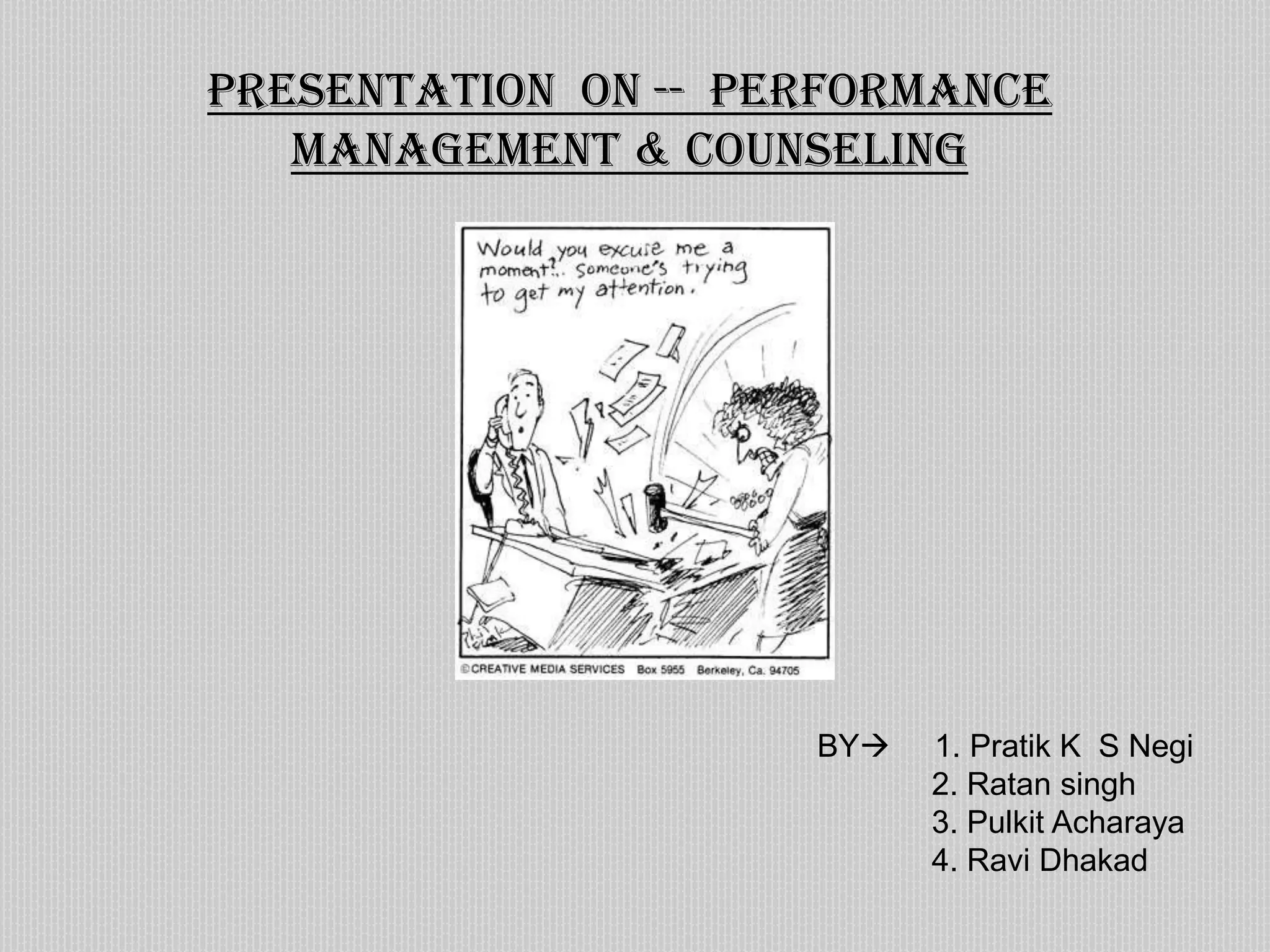

Presentation  On --  Performance Management & CounselingBY     1. Pratik K  S Negi             2. Ratan singh             3. Pulkit Acharaya             4. Ravi Dhakad
Performance managementWhat is performance management –  Performance management refers to the ongoing process of setting goals, self-assessment, manager assessment, peer-assessment (also called 360 assessment), coaching, development planning, and evaluation.Why performance Management --- If your organization is to sustain its competitive advantage, it needs employees who are productive and willing to continually learn and adapt as their roles change along with the organization, Then managing there performance becomes a integral part.How performance Management ---  It includes taking frequent measures as work occurs and responding to small steps forward (many mini-measures (goals) with as much dedication as to final goals achieved). PM is a leading indicator of performance because it drives a system or organization toward desired future goals and provide solid management and performer steps along the way through daily behavior patterns of every employee.
Counseling In relation to performance managementWhat is Counseling–  Counseling is a one on one, many to one. Conversation procedure by which a issue which majorly deals with the performance of a employee in the organization is discussed.Why Counseling required --- If a performer is constantly giving good results and suddenly gives a performance that is not expected. Or an employee that has been a low profile performance has to be given such feedback sessions become integral part for there improvements.How Counseling can be incorporated ---  It’s the basic form of feedback and performance management  that is useful for many organization. its considered as one of the basic tools for the performance management guidelines. But this technique cant work singlehandedly.
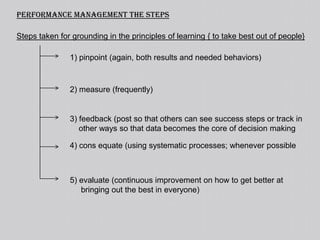
Preview about performance management  Performance Management (PM) are derived from the science of behavior analysis   (also known as the psychology of learning).  The tools of performance management are Compensation, appraisal, selection,    retention, competencies, and so on). Those are important elements of a    well-designed workplace, but most often they are systems, processes, and    procedures designed without knowledge of behavior.  PM approach is used most often in the workplace but applies wherever people    interact—schools, churches, community meetings, sports teams, health setting,    governmental agencies, and even political settings  PM processes will teach managers and supervisors—all leaders—how to bring    out the best in people, including themselves, through a set of clear steps that   appear easy on the surface, but do require a grounding in the principles of learning.  A key aspect of performance management is performance measurement.performance management the stepsSteps taken for grounding in the principles of learning { to take best out of people}1) pinpoint (again, both results and needed behaviors)2) measure (frequently)3) feedback (post so that others can see success steps or track in    other ways so that data becomes the core of decision making4) cons equate (using systematic processes; whenever possible5) evaluate (continuous improvement on how to get better at      bringing out the best in everyone)
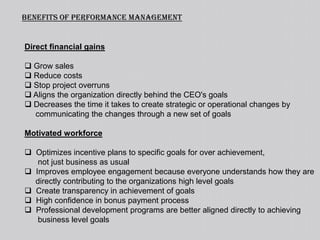
Benefits of Performance ManagementDirect financial gains Grow sales
 Reduce costs
 Stop project overruns
 Aligns the organization directly behind the CEO's goals
 Decreases the time it takes to create strategic or operational changes by     communicating the changes through a new set of goalsMotivated workforce  Optimizes incentive plans to specific goals for over achievement,      not just business as usual  Improves employee engagement because everyone understands how they are     directly contributing to the organizations high level goals  Create transparency in achievement of goals
  High confidence in bonus payment process
  Professional development programs are better aligned directly to achieving      business level goals
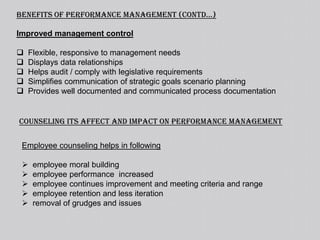
Benefits of Performance Management (contd…)Improved management control  Flexible, responsive to management needs
  Displays data relationships
  Helps audit / comply with legislative requirements
  Simplifies communication of strategic goals scenario planning
  Provides well documented and communicated process documentationCounseling its affect and impact on Performance ManagementEmployee counseling helps in following   employee moral building
  employee performance  increased
  employee continues improvement and meeting criteria and range
  employee retention and less iteration
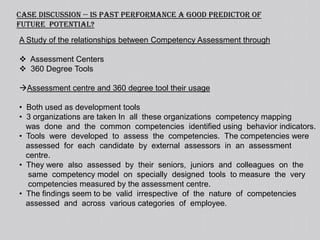
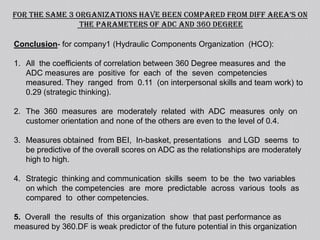
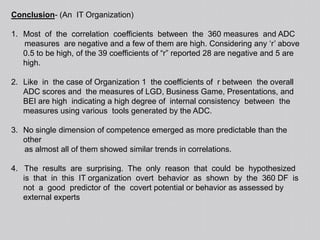
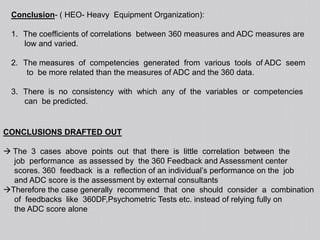
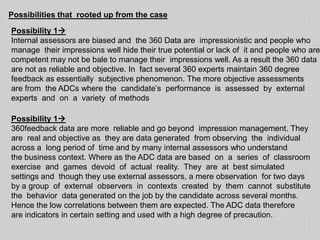
  removal of grudges and issuesCase discussion -- IS PAST PERFORMANCE A GOOD PREDICTOR OF FUTURE  POTENTIAL?A Study of the relationships between Competency Assessment through  Assessment Centers
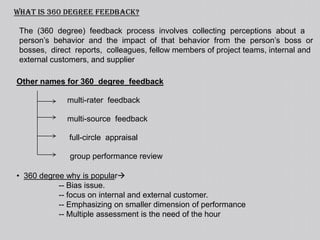
  360 Degree Tools
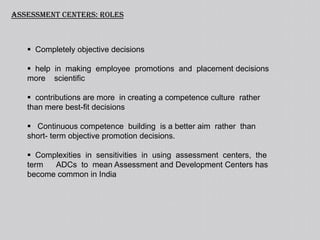
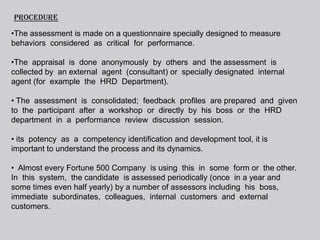
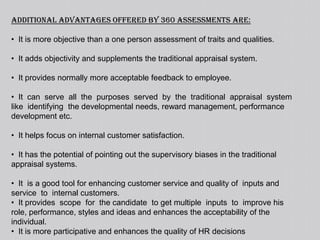
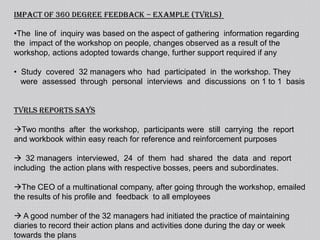
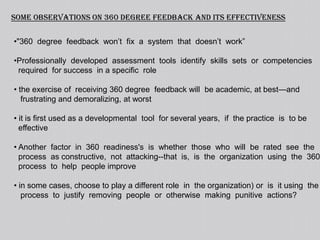
Assessment centre and 360 degree tool their usage
  Both used as development tools
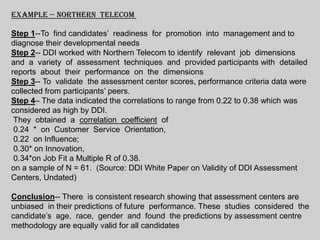
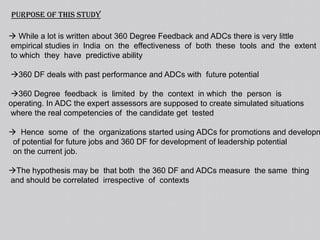
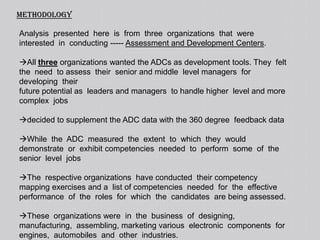
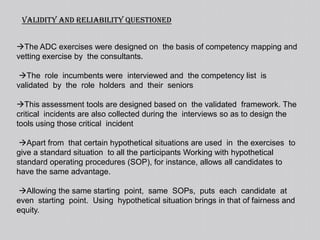
  3 organizations are taken In  all  these organizations  competency mapping   was  done  and  the  common  competencies  identified using  behavior indicators.  Tools  were  developed  to  assess  the  competencies.  The competencies were   assessed  for  each  candidate  by  external  assessors  in  an  assessment    centre.  They were  also  assessed  by  their  seniors,  juniors  and  colleagues  on  the     same  competency model  on  specially  designed  tools  to measure  the  very     competencies measured by the assessment centre.  The findings seem to be  valid  irrespective  of  the  nature  of  competencies    assessed  and  across  various categories  of  employee.
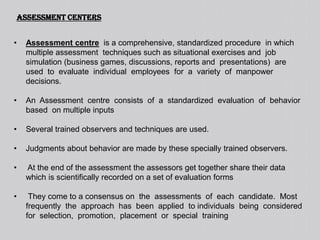
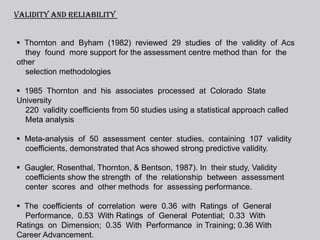
Assessment CentersAssessment centre  is a comprehensive, standardized procedure  in which multiple assessment  techniques such as situational exercises and  job simulation (business games, discussions, reports and  presentations)  are  used  to  evaluate  individual  employees  for  a  variety  of  manpower decisions.
An  Assessment  centre  consists  of  a  standardized  evaluation  of  behavior  based  on multiple inputs
Several trained observers and techniques are used.
Judgments about behavior are made by these specially trained observers.
 At the end of the assessment the assessors get together share their data which is scientifically recorded on a set of evaluation forms
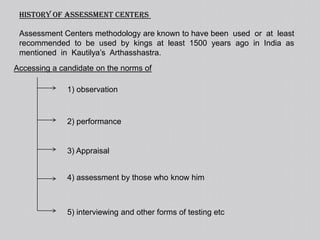
 They come to a consensus on  the  assessments  of  each  candidate.  Most  frequently  the  approach  has  been  applied  to individuals  being  considered  for  selection,  promotion,  placement  or  special  trainingHistory of Assessment Centers Assessment Centers methodology are known to have been  used  or  at  least  recommended  to  be  used  by  kings  at  least  1500  years  ago  in  India  as mentioned  in  Kautilya’s  Arthasshastra.Accessing a candidate on the norms of1) observation2) performance3) Appraisal4) assessment by those who know him5) interviewing and other forms of testing etc
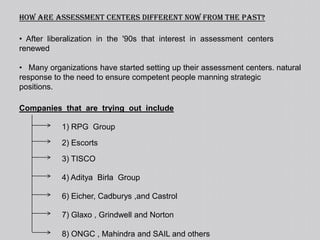
How are Assessment Centers different now from the past?  After  liberalization  in  the  '90s  that  interest  in  assessment  centers renewed
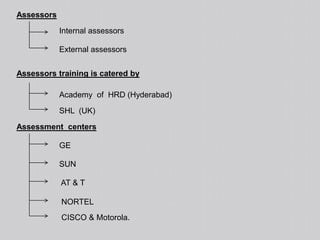
   Many organizations have started setting up their assessment centers. natural              response to the need to ensure competent people manning strategic positions.Companies  that  are  trying  out  include1) RPG  Group2) Escorts3) TISCO4) Aditya  Birla  Group6) Eicher, Cadburys ,and Castrol7) Glaxo , Grindwell and Norton 8) ONGC , Mahindra and SAIL and others
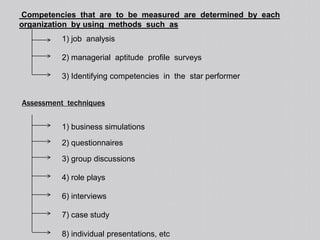
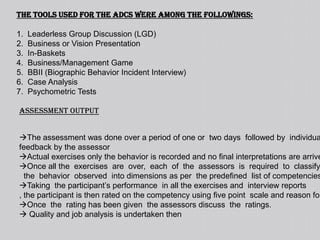
 Competencies  that  are  to  be  measured  are  determined  by  each  organization  by using  methods  such  as1) job  analysis2) managerial  aptitude  profile  surveys3) Identifying competencies  in  the  star performerAssessment  techniques1) business simulations2) questionnaires3) group discussions4) role plays6) interviews7) case study8) individual presentations, etc

Ob Hrd Performance Mgment And Councling Pratik Negi

  • 1.
    Presentation On-- Performance Management & CounselingBY 1. Pratik K S Negi 2. Ratan singh 3. Pulkit Acharaya 4. Ravi Dhakad
  • 2.
    Performance managementWhat isperformance management – Performance management refers to the ongoing process of setting goals, self-assessment, manager assessment, peer-assessment (also called 360 assessment), coaching, development planning, and evaluation.Why performance Management --- If your organization is to sustain its competitive advantage, it needs employees who are productive and willing to continually learn and adapt as their roles change along with the organization, Then managing there performance becomes a integral part.How performance Management --- It includes taking frequent measures as work occurs and responding to small steps forward (many mini-measures (goals) with as much dedication as to final goals achieved). PM is a leading indicator of performance because it drives a system or organization toward desired future goals and provide solid management and performer steps along the way through daily behavior patterns of every employee.
  • 3.
    Counseling In relationto performance managementWhat is Counseling– Counseling is a one on one, many to one. Conversation procedure by which a issue which majorly deals with the performance of a employee in the organization is discussed.Why Counseling required --- If a performer is constantly giving good results and suddenly gives a performance that is not expected. Or an employee that has been a low profile performance has to be given such feedback sessions become integral part for there improvements.How Counseling can be incorporated --- It’s the basic form of feedback and performance management that is useful for many organization. its considered as one of the basic tools for the performance management guidelines. But this technique cant work singlehandedly.
  • 4.
    Preview about performancemanagement Performance Management (PM) are derived from the science of behavior analysis (also known as the psychology of learning). The tools of performance management are Compensation, appraisal, selection, retention, competencies, and so on). Those are important elements of a well-designed workplace, but most often they are systems, processes, and procedures designed without knowledge of behavior. PM approach is used most often in the workplace but applies wherever people interact—schools, churches, community meetings, sports teams, health setting, governmental agencies, and even political settings PM processes will teach managers and supervisors—all leaders—how to bring out the best in people, including themselves, through a set of clear steps that appear easy on the surface, but do require a grounding in the principles of learning. A key aspect of performance management is performance measurement.performance management the stepsSteps taken for grounding in the principles of learning { to take best out of people}1) pinpoint (again, both results and needed behaviors)2) measure (frequently)3) feedback (post so that others can see success steps or track in other ways so that data becomes the core of decision making4) cons equate (using systematic processes; whenever possible5) evaluate (continuous improvement on how to get better at bringing out the best in everyone)
  • 5.
    Benefits of PerformanceManagementDirect financial gains Grow sales
  • 6.
  • 7.
  • 8.
    Aligns theorganization directly behind the CEO's goals
  • 9.
    Decreases thetime it takes to create strategic or operational changes by communicating the changes through a new set of goalsMotivated workforce Optimizes incentive plans to specific goals for over achievement, not just business as usual Improves employee engagement because everyone understands how they are directly contributing to the organizations high level goals Create transparency in achievement of goals
  • 10.
    Highconfidence in bonus payment process
  • 11.
    Professionaldevelopment programs are better aligned directly to achieving business level goals
  • 12.
    Benefits of PerformanceManagement (contd…)Improved management control Flexible, responsive to management needs
  • 13.
    Displaysdata relationships
  • 14.
    Helpsaudit / comply with legislative requirements
  • 15.
    Simplifiescommunication of strategic goals scenario planning
  • 16.
    Provideswell documented and communicated process documentationCounseling its affect and impact on Performance ManagementEmployee counseling helps in following employee moral building
  • 17.
    employeeperformance increased
  • 18.
    employeecontinues improvement and meeting criteria and range
  • 19.
    employeeretention and less iteration
  • 20.
    removalof grudges and issuesCase discussion -- IS PAST PERFORMANCE A GOOD PREDICTOR OF FUTURE POTENTIAL?A Study of the relationships between Competency Assessment through Assessment Centers
  • 21.
    360Degree Tools
  • 22.
    Assessment centre and360 degree tool their usage
  • 23.
    Bothused as development tools
  • 24.
    3organizations are taken In all these organizations competency mapping was done and the common competencies identified using behavior indicators. Tools were developed to assess the competencies. The competencies were assessed for each candidate by external assessors in an assessment centre. They were also assessed by their seniors, juniors and colleagues on the same competency model on specially designed tools to measure the very competencies measured by the assessment centre. The findings seem to be valid irrespective of the nature of competencies assessed and across various categories of employee.
  • 25.
    Assessment CentersAssessment centre is a comprehensive, standardized procedure in which multiple assessment techniques such as situational exercises and job simulation (business games, discussions, reports and presentations) are used to evaluate individual employees for a variety of manpower decisions.
  • 26.
    An Assessment centre consists of a standardized evaluation of behavior based on multiple inputs
  • 27.
    Several trained observersand techniques are used.
  • 28.
    Judgments about behaviorare made by these specially trained observers.
  • 29.
    At theend of the assessment the assessors get together share their data which is scientifically recorded on a set of evaluation forms
  • 30.
    They cometo a consensus on the assessments of each candidate. Most frequently the approach has been applied to individuals being considered for selection, promotion, placement or special trainingHistory of Assessment Centers Assessment Centers methodology are known to have been used or at least recommended to be used by kings at least 1500 years ago in India as mentioned in Kautilya’s Arthasshastra.Accessing a candidate on the norms of1) observation2) performance3) Appraisal4) assessment by those who know him5) interviewing and other forms of testing etc
  • 31.
    How are AssessmentCenters different now from the past? After liberalization in the '90s that interest in assessment centers renewed
  • 32.
    Many organizations have started setting up their assessment centers. natural response to the need to ensure competent people manning strategic positions.Companies that are trying out include1) RPG Group2) Escorts3) TISCO4) Aditya Birla Group6) Eicher, Cadburys ,and Castrol7) Glaxo , Grindwell and Norton 8) ONGC , Mahindra and SAIL and others
  • 33.
    Competencies that are to be measured are determined by each organization by using methods such as1) job analysis2) managerial aptitude profile surveys3) Identifying competencies in the star performerAssessment techniques1) business simulations2) questionnaires3) group discussions4) role plays6) interviews7) case study8) individual presentations, etc