Nutritional Neuroscience:
Thinking Twice about the Foods that Feed
your Brain.
Rachel V. Gow, PhD.
Section of Nutritional Neurosciences
National Institutes of Health
rachel.gow@nih.gov
Dietary Essential Fatty Acids
Public Health Impacts
Prevention and treatment of addictive disorders
and mental illnesses
• Tissue compositions
• Alter mechanisms that underlie
functions
• Mental health consequences
• Animal dietary studies
• Epidemiological differences
• Clinical trials
• Genetic and epigenetic variants
“Pizza is now a vegetable”
In 1983, President Reagan declared
ketchup was a vegetable, more
recently, lobbyists representing pizza
and cheese manufacturers obtained
congressional concessions that 1/8 of
a cup of tomato paste on the base of
a pizza was the nutritional equivalent
of 1/8 of a cup of vegetables.
In November 2011, Congress declared
“Pizza is now a vegetable”.
Robert H. Lustig, “Fat Chance”.
Presentation outline
• To explain the compelling links between
nutrition and mental health, well-being and
performance.
• To provide evidence that specific nutrients are
“brain-selective” and can act in comparable
ways to pharmaceutical drugs
• To outline the implications of common
nutritional insufficiencies.
• To discuss which foods help optimise brain
function with a focus on omega-3 HUFA’s.
The Shape of Things to Come
The Economist, December 2003
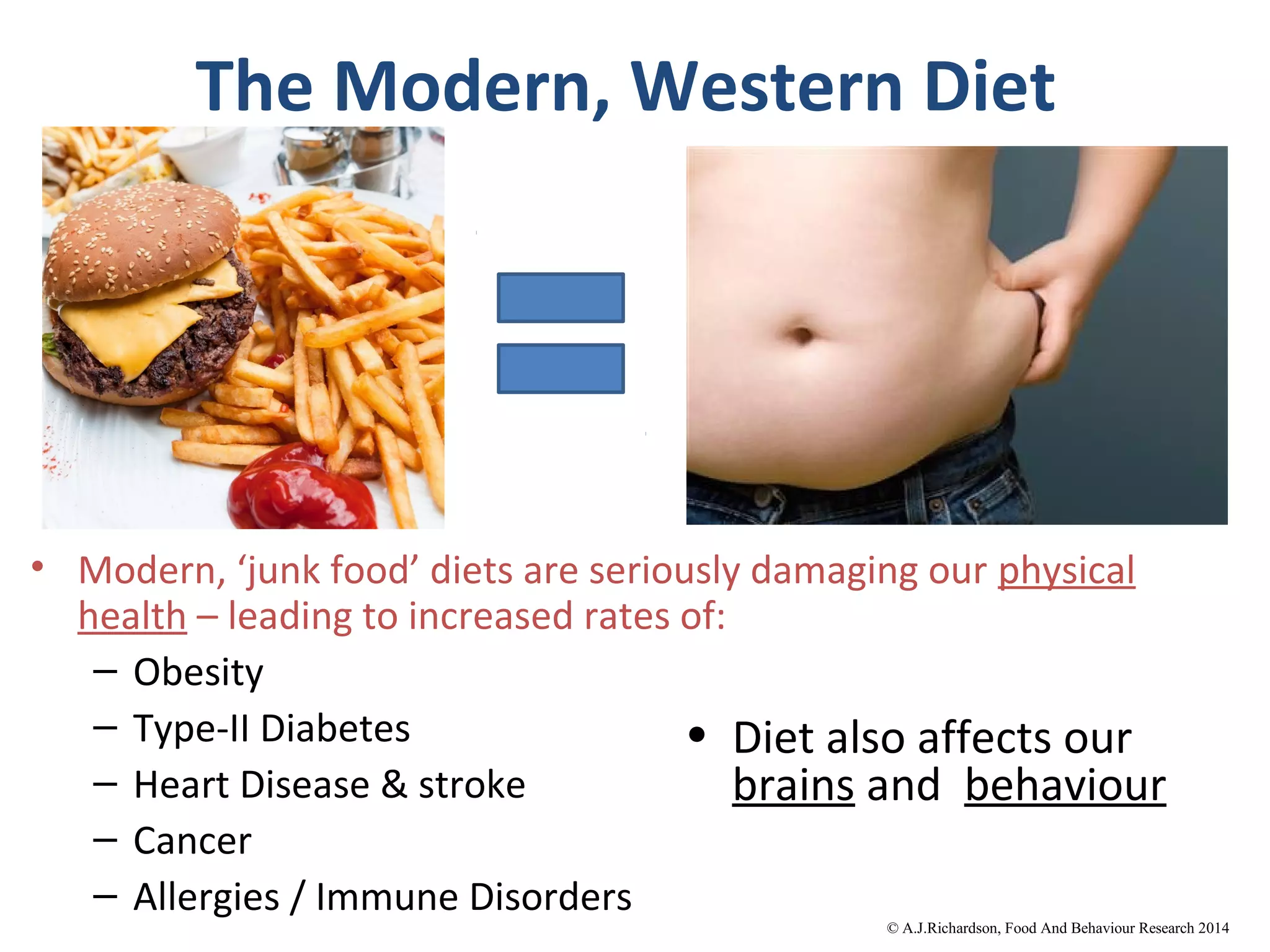
The Modern, Western Diet
• Modern, ‘junk food’ diets are seriously damaging our physical
health – leading to increased rates of:
– Obesity
– Type-II Diabetes
– Heart Disease & stroke
– Cancer
– Allergies / Immune Disorders
• Diet also affects our
brains and behaviour
© A.J.Richardson, Food And
Behaviour Research 2014
“Leave your drugs in the chemist’s pot if you
can cure the patient with food” Hippocrates, 420 BC
• Dietary Shift. In developed countries, such as the US and UK, the
quality of foods and nutritional composition of our diet has changed
dramatically.
• This is argued to be a direct consequence of the Agricultural
Revolution (17th C - end of 19th
C then continuing post WWII) in
favor of mass food production “Modern Western Diet”.
• Technological advances have also led to a huge decline in the
amount of physical exercise we take compared to our ancestors.
• In evolutionary terms, these diet and life-style changes have
occurred too rapidly for our genetic, biochemical and physiological
systems to be able to adapt to them.
© A.J.Richardson, Food And
Behaviour Research 2014
Diseases of Civilization
• Hugh spent time living and researching the diet of the Greenland Inuit
population and noticed that coronary heart disease, cancer, diabetes,
inflammation, strokes, skin disease as well as - allergies and auto-immune
disorders were almost non-existent.
• In an arguably landmark letter to the Lancet (1956) he outlined his theories
that these diseases were the result of nutritional (EFA) deficiency.
• However, the idea that a fat could be useful was extremely controversial and
in 1958, his Readership at Oxford abruptly ended.
• It has become very clear that in any country adopting a Western-type diet
that increased rates of a wide range of degenerative physical health disorders
invariably follows hence the nickname.
• His theories have since sparked global research efforts and led to a much
better understanding of the role of omega-3 fats in human disease.
Hugh Macdonald Sinclair, doctor, medical researcher
and expert in human nutrition at Magdalen College,
Oxford (4th
Feb 1910 - 22 June 1990)
Western Diseases
• All of these diseases were quite rare as recently as
the 19th
C but now typically affect 60% of the
population.
• These diseases have “multi-factorial elements” –
they do not arise from just 1 or 2 aspects of our diets
– e.g., they do not exist because of diets containing excess
saturated fats, or too much salt or a lack of a specific
nutrient.
• Instead, a huge no. of different aspects of our
nutrition interact with our genetic inheritance and
with a host of environmental factors over time, to
produce these “systemic” diseases. © A.J.Richardson, Food And
Behaviour Research 2014
Consumption of saturated fats (found in meat/dairy) + omega-6 PUFAs (mainly
from vegetable oils)has while intake of omega-3 PUFAs (mainly from
fish/seafood) has declined.
Changes in the fat composition of our diets over
time
• The industrialization of our
food supply has led to higher
intakes of saturated and
hydrogenated veg oils, lower
intakes of mono- and
polyunsaturated fats.
• This has resulted in a change in
the brain composition of
omega-3 and 6.
• Current ratio estimates of
omega-6 over omega-3 are:
20:1.
© A.J.Richardson, Food And
Behaviour Research 2014
The ‘Omega-3 Index’
• In adults, % EPA+DHA in red blood cells is a well-
validated index of cardiovascular disease risk
Low
risk
High
risk
4%
8%Omega-3
index
(EPA + DHA)
Mean for UK
children
2.46%
12%
0% © A.J.Richardson, Food And
Behaviour Research 2014
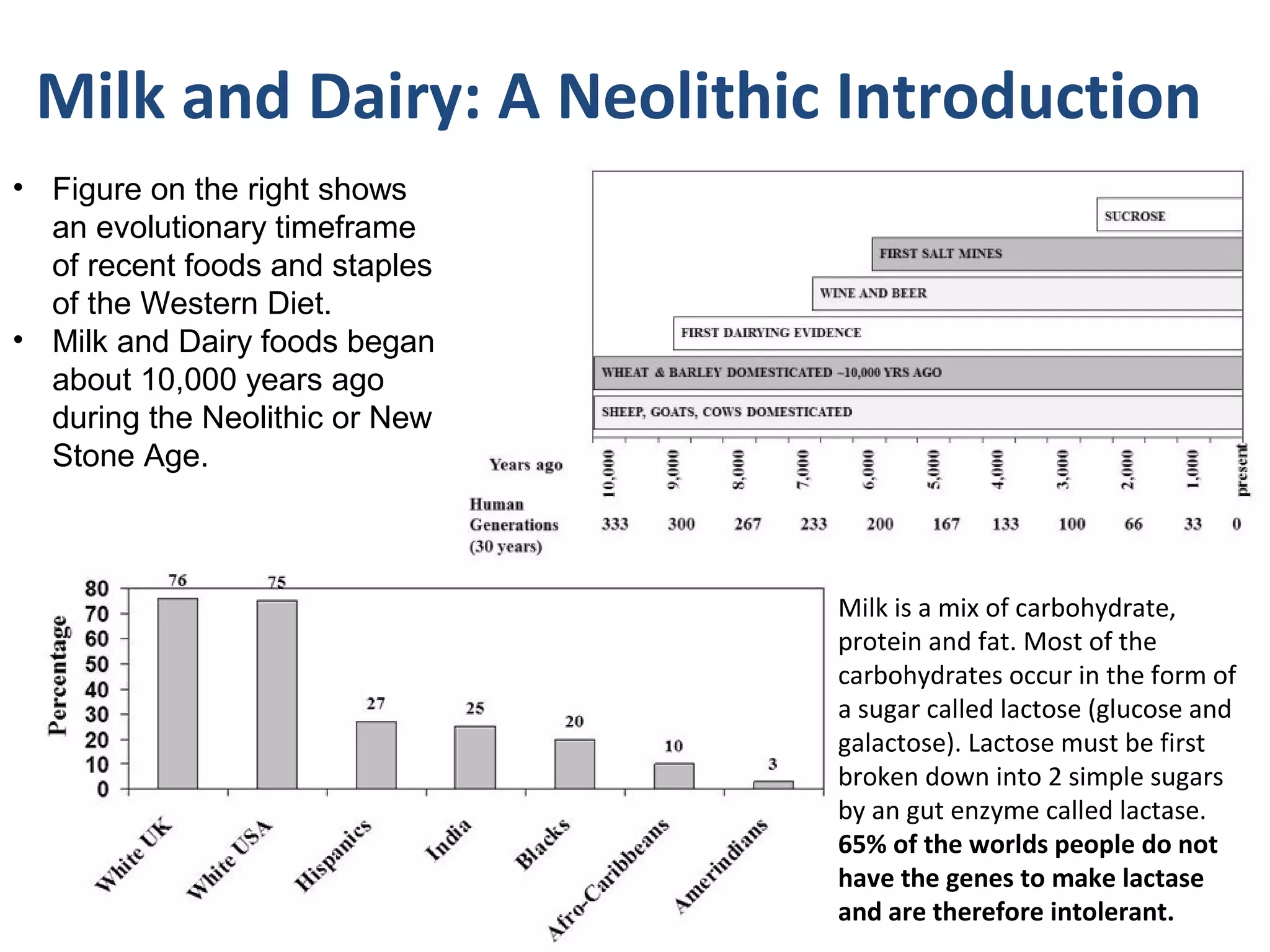
Milk and Dairy: A Neolithic Introduction
• Figure on the right shows
an evolutionary timeframe
of recent foods and staples
of the Western Diet.
• Milk and Dairy foods began
about 10,000 years ago
during the Neolithic or New
Stone Age.
Milk is a mix of carbohydrate,
protein and fat. Most of the
carbohydrates occur in the form of
a sugar called lactose (glucose and
galactose). Lactose must be first
broken down into 2 simple sugars
by an gut enzyme called lactase.
65% of the worlds people do not
have the genes to make lactase
and are therefore intolerant.
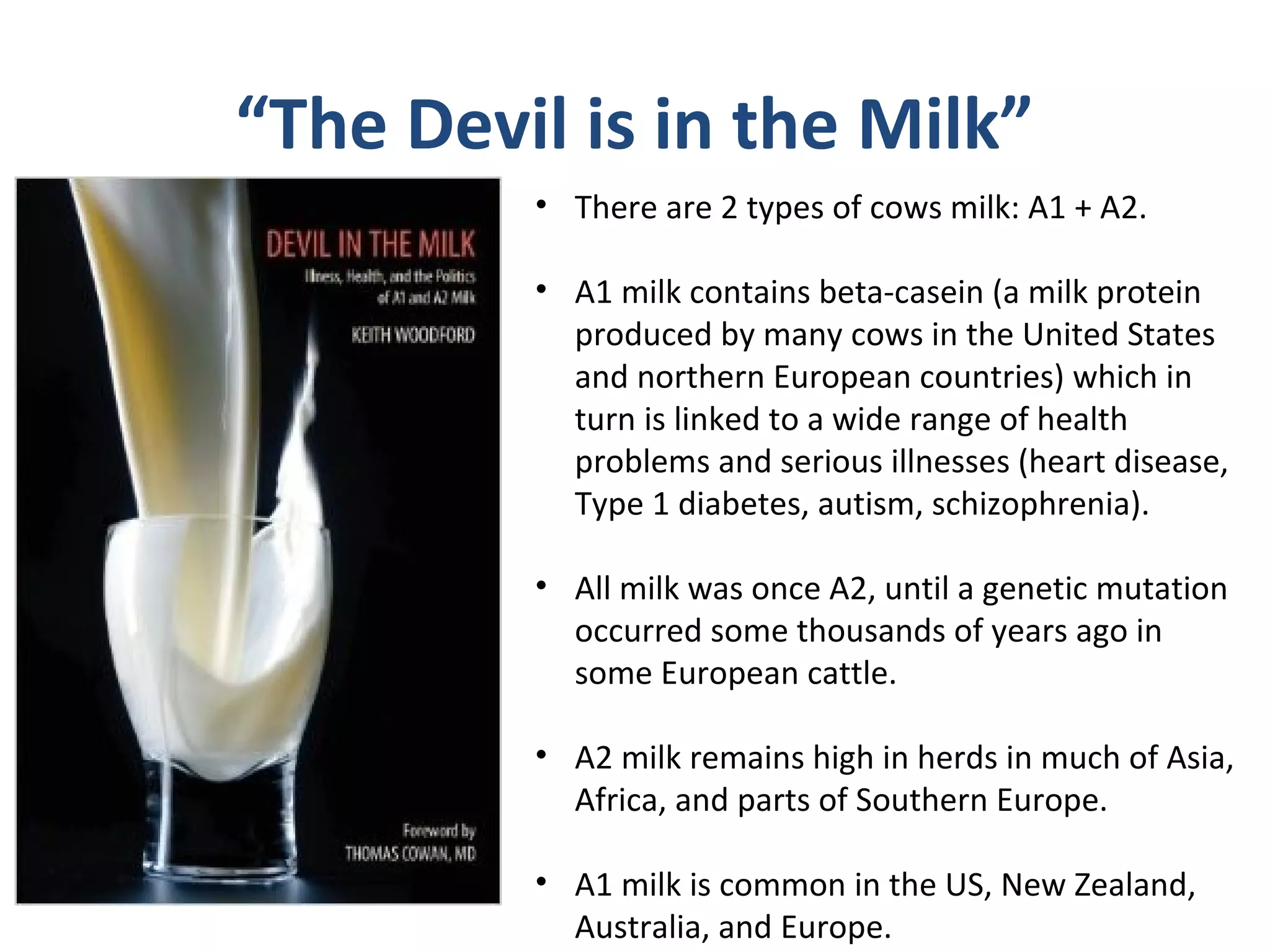
“The Devil is in the Milk”
• In this book, Woodford explains that there are
2 types of cows milk: A1 + A2.
• A1 milk contains beta-casein (a milk protein
produced by many cows in the United States
and northern European countries) which he
suggests is linked to a wide range of health
problems and serious illnesses (heart disease,
Type 1 diabetes, autism, schizophrenia).
• All milk was once A2, until a genetic mutation
occurred some thousands of years ago in some
European cattle. A2 milk remains high in herds
in much of Asia, Africa, and parts of Southern
Europe.
• A1 milk is common in the US, New Zealand,
Australia, and Europe.
Many nutritional features of modern, western
diets are both evolutionarily novel and
pathological
• High Glycaemic Load
• Altered Fatty Acid Composition
• Altered Macronutrient Composition
• Reduced Micronutrient Density
• Acid-Alkaline Balance
• Sodium-Potassium Ratio
• Dietary Fibre
Cordain et al. Origins and evolution of the western diet: health implications
for the 21st
century. Am J Clin Ntr 2005, 81:341-54.
Sugar
Fat
Vitamins,
Minerals etc
Fibre
© A.J.Richardson, Food And
Behaviour Research 2014
© A.J.Richardson, Food And
Behaviour Research 2012
Sugary foods and drinks cause rapid swings in
blood sugar (affecting mood, behaviour and
cognition)
Optimal range for brain
function
© A.J.Richardson, Food And
Behaviour Research 2012
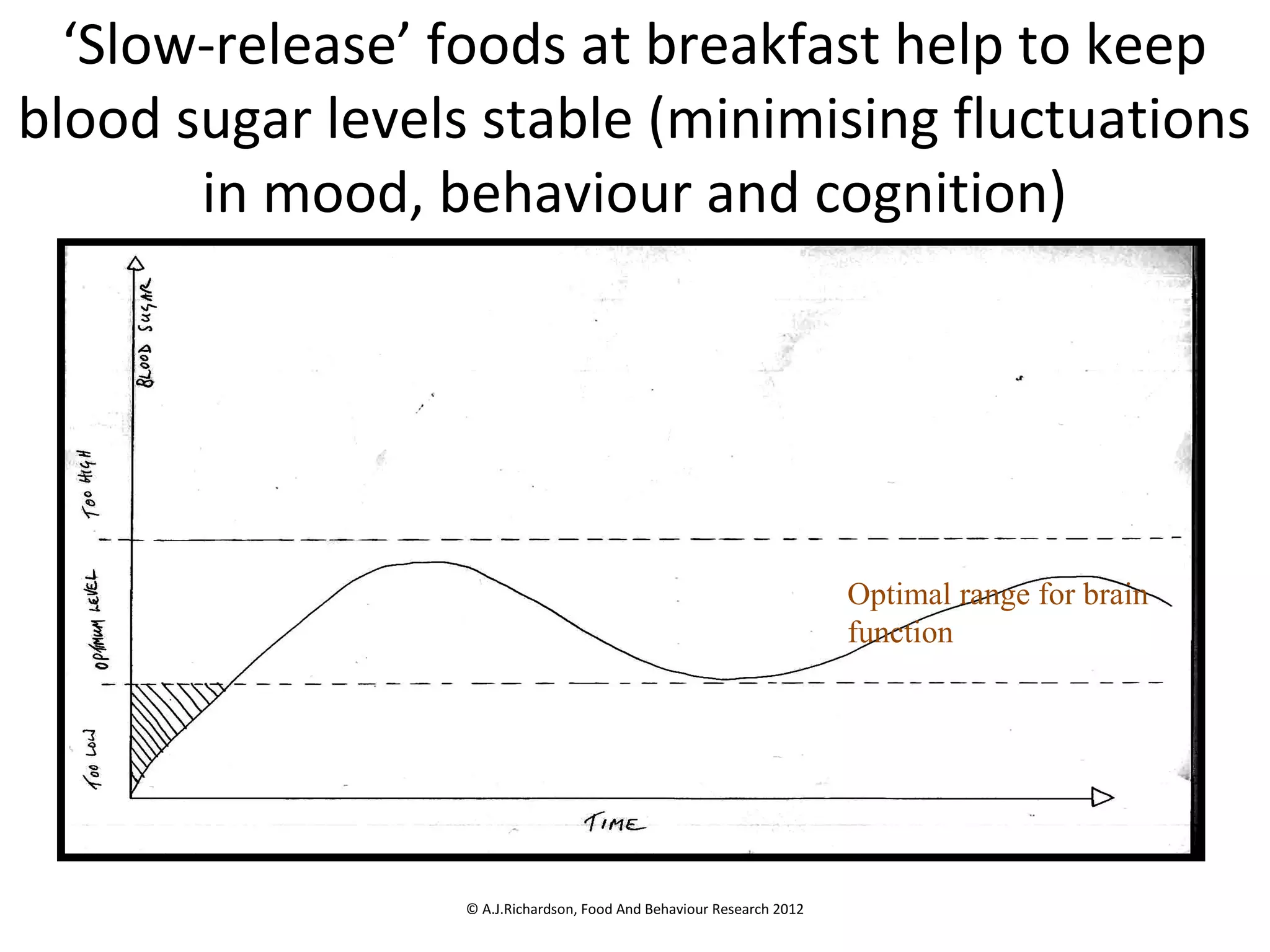
‘Slow-release’ foods at breakfast help to keep
blood sugar levels stable (minimising fluctuations
in mood, behaviour and cognition)
Optimal range for brain
function
© A.J.Richardson, Food And
Behaviour Research 2014
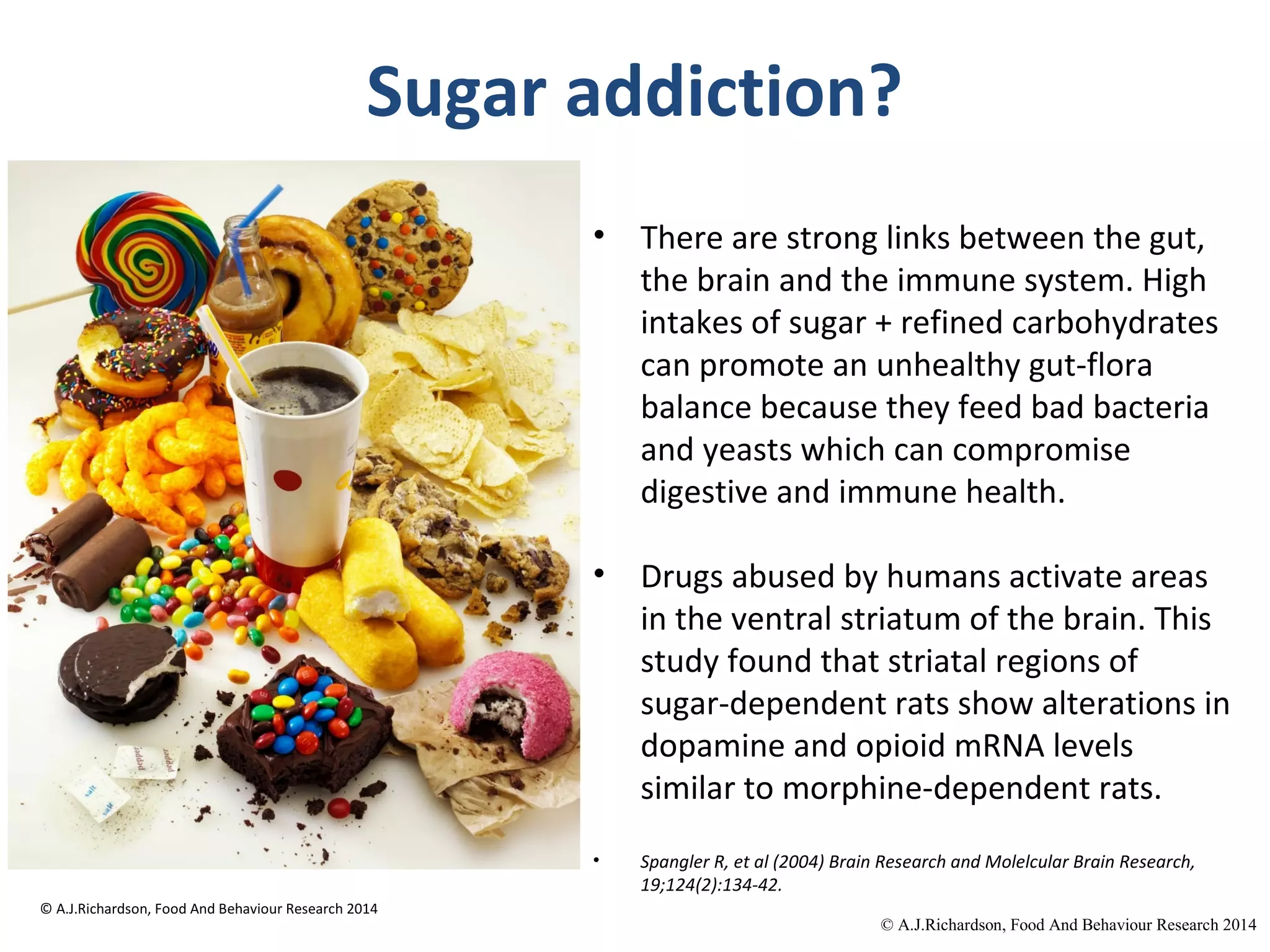
Sugar addiction?
• There are strong links between the gut,
the brain and the immune system. High
intakes of sugar + refined carbohydrates
can promote an unhealthy gut-flora
balance because they feed bad bacteria
and yeasts which can compromise
digestive and immune health.
• Drugs abused by humans activate areas
in the ventral striatum of the brain. This
study found that striatal regions of
sugar-dependent rats show alterations in
dopamine and opioid mRNA levels
similar to morphine-dependent rats.
• Spangler R, et al (2004) Brain Research and Molelcular Brain Research,
19;124(2):134-42.
© A.J.Richardson, Food And
Behaviour Research 2014
Sugar – Toxic and Addictive?
• Robert Lustig, Prof of Pediatrics at the University of
California, San Francisco: Interview with New Scientist,
2011 on his Youtube lecture, "Sugar: The bitter
truth“.
Q: Why do we consume so much sugar?
• “One reason is that it's addictive. The food industry
knows that when they add fructose we buy more. That's
why it's in everything. There are five tastes on your
tongue: sweet, salty, sour, bitter and savoury (umami).
Sugar covers up the other four, so you can't taste the
negative aspects of foods.”
• What is important is to remember that we have no
dietary need for manufactured sugars. © A.J.Richardson, Food And
Behaviour Research 2014
Glucose vs Fructose
• Glucose
• Glucose is the sole source of fuel to create energy for all brain and
red blood cells. Glucose also is critical in the production of
proteins, lipid metabolism and is a precursor for vitamin C
production.
• When glucose levels are low, psychological processes requiring
mental effort l(self-control, critical thinking and decision-making)
become impaired.
• Fructose
– Requires processing by the liver before its energy can be used
(technically – a ‘toxin’)
– NOT HEALTHY if consumed as a ‘white powder’ – i.e., table
sugar or High-Fructose Corn Syrup (both approx 50% glucose,
50% fructose). © A.J.Richardson, Food And
Behaviour Research 2014
High-fructose corn syrup
• This study investigated whether dietary omega-3
fatty acids modulated the cognitive and metabolic
impairments induced by a high-sugar diet.
• Water laced with high-fructose corn syrup given to
omega-3 deficient rats over 6 weeks led to:
– Learning and memory problems
– Impaired insulin sensitivity, elevated triglycerides, and
reductions in markers of synaptic plasticity in brain tissue
• The addition of dietary omega-3 fatty acids
ameliorated all parameters of metabolic dysfunction
related to the fructose treatment.
Agrawal R, Gomez-Pinilla F (2012) Metabolic syndrome in the brain: Deficiency in omega-3-fatty acid exacerbates dysfunctions in insulin receptor
signaling and cognition. J Physiol 590(Pt 10): 2485-99.
© A.J.Richardson, Food And
Behaviour Research 2014
Aggression and nutritional deficiencies
• Schoenthaler (1991) substantially reduced the
sugar content in the diets of 3000 imprisoned
juveniles in U.S.
• Instead healthier snack options given with
reduced sugar + refined foods.
• Results over a 12 month period showed a 21%
reduction in antisocial behaviour, 25% reduction
in assaults, 75% reduction in physical restraints
by staff and a 100% reduction in suicides.
21
Magnifying nutritional features of Western diets
Acid-base imbalance
•Following digestion, meat, fish, eggs, dairy products and grains all
leave behind an acid residue in the body.
•Only fresh fruit, vegetables, tubers, roots, and nuts leave an alkaline
residue.
•Over time, acid-based foods will lead to a gradual ‘acidosis’ of body
tissues contributing to many health problems, most enzymes in our
bodies and brains are sensitive to pH levels.
High sodium/low potassium ratio
•Has risen substantially from salt added to processed foods.
•The displacement of potassium-rich vegetables and fruits by other
foodstuffs, vegetable oils and refined carbohydrates are both devoid
of potassium.
•Hypertension, CVD, osteoporosis + many other ‘Western’ diseases
are promoted by an elevated sodium/potassium ratio.
© A.J.Richardson, Food And
Behaviour Research 2014
Nutritional features of Western-
type diets
Dietary Fibre
•Intake of dietary fibre has fallen significantly.
•Vegetables, fruits and whole grains provide
both soluble and insoluble fibre, needed for a
healthy digestive system (on which all other
aspects of health depend).
•Their displacement by foods lacking in fibre
(sugars and refined carbohydrates, vegetable
oils and dairy products) promotes poor
digestion and ill-health. © A.J.Richardson, Food And
Behaviour Research 2014
Chicken is now a high fat food
• The enormous amount of carcass fat is a consequence of intensive
production methods with a focus on fast body weight gain.
• Feed is high-energy, grain-based feed rich in omega-6 fats and
almost devoid of omega-3 as opposed to a natural diet they would
obtain from grazing and foraging in the pasture.
• Animals are fed growth promoters and raised intensively in barns
or stalls with no opportunity to exercise and so fat infiltrates their
wasted muscles.
Dr. Wang holding bottles of fat extracted from
intensively reared, supermarket chickens in
England.
1.3kg roasting chicken yielded 275g fat, and
600g lean meat - of which ¾ is water, so only
150g is protein.
 
Modern organic and broiler chickens sold for human consumption provide more
energy from fat than protein. Wang Y, Lehane C, Ghebremeskel K, Crawford MA.
Public Health Nutr. 2010 Mar;13(3):400-8.
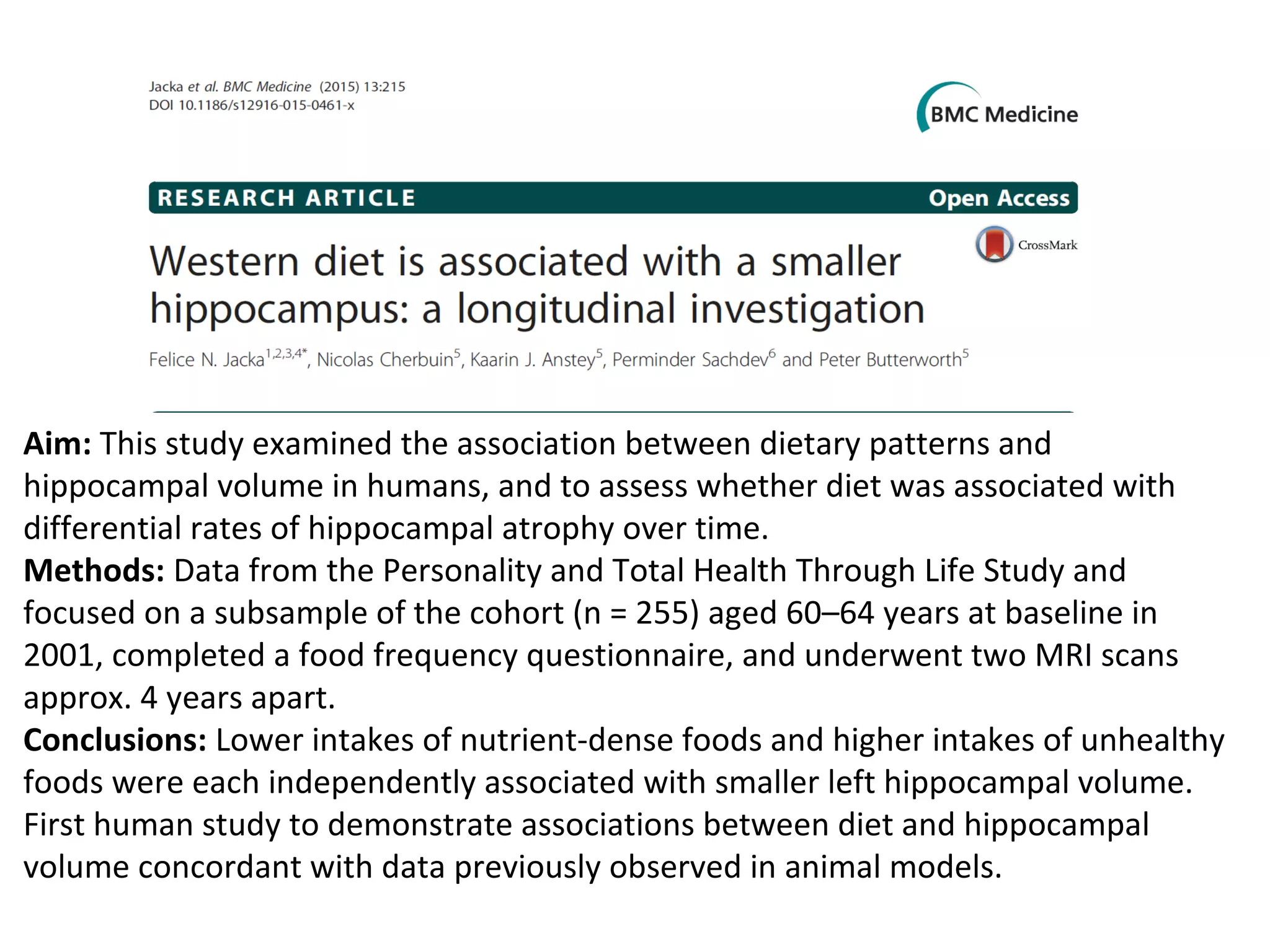
Aim: This study examined the association between dietary patterns and
hippocampal volume in humans, and to assess whether diet was associated with
differential rates of hippocampal atrophy over time.
Methods: Data from the Personality and Total Health Through Life Study and
focused on a subsample of the cohort (n = 255) aged 60–64 years at baseline in
2001, completed a food frequency questionnaire, and underwent two MRI scans
approx. 4 years apart.
Conclusions: Lower intakes of nutrient-dense foods and higher intakes of unhealthy
foods were each independently associated with smaller left hippocampal volume.
First human study to demonstrate associations between diet and hippocampal
volume concordant with data previously observed in animal models.
Essential Nutrients for Brain Function
• The fact is foods can mediate brain function and its signals to positively
influence synaptic transmission and plasticity, membrane fluidity and energy
metabolism.
• Depending on the types of daily foods eaten, the results can be polar
opposites. Foods can either give rise to health promoting effects resulting in
positive affective states, more efficient cell-signaling and overall well-being or
contrastingly promote inflammation, stress and foster addictions giving rise to
negative behavioral states such as aggression, pain, anxiety and depression.
• There are at least 39 essential nutrients which must be provided by our food
and some of these are thought to facilitate brain function at a molecular level:
• Vitamin D
• Probiotics and prebiotics
• Magnesium & B-vitamins
• Zinc, Iron & Iodine
• Antioxidants (Vitamins A, C, E and beta-carotene)
• Omega-3 highly unsaturated fatty acids (HUFAs)
Vitamin D
• Powerful neurosteroid, fat-soluble, hormone vital for most aspects
of health.
• Primary source is the action of bright sunlight on exposed skin.
• Few foods provide Vitamin D: richest sources are oily fish and liver.
Dairy fats contain small quantities and in the US milk is fortified
with some Vitamin D.
• Modern ‘indoor’ lifestyles mean that Vitamin D insufficiencies, if
not deficiencies, are almost everywhere during the winter months.
Especially, in countries like the UK where no Vitamin D can be
made between mid-autumn and spring.
• High-risk groups are those with dark skin, pregnant women and
infants, and the elderly as well as people in institutional care.
• Low maternal levels are linked to schizophrenia and deficiency is
generally linked to depressive symptoms. © A.J.Richardson, Food And
Behaviour Research 2014
Vitamin D
Figure 1. Vitamin D status in an adult UK
general population sampleThis graph shows
that nearly 90% of
the current study
population was
affected by
hypovitaminosis*
D during the
winter and spring,
and 60% had
suboptimal
concentrations
year-round.
*deficiency of vitamin D © A.J.Richardson, Food And
Behaviour Research 2014
Probiotics and prebiotics
• ‘Probiotics’ and ‘prebiotics’ are also vital for health.
• The former term refers to the innumerable strains of ‘good’
bacteria that should inhabit the gut, where they are crucial to
digestive and immune system functioning.
• Some strains of these bacteria actually help to synthesise
vitamins such as B and K.
• These are crucial to energy metabolism and blood clotting, so
the body needs regular supplies.
• Both are water-soluble, however, and not easily stored; so
there are obvious advantages to having healthy gut flora that
can manufacture them ‘on demand’.
© A.J.Richardson, Food And
Behaviour Research 2014
B-vitamins
• Vitamin B (found in eggs, meat, diary, grains, vegetables) are
a whole range of vitamins which are used as co-enzymes to
perform numerous tasks in your brain/body.
• Important for energy-production, maintaining a healthy
heart, immune function, cell division and DNA repair, growth
and reproduction of cells and various aspects of brain
function: attention, problem solving, coordination and
memory.
• Early signs of B3 deficiency are: dermatitis, diarrhoea,
attention and memory problems.
• Without B6 you can’t make serotonin (feel good
neurotransmitter a lack of which is normally the rationale for
Prozac and other SSRI’s prescriptions). Deficiencies also
include: dermatitis (skin inflammation), depression, confusion
and convulsions. © A.J.Richardson, Food And
Behaviour Research 2014
B-vitamins continued
• B3, B6+ folic acid work together to keep homocysteine down. High
levels of homocysteine are linked to heart disease/stroke.
• Deficiencies of B12 can lead to memory loss, disorientation,
hallucinations and tingling in the arms and legs. Vegetarians and
vegans should take B12supplements because this nutrient is only
found in animal products.
• The elderly also may have problems absorbing B12 and some people
diagnosed with dementia or Alzheimer’s disease may be suffering
from a deficiency which is rather more easily reversed.
• Eating processed foods depletes B vitamins, and because we can’t
store them, anyone who is under a lot of stress or leads a hectic
lifestyle is at risk unless supplies are topped up regularly.
• Early signs of B1 (thiamine) deficiency include fatigue, irritation,
poor memory, sleep disturbances, constipation + abdominal© A.J.Richardson, Food And
Behaviour Research 2014
Zinc
• Zinc is is needed for over 200 different biochemical reactions in
the body and brain
– involved in the metabolism of neurotransmitters and plays an important
role in regulating dopamine, and in immune strengthening.
• Zinc insufficiency can result in irritability, restlessness, infection,
fatigue, appetite loss and low mood.
• Zinc and copper are found in the hippocampus region which is
critical for learning, memory, regulating your emotions, stress
response and sensitivity to pain.
• *In the UK alone 70-90% of school-children consumed less than
the “reference nutrient intake”.
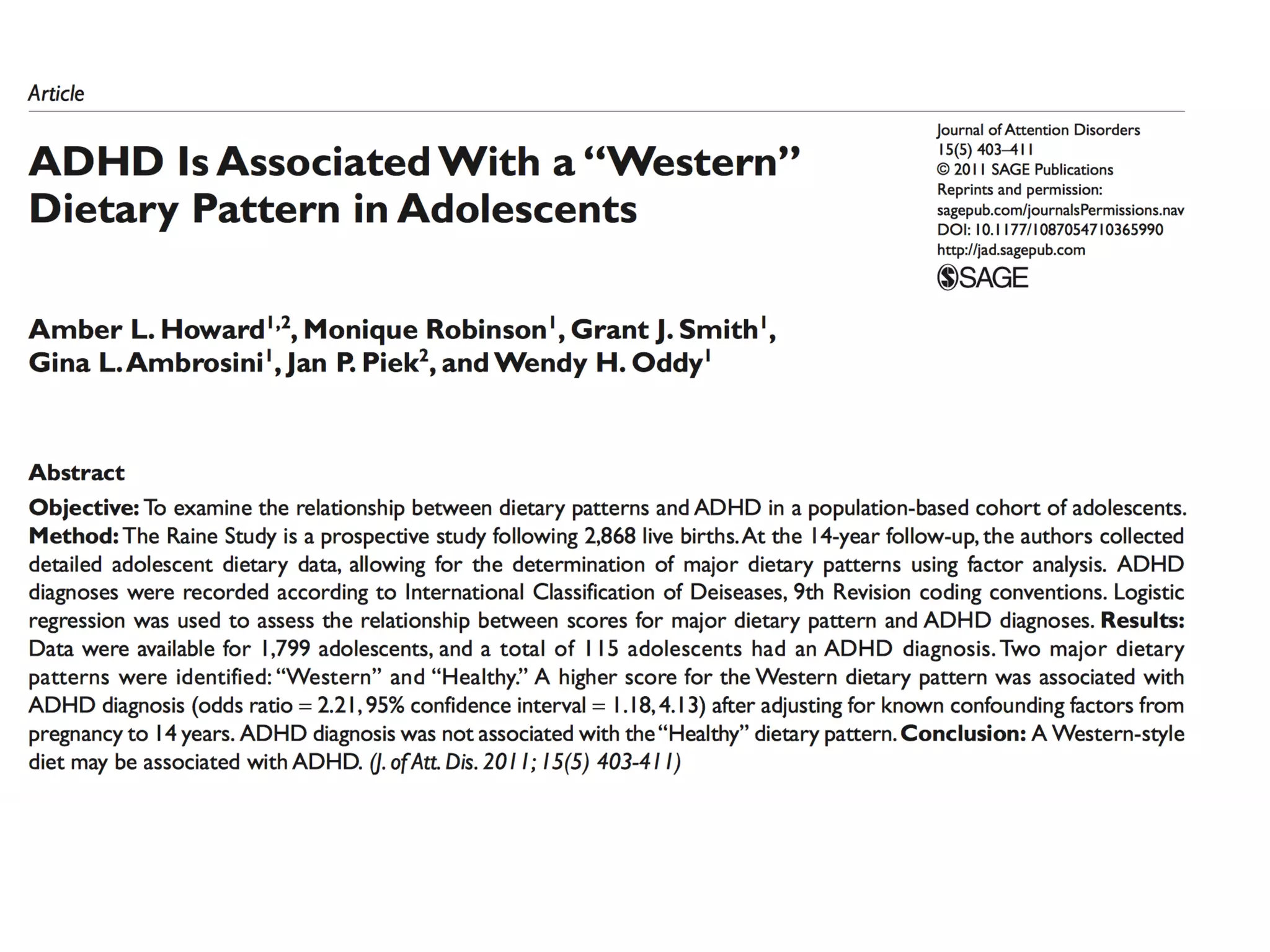
• Low levels of zinc and high levels of copper linked to ADHD.
• Richest food sources include: seafood, garlic, spinach, red meat
(beef/lamb), nuts and beans.
*Gregory et al., National Diet and Nutrition Surveys (London: HMSO, 2000).© A.J.Richardson, Food And
Iron & Iodine
• Iron is needed for every cell in the human body, essential for producing
hemoglobin which carries oxygen to your body’s cells among many other
cellular and enzymatic functions.
• Classic deficiency is anaemia but even a mild lack of iron can cause
physical fatigue, lack of energy, difficulty concentrating and impaired
mental performance.
• Deficiencies common in children and women of child-bearing age and
some vegetarians because plant sources are less readily absorbed than
iron found in red meat.
• In children, iron deficiency is linked to under scholastic performance and
increased risk of autism diagnosis.
• Foods rich in iron include: red meat, seafood, fish, poultry, eggs, beans,
dark leafy greens, peas.
• Iodine is essential for cell metabolism and thyroid function.
• Defeciencies are linked to serious mental and physical problems.
© A.J.Richardson, Food And
Behaviour Research 2014
Brain Break!
Pause for thought…
1.What do you think about the changes in the way food is now
produced?
2.Do you think that you eat a reasonably healthy diet? (and if not
why not?)
3.What’s the most obvious way in which you think food affects
your behaviour?
This is worth thinking about for a minute or two, as many more
examples will then start to occur to you.
Omega-3 Fats
Over 30 years of evidence
has confirmed that omega-
3 (HUFAs) are essential,
bio-active compounds
critical for
neurodevelopment, brain
function and structure.
DHA constitutes 30% of
ethanolamine + serine
phosphoglycerides of brain
tissue (gray matter).
Emerging neuroscientific research suggests DHA is positively
correlated with frontal cortex structural and functional integrity in
humans across the lifespan (McNamara et al., 2013)
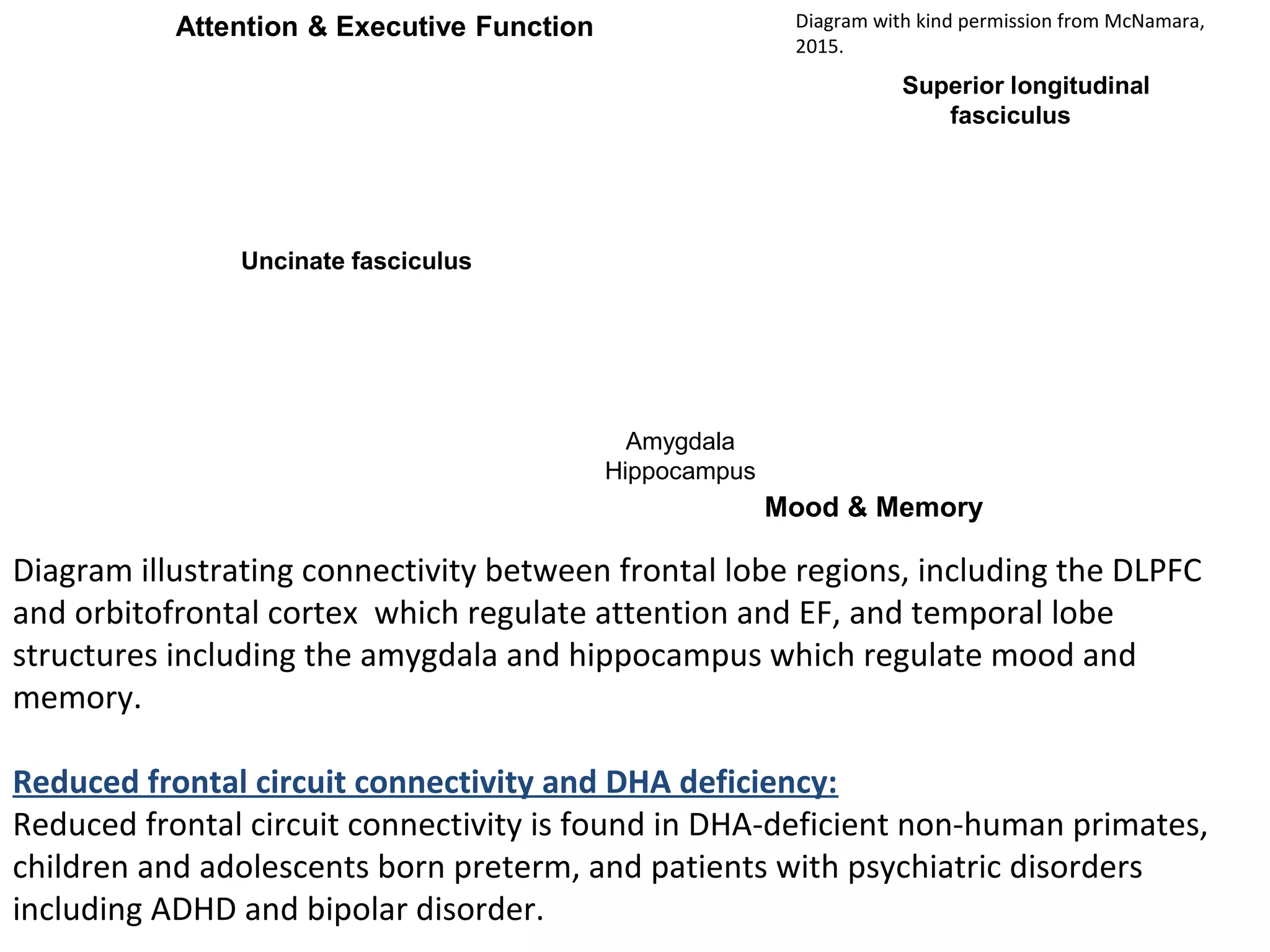
Amygdala
Hippocampus
Superior longitudinal
fasciculus
Attention & Executive Function
Mood & Memory
Uncinate fasciculus
Diagram illustrating connectivity between frontal lobe regions, including the DLPFC
and orbitofrontal cortex which regulate attention and EF, and temporal lobe
structures including the amygdala and hippocampus which regulate mood and
memory.
Reduced frontal circuit connectivity and DHA deficiency:
Reduced frontal circuit connectivity is found in DHA-deficient non-human primates,
children and adolescents born preterm, and patients with psychiatric disorders
including ADHD and bipolar disorder.
Diagram with kind permission from McNamara,
2015.
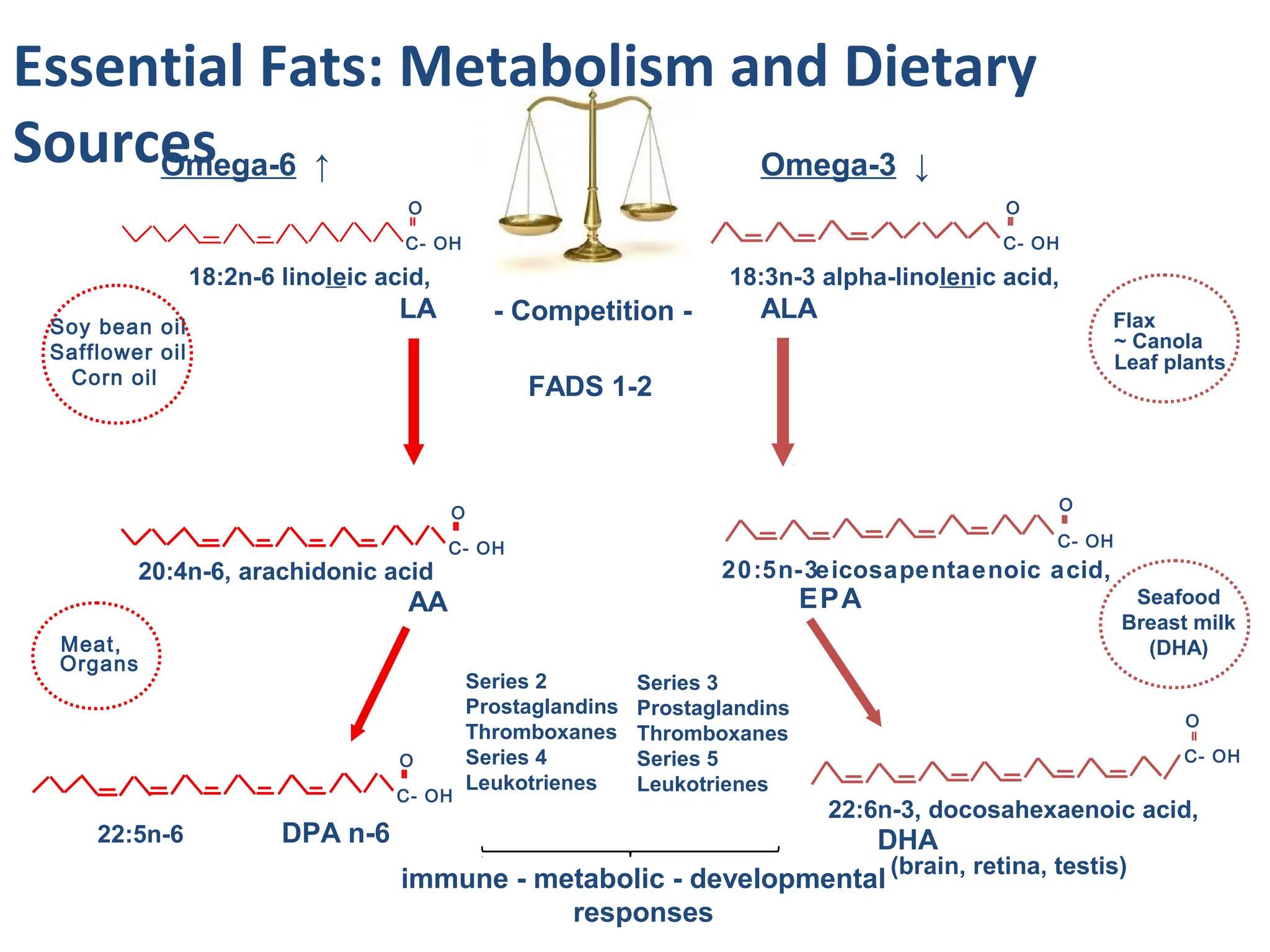
C- OH
O
20:4n-6, arachidonic acid
AA
Meat,
Organs
FADS 1-2
Flax
~ Canola
Leaf plants
C- OH
O
18:3n-3 alpha-linolenic acid,
ALA
C- OH
C- OH
O
20:5n-3eicosapentaenoic acid,
EPA
Omega-3 ↓
Seafood
Breast milk
(DHA)
22:6n-3, docosahexaenoic acid,
DHA
(brain, retina, testis)
O
C- OH
O
22:5n-6 DPA n-6
Series 2
Prostaglandins
Thromboxanes
Series 4
Leukotrienes
immune - metabolic - developmental
responses
Omega-6 ↑
O
C- OH
18:2n-6 linoleic acid,
LA
Soy bean oil
Safflower oil
Corn oil
- Competition -
Essential Fats: Metabolism and Dietary
Sources
Series 3
Prostaglandins
Thromboxanes
Series 5
Leukotrienes
0.9
Year
Disappearance(kg/person/y)
Palm/Palm
Kernel
Peanut
Canola
Safflower
Sesame
Sunflower
0
2
4
6
8
10
12
0.1
0.2
0.3
0.4
0.5
0.6
0.7
0.8
1909
1919
1929
1939
1949
1959
1969
1979
1989
1999
Coconut
Corn
Cottonseed
Olive
Soybean
Soy oil Consumption Increased 1,000 fold in the 20th
Century, USA
Blasbalg et al.(Hibbeln group), AJCN 2011; 93: 950-962.
LA
1-2 % en
LA
8 % en
© A.J.Richardson, Food And
Behaviour Research 2014
Getting the Fats Wrong
Cheap margarines, ‘takeaways’
and commercially baked or
fried foods still often contain
hydrogenated and trans fats
These are artificially saturated
and ‘twisted’ fats, which have:
• no known nutritional benefits
• many health risks.
Trans fats compete with
omega-3 essential fatty acids
needed for brain and body
health.
Implications of inadequate n3
HUFAs?
• The effects of dietary induced omega-3 deficiency
during pregnancy and weaning in animal studies are
compelling and well-replicated.
• Delayed neuronal migration:
– Process in which neurons travel from their place of origin to
their final position in the brain
– A delay means that the neurons are not arriving to their
predetermined position in the developing brain.
• Disrupted neuronal migration during development may
lead to cognitive, motor, and intellectual disabilities.
Maternal DHA deficiency restricts migration of cortical
neurones in rat fetal brain. Staining specifically reveals
migrating cells as they form the cortex.
DHA adequate diet DHA deficient diet
DHA adequate with extensive cell migration Layer 2, DHA deficient mother
Data from Yavin, Himovichi, & Eilam, (2009), Neuroscience.
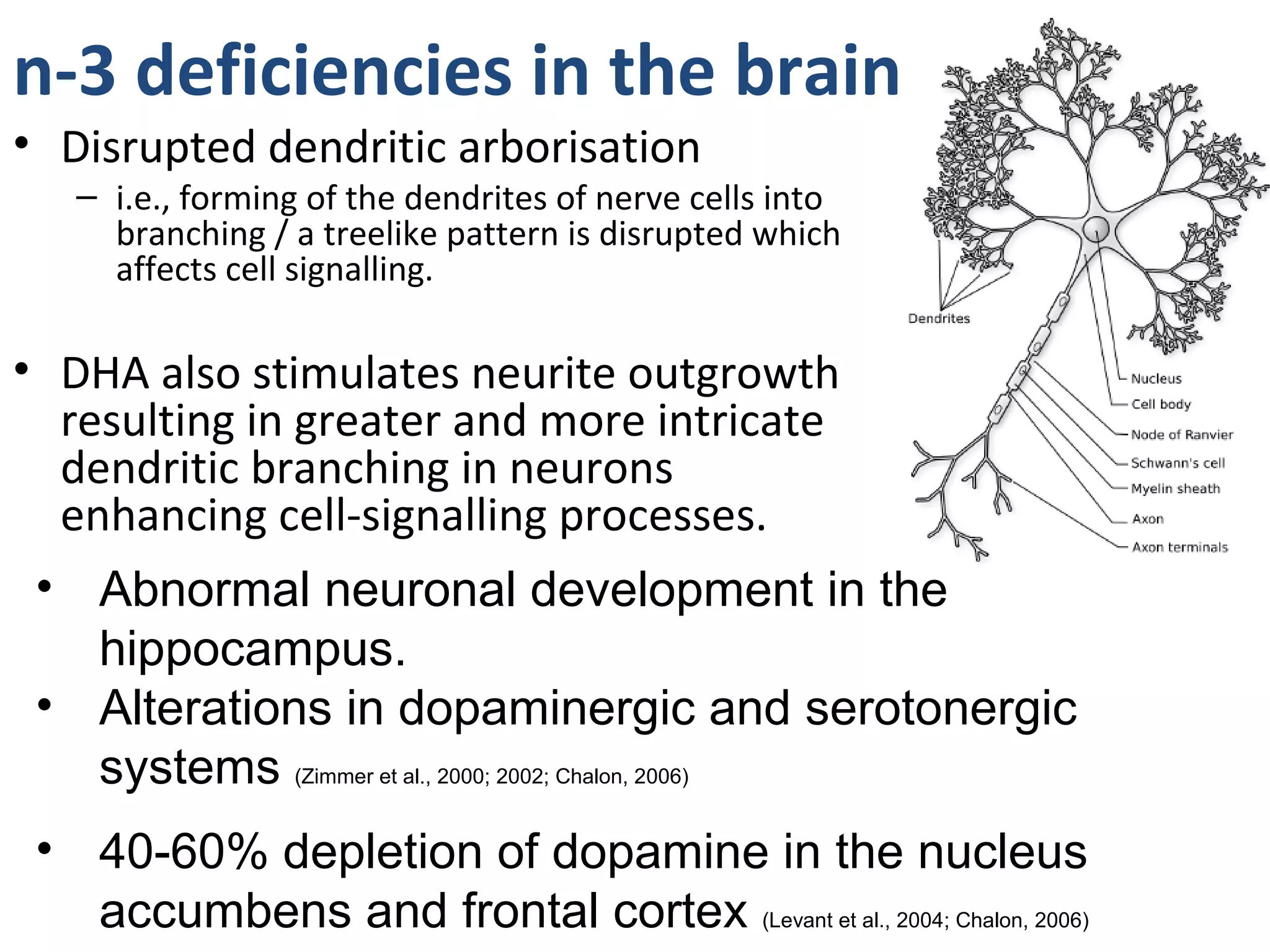
n-3 deficiencies in the brain
• Disrupted dendritic arborisation
– i.e., forming of the dendrites of nerve cells into
branching / a treelike pattern is disrupted which
affects cell signalling.
• DHA also stimulates neurite outgrowth
resulting in greater and more intricate
dendritic branching in neurons
enhancing cell-signalling processes.
• Abnormal neuronal development in the
hippocampus.
• Alterations in dopaminergic and serotonergic
systems (Zimmer et al., 2000; 2002; Chalon, 2006)
• 40-60% depletion of dopamine in the nucleus
accumbens and frontal cortex (Levant et al., 2004; Chalon, 2006)
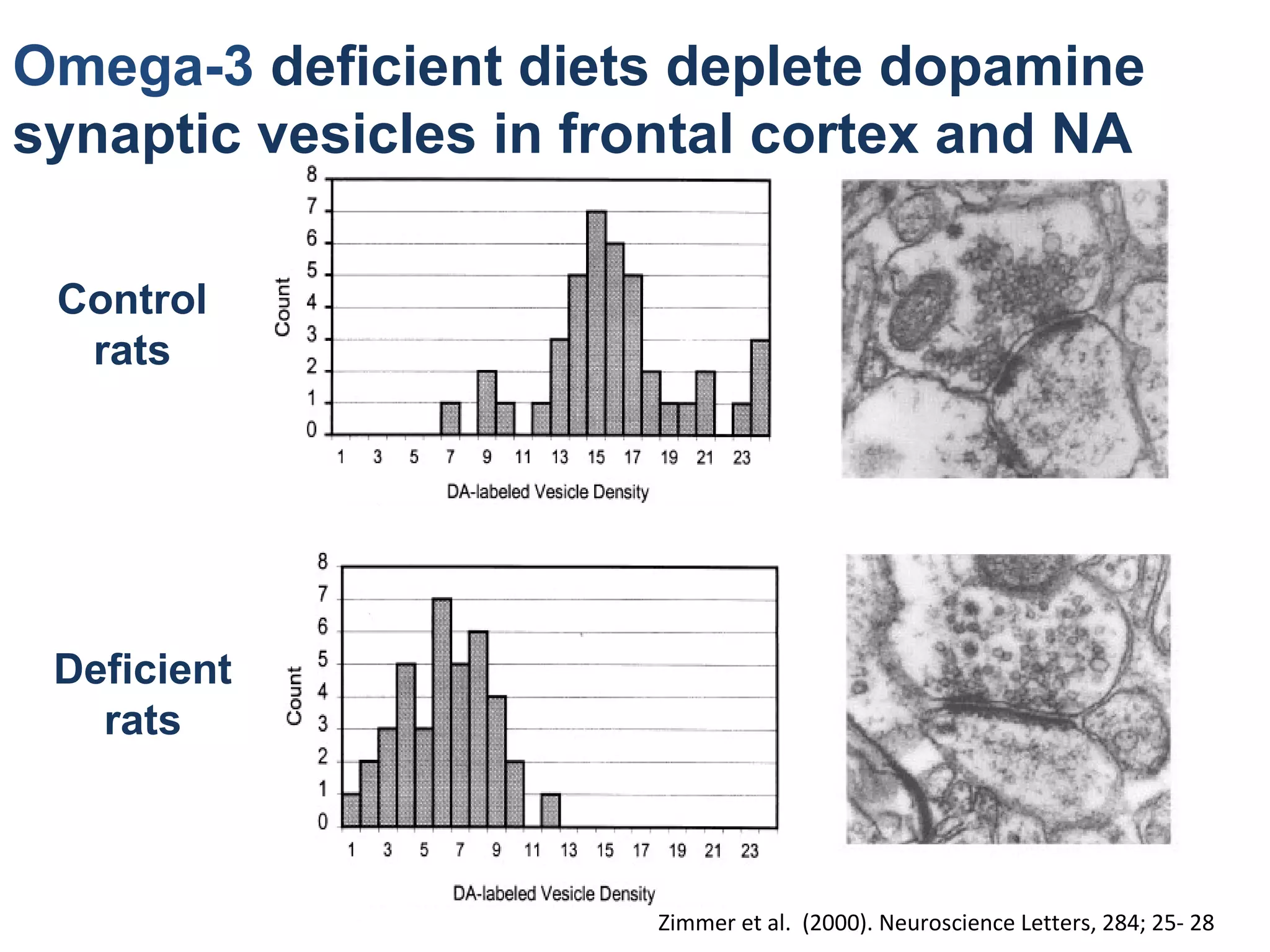
Omega-3 deficient diets deplete dopamine
synaptic vesicles in frontal cortex and NA
Control
rats
Deficient
rats
Zimmer et al. (2000). Neuroscience Letters, 284; 25- 28
DHA-Dependent Neurite Growth
and Synaptogenesis
30 µm
Synapes in
Hippocampal
Neurons
Adequate DHA Deficient in DHA
Cao et al. and Kim
HY. J. Neurochem.
2009.
With courtsey from
Dr. Kim, NIH
Figure illustrating gestational DHA-deprivation in fetal hippocampi significantly inhibited neurite outgrowth
and synaptogenesis in cultured hippocampal neurons. Subsequent supplementation of DHA to the DHA-
depleted neurons in culture, restored the neurite growth and synaptogenesis inhibited by embryonic DHA-
deprivation in vivo, further supporting the unique role of DHA in promoting hippocampal development.
The Absolute Essentiality of
Omega-3 DHA for brain function
Professor Michael Angus Crawford, Imperial College London, School of Medicine.
In the 1970’s, he gave a warning to WHO and governments
“Brain disorders will be next”.
Increasing Cost Burden of Mental Health
Disorders
Mental health disorders have now overtaken all other burdens of ill-
health.
1.In 2008, the cost estimated by the DOH in the UK was £77 billion; a
cost greater than heart disease and cancer combined.
2.A re-estimation in 2010 published the cost at £105 billion. In 2013,
the Wellcome Trust web site presented their assessment at £113
billion.
3.The cost in the EU has similarly risen.
4.In the USA it could be heading for a trillion dollars. Moreover it is
being globalized.
Europe 2010
•38% of Europeans (≈165 million) have a fully developed mental or
neurological illness
Children most vulnerable
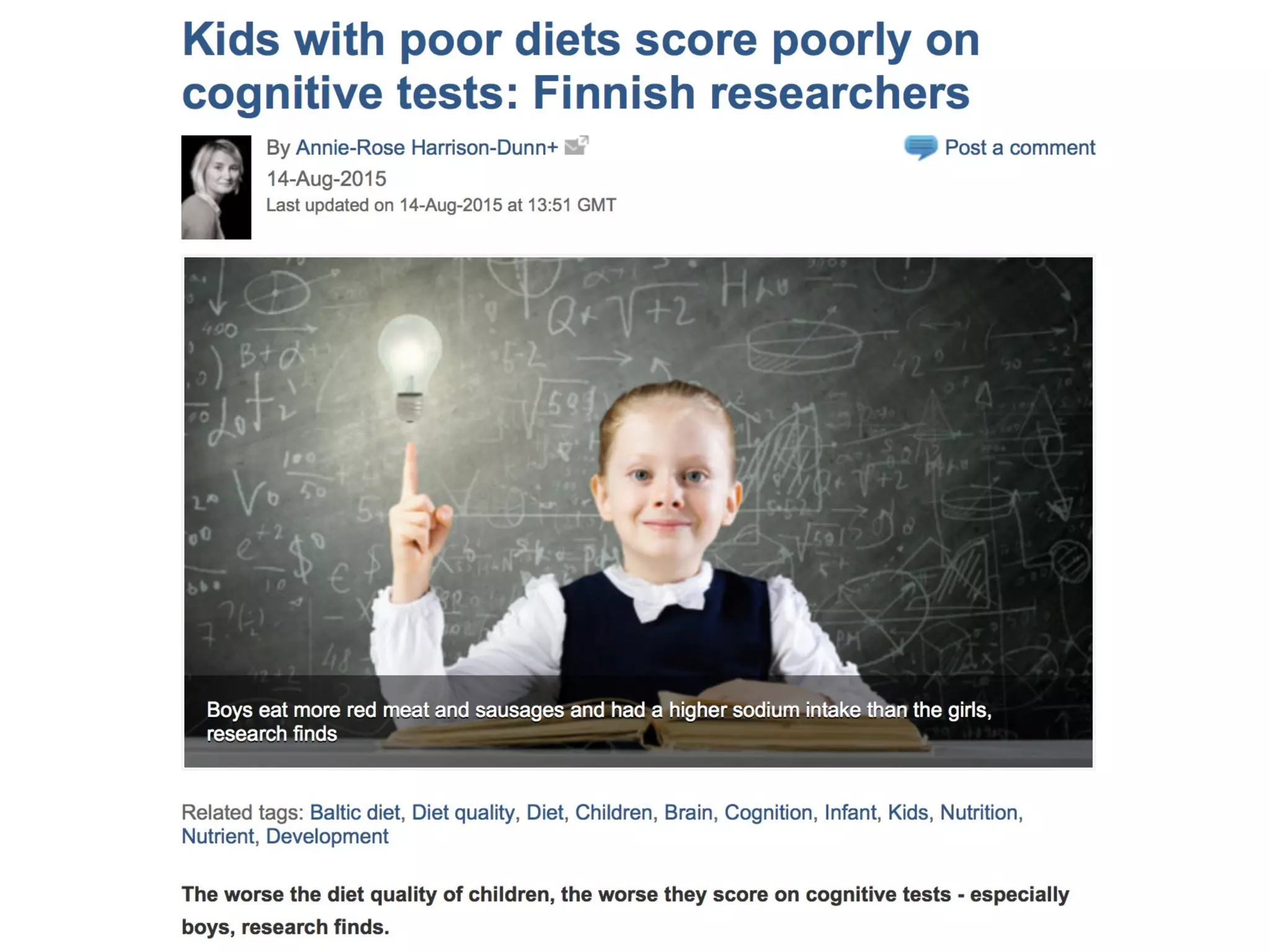
• Increasing evidence that poor diet and low omega-3 HUFA are
linked with behavioral problems including ADHD/anti-social
behaviors.
• WHO (2002): confirmed a rise in obesity and diabetes was
due to an increase in sedentary lifestyle, in addition to an
excessive consumption of energy-dense refined foods rich in
salt, sugar, and saturated fats.
• “Type B” new type of malnutrition: result of multiple
micronutrient depletion and the globalization of the Western
food systems.
• WHO predicted a 50% increase in child mental-ill
health by 2020
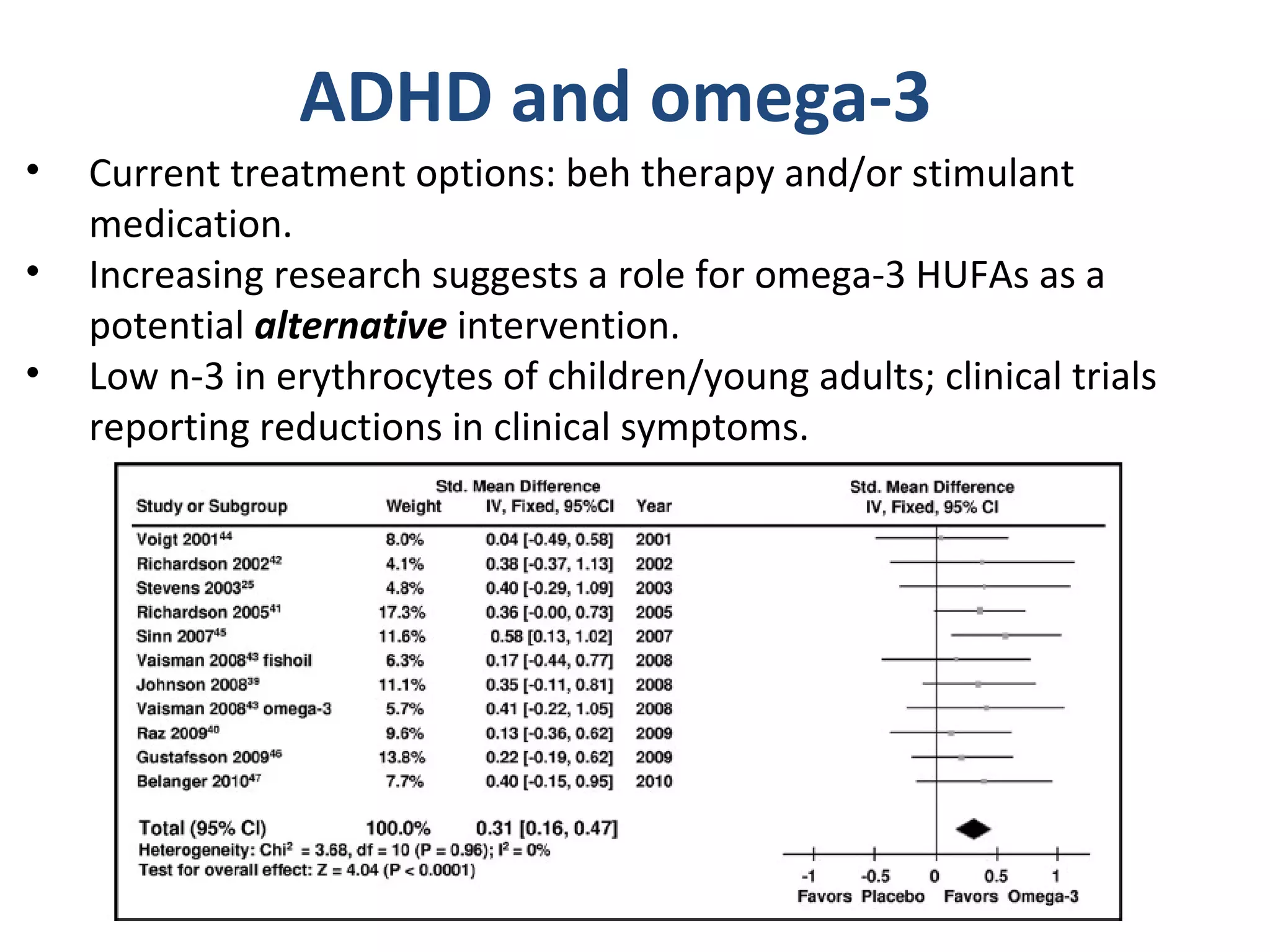
ADHD and omega-3
• Current treatment options: beh therapy and/or stimulant
medication.
• Increasing research suggests a role for omega-3 HUFAs as a
potential alternative intervention.
• Low n-3 in erythrocytes of children/young adults; clinical trials
reporting reductions in clinical symptoms.
Omega-3 intervention and reduction
in behavior problems
In 200 children (aged 8-16) over 6 months of either omega-3 / placebo
supplementation resulted in a 42-68% reduction in parent-reported
externalizing and internalizing behavior problems. Significant
improvements were also observed in callous-unemotional (CU) traits.
Raine, Portnoy, Liu, Mahoomed & Hibbeln, 2014
Children’s reported fish consumption?
• The DHA Oxford Learning And Behaviour (DOLAB) Study parental
reports showed that:
– Almost 9 / 10 of their children ate fish less than twice a week.*
– 9% did not eat fish at all
• Low blood omega-3 fatty acids was associated with poor cognitive
performance and behavior
• *UK Dietary guidelines = 2 portions of fish a week
Montgomery P, Burton JR, Sewell RP,
Spreckelson TF & Richardson AJ. PLoS
One, 2013, June 24.
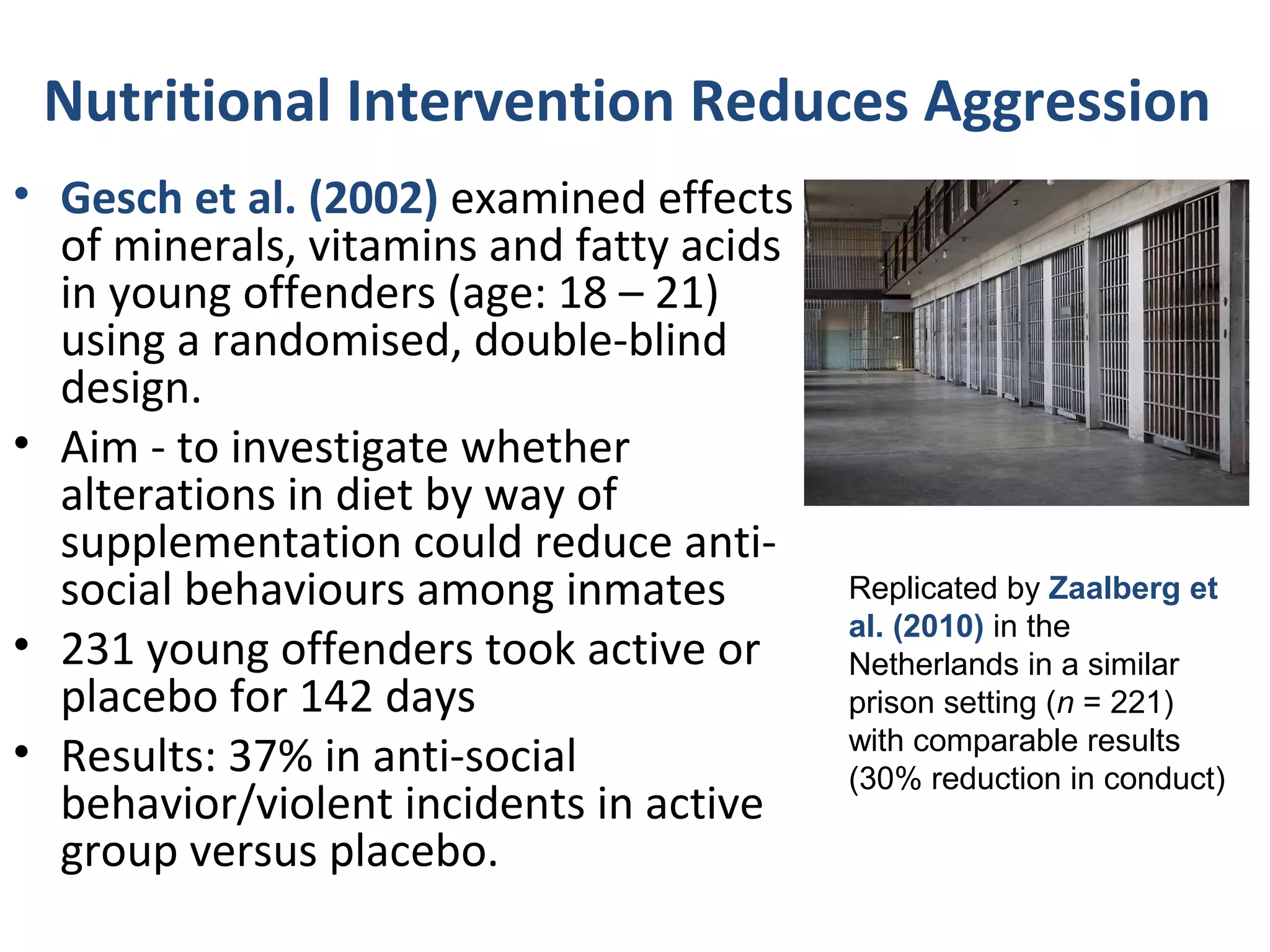
Nutritional Intervention Reduces Aggression
• Gesch et al. (2002) examined effects
of minerals, vitamins and fatty acids
in young offenders (age: 18 – 21)
using a randomised, double-blind
design.
• Aim - to investigate whether
alterations in diet by way of
supplementation could reduce anti-
social behaviours among inmates
• 231 young offenders took active or
placebo for 142 days
• Results: 37% in anti-social
behavior/violent incidents in active
group versus placebo.
Replicated by Zaalberg et
al. (2010) in the
Netherlands in a similar
prison setting (n = 221)
with comparable results
(30% reduction in conduct)
0
0.2
0.4
0.6
0.8
1
1.2
1.4
Before supplementation During supplementation
RatioofDisciplinaryIncidentsSupplementation/Baseline
Active
Placebo
Error bars drawn at 2
standard errors to
indicate 95%
confidence interval
Reduced Felony Violent Offences Among Prisoners
with recommended daily amounts of vitamins,
minerals and essential fatty acids
UK maximum security prison - 338 offences among 172 prisoners
over 9 months treatment compared to 9 months baseline.
Active -37.0%
p < .005
Placebo -10.1%
p = ns
Gesch et al. Br J Psychiatry 2002, 181:22-28
Omega-3 for Depression
• Many clinical trials show that
omega-3 can help to reduce
depression in adults.
• In 2006, the American Psychiatric
Association made a treatment
recommendation*
• > 1000 mg/day EPA+DHA for adults
with clinical depression (& other
mood disorders)in addition to any
standard treatment (not as a
substitute) (Freeman et al, J. Clin Psychiat. 2006)
In this 8 week trial EPA and fluoxetine had equal
therapeutic effects in major depressive disorder.
EPA + fluoxetine combination was superior to
either of them alone. Jazayeri et al., (2008). Australian and NZ J Psychiatry.
0
1%
2%
3%
4%
5%
6%
20 40 60 80 100 120 140 160
Apparent Fish Consumption (lbs./ person/year)
r =-0.84
p <0.005
MajorDepression,
Annualprevalence,(rate/100persons)
Japan (0.12%)
New Zealand (5.8%)
United States
(3.0%)
Puerto
Rico (3.0%)
Taiwan (0.8%)
Korea
(2.3%)
Canada (5.2%)
France (4.5%)
W. Germany
(5.0%)
Fish Consumption and Major
Depression
Annual Prevalence by Country
Hibbeln, The Lancet 1998;351;1213
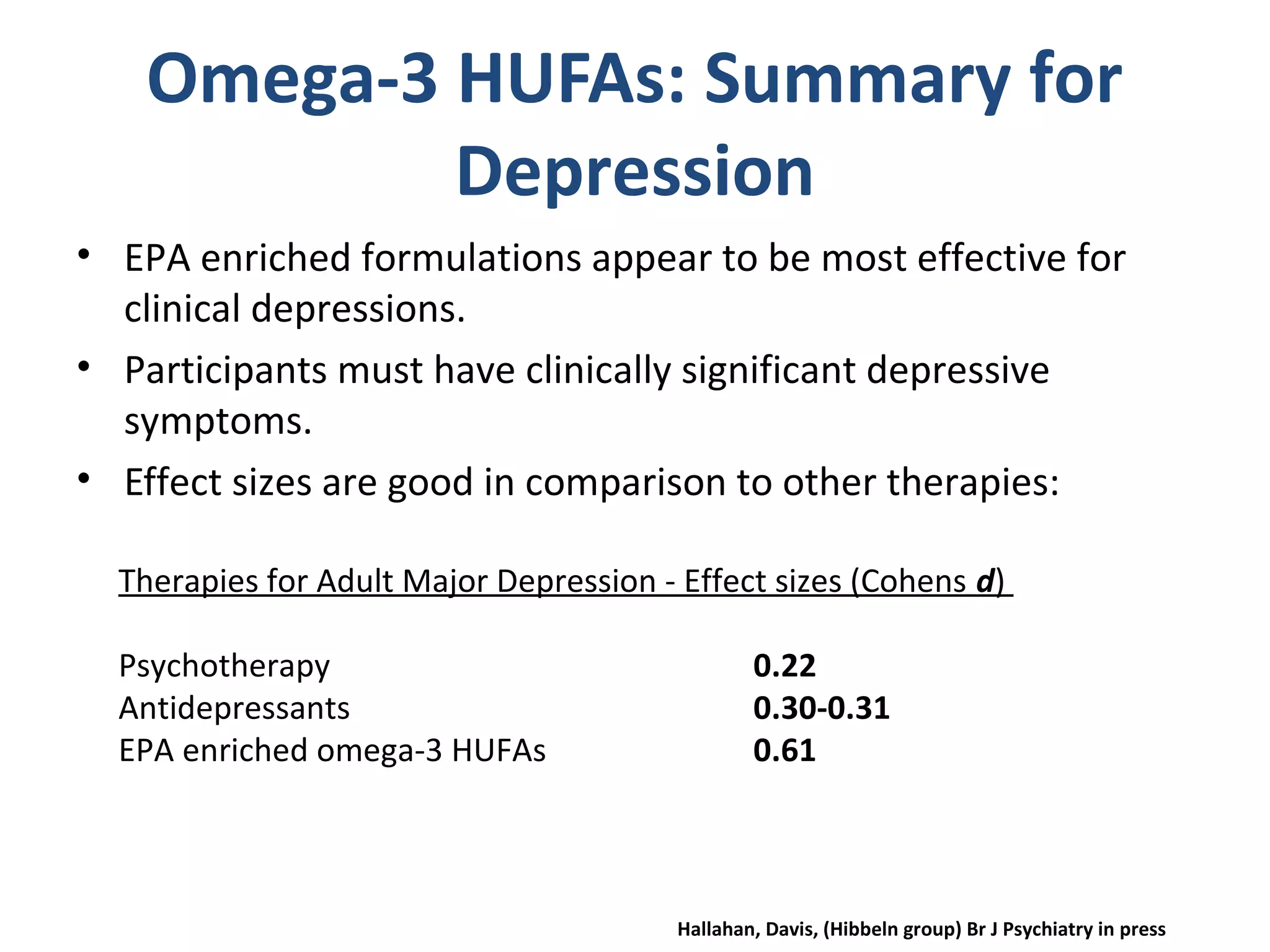
Omega-3 HUFAs: Summary for
Depression
• EPA enriched formulations appear to be most effective for
clinical depressions.
• Participants must have clinically significant depressive
symptoms.
• Effect sizes are good in comparison to other therapies:
Therapies for Adult Major Depression - Effect sizes (Cohens d)
Psychotherapy 0.22
Antidepressants 0.30-0.31
EPA enriched omega-3 HUFAs 0.61
Hallahan, Davis, (Hibbeln group) Br J Psychiatry in press
How do I know if I’m getting enough EPA & DHA?
• Use a Blood Test!
• Simple to use - administer
at home with finger prick kit
• Measures Omega-3 content
in red blood cells
• Results in about 2-3 weeks
• Often used by medical
practitioners to assess
intake
Brain Break!
Pause for thought…
1.Do you think that nutrition might be able to better
improve your brain health, mood and well-being?
2.How can you share and implement this information
into your daily life?
3.Have you ever considered doing blood work to
assess for your omega-3 fatty acid levels or other
nutrients?
Neuroimaging and omega-3
There have only been 2 randomized, placebo-controlled,
dietary omega-3 intervention trials published in children,
and none with adults with ADHD to date:
•McNamara et al., (2010). Docosahexaenoic acid
supplementation increases prefrontal cortex activation
during sustained attention in healthy boys: a placebo-
controlled, dose-ranging, functional magnetic resonance
imaging study. Am J Clin Nutr., Apr;91(4):1060-7
•Bos, Oranje, Verrhoek et al., (2015). Reduced symptoms
of inattention after Dietary omega-3 fatty acid
supplementation in boys with and without ADHD.
Neuropsychopharmacology.
Event Related Potentials and EEG (non-RCT) articles:
•R.V. Gow, A. Sumich, F. Vallee-Tourangeau, M.A. Crawford, K. Ghebremeskel, A.A. Bueno, J.R. Hibbeln, E. Taylor, and K. Rubia. (2013). Omega-3 Fatty Acids Are
Related to Abnormal Emotion Processing in Adolescent Boys with Attention Deficit Hyperactivity Disorder, 2013, Prostaglandins, Leukotrienes and Essential Fatty Acids,
88(6):419-29.
•A.L Sumich, T. Matsudaira, B.C. Heasman, R.V. Gow, A. Ibrahimovic, K. Ghebremeskel, M. Crawford and E. Taylor. Fatty acid correlates of temperament in adolescent
boys with attention deficit hyperactivity disorder, 2013, Prostaglandins, Leukotrienes and Essential Fatty Acids, 88(6):431-6.
•R.V. Gow, T. Matsudaira, E. Taylor, M. Crawford, K. Ghebremeskel, A. Ibrahimovic, F. Vallée- Tourangeau, L. M. Williams, and A. Sumich. (2009). Total Red Blood Cell
Concentrations of ω -3 Fatty Acids Are Associated with Emotion Elicited Neural Activity in Adolescent Boys with Attention Deficit Hyperactivity Disorder. Prostaglandins, 
Leukotrienes and Essential Fatty Acids, 80, (2-3): 151-6.
•A. Sumich, T. Matsudaira, R.V. Gow, K. Ghebremeskel, M. Crawford, A. Ibrahimovic, and E. Taylor. (2009). Resting state electroencephalographic correlates with red cell
long-chain fatty acids, memory performance and age in adolescent boys with attention deficit hyperactivity disorder, Neuropharmacology, 57, (7-8): 708-14.
•Boucher et al.(2011). Neurophysiologic and neurobehavioral evidence of beneficial effects of prenatal omega-3 fatty acid intake on memory function at school age.
American Journal of Clinical Nutrition, 93:1025-37
McNamara et al. (2010)
• Examined the brain activity of 38 healthy boys (aged 8 to 10
years) during a task of sustained attention (fMRI) in the
context of a RCT.
• Children were randomly allocated to receive DHA in 2 differing
dose groups (n = 12, 400 mg or n = 14, 1200 mg) or placebo (n
= 12) for 8 weeks.
Results:
– Red blood cell levels of DHA increased by 47% to 70% at 8 weeks compared to placebo.
– Both groups of children taking DHA showed increased activation of the dorsolateral
prefrontal cortex (DLPFC) i.e., as blood levels of DHA ↑ brain activation also ↑
– DHA levels were positively associated with DLPFC activation ↑ and negatively associated
with reaction time (RT) ↓ i.e., as levels of DHA increased ↑ RT ↓ (became faster so
performance was improved).
First study to demonstrate that dietary intake of DHA altered
cortical attention networks in healthy boys. Currently being
replicated but in children with ADHD.
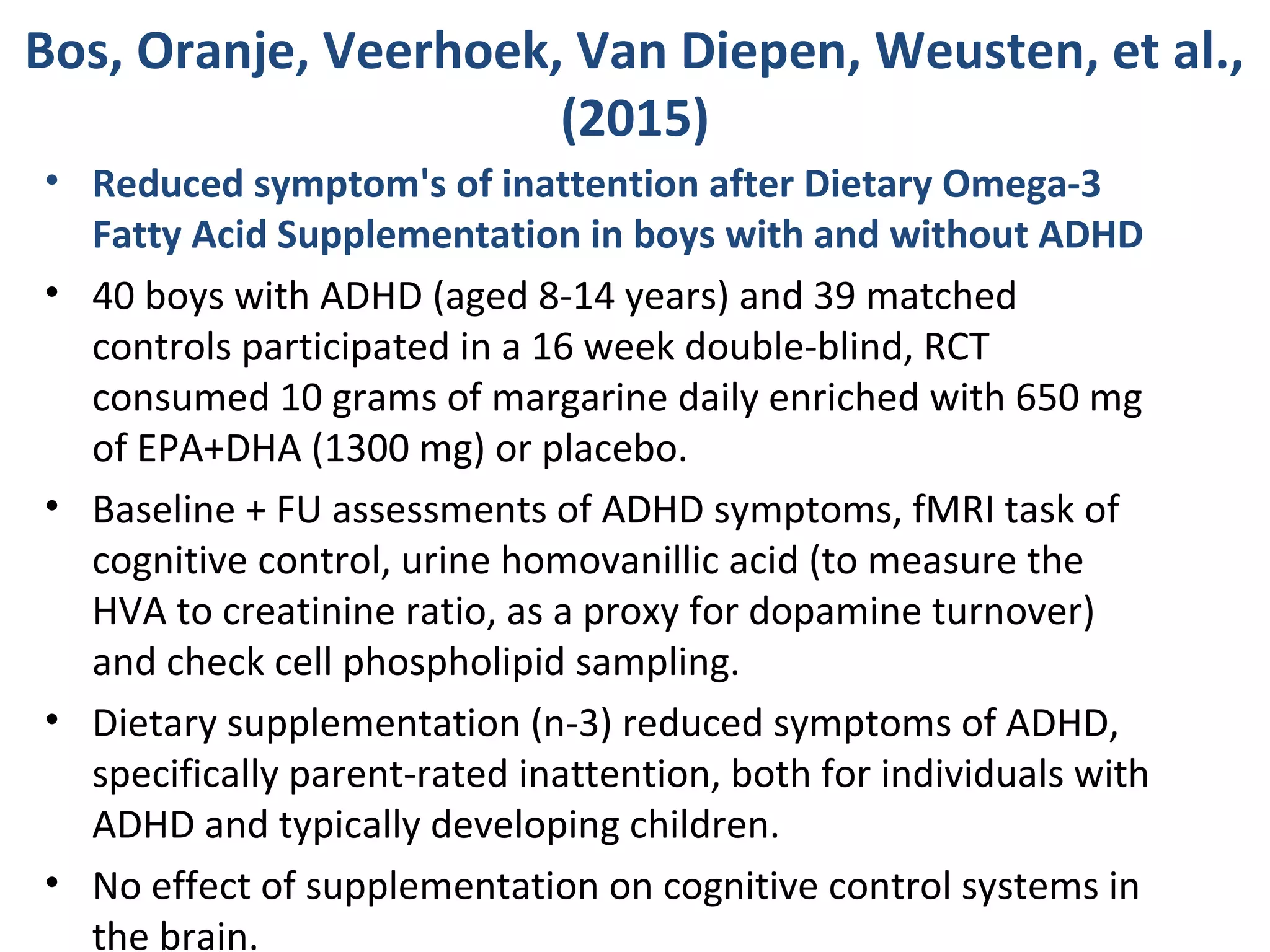
Bos, Oranje, Veerhoek, Van Diepen, Weusten, et al.,
(2015)
• Reduced symptom's of inattention after Dietary Omega-3
Fatty Acid Supplementation in boys with and without ADHD
• 40 boys with ADHD (aged 8-14 years) and 39 matched
controls participated in a 16 week double-blind, RCT
consumed 10 grams of margarine daily enriched with 650 mg
of EPA+DHA (1300 mg) or placebo.
• Baseline + FU assessments of ADHD symptoms, fMRI task of
cognitive control, urine homovanillic acid (to measure the
HVA to creatinine ratio, as a proxy for dopamine turnover)
and check cell phospholipid sampling.
• Dietary supplementation (n-3) reduced symptoms of ADHD,
specifically parent-rated inattention, both for individuals with
ADHD and typically developing children.
• No effect of supplementation on cognitive control systems in
the brain.
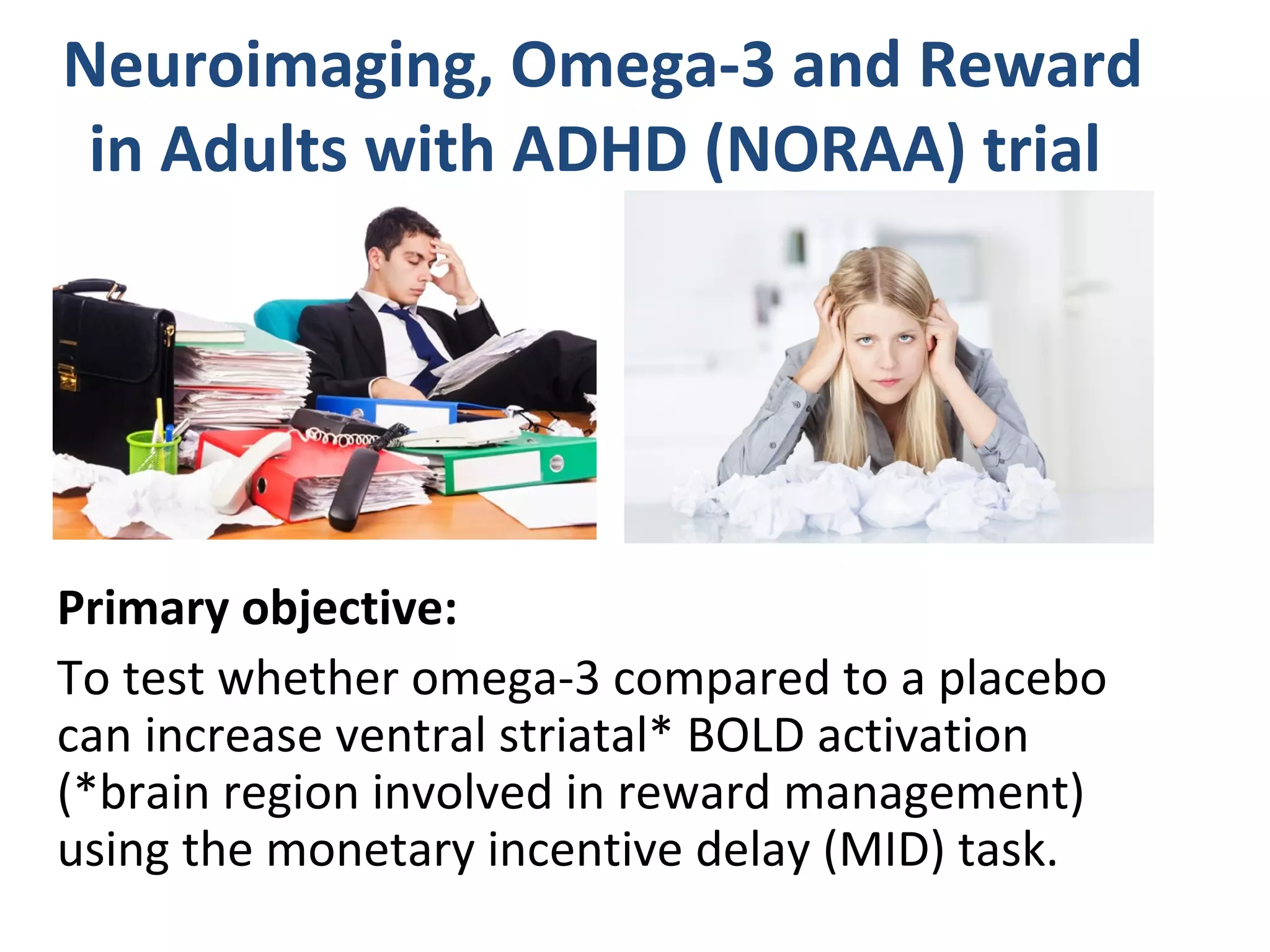
Neuroimaging, Omega-3 and Reward
in Adults with ADHD (NORAA) trial
Primary objective:
To test whether omega-3 compared to a placebo
can increase ventral striatal* BOLD activation
(*brain region involved in reward management)
using the monetary incentive delay (MID) task.
Measures & Design
• 50 adults with ADHD (aged 18-55) will
be stratified according to age and sex
to either an active intervention group
receiving sachets of:
(1) 3000 mg of omega-3 HUFA
smoothie (active).
OR
(2) 3000 mg of smoothie macadamia
nut oil (16:1n-7) for 16 weeks
(placebo).
The MID task (Knutson, 2000)
• Highly replicated, persistent finding that children,
adolescents and adults with ADHD show ventral
striatal (VS) hyporesponsiveness, i.e., reduced VS
BOLD activation during reward anticipation,
relative to healthy controls.
• VS activation is negatively correlated with parent-
rated hyperactive/impulsive symptoms (Scheres et al.,
2007; Plichta & Scheres, 2014).
• The investigation of omega-3 fats in mediating reward-related
responses in adults with ADHD has not yet been tested using
neuroimaging techniques and thus this protocol addresses a
critical gap in the field.
Monetary Incentive Delay Task
After the trial cue presentation, participants fixate on a centered cross-hair
while waiting for the target to appear (anticipatory delay). The target then
appears for a variable amount of time during which participants would
attempt to press a button before the target disappeared. Afterwards,
participants received feedback as to whether or not they had been
successful, and what the monetary outcome was for the trial.
Participants begin each trial
presented with 1 of 7 reward
cues indicating whether they
have an opportunity to gain
reward, lose reward, or
experience no change if they
successfully pressed a button
before a visual Target
disappeared on the screen.
Brain Activation during the MID task in healthy
controls and ADHD
Figure 1. Anticipation and Outcome
of wins (gains) versus losses.
Knutson et a., 2003, NeuroImage
Figure 2. Impact of Reward Anticipation
and outcome on ventral striatum (VS)
activity. Scheres et at., 2007; Biological
Psychiatry
The Emerging Field of Nutritional Neurosciences
• The US Dietary Guidelines (2015) have a renewed and special focus
on the “neuro-cognitive” benefits of nutrition with specific
recommendations for pregnant women to eat 12 oz of fish/seafood
per week.
• There are now global academic and industry attempts to
understand the link between n-3 HUFAs and learning, behavioral
and mental-health outcomes, www.clinicaltrials.gov
• There are now multiple studies supporting a connection between
nutrition and violence; but for various reasons -some scientific,
others political -the translation to policy has yet to be made.
• A call perhaps for serious investment in multi-vitamin-mineral,
HUFA supplementation action in institutions including schools and
prisons and those with mental-ill health.
Future Directions
Neuroimaging techniques and omega-3 fats remain relatively unexplored despite
promising data. Further dietary intervention trials are needed to establish efficacy
in child and adult psychiatric populations including:
–ADHD, impulse control and emotional dysregulation
–Conduct Disorder and markers of psychopathy (CU traits)
–Aggression (anti-social behaviors, prison studies showing efficacy).
–Substance Use Disorders / Addictions (some efficacy with smoking reduction)
–Depression/Anxiety (MA in preparation 0.9 effect size of EPA)
• In relation to changing policy, translational research programs are needed, e.g.,
to improve school meals which may enable children with learning/behavioral
differences better access education, thus improving long term outcomes.
•Mental-health diagnoses to receive a prescription for a nutritional assessment.
•Continued unison of psychiatry and nutritional fields.
“Let food be thy medicine and medicine be thy food”
― Hippocrates
Acknowledgements:
• Dr. Joseph R. Hibbeln, Section of Nutritional
Neuroscience, NIH.
• Professor Michael Crawford, Imperial College
London / Mother and Child Foundation.
• Dr. Alex Richardson, University of Oxford & Food
And Behaviour Research: ww.fabresearch.org
•
www.imperial.ac.uk/people/michael.crawford
This presentation does not represent any policy or position of the US Federal
Government. It is solely the scientific opinion of the presenter.
www.drrachelvgow.com
https://twitter.com/drrachelvgow
https://www.facebook.com/drrachelvgow
Thank you!

Nutritional Neuroscience: Thinking Twice about the Foods that Feed your Brain.

  • 1.
    Nutritional Neuroscience: Thinking Twiceabout the Foods that Feed your Brain. Rachel V. Gow, PhD. Section of Nutritional Neurosciences National Institutes of Health rachel.gow@nih.gov
  • 2.
    Dietary Essential FattyAcids Public Health Impacts Prevention and treatment of addictive disorders and mental illnesses • Tissue compositions • Alter mechanisms that underlie functions • Mental health consequences • Animal dietary studies • Epidemiological differences • Clinical trials • Genetic and epigenetic variants
  • 3.
    “Pizza is nowa vegetable” In 1983, President Reagan declared ketchup was a vegetable, more recently, lobbyists representing pizza and cheese manufacturers obtained congressional concessions that 1/8 of a cup of tomato paste on the base of a pizza was the nutritional equivalent of 1/8 of a cup of vegetables. In November 2011, Congress declared “Pizza is now a vegetable”. Robert H. Lustig, “Fat Chance”.
  • 4.
    Presentation outline • Toexplain the compelling links between nutrition and mental health, well-being and performance. • To provide evidence that specific nutrients are “brain-selective” and can act in comparable ways to pharmaceutical drugs • To outline the implications of common nutritional insufficiencies. • To discuss which foods help optimise brain function with a focus on omega-3 HUFA’s.
  • 5.
    The Shape ofThings to Come The Economist, December 2003
  • 6.
    The Modern, WesternDiet • Modern, ‘junk food’ diets are seriously damaging our physical health – leading to increased rates of: – Obesity – Type-II Diabetes – Heart Disease & stroke – Cancer – Allergies / Immune Disorders • Diet also affects our brains and behaviour © A.J.Richardson, Food And Behaviour Research 2014
  • 7.
    “Leave your drugsin the chemist’s pot if you can cure the patient with food” Hippocrates, 420 BC • Dietary Shift. In developed countries, such as the US and UK, the quality of foods and nutritional composition of our diet has changed dramatically. • This is argued to be a direct consequence of the Agricultural Revolution (17th C - end of 19th C then continuing post WWII) in favor of mass food production “Modern Western Diet”. • Technological advances have also led to a huge decline in the amount of physical exercise we take compared to our ancestors. • In evolutionary terms, these diet and life-style changes have occurred too rapidly for our genetic, biochemical and physiological systems to be able to adapt to them. © A.J.Richardson, Food And Behaviour Research 2014
  • 8.
    Diseases of Civilization •Hugh spent time living and researching the diet of the Greenland Inuit population and noticed that coronary heart disease, cancer, diabetes, inflammation, strokes, skin disease as well as - allergies and auto-immune disorders were almost non-existent. • In an arguably landmark letter to the Lancet (1956) he outlined his theories that these diseases were the result of nutritional (EFA) deficiency. • However, the idea that a fat could be useful was extremely controversial and in 1958, his Readership at Oxford abruptly ended. • It has become very clear that in any country adopting a Western-type diet that increased rates of a wide range of degenerative physical health disorders invariably follows hence the nickname. • His theories have since sparked global research efforts and led to a much better understanding of the role of omega-3 fats in human disease. Hugh Macdonald Sinclair, doctor, medical researcher and expert in human nutrition at Magdalen College, Oxford (4th Feb 1910 - 22 June 1990)
  • 9.
    Western Diseases • Allof these diseases were quite rare as recently as the 19th C but now typically affect 60% of the population. • These diseases have “multi-factorial elements” – they do not arise from just 1 or 2 aspects of our diets – e.g., they do not exist because of diets containing excess saturated fats, or too much salt or a lack of a specific nutrient. • Instead, a huge no. of different aspects of our nutrition interact with our genetic inheritance and with a host of environmental factors over time, to produce these “systemic” diseases. © A.J.Richardson, Food And Behaviour Research 2014
  • 10.
    Consumption of saturatedfats (found in meat/dairy) + omega-6 PUFAs (mainly from vegetable oils)has while intake of omega-3 PUFAs (mainly from fish/seafood) has declined. Changes in the fat composition of our diets over time • The industrialization of our food supply has led to higher intakes of saturated and hydrogenated veg oils, lower intakes of mono- and polyunsaturated fats. • This has resulted in a change in the brain composition of omega-3 and 6. • Current ratio estimates of omega-6 over omega-3 are: 20:1. © A.J.Richardson, Food And Behaviour Research 2014
  • 11.
    The ‘Omega-3 Index’ •In adults, % EPA+DHA in red blood cells is a well- validated index of cardiovascular disease risk Low risk High risk 4% 8%Omega-3 index (EPA + DHA) Mean for UK children 2.46% 12% 0% © A.J.Richardson, Food And Behaviour Research 2014
  • 12.
    Milk and Dairy:A Neolithic Introduction • Figure on the right shows an evolutionary timeframe of recent foods and staples of the Western Diet. • Milk and Dairy foods began about 10,000 years ago during the Neolithic or New Stone Age. Milk is a mix of carbohydrate, protein and fat. Most of the carbohydrates occur in the form of a sugar called lactose (glucose and galactose). Lactose must be first broken down into 2 simple sugars by an gut enzyme called lactase. 65% of the worlds people do not have the genes to make lactase and are therefore intolerant.
  • 13.
    “The Devil isin the Milk” • In this book, Woodford explains that there are 2 types of cows milk: A1 + A2. • A1 milk contains beta-casein (a milk protein produced by many cows in the United States and northern European countries) which he suggests is linked to a wide range of health problems and serious illnesses (heart disease, Type 1 diabetes, autism, schizophrenia). • All milk was once A2, until a genetic mutation occurred some thousands of years ago in some European cattle. A2 milk remains high in herds in much of Asia, Africa, and parts of Southern Europe. • A1 milk is common in the US, New Zealand, Australia, and Europe.
  • 14.
    Many nutritional featuresof modern, western diets are both evolutionarily novel and pathological • High Glycaemic Load • Altered Fatty Acid Composition • Altered Macronutrient Composition • Reduced Micronutrient Density • Acid-Alkaline Balance • Sodium-Potassium Ratio • Dietary Fibre Cordain et al. Origins and evolution of the western diet: health implications for the 21st century. Am J Clin Ntr 2005, 81:341-54. Sugar Fat Vitamins, Minerals etc Fibre © A.J.Richardson, Food And Behaviour Research 2014
  • 15.
    © A.J.Richardson, FoodAnd Behaviour Research 2012 Sugary foods and drinks cause rapid swings in blood sugar (affecting mood, behaviour and cognition) Optimal range for brain function
  • 16.
    © A.J.Richardson, FoodAnd Behaviour Research 2012 ‘Slow-release’ foods at breakfast help to keep blood sugar levels stable (minimising fluctuations in mood, behaviour and cognition) Optimal range for brain function
  • 17.
    © A.J.Richardson, FoodAnd Behaviour Research 2014 Sugar addiction? • There are strong links between the gut, the brain and the immune system. High intakes of sugar + refined carbohydrates can promote an unhealthy gut-flora balance because they feed bad bacteria and yeasts which can compromise digestive and immune health. • Drugs abused by humans activate areas in the ventral striatum of the brain. This study found that striatal regions of sugar-dependent rats show alterations in dopamine and opioid mRNA levels similar to morphine-dependent rats. • Spangler R, et al (2004) Brain Research and Molelcular Brain Research, 19;124(2):134-42. © A.J.Richardson, Food And Behaviour Research 2014
  • 18.
    Sugar – Toxicand Addictive? • Robert Lustig, Prof of Pediatrics at the University of California, San Francisco: Interview with New Scientist, 2011 on his Youtube lecture, "Sugar: The bitter truth“. Q: Why do we consume so much sugar? • “One reason is that it's addictive. The food industry knows that when they add fructose we buy more. That's why it's in everything. There are five tastes on your tongue: sweet, salty, sour, bitter and savoury (umami). Sugar covers up the other four, so you can't taste the negative aspects of foods.” • What is important is to remember that we have no dietary need for manufactured sugars. © A.J.Richardson, Food And Behaviour Research 2014
  • 19.
    Glucose vs Fructose •Glucose • Glucose is the sole source of fuel to create energy for all brain and red blood cells. Glucose also is critical in the production of proteins, lipid metabolism and is a precursor for vitamin C production. • When glucose levels are low, psychological processes requiring mental effort l(self-control, critical thinking and decision-making) become impaired. • Fructose – Requires processing by the liver before its energy can be used (technically – a ‘toxin’) – NOT HEALTHY if consumed as a ‘white powder’ – i.e., table sugar or High-Fructose Corn Syrup (both approx 50% glucose, 50% fructose). © A.J.Richardson, Food And Behaviour Research 2014
  • 20.
    High-fructose corn syrup •This study investigated whether dietary omega-3 fatty acids modulated the cognitive and metabolic impairments induced by a high-sugar diet. • Water laced with high-fructose corn syrup given to omega-3 deficient rats over 6 weeks led to: – Learning and memory problems – Impaired insulin sensitivity, elevated triglycerides, and reductions in markers of synaptic plasticity in brain tissue • The addition of dietary omega-3 fatty acids ameliorated all parameters of metabolic dysfunction related to the fructose treatment. Agrawal R, Gomez-Pinilla F (2012) Metabolic syndrome in the brain: Deficiency in omega-3-fatty acid exacerbates dysfunctions in insulin receptor signaling and cognition. J Physiol 590(Pt 10): 2485-99. © A.J.Richardson, Food And Behaviour Research 2014
  • 21.
    Aggression and nutritionaldeficiencies • Schoenthaler (1991) substantially reduced the sugar content in the diets of 3000 imprisoned juveniles in U.S. • Instead healthier snack options given with reduced sugar + refined foods. • Results over a 12 month period showed a 21% reduction in antisocial behaviour, 25% reduction in assaults, 75% reduction in physical restraints by staff and a 100% reduction in suicides. 21
  • 22.
    Magnifying nutritional featuresof Western diets Acid-base imbalance •Following digestion, meat, fish, eggs, dairy products and grains all leave behind an acid residue in the body. •Only fresh fruit, vegetables, tubers, roots, and nuts leave an alkaline residue. •Over time, acid-based foods will lead to a gradual ‘acidosis’ of body tissues contributing to many health problems, most enzymes in our bodies and brains are sensitive to pH levels. High sodium/low potassium ratio •Has risen substantially from salt added to processed foods. •The displacement of potassium-rich vegetables and fruits by other foodstuffs, vegetable oils and refined carbohydrates are both devoid of potassium. •Hypertension, CVD, osteoporosis + many other ‘Western’ diseases are promoted by an elevated sodium/potassium ratio. © A.J.Richardson, Food And Behaviour Research 2014
  • 23.
    Nutritional features ofWestern- type diets Dietary Fibre •Intake of dietary fibre has fallen significantly. •Vegetables, fruits and whole grains provide both soluble and insoluble fibre, needed for a healthy digestive system (on which all other aspects of health depend). •Their displacement by foods lacking in fibre (sugars and refined carbohydrates, vegetable oils and dairy products) promotes poor digestion and ill-health. © A.J.Richardson, Food And Behaviour Research 2014
  • 24.
    Chicken is nowa high fat food • The enormous amount of carcass fat is a consequence of intensive production methods with a focus on fast body weight gain. • Feed is high-energy, grain-based feed rich in omega-6 fats and almost devoid of omega-3 as opposed to a natural diet they would obtain from grazing and foraging in the pasture. • Animals are fed growth promoters and raised intensively in barns or stalls with no opportunity to exercise and so fat infiltrates their wasted muscles. Dr. Wang holding bottles of fat extracted from intensively reared, supermarket chickens in England. 1.3kg roasting chicken yielded 275g fat, and 600g lean meat - of which ¾ is water, so only 150g is protein.   Modern organic and broiler chickens sold for human consumption provide more energy from fat than protein. Wang Y, Lehane C, Ghebremeskel K, Crawford MA. Public Health Nutr. 2010 Mar;13(3):400-8.
  • 25.
    Aim: This studyexamined the association between dietary patterns and hippocampal volume in humans, and to assess whether diet was associated with differential rates of hippocampal atrophy over time. Methods: Data from the Personality and Total Health Through Life Study and focused on a subsample of the cohort (n = 255) aged 60–64 years at baseline in 2001, completed a food frequency questionnaire, and underwent two MRI scans approx. 4 years apart. Conclusions: Lower intakes of nutrient-dense foods and higher intakes of unhealthy foods were each independently associated with smaller left hippocampal volume. First human study to demonstrate associations between diet and hippocampal volume concordant with data previously observed in animal models.
  • 28.
    Essential Nutrients forBrain Function • The fact is foods can mediate brain function and its signals to positively influence synaptic transmission and plasticity, membrane fluidity and energy metabolism. • Depending on the types of daily foods eaten, the results can be polar opposites. Foods can either give rise to health promoting effects resulting in positive affective states, more efficient cell-signaling and overall well-being or contrastingly promote inflammation, stress and foster addictions giving rise to negative behavioral states such as aggression, pain, anxiety and depression. • There are at least 39 essential nutrients which must be provided by our food and some of these are thought to facilitate brain function at a molecular level: • Vitamin D • Probiotics and prebiotics • Magnesium & B-vitamins • Zinc, Iron & Iodine • Antioxidants (Vitamins A, C, E and beta-carotene) • Omega-3 highly unsaturated fatty acids (HUFAs)
  • 29.
    Vitamin D • Powerfulneurosteroid, fat-soluble, hormone vital for most aspects of health. • Primary source is the action of bright sunlight on exposed skin. • Few foods provide Vitamin D: richest sources are oily fish and liver. Dairy fats contain small quantities and in the US milk is fortified with some Vitamin D. • Modern ‘indoor’ lifestyles mean that Vitamin D insufficiencies, if not deficiencies, are almost everywhere during the winter months. Especially, in countries like the UK where no Vitamin D can be made between mid-autumn and spring. • High-risk groups are those with dark skin, pregnant women and infants, and the elderly as well as people in institutional care. • Low maternal levels are linked to schizophrenia and deficiency is generally linked to depressive symptoms. © A.J.Richardson, Food And Behaviour Research 2014
  • 30.
    Vitamin D Figure 1.Vitamin D status in an adult UK general population sampleThis graph shows that nearly 90% of the current study population was affected by hypovitaminosis* D during the winter and spring, and 60% had suboptimal concentrations year-round. *deficiency of vitamin D © A.J.Richardson, Food And Behaviour Research 2014
  • 31.
    Probiotics and prebiotics •‘Probiotics’ and ‘prebiotics’ are also vital for health. • The former term refers to the innumerable strains of ‘good’ bacteria that should inhabit the gut, where they are crucial to digestive and immune system functioning. • Some strains of these bacteria actually help to synthesise vitamins such as B and K. • These are crucial to energy metabolism and blood clotting, so the body needs regular supplies. • Both are water-soluble, however, and not easily stored; so there are obvious advantages to having healthy gut flora that can manufacture them ‘on demand’. © A.J.Richardson, Food And Behaviour Research 2014
  • 32.
    B-vitamins • Vitamin B(found in eggs, meat, diary, grains, vegetables) are a whole range of vitamins which are used as co-enzymes to perform numerous tasks in your brain/body. • Important for energy-production, maintaining a healthy heart, immune function, cell division and DNA repair, growth and reproduction of cells and various aspects of brain function: attention, problem solving, coordination and memory. • Early signs of B3 deficiency are: dermatitis, diarrhoea, attention and memory problems. • Without B6 you can’t make serotonin (feel good neurotransmitter a lack of which is normally the rationale for Prozac and other SSRI’s prescriptions). Deficiencies also include: dermatitis (skin inflammation), depression, confusion and convulsions. © A.J.Richardson, Food And Behaviour Research 2014
  • 33.
    B-vitamins continued • B3,B6+ folic acid work together to keep homocysteine down. High levels of homocysteine are linked to heart disease/stroke. • Deficiencies of B12 can lead to memory loss, disorientation, hallucinations and tingling in the arms and legs. Vegetarians and vegans should take B12supplements because this nutrient is only found in animal products. • The elderly also may have problems absorbing B12 and some people diagnosed with dementia or Alzheimer’s disease may be suffering from a deficiency which is rather more easily reversed. • Eating processed foods depletes B vitamins, and because we can’t store them, anyone who is under a lot of stress or leads a hectic lifestyle is at risk unless supplies are topped up regularly. • Early signs of B1 (thiamine) deficiency include fatigue, irritation, poor memory, sleep disturbances, constipation + abdominal© A.J.Richardson, Food And Behaviour Research 2014
  • 34.
    Zinc • Zinc isis needed for over 200 different biochemical reactions in the body and brain – involved in the metabolism of neurotransmitters and plays an important role in regulating dopamine, and in immune strengthening. • Zinc insufficiency can result in irritability, restlessness, infection, fatigue, appetite loss and low mood. • Zinc and copper are found in the hippocampus region which is critical for learning, memory, regulating your emotions, stress response and sensitivity to pain. • *In the UK alone 70-90% of school-children consumed less than the “reference nutrient intake”. • Low levels of zinc and high levels of copper linked to ADHD. • Richest food sources include: seafood, garlic, spinach, red meat (beef/lamb), nuts and beans. *Gregory et al., National Diet and Nutrition Surveys (London: HMSO, 2000).© A.J.Richardson, Food And
  • 35.
    Iron & Iodine •Iron is needed for every cell in the human body, essential for producing hemoglobin which carries oxygen to your body’s cells among many other cellular and enzymatic functions. • Classic deficiency is anaemia but even a mild lack of iron can cause physical fatigue, lack of energy, difficulty concentrating and impaired mental performance. • Deficiencies common in children and women of child-bearing age and some vegetarians because plant sources are less readily absorbed than iron found in red meat. • In children, iron deficiency is linked to under scholastic performance and increased risk of autism diagnosis. • Foods rich in iron include: red meat, seafood, fish, poultry, eggs, beans, dark leafy greens, peas. • Iodine is essential for cell metabolism and thyroid function. • Defeciencies are linked to serious mental and physical problems. © A.J.Richardson, Food And Behaviour Research 2014
  • 36.
    Brain Break! Pause forthought… 1.What do you think about the changes in the way food is now produced? 2.Do you think that you eat a reasonably healthy diet? (and if not why not?) 3.What’s the most obvious way in which you think food affects your behaviour? This is worth thinking about for a minute or two, as many more examples will then start to occur to you.
  • 37.
    Omega-3 Fats Over 30years of evidence has confirmed that omega- 3 (HUFAs) are essential, bio-active compounds critical for neurodevelopment, brain function and structure. DHA constitutes 30% of ethanolamine + serine phosphoglycerides of brain tissue (gray matter). Emerging neuroscientific research suggests DHA is positively correlated with frontal cortex structural and functional integrity in humans across the lifespan (McNamara et al., 2013)
  • 38.
    Amygdala Hippocampus Superior longitudinal fasciculus Attention &Executive Function Mood & Memory Uncinate fasciculus Diagram illustrating connectivity between frontal lobe regions, including the DLPFC and orbitofrontal cortex which regulate attention and EF, and temporal lobe structures including the amygdala and hippocampus which regulate mood and memory. Reduced frontal circuit connectivity and DHA deficiency: Reduced frontal circuit connectivity is found in DHA-deficient non-human primates, children and adolescents born preterm, and patients with psychiatric disorders including ADHD and bipolar disorder. Diagram with kind permission from McNamara, 2015.
  • 39.
    C- OH O 20:4n-6, arachidonicacid AA Meat, Organs FADS 1-2 Flax ~ Canola Leaf plants C- OH O 18:3n-3 alpha-linolenic acid, ALA C- OH C- OH O 20:5n-3eicosapentaenoic acid, EPA Omega-3 ↓ Seafood Breast milk (DHA) 22:6n-3, docosahexaenoic acid, DHA (brain, retina, testis) O C- OH O 22:5n-6 DPA n-6 Series 2 Prostaglandins Thromboxanes Series 4 Leukotrienes immune - metabolic - developmental responses Omega-6 ↑ O C- OH 18:2n-6 linoleic acid, LA Soy bean oil Safflower oil Corn oil - Competition - Essential Fats: Metabolism and Dietary Sources Series 3 Prostaglandins Thromboxanes Series 5 Leukotrienes
  • 40.
  • 41.
    © A.J.Richardson, FoodAnd Behaviour Research 2014 Getting the Fats Wrong Cheap margarines, ‘takeaways’ and commercially baked or fried foods still often contain hydrogenated and trans fats These are artificially saturated and ‘twisted’ fats, which have: • no known nutritional benefits • many health risks. Trans fats compete with omega-3 essential fatty acids needed for brain and body health.
  • 42.
    Implications of inadequaten3 HUFAs? • The effects of dietary induced omega-3 deficiency during pregnancy and weaning in animal studies are compelling and well-replicated. • Delayed neuronal migration: – Process in which neurons travel from their place of origin to their final position in the brain – A delay means that the neurons are not arriving to their predetermined position in the developing brain. • Disrupted neuronal migration during development may lead to cognitive, motor, and intellectual disabilities.
  • 43.
    Maternal DHA deficiencyrestricts migration of cortical neurones in rat fetal brain. Staining specifically reveals migrating cells as they form the cortex. DHA adequate diet DHA deficient diet DHA adequate with extensive cell migration Layer 2, DHA deficient mother Data from Yavin, Himovichi, & Eilam, (2009), Neuroscience.
  • 44.
    n-3 deficiencies inthe brain • Disrupted dendritic arborisation – i.e., forming of the dendrites of nerve cells into branching / a treelike pattern is disrupted which affects cell signalling. • DHA also stimulates neurite outgrowth resulting in greater and more intricate dendritic branching in neurons enhancing cell-signalling processes. • Abnormal neuronal development in the hippocampus. • Alterations in dopaminergic and serotonergic systems (Zimmer et al., 2000; 2002; Chalon, 2006) • 40-60% depletion of dopamine in the nucleus accumbens and frontal cortex (Levant et al., 2004; Chalon, 2006)
  • 45.
    Omega-3 deficient dietsdeplete dopamine synaptic vesicles in frontal cortex and NA Control rats Deficient rats Zimmer et al. (2000). Neuroscience Letters, 284; 25- 28
  • 46.
    DHA-Dependent Neurite Growth andSynaptogenesis 30 µm Synapes in Hippocampal Neurons Adequate DHA Deficient in DHA Cao et al. and Kim HY. J. Neurochem. 2009. With courtsey from Dr. Kim, NIH Figure illustrating gestational DHA-deprivation in fetal hippocampi significantly inhibited neurite outgrowth and synaptogenesis in cultured hippocampal neurons. Subsequent supplementation of DHA to the DHA- depleted neurons in culture, restored the neurite growth and synaptogenesis inhibited by embryonic DHA- deprivation in vivo, further supporting the unique role of DHA in promoting hippocampal development.
  • 47.
    The Absolute Essentialityof Omega-3 DHA for brain function Professor Michael Angus Crawford, Imperial College London, School of Medicine. In the 1970’s, he gave a warning to WHO and governments “Brain disorders will be next”.
  • 48.
    Increasing Cost Burdenof Mental Health Disorders Mental health disorders have now overtaken all other burdens of ill- health. 1.In 2008, the cost estimated by the DOH in the UK was £77 billion; a cost greater than heart disease and cancer combined. 2.A re-estimation in 2010 published the cost at £105 billion. In 2013, the Wellcome Trust web site presented their assessment at £113 billion. 3.The cost in the EU has similarly risen. 4.In the USA it could be heading for a trillion dollars. Moreover it is being globalized. Europe 2010 •38% of Europeans (≈165 million) have a fully developed mental or neurological illness
  • 49.
    Children most vulnerable •Increasing evidence that poor diet and low omega-3 HUFA are linked with behavioral problems including ADHD/anti-social behaviors. • WHO (2002): confirmed a rise in obesity and diabetes was due to an increase in sedentary lifestyle, in addition to an excessive consumption of energy-dense refined foods rich in salt, sugar, and saturated fats. • “Type B” new type of malnutrition: result of multiple micronutrient depletion and the globalization of the Western food systems. • WHO predicted a 50% increase in child mental-ill health by 2020
  • 50.
    ADHD and omega-3 •Current treatment options: beh therapy and/or stimulant medication. • Increasing research suggests a role for omega-3 HUFAs as a potential alternative intervention. • Low n-3 in erythrocytes of children/young adults; clinical trials reporting reductions in clinical symptoms.
  • 51.
    Omega-3 intervention andreduction in behavior problems In 200 children (aged 8-16) over 6 months of either omega-3 / placebo supplementation resulted in a 42-68% reduction in parent-reported externalizing and internalizing behavior problems. Significant improvements were also observed in callous-unemotional (CU) traits. Raine, Portnoy, Liu, Mahoomed & Hibbeln, 2014
  • 52.
    Children’s reported fishconsumption? • The DHA Oxford Learning And Behaviour (DOLAB) Study parental reports showed that: – Almost 9 / 10 of their children ate fish less than twice a week.* – 9% did not eat fish at all • Low blood omega-3 fatty acids was associated with poor cognitive performance and behavior • *UK Dietary guidelines = 2 portions of fish a week Montgomery P, Burton JR, Sewell RP, Spreckelson TF & Richardson AJ. PLoS One, 2013, June 24.
  • 53.
    Nutritional Intervention ReducesAggression • Gesch et al. (2002) examined effects of minerals, vitamins and fatty acids in young offenders (age: 18 – 21) using a randomised, double-blind design. • Aim - to investigate whether alterations in diet by way of supplementation could reduce anti- social behaviours among inmates • 231 young offenders took active or placebo for 142 days • Results: 37% in anti-social behavior/violent incidents in active group versus placebo. Replicated by Zaalberg et al. (2010) in the Netherlands in a similar prison setting (n = 221) with comparable results (30% reduction in conduct)
  • 54.
    0 0.2 0.4 0.6 0.8 1 1.2 1.4 Before supplementation Duringsupplementation RatioofDisciplinaryIncidentsSupplementation/Baseline Active Placebo Error bars drawn at 2 standard errors to indicate 95% confidence interval Reduced Felony Violent Offences Among Prisoners with recommended daily amounts of vitamins, minerals and essential fatty acids UK maximum security prison - 338 offences among 172 prisoners over 9 months treatment compared to 9 months baseline. Active -37.0% p < .005 Placebo -10.1% p = ns Gesch et al. Br J Psychiatry 2002, 181:22-28
  • 55.
    Omega-3 for Depression •Many clinical trials show that omega-3 can help to reduce depression in adults. • In 2006, the American Psychiatric Association made a treatment recommendation* • > 1000 mg/day EPA+DHA for adults with clinical depression (& other mood disorders)in addition to any standard treatment (not as a substitute) (Freeman et al, J. Clin Psychiat. 2006) In this 8 week trial EPA and fluoxetine had equal therapeutic effects in major depressive disorder. EPA + fluoxetine combination was superior to either of them alone. Jazayeri et al., (2008). Australian and NZ J Psychiatry.
  • 56.
    0 1% 2% 3% 4% 5% 6% 20 40 6080 100 120 140 160 Apparent Fish Consumption (lbs./ person/year) r =-0.84 p <0.005 MajorDepression, Annualprevalence,(rate/100persons) Japan (0.12%) New Zealand (5.8%) United States (3.0%) Puerto Rico (3.0%) Taiwan (0.8%) Korea (2.3%) Canada (5.2%) France (4.5%) W. Germany (5.0%) Fish Consumption and Major Depression Annual Prevalence by Country Hibbeln, The Lancet 1998;351;1213
  • 57.
    Omega-3 HUFAs: Summaryfor Depression • EPA enriched formulations appear to be most effective for clinical depressions. • Participants must have clinically significant depressive symptoms. • Effect sizes are good in comparison to other therapies: Therapies for Adult Major Depression - Effect sizes (Cohens d) Psychotherapy 0.22 Antidepressants 0.30-0.31 EPA enriched omega-3 HUFAs 0.61 Hallahan, Davis, (Hibbeln group) Br J Psychiatry in press
  • 58.
    How do Iknow if I’m getting enough EPA & DHA? • Use a Blood Test! • Simple to use - administer at home with finger prick kit • Measures Omega-3 content in red blood cells • Results in about 2-3 weeks • Often used by medical practitioners to assess intake
  • 59.
    Brain Break! Pause forthought… 1.Do you think that nutrition might be able to better improve your brain health, mood and well-being? 2.How can you share and implement this information into your daily life? 3.Have you ever considered doing blood work to assess for your omega-3 fatty acid levels or other nutrients?
  • 60.
    Neuroimaging and omega-3 Therehave only been 2 randomized, placebo-controlled, dietary omega-3 intervention trials published in children, and none with adults with ADHD to date: •McNamara et al., (2010). Docosahexaenoic acid supplementation increases prefrontal cortex activation during sustained attention in healthy boys: a placebo- controlled, dose-ranging, functional magnetic resonance imaging study. Am J Clin Nutr., Apr;91(4):1060-7 •Bos, Oranje, Verrhoek et al., (2015). Reduced symptoms of inattention after Dietary omega-3 fatty acid supplementation in boys with and without ADHD. Neuropsychopharmacology. Event Related Potentials and EEG (non-RCT) articles: •R.V. Gow, A. Sumich, F. Vallee-Tourangeau, M.A. Crawford, K. Ghebremeskel, A.A. Bueno, J.R. Hibbeln, E. Taylor, and K. Rubia. (2013). Omega-3 Fatty Acids Are Related to Abnormal Emotion Processing in Adolescent Boys with Attention Deficit Hyperactivity Disorder, 2013, Prostaglandins, Leukotrienes and Essential Fatty Acids, 88(6):419-29. •A.L Sumich, T. Matsudaira, B.C. Heasman, R.V. Gow, A. Ibrahimovic, K. Ghebremeskel, M. Crawford and E. Taylor. Fatty acid correlates of temperament in adolescent boys with attention deficit hyperactivity disorder, 2013, Prostaglandins, Leukotrienes and Essential Fatty Acids, 88(6):431-6. •R.V. Gow, T. Matsudaira, E. Taylor, M. Crawford, K. Ghebremeskel, A. Ibrahimovic, F. Vallée- Tourangeau, L. M. Williams, and A. Sumich. (2009). Total Red Blood Cell Concentrations of ω -3 Fatty Acids Are Associated with Emotion Elicited Neural Activity in Adolescent Boys with Attention Deficit Hyperactivity Disorder. Prostaglandins,  Leukotrienes and Essential Fatty Acids, 80, (2-3): 151-6. •A. Sumich, T. Matsudaira, R.V. Gow, K. Ghebremeskel, M. Crawford, A. Ibrahimovic, and E. Taylor. (2009). Resting state electroencephalographic correlates with red cell long-chain fatty acids, memory performance and age in adolescent boys with attention deficit hyperactivity disorder, Neuropharmacology, 57, (7-8): 708-14. •Boucher et al.(2011). Neurophysiologic and neurobehavioral evidence of beneficial effects of prenatal omega-3 fatty acid intake on memory function at school age. American Journal of Clinical Nutrition, 93:1025-37
  • 61.
    McNamara et al.(2010) • Examined the brain activity of 38 healthy boys (aged 8 to 10 years) during a task of sustained attention (fMRI) in the context of a RCT. • Children were randomly allocated to receive DHA in 2 differing dose groups (n = 12, 400 mg or n = 14, 1200 mg) or placebo (n = 12) for 8 weeks. Results: – Red blood cell levels of DHA increased by 47% to 70% at 8 weeks compared to placebo. – Both groups of children taking DHA showed increased activation of the dorsolateral prefrontal cortex (DLPFC) i.e., as blood levels of DHA ↑ brain activation also ↑ – DHA levels were positively associated with DLPFC activation ↑ and negatively associated with reaction time (RT) ↓ i.e., as levels of DHA increased ↑ RT ↓ (became faster so performance was improved). First study to demonstrate that dietary intake of DHA altered cortical attention networks in healthy boys. Currently being replicated but in children with ADHD.
  • 62.
    Bos, Oranje, Veerhoek,Van Diepen, Weusten, et al., (2015) • Reduced symptom's of inattention after Dietary Omega-3 Fatty Acid Supplementation in boys with and without ADHD • 40 boys with ADHD (aged 8-14 years) and 39 matched controls participated in a 16 week double-blind, RCT consumed 10 grams of margarine daily enriched with 650 mg of EPA+DHA (1300 mg) or placebo. • Baseline + FU assessments of ADHD symptoms, fMRI task of cognitive control, urine homovanillic acid (to measure the HVA to creatinine ratio, as a proxy for dopamine turnover) and check cell phospholipid sampling. • Dietary supplementation (n-3) reduced symptoms of ADHD, specifically parent-rated inattention, both for individuals with ADHD and typically developing children. • No effect of supplementation on cognitive control systems in the brain.
  • 63.
    Neuroimaging, Omega-3 andReward in Adults with ADHD (NORAA) trial Primary objective: To test whether omega-3 compared to a placebo can increase ventral striatal* BOLD activation (*brain region involved in reward management) using the monetary incentive delay (MID) task.
  • 64.
    Measures & Design •50 adults with ADHD (aged 18-55) will be stratified according to age and sex to either an active intervention group receiving sachets of: (1) 3000 mg of omega-3 HUFA smoothie (active). OR (2) 3000 mg of smoothie macadamia nut oil (16:1n-7) for 16 weeks (placebo).
  • 65.
    The MID task(Knutson, 2000) • Highly replicated, persistent finding that children, adolescents and adults with ADHD show ventral striatal (VS) hyporesponsiveness, i.e., reduced VS BOLD activation during reward anticipation, relative to healthy controls. • VS activation is negatively correlated with parent- rated hyperactive/impulsive symptoms (Scheres et al., 2007; Plichta & Scheres, 2014). • The investigation of omega-3 fats in mediating reward-related responses in adults with ADHD has not yet been tested using neuroimaging techniques and thus this protocol addresses a critical gap in the field.
  • 66.
    Monetary Incentive DelayTask After the trial cue presentation, participants fixate on a centered cross-hair while waiting for the target to appear (anticipatory delay). The target then appears for a variable amount of time during which participants would attempt to press a button before the target disappeared. Afterwards, participants received feedback as to whether or not they had been successful, and what the monetary outcome was for the trial. Participants begin each trial presented with 1 of 7 reward cues indicating whether they have an opportunity to gain reward, lose reward, or experience no change if they successfully pressed a button before a visual Target disappeared on the screen.
  • 67.
    Brain Activation duringthe MID task in healthy controls and ADHD Figure 1. Anticipation and Outcome of wins (gains) versus losses. Knutson et a., 2003, NeuroImage Figure 2. Impact of Reward Anticipation and outcome on ventral striatum (VS) activity. Scheres et at., 2007; Biological Psychiatry
  • 68.
    The Emerging Fieldof Nutritional Neurosciences • The US Dietary Guidelines (2015) have a renewed and special focus on the “neuro-cognitive” benefits of nutrition with specific recommendations for pregnant women to eat 12 oz of fish/seafood per week. • There are now global academic and industry attempts to understand the link between n-3 HUFAs and learning, behavioral and mental-health outcomes, www.clinicaltrials.gov • There are now multiple studies supporting a connection between nutrition and violence; but for various reasons -some scientific, others political -the translation to policy has yet to be made. • A call perhaps for serious investment in multi-vitamin-mineral, HUFA supplementation action in institutions including schools and prisons and those with mental-ill health.
  • 69.
    Future Directions Neuroimaging techniquesand omega-3 fats remain relatively unexplored despite promising data. Further dietary intervention trials are needed to establish efficacy in child and adult psychiatric populations including: –ADHD, impulse control and emotional dysregulation –Conduct Disorder and markers of psychopathy (CU traits) –Aggression (anti-social behaviors, prison studies showing efficacy). –Substance Use Disorders / Addictions (some efficacy with smoking reduction) –Depression/Anxiety (MA in preparation 0.9 effect size of EPA) • In relation to changing policy, translational research programs are needed, e.g., to improve school meals which may enable children with learning/behavioral differences better access education, thus improving long term outcomes. •Mental-health diagnoses to receive a prescription for a nutritional assessment. •Continued unison of psychiatry and nutritional fields. “Let food be thy medicine and medicine be thy food” ― Hippocrates
  • 70.
    Acknowledgements: • Dr. JosephR. Hibbeln, Section of Nutritional Neuroscience, NIH. • Professor Michael Crawford, Imperial College London / Mother and Child Foundation. • Dr. Alex Richardson, University of Oxford & Food And Behaviour Research: ww.fabresearch.org • www.imperial.ac.uk/people/michael.crawford
  • 71.
    This presentation doesnot represent any policy or position of the US Federal Government. It is solely the scientific opinion of the presenter. www.drrachelvgow.com https://twitter.com/drrachelvgow https://www.facebook.com/drrachelvgow Thank you!

Editor's Notes

  • #3 I would like to begin by introducing briefly our Section of Nutritional Neuroscience, our predominant focus is on dietary essential fatty acids which I’ll be talking more about later on and how these fats affect: Tissue compositions, and how we can alter mechanisms that underlie functions such as cell-signalling and the regulation of dopamine and the mental health consequences of deficiences and we do this by using animal models and by looking at differences from an ep-i-de-mi-ol-o-gical perspective, we conduct randomized, double-blind, placebo controlled clinical trials and we also examine genetic and epigenetic variants. The data our Section collects we hope will impact public health and policies and ultimately assist in the prevention and treatment of addictive disorders and mental health.
  • #4 So I would like to begin by setting the stage and inviting you to think about where we are at currently - both politically and publically regarding the types of foods we eat. Besides tomatoes, ketchup is also packed with sugar and sodium. Most brands go a step further and pump it with high fructose corn syrup. There have been several attempts to address Junk Food and its effect on conditions such as obesity - the First Lady’s “Let’s move”, program comes to mind which encourages children to move move, eating less, reducing our portion sizes and cut back on snacks but what is strikingly apparent is there is nothing absolutely no mention of the BRAIN – nutrition is addressed from the neck down and its impact on the body with no attention to its effects on the function of the brain and influence of learning, behaviour, well-being and mood.
  • #6 The economist published this prediction in 2003 over a decade ago, although meant to be comical - I think it is safe to say we are now here.
  • #8 So what&amp;apos;s happened? Well certainly there has been a dietary shift ....many foods became refined and the goodness stripped out of them, the focus became on shelf-life in favor of profit and not the nutrients they once contained
  • #9 Their diet solely consisted of seal blubber, fish/seafood and water. End with: In fact, there is now an entire laboratory in his name at the University of Reading in Surrey, England – Hugh Sinclair Unit of Human Nutrition at the Uinversity of Reading in Surrey England.
  • #11 This slide is showing the changes in the fat composition of our diets over time with % of calories from fats on the Y axis and the time in years on the X. These striking changes in fatty acid composition of human diets in developed countries have directly contributed to increased risks for a wide range of physical health conditions and human brain dysfunction. Correlation is not causation but around 1/3 of all cancers are attributable to dietary factors, and poor nutrition is also a major contributor to heart disease and stroke (see Cordain et al., 2005).
  • #13 In a similar fashion, this slide shows X,Y,Z….Humans do not have a nutritional requirement for the milk of another species. The exception to this rule is people of Northern European descendants who can maintain high gut lactase activity as adults and who can metabolize lactose into its 2 simple sugars and don’t experience gastro-intestinal upset after drinking milk. The other 65% of people will experience some form of gas, bloating and digestive distress.
  • #14 This is an amazing story, one that is not just about the health issues surrounding A1 milk, but also about how scientific evidence can be molded and withheld by vested interests, and how consumer choices are influenced by the interests of corporate business.
  • #15 GL is a measure of the impact that an amount of food will have on blood glucose levels. Foods high in sugars and/or refined carbohydrates as found in white flour, white rice, mashed potatoes and the majority of processed foods have a high GL. They drive up blood glucose levels faster than low GL foods. Excessive consumption can lead to insulin resistance one of the first steps of the development of metabolic syndrome which can lead to heart disease, diabetes among other disorders. Altered FA composition resulting in very low omega-3 content along with an excess of omega-6 fats is the characteristic pattern in modern, western type diets – mounting evidence suggests this imbalance has detrimental effects on human brain function as well as physical health. The overall balance, type and quality of micronutrients (e.g., proteins, fats, carbohydrates and dietary fibre) has changed following industrialization. I’ll talk a little later about the widespread “Type B” malnutrition (in other words multiple deficiencies in essential micronutrients despite an adequate or excessive intake of calories. Macronutrients are Carbohydrates, Protein and Amino Acids, Fats and Cholesterol, Fiber, Water
  • #17 A great choice of breakfast foods would be: an omelette, avocado, smoked salmon, or barley, oats or beans.
  • #18 High sugar levels are also thought to compromise brain function by reducing “brain derived neurotrophic factor or BDNF, a substance critical for the growth and connectivity of brain cells and for memory and learning.
  • #19 You can even make dog poop taste good with enough sugar. In essence, that is what the food industry has done.
  • #20 The majority of our carbohydrates intake should come from complex carbohydrates (starches) and naturally occurring sugars, rather than processed or refined sugars, which do not have the vitamins, minerals, and fiber found in complex and natural carbohydrates. Refined sugars like high-fructose corn syrup are often called &amp;quot;empty calories&amp;quot; because they have little to no nutritional value.
  • #21 Does sugar make you stupid?
  • #25 In 1976, the Royal College of Physicians and the British Cardiac Society recommended eating less fatty red meat and more poultry instead because it was lean. However, the situation has changed since that time, with a striking increase in fat content of the standard broiler chicken. The n-6/n-3 ratio was as high as 9:1 as opposed to the recommended 2:1. The transformation of chicken is an outstanding example because since the 1970’s there has been a 9 fold increase in the fat:protein ratio. In addition, the omega-3 content of a chicken has fallen by 85% to levels that are beyond negligible in nutritional terms.
  • #26 This is the first study to show that a western diet is associated with smaller brain volumes and in this case in the hippocampus which is a seahorse shaped brain structure associated with both learning and memory, as well as mood regulation, and is specifically implicated in depression. It is also one of only two areas of the brain where adult neurogenesis is prevalent. Hippocampal neurogenesis is mediated by neurotrophins such as BDNF and as you learnt earlier in the presentation BDNF is reduced by high fat/refined sugar diets.
  • #27 This was a longitudinal study conducted in Australia, known as the Raine Study, followed 2868 live births to age 14 years and then assessed the adolescents for dietary patterns and ADHD diagnosis. Data were available for 1799 adolescents, including 115 with a diagnosis of ADHD. The 2 main dietary patterns were assessed and categorized as “Healthy” and “Western.” The results showed that an increased likelihood of an ADHD diagnosis was significantly associated with the Western dietary pattern, after adjustment for potential confounding variables from pregnancy to adolescence. The ADHD diagnosis was not associated with the Healthy dietary pattern. The Western dietary pattern was correlated with higher intakes of total and saturated fat, salt, and refined sugars, and was inversely correlated with intake of folate, fiber, and omega-3 fatty acids.100 By contrast, the Healthy dietary pattern was positively correlated with fiber, folate, and omega-3 fatty acid intake, and inversely correlated with the amount of refined sugars and the total fat/saturated fat ratio.
  • #28 These researchers from the University of Finland, Kuopio University hospital and Kuopio Research institute of exercise and medicine tested 428 children aged 6-8 on a series of cognitive tests and found that boys with the lowest consumption of fruit and high-fibre grain products had the lowest scores.
  • #31 The role of Vitamin D in the brain is now receiving increasing attention as it activates receptors on neurons in many regions associated with the regulation of behavior, it also stimulates neurotrophin release and protective effects by supporting antioxidant and anti-inflammatory defences against vascular function and improving metabolic and cardiovascular function. Vitamin D also has direct effects on brain development in early life and prenatal deficiencies can lead to structural changes in the brain. Low levels of Vitamin D can affect mood, behavior and cognition and is linked to depression, age-related cognitive decline and dementia.
  • #38 Many of you may be privileged to know that the brain is the fattest organ in the body – about 70% lipid of which 30% is made up of the omega-3 fatty acid DHA which is especially concentrated in the gray matter of the brain
  • #40 This is a graphic of EPA and DHA the 2 omega-3 fatty acids from seafood and their parent compound ALA which can be obtained from flax. It is critical to understand the role of omega-6, here is LA from soybean and corn which competes for desaturation and elongation and competes for space in the body and neuronal membranes. LA which is the biochemical precursor to GLA (not shown here) and then AA connected biochemically via an elongase and 2 desaturase. AA is a precursor to inflammatory prostanoids, leukotrienes which play a significant role in depression and other psychiatric disease. So it is important to consider when adding EPA and DHA like a drug into the diet that they are competing against against a large back drop of the omega-6 LA.
  • #41 This graph (published by researchers in our lab) illustrates the changes in the American food supply in the 20th century and the enormity and over-representation of omega-6 LA in our diet mainly via the consumption of soybean oil which has increased 1163 fold from 1909-1999.
  • #42 Margarine often contains food colorings such a Yelllow 6 which is outlawed in most European countries and is dervided from petroluem and has been linked to ADHD, food allergies and cancer. Most margarines contain hydrogenated soy bean oil which means the existence of trans fats are present. Technically manufacturers can make the label as 0 trans fats because it contains less than 0.5 grams per 1 tablespoon but the average tub of margarine contains 3 grams of trans fats and 2 grams of saturated fats.
  • #43 After point 1 – I won’t have time to cover this entire literature so have selected some of the main points
  • #45 In animal studies….
  • #46 NA plays an important role in the way we respond to rewards
  • #48 In 1972, Professor Crawford predicted the brain disorders would follow the rise in CVD, this prediction has now come true.
  • #49 Brain disorders have now risen and over-taken all other burdens of ill health. In 2004, the EU estimated the cost for the 25 member states as 386 billion Euros. It would be helpful if human food production was again linked to human nutritional requirements as its first priority as was achieved during WWII in England by Sir Jack Drummond. Sir Drummond was well-known and highly respected for his work on nutrition as applied to the British diet under rationing during the Second World War.
  • #52 The Mauritius Study was conducted by the criminologist Adrian Raine. The supplementation consisted of a fruit drink containing 1 gram/day of omega-3 or a placebo consisting of the same fruit drink without omega-3. Externalizing refers to measures of aggressive and rule-breaking behaviors while internalizing consisted of anxious/depressed, withdrawn depressed and somatic complains.
  • #53 But it is not just children with diagnostic labels such as ADHD who are deficient in omega-3.
  • #56 Less side effects with EPA
  • #57 This graph by my supervisor Dr. Joseph Hibbeln shows a significant negative correlation between the amount of fish consumed and prevalence of major depression by country, and as you can see in countries like Europe, NZ and Canada where low fish is consumed the higher the prevalence of dperession compared to countries like Japan whose staple diet is fish and seafood.
  • #61 The last part of my presentation will talk about neuroimaging techniques and how they relate to conducting research with omega-3 including my own work at the nih. So to date….
  • #62 The DLPFC plays a role in sustaining attention and working memory.