Childhood Obesity: Now What?Childhood Obesity: Now What?
Ann M. Childers, M. D.Ann M. Childers, M. D.
Member, American Society of BariatricMember, American Society of Bariatric
PhysiciansPhysicians
andand
The Nutrition and Metabolism SocietyThe Nutrition and Metabolism Society
All references to diabetes inAll references to diabetes in
this presentation refer tothis presentation refer to
Type II DiabetesType II Diabetes
Once upon a time,Once upon a time,
19401940
Fifth Grade Class, 1940Fifth Grade Class, 1940
Woodstock 1969
55thth
Grade Class 1969Grade Class 1969
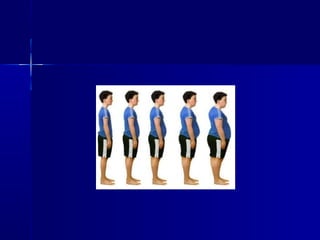
Then Came the DietaryThen Came the Dietary
Recommendations of 1980,Recommendations of 1980,
and theand the
Food Pyramid of 1992Food Pyramid of 1992
Woodstock 1999Woodstock 1999
Modern ClassroomModern Classroom
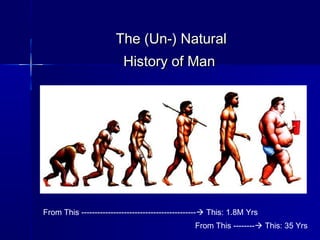
The (Un-) NaturalThe (Un-) Natural
History of ManHistory of Man
From This ------------------------------------------- This: 1.8M Yrs
From This -------- This: 35 Yrs
Impact of the WesternImpact of the Western
DietDiet
 “The change in traditional diets has
already led to increased health
problems, such as obesity,
cardiovascular disease, and
diabetes, while the mental health
of circumpolar peoples has also
declined substantially during the same
time period.”
Int J Circumpolar Health, 2003
Health in theHealth in the
United StatesUnited States
 No. 1 in the world for percentage ofNo. 1 in the world for percentage of
obese persons (30.6%)obese persons (30.6%)
 No. 1 in the world in total healthNo. 1 in the world in total health
expenditures per capitaexpenditures per capita
 No. 22 among industrialized nationsNo. 22 among industrialized nations
for healthy life expectancyfor healthy life expectancy
Source: Nationmaster.comSource: Nationmaster.com
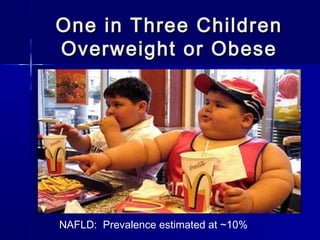
One in Three ChildrenOne in Three Children
Overweight or ObeseOverweight or Obese
NAFLD: Prevalence estimated at ~10%
Burden of IllnessBurden of Illness
 Metabolic syndrome is as high as 50%Metabolic syndrome is as high as 50%
among severely obese children andamong severely obese children and
adolescentsadolescents
 ~44% of American adults have either~44% of American adults have either
metabolic syndrome or diabetesmetabolic syndrome or diabetes
High Insulin StateHigh Insulin State
Chubby CheeksChubby Cheeks
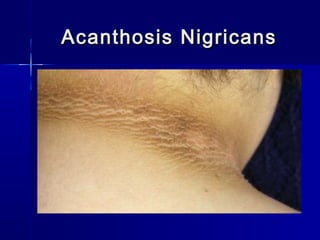
Acanthosis NigricansAcanthosis Nigricans
Nutritional ImpactNutritional Impact
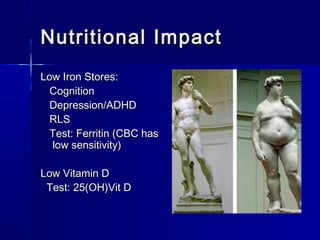
Low Iron Stores:Low Iron Stores:
CognitionCognition
Depression/ADHDDepression/ADHD
RLSRLS
Test: Ferritin (CBC hasTest: Ferritin (CBC has
low sensitivity)low sensitivity)
Low Vitamin DLow Vitamin D
Test: 25(OH)Vit DTest: 25(OH)Vit D
Body ImageBody Image
 81% of 10 year olds polled say they81% of 10 year olds polled say they
are afraid of being fat.are afraid of being fat.
 Over ½ of teen girls and 1/3 of teenOver ½ of teen girls and 1/3 of teen
boys use unhealthy weight controlboys use unhealthy weight control
– Including but not limited to: skippingIncluding but not limited to: skipping
meals, fasting, cigarettes, vomiting,meals, fasting, cigarettes, vomiting,
laxativeslaxatives
History ofHistory of
Human NutritionHuman Nutrition
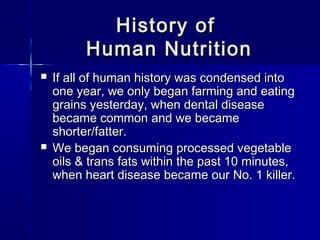
 If all of human history was condensed intoIf all of human history was condensed into
one year, we only began farming and eatingone year, we only began farming and eating
grains yesterday, when dental diseasegrains yesterday, when dental disease
became common and we becamebecame common and we became
shorter/fatter.shorter/fatter.
 We began consuming processed vegetableWe began consuming processed vegetable
oils & trans fats within the past 10 minutes,oils & trans fats within the past 10 minutes,
when heart disease became our No. 1 killer.when heart disease became our No. 1 killer.
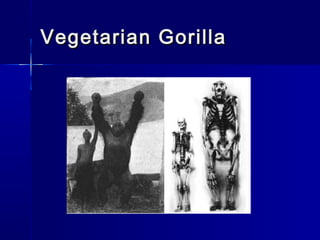
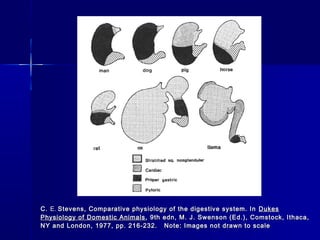
Vegetarian GorillaVegetarian Gorilla
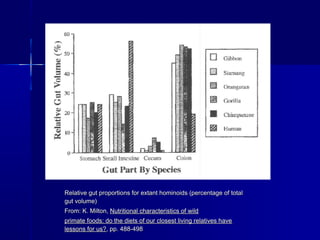
Relative gut proportions for extant hominoids (percentage of totalRelative gut proportions for extant hominoids (percentage of total
gut volume)gut volume)
From: K. Milton,From: K. Milton, Nutritional characteristics of wildNutritional characteristics of wild
primate foods: do the diets of our closest living relatives haveprimate foods: do the diets of our closest living relatives have
lessons for us?lessons for us?, pp. 488-498, pp. 488-498
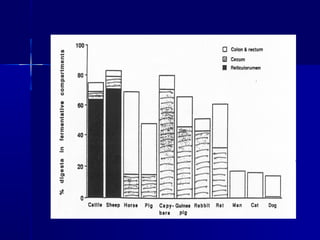
C.C. E.E. Stevens, Comparative physiology of the digestive system. InStevens, Comparative physiology of the digestive system. In DukesDukes
Physiology of Domestic AnimalsPhysiology of Domestic Animals ,, 9th edn, M. J. Swenson (Ed.), Comstock, Ithaca,9th edn, M. J. Swenson (Ed.), Comstock, Ithaca,
NY and London, 1977, pp. 216-232. Note: Images not drawn to scaleNY and London, 1977, pp. 216-232. Note: Images not drawn to scale
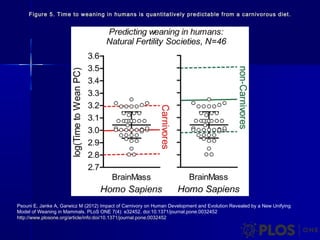
Elia Psouni and colleagues analyzed 70Elia Psouni and colleagues analyzed 70
species of animalspecies of animal
Figure 5. Time to weaning in humans is quantitatively predictable from a carnivorous diet.Figure 5. Time to weaning in humans is quantitatively predictable from a carnivorous diet.
Psouni E, Janke A, Garwicz M (2012) Impact of Carnivory on Human Development and Evolution Revealed by a New Unifying
Model of Weaning in Mammals. PLoS ONE 7(4): e32452. doi:10.1371/journal.pone.0032452
http://www.plosone.org/article/info:doi/10.1371/journal.pone.0032452
How Americans GotHow Americans Got
Obese:Obese:
the Lipid Hypothesisthe Lipid Hypothesis
 The Lipid Hypothesis (LH): Dietary fat raisesThe Lipid Hypothesis (LH): Dietary fat raises
cholesterol and cholesterol causes heartcholesterol and cholesterol causes heart
diseasedisease
 Promoted by Ancel Keys in early 1950s, viaPromoted by Ancel Keys in early 1950s, via
his 7 Countries Study.his 7 Countries Study.
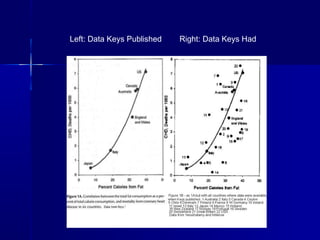
 Keys had data from 22 countries, but failedKeys had data from 22 countries, but failed
to report on 15 that didnto report on 15 that didn’’t fit his Hypothesis.t fit his Hypothesis.
Left: Data Keys Published Right: Data Keys Had
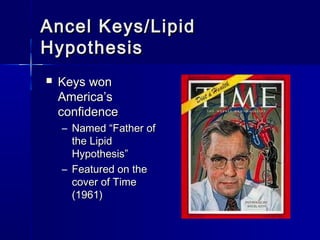
Ancel Keys/LipidAncel Keys/Lipid
HypothesisHypothesis
 Keys wonKeys won
AmericaAmerica’’ss
confidenceconfidence
– NamedNamed ““Father ofFather of
the Lipidthe Lipid
HypothesisHypothesis””
– Featured on theFeatured on the
cover of Timecover of Time
(1961)(1961)
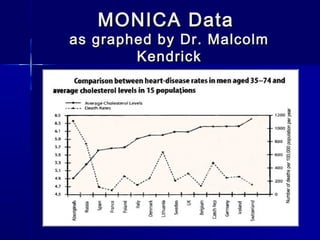
MONICA StudyMONICA Study
 Began in early-to-mid 1980sBegan in early-to-mid 1980s
 10 year study10 year study
 22 Countries22 Countries
 64,976 men and women, ages 35-6464,976 men and women, ages 35-64
 No correlation found between total bloodNo correlation found between total blood
cholesterol values and death from heartcholesterol values and death from heart
diseasedisease
MONICA DataMONICA Data
as graphed by Dr. Malcolmas graphed by Dr. Malcolm
KendrickKendrick
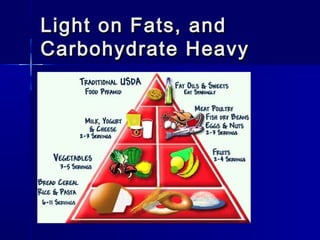
Light on Fats, andLight on Fats, and
Carbohydrate HeavyCarbohydrate Heavy
USDA Recommendations =USDA Recommendations =
Carbohydrate PromotionCarbohydrate Promotion
 Increased consumption low fat, refinedIncreased consumption low fat, refined
carbohydrates/sweeteners/processedcarbohydrates/sweeteners/processed
foods (Snackwells, e.g.)foods (Snackwells, e.g.)
– Per AHA, US adults avg. 22 tsps, teensPer AHA, US adults avg. 22 tsps, teens
34 tsps, added sugars per day (fructose,34 tsps, added sugars per day (fructose,
e.g.)e.g.)
 Low Fat Dairy: Skim (Low Fat Dairy: Skim (““blueblue””) milk) milk
widely promoted (lactose sugar)widely promoted (lactose sugar)
 CHO --> Triglycerides, BSCHO --> Triglycerides, BS
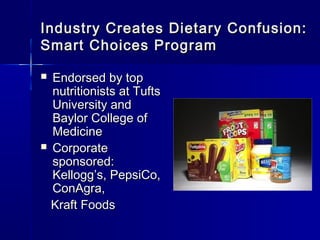
Industry Creates Dietary Confusion:Industry Creates Dietary Confusion:
Smart Choices ProgramSmart Choices Program
 Endorsed by topEndorsed by top
nutritionists at Tuftsnutritionists at Tufts
University andUniversity and
Baylor College ofBaylor College of
MedicineMedicine
 CorporateCorporate
sponsored:sponsored:
KelloggKellogg’’s, PepsiCo,s, PepsiCo,
ConAgra,ConAgra,
Kraft FoodsKraft Foods
Smart Choices ProgramSmart Choices Program
(cont.)(cont.)
 44% sugar44% sugar
 96% refined96% refined
carbohydratecarbohydrate
 Coal tar dyes: Red DyeCoal tar dyes: Red Dye
#40, Yellow Dye #6#40, Yellow Dye #6
(child hyperactivity)(child hyperactivity)
 Seed dye AnnattoSeed dye Annatto
(allergies)(allergies)
 VitaminsVitamins
 Some fiberSome fiber
whatwhat’’s next?s next?
You mayYou may
Myth of Whole Wheat?Myth of Whole Wheat?
Bread Study,Bread Study,
University of Guelph, CanadaUniversity of Guelph, Canada
 Whole wheat and whole wheat barleyWhole wheat and whole wheat barley
promoted the greatest rises in bloodpromoted the greatest rises in blood
sugarsugar
 White bread promoted lessWhite bread promoted less
 Sourdough bread promoted the verySourdough bread promoted the very
leastleast
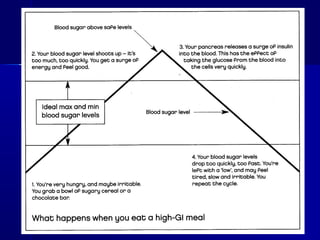
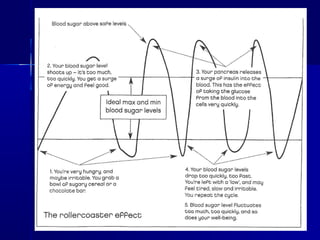
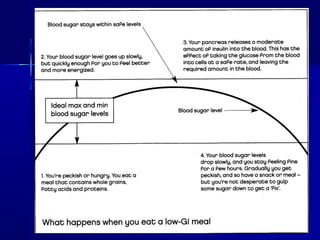
A Calorie is Not aA Calorie is Not a
Calorie: Insulin is KeyCalorie: Insulin is Key
What we knew in 1912What we knew in 1912
““Skim milk is one of the most valuable adjunctsSkim milk is one of the most valuable adjuncts
of the farm for fattening swine. Used with corn,of the farm for fattening swine. Used with corn,
kafir corn or any of the common grain by-kafir corn or any of the common grain by-
products, an almost ideal ration is formed.products, an almost ideal ration is formed.
Hogs like it, and relish rations mixed with it. AsHogs like it, and relish rations mixed with it. As
a result of five year’s work in feeding skim milka result of five year’s work in feeding skim milk
at the New York station at Cornell, it isat the New York station at Cornell, it is
concluded that the most economical returns areconcluded that the most economical returns are
secured when the milk is fed with corn meal.”secured when the milk is fed with corn meal.”
FarmerFarmer’s Cyclopedia of Livestock, pg 545’s Cyclopedia of Livestock, pg 545
What My Farmer SaysWhat My Farmer Says
““I want my meat pigs to be pre-diabetic”I want my meat pigs to be pre-diabetic”
Her approach: Grains + Fat Free MilkHer approach: Grains + Fat Free Milk
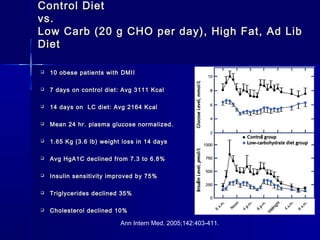
Control DietControl Diet
vs.vs.
Low Carb (20 g CHO per day), High Fat, Ad LibLow Carb (20 g CHO per day), High Fat, Ad Lib
DietDiet
 10 obese patients with DMII10 obese patients with DMII
 7 days on control diet: Avg 3111 Kcal7 days on control diet: Avg 3111 Kcal
 14 days on LC diet: Avg 2164 Kcal14 days on LC diet: Avg 2164 Kcal
 Mean 24 hr. plasma glucose normalized.Mean 24 hr. plasma glucose normalized.
 1.65 Kg (3.6 lb) weight loss in 14 days1.65 Kg (3.6 lb) weight loss in 14 days
 Avg HgA1C declined from 7.3 to 6.8%Avg HgA1C declined from 7.3 to 6.8%
 Insulin sensitivity improved by 75%Insulin sensitivity improved by 75%
 Triglycerides declined 35%Triglycerides declined 35%
 Cholesterol declined 10%Cholesterol declined 10%
Ann Intern Med. 2005;142:403-411.
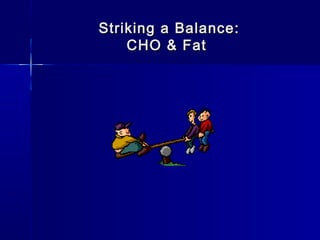
Striking a Balance:Striking a Balance:
CHO & FatCHO & Fat
LeptinLeptin
Cravings? Hunger?Cravings? Hunger?
Fat + Protein = SatietyFat + Protein = Satiety
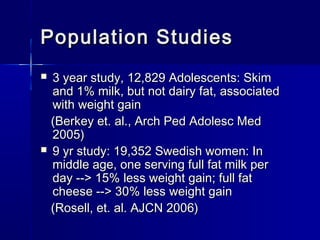
Population StudiesPopulation Studies
 3 year study, 12,829 Adolescents: Skim3 year study, 12,829 Adolescents: Skim
and 1% milk, but not dairy fat, associatedand 1% milk, but not dairy fat, associated
with weight gainwith weight gain
(Berkey et. al., Arch Ped Adolesc Med(Berkey et. al., Arch Ped Adolesc Med
2005)2005)
 9 yr study: 19,352 Swedish women: In9 yr study: 19,352 Swedish women: In
middle age, one serving full fat milk permiddle age, one serving full fat milk per
day --> 15% less weight gain; full fatday --> 15% less weight gain; full fat
cheese --> 30% less weight gaincheese --> 30% less weight gain
(Rosell, et. al. AJCN 2006)(Rosell, et. al. AJCN 2006)
““ItIt’’s Time to End thes Time to End the
Low Fat MythLow Fat Myth””
In the News:In the News:
British Medical JournalBritish Medical Journal
Observations: Saturated fat is not
the major issue
Tuesday, October 22, 2013
“It is time to bust the myth of the role of
saturated fat in heart disease,” argues a
British cardiologist.
Food Business News, 4/7/14:Food Business News, 4/7/14:
Staying power seen inStaying power seen in
shift from carbohydratesshift from carbohydrates
““Health-conscious parentsHealth-conscious parents havehave
responded in someresponded in some strange waysstrange ways suchsuch
as preparing unhealthy foods for theiras preparing unhealthy foods for their
children in the morning, like bacon andchildren in the morning, like bacon and
sausages,sausages, to make sure they areto make sure they are
satiatedsatiated during the dayduring the day””
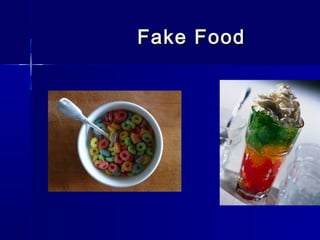
Fake FoodFake Food
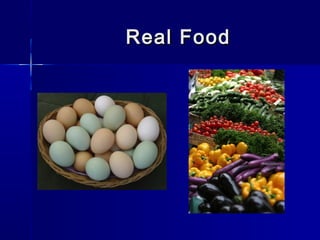
Real FoodReal Food
Less Carbohydrates, MoreLess Carbohydrates, More
Natural Fats &Natural Fats &
High Quality ProteinsHigh Quality Proteins
 Brain is 60-70% fat & significantBrain is 60-70% fat & significant
cholesterol--fats vital to functioncholesterol--fats vital to function
 Cholesterol basis steroid hormonesCholesterol basis steroid hormones
 Fats and proteins block hunger; do notFats and proteins block hunger; do not
interfere with leptininterfere with leptin
 Fats promote absorption of vitamins andFats promote absorption of vitamins and
mineralsminerals
 Fats slow release of sugar to the bloodFats slow release of sugar to the blood
streamstream
Fats Promote Satiety.Fats Promote Satiety.
Fats Do NotFats Do Not
PromotePromote Insulin.Insulin.
DoesnDoesn’’t the Brain Needt the Brain Need
Carbohydrates?Carbohydrates?
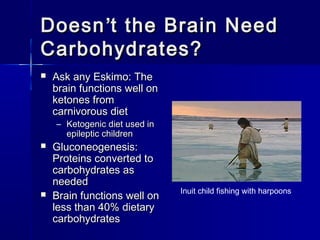
 Ask any Eskimo: TheAsk any Eskimo: The
brain functions well onbrain functions well on
ketones fromketones from
carnivorous dietcarnivorous diet
– Ketogenic diet used inKetogenic diet used in
epileptic childrenepileptic children
 Gluconeogenesis:Gluconeogenesis:
Proteins converted toProteins converted to
carbohydrates ascarbohydrates as
neededneeded
 Brain functions well onBrain functions well on
less than 40% dietaryless than 40% dietary
carbohydratescarbohydrates
Inuit child fishing with harpoons
Rule of Thumb:Rule of Thumb:
If It Promotes Caries &If It Promotes Caries &
Gum Disease,Gum Disease,
DonDon’t Eat It’t Eat It
Highly FermentableHighly Fermentable
Carbohydrates (sticky/sugaryCarbohydrates (sticky/sugary
foods, dried fruits, refined grains,foods, dried fruits, refined grains,
crackers, potato chips, sodas,crackers, potato chips, sodas,
etc.) are cariogenic, promoteetc.) are cariogenic, promote
triglycerides, impair metabolism.triglycerides, impair metabolism.
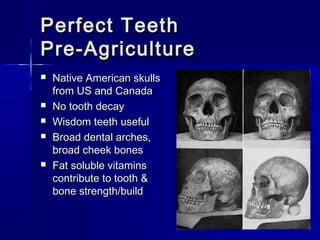
Perfect TeethPerfect Teeth
Pre-AgriculturePre-Agriculture
 Native American skullsNative American skulls
from US and Canadafrom US and Canada
 No tooth decayNo tooth decay
 Wisdom teeth usefulWisdom teeth useful
 Broad dental arches,Broad dental arches,
broad cheek bonesbroad cheek bones
 Fat soluble vitaminsFat soluble vitamins
contribute to tooth &contribute to tooth &
bone strength/buildbone strength/build
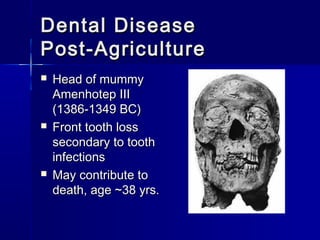
Dental DiseaseDental Disease
Post-AgriculturePost-Agriculture
 Head of mummyHead of mummy
Amenhotep IIIAmenhotep III
(1386-1349 BC)(1386-1349 BC)
 Front tooth lossFront tooth loss
secondary to toothsecondary to tooth
infectionsinfections
 May contribute toMay contribute to
death, age ~38 yrs.death, age ~38 yrs.
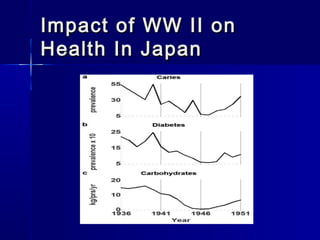
Impact of WW II onImpact of WW II on
Health In JapanHealth In Japan
High Carb, Low FatHigh Carb, Low Fat
DietsDiets
 Universally recommended for txUniversally recommended for tx
hyperlipidemia, prevention heart dzhyperlipidemia, prevention heart dz
 Lower HDLLower HDL
 Raise triglyceridesRaise triglycerides
 Drive LDL toward Small, DenseDrive LDL toward Small, Dense
– NMR LipoprofileNMR Lipoprofile
Nutrient PoorNutrient Poor
High carbohydrate diets, and high grainHigh carbohydrate diets, and high grain
diets in particular, are nutrient poor.diets in particular, are nutrient poor.
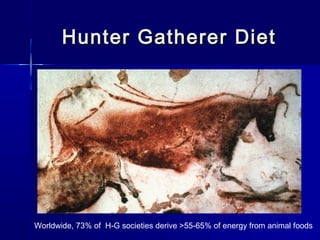
Hunter Gatherer DietHunter Gatherer Diet
Worldwide, 73% of H-G societies derive >55-65% of energy from animal foods
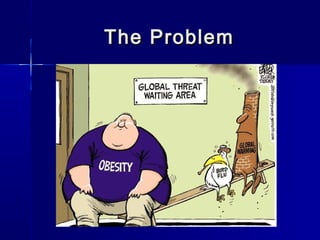
The ProblemThe Problem
Proposed MechanismProposed Mechanism
 Insulin = storage hormoneInsulin = storage hormone
– ““Bail out” strategy for body under sugarBail out” strategy for body under sugar
assaultassault
– Interferes with energy release from fatInterferes with energy release from fat
cellscells
– Interferes with leptin sensitivityInterferes with leptin sensitivity
– Too much lowers satiety, increases bodyToo much lowers satiety, increases body
fat, promotes MetS/DM IIfat, promotes MetS/DM II
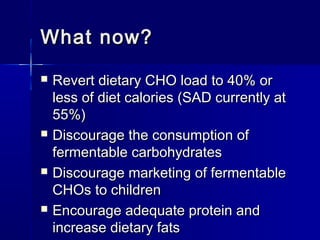
What now?What now?
 Revert dietary CHO load to 40% orRevert dietary CHO load to 40% or
less of diet calories (SAD currently atless of diet calories (SAD currently at
55%)55%)
 Discourage the consumption ofDiscourage the consumption of
fermentable carbohydratesfermentable carbohydrates
 Discourage marketing of fermentableDiscourage marketing of fermentable
CHOs to childrenCHOs to children
 Encourage adequate protein andEncourage adequate protein and
increase dietary fatsincrease dietary fats
For more informationFor more information
Dr. ChildersDr. Childers’’ blog:blog:
annchilders.blogspot.comannchilders.blogspot.com
The Nutrition & Metabolism SocietyThe Nutrition & Metabolism Society
nmsociety.orgnmsociety.org

Apr 18 14 talk

  • 1.
    Childhood Obesity: NowWhat?Childhood Obesity: Now What? Ann M. Childers, M. D.Ann M. Childers, M. D. Member, American Society of BariatricMember, American Society of Bariatric PhysiciansPhysicians andand The Nutrition and Metabolism SocietyThe Nutrition and Metabolism Society
  • 2.
    All references todiabetes inAll references to diabetes in this presentation refer tothis presentation refer to Type II DiabetesType II Diabetes
  • 3.
    Once upon atime,Once upon a time,
  • 4.
  • 5.
    Fifth Grade Class,1940Fifth Grade Class, 1940
  • 6.
  • 7.
  • 8.
    Then Came theDietaryThen Came the Dietary Recommendations of 1980,Recommendations of 1980, and theand the Food Pyramid of 1992Food Pyramid of 1992
  • 10.
  • 11.
  • 13.
    The (Un-) NaturalThe(Un-) Natural History of ManHistory of Man From This ------------------------------------------- This: 1.8M Yrs From This -------- This: 35 Yrs
  • 14.
    Impact of theWesternImpact of the Western DietDiet  “The change in traditional diets has already led to increased health problems, such as obesity, cardiovascular disease, and diabetes, while the mental health of circumpolar peoples has also declined substantially during the same time period.” Int J Circumpolar Health, 2003
  • 15.
    Health in theHealthin the United StatesUnited States  No. 1 in the world for percentage ofNo. 1 in the world for percentage of obese persons (30.6%)obese persons (30.6%)  No. 1 in the world in total healthNo. 1 in the world in total health expenditures per capitaexpenditures per capita  No. 22 among industrialized nationsNo. 22 among industrialized nations for healthy life expectancyfor healthy life expectancy Source: Nationmaster.comSource: Nationmaster.com
  • 16.
    One in ThreeChildrenOne in Three Children Overweight or ObeseOverweight or Obese NAFLD: Prevalence estimated at ~10%
  • 17.
    Burden of IllnessBurdenof Illness  Metabolic syndrome is as high as 50%Metabolic syndrome is as high as 50% among severely obese children andamong severely obese children and adolescentsadolescents  ~44% of American adults have either~44% of American adults have either metabolic syndrome or diabetesmetabolic syndrome or diabetes
  • 18.
  • 19.
  • 22.
  • 23.
    Nutritional ImpactNutritional Impact LowIron Stores:Low Iron Stores: CognitionCognition Depression/ADHDDepression/ADHD RLSRLS Test: Ferritin (CBC hasTest: Ferritin (CBC has low sensitivity)low sensitivity) Low Vitamin DLow Vitamin D Test: 25(OH)Vit DTest: 25(OH)Vit D
  • 24.
    Body ImageBody Image 81% of 10 year olds polled say they81% of 10 year olds polled say they are afraid of being fat.are afraid of being fat.  Over ½ of teen girls and 1/3 of teenOver ½ of teen girls and 1/3 of teen boys use unhealthy weight controlboys use unhealthy weight control – Including but not limited to: skippingIncluding but not limited to: skipping meals, fasting, cigarettes, vomiting,meals, fasting, cigarettes, vomiting, laxativeslaxatives
  • 25.
    History ofHistory of HumanNutritionHuman Nutrition  If all of human history was condensed intoIf all of human history was condensed into one year, we only began farming and eatingone year, we only began farming and eating grains yesterday, when dental diseasegrains yesterday, when dental disease became common and we becamebecame common and we became shorter/fatter.shorter/fatter.  We began consuming processed vegetableWe began consuming processed vegetable oils & trans fats within the past 10 minutes,oils & trans fats within the past 10 minutes, when heart disease became our No. 1 killer.when heart disease became our No. 1 killer.
  • 26.
  • 27.
    Relative gut proportionsfor extant hominoids (percentage of totalRelative gut proportions for extant hominoids (percentage of total gut volume)gut volume) From: K. Milton,From: K. Milton, Nutritional characteristics of wildNutritional characteristics of wild primate foods: do the diets of our closest living relatives haveprimate foods: do the diets of our closest living relatives have lessons for us?lessons for us?, pp. 488-498, pp. 488-498
  • 29.
    C.C. E.E. Stevens,Comparative physiology of the digestive system. InStevens, Comparative physiology of the digestive system. In DukesDukes Physiology of Domestic AnimalsPhysiology of Domestic Animals ,, 9th edn, M. J. Swenson (Ed.), Comstock, Ithaca,9th edn, M. J. Swenson (Ed.), Comstock, Ithaca, NY and London, 1977, pp. 216-232. Note: Images not drawn to scaleNY and London, 1977, pp. 216-232. Note: Images not drawn to scale
  • 30.
    Elia Psouni andcolleagues analyzed 70Elia Psouni and colleagues analyzed 70 species of animalspecies of animal
  • 31.
    Figure 5. Timeto weaning in humans is quantitatively predictable from a carnivorous diet.Figure 5. Time to weaning in humans is quantitatively predictable from a carnivorous diet. Psouni E, Janke A, Garwicz M (2012) Impact of Carnivory on Human Development and Evolution Revealed by a New Unifying Model of Weaning in Mammals. PLoS ONE 7(4): e32452. doi:10.1371/journal.pone.0032452 http://www.plosone.org/article/info:doi/10.1371/journal.pone.0032452
  • 32.
    How Americans GotHowAmericans Got Obese:Obese: the Lipid Hypothesisthe Lipid Hypothesis  The Lipid Hypothesis (LH): Dietary fat raisesThe Lipid Hypothesis (LH): Dietary fat raises cholesterol and cholesterol causes heartcholesterol and cholesterol causes heart diseasedisease  Promoted by Ancel Keys in early 1950s, viaPromoted by Ancel Keys in early 1950s, via his 7 Countries Study.his 7 Countries Study.  Keys had data from 22 countries, but failedKeys had data from 22 countries, but failed to report on 15 that didnto report on 15 that didn’’t fit his Hypothesis.t fit his Hypothesis.
  • 33.
    Left: Data KeysPublished Right: Data Keys Had
  • 34.
    Ancel Keys/LipidAncel Keys/Lipid HypothesisHypothesis Keys wonKeys won AmericaAmerica’’ss confidenceconfidence – NamedNamed ““Father ofFather of the Lipidthe Lipid HypothesisHypothesis”” – Featured on theFeatured on the cover of Timecover of Time (1961)(1961)
  • 35.
    MONICA StudyMONICA Study Began in early-to-mid 1980sBegan in early-to-mid 1980s  10 year study10 year study  22 Countries22 Countries  64,976 men and women, ages 35-6464,976 men and women, ages 35-64  No correlation found between total bloodNo correlation found between total blood cholesterol values and death from heartcholesterol values and death from heart diseasedisease
  • 36.
    MONICA DataMONICA Data asgraphed by Dr. Malcolmas graphed by Dr. Malcolm KendrickKendrick
  • 37.
    Light on Fats,andLight on Fats, and Carbohydrate HeavyCarbohydrate Heavy
  • 38.
    USDA Recommendations =USDARecommendations = Carbohydrate PromotionCarbohydrate Promotion  Increased consumption low fat, refinedIncreased consumption low fat, refined carbohydrates/sweeteners/processedcarbohydrates/sweeteners/processed foods (Snackwells, e.g.)foods (Snackwells, e.g.) – Per AHA, US adults avg. 22 tsps, teensPer AHA, US adults avg. 22 tsps, teens 34 tsps, added sugars per day (fructose,34 tsps, added sugars per day (fructose, e.g.)e.g.)  Low Fat Dairy: Skim (Low Fat Dairy: Skim (““blueblue””) milk) milk widely promoted (lactose sugar)widely promoted (lactose sugar)  CHO --> Triglycerides, BSCHO --> Triglycerides, BS
  • 39.
    Industry Creates DietaryConfusion:Industry Creates Dietary Confusion: Smart Choices ProgramSmart Choices Program  Endorsed by topEndorsed by top nutritionists at Tuftsnutritionists at Tufts University andUniversity and Baylor College ofBaylor College of MedicineMedicine  CorporateCorporate sponsored:sponsored: KelloggKellogg’’s, PepsiCo,s, PepsiCo, ConAgra,ConAgra, Kraft FoodsKraft Foods
  • 40.
    Smart Choices ProgramSmartChoices Program (cont.)(cont.)  44% sugar44% sugar  96% refined96% refined carbohydratecarbohydrate  Coal tar dyes: Red DyeCoal tar dyes: Red Dye #40, Yellow Dye #6#40, Yellow Dye #6 (child hyperactivity)(child hyperactivity)  Seed dye AnnattoSeed dye Annatto (allergies)(allergies)  VitaminsVitamins  Some fiberSome fiber
  • 41.
  • 43.
    Myth of WholeWheat?Myth of Whole Wheat? Bread Study,Bread Study, University of Guelph, CanadaUniversity of Guelph, Canada  Whole wheat and whole wheat barleyWhole wheat and whole wheat barley promoted the greatest rises in bloodpromoted the greatest rises in blood sugarsugar  White bread promoted lessWhite bread promoted less  Sourdough bread promoted the verySourdough bread promoted the very leastleast
  • 44.
    A Calorie isNot aA Calorie is Not a Calorie: Insulin is KeyCalorie: Insulin is Key
  • 45.
    What we knewin 1912What we knew in 1912 ““Skim milk is one of the most valuable adjunctsSkim milk is one of the most valuable adjuncts of the farm for fattening swine. Used with corn,of the farm for fattening swine. Used with corn, kafir corn or any of the common grain by-kafir corn or any of the common grain by- products, an almost ideal ration is formed.products, an almost ideal ration is formed. Hogs like it, and relish rations mixed with it. AsHogs like it, and relish rations mixed with it. As a result of five year’s work in feeding skim milka result of five year’s work in feeding skim milk at the New York station at Cornell, it isat the New York station at Cornell, it is concluded that the most economical returns areconcluded that the most economical returns are secured when the milk is fed with corn meal.”secured when the milk is fed with corn meal.” FarmerFarmer’s Cyclopedia of Livestock, pg 545’s Cyclopedia of Livestock, pg 545
  • 46.
    What My FarmerSaysWhat My Farmer Says ““I want my meat pigs to be pre-diabetic”I want my meat pigs to be pre-diabetic” Her approach: Grains + Fat Free MilkHer approach: Grains + Fat Free Milk
  • 50.
    Control DietControl Diet vs.vs. LowCarb (20 g CHO per day), High Fat, Ad LibLow Carb (20 g CHO per day), High Fat, Ad Lib DietDiet  10 obese patients with DMII10 obese patients with DMII  7 days on control diet: Avg 3111 Kcal7 days on control diet: Avg 3111 Kcal  14 days on LC diet: Avg 2164 Kcal14 days on LC diet: Avg 2164 Kcal  Mean 24 hr. plasma glucose normalized.Mean 24 hr. plasma glucose normalized.  1.65 Kg (3.6 lb) weight loss in 14 days1.65 Kg (3.6 lb) weight loss in 14 days  Avg HgA1C declined from 7.3 to 6.8%Avg HgA1C declined from 7.3 to 6.8%  Insulin sensitivity improved by 75%Insulin sensitivity improved by 75%  Triglycerides declined 35%Triglycerides declined 35%  Cholesterol declined 10%Cholesterol declined 10% Ann Intern Med. 2005;142:403-411.
  • 51.
    Striking a Balance:Strikinga Balance: CHO & FatCHO & Fat
  • 52.
  • 53.
    Cravings? Hunger?Cravings? Hunger? Fat+ Protein = SatietyFat + Protein = Satiety
  • 54.
    Population StudiesPopulation Studies 3 year study, 12,829 Adolescents: Skim3 year study, 12,829 Adolescents: Skim and 1% milk, but not dairy fat, associatedand 1% milk, but not dairy fat, associated with weight gainwith weight gain (Berkey et. al., Arch Ped Adolesc Med(Berkey et. al., Arch Ped Adolesc Med 2005)2005)  9 yr study: 19,352 Swedish women: In9 yr study: 19,352 Swedish women: In middle age, one serving full fat milk permiddle age, one serving full fat milk per day --> 15% less weight gain; full fatday --> 15% less weight gain; full fat cheese --> 30% less weight gaincheese --> 30% less weight gain (Rosell, et. al. AJCN 2006)(Rosell, et. al. AJCN 2006)
  • 55.
    ““ItIt’’s Time toEnd thes Time to End the Low Fat MythLow Fat Myth””
  • 56.
    In the News:Inthe News: British Medical JournalBritish Medical Journal Observations: Saturated fat is not the major issue Tuesday, October 22, 2013 “It is time to bust the myth of the role of saturated fat in heart disease,” argues a British cardiologist.
  • 57.
    Food Business News,4/7/14:Food Business News, 4/7/14: Staying power seen inStaying power seen in shift from carbohydratesshift from carbohydrates ““Health-conscious parentsHealth-conscious parents havehave responded in someresponded in some strange waysstrange ways suchsuch as preparing unhealthy foods for theiras preparing unhealthy foods for their children in the morning, like bacon andchildren in the morning, like bacon and sausages,sausages, to make sure they areto make sure they are satiatedsatiated during the dayduring the day””
  • 58.
  • 59.
  • 60.
    Less Carbohydrates, MoreLessCarbohydrates, More Natural Fats &Natural Fats & High Quality ProteinsHigh Quality Proteins  Brain is 60-70% fat & significantBrain is 60-70% fat & significant cholesterol--fats vital to functioncholesterol--fats vital to function  Cholesterol basis steroid hormonesCholesterol basis steroid hormones  Fats and proteins block hunger; do notFats and proteins block hunger; do not interfere with leptininterfere with leptin  Fats promote absorption of vitamins andFats promote absorption of vitamins and mineralsminerals  Fats slow release of sugar to the bloodFats slow release of sugar to the blood streamstream
  • 61.
    Fats Promote Satiety.FatsPromote Satiety. Fats Do NotFats Do Not PromotePromote Insulin.Insulin.
  • 62.
    DoesnDoesn’’t the BrainNeedt the Brain Need Carbohydrates?Carbohydrates?  Ask any Eskimo: TheAsk any Eskimo: The brain functions well onbrain functions well on ketones fromketones from carnivorous dietcarnivorous diet – Ketogenic diet used inKetogenic diet used in epileptic childrenepileptic children  Gluconeogenesis:Gluconeogenesis: Proteins converted toProteins converted to carbohydrates ascarbohydrates as neededneeded  Brain functions well onBrain functions well on less than 40% dietaryless than 40% dietary carbohydratescarbohydrates Inuit child fishing with harpoons
  • 63.
    Rule of Thumb:Ruleof Thumb: If It Promotes Caries &If It Promotes Caries & Gum Disease,Gum Disease, DonDon’t Eat It’t Eat It Highly FermentableHighly Fermentable Carbohydrates (sticky/sugaryCarbohydrates (sticky/sugary foods, dried fruits, refined grains,foods, dried fruits, refined grains, crackers, potato chips, sodas,crackers, potato chips, sodas, etc.) are cariogenic, promoteetc.) are cariogenic, promote triglycerides, impair metabolism.triglycerides, impair metabolism.
  • 64.
    Perfect TeethPerfect Teeth Pre-AgriculturePre-Agriculture Native American skullsNative American skulls from US and Canadafrom US and Canada  No tooth decayNo tooth decay  Wisdom teeth usefulWisdom teeth useful  Broad dental arches,Broad dental arches, broad cheek bonesbroad cheek bones  Fat soluble vitaminsFat soluble vitamins contribute to tooth &contribute to tooth & bone strength/buildbone strength/build
  • 65.
    Dental DiseaseDental Disease Post-AgriculturePost-Agriculture Head of mummyHead of mummy Amenhotep IIIAmenhotep III (1386-1349 BC)(1386-1349 BC)  Front tooth lossFront tooth loss secondary to toothsecondary to tooth infectionsinfections  May contribute toMay contribute to death, age ~38 yrs.death, age ~38 yrs.
  • 66.
    Impact of WWII onImpact of WW II on Health In JapanHealth In Japan
  • 68.
    High Carb, LowFatHigh Carb, Low Fat DietsDiets  Universally recommended for txUniversally recommended for tx hyperlipidemia, prevention heart dzhyperlipidemia, prevention heart dz  Lower HDLLower HDL  Raise triglyceridesRaise triglycerides  Drive LDL toward Small, DenseDrive LDL toward Small, Dense – NMR LipoprofileNMR Lipoprofile
  • 69.
    Nutrient PoorNutrient Poor Highcarbohydrate diets, and high grainHigh carbohydrate diets, and high grain diets in particular, are nutrient poor.diets in particular, are nutrient poor.
  • 70.
    Hunter Gatherer DietHunterGatherer Diet Worldwide, 73% of H-G societies derive >55-65% of energy from animal foods
  • 71.
  • 72.
    Proposed MechanismProposed Mechanism Insulin = storage hormoneInsulin = storage hormone – ““Bail out” strategy for body under sugarBail out” strategy for body under sugar assaultassault – Interferes with energy release from fatInterferes with energy release from fat cellscells – Interferes with leptin sensitivityInterferes with leptin sensitivity – Too much lowers satiety, increases bodyToo much lowers satiety, increases body fat, promotes MetS/DM IIfat, promotes MetS/DM II
  • 73.
    What now?What now? Revert dietary CHO load to 40% orRevert dietary CHO load to 40% or less of diet calories (SAD currently atless of diet calories (SAD currently at 55%)55%)  Discourage the consumption ofDiscourage the consumption of fermentable carbohydratesfermentable carbohydrates  Discourage marketing of fermentableDiscourage marketing of fermentable CHOs to childrenCHOs to children  Encourage adequate protein andEncourage adequate protein and increase dietary fatsincrease dietary fats
  • 74.
    For more informationFormore information Dr. ChildersDr. Childers’’ blog:blog: annchilders.blogspot.comannchilders.blogspot.com The Nutrition & Metabolism SocietyThe Nutrition & Metabolism Society nmsociety.orgnmsociety.org

Editor's Notes

  • #67 Sugar consumption, 1st molar caries incidence (ages 6 to 7), and diabetes prevalence in Japan between 1941 and 1956 (data abstracted from Goto et al., 1958; Takahashi, 1961). In northern Europe, refined food imports were substituted with locally available natural products during the war, and caries rates dropped similarly (Sognnaes, 1949), suggesting that the impact was not due to starvation.