Nutritional & Fitness Workshop
My Life, My Health, My Community
Nathalie, Sue Ann, Karin, Kristin, Eileen

Monmouth Beach, March 6th 2014
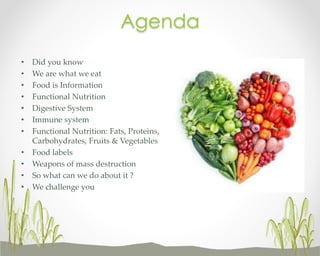
Agenda
•
•
•
•
•
•
•
•
•
•
•

Did you know
We are what we eat
Food is Information
Functional Nutrition
Digestive System
Immune system
Functional Nutrition: Fats, Proteins,
Carbohydrates, Fruits & Vegetables
Food labels
Weapons of mass destruction
So what can we do about it ?
We challenge you
Objective

Provide you and your Family with tips to improve
your well being through nutrition & fitness

“Let food be thy medicine and medicine be thy food”
Hippocrates (460 BC-357BC)
Did you Know..
 CDC has stated that “75% of healthcare spending goes
to treating preventable chronic diseases, most of which
are diet related”
 Exposure to pesticides is linked to respiratory problems, memory
disorders, dermatologic conditions, cancer, depression, neurological
deficits, miscarriages, birth defects, and type 2 diabetes

FDA employs approx. 1080 people to ensure our food
safety, out of a total of 14’650.
NASA employs this year 18’000 people
Did you Know..
By end of 2012, over 4 billion pounds of food were imported from
China

¼ American eat fast food every day
McDonald distributes more toys per year than
ToysRUs
 Most children in America can recognize the McDonald sign
before they can talk
High fructose corn syrup is found in 90% of our processed food
 47.4% of children 5-17 spend 3 or more hours on screen time
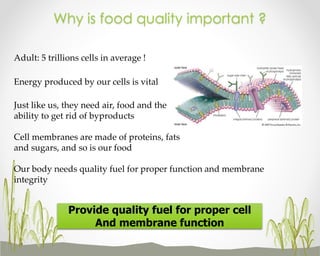
Why is food quality important ?
Adult: 5 trillions cells in average !
Energy produced by our cells is vital

Just like us, they need air, food and the
ability to get rid of byproducts
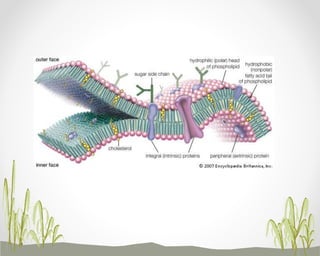
Cell membranes are made of proteins, fats
and sugars, and so is our food
Our body needs quality fuel for proper function and membrane
integrity

Provide quality fuel for proper cell
And membrane function
Functional Nutrition
 Food is information, it’s much more than just calories
 All calories are not created equal

Favor whole nutritious Food
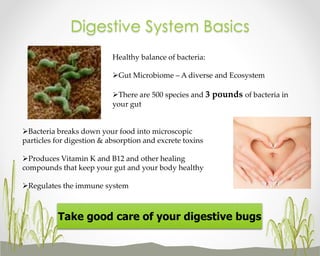
Digestive System Basics
Healthy balance of bacteria:
Gut Microbiome – A diverse and Ecosystem
There are 500 species and 3 pounds of bacteria in
your gut
Bacteria breaks down your food into microscopic
particles for digestion & absorption and excrete toxins
Produces Vitamin K and B12 and other healing
compounds that keep your gut and your body healthy
Regulates the immune system

Take good care of your digestive bugs
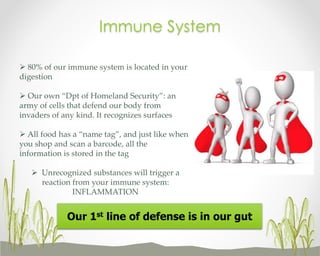
Immune System
 80% of our immune system is located in your
digestion
 Our own “Dpt of Homeland Security”: an
army of cells that defend our body from
invaders of any kind. It recognizes surfaces

 All food has a “name tag”, and just like when
you shop and scan a barcode, all the
information is stored in the tag
 Unrecognized substances will trigger a
reaction from your immune system:
INFLAMMATION

Our 1st line of defense is in our gut
Nutrition: Quality Fats
 Fats are essential to good cell
function
 Sixty percent of your brain is
made of fat

 Fats help maintain flexible,
dynamic membranes that are
able to transmit and receive
information and maintain other
cell functions

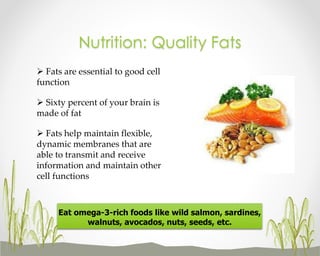
Eat omega-3-rich foods like wild salmon, sardines,
walnuts, avocados, nuts, seeds, etc.
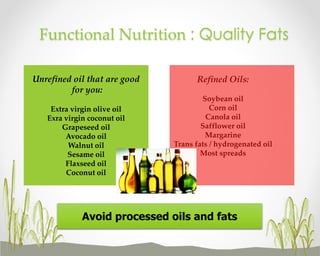
Functional Nutrition : Quality Fats
Unrefined oil that are good
for you:
Extra virgin olive oil
Exra virgin coconut oil
Grapeseed oil
Avocado oil
Walnut oil
Sesame oil
Flaxseed oil
Coconut oil

Refined Oils:
Soybean oil
Corn oil
Canola oil
Safflower oil
Margarine
Trans fats / hydrogenated oil
Most spreads

Avoid processed oils and fats
Nutrition : Proteins
 Amino acids are the building blocks of proteins
 They are key messengers throughout your body

 Proteins are vital for cell membrane function
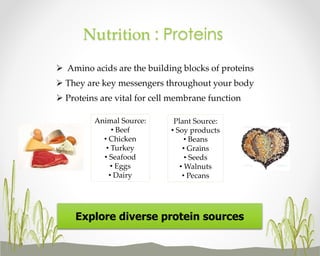
Animal Source:
• Beef
• Chicken
• Turkey
• Seafood
• Eggs
• Dairy

Plant Source:
• Soy products
• Beans
• Grains
• Seeds
• Walnuts
• Pecans

Explore diverse protein sources
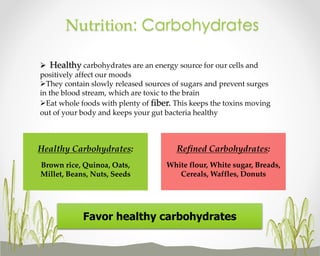
Nutrition: Carbohydrates
 Healthy carbohydrates are an energy source for our cells and
positively affect our moods
They contain slowly released sources of sugars and prevent surges
in the blood stream, which are toxic to the brain
Eat whole foods with plenty of fiber. This keeps the toxins moving
out of your body and keeps your gut bacteria healthy

Healthy Carbohydrates:

Refined Carbohydrates:

Brown rice, Quinoa, Oats,
Millet, Beans, Nuts, Seeds

White flour, White sugar, Breads,
Cereals, Waffles, Donuts

Favor healthy carbohydrates
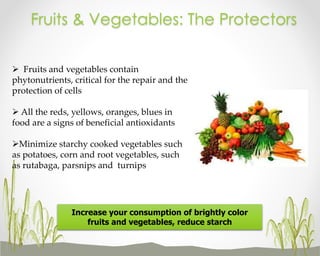
Fruits & Vegetables: The Protectors
 Fruits and vegetables contain
phytonutrients, critical for the repair and the
protection of cells
 All the reds, yellows, oranges, blues in
food are a signs of beneficial antioxidants
Minimize starchy cooked vegetables such
as potatoes, corn and root vegetables, such
as rutabaga, parsnips and turnips

Increase your consumption of brightly color
fruits and vegetables, reduce starch
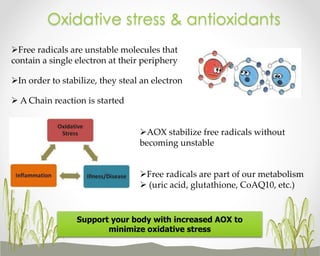
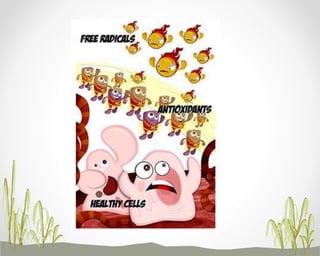
Oxidative stress & antioxidants
Free radicals are unstable molecules that
contain a single electron at their periphery

In order to stabilize, they steal an electron
 A Chain reaction is started
AOX stabilize free radicals without
becoming unstable
Free radicals are part of our metabolism
 (uric acid, glutathione, CoAQ10, etc.)

Support your body with increased AOX to
minimize oxidative stress
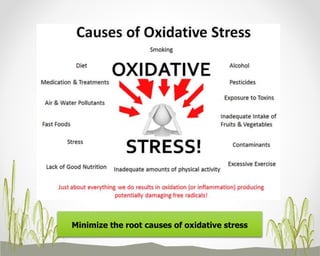
Minimize the root causes of oxidative stress
When you eat…

Sit dow, relax and enjoy your meal !
Reading between the Lines:
Labels
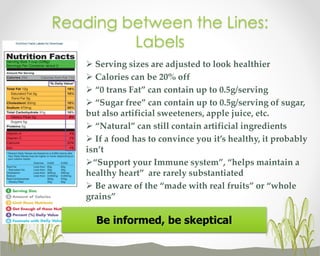
 Serving sizes are adjusted to look healthier
 Calories can be 20% off
 “0 trans Fat” can contain up to 0.5g/serving
 “Sugar free” can contain up to 0.5g/serving of sugar,
but also artificial sweeteners, apple juice, etc.
 “Natural” can still contain artificial ingredients
 If a food has to convince you it’s healthy, it probably
isn’t
“Support your Immune system”, “helps maintain a
healthy heart” are rarely substantiated
 Be aware of the “made with real fruits” or “whole
grains”

Be informed, be skeptical
Some bad boys in the room
 PRESERVATIVES reduce microbiological growth and slow degradation.
They have been linked to increased health risks and animal studies show
common preservatives are linked to CANCER
 TRANS FATS improve texture, flavor and stability
It raises bad cholesterol and is correlated with increased HEART
DISEASE, stroke and TYPE 2 DIABETES
 Food DYES have been linked to behavioral changes such as
ADHD. It’s easy to avoid, don’t buy any bright colored
food/drinks unless colored naturally
 HIGH FRUCTOSE CORN SYRUP: Our government farm bill
subsidies heavily corn, which ends up in 100% of our fast food and
90% of our processed food (ketchup, gravy, dressing, baking goods,
soups, mayonnaise, peanut butter, vit D fortified milk, etc. )
Most corn crops are GMO
Read the ingredients list,
be aware of the bad boys !
Some bad boys in the room
 Depleted soils, early harvest, treatment with
pesticides, gazing with MCP, and irradiation
cause our fruits and vegetables to fail in all their
nutritional promises
 For this reason, buying in season and local
minimize the duration between harvest and
purchase; organic is a good option when
available and affordable or consumed daily
 Flash freezing is a good alternative: the process takes place close
to the harvest site and has minimal nutritional value loss
Eat Local and Seasonal when possible
So what can we do about it ?
 Eat a colorful palette of fruits and vegetables
 Increase your fiber intake, it helps
with waste management
 Avoid the bad boys such as dyes,
HFCS, trans fats, refined oil, etc.
Eat local, eat seasonal

Balance is Key in Life

 Read the ingredient list –
- together the industry will listen to us.. 

Enjoy your Food… Bon Appetit !
For 3 days, avoid HFCS products and as many of its by products
as possible:
 High Fructose Corn Syrup
 Ascorbic acid, citric acid, calcium citrate, malic acid
 Caramel color
Cellulose
Corn meal, corn starch
Dextrin, maltodextrin, dextrose
Golden syrup,
Vegetable oil, hydrolysed vegetable protein (HVP)
Malt

For full list, please take the take away list
Annexes
http://www.epa.gov/pesticides/food/pest.htm
Pesticides and Food:
Health Problems Pesticides May Pose
Laboratory studies show that pesticides can cause health problems, such as birth
defects, nerve damage, cancer, and other effects that might occur over a long
period of time. However, these effects depend on how toxic the pesticide is and
how much of it is consumed. Some pesticides also pose unique health risks to
children.
For these reasons, the Federal Government, in cooperation with the States,
carefully regulates pesticides to ensure that their use does not pose unreasonable
risks to human health or the environment. In particular, the Federal pesticide
program is designed to ensure that these products can be used with a reasonable
certainty that they will pose no harm to infants, children, and adults.
http://www.epa.gov/pesticides/food/pest.htm
Pesticides and Food:
Why Children May be Especially Sensitive to Pesticides
Infants and children may be especially sensitive to health risks posed by pesticides
for several reasons:
their internal organs are still developing and maturing,
in relation to their body weight, infants and children eat and drink more than adults,
possibly increasing their exposure to pesticides in food and water.
certain behaviors--such as playing on floors or lawns or putting objects in their
mouths--increase a child's exposure to pesticides used in homes and yards.
Pesticides may harm a developing child by blocking the absorption of important food
nutrients necessary for normal healthy growth. Another way pesticides may cause
harm is if a child's excretory system is not fully developed, the body may not fully
remove pesticides. Also, there are "critical periods" in human development when
exposure to a toxin can permanently alter the way an individual's biological system
operates.
For these reasons, and as specifically required under the Food Quality Protection Act
(1996) , EPA carefully evaluates children's exposure to pesticide residues in and on
foods they most commonly eat, i.e., apples and apple juice, orange juice, potatoes,
tomatoes, soybean oil, sugar, eggs, pork, chicken and beef. EPA is also evaluating
new and existing pesticides to ensure that they can be used with a reasonable
certainty of no harm to adults as well as infants and children.

Nutritional & fitness workshop v6

  • 1.
    Nutritional & FitnessWorkshop My Life, My Health, My Community Nathalie, Sue Ann, Karin, Kristin, Eileen Monmouth Beach, March 6th 2014
  • 2.
    Agenda • • • • • • • • • • • Did you know Weare what we eat Food is Information Functional Nutrition Digestive System Immune system Functional Nutrition: Fats, Proteins, Carbohydrates, Fruits & Vegetables Food labels Weapons of mass destruction So what can we do about it ? We challenge you
  • 3.
    Objective Provide you andyour Family with tips to improve your well being through nutrition & fitness “Let food be thy medicine and medicine be thy food” Hippocrates (460 BC-357BC)
  • 4.
    Did you Know.. CDC has stated that “75% of healthcare spending goes to treating preventable chronic diseases, most of which are diet related”  Exposure to pesticides is linked to respiratory problems, memory disorders, dermatologic conditions, cancer, depression, neurological deficits, miscarriages, birth defects, and type 2 diabetes FDA employs approx. 1080 people to ensure our food safety, out of a total of 14’650. NASA employs this year 18’000 people
  • 5.
    Did you Know.. Byend of 2012, over 4 billion pounds of food were imported from China ¼ American eat fast food every day McDonald distributes more toys per year than ToysRUs  Most children in America can recognize the McDonald sign before they can talk High fructose corn syrup is found in 90% of our processed food  47.4% of children 5-17 spend 3 or more hours on screen time
  • 6.
    Why is foodquality important ? Adult: 5 trillions cells in average ! Energy produced by our cells is vital Just like us, they need air, food and the ability to get rid of byproducts Cell membranes are made of proteins, fats and sugars, and so is our food Our body needs quality fuel for proper function and membrane integrity Provide quality fuel for proper cell And membrane function
  • 7.
    Functional Nutrition  Foodis information, it’s much more than just calories  All calories are not created equal Favor whole nutritious Food
  • 8.
    Digestive System Basics Healthybalance of bacteria: Gut Microbiome – A diverse and Ecosystem There are 500 species and 3 pounds of bacteria in your gut Bacteria breaks down your food into microscopic particles for digestion & absorption and excrete toxins Produces Vitamin K and B12 and other healing compounds that keep your gut and your body healthy Regulates the immune system Take good care of your digestive bugs
  • 9.
    Immune System  80%of our immune system is located in your digestion  Our own “Dpt of Homeland Security”: an army of cells that defend our body from invaders of any kind. It recognizes surfaces  All food has a “name tag”, and just like when you shop and scan a barcode, all the information is stored in the tag  Unrecognized substances will trigger a reaction from your immune system: INFLAMMATION Our 1st line of defense is in our gut
  • 10.
    Nutrition: Quality Fats Fats are essential to good cell function  Sixty percent of your brain is made of fat  Fats help maintain flexible, dynamic membranes that are able to transmit and receive information and maintain other cell functions Eat omega-3-rich foods like wild salmon, sardines, walnuts, avocados, nuts, seeds, etc.
  • 11.
    Functional Nutrition :Quality Fats Unrefined oil that are good for you: Extra virgin olive oil Exra virgin coconut oil Grapeseed oil Avocado oil Walnut oil Sesame oil Flaxseed oil Coconut oil Refined Oils: Soybean oil Corn oil Canola oil Safflower oil Margarine Trans fats / hydrogenated oil Most spreads Avoid processed oils and fats
  • 12.
    Nutrition : Proteins Amino acids are the building blocks of proteins  They are key messengers throughout your body  Proteins are vital for cell membrane function Animal Source: • Beef • Chicken • Turkey • Seafood • Eggs • Dairy Plant Source: • Soy products • Beans • Grains • Seeds • Walnuts • Pecans Explore diverse protein sources
  • 13.
    Nutrition: Carbohydrates  Healthycarbohydrates are an energy source for our cells and positively affect our moods They contain slowly released sources of sugars and prevent surges in the blood stream, which are toxic to the brain Eat whole foods with plenty of fiber. This keeps the toxins moving out of your body and keeps your gut bacteria healthy Healthy Carbohydrates: Refined Carbohydrates: Brown rice, Quinoa, Oats, Millet, Beans, Nuts, Seeds White flour, White sugar, Breads, Cereals, Waffles, Donuts Favor healthy carbohydrates
  • 14.
    Fruits & Vegetables:The Protectors  Fruits and vegetables contain phytonutrients, critical for the repair and the protection of cells  All the reds, yellows, oranges, blues in food are a signs of beneficial antioxidants Minimize starchy cooked vegetables such as potatoes, corn and root vegetables, such as rutabaga, parsnips and turnips Increase your consumption of brightly color fruits and vegetables, reduce starch
  • 15.
    Oxidative stress &antioxidants Free radicals are unstable molecules that contain a single electron at their periphery In order to stabilize, they steal an electron  A Chain reaction is started AOX stabilize free radicals without becoming unstable Free radicals are part of our metabolism  (uric acid, glutathione, CoAQ10, etc.) Support your body with increased AOX to minimize oxidative stress
  • 16.
    Minimize the rootcauses of oxidative stress
  • 17.
    When you eat… Sitdow, relax and enjoy your meal !
  • 18.
    Reading between theLines: Labels  Serving sizes are adjusted to look healthier  Calories can be 20% off  “0 trans Fat” can contain up to 0.5g/serving  “Sugar free” can contain up to 0.5g/serving of sugar, but also artificial sweeteners, apple juice, etc.  “Natural” can still contain artificial ingredients  If a food has to convince you it’s healthy, it probably isn’t “Support your Immune system”, “helps maintain a healthy heart” are rarely substantiated  Be aware of the “made with real fruits” or “whole grains” Be informed, be skeptical
  • 19.
    Some bad boysin the room  PRESERVATIVES reduce microbiological growth and slow degradation. They have been linked to increased health risks and animal studies show common preservatives are linked to CANCER  TRANS FATS improve texture, flavor and stability It raises bad cholesterol and is correlated with increased HEART DISEASE, stroke and TYPE 2 DIABETES  Food DYES have been linked to behavioral changes such as ADHD. It’s easy to avoid, don’t buy any bright colored food/drinks unless colored naturally  HIGH FRUCTOSE CORN SYRUP: Our government farm bill subsidies heavily corn, which ends up in 100% of our fast food and 90% of our processed food (ketchup, gravy, dressing, baking goods, soups, mayonnaise, peanut butter, vit D fortified milk, etc. ) Most corn crops are GMO Read the ingredients list, be aware of the bad boys !
  • 20.
    Some bad boysin the room  Depleted soils, early harvest, treatment with pesticides, gazing with MCP, and irradiation cause our fruits and vegetables to fail in all their nutritional promises  For this reason, buying in season and local minimize the duration between harvest and purchase; organic is a good option when available and affordable or consumed daily  Flash freezing is a good alternative: the process takes place close to the harvest site and has minimal nutritional value loss Eat Local and Seasonal when possible
  • 21.
    So what canwe do about it ?  Eat a colorful palette of fruits and vegetables  Increase your fiber intake, it helps with waste management  Avoid the bad boys such as dyes, HFCS, trans fats, refined oil, etc. Eat local, eat seasonal Balance is Key in Life  Read the ingredient list – - together the industry will listen to us..  Enjoy your Food… Bon Appetit !
  • 22.
    For 3 days,avoid HFCS products and as many of its by products as possible:  High Fructose Corn Syrup  Ascorbic acid, citric acid, calcium citrate, malic acid  Caramel color Cellulose Corn meal, corn starch Dextrin, maltodextrin, dextrose Golden syrup, Vegetable oil, hydrolysed vegetable protein (HVP) Malt For full list, please take the take away list
  • 23.
  • 28.
    http://www.epa.gov/pesticides/food/pest.htm Pesticides and Food: HealthProblems Pesticides May Pose Laboratory studies show that pesticides can cause health problems, such as birth defects, nerve damage, cancer, and other effects that might occur over a long period of time. However, these effects depend on how toxic the pesticide is and how much of it is consumed. Some pesticides also pose unique health risks to children. For these reasons, the Federal Government, in cooperation with the States, carefully regulates pesticides to ensure that their use does not pose unreasonable risks to human health or the environment. In particular, the Federal pesticide program is designed to ensure that these products can be used with a reasonable certainty that they will pose no harm to infants, children, and adults.
  • 29.
    http://www.epa.gov/pesticides/food/pest.htm Pesticides and Food: WhyChildren May be Especially Sensitive to Pesticides Infants and children may be especially sensitive to health risks posed by pesticides for several reasons: their internal organs are still developing and maturing, in relation to their body weight, infants and children eat and drink more than adults, possibly increasing their exposure to pesticides in food and water. certain behaviors--such as playing on floors or lawns or putting objects in their mouths--increase a child's exposure to pesticides used in homes and yards. Pesticides may harm a developing child by blocking the absorption of important food nutrients necessary for normal healthy growth. Another way pesticides may cause harm is if a child's excretory system is not fully developed, the body may not fully remove pesticides. Also, there are "critical periods" in human development when exposure to a toxin can permanently alter the way an individual's biological system operates. For these reasons, and as specifically required under the Food Quality Protection Act (1996) , EPA carefully evaluates children's exposure to pesticide residues in and on foods they most commonly eat, i.e., apples and apple juice, orange juice, potatoes, tomatoes, soybean oil, sugar, eggs, pork, chicken and beef. EPA is also evaluating new and existing pesticides to ensure that they can be used with a reasonable certainty of no harm to adults as well as infants and children.