Food Science and
Nutrition
Dr.S.SUGASRI M.sc.,M.phil.,Ph.D.,M.T.M
FACULTY
MADURAI KAMARAJ UNIVERSITY
MADURAI -21.
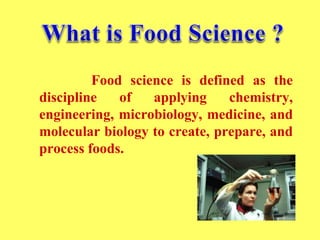
Food science is defined as the
discipline of applying chemistry,
engineering, microbiology, medicine, and
molecular biology to create, prepare, and
process foods.
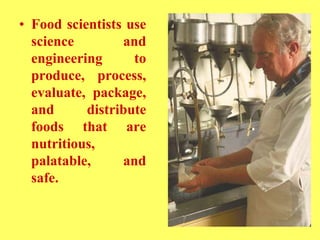
• Food scientists use
science and
engineering to
produce, process,
evaluate, package,
and distribute
foods that are
nutritious,
palatable, and
safe.
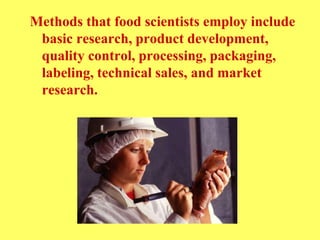
Methods that food scientists employ include
basic research, product development,
quality control, processing, packaging,
labeling, technical sales, and market
research.
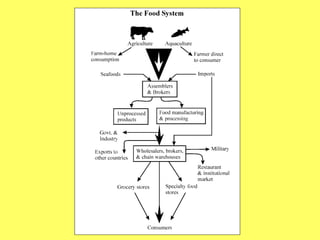
The food business is a complex
system of marketers, buyers, and
transporters that regulate how food
gets from the processor to the store
shelf.
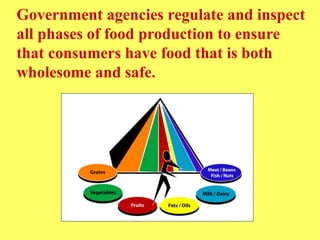
Government agencies regulate and inspect
all phases of food production to ensure
that consumers have food that is both
wholesome and safe.
The Food Safety and Standards
Authority of India (FSSAI) and the
Food and Drug Administration (FDA)
are two government agencies that
regulate the food industry.
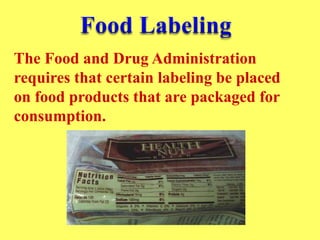
The Food and Drug Administration
requires that certain labeling be placed
on food products that are packaged for
consumption.
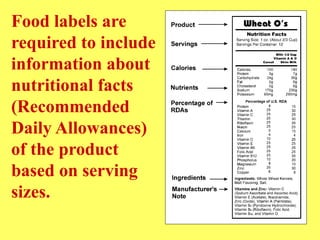
Food labels are
required to include
information about
nutritional facts
(Recommended
Daily Allowances)
of the product
based on serving
sizes.
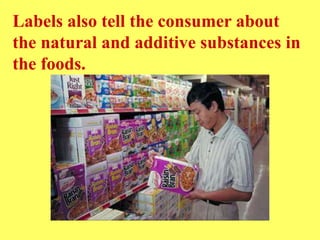
Labels also tell the consumer about
the natural and additive substances in
the foods.
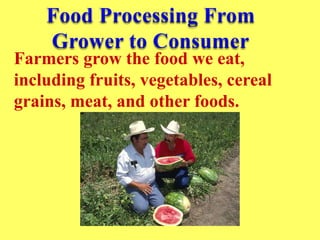
Farmers grow the food we eat,
including fruits, vegetables, cereal
grains, meat, and other foods.
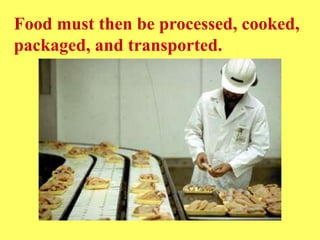
Food must then be processed, cooked,
packaged, and transported.
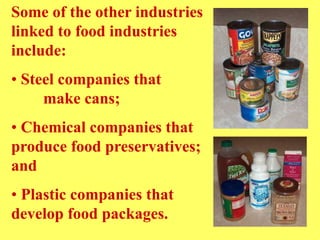
Some of the other industries
linked to food industries
include:
• Steel companies that
make cans;
• Chemical companies that
produce food preservatives;
and
• Plastic companies that
develop food packages.
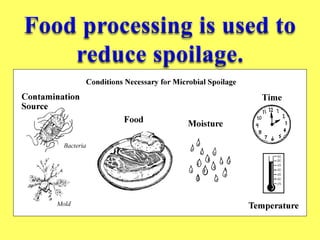
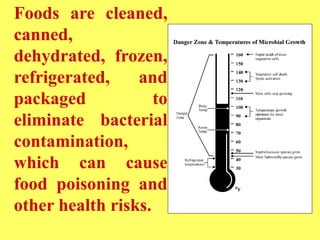
Foods are cleaned,
canned,
dehydrated, frozen,
refrigerated, and
packaged to
eliminate bacterial
contamination,
which can cause
food poisoning and
other health risks.
Types of food processing includes:
cold processing; dehydration;
irradiation; fermentation; milling and
cereal processing; hydrogenation; and
formulated prepared.
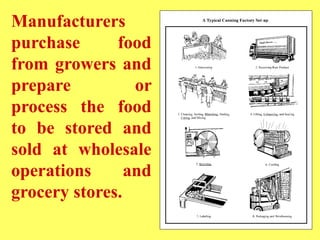
Manufacturers
purchase food
from growers and
prepare or
process the food
to be stored and
sold at wholesale
operations and
grocery stores.
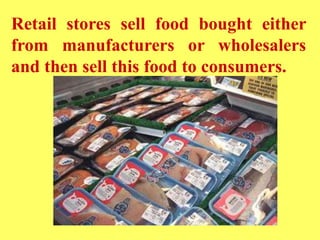
Retail stores sell food bought either
from manufacturers or wholesalers
and then sell this food to consumers.
Managers,
marketers, and
distribution
specialists must
keep track of this
complex trade and
check for
damaged goods or
products that may
be spoiled.
The consumer is the last stop on the check
for safe food. Consumers should check
expiration dates and make sure that the
foods that they purchase and eat follow
governmental codes for safety.
Food producers use technology to
solve problems such as pests,
disease, fungal infections, and poor
soil quality so that they can provide
a sufficient amount of raw foods
for an increasing world population.
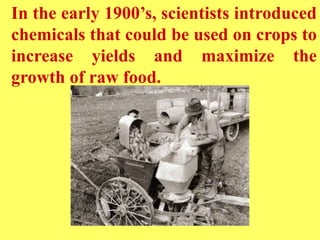
In the early 1900’s, scientists introduced
chemicals that could be used on crops to
increase yields and maximize the
growth of raw food.
However, concern over the way that
increasing amounts of chemicals used on
crops may be impacting our bodies and the
environment in potentially harmful ways
has led to the development of new methods
of pest control.
Biologically altered crops, integrated
pest management techniques, and
organic farming methods have been
offered as alternative farming methods.
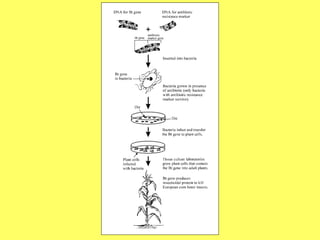
Genetically modified organisms
(GMOs), such as Bt Corn, have
provided alternatives to chemicals.
However, concern from the public and
scientific community over genetically
engineered plants and animals has this
area of biotechnology under hard
scrutiny.
More research needs to be conducted to
assure the safety of biologically altered
foods for human consumption.
-The study of
how the body
uses the food
that we eat.
A nutrient is a chemical
substance in food that helps
maintain the body. Some provide
energy. All help build cells and
tissues, regulate bodily processes
such as breathing.
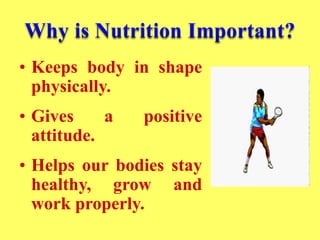
• Keeps body in shape
physically.
• Gives a positive
attitude.
• Helps our bodies stay
healthy, grow and
work properly.
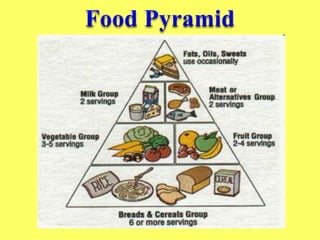
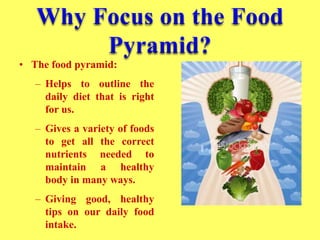
• The food pyramid:
– Helps to outline the
daily diet that is right
for us.
– Gives a variety of foods
to get all the correct
nutrients needed to
maintain a healthy
body in many ways.
– Giving good, healthy
tips on our daily food
intake.
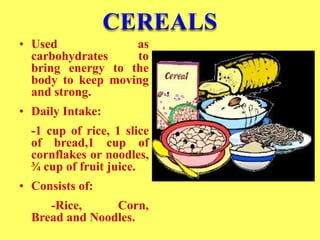
• Used as
carbohydrates to
bring energy to the
body to keep moving
and strong.
• Daily Intake:
-1 cup of rice, 1 slice
of bread,1 cup of
cornflakes or noodles,
¾ cup of fruit juice.
• Consists of:
-Rice, Corn,
Bread and Noodles.
• Gives protein in the diet
• Consists of dals, channa,
peas and soyabean
• Include sprouts and
fresh slalds daily in diet.
Use combination of
pulses
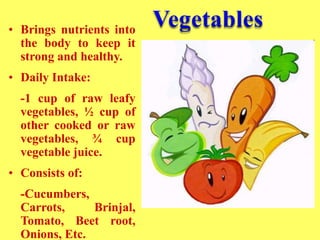
• Brings nutrients into
the body to keep it
strong and healthy.
• Daily Intake:
-1 cup of raw leafy
vegetables, ½ cup of
other cooked or raw
vegetables, ¾ cup
vegetable juice.
• Consists of:
-Cucumbers,
Carrots, Brinjal,
Tomato, Beet root,
Onions, Etc.
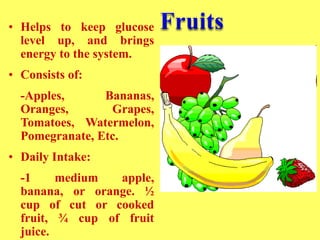
• Helps to keep glucose
level up, and brings
energy to the system.
• Consists of:
-Apples, Bananas,
Oranges, Grapes,
Tomatoes, Watermelon,
Pomegranate, Etc.
• Daily Intake:
-1 medium apple,
banana, or orange. ½
cup of cut or cooked
fruit, ¾ cup of fruit
juice.
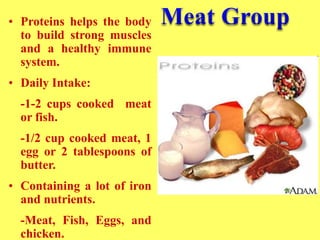
• Proteins helps the body
to build strong muscles
and a healthy immune
system.
• Daily Intake:
-1-2 cups cooked meat
or fish.
-1/2 cup cooked meat, 1
egg or 2 tablespoons of
butter.
• Containing a lot of iron
and nutrients.
-Meat, Fish, Eggs, and
chicken.
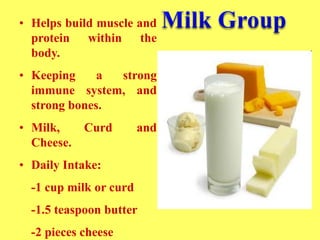
• Helps build muscle and
protein within the
body.
• Keeping a strong
immune system, and
strong bones.
• Milk, Curd and
Cheese.
• Daily Intake:
-1 cup milk or curd
-1.5 teaspoon butter
-2 pieces cheese
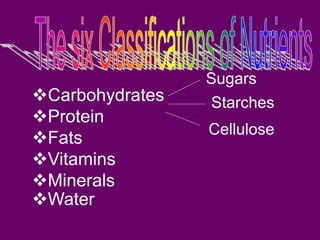
Carbohydrates
Protein
Fats
Vitamins
Minerals
Water
Sugars
Starches
Cellulose
Carbohydrates
Proteins
Fats
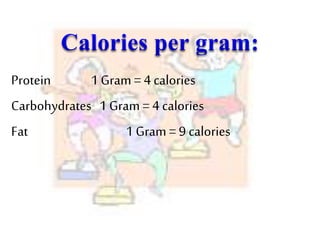
A unitof measure for energy infood
Protein 1 Gram = 4 calories
Carbohydrates 1 Gram =4 calories
Fat 1 Gram = 9 calories
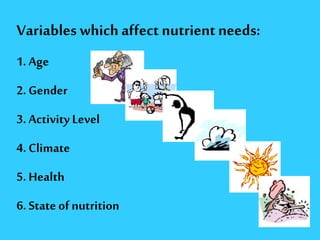
Variables which affectnutrient needs:
1. Age
2. Gender
3. Activity Level
4. Climate
5. Health
6. State of nutrition
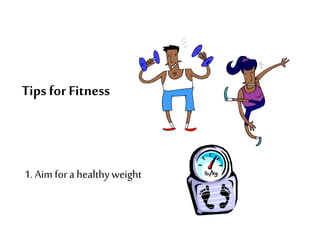
Tips for Fitness
1. Aim for a healthyweight
2. Be physically active each day
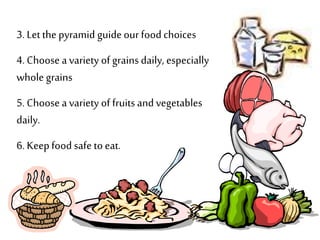
3. Letthe pyramid guideour food choices
4. Choose a variety of grains daily, especially
whole grains
5. Choose a variety of fruits and vegetables
daily.
6. Keepfood safe to eat.
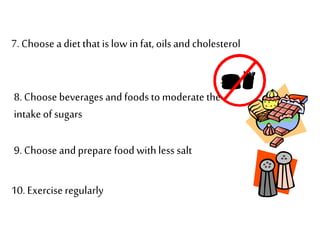
7. Choose a diet thatis low in fat, oils and cholesterol
8. Choose beverages and foods to moderate the
intakeof sugars
9. Choose and prepare food withless salt
10. Exercise regularly
Nutrition3192

Nutrition3192

  • 2.
    Food Science and Nutrition Dr.S.SUGASRIM.sc.,M.phil.,Ph.D.,M.T.M FACULTY MADURAI KAMARAJ UNIVERSITY MADURAI -21.
  • 3.
    Food science isdefined as the discipline of applying chemistry, engineering, microbiology, medicine, and molecular biology to create, prepare, and process foods.
  • 4.
    • Food scientistsuse science and engineering to produce, process, evaluate, package, and distribute foods that are nutritious, palatable, and safe.
  • 5.
    Methods that foodscientists employ include basic research, product development, quality control, processing, packaging, labeling, technical sales, and market research.
  • 6.
    The food businessis a complex system of marketers, buyers, and transporters that regulate how food gets from the processor to the store shelf.
  • 7.
    Government agencies regulateand inspect all phases of food production to ensure that consumers have food that is both wholesome and safe.
  • 8.
    The Food Safetyand Standards Authority of India (FSSAI) and the Food and Drug Administration (FDA) are two government agencies that regulate the food industry.
  • 9.
    The Food andDrug Administration requires that certain labeling be placed on food products that are packaged for consumption.
  • 10.
    Food labels are requiredto include information about nutritional facts (Recommended Daily Allowances) of the product based on serving sizes.
  • 11.
    Labels also tellthe consumer about the natural and additive substances in the foods.
  • 12.
    Farmers grow thefood we eat, including fruits, vegetables, cereal grains, meat, and other foods.
  • 13.
    Food must thenbe processed, cooked, packaged, and transported.
  • 15.
    Some of theother industries linked to food industries include: • Steel companies that make cans; • Chemical companies that produce food preservatives; and • Plastic companies that develop food packages.
  • 17.
    Foods are cleaned, canned, dehydrated,frozen, refrigerated, and packaged to eliminate bacterial contamination, which can cause food poisoning and other health risks.
  • 18.
    Types of foodprocessing includes: cold processing; dehydration; irradiation; fermentation; milling and cereal processing; hydrogenation; and formulated prepared.
  • 19.
    Manufacturers purchase food from growersand prepare or process the food to be stored and sold at wholesale operations and grocery stores.
  • 20.
    Retail stores sellfood bought either from manufacturers or wholesalers and then sell this food to consumers.
  • 21.
    Managers, marketers, and distribution specialists must keeptrack of this complex trade and check for damaged goods or products that may be spoiled.
  • 22.
    The consumer isthe last stop on the check for safe food. Consumers should check expiration dates and make sure that the foods that they purchase and eat follow governmental codes for safety.
  • 24.
    Food producers usetechnology to solve problems such as pests, disease, fungal infections, and poor soil quality so that they can provide a sufficient amount of raw foods for an increasing world population.
  • 25.
    In the early1900’s, scientists introduced chemicals that could be used on crops to increase yields and maximize the growth of raw food.
  • 26.
    However, concern overthe way that increasing amounts of chemicals used on crops may be impacting our bodies and the environment in potentially harmful ways has led to the development of new methods of pest control.
  • 27.
    Biologically altered crops,integrated pest management techniques, and organic farming methods have been offered as alternative farming methods. Genetically modified organisms (GMOs), such as Bt Corn, have provided alternatives to chemicals.
  • 29.
    However, concern fromthe public and scientific community over genetically engineered plants and animals has this area of biotechnology under hard scrutiny. More research needs to be conducted to assure the safety of biologically altered foods for human consumption.
  • 30.
    -The study of howthe body uses the food that we eat.
  • 31.
    A nutrient isa chemical substance in food that helps maintain the body. Some provide energy. All help build cells and tissues, regulate bodily processes such as breathing.
  • 32.
    • Keeps bodyin shape physically. • Gives a positive attitude. • Helps our bodies stay healthy, grow and work properly.
  • 34.
    • The foodpyramid: – Helps to outline the daily diet that is right for us. – Gives a variety of foods to get all the correct nutrients needed to maintain a healthy body in many ways. – Giving good, healthy tips on our daily food intake.
  • 35.
    • Used as carbohydratesto bring energy to the body to keep moving and strong. • Daily Intake: -1 cup of rice, 1 slice of bread,1 cup of cornflakes or noodles, ¾ cup of fruit juice. • Consists of: -Rice, Corn, Bread and Noodles.
  • 36.
    • Gives proteinin the diet • Consists of dals, channa, peas and soyabean • Include sprouts and fresh slalds daily in diet. Use combination of pulses
  • 37.
    • Brings nutrientsinto the body to keep it strong and healthy. • Daily Intake: -1 cup of raw leafy vegetables, ½ cup of other cooked or raw vegetables, ¾ cup vegetable juice. • Consists of: -Cucumbers, Carrots, Brinjal, Tomato, Beet root, Onions, Etc.
  • 38.
    • Helps tokeep glucose level up, and brings energy to the system. • Consists of: -Apples, Bananas, Oranges, Grapes, Tomatoes, Watermelon, Pomegranate, Etc. • Daily Intake: -1 medium apple, banana, or orange. ½ cup of cut or cooked fruit, ¾ cup of fruit juice.
  • 39.
    • Proteins helpsthe body to build strong muscles and a healthy immune system. • Daily Intake: -1-2 cups cooked meat or fish. -1/2 cup cooked meat, 1 egg or 2 tablespoons of butter. • Containing a lot of iron and nutrients. -Meat, Fish, Eggs, and chicken.
  • 40.
    • Helps buildmuscle and protein within the body. • Keeping a strong immune system, and strong bones. • Milk, Curd and Cheese. • Daily Intake: -1 cup milk or curd -1.5 teaspoon butter -2 pieces cheese
  • 41.
  • 42.
  • 43.
    A unitof measurefor energy infood
  • 44.
    Protein 1 Gram= 4 calories Carbohydrates 1 Gram =4 calories Fat 1 Gram = 9 calories
  • 45.
    Variables which affectnutrientneeds: 1. Age 2. Gender 3. Activity Level 4. Climate 5. Health 6. State of nutrition
  • 46.
    Tips for Fitness 1.Aim for a healthyweight
  • 47.
    2. Be physicallyactive each day
  • 48.
    3. Letthe pyramidguideour food choices 4. Choose a variety of grains daily, especially whole grains 5. Choose a variety of fruits and vegetables daily. 6. Keepfood safe to eat.
  • 49.
    7. Choose adiet thatis low in fat, oils and cholesterol 8. Choose beverages and foods to moderate the intakeof sugars 9. Choose and prepare food withless salt 10. Exercise regularly