Nutrients
2
Nutrients
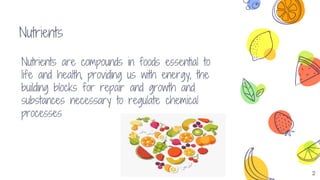
Nutrients are compounds in foods essential to
life and health, providing us with energy, the
building blocks for repair and growth and
substances necessary to regulate chemical
processes
3
4
Carbohydrates
 A carbohydrate is a biomolecule consisting of
carbon, hydrogen and oxygen atoms
 Carbohydrates serve several key functions in
your body. They provide you with energy for
daily tasks and are the primary fuel source for
your brain's high energy demands.
 Sources of carbohydrates are breads, grains,
and pasta, nuts and legumes, starchy vegetables,
milk and yogurts.
5
Fats
 A fat molecule consists of two kinds of
parts: a glycerol backbone and three fatty
acid tails
 Dietary fats are essential to give your body
energy and to support cell growth. They
also help protect your organs and help
keep your body warm.
 Sources of fats are avocados, cheese, nuts,
butter and fatty fish.
7
8
Protein
 Proteins are built as chains of amino acids,
which then fold into unique three-dimensional
shapes
 Protein is essential to building bones ,and body
tissues, such as muscles, but protein does much
more than that. Protein participates in practically
every process of a cell.
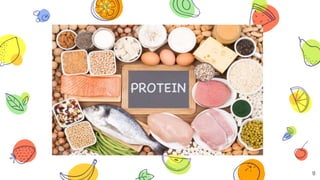
 Sources of protein are egg, nuts, beans, fish
and yoghurt.
9
10
Vitamins concept
 A vitamin is an organic molecule that is an
essential micronutrient which an organism needs
in small quantities for the proper functioning of
its metabolism
 They help shore up bones, heal wounds, and
bolster your immune system. They also convert
food into energy, and repair cellular damage
 Sources of vitamins are carrots, sweet potatoes,
meat and nuts.
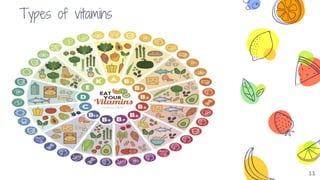
Types of vitamins
11
12
13
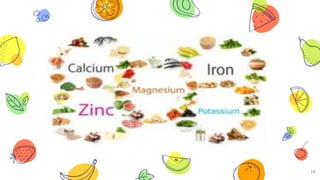
Minerals
 Mineral nutrients are inorganic substances that must be ingested
and absorbed in adequate amounts to satisfy a wide variety of
essential metabolic and/or structural functions in the body.
 minerals help your body grow, develop, and stay healthy. The
body uses minerals to perform many different functions — from
building strong bones to transmitting nerve impulses. Some minerals
are even used to make hormones or maintain a normal heartbeat.
 Sources of minerals are meat, cereals, fish milk, dairy foods, fruit,
vegetables, and nuts.
14
.
15
16
Fiber
 Fiber, also known as roughage, is the part of
plant-based foods (grains, fruits, vegetables, nuts,
and beans) that the body can't break down. It
passes through the body undigested, keeping
your digestive system clean and healthy, easing
bowel movements, and flushing cholesterol and
harmful carcinogens out of the body.
 Sources of fiber are whole grains, nuts, brown
rice and beans.
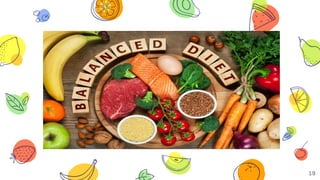
Balanced diet
A balanced diet is a diet that contains
differing kinds of foods in certain
quantities and proportions so that the
requirement for calories, proteins, minerals,
vitamins and alternative nutrients is
adequate and a small provision is reserved
for additional nutrients to endure the short
length of leanness
19
20

Nutrients

  • 1.
  • 2.
    2 Nutrients Nutrients are compoundsin foods essential to life and health, providing us with energy, the building blocks for repair and growth and substances necessary to regulate chemical processes
  • 3.
  • 4.
    4 Carbohydrates  A carbohydrateis a biomolecule consisting of carbon, hydrogen and oxygen atoms  Carbohydrates serve several key functions in your body. They provide you with energy for daily tasks and are the primary fuel source for your brain's high energy demands.  Sources of carbohydrates are breads, grains, and pasta, nuts and legumes, starchy vegetables, milk and yogurts.
  • 5.
  • 6.
    Fats  A fatmolecule consists of two kinds of parts: a glycerol backbone and three fatty acid tails  Dietary fats are essential to give your body energy and to support cell growth. They also help protect your organs and help keep your body warm.  Sources of fats are avocados, cheese, nuts, butter and fatty fish.
  • 7.
  • 8.
    8 Protein  Proteins arebuilt as chains of amino acids, which then fold into unique three-dimensional shapes  Protein is essential to building bones ,and body tissues, such as muscles, but protein does much more than that. Protein participates in practically every process of a cell.  Sources of protein are egg, nuts, beans, fish and yoghurt.
  • 9.
  • 10.
    10 Vitamins concept  Avitamin is an organic molecule that is an essential micronutrient which an organism needs in small quantities for the proper functioning of its metabolism  They help shore up bones, heal wounds, and bolster your immune system. They also convert food into energy, and repair cellular damage  Sources of vitamins are carrots, sweet potatoes, meat and nuts.
  • 11.
  • 12.
  • 13.
    13 Minerals  Mineral nutrientsare inorganic substances that must be ingested and absorbed in adequate amounts to satisfy a wide variety of essential metabolic and/or structural functions in the body.  minerals help your body grow, develop, and stay healthy. The body uses minerals to perform many different functions — from building strong bones to transmitting nerve impulses. Some minerals are even used to make hormones or maintain a normal heartbeat.  Sources of minerals are meat, cereals, fish milk, dairy foods, fruit, vegetables, and nuts.
  • 14.
  • 15.
  • 16.
    16 Fiber  Fiber, alsoknown as roughage, is the part of plant-based foods (grains, fruits, vegetables, nuts, and beans) that the body can't break down. It passes through the body undigested, keeping your digestive system clean and healthy, easing bowel movements, and flushing cholesterol and harmful carcinogens out of the body.  Sources of fiber are whole grains, nuts, brown rice and beans.
  • 18.
    Balanced diet A balanceddiet is a diet that contains differing kinds of foods in certain quantities and proportions so that the requirement for calories, proteins, minerals, vitamins and alternative nutrients is adequate and a small provision is reserved for additional nutrients to endure the short length of leanness
  • 19.
  • 20.