HEALTHY EATING
AIMS:
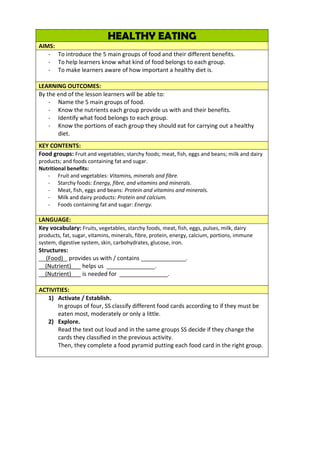
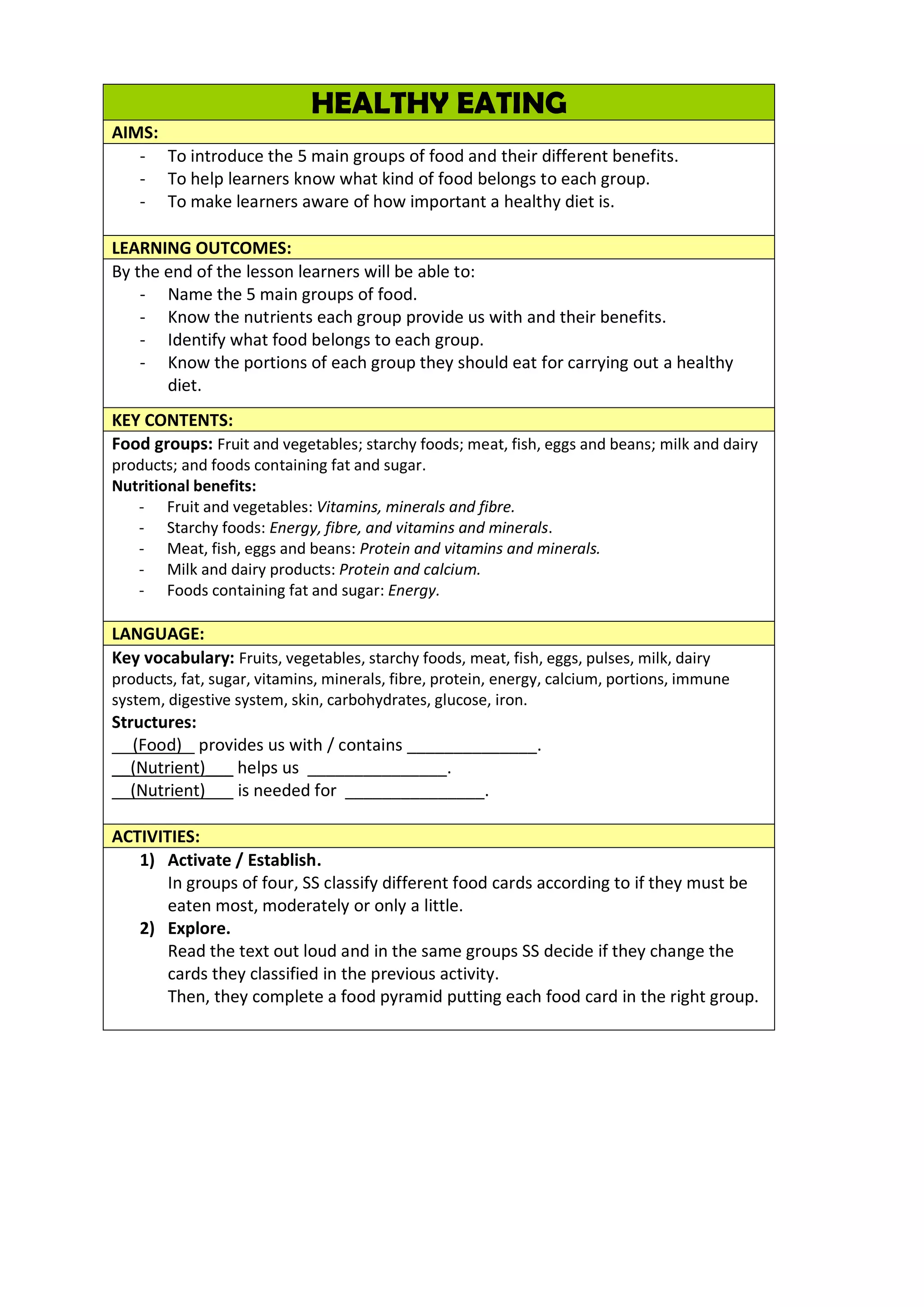
- To introduce the 5 main groups of food and their different benefits.
- To help learners know what kind of food belongs to each group.
- To make learners aware of how important a healthy diet is.
LEARNING OUTCOMES:
By the end of the lesson learners will be able to:
- Name the 5 main groups of food.
- Know the nutrients each group provide us with and their benefits.
- Identify what food belongs to each group.
- Know the portions of each group they should eat for carrying out a healthy
diet.
KEY CONTENTS:
Food groups: Fruit and vegetables; starchy foods; meat, fish, eggs and beans; milk and dairy
products; and foods containing fat and sugar.
Nutritional benefits:
- Fruit and vegetables: Vitamins, minerals and fibre.
- Starchy foods: Energy, fibre, and vitamins and minerals.
- Meat, fish, eggs and beans: Protein and vitamins and minerals.
- Milk and dairy products: Protein and calcium.
- Foods containing fat and sugar: Energy.
LANGUAGE:
Key vocabulary: Fruits, vegetables, starchy foods, meat, fish, eggs, pulses, milk, dairy
products, fat, sugar, vitamins, minerals, fibre, protein, energy, calcium, portions, immune
system, digestive system, skin, carbohydrates, glucose, iron.
Structures:
(Food) provides us with / contains ______________.
__(Nutrient)___ helps us _______________.
__(Nutrient)___ is needed for _______________.
ACTIVITIES:
1) Activate / Establish.
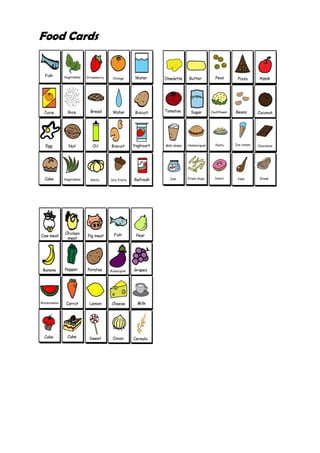
In groups of four, SS classify different food cards according to if they must be
eaten most, moderately or only a little.
2) Explore.
Read the text out loud and in the same groups SS decide if they change the
cards they classified in the previous activity.
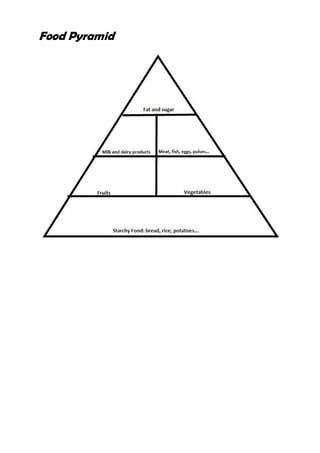
Then, they complete a food pyramid putting each food card in the right group.
HEALTHY EATING
Why do we need these nutrients?
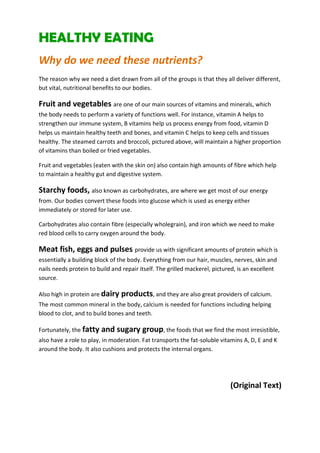
The reason why we need a diet drawn from all of the groups is that they all deliver different,
but vital, nutritional benefits to our bodies.
Fruit and vegetables are one of our main sources of vitamins and minerals, which
the body needs to perform a variety of functions well. For instance, vitamin A helps to
strengthen our immune system, B vitamins help us process energy from food, vitamin D
helps us maintain healthy teeth and bones, and vitamin C helps to keep cells and tissues
healthy. The steamed carrots and broccoli, pictured above, will maintain a higher proportion
of vitamins than boiled or fried vegetables.
Fruit and vegetables (eaten with the skin on) also contain high amounts of fibre which help
to maintain a healthy gut and digestive system.
Starchy foods, also known as carbohydrates, are where we get most of our energy
from. Our bodies convert these foods into glucose which is used as energy either
immediately or stored for later use.
Carbohydrates also contain fibre (especially wholegrain), and iron which we need to make
red blood cells to carry oxygen around the body.
Meat fish, eggs and pulses provide us with significant amounts of protein which is
essentially a building block of the body. Everything from our hair, muscles, nerves, skin and
nails needs protein to build and repair itself. The grilled mackerel, pictured, is an excellent
source.
Also high in protein are dairy products, and they are also great providers of calcium.
The most common mineral in the body, calcium is needed for functions including helping
blood to clot, and to build bones and teeth.
Fortunately, the fatty and sugary group, the foods that we find the most irresistible,
also have a role to play, in moderation. Fat transports the fat-soluble vitamins A, D, E and K
around the body. It also cushions and protects the internal organs.
(Original Text)
HEALTHY EATING
Why do we need these nutrients?
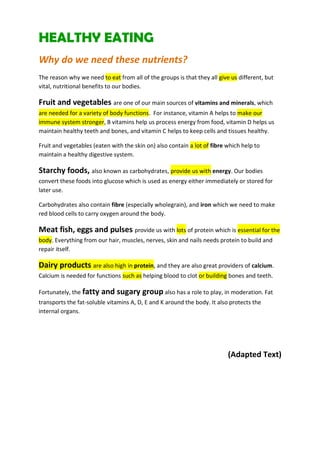
The reason why we need to eat from all of the groups is that they all give us different, but
vital, nutritional benefits to our bodies.
Fruit and vegetables are one of our main sources of vitamins and minerals, which
are needed for a variety of body functions. For instance, vitamin A helps to make our
immune system stronger, B vitamins help us process energy from food, vitamin D helps us
maintain healthy teeth and bones, and vitamin C helps to keep cells and tissues healthy.
Fruit and vegetables (eaten with the skin on) also contain a lot of fibre which help to
maintain a healthy digestive system.
Starchy foods, also known as carbohydrates, provide us with energy. Our bodies
convert these foods into glucose which is used as energy either immediately or stored for
later use.
Carbohydrates also contain fibre (especially wholegrain), and iron which we need to make
red blood cells to carry oxygen around the body.
Meat fish, eggs and pulses provide us with lots of protein which is essential for the
body. Everything from our hair, muscles, nerves, skin and nails needs protein to build and
repair itself.
Dairy products are also high in protein, and they are also great providers of calcium.
Calcium is needed for functions such as helping blood to clot or building bones and teeth.
Fortunately, the fatty and sugary group also has a role to play, in moderation. Fat
transports the fat-soluble vitamins A, D, E and K around the body. It also protects the
internal organs.
(Adapted Text)
Graphic Organizers
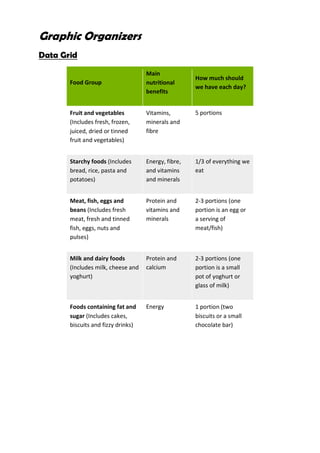
Data Grid
Food Group
Main
nutritional
benefits
How much should
we have each day?
Fruit and vegetables
(Includes fresh, frozen,
juiced, dried or tinned
fruit and vegetables)
Vitamins,
minerals and
fibre
5 portions
Starchy foods (Includes
bread, rice, pasta and
potatoes)
Energy, fibre,
and vitamins
and minerals
1/3 of everything we
eat
Meat, fish, eggs and
beans (Includes fresh
meat, fresh and tinned
fish, eggs, nuts and
pulses)
Protein and
vitamins and
minerals
2-3 portions (one
portion is an egg or
a serving of
meat/fish)
Milk and dairy foods
(Includes milk, cheese and
yoghurt)
Protein and
calcium
2-3 portions (one
portion is a small
pot of yoghurt or
glass of milk)
Foods containing fat and
sugar (Includes cakes,
biscuits and fizzy drinks)
Energy 1 portion (two
biscuits or a small
chocolate bar)
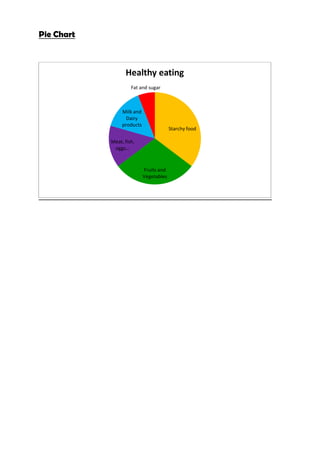
Pie Chart
Starchy food
Fruits and
Vegetables
Meat, fish,
eggs…
Milk and
Dairy
products
Fat and sugar
Healthy eating
Food Cards
Food Pyramid

Healthy eating

  • 1.
    HEALTHY EATING AIMS: - Tointroduce the 5 main groups of food and their different benefits. - To help learners know what kind of food belongs to each group. - To make learners aware of how important a healthy diet is. LEARNING OUTCOMES: By the end of the lesson learners will be able to: - Name the 5 main groups of food. - Know the nutrients each group provide us with and their benefits. - Identify what food belongs to each group. - Know the portions of each group they should eat for carrying out a healthy diet. KEY CONTENTS: Food groups: Fruit and vegetables; starchy foods; meat, fish, eggs and beans; milk and dairy products; and foods containing fat and sugar. Nutritional benefits: - Fruit and vegetables: Vitamins, minerals and fibre. - Starchy foods: Energy, fibre, and vitamins and minerals. - Meat, fish, eggs and beans: Protein and vitamins and minerals. - Milk and dairy products: Protein and calcium. - Foods containing fat and sugar: Energy. LANGUAGE: Key vocabulary: Fruits, vegetables, starchy foods, meat, fish, eggs, pulses, milk, dairy products, fat, sugar, vitamins, minerals, fibre, protein, energy, calcium, portions, immune system, digestive system, skin, carbohydrates, glucose, iron. Structures: (Food) provides us with / contains ______________. __(Nutrient)___ helps us _______________. __(Nutrient)___ is needed for _______________. ACTIVITIES: 1) Activate / Establish. In groups of four, SS classify different food cards according to if they must be eaten most, moderately or only a little. 2) Explore. Read the text out loud and in the same groups SS decide if they change the cards they classified in the previous activity. Then, they complete a food pyramid putting each food card in the right group.
  • 2.
    HEALTHY EATING Why dowe need these nutrients? The reason why we need a diet drawn from all of the groups is that they all deliver different, but vital, nutritional benefits to our bodies. Fruit and vegetables are one of our main sources of vitamins and minerals, which the body needs to perform a variety of functions well. For instance, vitamin A helps to strengthen our immune system, B vitamins help us process energy from food, vitamin D helps us maintain healthy teeth and bones, and vitamin C helps to keep cells and tissues healthy. The steamed carrots and broccoli, pictured above, will maintain a higher proportion of vitamins than boiled or fried vegetables. Fruit and vegetables (eaten with the skin on) also contain high amounts of fibre which help to maintain a healthy gut and digestive system. Starchy foods, also known as carbohydrates, are where we get most of our energy from. Our bodies convert these foods into glucose which is used as energy either immediately or stored for later use. Carbohydrates also contain fibre (especially wholegrain), and iron which we need to make red blood cells to carry oxygen around the body. Meat fish, eggs and pulses provide us with significant amounts of protein which is essentially a building block of the body. Everything from our hair, muscles, nerves, skin and nails needs protein to build and repair itself. The grilled mackerel, pictured, is an excellent source. Also high in protein are dairy products, and they are also great providers of calcium. The most common mineral in the body, calcium is needed for functions including helping blood to clot, and to build bones and teeth. Fortunately, the fatty and sugary group, the foods that we find the most irresistible, also have a role to play, in moderation. Fat transports the fat-soluble vitamins A, D, E and K around the body. It also cushions and protects the internal organs. (Original Text)
  • 3.
    HEALTHY EATING Why dowe need these nutrients? The reason why we need to eat from all of the groups is that they all give us different, but vital, nutritional benefits to our bodies. Fruit and vegetables are one of our main sources of vitamins and minerals, which are needed for a variety of body functions. For instance, vitamin A helps to make our immune system stronger, B vitamins help us process energy from food, vitamin D helps us maintain healthy teeth and bones, and vitamin C helps to keep cells and tissues healthy. Fruit and vegetables (eaten with the skin on) also contain a lot of fibre which help to maintain a healthy digestive system. Starchy foods, also known as carbohydrates, provide us with energy. Our bodies convert these foods into glucose which is used as energy either immediately or stored for later use. Carbohydrates also contain fibre (especially wholegrain), and iron which we need to make red blood cells to carry oxygen around the body. Meat fish, eggs and pulses provide us with lots of protein which is essential for the body. Everything from our hair, muscles, nerves, skin and nails needs protein to build and repair itself. Dairy products are also high in protein, and they are also great providers of calcium. Calcium is needed for functions such as helping blood to clot or building bones and teeth. Fortunately, the fatty and sugary group also has a role to play, in moderation. Fat transports the fat-soluble vitamins A, D, E and K around the body. It also protects the internal organs. (Adapted Text)
  • 4.
    Graphic Organizers Data Grid FoodGroup Main nutritional benefits How much should we have each day? Fruit and vegetables (Includes fresh, frozen, juiced, dried or tinned fruit and vegetables) Vitamins, minerals and fibre 5 portions Starchy foods (Includes bread, rice, pasta and potatoes) Energy, fibre, and vitamins and minerals 1/3 of everything we eat Meat, fish, eggs and beans (Includes fresh meat, fresh and tinned fish, eggs, nuts and pulses) Protein and vitamins and minerals 2-3 portions (one portion is an egg or a serving of meat/fish) Milk and dairy foods (Includes milk, cheese and yoghurt) Protein and calcium 2-3 portions (one portion is a small pot of yoghurt or glass of milk) Foods containing fat and sugar (Includes cakes, biscuits and fizzy drinks) Energy 1 portion (two biscuits or a small chocolate bar)
  • 5.
    Pie Chart Starchy food Fruitsand Vegetables Meat, fish, eggs… Milk and Dairy products Fat and sugar Healthy eating
  • 6.
  • 7.