A Nursing Workforce for the Future
Professor Lisa Bayliss-Pratt
Director of Nursing & Deputy Director Education
and Quality
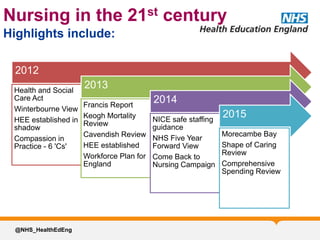
Nursing in the 21st century
@NHS_HealthEdEng
2012
Health and Social
Care Act
Winterbourne View
HEE established in
shadow
Compassion in
Practice - 6 'Cs'
2013
Francis Report
Keogh Mortality
Review
Cavendish Review
HEE established
Workforce Plan for
England
2014
NICE safe staffing
guidance
NHS Five Year
Forward View
Come Back to
Nursing Campaign
2015
Morecambe Bay
Shape of Caring
Review
Comprehensive
Spending Review
Highlights include:
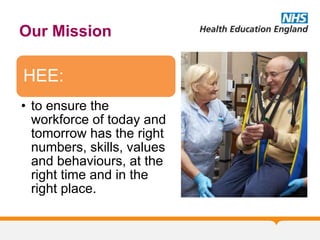
Our Mission
HEE:
• to ensure the
workforce of today and
tomorrow has the right
numbers, skills, values
and behaviours, at the
right time and in the
right place.
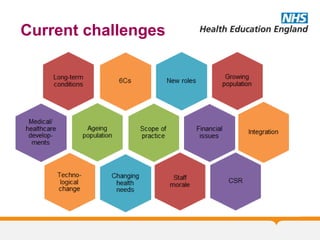
Current challenges
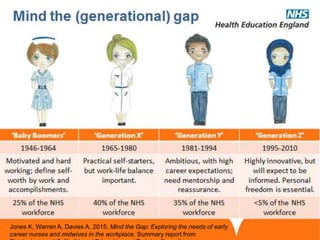
Mind the (generational) gap
‘Baby Boomers’ ‘Generation X’ ‘Generation Y’ ‘Generation Z’
1946-1964 1965-1980 1981-1994 1995-2010
Motivated and hard
working; define self-
worth by work and
accomplishments.
Practical self-
starters, but work-
life balance
important.
Ambitious, with high
career expectations;
need mentorship
and reassurance.
Highly innovative,
but will expect to be
informed. Personal
freedom is essential.
25% of the NHS
workforce
40% of the NHS
workforce
35% of the NHS
workforce
<5% of the NHS
workforce
Jones K, Warren A, Davies A. 2015. Mind the Gap: Exploring the needs of early
career nurses and midwives in the workplace. Summary report from
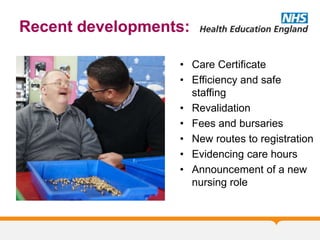
Recent developments:
• Care Certificate
• Efficiency and safe
staffing
• Revalidation
• Fees and bursaries
• New routes to registration
• Evidencing care hours
• Announcement of a new
nursing role
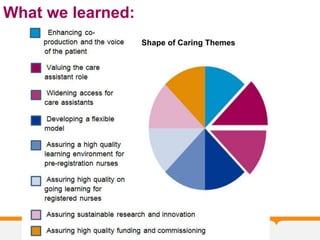
What we learned:
Shape of Caring Themes
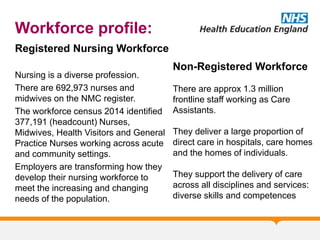
Workforce profile:
Registered Nursing Workforce
Nursing is a diverse profession.
There are 692,973 nurses and
midwives on the NMC register.
The workforce census 2014 identified
377,191 (headcount) Nurses,
Midwives, Health Visitors and General
Practice Nurses working across acute
and community settings.
Employers are transforming how they
develop their nursing workforce to
meet the increasing and changing
needs of the population.
Non-Registered Workforce
There are approx 1.3 million
frontline staff working as Care
Assistants.
They deliver a large proportion of
direct care in hospitals, care homes
and the homes of individuals.
They support the delivery of care
across all disciplines and services:
diverse skills and competences
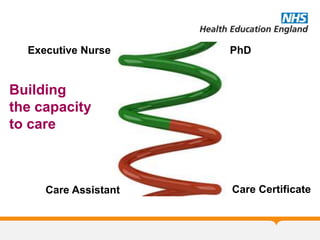
Building
the capacity
to care
PhDExecutive Nurse
Care Assistant Care Certificate
‘Nursing Associate’
A new concept in health and care:
• What would you want the new role to do?
• What shouldn’t they do?
• What oversight should be in place?
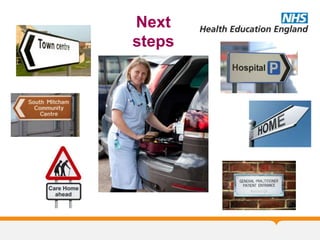
Next
steps
Thank you

Nursing workforce for the future

  • 1.
    A Nursing Workforcefor the Future Professor Lisa Bayliss-Pratt Director of Nursing & Deputy Director Education and Quality
  • 2.
    Nursing in the21st century @NHS_HealthEdEng 2012 Health and Social Care Act Winterbourne View HEE established in shadow Compassion in Practice - 6 'Cs' 2013 Francis Report Keogh Mortality Review Cavendish Review HEE established Workforce Plan for England 2014 NICE safe staffing guidance NHS Five Year Forward View Come Back to Nursing Campaign 2015 Morecambe Bay Shape of Caring Review Comprehensive Spending Review Highlights include:
  • 3.
    Our Mission HEE: • toensure the workforce of today and tomorrow has the right numbers, skills, values and behaviours, at the right time and in the right place.
  • 4.
  • 5.
    Mind the (generational)gap ‘Baby Boomers’ ‘Generation X’ ‘Generation Y’ ‘Generation Z’ 1946-1964 1965-1980 1981-1994 1995-2010 Motivated and hard working; define self- worth by work and accomplishments. Practical self- starters, but work- life balance important. Ambitious, with high career expectations; need mentorship and reassurance. Highly innovative, but will expect to be informed. Personal freedom is essential. 25% of the NHS workforce 40% of the NHS workforce 35% of the NHS workforce <5% of the NHS workforce Jones K, Warren A, Davies A. 2015. Mind the Gap: Exploring the needs of early career nurses and midwives in the workplace. Summary report from
  • 6.
    Recent developments: • CareCertificate • Efficiency and safe staffing • Revalidation • Fees and bursaries • New routes to registration • Evidencing care hours • Announcement of a new nursing role
  • 7.
    What we learned: Shapeof Caring Themes
  • 8.
    Workforce profile: Registered NursingWorkforce Nursing is a diverse profession. There are 692,973 nurses and midwives on the NMC register. The workforce census 2014 identified 377,191 (headcount) Nurses, Midwives, Health Visitors and General Practice Nurses working across acute and community settings. Employers are transforming how they develop their nursing workforce to meet the increasing and changing needs of the population. Non-Registered Workforce There are approx 1.3 million frontline staff working as Care Assistants. They deliver a large proportion of direct care in hospitals, care homes and the homes of individuals. They support the delivery of care across all disciplines and services: diverse skills and competences
  • 9.
    Building the capacity to care PhDExecutiveNurse Care Assistant Care Certificate
  • 10.
    ‘Nursing Associate’ A newconcept in health and care: • What would you want the new role to do? • What shouldn’t they do? • What oversight should be in place?
  • 11.
  • 12.

Editor's Notes

  • #6 Baby Boomers – 51-69 Generation X – 35-50 Generation Y – 21-34 Generation Z – 5-20