Numbers 
 In this lesson, we will learn how to count to 100 in Hebrew.
Numbers 
 The Hebrew numbers from 11 to 19 use the same numbers 
as we learned in lesson 23. Hebrew doesn’t have a different 
word for these numbers but combines the ones digit that you 
have learned with the number 10. 
 11 = 10 + 1 = אחת עשרה 
 12 = 10 + 2 = שתים עשרה 
 13 = 10 + 3 = שלוש עשרה 
 14 = 10 + 4 = ארבע עשרה 
 15 = 10 + 5 = חמש עשרה 
 16 = 10 + 6 = שש עשרה 
 17 = 10 + 7 = שבע עשרה 
 18 = 10 + 8 = שמונה עשרה 
 19 = 10 + 9 = תשע עשרה
Numbers 
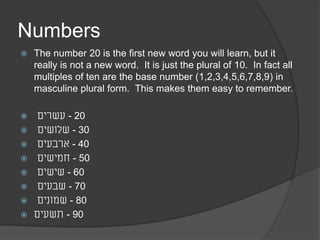
 The number 20 is the first new word you will learn, but it 
really is not a new word. It is just the plural of 10. In fact all 
multiples of ten are the base number (1,2,3,4,5,6,7,8,9) in 
masculine plural form. This makes them easy to remember. 
 - 20 עשרים 
 - 30 שלושים 
 - 40 ארבעים 
 - 50 חמישים 
 - 60 שישים 
 - 70 שבעים 
 - 80 שמונים 
 - 90 תשעים
Numbers 
 The only truly new word that you will learn in this lesson is 
the number 100. This word is מאה and is completely 
different from any other number in this lesson. You must 
memorize this word. 
 Now that you know the tens digit, how do you form a number 
in between? Just like the numbers 11-19, Hebrew does 
some addition to figure out these numbers. Just use the 
multiple of ten in the tens digit and then put the ones digit 
with the word ו as a prefix. For example: 
 24 = 20 + 4 = עשרים וארבע (twenty and four) 
 57 = 50 + 7 = חמישים ושבע (fifty and seven) 
 85 = 80 + 5 = שמונה וחמש (eighty and five)
Numbers 
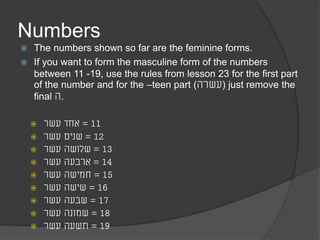
 The numbers shown so far are the feminine forms. 
 If you want to form the masculine form of the numbers 
between 11 -19, use the rules from lesson 23 for the first part 
of the number and for the –teen part ( עשרה ) just remove the 
final .ה 
 11 = אחד עשר 
 12 = שנים עשר 
 13 = שלושה עשר 
 14 = ארבעה עשר 
 15 = חמישה עשר 
 16 = שישה עשר 
 17 = שבעה עשר 
 18 = שמונה עשר 
 19 = תשעה עשר
Numbers 
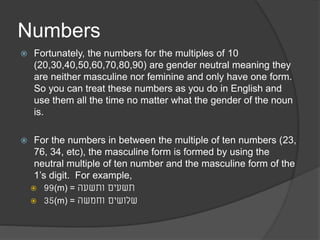
 Fortunately, the numbers for the multiples of 10 
(20,30,40,50,60,70,80,90) are gender neutral meaning they 
are neither masculine nor feminine and only have one form. 
So you can treat these numbers as you do in English and 
use them all the time no matter what the gender of the noun 
is. 
 For the numbers in between the multiple of ten numbers (23, 
76, 34, etc), the masculine form is formed by using the 
neutral multiple of ten number and the masculine form of the 
1’s digit. For example, 
 99(m) = תשעים ותשעה 
 35(m) = שלושים וחמשה

Numbers 2

  • 1.
    Numbers  Inthis lesson, we will learn how to count to 100 in Hebrew.
  • 2.
    Numbers  TheHebrew numbers from 11 to 19 use the same numbers as we learned in lesson 23. Hebrew doesn’t have a different word for these numbers but combines the ones digit that you have learned with the number 10.  11 = 10 + 1 = אחת עשרה  12 = 10 + 2 = שתים עשרה  13 = 10 + 3 = שלוש עשרה  14 = 10 + 4 = ארבע עשרה  15 = 10 + 5 = חמש עשרה  16 = 10 + 6 = שש עשרה  17 = 10 + 7 = שבע עשרה  18 = 10 + 8 = שמונה עשרה  19 = 10 + 9 = תשע עשרה
  • 3.
    Numbers  Thenumber 20 is the first new word you will learn, but it really is not a new word. It is just the plural of 10. In fact all multiples of ten are the base number (1,2,3,4,5,6,7,8,9) in masculine plural form. This makes them easy to remember.  - 20 עשרים  - 30 שלושים  - 40 ארבעים  - 50 חמישים  - 60 שישים  - 70 שבעים  - 80 שמונים  - 90 תשעים
  • 4.
    Numbers  Theonly truly new word that you will learn in this lesson is the number 100. This word is מאה and is completely different from any other number in this lesson. You must memorize this word.  Now that you know the tens digit, how do you form a number in between? Just like the numbers 11-19, Hebrew does some addition to figure out these numbers. Just use the multiple of ten in the tens digit and then put the ones digit with the word ו as a prefix. For example:  24 = 20 + 4 = עשרים וארבע (twenty and four)  57 = 50 + 7 = חמישים ושבע (fifty and seven)  85 = 80 + 5 = שמונה וחמש (eighty and five)
  • 5.
    Numbers  Thenumbers shown so far are the feminine forms.  If you want to form the masculine form of the numbers between 11 -19, use the rules from lesson 23 for the first part of the number and for the –teen part ( עשרה ) just remove the final .ה  11 = אחד עשר  12 = שנים עשר  13 = שלושה עשר  14 = ארבעה עשר  15 = חמישה עשר  16 = שישה עשר  17 = שבעה עשר  18 = שמונה עשר  19 = תשעה עשר
  • 6.
    Numbers  Fortunately,the numbers for the multiples of 10 (20,30,40,50,60,70,80,90) are gender neutral meaning they are neither masculine nor feminine and only have one form. So you can treat these numbers as you do in English and use them all the time no matter what the gender of the noun is.  For the numbers in between the multiple of ten numbers (23, 76, 34, etc), the masculine form is formed by using the neutral multiple of ten number and the masculine form of the 1’s digit. For example,  99(m) = תשעים ותשעה  35(m) = שלושים וחמשה