Verb Simularities 
In this lesson, we are going to discover a few verbs that 
have similar meanings in English but are used in different 
situations in Hebrew. It will be a somewhat short lesson.
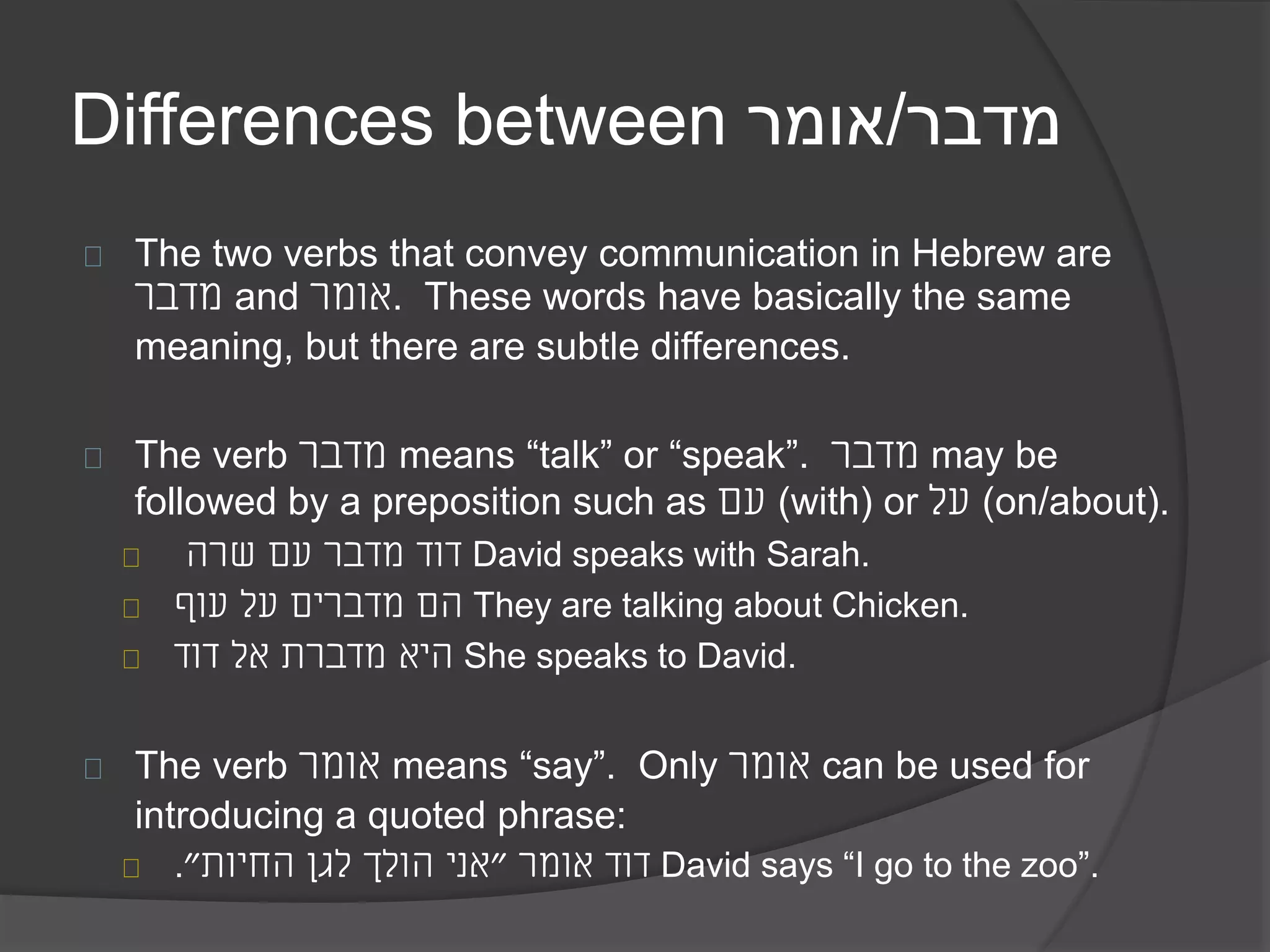
Differences between מדבר/אומר 
The two verbs that convey communication in Hebrew are 
מדבר and אומר . These words have basically the same 
meaning, but there are subtle differences. 
The verb מדבר means “talk” or “speak”. מדבר may be 
followed by a preposition such as עם (with) or על (on/about). 
דוד מדבר עם שרה David speaks with Sarah. 
הם מדברים על עוף They are talking about Chicken. 
היא מדברת אל דוד She speaks to David. 
The verb אומר means “say”. Only אומר can be used for 
introducing a quoted phrase: 
דוד אומר "אני הולך לגן החיות". David says “I go to the zoo”.
Differences between מדבר/אומר 
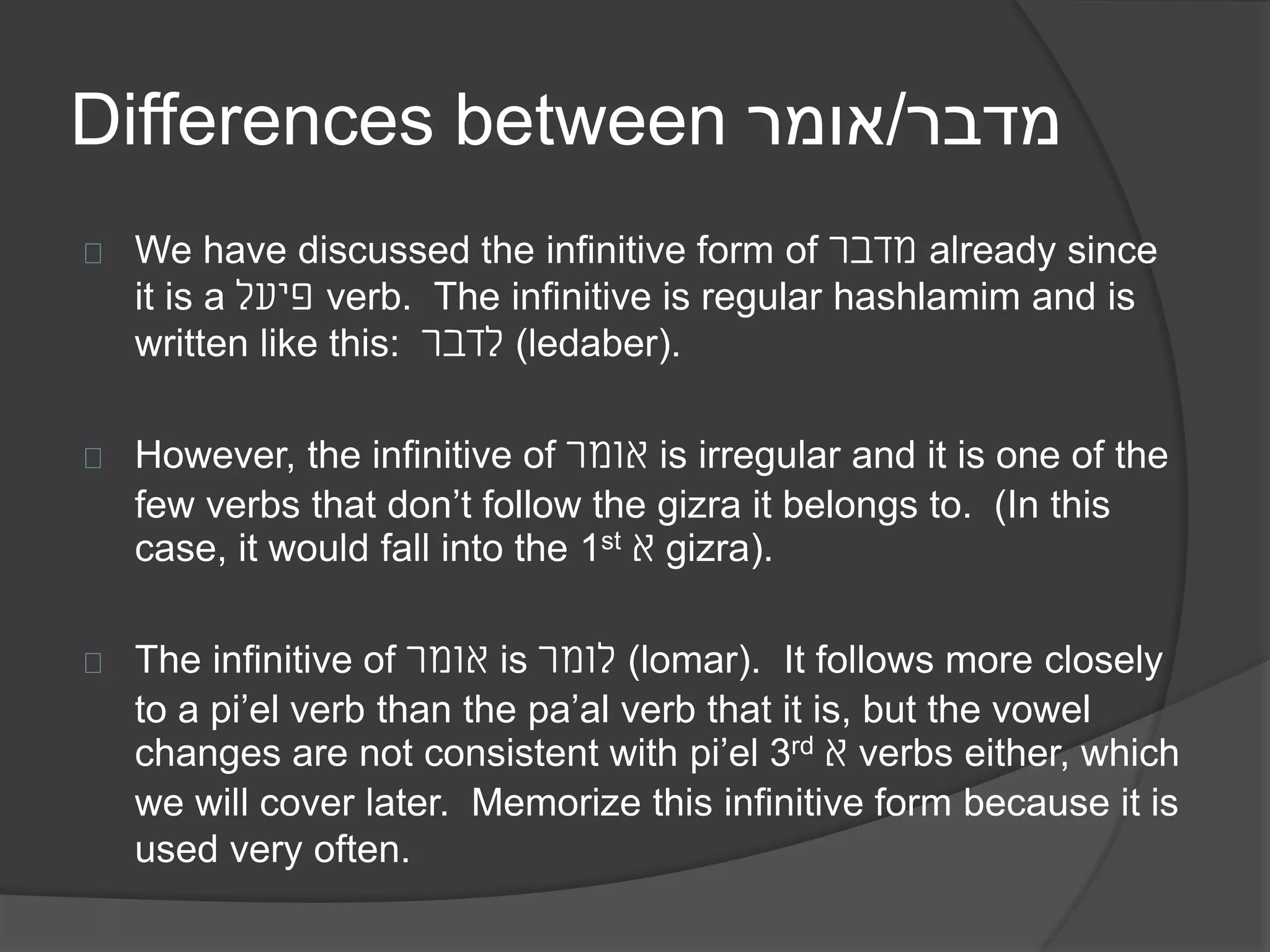
We have discussed the infinitive form of מדבר already since 
it is a פיעל verb. The infinitive is regular hashlamim and is 
written like this: לדבר (ledaber). 
However, the infinitive of אומר is irregular and it is one of the 
few verbs that don’t follow the gizra it belongs to. (In this 
case, it would fall into the 1st א gizra). 
The infinitive of אומר is לומר (lomar). It follows more closely 
to a pi’el verb than the pa’al verb that it is, but the vowel 
changes are not consistent with pi’el 3rd א verbs either, which 
we will cover later. Memorize this infinitive form because it is 
used very often.
Differences between מכיר/יודע 
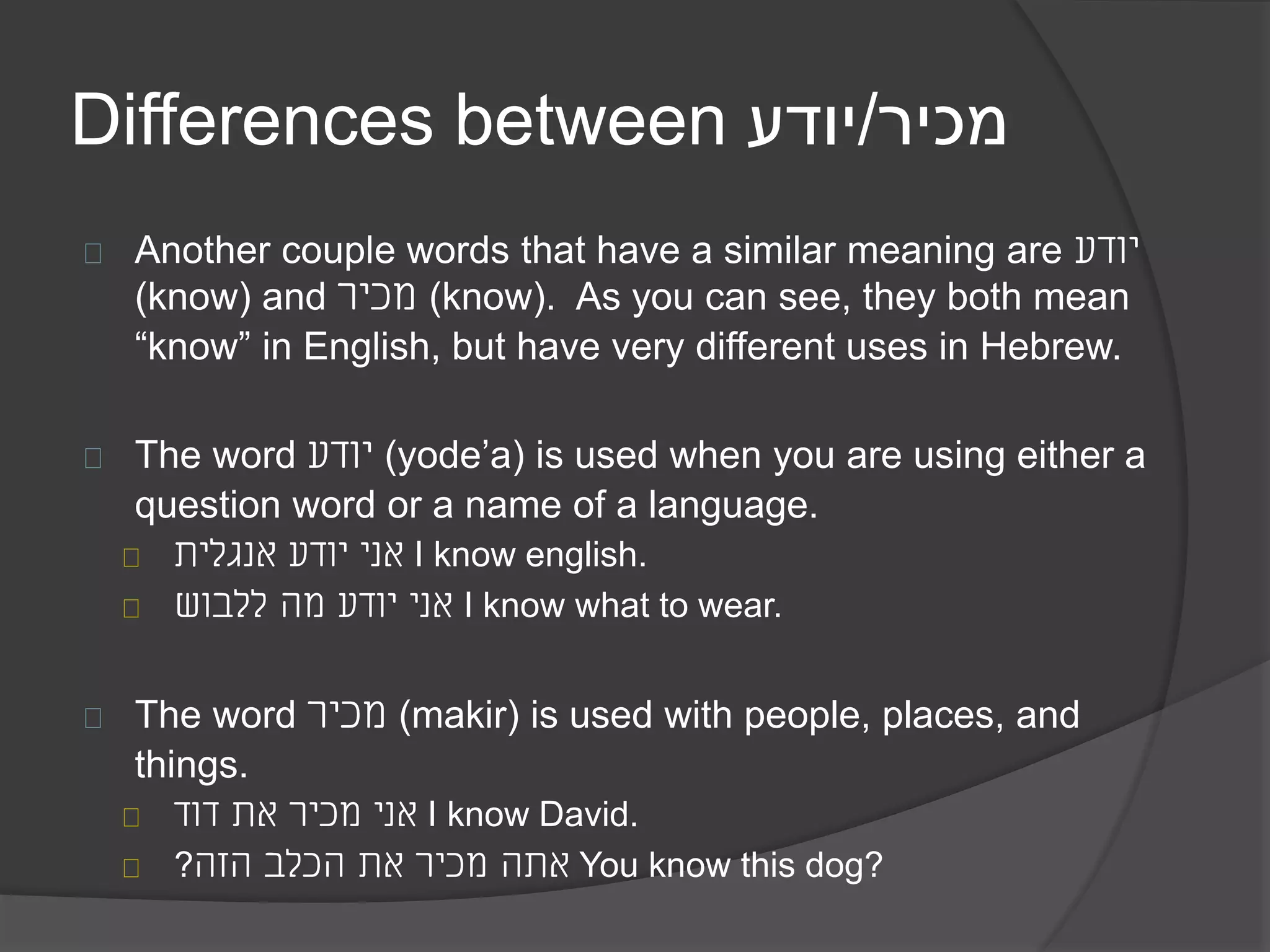
Another couple words that have a similar meaning are יודע 
(know) and מכיר (know). As you can see, they both mean 
“know” in English, but have very different uses in Hebrew. 
The word יודע (yode’a) is used when you are using either a 
question word or a name of a language. 
אני יודע אנגלית I know english. 
אני יודע מה ללבוש I know what to wear. 
The word מכיר (makir) is used with people, places, and 
things. 
אני מכיר את דוד I know David. 
אתה מכיר את הכלב הזה? You know this dog?

Verb simularities

  • 1.
    Verb Simularities Inthis lesson, we are going to discover a few verbs that have similar meanings in English but are used in different situations in Hebrew. It will be a somewhat short lesson.
  • 2.
    Differences between מדבר/אומר The two verbs that convey communication in Hebrew are מדבר and אומר . These words have basically the same meaning, but there are subtle differences. The verb מדבר means “talk” or “speak”. מדבר may be followed by a preposition such as עם (with) or על (on/about). דוד מדבר עם שרה David speaks with Sarah. הם מדברים על עוף They are talking about Chicken. היא מדברת אל דוד She speaks to David. The verb אומר means “say”. Only אומר can be used for introducing a quoted phrase: דוד אומר "אני הולך לגן החיות". David says “I go to the zoo”.
  • 3.
    Differences between מדבר/אומר We have discussed the infinitive form of מדבר already since it is a פיעל verb. The infinitive is regular hashlamim and is written like this: לדבר (ledaber). However, the infinitive of אומר is irregular and it is one of the few verbs that don’t follow the gizra it belongs to. (In this case, it would fall into the 1st א gizra). The infinitive of אומר is לומר (lomar). It follows more closely to a pi’el verb than the pa’al verb that it is, but the vowel changes are not consistent with pi’el 3rd א verbs either, which we will cover later. Memorize this infinitive form because it is used very often.
  • 4.
    Differences between מכיר/יודע Another couple words that have a similar meaning are יודע (know) and מכיר (know). As you can see, they both mean “know” in English, but have very different uses in Hebrew. The word יודע (yode’a) is used when you are using either a question word or a name of a language. אני יודע אנגלית I know english. אני יודע מה ללבוש I know what to wear. The word מכיר (makir) is used with people, places, and things. אני מכיר את דוד I know David. אתה מכיר את הכלב הזה? You know this dog?