Nuclear Cardiologydepartment – PrinceSultanCardiac Centre
This Presentation Presented by : BudourAlzahrani
Supervised : MohamedAlshuhri ,SaeedAlshuhri
Acknowledgment to : Dr.AhmedAmro
Outlines
Introduction
Nuclear
Cardiology
Case review
Result
Conclusion
and References
Introduction
coronary heartNuclear cardiac images help to identify
disease, and the risk of future heart attacks.
These highly
function and
accurate measurements of heart size and
amount of heart muscle at risk enable
cardiologists to better prescribe medications and select further
testing.
Nuclear Cardiology
-2-
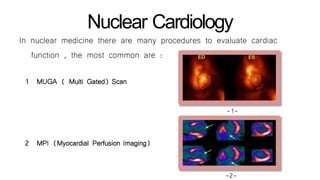
In nuclear medicine there are many procedures to evaluate cardiac
function , the most common are :
1 MUGA ( Multi Gated) Scan
-1-
2 MPI (Myocardial Perfusion Imaging)
MPI– overview
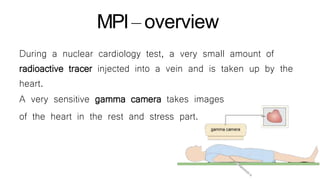
During a nuclear cardiology test, a very small amount of
radioactive tracer injected into a vein and is taken up by the
heart.
A very sensitive gamma camera takes images
of the heart in the rest and stress part.
Who needs MPI
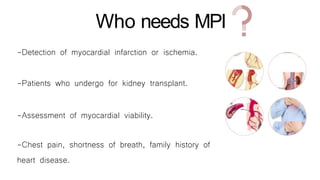
-Detection of myocardial infarction or ischemia.
-Patients who undergo for kidney transplant.
-Assessment of myocardial viability.
-Chest pain, shortness of breath, family history of
heart disease.
How MPIis performed
MPI divided into 2 parts ( Stress – Rest ).
We can perform it in one day , or 2 day depending on
patient weight.
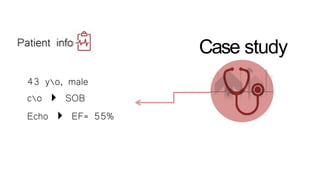
Patient info
43 yo, male
co  SOB
Echo  EF= 55%
Case study
Patient Preparation
study time.
-Patient should be NPO for 6 hours.
-if stress: Caffeine is forbidden 24hrs before
(coffee, tea, smoking…etc).
-hold all heart medications until end the test.
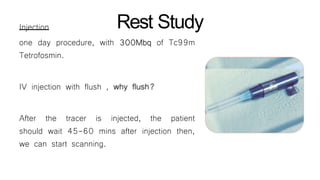
Rest StudyInjection
one day procedure, with 300Mbq of Tc99m
Tetrofosmin.
IV injection with flush , why flush?
After the tracer is injected, the patient
should wait 45-60 mins after injection then,
we can start scanning.
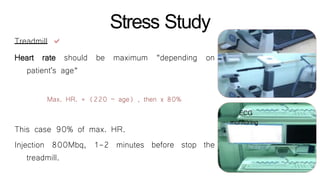
Stress Study
Treadmill 
be maximum “depending onHeart rate should
patient's age“
Max. HR. = (220 – age) , then x 80%
before stop the
This case 90% of max. HR.
Injection 800Mbq, 1-2 minutes
treadmill.
ECG
monitoring
mins after
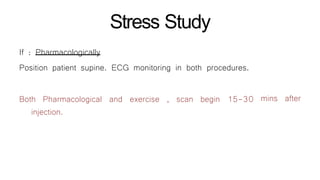
If : Pharmacologically
Position patient supine. ECG monitoring in both procedures.
Both Pharmacological and exercise , scan begin 15-30
injection.
Stress Study
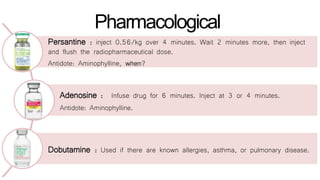
Pharmacological
Persantine : inject 0.56/kg over 4 minutes. Wait 2 minutes more, then inject
and flush the radiopharmaceutical dose.
Antidote: Aminophylline, when?
Adenosine : Infuse drug for 6 minutes. Inject at 3 or 4 minutes.
Antidote: Aminophylline.
Dobutamine : Used if there are known allergies, asthma, or pulmonary disease.
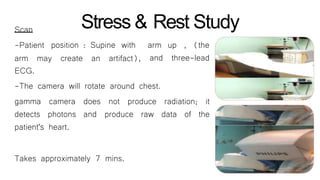
Scan
-Patient position : Supine with , (thearm up
and three-leadarm may create an artifact),
ECG.
-The camera will rotate around chest.
producegamma
detects
camera does not
photons and produce raw
radiation; it
data of the
patient's heart.
Takes approximately 7 mins.
Stress & Rest Study
images
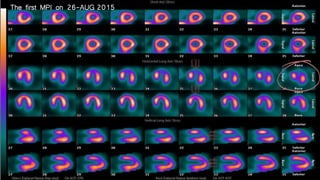
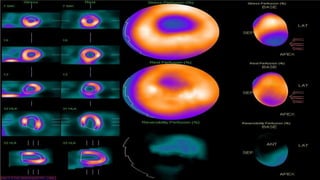
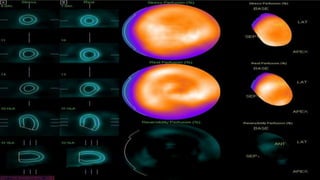
The first MPI on 26-AUG 2015
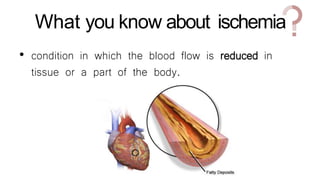
What you know about ischemia
• condition in which the blood flow is reduced in
tissue or a part of the body.
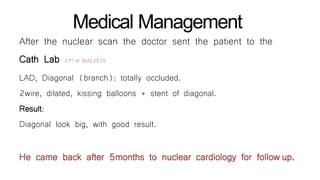
Medical Management
After the nuclear scan the doctor sent the patient to the
Cath Lab 27th of AUG2015
LAD, Diagonal (branch): totally occluded.
2wire, dilated, kissing balloons + stent of diagonal.
Result:
Diagonal look big, with good result.
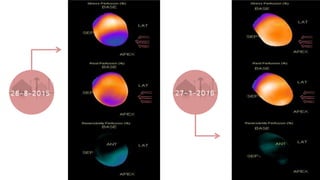
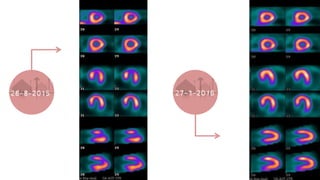
He came back after 5months to nuclear cardiology for follow up.
images
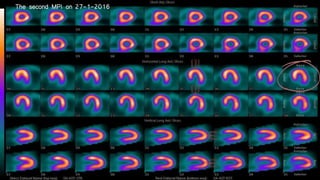
The second MPI on 27-1-2016
27-1-201626-8-2015
26-8-2015 27-1-2016
Conclusion
Angioplasty and stenting have a good result in improve and
increase blood flow to the ischemic myocardium.
And it may become normal tissue after treatment.
References
• PSCC
• Urmc.rochester.edu,. (2016). Nuclear Cardiology Tests - Department of
Cardiology - Rochester, NY - University of Rochester Medical Center . Retrieved
1 March 2016, from https://www.urmc.rochester.edu/cardiology/patient-
care/diagnostic-tests/nuclear-cardiology.aspx
• Heart.org
Thanksfor listening

Nuclear Medicine - MPI - Case Study

  • 1.
    Nuclear Cardiologydepartment –PrinceSultanCardiac Centre This Presentation Presented by : BudourAlzahrani Supervised : MohamedAlshuhri ,SaeedAlshuhri Acknowledgment to : Dr.AhmedAmro
  • 2.
  • 3.
    Introduction coronary heartNuclear cardiacimages help to identify disease, and the risk of future heart attacks. These highly function and accurate measurements of heart size and amount of heart muscle at risk enable cardiologists to better prescribe medications and select further testing.
  • 4.
    Nuclear Cardiology -2- In nuclearmedicine there are many procedures to evaluate cardiac function , the most common are : 1 MUGA ( Multi Gated) Scan -1- 2 MPI (Myocardial Perfusion Imaging)
  • 5.
    MPI– overview During anuclear cardiology test, a very small amount of radioactive tracer injected into a vein and is taken up by the heart. A very sensitive gamma camera takes images of the heart in the rest and stress part.
  • 6.
    Who needs MPI -Detectionof myocardial infarction or ischemia. -Patients who undergo for kidney transplant. -Assessment of myocardial viability. -Chest pain, shortness of breath, family history of heart disease.
  • 7.
    How MPIis performed MPIdivided into 2 parts ( Stress – Rest ). We can perform it in one day , or 2 day depending on patient weight.
  • 8.
    Patient info 43 yo,male co  SOB Echo  EF= 55% Case study
  • 9.
    Patient Preparation study time. -Patientshould be NPO for 6 hours. -if stress: Caffeine is forbidden 24hrs before (coffee, tea, smoking…etc). -hold all heart medications until end the test.
  • 10.
    Rest StudyInjection one dayprocedure, with 300Mbq of Tc99m Tetrofosmin. IV injection with flush , why flush? After the tracer is injected, the patient should wait 45-60 mins after injection then, we can start scanning.
  • 11.
    Stress Study Treadmill  bemaximum “depending onHeart rate should patient's age“ Max. HR. = (220 – age) , then x 80% before stop the This case 90% of max. HR. Injection 800Mbq, 1-2 minutes treadmill. ECG monitoring
  • 12.
    mins after If :Pharmacologically Position patient supine. ECG monitoring in both procedures. Both Pharmacological and exercise , scan begin 15-30 injection. Stress Study
  • 13.
    Pharmacological Persantine : inject0.56/kg over 4 minutes. Wait 2 minutes more, then inject and flush the radiopharmaceutical dose. Antidote: Aminophylline, when? Adenosine : Infuse drug for 6 minutes. Inject at 3 or 4 minutes. Antidote: Aminophylline. Dobutamine : Used if there are known allergies, asthma, or pulmonary disease.
  • 14.
    Scan -Patient position :Supine with , (thearm up and three-leadarm may create an artifact), ECG. -The camera will rotate around chest. producegamma detects camera does not photons and produce raw radiation; it data of the patient's heart. Takes approximately 7 mins. Stress & Rest Study
  • 15.
  • 16.
    The first MPIon 26-AUG 2015
  • 18.
    What you knowabout ischemia • condition in which the blood flow is reduced in tissue or a part of the body.
  • 19.
    Medical Management After thenuclear scan the doctor sent the patient to the Cath Lab 27th of AUG2015 LAD, Diagonal (branch): totally occluded. 2wire, dilated, kissing balloons + stent of diagonal. Result: Diagonal look big, with good result. He came back after 5months to nuclear cardiology for follow up.
  • 20.
  • 21.
    The second MPIon 27-1-2016
  • 23.
  • 24.
  • 25.
    Conclusion Angioplasty and stentinghave a good result in improve and increase blood flow to the ischemic myocardium. And it may become normal tissue after treatment.
  • 26.
    References • PSCC • Urmc.rochester.edu,.(2016). Nuclear Cardiology Tests - Department of Cardiology - Rochester, NY - University of Rochester Medical Center . Retrieved 1 March 2016, from https://www.urmc.rochester.edu/cardiology/patient- care/diagnostic-tests/nuclear-cardiology.aspx • Heart.org
  • 27.