Nubia sandstone
By
Abd Al Rahman Ibrahim Soliman,
BSc of Geoscience ,
Faculty of science, Alexandria University.
abdalrahmanibrahim209@gmail.com
2
Introduction
Nubia sandstone
 Introduction
 Problem of Nubia sandstone
 Origin of Nubia sandstone
 Stratigraphy of Nubia sandstone
 Mechanical analysis of Nubia
sandstone
 Mineral analysis of Nubia sandstone
 References
3
Introduction
Nubia sandstone
The term Nubia Sandstone is well
established in the stratigraphic column of
Egypt and is used to describe the
extensive sandy formations (clastic
series) either overlying the Precambrian
basement rocks or conformably
underlying the marine sequence of Upper
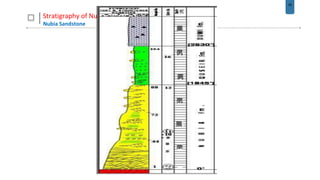
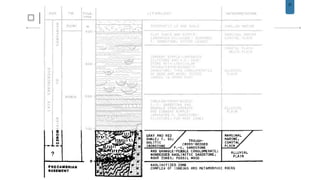
Cretaceous variegated shale.
4
Introduction
Nubia sandstone
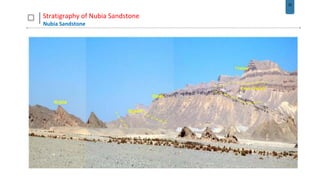
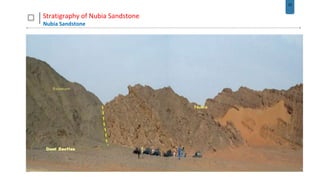
5
Problem of Nubia sandstone
Nubia Sandstone
The fact that it covers vast areas in Egypt
with a broad age window ranging from
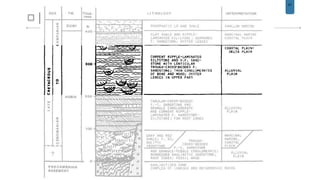
Early Paleozoic to Late Cretaceous due to
lack of any credible record of index body
fossils has always caused a problem of
where to consider it in the Egyptian
geochronological sequence.
6
Problem of Nubia sandstone
Nubia Sandstone
The fact that it covers vast areas in Egypt
with a broad age window ranging from
Early Paleozoic to Late Cretaceous due to
lack of any credible record of index body
fossils has always caused a problem of
where to consider it in the Egyptian
geochronological sequence.
7
Problem of Nubia sandstone
Nubia Sandstone
The fact that it covers vast areas in Egypt
with a broad age window ranging from
Early Paleozoic to Late Cretaceous due to
lack of any credible record of index body
fossils has always caused a problem of
where to consider it in the Egyptian
geochronological sequence.
8
Why interest in Nubia Sandstone
9
Why interest in Nubia Sandstone
Nubia Sandstone
In spite of the Nubian sandstones is
considered as the main reservoir of giant
oil fields in Egypt especially in Gulf of
Suez region, the Nubian sandstones also
represent the main water aquifer in Egypt
especially in western desert.
10
Why interest in Nubia Sandstone
Nubia Sandstone
In many localities especially in Sinai the
Nubian sandstone intercalated with
kaolinitic deposits which are of potential
economic importance. The Nubian
sandstones are the main source of glass
sand in Egypt.
11
Introduction
Groundwater Drilling techniques
 Origin of Nubia sandstone
 Stratigraphy of Nubia sandstone
 Mechanical analysis of Nubia
sandstone
 Mineral analysis of Nubia sandstone
 References
12
Origin of Nubia sandstone
Nubia Sandstone
Evidences Much has been written about
the origin of the Nubian Sandstone in
Sudan and Egypt. Aeolian, deltaic,
estuarine, and marine depositional
conditions have been advocated by
different authors
13
Origin of Nubia sandstone
Nubia Sandstone
Evidences Much has been written about
the origin of the Nubian Sandstone in
Sudan and Egypt. Aeolian, deltaic,
estuarine, and marine depositional
conditions have been advocated by
different authors
14
Origin of Nubia sandstone
Nubia Sandstone
 Walther (1888) and Fortau (1902)
considered that the Nubian Sandstone
was deposited along the southern
margin of the Paleozoic and Mesozoic
Tethys as a gigantic desert deposit.
 Barthoux (1922), Cuvillier (1930), and
Picard (1943) also accepted an aeolian
origin. However
15
Origin of Nubia sandstone
Nubia Sandstone
 Hume (1906) favored a marine and
Mesozoic Tethys as a gigantic desert
However, Hume (1906) favored a marine
16
Origin of Nubia sandstone
Nubia Sandstone
 Hume considered the Nubia sandstone
to be of marine origin because
 The flat regular nature of the base on which the Nubia
sandstone resets
 The presence of gravel cautes, conglomerate in same
parts.
 The extreme randomly quartz pebbles.
 The un broken passage into marls containing marine
fauna of definite age, and
 The occurrence through very rarely, in the Nubia
17
Origin of Nubia sandstone
Nubia Sandstone
A. J. WHITEMAN' Ibadan, Nigeria origin,
basing his conclusion on presence of
 rounded boulders in the basal conglomerates,
 the transition with sandstones containing
marine fossils,
 and on his considerable field knowledge of the
geology of Egypt and the riverain Sudan,
 Ball (1907) thought that the Nubian
Sandstone in the Aswan area of
Egypt indicated shallow-water deposition.
18
Origin of Nubia sandstone
Nubia Sandstone
Barron considered the Nubia sandstone
of Sinai to be of fluvio – marine origin as
it is
 well stratified and
 the clay and marly beds are interbedded
with the sandstone.
19
Origin of Nubia sandstone
Nubia Sandstone
El Askary, El Mahdy studied the Jurassic
succession of the kharga coal
prospecting well No. 1. They showed that
 an alternation of sandstones,
siltstones, sandy, silty, clays
and clays. Each of these rocks exhibit
different lithologic verities which
grade into each other.
Numerous coal fragments where
20
Origin of Nubia sandstone
Nubia Sandstone
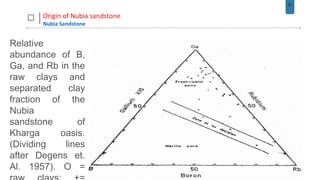
Based on geochemical studies of
trace elements shown in following
diagrams(Fig. it seems that most of
the analyzed samples belong to
fresh water environment while few are
either brackish or marine.
 The presence of conglomerate
together with entire absence of
marine fauna and flora in the situ.
21
Origin of Nubia sandstone
Nubia Sandstone
Relative
abundance of B,
Ga, and Rb in the
raw clays and
separated clay
fraction of the
Nubia
sandstone of
Kharga oasis.
(Dividing lines
after Degens et.
Al. 1957). O =
22
Origin of Nubia sandstone
Nubia Sandstone
Samples are Favor of fresh to
brackish water environment of deep
this origin was assumed by El
Ghazaly based on paleontological
study of the same succession.
23
Origin of Nubia sandstone
Nubia Sandstone
Relation between
B and Ga in the
raw clays and
separated clay
fraction of the
Nubia sandstone
of Kharga
oasis. (Divivding
lines after Degens
et. Al. 1957). O =
raw clays; +=
separated clays
24
Origin of Nubia sandstone
Nubia Sandstone
Based on these geochemical diagrams,
El-Askary also showed that at wadi
kalalsha (SW of Aswan ) the Nubia
sandstone succession (upper
cretaceous) which enclose
irregularly shaped kaolinite lenses was
deposited in fresh water environment.
25
Introduction
Nubia Sandstone
 Stratigraphy of Nubia sandstone
 Mechanical analysis of Nubia
sandstone
 Mineral analysis of Nubia sandstone
 References
26
Stratigraphy of Nubia Sandstone
Nubia Sandstone
27
Stratigraphy of Nubia Sandstone
Nubia Sandstone
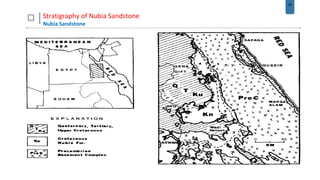
Nubia Formation" as used herein refers
to the predominantly non marine
terrigenous sequence overlying
Precambrian basement and underlying
Upper Cretaceous marine shale and
limestone.
The age of the Nubia Formation in the
central Eastern Desert generally is
thought to be Late Cretaceous.
28
Stratigraphy of Nubia Sandstone
Nubia Sandstone
The lowermost sandstones, which
contain only undated plant fragments,
may be older.
A few bivalves reportedly of
Cenomanian age are present about 50 m
above the base of the Nubia near Aswan.
Beds we include in the upper Nubia
interfinger northward with
deposits containing Campanian fossils.
29
Stratigraphy of Nubia Sandstone
Nubia Sandstone
30
Stratigraphy of Nubia Sandstone
Nubia Sandstone
The overlying Duwi Formation is dated
as Campanian (e.g., Ghanem et al, 1970),
or Maastrichtian (e.g., Issawi, 1972), or
Campanian-Maastrichtian (e.g.. Said,
1962).
West of the Red Sea Mountains the
basal Nubia crops out in a fringe around
exposures of the Precambrian basement
complex, and progressively younger
31
Stratigraphy of Nubia Sandstone
Nubia Sandstone
On the eastern side of the mountains the
Nubia Formation crops out only in the
Safaga-Quseir area, where the section is
exposed in fault blocks
32
Stratigraphy of Nubia Sandstone
Nubia Sandstone
33
Stratigraphy of Nubia Sandstone
Nubia Sandstone
34
Introduction
Nubia Sandstone
 Mechanical analysis of Nubia
sandstone
 Mineral analysis of Nubia sandstone
 References
35
Mechanical analysis of Nubia sandstone
Nubia Sandstone
The lower half of the Nubia in the
Eastern Desert is predominantly
sandstone and
conglomeratic sandstone, and the upper
half is mostly fine sandstone, siltstone,
and shale
36
Mechanical analysis of Nubia sandstone
Nubia Sandstone
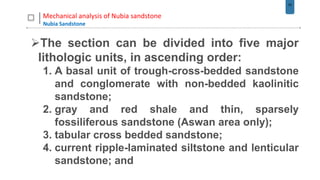
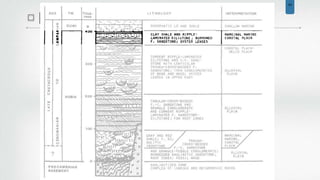
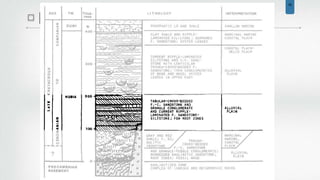
The section can be divided into five major
lithologic units, in ascending order:
1. A basal unit of trough-cross-bedded sandstone
and conglomerate with non-bedded kaolinitic
sandstone;
37
Mechanical analysis of Nubia sandstone
Nubia Sandstone
38
Mechanical analysis of Nubia sandstone
Nubia Sandstone
The section can be divided into five major
lithologic units, in ascending order:
1. A basal unit of trough-cross-bedded sandstone
and conglomerate with non-bedded kaolinitic
sandstone;
2. gray and red shale and thin, sparsely
fossiliferous sandstone (Aswan area only);
39
Mechanical analysis of Nubia sandstone
Nubia Sandstone
40
Mechanical analysis of Nubia sandstone
Nubia Sandstone
The section can be divided into five major
lithologic units, in ascending order:
1. A basal unit of trough-cross-bedded sandstone
and conglomerate with non-bedded kaolinitic
sandstone;
2. gray and red shale and thin, sparsely
fossiliferous sandstone (Aswan area only);
3. tabular cross bedded sandstone;
41
Mechanical analysis of Nubia sandstone
Nubia Sandstone
42
Mechanical analysis of Nubia sandstone
Nubia Sandstone
The section can be divided into five major
lithologic units, in ascending order:
1. A basal unit of trough-cross-bedded sandstone
and conglomerate with non-bedded kaolinitic
sandstone;
2. gray and red shale and thin, sparsely
fossiliferous sandstone (Aswan area only);
3. tabular cross bedded sandstone;
4. current ripple-laminated siltstone and lenticular
sandstone; and
43
Mechanical analysis of Nubia sandstone
Nubia Sandstone
44
Mechanical analysis of Nubia sandstone
Nubia Sandstone
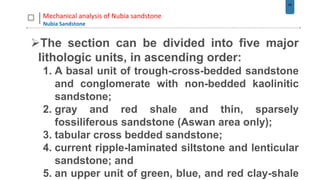
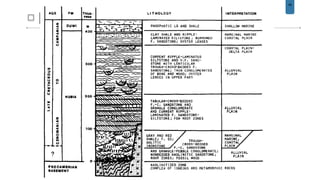
The section can be divided into five major
lithologic units, in ascending order:
1. A basal unit of trough-cross-bedded sandstone
and conglomerate with non-bedded kaolinitic
sandstone;
2. gray and red shale and thin, sparsely
fossiliferous sandstone (Aswan area only);
3. tabular cross bedded sandstone;
4. current ripple-laminated siltstone and lenticular
sandstone; and
5. an upper unit of green, blue, and red clay-shale
45
Mechanical analysis of Nubia sandstone
Nubia Sandstone
46
Mechanical analysis of Nubia sandstone
Nubia Sandstone
47
Introduction
Nubia Sandstone

 Mineral analysis of Nubia sandstone
 References
48
Mineral analysis of Nubia sandstone
Nubia Sandstone
Quartz over growth, partially altered feldspars and
interstitial clay. Over size pores resulted from
altered, partly altered feldspars and dissolved
grains. Secondary porosity is due to digenesis
processes. Over growth reduces porosity concave-
convex contacts elongated & triple point types of
contacts. Sometimes carbonate cements reduce
porosity. Good porosity-partially altered feldspars-
iron oxides and dissolution of feldspar cause
oversize pores. Sometimes porosity-quality
reduced due to the occurrence of iron oxides.
49
Mineral analysis of Nubia sandstone
Nubia Sandstone
50
Mineral analysis of Nubia sandstone
Nubia Sandstone
authigenic illite as grain coating showing irregular
flakes oriented perpendicular to grain surface and
some authigenic clay coating grains and fills the
interstitial pores are also occurred. Over growth
and the interstitial authigenic illite and mixed layer
occurred
51
Mineral analysis of Nubia sandstone
Nubia Sandstone
52
Introduction
Nubia Sandstone

 References
53
References
Nubia Sandstone
AAPG Bulletin Volume 63 issue 1979 W. C. Ward,
K. C. McDonald (2), -- Nubia Formation of Central
Eastern Desert, Egypt--Major Subdivisions and
Depos.
Middle East Journal of Applied Sciences, 4(4):
1016-1022, 2014, Mineralogical and Mechanical
Compaction Characteristics of Nubian Sandstones,
Gebel Duwi, Central Eastern Desert, Egypt. R. A.
El-Mohammady, A. I. M. Ismail and M. Gameel.
The American Association of Petroleum Geologists
Bulletin V. 54, No. 3 (March, 1970), Nubian Group:
54

Nubia sandstone

  • 1.
    Nubia sandstone By Abd AlRahman Ibrahim Soliman, BSc of Geoscience , Faculty of science, Alexandria University. abdalrahmanibrahim209@gmail.com
  • 2.
    2 Introduction Nubia sandstone  Introduction Problem of Nubia sandstone  Origin of Nubia sandstone  Stratigraphy of Nubia sandstone  Mechanical analysis of Nubia sandstone  Mineral analysis of Nubia sandstone  References
  • 3.
    3 Introduction Nubia sandstone The termNubia Sandstone is well established in the stratigraphic column of Egypt and is used to describe the extensive sandy formations (clastic series) either overlying the Precambrian basement rocks or conformably underlying the marine sequence of Upper Cretaceous variegated shale.
  • 4.
  • 5.
    5 Problem of Nubiasandstone Nubia Sandstone The fact that it covers vast areas in Egypt with a broad age window ranging from Early Paleozoic to Late Cretaceous due to lack of any credible record of index body fossils has always caused a problem of where to consider it in the Egyptian geochronological sequence.
  • 6.
    6 Problem of Nubiasandstone Nubia Sandstone The fact that it covers vast areas in Egypt with a broad age window ranging from Early Paleozoic to Late Cretaceous due to lack of any credible record of index body fossils has always caused a problem of where to consider it in the Egyptian geochronological sequence.
  • 7.
    7 Problem of Nubiasandstone Nubia Sandstone The fact that it covers vast areas in Egypt with a broad age window ranging from Early Paleozoic to Late Cretaceous due to lack of any credible record of index body fossils has always caused a problem of where to consider it in the Egyptian geochronological sequence.
  • 8.
    8 Why interest inNubia Sandstone
  • 9.
    9 Why interest inNubia Sandstone Nubia Sandstone In spite of the Nubian sandstones is considered as the main reservoir of giant oil fields in Egypt especially in Gulf of Suez region, the Nubian sandstones also represent the main water aquifer in Egypt especially in western desert.
  • 10.
    10 Why interest inNubia Sandstone Nubia Sandstone In many localities especially in Sinai the Nubian sandstone intercalated with kaolinitic deposits which are of potential economic importance. The Nubian sandstones are the main source of glass sand in Egypt.
  • 11.
    11 Introduction Groundwater Drilling techniques Origin of Nubia sandstone  Stratigraphy of Nubia sandstone  Mechanical analysis of Nubia sandstone  Mineral analysis of Nubia sandstone  References
  • 12.
    12 Origin of Nubiasandstone Nubia Sandstone Evidences Much has been written about the origin of the Nubian Sandstone in Sudan and Egypt. Aeolian, deltaic, estuarine, and marine depositional conditions have been advocated by different authors
  • 13.
    13 Origin of Nubiasandstone Nubia Sandstone Evidences Much has been written about the origin of the Nubian Sandstone in Sudan and Egypt. Aeolian, deltaic, estuarine, and marine depositional conditions have been advocated by different authors
  • 14.
    14 Origin of Nubiasandstone Nubia Sandstone  Walther (1888) and Fortau (1902) considered that the Nubian Sandstone was deposited along the southern margin of the Paleozoic and Mesozoic Tethys as a gigantic desert deposit.  Barthoux (1922), Cuvillier (1930), and Picard (1943) also accepted an aeolian origin. However
  • 15.
    15 Origin of Nubiasandstone Nubia Sandstone  Hume (1906) favored a marine and Mesozoic Tethys as a gigantic desert However, Hume (1906) favored a marine
  • 16.
    16 Origin of Nubiasandstone Nubia Sandstone  Hume considered the Nubia sandstone to be of marine origin because  The flat regular nature of the base on which the Nubia sandstone resets  The presence of gravel cautes, conglomerate in same parts.  The extreme randomly quartz pebbles.  The un broken passage into marls containing marine fauna of definite age, and  The occurrence through very rarely, in the Nubia
  • 17.
    17 Origin of Nubiasandstone Nubia Sandstone A. J. WHITEMAN' Ibadan, Nigeria origin, basing his conclusion on presence of  rounded boulders in the basal conglomerates,  the transition with sandstones containing marine fossils,  and on his considerable field knowledge of the geology of Egypt and the riverain Sudan,  Ball (1907) thought that the Nubian Sandstone in the Aswan area of Egypt indicated shallow-water deposition.
  • 18.
    18 Origin of Nubiasandstone Nubia Sandstone Barron considered the Nubia sandstone of Sinai to be of fluvio – marine origin as it is  well stratified and  the clay and marly beds are interbedded with the sandstone.
  • 19.
    19 Origin of Nubiasandstone Nubia Sandstone El Askary, El Mahdy studied the Jurassic succession of the kharga coal prospecting well No. 1. They showed that  an alternation of sandstones, siltstones, sandy, silty, clays and clays. Each of these rocks exhibit different lithologic verities which grade into each other. Numerous coal fragments where
  • 20.
    20 Origin of Nubiasandstone Nubia Sandstone Based on geochemical studies of trace elements shown in following diagrams(Fig. it seems that most of the analyzed samples belong to fresh water environment while few are either brackish or marine.  The presence of conglomerate together with entire absence of marine fauna and flora in the situ.
  • 21.
    21 Origin of Nubiasandstone Nubia Sandstone Relative abundance of B, Ga, and Rb in the raw clays and separated clay fraction of the Nubia sandstone of Kharga oasis. (Dividing lines after Degens et. Al. 1957). O =
  • 22.
    22 Origin of Nubiasandstone Nubia Sandstone Samples are Favor of fresh to brackish water environment of deep this origin was assumed by El Ghazaly based on paleontological study of the same succession.
  • 23.
    23 Origin of Nubiasandstone Nubia Sandstone Relation between B and Ga in the raw clays and separated clay fraction of the Nubia sandstone of Kharga oasis. (Divivding lines after Degens et. Al. 1957). O = raw clays; += separated clays
  • 24.
    24 Origin of Nubiasandstone Nubia Sandstone Based on these geochemical diagrams, El-Askary also showed that at wadi kalalsha (SW of Aswan ) the Nubia sandstone succession (upper cretaceous) which enclose irregularly shaped kaolinite lenses was deposited in fresh water environment.
  • 25.
    25 Introduction Nubia Sandstone  Stratigraphyof Nubia sandstone  Mechanical analysis of Nubia sandstone  Mineral analysis of Nubia sandstone  References
  • 26.
    26 Stratigraphy of NubiaSandstone Nubia Sandstone
  • 27.
    27 Stratigraphy of NubiaSandstone Nubia Sandstone Nubia Formation" as used herein refers to the predominantly non marine terrigenous sequence overlying Precambrian basement and underlying Upper Cretaceous marine shale and limestone. The age of the Nubia Formation in the central Eastern Desert generally is thought to be Late Cretaceous.
  • 28.
    28 Stratigraphy of NubiaSandstone Nubia Sandstone The lowermost sandstones, which contain only undated plant fragments, may be older. A few bivalves reportedly of Cenomanian age are present about 50 m above the base of the Nubia near Aswan. Beds we include in the upper Nubia interfinger northward with deposits containing Campanian fossils.
  • 29.
    29 Stratigraphy of NubiaSandstone Nubia Sandstone
  • 30.
    30 Stratigraphy of NubiaSandstone Nubia Sandstone The overlying Duwi Formation is dated as Campanian (e.g., Ghanem et al, 1970), or Maastrichtian (e.g., Issawi, 1972), or Campanian-Maastrichtian (e.g.. Said, 1962). West of the Red Sea Mountains the basal Nubia crops out in a fringe around exposures of the Precambrian basement complex, and progressively younger
  • 31.
    31 Stratigraphy of NubiaSandstone Nubia Sandstone On the eastern side of the mountains the Nubia Formation crops out only in the Safaga-Quseir area, where the section is exposed in fault blocks
  • 32.
    32 Stratigraphy of NubiaSandstone Nubia Sandstone
  • 33.
    33 Stratigraphy of NubiaSandstone Nubia Sandstone
  • 34.
    34 Introduction Nubia Sandstone  Mechanicalanalysis of Nubia sandstone  Mineral analysis of Nubia sandstone  References
  • 35.
    35 Mechanical analysis ofNubia sandstone Nubia Sandstone The lower half of the Nubia in the Eastern Desert is predominantly sandstone and conglomeratic sandstone, and the upper half is mostly fine sandstone, siltstone, and shale
  • 36.
    36 Mechanical analysis ofNubia sandstone Nubia Sandstone The section can be divided into five major lithologic units, in ascending order: 1. A basal unit of trough-cross-bedded sandstone and conglomerate with non-bedded kaolinitic sandstone;
  • 37.
    37 Mechanical analysis ofNubia sandstone Nubia Sandstone
  • 38.
    38 Mechanical analysis ofNubia sandstone Nubia Sandstone The section can be divided into five major lithologic units, in ascending order: 1. A basal unit of trough-cross-bedded sandstone and conglomerate with non-bedded kaolinitic sandstone; 2. gray and red shale and thin, sparsely fossiliferous sandstone (Aswan area only);
  • 39.
    39 Mechanical analysis ofNubia sandstone Nubia Sandstone
  • 40.
    40 Mechanical analysis ofNubia sandstone Nubia Sandstone The section can be divided into five major lithologic units, in ascending order: 1. A basal unit of trough-cross-bedded sandstone and conglomerate with non-bedded kaolinitic sandstone; 2. gray and red shale and thin, sparsely fossiliferous sandstone (Aswan area only); 3. tabular cross bedded sandstone;
  • 41.
    41 Mechanical analysis ofNubia sandstone Nubia Sandstone
  • 42.
    42 Mechanical analysis ofNubia sandstone Nubia Sandstone The section can be divided into five major lithologic units, in ascending order: 1. A basal unit of trough-cross-bedded sandstone and conglomerate with non-bedded kaolinitic sandstone; 2. gray and red shale and thin, sparsely fossiliferous sandstone (Aswan area only); 3. tabular cross bedded sandstone; 4. current ripple-laminated siltstone and lenticular sandstone; and
  • 43.
    43 Mechanical analysis ofNubia sandstone Nubia Sandstone
  • 44.
    44 Mechanical analysis ofNubia sandstone Nubia Sandstone The section can be divided into five major lithologic units, in ascending order: 1. A basal unit of trough-cross-bedded sandstone and conglomerate with non-bedded kaolinitic sandstone; 2. gray and red shale and thin, sparsely fossiliferous sandstone (Aswan area only); 3. tabular cross bedded sandstone; 4. current ripple-laminated siltstone and lenticular sandstone; and 5. an upper unit of green, blue, and red clay-shale
  • 45.
    45 Mechanical analysis ofNubia sandstone Nubia Sandstone
  • 46.
    46 Mechanical analysis ofNubia sandstone Nubia Sandstone
  • 47.
    47 Introduction Nubia Sandstone   Mineralanalysis of Nubia sandstone  References
  • 48.
    48 Mineral analysis ofNubia sandstone Nubia Sandstone Quartz over growth, partially altered feldspars and interstitial clay. Over size pores resulted from altered, partly altered feldspars and dissolved grains. Secondary porosity is due to digenesis processes. Over growth reduces porosity concave- convex contacts elongated & triple point types of contacts. Sometimes carbonate cements reduce porosity. Good porosity-partially altered feldspars- iron oxides and dissolution of feldspar cause oversize pores. Sometimes porosity-quality reduced due to the occurrence of iron oxides.
  • 49.
    49 Mineral analysis ofNubia sandstone Nubia Sandstone
  • 50.
    50 Mineral analysis ofNubia sandstone Nubia Sandstone authigenic illite as grain coating showing irregular flakes oriented perpendicular to grain surface and some authigenic clay coating grains and fills the interstitial pores are also occurred. Over growth and the interstitial authigenic illite and mixed layer occurred
  • 51.
    51 Mineral analysis ofNubia sandstone Nubia Sandstone
  • 52.
  • 53.
    53 References Nubia Sandstone AAPG BulletinVolume 63 issue 1979 W. C. Ward, K. C. McDonald (2), -- Nubia Formation of Central Eastern Desert, Egypt--Major Subdivisions and Depos. Middle East Journal of Applied Sciences, 4(4): 1016-1022, 2014, Mineralogical and Mechanical Compaction Characteristics of Nubian Sandstones, Gebel Duwi, Central Eastern Desert, Egypt. R. A. El-Mohammady, A. I. M. Ismail and M. Gameel. The American Association of Petroleum Geologists Bulletin V. 54, No. 3 (March, 1970), Nubian Group:
  • 54.