DEGLUTITION
PREPARED BY:-PRIANKA DODIA
What is deglutition or swallowing?
 The series of coordinated muscle contraction
that moves a bolus of food from the oral cavity
through the esophagus to the stomach.
 It is an important function carried out by
stomatognathic system.( consists of the mouth,
jaws, and closely associated structures)
Types
 Infantile swallow
 Mature swallow or adult swallow
INFANTILE SWALLOW
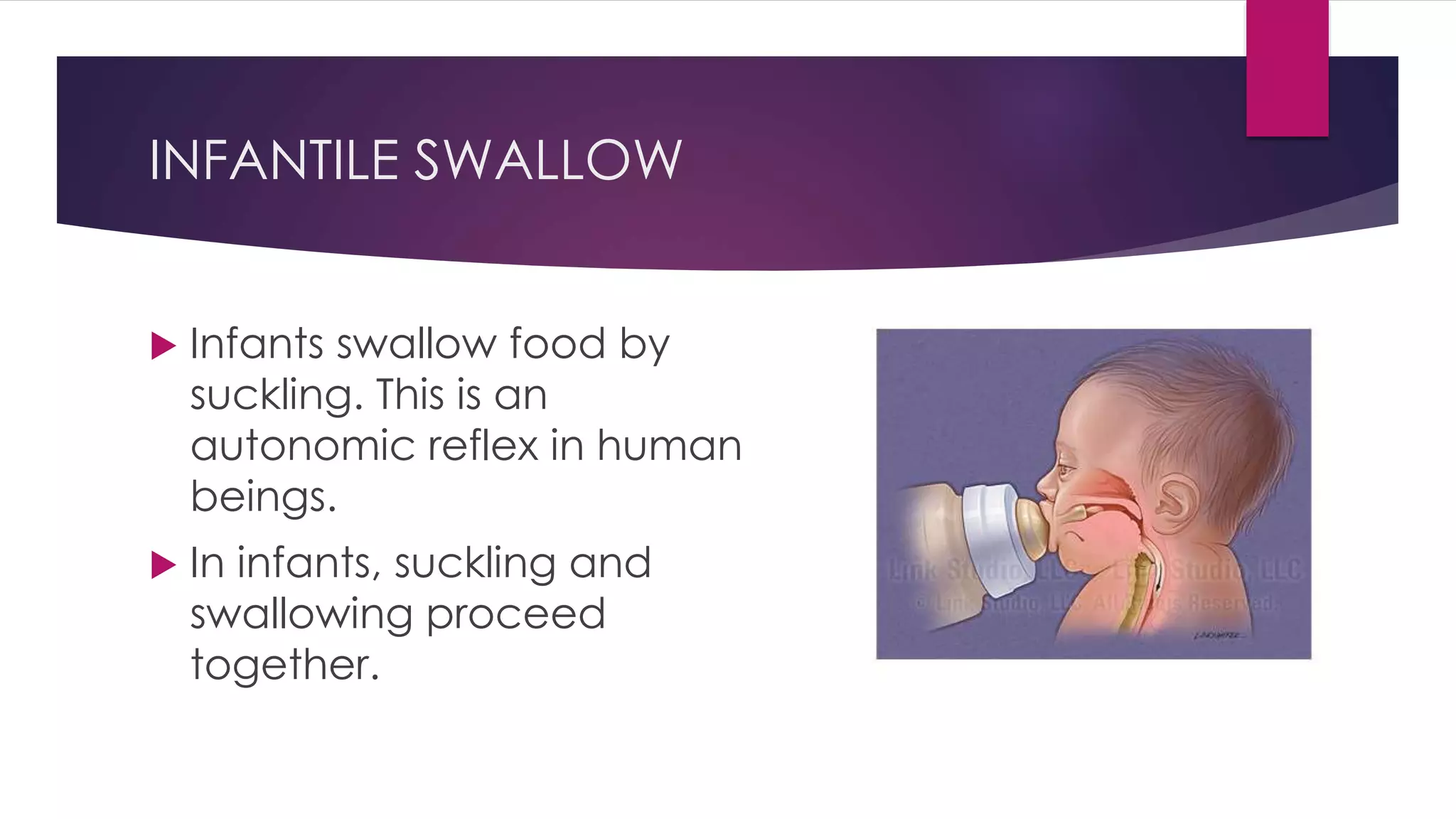
 Infants swallow food by
suckling. This is an
autonomic reflex in human
beings.
 In infants, suckling and
swallowing proceed
together.
Mechanism of infantile swallow
Breastfeeding
infant lips close around the areola of the breast
Tongue protrudes to the lower lip and forms a spoon like closure around nipples
Mandible supports the lip and tongue and applies pressure
Tongue is lowered and a vaccum is created while the mandible moves back
Milk is directed to the pharynx by the peristaltic movement of tongue
Characteristics
 Lips are sealed and appear stiff
 Tongue is abnormally large and is caught between maxillary and
mandibular gumpads
 There is no harmonious relationship between the maxilla and the
mandible
 Absence of normal seal
 There is no harmonious relationship between cranial and facial structures
MATURE SWALLOWING
 Mature swallow develops around 4-5 years
 Maturation of swallow pattern occurs with the addition of
semisolid and solid food to the diet.
Characteristics
 Cessation of lip activity, i.e. lips relaxed
 Placement of tongue tip against the palate and behind upper incisors.
 Posterior teeth into occlusion during swallow
 Downward and forward mandibular growth increases intraoral volume
and vertical growth of the alveolar process changes tongue posture.
 Mandible stabilized by contraction of muscles of mastication.
Phases of deglutition
 Starts as soon as food is ingested
 The liquid or crushed food are placed
in swallow preparatory phase
 Mouth is sealed by lip or tongue.
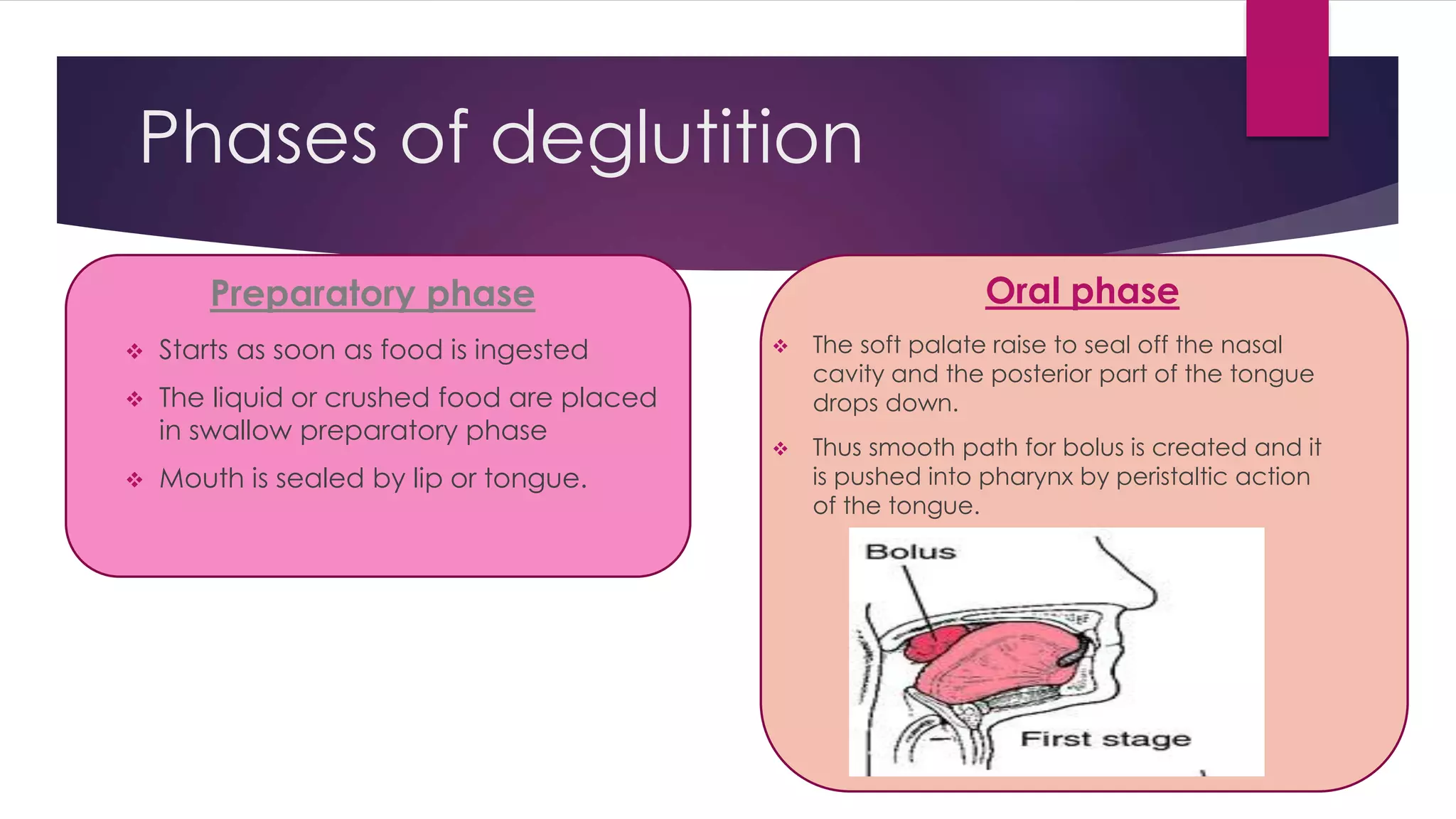
Oral phase
 The soft palate raise to seal off the nasal
cavity and the posterior part of the tongue
drops down.
 Thus smooth path for bolus is created and it
is pushed into pharynx by peristaltic action
of the tongue.
Preparatory phase
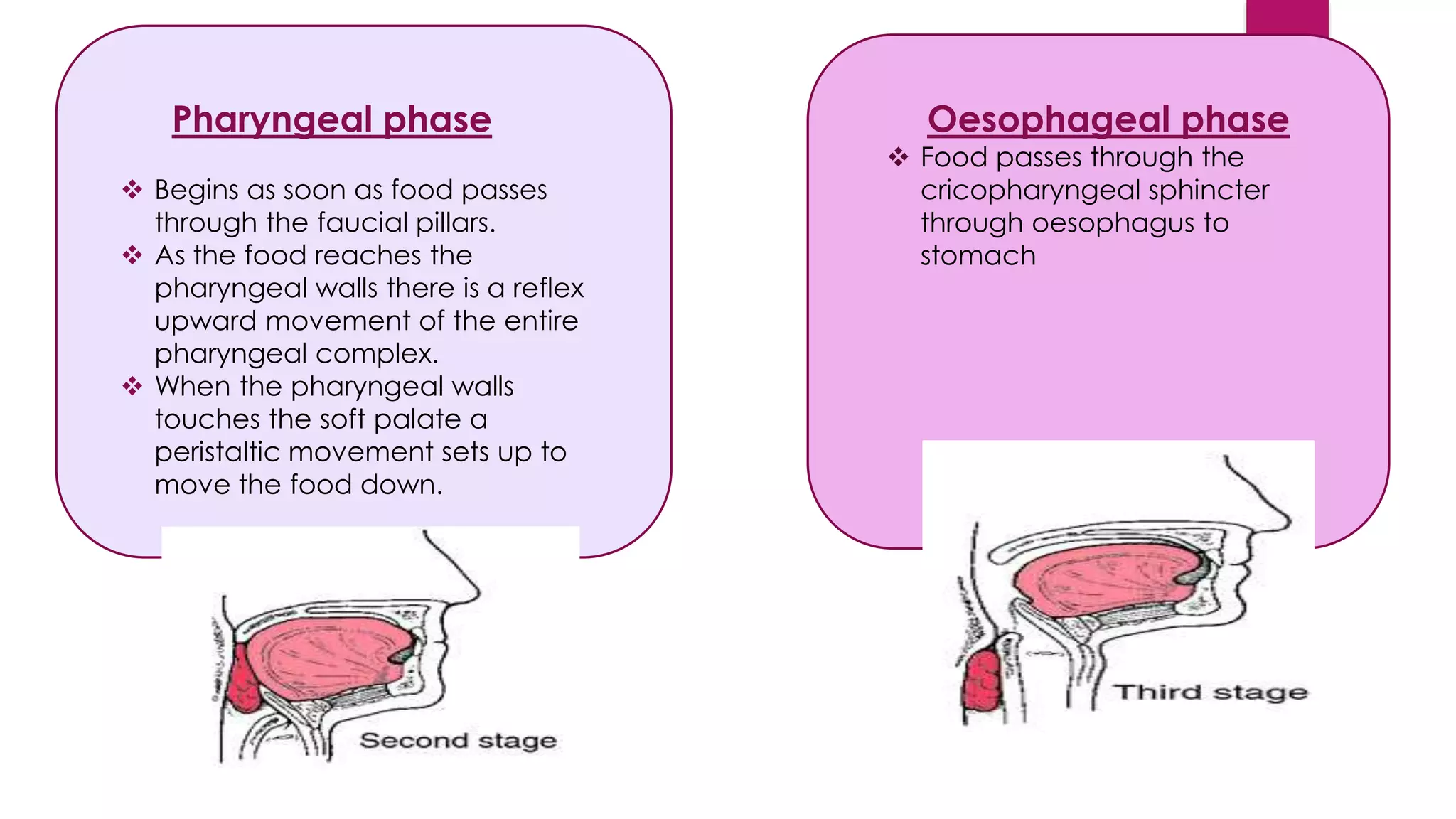
 Begins as soon as food passes
through the faucial pillars.
 As the food reaches the
pharyngeal walls there is a reflex
upward movement of the entire
pharyngeal complex.
 When the pharyngeal walls
touches the soft palate a
peristaltic movement sets up to
move the food down.
Pharyngeal phase Oesophageal phase
 Food passes through the
cricopharyngeal sphincter
through oesophagus to
stomach
VIDEO
Deglutition

Deglutition

  • 1.
  • 2.
    What is deglutitionor swallowing?  The series of coordinated muscle contraction that moves a bolus of food from the oral cavity through the esophagus to the stomach.  It is an important function carried out by stomatognathic system.( consists of the mouth, jaws, and closely associated structures)
  • 3.
    Types  Infantile swallow Mature swallow or adult swallow
  • 4.
    INFANTILE SWALLOW  Infantsswallow food by suckling. This is an autonomic reflex in human beings.  In infants, suckling and swallowing proceed together.
  • 5.
    Mechanism of infantileswallow Breastfeeding infant lips close around the areola of the breast Tongue protrudes to the lower lip and forms a spoon like closure around nipples Mandible supports the lip and tongue and applies pressure Tongue is lowered and a vaccum is created while the mandible moves back Milk is directed to the pharynx by the peristaltic movement of tongue
  • 7.
    Characteristics  Lips aresealed and appear stiff  Tongue is abnormally large and is caught between maxillary and mandibular gumpads  There is no harmonious relationship between the maxilla and the mandible  Absence of normal seal  There is no harmonious relationship between cranial and facial structures
  • 8.
    MATURE SWALLOWING  Matureswallow develops around 4-5 years  Maturation of swallow pattern occurs with the addition of semisolid and solid food to the diet.
  • 9.
    Characteristics  Cessation oflip activity, i.e. lips relaxed  Placement of tongue tip against the palate and behind upper incisors.  Posterior teeth into occlusion during swallow  Downward and forward mandibular growth increases intraoral volume and vertical growth of the alveolar process changes tongue posture.  Mandible stabilized by contraction of muscles of mastication.
  • 10.
    Phases of deglutition Starts as soon as food is ingested  The liquid or crushed food are placed in swallow preparatory phase  Mouth is sealed by lip or tongue. Oral phase  The soft palate raise to seal off the nasal cavity and the posterior part of the tongue drops down.  Thus smooth path for bolus is created and it is pushed into pharynx by peristaltic action of the tongue. Preparatory phase
  • 11.
     Begins assoon as food passes through the faucial pillars.  As the food reaches the pharyngeal walls there is a reflex upward movement of the entire pharyngeal complex.  When the pharyngeal walls touches the soft palate a peristaltic movement sets up to move the food down. Pharyngeal phase Oesophageal phase  Food passes through the cricopharyngeal sphincter through oesophagus to stomach
  • 13.