This document provides examples and explanations of key concepts in probability, including:
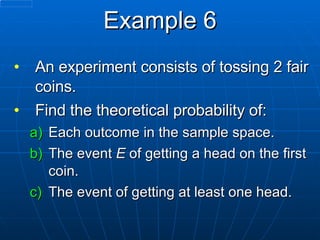
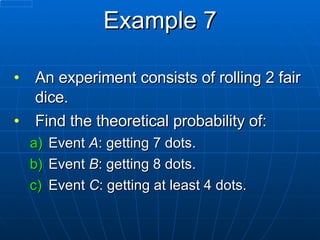
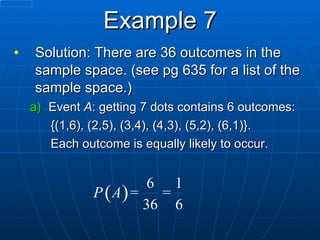
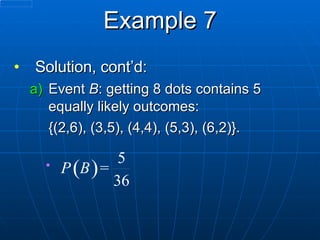
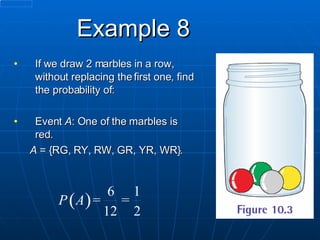
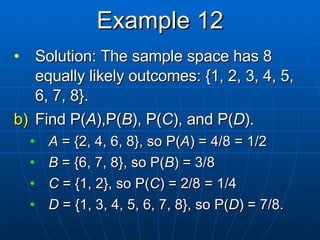
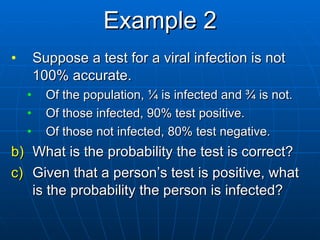
1) Probability is a number between 0 and 1 that indicates the likelihood of an event. Experimental probability is calculated from observations, while theoretical probability uses the composition of a sample space.
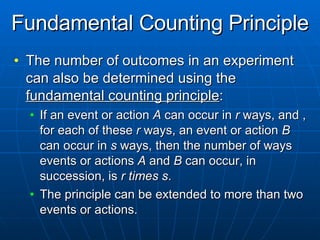
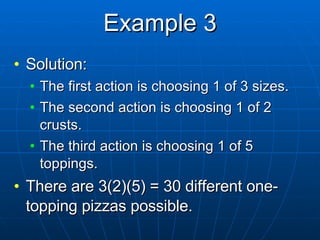
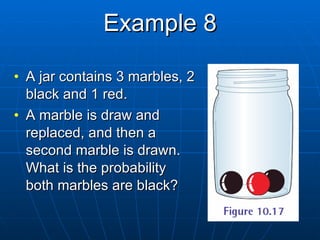
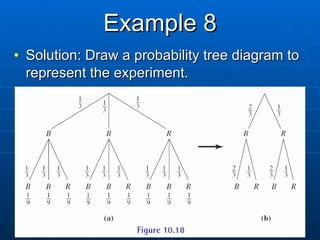
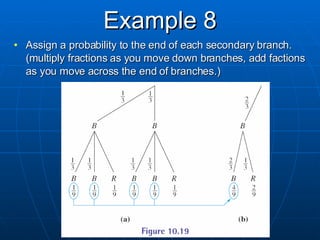
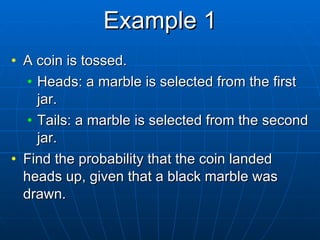
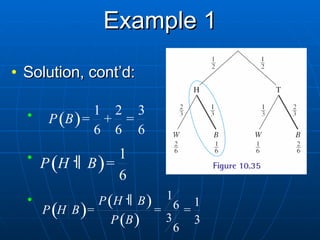
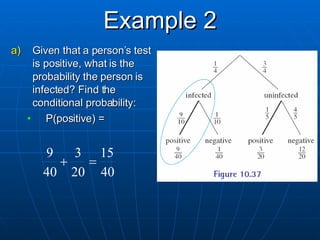
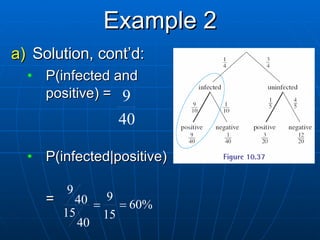
2) Tree diagrams and the fundamental counting principle can be used to determine the number of possible outcomes and probabilities in multi-stage experiments.
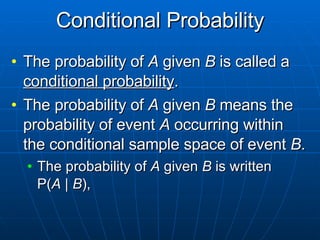
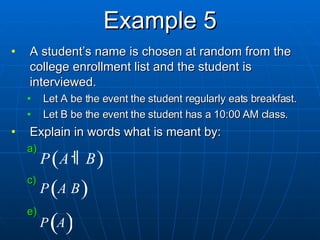
3) Union, intersection, and complements of events are probability concepts used to calculate probabilities of combined events.















































![Probability[1]](https://cdn.slidesharecdn.com/ss_thumbnails/probability1-110816105858-phpapp02-thumbnail.jpg?width=640&height=640&fit=bounds)


