 Norms are the behavior that is
considered as normal in any society
 According to Young and Mack: norms
refers to the group shared
expectation
 These are the code of ethics
 These are also the unwritten rules
about how to behave
 “What is considered normal in your
culture?”
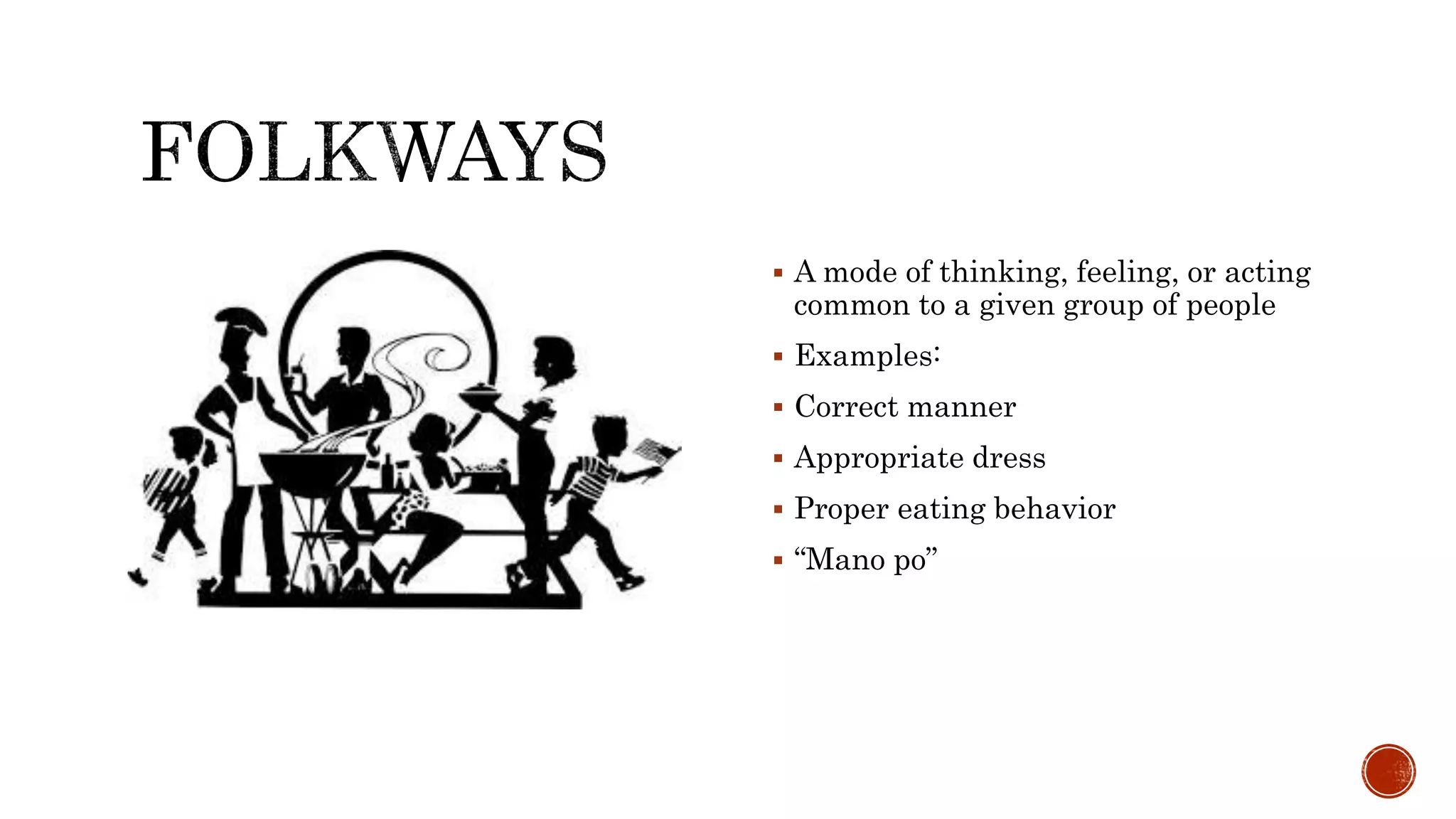
 A mode of thinking, feeling, or acting
common to a given group of people
 Examples:
 Correct manner
 Appropriate dress
 Proper eating behavior
 “Mano po”
 Mores are those customs and group
routines which are thought by the
members of society to be necessary to
the group’s existence.
 “The must behavior”
 Example:
 Wearing clothes
 Respect for parents
 Having sexual relationship without
marriage
 Two types of mores:
 Positive mores: always prescribed
behavior pattern. They represent the
“Do’s”. They give instructions and
provide guidance for the people to
behave in a particular way
 Negative mores: they represent the
“Don’t”. They are called taboos
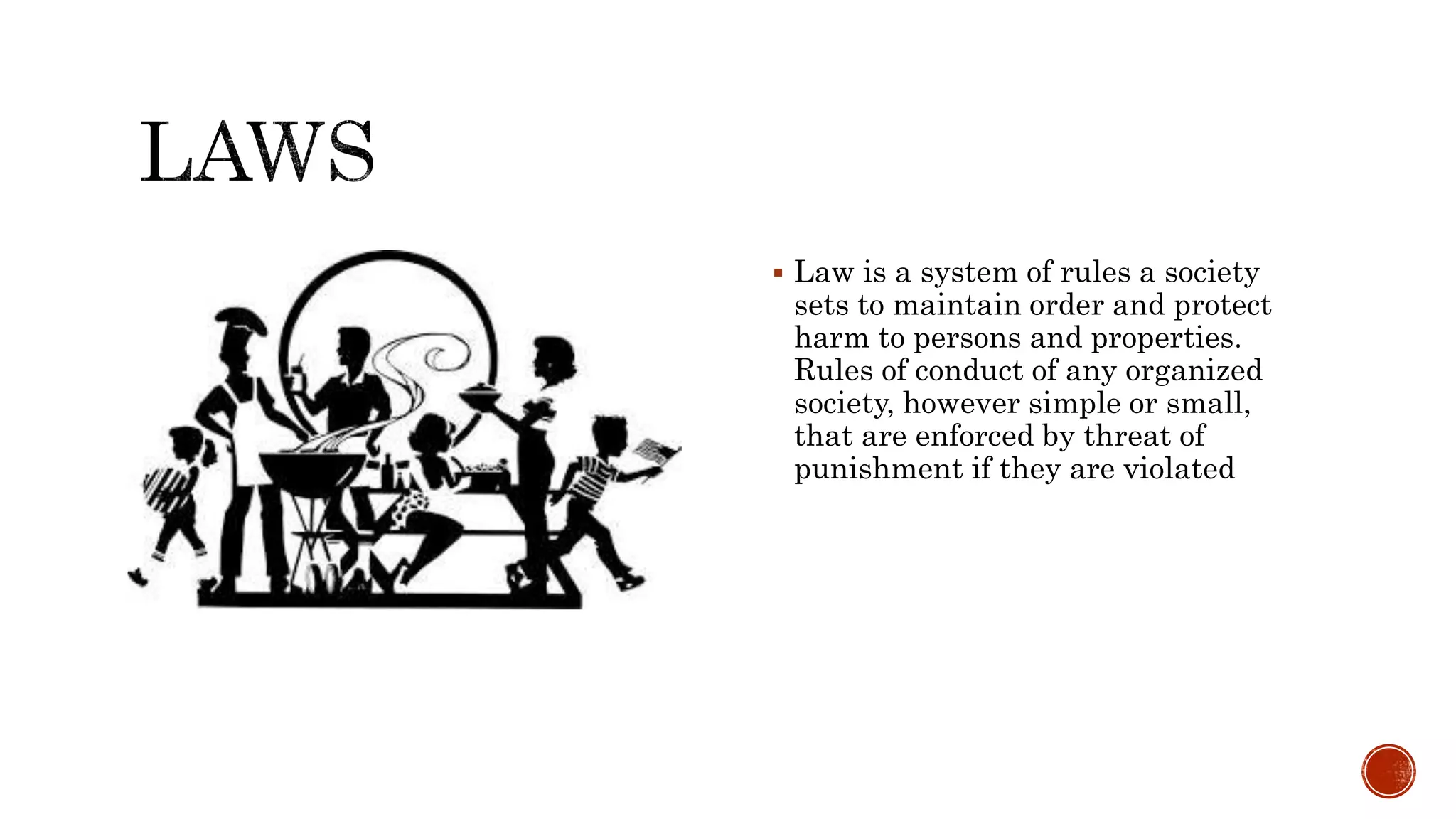
 Law is a system of rules a society
sets to maintain order and protect
harm to persons and properties.
Rules of conduct of any organized
society, however simple or small,
that are enforced by threat of
punishment if they are violated
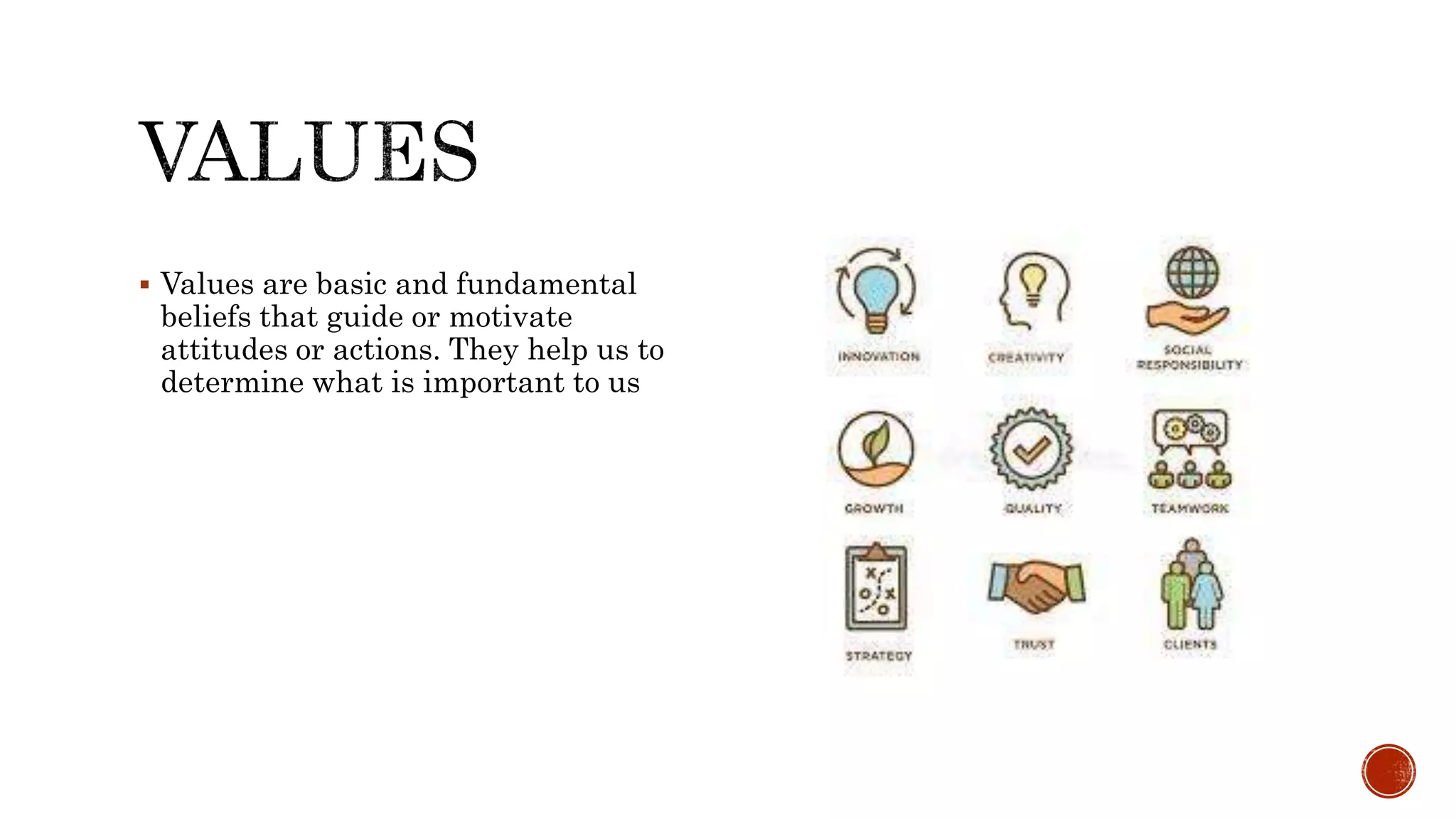
 Values are basic and fundamental
beliefs that guide or motivate
attitudes or actions. They help us to
determine what is important to us

Norms and values.pptx

  • 2.
     Norms arethe behavior that is considered as normal in any society  According to Young and Mack: norms refers to the group shared expectation  These are the code of ethics  These are also the unwritten rules about how to behave  “What is considered normal in your culture?”
  • 4.
     A modeof thinking, feeling, or acting common to a given group of people  Examples:  Correct manner  Appropriate dress  Proper eating behavior  “Mano po”
  • 5.
     Mores arethose customs and group routines which are thought by the members of society to be necessary to the group’s existence.  “The must behavior”  Example:  Wearing clothes  Respect for parents  Having sexual relationship without marriage  Two types of mores:  Positive mores: always prescribed behavior pattern. They represent the “Do’s”. They give instructions and provide guidance for the people to behave in a particular way  Negative mores: they represent the “Don’t”. They are called taboos
  • 6.
     Law isa system of rules a society sets to maintain order and protect harm to persons and properties. Rules of conduct of any organized society, however simple or small, that are enforced by threat of punishment if they are violated
  • 7.
     Values arebasic and fundamental beliefs that guide or motivate attitudes or actions. They help us to determine what is important to us