The document discusses social control, explaining it as the influence society exerts to maintain order through customs, conventions, folkways, mores, and taboos. It distinguishes between informal and formal means of social control, highlighting how customs and folkways serve as accepted behaviors, while mores carry moral weight and can incur penalties for violations. The document also contrasts mores with taboos and folkways, elucidating their roles and significance in maintaining social order.
Social Control –Customs–
Conventions, Folkways,
Mores, Rituals, Taboos
Reshma J Murugan
Assistant Professor
Agricultural Extension
Kumaraguru Institute of Agriculture,
Erode, Tamil Nadu
1
2.
Social control
• Socialcontrol is the pattern of influence the society exerts on individuals and
groups to maintain order and establish rules in the society.
• Mannheim defined social control as,” the sum of those methods by which a
society tries to influence human behaviour to maintain a given order”.
2
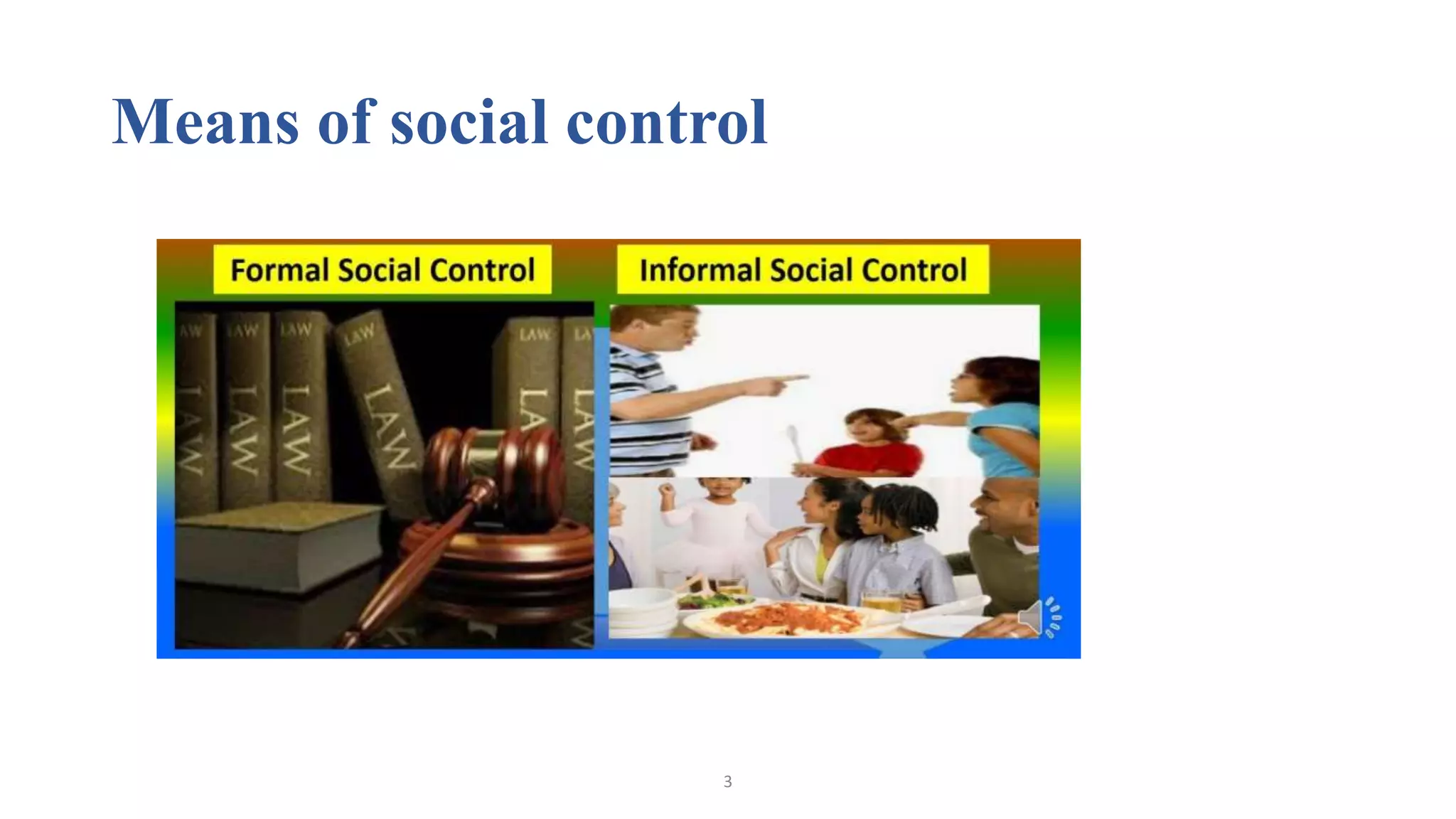
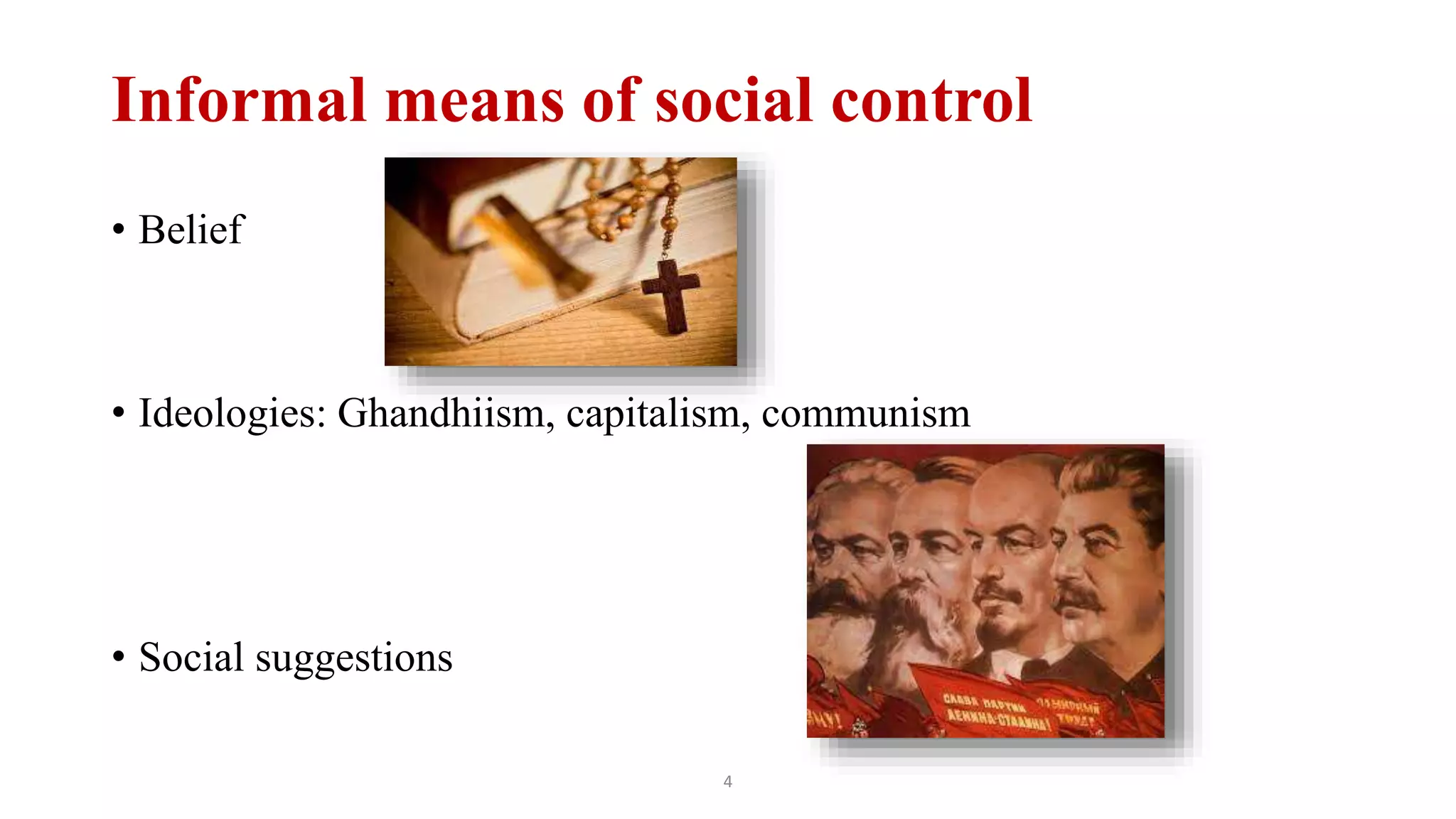
Informal means ofsocial control
• Belief
• Ideologies: Ghandhiism, capitalism, communism
• Social suggestions
4
5.
• Customs
• Folkways
•Mores
• Religion
• Art and literature
• Humour and Satire
• Public opinion
5
6.
Formal means ofsocial control
• Law
• Education
• Coercion
6
7.
Need of socialcontrol
• To maintain the old order
• To establish the social unity
• To regulate or control individual behavior
• To provide social sanction
• To check cultural mal adjustment
7
8.
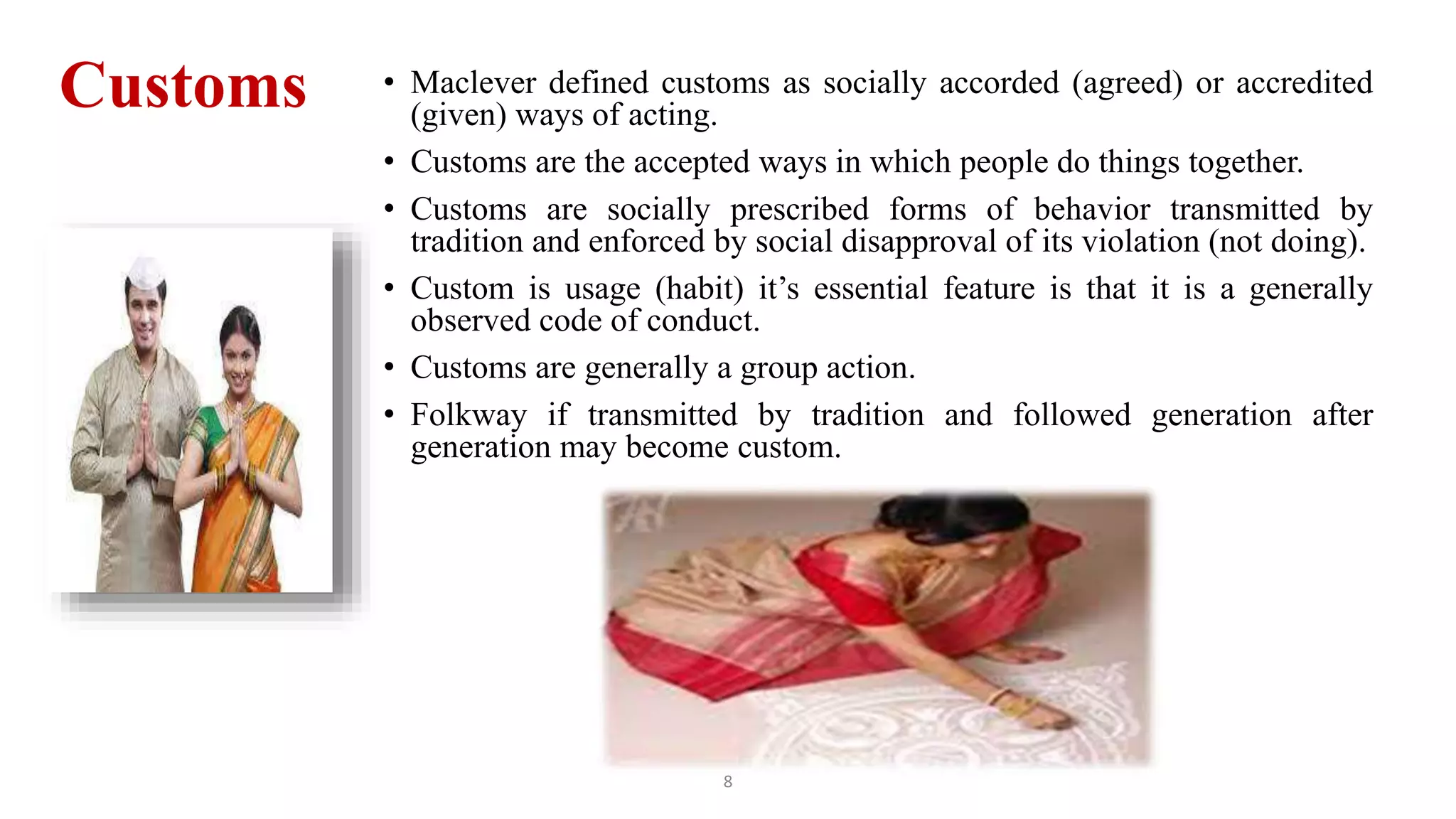
Customs • Macleverdefined customs as socially accorded (agreed) or accredited
(given) ways of acting.
• Customs are the accepted ways in which people do things together.
• Customs are socially prescribed forms of behavior transmitted by
tradition and enforced by social disapproval of its violation (not doing).
• Custom is usage (habit) it’s essential feature is that it is a generally
observed code of conduct.
• Customs are generally a group action.
• Folkway if transmitted by tradition and followed generation after
generation may become custom.
8
9.
Folkways
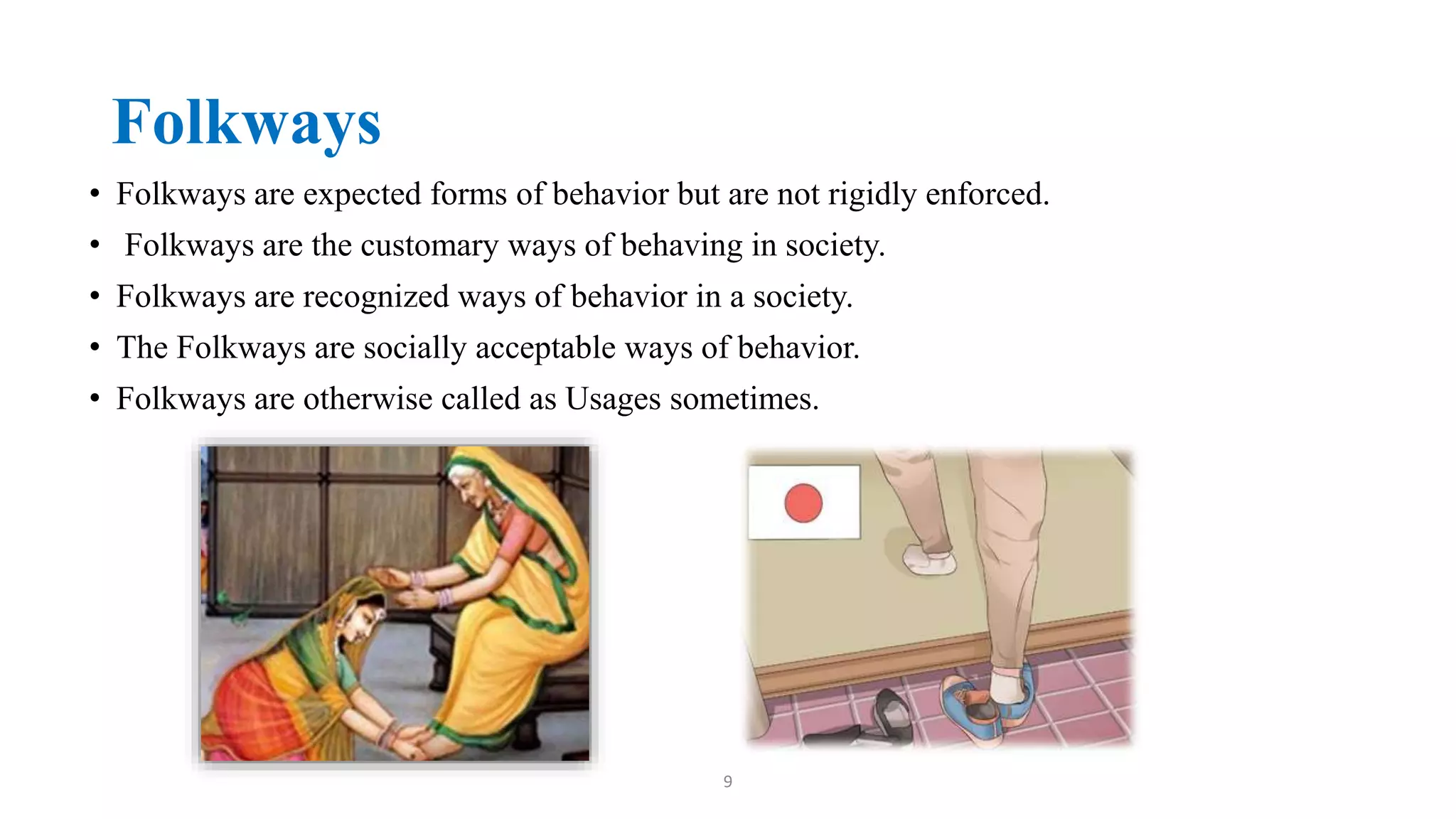
• Folkways areexpected forms of behavior but are not rigidly enforced.
• Folkways are the customary ways of behaving in society.
• Folkways are recognized ways of behavior in a society.
• The Folkways are socially acceptable ways of behavior.
• Folkways are otherwise called as Usages sometimes.
9
10.
• Accepted asappropriate but not insisted upon
• Help individuals in a group to order social life in a
smooth and harmonious way
• The results of frequent repetition of petty (little)
actions
• They arise from experience
• Non-observance of folkways is not a vital matter
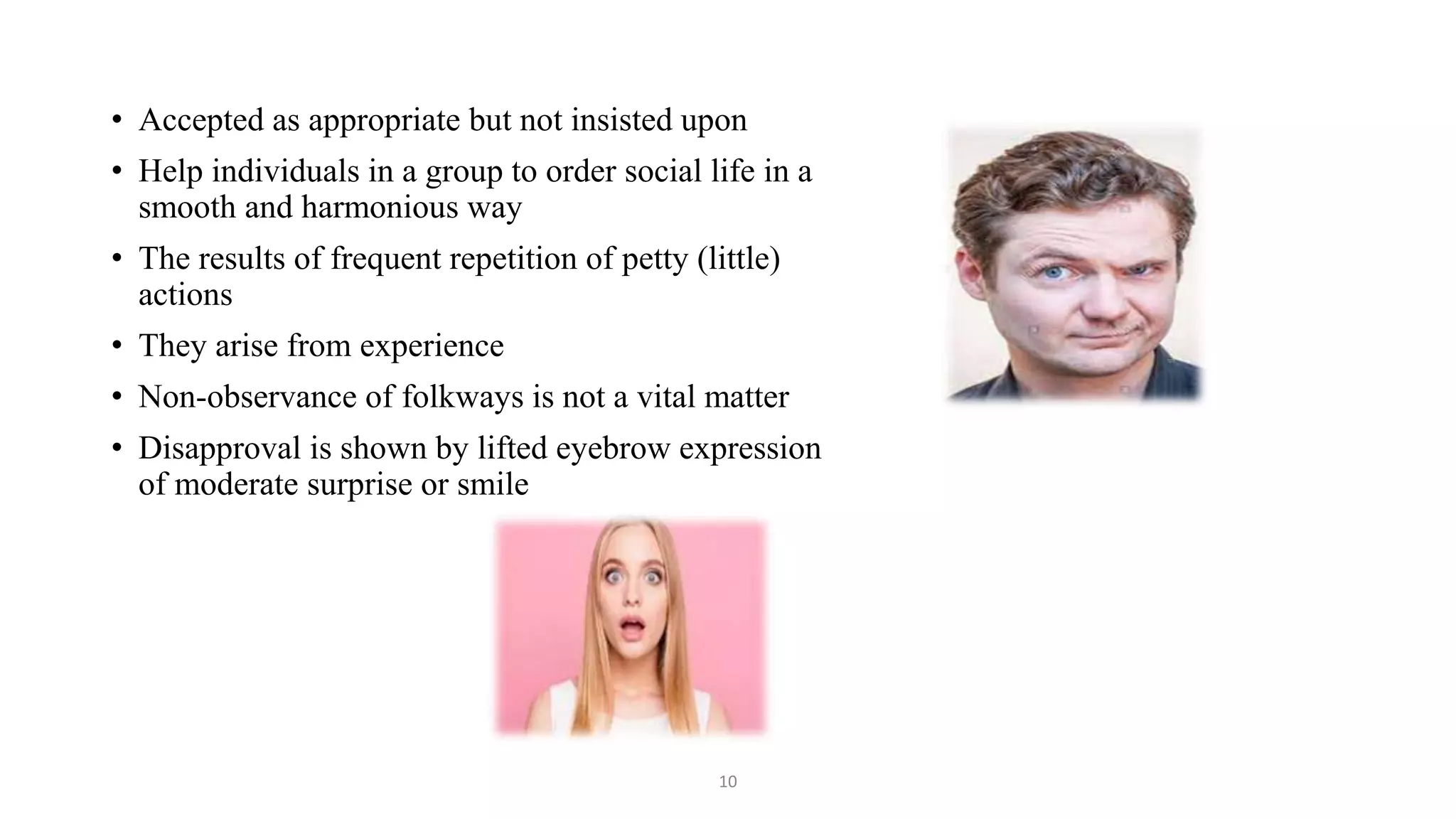
• Disapproval is shown by lifted eyebrow expression
of moderate surprise or smile
10
11.
Mores
• The customsor patterns of behavior, which are regarded by members of social system as vital and
essential to the welfare of the group.
• They show what is right for the welfare of group.
• Mores may be defined as those customs, which are held to be essential to ethical or moral values of
people.
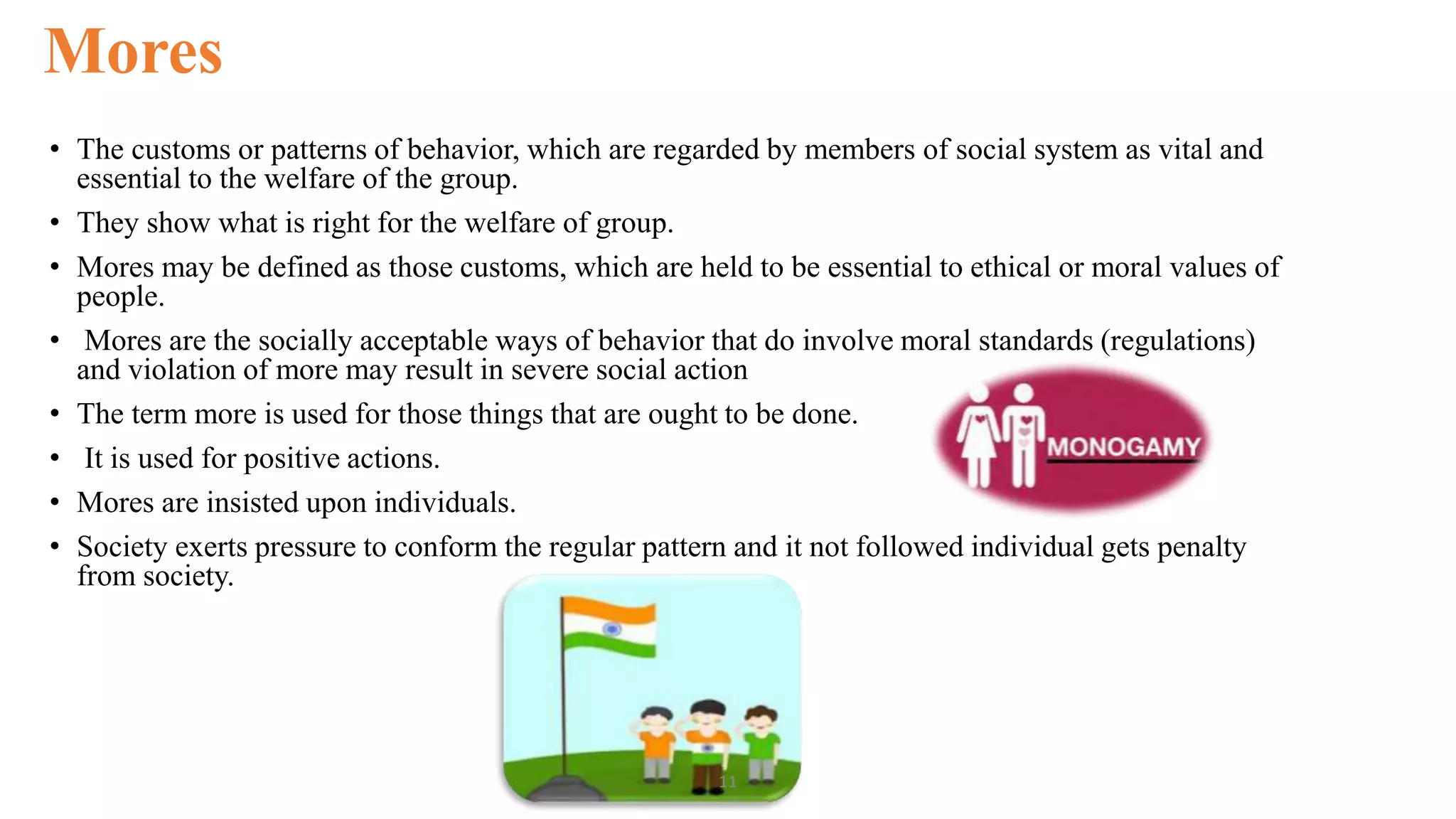
• Mores are the socially acceptable ways of behavior that do involve moral standards (regulations)
and violation of more may result in severe social action
• The term more is used for those things that are ought to be done.
• It is used for positive actions.
• Mores are insisted upon individuals.
• Society exerts pressure to conform the regular pattern and it not followed individual gets penalty
from society.
11
12.
Taboos
• The term‘taboo’ is used for the negative action and for the things that one ought not to do
Eg : eating pork in Muslim religion
Rituals:
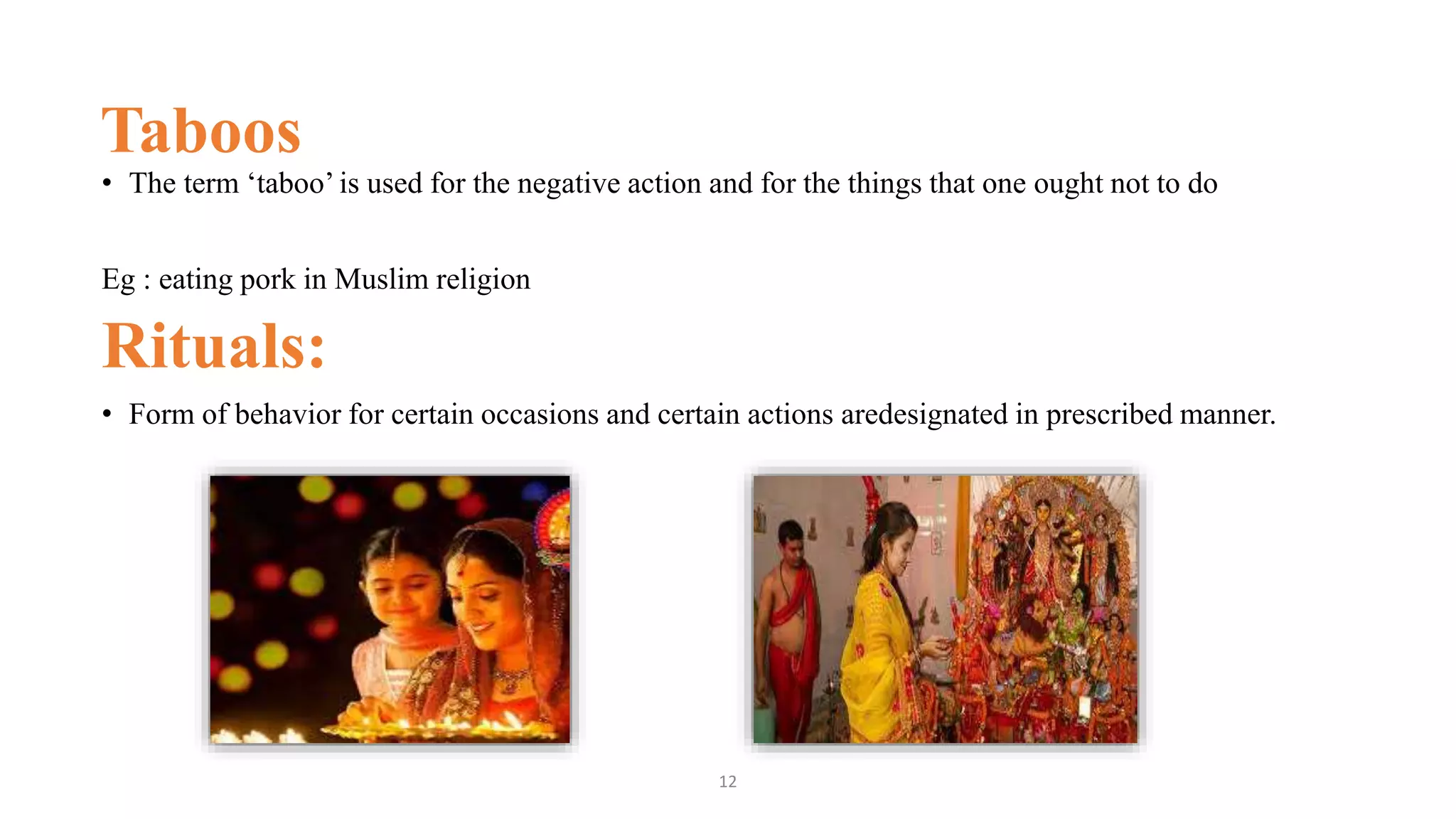
• Form of behavior for certain occasions and certain actions aredesignated in prescribed manner.
12
13.
Conventions
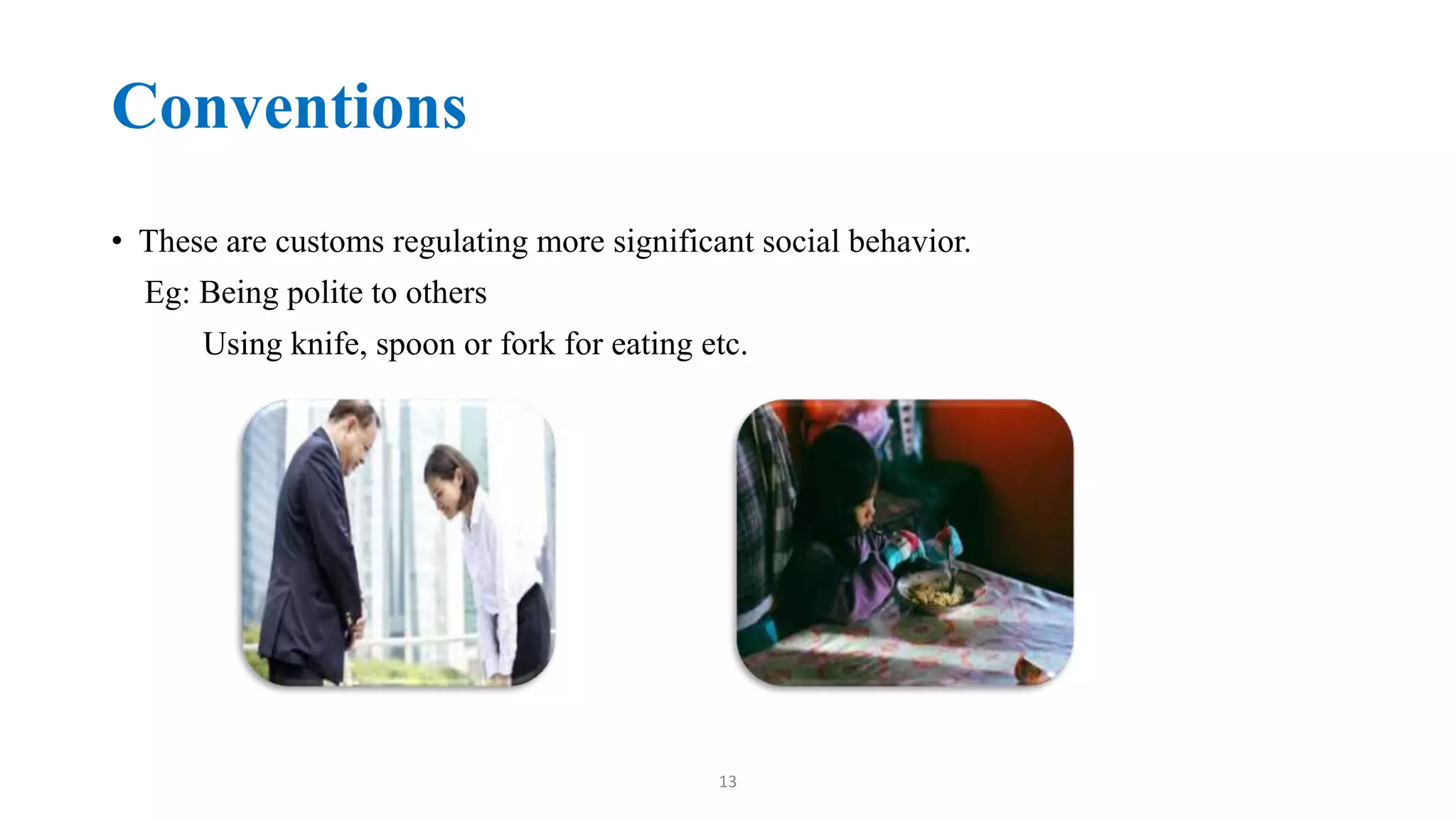
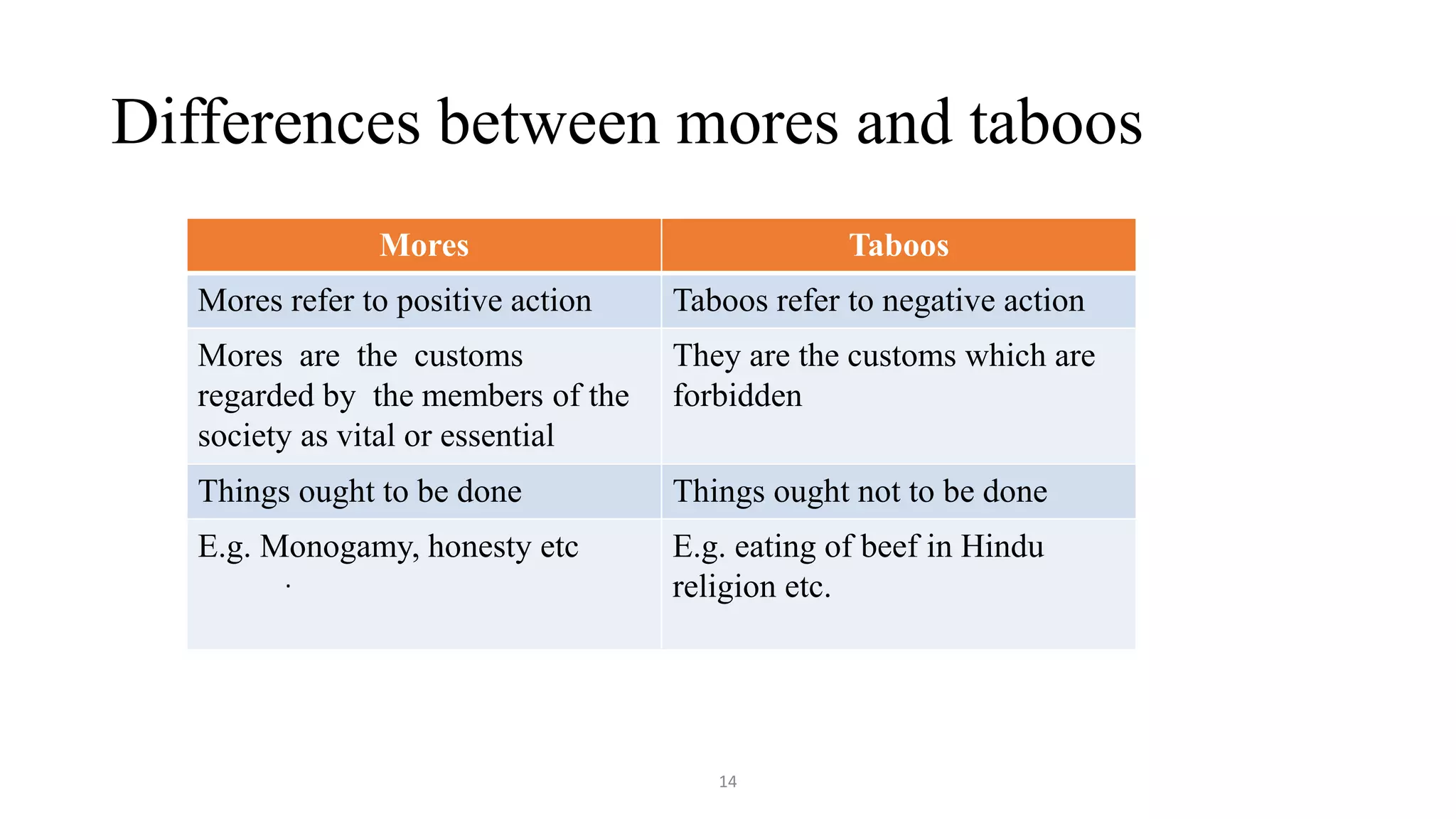
• These arecustoms regulating more significant social behavior.
Eg: Being polite to others
Using knife, spoon or fork for eating etc.
13
14.
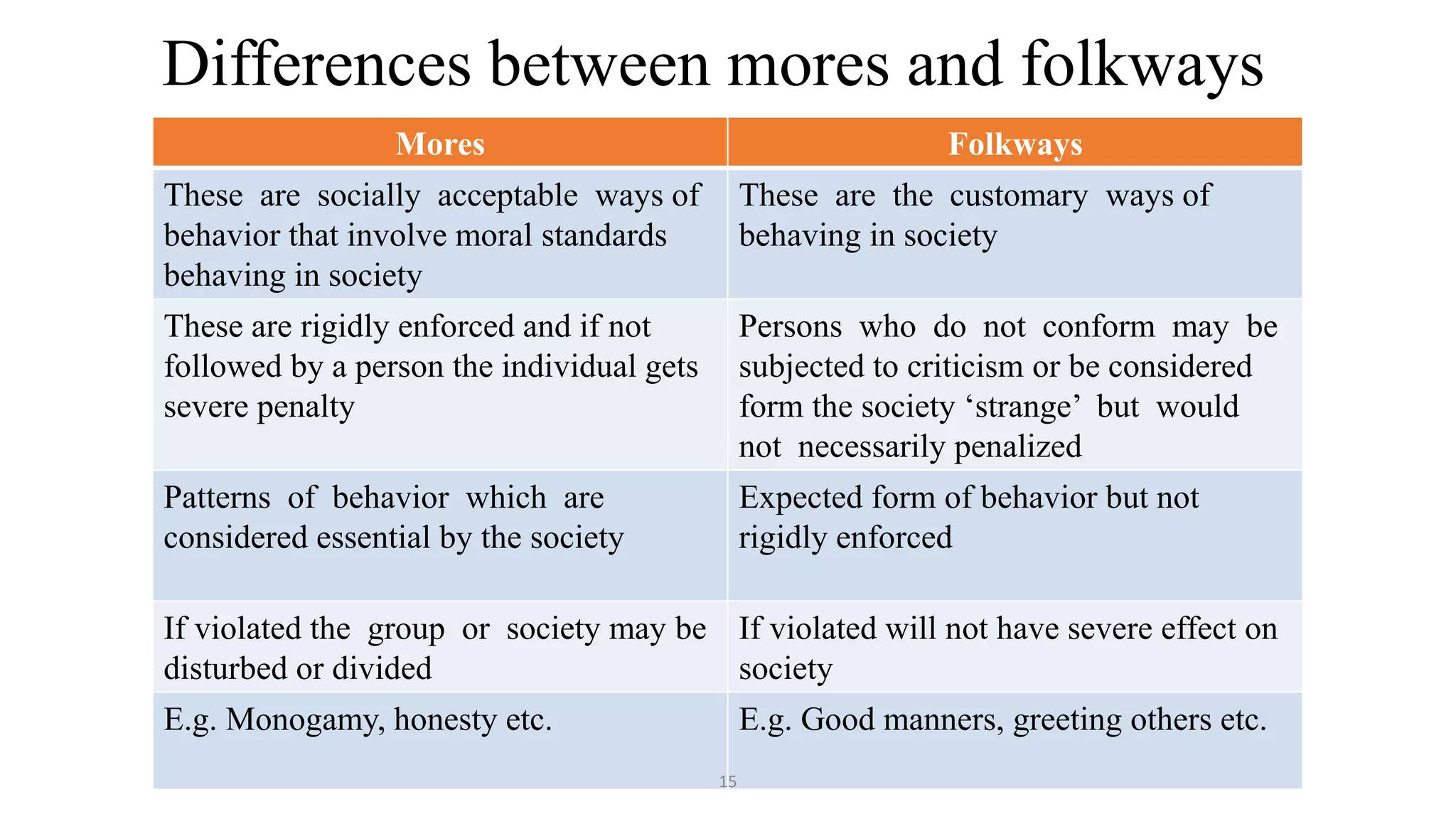
Differences between moresand taboos
Mores Taboos
Mores refer to positive action Taboos refer to negative action
Mores are the customs
regarded by the members of the
society as vital or essential
They are the customs which are
forbidden
Things ought to be done Things ought not to be done
E.g. Monogamy, honesty etc E.g. eating of beef in Hindu
religion etc.
.
14
15.
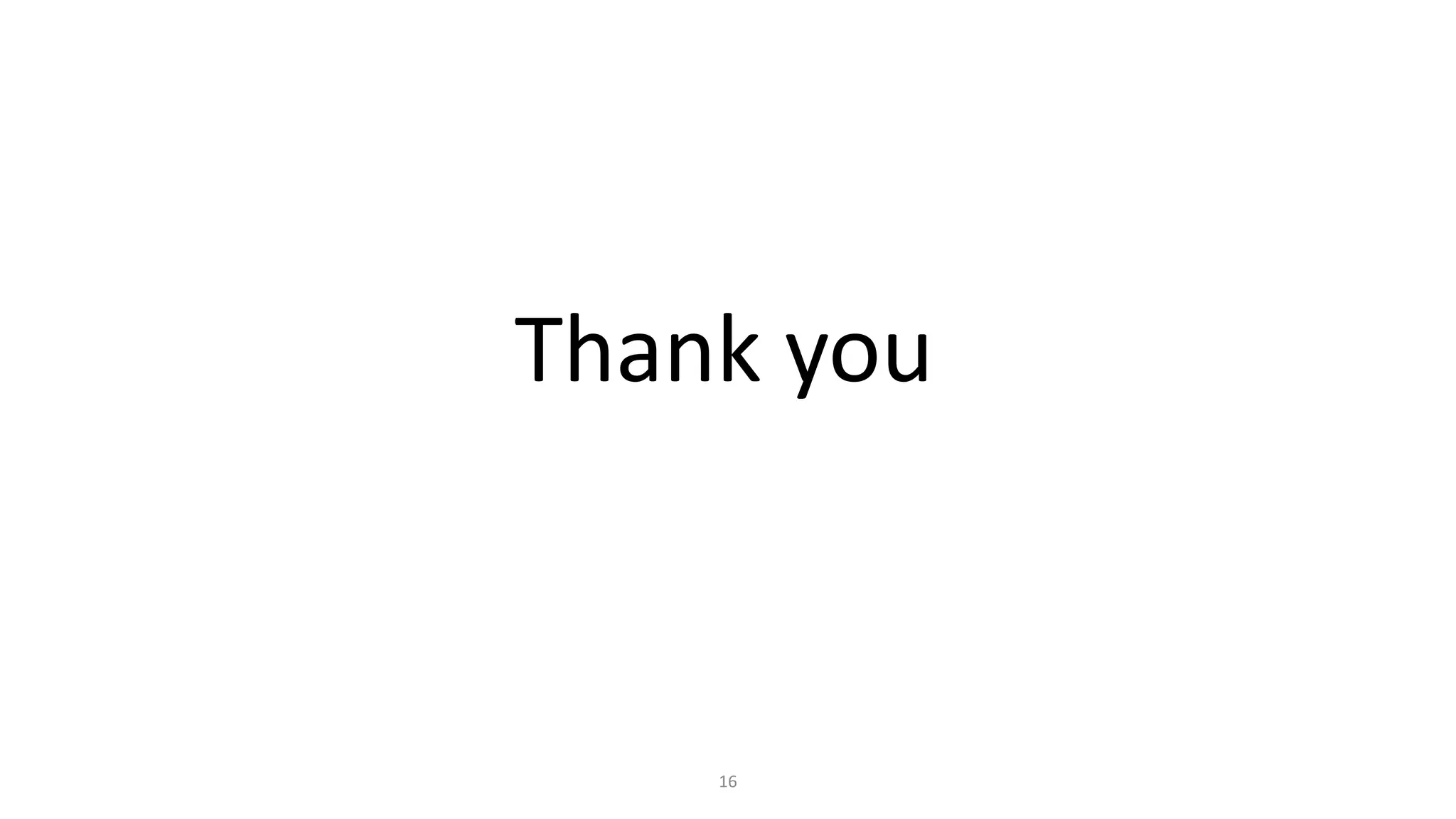
Differences between moresand folkways
Mores Folkways
These are socially acceptable ways of
behavior that involve moral standards
behaving in society
These are the customary ways of
behaving in society
These are rigidly enforced and if not
followed by a person the individual gets
severe penalty
Persons who do not conform may be
subjected to criticism or be considered
form the society ‘strange’ but would
not necessarily penalized
Patterns of behavior which are
considered essential by the society
Expected form of behavior but not
rigidly enforced
If violated the group or society may be
disturbed or divided
If violated will not have severe effect on
society
E.g. Monogamy, honesty etc. E.g. Good manners, greeting others etc.
15