Normans

   in
England
Introduction
The Normans (in French: Normands)
Descended from Norse Viking
         Frankish
conquerors of                  and
Gallo-Roman stock.
 Normans and the Anglo-Saxons
  came from the same basic stock.
 They were each Scandinavian
  immigrants
 English and Norman social
  structures were very similar
William of Normandy was crowned William I (William the
Conqueror) in Westminster Abbey, the burial place of
Edward the Confessor, the king from whom William derived
his claim to the throne, on December 25th 1066.


                                         Henry II, the first 'Plantagenet' king, accedes to
                                         the throne, on December 19th 1154
William the Conqueror led to the Norman Conquest
of England In 1066

Normans          largely
removed the native
ruling class, replacing
it with a foreign,
French-speaking
monarchy, aristocracy
and clerical hierarchy.

In turn, Normans brought about a transformation of
the English language and the culture of England in a
new era often referred to as Norman England.
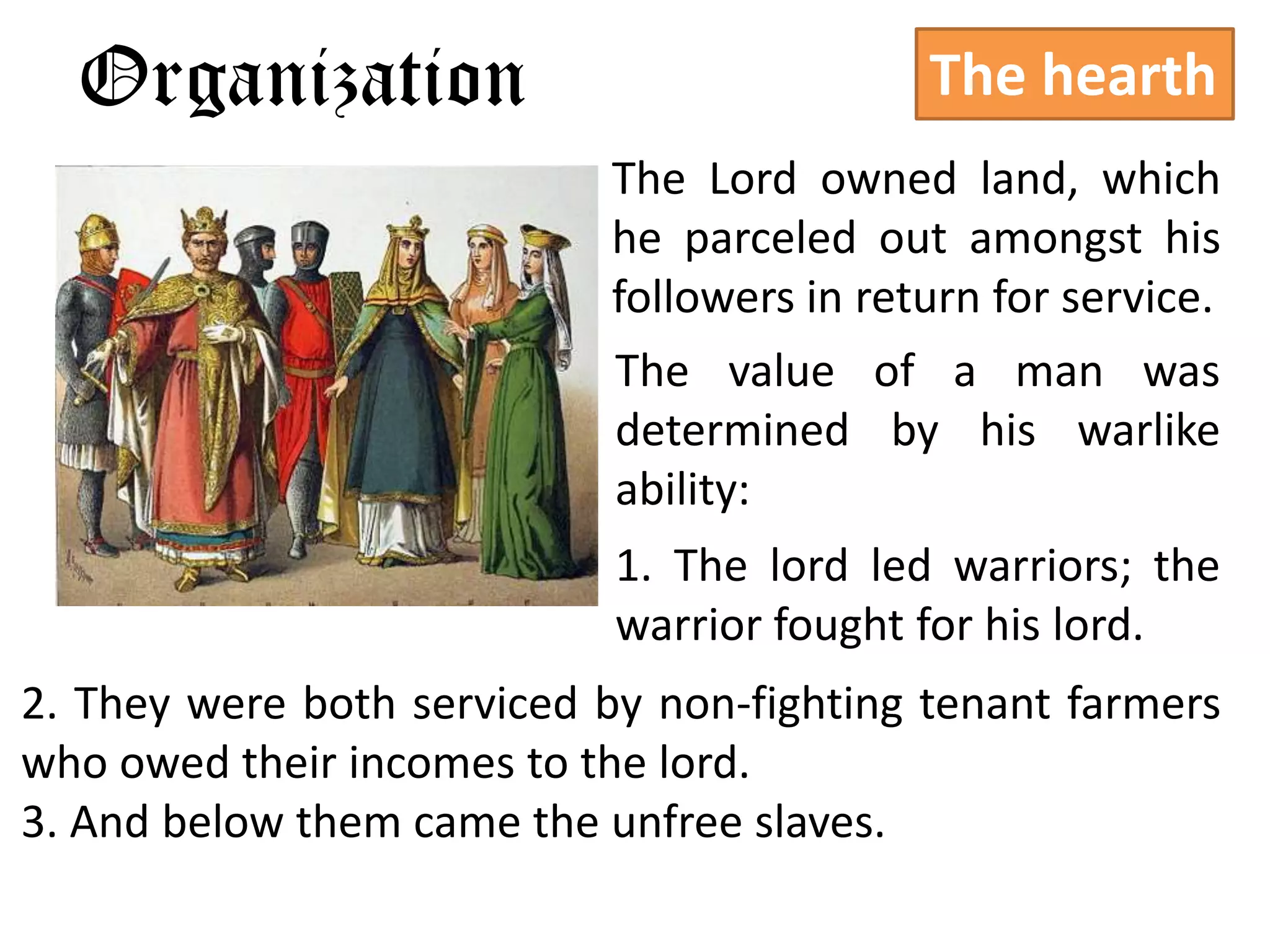
Organization                              The hearth
                            The Lord owned land, which
                            he parceled out amongst his
                            followers in return for service.
                            The value of a man was
                            determined by his warlike
                            ability:
                            1. The lord led warriors; the
                            warrior fought for his lord.
2. They were both serviced by non-fighting tenant farmers
who owed their incomes to the lord.
3. And below them came the unfree slaves.
Norman Law


             Ordeal
The Domesday Book - compiled in 1085-6 - the earliest
public record of the national archives and a legal
document that is still valid as evidence of title to land.


Drawn up on the orders
of King William I
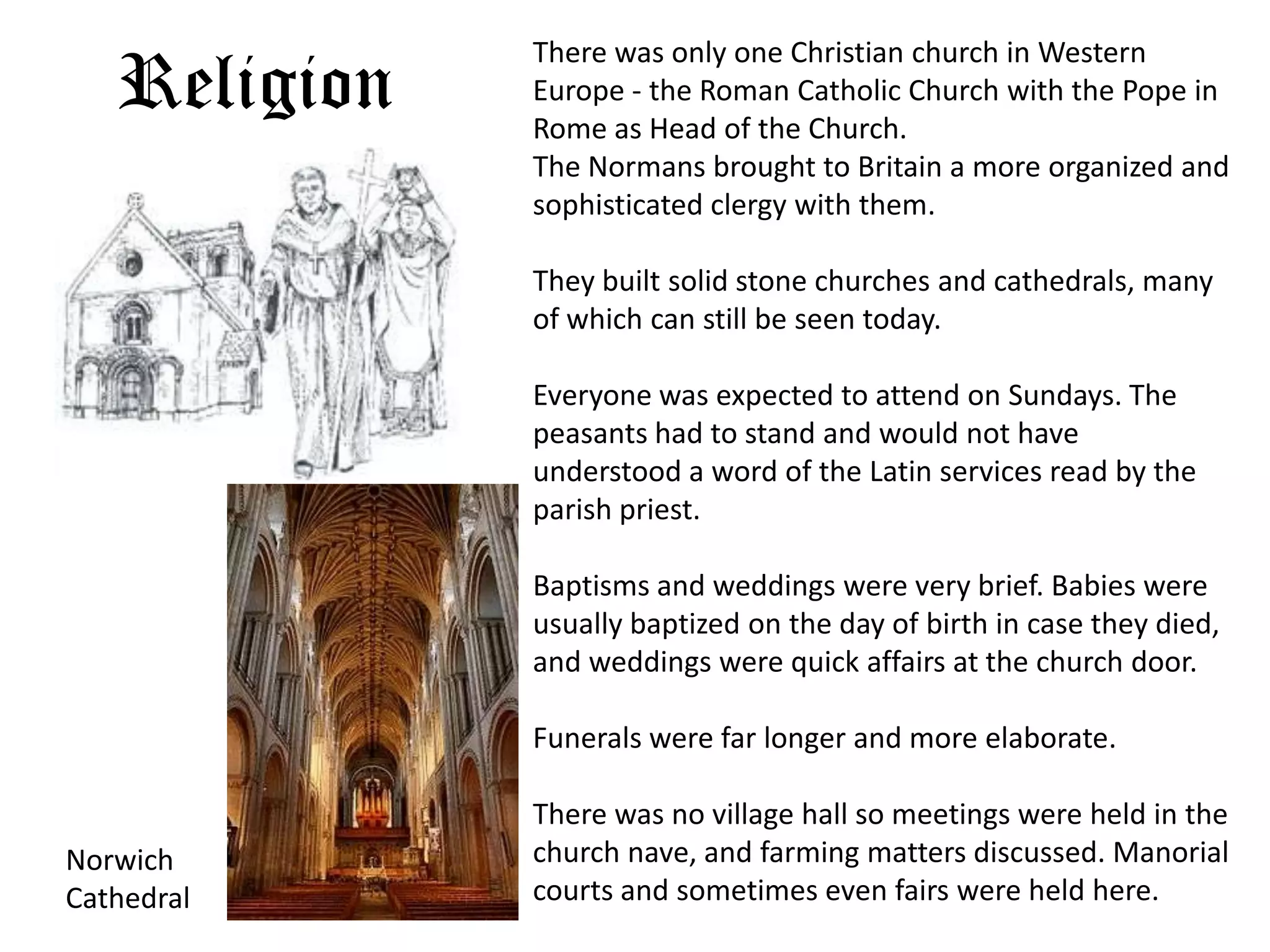
There was only one Christian church in Western
   Religion   Europe - the Roman Catholic Church with the Pope in
              Rome as Head of the Church.
              The Normans brought to Britain a more organized and
              sophisticated clergy with them.

              They built solid stone churches and cathedrals, many
              of which can still be seen today.

              Everyone was expected to attend on Sundays. The
              peasants had to stand and would not have
              understood a word of the Latin services read by the
              parish priest.

              Baptisms and weddings were very brief. Babies were
              usually baptized on the day of birth in case they died,
              and weddings were quick affairs at the church door.

              Funerals were far longer and more elaborate.

              There was no village hall so meetings were held in the
Norwich       church nave, and farming matters discussed. Manorial
Cathedral     courts and sometimes even fairs were held here.
Clothes
Fine wool or linen clothes were
made from yarn which was spun,
woven, dyed and sewn in the lord's
castle.
The rich lord wore a tunic, with a
super tunic worn over the top.
His cloak (cape) was fastened with
a Brooch (pin).
The short hair and beard were
very Norman, and so too the
polite manner!
The lady's Muslim style veil and
wimple was a fashion brought back
from the first of the Crusades.
Housing
They built themselves strong, stone keeps in which to
live. Entrances were at first floor level and reached by
means of wooden steps which could be taken away if
an attack threatened.
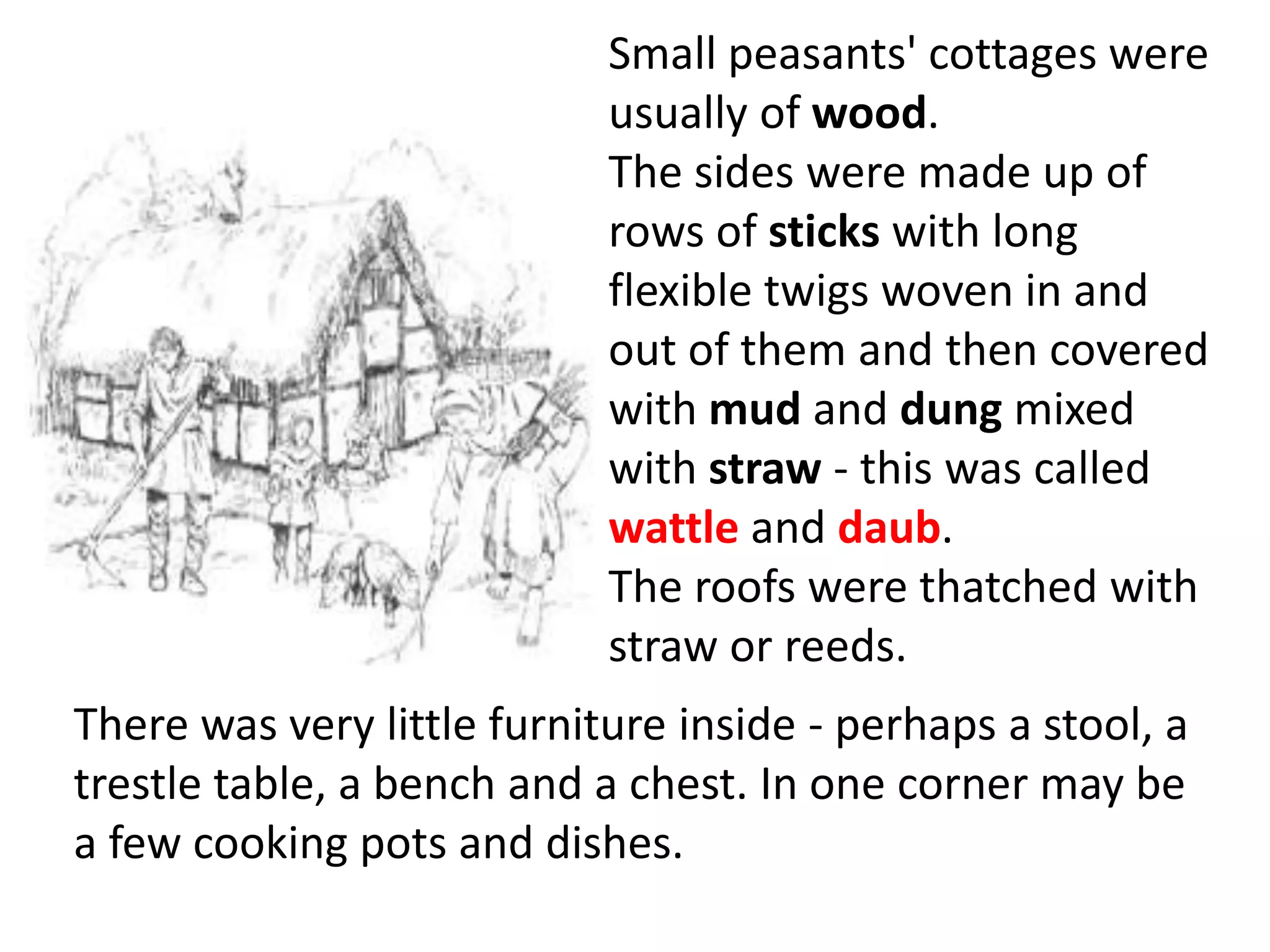
Small peasants' cottages were
                            usually of wood.
                            The sides were made up of
                            rows of sticks with long
                            flexible twigs woven in and
                            out of them and then covered
                            with mud and dung mixed
                            with straw - this was called
                            wattle and daub.
                            The roofs were thatched with
                            straw or reeds.
There was very little furniture inside - perhaps a stool, a
trestle table, a bench and a chest. In one corner may be
a few cooking pots and dishes.
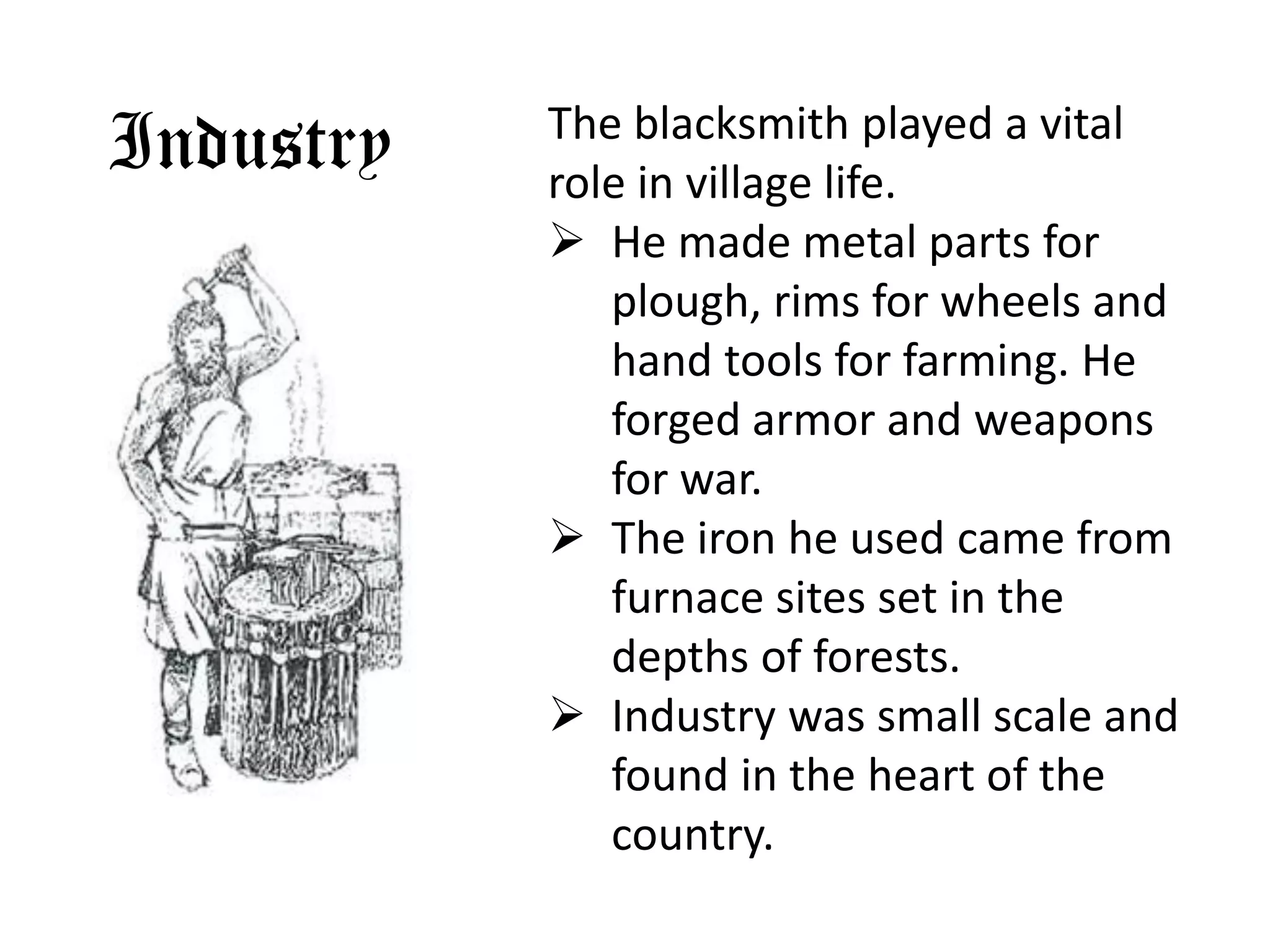
The blacksmith played a vital
Industry   role in village life.
            He made metal parts for
              plough, rims for wheels and
              hand tools for farming. He
              forged armor and weapons
              for war.
            The iron he used came from
              furnace sites set in the
              depths of forests.
            Industry was small scale and
              found in the heart of the
              country.
Conclusion
A huge body of French words were ultimately to
become part of the English vocabulary, many of these
continuing side by side with their English equivalent,
such as "sacred" and "holy", "legal" and "lawful,"
"stench" and "aroma," etc. Many French words replaced
English ones, so that before the end of the 14th century
Chaucer was able to use a vast store of new words such
as "courage" in place of "heartness," and so on. English
became vastly enriched, more cosmopolitan, sharing its
Teutonic and Romance traditions.
Sources:
http://www.bbc.co.uk/history/british/normans/
http://www.schoolsliaison.org.uk/kids/aston/changingtimes/norman/htm
http://en.wikipedia.org/wiki/Norman_conquest_of_England
http://www.britannia.com/history/narmedhist.html

Normans in england

  • 1.
    Normans in England
  • 2.
    Introduction The Normans (inFrench: Normands) Descended from Norse Viking Frankish conquerors of and Gallo-Roman stock.  Normans and the Anglo-Saxons came from the same basic stock.  They were each Scandinavian immigrants  English and Norman social structures were very similar
  • 3.
    William of Normandywas crowned William I (William the Conqueror) in Westminster Abbey, the burial place of Edward the Confessor, the king from whom William derived his claim to the throne, on December 25th 1066. Henry II, the first 'Plantagenet' king, accedes to the throne, on December 19th 1154
  • 4.
    William the Conquerorled to the Norman Conquest of England In 1066 Normans largely removed the native ruling class, replacing it with a foreign, French-speaking monarchy, aristocracy and clerical hierarchy. In turn, Normans brought about a transformation of the English language and the culture of England in a new era often referred to as Norman England.
  • 5.
    Organization The hearth The Lord owned land, which he parceled out amongst his followers in return for service. The value of a man was determined by his warlike ability: 1. The lord led warriors; the warrior fought for his lord. 2. They were both serviced by non-fighting tenant farmers who owed their incomes to the lord. 3. And below them came the unfree slaves.
  • 6.
  • 7.
    The Domesday Book- compiled in 1085-6 - the earliest public record of the national archives and a legal document that is still valid as evidence of title to land. Drawn up on the orders of King William I
  • 8.
    There was onlyone Christian church in Western Religion Europe - the Roman Catholic Church with the Pope in Rome as Head of the Church. The Normans brought to Britain a more organized and sophisticated clergy with them. They built solid stone churches and cathedrals, many of which can still be seen today. Everyone was expected to attend on Sundays. The peasants had to stand and would not have understood a word of the Latin services read by the parish priest. Baptisms and weddings were very brief. Babies were usually baptized on the day of birth in case they died, and weddings were quick affairs at the church door. Funerals were far longer and more elaborate. There was no village hall so meetings were held in the Norwich church nave, and farming matters discussed. Manorial Cathedral courts and sometimes even fairs were held here.
  • 9.
    Clothes Fine wool orlinen clothes were made from yarn which was spun, woven, dyed and sewn in the lord's castle. The rich lord wore a tunic, with a super tunic worn over the top. His cloak (cape) was fastened with a Brooch (pin). The short hair and beard were very Norman, and so too the polite manner! The lady's Muslim style veil and wimple was a fashion brought back from the first of the Crusades.
  • 10.
    Housing They built themselvesstrong, stone keeps in which to live. Entrances were at first floor level and reached by means of wooden steps which could be taken away if an attack threatened.
  • 11.
    Small peasants' cottageswere usually of wood. The sides were made up of rows of sticks with long flexible twigs woven in and out of them and then covered with mud and dung mixed with straw - this was called wattle and daub. The roofs were thatched with straw or reeds. There was very little furniture inside - perhaps a stool, a trestle table, a bench and a chest. In one corner may be a few cooking pots and dishes.
  • 12.
    The blacksmith playeda vital Industry role in village life.  He made metal parts for plough, rims for wheels and hand tools for farming. He forged armor and weapons for war.  The iron he used came from furnace sites set in the depths of forests.  Industry was small scale and found in the heart of the country.
  • 13.
    Conclusion A huge bodyof French words were ultimately to become part of the English vocabulary, many of these continuing side by side with their English equivalent, such as "sacred" and "holy", "legal" and "lawful," "stench" and "aroma," etc. Many French words replaced English ones, so that before the end of the 14th century Chaucer was able to use a vast store of new words such as "courage" in place of "heartness," and so on. English became vastly enriched, more cosmopolitan, sharing its Teutonic and Romance traditions. Sources: http://www.bbc.co.uk/history/british/normans/ http://www.schoolsliaison.org.uk/kids/aston/changingtimes/norman/htm http://en.wikipedia.org/wiki/Norman_conquest_of_England http://www.britannia.com/history/narmedhist.html