



Dr. Norman Amundson
University of British Columbia
Plenary I: Positive Affirmation and
Action as Career Development
Strategies
POSITIVE AFFIRMATION
AND ACTION AS
CAREER
DEVELOPMENT
STRATEGIES
Norm Amundson / UBC
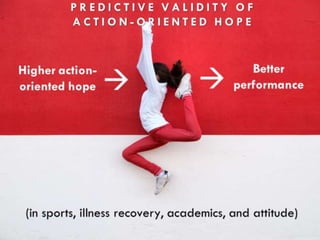
P R E D I C T I V E V A L I D I T Y O F
A C T I O N - O R I E N T E D H O P E
(in sports, illness recovery, academics, and attitude)
Higher action-oriented hope Better performance 
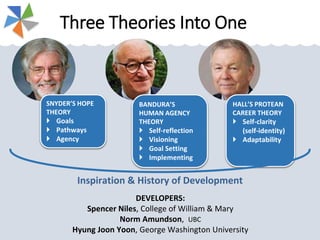
BANDURA’S
HUMAN AGENCY
THEORY
 Self-reflection
 Visioning
 Goal Setting
 Implementing
HALL’S
PROTEAN
CAREER
THEORY
 Self-clarity
(self-
identity)
 Adaptability
T H R E E T H E O R I E S I N T O O N E
SNYDER’S
HOPE THEORY
 Goals
 Pathways
 Agency
Inspiration & History of Development
DEVELOPERS:
Spencer Niles, College of William & Mary
Norm Amundson, UBC
Hyung Joon Yoon, George Washington University
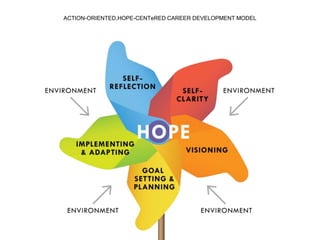
ACTION-ORIENTED,HOPE-CENTeRED CAREER DEVELOPMENT MODEL
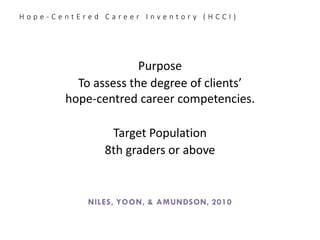
H o p e - C e n t E r e d C a r e e r I n v e n t o r y ( H C C I )
Purpose
To assess the degree of clients’
hope-centred career competencies.
Target Population
8th graders or above
Niles, Yoon, & Amundson, 2010
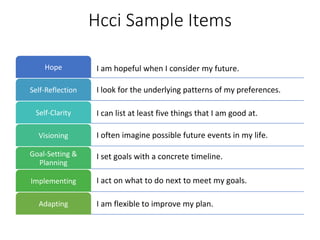
H C C I S A M P L E I T E M S
Hope
Self-Reflection
Self-Clarity
Visioning
Goal-Setting &
Planning
Implementing
Adapting
I am hopeful when I consider my future.
I look for the underlying patterns of my preferences.
I can list at least five things that I am good at.
I often imagine possible future events in my life.
I set goals with a concrete timeline.
I act on what to do next to meet my goals.
I am flexible to improve my plan.
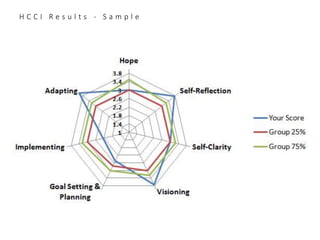
H C C I R e s u l t s - S a m p l e
S A S K A T C H E W A N P A T H W A Y S
P R O J E C T
IEHP Support, Bridging and Integration
5 year provincial project began April 1, 2011
Funded by Health Canada, in collaboration with
the Saskatchewan Ministry of Health
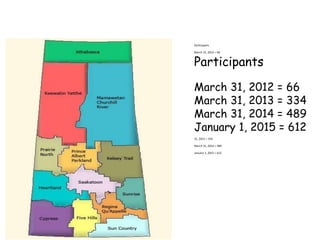
Participants
March 31, 2012 = 66
Participants
March 31, 2012 = 66
March 31, 2013 = 334
March 31, 2014 = 489
January 1, 2015 = 612
31, 2013 = 334
March 31, 2014 = 489
January 1, 2015 = 612
WHO WE SERVE
T H E S T A R T I N G P O I N T
 Language – must meet regulatory body
requirements or pathway ceases
 Language proficiency is critical to ensure
safety
 Underemployed shift workers spread
across the province
F I R S T S O L U T I O N S
Flexible language supports to meet the unique
needs of our participants:
 Language Workshops/Study Sessions
 Independent online courses
 Instructor-led virtual classroom
P R O C E S S
 Introduce the HCCI model – (metaphor of a wheel)
 Concept of Career Flow
 Initial HCCI and debrief
 Walking the Problem, Circle of Strengths
Final HCCI and debrief
 Participant survey
 Participant focus groups
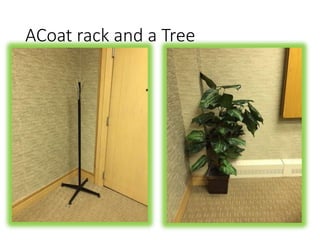
A C O A T R A C K A N D A T R E E
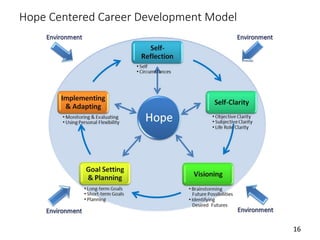
H O P E C E N T E R E D C A R E E R
D E V E L O P M E N T M O D E L
16
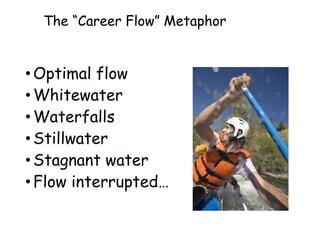
T H E “ C A R E E R F L O W ”
M E T A P H O R
• Optimal flow
• Whitewater
• Waterfalls
• Stillwater
• Stagnant water
• Flow interrupted…
A D D I T I O N A L I N T E R V E N T I O N S
Goal Setting/Time Management techniques
 Thought awareness
 Journaling
 Support with language programming
E V A L U A T I O N
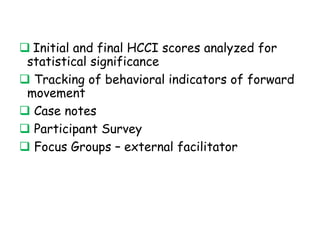
 Initial and final HCCI scores analyzed for
statistical significance
 Tracking of behavioral indicators of
forward movement
 Case notes
 Participant Survey
 Focus Groups – external facilitator
R E S U L T S
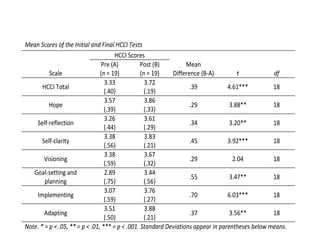
Mean Scores of the Initial and Final HCCI Tests
Scale
HCCI Scores
Pre (A)
(n = 19)
Post (B)
(n = 19)
Mean
Difference (B-A) t df
HCCI Total
3.33
(.40)
3.72
(.19)
.39 4.61*** 18
Hope
3.57
(.39)
3.86
(.33)
.29 3.88** 18
Self-reflection
3.26
(.44)
3.61
(.29)
.34 3.20** 18
Self-clarity
3.38
(.56)
3.83
(.21)
.45 3.92*** 18
Visioning
3.38
(.59)
3.67
(.32)
.29 2.04 18
Goal-setting and
planning
2.89
(.75)
3.44
(.56)
.55 3.47** 18
Implementing
3.07
(.59)
3.76
(.27)
.70 6.03*** 18
Adapting
3.51
(.50)
3.88
(.21)
.37 3.56** 18
Note. * = p < .05, ** = p < .01, *** = p < .001. Standard Deviations appear in parentheses below means.
R E S U L T S
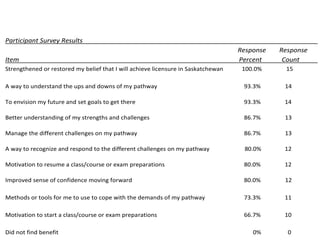
Participant Survey Results________________________________________________________________
Response Response
Item___________________________________________________________ Percent____ Count_____
Strengthened or restored my belief that I will achieve licensure in Saskatchewan 100.0% 15
A way to understand the ups and downs of my pathway 93.3% 14
To envision my future and set goals to get there 93.3% 14
Better understanding of my strengths and challenges 86.7% 13
Manage the different challenges on my pathway 86.7% 13
A way to recognize and respond to the different challenges on my pathway 80.0% 12
Motivation to resume a class/course or exam preparations 80.0% 12
Improved sense of confidence moving forward 80.0% 12
Methods or tools for me to use to cope with the demands of my pathway 73.3% 11
Motivation to start a class/course or exam preparations 66.7% 10
Did not find benefit 0% 0
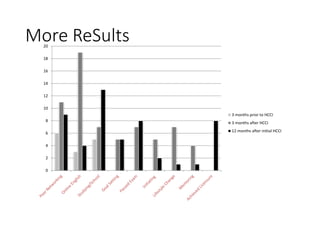
M O R E R E S U L T S
0
2
4
6
8
10
12
14
16
18
20
3 months prior to HCCI
3 months after HCCI
12 months after initial HCCI
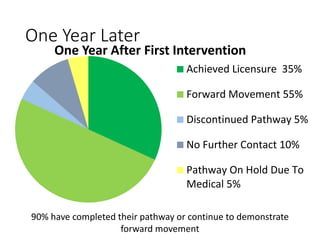
O N E Y E A R L A T E R
90% have completed their pathway or continue to demonstrate
forward movement
One Year After First Intervention
Achieved Licensure 35%
Forward Movement 55%
Discontinued Pathway 5%
No Further Contact 10%
Pathway On Hold Due To
Medical 5%
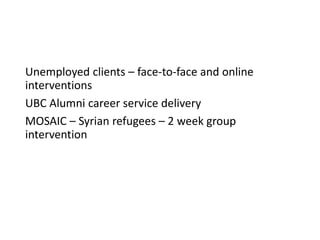
C U R R E N T P R O J E C T S
Unemployed clients – face-to-face and online
interventions
UBC Alumni career service delivery
MOSAIC – Syrian refugees – 2 week group intervention
A D D I T I O N A L I N F O R M A T I O N
www.mycareerflow.com
Website site is open until March 20, 2017
Key: w1wiqc0
Contact info: norman.amundson@ubc.ca
Resources:
www.ergoncommunications.com
“Active Engagement”
THANK YOU
norman.amundson@ubc.ca
2017 Perspectives Symposium
March 2, 2017
#Perspectives2017

Perspectives 2017: Norm Amundson

  • 1.
    Dr. Norman Amundson Universityof British Columbia Plenary I: Positive Affirmation and Action as Career Development Strategies
  • 2.
    POSITIVE AFFIRMATION AND ACTIONAS CAREER DEVELOPMENT STRATEGIES Norm Amundson / UBC
  • 4.
    P R ED I C T I V E V A L I D I T Y O F A C T I O N - O R I E N T E D H O P E (in sports, illness recovery, academics, and attitude) Higher action-oriented hope Better performance 
  • 5.
    BANDURA’S HUMAN AGENCY THEORY  Self-reflection Visioning  Goal Setting  Implementing HALL’S PROTEAN CAREER THEORY  Self-clarity (self- identity)  Adaptability T H R E E T H E O R I E S I N T O O N E SNYDER’S HOPE THEORY  Goals  Pathways  Agency Inspiration & History of Development DEVELOPERS: Spencer Niles, College of William & Mary Norm Amundson, UBC Hyung Joon Yoon, George Washington University
  • 6.
  • 7.
    H o pe - C e n t E r e d C a r e e r I n v e n t o r y ( H C C I ) Purpose To assess the degree of clients’ hope-centred career competencies. Target Population 8th graders or above Niles, Yoon, & Amundson, 2010
  • 8.
    H C CI S A M P L E I T E M S Hope Self-Reflection Self-Clarity Visioning Goal-Setting & Planning Implementing Adapting I am hopeful when I consider my future. I look for the underlying patterns of my preferences. I can list at least five things that I am good at. I often imagine possible future events in my life. I set goals with a concrete timeline. I act on what to do next to meet my goals. I am flexible to improve my plan.
  • 9.
    H C CI R e s u l t s - S a m p l e
  • 10.
    S A SK A T C H E W A N P A T H W A Y S P R O J E C T IEHP Support, Bridging and Integration 5 year provincial project began April 1, 2011 Funded by Health Canada, in collaboration with the Saskatchewan Ministry of Health
  • 11.
    Participants March 31, 2012= 66 Participants March 31, 2012 = 66 March 31, 2013 = 334 March 31, 2014 = 489 January 1, 2015 = 612 31, 2013 = 334 March 31, 2014 = 489 January 1, 2015 = 612 WHO WE SERVE
  • 12.
    T H ES T A R T I N G P O I N T  Language – must meet regulatory body requirements or pathway ceases  Language proficiency is critical to ensure safety  Underemployed shift workers spread across the province
  • 13.
    F I RS T S O L U T I O N S Flexible language supports to meet the unique needs of our participants:  Language Workshops/Study Sessions  Independent online courses  Instructor-led virtual classroom
  • 14.
    P R OC E S S  Introduce the HCCI model – (metaphor of a wheel)  Concept of Career Flow  Initial HCCI and debrief  Walking the Problem, Circle of Strengths Final HCCI and debrief  Participant survey  Participant focus groups
  • 15.
    A C OA T R A C K A N D A T R E E
  • 16.
    H O PE C E N T E R E D C A R E E R D E V E L O P M E N T M O D E L 16
  • 17.
    T H E“ C A R E E R F L O W ” M E T A P H O R • Optimal flow • Whitewater • Waterfalls • Stillwater • Stagnant water • Flow interrupted…
  • 18.
    A D DI T I O N A L I N T E R V E N T I O N S Goal Setting/Time Management techniques  Thought awareness  Journaling  Support with language programming
  • 19.
    E V AL U A T I O N  Initial and final HCCI scores analyzed for statistical significance  Tracking of behavioral indicators of forward movement  Case notes  Participant Survey  Focus Groups – external facilitator
  • 20.
    R E SU L T S Mean Scores of the Initial and Final HCCI Tests Scale HCCI Scores Pre (A) (n = 19) Post (B) (n = 19) Mean Difference (B-A) t df HCCI Total 3.33 (.40) 3.72 (.19) .39 4.61*** 18 Hope 3.57 (.39) 3.86 (.33) .29 3.88** 18 Self-reflection 3.26 (.44) 3.61 (.29) .34 3.20** 18 Self-clarity 3.38 (.56) 3.83 (.21) .45 3.92*** 18 Visioning 3.38 (.59) 3.67 (.32) .29 2.04 18 Goal-setting and planning 2.89 (.75) 3.44 (.56) .55 3.47** 18 Implementing 3.07 (.59) 3.76 (.27) .70 6.03*** 18 Adapting 3.51 (.50) 3.88 (.21) .37 3.56** 18 Note. * = p < .05, ** = p < .01, *** = p < .001. Standard Deviations appear in parentheses below means.
  • 21.
    R E SU L T S Participant Survey Results________________________________________________________________ Response Response Item___________________________________________________________ Percent____ Count_____ Strengthened or restored my belief that I will achieve licensure in Saskatchewan 100.0% 15 A way to understand the ups and downs of my pathway 93.3% 14 To envision my future and set goals to get there 93.3% 14 Better understanding of my strengths and challenges 86.7% 13 Manage the different challenges on my pathway 86.7% 13 A way to recognize and respond to the different challenges on my pathway 80.0% 12 Motivation to resume a class/course or exam preparations 80.0% 12 Improved sense of confidence moving forward 80.0% 12 Methods or tools for me to use to cope with the demands of my pathway 73.3% 11 Motivation to start a class/course or exam preparations 66.7% 10 Did not find benefit 0% 0
  • 22.
    M O RE R E S U L T S 0 2 4 6 8 10 12 14 16 18 20 3 months prior to HCCI 3 months after HCCI 12 months after initial HCCI
  • 23.
    O N EY E A R L A T E R 90% have completed their pathway or continue to demonstrate forward movement One Year After First Intervention Achieved Licensure 35% Forward Movement 55% Discontinued Pathway 5% No Further Contact 10% Pathway On Hold Due To Medical 5%
  • 25.
    C U RR E N T P R O J E C T S Unemployed clients – face-to-face and online interventions UBC Alumni career service delivery MOSAIC – Syrian refugees – 2 week group intervention
  • 26.
    A D DI T I O N A L I N F O R M A T I O N www.mycareerflow.com Website site is open until March 20, 2017 Key: w1wiqc0 Contact info: norman.amundson@ubc.ca Resources: www.ergoncommunications.com “Active Engagement”
  • 27.
  • 28.
    2017 Perspectives Symposium March2, 2017 #Perspectives2017

Editor's Notes

  • #7 Here’s the hope-centered career development model. Hope, self-reflection, self-clarity, visioning, goal setting & planning, implementing & adapting, and self-reflection.. As you can see, hope in at the center of this model. Without hope, these processes might not be completed successfully. Hope is essential element.
  • #8  Joon
  • #12 There are13 RHAs spread over 592,500 square kilometers - Support provided in person, by phone, email, facebook, FaceTime or Skype To date - 161 IEHPs have achieved licensure
  • #17 Here’s the hope-centered career development model. Hope, self-reflection, self-clarity, visioning, goal setting & planning, implementing & adapting, and self-reflection.. As you can see, hope in at the center of this model. Without hope, these processes might not be completed successfully. Hope is essential element.
  • #22 Play Video here!