Part-1
 Communication without the use of words is
known as non verbal communication.
 Non verbal communication is considered to
be extremely useful.
 Almost 93% communication is non verbal
communication.
 1. Kinesics
 2. Proxemics
 3. Chronemics
 4. Paralinguistics
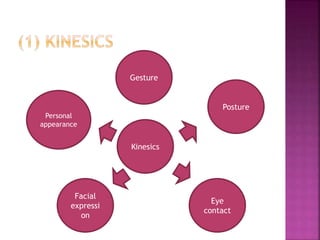
Kinesics
Eye
contact
Facial
expressi
on
Personal
appearance
Posture
Gesture
 Gesture is the movement made by hands,
arms, shoulder, head and torso.
 A well timed gestures not only drives a point
home but also enhances the impact and adds
greater value to what is being said.
 It has been observed that there are as many
as 700,000 varied hand gestures alone.
(Ray L. Birdwhistell, Introduction to kinesics, Louisville Press,
1952)
 1. Enumerative – numbers
 2. Descriptive- size of objects
 3. Symbolic- abstract concepts
 4. Locative- location of an object
 5. Emphatic- emphasis
 Your style of sitting and standing is known as
posture.
 Your postures say more than the words you
speak.
 Truly, what one speaks is very important but
what you do just before you begin and after
you have finished is equally important.
 Slumped posture-low spirit
 Erect posture- high spirits and energy
 Lean forward- open, honest and interested
 Lean backward- defensive or disinterested
 Crossed arms- not ready to listen
 Uncrossed arms- willingness to listen
 Face is the mirror of heart. Your feelings get
reflected on your face. One can send and
receive feelings through facial expression.
 Facial expression is difficult to interpret.
Though there are only five basic expressions,
you can have 33 blends.
(Pearce, G.Glenn et al., 1988, Business communication,
second edn, page-590)
 Inhibited- restricted and stolid
 Uninhibited- spontaneous and impetuous
 Substitute- happy with a long face
 Frozen- no change in expression
 Blank- no expression at all
 “The Eyes are considered to be windows of
the soul”
 It sends and receives feedback.
 It expresses emotions and gives instructions.
 Not maintaining eye contact indicates lack of
confidence on the part of speaker and
disinterest on the part of listener.
 Personal appearance plays an important role;
people see you before they hear you.
 Appearance includes clothes, hair, jewellery,
cosmetics and so on.
 When you meet people or speak in public,
your appearance not only contributes to
building your image but also the image of
organization you represent.
Thank you

Non verbal communication part 1

  • 1.
  • 2.
     Communication withoutthe use of words is known as non verbal communication.  Non verbal communication is considered to be extremely useful.  Almost 93% communication is non verbal communication.
  • 3.
     1. Kinesics 2. Proxemics  3. Chronemics  4. Paralinguistics
  • 4.
  • 5.
     Gesture isthe movement made by hands, arms, shoulder, head and torso.  A well timed gestures not only drives a point home but also enhances the impact and adds greater value to what is being said.  It has been observed that there are as many as 700,000 varied hand gestures alone. (Ray L. Birdwhistell, Introduction to kinesics, Louisville Press, 1952)
  • 6.
     1. Enumerative– numbers  2. Descriptive- size of objects  3. Symbolic- abstract concepts  4. Locative- location of an object  5. Emphatic- emphasis
  • 7.
     Your styleof sitting and standing is known as posture.  Your postures say more than the words you speak.  Truly, what one speaks is very important but what you do just before you begin and after you have finished is equally important.
  • 8.
     Slumped posture-lowspirit  Erect posture- high spirits and energy  Lean forward- open, honest and interested  Lean backward- defensive or disinterested  Crossed arms- not ready to listen  Uncrossed arms- willingness to listen
  • 9.
     Face isthe mirror of heart. Your feelings get reflected on your face. One can send and receive feelings through facial expression.  Facial expression is difficult to interpret. Though there are only five basic expressions, you can have 33 blends. (Pearce, G.Glenn et al., 1988, Business communication, second edn, page-590)
  • 10.
     Inhibited- restrictedand stolid  Uninhibited- spontaneous and impetuous  Substitute- happy with a long face  Frozen- no change in expression  Blank- no expression at all
  • 11.
     “The Eyesare considered to be windows of the soul”  It sends and receives feedback.  It expresses emotions and gives instructions.  Not maintaining eye contact indicates lack of confidence on the part of speaker and disinterest on the part of listener.
  • 12.
     Personal appearanceplays an important role; people see you before they hear you.  Appearance includes clothes, hair, jewellery, cosmetics and so on.  When you meet people or speak in public, your appearance not only contributes to building your image but also the image of organization you represent.
  • 13.