Non Verbal Communication
   Actions Speak louder than
             words
             Shikha Sota
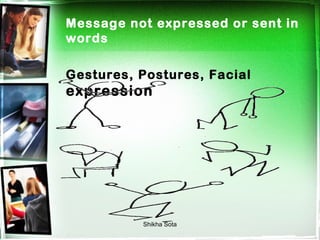
Message not expressed or sent in
words

Gestures, Postures, Facial
expression


          Shikha Sota
Is it Important?
Yes!          Yes!        Yes!

 “Only 7% of a message’s effect are
 carried by words, the other 93%
 through non -verbal means.”
                      (Mehabian)

 Impossible NOT to Communicate!
           Shikha Sota
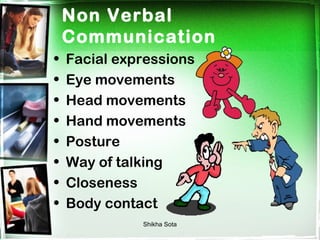
Non Verbal
    Communication
•   Facial expressions
•   Eye movements
•   Head movements
•   Hand movements
•   Posture
•   Way of talking
•   Closeness
•   Body contact
              Shikha Sota
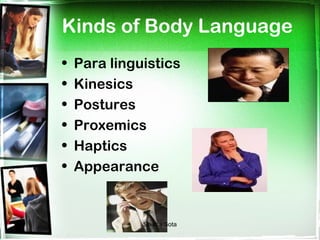
Kinds of Body Language
•   Para linguistics
•   Kinesics
•   Postures
•   Proxemics
•   Haptics
•   Appearance


              Shikha Sota
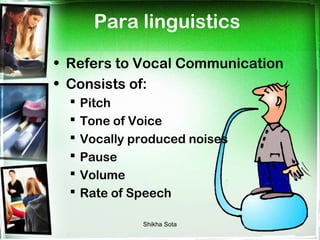
Para linguistics

• Refers to Vocal Communication
• Consists of:
     Pitch
     Tone of Voice
     Vocally produced noises
     Pause
     Volume
     Rate of Speech

               Shikha Sota
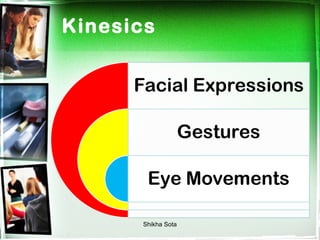
Kinesics


       Shikha Sota
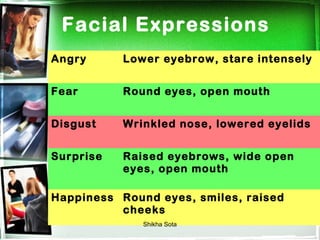
Facial Expressions
Angry      Lower eyebrow, stare intensely


Fear       Round eyes, open mouth


Disgust    Wrinkled nose, lowered eyelids


Surprise   Raised eyebrows, wide open
           eyes, open mouth

Happiness Round eyes, smiles, raised
          cheeks
              Shikha Sota
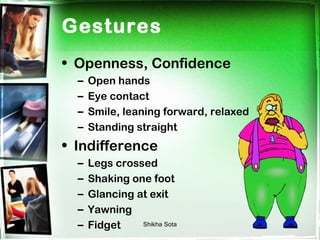
Gestures
• Openness, Confidence
  –   Open hands
  –   Eye contact
  –   Smile, leaning forward, relaxed
  –   Standing straight
• Indifference
  –   Legs crossed
  –   Shaking one foot
  –   Glancing at exit
  –   Yawning
  –   Fidget    Shikha Sota
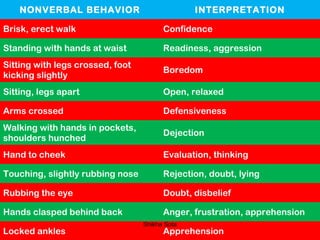
NONVERBAL BEHAVIOR                          INTERPRETATION

Brisk, erect walk                       Confidence

Standing with hands at waist            Readiness, aggression
Sitting with legs crossed, foot
                                        Boredom
kicking slightly
Sitting, legs apart                     Open, relaxed

Arms crossed                            Defensiveness
Walking with hands in pockets,
                                        Dejection
shoulders hunched
Hand to cheek                           Evaluation, thinking

Touching, slightly rubbing nose         Rejection, doubt, lying

Rubbing the eye                         Doubt, disbelief

Hands clasped behind back               Anger, frustration, apprehension
                                  Shikha Sota
Locked ankles                           Apprehension
Head resting in hand, eyes downcast       Boredom

Rubbing hands                             Anticipation

Sitting with hands clasped behind
                                          Confidence, superiority
head, legs crossed

Open palm                                 Sincerity, openness, innocence

Pinching bridge of nose, eyes closed      Negative evaluation

Tapping or drumming fingers               Impatience

Patting/fondling hair                     Lack of self-confidence; insecurity

Tilted head                               Interest

Stroking chin                             Trying to make a decision

Looking down, face turned away            Disbelief

Biting nails                              Insecurity, nervousness
                                    Shikha Sota
Pulling or tugging at ear                 Indecision
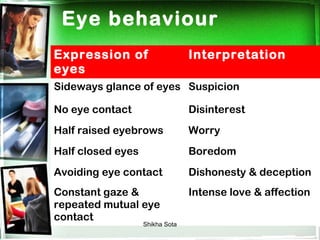
Eye behaviour
Expression of                    Interpretation
eyes
Sideways glance of eyes Suspicion

No eye contact                   Disinterest
Half raised eyebrows             Worry
Half closed eyes                 Boredom
Avoiding eye contact             Dishonesty & deception
Constant gaze &                  Intense love & affection
repeated mutual eye
contact
                   Shikha Sota
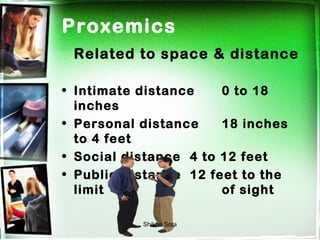
Proxemics
 Related to space & distance

• Intimate distance    0 to 18
  inches
• Personal distance    18 inches
  to 4 feet
• Social distance 4 to 12 feet
• Public distance 12 feet to the
  limit                of sight

           Shikha Sota
Haptics
• Study of touch as nonverbal
  communication
• Includes
    Handshake
    A pat on shoulder
    Shaking hands
    Holding hands
    Pat on the back
            Shikha Sota
Do’s & Don’ts
     Shikha Sota
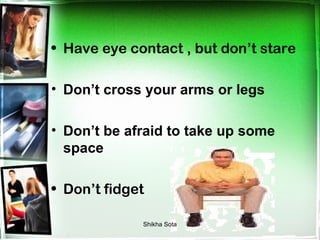
• Have eye contact , but don’t stare

• Don’t cross your arms or legs

• Don’t be afraid to take up some
  space

• Don’t fidget

             Shikha Sota
• Relax your shoulders

• Nod when you are listening

• Don’t slouch, sit up straight

• Lean, but not too much

           Shikha Sota
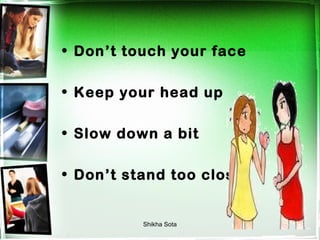
• Don’t touch your face

• Keep your head up

• Slow down a bit

• Don’t stand too close


          Shikha Sota
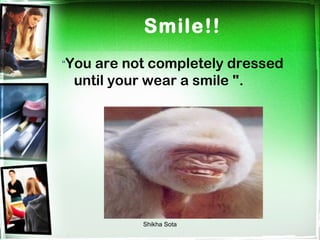
Smile!!
“Youare not completely dressed
 until your wear a smile ".


          Shikha Sota

Non verbal communication

  • 1.
    Non Verbal Communication Actions Speak louder than words Shikha Sota
  • 2.
    Message not expressedor sent in words Gestures, Postures, Facial expression Shikha Sota
  • 3.
    Is it Important? Yes! Yes! Yes! “Only 7% of a message’s effect are carried by words, the other 93% through non -verbal means.” (Mehabian) Impossible NOT to Communicate! Shikha Sota
  • 4.
    Non Verbal Communication • Facial expressions • Eye movements • Head movements • Hand movements • Posture • Way of talking • Closeness • Body contact Shikha Sota
  • 5.
    Kinds of BodyLanguage • Para linguistics • Kinesics • Postures • Proxemics • Haptics • Appearance Shikha Sota
  • 6.
    Para linguistics • Refersto Vocal Communication • Consists of:  Pitch  Tone of Voice  Vocally produced noises  Pause  Volume  Rate of Speech Shikha Sota
  • 7.
    Kinesics Shikha Sota
  • 8.
    Facial Expressions Angry Lower eyebrow, stare intensely Fear Round eyes, open mouth Disgust Wrinkled nose, lowered eyelids Surprise Raised eyebrows, wide open eyes, open mouth Happiness Round eyes, smiles, raised cheeks Shikha Sota
  • 9.
    Gestures • Openness, Confidence – Open hands – Eye contact – Smile, leaning forward, relaxed – Standing straight • Indifference – Legs crossed – Shaking one foot – Glancing at exit – Yawning – Fidget Shikha Sota
  • 10.
    NONVERBAL BEHAVIOR INTERPRETATION Brisk, erect walk Confidence Standing with hands at waist Readiness, aggression Sitting with legs crossed, foot Boredom kicking slightly Sitting, legs apart Open, relaxed Arms crossed Defensiveness Walking with hands in pockets, Dejection shoulders hunched Hand to cheek Evaluation, thinking Touching, slightly rubbing nose Rejection, doubt, lying Rubbing the eye Doubt, disbelief Hands clasped behind back Anger, frustration, apprehension Shikha Sota Locked ankles Apprehension
  • 11.
    Head resting inhand, eyes downcast Boredom Rubbing hands Anticipation Sitting with hands clasped behind Confidence, superiority head, legs crossed Open palm Sincerity, openness, innocence Pinching bridge of nose, eyes closed Negative evaluation Tapping or drumming fingers Impatience Patting/fondling hair Lack of self-confidence; insecurity Tilted head Interest Stroking chin Trying to make a decision Looking down, face turned away Disbelief Biting nails Insecurity, nervousness Shikha Sota Pulling or tugging at ear Indecision
  • 12.
    Eye behaviour Expression of Interpretation eyes Sideways glance of eyes Suspicion No eye contact Disinterest Half raised eyebrows Worry Half closed eyes Boredom Avoiding eye contact Dishonesty & deception Constant gaze & Intense love & affection repeated mutual eye contact Shikha Sota
  • 13.
    Proxemics Related tospace & distance • Intimate distance 0 to 18 inches • Personal distance 18 inches to 4 feet • Social distance 4 to 12 feet • Public distance 12 feet to the limit of sight Shikha Sota
  • 14.
    Haptics • Study oftouch as nonverbal communication • Includes  Handshake  A pat on shoulder  Shaking hands  Holding hands  Pat on the back Shikha Sota
  • 15.
    Do’s & Don’ts Shikha Sota
  • 16.
    • Have eyecontact , but don’t stare • Don’t cross your arms or legs • Don’t be afraid to take up some space • Don’t fidget Shikha Sota
  • 17.
    • Relax yourshoulders • Nod when you are listening • Don’t slouch, sit up straight • Lean, but not too much Shikha Sota
  • 18.
    • Don’t touchyour face • Keep your head up • Slow down a bit • Don’t stand too close Shikha Sota
  • 19.
    Smile!! “Youare not completelydressed until your wear a smile ". Shikha Sota

Editor's Notes

  • #2 Most of us go about our day-to-day lives having conversations with people without giving much thought to the ‘way’ we communicate. However during our work it’s as much about ‘how’ we portray ourselves when we communicate as it is about the message we are trying to get across. Your body language says far more about you than the words will ever do. In fact, research studies have estimated that perhaps as much as 55% of all communication is based upon what people see and not what they hear. So, let’s take a look at some of the most common aspects of body language and what it conveys about us.
  • #6 Kinesics - ki-nee-siks
  • #10 Physical movements of body parts