

Non Alcoholic Steatohepatitis
What is it? Epidemiology Pathogenesis Clinical Features and Diagnosis Clinical Course Treatment
Non alcoholic fatty liver disease Clinico-histopathological entity Histological features resemble alcohol induced liver disease Associated with negligible or no alcohol intake Spectrum of disease Steatosis Steatohepatitis cirrhosis Leading cause of cryptogenic cirrhosis Increasingly recognised
Epidemiology Occurs worldwide Greater in western populations USA 3% of lean individuals 19% of obese 50% of morbidly obese/diabetics ♀  > ♂ Associated with type 2 diabetes, obesity, hypertension and hyperlipidaemia
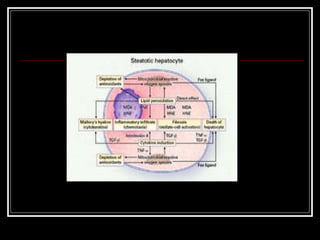
Pathogenesis Not fully known Insulin resistance Additional oxidative injury
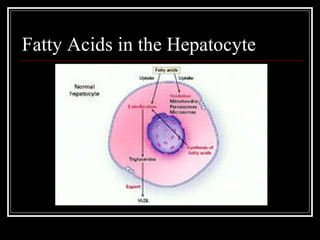
Excessive Triglyceride accumulation Excessive import of free fatty acids Increased delivery (obesity, rapid weight loss) Excess conversion of carbohydrates and proteins to triglycerides (overfeeding, TPN) Reduced export of FFA Impaired VLDL synthesis or secretion Impaired beta-oxidation of FFA to ATP
Fatty Acids in the Hepatocyte
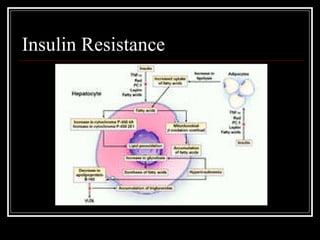
Insulin Resistance Key role Insulin resistance leads to changes in lipid metabolism  Increased peripheral lipolysis, triglyceride synthesis and hepatic uptake of FFA Shift from carbohydrate to FFA beta oxidation Free fatty acids Inducers of cytochrome p-450 Leads to hepatotoxic free oxygen radical species
Insulin Resistance
 
 
Additional defects Antioxidants Free radicals deplete antioxidants Glutathione, vit E, beta-carotene, vit C  Iron Insulin resistance associated with increased hepatic iron levels Heterozygous for the haemochromatosis gene mutation Leptin Deficiency leads to massive obesity Leptin may contribute to development of fibrosis Intestinal Microbes Endogenous ethanol and acetaldehyde production which leads to hepatic injury Endotoxin production
Clinical Features and Diagnosis Usually asymptomatic Fatigue, malaise, abdominal pain Often incidental diagnosis AST and ALT elevated in 90% AST/ALT < 1 Liver biopsy
Clinical Course NAFLD have only slightly lower overall survival than the general population Better prognosis than alcoholic hepatitis Alcoholic hepatitis 38 to 50% progress to cirrhosis NASH 8 to 26 % progress to cirrhosis Little change in LFTs throughout course of disease Can recur following transplant
Treatment No proven effective treatment Gradual weight loss 10% over 6-12 months Associated diabetes, hypertension and hyperlipidaemia should be treated Vitamin E Metformin Pioglitazone
Summary asymptomatic in most cases obesity, diabetes mellitus, hypertension and hyperlipidaemia are frequent associated features increase plasma ALT the commonest liver function test abnormality NASH accounts for most cases of isolated increased plasma transaminase activity of otherwise unknown cause liver biopsy rarely needed long-term prognosis is favourable graduated weight loss is the best available treatment
 

Non Alcoholic Steatohepatitis

  • 1.
  • 2.
    What is it?Epidemiology Pathogenesis Clinical Features and Diagnosis Clinical Course Treatment
  • 3.
    Non alcoholic fattyliver disease Clinico-histopathological entity Histological features resemble alcohol induced liver disease Associated with negligible or no alcohol intake Spectrum of disease Steatosis Steatohepatitis cirrhosis Leading cause of cryptogenic cirrhosis Increasingly recognised
  • 4.
    Epidemiology Occurs worldwideGreater in western populations USA 3% of lean individuals 19% of obese 50% of morbidly obese/diabetics ♀ > ♂ Associated with type 2 diabetes, obesity, hypertension and hyperlipidaemia
  • 5.
    Pathogenesis Not fullyknown Insulin resistance Additional oxidative injury
  • 6.
    Excessive Triglyceride accumulationExcessive import of free fatty acids Increased delivery (obesity, rapid weight loss) Excess conversion of carbohydrates and proteins to triglycerides (overfeeding, TPN) Reduced export of FFA Impaired VLDL synthesis or secretion Impaired beta-oxidation of FFA to ATP
  • 7.
    Fatty Acids inthe Hepatocyte
  • 8.
    Insulin Resistance Keyrole Insulin resistance leads to changes in lipid metabolism Increased peripheral lipolysis, triglyceride synthesis and hepatic uptake of FFA Shift from carbohydrate to FFA beta oxidation Free fatty acids Inducers of cytochrome p-450 Leads to hepatotoxic free oxygen radical species
  • 9.
  • 10.
  • 11.
  • 12.
    Additional defects AntioxidantsFree radicals deplete antioxidants Glutathione, vit E, beta-carotene, vit C Iron Insulin resistance associated with increased hepatic iron levels Heterozygous for the haemochromatosis gene mutation Leptin Deficiency leads to massive obesity Leptin may contribute to development of fibrosis Intestinal Microbes Endogenous ethanol and acetaldehyde production which leads to hepatic injury Endotoxin production
  • 13.
    Clinical Features andDiagnosis Usually asymptomatic Fatigue, malaise, abdominal pain Often incidental diagnosis AST and ALT elevated in 90% AST/ALT < 1 Liver biopsy
  • 14.
    Clinical Course NAFLDhave only slightly lower overall survival than the general population Better prognosis than alcoholic hepatitis Alcoholic hepatitis 38 to 50% progress to cirrhosis NASH 8 to 26 % progress to cirrhosis Little change in LFTs throughout course of disease Can recur following transplant
  • 15.
    Treatment No proveneffective treatment Gradual weight loss 10% over 6-12 months Associated diabetes, hypertension and hyperlipidaemia should be treated Vitamin E Metformin Pioglitazone
  • 16.
    Summary asymptomatic inmost cases obesity, diabetes mellitus, hypertension and hyperlipidaemia are frequent associated features increase plasma ALT the commonest liver function test abnormality NASH accounts for most cases of isolated increased plasma transaminase activity of otherwise unknown cause liver biopsy rarely needed long-term prognosis is favourable graduated weight loss is the best available treatment
  • 17.