NLP Project Full Cycle
Vsevolod Dyomkin
10/2016
A Bit about Me
* Lisp programmer
* 5+ years of NLP work at Grammarly
* Occasional lecturer
https://vseloved.github.io
Plan
* Overview of NLP
* NLP Data
* Common NLP problems
and approaches
* Example NLP application:
text language identification
What Is NLP?
Transforming free-form text
into structured data and back
What Is NLP?
Transforming free-form text
into structured data and back
Intersection of:
* Computational Linguistics
* CompSci & AI
* ML, Stats, Information Theory
Natural Language
* ambiguous
* noisy
* evolving
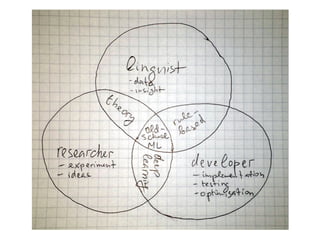
Roles
linguist [noun]
1. A specialist in linguistics
linguist [noun]
1. A specialist in linguistics
linguistics [noun]
1. The scientific study of
language.
NLP Data
Types of text data:
* structured
* semi-structured
* unstructured
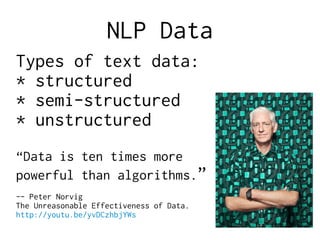
“Data is ten times more
powerful than algorithms.”
-- Peter Norvig
The Unreasonable Effectiveness of Data.
http://youtu.be/yvDCzhbjYWs
Kinds of Data
* Dictionaries
* Databases/Ontologies
* Corpora
* Internet/user Data
Where to Get Data?
* Linguistic Data Consortium
http://www.ldc.upenn.edu/
* Common Crawl
* Wikimedia
* Wordnet
* APIs: Twitter, Wordnik, ...
* University sites &
the academic community:
Stanford, Oxford, CMU, ...
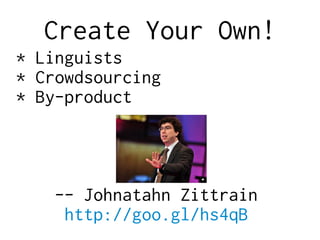
Create Your Own!
* Linguists
* Crowdsourcing
* By-product
-- Johnatahn Zittrain
http://goo.gl/hs4qB
Classic NLP Problems
* Linguistically-motivated:
segmentation, tagging, parsing
* Analytical:
classification, sentiment analysis
* Transformation:
translation, correction, generation
* Conversation:
question answering, dialog
engineer [noun]
5. A person skilled in the
design and programming of
computer systems
Tokenization
Example:
This is a test that isn't so simple: 1.23.
"This" "is" "a" "test" "that" "is" "n't"
"so" "simple" ":" "1.23" "."
Issues:
* Finland’s capital -
Finland Finlands Finland’s
* what’re, I’m, isn’t -
what ’re, I ’m, is n’t
* Hewlett-Packard or Hewlett Packard
* San Francisco - one token or two?
* m.p.h., PhD.
Regular Expressions
Simplest regex: [^s]+
More advanced regex:
w+|[!"#$%&'*+,./:;<=>?@^`~…() {}[|]⟨⟩ ‒–—
«»“”‘’-]―
Even more advanced regex:
[+-]?[0-9](?:[0-9,.]*[0-9])?
|[w@](?:[w'’`@-][w']|[w'][w@'’`-])*[w']?
|["#$%&*+,/:;<=>@^`~…() {}[|] «»“”‘’']⟨⟩ ‒–—―
|[.!?]+
|-+
In fact, it works:
https://github.com/lang-uk/ner-uk/blob/master/doc
/tokenization.md
Rule-based Approach
* easy to understand and
reason about
* can be arbitrarily precise
* iterative, can be used to
gather more data
Limitations:
* recall problems
* poor adaptability
Rule-based NLP tools
* SpamAssasin
* LanguageTool
* ELIZA
* GATE
researcher [noun]
1. One who researches
researcher [noun]
1. One who researches
research [noun]
1. Diligent inquiry or
examination to seek or revise
facts, principles, theories,
applications, etc.; laborious
or continued search after
truth
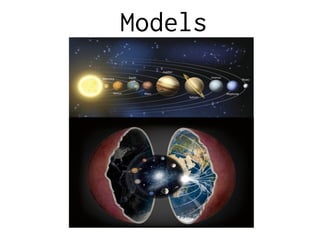
Models
Statistical Approach
“Probability theory
is nothing but
common sense
reduced to calculation.”
-- Pierre-Simon Laplace
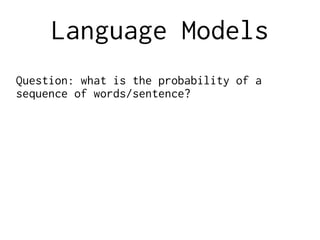
Language Models
Question: what is the probability of a
sequence of words/sentence?
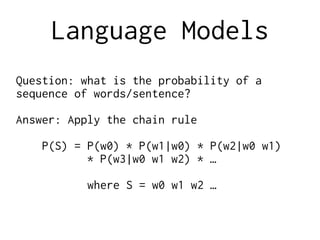
Language Models
Question: what is the probability of a
sequence of words/sentence?
Answer: Apply the chain rule
P(S) = P(w0) * P(w1|w0) * P(w2|w0 w1)
* P(w3|w0 w1 w2) * …
where S = w0 w1 w2 …
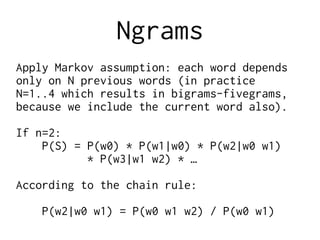
Ngrams
Apply Markov assumption: each word depends
only on N previous words (in practice
N=1..4 which results in bigrams-fivegrams,
because we include the current word also).
If n=2:
P(S) = P(w0) * P(w1|w0) * P(w2|w0 w1)
* P(w3|w1 w2) * …
According to the chain rule:
P(w2|w0 w1) = P(w0 w1 w2) / P(w0 w1)
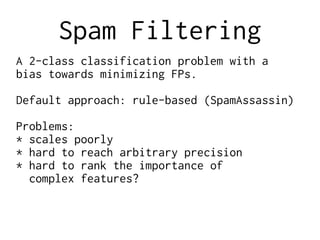
Spam Filtering
A 2-class classification problem with a
bias towards minimizing FPs.
Default approach: rule-based (SpamAssassin)
Problems:
* scales poorly
* hard to reach arbitrary precision
* hard to rank the importance of
complex features?
Bag-of-words Model
* each word is a feature
* each word is independent of others
* position of the word in a sentence is irrelevant
Pros:
* simple
* fast
* scalable
Limitations:
* independence assumption doesn't hold
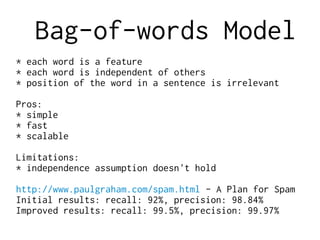
Bag-of-words Model
* each word is a feature
* each word is independent of others
* position of the word in a sentence is irrelevant
Pros:
* simple
* fast
* scalable
Limitations:
* independence assumption doesn't hold
http://www.paulgraham.com/spam.html - A Plan for Spam
Initial results: recall: 92%, precision: 98.84%
Improved results: recall: 99.5%, precision: 99.97%
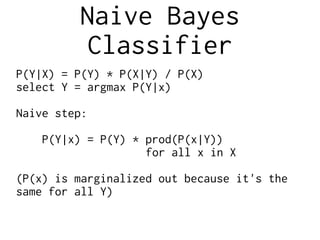
Naive Bayes
Classifier
P(Y|X) = P(Y) * P(X|Y) / P(X)
select Y = argmax P(Y|x)
Naive step:
P(Y|x) = P(Y) * prod(P(x|Y))
for all x in X
(P(x) is marginalized out because it's the
same for all Y)
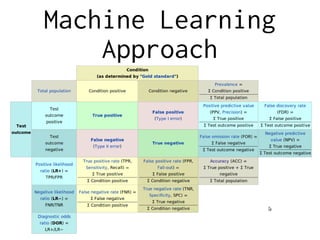
Machine Learning
Approach
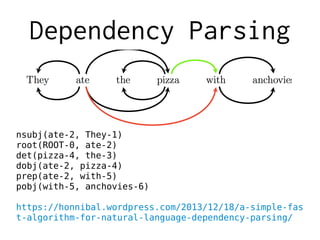
Dependency Parsing
nsubj(ate-2, They-1)
root(ROOT-0, ate-2)
det(pizza-4, the-3)
dobj(ate-2, pizza-4)
prep(ate-2, with-5)
pobj(with-5, anchovies-6)
https://honnibal.wordpress.com/2013/12/18/a-simple-fas
t-algorithm-for-natural-language-dependency-parsing/
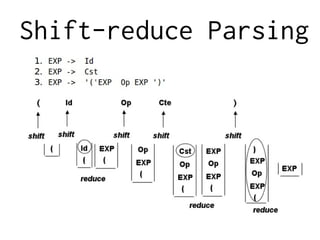
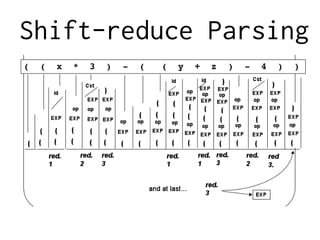
Shift-reduce Parsing
Averaged Perceptron
def train(model, number_iter, examples):
for i in range(number_iter):
for features, true_tag in examples:
guess = model.predict(features)
if guess != true_tag:
for f in features:
model.weights[f][true_tag] += 1
model.weights[f][guess] -= 1
random.shuffle(examples)
ML-based Parsing
The parser starts with an empty stack, and a buffer index at 0, with no
dependencies recorded. It chooses one of the valid actions, and applies it to
the state. It continues choosing actions and applying them until the stack is
empty and the buffer index is at the end of the input.
SHIFT = 0; RIGHT = 1; LEFT = 2
MOVES = [SHIFT, RIGHT, LEFT]
def parse(words, tags):
n = len(words)
deps = init_deps(n)
idx = 1
stack = [0]
while stack or idx < n:
features = extract_features(words, tags, idx, n, stack, deps)
scores = score(features)
valid_moves = get_valid_moves(i, n, len(stack))
next_move = max(valid_moves, key=lambda move: scores[move])
idx = transition(next_move, idx, stack, parse)
return tags, parse
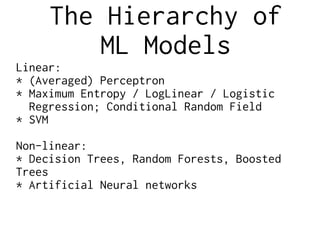
The Hierarchy of
ML Models
Linear:
* (Averaged) Perceptron
* Maximum Entropy / LogLinear / Logistic
Regression; Conditional Random Field
* SVM
Non-linear:
* Decision Trees, Random Forests, Boosted
Trees
* Artificial Neural networks
Semantics
Question: how to model relationships
between words?
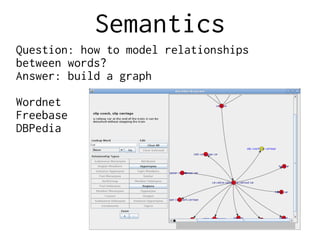
Semantics
Question: how to model relationships
between words?
Answer: build a graph
Wordnet
Freebase
DBPedia
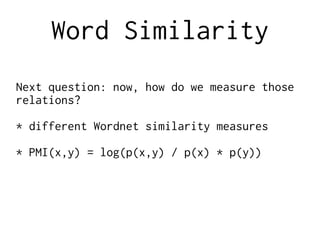
Word Similarity
Next question: now, how do we measure those
relations?
Word Similarity
Next question: now, how do we measure those
relations?
* different Wordnet similarity measures
Word Similarity
Next question: now, how do we measure those
relations?
* different Wordnet similarity measures
* PMI(x,y) = log(p(x,y) / p(x) * p(y))
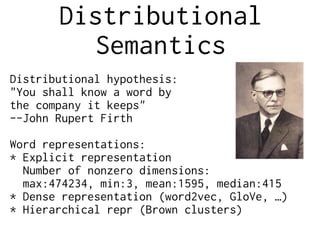
Distributional
Semantics
Distributional hypothesis:
"You shall know a word by
the company it keeps"
--John Rupert Firth
Word representations:
* Explicit representation
Number of nonzero dimensions:
max:474234, min:3, mean:1595, median:415
* Dense representation (word2vec, GloVe, …)
* Hierarchical repr (Brown clusters)
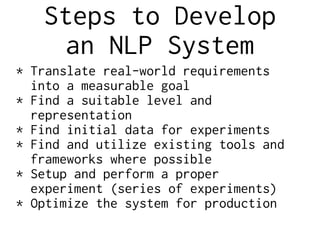
Steps to Develop
an NLP System
* Translate real-world requirements
into a measurable goal
* Find a suitable level and
representation
* Find initial data for experiments
* Find and utilize existing tools and
frameworks where possible
* Setup and perform a proper
experiment (series of experiments)
* Optimize the system for production
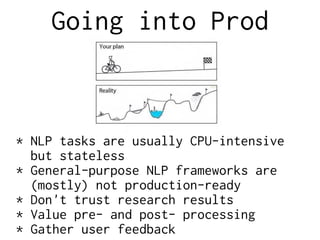
Going into Prod
* NLP tasks are usually CPU-intensive
but stateless
* General-purpose NLP frameworks are
(mostly) not production-ready
* Don't trust research results
* Value pre- and post- processing
* Gather user feedback
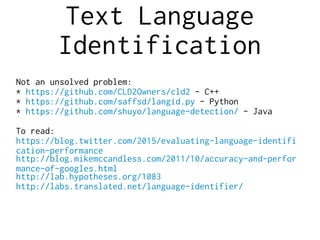
Text Language
Identification
Not an unsolved problem:
* https://github.com/CLD2Owners/cld2 - C++
* https://github.com/saffsd/langid.py - Python
* https://github.com/shuyo/language-detection/ - Java
To read:
https://blog.twitter.com/2015/evaluating-language-identifi
cation-performance
http://blog.mikemccandless.com/2011/10/accuracy-and-perfor
mance-of-googles.html
http://lab.hypotheses.org/1083
http://labs.translated.net/language-identifier/
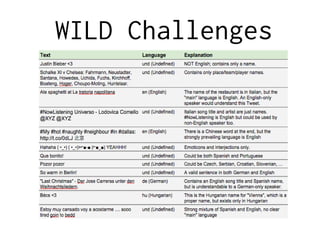
WILD Challenges
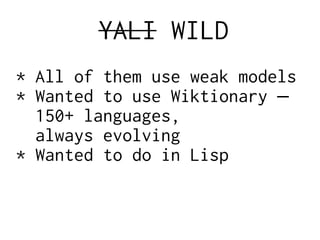
YALI WILD
* All of them use weak models
* Wanted to use Wiktionary —
150+ languages,
always evolving
* Wanted to do in Lisp
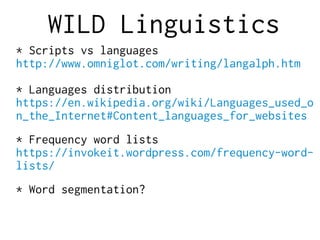
WILD Linguistics
* Scripts vs languages
http://www.omniglot.com/writing/langalph.htm
* Languages distribution
https://en.wikipedia.org/wiki/Languages_used_o
n_the_Internet#Content_languages_for_websites
* Frequency word lists
https://invokeit.wordpress.com/frequency-word-
lists/
* Word segmentation?
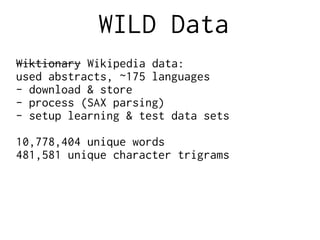
WILD Data
Wiktionary Wikipedia data:
used abstracts, ~175 languages
- download & store
- process (SAX parsing)
- setup learning & test data sets
10,778,404 unique words
481,581 unique character trigrams
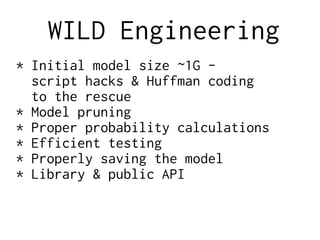
WILD Engineering
* Initial model size ~1G -
script hacks & Huffman coding
to the rescue
* Model pruning
* Proper probability calculations
* Efficient testing
* Properly saving the model
* Library & public API

NLP Project Full Cycle

  • 1.
    NLP Project FullCycle Vsevolod Dyomkin 10/2016
  • 2.
    A Bit aboutMe * Lisp programmer * 5+ years of NLP work at Grammarly * Occasional lecturer https://vseloved.github.io
  • 3.
    Plan * Overview ofNLP * NLP Data * Common NLP problems and approaches * Example NLP application: text language identification
  • 4.
    What Is NLP? Transformingfree-form text into structured data and back
  • 5.
    What Is NLP? Transformingfree-form text into structured data and back Intersection of: * Computational Linguistics * CompSci & AI * ML, Stats, Information Theory
  • 6.
  • 7.
  • 8.
    linguist [noun] 1. Aspecialist in linguistics
  • 9.
    linguist [noun] 1. Aspecialist in linguistics linguistics [noun] 1. The scientific study of language.
  • 12.
    NLP Data Types oftext data: * structured * semi-structured * unstructured “Data is ten times more powerful than algorithms.” -- Peter Norvig The Unreasonable Effectiveness of Data. http://youtu.be/yvDCzhbjYWs
  • 13.
    Kinds of Data *Dictionaries * Databases/Ontologies * Corpora * Internet/user Data
  • 14.
    Where to GetData? * Linguistic Data Consortium http://www.ldc.upenn.edu/ * Common Crawl * Wikimedia * Wordnet * APIs: Twitter, Wordnik, ... * University sites & the academic community: Stanford, Oxford, CMU, ...
  • 15.
    Create Your Own! *Linguists * Crowdsourcing * By-product -- Johnatahn Zittrain http://goo.gl/hs4qB
  • 16.
    Classic NLP Problems *Linguistically-motivated: segmentation, tagging, parsing * Analytical: classification, sentiment analysis * Transformation: translation, correction, generation * Conversation: question answering, dialog
  • 17.
    engineer [noun] 5. Aperson skilled in the design and programming of computer systems
  • 18.
    Tokenization Example: This is atest that isn't so simple: 1.23. "This" "is" "a" "test" "that" "is" "n't" "so" "simple" ":" "1.23" "." Issues: * Finland’s capital - Finland Finlands Finland’s * what’re, I’m, isn’t - what ’re, I ’m, is n’t * Hewlett-Packard or Hewlett Packard * San Francisco - one token or two? * m.p.h., PhD.
  • 19.
    Regular Expressions Simplest regex:[^s]+ More advanced regex: w+|[!"#$%&'*+,./:;<=>?@^`~…() {}[|]⟨⟩ ‒–— «»“”‘’-]― Even more advanced regex: [+-]?[0-9](?:[0-9,.]*[0-9])? |[w@](?:[w'’`@-][w']|[w'][w@'’`-])*[w']? |["#$%&*+,/:;<=>@^`~…() {}[|] «»“”‘’']⟨⟩ ‒–—― |[.!?]+ |-+ In fact, it works: https://github.com/lang-uk/ner-uk/blob/master/doc /tokenization.md
  • 20.
    Rule-based Approach * easyto understand and reason about * can be arbitrarily precise * iterative, can be used to gather more data Limitations: * recall problems * poor adaptability
  • 21.
    Rule-based NLP tools *SpamAssasin * LanguageTool * ELIZA * GATE
  • 23.
  • 24.
    researcher [noun] 1. Onewho researches research [noun] 1. Diligent inquiry or examination to seek or revise facts, principles, theories, applications, etc.; laborious or continued search after truth
  • 25.
  • 26.
    Statistical Approach “Probability theory isnothing but common sense reduced to calculation.” -- Pierre-Simon Laplace
  • 27.
    Language Models Question: whatis the probability of a sequence of words/sentence?
  • 28.
    Language Models Question: whatis the probability of a sequence of words/sentence? Answer: Apply the chain rule P(S) = P(w0) * P(w1|w0) * P(w2|w0 w1) * P(w3|w0 w1 w2) * … where S = w0 w1 w2 …
  • 29.
    Ngrams Apply Markov assumption:each word depends only on N previous words (in practice N=1..4 which results in bigrams-fivegrams, because we include the current word also). If n=2: P(S) = P(w0) * P(w1|w0) * P(w2|w0 w1) * P(w3|w1 w2) * … According to the chain rule: P(w2|w0 w1) = P(w0 w1 w2) / P(w0 w1)
  • 30.
    Spam Filtering A 2-classclassification problem with a bias towards minimizing FPs. Default approach: rule-based (SpamAssassin) Problems: * scales poorly * hard to reach arbitrary precision * hard to rank the importance of complex features?
  • 31.
    Bag-of-words Model * eachword is a feature * each word is independent of others * position of the word in a sentence is irrelevant Pros: * simple * fast * scalable Limitations: * independence assumption doesn't hold
  • 32.
    Bag-of-words Model * eachword is a feature * each word is independent of others * position of the word in a sentence is irrelevant Pros: * simple * fast * scalable Limitations: * independence assumption doesn't hold http://www.paulgraham.com/spam.html - A Plan for Spam Initial results: recall: 92%, precision: 98.84% Improved results: recall: 99.5%, precision: 99.97%
  • 33.
    Naive Bayes Classifier P(Y|X) =P(Y) * P(X|Y) / P(X) select Y = argmax P(Y|x) Naive step: P(Y|x) = P(Y) * prod(P(x|Y)) for all x in X (P(x) is marginalized out because it's the same for all Y)
  • 34.
  • 35.
    Dependency Parsing nsubj(ate-2, They-1) root(ROOT-0,ate-2) det(pizza-4, the-3) dobj(ate-2, pizza-4) prep(ate-2, with-5) pobj(with-5, anchovies-6) https://honnibal.wordpress.com/2013/12/18/a-simple-fas t-algorithm-for-natural-language-dependency-parsing/
  • 36.
  • 37.
  • 38.
    Averaged Perceptron def train(model,number_iter, examples): for i in range(number_iter): for features, true_tag in examples: guess = model.predict(features) if guess != true_tag: for f in features: model.weights[f][true_tag] += 1 model.weights[f][guess] -= 1 random.shuffle(examples)
  • 39.
    ML-based Parsing The parserstarts with an empty stack, and a buffer index at 0, with no dependencies recorded. It chooses one of the valid actions, and applies it to the state. It continues choosing actions and applying them until the stack is empty and the buffer index is at the end of the input. SHIFT = 0; RIGHT = 1; LEFT = 2 MOVES = [SHIFT, RIGHT, LEFT] def parse(words, tags): n = len(words) deps = init_deps(n) idx = 1 stack = [0] while stack or idx < n: features = extract_features(words, tags, idx, n, stack, deps) scores = score(features) valid_moves = get_valid_moves(i, n, len(stack)) next_move = max(valid_moves, key=lambda move: scores[move]) idx = transition(next_move, idx, stack, parse) return tags, parse
  • 40.
    The Hierarchy of MLModels Linear: * (Averaged) Perceptron * Maximum Entropy / LogLinear / Logistic Regression; Conditional Random Field * SVM Non-linear: * Decision Trees, Random Forests, Boosted Trees * Artificial Neural networks
  • 41.
    Semantics Question: how tomodel relationships between words?
  • 42.
    Semantics Question: how tomodel relationships between words? Answer: build a graph Wordnet Freebase DBPedia
  • 43.
    Word Similarity Next question:now, how do we measure those relations?
  • 44.
    Word Similarity Next question:now, how do we measure those relations? * different Wordnet similarity measures
  • 45.
    Word Similarity Next question:now, how do we measure those relations? * different Wordnet similarity measures * PMI(x,y) = log(p(x,y) / p(x) * p(y))
  • 46.
    Distributional Semantics Distributional hypothesis: "You shallknow a word by the company it keeps" --John Rupert Firth Word representations: * Explicit representation Number of nonzero dimensions: max:474234, min:3, mean:1595, median:415 * Dense representation (word2vec, GloVe, …) * Hierarchical repr (Brown clusters)
  • 47.
    Steps to Develop anNLP System * Translate real-world requirements into a measurable goal * Find a suitable level and representation * Find initial data for experiments * Find and utilize existing tools and frameworks where possible * Setup and perform a proper experiment (series of experiments) * Optimize the system for production
  • 48.
    Going into Prod *NLP tasks are usually CPU-intensive but stateless * General-purpose NLP frameworks are (mostly) not production-ready * Don't trust research results * Value pre- and post- processing * Gather user feedback
  • 49.
    Text Language Identification Not anunsolved problem: * https://github.com/CLD2Owners/cld2 - C++ * https://github.com/saffsd/langid.py - Python * https://github.com/shuyo/language-detection/ - Java To read: https://blog.twitter.com/2015/evaluating-language-identifi cation-performance http://blog.mikemccandless.com/2011/10/accuracy-and-perfor mance-of-googles.html http://lab.hypotheses.org/1083 http://labs.translated.net/language-identifier/
  • 50.
  • 52.
    YALI WILD * Allof them use weak models * Wanted to use Wiktionary — 150+ languages, always evolving * Wanted to do in Lisp
  • 53.
    WILD Linguistics * Scriptsvs languages http://www.omniglot.com/writing/langalph.htm * Languages distribution https://en.wikipedia.org/wiki/Languages_used_o n_the_Internet#Content_languages_for_websites * Frequency word lists https://invokeit.wordpress.com/frequency-word- lists/ * Word segmentation?
  • 54.
    WILD Data Wiktionary Wikipediadata: used abstracts, ~175 languages - download & store - process (SAX parsing) - setup learning & test data sets 10,778,404 unique words 481,581 unique character trigrams
  • 55.
    WILD Engineering * Initialmodel size ~1G - script hacks & Huffman coding to the rescue * Model pruning * Proper probability calculations * Efficient testing * Properly saving the model * Library & public API