NIPAH VIRUS
DR.VIDHYA SHIVDAS
PHARM D
INTRODUCTION
• NiV infection is an emerging zoonotic disease , that is it can spread between animals
and people. According to WHO guidelines, South-East Asia Region has a high case
fatality rate estimated to range between 40 and 75%; however, this rate can vary by
outbreak depending on local capabilities for epidemiological surveillance and clinical
management.
• NiV was first recognized in 1998-1999 during an outbreak among pig farmers in
Malaysia and Singapore. No subsequent outbreaks have been reported in Malaysia or
Singapore since 1999. NiV was first recognized in India and Bangladesh in 2001; since
then, nearly annual outbreaks have occurred in Bangladesh
• In India, three outbreaks in human were reported from Siliguri (2001) and Nadia
(2007), West Bengal and in kozhikode and malappuram districts of kerala in may 2018
, but here the strain was different from the one identified in 1999.
• Virus associated with hendra virus
• Genus – henipavirus
• Family- paramyoxiviridae
• Sub family- paramyoxivirinae
• Virus name originated from Sungai Nipah, a village in malaysia.
• Nipah virus is classified internationally as a biosecurity level (BSL) 4 agent
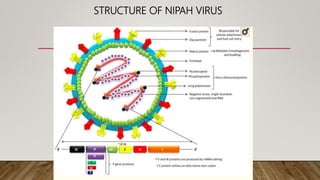
STRUCTURE OF NIPAH VIRUS
• NiV and HeV are enveloped, single-stranded, negative-sense RNA viruses which constitute
the Henipavirus (HNV) genus in the Paramoxyviridae family.
• The RNA genome, from the 3´-5´, contains consecutive arrangement of six genes, viz.,
nucleocapsid (N), phosphoprotein (P), matrix (M), fusion glycoprotein (F), attachment
glycoprotein (G) and long polymerase (L).
• NiV infects its host cells via two glycoproteins, i.e. G and F proteins. The G glycoprotein mediates
attachment to host cell surface receptors and the fusion (F) protein makes fusion of virus-cell
membranes for cellular entry.
EPIDEMIOLOGY AND ETIOLOGY
• Agent: NiV is a highly pathogenic paramyxovirus.
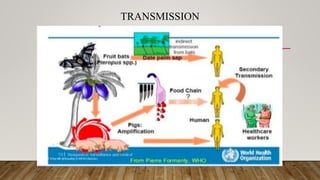
• Natural Reservoir: Fruit bats of Pteropus gcnus are the natural reservoir of NiV. Pig is an
amplifying host. It may become infected after consumption of partially bat eaten fruits that dropped
in pigsties (as was evident in the Malaysia outbreak in 1998).
• Environmental Factors: Seasonality was strongly implicated in NiV outbreaks in Bangladesh
and India. All of the outbreaks occurred during the months from December to May (winter to
spring).
• Mode of Transmission: Transmission of Nipah virus to humans may occur after direct contact
with infected bats, infected pigs, or from other Nipah virus infected people.
• Routes of transmission of Nipah virus have also been identified from its natural reservoir to human
through drinking of raw date palm sap contaminated with NiV. However, human to human
transmission has been attributed as one of the major modes of transmission in the epidemic in
Siliguri and in Kozhikode (Kerala on May, 20 1 8), India.
• Incubation period: it varies from 4-21 days.
TRANSMISSION
PATHOGENESIS.
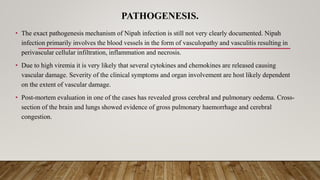
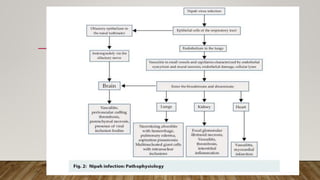
• The exact pathogenesis mechanism of Nipah infection is still not very clearly documented. Nipah
infection primarily involves the blood vessels in the form of vasculopathy and vasculitis resulting in
perivascular cellular infiltration, inflammation and necrosis.
• Due to high viremia it is very likely that several cytokines and chemokines are released causing
vascular damage. Severity of the clinical symptoms and organ involvement are host likely dependent
on the extent of vascular damage.
• Post-mortem evaluation in one of the cases has revealed gross cerebral and pulmonary oedema. Cross-
section of the brain and lungs showed evidence of gross pulmonary haemorrhage and cerebral
congestion.
PATHOLOGICAL FINDINGS INCLUDE :
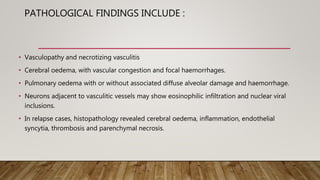
• Vasculopathy and necrotizing vasculitis
• Cerebral oedema, with vascular congestion and focal haemorrhages.
• Pulmonary oedema with or without associated diffuse alveolar damage and haemorrhage.
• Neurons adjacent to vasculitic vessels may show eosinophilic infiltration and nuclear viral
inclusions.
• In relapse cases, histopathology revealed cerebral oedema, inflammation, endothelial
syncytia, thrombosis and parenchymal necrosis.
CLINICAL FEATURES AND SYMPTOMS
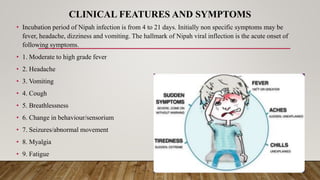
• Incubation period of Nipah infection is from 4 to 21 days. Initially non specific symptoms may be
fever, headache, dizziness and vomiting. The hallmark of Nipah viral inflection is the acute onset of
following symptoms.
• 1. Moderate to high grade fever
• 2. Headache
• 3. Vomiting
• 4. Cough
• 5. Breathlessness
• 6. Change in behaviour/sensorium
• 7. Seizures/abnormal movement
• 8. Myalgia
• 9. Fatigue
• Human infections range from asymptomatic infection to acute respiratory infection (mild,
severe), and fatal encephalitis.
• Infected people initially develop symptoms including fever, headaches, myalgia (muscle pain),
vomiting and sore throat. This can be followed by dizziness, drowsiness, altered
consciousness, and neurological signs that indicate acute encephalitis. Some people can also
experience atypical pneumonia and severe respiratory problems, including acute respiratory
distress. Encephalitis and seizures occur in severe cases, progressing to coma within 24 to 48
hours.
• The incubation period (interval from infection to the onset of symptoms) is believed to range
from 4 to 14 days. However, an incubation period as long as 45 days has been reported.
• Most people who survive acute encephalitis make a full recovery, but long term neurologic
conditions have been reported in survivors. Approximately 20% of patients are left with
residual neurological consequences such as seizure disorder and personality changes. A small
number of people who recover subsequently relapse or develop delayed onset encephalitis.
• The case fatality rate is estimated at 40% to 75%. This rate can vary by outbreak depending on
local capabilities for epidemiological surveillance and clinical management.
• In the Siliguri outbreak, the patients initially had fever (100%), headache and myalgia
(57%), vomiting (19%), altered sensorium (confusion to coma, 97%), respiratory
symptoms (tachypnea to acute respiratory distress, 51%), and involuntary movcments
or convulsions (43%).
• In the outbreak of Nipah virus disease in Kerala it was noted that most of the
patients presented with moderate to high grade fever, headache often severe, vomiting
and general weakness along with myalgia. Cough and breathlessness were also one of
the presenting complaints seen in the majority of the patients.
• Breathlessness often progressed rapidly resulting in overt respiratory failure requiring
use of supplementary oxygen and at times ventilator support.
• Respiratory failure requiring ventilator support was risk factors for high mortality.
• Behavioural changes were often one of the initial presenting features before development of altered sensorium
and unconsciousness.
• In a significant number of patients, the disease rapidly progresses to coma within five to seven days. Few cases
may also show signs of cerebellar dysfunction.
• Few patients also developed myocarditis, heart failure and pulmonary oedema often associated with or
without cardiogenic shock. Coagulopathy may be seen in some of the cases with thrombocytopenia and raised
d-Dimer.
Post Nipah infection complications:
• Psychiatric complications may be seen after full recovery. If the neurological signs and symptoms of
encephalitis develop after more than 10 weeks of the initial exposure, it is known as late-onset encephalitis.
Long term complication are seen in some case in the form of relapse of encephalitis months to years after
recovery.
• Initial signs and symptoms of Nipah virus infection are nonspecific, and the diagnosis is often not
suspected at the time of presentation. This can hinder accurate diagnosis and creates challenges in
outbreak detection, effective and timely infection control measures, and outbreak response
activities
DIAGNOSIS
• Nipah virus infection can be diagnosed with clinical history during the acute and convalescent
phase of the disease. The main tests used are real time polymerase chain reaction (RT-PCR) from
bodily fluids and antibody detection via enzyme-linked immunosorbent assay (ELISA).
• Other tests used include polymerase chain reaction (PCR) assay, and virus isolation by cell culture.
.
LABORATORY DIAGNOSIS
• Laboratory diagnosis of a patient with a clinical history of NiV can be made during the acute and
convalescent phases of the disease by using a combination of tests.
• Laboratory confirmation of NiV infection either by:
• i) lgM antibody against NiV identified in serum or CSF,
• ii) NiV RNA identified by RT-PCR from respiratory secretions, urine or cerebrospinal fluid, or
• iii) Isolation of NiV from respiratory secretions, urine or cerebrospinal fluid or other tissue specimens
TREATMENT
• There is no confirmed effective specific treatment for NiV infection in humans till date. The guiding
principles are:
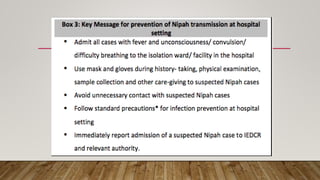
• Early implementation of infection control precautions will minimize nosocomical/ household spread of
disease.
• Active surveillance, contact tracing and early identification and follow up of persons at risk. Provision for
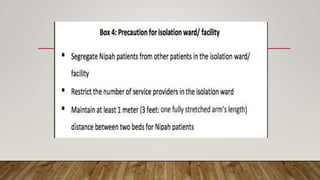
dedicated isolation facilities for patients must be created so that laboratory confirmed Nipah cases as well as
suspect cases are either kept in individual isolation rooms or cohorted (separate ward for keeping confirmed
and suspect cases) in a well ventilated isolation ward with beds kept at-least one metre apart.
• Community contacts and hospital contacts who have gone back to the community are kept in home
quarantine. Hospital staff may be kept in home quarantine or in separate individual isolation room
facility in a hospital.
• Suspect and probable cases should be hospitalized in isolation facility as described above.
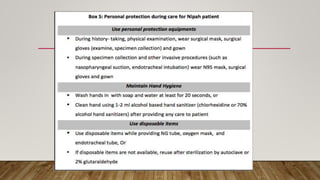
• There should be dedicated doctors, nurses and paramedics well trained in hospital infection control
practices and following the standard, contact and droplet precautions to attend to the suspect or
confirmed cases . Reinforce standard infection control precautions for all those entering the room
must use hand washing practices, high efficiency masks, gowns, goggles, gloves, cap and shoe
cover.
• Imaging and laboratory investigations are to be Ignited till such time laboratory reports are
available. This would reduce the risk of transmission of disease among Health Care Workers.
• The isolation facility should have portable X Ray machine, ventilators, large oxygen cylinders,
pulse oxymeter and other supportive equipments.
• Adequate quantities of PPE, disinfectants and medications are to be ensured.
• No accompanying relative or friends of the patient is to be allowed in isolation facility. Restrict
number of visitors and those allowed to visit should be provided with full protection through
PPE.
• The commonly touched surfaces in the isolation ward should be cleaned with freshly prepared
disinfectant (5% Sodium Hypochlorite) every 4 hours. Hand sanitizers should be provided at
every bed post and exit part of the isolation rooms.
GENERAL MANAGEMENT
• Symptomatic and Supportive treatment should be started immediately in all clinically
suspected cases. Maintain airway, breathing and circulation (ABC).
• Ensure patient isolation (preferably in a separate ward/room).
• Institute barrier nursing, e.g., personal protection using masks, gloves, gowns, shoe covers
and hand-washing with soap and water before and after handling /visiting patients.
SYMPTOMATIC AND SUPPORTIVE TREATMENT:
• a. Patient is advised to drink plenty of fluids.
• b. Fluid maintenance and electrolyte balance. Fluid restriction, after initial resuscitation, is advisable
in order to avoid fluid overload/ complication
• c. Nasogastric tube feeding/ parenteral nutrition may be instituted, if necessary.
• d. Paracetamol is suggested for fever, myalgia and headache. Salicylate / aspirin is strictly contra-
indicated in any Nipah patient due to its potential complications.
• e. The cases would be constantly monitored for clinical / radiological evidence of lower respiratory
tract infection and for hypoxia (respiratory rate, oxygen saturation, level of consciousness).
• f. Patients with signs of tachypnoea, dyspnoea, respiratory distress and oxygen saturation less
than 90 per cent should be supplemented with oxygen therapy. Types of oxygen devices to be
used would depend on the severity of hypoxemia. It can be started from oxygen cannula,
simple mask, partial re-breathing mask (mask with reservoir bag) and non re-breathing mask.
Disposable cannula only should be used for Oxygen inhalation. In children, oxygen hood or
head boxes can be used.’
• g. Oropharyngeal or endotracheal suction when used should mandatorily be done using a
closed suction circuit to avoid dispersal of aerosol in the environment.
• h. Patients with severe pneumonia and acute respiratory failure (Sp02 <90% and Pa02 <60
mmHg with oxygen therapy) must be supported with mechanical ventilation. Invasive
mechanical ventilation is preferred choice.
• Non invasive ventilation is an option when mechanical ventilation ls not available.
• i. Anticonvulsants e.g., intravenous diazepam, phenobarbitone, phenytoin or levetiracetam may be
used in the standard recommended doses. Mannitol could be used in case of raised Intracranial
tension.
• j. Suspected cases does not require antibiotic therapy. Antibacterial agents should be administered,
if required, as per locally accepted clinical practice guidelines.
• k. Patients requiring Vasopressors for shock may be started on noradrenalin infusion with or
without dobutamine in cases with significant cardiac dysfunction.
DRUG THERAPY:
•
Ribavirin:
• As currently there are no strong evidence of proven therapy, it is advisable to administer
Ribavirin to all confirmed cases of Nipah virus infection as per the available limited in vitro and
in vivo evidences, subject to approval of Drug
• Controller General of India IDCG, Ribavirin is not a proven treatment for Nipah, and has only
single open label trial evidence from Malaysia. But the benefit was significant with 36%
reduction in mortality.
• Dose for Ribavirin
For Adults -
• 2000 mg loading (10 tab of 200mg)
• Day 1-4 - 1000 mg 6hrly (5 tabs of200 mg each 4 times daily for 4 days - 80 tablets)
• Day 5- 1 0- 500 mg 6hrly (200 mg each tablet 3 tab - 3 tab - 2 tab - 2 tab at 6hrs gap daily for 6
more days - 60 tablets)
For Children -
• Loading dose of 30mg/kg, Thereafter for Day 1- 4 give 15 mg/kg 6hrly
• Day 5- Day 10 , give 7.5 mg/kg 6 hrly.
Parentral dose ofRibavirin-
• IV Ribavirin
• loading dose of 30 mg/ kg then 1 5 mg / kg every six hourly for 4 days then 7.5 mg / kg every eight hourly for 6 days.
• Ribavirin should be diluted in 150 ml of 0.9% Normal Saline and infused slowly.
Adverse reactions of Ribavirin:
• Serious reactions can include haemolytic anaemia, neutropenia, thrombocytopenia, aplastic anaemia, teratogenicity, sevcrc
depression, suicidal ideation , pulmonary toxicity, pancreatitis, diabetes, hyperthyroidism, myocardial infarction, arrhythmias,
colitis, retinal haemorrhage, retinal thrombosis. or rarely, hypersensitivity reactions.
• Common Reactions can include fatigue, headache, fever, rigors. Myalgias, anxiety, irritability, insomnia, alopecia, nausea,
vomiting, anorexia, dizziness. impaired concentration, cough, rash. But most adverse drug reactions are in long term therapy not
common as in short temp therapy.
NEWER EXPERIMENTAL DRUGS:
• (i) Favipravir has recently been shown to be elective against Nipah viral infections in animal
model.
• (ii) Immunomodulating drugs have not been found to be beneficial in treatment of ARDS or
sepsis associated multi organ failure. High dose corticosteroids in particular have no evidence
of benefit and there is potential for harm.
• Post Exposure Prophylaxis:
• There is no evidence to support the role of ribavirin as post-exposure prophylactic treatment
for Nipah fever.
• Human monoclonal antibody:
• Human Monoclonal antibodies targeting ae viral glycoproteins(anti-G Mab or anti-F Mab)
against Hendra and Nipah have been shown since 2009 to be highly effective for post-
exposure protection on experimental animal. lts use in emergency setting is subject to
approval of DCG1.
• Vaccine: There is currently no approved vaccine that protects against Nipah virus.
DISCHARGE POLICY
•
• Nipah confirmed patients should be discharged only after full recovery and the
RT- PCR test is negative on the throat swab/ blood sample. However, on
discharge, patient is advised to remain in isolation at home till 21 days after the
date of positive test. This shall be monitored by the community surveillance team.
• Suspected cases kept under isolation must not be discharged before confirmation
of negative result.
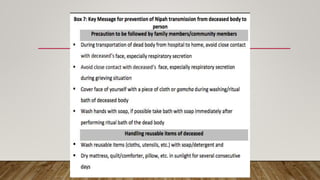
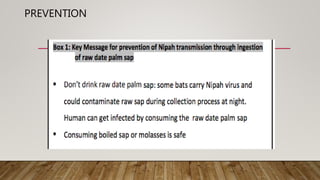
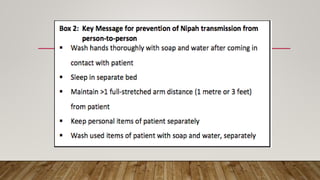
PREVENTION
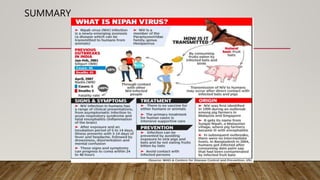
SUMMARY
REFERENCE
NIPAH VIRUS GUIDELINES –
• National Centre for Disease Control (NCDC)
• https://ncdc.gov.in/index4.php?lang=1&level=0&linkid=113&lid=228
• WHO
• https://www.who.int/westernpacific/health-topics/nipah-virus-infection
THANK YOU

NIPAH VIRUS

  • 1.
  • 2.
    INTRODUCTION • NiV infectionis an emerging zoonotic disease , that is it can spread between animals and people. According to WHO guidelines, South-East Asia Region has a high case fatality rate estimated to range between 40 and 75%; however, this rate can vary by outbreak depending on local capabilities for epidemiological surveillance and clinical management. • NiV was first recognized in 1998-1999 during an outbreak among pig farmers in Malaysia and Singapore. No subsequent outbreaks have been reported in Malaysia or Singapore since 1999. NiV was first recognized in India and Bangladesh in 2001; since then, nearly annual outbreaks have occurred in Bangladesh • In India, three outbreaks in human were reported from Siliguri (2001) and Nadia (2007), West Bengal and in kozhikode and malappuram districts of kerala in may 2018 , but here the strain was different from the one identified in 1999.
  • 3.
    • Virus associatedwith hendra virus • Genus – henipavirus • Family- paramyoxiviridae • Sub family- paramyoxivirinae • Virus name originated from Sungai Nipah, a village in malaysia. • Nipah virus is classified internationally as a biosecurity level (BSL) 4 agent
  • 4.
  • 5.
    • NiV andHeV are enveloped, single-stranded, negative-sense RNA viruses which constitute the Henipavirus (HNV) genus in the Paramoxyviridae family. • The RNA genome, from the 3´-5´, contains consecutive arrangement of six genes, viz., nucleocapsid (N), phosphoprotein (P), matrix (M), fusion glycoprotein (F), attachment glycoprotein (G) and long polymerase (L). • NiV infects its host cells via two glycoproteins, i.e. G and F proteins. The G glycoprotein mediates attachment to host cell surface receptors and the fusion (F) protein makes fusion of virus-cell membranes for cellular entry.
  • 6.
    EPIDEMIOLOGY AND ETIOLOGY •Agent: NiV is a highly pathogenic paramyxovirus. • Natural Reservoir: Fruit bats of Pteropus gcnus are the natural reservoir of NiV. Pig is an amplifying host. It may become infected after consumption of partially bat eaten fruits that dropped in pigsties (as was evident in the Malaysia outbreak in 1998). • Environmental Factors: Seasonality was strongly implicated in NiV outbreaks in Bangladesh and India. All of the outbreaks occurred during the months from December to May (winter to spring). • Mode of Transmission: Transmission of Nipah virus to humans may occur after direct contact with infected bats, infected pigs, or from other Nipah virus infected people.
  • 7.
    • Routes oftransmission of Nipah virus have also been identified from its natural reservoir to human through drinking of raw date palm sap contaminated with NiV. However, human to human transmission has been attributed as one of the major modes of transmission in the epidemic in Siliguri and in Kozhikode (Kerala on May, 20 1 8), India. • Incubation period: it varies from 4-21 days.
  • 8.
  • 9.
    PATHOGENESIS. • The exactpathogenesis mechanism of Nipah infection is still not very clearly documented. Nipah infection primarily involves the blood vessels in the form of vasculopathy and vasculitis resulting in perivascular cellular infiltration, inflammation and necrosis. • Due to high viremia it is very likely that several cytokines and chemokines are released causing vascular damage. Severity of the clinical symptoms and organ involvement are host likely dependent on the extent of vascular damage. • Post-mortem evaluation in one of the cases has revealed gross cerebral and pulmonary oedema. Cross- section of the brain and lungs showed evidence of gross pulmonary haemorrhage and cerebral congestion.
  • 11.
    PATHOLOGICAL FINDINGS INCLUDE: • Vasculopathy and necrotizing vasculitis • Cerebral oedema, with vascular congestion and focal haemorrhages. • Pulmonary oedema with or without associated diffuse alveolar damage and haemorrhage. • Neurons adjacent to vasculitic vessels may show eosinophilic infiltration and nuclear viral inclusions. • In relapse cases, histopathology revealed cerebral oedema, inflammation, endothelial syncytia, thrombosis and parenchymal necrosis.
  • 12.
    CLINICAL FEATURES ANDSYMPTOMS • Incubation period of Nipah infection is from 4 to 21 days. Initially non specific symptoms may be fever, headache, dizziness and vomiting. The hallmark of Nipah viral inflection is the acute onset of following symptoms. • 1. Moderate to high grade fever • 2. Headache • 3. Vomiting • 4. Cough • 5. Breathlessness • 6. Change in behaviour/sensorium • 7. Seizures/abnormal movement • 8. Myalgia • 9. Fatigue
  • 13.
    • Human infectionsrange from asymptomatic infection to acute respiratory infection (mild, severe), and fatal encephalitis. • Infected people initially develop symptoms including fever, headaches, myalgia (muscle pain), vomiting and sore throat. This can be followed by dizziness, drowsiness, altered consciousness, and neurological signs that indicate acute encephalitis. Some people can also experience atypical pneumonia and severe respiratory problems, including acute respiratory distress. Encephalitis and seizures occur in severe cases, progressing to coma within 24 to 48 hours. • The incubation period (interval from infection to the onset of symptoms) is believed to range from 4 to 14 days. However, an incubation period as long as 45 days has been reported. • Most people who survive acute encephalitis make a full recovery, but long term neurologic conditions have been reported in survivors. Approximately 20% of patients are left with residual neurological consequences such as seizure disorder and personality changes. A small number of people who recover subsequently relapse or develop delayed onset encephalitis. • The case fatality rate is estimated at 40% to 75%. This rate can vary by outbreak depending on local capabilities for epidemiological surveillance and clinical management.
  • 14.
    • In theSiliguri outbreak, the patients initially had fever (100%), headache and myalgia (57%), vomiting (19%), altered sensorium (confusion to coma, 97%), respiratory symptoms (tachypnea to acute respiratory distress, 51%), and involuntary movcments or convulsions (43%). • In the outbreak of Nipah virus disease in Kerala it was noted that most of the patients presented with moderate to high grade fever, headache often severe, vomiting and general weakness along with myalgia. Cough and breathlessness were also one of the presenting complaints seen in the majority of the patients. • Breathlessness often progressed rapidly resulting in overt respiratory failure requiring use of supplementary oxygen and at times ventilator support.
  • 15.
    • Respiratory failurerequiring ventilator support was risk factors for high mortality. • Behavioural changes were often one of the initial presenting features before development of altered sensorium and unconsciousness. • In a significant number of patients, the disease rapidly progresses to coma within five to seven days. Few cases may also show signs of cerebellar dysfunction. • Few patients also developed myocarditis, heart failure and pulmonary oedema often associated with or without cardiogenic shock. Coagulopathy may be seen in some of the cases with thrombocytopenia and raised d-Dimer.
  • 16.
    Post Nipah infectioncomplications: • Psychiatric complications may be seen after full recovery. If the neurological signs and symptoms of encephalitis develop after more than 10 weeks of the initial exposure, it is known as late-onset encephalitis. Long term complication are seen in some case in the form of relapse of encephalitis months to years after recovery.
  • 17.
    • Initial signsand symptoms of Nipah virus infection are nonspecific, and the diagnosis is often not suspected at the time of presentation. This can hinder accurate diagnosis and creates challenges in outbreak detection, effective and timely infection control measures, and outbreak response activities DIAGNOSIS • Nipah virus infection can be diagnosed with clinical history during the acute and convalescent phase of the disease. The main tests used are real time polymerase chain reaction (RT-PCR) from bodily fluids and antibody detection via enzyme-linked immunosorbent assay (ELISA). • Other tests used include polymerase chain reaction (PCR) assay, and virus isolation by cell culture.
  • 18.
    . LABORATORY DIAGNOSIS • Laboratorydiagnosis of a patient with a clinical history of NiV can be made during the acute and convalescent phases of the disease by using a combination of tests. • Laboratory confirmation of NiV infection either by: • i) lgM antibody against NiV identified in serum or CSF, • ii) NiV RNA identified by RT-PCR from respiratory secretions, urine or cerebrospinal fluid, or • iii) Isolation of NiV from respiratory secretions, urine or cerebrospinal fluid or other tissue specimens
  • 20.
    TREATMENT • There isno confirmed effective specific treatment for NiV infection in humans till date. The guiding principles are: • Early implementation of infection control precautions will minimize nosocomical/ household spread of disease. • Active surveillance, contact tracing and early identification and follow up of persons at risk. Provision for dedicated isolation facilities for patients must be created so that laboratory confirmed Nipah cases as well as suspect cases are either kept in individual isolation rooms or cohorted (separate ward for keeping confirmed and suspect cases) in a well ventilated isolation ward with beds kept at-least one metre apart.
  • 21.
    • Community contactsand hospital contacts who have gone back to the community are kept in home quarantine. Hospital staff may be kept in home quarantine or in separate individual isolation room facility in a hospital. • Suspect and probable cases should be hospitalized in isolation facility as described above. • There should be dedicated doctors, nurses and paramedics well trained in hospital infection control practices and following the standard, contact and droplet precautions to attend to the suspect or confirmed cases . Reinforce standard infection control precautions for all those entering the room must use hand washing practices, high efficiency masks, gowns, goggles, gloves, cap and shoe cover.
  • 22.
    • Imaging andlaboratory investigations are to be Ignited till such time laboratory reports are available. This would reduce the risk of transmission of disease among Health Care Workers. • The isolation facility should have portable X Ray machine, ventilators, large oxygen cylinders, pulse oxymeter and other supportive equipments. • Adequate quantities of PPE, disinfectants and medications are to be ensured. • No accompanying relative or friends of the patient is to be allowed in isolation facility. Restrict number of visitors and those allowed to visit should be provided with full protection through PPE. • The commonly touched surfaces in the isolation ward should be cleaned with freshly prepared disinfectant (5% Sodium Hypochlorite) every 4 hours. Hand sanitizers should be provided at every bed post and exit part of the isolation rooms.
  • 23.
    GENERAL MANAGEMENT • Symptomaticand Supportive treatment should be started immediately in all clinically suspected cases. Maintain airway, breathing and circulation (ABC). • Ensure patient isolation (preferably in a separate ward/room). • Institute barrier nursing, e.g., personal protection using masks, gloves, gowns, shoe covers and hand-washing with soap and water before and after handling /visiting patients.
  • 24.
    SYMPTOMATIC AND SUPPORTIVETREATMENT: • a. Patient is advised to drink plenty of fluids. • b. Fluid maintenance and electrolyte balance. Fluid restriction, after initial resuscitation, is advisable in order to avoid fluid overload/ complication • c. Nasogastric tube feeding/ parenteral nutrition may be instituted, if necessary. • d. Paracetamol is suggested for fever, myalgia and headache. Salicylate / aspirin is strictly contra- indicated in any Nipah patient due to its potential complications. • e. The cases would be constantly monitored for clinical / radiological evidence of lower respiratory tract infection and for hypoxia (respiratory rate, oxygen saturation, level of consciousness).
  • 25.
    • f. Patientswith signs of tachypnoea, dyspnoea, respiratory distress and oxygen saturation less than 90 per cent should be supplemented with oxygen therapy. Types of oxygen devices to be used would depend on the severity of hypoxemia. It can be started from oxygen cannula, simple mask, partial re-breathing mask (mask with reservoir bag) and non re-breathing mask. Disposable cannula only should be used for Oxygen inhalation. In children, oxygen hood or head boxes can be used.’ • g. Oropharyngeal or endotracheal suction when used should mandatorily be done using a closed suction circuit to avoid dispersal of aerosol in the environment. • h. Patients with severe pneumonia and acute respiratory failure (Sp02 <90% and Pa02 <60 mmHg with oxygen therapy) must be supported with mechanical ventilation. Invasive mechanical ventilation is preferred choice.
  • 26.
    • Non invasiveventilation is an option when mechanical ventilation ls not available. • i. Anticonvulsants e.g., intravenous diazepam, phenobarbitone, phenytoin or levetiracetam may be used in the standard recommended doses. Mannitol could be used in case of raised Intracranial tension. • j. Suspected cases does not require antibiotic therapy. Antibacterial agents should be administered, if required, as per locally accepted clinical practice guidelines. • k. Patients requiring Vasopressors for shock may be started on noradrenalin infusion with or without dobutamine in cases with significant cardiac dysfunction.
  • 27.
    DRUG THERAPY: • Ribavirin: • Ascurrently there are no strong evidence of proven therapy, it is advisable to administer Ribavirin to all confirmed cases of Nipah virus infection as per the available limited in vitro and in vivo evidences, subject to approval of Drug • Controller General of India IDCG, Ribavirin is not a proven treatment for Nipah, and has only single open label trial evidence from Malaysia. But the benefit was significant with 36% reduction in mortality.
  • 28.
    • Dose forRibavirin For Adults - • 2000 mg loading (10 tab of 200mg) • Day 1-4 - 1000 mg 6hrly (5 tabs of200 mg each 4 times daily for 4 days - 80 tablets) • Day 5- 1 0- 500 mg 6hrly (200 mg each tablet 3 tab - 3 tab - 2 tab - 2 tab at 6hrs gap daily for 6 more days - 60 tablets) For Children - • Loading dose of 30mg/kg, Thereafter for Day 1- 4 give 15 mg/kg 6hrly • Day 5- Day 10 , give 7.5 mg/kg 6 hrly.
  • 29.
    Parentral dose ofRibavirin- •IV Ribavirin • loading dose of 30 mg/ kg then 1 5 mg / kg every six hourly for 4 days then 7.5 mg / kg every eight hourly for 6 days. • Ribavirin should be diluted in 150 ml of 0.9% Normal Saline and infused slowly. Adverse reactions of Ribavirin: • Serious reactions can include haemolytic anaemia, neutropenia, thrombocytopenia, aplastic anaemia, teratogenicity, sevcrc depression, suicidal ideation , pulmonary toxicity, pancreatitis, diabetes, hyperthyroidism, myocardial infarction, arrhythmias, colitis, retinal haemorrhage, retinal thrombosis. or rarely, hypersensitivity reactions. • Common Reactions can include fatigue, headache, fever, rigors. Myalgias, anxiety, irritability, insomnia, alopecia, nausea, vomiting, anorexia, dizziness. impaired concentration, cough, rash. But most adverse drug reactions are in long term therapy not common as in short temp therapy.
  • 30.
    NEWER EXPERIMENTAL DRUGS: •(i) Favipravir has recently been shown to be elective against Nipah viral infections in animal model. • (ii) Immunomodulating drugs have not been found to be beneficial in treatment of ARDS or sepsis associated multi organ failure. High dose corticosteroids in particular have no evidence of benefit and there is potential for harm. • Post Exposure Prophylaxis: • There is no evidence to support the role of ribavirin as post-exposure prophylactic treatment for Nipah fever.
  • 31.
    • Human monoclonalantibody: • Human Monoclonal antibodies targeting ae viral glycoproteins(anti-G Mab or anti-F Mab) against Hendra and Nipah have been shown since 2009 to be highly effective for post- exposure protection on experimental animal. lts use in emergency setting is subject to approval of DCG1. • Vaccine: There is currently no approved vaccine that protects against Nipah virus.
  • 32.
    DISCHARGE POLICY • • Nipahconfirmed patients should be discharged only after full recovery and the RT- PCR test is negative on the throat swab/ blood sample. However, on discharge, patient is advised to remain in isolation at home till 21 days after the date of positive test. This shall be monitored by the community surveillance team. • Suspected cases kept under isolation must not be discharged before confirmation of negative result.
  • 33.
  • 40.
  • 41.
    REFERENCE NIPAH VIRUS GUIDELINES– • National Centre for Disease Control (NCDC) • https://ncdc.gov.in/index4.php?lang=1&level=0&linkid=113&lid=228 • WHO • https://www.who.int/westernpacific/health-topics/nipah-virus-infection
  • 42.