ONLINE ASSIGNMENT
SUBMITTED BY
NIKITHA JOHNEY
REG NO:18214303023
TOPIC:
INCIDENTIAL CORRELATION IN PHYSICAL SCIENCE TEACHING
: SCOPE AND BENEFITS
INTRODUCTION
People all overthe worldbegantofeel the necessityof science educationbythe middle of 19th
Century. Asa resultof the growingneedof updatingscience education,educationalexpertsand
administratorsall overthe worldbegan tothinkaboutoverhaulingexistingscience curriculum.
Correlationof science isanimportantsubjectinscience education.
DEFINITION
Correlation meansthe relationshipbetween differentsubjectsof the curriculum .Itcan
be director reciprocal.To solve apractical difficultycombinedknowledgeof physicsandotherbranches
of knowledge is necessary.To make a childknow the interrelationship,science mustbe taughtinschools
inrelationtoothersubjects
TYPES OF CORRELATION
Correlationof science withothersubjects canbe of two types:- Incidental
correlationandsystematiccorrelation.Incidental correlationisanatural correlation.Itissecuredby
coordinatingeachtopicwithalliedmaterialsfromother subjects.This wouldmeanabroadtreatmentof
the subjectthat bringsaboutpointof similaritiesbetweenscience andotherrelatedsubjects. The
successesof incidental correlationdepend onthe wide knowledge andversatilityof the subjectteacher.
Studyingaboutincidentalcorrelationwouldbe helpful forstudentteacherstomake theirteachingmore
effective.
BENEFITSOF CORRELATION
Students experience inscience learningcanbe greatlyenrichedbycorrelatingit withother
fieldsof study.Students shouldrealizehow differentsubjectsinthe curriculumare mutuallyrelatedand
supplementaryortheyare correlated.The principle of correlationinsiststhatvarioussubjects
contribute tothe child’s educationinthe mannerandto the extentthattheyhelpittounderstandits
environmentbetterandcarryout activitiesthat have meaningforit(child).
CONCLUSION
Educationisonlya meansto an end.All the subjectsare taughtto fitchildrenintolife andhelpthem
understandandappreciate it.Hence itisnot the isolatedknowledge of different subjectsbutthe
synthesizedformthatwouldbe reallyuseful tothem.Bycorrelation,the relationbetweendifferent
subjectsisbetterbroughtaboutthanwhenthe subjectsare separatelystudied.Correlation make use of
the principle of 'apperception'inthe assimilation of new knowledgeandhence itpromote
understanding,memory andinterest.Bythe use of correlationthe pupil isable toorganize the different
piecesof knowledge intoawell ordered system.This helpstobreakdownthe prevalenthabitof mind
whichassumesthe storage of knowledgein separate compartments.

Nikitha online assignment

  • 1.
    ONLINE ASSIGNMENT SUBMITTED BY NIKITHAJOHNEY REG NO:18214303023
  • 2.
    TOPIC: INCIDENTIAL CORRELATION INPHYSICAL SCIENCE TEACHING : SCOPE AND BENEFITS
  • 3.
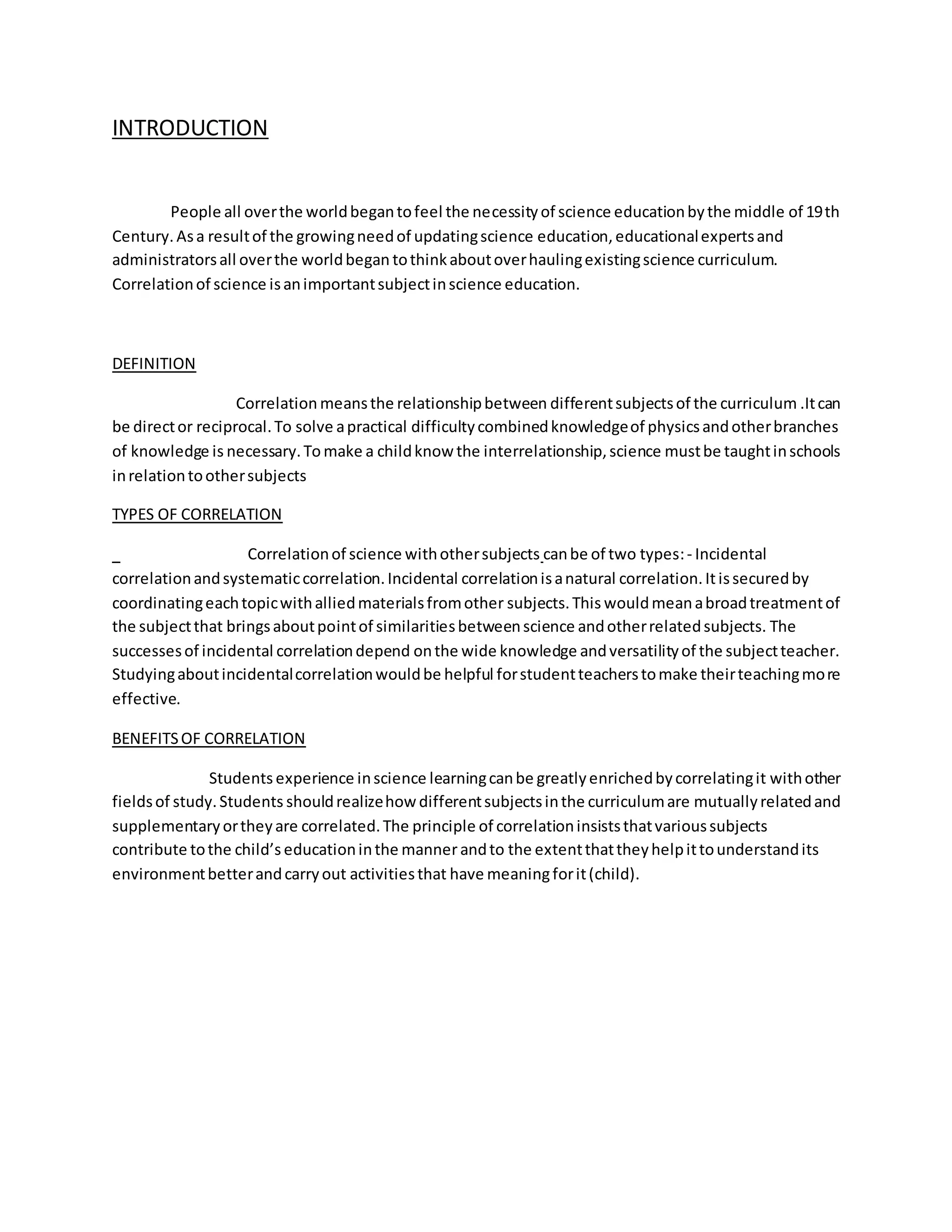
    INTRODUCTION People all overtheworldbegantofeel the necessityof science educationbythe middle of 19th Century. Asa resultof the growingneedof updatingscience education,educationalexpertsand administratorsall overthe worldbegan tothinkaboutoverhaulingexistingscience curriculum. Correlationof science isanimportantsubjectinscience education. DEFINITION Correlation meansthe relationshipbetween differentsubjectsof the curriculum .Itcan be director reciprocal.To solve apractical difficultycombinedknowledgeof physicsandotherbranches of knowledge is necessary.To make a childknow the interrelationship,science mustbe taughtinschools inrelationtoothersubjects TYPES OF CORRELATION Correlationof science withothersubjects canbe of two types:- Incidental correlationandsystematiccorrelation.Incidental correlationisanatural correlation.Itissecuredby coordinatingeachtopicwithalliedmaterialsfromother subjects.This wouldmeanabroadtreatmentof the subjectthat bringsaboutpointof similaritiesbetweenscience andotherrelatedsubjects. The successesof incidental correlationdepend onthe wide knowledge andversatilityof the subjectteacher. Studyingaboutincidentalcorrelationwouldbe helpful forstudentteacherstomake theirteachingmore effective. BENEFITSOF CORRELATION Students experience inscience learningcanbe greatlyenrichedbycorrelatingit withother fieldsof study.Students shouldrealizehow differentsubjectsinthe curriculumare mutuallyrelatedand supplementaryortheyare correlated.The principle of correlationinsiststhatvarioussubjects contribute tothe child’s educationinthe mannerandto the extentthattheyhelpittounderstandits environmentbetterandcarryout activitiesthat have meaningforit(child).
  • 4.
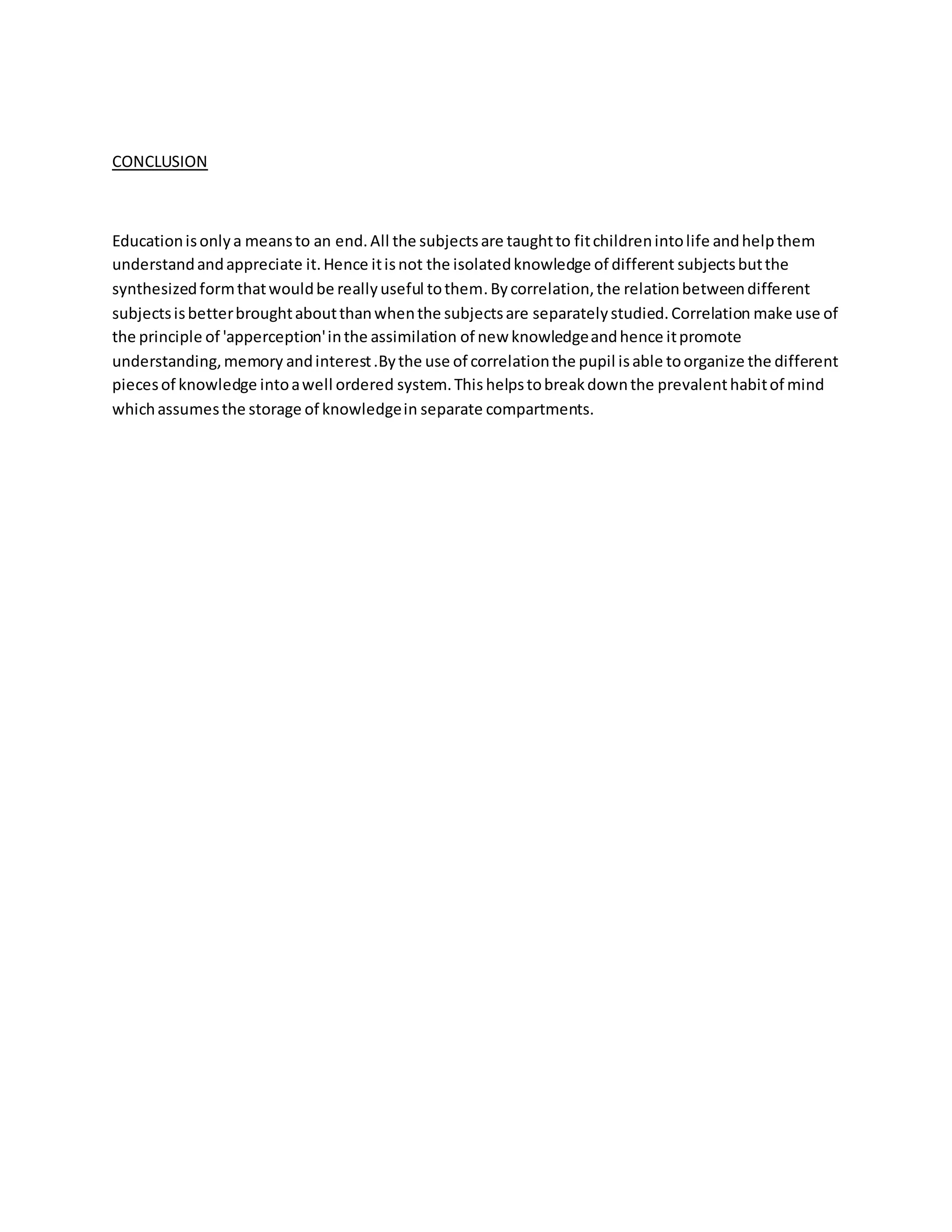
    CONCLUSION Educationisonlya meansto anend.All the subjectsare taughtto fitchildrenintolife andhelpthem understandandappreciate it.Hence itisnot the isolatedknowledge of different subjectsbutthe synthesizedformthatwouldbe reallyuseful tothem.Bycorrelation,the relationbetweendifferent subjectsisbetterbroughtaboutthanwhenthe subjectsare separatelystudied.Correlation make use of the principle of 'apperception'inthe assimilation of new knowledgeandhence itpromote understanding,memory andinterest.Bythe use of correlationthe pupil isable toorganize the different piecesof knowledge intoawell ordered system.This helpstobreakdownthe prevalenthabitof mind whichassumesthe storage of knowledgein separate compartments.