Brittney L Rhodes
MSNE 5356 Advanced Pharmacology
Lamar University
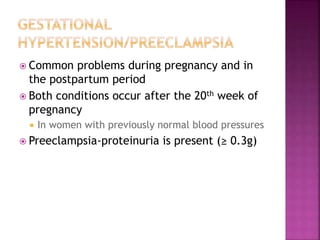
 Common problems during pregnancy and in
the postpartum period
 Both conditions occur after the 20th week of
pregnancy
 In women with previously normal blood pressures
 Preeclampsia-proteinuria is present (≥ 0.3g)
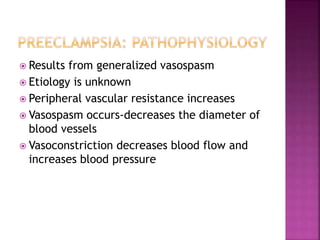
 Results from generalized vasospasm
 Etiology is unknown
 Peripheral vascular resistance increases
 Vasospasm occurs-decreases the diameter of
blood vessels
 Vasoconstriction decreases blood flow and
increases blood pressure
 Calcium channel blocker
 Prescribed to treat hypertension
 Affects the way calcium moves into the cells
of the heart and blood vessels
 Results in the relaxation of the blood vessels
 Increases the oxygen to the heart and
reduces the workload of the heart.
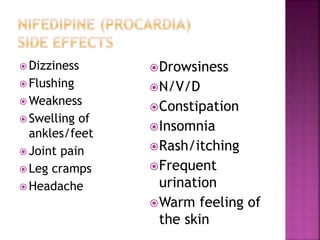
 Dizziness
 Flushing
 Weakness
 Swelling of
ankles/feet
 Joint pain
 Leg cramps
 Headache
Drowsiness
N/V/D
Constipation
Insomnia
Rash/itching
Frequent
urination
Warm feeling of
the skin
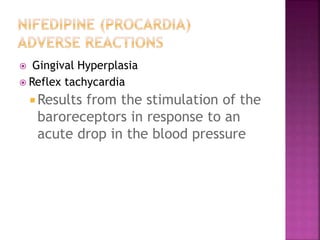
 Gingival Hyperplasia
 Reflex tachycardia
 Results from the stimulation of the
baroreceptors in response to an
acute drop in the blood pressure
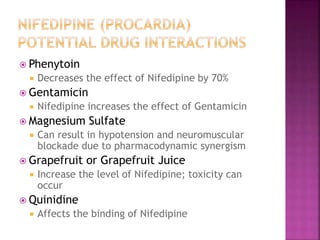
 Phenytoin
 Decreases the effect of Nifedipine by 70%
 Gentamicin
 Nifedipine increases the effect of Gentamicin
 Magnesium Sulfate
 Can result in hypotension and neuromuscular
blockade due to pharmacodynamic synergism
 Grapefruit or Grapefruit Juice
 Increase the level of Nifedipine; toxicity can
occur
 Quinidine
 Affects the binding of Nifedipine
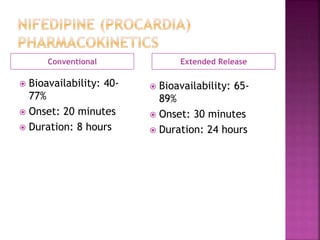
Conventional Extended Release
 Bioavailability: 40-
77%
 Onset: 20 minutes
 Duration: 8 hours
 Bioavailability: 65-
89%
 Onset: 30 minutes
 Duration: 24 hours
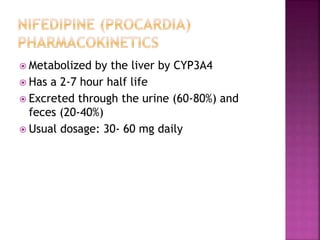
 Metabolized by the liver by CYP3A4
 Has a 2-7 hour half life
 Excreted through the urine (60-80%) and
feces (20-40%)
 Usual dosage: 30- 60 mg daily
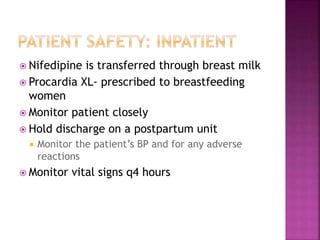
 Nifedipine is transferred through breast milk
 Procardia XL- prescribed to breastfeeding
women
 Monitor patient closely
 Hold discharge on a postpartum unit
 Monitor the patient’s BP and for any adverse
reactions
 Monitor vital signs q4 hours
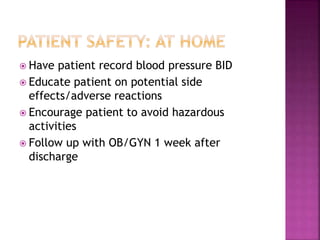
 Have patient record blood pressure BID
 Educate patient on potential side
effects/adverse reactions
 Encourage patient to avoid hazardous
activities
 Follow up with OB/GYN 1 week after
discharge
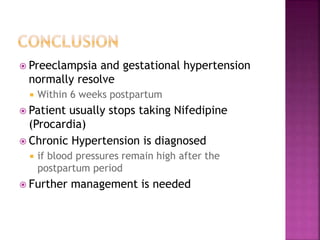
 Preeclampsia and gestational hypertension
normally resolve
 Within 6 weeks postpartum
 Patient usually stops taking Nifedipine
(Procardia)
 Chronic Hypertension is diagnosed
 if blood pressures remain high after the
postpartum period
 Further management is needed
 Arcangelo, V. P., & Peterson, A. M. (2013).
Pharmacotherapeutics for advanced practice: A practical
approach (3rd ed.). Ambler, PA: Lippincott, Williams &
 Cunha, J. (2015). Procardia. Retrieved from
http://www.rxlist.com/procardia-side-effects-drug-
center.htm
 Koley, A. P., Robinson, R. C., Markowitz, A., & Friedman, F.
K. (1997). Drug-drug interactions: Effect of quinidine on
nifedipine binding to human cytochrome P450 3A4 [].
Biochemical Pharmacology, 54(4), 455-460. Retrieved from
http://www.ncbi.nlm.nih.gov/pubmed/9105395
 Murray, S. S., & McKinney, E. S. (2014). Foundations of
maternal-newborn and women’s health nursing (6th ed.).
St. Louis, MO:
 Nifedipine (oral route). (2015). Retrieved from
http:www/mayoclinic.org/drugs-supplements/nifedipine-
oral-route/description/drg-20071680

Nifedipine (procardia)

  • 1.
    Brittney L Rhodes MSNE5356 Advanced Pharmacology Lamar University
  • 2.
     Common problemsduring pregnancy and in the postpartum period  Both conditions occur after the 20th week of pregnancy  In women with previously normal blood pressures  Preeclampsia-proteinuria is present (≥ 0.3g)
  • 3.
     Results fromgeneralized vasospasm  Etiology is unknown  Peripheral vascular resistance increases  Vasospasm occurs-decreases the diameter of blood vessels  Vasoconstriction decreases blood flow and increases blood pressure
  • 4.
     Calcium channelblocker  Prescribed to treat hypertension  Affects the way calcium moves into the cells of the heart and blood vessels  Results in the relaxation of the blood vessels  Increases the oxygen to the heart and reduces the workload of the heart.
  • 5.
     Dizziness  Flushing Weakness  Swelling of ankles/feet  Joint pain  Leg cramps  Headache Drowsiness N/V/D Constipation Insomnia Rash/itching Frequent urination Warm feeling of the skin
  • 6.
     Gingival Hyperplasia Reflex tachycardia  Results from the stimulation of the baroreceptors in response to an acute drop in the blood pressure
  • 7.
     Phenytoin  Decreasesthe effect of Nifedipine by 70%  Gentamicin  Nifedipine increases the effect of Gentamicin  Magnesium Sulfate  Can result in hypotension and neuromuscular blockade due to pharmacodynamic synergism  Grapefruit or Grapefruit Juice  Increase the level of Nifedipine; toxicity can occur  Quinidine  Affects the binding of Nifedipine
  • 8.
    Conventional Extended Release Bioavailability: 40- 77%  Onset: 20 minutes  Duration: 8 hours  Bioavailability: 65- 89%  Onset: 30 minutes  Duration: 24 hours
  • 9.
     Metabolized bythe liver by CYP3A4  Has a 2-7 hour half life  Excreted through the urine (60-80%) and feces (20-40%)  Usual dosage: 30- 60 mg daily
  • 10.
     Nifedipine istransferred through breast milk  Procardia XL- prescribed to breastfeeding women  Monitor patient closely  Hold discharge on a postpartum unit  Monitor the patient’s BP and for any adverse reactions  Monitor vital signs q4 hours
  • 11.
     Have patientrecord blood pressure BID  Educate patient on potential side effects/adverse reactions  Encourage patient to avoid hazardous activities  Follow up with OB/GYN 1 week after discharge
  • 12.
     Preeclampsia andgestational hypertension normally resolve  Within 6 weeks postpartum  Patient usually stops taking Nifedipine (Procardia)  Chronic Hypertension is diagnosed  if blood pressures remain high after the postpartum period  Further management is needed
  • 13.
     Arcangelo, V.P., & Peterson, A. M. (2013). Pharmacotherapeutics for advanced practice: A practical approach (3rd ed.). Ambler, PA: Lippincott, Williams &  Cunha, J. (2015). Procardia. Retrieved from http://www.rxlist.com/procardia-side-effects-drug- center.htm  Koley, A. P., Robinson, R. C., Markowitz, A., & Friedman, F. K. (1997). Drug-drug interactions: Effect of quinidine on nifedipine binding to human cytochrome P450 3A4 []. Biochemical Pharmacology, 54(4), 455-460. Retrieved from http://www.ncbi.nlm.nih.gov/pubmed/9105395  Murray, S. S., & McKinney, E. S. (2014). Foundations of maternal-newborn and women’s health nursing (6th ed.). St. Louis, MO:  Nifedipine (oral route). (2015). Retrieved from http:www/mayoclinic.org/drugs-supplements/nifedipine- oral-route/description/drg-20071680