HEA, Technology to enhance professional development,  Birmingham, 14 May 2009  the use of next generation technologies to build sustainable communities of practice
Next generation technologies to build sustainable communities of practice Emerge Next generation technologies Benefits realisation Sustainable communities of practice Sustainability Community, networks or something else? Practice(s), activity, actors
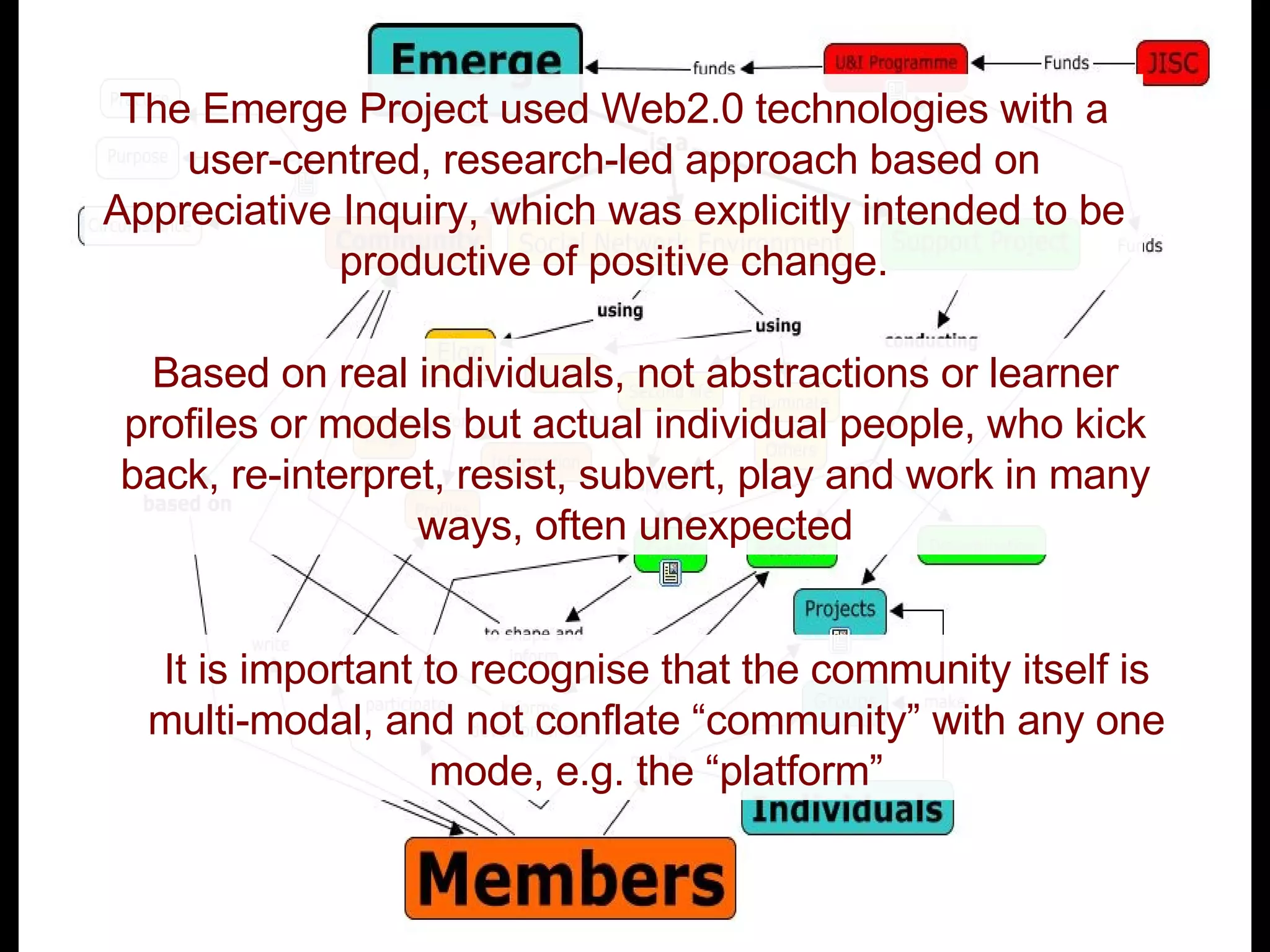
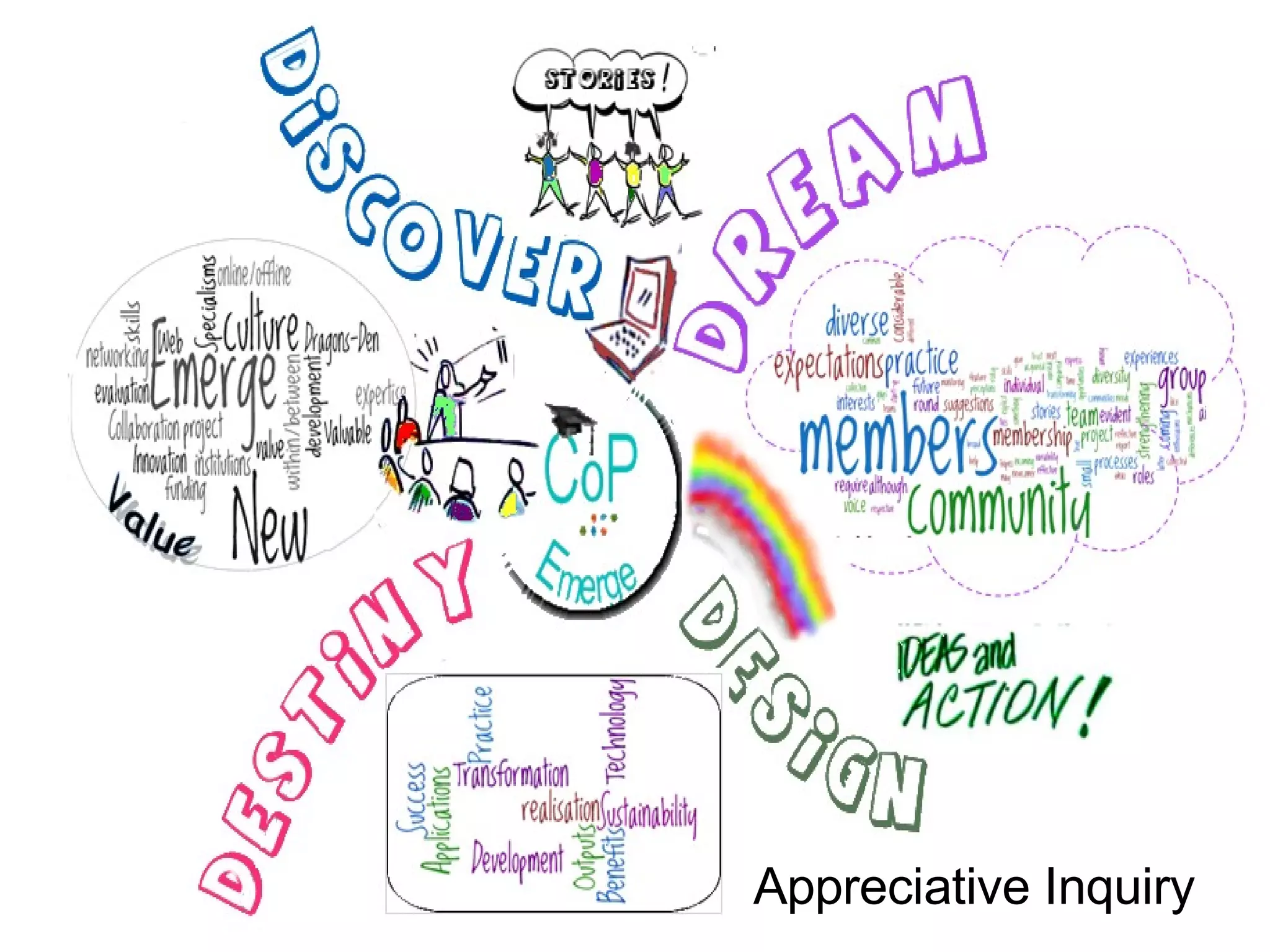
The Emerge Project used Web2.0 technologies with a user-centred, research-led approach based on Appreciative Inquiry, which was explicitly intended to be productive of positive change. Based on real individuals, not abstractions or learner profiles or models but actual individual people, who kick back, re-interpret, resist, subvert, play and work in many ways, often unexpected It is important to recognise that the community itself is multi-modal, and not conflate “community” with any one mode, e.g. the “platform”
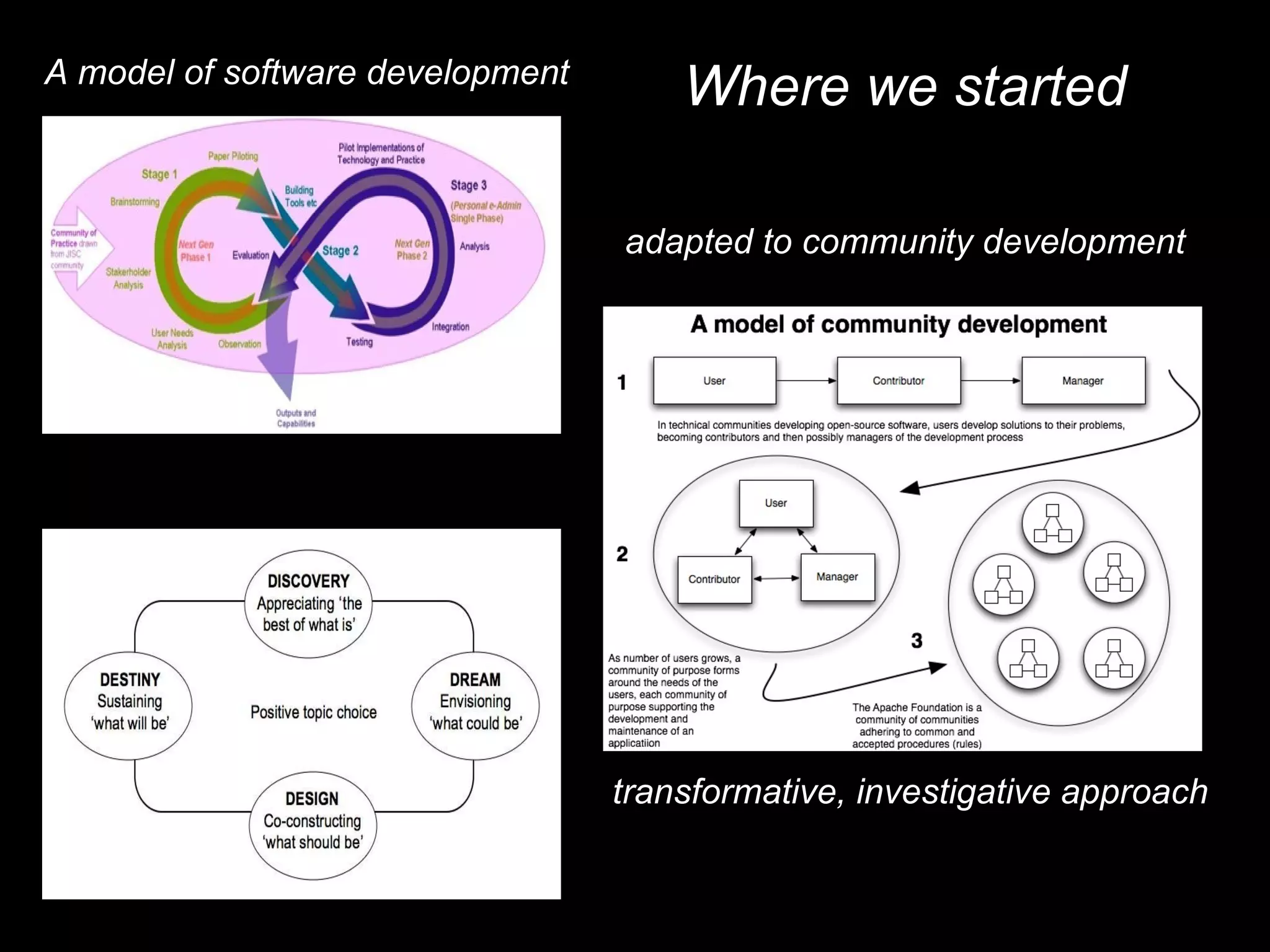
A model of software development adapted to community development transformative, investigative approach Where we started
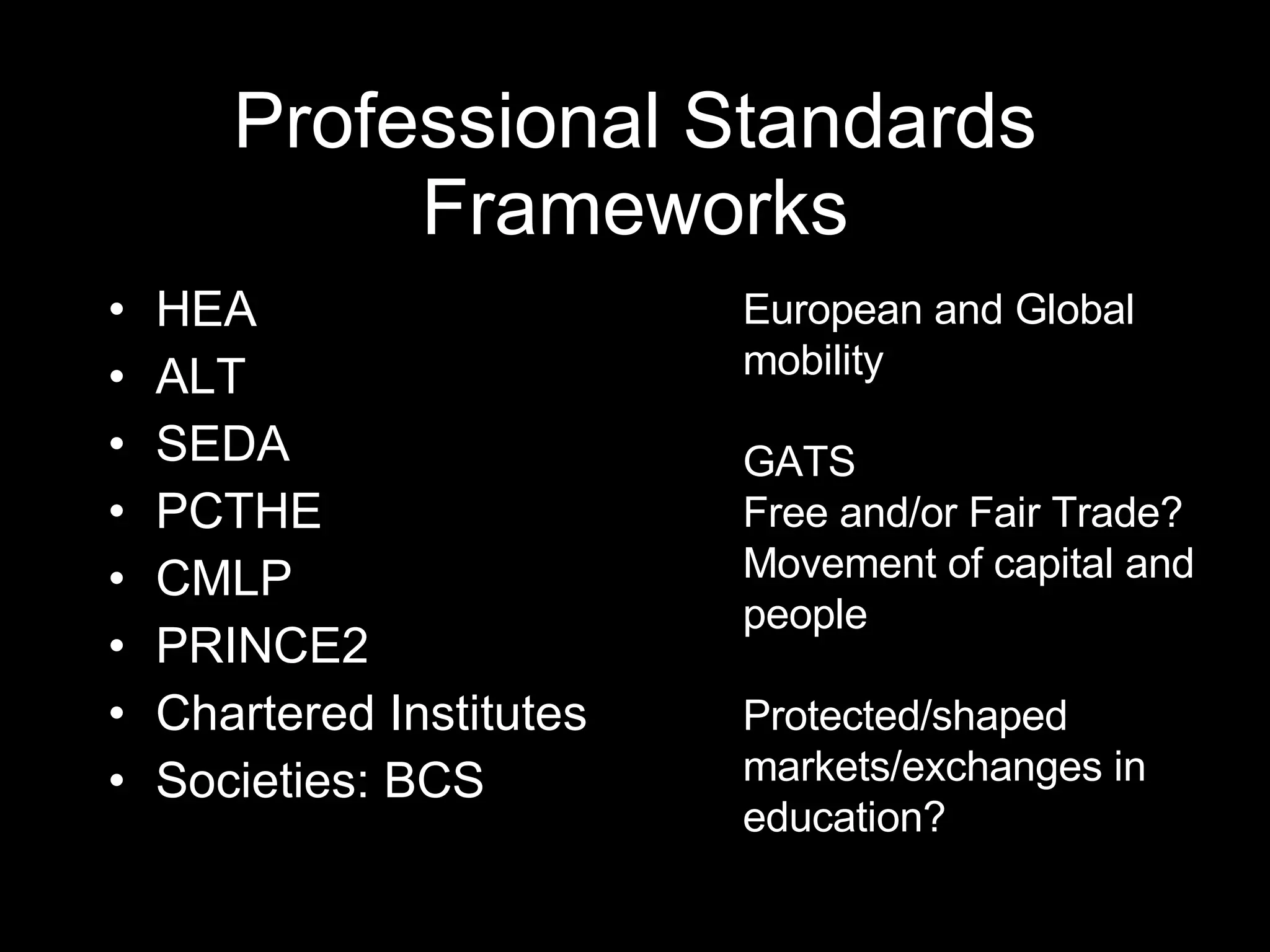
Professional Standards Frameworks HEA ALT SEDA PCTHE CMLP PRINCE2 Chartered Institutes Societies: BCS European and Global mobility GATS Free and/or Fair Trade? Movement of capital and people Protected/shaped markets/exchanges in education?
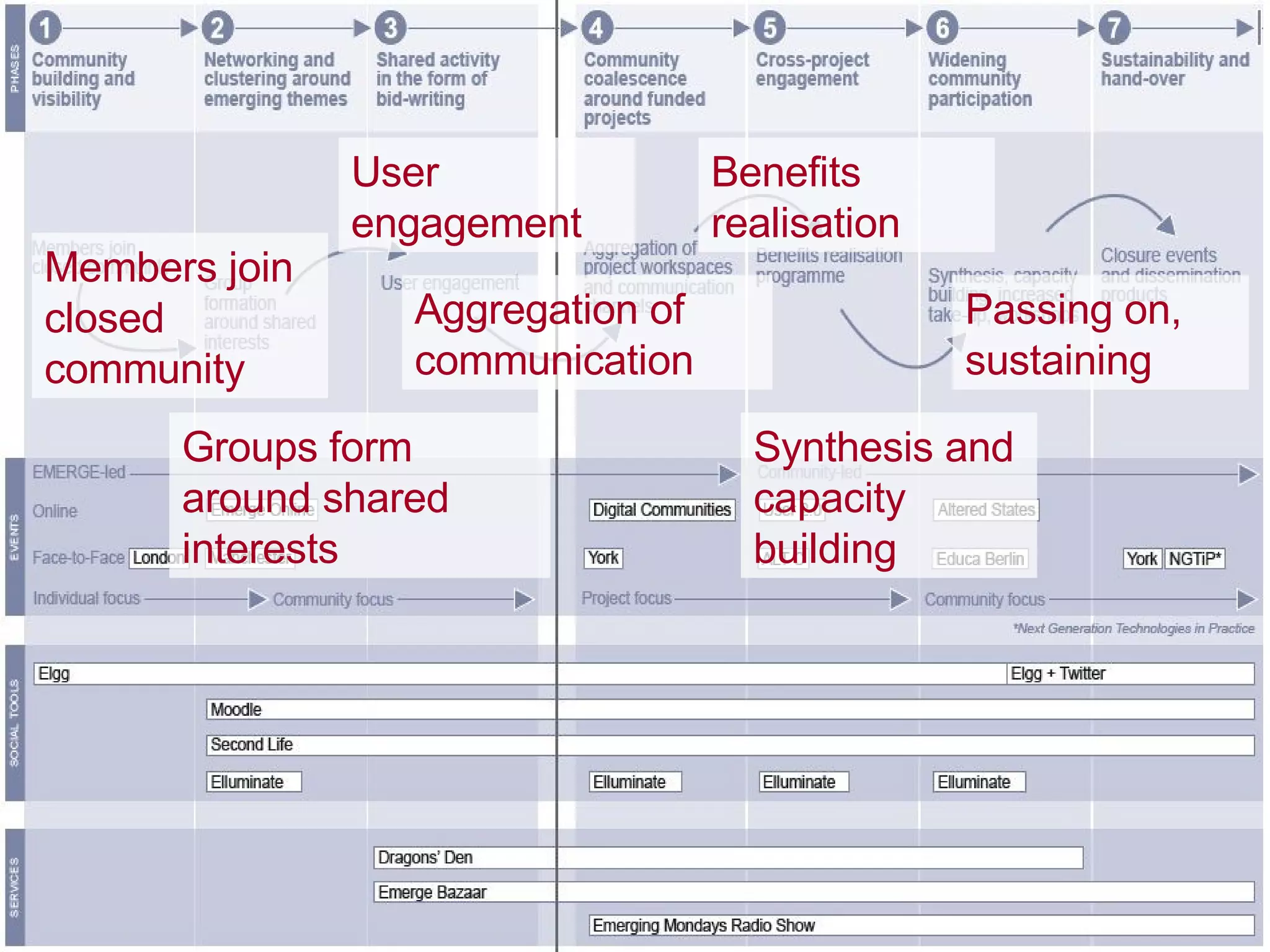
Members join closed community Groups form around shared interests User engagement Aggregation of communication Benefits realisation Synthesis and capacity building Passing on, sustaining
Appreciative Inquiry
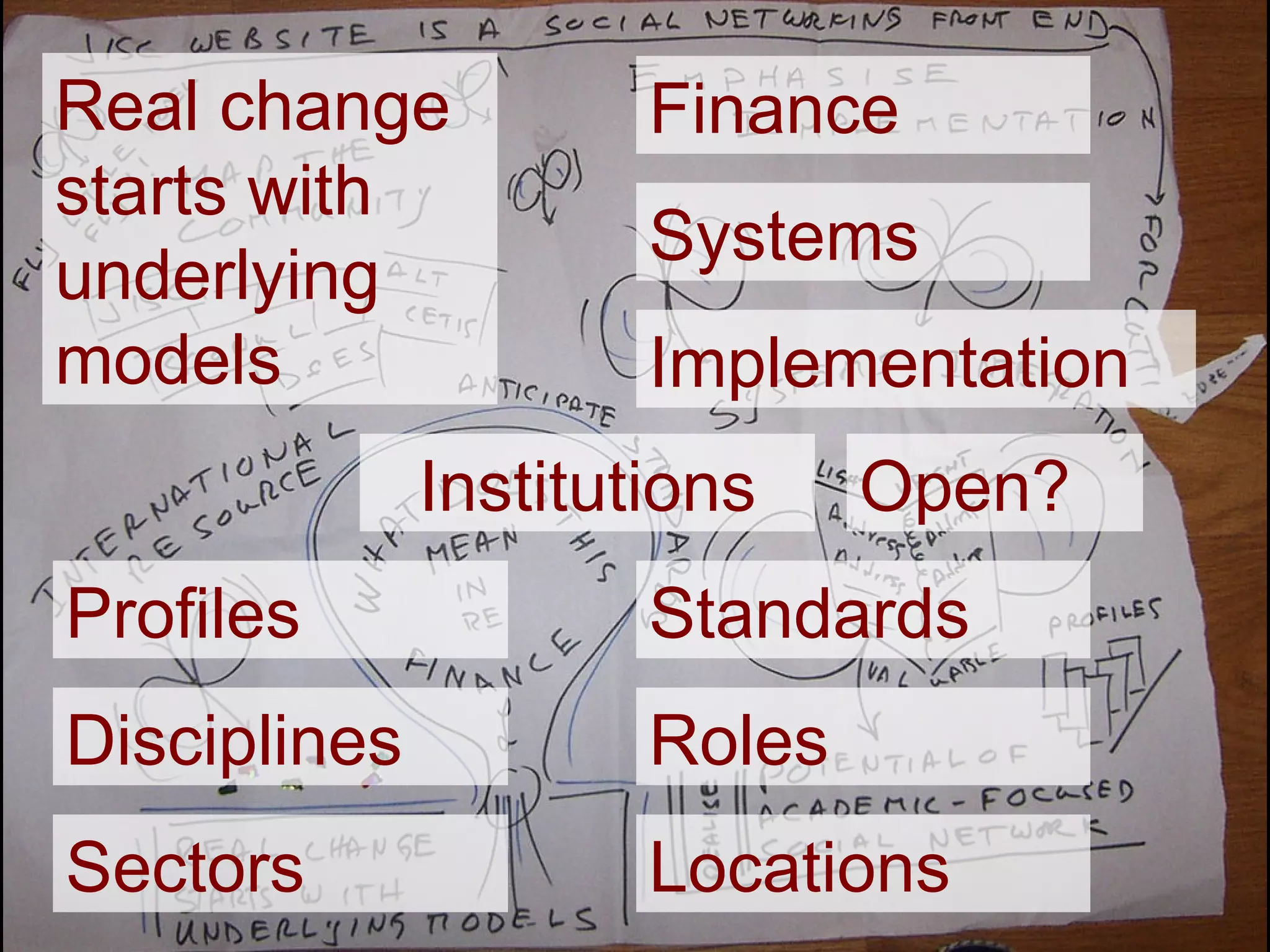
Real change starts with underlying models Finance Implementation Systems Profiles Disciplines Sectors Roles Standards Locations Institutions Open?
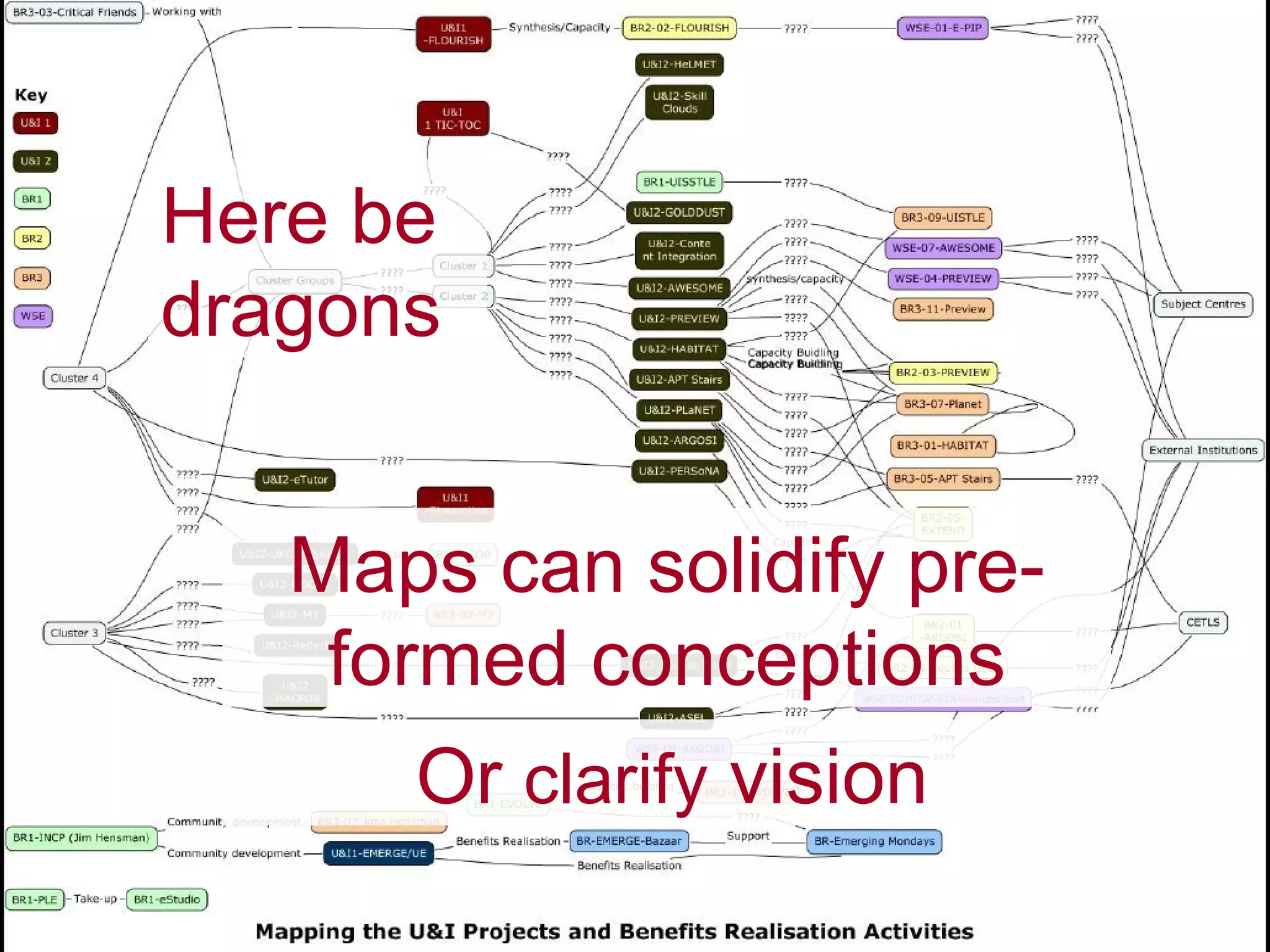
Here be dragons Maps can solidify pre-formed conceptions Or  clarify  vision
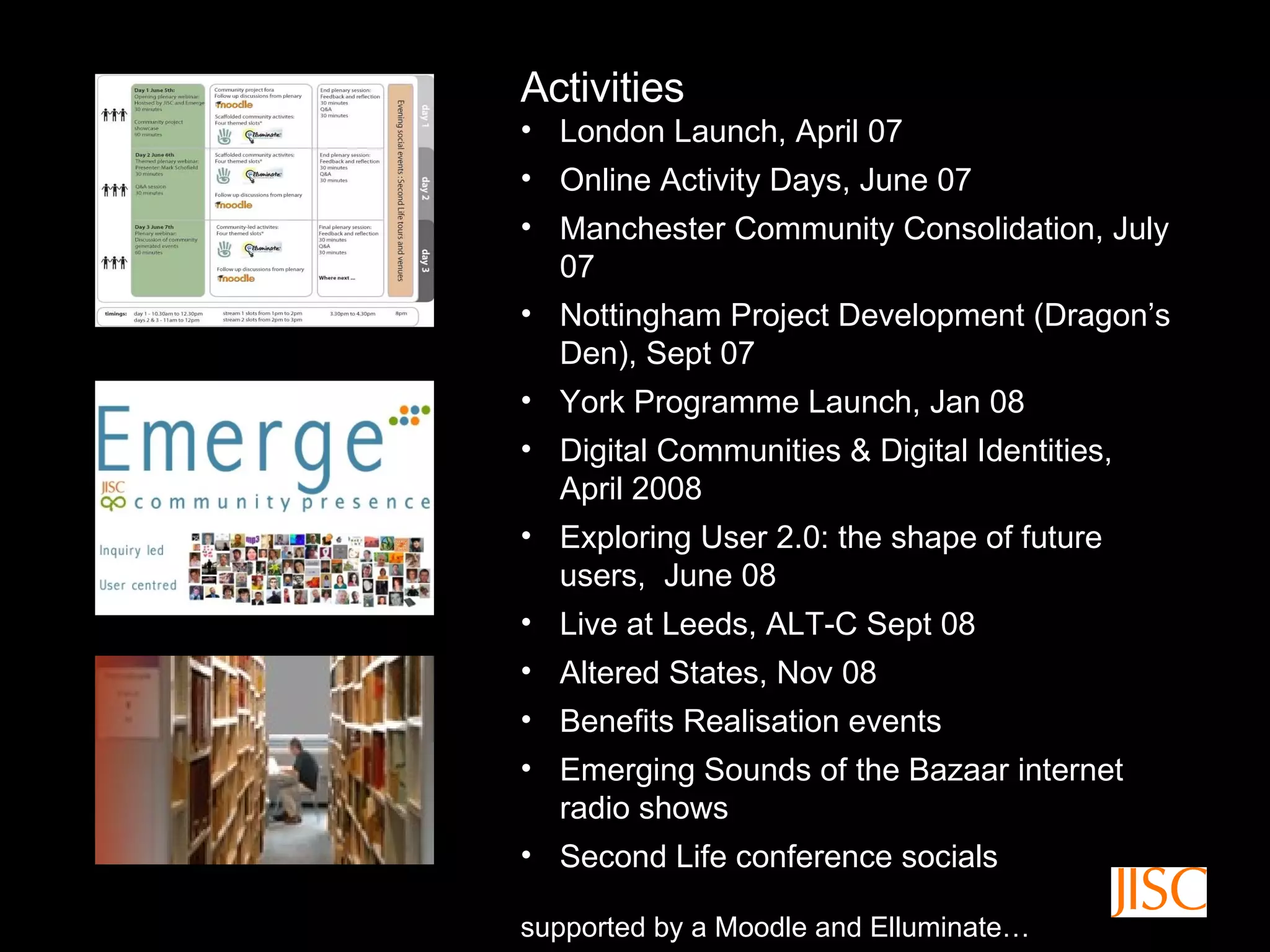
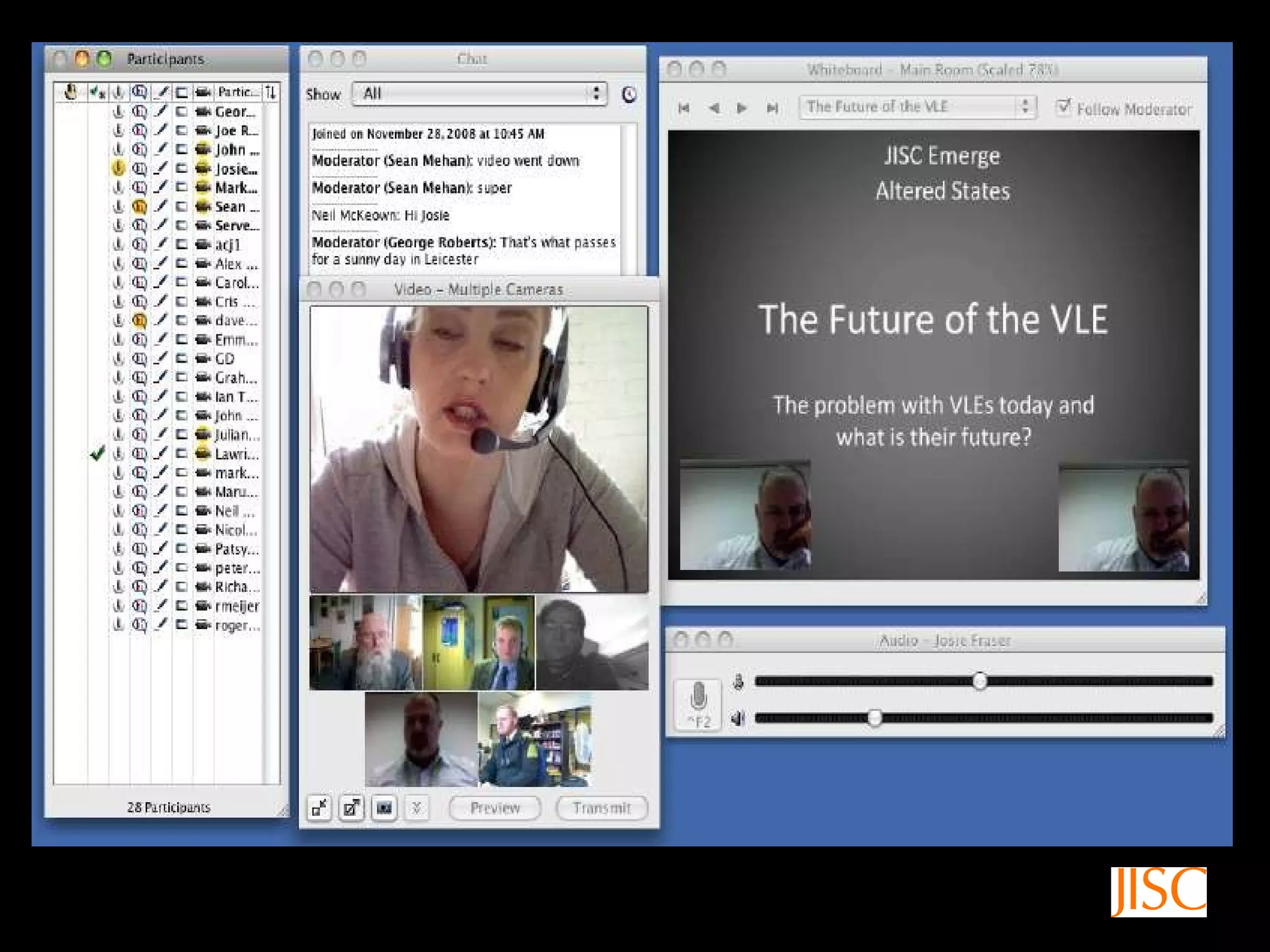
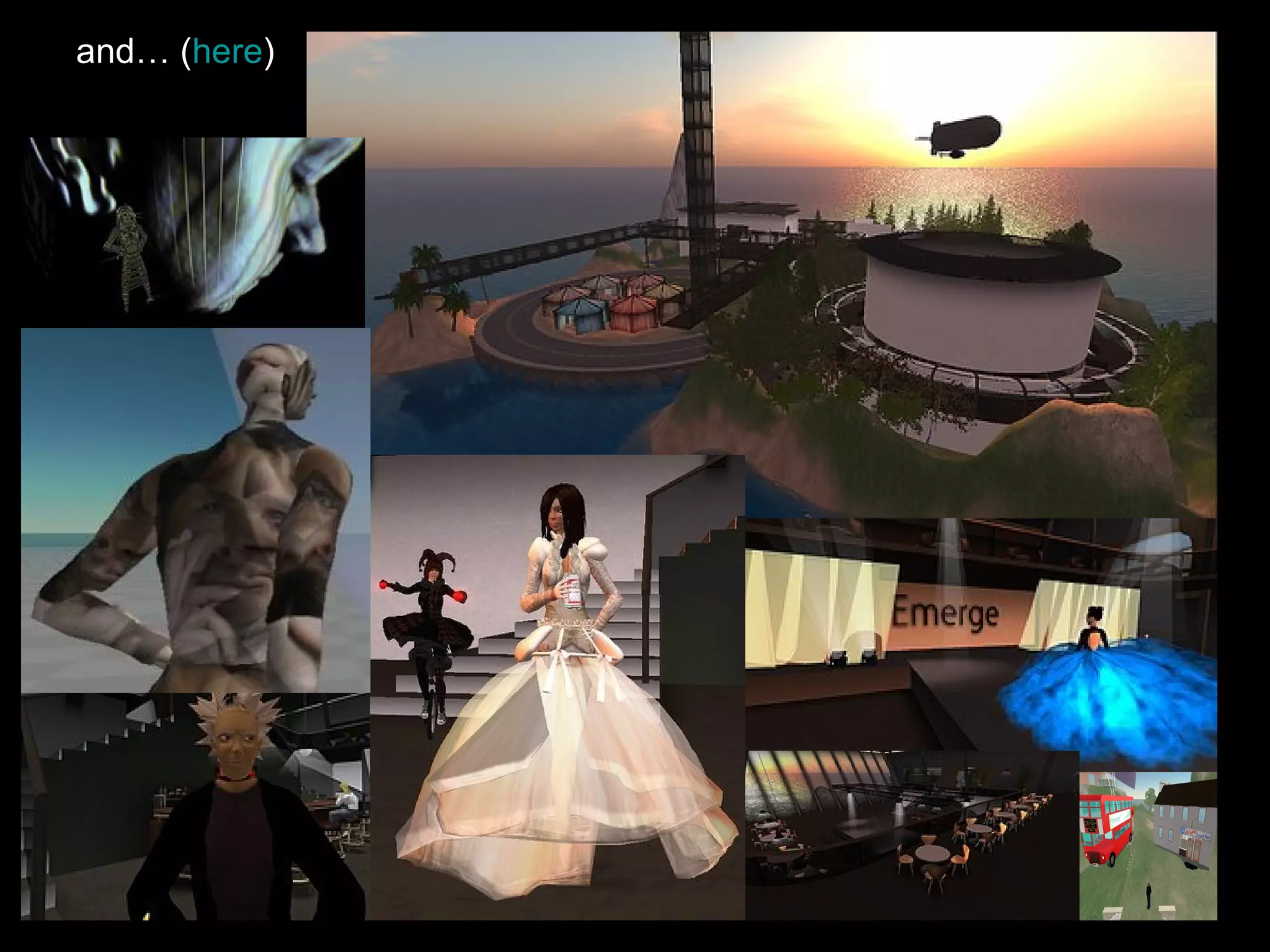
Activities London Launch, April 07 Online Activity Days, June 07 Manchester Community Consolidation, July 07 Nottingham Project Development (Dragon’s Den), Sept 07 York Programme Launch, Jan 08 Digital Communities & Digital Identities, April 2008 Exploring User 2.0: the shape of future users,  June 08 Live at Leeds, ALT-C Sept 08 Altered States, Nov 08 Benefits Realisation events Emerging Sounds of the Bazaar internet radio shows Second Life conference socials supported by a Moodle and Elluminate…
Pro-social networks around programmes (curricular lead bodies) Emergent,  semi-formal  and  pre-formal  networks  alongside the more formal networks of funding bodies, projects, institutions,  constituted associations , and  individuals Semi-formal  networks do not have explicitly declared intentions do exhibit tacit rationales (F-ALT?), suppliers to Becta, etc Pre-formal  networks e.g. special interest groups, the blogosphere, or more narrowly the “Eddies” or annual  Edublog Awards ,  UnLtdWorld ,  critical friends network , JISC evaluators, etc Constituted associations  are, or are becoming, institutionalised, e.g.: ALT, UCISA, AUDE, disciplinary and professional bodies, Subject Centres, etc, etc Individuals  are important actors in all these networks, not only projects, institutions or, constituted associations
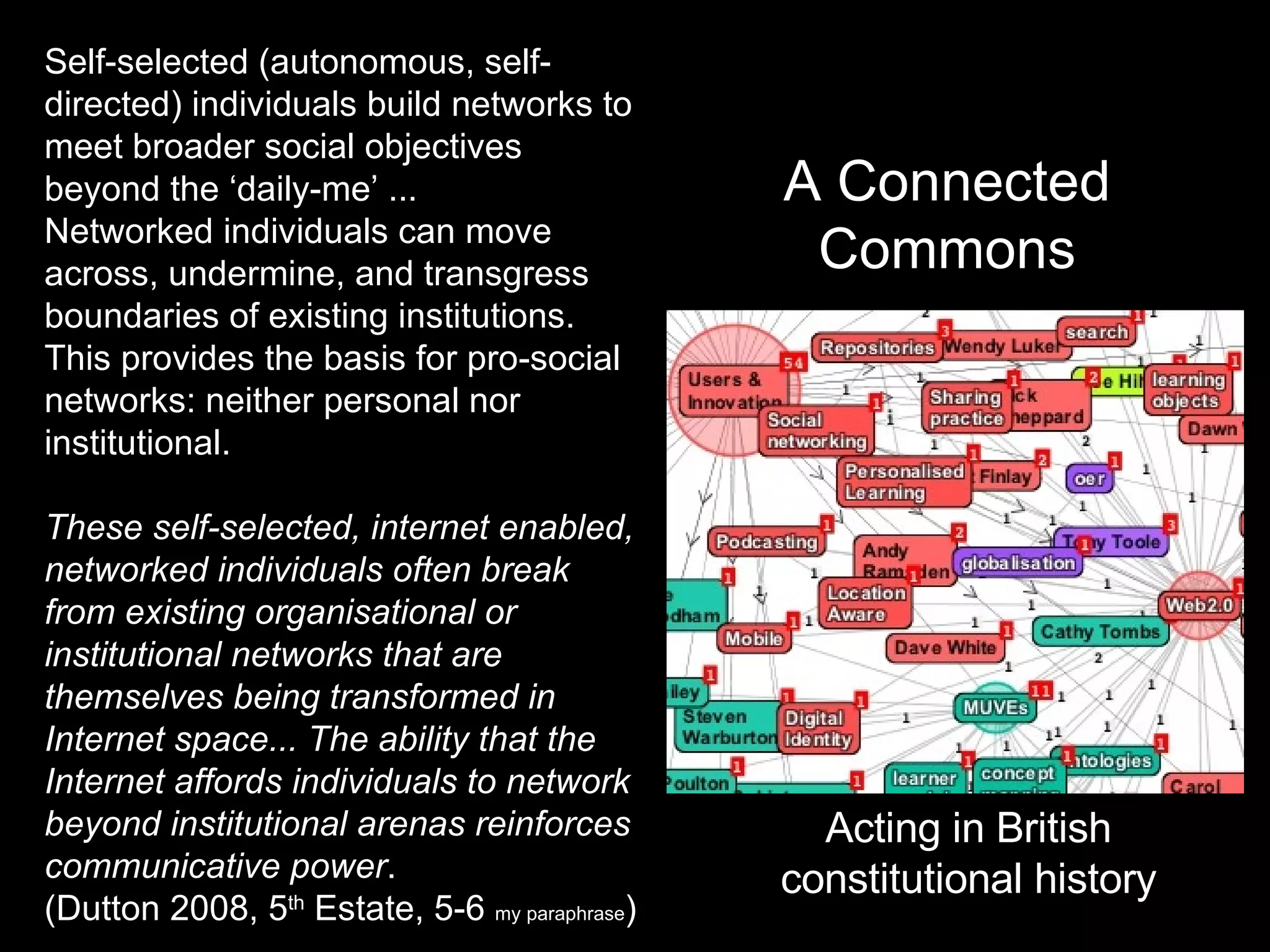
Self-selected (autonomous, self-directed) individuals build networks to meet broader social objectives beyond the ‘daily-me’ ... Networked individuals can move across, undermine, and transgress boundaries of existing institutions. This provides the basis for pro-social networks: neither personal nor institutional.  These self-selected, internet enabled, networked individuals often break from existing organisational or institutional networks that are themselves being transformed in Internet space... The ability that the Internet affords individuals to network beyond institutional arenas reinforces communicative power . (Dutton 2008, 5 th  Estate, 5-6  my paraphrase ) A Connected Commons Acting in British constitutional history
Radical, user-centred, Freirian approach to community formation activities authentic to the participants’ cultural context …  participants in the proto-projects, projects and the community of practice are themselves a user group working in a user centred environment, modelling the user engagement development cycle and applying asset-based community development processes It is an actor network, not a software platform or an institution There is a question about human/non-human agency C orporate citizenship, even machine intelligence
The Future of Emerge User-centred social learning media hub where networks of networks of individuals: the human internet, a connected commons, is made visible to participants and the wider community Amplifying outputs, connections, impact – presence – of people interested in emerging technologies for, e.g.: Learning & teaching Research with … and into Community / User / Institution engagement Administration (MIAP, LLL Records, etc) Blended, pervaded, physical, virtual and mobile learning spaces “ Green” ICT Modeling and supporting effective use of emerging technologies
Developing projects in a context where there is awareness of the wider activity in a field and an understanding of the alignments and gaps in that field will lead to better projects being developed.  By using community development  processes and social networking in the field the general quality of educational (learning) technology development projects may be improved, bringing benefits not just to the JISC but more widely to all agencies and stakeholders.  Working hypotheses
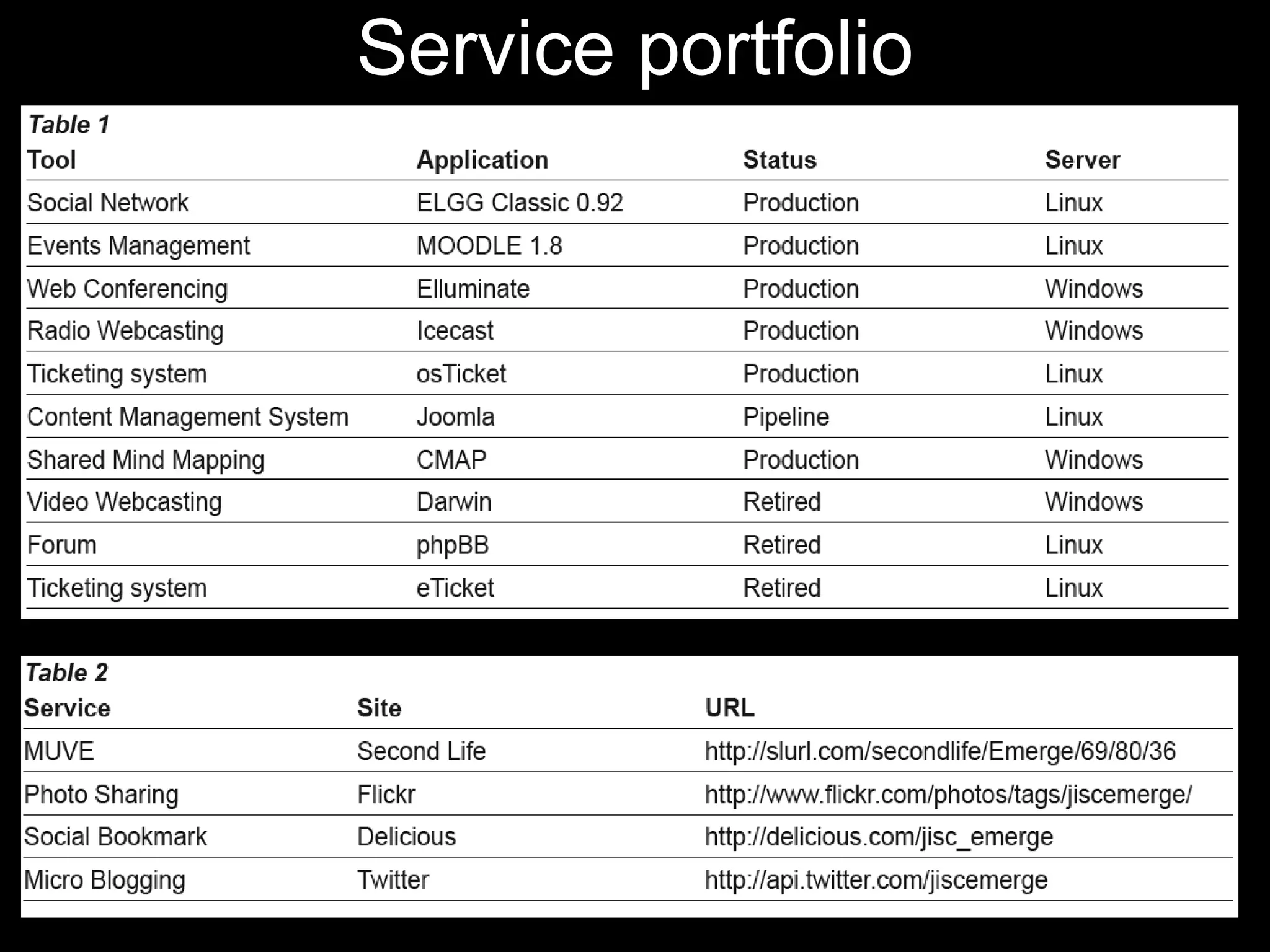
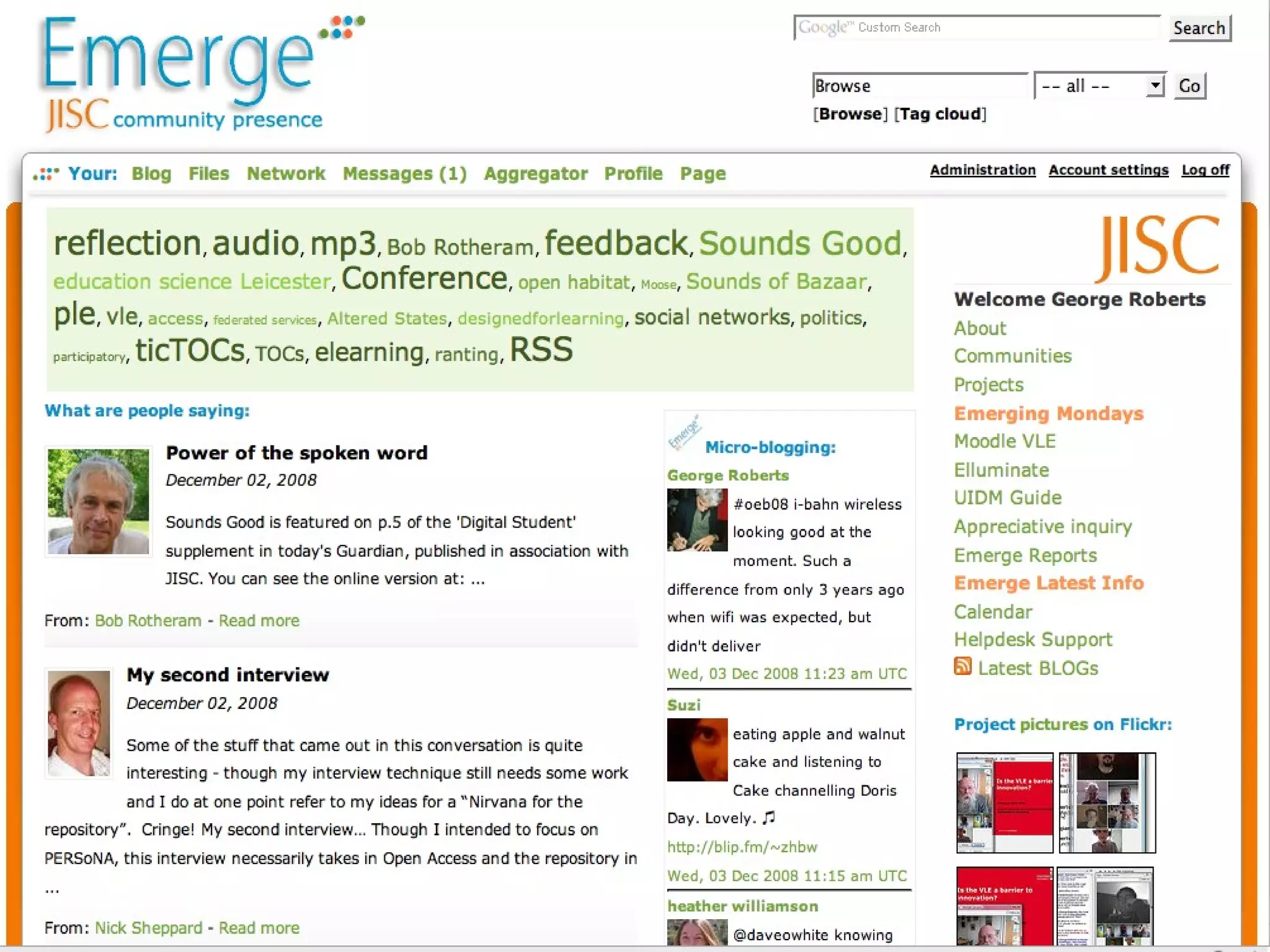
Emerging technology digital storytelling Adopted, adapted and implemented parts of the ITILv3 ‘best practice’ guidelines as a framework IT Infrastructure Library (( www.itil-officialsite.com )  Used a mix of self-hosted core services integrated (mashed up) with external services  Making the most of Web2.0 technologies to deliver a coherent set of ‘services’ to the community
1. To act as a conduit and pathway for the range of locations inhabited by participants 2. To channel and enhance the reach of content from existing community members, whether working in single or multiple locations 3. To scaffold the online practice, work and communication of the community 4. To organise, store and aggregate project documentation of all sorts 5. To host support materials created by project staff and community members Platform spec
Platform pro-active IT Service Management (ITSM) methodology for the design, development and deployment of services using Web2.0 technologies to create online social spaces
Service portfolio
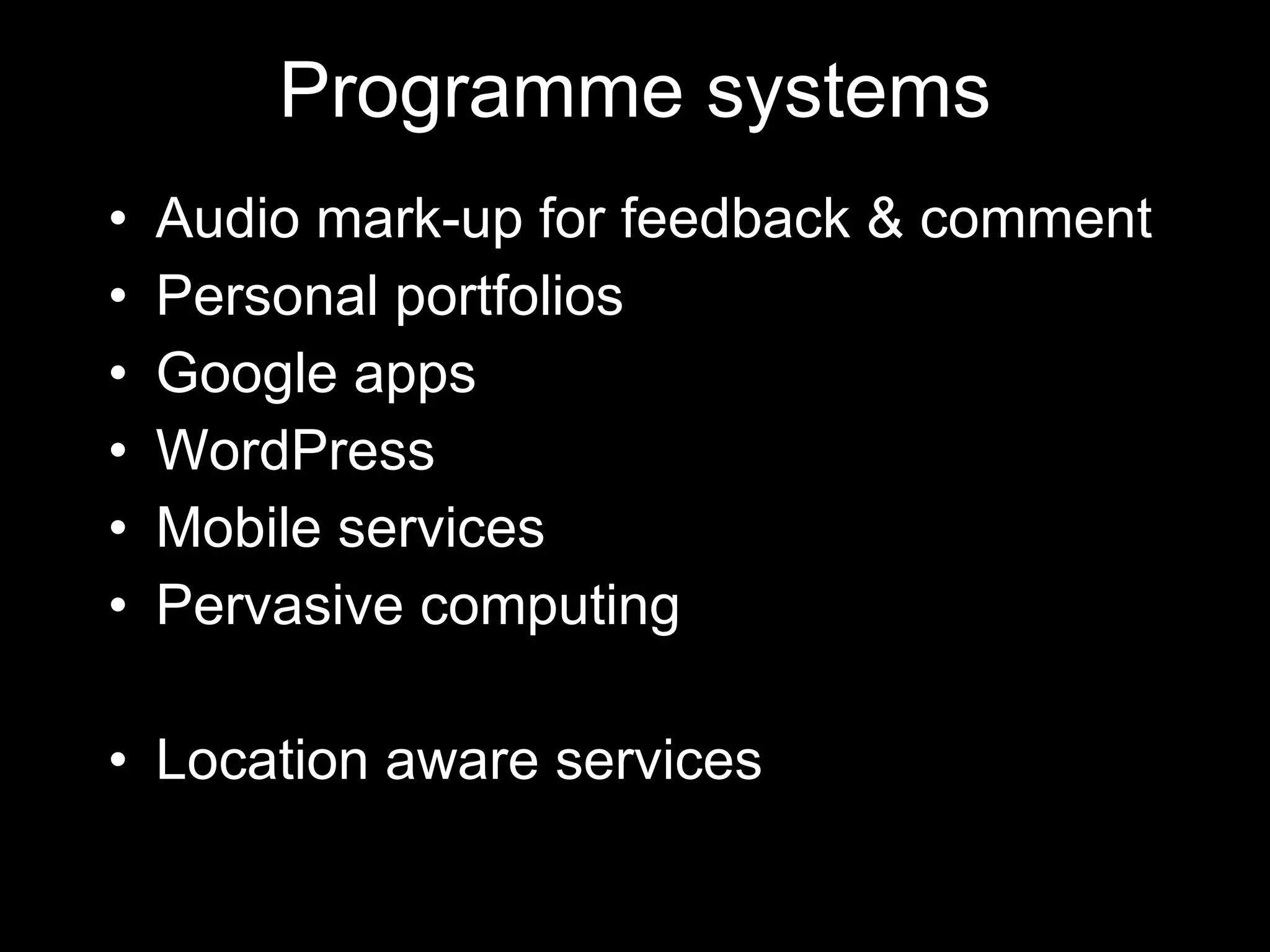
Programme systems Audio mark-up for feedback & comment Personal portfolios Google apps WordPress Mobile services Pervasive computing Location aware services
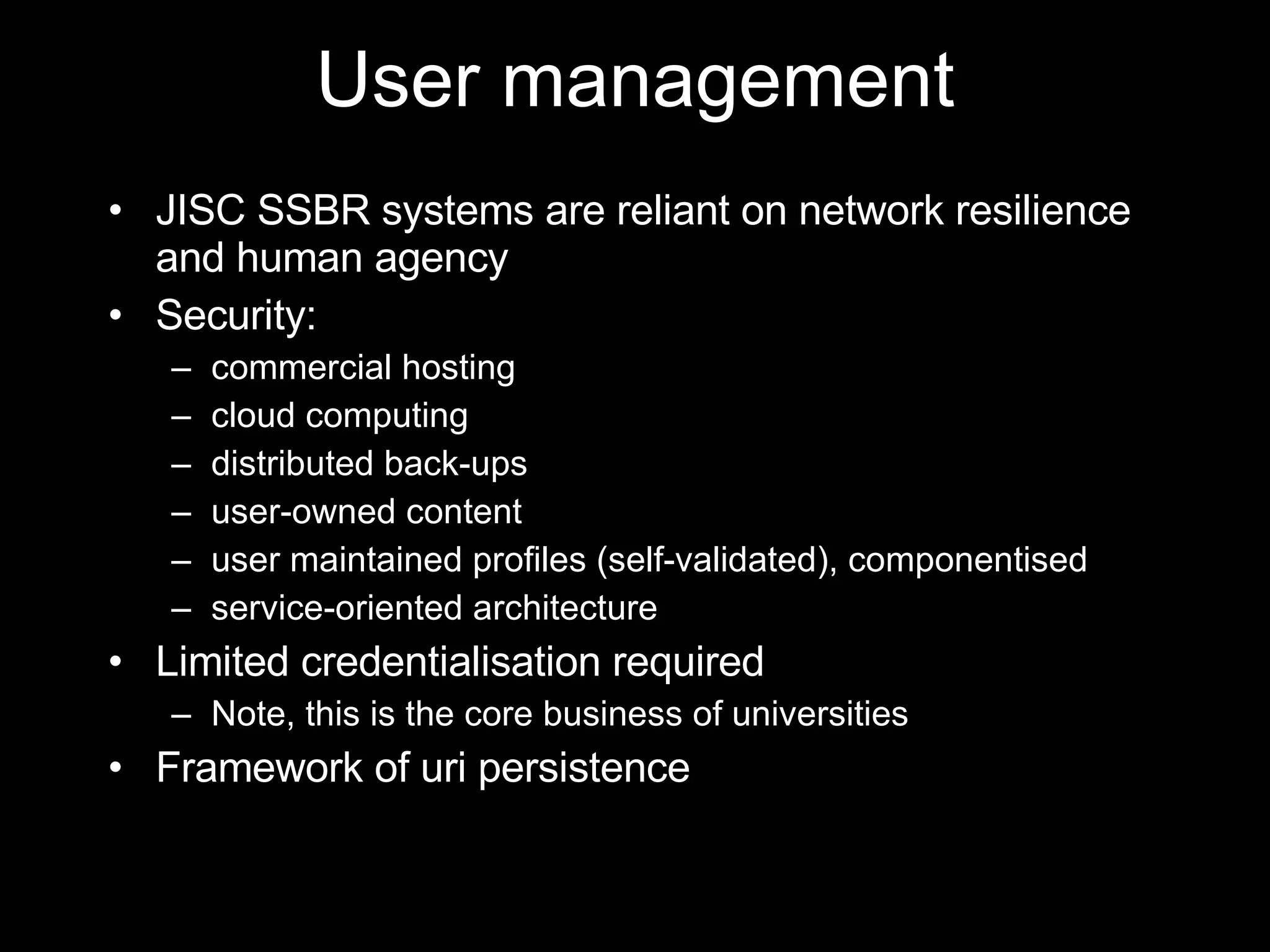
User management JISC SSBR systems are reliant on network resilience and human agency Security: commercial hosting cloud computing distributed back-ups user-owned content user maintained profiles (self-validated), componentised service-oriented architecture Limited credentialisation required Note, this is the core business of universities Framework of uri persistence
 
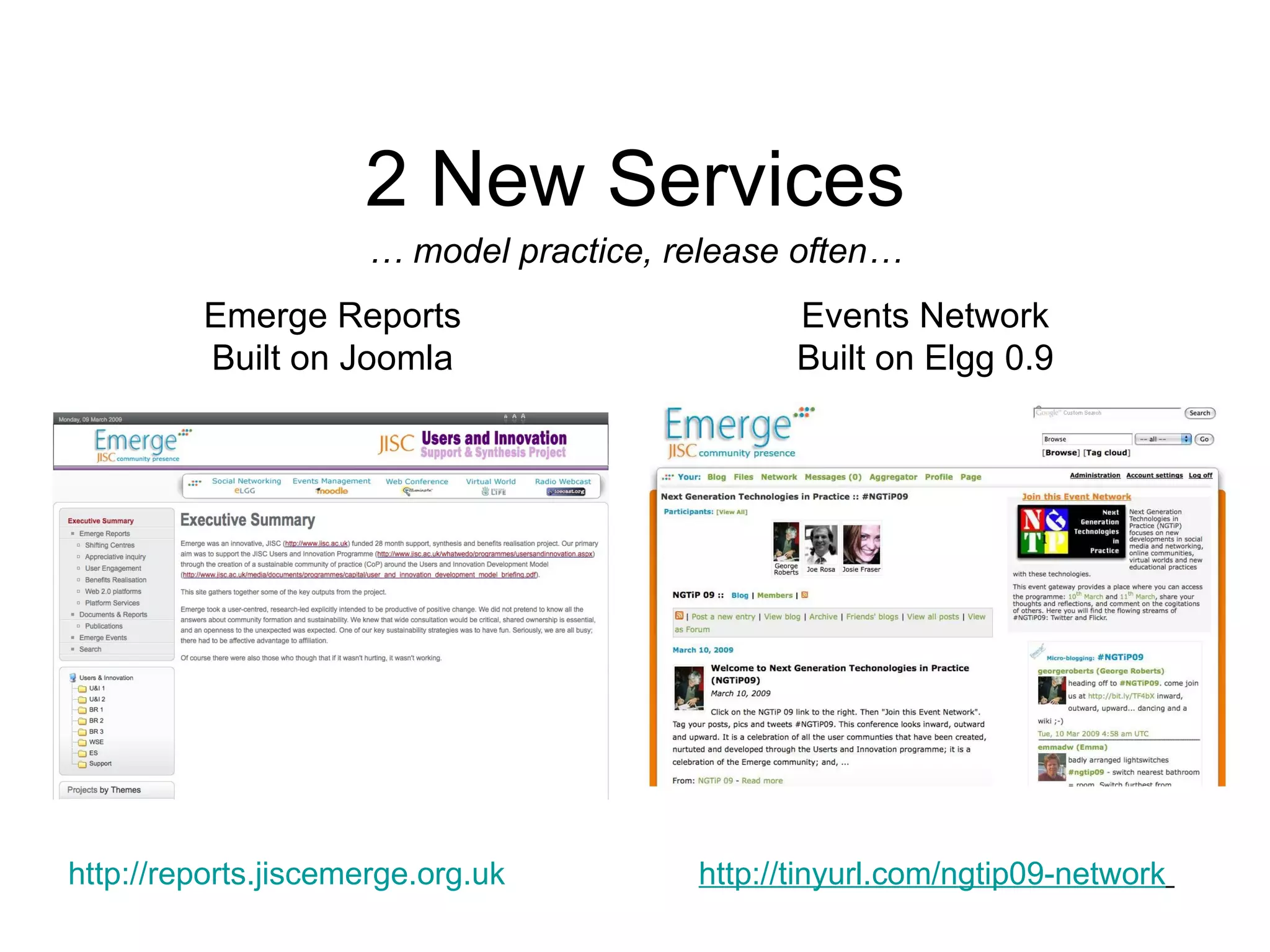
http://reports.jiscemerge.org.uk   Emerge Reports B uilt on Joomla Events Network B uilt on Elgg 0.9 http://tinyurl.com/ngtip09-network   2 New Services …  model practice, r elease often …
 
and… ( here )
Benefits realisation Benefits Realisation (BR) activities sought to ensure that the outputs and outcomes of the Users and Innovations (U&I) projects went beyond those originally funded and reached the wider community.
BR Activity Synthesises results Builds capacity Increases uptake Beyond the scope of the original project/programme
For individuals and projects professional development/capacity building E xtrapolated to the institution/department Stimulated & f acilitated collaboration Improved project planning and management Awareness of the relevance of projects in a wider context Benefits  an effective support system
Visibility, connectivity and discovery?  Or …  obscurity, isolation and at times wandering lost. The form and patterns of interaction, which develop across a community over time, cannot be predetermined The use of participatory social media is multi-modal  The articulation between people and software is not just a question of interface design (though that is crucial) The effective use of Web2.0 depends essentially on human networks.  Benefits unevenly distributed
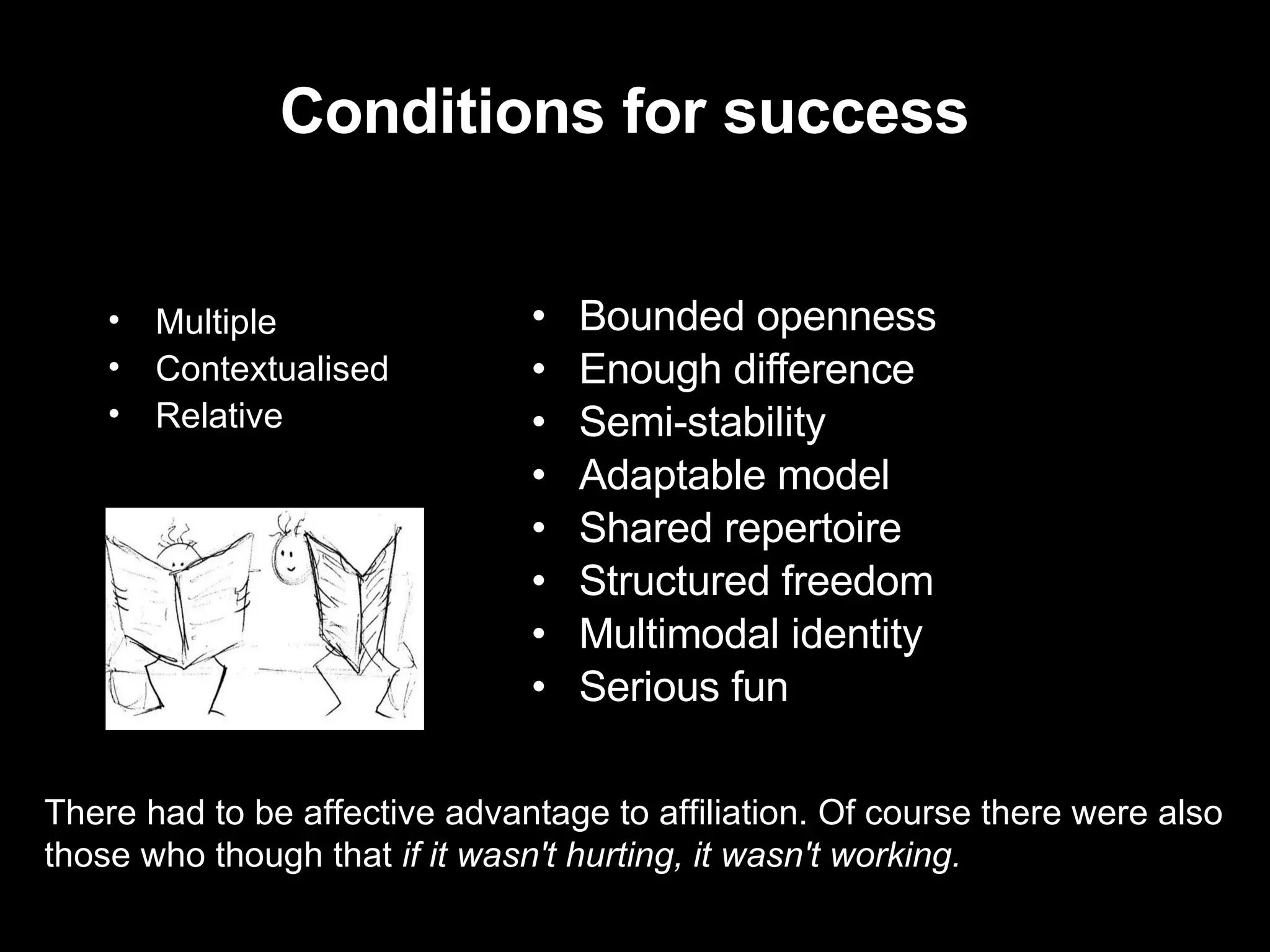
Conditions for success Bounded openness Enough difference Semi-stability Adaptable model Shared repertoire  Structured freedom Multimodal identity Serious fun Multiple Contextualised Relative There had to be affective advantage to affiliation. Of course there were also those who though that  if it wasn't hurting, it wasn't working.
Innovation needed… Learning teaching and assessment Research and development Business and community engagement Learning resources eAdmin Institutional ICT services Physical estates and learning spaces Mobile, location aware and pervasive computing Green ICT
Learning, Teaching and Assessment Assessment Course Management e-Learning e-Portfolios Learner Experience Learning & Teaching Practice Lifelong Learning Personalisation Plagiarism Staff and Education Development
The Physical Estate & Learning Spaces Learning Environments Mobile, Location Aware and Pervasive Computing Mobile Learning  Research and Development Data & Text Mining Research & Innovation Business and Community Engagement Business Analysis System/Process Mapping Web3? e-Admin Access & Identity Admissions Progression & transfer Lifelong learning records
Learning resources Data Hosting Data Services & Collections Digital Libraries Digital Preservation & Curation Digitisation: Image, Audio & Video Repositories Resource Discovery
Green ICT Low carbon power sources Demand reduction (e.g. wake on LAN) Energy capture and reuse (building design) Efficiencies (Shared services) Recycling User behaviours Reduced travel
What is: Sustainable community practice? Sustainable Community Practice
Sustainable community practice For institutions to what extent are they comfortable with ceding certain amounts of control to individuals?  to what extent are they, as established communities, willing to cede control to new communities?  For individuals to what extent do they subordinate their autonomy and self-direction to any community?  And, then, how much do they subordinate and to which?
There was a perception that Emerge made more demands on participants than had previous JISC support projects Some participants commented that Emerge activities were demanding of time and may have detracted from supported project work.  The community-based support did make demands on people’s time.  But was it the actual time demands, or Did the nature of user-centred, community-based and reflective activities magnify the appearance of time demand
There is a clear need to support emergent semi-formal and pre-formal networks to reach maturity, while recognising that clusters of individuals, as often as not, will start to cohere and then for any number of reasons abandon the effort.  Only a few semi-formal networks will attain the pre-formal stage Few of these will cohere and formally constitute themselves The process of emergence is valuable and at each stage may produce useful outputs.
Educational R&D Outputs or outcomes? Producing artefacts or building capacity? Quantitative or qualitative measures? Easy answers or the deep complexity of institutional change? Through the  U&I Programme  a real effort has been made to transform practice based on the needs of individual users working in institutions
Thank you Thank you George Roberts Project Director [email_address] http://jiscemerge.org.uk   Josie Fraser Steve Warburton Paul Bailey Emma Anderson Marion Samler Rhona Sharpe Joe Rosa Chris Fowler Isobel Falconer Nik Bessis Mitul Shukla Graham Attwell Brian Kelly Glenaffric and all the jiscemerge people, projects, partners, steering groups and teams

next generation technologies to build sustainable communities of practice

  • 1.
    HEA, Technology toenhance professional development, Birmingham, 14 May 2009 the use of next generation technologies to build sustainable communities of practice
  • 2.
    Next generation technologiesto build sustainable communities of practice Emerge Next generation technologies Benefits realisation Sustainable communities of practice Sustainability Community, networks or something else? Practice(s), activity, actors
  • 3.
    The Emerge Projectused Web2.0 technologies with a user-centred, research-led approach based on Appreciative Inquiry, which was explicitly intended to be productive of positive change. Based on real individuals, not abstractions or learner profiles or models but actual individual people, who kick back, re-interpret, resist, subvert, play and work in many ways, often unexpected It is important to recognise that the community itself is multi-modal, and not conflate “community” with any one mode, e.g. the “platform”
  • 4.
    A model ofsoftware development adapted to community development transformative, investigative approach Where we started
  • 5.
    Professional Standards FrameworksHEA ALT SEDA PCTHE CMLP PRINCE2 Chartered Institutes Societies: BCS European and Global mobility GATS Free and/or Fair Trade? Movement of capital and people Protected/shaped markets/exchanges in education?
  • 6.
    Members join closedcommunity Groups form around shared interests User engagement Aggregation of communication Benefits realisation Synthesis and capacity building Passing on, sustaining
  • 7.
  • 8.
    Real change startswith underlying models Finance Implementation Systems Profiles Disciplines Sectors Roles Standards Locations Institutions Open?
  • 9.
    Here be dragonsMaps can solidify pre-formed conceptions Or clarify vision
  • 10.
    Activities London Launch,April 07 Online Activity Days, June 07 Manchester Community Consolidation, July 07 Nottingham Project Development (Dragon’s Den), Sept 07 York Programme Launch, Jan 08 Digital Communities & Digital Identities, April 2008 Exploring User 2.0: the shape of future users, June 08 Live at Leeds, ALT-C Sept 08 Altered States, Nov 08 Benefits Realisation events Emerging Sounds of the Bazaar internet radio shows Second Life conference socials supported by a Moodle and Elluminate…
  • 11.
    Pro-social networks aroundprogrammes (curricular lead bodies) Emergent, semi-formal and pre-formal networks alongside the more formal networks of funding bodies, projects, institutions, constituted associations , and individuals Semi-formal networks do not have explicitly declared intentions do exhibit tacit rationales (F-ALT?), suppliers to Becta, etc Pre-formal networks e.g. special interest groups, the blogosphere, or more narrowly the “Eddies” or annual Edublog Awards , UnLtdWorld , critical friends network , JISC evaluators, etc Constituted associations are, or are becoming, institutionalised, e.g.: ALT, UCISA, AUDE, disciplinary and professional bodies, Subject Centres, etc, etc Individuals are important actors in all these networks, not only projects, institutions or, constituted associations
  • 12.
    Self-selected (autonomous, self-directed)individuals build networks to meet broader social objectives beyond the ‘daily-me’ ... Networked individuals can move across, undermine, and transgress boundaries of existing institutions. This provides the basis for pro-social networks: neither personal nor institutional. These self-selected, internet enabled, networked individuals often break from existing organisational or institutional networks that are themselves being transformed in Internet space... The ability that the Internet affords individuals to network beyond institutional arenas reinforces communicative power . (Dutton 2008, 5 th Estate, 5-6 my paraphrase ) A Connected Commons Acting in British constitutional history
  • 13.
    Radical, user-centred, Freirianapproach to community formation activities authentic to the participants’ cultural context … participants in the proto-projects, projects and the community of practice are themselves a user group working in a user centred environment, modelling the user engagement development cycle and applying asset-based community development processes It is an actor network, not a software platform or an institution There is a question about human/non-human agency C orporate citizenship, even machine intelligence
  • 14.
    The Future ofEmerge User-centred social learning media hub where networks of networks of individuals: the human internet, a connected commons, is made visible to participants and the wider community Amplifying outputs, connections, impact – presence – of people interested in emerging technologies for, e.g.: Learning & teaching Research with … and into Community / User / Institution engagement Administration (MIAP, LLL Records, etc) Blended, pervaded, physical, virtual and mobile learning spaces “ Green” ICT Modeling and supporting effective use of emerging technologies
  • 15.
    Developing projects ina context where there is awareness of the wider activity in a field and an understanding of the alignments and gaps in that field will lead to better projects being developed. By using community development processes and social networking in the field the general quality of educational (learning) technology development projects may be improved, bringing benefits not just to the JISC but more widely to all agencies and stakeholders. Working hypotheses
  • 16.
    Emerging technology digitalstorytelling Adopted, adapted and implemented parts of the ITILv3 ‘best practice’ guidelines as a framework IT Infrastructure Library (( www.itil-officialsite.com ) Used a mix of self-hosted core services integrated (mashed up) with external services Making the most of Web2.0 technologies to deliver a coherent set of ‘services’ to the community
  • 17.
    1. To actas a conduit and pathway for the range of locations inhabited by participants 2. To channel and enhance the reach of content from existing community members, whether working in single or multiple locations 3. To scaffold the online practice, work and communication of the community 4. To organise, store and aggregate project documentation of all sorts 5. To host support materials created by project staff and community members Platform spec
  • 18.
    Platform pro-active ITService Management (ITSM) methodology for the design, development and deployment of services using Web2.0 technologies to create online social spaces
  • 19.
  • 20.
    Programme systems Audiomark-up for feedback & comment Personal portfolios Google apps WordPress Mobile services Pervasive computing Location aware services
  • 21.
    User management JISCSSBR systems are reliant on network resilience and human agency Security: commercial hosting cloud computing distributed back-ups user-owned content user maintained profiles (self-validated), componentised service-oriented architecture Limited credentialisation required Note, this is the core business of universities Framework of uri persistence
  • 22.
  • 23.
    http://reports.jiscemerge.org.uk Emerge Reports B uilt on Joomla Events Network B uilt on Elgg 0.9 http://tinyurl.com/ngtip09-network 2 New Services … model practice, r elease often …
  • 24.
  • 25.
  • 26.
    Benefits realisation BenefitsRealisation (BR) activities sought to ensure that the outputs and outcomes of the Users and Innovations (U&I) projects went beyond those originally funded and reached the wider community.
  • 27.
    BR Activity Synthesisesresults Builds capacity Increases uptake Beyond the scope of the original project/programme
  • 28.
    For individuals andprojects professional development/capacity building E xtrapolated to the institution/department Stimulated & f acilitated collaboration Improved project planning and management Awareness of the relevance of projects in a wider context Benefits an effective support system
  • 29.
    Visibility, connectivity anddiscovery? Or … obscurity, isolation and at times wandering lost. The form and patterns of interaction, which develop across a community over time, cannot be predetermined The use of participatory social media is multi-modal The articulation between people and software is not just a question of interface design (though that is crucial) The effective use of Web2.0 depends essentially on human networks. Benefits unevenly distributed
  • 30.
    Conditions for successBounded openness Enough difference Semi-stability Adaptable model Shared repertoire Structured freedom Multimodal identity Serious fun Multiple Contextualised Relative There had to be affective advantage to affiliation. Of course there were also those who though that if it wasn't hurting, it wasn't working.
  • 31.
    Innovation needed… Learningteaching and assessment Research and development Business and community engagement Learning resources eAdmin Institutional ICT services Physical estates and learning spaces Mobile, location aware and pervasive computing Green ICT
  • 32.
    Learning, Teaching andAssessment Assessment Course Management e-Learning e-Portfolios Learner Experience Learning & Teaching Practice Lifelong Learning Personalisation Plagiarism Staff and Education Development
  • 33.
    The Physical Estate& Learning Spaces Learning Environments Mobile, Location Aware and Pervasive Computing Mobile Learning Research and Development Data & Text Mining Research & Innovation Business and Community Engagement Business Analysis System/Process Mapping Web3? e-Admin Access & Identity Admissions Progression & transfer Lifelong learning records
  • 34.
    Learning resources DataHosting Data Services & Collections Digital Libraries Digital Preservation & Curation Digitisation: Image, Audio & Video Repositories Resource Discovery
  • 35.
    Green ICT Lowcarbon power sources Demand reduction (e.g. wake on LAN) Energy capture and reuse (building design) Efficiencies (Shared services) Recycling User behaviours Reduced travel
  • 36.
    What is: Sustainablecommunity practice? Sustainable Community Practice
  • 37.
    Sustainable community practiceFor institutions to what extent are they comfortable with ceding certain amounts of control to individuals? to what extent are they, as established communities, willing to cede control to new communities? For individuals to what extent do they subordinate their autonomy and self-direction to any community? And, then, how much do they subordinate and to which?
  • 38.
    There was aperception that Emerge made more demands on participants than had previous JISC support projects Some participants commented that Emerge activities were demanding of time and may have detracted from supported project work. The community-based support did make demands on people’s time. But was it the actual time demands, or Did the nature of user-centred, community-based and reflective activities magnify the appearance of time demand
  • 39.
    There is aclear need to support emergent semi-formal and pre-formal networks to reach maturity, while recognising that clusters of individuals, as often as not, will start to cohere and then for any number of reasons abandon the effort. Only a few semi-formal networks will attain the pre-formal stage Few of these will cohere and formally constitute themselves The process of emergence is valuable and at each stage may produce useful outputs.
  • 40.
    Educational R&D Outputsor outcomes? Producing artefacts or building capacity? Quantitative or qualitative measures? Easy answers or the deep complexity of institutional change? Through the U&I Programme a real effort has been made to transform practice based on the needs of individual users working in institutions
  • 41.
    Thank you Thankyou George Roberts Project Director [email_address] http://jiscemerge.org.uk Josie Fraser Steve Warburton Paul Bailey Emma Anderson Marion Samler Rhona Sharpe Joe Rosa Chris Fowler Isobel Falconer Nik Bessis Mitul Shukla Graham Attwell Brian Kelly Glenaffric and all the jiscemerge people, projects, partners, steering groups and teams