Next Generation C/LMS: 2006 Research Study Ali Jafari , Ph.D. IUPUI Colleen Carmean , ABD Arizona State University  Patricia McGee , Ph.D. University of Huston in San Antonio
Introduction and Acknowledgments Research Procedure Research Findings Reflections on NG-CMS
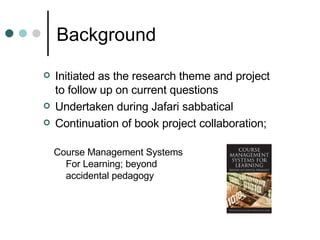
Background Initiated as the research theme and project to follow up on current questions Undertaken during Jafari sabbatical Continuation of book project collaboration; Course Management Systems For Learning; beyond accidental pedagogy
Research Procedure Visited a select number of campuses for one to one and group focus interviews Faculty Group ; adjuncts, instructors, and professors (59) Student Group ; both on and off campus (52) Admin/Professional Group  : Provost, Deans, CIO, IT Directors/Managers, Technology Support, Instructional Support, Librarians (51)
Research Procedure … Seven campuses visited: One- two day extensive visits Two or three researchers attended each visit Less than 10% of interviews conducted via video conferencing
Research Procedure Participating campuses for onsite interviews: Bowling Green University  Eastern Michigan University  Pierce University  SUNY Brockport California State University at Monterey Bay University of Central Florida University of Wyoming
Research Funding Thanks  to the following institutions for supporting our travel expenses: eCollege Inc. ANGEL Learning Inc. Bowling Green State University California State University at Monterey Bay  University of Central Florida
Research Questions Characteristics and shortcomings of the current teaching and learning systems (more specifically the CMS platforms) being used on campus Functional and technical requirements for the next generation of teaching and learning (beyond CMS)
Consistent Findings Compatibility issues: Brower differences in look and feel LMS: Not all tools within a system work well with different browser /platform/ versions of OS  Grade book (student + Faculty) limited in feature needs and usability User Interface (Usability): Navigation (student + faculty)  Room for improvement in intuitive aspects
Findings Proposed new ideas for the Next Generation of CMS. Smart system Intelligent agents (faculty  & students ) have the system do some of the work for me. Environment  Inclusive package (CMS + ePortfolio + SIS) Archival and storage options Share and acess outside of the course Multi-modal  Multimedia communication channels Audio / Video (faculty) - use of audio or video to response to students email. Mobile -  New Types of Access (students) Use of SMS to let me know about assignment due
A “learner centered” framework design The system is technically designed around a person (learner) rather than a course or contents (CMS/LMS) Support multiply roles beyond learning (career, professional life, retirement) NG-CMS Characteristics
A “smart” environment being able to think, reason, and act on behave of the person. Intelligent agent acting as a classmate Intelligent agent acting as a personal secretary, administrative assistant or helper  Intelligent agent acting as a subject mater expert NG-CMS Characteristics
Offer global “social networking” services for: Collaborative learning, teaching, and research Connecting, creating, sharing Intellectual exchange / trade  NG-CMS Characteristics
NG-LMS: It looks like Web 2! Connect Create Collaborate Combine Comment Critique
Next Generation Learning Environments Social Dynamic Learner-centered Umbrella of tools  Portfolio framework

Next Generation CMS Research

  • 1.
    Next Generation C/LMS:2006 Research Study Ali Jafari , Ph.D. IUPUI Colleen Carmean , ABD Arizona State University Patricia McGee , Ph.D. University of Huston in San Antonio
  • 2.
    Introduction and AcknowledgmentsResearch Procedure Research Findings Reflections on NG-CMS
  • 3.
    Background Initiated asthe research theme and project to follow up on current questions Undertaken during Jafari sabbatical Continuation of book project collaboration; Course Management Systems For Learning; beyond accidental pedagogy
  • 4.
    Research Procedure Visiteda select number of campuses for one to one and group focus interviews Faculty Group ; adjuncts, instructors, and professors (59) Student Group ; both on and off campus (52) Admin/Professional Group : Provost, Deans, CIO, IT Directors/Managers, Technology Support, Instructional Support, Librarians (51)
  • 5.
    Research Procedure …Seven campuses visited: One- two day extensive visits Two or three researchers attended each visit Less than 10% of interviews conducted via video conferencing
  • 6.
    Research Procedure Participatingcampuses for onsite interviews: Bowling Green University Eastern Michigan University Pierce University SUNY Brockport California State University at Monterey Bay University of Central Florida University of Wyoming
  • 7.
    Research Funding Thanks to the following institutions for supporting our travel expenses: eCollege Inc. ANGEL Learning Inc. Bowling Green State University California State University at Monterey Bay University of Central Florida
  • 8.
    Research Questions Characteristicsand shortcomings of the current teaching and learning systems (more specifically the CMS platforms) being used on campus Functional and technical requirements for the next generation of teaching and learning (beyond CMS)
  • 9.
    Consistent Findings Compatibilityissues: Brower differences in look and feel LMS: Not all tools within a system work well with different browser /platform/ versions of OS Grade book (student + Faculty) limited in feature needs and usability User Interface (Usability): Navigation (student + faculty) Room for improvement in intuitive aspects
  • 10.
    Findings Proposed newideas for the Next Generation of CMS. Smart system Intelligent agents (faculty & students ) have the system do some of the work for me. Environment Inclusive package (CMS + ePortfolio + SIS) Archival and storage options Share and acess outside of the course Multi-modal Multimedia communication channels Audio / Video (faculty) - use of audio or video to response to students email. Mobile - New Types of Access (students) Use of SMS to let me know about assignment due
  • 11.
    A “learner centered”framework design The system is technically designed around a person (learner) rather than a course or contents (CMS/LMS) Support multiply roles beyond learning (career, professional life, retirement) NG-CMS Characteristics
  • 12.
    A “smart” environmentbeing able to think, reason, and act on behave of the person. Intelligent agent acting as a classmate Intelligent agent acting as a personal secretary, administrative assistant or helper Intelligent agent acting as a subject mater expert NG-CMS Characteristics
  • 13.
    Offer global “socialnetworking” services for: Collaborative learning, teaching, and research Connecting, creating, sharing Intellectual exchange / trade NG-CMS Characteristics
  • 14.
    NG-LMS: It lookslike Web 2! Connect Create Collaborate Combine Comment Critique
  • 15.
    Next Generation LearningEnvironments Social Dynamic Learner-centered Umbrella of tools Portfolio framework