S.M.B.T COLLEGE OF PHARMACY DHAMANGAON, NASHIK
NEWTONIAN AND NON-NEWTONIAN
FLOW
Presented by:
Ms. Suvarna Shelke
Assistant Professor,
Pharmaceutics Dept.
LECTURE OUTCOMES
After completion of this topic students will be
able to-
1. Explain Newtonian flow and Newtonian flow
2. Differentiate between various types of flow
2
CONTENTS
Introduction
Newtonian flow
Non- Newtonian flow and its types
Summery
3
INTRODUCTION
4
• Rheology is the science that concerns with the flow of liquids and
the deformation of solids.
• Study of flow properties of liquids is important for pharmacist
working in the manufacture of several dosage forms, viz., simple
liquids, gels, ointments, creams, and pastes.
• Types of flow : Newtonian and Non-Newtonian systems.
• These systems changes their flow behavior when exposed to
different stress conditions
NEWTONIAN FLOW
5
Newtonian Flow
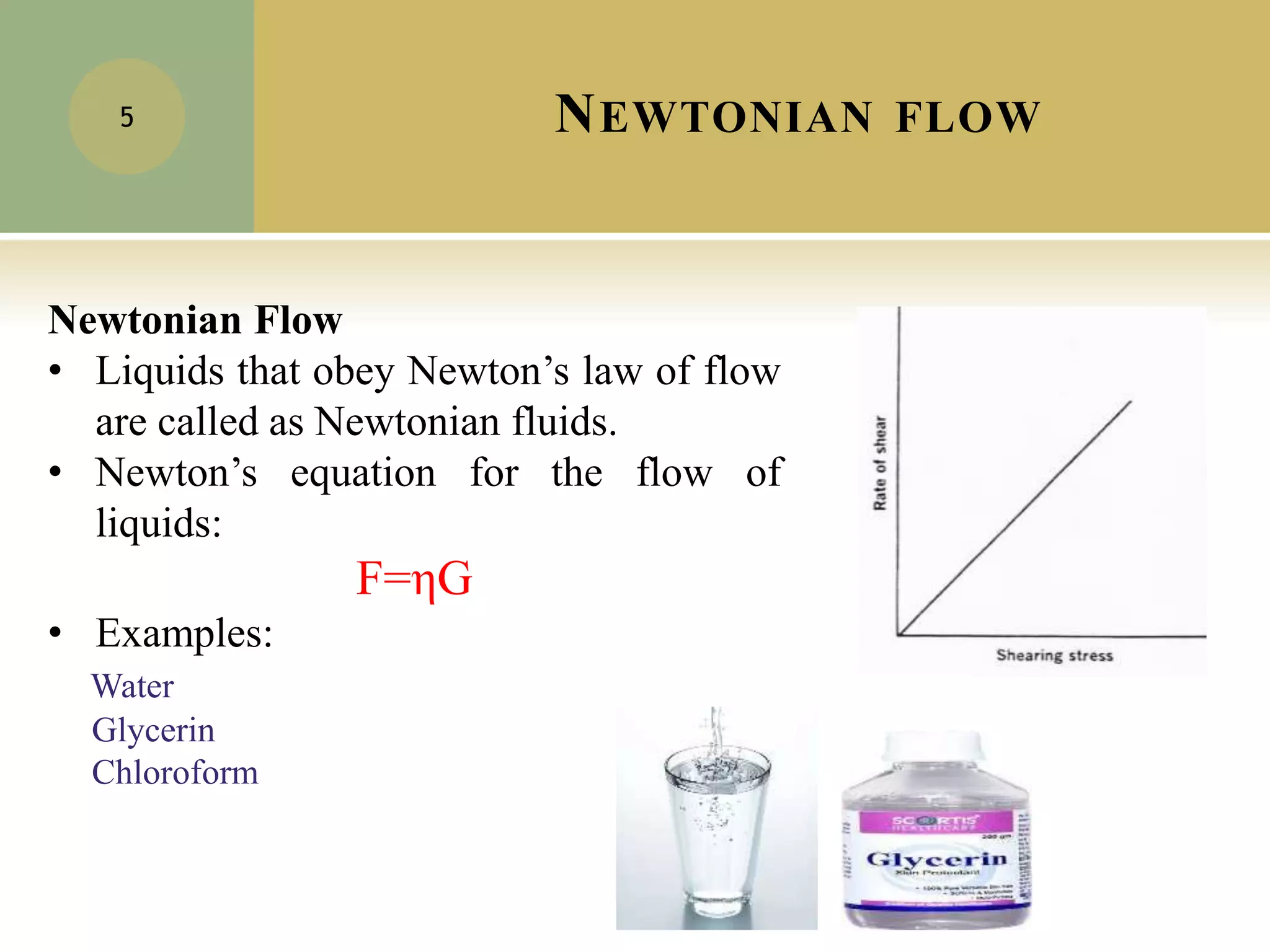
• Liquids that obey Newton’s law of flow
are called as Newtonian fluids.
• Newton’s equation for the flow of
liquids:
F=ηG
• Examples:
Water
Glycerin
Chloroform
NON-NEWTONIAN FLOW
6
Non-Newtonian Flow
• Non - Newtonian systems are those
substances, which fail to follow Newton's
law.
• Examples: Emulsions, suspensions and
semisolids.
• They are classified into 3 types of flow :
1) Plastic flow
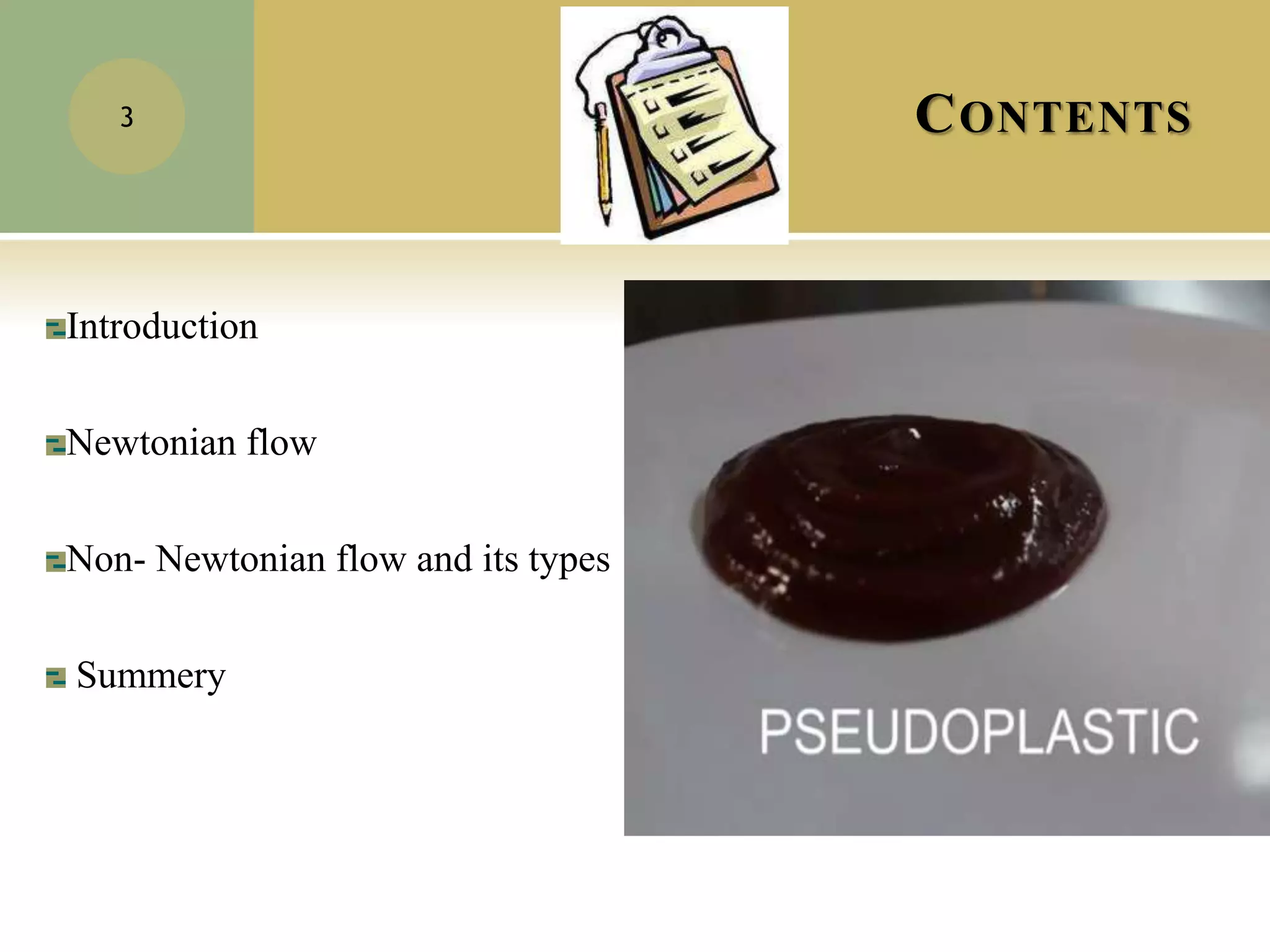
2) Pseudoplastic flow
3) Dilatant flow
PLASTIC FLOW
07-07-2021
7
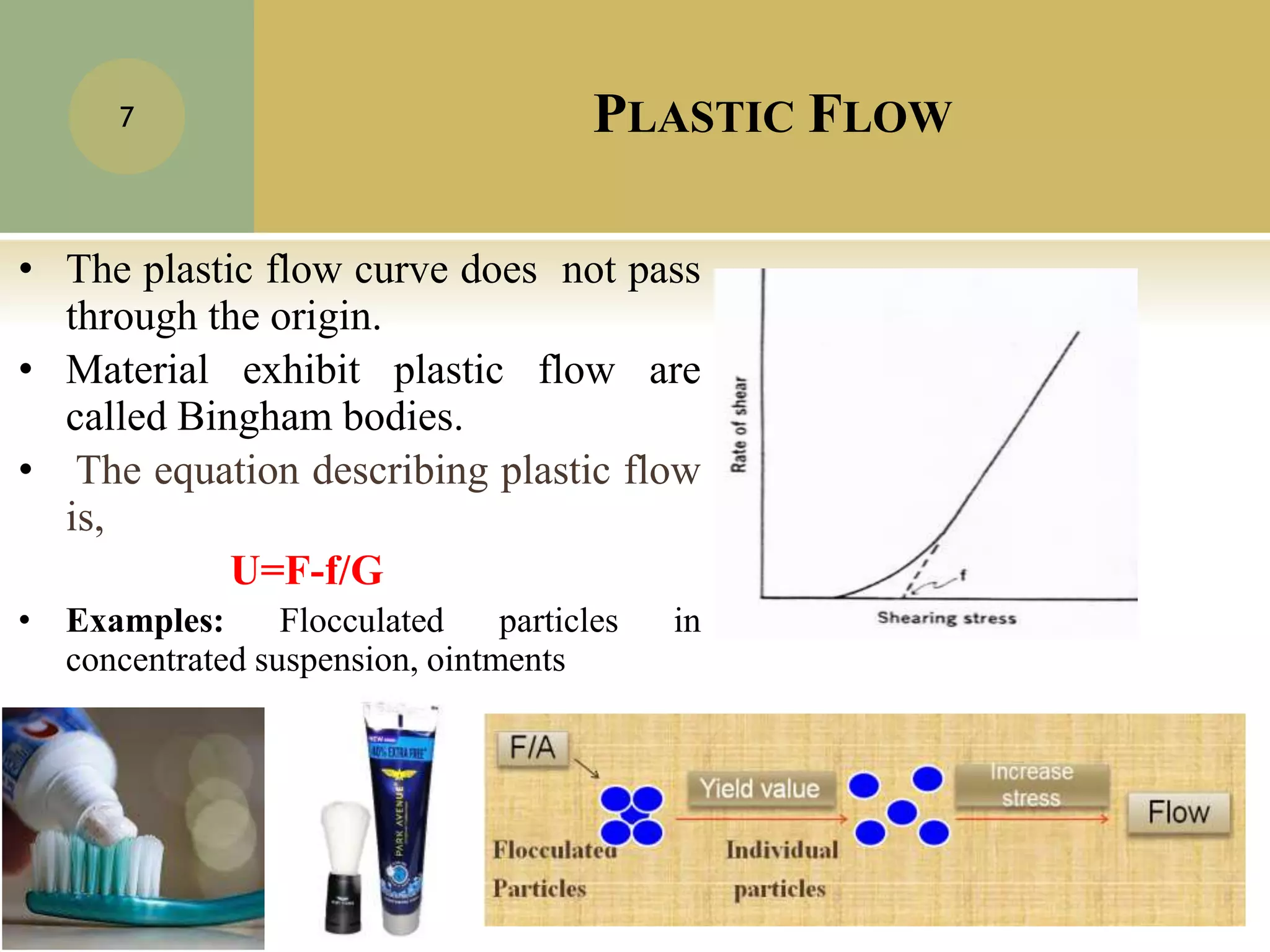
• The plastic flow curve does not pass
through the origin.
• Material exhibit plastic flow are
called Bingham bodies.
• The equation describing plastic flow
is,
U=F-f/G
• Examples: Flocculated particles in
concentrated suspension, ointments
PSEUDOPLASTIC FLOW
07-07-2021
8
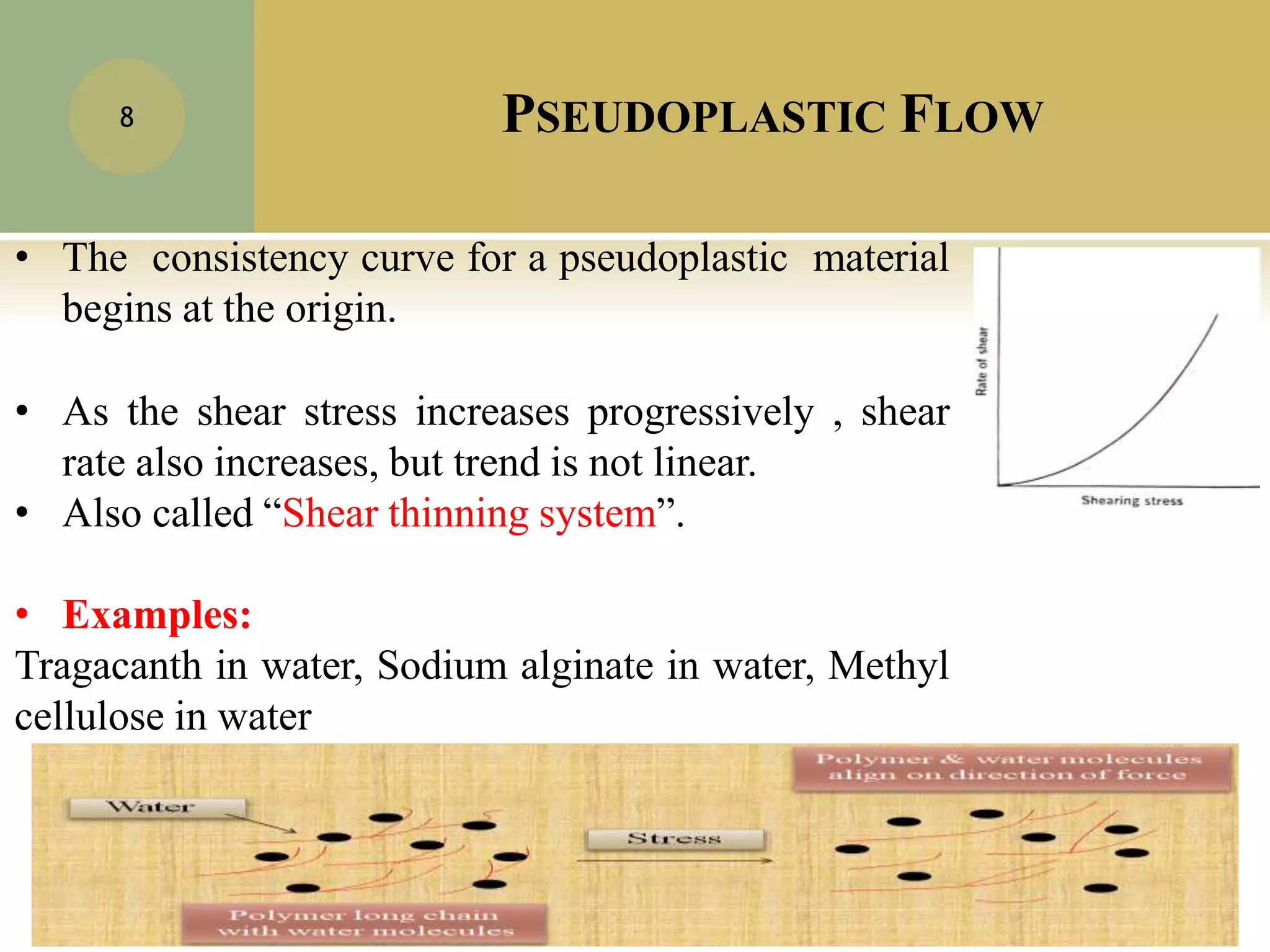
• The consistency curve for a pseudoplastic material
begins at the origin.
• As the shear stress increases progressively , shear
rate also increases, but trend is not linear.
• Also called “Shear thinning system”.
• Examples:
Tragacanth in water, Sodium alginate in water, Methyl
cellulose in water
DILATANT FLOW
07-07-2021
9
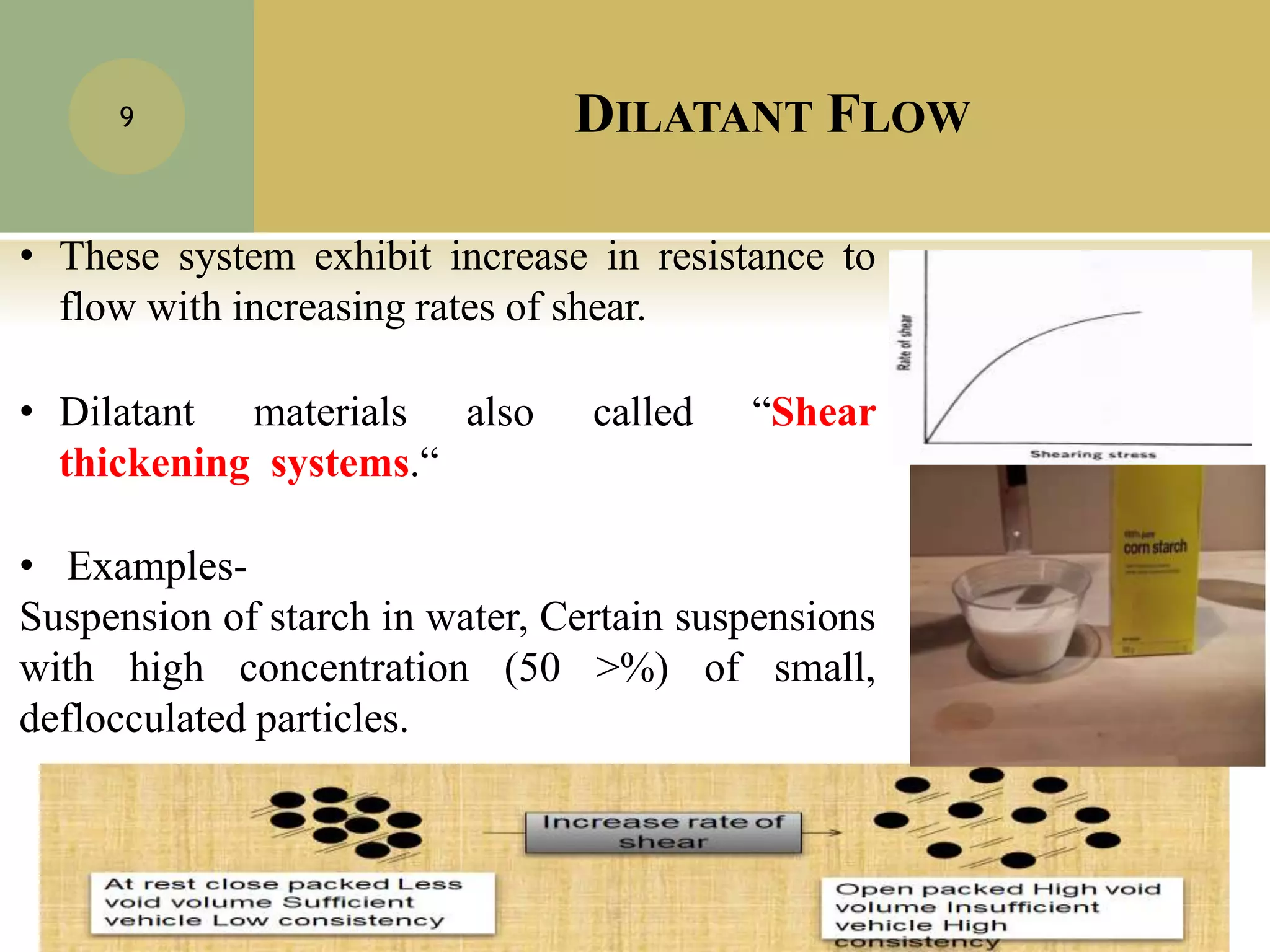
• These system exhibit increase in resistance to
flow with increasing rates of shear.
• Dilatant materials also called “Shear
thickening systems.“
• Examples-
Suspension of starch in water, Certain suspensions
with high concentration (50 >%) of small,
deflocculated particles.
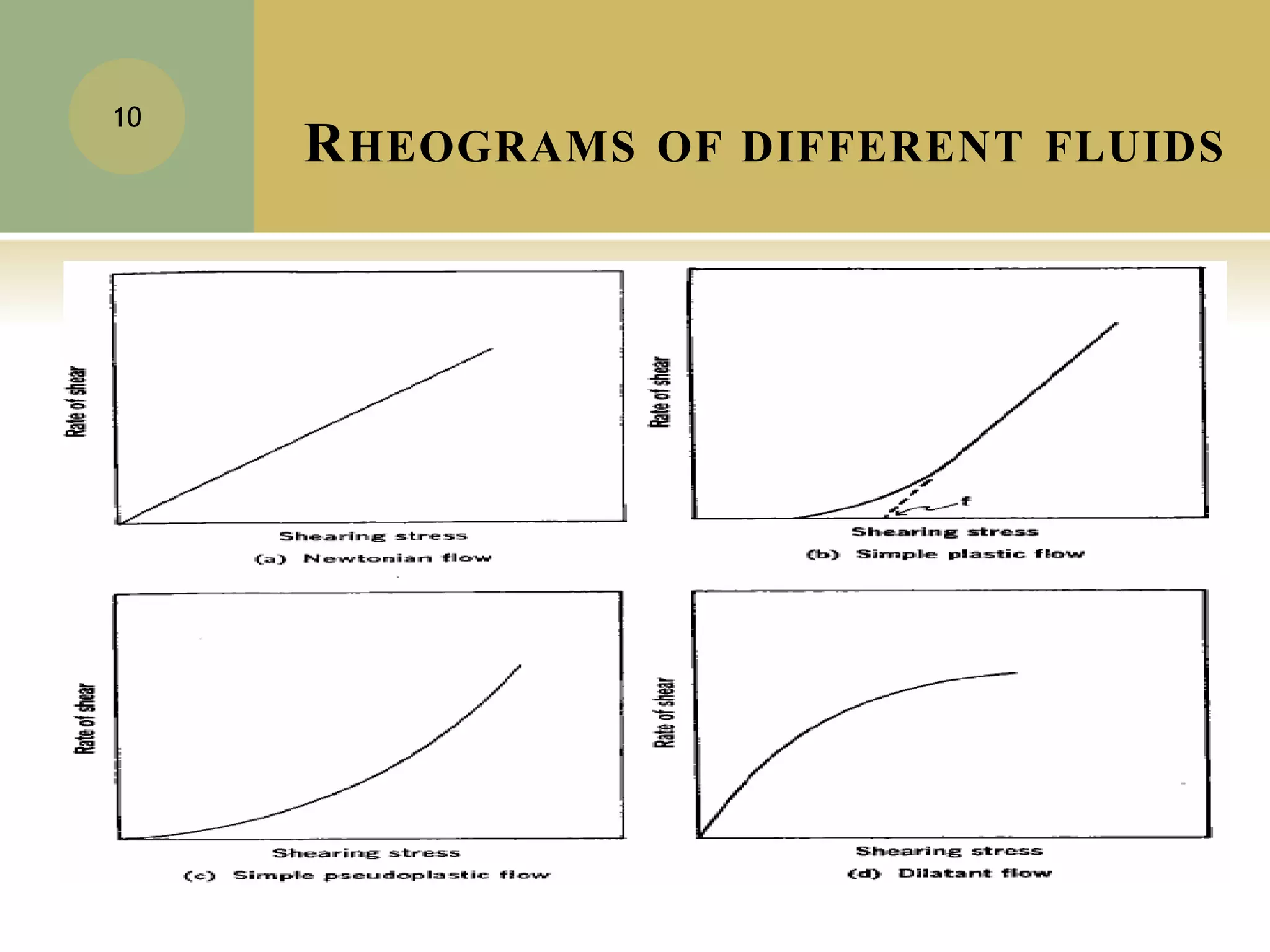
RHEOGRAMS OF DIFFERENT FLUIDS
10
SUMMERY
11
• In order to be manufactured dosage forms, need specific flow
properties so they can be placed into a container, remain stable
over time, dispensed and handled properly.
• The pouring of the liquids from containers, extrusion of ointment
from tubes, proper application of product to the affected area by
patients these all are depend on the changes in flow behavior of
dosage forms.

Newtonian and Non-Newtonian flow

  • 1.
    S.M.B.T COLLEGE OFPHARMACY DHAMANGAON, NASHIK NEWTONIAN AND NON-NEWTONIAN FLOW Presented by: Ms. Suvarna Shelke Assistant Professor, Pharmaceutics Dept.
  • 2.
    LECTURE OUTCOMES After completionof this topic students will be able to- 1. Explain Newtonian flow and Newtonian flow 2. Differentiate between various types of flow 2
  • 3.
  • 4.
    INTRODUCTION 4 • Rheology isthe science that concerns with the flow of liquids and the deformation of solids. • Study of flow properties of liquids is important for pharmacist working in the manufacture of several dosage forms, viz., simple liquids, gels, ointments, creams, and pastes. • Types of flow : Newtonian and Non-Newtonian systems. • These systems changes their flow behavior when exposed to different stress conditions
  • 5.
    NEWTONIAN FLOW 5 Newtonian Flow •Liquids that obey Newton’s law of flow are called as Newtonian fluids. • Newton’s equation for the flow of liquids: F=ηG • Examples: Water Glycerin Chloroform
  • 6.
    NON-NEWTONIAN FLOW 6 Non-Newtonian Flow •Non - Newtonian systems are those substances, which fail to follow Newton's law. • Examples: Emulsions, suspensions and semisolids. • They are classified into 3 types of flow : 1) Plastic flow 2) Pseudoplastic flow 3) Dilatant flow
  • 7.
    PLASTIC FLOW 07-07-2021 7 • Theplastic flow curve does not pass through the origin. • Material exhibit plastic flow are called Bingham bodies. • The equation describing plastic flow is, U=F-f/G • Examples: Flocculated particles in concentrated suspension, ointments
  • 8.
    PSEUDOPLASTIC FLOW 07-07-2021 8 • Theconsistency curve for a pseudoplastic material begins at the origin. • As the shear stress increases progressively , shear rate also increases, but trend is not linear. • Also called “Shear thinning system”. • Examples: Tragacanth in water, Sodium alginate in water, Methyl cellulose in water
  • 9.
    DILATANT FLOW 07-07-2021 9 • Thesesystem exhibit increase in resistance to flow with increasing rates of shear. • Dilatant materials also called “Shear thickening systems.“ • Examples- Suspension of starch in water, Certain suspensions with high concentration (50 >%) of small, deflocculated particles.
  • 10.
  • 11.
    SUMMERY 11 • In orderto be manufactured dosage forms, need specific flow properties so they can be placed into a container, remain stable over time, dispensed and handled properly. • The pouring of the liquids from containers, extrusion of ointment from tubes, proper application of product to the affected area by patients these all are depend on the changes in flow behavior of dosage forms.