






Wool fiber crimp
         &
     its fiber
    properties
tester equipments
Presented by :

                 horas magdy


presented to :


                 eng :nermin
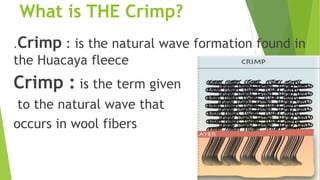
What is THE Crimp?
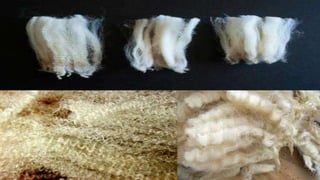
.Crimp  : is the natural wave formation found in
the Huacaya fleece
Crimp : is the term given
 to the natural wave that
occurs in wool fibers
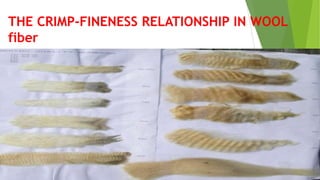
THE CRIMP-FINENESS RELATIONSHIP IN WOOL
fiber
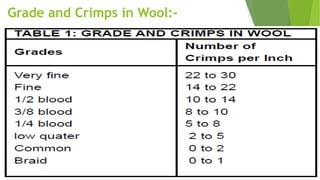
Grade and Crimps in Wool:-
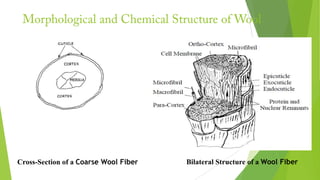
Cross-Section of a Coarse Wool Fiber   Bilateral Structure of a Wool Fiber
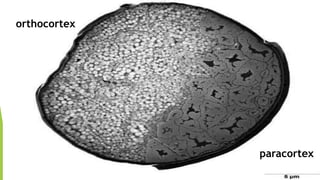
orthocortex


              paracortex
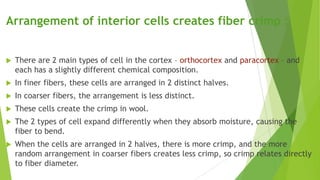
Arrangement of interior cells creates fiber crimp :


   There are 2 main types of cell in the cortex – orthocortex and paracortex – and
    each has a slightly different chemical composition.
   In finer fibers, these cells are arranged in 2 distinct halves.
   In coarser fibers, the arrangement is less distinct.
   These cells create the crimp in wool.
   The 2 types of cell expand differently when they absorb moisture, causing the
    fiber to bend.
   When the cells are arranged in 2 halves, there is more crimp, and the more
    random arrangement in coarser fibers creates less crimp, so crimp relates directly
    to fiber diameter.
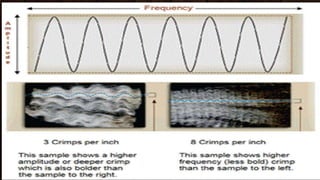
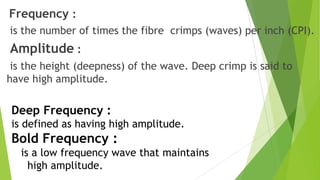
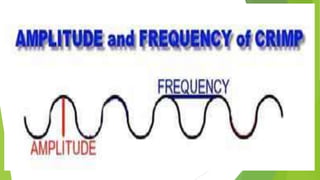
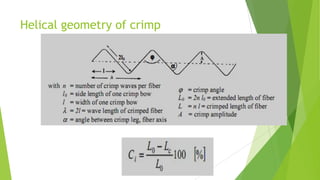
Frequency :
is the number of times the fibre crimps (waves) per inch (CPI).
Amplitude :
 is the height (deepness) of the wave. Deep crimp is said to
have high amplitude.

Deep Frequency :
is defined as having high amplitude.
Bold Frequency :
  is a low frequency wave that maintains
    high amplitude.
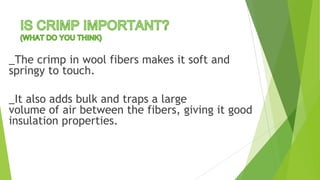
_The crimp in wool fibers makes it soft and
springy to touch.

_It also adds bulk and traps a large
volume of air between the fibers, giving it good
insulation properties.
Helical geometry of crimp
Testing
device
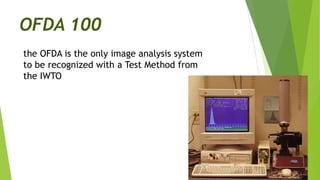
OFDA 100
the OFDA is the only image analysis system
to be recognized with a Test Method from
the IWTO
Operating Principles
   The OFDA is essentially an automatic microscope set above a moving
    sample of fibers.
   The instrument magnifies and captures images of the individual fibers
    using a video camera, and then identifies and measures each fiber.
   The fibers and measurement points can be seen on the video screen.
   The width of each identified fiber image is measured with a resolution
    of 1 micron whilst the combined mean diameter and standard
    deviation are calculated to a resolution of 0.01 micron.
 OFDA's histogram data include the mean fiber
 diameter, standard deviation (SD), coefficient of
 variation (CV), prickle factor (PF) and spinning fineness.
Colour of

wool fiber
Colour property :

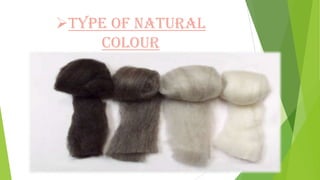
 the normal color of wool from the improved
 breeds of sheep is white, but a small percentage
 of it may be brown, black, or grey.
 generally, manufacturers demand that the wools
 used in processing be scoured out completely
 white to ensure that the future color of the
 fabric will not be affected by the natural color
 of the fibers.
Type of natural
    colour
Testing
device
Vibrochrom   400
Tester principle:
Thank
 you

New microsoft power point presentation

  • 1.
    Wool fiber crimp & its fiber properties tester equipments
  • 2.
    Presented by : horas magdy presented to : eng :nermin
  • 3.
    What is THECrimp? .Crimp : is the natural wave formation found in the Huacaya fleece Crimp : is the term given to the natural wave that occurs in wool fibers
  • 5.
  • 7.
  • 8.
    Cross-Section of aCoarse Wool Fiber Bilateral Structure of a Wool Fiber
  • 10.
    orthocortex paracortex
  • 11.
    Arrangement of interiorcells creates fiber crimp :  There are 2 main types of cell in the cortex – orthocortex and paracortex – and each has a slightly different chemical composition.  In finer fibers, these cells are arranged in 2 distinct halves.  In coarser fibers, the arrangement is less distinct.  These cells create the crimp in wool.  The 2 types of cell expand differently when they absorb moisture, causing the fiber to bend.  When the cells are arranged in 2 halves, there is more crimp, and the more random arrangement in coarser fibers creates less crimp, so crimp relates directly to fiber diameter.
  • 12.
    Frequency : is thenumber of times the fibre crimps (waves) per inch (CPI). Amplitude : is the height (deepness) of the wave. Deep crimp is said to have high amplitude. Deep Frequency : is defined as having high amplitude. Bold Frequency : is a low frequency wave that maintains high amplitude.
  • 14.
    _The crimp inwool fibers makes it soft and springy to touch. _It also adds bulk and traps a large volume of air between the fibers, giving it good insulation properties.
  • 15.
  • 16.
  • 17.
    OFDA 100 the OFDAis the only image analysis system to be recognized with a Test Method from the IWTO
  • 18.
    Operating Principles  The OFDA is essentially an automatic microscope set above a moving sample of fibers.  The instrument magnifies and captures images of the individual fibers using a video camera, and then identifies and measures each fiber.  The fibers and measurement points can be seen on the video screen.  The width of each identified fiber image is measured with a resolution of 1 micron whilst the combined mean diameter and standard deviation are calculated to a resolution of 0.01 micron.
  • 19.
     OFDA's histogramdata include the mean fiber diameter, standard deviation (SD), coefficient of variation (CV), prickle factor (PF) and spinning fineness.
  • 20.
  • 21.
    Colour property : the normal color of wool from the improved breeds of sheep is white, but a small percentage of it may be brown, black, or grey. generally, manufacturers demand that the wools used in processing be scoured out completely white to ensure that the future color of the fabric will not be affected by the natural color of the fibers.
  • 22.
  • 23.
  • 24.
  • 25.
  • 26.