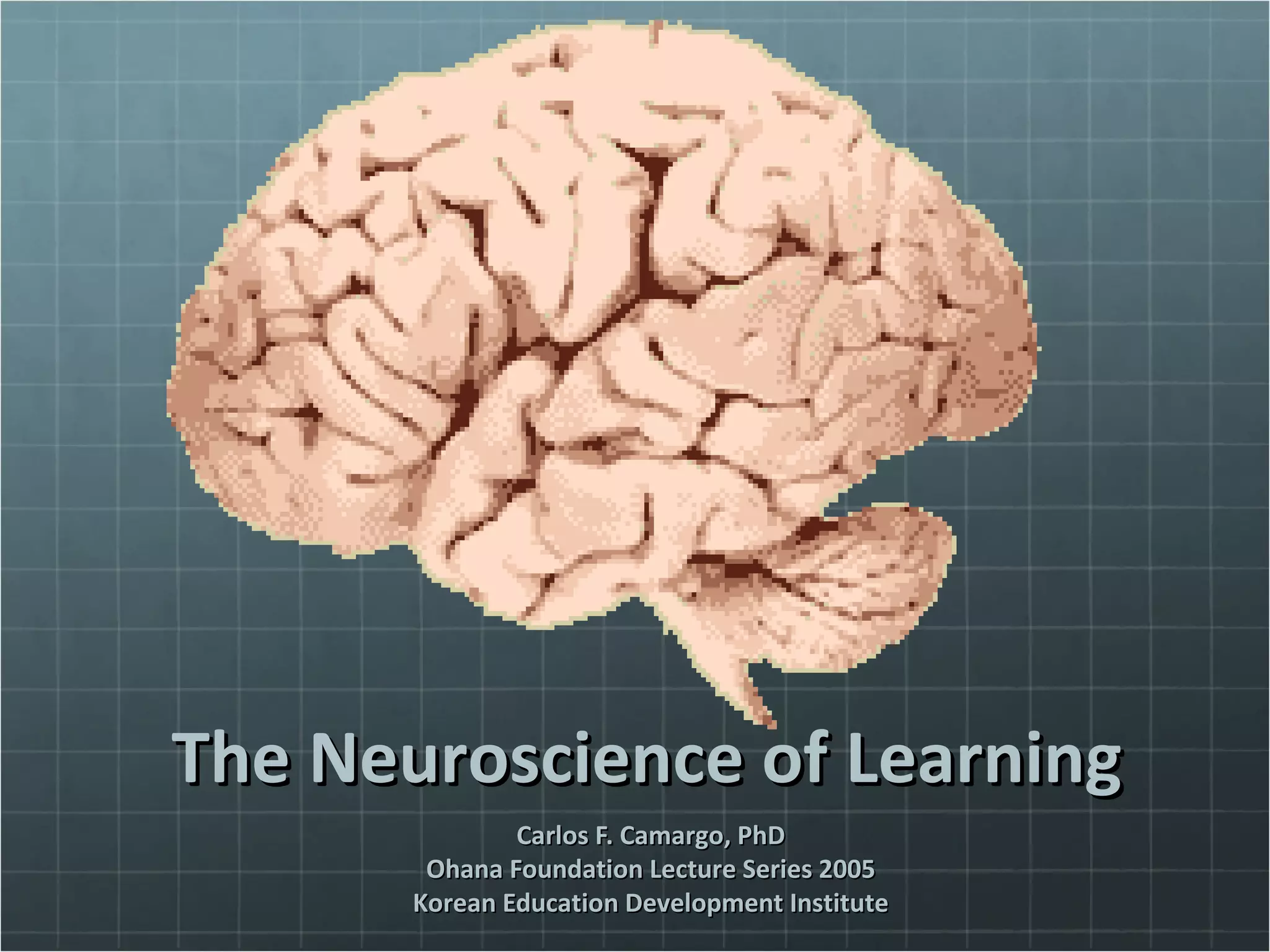
The Neuroscience of LearningThe Neuroscience of Learning
Carlos F. Camargo, PhDCarlos F. Camargo, PhD
Ohana Foundation Lecture Series 2005Ohana Foundation Lecture Series 2005
Korean Education Development InstituteKorean Education Development Institute
What is learning?What is learning?
CHANGING the structure &CHANGING the structure &
actions of NEURONS so theyactions of NEURONS so they
HOLDINFORMATION inHOLDINFORMATION in
LONG TERMMEMORY inLONG TERMMEMORY in
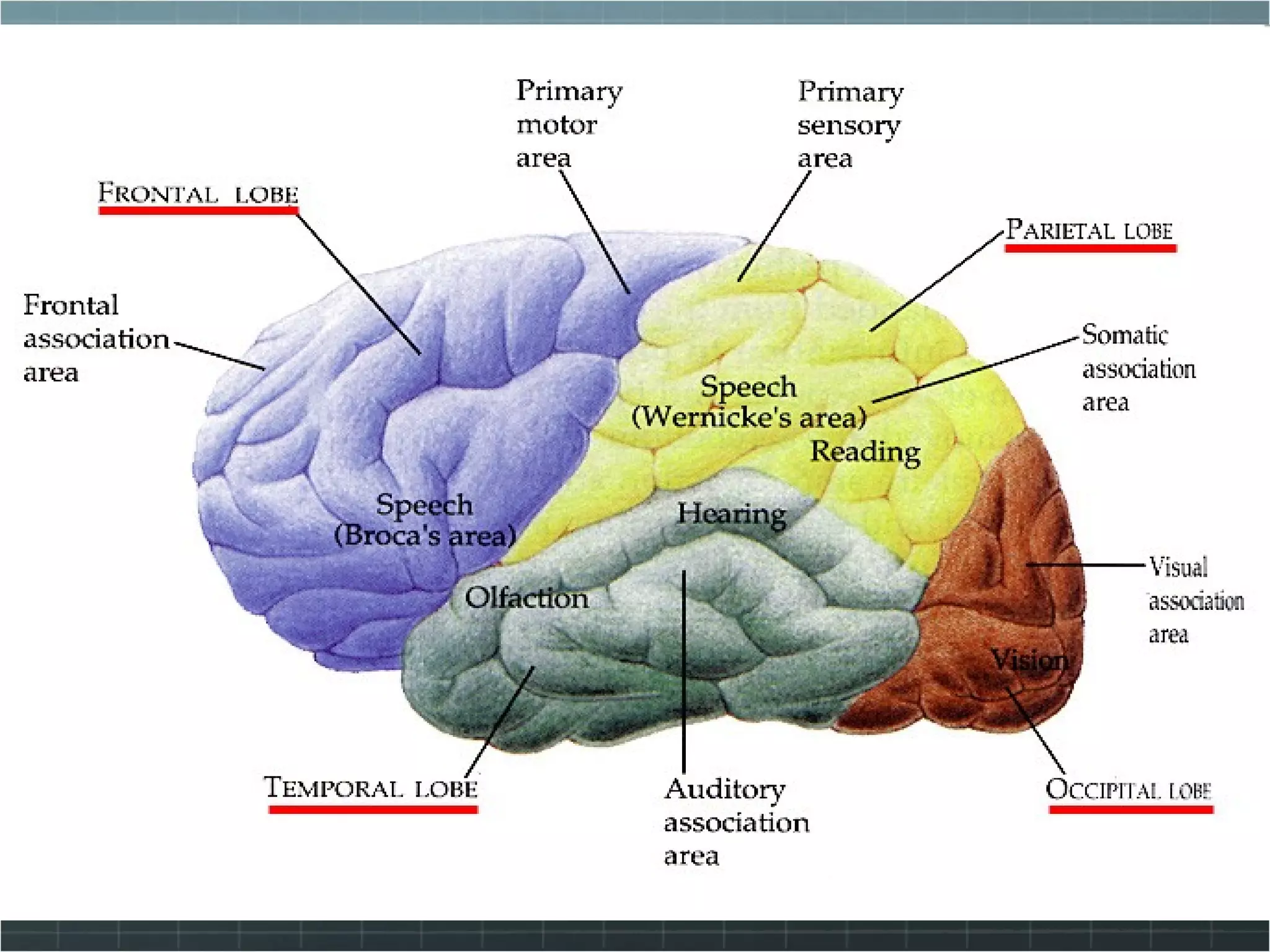
TEMPORAL&PARIETALTEMPORAL&PARIETAL
LOBES of the CORTEXLOBES of the CORTEX
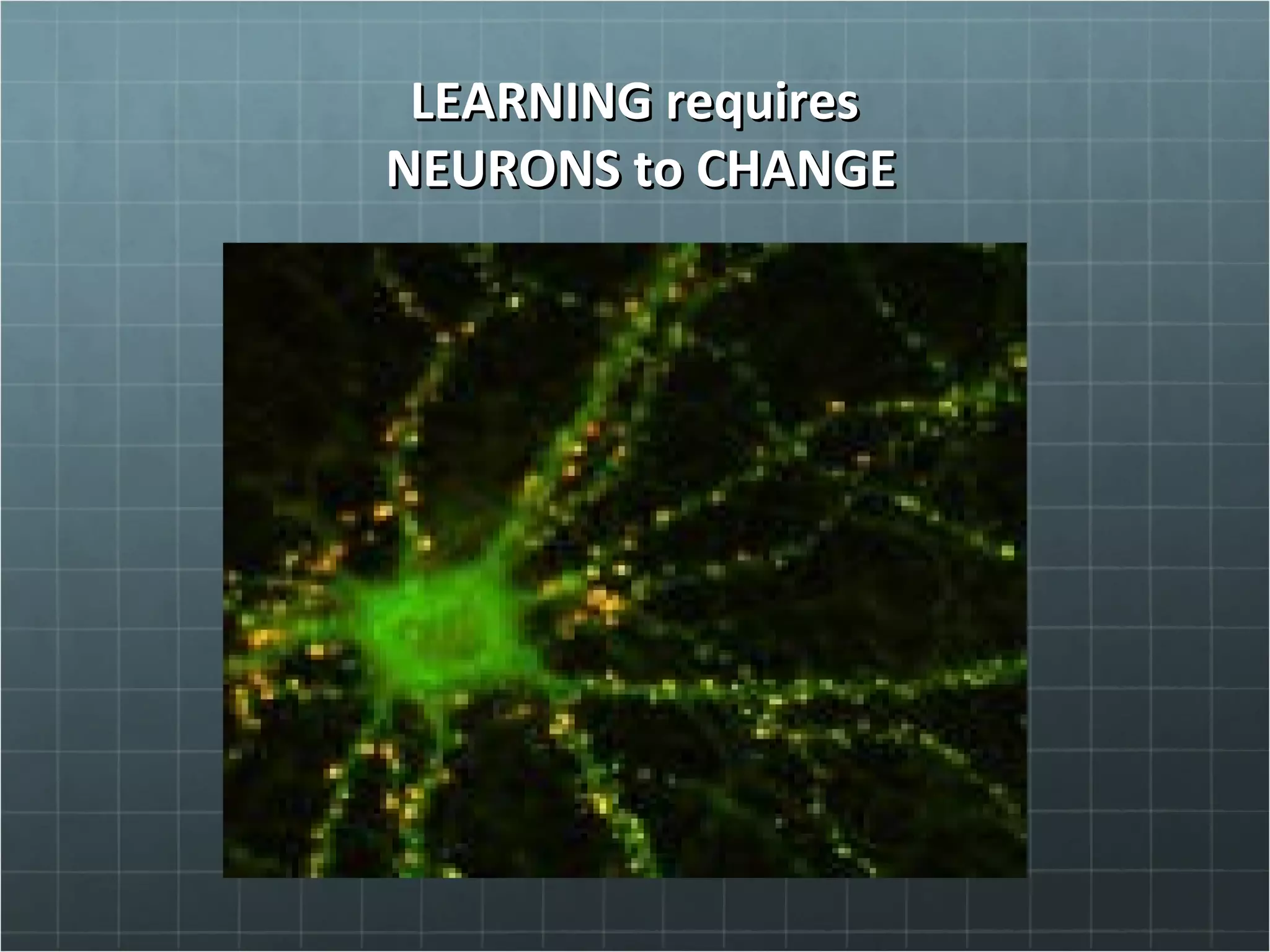
LEARNING requiresLEARNING requires
NEURONS to CHANGENEURONS to CHANGE
Learning requires MANYLearning requires MANY
neuron changesneuron changes
BUTtwo majorchanges areBUTtwo majorchanges are
11 Changing the amounts ofChanging the amounts of
neurotransmitters thatneurotransmitters that
neurons produceneurons produce
2 Changing the connections2 Changing the connections
between neuronsbetween neurons
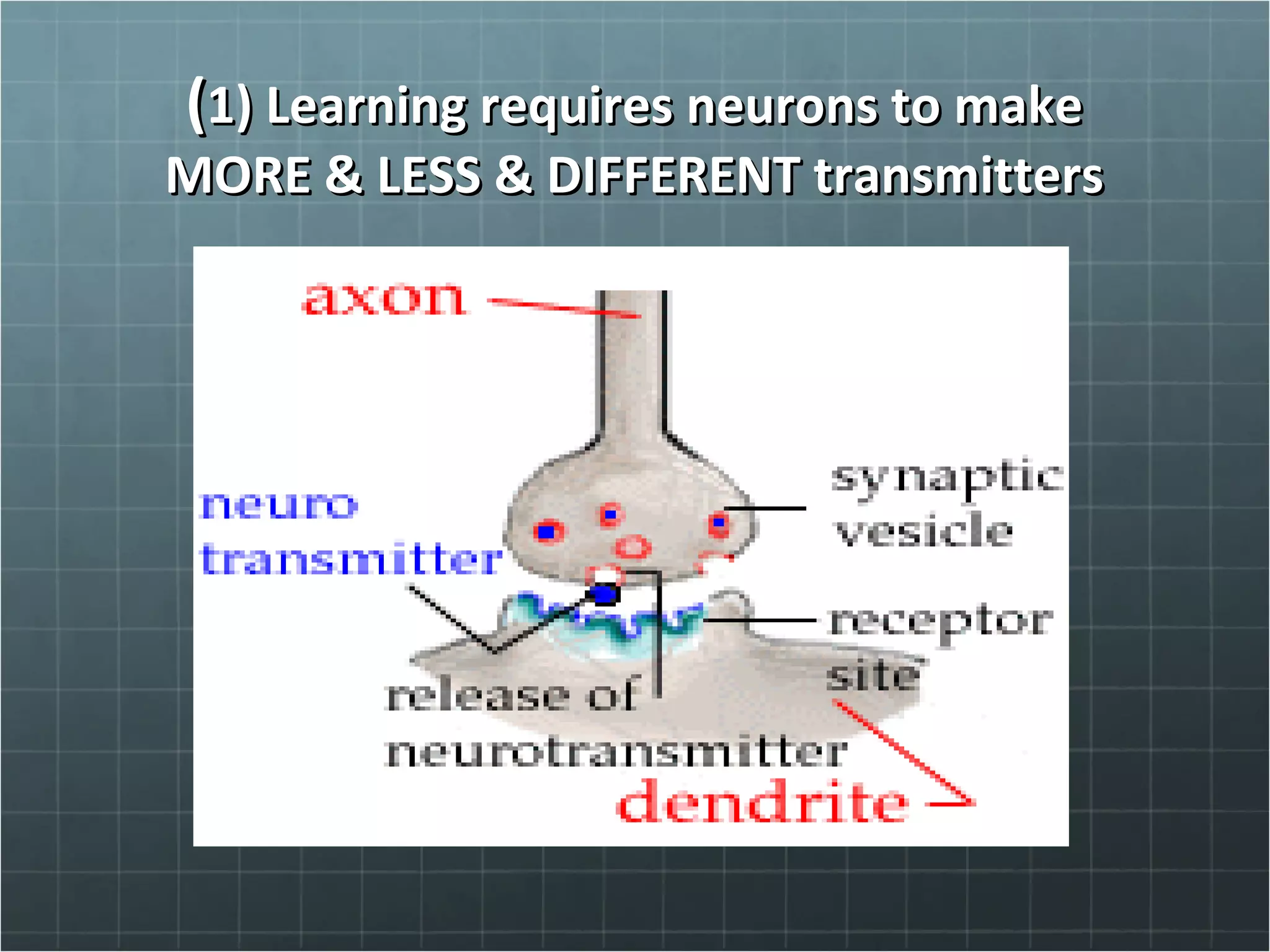
((1) Learning requires neurons to make1) Learning requires neurons to make
MORE & LESS & DIFFERENT transmittersMORE & LESS & DIFFERENT transmitters
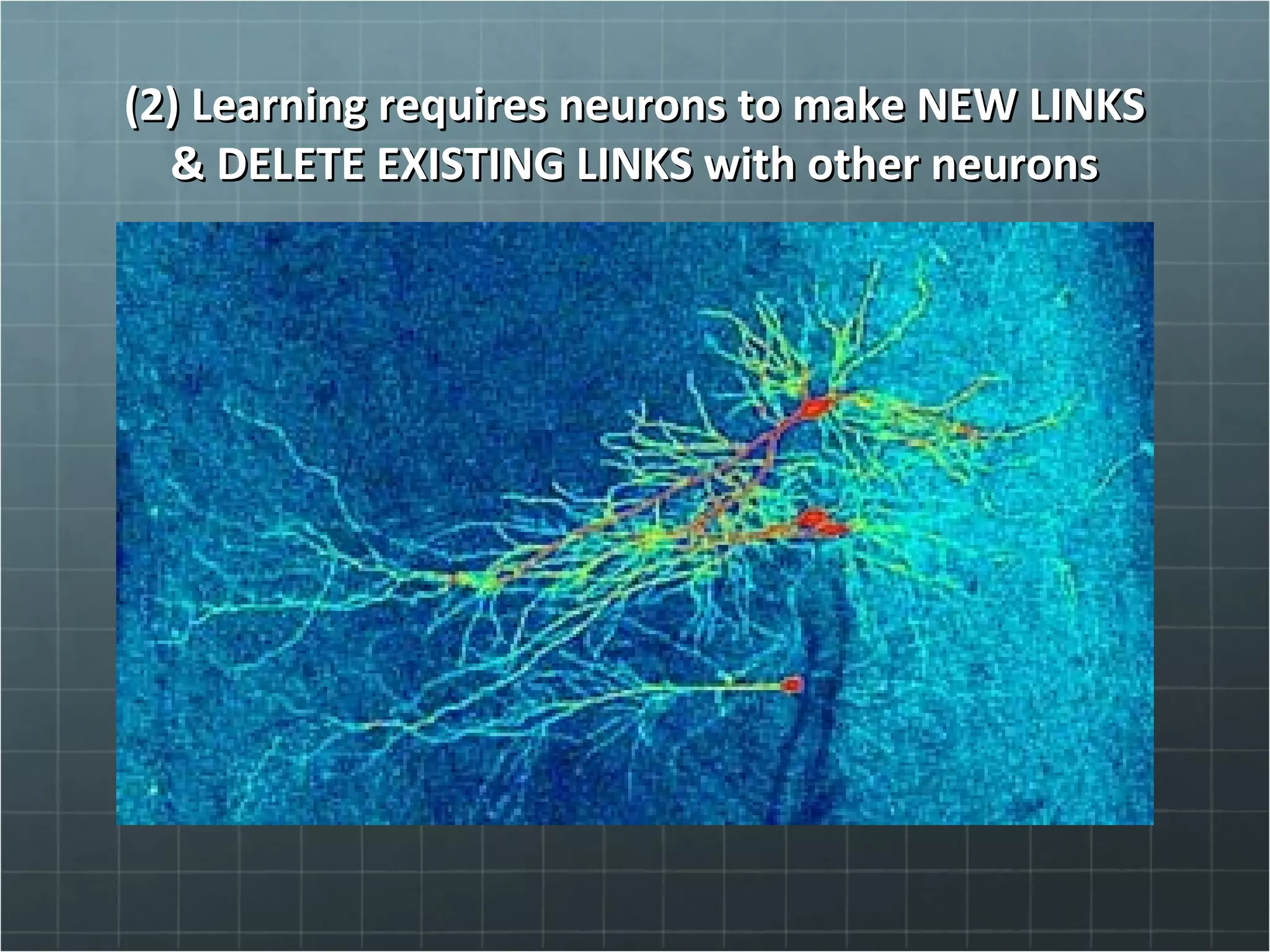
(2) Learning requires neurons to make NEW LINKS(2) Learning requires neurons to make NEW LINKS
& DELETE EXISTING LINKS with other neurons& DELETE EXISTING LINKS with other neurons
+ & -+ & -
Bad NewsBad News &&Good NewsGood News forfor
TeachersTeachers
in Current Neurosciencein Current Neuroscience
FindingsFindings
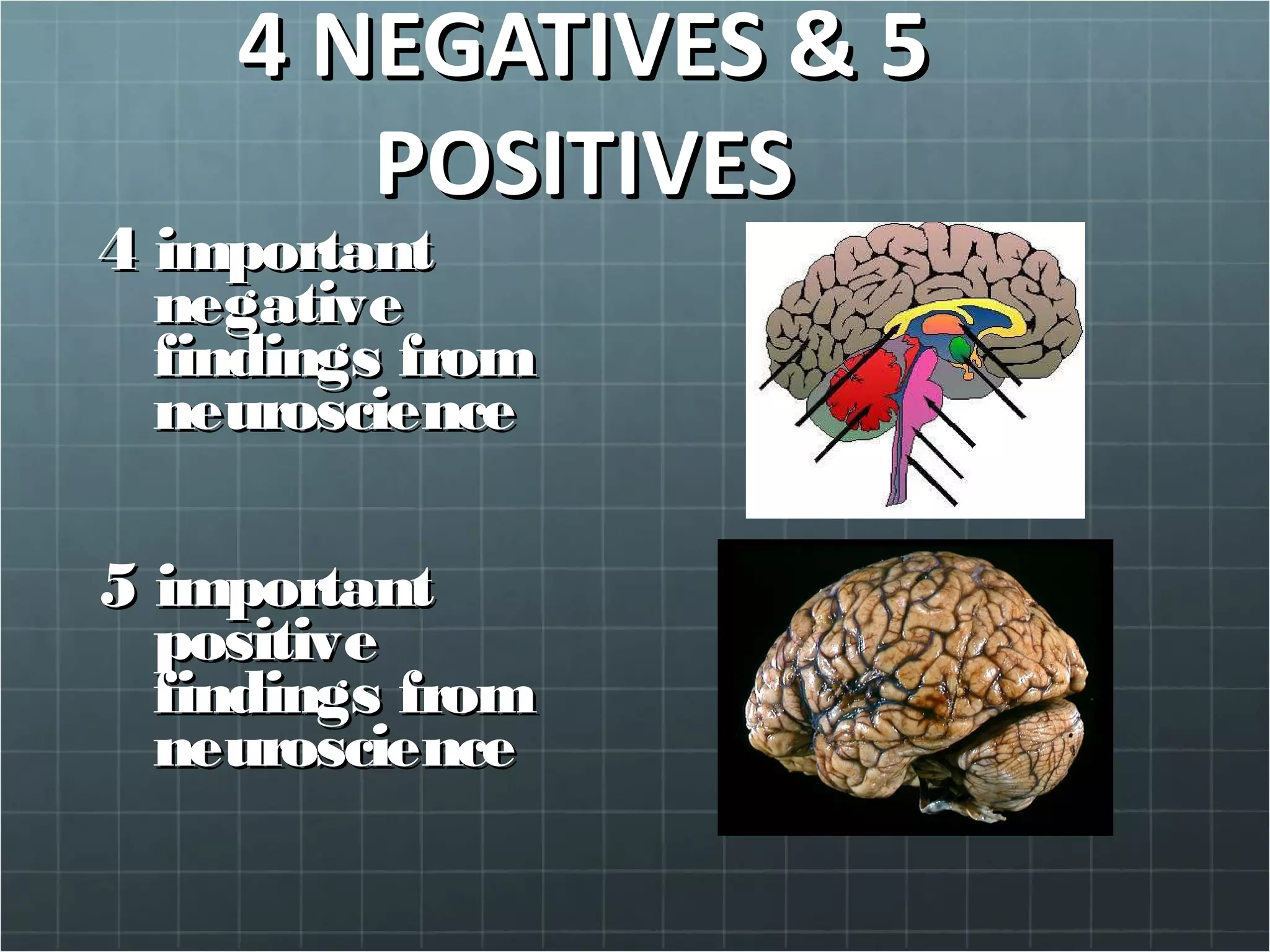
4 NEGATIVES & 54 NEGATIVES & 5
POSITIVESPOSITIVES
44 importantimportant
negativenegative
findings fromfindings from
neuroscienceneuroscience
5 important5 important
positivepositive
findings fromfindings from
neuroscienceneuroscience
Bad news finding # 1Bad news finding # 1
WEHAVEWEHAVENONO
INTRINSIC MOTIVATIONINTRINSIC MOTIVATION
TO LEARNTO LEARN
ACADEMIC MATERIALACADEMIC MATERIAL
We are motivated toWe are motivated to LEARNLEARN to get 4to get 4
PRIMARY BODY REWARDS:PRIMARY BODY REWARDS:
FoodFood
WaterWater
SexSex
Drugs of AbuseDrugs of Abuse
And we are motivated toAnd we are motivated to LEARNLEARN toto
get 5 Primary Social Rewardsget 5 Primary Social Rewards
Feel pleasant touchFeel pleasant touch((Rolls et al. 2003Rolls et al. 2003))
See attractive facesSee attractive faces ((Aharon et al. 2001Aharon et al. 2001))
Hearpositive wordsHearpositive words ((Hamann &Mao 2002Hamann &Mao 2002))
Interact with othersInteract with others ((Rilling et al. 2002Rilling et al. 2002))
Gain social statusGain social status ((Tooby &Cosmides, 2002Tooby &Cosmides, 2002))
Human motivation systemHuman motivation system
Rewarding experiencesRewarding experiences
triggeramygdala activitytriggeramygdala activity
triggerdopamine releasetriggerdopamine release
triggerfrontal lobetriggerfrontal lobe
activityactivity
AMYGDALAAMYGDALA
ComputesComputes
Emotional intensity ofEmotional intensity of
an experiencean experience
Degree of negative orDegree of negative or
positive emotionpositive emotion
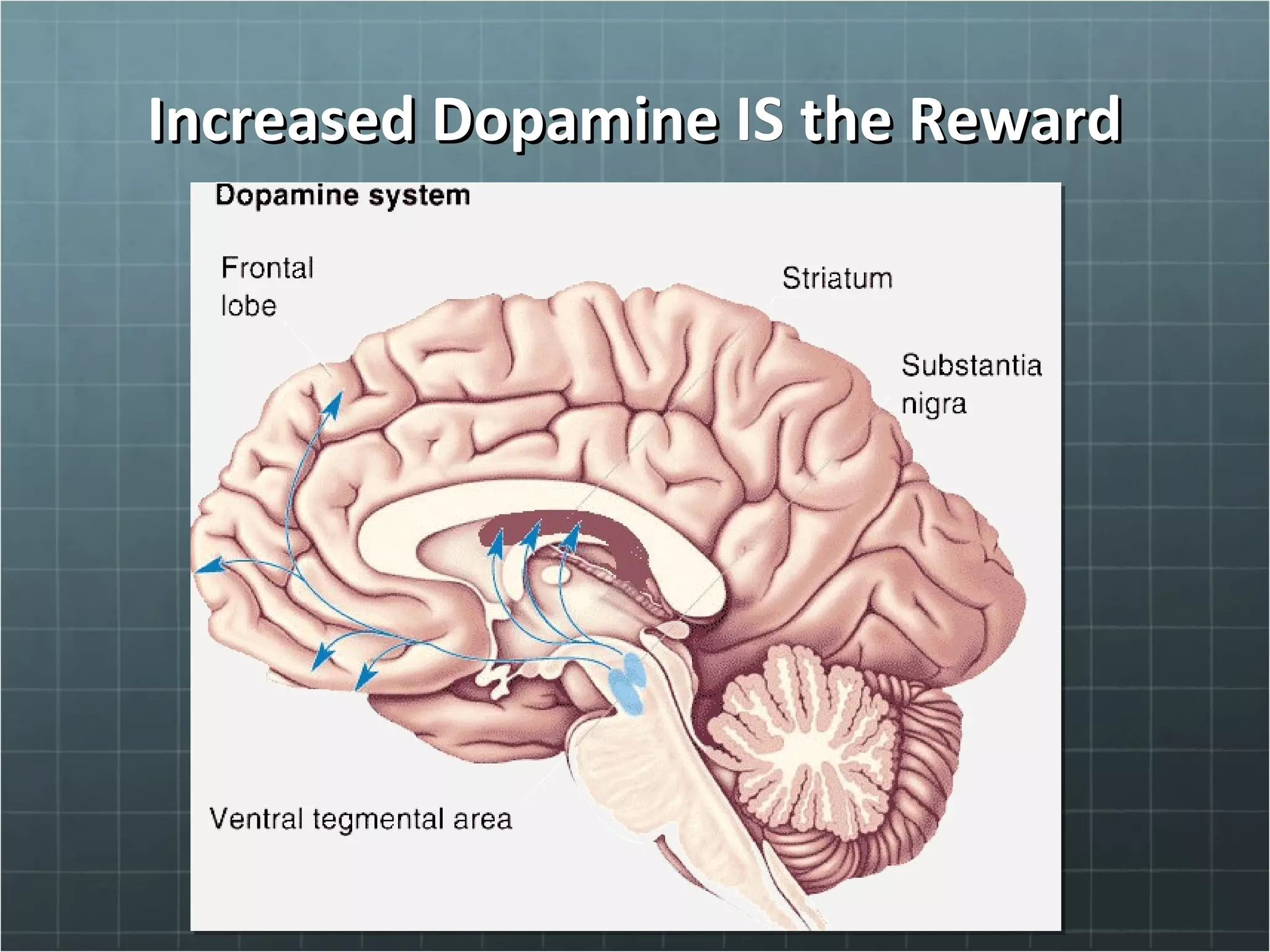
Increased DopamineIncreased Dopamine ISIS the Rewardthe Reward
FRONTAL LOBEFRONTAL LOBE
Stores the reward valueStores the reward value
of experienceof experience
Activates behaviorsActivates behaviors
leading to the mostleading to the most
rewarded outcomerewarded outcome
All other complex experiences areAll other complex experiences are
conditioned with primary rewardsconditioned with primary rewards
$$USEOFMONEYUSEOFMONEY
WORKINGWORKING
LEARNINGLEARNING
FOLLOWING RULESFOLLOWING RULES
Motivation to LearnMotivation to Learn
School Subjects is ConditionedSchool Subjects is Conditioned
Most culturesMost cultures conditioncondition childrenchildren
with 3 primary rewards forsuccessfulwith 3 primary rewards forsuccessful
learning usinglearning using foodfood
educatoreducator && parent approvalparent approval
increased peersocial statusincreased peersocial status
Bad news finding # 2Bad news finding # 2
THEREISTHEREIS
NO EVIDENCENO EVIDENCE
FORFOR
LEARNING TRANSFERLEARNING TRANSFER
Reviews of research showReviews of research show nono
evidence for learning transferevidence for learning transfer
Barnett &Ceci (2002 )Barnett &Ceci (2002 )
Clement &LecoutreClement &Lecoutre
(2004)(2004)
Dixon &Dohn (2003)Dixon &Dohn (2003)
Mayer(2004)Mayer(2004)
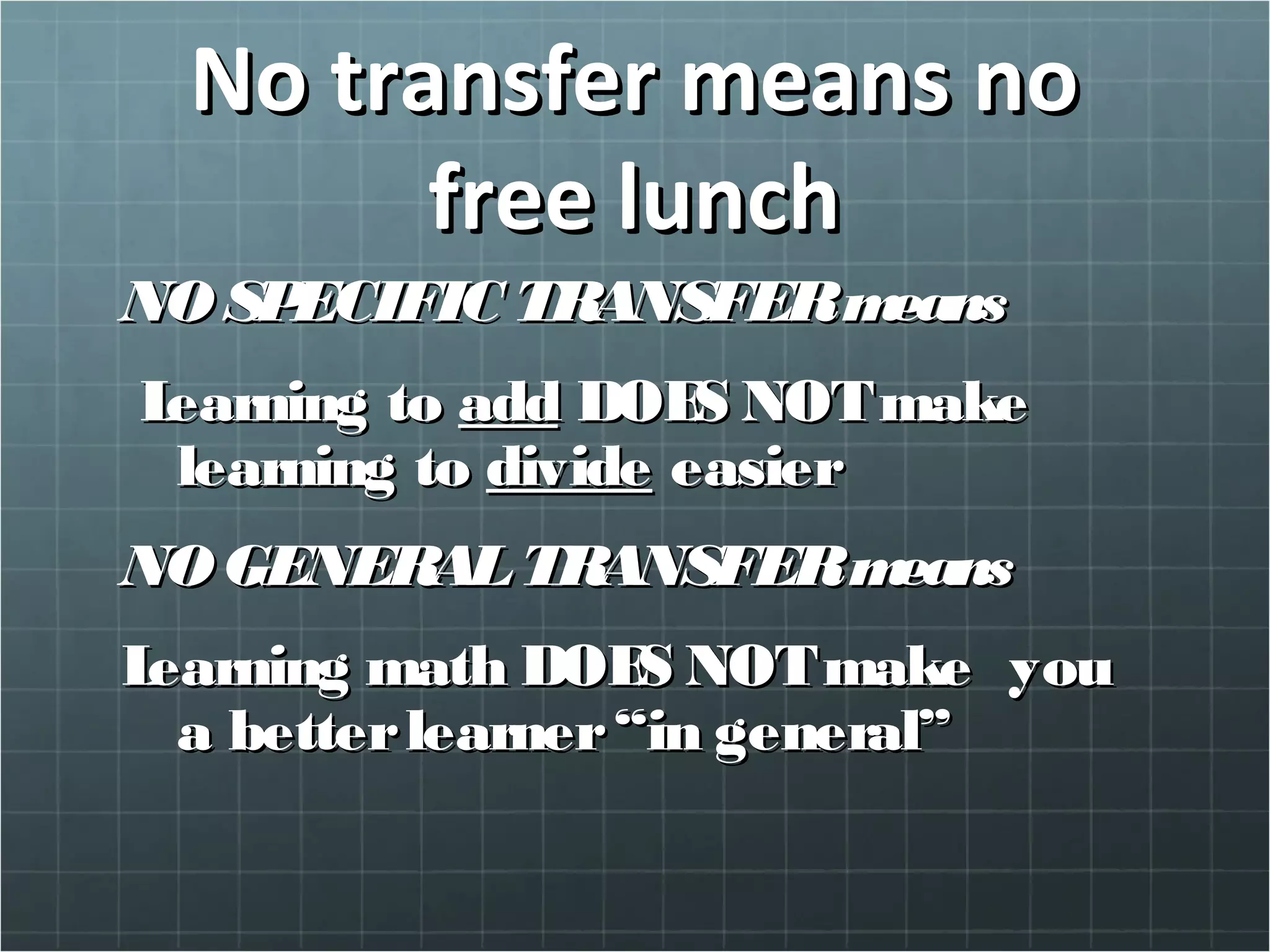
No transfer means noNo transfer means no
free lunchfree lunch
NOSPECIFIC TRANSFERmeansNOSPECIFIC TRANSFERmeans
Learning toLearning to addadd DOES NOTmakeDOES NOTmake
learning tolearning to dividedivide easiereasier
NOGENERALTRANSFERmeansNOGENERALTRANSFERmeans
LearningLearning math DOES NOTmake youmath DOES NOTmake you
a betterlearner“in general”a betterlearner“in general”
Bad news finding # 3Bad news finding # 3
THEREIS
NO EVIDENCE
FOR
MULTIPLE
INTELLIGENCES
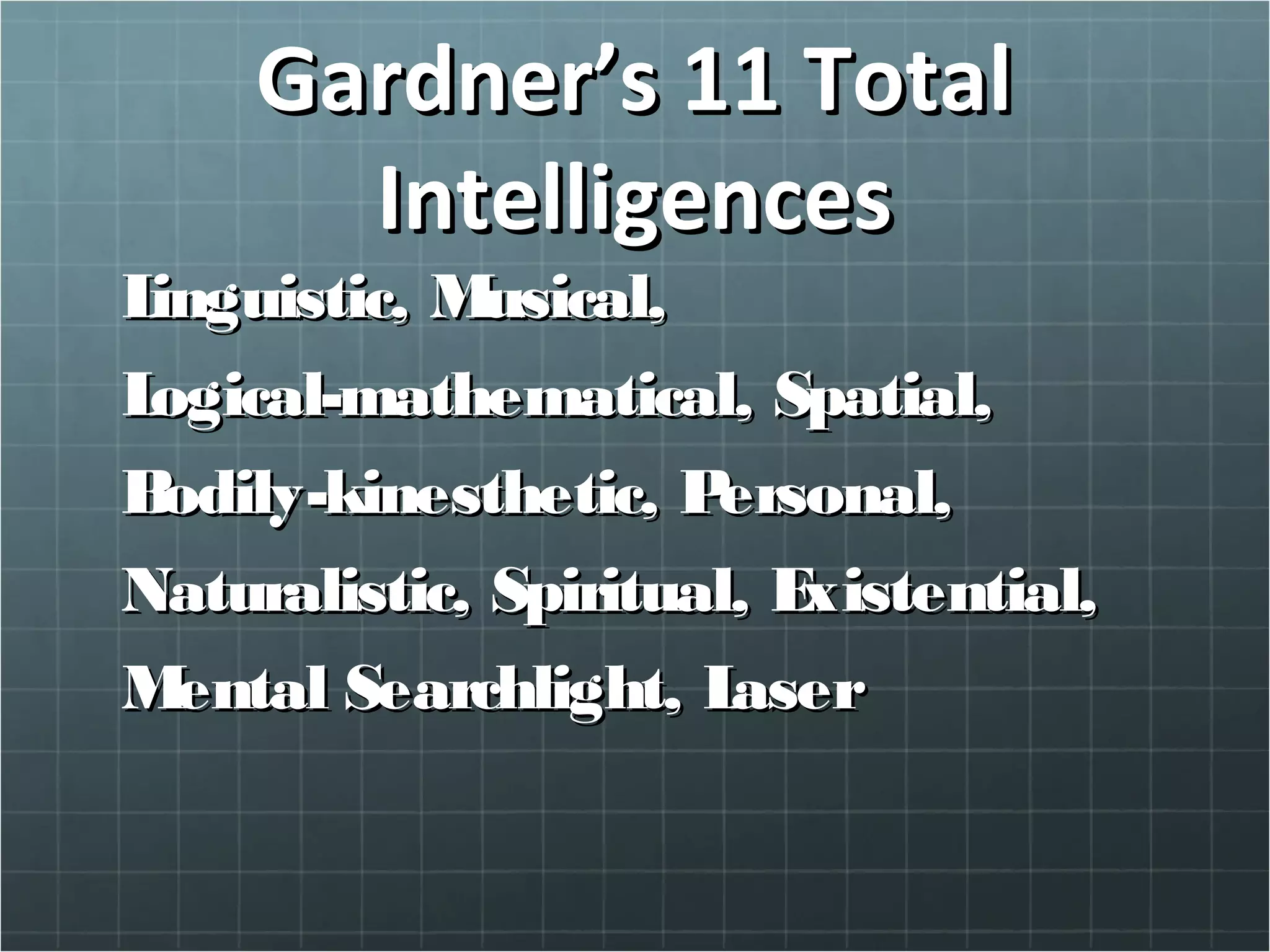
Gardner’s 11 TotalGardner’s 11 Total
IntelligencesIntelligences
Linguistic, Musical,Linguistic, Musical,
Logical-mathematical, Spatial,Logical-mathematical, Spatial,
Bodily-kinesthetic, Personal,Bodily-kinesthetic, Personal,
Naturalistic, Spiritual, Existential,Naturalistic, Spiritual, Existential,
Mental Searchlight, LaserMental Searchlight, Laser
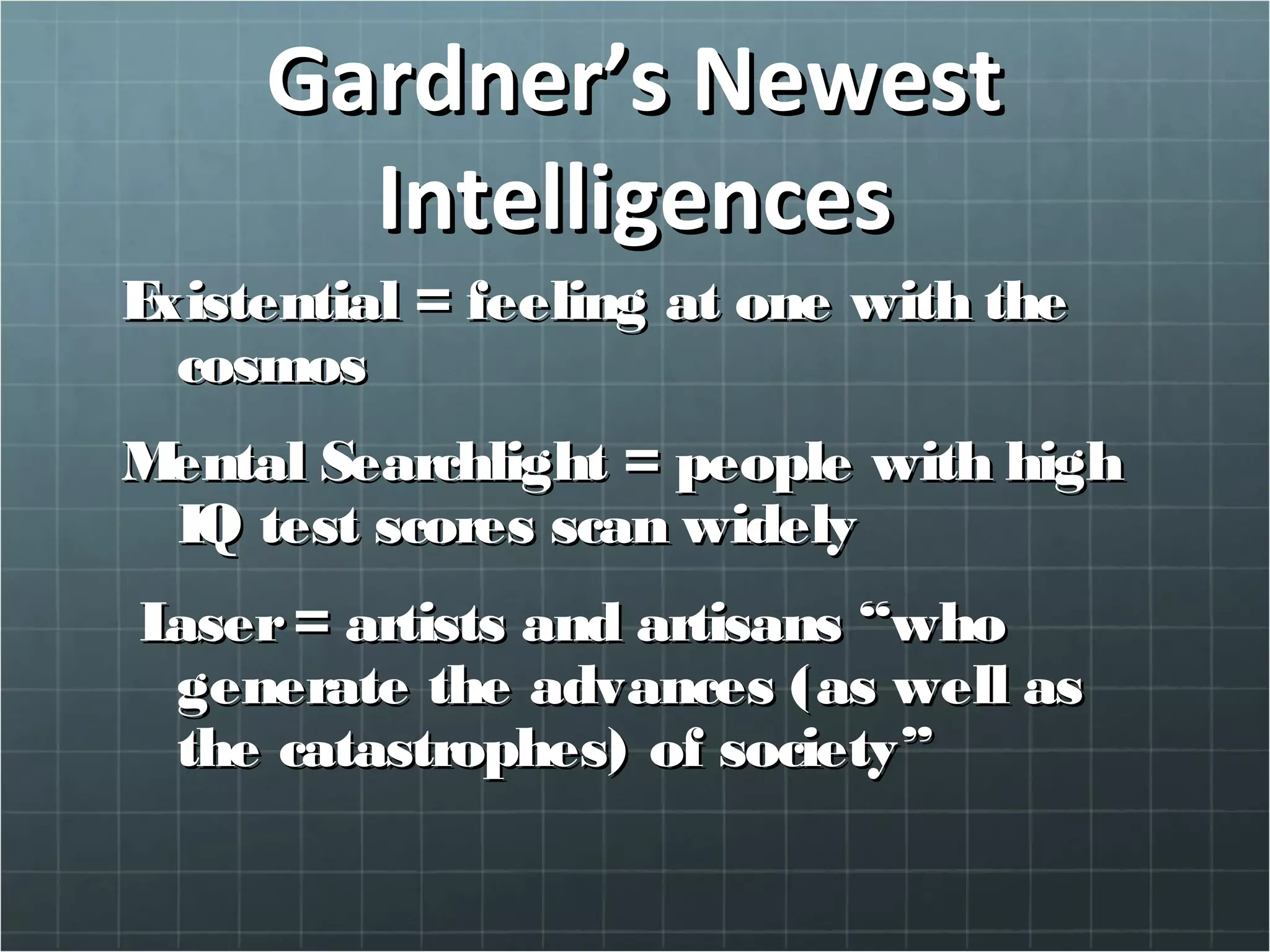
Gardner’s NewestGardner’s Newest
IntelligencesIntelligences
ExistentialExistential = feeling at one with the= feeling at one with the
cosmoscosmos
Mental SearchlightMental Searchlight = people with high= people with high
IQ test scores scan widelyIQ test scores scan widely
LaserLaser = artists and artisans “who= artists and artisans “who
generate the advances (as well asgenerate the advances (as well as
the catastrophes) of society”the catastrophes) of society”
Gardner Admits No Supporting DataGardner Admits No Supporting Data
Exists for Multiple IntelligencesExists for Multiple Intelligences
Allix (2000) no evidenceAllix (2000) no evidence
Jie-Qi Chen (2004) no evidenceJie-Qi Chen (2004) no evidence
Gardner(2004) no evidenceGardner(2004) no evidence
Gardnerand Connell (2000, p. 292)Gardnerand Connell (2000, p. 292)
conceded that “there is little hardconceded that “there is little hard
evidence forMultiple Intelligencesevidence forMultiple Intelligences
theory” (2000, p. 292)theory” (2000, p. 292)
NEUROSCIENCE RESEARCHNEUROSCIENCE RESEARCH
REFUTES MULTIPLE INTELLIGENCESREFUTES MULTIPLE INTELLIGENCES
There is consistent significant evidence foraThere is consistent significant evidence fora
general intelligence factorG that appears togeneral intelligence factorG that appears to
be working memory —this stands againstbe working memory —this stands against
Multiple IntelligencesMultiple Intelligences
(Colom et al. 2004)(Colom et al. 2004)
There is consistent significant evidence thatThere is consistent significant evidence that
brain systems forcognitive functions arebrain systems forcognitive functions are
overlapping —this stands against Multipleoverlapping —this stands against Multiple
Intelligences (Lieberman, 2002)Intelligences (Lieberman, 2002)
NEUROSCIENCE RESEARCHNEUROSCIENCE RESEARCH
REFUTES MULTIPLE INTELLIGENCES, cont.REFUTES MULTIPLE INTELLIGENCES, cont.
There is evidence forspecific innate cognitionThere is evidence forspecific innate cognition
modules (Gallistel, 2003)modules (Gallistel, 2003)
1 Fast-mapping of word to object1 Fast-mapping of word to object
2 Person recognition of face, voice, clothes2 Person recognition of face, voice, clothes
3 Obligation computation of what we owe others3 Obligation computation of what we owe others
and what they owe usand what they owe us
4 Imitation of all aspects of the behaviorof4 Imitation of all aspects of the behaviorof
othersothers
ADAPTED COGNITION MODULES STAND AGAINSTADAPTED COGNITION MODULES STAND AGAINST
MULTIPLE INTELLIGENCESMULTIPLE INTELLIGENCES
Each adapted cognition module is supported byEach adapted cognition module is supported by
evidence of its neural operations (MIevidence of its neural operations (MI
intelligences are not).intelligences are not).
A given adapted cognition module, like MirrorA given adapted cognition module, like Mirror
Neuron Tissue, operates using our vision,Neuron Tissue, operates using our vision,
hearing, speaking, gesturing, social awarenesshearing, speaking, gesturing, social awareness
—this combines parts of 4 of Gardner’s—this combines parts of 4 of Gardner’s
intelligences—thus negating their individualintelligences—thus negating their individual
existencesexistences
Bad news finding # 4Bad news finding # 4
EVERY SINGLEMEMORY WEEVERY SINGLEMEMORY WE
HAVEHAVE
ISIS
COMPLETELYCOMPLETELY
UNSTABLEUNSTABLE
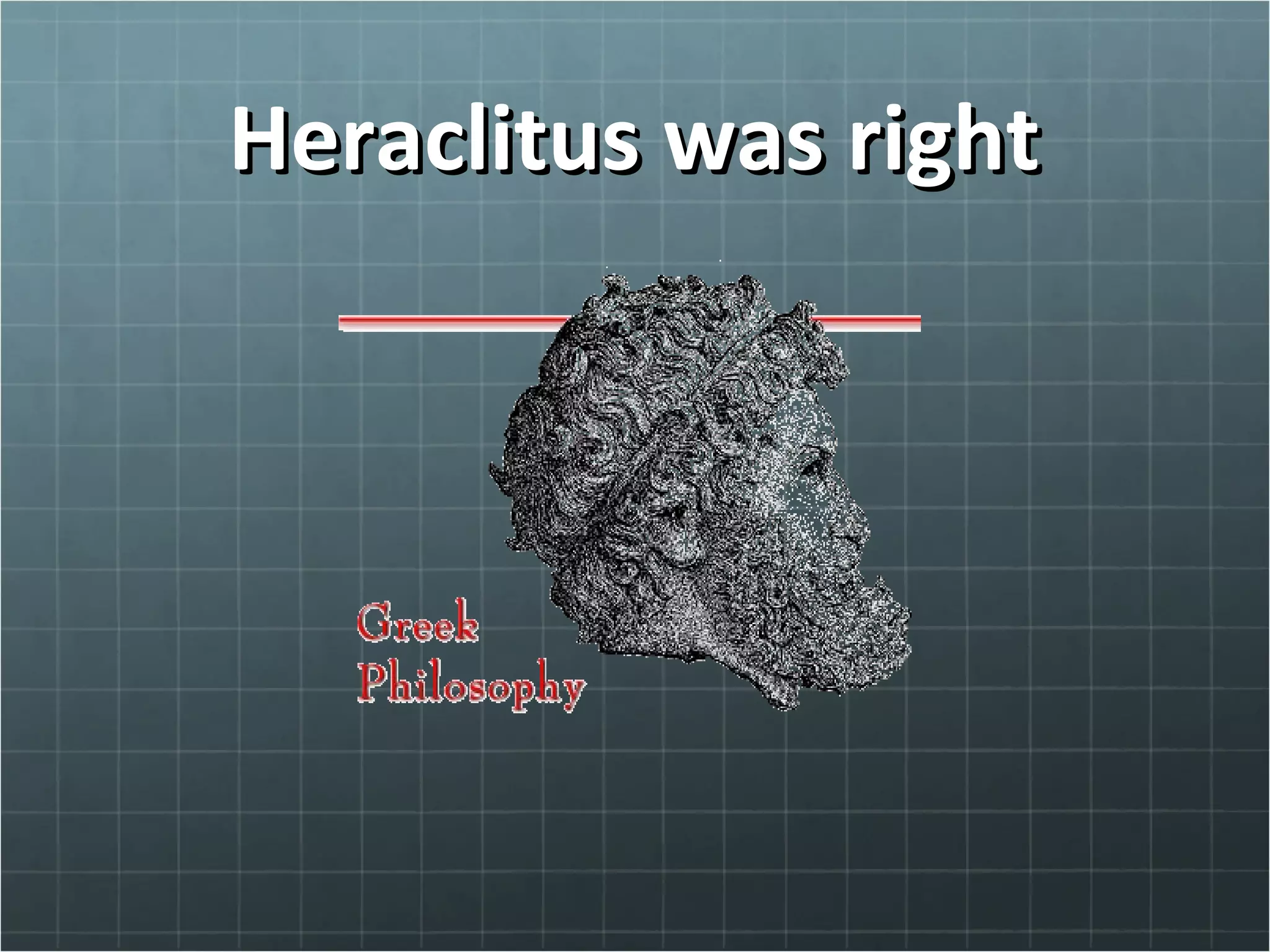
Heraclitus was rightHeraclitus was right
You cannot step intoYou cannot step into
the same river twicethe same river twice
EVERY TIMEYOU REMEMBEREVERY TIMEYOU REMEMBER
SOMETHINGSOMETHING,, IT IS AIT IS A
DIFFERENTDIFFERENT
MEMORYMEMORY, BECAUSETHE, BECAUSETHE
ACTOFACTOFRECALL IS ARECALL IS A
RECONSTRUCTIONRECONSTRUCTION
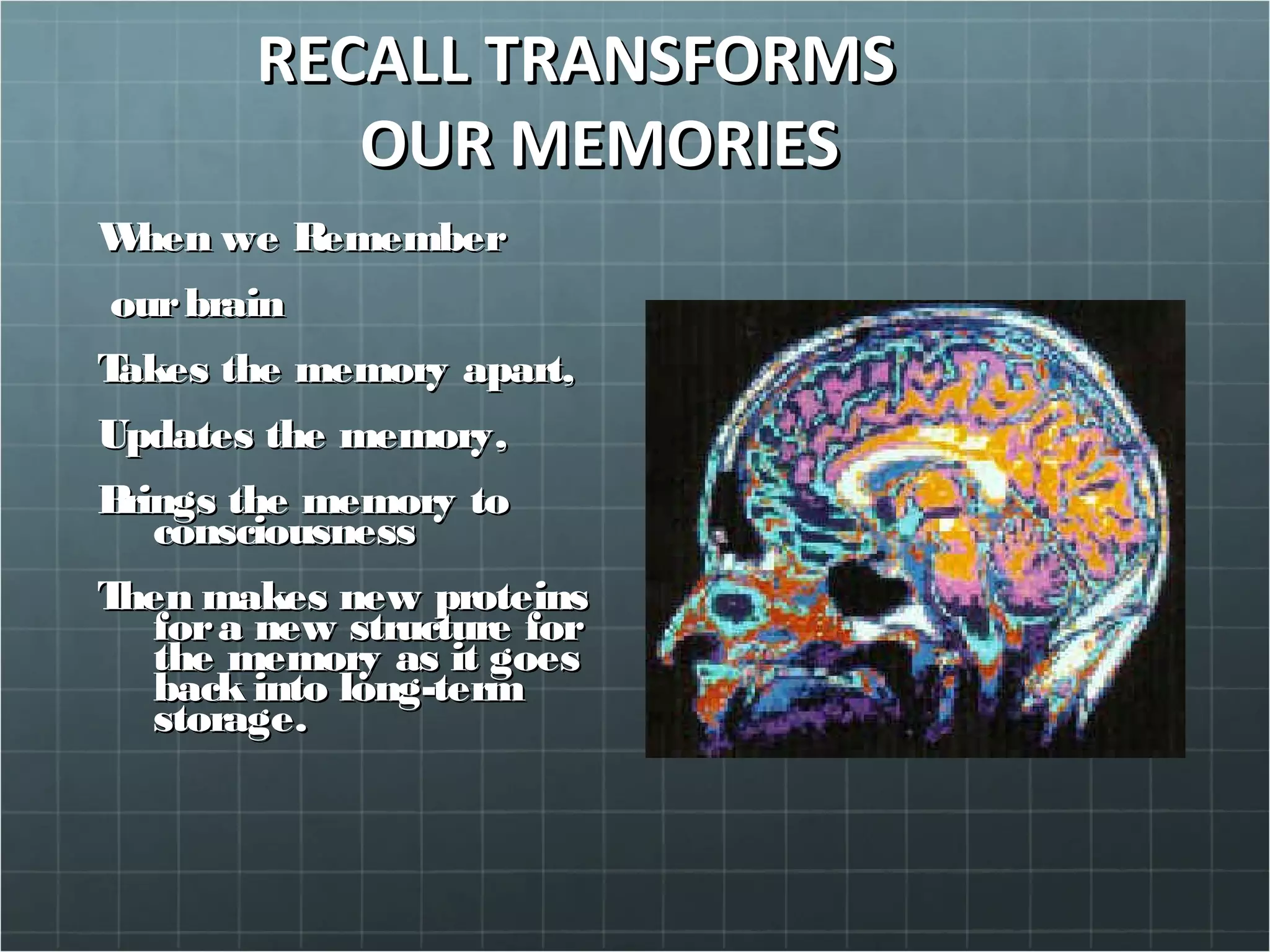
RECALL TRANSFORMSRECALL TRANSFORMS
OUR MEMORIESOUR MEMORIES
When we RememberWhen we Remember
ourbrainourbrain
Takes the memory apart,Takes the memory apart,
Updates the memory,Updates the memory,
Brings the memory toBrings the memory to
consciousnessconsciousness
Then makes new proteinsThen makes new proteins
fora new structure forfora new structure for
the memory as it goesthe memory as it goes
back into long-termback into long-term
storage.storage.
Good news findings # 1, 2, 3, 4, 5Good news findings # 1, 2, 3, 4, 5
Neuroscience researchNeuroscience research
has found 5 promoterhas found 5 promoter
mechanisms wherebymechanisms whereby
short term learningshort term learning
changes into long termchanges into long term
learninglearning
5 major promoters of learning =5 major promoters of learning =
INNATELEARNING PROGRAMSINNATELEARNING PROGRAMS(Gallistel,(Gallistel,
2003)2003)
REPETITION of INFORMATIONREPETITION of INFORMATION
(Squire and Kandel, 2000)(Squire and Kandel, 2000)
EXCITEMENTEXCITEMENTat the time of learningat the time of learning
(Cahill &Gorski, 2003; LeDoux, 2002)(Cahill &Gorski, 2003; LeDoux, 2002)
EATING CARBOHYDRATESEATING CARBOHYDRATES at time ofat time of
learninglearning (Korol, 2002)(Korol, 2002)
8-9 HOURS OFSLEEP8-9 HOURS OFSLEEPafterlearningafterlearning
(Kuriyama, Stickgold, &Walker, 2004)(Kuriyama, Stickgold, &Walker, 2004)
The first promoters are innate learning programsThe first promoters are innate learning programs
called ADAPTED COGNITION MODULEScalled ADAPTED COGNITION MODULES
SPECIALIZEDBRAIN MODULES EVOLVEDTOSPECIALIZEDBRAIN MODULES EVOLVEDTO
COMPUTESPECIFIC INFORMATIONCOMPUTESPECIFIC INFORMATION
OUTSIDEOURCONSCIOUSNESS IN ORDEROUTSIDEOURCONSCIOUSNESS IN ORDER
TO MAKETHATPROCESS EASIERANDTO MAKETHATPROCESS EASIERAND
FASTERBECAUSETHOSECOMPUTATIONSFASTERBECAUSETHOSECOMPUTATIONS
HAVEBEEN IMPORTANTFOROURHAVEBEEN IMPORTANTFOROUR
SURVIVALSURVIVAL
INNATE PROGRAMS = Adapted CognitionINNATE PROGRAMS = Adapted Cognition
Modules are very specific computation systemsModules are very specific computation systems
Adapted cognition modules promote quick and easyAdapted cognition modules promote quick and easy
learning of certain types of information:learning of certain types of information:
●●We learn people’s faces, typical movements, voices,We learn people’s faces, typical movements, voices,
clothing, odors very easily because we have FACEclothing, odors very easily because we have FACE
RECOGNITION TISSUEin ourtemporal lobesRECOGNITION TISSUEin ourtemporal lobes
●● We learn speech and tool use motorskills moreWe learn speech and tool use motorskills more
easily because we have special MIRROReasily because we have special MIRROR
NEURONS in ourfrontal lobes that copy the speechNEURONS in ourfrontal lobes that copy the speech
and movements of othersand movements of others
ADAPTED COGNITION MODULESADAPTED COGNITION MODULES
ALSO INCLUDEALSO INCLUDE
COMPUTING FREQUENCIESCOMPUTING FREQUENCIES
BASIC COUNTING SKILLSBASIC COUNTING SKILLS
COMPUTING WHATOTHERS OWEUS ANDCOMPUTING WHATOTHERS OWEUS AND
WHATWEOWETHEMWHATWEOWETHEM
FASTMAPPING OFWORDLABELTO OBJECTSFASTMAPPING OFWORDLABELTO OBJECTS
ANDSITUATIONSANDSITUATIONS
COMPUTING SOCIALSTATUS ANDINSULTS TOCOMPUTING SOCIALSTATUS ANDINSULTS TO
SOCIALSTATUSSOCIALSTATUS
The 2The 2ndnd
Learning Promoter isLearning Promoter is
REPETITIONREPETITION
Squire &Kandel (2000)Squire &Kandel (2000)
Reviewed neurobiology of learningReviewed neurobiology of learning
Brain forms long term memoriesBrain forms long term memories
depending ondepending on
““the numberof times the event orthe numberof times the event or
fact is repeated”fact is repeated”
REPETITIONREPETITION
Squire &Kandel (2000)Squire &Kandel (2000)
Reviewed neurobiology ofReviewed neurobiology of
learninglearning
Brain forms long term memoriesBrain forms long term memories
depending ondepending on
““the numberof times thethe numberof times the
event orfact is repeated”event orfact is repeated”
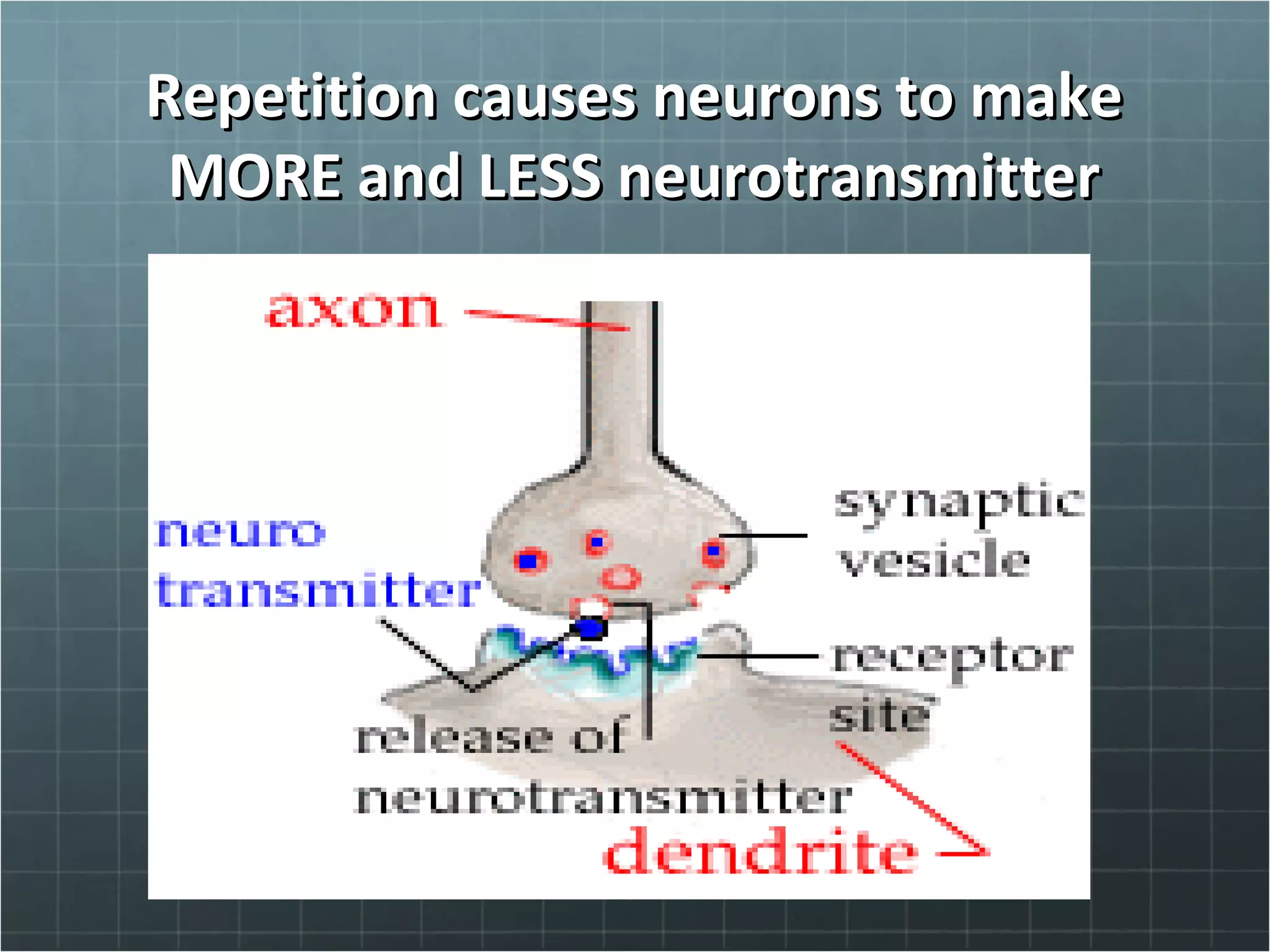
Repetition causes neurons to makeRepetition causes neurons to make
MORE and LESS neurotransmitterMORE and LESS neurotransmitter
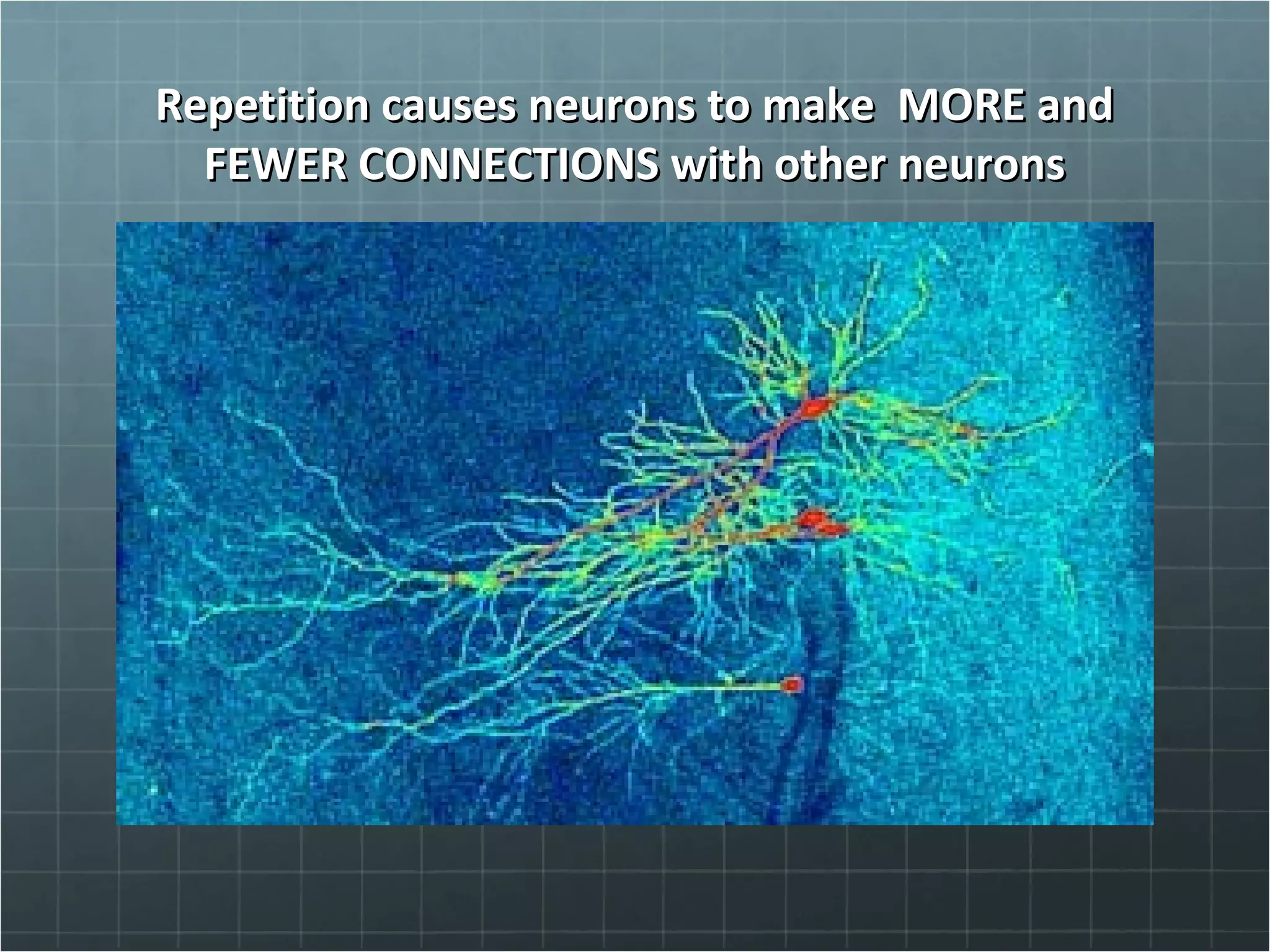
Repetition causes neurons to make MORE andRepetition causes neurons to make MORE and
FEWER CONNECTIONS with other neuronsFEWER CONNECTIONS with other neurons
ORIGIN OF TEACHINGORIGIN OF TEACHING
IS REPETITIONIS REPETITION
We all unconsciously repeat importantWe all unconsciously repeat important
information in conversationsinformation in conversations
All cultures teach important stories by verbalAll cultures teach important stories by verbal
repetitionrepetition
Chinese educators were taught to say everythingChinese educators were taught to say everything
TWICE…TWICE…
Most educators discover that repetition isMost educators discover that repetition is
valuablevaluable
The 3The 3rdrd
learning promoter islearning promoter is
EXCITEMENTEXCITEMENT
LeDoux has studied the brainLeDoux has studied the brain
for30 years &reportedfor30 years &reported
(2002) that “we(2002) that “we
rememberparticularlyrememberparticularly
well…those things thatwell…those things that
arouse ouremotions”arouse ouremotions”
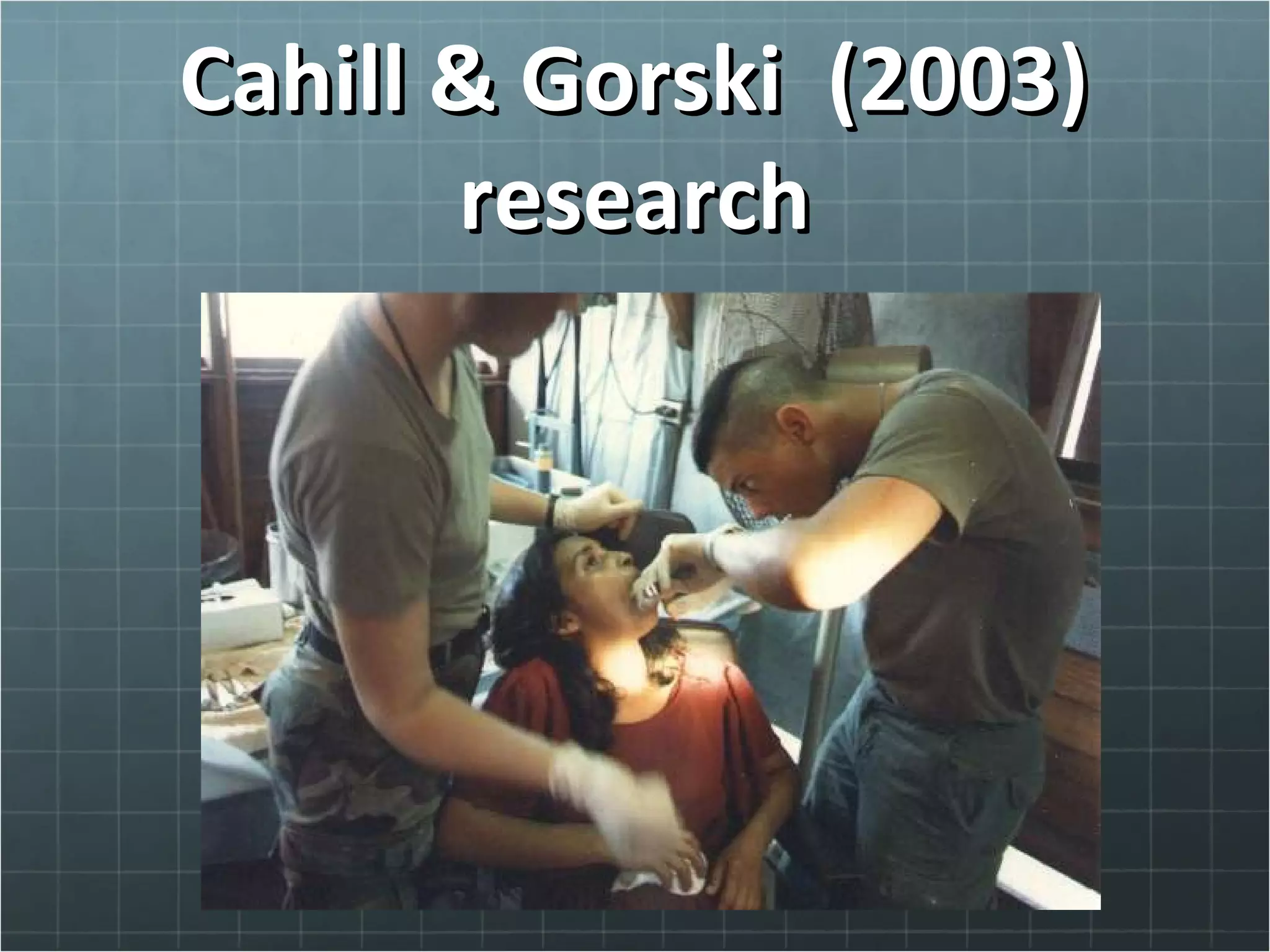
Cahill & Gorski (2003)Cahill & Gorski (2003)
researchresearch
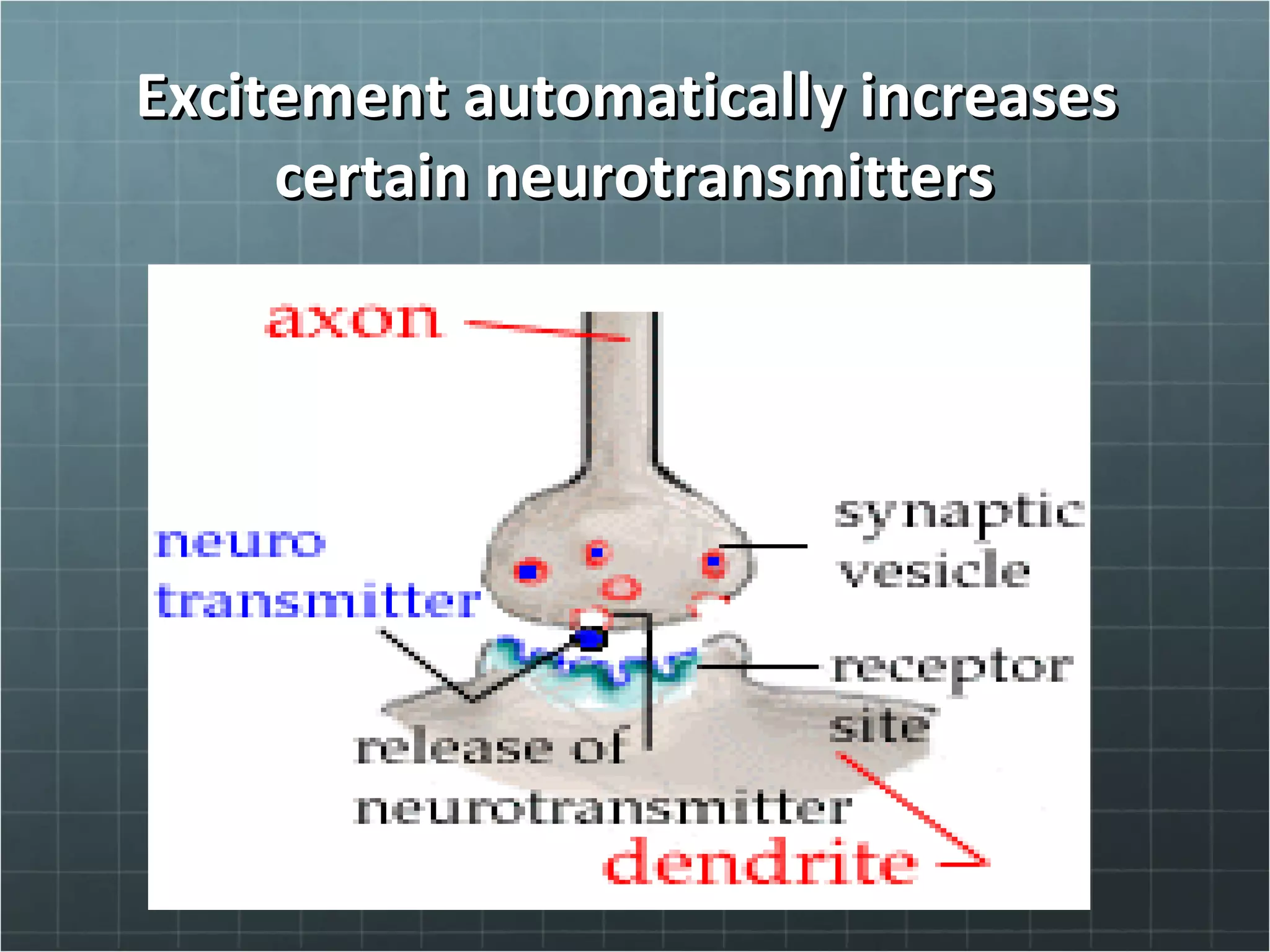
Excitement automatically increasesExcitement automatically increases
certain neurotransmitterscertain neurotransmitters
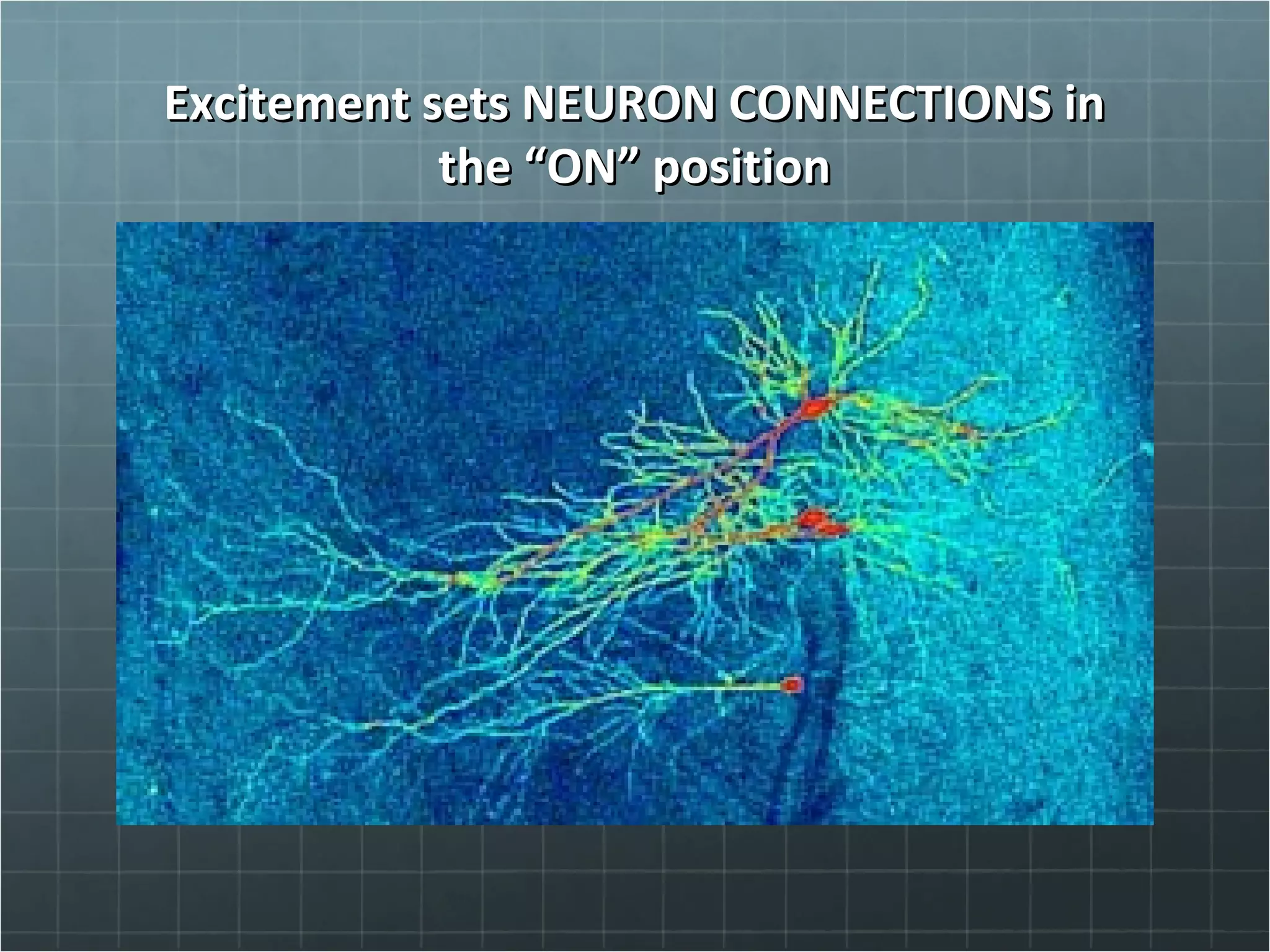
Excitement sets NEURON CONNECTIONS inExcitement sets NEURON CONNECTIONS in
the “ON” positionthe “ON” position
The 4The 4thth
learning promoter islearning promoter is
EATING CARBOHYDRATESEATING CARBOHYDRATES
Greenwood and Winocur (2001) research:Greenwood and Winocur (2001) research:
high-fat diet impairs brain glucose metabolismhigh-fat diet impairs brain glucose metabolism
needed to form long term memoryneeded to form long term memory
Korol (2002) research: eating carbohydratesKorol (2002) research: eating carbohydrates
enhanced memoryenhanced memory
(Smith, 2003) research: lack of breakfast(Smith, 2003) research: lack of breakfast
impairs learningimpairs learning
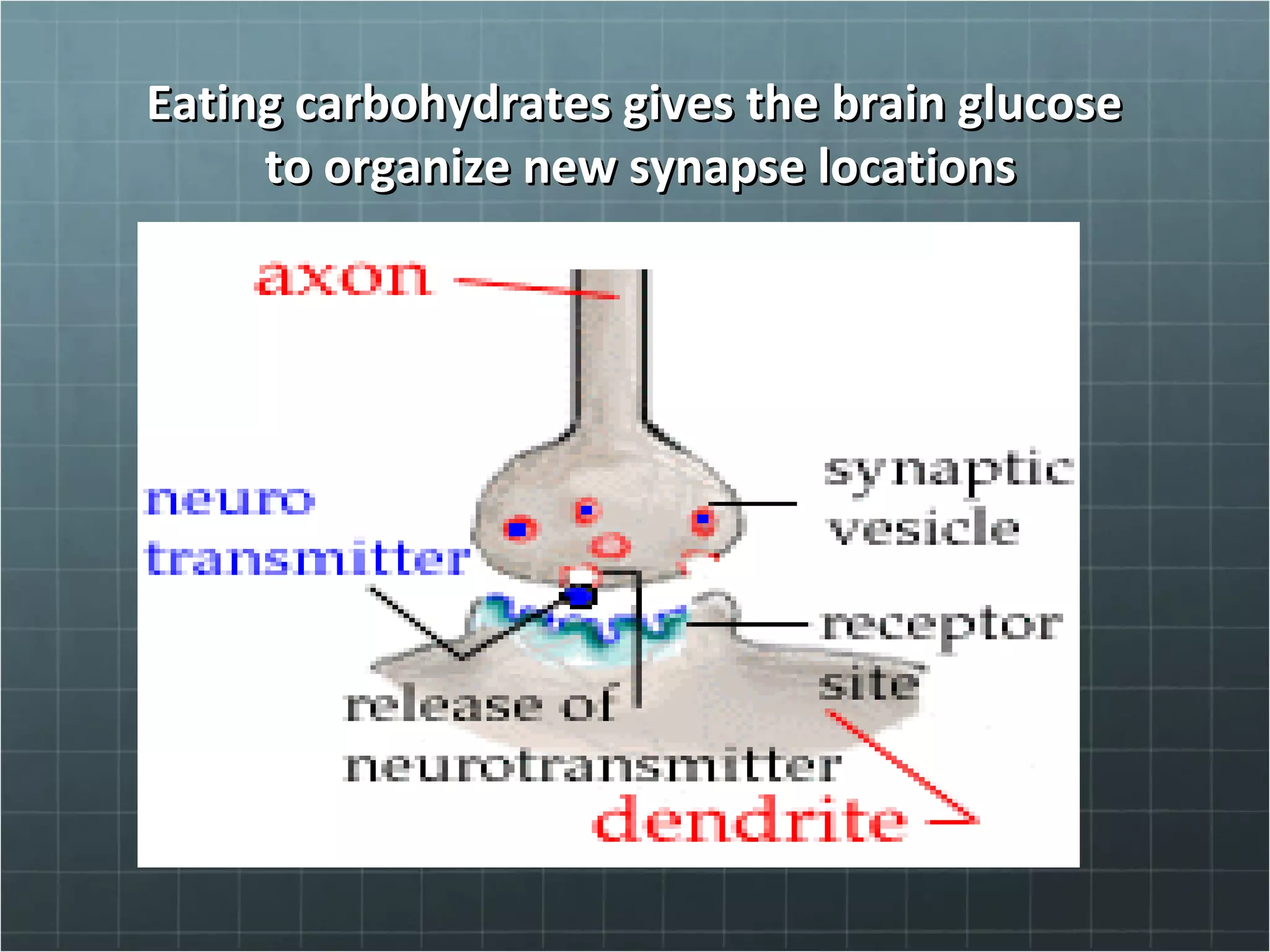
Eating carbohydrates gives the brain glucoseEating carbohydrates gives the brain glucose
to organize new synapse locationsto organize new synapse locations
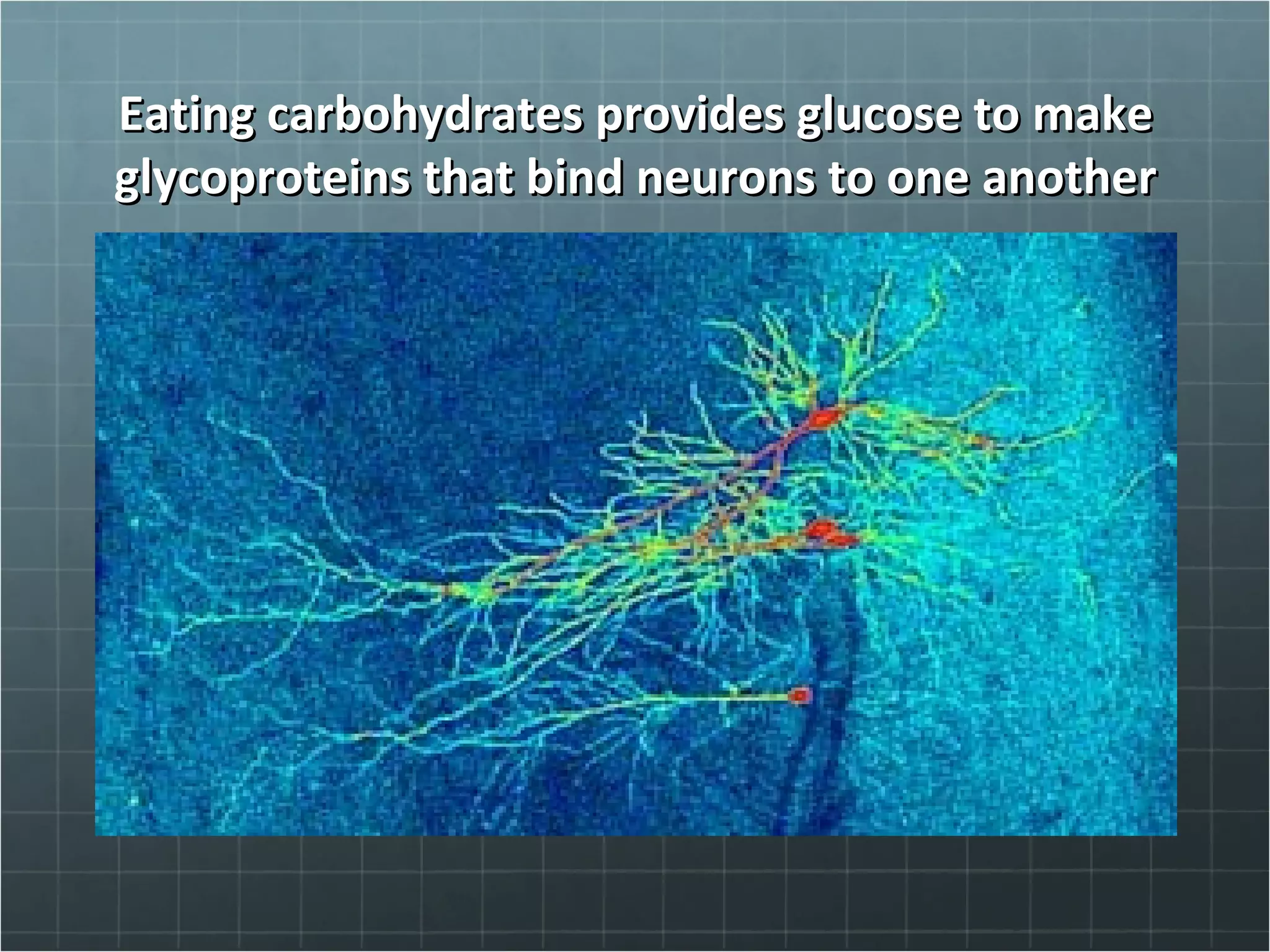
Eating carbohydrates provides glucose to makeEating carbohydrates provides glucose to make
glycoproteins that bind neurons to one anotherglycoproteins that bind neurons to one another
EXTREME DIETINGEXTREME DIETING
IMPAIRS LEARNINGIMPAIRS LEARNING
A majority of young women ageA majority of young women age
12 to 30 yrs in the US are on fad12 to 30 yrs in the US are on fad
diets.diets.
During periods of dieting, theirDuring periods of dieting, their
learning will be significantlylearning will be significantly
slowed and it will be harderforslowed and it will be harderfor
them to retain informationthem to retain information..
The 5The 5thth
learning promoter is 8-9learning promoter is 8-9
HOURS OF SLEEPHOURS OF SLEEP
SPECIALISSUESPECIALISSUEof the journalof the journal
LearningandMemoryLearningandMemory
(2004 V11, N6) reports a(2004 V11, N6) reports a
wide range of evidence forwide range of evidence for
consolidation of learningconsolidation of learning
during sleepduring sleep
Macbeth (Macbeth (2.2.46-51)2.2.46-51)
Sleep that knits up the ravell’d sleave of care,Sleep that knits up the ravell’d sleave of care,
The death of each day’s life, sore labour’s bath,The death of each day’s life, sore labour’s bath,
Balm of hurt minds, great nature’s second course,Balm of hurt minds, great nature’s second course,
Chief nourisher in life’s feast.Chief nourisher in life’s feast.
SLEEP IS ASLEEP IS A
FREE LEARNING TOOLFREE LEARNING TOOL
DREAMING SLEEPpromotes differentialDREAMING SLEEPpromotes differential
strengthening of neurons in networksstrengthening of neurons in networks
holding learned informationholding learned information
NON-DREAMING SLEEPactivates calciumNON-DREAMING SLEEPactivates calcium
channels that biologically repeat the neuralchannels that biologically repeat the neural
path of learning to force long term storagepath of learning to force long term storage
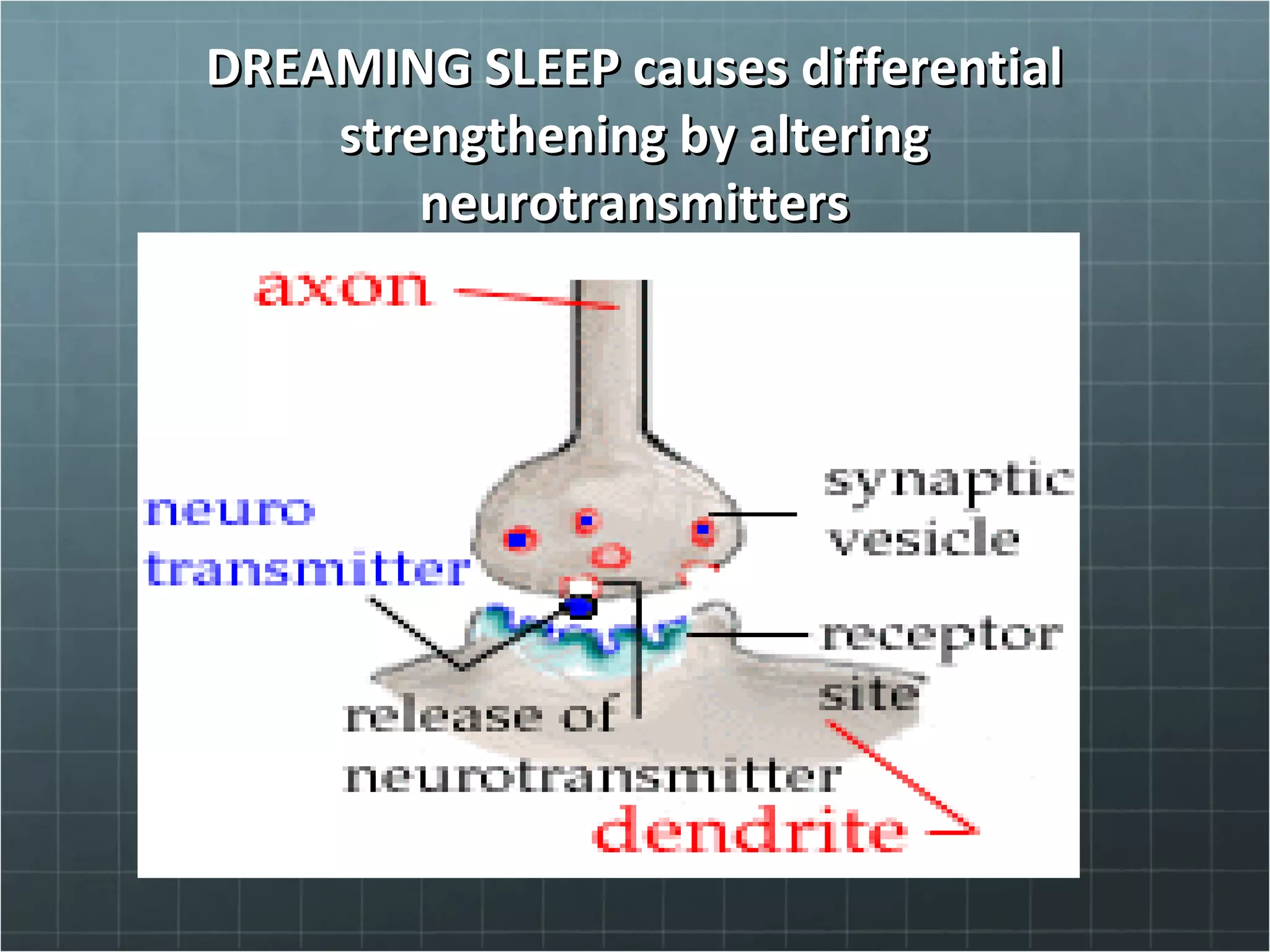
DREAMING SLEEP causes differentialDREAMING SLEEP causes differential
strengthening by alteringstrengthening by altering
neurotransmittersneurotransmitters
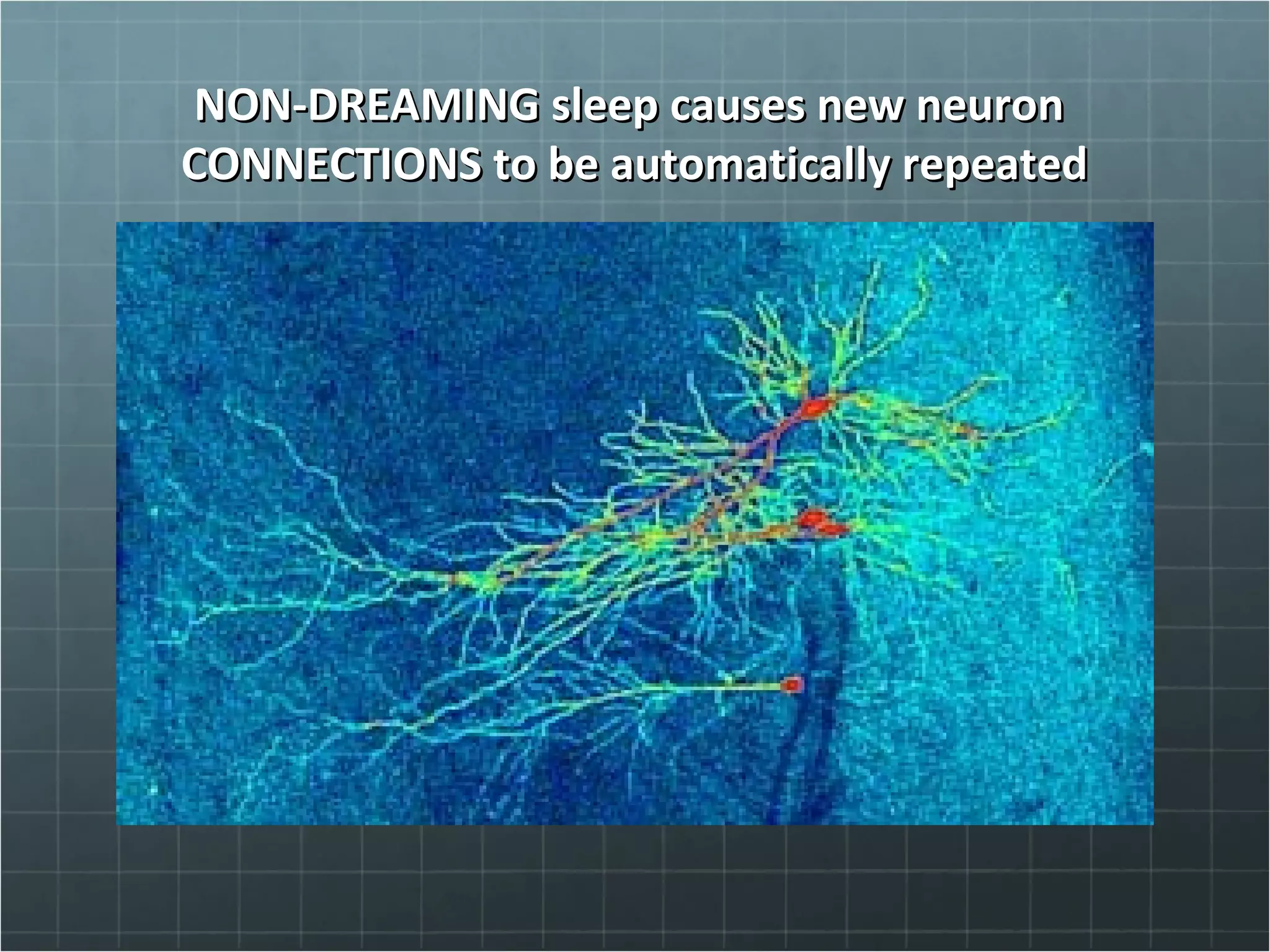
NON-DREAMING sleep causes new neuronNON-DREAMING sleep causes new neuron
CONNECTIONS to be automatically repeatedCONNECTIONS to be automatically repeated
Research shows that TOO LITTLE SLEEP orResearch shows that TOO LITTLE SLEEP or
IMPAIRED SLEEP = IMPAIRED LEARNINGIMPAIRED SLEEP = IMPAIRED LEARNING
Alcohol ingested after a day of learning inhibitsAlcohol ingested after a day of learning inhibits
dreaming sleep and impairs memory storage ofdreaming sleep and impairs memory storage of
the day’s informationthe day’s information
Drugs of abuse used after learning have similarDrugs of abuse used after learning have similar
bad effects on sleep and the day’s learningbad effects on sleep and the day’s learning
A majority of teens, college students andA majority of teens, college students and
working adults in the US are sleep-deprivedworking adults in the US are sleep-deprived
Of the 5 major learning promotersOf the 5 major learning promoters
INNATELEARNING PROGRAMSINNATELEARNING PROGRAMS(Gallistel,(Gallistel,
2002)2002)
REPETITION of INFORMATIONREPETITION of INFORMATION
(Squire and Kandel, 2000)(Squire and Kandel, 2000)
EXCITEMENTEXCITEMENTat the time of learningat the time of learning
(Cahill &Gorski, 2003; LeDoux, 2002)(Cahill &Gorski, 2003; LeDoux, 2002)
EATING CARBOHYDRATESEATING CARBOHYDRATES at time ofat time of
learninglearning (Korol, 2002)(Korol, 2002)
8-9 HOURS OFSLEEP8-9 HOURS OFSLEEPafterlearningafterlearning
(Kuriyama, Stickgold, &Walker, 2004)(Kuriyama, Stickgold, &Walker, 2004)
TEACHERS CAN CONTROLTEACHERS CAN CONTROL
ONLY 2 PROMOTERSONLY 2 PROMOTERS
RepetitionRepetition
&&
ExcitementExcitement
TEACHERS CAN CONTROLTEACHERS CAN CONTROL
ONLY 2 PROMOTERSONLY 2 PROMOTERS
RepetitionRepetition
&&
ExcitementExcitement
BUT TEACHERS CAN ALSOBUT TEACHERS CAN ALSO
PERMIT AND ENCOURAGEPERMIT AND ENCOURAGE
HEALTHY CARBOHYDRATE SNACKINGHEALTHY CARBOHYDRATE SNACKING 
ANDAND
TALK TO STUDENTS AND PARENTS ABOUT THETALK TO STUDENTS AND PARENTS ABOUT THE
IMPORTANCE OF SLEEPIMPORTANCE OF SLEEP

Neuroscience of Learning-CFC2010

  • 1.
    The Neuroscience ofLearningThe Neuroscience of Learning Carlos F. Camargo, PhDCarlos F. Camargo, PhD Ohana Foundation Lecture Series 2005Ohana Foundation Lecture Series 2005 Korean Education Development InstituteKorean Education Development Institute
  • 2.
    What is learning?Whatis learning? CHANGING the structure &CHANGING the structure & actions of NEURONS so theyactions of NEURONS so they HOLDINFORMATION inHOLDINFORMATION in LONG TERMMEMORY inLONG TERMMEMORY in TEMPORAL&PARIETALTEMPORAL&PARIETAL LOBES of the CORTEXLOBES of the CORTEX
  • 4.
  • 5.
    Learning requires MANYLearningrequires MANY neuron changesneuron changes BUTtwo majorchanges areBUTtwo majorchanges are 11 Changing the amounts ofChanging the amounts of neurotransmitters thatneurotransmitters that neurons produceneurons produce 2 Changing the connections2 Changing the connections between neuronsbetween neurons
  • 6.
    ((1) Learning requiresneurons to make1) Learning requires neurons to make MORE & LESS & DIFFERENT transmittersMORE & LESS & DIFFERENT transmitters
  • 7.
    (2) Learning requiresneurons to make NEW LINKS(2) Learning requires neurons to make NEW LINKS & DELETE EXISTING LINKS with other neurons& DELETE EXISTING LINKS with other neurons
  • 8.
    + & -+& - Bad NewsBad News &&Good NewsGood News forfor TeachersTeachers in Current Neurosciencein Current Neuroscience FindingsFindings
  • 9.
    4 NEGATIVES &54 NEGATIVES & 5 POSITIVESPOSITIVES 44 importantimportant negativenegative findings fromfindings from neuroscienceneuroscience 5 important5 important positivepositive findings fromfindings from neuroscienceneuroscience
  • 10.
    Bad news finding# 1Bad news finding # 1 WEHAVEWEHAVENONO INTRINSIC MOTIVATIONINTRINSIC MOTIVATION TO LEARNTO LEARN ACADEMIC MATERIALACADEMIC MATERIAL
  • 11.
    We are motivatedtoWe are motivated to LEARNLEARN to get 4to get 4 PRIMARY BODY REWARDS:PRIMARY BODY REWARDS: FoodFood WaterWater SexSex Drugs of AbuseDrugs of Abuse
  • 12.
    And we aremotivated toAnd we are motivated to LEARNLEARN toto get 5 Primary Social Rewardsget 5 Primary Social Rewards Feel pleasant touchFeel pleasant touch((Rolls et al. 2003Rolls et al. 2003)) See attractive facesSee attractive faces ((Aharon et al. 2001Aharon et al. 2001)) Hearpositive wordsHearpositive words ((Hamann &Mao 2002Hamann &Mao 2002)) Interact with othersInteract with others ((Rilling et al. 2002Rilling et al. 2002)) Gain social statusGain social status ((Tooby &Cosmides, 2002Tooby &Cosmides, 2002))
  • 13.
    Human motivation systemHumanmotivation system Rewarding experiencesRewarding experiences triggeramygdala activitytriggeramygdala activity triggerdopamine releasetriggerdopamine release triggerfrontal lobetriggerfrontal lobe activityactivity
  • 14.
    AMYGDALAAMYGDALA ComputesComputes Emotional intensity ofEmotionalintensity of an experiencean experience Degree of negative orDegree of negative or positive emotionpositive emotion
  • 15.
    Increased DopamineIncreased DopamineISIS the Rewardthe Reward
  • 16.
    FRONTAL LOBEFRONTAL LOBE Storesthe reward valueStores the reward value of experienceof experience Activates behaviorsActivates behaviors leading to the mostleading to the most rewarded outcomerewarded outcome
  • 17.
    All other complexexperiences areAll other complex experiences are conditioned with primary rewardsconditioned with primary rewards $$USEOFMONEYUSEOFMONEY WORKINGWORKING LEARNINGLEARNING FOLLOWING RULESFOLLOWING RULES
  • 18.
    Motivation to LearnMotivationto Learn School Subjects is ConditionedSchool Subjects is Conditioned Most culturesMost cultures conditioncondition childrenchildren with 3 primary rewards forsuccessfulwith 3 primary rewards forsuccessful learning usinglearning using foodfood educatoreducator && parent approvalparent approval increased peersocial statusincreased peersocial status
  • 19.
    Bad news finding# 2Bad news finding # 2 THEREISTHEREIS NO EVIDENCENO EVIDENCE FORFOR LEARNING TRANSFERLEARNING TRANSFER
  • 20.
    Reviews of researchshowReviews of research show nono evidence for learning transferevidence for learning transfer Barnett &Ceci (2002 )Barnett &Ceci (2002 ) Clement &LecoutreClement &Lecoutre (2004)(2004) Dixon &Dohn (2003)Dixon &Dohn (2003) Mayer(2004)Mayer(2004)
  • 21.
    No transfer meansnoNo transfer means no free lunchfree lunch NOSPECIFIC TRANSFERmeansNOSPECIFIC TRANSFERmeans Learning toLearning to addadd DOES NOTmakeDOES NOTmake learning tolearning to dividedivide easiereasier NOGENERALTRANSFERmeansNOGENERALTRANSFERmeans LearningLearning math DOES NOTmake youmath DOES NOTmake you a betterlearner“in general”a betterlearner“in general”
  • 22.
    Bad news finding# 3Bad news finding # 3 THEREIS NO EVIDENCE FOR MULTIPLE INTELLIGENCES
  • 23.
    Gardner’s 11 TotalGardner’s11 Total IntelligencesIntelligences Linguistic, Musical,Linguistic, Musical, Logical-mathematical, Spatial,Logical-mathematical, Spatial, Bodily-kinesthetic, Personal,Bodily-kinesthetic, Personal, Naturalistic, Spiritual, Existential,Naturalistic, Spiritual, Existential, Mental Searchlight, LaserMental Searchlight, Laser
  • 24.
    Gardner’s NewestGardner’s Newest IntelligencesIntelligences ExistentialExistential= feeling at one with the= feeling at one with the cosmoscosmos Mental SearchlightMental Searchlight = people with high= people with high IQ test scores scan widelyIQ test scores scan widely LaserLaser = artists and artisans “who= artists and artisans “who generate the advances (as well asgenerate the advances (as well as the catastrophes) of society”the catastrophes) of society”
  • 25.
    Gardner Admits NoSupporting DataGardner Admits No Supporting Data Exists for Multiple IntelligencesExists for Multiple Intelligences Allix (2000) no evidenceAllix (2000) no evidence Jie-Qi Chen (2004) no evidenceJie-Qi Chen (2004) no evidence Gardner(2004) no evidenceGardner(2004) no evidence Gardnerand Connell (2000, p. 292)Gardnerand Connell (2000, p. 292) conceded that “there is little hardconceded that “there is little hard evidence forMultiple Intelligencesevidence forMultiple Intelligences theory” (2000, p. 292)theory” (2000, p. 292)
  • 26.
    NEUROSCIENCE RESEARCHNEUROSCIENCE RESEARCH REFUTESMULTIPLE INTELLIGENCESREFUTES MULTIPLE INTELLIGENCES There is consistent significant evidence foraThere is consistent significant evidence fora general intelligence factorG that appears togeneral intelligence factorG that appears to be working memory —this stands againstbe working memory —this stands against Multiple IntelligencesMultiple Intelligences (Colom et al. 2004)(Colom et al. 2004) There is consistent significant evidence thatThere is consistent significant evidence that brain systems forcognitive functions arebrain systems forcognitive functions are overlapping —this stands against Multipleoverlapping —this stands against Multiple Intelligences (Lieberman, 2002)Intelligences (Lieberman, 2002)
  • 27.
    NEUROSCIENCE RESEARCHNEUROSCIENCE RESEARCH REFUTESMULTIPLE INTELLIGENCES, cont.REFUTES MULTIPLE INTELLIGENCES, cont. There is evidence forspecific innate cognitionThere is evidence forspecific innate cognition modules (Gallistel, 2003)modules (Gallistel, 2003) 1 Fast-mapping of word to object1 Fast-mapping of word to object 2 Person recognition of face, voice, clothes2 Person recognition of face, voice, clothes 3 Obligation computation of what we owe others3 Obligation computation of what we owe others and what they owe usand what they owe us 4 Imitation of all aspects of the behaviorof4 Imitation of all aspects of the behaviorof othersothers
  • 28.
    ADAPTED COGNITION MODULESSTAND AGAINSTADAPTED COGNITION MODULES STAND AGAINST MULTIPLE INTELLIGENCESMULTIPLE INTELLIGENCES Each adapted cognition module is supported byEach adapted cognition module is supported by evidence of its neural operations (MIevidence of its neural operations (MI intelligences are not).intelligences are not). A given adapted cognition module, like MirrorA given adapted cognition module, like Mirror Neuron Tissue, operates using our vision,Neuron Tissue, operates using our vision, hearing, speaking, gesturing, social awarenesshearing, speaking, gesturing, social awareness —this combines parts of 4 of Gardner’s—this combines parts of 4 of Gardner’s intelligences—thus negating their individualintelligences—thus negating their individual existencesexistences
  • 29.
    Bad news finding# 4Bad news finding # 4 EVERY SINGLEMEMORY WEEVERY SINGLEMEMORY WE HAVEHAVE ISIS COMPLETELYCOMPLETELY UNSTABLEUNSTABLE
  • 30.
  • 31.
    You cannot stepintoYou cannot step into the same river twicethe same river twice EVERY TIMEYOU REMEMBEREVERY TIMEYOU REMEMBER SOMETHINGSOMETHING,, IT IS AIT IS A DIFFERENTDIFFERENT MEMORYMEMORY, BECAUSETHE, BECAUSETHE ACTOFACTOFRECALL IS ARECALL IS A RECONSTRUCTIONRECONSTRUCTION
  • 32.
    RECALL TRANSFORMSRECALL TRANSFORMS OURMEMORIESOUR MEMORIES When we RememberWhen we Remember ourbrainourbrain Takes the memory apart,Takes the memory apart, Updates the memory,Updates the memory, Brings the memory toBrings the memory to consciousnessconsciousness Then makes new proteinsThen makes new proteins fora new structure forfora new structure for the memory as it goesthe memory as it goes back into long-termback into long-term storage.storage.
  • 33.
    Good news findings# 1, 2, 3, 4, 5Good news findings # 1, 2, 3, 4, 5 Neuroscience researchNeuroscience research has found 5 promoterhas found 5 promoter mechanisms wherebymechanisms whereby short term learningshort term learning changes into long termchanges into long term learninglearning
  • 34.
    5 major promotersof learning =5 major promoters of learning = INNATELEARNING PROGRAMSINNATELEARNING PROGRAMS(Gallistel,(Gallistel, 2003)2003) REPETITION of INFORMATIONREPETITION of INFORMATION (Squire and Kandel, 2000)(Squire and Kandel, 2000) EXCITEMENTEXCITEMENTat the time of learningat the time of learning (Cahill &Gorski, 2003; LeDoux, 2002)(Cahill &Gorski, 2003; LeDoux, 2002) EATING CARBOHYDRATESEATING CARBOHYDRATES at time ofat time of learninglearning (Korol, 2002)(Korol, 2002) 8-9 HOURS OFSLEEP8-9 HOURS OFSLEEPafterlearningafterlearning (Kuriyama, Stickgold, &Walker, 2004)(Kuriyama, Stickgold, &Walker, 2004)
  • 35.
    The first promotersare innate learning programsThe first promoters are innate learning programs called ADAPTED COGNITION MODULEScalled ADAPTED COGNITION MODULES SPECIALIZEDBRAIN MODULES EVOLVEDTOSPECIALIZEDBRAIN MODULES EVOLVEDTO COMPUTESPECIFIC INFORMATIONCOMPUTESPECIFIC INFORMATION OUTSIDEOURCONSCIOUSNESS IN ORDEROUTSIDEOURCONSCIOUSNESS IN ORDER TO MAKETHATPROCESS EASIERANDTO MAKETHATPROCESS EASIERAND FASTERBECAUSETHOSECOMPUTATIONSFASTERBECAUSETHOSECOMPUTATIONS HAVEBEEN IMPORTANTFOROURHAVEBEEN IMPORTANTFOROUR SURVIVALSURVIVAL
  • 36.
    INNATE PROGRAMS =Adapted CognitionINNATE PROGRAMS = Adapted Cognition Modules are very specific computation systemsModules are very specific computation systems Adapted cognition modules promote quick and easyAdapted cognition modules promote quick and easy learning of certain types of information:learning of certain types of information: ●●We learn people’s faces, typical movements, voices,We learn people’s faces, typical movements, voices, clothing, odors very easily because we have FACEclothing, odors very easily because we have FACE RECOGNITION TISSUEin ourtemporal lobesRECOGNITION TISSUEin ourtemporal lobes ●● We learn speech and tool use motorskills moreWe learn speech and tool use motorskills more easily because we have special MIRROReasily because we have special MIRROR NEURONS in ourfrontal lobes that copy the speechNEURONS in ourfrontal lobes that copy the speech and movements of othersand movements of others
  • 37.
    ADAPTED COGNITION MODULESADAPTEDCOGNITION MODULES ALSO INCLUDEALSO INCLUDE COMPUTING FREQUENCIESCOMPUTING FREQUENCIES BASIC COUNTING SKILLSBASIC COUNTING SKILLS COMPUTING WHATOTHERS OWEUS ANDCOMPUTING WHATOTHERS OWEUS AND WHATWEOWETHEMWHATWEOWETHEM FASTMAPPING OFWORDLABELTO OBJECTSFASTMAPPING OFWORDLABELTO OBJECTS ANDSITUATIONSANDSITUATIONS COMPUTING SOCIALSTATUS ANDINSULTS TOCOMPUTING SOCIALSTATUS ANDINSULTS TO SOCIALSTATUSSOCIALSTATUS
  • 38.
    The 2The 2ndnd LearningPromoter isLearning Promoter is REPETITIONREPETITION Squire &Kandel (2000)Squire &Kandel (2000) Reviewed neurobiology of learningReviewed neurobiology of learning Brain forms long term memoriesBrain forms long term memories depending ondepending on ““the numberof times the event orthe numberof times the event or fact is repeated”fact is repeated”
  • 39.
    REPETITIONREPETITION Squire &Kandel (2000)Squire&Kandel (2000) Reviewed neurobiology ofReviewed neurobiology of learninglearning Brain forms long term memoriesBrain forms long term memories depending ondepending on ““the numberof times thethe numberof times the event orfact is repeated”event orfact is repeated”
  • 40.
    Repetition causes neuronsto makeRepetition causes neurons to make MORE and LESS neurotransmitterMORE and LESS neurotransmitter
  • 41.
    Repetition causes neuronsto make MORE andRepetition causes neurons to make MORE and FEWER CONNECTIONS with other neuronsFEWER CONNECTIONS with other neurons
  • 42.
    ORIGIN OF TEACHINGORIGINOF TEACHING IS REPETITIONIS REPETITION We all unconsciously repeat importantWe all unconsciously repeat important information in conversationsinformation in conversations All cultures teach important stories by verbalAll cultures teach important stories by verbal repetitionrepetition Chinese educators were taught to say everythingChinese educators were taught to say everything TWICE…TWICE… Most educators discover that repetition isMost educators discover that repetition is valuablevaluable
  • 43.
    The 3The 3rdrd learningpromoter islearning promoter is EXCITEMENTEXCITEMENT LeDoux has studied the brainLeDoux has studied the brain for30 years &reportedfor30 years &reported (2002) that “we(2002) that “we rememberparticularlyrememberparticularly well…those things thatwell…those things that arouse ouremotions”arouse ouremotions”
  • 44.
    Cahill & Gorski(2003)Cahill & Gorski (2003) researchresearch
  • 45.
    Excitement automatically increasesExcitementautomatically increases certain neurotransmitterscertain neurotransmitters
  • 46.
    Excitement sets NEURONCONNECTIONS inExcitement sets NEURON CONNECTIONS in the “ON” positionthe “ON” position
  • 47.
    The 4The 4thth learningpromoter islearning promoter is EATING CARBOHYDRATESEATING CARBOHYDRATES Greenwood and Winocur (2001) research:Greenwood and Winocur (2001) research: high-fat diet impairs brain glucose metabolismhigh-fat diet impairs brain glucose metabolism needed to form long term memoryneeded to form long term memory Korol (2002) research: eating carbohydratesKorol (2002) research: eating carbohydrates enhanced memoryenhanced memory (Smith, 2003) research: lack of breakfast(Smith, 2003) research: lack of breakfast impairs learningimpairs learning
  • 48.
    Eating carbohydrates givesthe brain glucoseEating carbohydrates gives the brain glucose to organize new synapse locationsto organize new synapse locations
  • 49.
    Eating carbohydrates providesglucose to makeEating carbohydrates provides glucose to make glycoproteins that bind neurons to one anotherglycoproteins that bind neurons to one another
  • 50.
    EXTREME DIETINGEXTREME DIETING IMPAIRSLEARNINGIMPAIRS LEARNING A majority of young women ageA majority of young women age 12 to 30 yrs in the US are on fad12 to 30 yrs in the US are on fad diets.diets. During periods of dieting, theirDuring periods of dieting, their learning will be significantlylearning will be significantly slowed and it will be harderforslowed and it will be harderfor them to retain informationthem to retain information..
  • 51.
    The 5The 5thth learningpromoter is 8-9learning promoter is 8-9 HOURS OF SLEEPHOURS OF SLEEP SPECIALISSUESPECIALISSUEof the journalof the journal LearningandMemoryLearningandMemory (2004 V11, N6) reports a(2004 V11, N6) reports a wide range of evidence forwide range of evidence for consolidation of learningconsolidation of learning during sleepduring sleep
  • 52.
    Macbeth (Macbeth (2.2.46-51)2.2.46-51) Sleepthat knits up the ravell’d sleave of care,Sleep that knits up the ravell’d sleave of care, The death of each day’s life, sore labour’s bath,The death of each day’s life, sore labour’s bath, Balm of hurt minds, great nature’s second course,Balm of hurt minds, great nature’s second course, Chief nourisher in life’s feast.Chief nourisher in life’s feast.
  • 53.
    SLEEP IS ASLEEPIS A FREE LEARNING TOOLFREE LEARNING TOOL DREAMING SLEEPpromotes differentialDREAMING SLEEPpromotes differential strengthening of neurons in networksstrengthening of neurons in networks holding learned informationholding learned information NON-DREAMING SLEEPactivates calciumNON-DREAMING SLEEPactivates calcium channels that biologically repeat the neuralchannels that biologically repeat the neural path of learning to force long term storagepath of learning to force long term storage
  • 54.
    DREAMING SLEEP causesdifferentialDREAMING SLEEP causes differential strengthening by alteringstrengthening by altering neurotransmittersneurotransmitters
  • 55.
    NON-DREAMING sleep causesnew neuronNON-DREAMING sleep causes new neuron CONNECTIONS to be automatically repeatedCONNECTIONS to be automatically repeated
  • 56.
    Research shows thatTOO LITTLE SLEEP orResearch shows that TOO LITTLE SLEEP or IMPAIRED SLEEP = IMPAIRED LEARNINGIMPAIRED SLEEP = IMPAIRED LEARNING Alcohol ingested after a day of learning inhibitsAlcohol ingested after a day of learning inhibits dreaming sleep and impairs memory storage ofdreaming sleep and impairs memory storage of the day’s informationthe day’s information Drugs of abuse used after learning have similarDrugs of abuse used after learning have similar bad effects on sleep and the day’s learningbad effects on sleep and the day’s learning A majority of teens, college students andA majority of teens, college students and working adults in the US are sleep-deprivedworking adults in the US are sleep-deprived
  • 57.
    Of the 5major learning promotersOf the 5 major learning promoters INNATELEARNING PROGRAMSINNATELEARNING PROGRAMS(Gallistel,(Gallistel, 2002)2002) REPETITION of INFORMATIONREPETITION of INFORMATION (Squire and Kandel, 2000)(Squire and Kandel, 2000) EXCITEMENTEXCITEMENTat the time of learningat the time of learning (Cahill &Gorski, 2003; LeDoux, 2002)(Cahill &Gorski, 2003; LeDoux, 2002) EATING CARBOHYDRATESEATING CARBOHYDRATES at time ofat time of learninglearning (Korol, 2002)(Korol, 2002) 8-9 HOURS OFSLEEP8-9 HOURS OFSLEEPafterlearningafterlearning (Kuriyama, Stickgold, &Walker, 2004)(Kuriyama, Stickgold, &Walker, 2004)
  • 58.
    TEACHERS CAN CONTROLTEACHERSCAN CONTROL ONLY 2 PROMOTERSONLY 2 PROMOTERS RepetitionRepetition && ExcitementExcitement
  • 59.
    TEACHERS CAN CONTROLTEACHERSCAN CONTROL ONLY 2 PROMOTERSONLY 2 PROMOTERS RepetitionRepetition && ExcitementExcitement
  • 60.
    BUT TEACHERS CANALSOBUT TEACHERS CAN ALSO PERMIT AND ENCOURAGEPERMIT AND ENCOURAGE HEALTHY CARBOHYDRATE SNACKINGHEALTHY CARBOHYDRATE SNACKING  ANDAND TALK TO STUDENTS AND PARENTS ABOUT THETALK TO STUDENTS AND PARENTS ABOUT THE IMPORTANCE OF SLEEPIMPORTANCE OF SLEEP