Neuron
Prepared by:
Orlando A. Pistan, MAEd
Psychology Instructor
Neuron
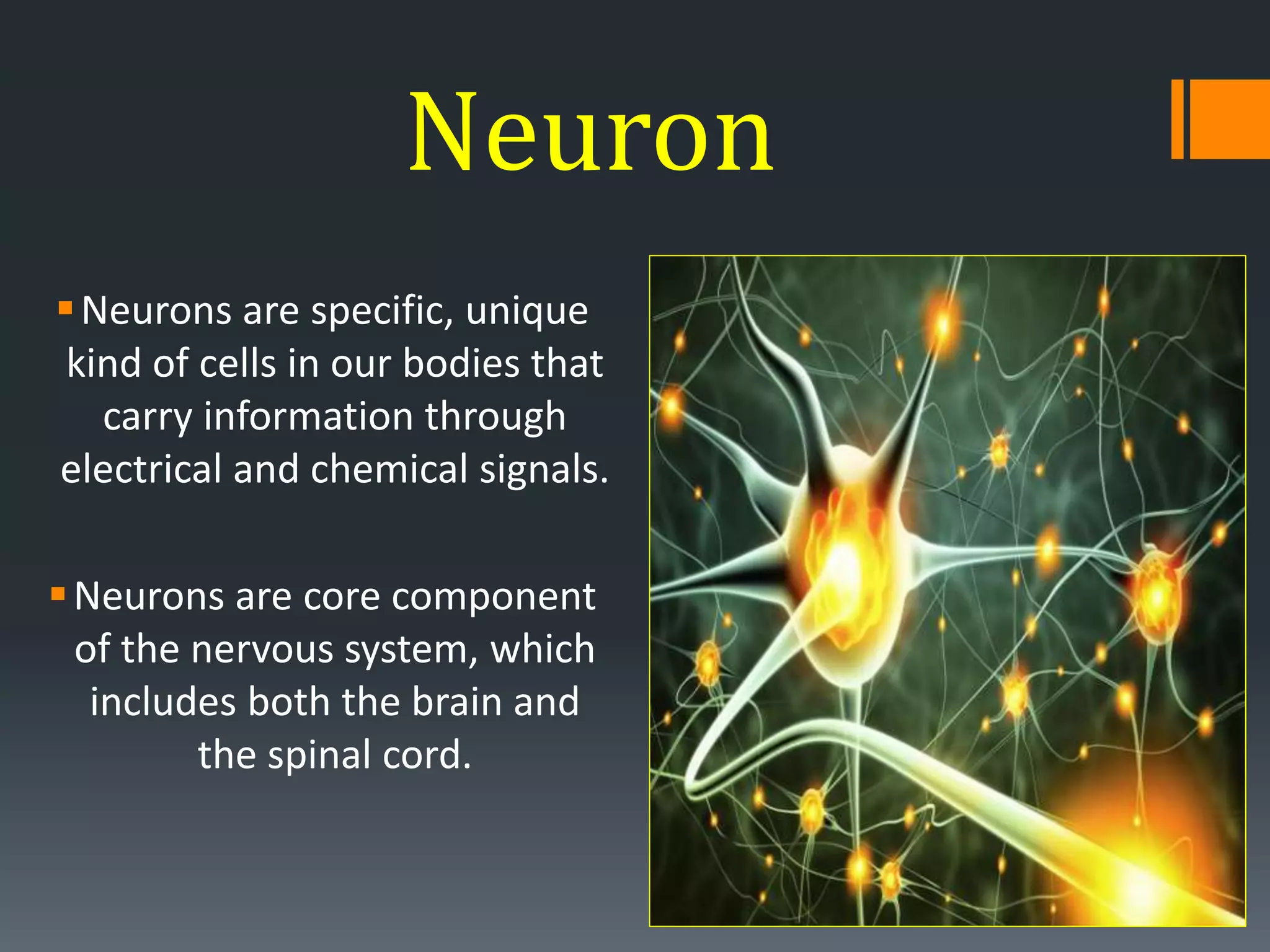
Neurons are specific, unique
kind of cells in our bodies that
carry information through
electrical and chemical signals.
Neurons are core component
of the nervous system, which
includes both the brain and
the spinal cord.
Facts:
1. There are 100 billion
neurons in our brain alone.
2. There are 13, 500, 000
neurons in the spinal cord.
3. The greatest concentration
of neurons is in the
Neocortex of the brain,
which can contain 100,000
neurons per cubic
millimeter.
Neuron uniqueness:
1. Unlike other body cells,
neurons stop reproducing
shortly after birth. Because of
this, some parts of the brain
have more neurons at birth
than later in life because
neurons die but are not
replaced.
2. Neurons have a membrane
that is designed to send
information to other cells.
Classes of Neuron
Sensory neurons
Motor neurons
Interneurons
Sensory Neurons
Sensory neurons get information
about what's going on inside and
outside of the body and bring
that information into the CNS so
it can be processed.
For instance, if you picked up a
hot coal, sensory neurons with
endings in your fingertips would
convey the information to your
CNS that it was really hot.
Motor Neurons
Motor neurons get information
from other neurons and convey
commands to your muscles,
organs and glands.
For instance, if you picked up a
hot coal, motor neurons supply
signal to the muscles in your
fingers would cause your hand
to let go.
Interneurons
Interneurons, which are
found only in the CNS,
connect one neuron to
another. They receive
information from other
neurons (either sensory
neurons or interneurons)
and transmit information to
other neurons (either motor
neurons or interneurons).
Interneurons
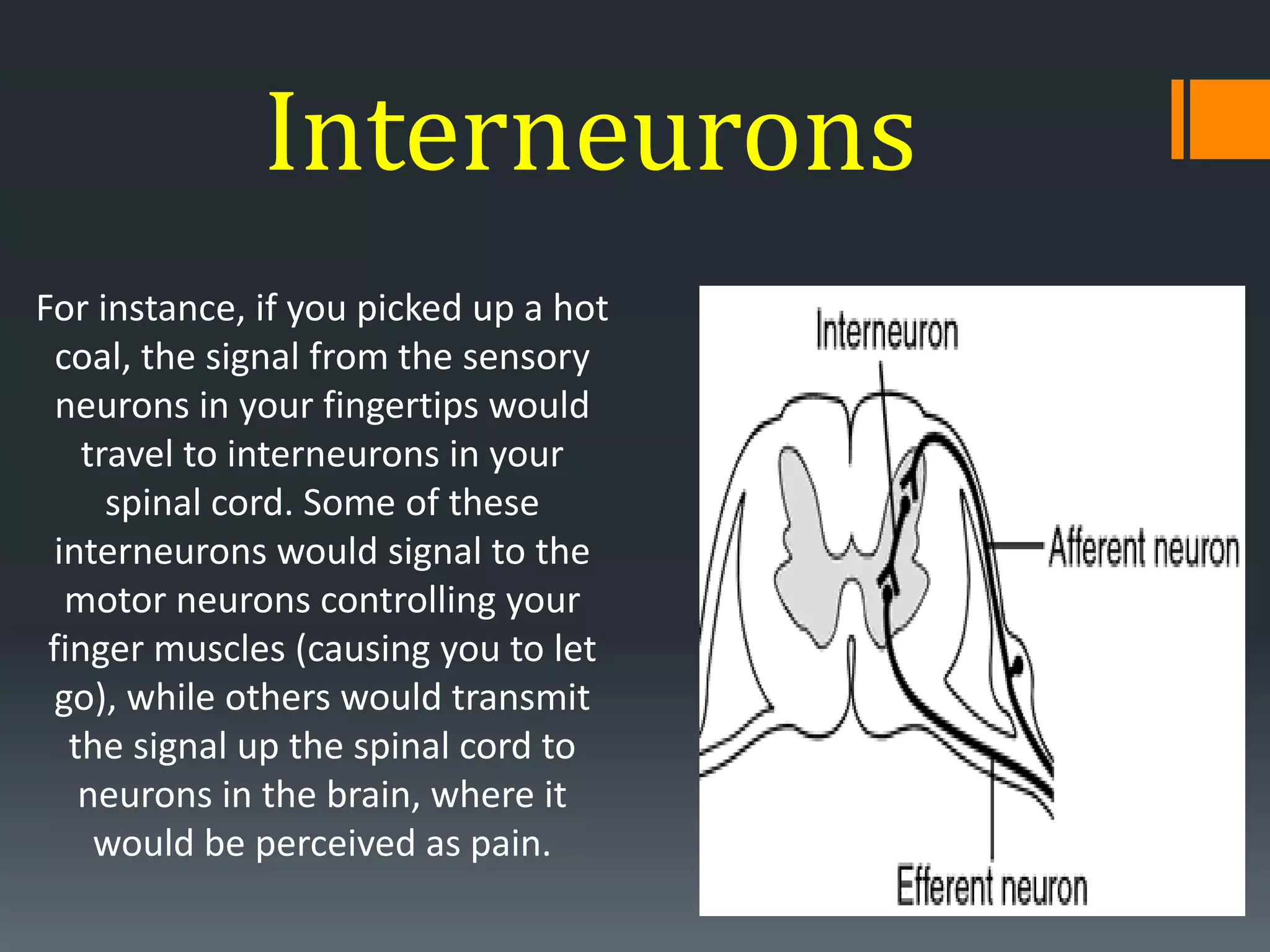
For instance, if you picked up a hot
coal, the signal from the sensory
neurons in your fingertips would
travel to interneurons in your
spinal cord. Some of these
interneurons would signal to the
motor neurons controlling your
finger muscles (causing you to let
go), while others would transmit
the signal up the spinal cord to
neurons in the brain, where it
would be perceived as pain.
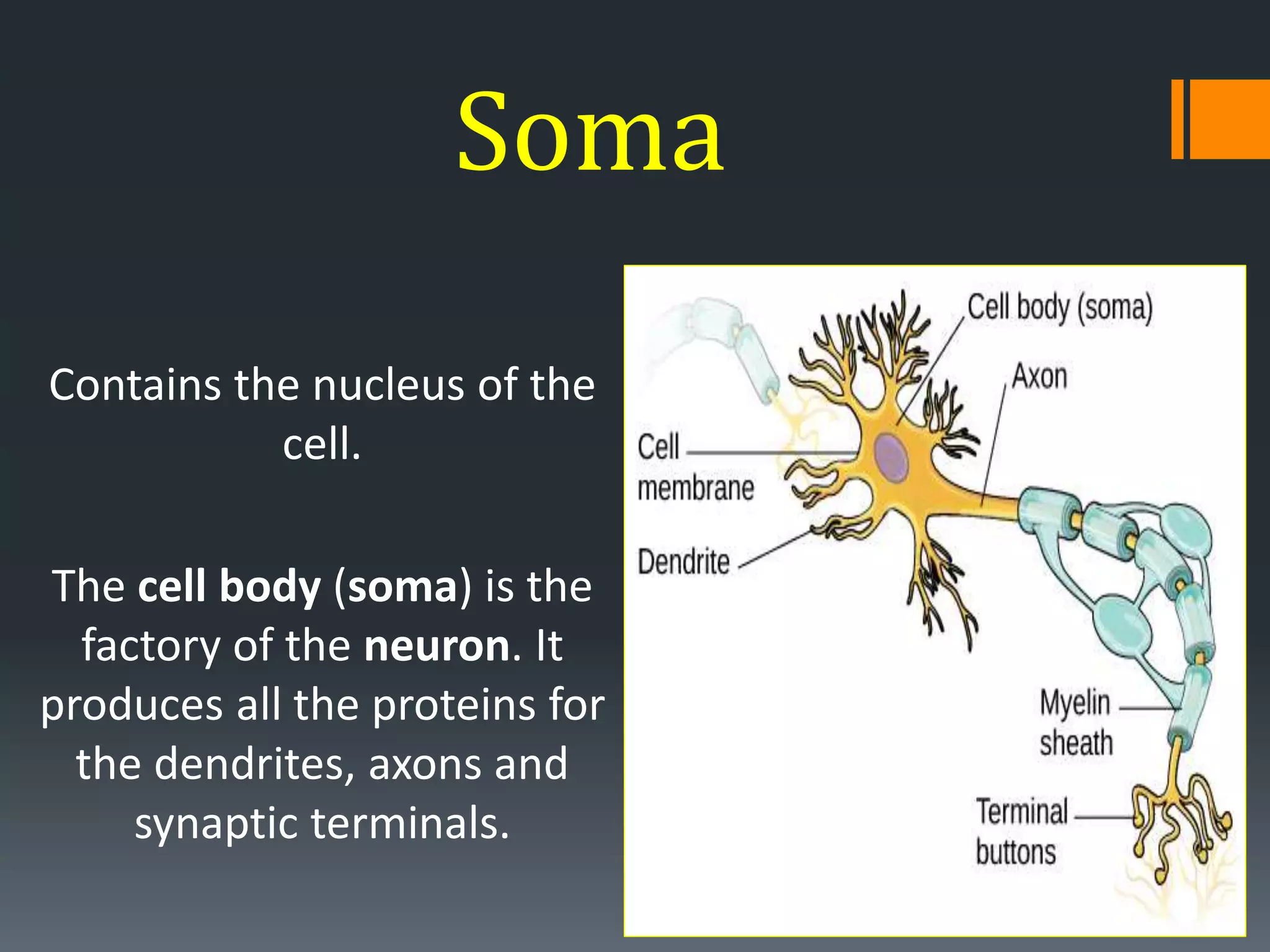
Parts of the Neuron
Soma
Dendrites
Axon
Terminal button
Myelin
Soma
Contains the nucleus of the
cell.
The cell body (soma) is the
factory of the neuron. It
produces all the proteins for
the dendrites, axons and
synaptic terminals.
Dendrites
Branchlike structures
that receive information
from other neurons.
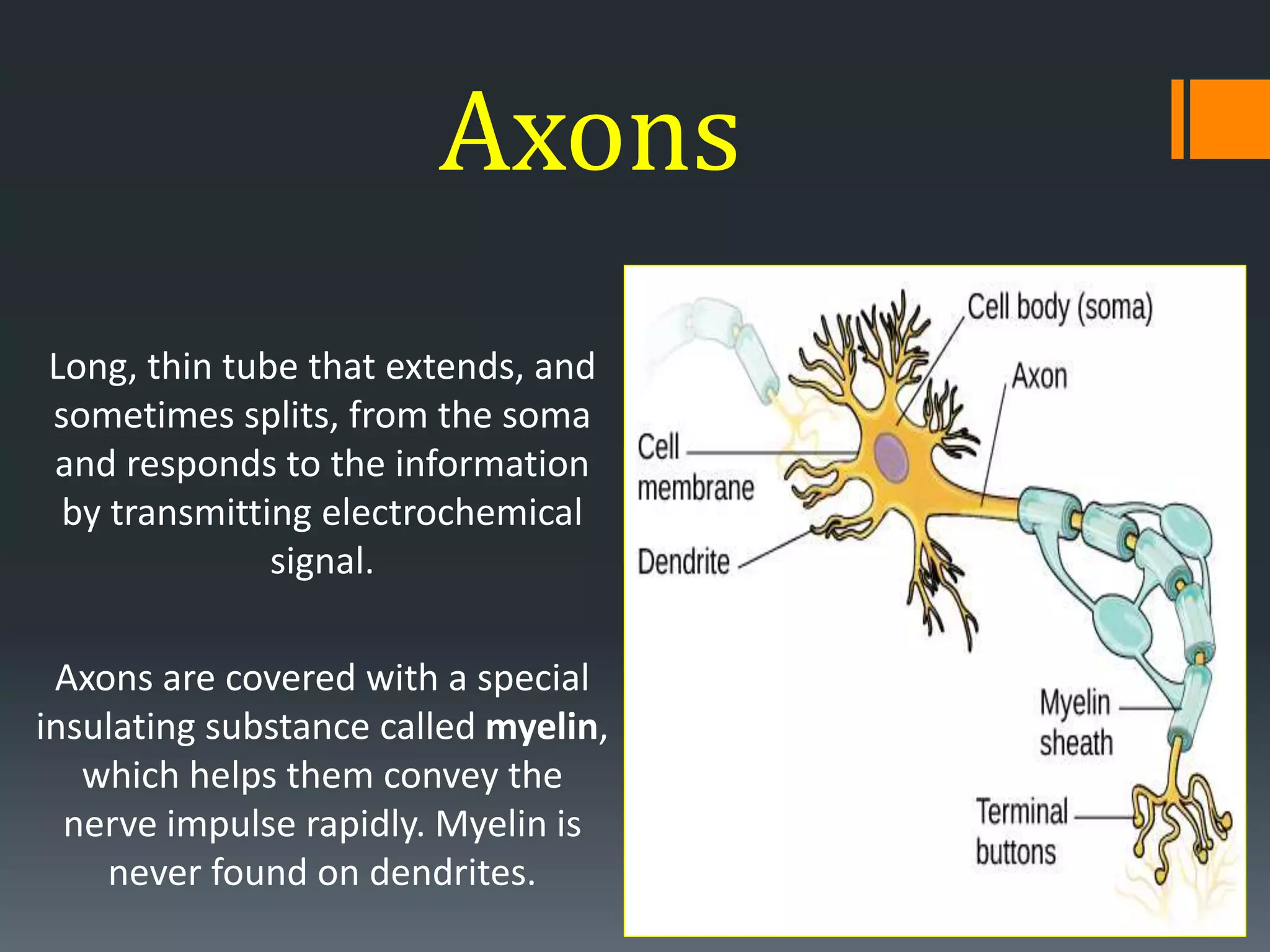
Axons
Long, thin tube that extends, and
sometimes splits, from the soma
and responds to the information
by transmitting electrochemical
signal.
Axons are covered with a special
insulating substance called myelin,
which helps them convey the
nerve impulse rapidly. Myelin is
never found on dendrites.
Terminal Buttons
Terminal buttons /
Synapse – very small
gap, serving as juncture
between neurons.
It is where electrical
transfer activity occurs
between neurons.
Myelin
A white fatty substance
that surrounds some of the
axons
Insulates and protects
axons from electrical
interferences by other
neurons
Also speeds up the
conduction of information
Present in longer axons
Speed of Neuron Firing
By acting as an electrical
insulator, myelin greatly speeds
up action potential conduction
For example, whereas
unmyelinated axon conduction
velocities range from about 0.5
to 10
meters/second, myelinated axon
s can conduct at velocities up to
150 m/s.
Multiple Sclerosis
 An autoimmune disease, is
associated with the degeneration
of myelin sheaths along axons.
 The immune system attacks the
myelin sheath which causes
communication problems between
your brain and the rest of the
body.
 It results in impairments of
coordination and balance.
Alzheimer’s Disease
associated with reduced
efficiency of synaptic
transmission of nerve impulses
a brain disorder that affects
memory, thinking and
behaviour
often diagnosed in people 65
years and older
presented by Dr. Alois
Alzheimer at South West
German society in 1906.
Alzheimer’s Disease
Common symptoms include:
difficulty in remembering
poor judgment
poor decision making
disorientation of mood
time and behavioural changes
confusion with events
difficulty of having a
conversation- sometimes
forgetting which word to use.
Alzheimer’s Disease
Not a normal part of
ageing.
Worsen over time.
Has no current cure,
but treatments for
symptoms are
available and
research continues.
Neuron
Thank you for paying
attention.

Neuron

  • 1.
    Neuron Prepared by: Orlando A.Pistan, MAEd Psychology Instructor
  • 2.
    Neuron Neurons are specific,unique kind of cells in our bodies that carry information through electrical and chemical signals. Neurons are core component of the nervous system, which includes both the brain and the spinal cord.
  • 3.
    Facts: 1. There are100 billion neurons in our brain alone. 2. There are 13, 500, 000 neurons in the spinal cord. 3. The greatest concentration of neurons is in the Neocortex of the brain, which can contain 100,000 neurons per cubic millimeter.
  • 4.
    Neuron uniqueness: 1. Unlikeother body cells, neurons stop reproducing shortly after birth. Because of this, some parts of the brain have more neurons at birth than later in life because neurons die but are not replaced. 2. Neurons have a membrane that is designed to send information to other cells.
  • 5.
    Classes of Neuron Sensoryneurons Motor neurons Interneurons
  • 6.
    Sensory Neurons Sensory neuronsget information about what's going on inside and outside of the body and bring that information into the CNS so it can be processed. For instance, if you picked up a hot coal, sensory neurons with endings in your fingertips would convey the information to your CNS that it was really hot.
  • 7.
    Motor Neurons Motor neuronsget information from other neurons and convey commands to your muscles, organs and glands. For instance, if you picked up a hot coal, motor neurons supply signal to the muscles in your fingers would cause your hand to let go.
  • 8.
    Interneurons Interneurons, which are foundonly in the CNS, connect one neuron to another. They receive information from other neurons (either sensory neurons or interneurons) and transmit information to other neurons (either motor neurons or interneurons).
  • 9.
    Interneurons For instance, ifyou picked up a hot coal, the signal from the sensory neurons in your fingertips would travel to interneurons in your spinal cord. Some of these interneurons would signal to the motor neurons controlling your finger muscles (causing you to let go), while others would transmit the signal up the spinal cord to neurons in the brain, where it would be perceived as pain.
  • 10.
    Parts of theNeuron Soma Dendrites Axon Terminal button Myelin
  • 11.
    Soma Contains the nucleusof the cell. The cell body (soma) is the factory of the neuron. It produces all the proteins for the dendrites, axons and synaptic terminals.
  • 12.
    Dendrites Branchlike structures that receiveinformation from other neurons.
  • 13.
    Axons Long, thin tubethat extends, and sometimes splits, from the soma and responds to the information by transmitting electrochemical signal. Axons are covered with a special insulating substance called myelin, which helps them convey the nerve impulse rapidly. Myelin is never found on dendrites.
  • 14.
    Terminal Buttons Terminal buttons/ Synapse – very small gap, serving as juncture between neurons. It is where electrical transfer activity occurs between neurons.
  • 15.
    Myelin A white fattysubstance that surrounds some of the axons Insulates and protects axons from electrical interferences by other neurons Also speeds up the conduction of information Present in longer axons
  • 16.
    Speed of NeuronFiring By acting as an electrical insulator, myelin greatly speeds up action potential conduction For example, whereas unmyelinated axon conduction velocities range from about 0.5 to 10 meters/second, myelinated axon s can conduct at velocities up to 150 m/s.
  • 17.
    Multiple Sclerosis  Anautoimmune disease, is associated with the degeneration of myelin sheaths along axons.  The immune system attacks the myelin sheath which causes communication problems between your brain and the rest of the body.  It results in impairments of coordination and balance.
  • 18.
    Alzheimer’s Disease associated withreduced efficiency of synaptic transmission of nerve impulses a brain disorder that affects memory, thinking and behaviour often diagnosed in people 65 years and older presented by Dr. Alois Alzheimer at South West German society in 1906.
  • 19.
    Alzheimer’s Disease Common symptomsinclude: difficulty in remembering poor judgment poor decision making disorientation of mood time and behavioural changes confusion with events difficulty of having a conversation- sometimes forgetting which word to use.
  • 20.
    Alzheimer’s Disease Not anormal part of ageing. Worsen over time. Has no current cure, but treatments for symptoms are available and research continues.
  • 21.
    Neuron Thank you forpaying attention.