Machine Learning and Neural Networks as  Extended Mind Sarah Stewart – Philosophy of Mind March 2011
Outline Caution:  “Work in Progress” Objective:  Neural Networks and Machine Learning as examples of Extended Mind in AI What are neural networks? How do machines “learn”? How do Neural Networks exemplify Extended Mind? Implications for Hard AI Argument… Questions and Discussion…
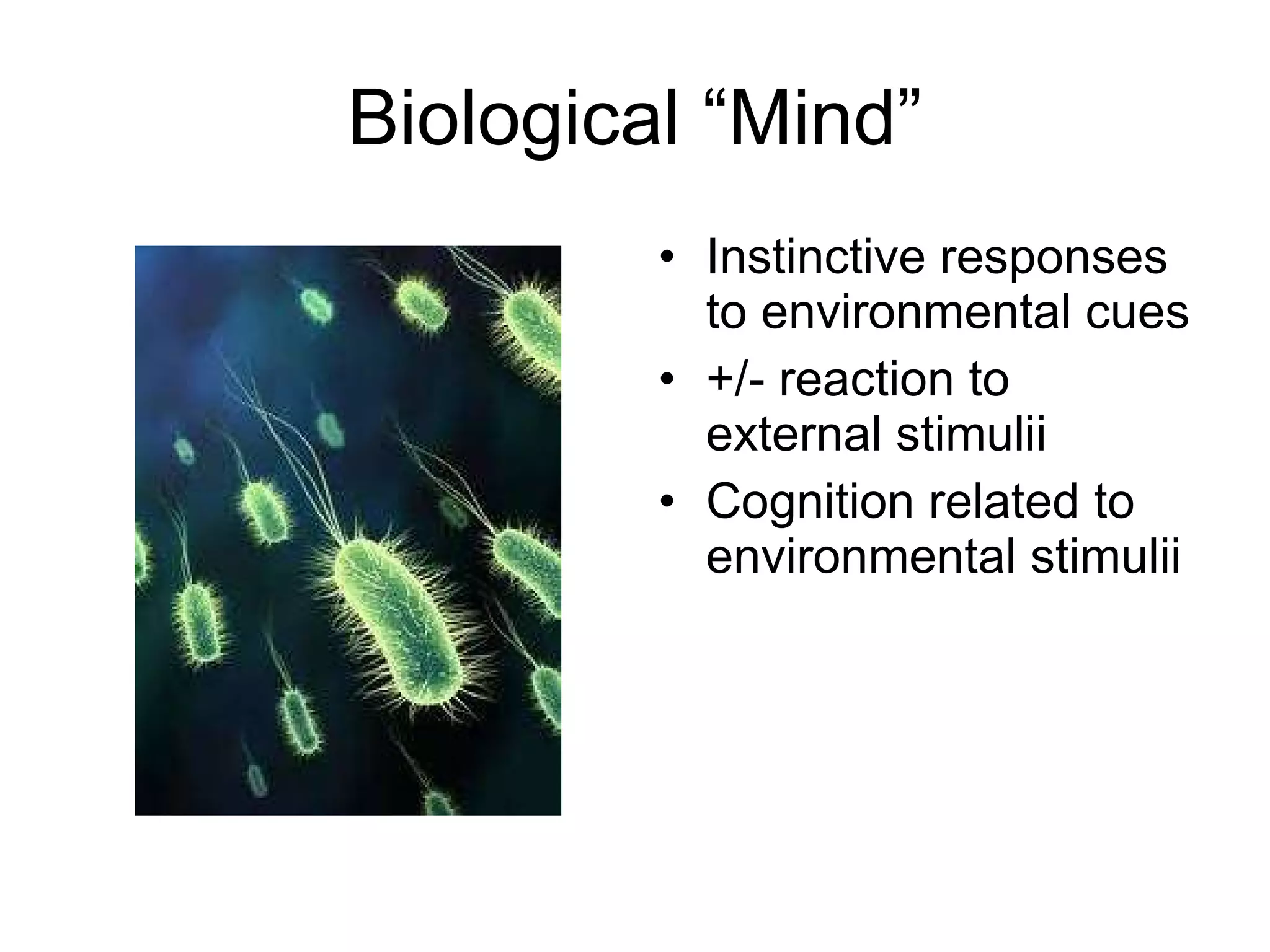
Biological “Mind” Instinctive responses to environmental cues +/- reaction to external stimulii Cognition related to environmental stimulii
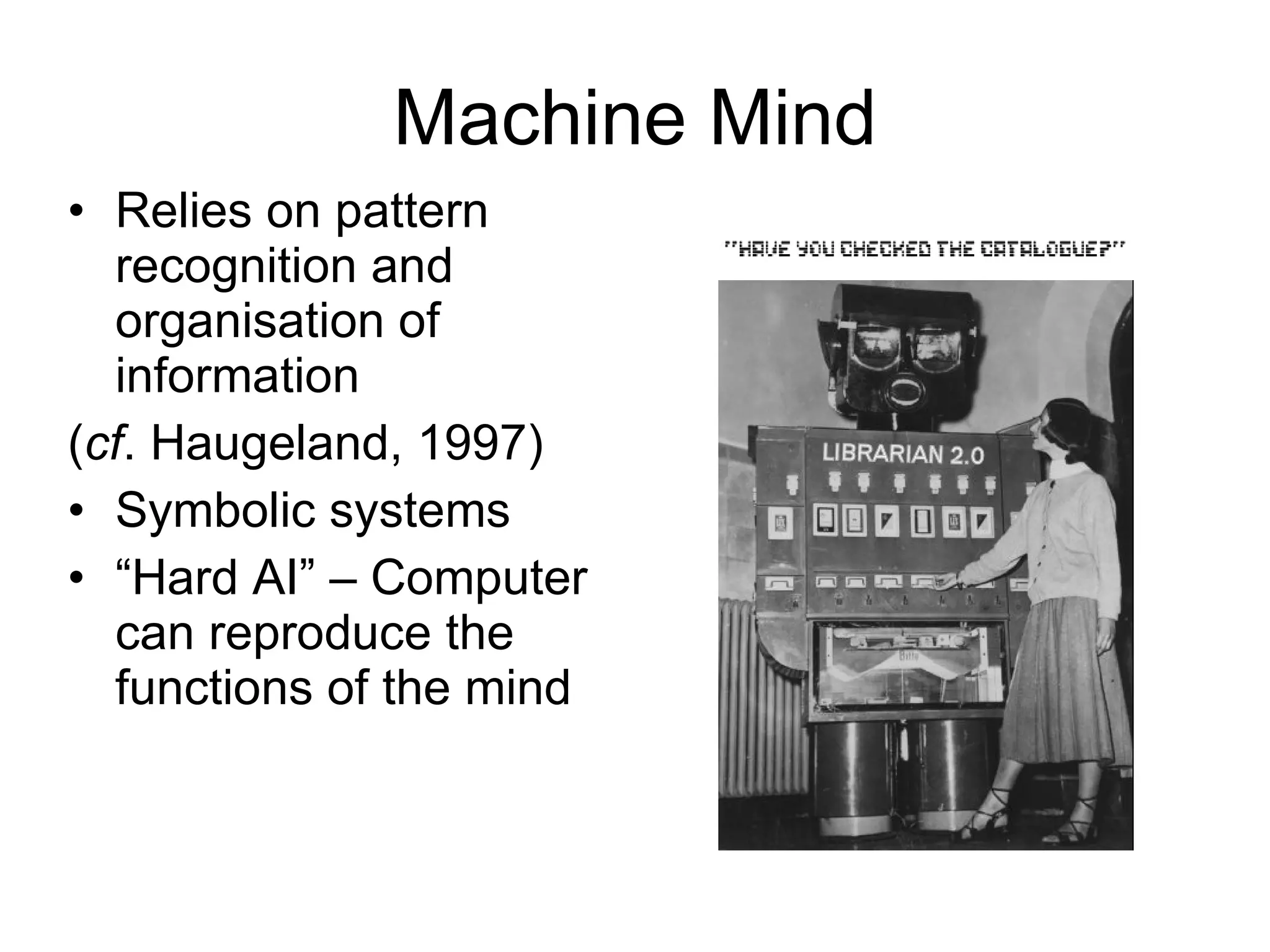
Machine Mind Relies on pattern recognition and organisation of information  ( cf . Haugeland, 1997) Symbolic systems “ Hard AI” – Computer can reproduce the functions of the mind
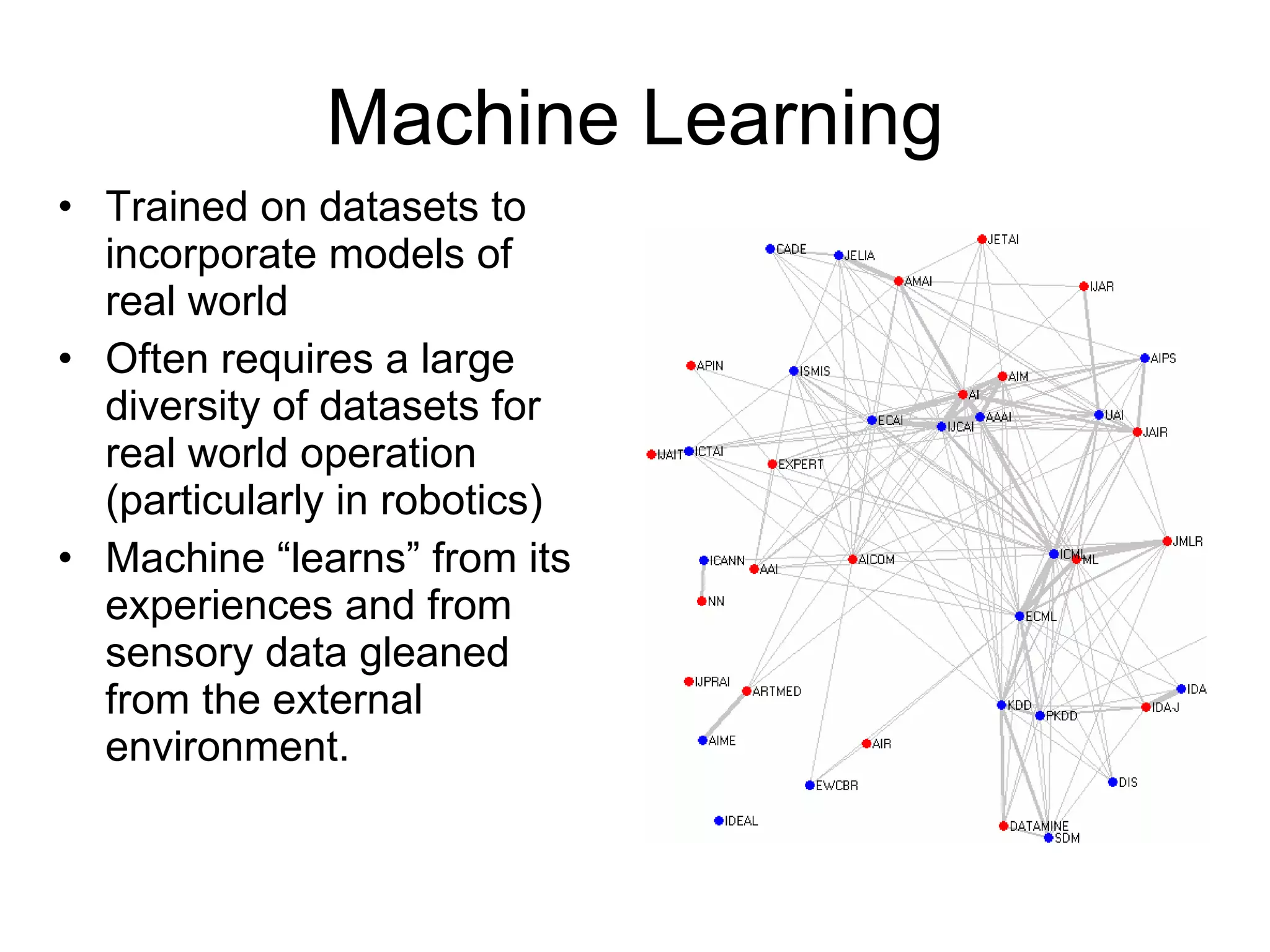
Machine Learning Trained on datasets to incorporate models of real world Often requires a large diversity of datasets for real world operation (particularly in robotics) Machine “learns” from its experiences and from sensory data gleaned from the external environment.
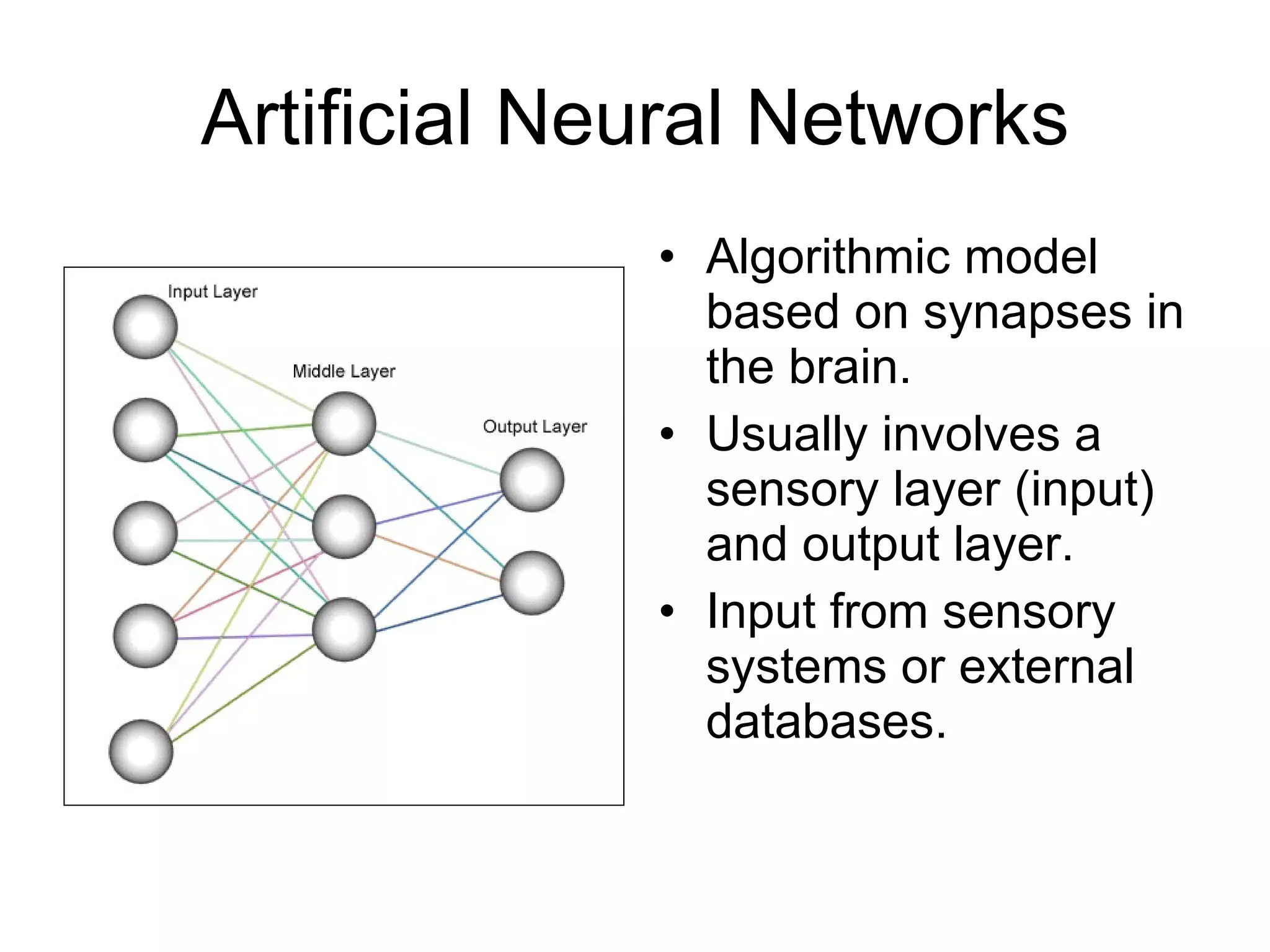
Artificial Neural Networks Algorithmic model based on synapses in the brain. Usually involves a sensory layer (input) and output layer. Input from sensory systems or external databases.
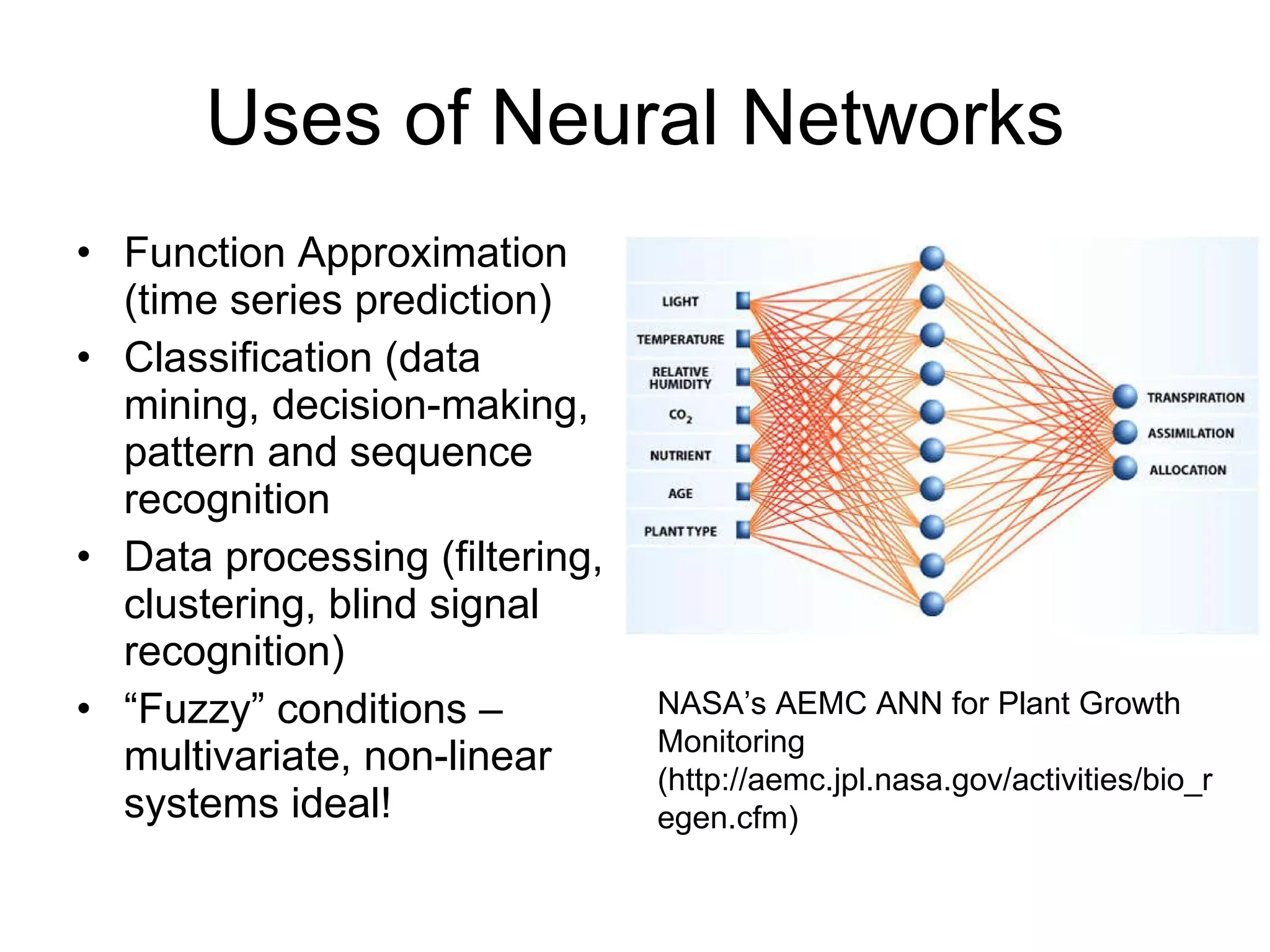
Uses of Neural Networks Function Approximation (time series prediction) Classification (data mining, decision-making, pattern and sequence recognition Data processing (filtering, clustering, blind signal recognition) “ Fuzzy” conditions – multivariate, non-linear systems ideal! NASA’s AEMC ANN for Plant Growth  Monitoring (http://aemc.jpl.nasa.gov/activities/bio_regen.cfm)
Extended Mind ( cf . Clark and Chalmers, 1998) Integration/coupling of mind-body and external environment External environment becomes part of cognitive mind, integrated with the self –  Active Externalism Criteria: external objects function with same purpose as internal thoughts
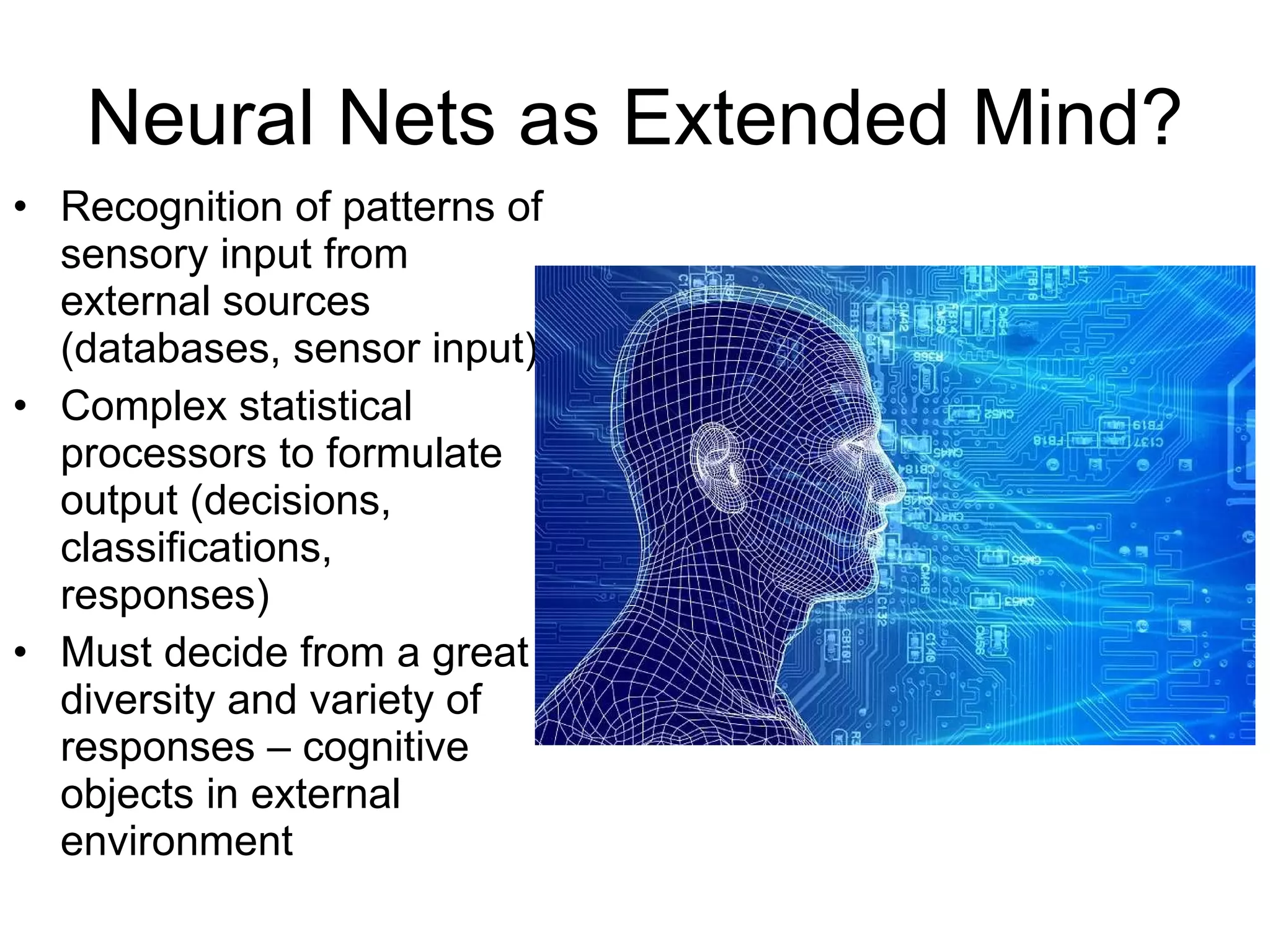
Neural Nets as Extended Mind? Recognition of patterns of sensory input from external sources (databases, sensor input) Complex statistical processors to formulate output (decisions, classifications, responses) Must decide from a great diversity and variety of responses – cognitive objects in external environment
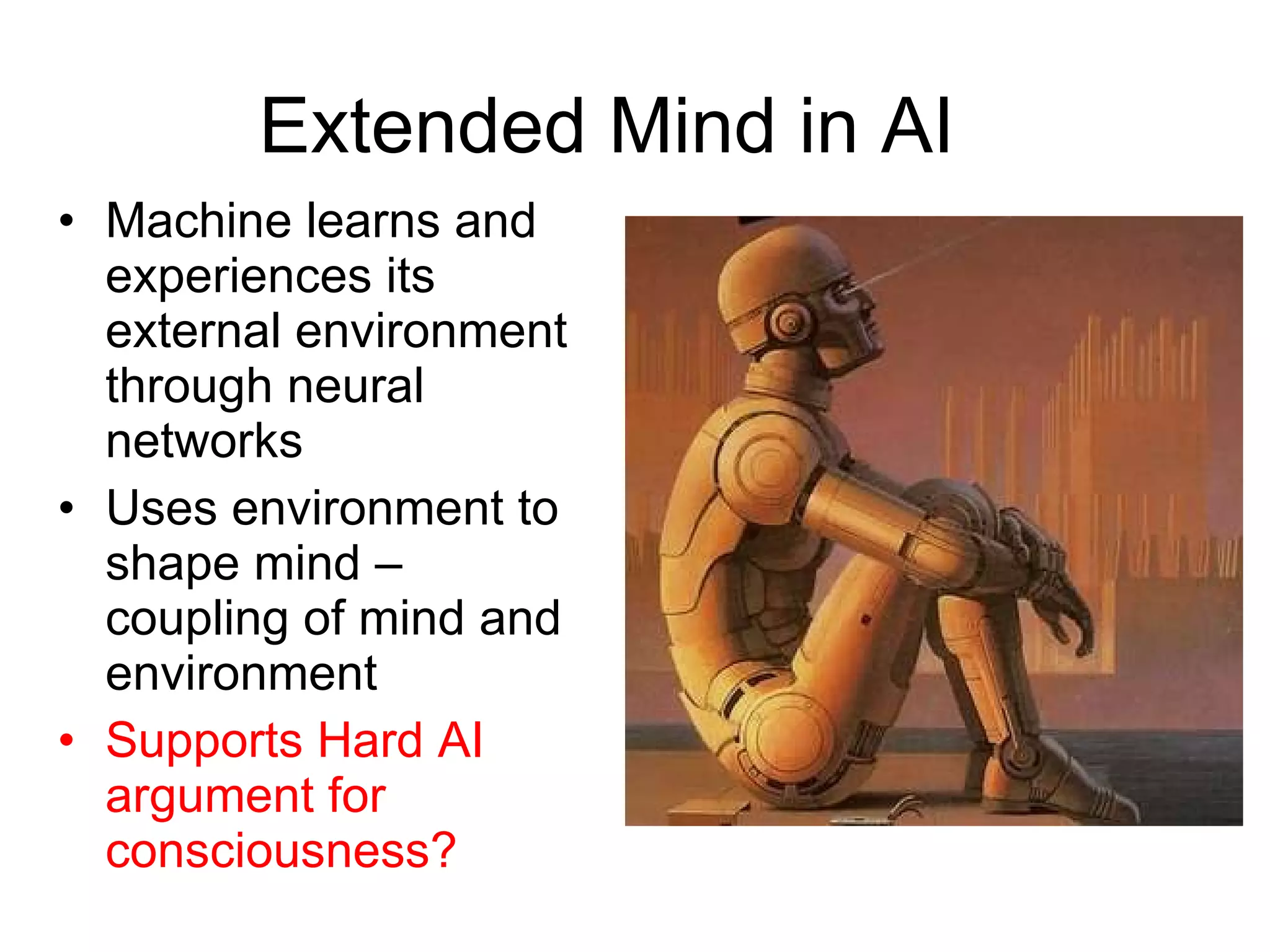
Extended Mind in AI Machine learns and experiences its external environment through neural networks Uses environment to shape mind – coupling of mind and environment Supports Hard AI argument for consciousness?

Neural Networks, Machine Learning and Extended Mind

  • 1.
    Machine Learning andNeural Networks as Extended Mind Sarah Stewart – Philosophy of Mind March 2011
  • 2.
    Outline Caution: “Work in Progress” Objective: Neural Networks and Machine Learning as examples of Extended Mind in AI What are neural networks? How do machines “learn”? How do Neural Networks exemplify Extended Mind? Implications for Hard AI Argument… Questions and Discussion…
  • 3.
    Biological “Mind” Instinctiveresponses to environmental cues +/- reaction to external stimulii Cognition related to environmental stimulii
  • 4.
    Machine Mind Relieson pattern recognition and organisation of information ( cf . Haugeland, 1997) Symbolic systems “ Hard AI” – Computer can reproduce the functions of the mind
  • 5.
    Machine Learning Trainedon datasets to incorporate models of real world Often requires a large diversity of datasets for real world operation (particularly in robotics) Machine “learns” from its experiences and from sensory data gleaned from the external environment.
  • 6.
    Artificial Neural NetworksAlgorithmic model based on synapses in the brain. Usually involves a sensory layer (input) and output layer. Input from sensory systems or external databases.
  • 7.
    Uses of NeuralNetworks Function Approximation (time series prediction) Classification (data mining, decision-making, pattern and sequence recognition Data processing (filtering, clustering, blind signal recognition) “ Fuzzy” conditions – multivariate, non-linear systems ideal! NASA’s AEMC ANN for Plant Growth Monitoring (http://aemc.jpl.nasa.gov/activities/bio_regen.cfm)
  • 8.
    Extended Mind (cf . Clark and Chalmers, 1998) Integration/coupling of mind-body and external environment External environment becomes part of cognitive mind, integrated with the self – Active Externalism Criteria: external objects function with same purpose as internal thoughts
  • 9.
    Neural Nets asExtended Mind? Recognition of patterns of sensory input from external sources (databases, sensor input) Complex statistical processors to formulate output (decisions, classifications, responses) Must decide from a great diversity and variety of responses – cognitive objects in external environment
  • 10.
    Extended Mind inAI Machine learns and experiences its external environment through neural networks Uses environment to shape mind – coupling of mind and environment Supports Hard AI argument for consciousness?