Network Technology

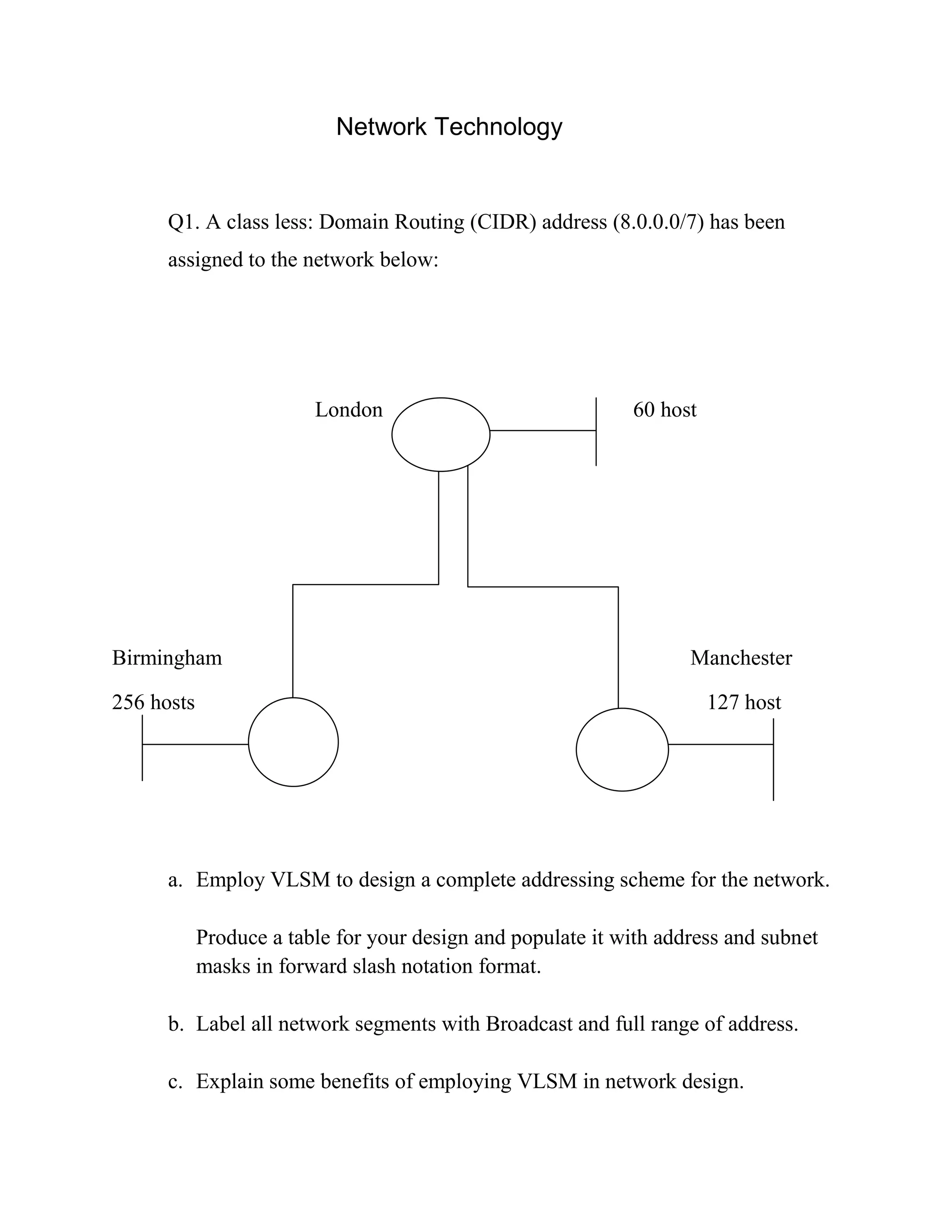
Q1. A class less: Domain Routing (CIDR) address (8.0.0.0/7) has been
assigned to the network below:

London

Birmingham
256 hosts

60 host

Manchester
127 host

a. Employ VLSM to design a complete addressing scheme for the network.
Produce a table for your design and populate it with address and subnet
masks in forward slash notation format.
b. Label all network segments with Broadcast and full range of address.
c. Explain some benefits of employing VLSM in network design.
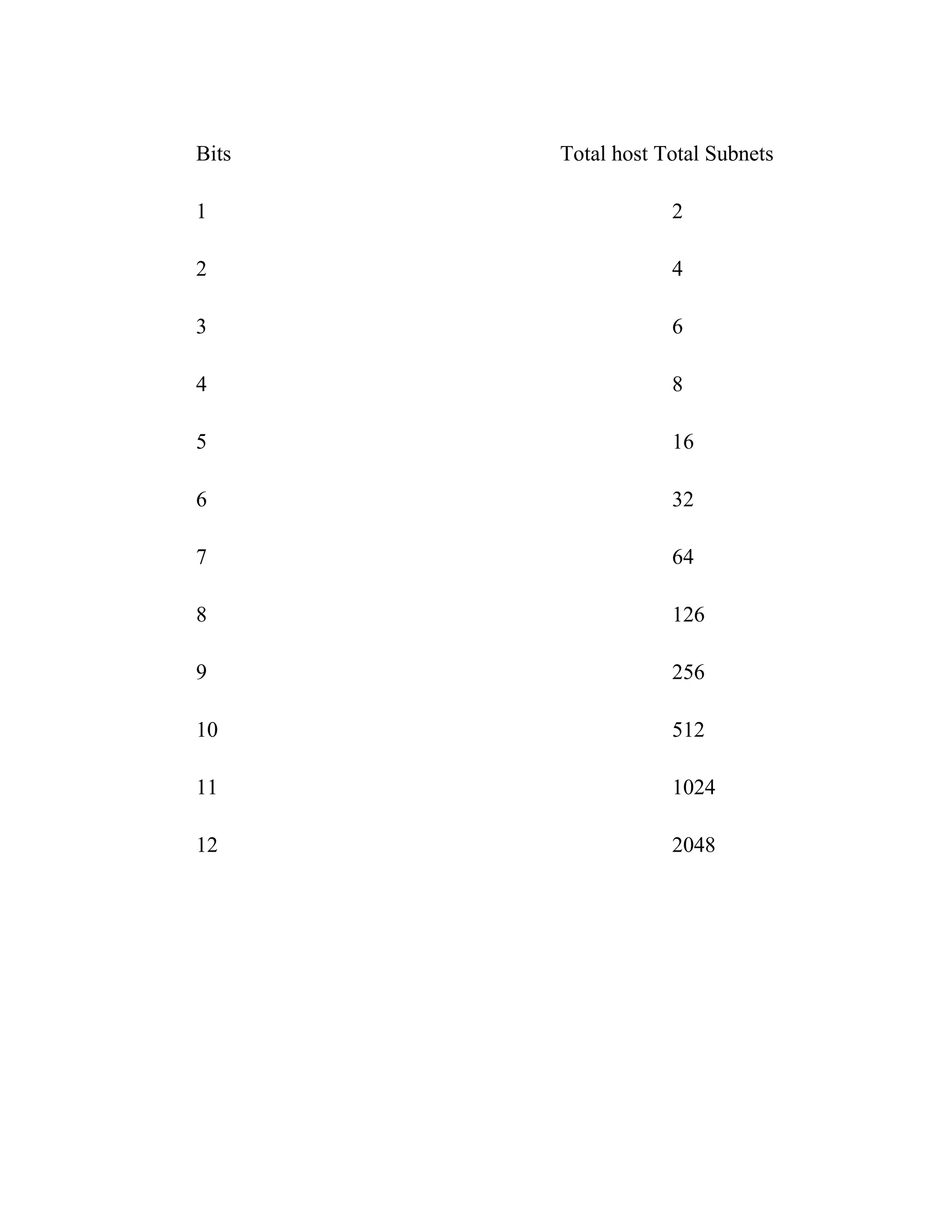
Bits

Total host Total Subnets

1

2

2

4

3

6

4

8

5

16

6

32

7

64

8

126

9

256

10

512

11

1024

12

2048
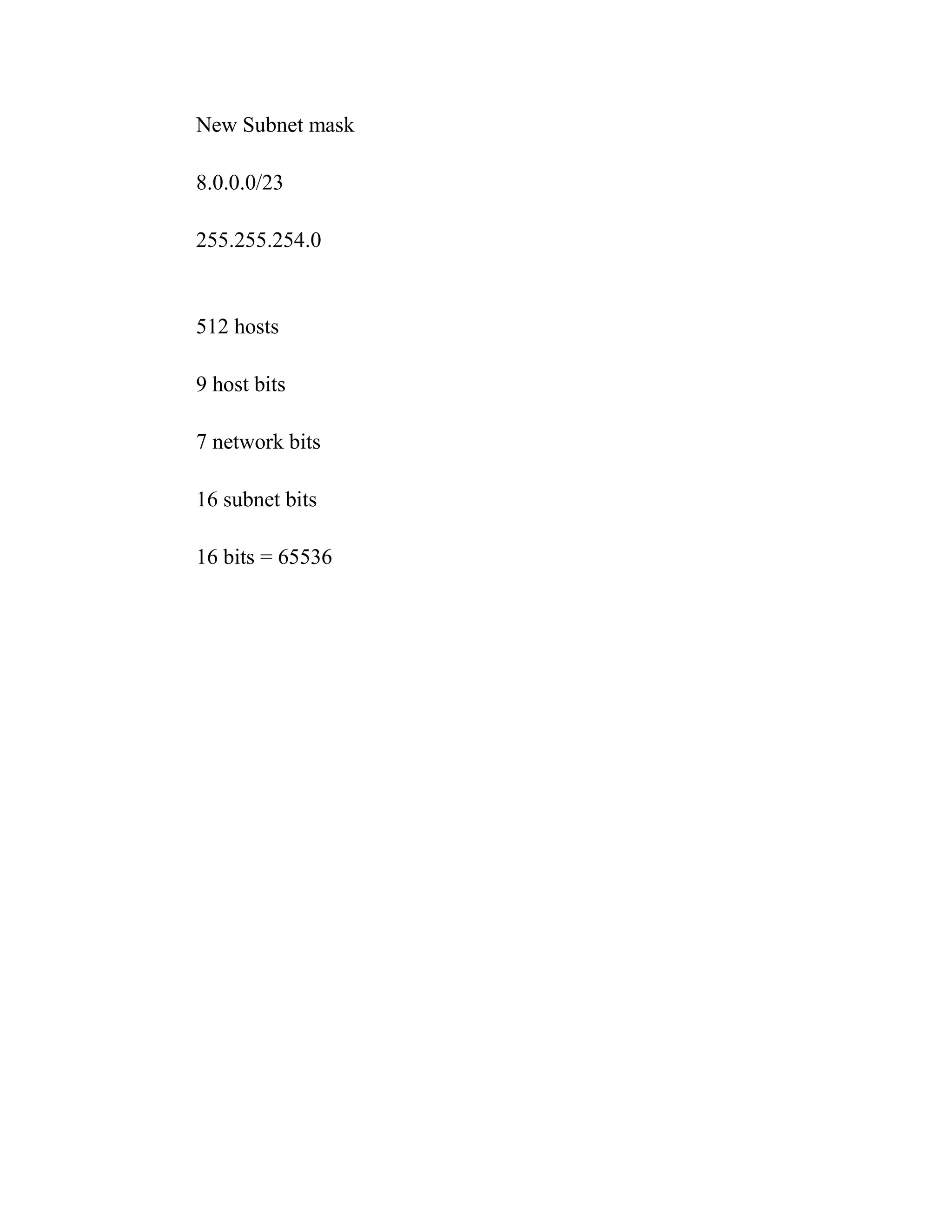
New Subnet mask
8.0.0.0/23
255.255.254.0

512 hosts
9 host bits
7 network bits
16 subnet bits
16 bits = 65536
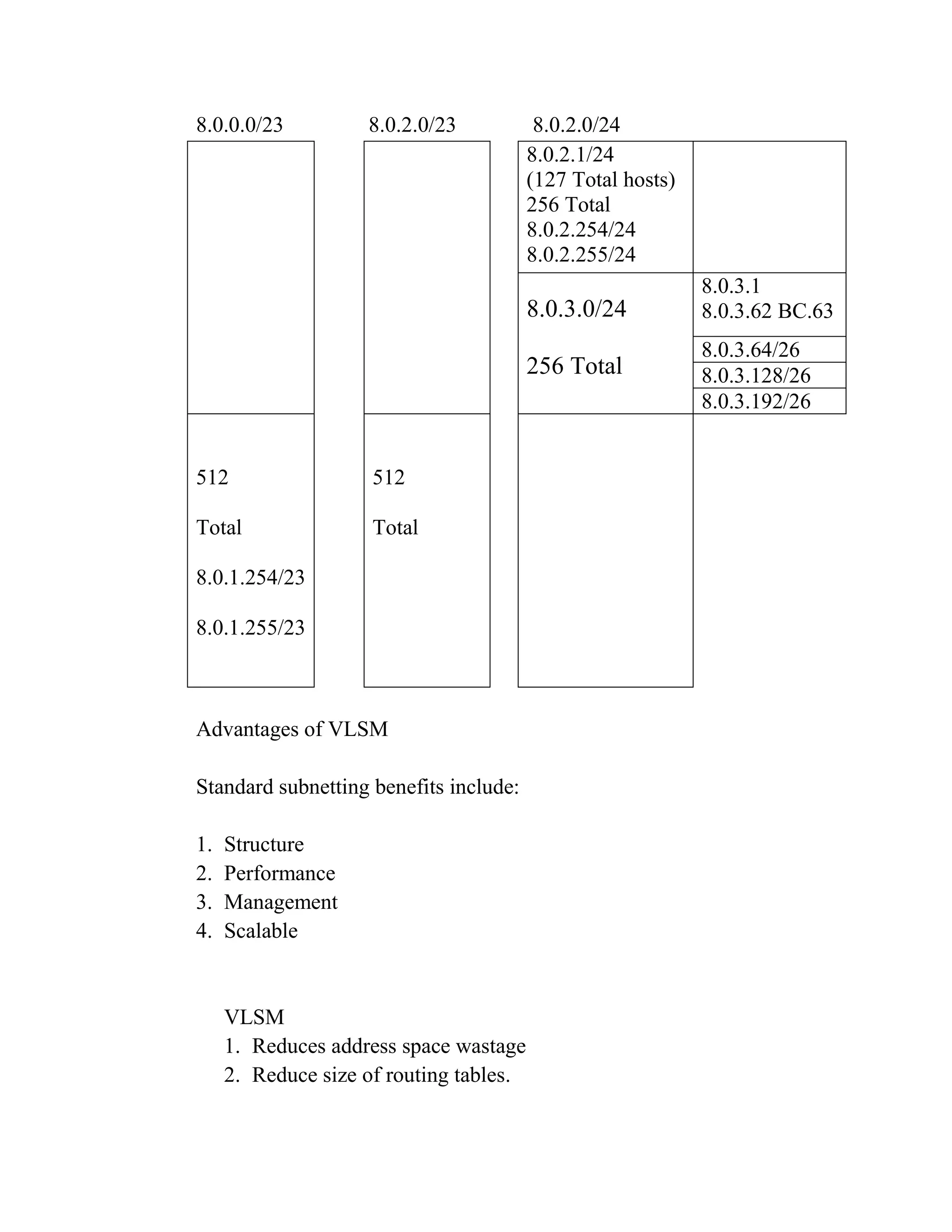
8.0.0.0/23

8.0.2.0/23

8.0.2.0/24
8.0.2.1/24
(127 Total hosts)
256 Total
8.0.2.254/24
8.0.2.255/24

8.0.3.0/24
256 Total

512

512

Total

Total

8.0.1.254/23
8.0.1.255/23

Advantages of VLSM
Standard subnetting benefits include:
1.
2.
3.
4.

Structure
Performance
Management
Scalable

VLSM
1. Reduces address space wastage
2. Reduce size of routing tables.

8.0.3.1
8.0.3.62 BC.63
8.0.3.64/26
8.0.3.128/26
8.0.3.192/26
Q2. Determine the route to a destination network given that packets to
the remote network pass through two fast Ethernet ports. The delay of a
fast Ethernet port is 100MS

256 X

[

107/105 + 200/10

]

256X120

= 30720

Show IP route
C

192.168.1.0/24 is a directly connected Fast Ethernet 0/0

C

192.168.3.0/24 is a directly connected Fast Ethernet 0/1

D

192.168.2.0/24 [90/30720] via is a directly connected Fast
Ethernet 0/0

EIGRP

AA Metric = Administrative distance

a. Determine the dynamic routing protocol active on the router.
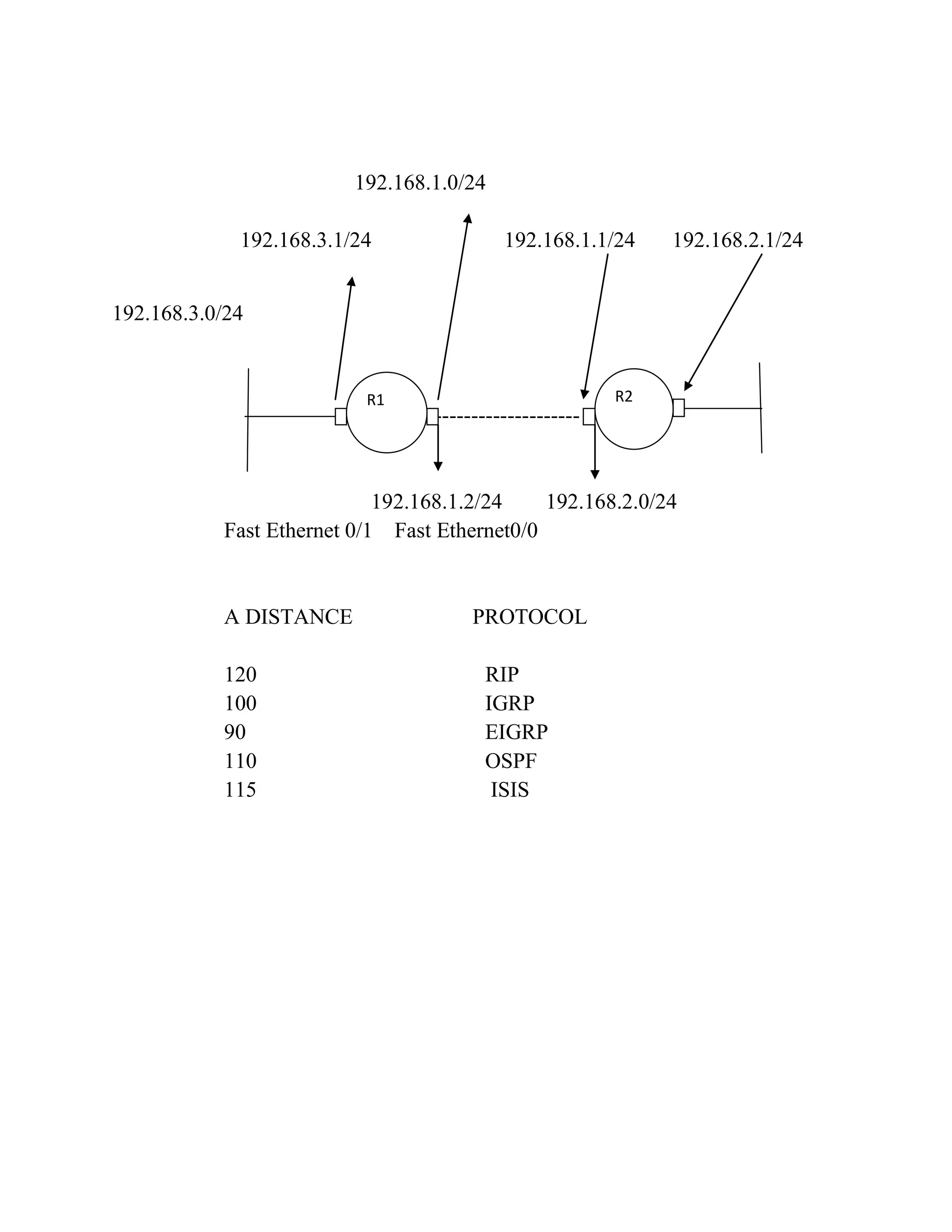
b. Sketch the network topology using the information in the table.
Label all network segments with their network address. Indicate
suitable IP addresses for all interfaces on connected networks.
192.168.1.0/24
192.168.3.1/24

192.168.1.1/24

192.168.2.1/24

192.168.3.0/24

R1

R2

----------------------

192.168.1.2/24
192.168.2.0/24
Fast Ethernet 0/1 Fast Ethernet0/0

A DISTANCE
120
100
90
110
115

PROTOCOL
RIP
IGRP
EIGRP
OSPF
ISIS
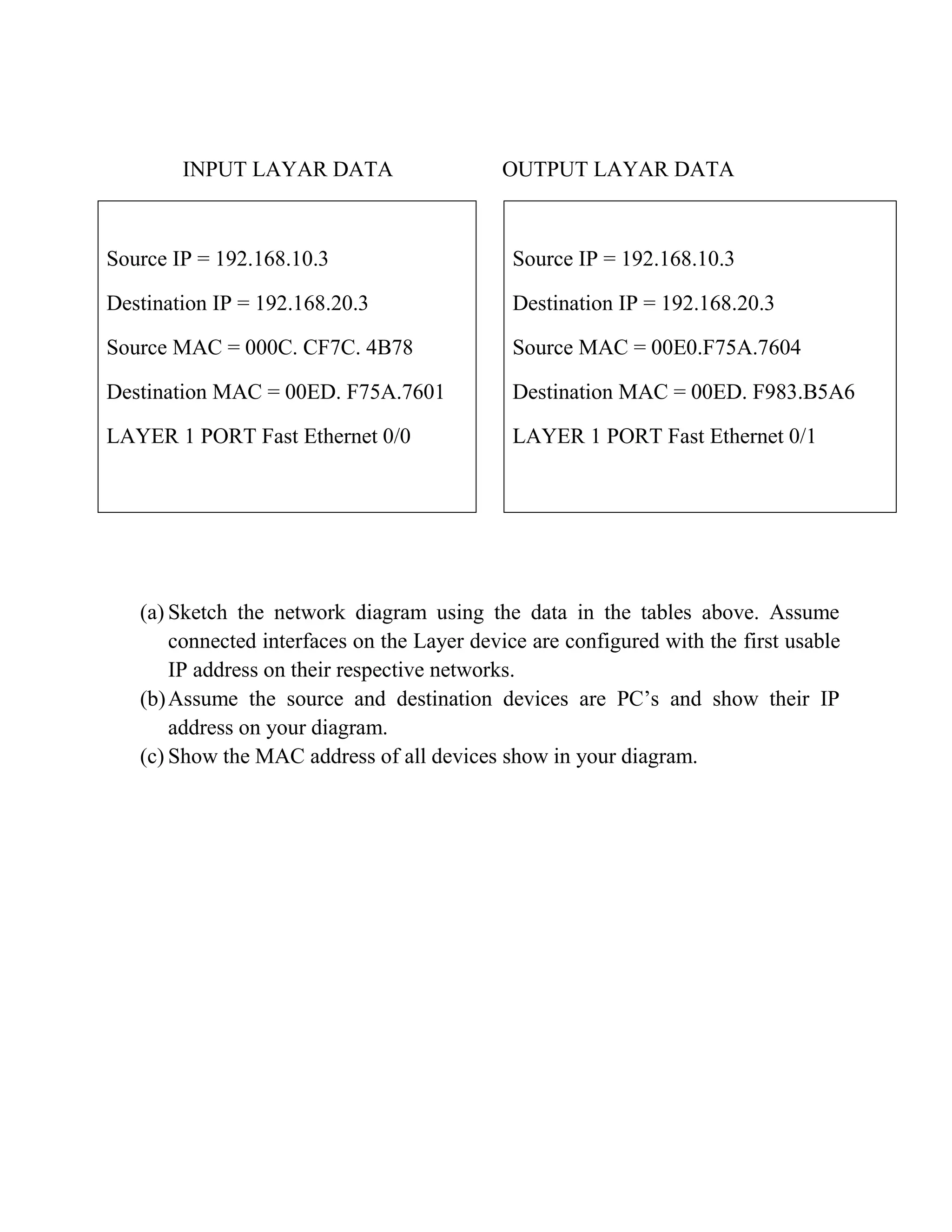
INPUT LAYAR DATA

OUTPUT LAYAR DATA

Source IP = 192.168.10.3

Source IP = 192.168.10.3

Destination IP = 192.168.20.3

Destination IP = 192.168.20.3

Source MAC = 000C. CF7C. 4B78

Source MAC = 00E0.F75A.7604

Destination MAC = 00ED. F75A.7601

Destination MAC = 00ED. F983.B5A6

LAYER 1 PORT Fast Ethernet 0/0

LAYER 1 PORT Fast Ethernet 0/1

(a) Sketch the network diagram using the data in the tables above. Assume
connected interfaces on the Layer device are configured with the first usable
IP address on their respective networks.
(b) Assume the source and destination devices are PC’s and show their IP
address on your diagram.
(c) Show the MAC address of all devices show in your diagram.
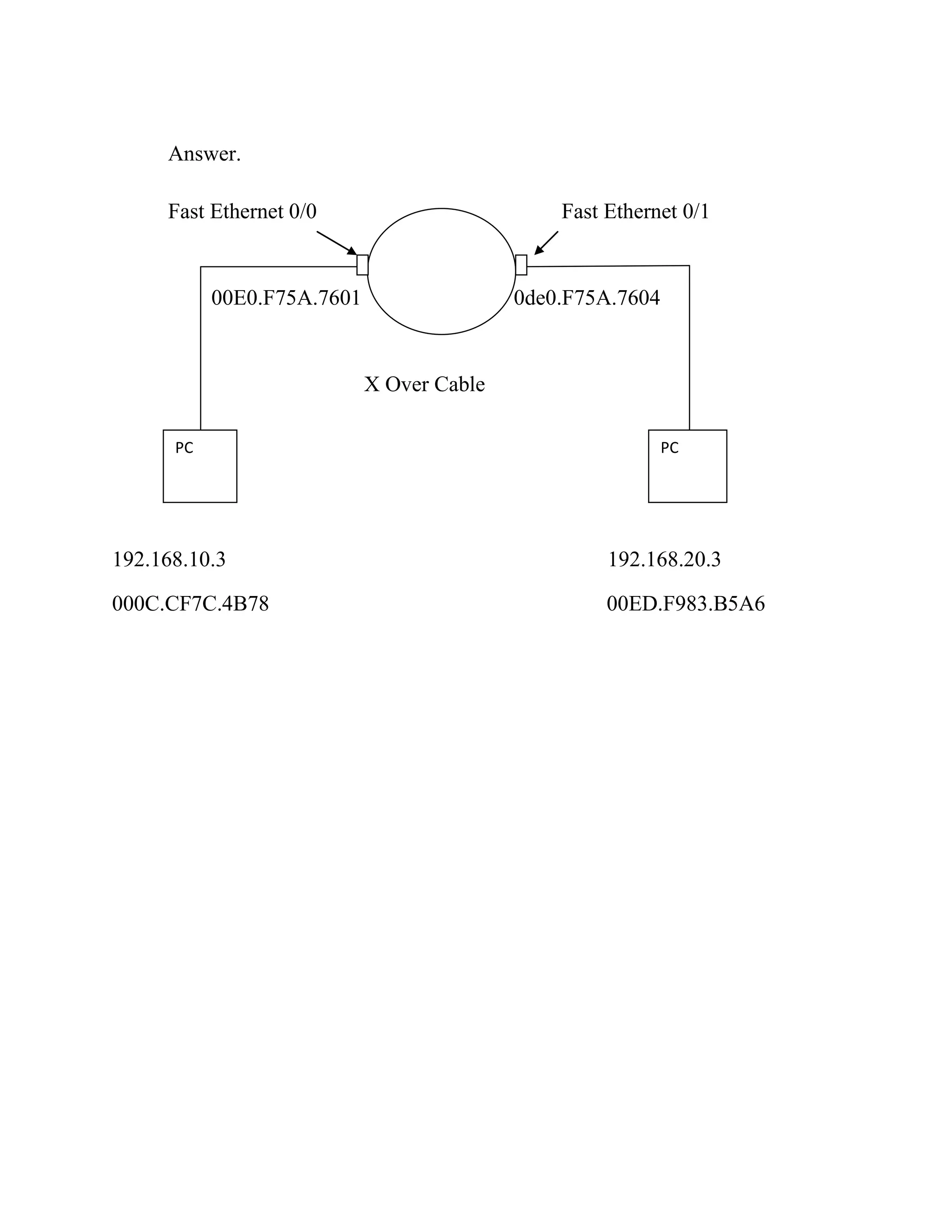
Answer.
Fast Ethernet 0/0

Fast Ethernet 0/1

00E0.F75A.7601

0de0.F75A.7604

X Over Cable
PC

PC

192.168.10.3

192.168.20.3

000C.CF7C.4B78

00ED.F983.B5A6

Network technology Paper 2

  • 1.
    Network Technology Q1. Aclass less: Domain Routing (CIDR) address (8.0.0.0/7) has been assigned to the network below: London Birmingham 256 hosts 60 host Manchester 127 host a. Employ VLSM to design a complete addressing scheme for the network. Produce a table for your design and populate it with address and subnet masks in forward slash notation format. b. Label all network segments with Broadcast and full range of address. c. Explain some benefits of employing VLSM in network design.
  • 2.
    Bits Total host TotalSubnets 1 2 2 4 3 6 4 8 5 16 6 32 7 64 8 126 9 256 10 512 11 1024 12 2048
  • 3.
    New Subnet mask 8.0.0.0/23 255.255.254.0 512hosts 9 host bits 7 network bits 16 subnet bits 16 bits = 65536
  • 4.
    8.0.0.0/23 8.0.2.0/23 8.0.2.0/24 8.0.2.1/24 (127 Total hosts) 256Total 8.0.2.254/24 8.0.2.255/24 8.0.3.0/24 256 Total 512 512 Total Total 8.0.1.254/23 8.0.1.255/23 Advantages of VLSM Standard subnetting benefits include: 1. 2. 3. 4. Structure Performance Management Scalable VLSM 1. Reduces address space wastage 2. Reduce size of routing tables. 8.0.3.1 8.0.3.62 BC.63 8.0.3.64/26 8.0.3.128/26 8.0.3.192/26
  • 5.
    Q2. Determine theroute to a destination network given that packets to the remote network pass through two fast Ethernet ports. The delay of a fast Ethernet port is 100MS 256 X [ 107/105 + 200/10 ] 256X120 = 30720 Show IP route C 192.168.1.0/24 is a directly connected Fast Ethernet 0/0 C 192.168.3.0/24 is a directly connected Fast Ethernet 0/1 D 192.168.2.0/24 [90/30720] via is a directly connected Fast Ethernet 0/0 EIGRP AA Metric = Administrative distance a. Determine the dynamic routing protocol active on the router. b. Sketch the network topology using the information in the table. Label all network segments with their network address. Indicate suitable IP addresses for all interfaces on connected networks.
  • 6.
  • 7.
    INPUT LAYAR DATA OUTPUTLAYAR DATA Source IP = 192.168.10.3 Source IP = 192.168.10.3 Destination IP = 192.168.20.3 Destination IP = 192.168.20.3 Source MAC = 000C. CF7C. 4B78 Source MAC = 00E0.F75A.7604 Destination MAC = 00ED. F75A.7601 Destination MAC = 00ED. F983.B5A6 LAYER 1 PORT Fast Ethernet 0/0 LAYER 1 PORT Fast Ethernet 0/1 (a) Sketch the network diagram using the data in the tables above. Assume connected interfaces on the Layer device are configured with the first usable IP address on their respective networks. (b) Assume the source and destination devices are PC’s and show their IP address on your diagram. (c) Show the MAC address of all devices show in your diagram.
  • 8.
    Answer. Fast Ethernet 0/0 FastEthernet 0/1 00E0.F75A.7601 0de0.F75A.7604 X Over Cable PC PC 192.168.10.3 192.168.20.3 000C.CF7C.4B78 00ED.F983.B5A6