NETWORK DEVICES
HUB
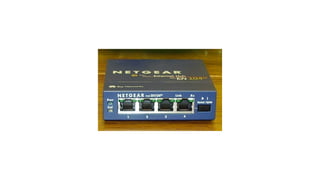
• A hub serves as a central point to which all of the hosts in a network
connect to. A Hub is an OSI Layer 1 device and has no concept of
Ethernet frames or addressing. It simply receives a signal from one
port and sends it out to all other ports.
• Today, hubs are considered obsolete and switches are commonly used
instead.
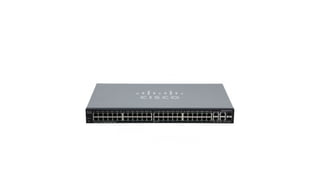
SWITCH
• A switch is used to connect multiple hosts together, but it has many
advantages over a hub. Switch is an OSI Layer 2 device, which means
that it can inspect received traffic and make forwarding decisions.
Each port on a switch is a separate collision domain and can run in a
full duplex mode
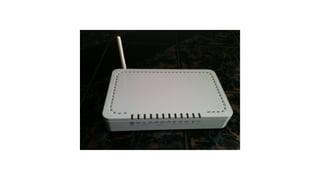
ROUTER
• A router is a device that routes packets from one network to another.
A router is most commonly an OSI Layer 3 device. Routers divide
broadcast domains and have traffic filtering capabilities.
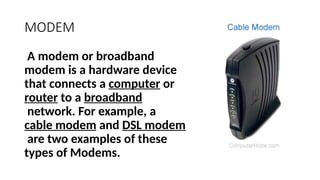
MODEM
A modem or broadband
modem is a hardware device
that connects a computer or
router to a broadband
network. For example, a
cable modem and DSL modem
are two examples of these
types of Modems.
MODEM
a modem is a hardware device that allows a
computer to send and receive information over
telephone lines. When sending a signal, the device
converts ("modulates") digital data to an analog
audio signal, and transmits it over a telephone
line. Similarly, when an analog signal is received,
the modem converts it back ("demodulates" it) to
a digital signal.
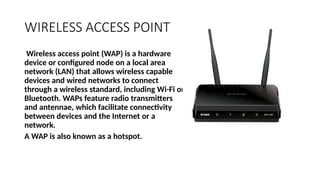
WIRELESS ACCESS POINT
Wireless access point (WAP) is a hardware
device or configured node on a local area
network (LAN) that allows wireless capable
devices and wired networks to connect
through a wireless standard, including Wi-Fi or
Bluetooth. WAPs feature radio transmitters
and antennae, which facilitate connectivity
between devices and the Internet or a
network.
A WAP is also known as a hotspot.
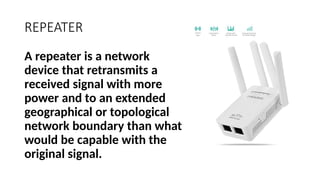
REPEATER
A repeater is a network
device that retransmits a
received signal with more
power and to an extended
geographical or topological
network boundary than what
would be capable with the
original signal.
REPEATER
A repeater is implemented in computer networks to
expand the coverage area of the network,
repropagate a weak or broken signal and or service
remote nodes. Repeaters amplify the received/input
signal to a higher frequency domain so that it is
reusable, scalable and available.
Repeaters are also known as signal boosters.
WIFI
• Wi-Fi is a wireless networking technology that allows devices
such as computers (laptops and desktops), mobile devices
(smart phones and wearables), and other equipment (printers
and video cameras) to interface with the Internet. It allows
these devices--and many more--to exchange information with
one another, creating a network.
• Internet connectivity occurs through a wireless router. When
you access Wi-Fi, you are connecting to a wireless router that
allows your Wi-Fi-compatible devices to interface with the
Internet.

NETWORK DEVICES router switch hub wireless access point.pptx

  • 1.
  • 2.
    HUB • A hubserves as a central point to which all of the hosts in a network connect to. A Hub is an OSI Layer 1 device and has no concept of Ethernet frames or addressing. It simply receives a signal from one port and sends it out to all other ports. • Today, hubs are considered obsolete and switches are commonly used instead.
  • 4.
    SWITCH • A switchis used to connect multiple hosts together, but it has many advantages over a hub. Switch is an OSI Layer 2 device, which means that it can inspect received traffic and make forwarding decisions. Each port on a switch is a separate collision domain and can run in a full duplex mode
  • 6.
    ROUTER • A routeris a device that routes packets from one network to another. A router is most commonly an OSI Layer 3 device. Routers divide broadcast domains and have traffic filtering capabilities.
  • 8.
    MODEM A modem orbroadband modem is a hardware device that connects a computer or router to a broadband network. For example, a cable modem and DSL modem are two examples of these types of Modems.
  • 9.
    MODEM a modem isa hardware device that allows a computer to send and receive information over telephone lines. When sending a signal, the device converts ("modulates") digital data to an analog audio signal, and transmits it over a telephone line. Similarly, when an analog signal is received, the modem converts it back ("demodulates" it) to a digital signal.
  • 10.
    WIRELESS ACCESS POINT Wirelessaccess point (WAP) is a hardware device or configured node on a local area network (LAN) that allows wireless capable devices and wired networks to connect through a wireless standard, including Wi-Fi or Bluetooth. WAPs feature radio transmitters and antennae, which facilitate connectivity between devices and the Internet or a network. A WAP is also known as a hotspot.
  • 11.
    REPEATER A repeater isa network device that retransmits a received signal with more power and to an extended geographical or topological network boundary than what would be capable with the original signal.
  • 12.
    REPEATER A repeater isimplemented in computer networks to expand the coverage area of the network, repropagate a weak or broken signal and or service remote nodes. Repeaters amplify the received/input signal to a higher frequency domain so that it is reusable, scalable and available. Repeaters are also known as signal boosters.
  • 13.
    WIFI • Wi-Fi isa wireless networking technology that allows devices such as computers (laptops and desktops), mobile devices (smart phones and wearables), and other equipment (printers and video cameras) to interface with the Internet. It allows these devices--and many more--to exchange information with one another, creating a network. • Internet connectivity occurs through a wireless router. When you access Wi-Fi, you are connecting to a wireless router that allows your Wi-Fi-compatible devices to interface with the Internet.