
Imtiaz Rahman
SBAC Bank Limited
NETWORK
AUTOMATION (NetDevOps)
with ANSIBLE
writeimtiaz@gmail.com
https://imtiazrahman.com
APRICOT 2018
24 – 28 Feb 2018
Kathmandu, Nepal
APNIC 45
Today’s Talk
1. Devops/NetDevOps ?
2. Why automation ?
3. Tools for automation
4. Why Ansible ?
5. Ansible introduction
6. Ansible Language Basics
7. Ansible encryption decryption
8. How to run
9. SBAC Case (case study)
10. Configuration & Hands on LAB
>devops ?
DevOps
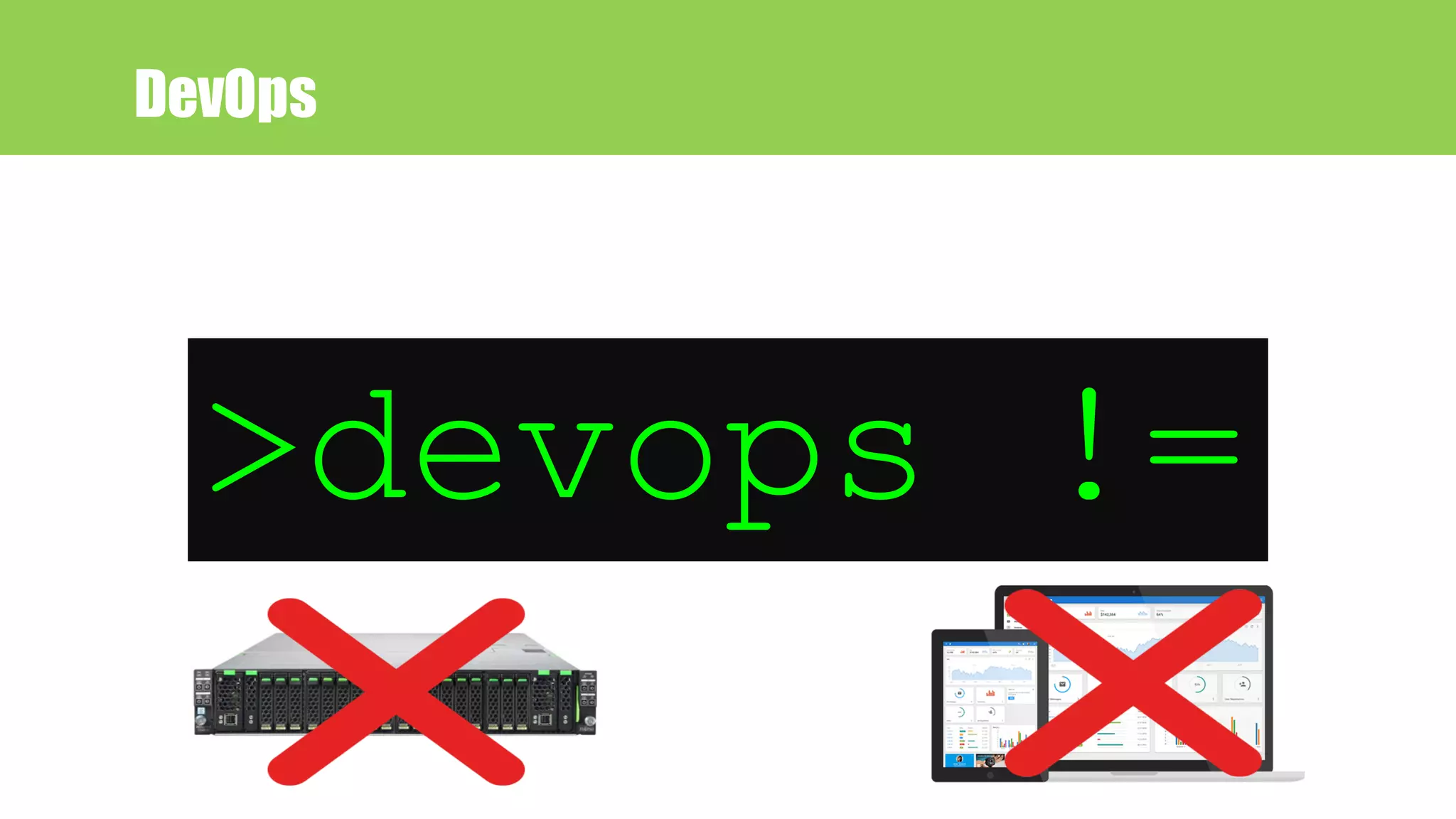
>devops !=
DevOps
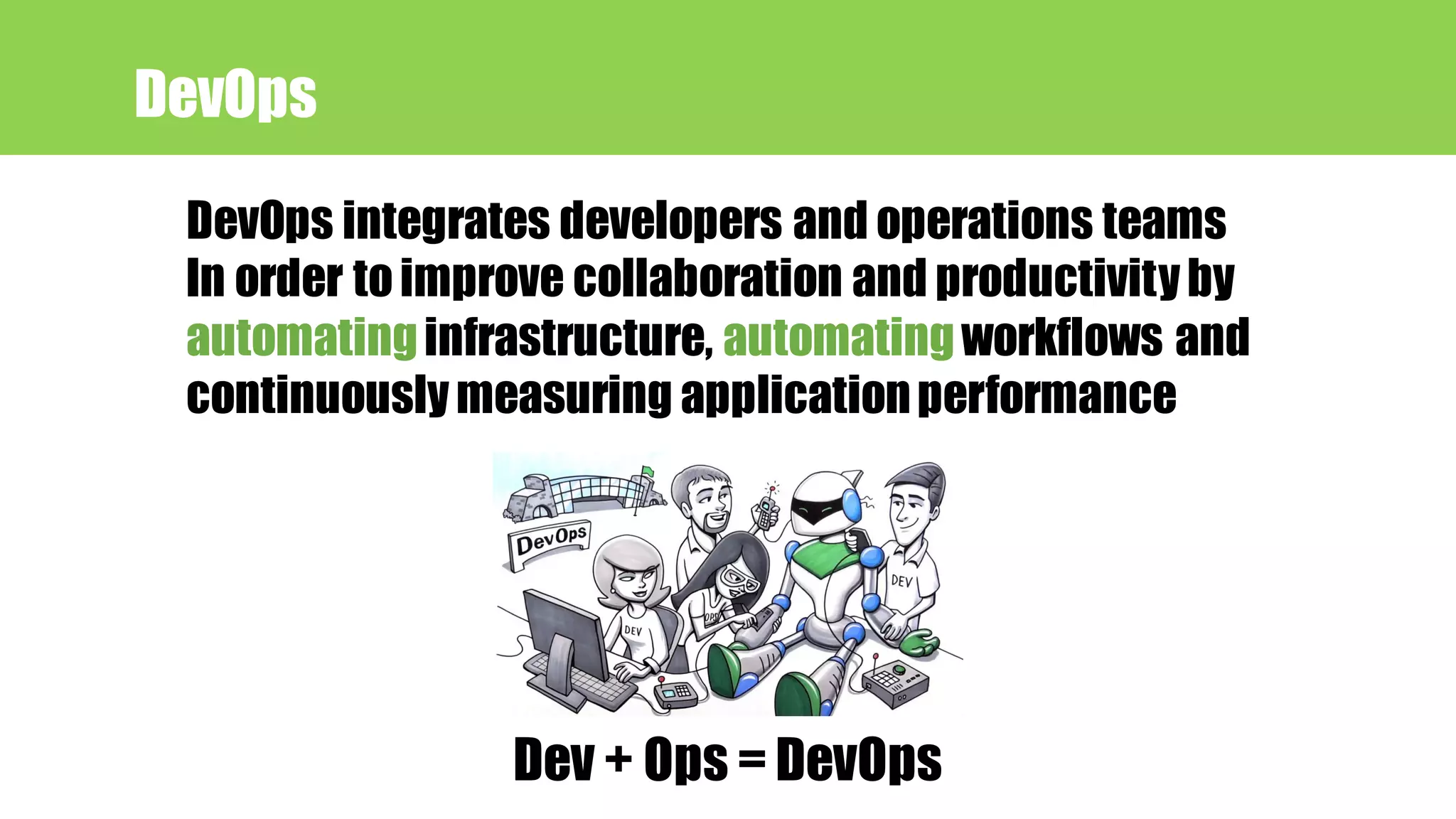
DevOps integrates developers and operations teams
In order toimprove collaboration and productivityby
automatinginfrastructure, automatingworkflows and
continuouslymeasuring applicationperformance
Dev + Ops = DevOps
DevOps
NetDevOps = Networking + DevOps
infrastructure as code
NetDevOps
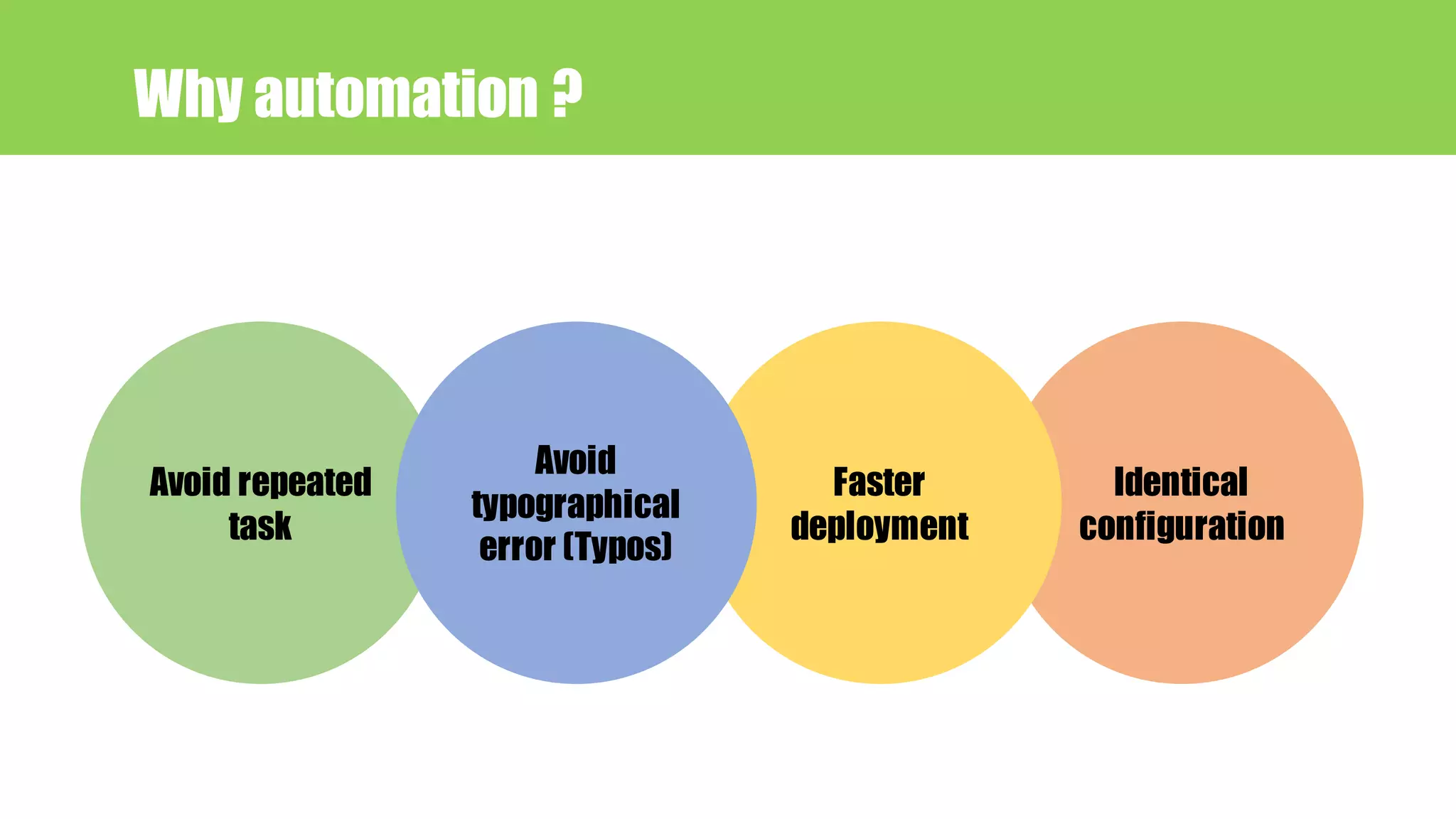
Identical
configuration
Faster
deployment
Why automation ?
Avoid repeated
task
Avoid
typographical
error (Typos)
Tools for automation
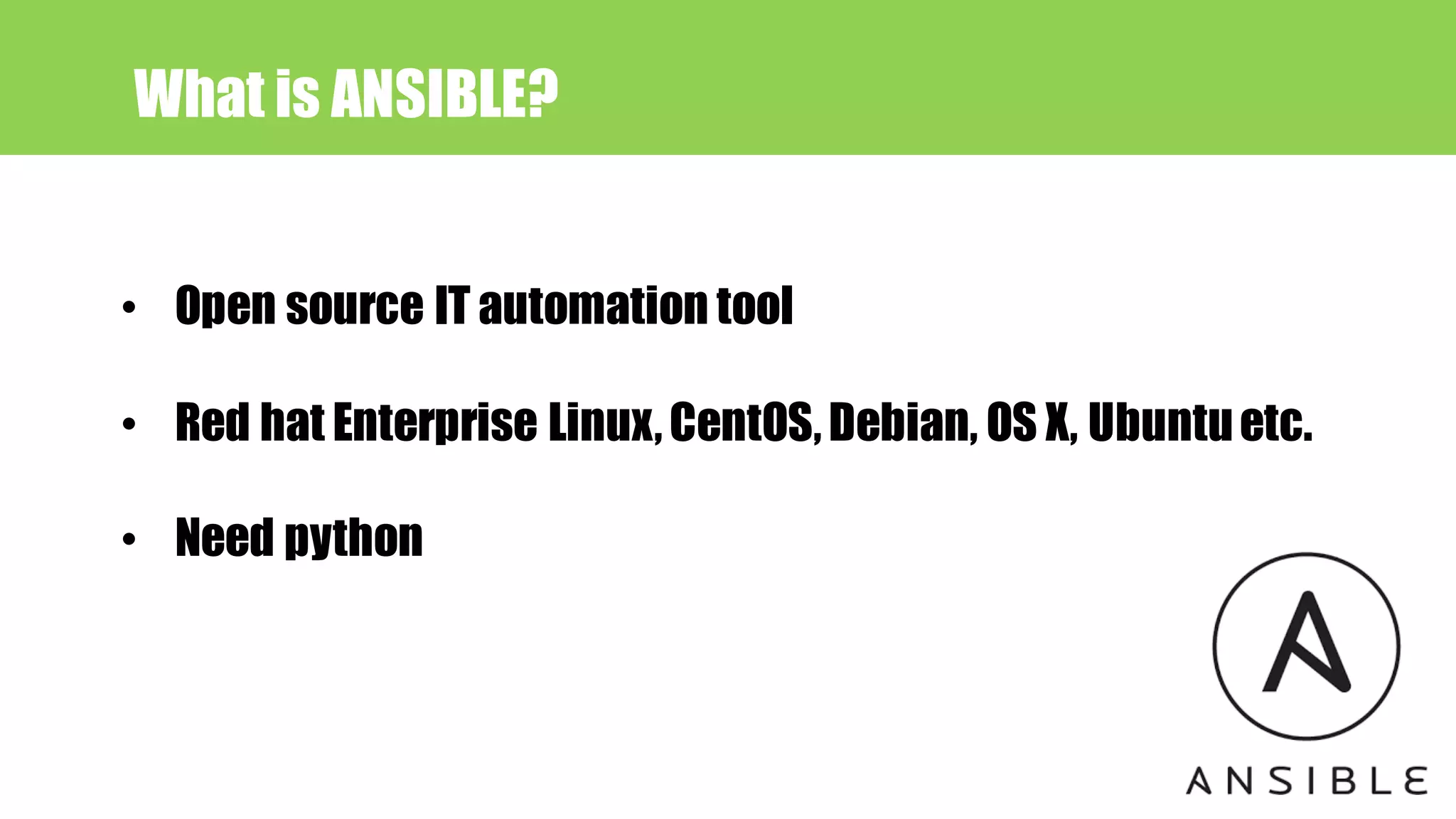
• Open source IT automation tool
• Red hat Enterprise Linux,CentOS,Debian, OS X, Ubuntuetc.
• Need python
What is ANSIBLE?
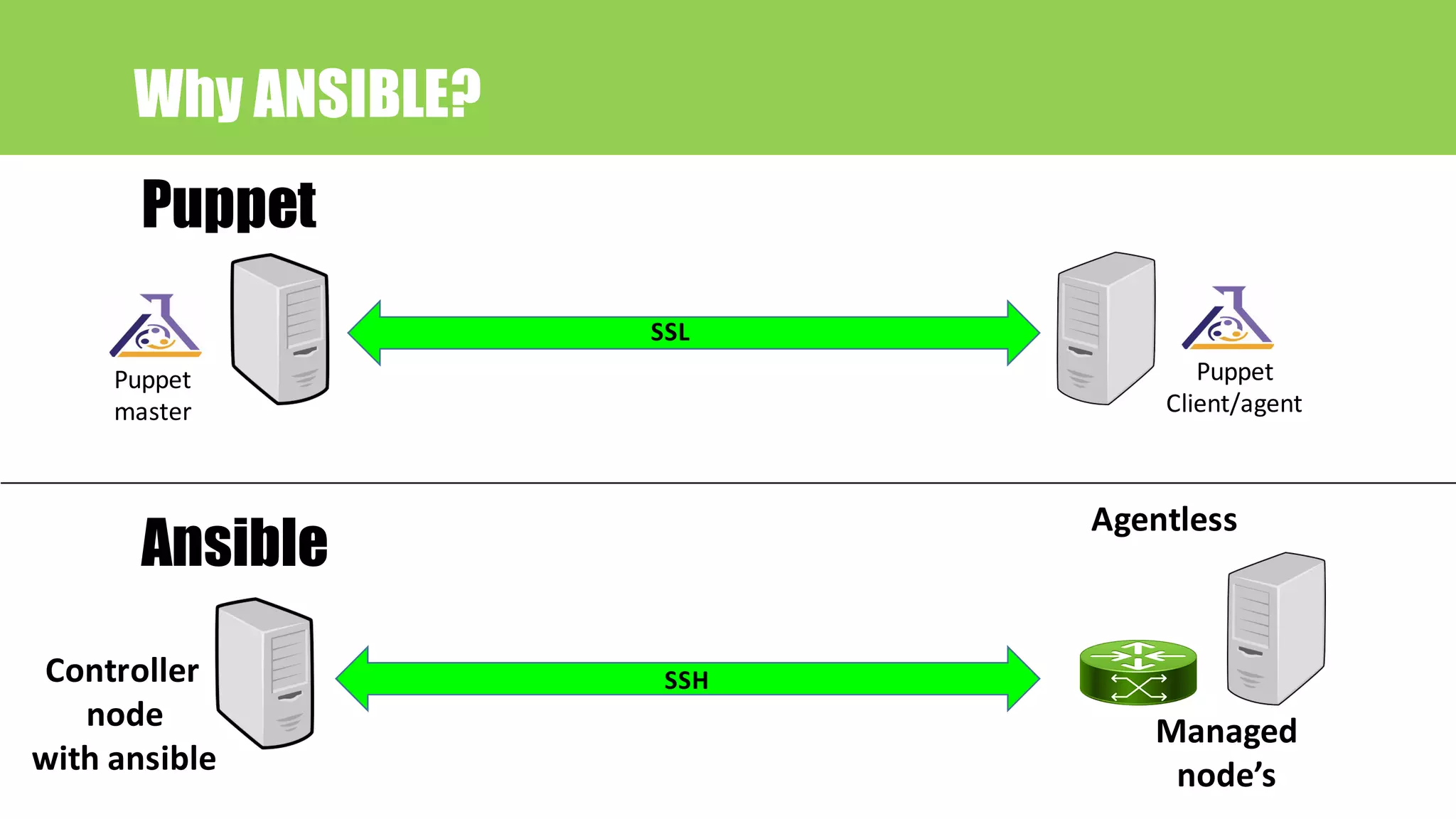
Why ANSIBLE?
• Simple
• Push model
• Agentless
SSL
Puppet
Puppet
master
Puppet
Client/agent
Why ANSIBLE?
SSH
Agentless
Ansible
Controller	
node
with	ansible
Managed
node’s
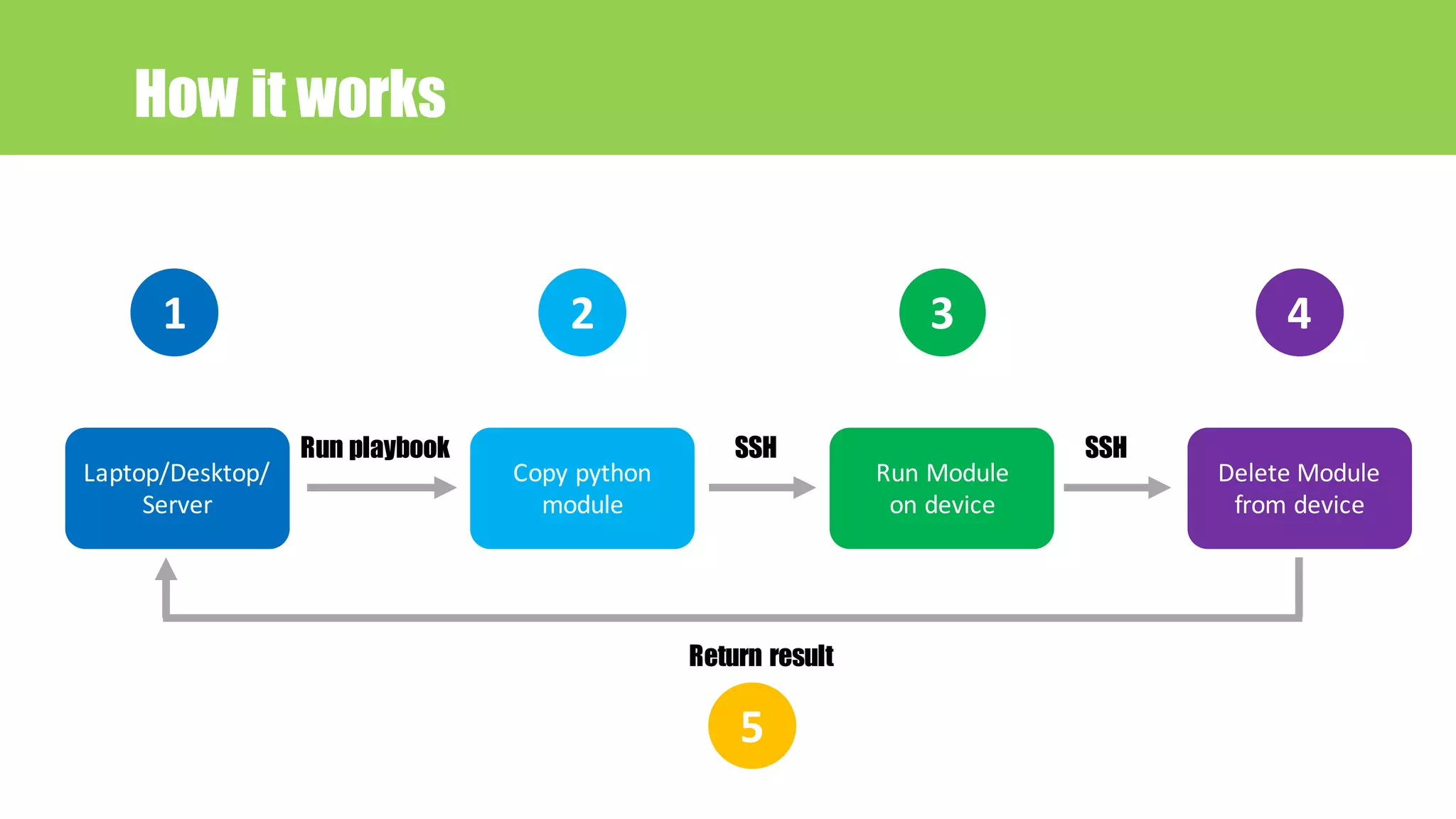
How it works
Laptop/Desktop/
Server
Copy	python	
module
Run	Module
on	device
Delete	Module
from	device
Run playbook SSH SSH
1 2 3 4
Return result
5
YAML
Jinja2Playbooks
Facts
Inventory
Roles
Task
YAML
Jinja2
Hosts
Playbooks
Facts
Inventory
Roles
Task
YAML
Playbooks
Facts
Inventory
Roles
TaskYAML
Hosts
Playbooks
Facts
Inventory
Roles
Task
YAML
Jinja2Hosts
Playbooks
Facts
Inventory
Roles
Task
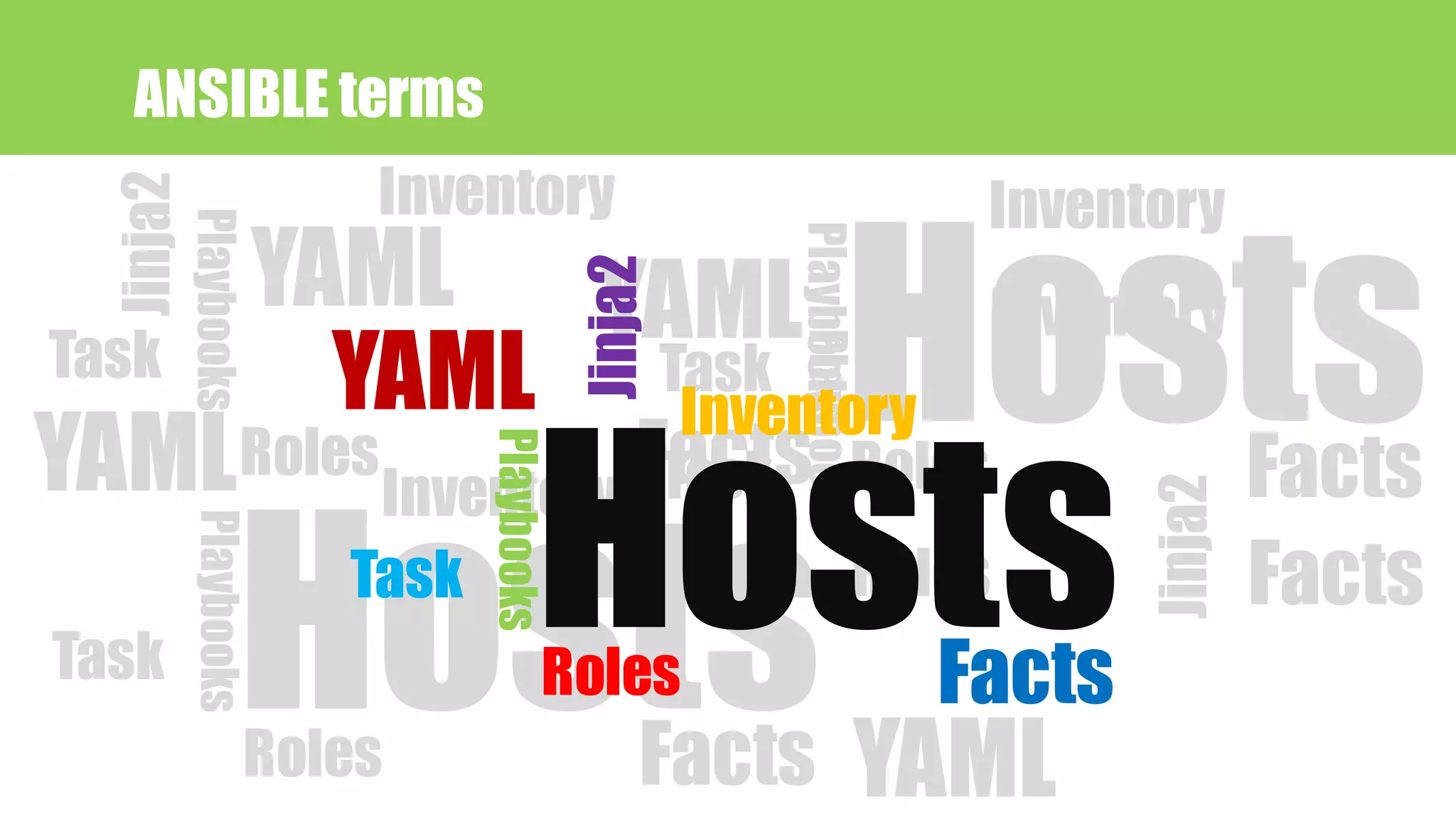
ANSIBLE terms
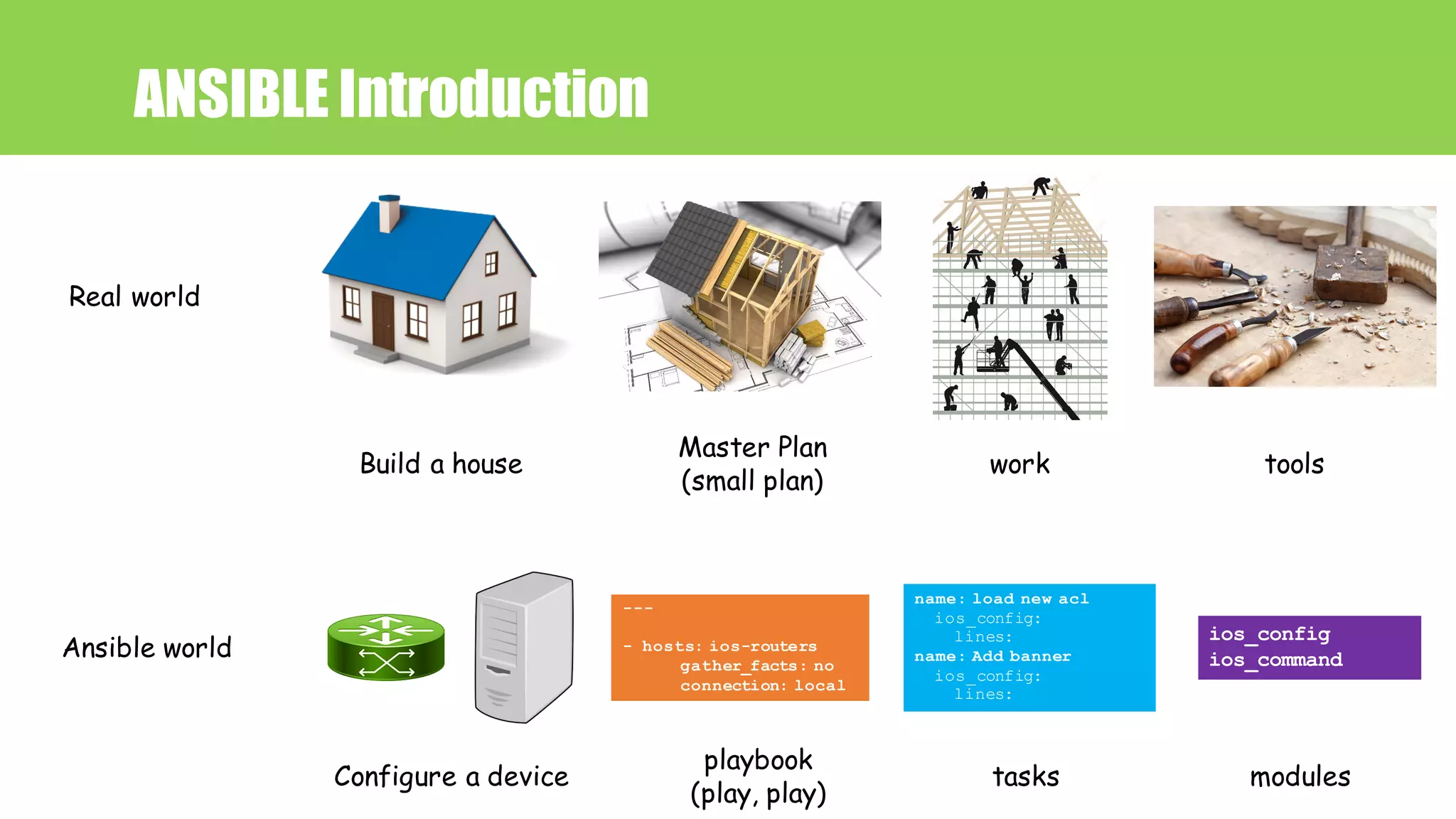
ANSIBLE Introduction
Build a house
Master Plan
(small plan)
work tools
Real world
Ansible world
Configure a device
playbook
(play, play)
tasks modules
---
- hosts: ios-routers
gather_facts: no
connection: local
name: load new acl
ios_config:
lines:
name: Add banner
ios_config:
lines:
ios_config
ios_command
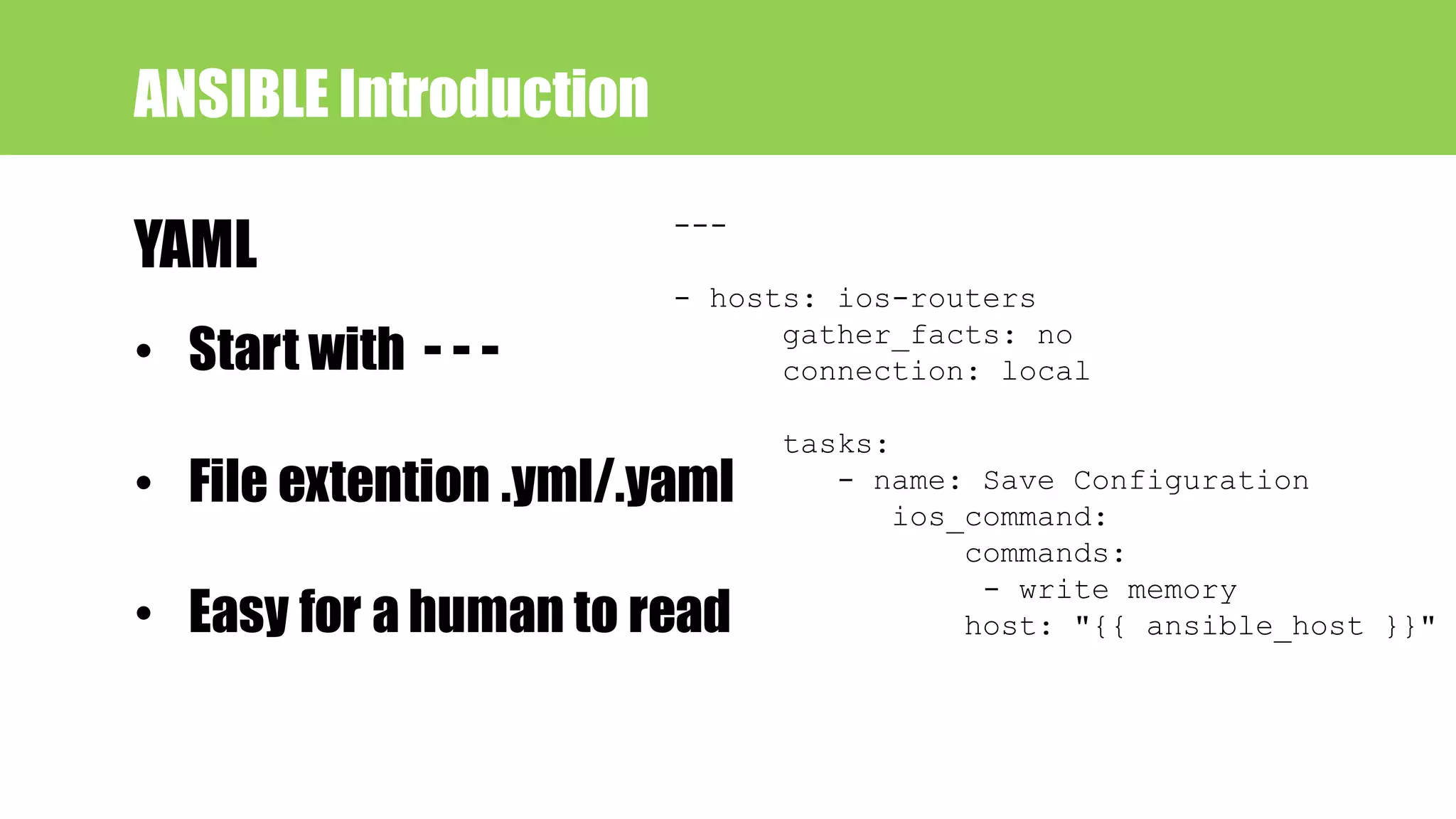
• Start with - - -
• File extention .yml/.yaml
• Easy for a human to read
ANSIBLE Introduction
YAML
---
- hosts: ios-routers
gather_facts: no
connection: local
tasks:
- name: Save Configuration
ios_command:
commands:
- write memory
host: "{{ ansible_host }}"
Playbook
ANSIBLE Introduction
• Tell Ansiblewhat to do
• Send commands toremote devices
• Plain text YAML file
• Each playbook contains one or more plays
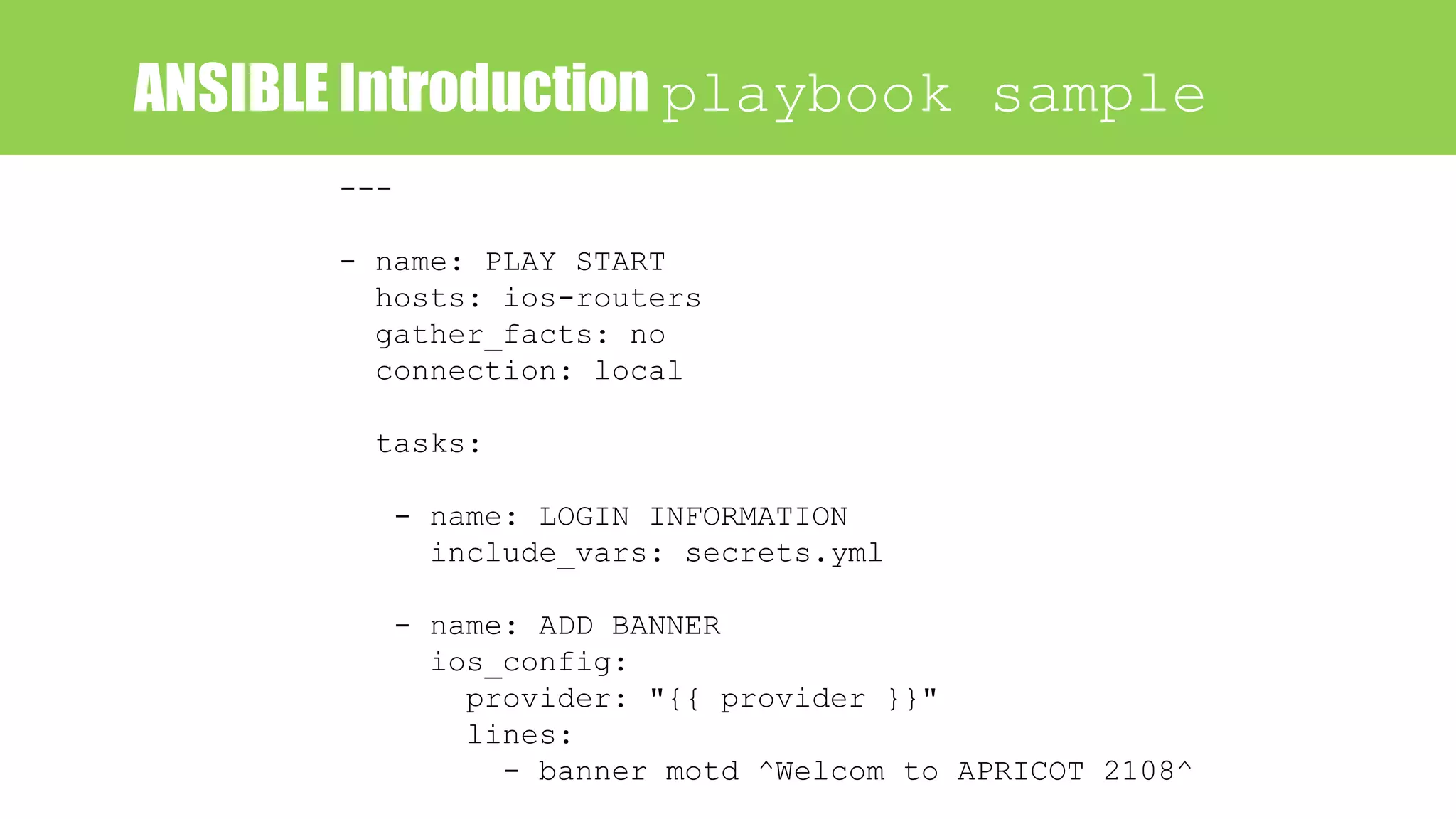
ANSIBLE Introduction playbook sample
---
- name: PLAY START
hosts: ios-routers
gather_facts: no
connection: local
tasks:
- name: LOGIN INFORMATION
include_vars: secrets.yml
- name: ADD BANNER
ios_config:
provider: "{{ provider }}"
lines:
- banner motd ^Welcom to APRICOT 2108^
Module
ANSIBLE Introduction
• Modules control system resources, packages, files.
• Can be executed directlyon remote hosts or throughPlaybooks
• Over 450 shipswithAnsible
• User can also write theirown modules
ANSIBLE Introduction (Network modules)
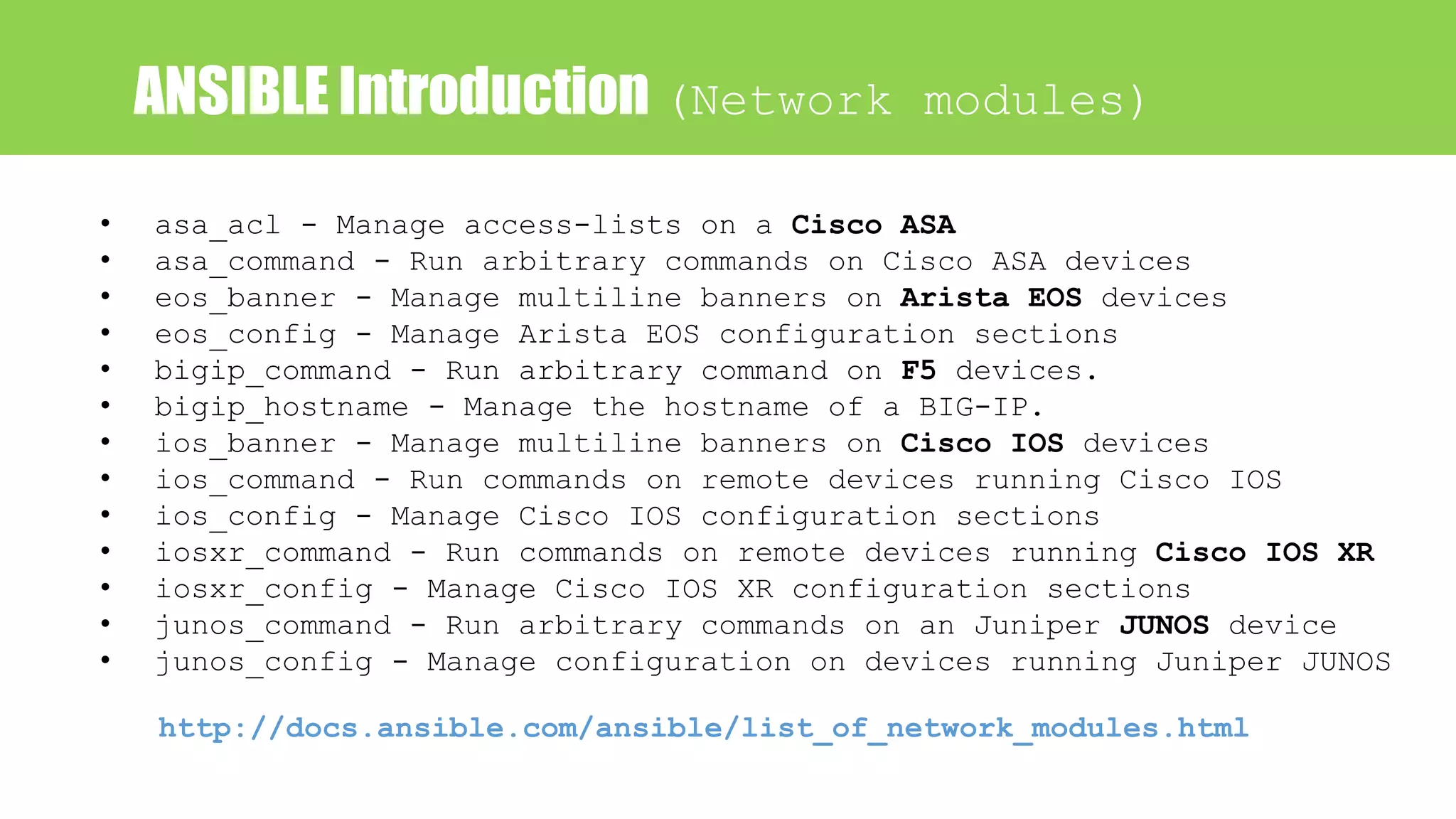
• asa_acl - Manage access-lists on a Cisco ASA
• asa_command - Run arbitrary commands on Cisco ASA devices
• eos_banner - Manage multiline banners on Arista EOS devices
• eos_config - Manage Arista EOS configuration sections
• bigip_command - Run arbitrary command on F5 devices.
• bigip_hostname - Manage the hostname of a BIG-IP.
• ios_banner - Manage multiline banners on Cisco IOS devices
• ios_command - Run commands on remote devices running Cisco IOS
• ios_config - Manage Cisco IOS configuration sections
• iosxr_command - Run commands on remote devices running Cisco IOS XR
• iosxr_config - Manage Cisco IOS XR configuration sections
• junos_command - Run arbitrary commands on an Juniper JUNOS device
• junos_config - Manage configuration on devices running Juniper JUNOS
http://docs.ansible.com/ansible/list_of_network_modules.html
Task
ANSIBLE Introduction
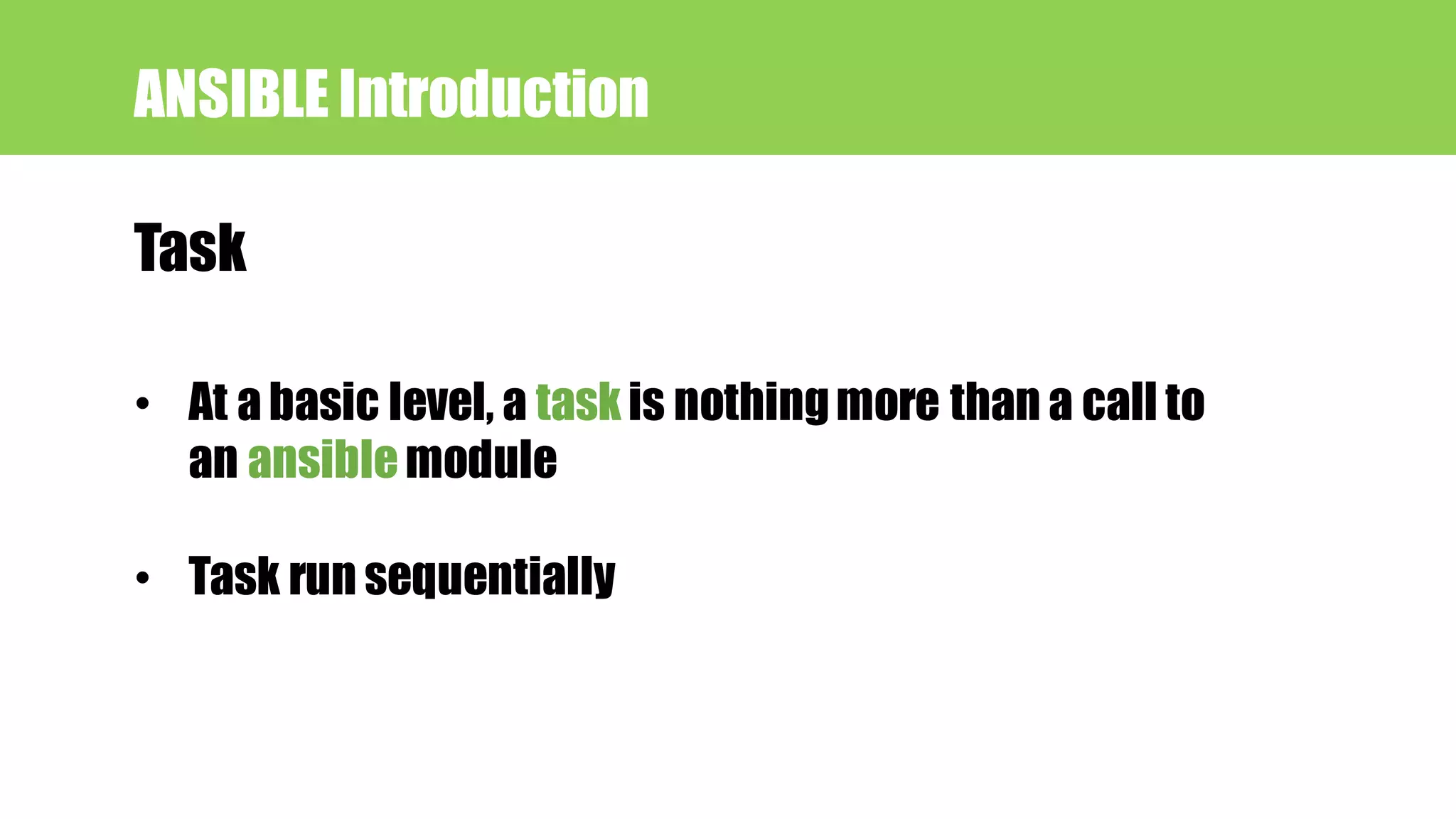
• At a basic level, a taskis nothingmore than a call to
an ansiblemodule
• Task run sequentially
ANSIBLE Introduction task sample
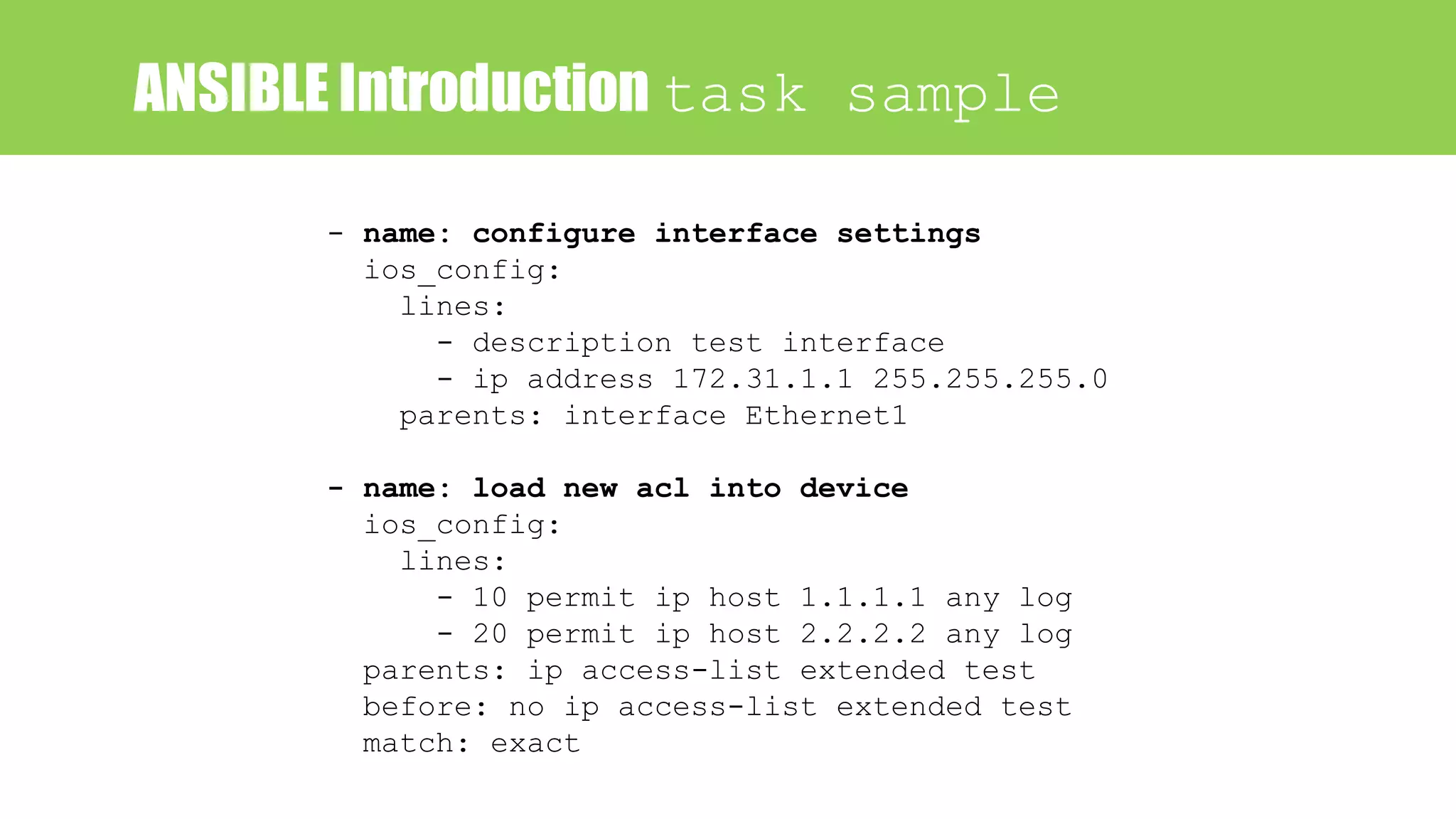
- name: configure interface settings
ios_config:
lines:
- description test interface
- ip address 172.31.1.1 255.255.255.0
parents: interface Ethernet1
- name: load new acl into device
ios_config:
lines:
- 10 permit ip host 1.1.1.1 any log
- 20 permit ip host 2.2.2.2 any log
parents: ip access-list extended test
before: no ip access-list extended test
match: exact
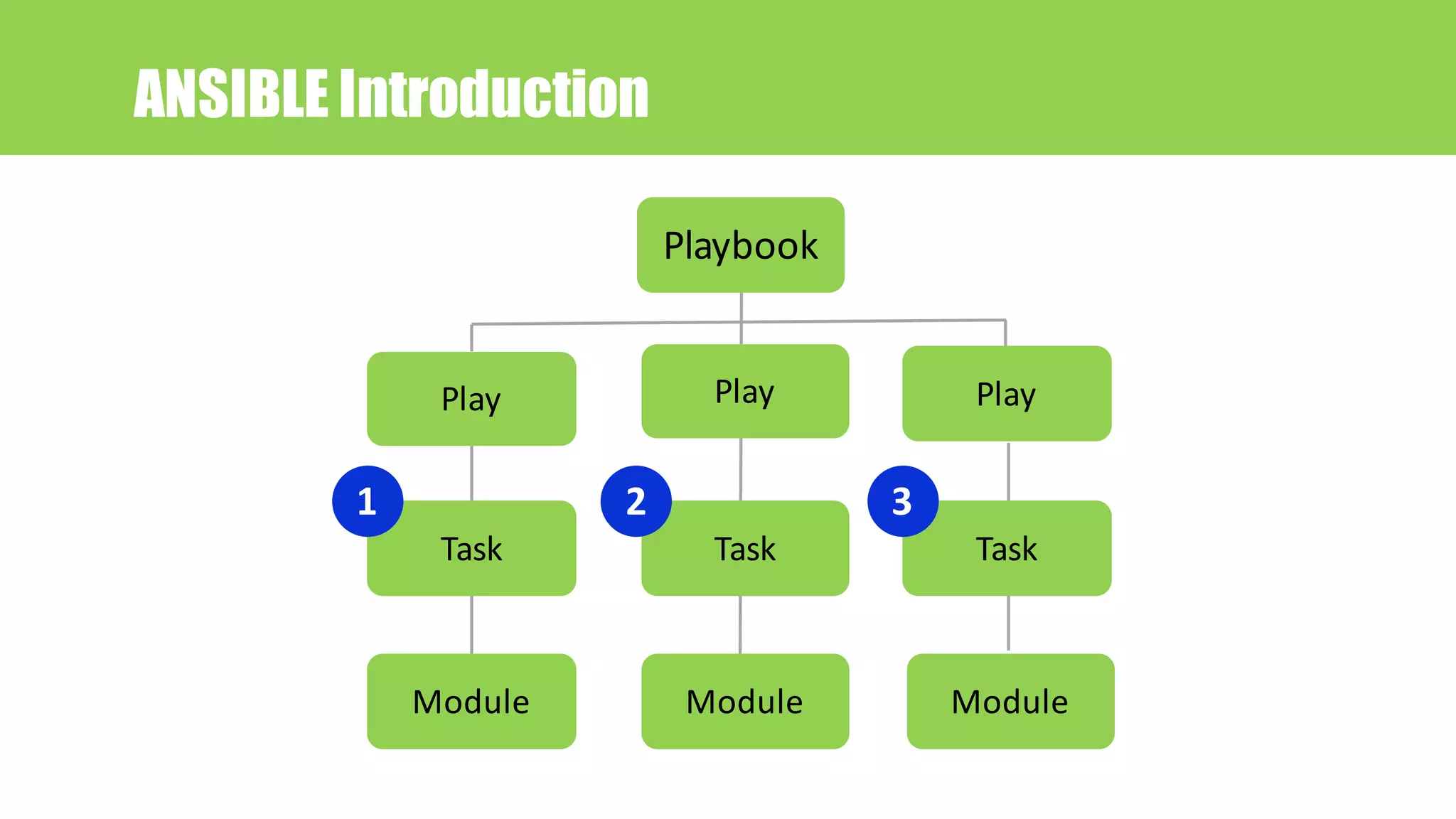
Task Task Task
ModuleModule Module
Play Play Play
1 2 3
Playbook
ANSIBLE Introduction
---
- hosts: all-ios
gather_facts: no
connection: local
tasks:
- name: OBTAIN LOGIN INFORMATION
include_vars: secrets.yml
- name: DEFINE PROVIDER
set_fact:
provider:
host: "{{ ansible_host }}"
username: "{{ creds['username'] }}"
password: "{{ creds['password'] }}"
auth_pass: "{{ creds['auth_pass'] }}"
- name: ADD BANNER
ios_config:
provider: "{{ provider }}"
authorize: yes
lines:
- banner motd ^Welcom to BDNOG7^
Play
task
Module
task
Module
task
Module
1
2
3
Playbook
ANSIBLE Introduction
Hosts
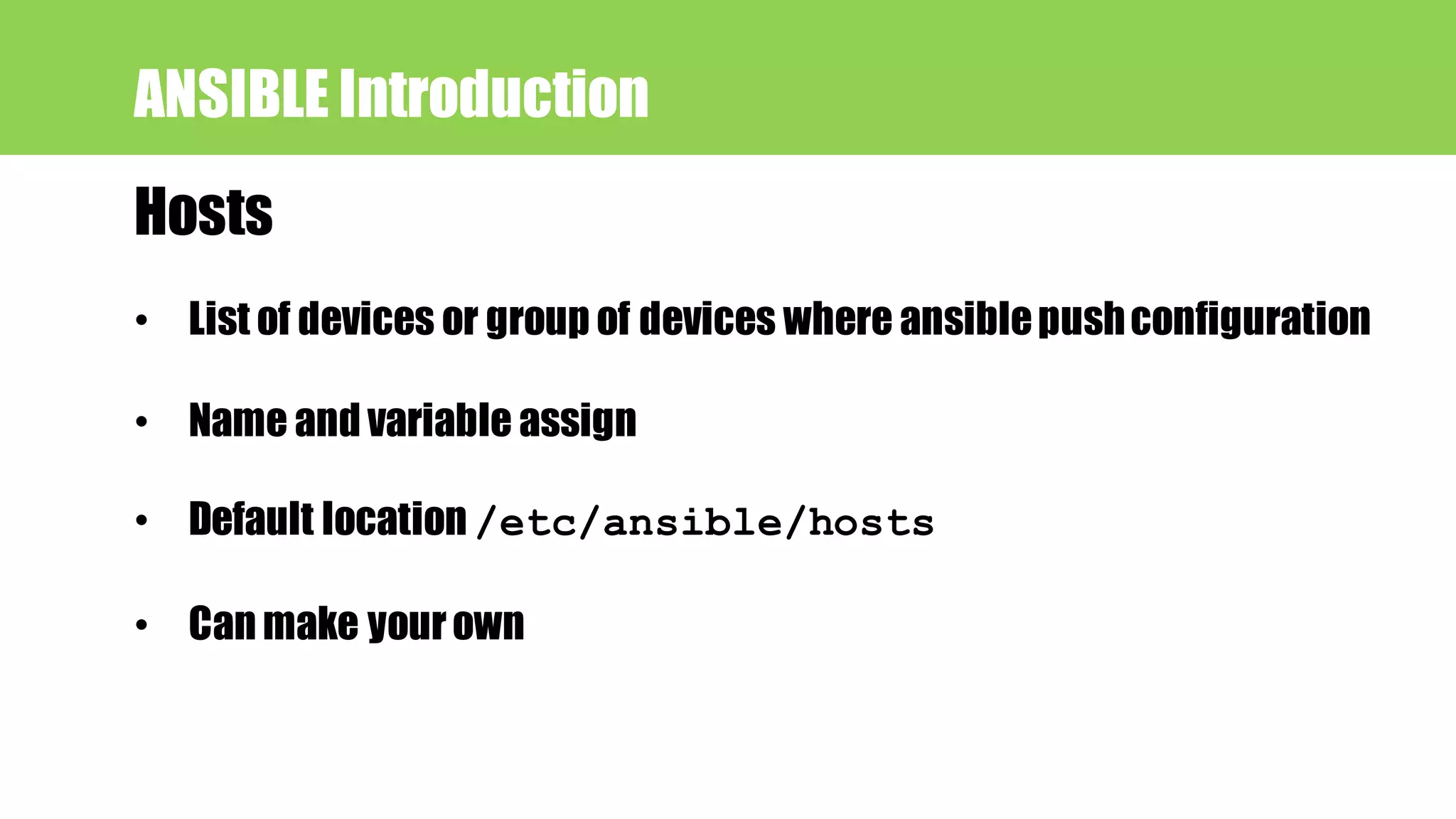
ANSIBLE Introduction
• List of devices or group of devices where ansiblepushconfiguration
• Name and variable assign
• Default location /etc/ansible/hosts
• Can make yourown
ANSIBLE Introduction Hosts file sample
[ios-routers]
R_2691 ansible_host=192.168.45.3
R_3745 ansible_host=192.168.45.4
[v6-router]
R_7200 ansible_host=2001:db8::1001::1
groups
groups
INI-like (one of Ansible defaults)
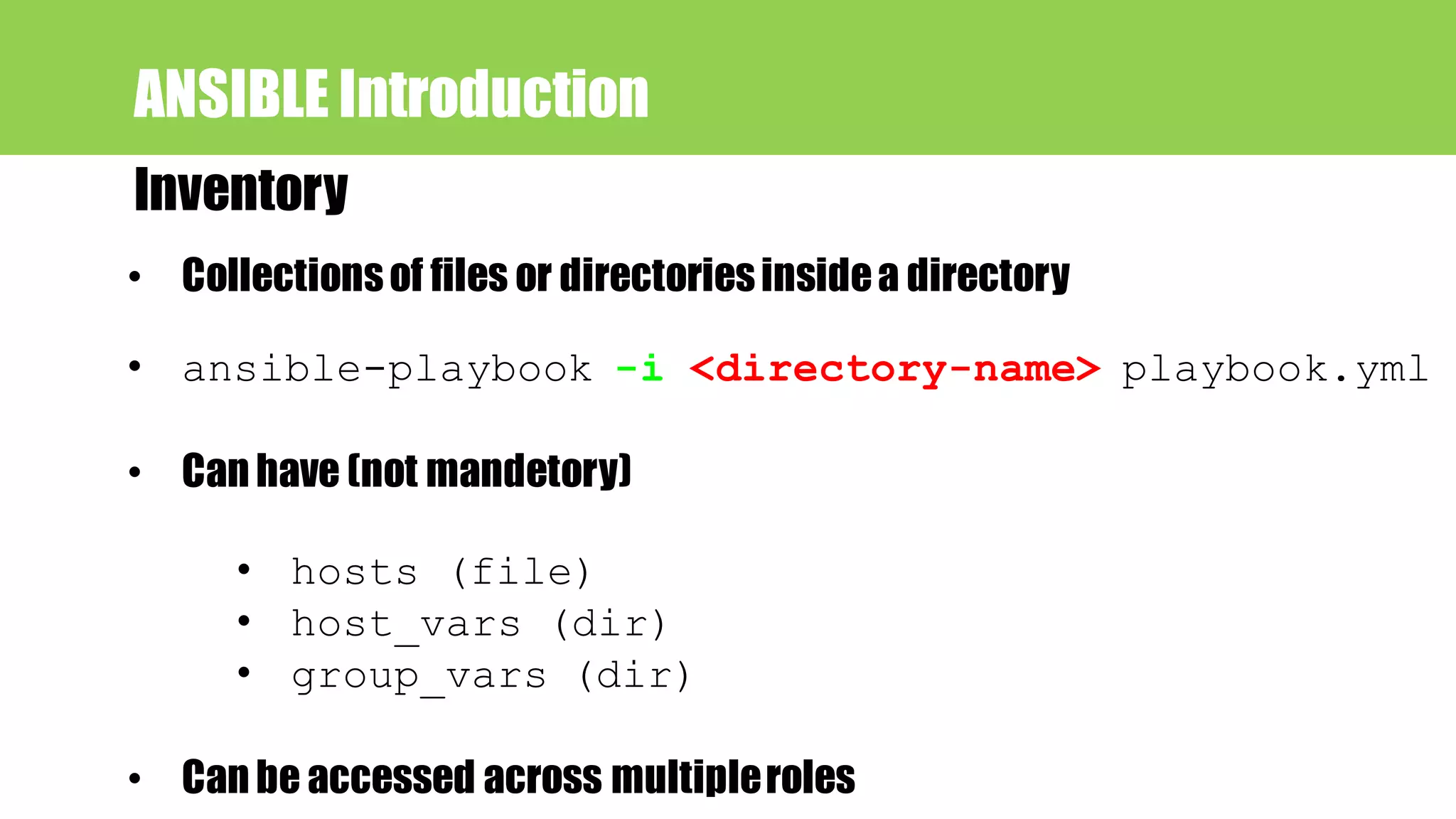
Inventory
ANSIBLE Introduction
• Collectionsof files or directoriesinsidea directory
• ansible-playbook -i <directory-name> playbook.yml
• Can have (not mandetory)
• hosts (file)
• host_vars (dir)
• group_vars (dir)
• Can be accessed across multipleroles
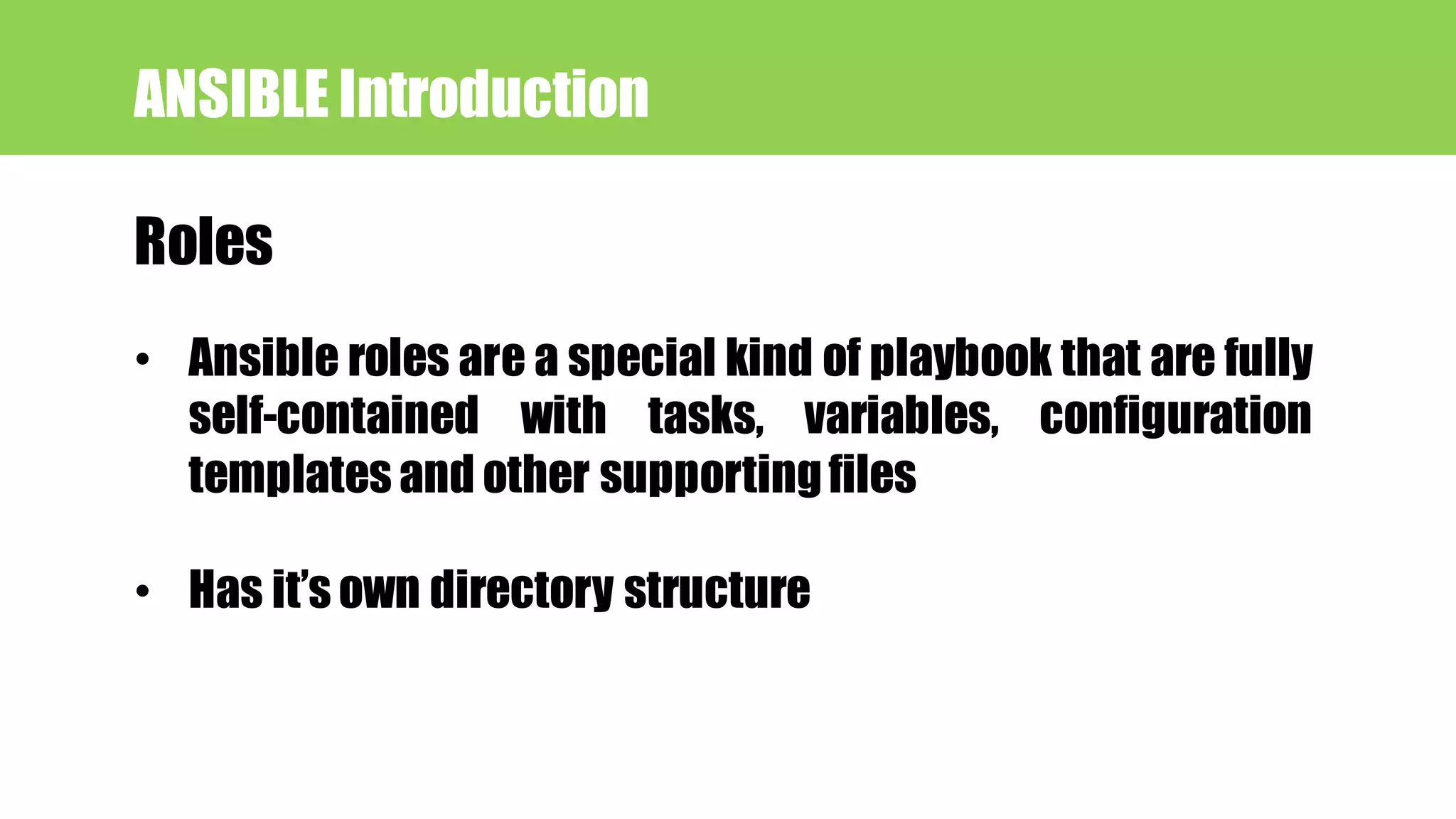
Roles
ANSIBLE Introduction
• Ansible roles are a special kind of playbook that are fully
self-contained with tasks, variables, configuration
templates and other supportingfiles
• Has it’s own directory structure
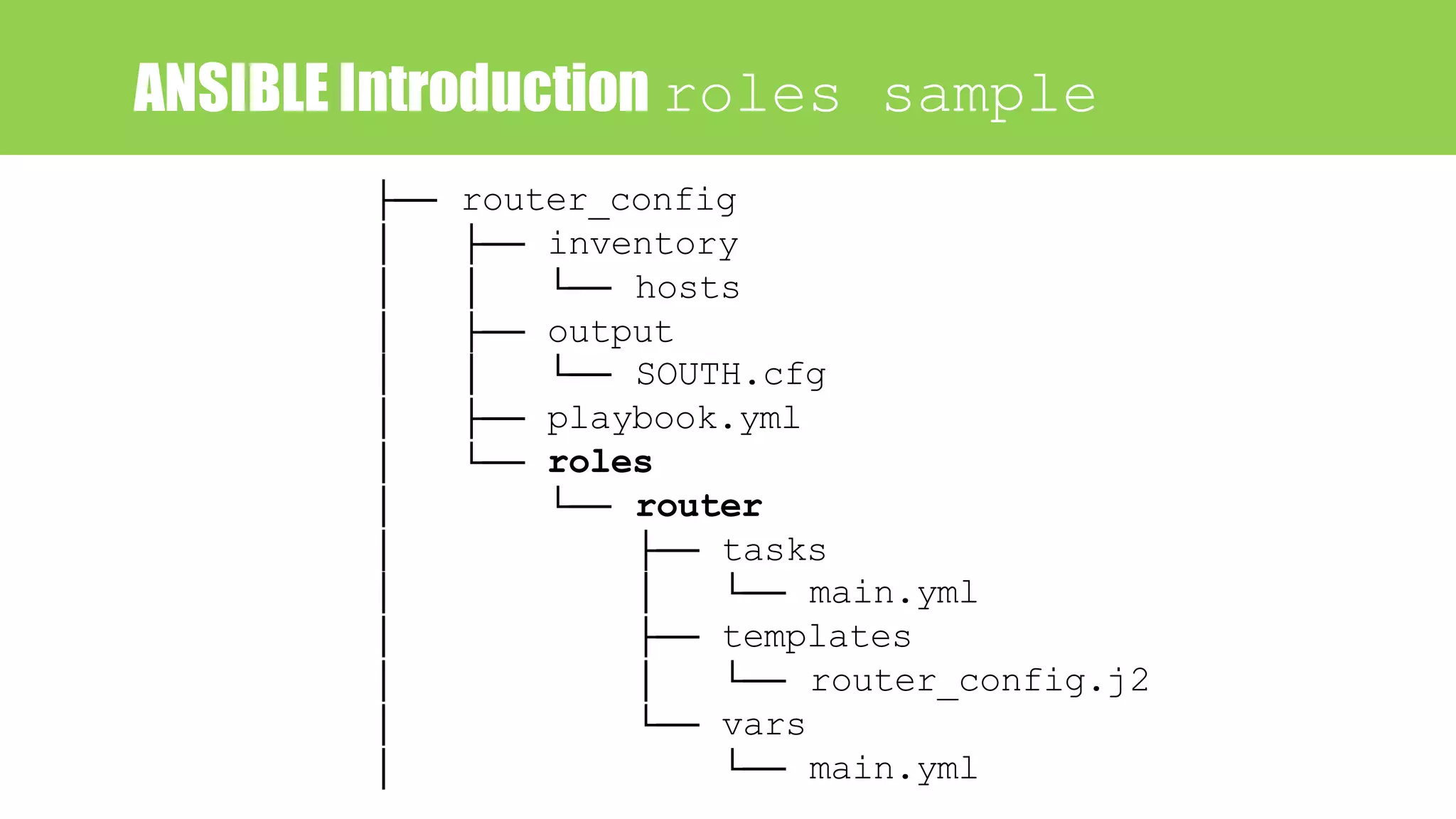
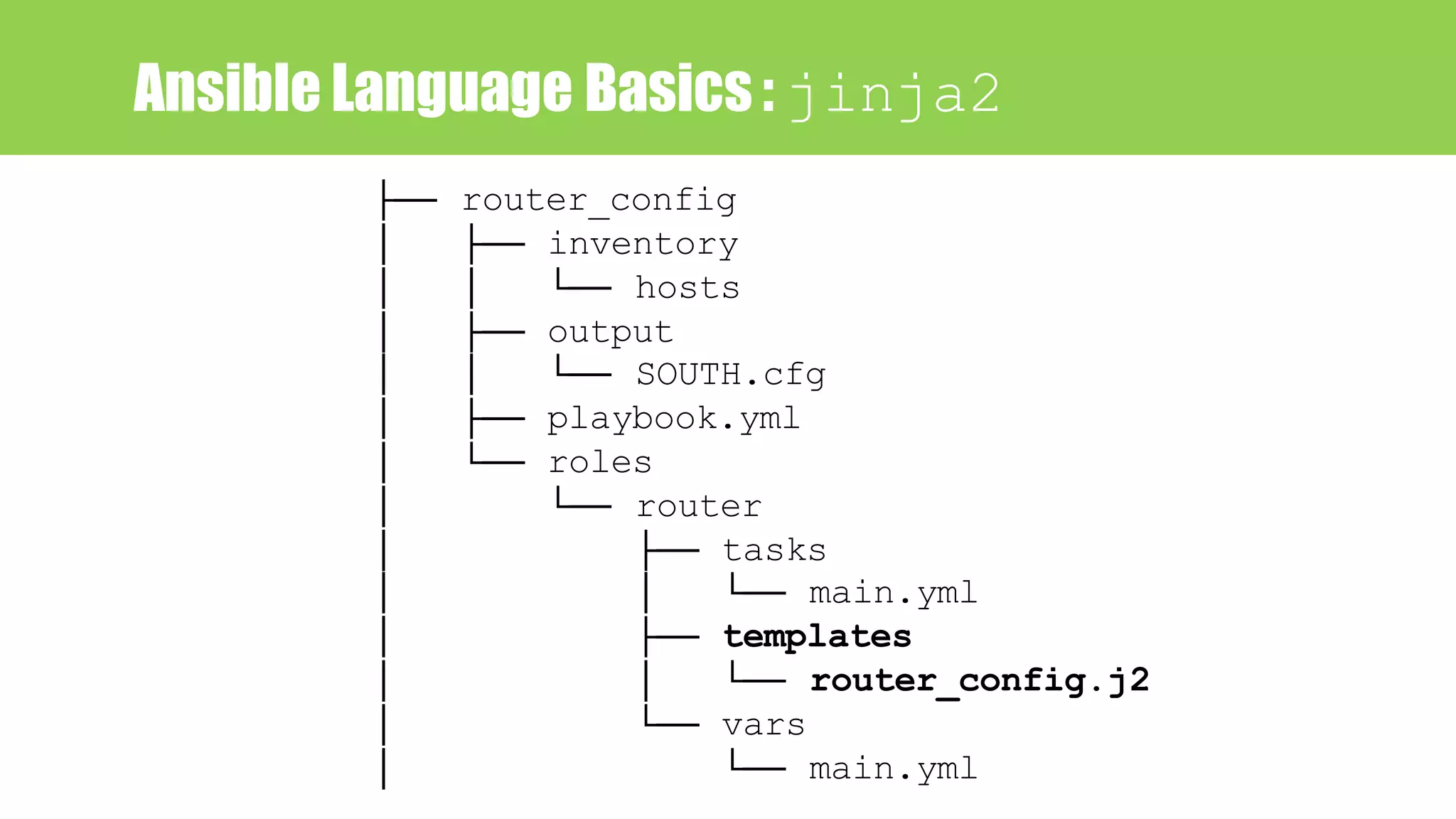
ANSIBLE Introduction roles sample
├── router_config
│ ├── inventory
│ │ └── hosts
│ ├── output
│ │ └── SOUTH.cfg
│ ├── playbook.yml
│ └── roles
│ └── router
│ ├── tasks
│ │ └── main.yml
│ ├── templates
│ │ └── router_config.j2
│ └── vars
│ └── main.yml
Jinja2
ANSIBLE Introduction
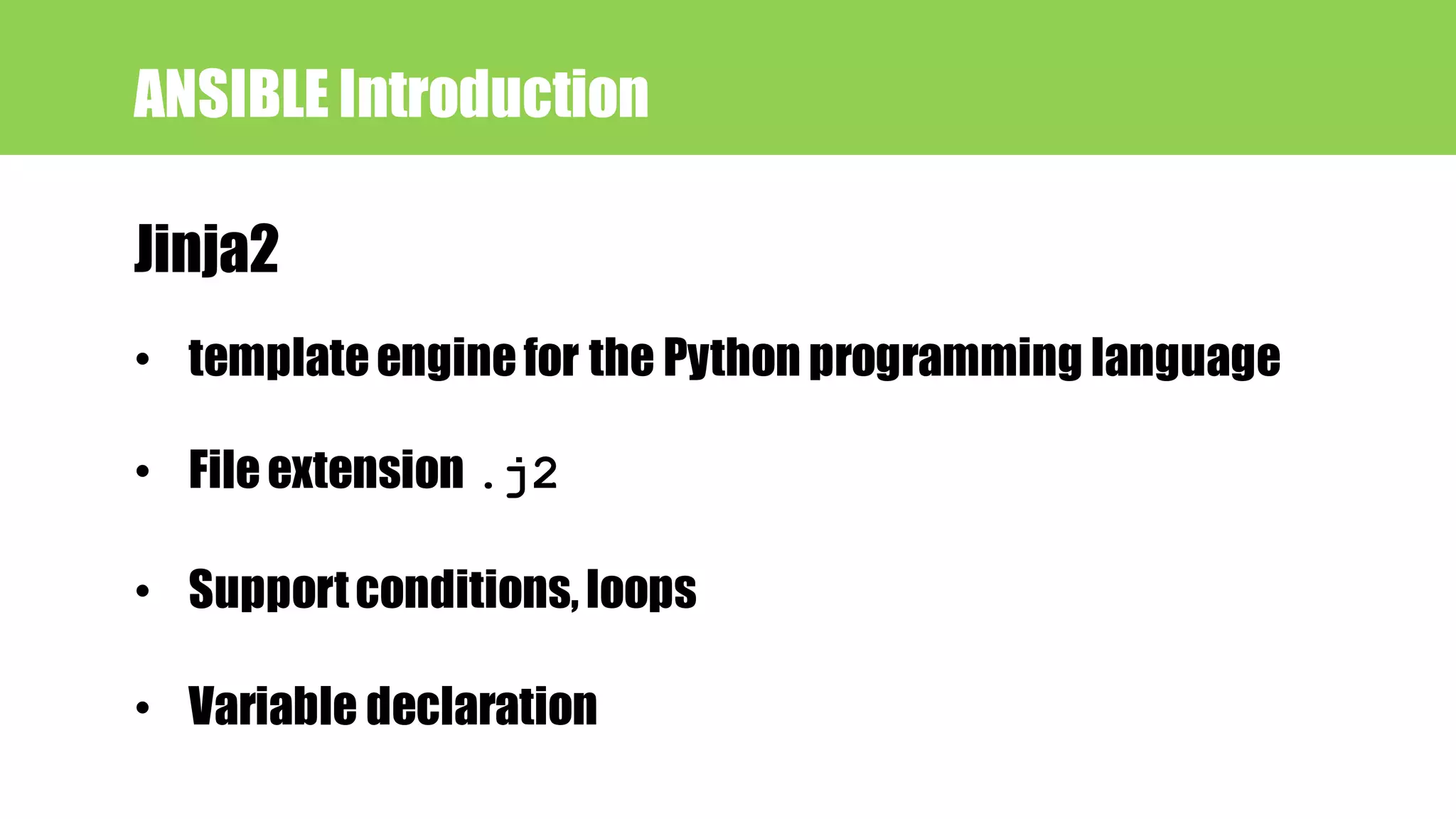
• templateenginefor the Python programming language
• Fileextension .j2
• Supportconditions,loops
• Variable declaration
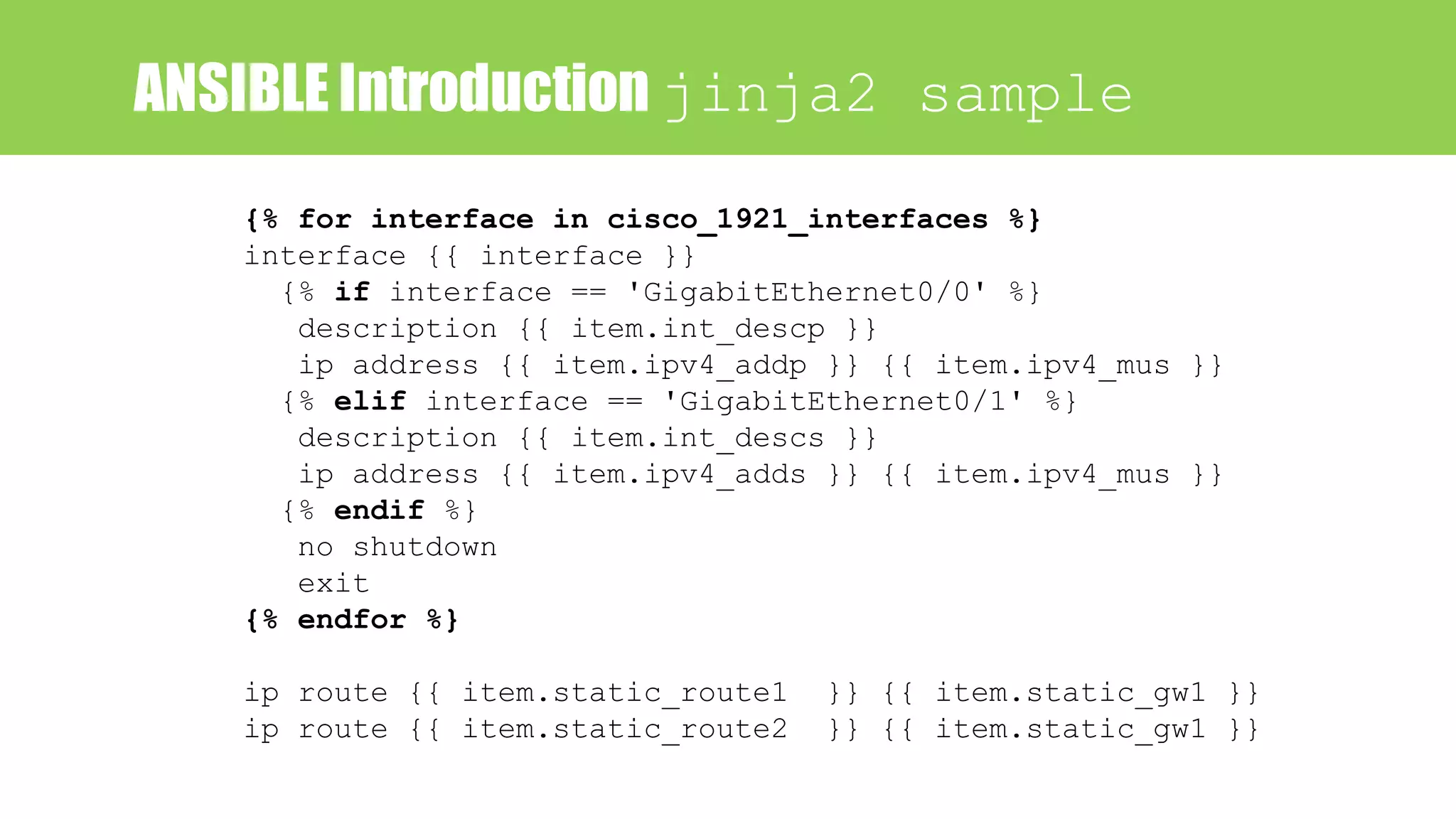
ANSIBLE Introduction jinja2 sample
{% for interface in cisco_1921_interfaces %}
interface {{ interface }}
{% if interface == 'GigabitEthernet0/0' %}
description {{ item.int_descp }}
ip address {{ item.ipv4_addp }} {{ item.ipv4_mus }}
{% elif interface == 'GigabitEthernet0/1' %}
description {{ item.int_descs }}
ip address {{ item.ipv4_adds }} {{ item.ipv4_mus }}
{% endif %}
no shutdown
exit
{% endfor %}
ip route {{ item.static_route1 }} {{ item.static_gw1 }}
ip route {{ item.static_route2 }} {{ item.static_gw1 }}
Ansible Language Basics
Variable
Ansible Language Basics : Variable
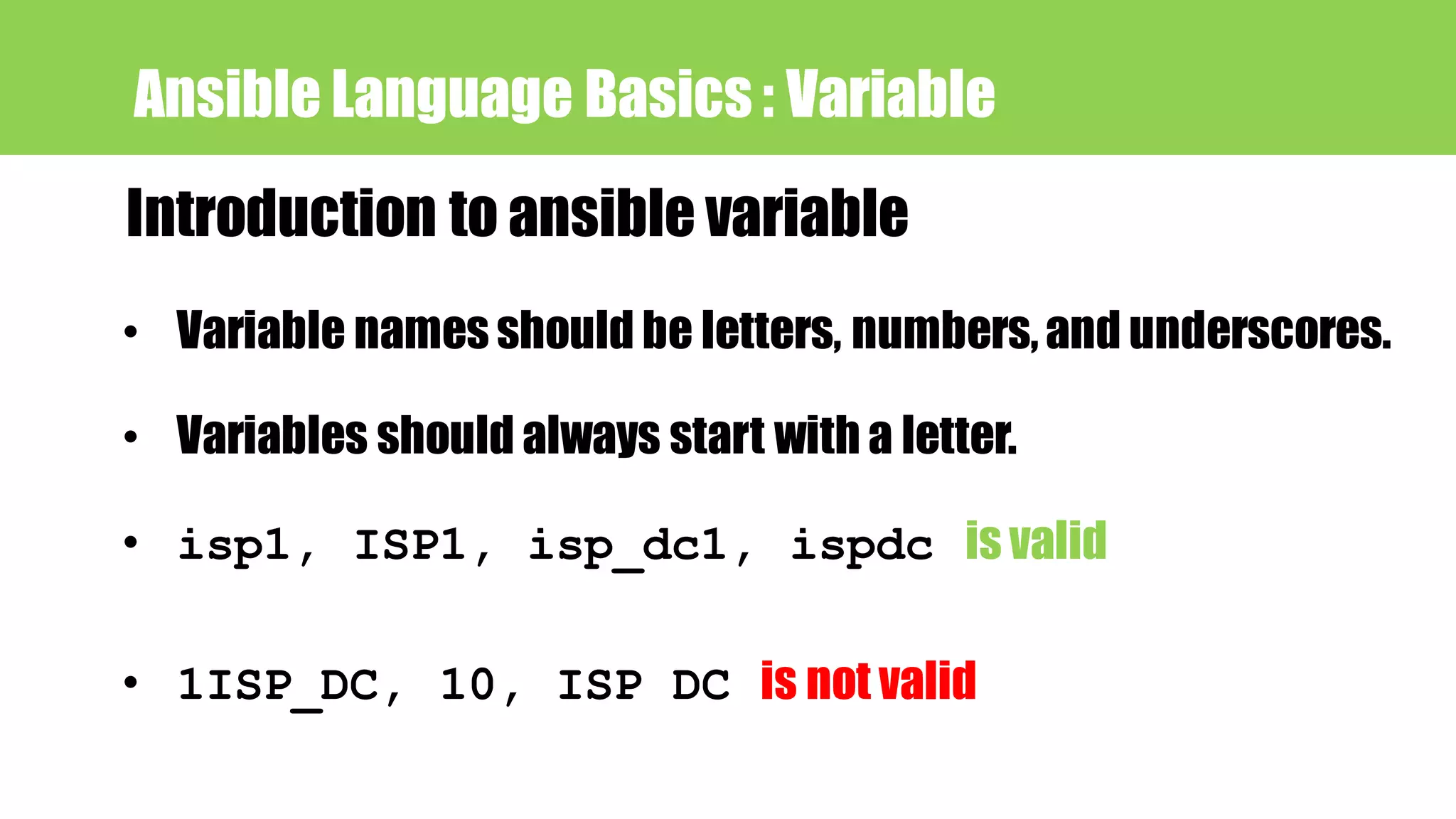
Introduction to ansible variable
• Variable names should be letters, numbers,and underscores.
• isp1, ISP1, isp_dc1, ispdc is valid
• 1ISP_DC, 10, ISP DC is not valid
• Variables should always start with a letter.
Ansible Language Basics : Variable
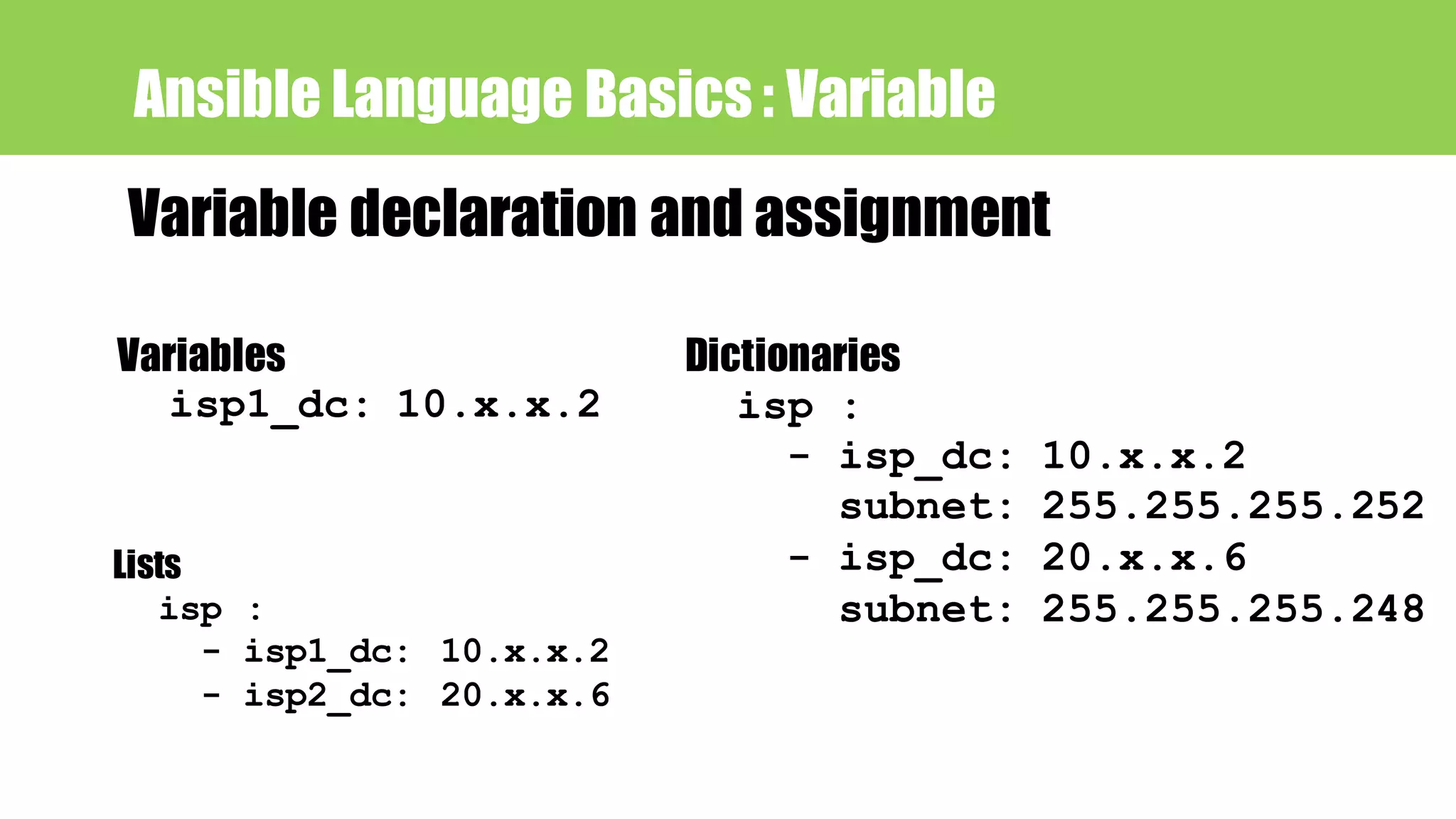
Variable declaration and assignment
Variables
isp1_dc: 10.x.x.2
Lists
isp :
- isp1_dc: 10.x.x.2
- isp2_dc: 20.x.x.6
Dictionaries
isp :
- isp_dc: 10.x.x.2
subnet: 255.255.255.252
- isp_dc: 20.x.x.6
subnet: 255.255.255.248
Ansible Language Basics : Variable
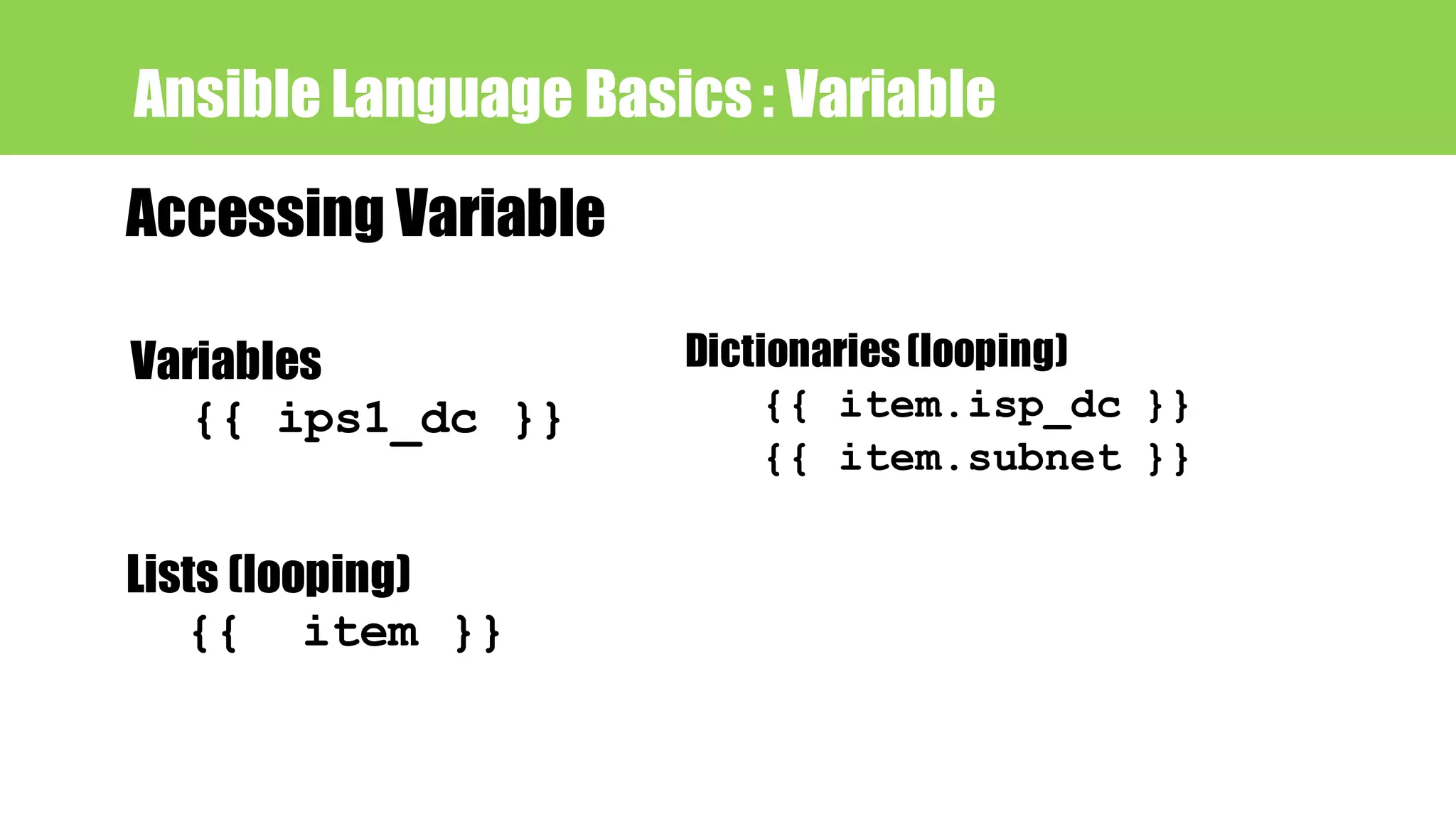
Accessing Variable
Variables
{{ ips1_dc }}
Lists (looping)
{{ item }}
Dictionaries(looping)
{{ item.isp_dc }}
{{ item.subnet }}
Ansible Language Basics : Variable
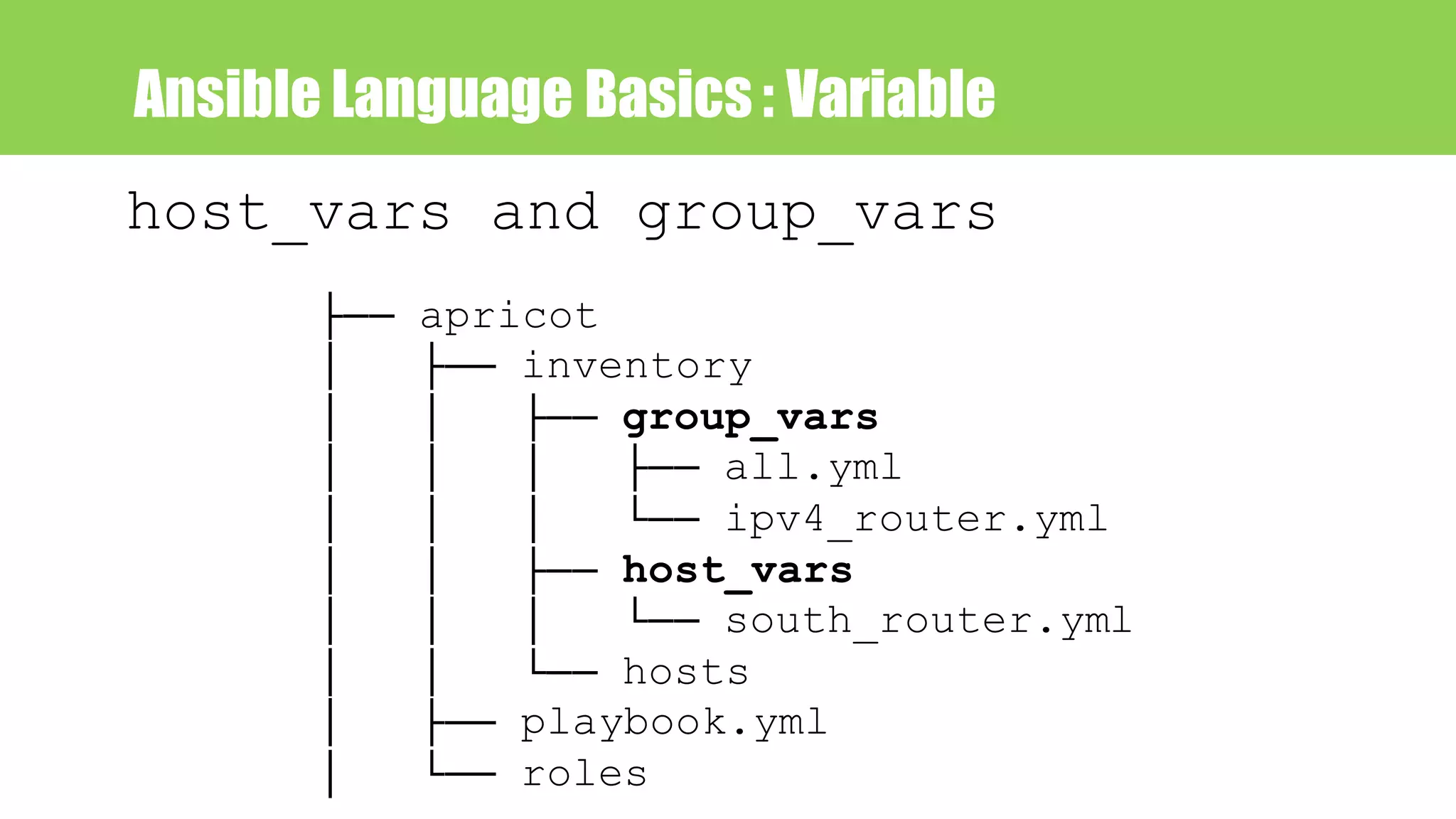
host_vars and group_vars
├── apricot
│ ├── inventory
│ │ ├── group_vars
│ │ │ ├── all.yml
│ │ │ └── ipv4_router.yml
│ │ ├── host_vars
│ │ │ └── south_router.yml
│ │ └── hosts
│ ├── playbook.yml
│ └── roles
Ansible Language Basics : Variable
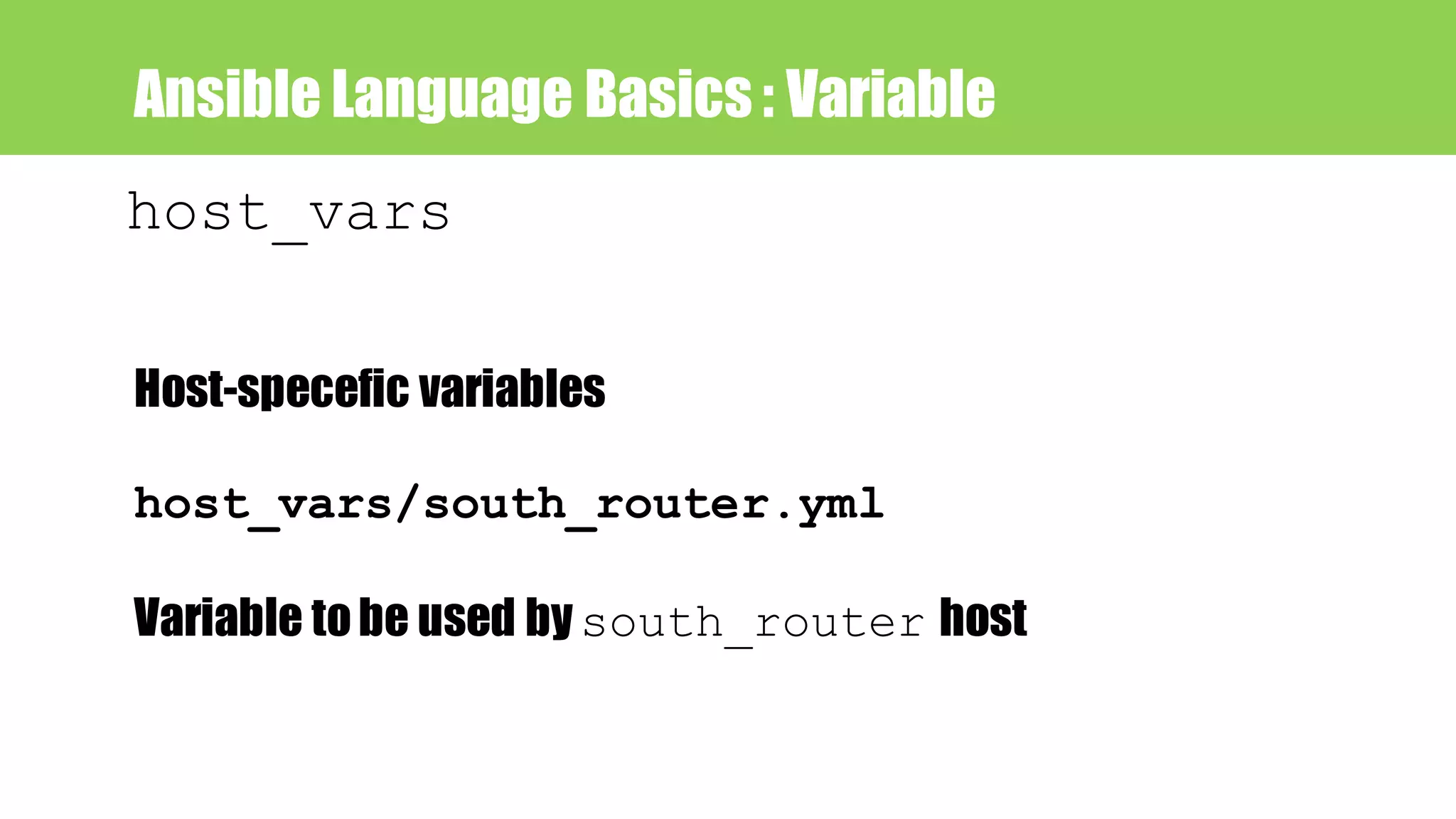
host_vars
Host-specefic variables
host_vars/south_router.yml
Variable tobe used bysouth_router host
Ansible Language Basics : Variable
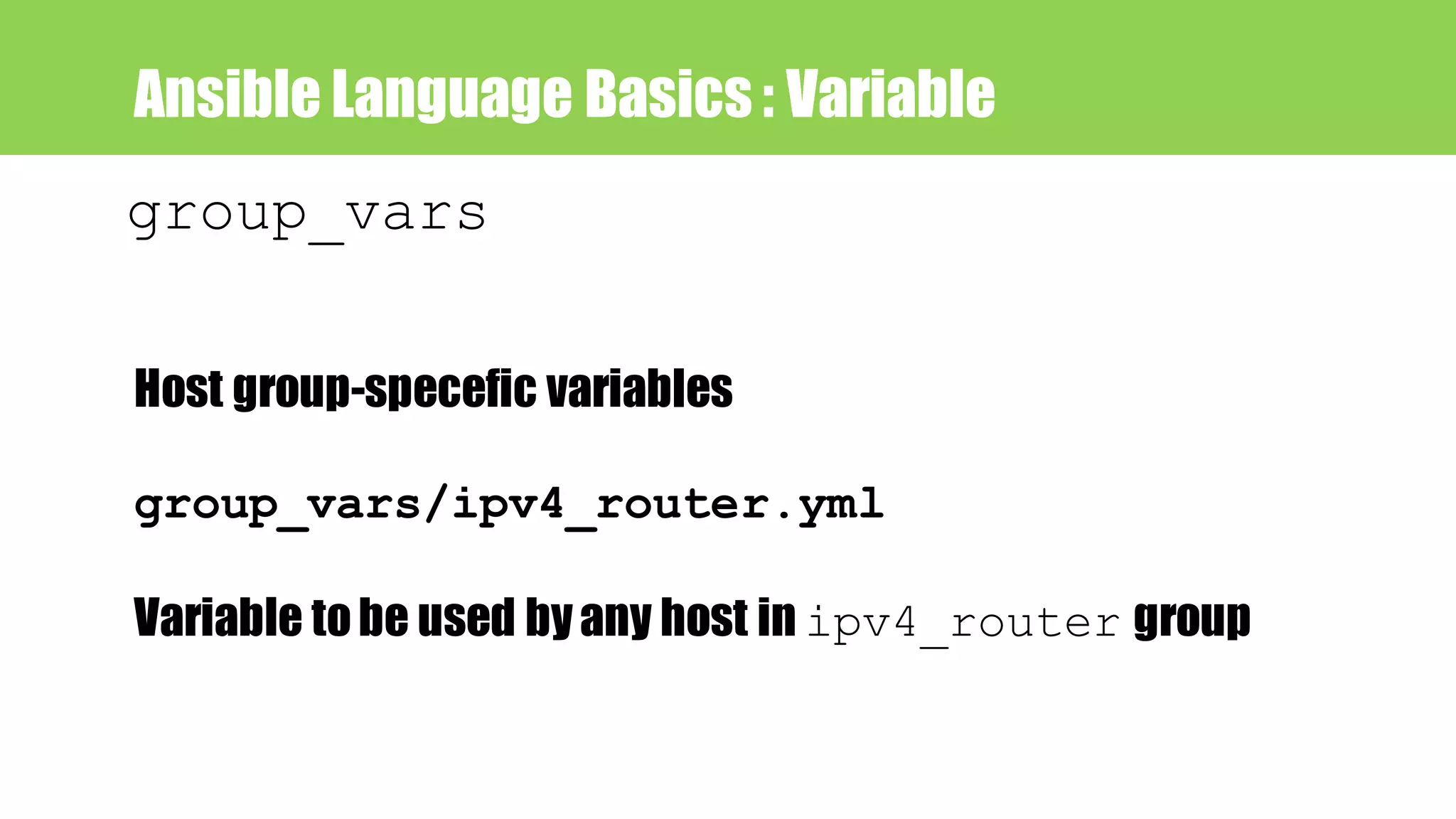
group_vars
Host group-specefic variables
group_vars/ipv4_router.yml
Variable tobe used byany host in ipv4_router group
Ansible Language Basics
LOOPS
Ansible Language Basics : loops
Introduction to Loops
• A loop is an instructionthat repeats untila specified
condition is reached
• Used for doing thesame thingfor multipletimes
Ansible Language Basics : loops
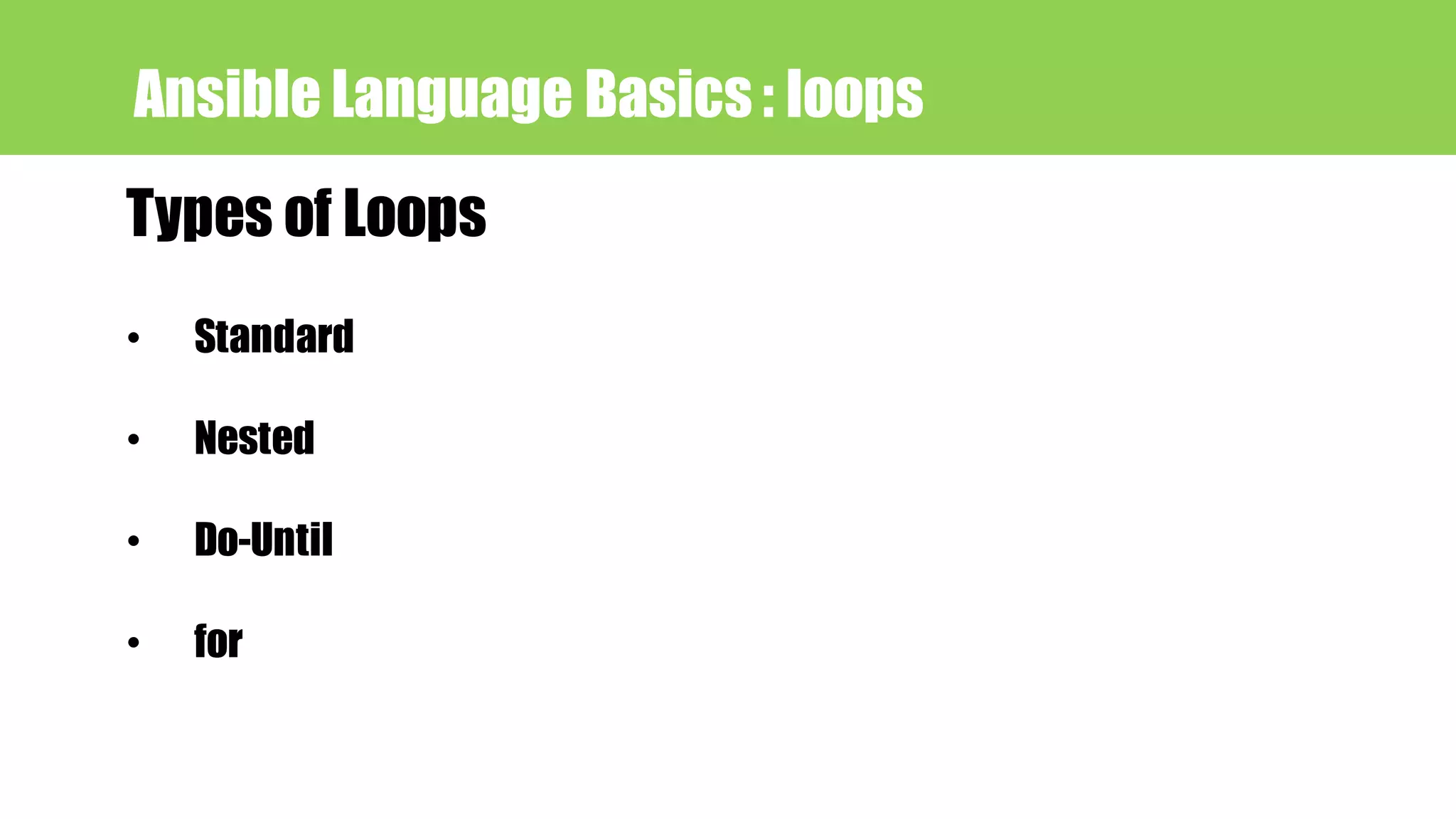
Types of Loops
• Standard
• Nested
• Do-Until
• for
Ansible Language Basics : loops
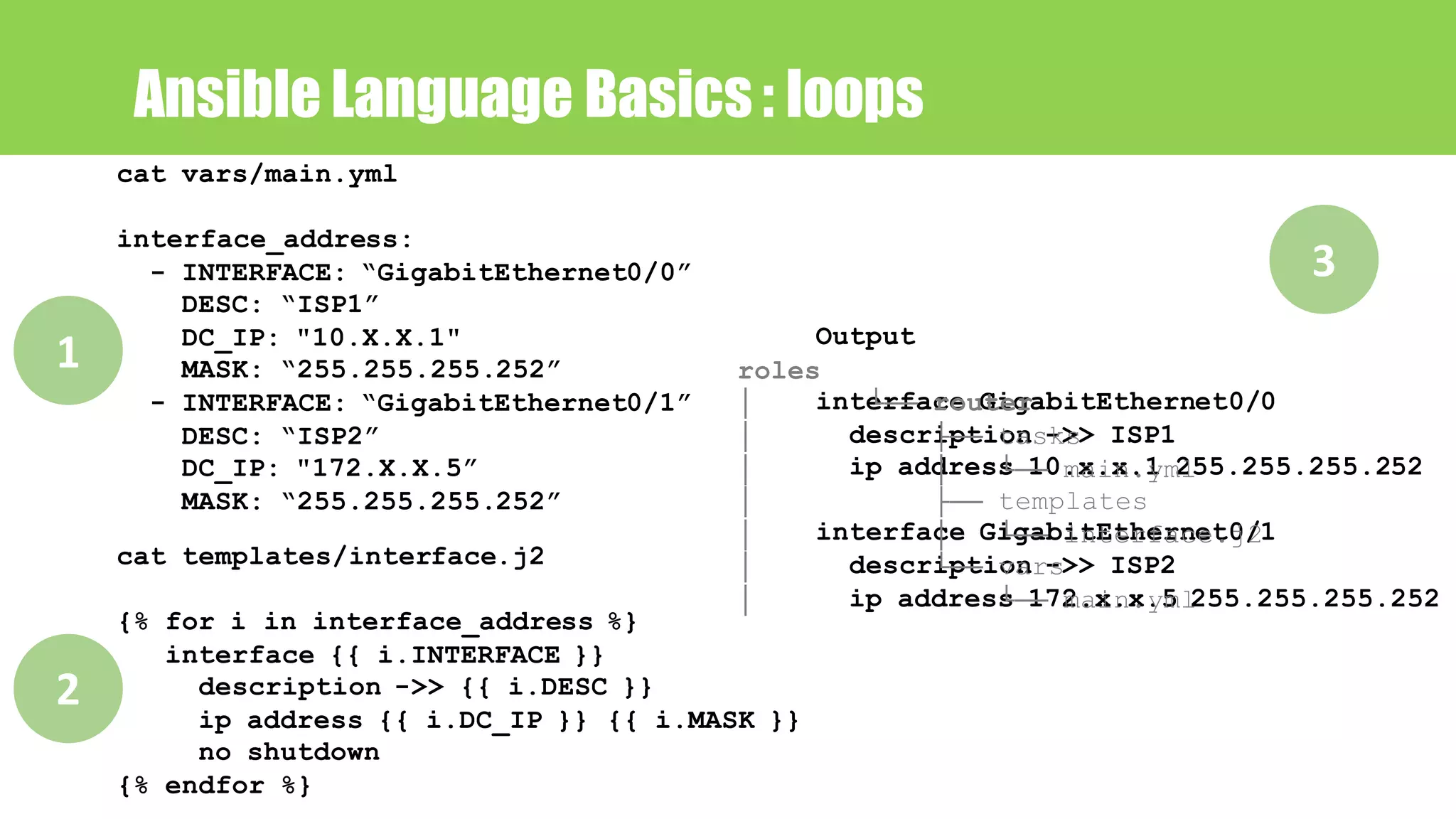
cat vars/main.yml
interface_address:
- INTERFACE: “GigabitEthernet0/0”
DESC: “ISP1”
DC_IP: "10.X.X.1"
MASK: “255.255.255.252”
- INTERFACE: “GigabitEthernet0/1”
DESC: “ISP2”
DC_IP: "172.X.X.5”
MASK: “255.255.255.252”
cat templates/interface.j2
{% for i in interface_address %}
interface {{ i.INTERFACE }}
description ->> {{ i.DESC }}
ip address {{ i.DC_IP }} {{ i.MASK }}
no shutdown
{% endfor %}
Output
interface GigabitEthernet0/0
description ->> ISP1
ip address 10.x.x.1 255.255.255.252
interface GigabitEthernet0/1
description ->> ISP2
ip address 172.x.x.5 255.255.255.252
1
2
3
roles
│ └── router
│ ├── tasks
│ │ └── main.yml
│ ├── templates
│ │ └── interface.j2
│ └── vars
│ └── main.yml
Ansible Language Basics
Comments
Ansible Language Basics : comments
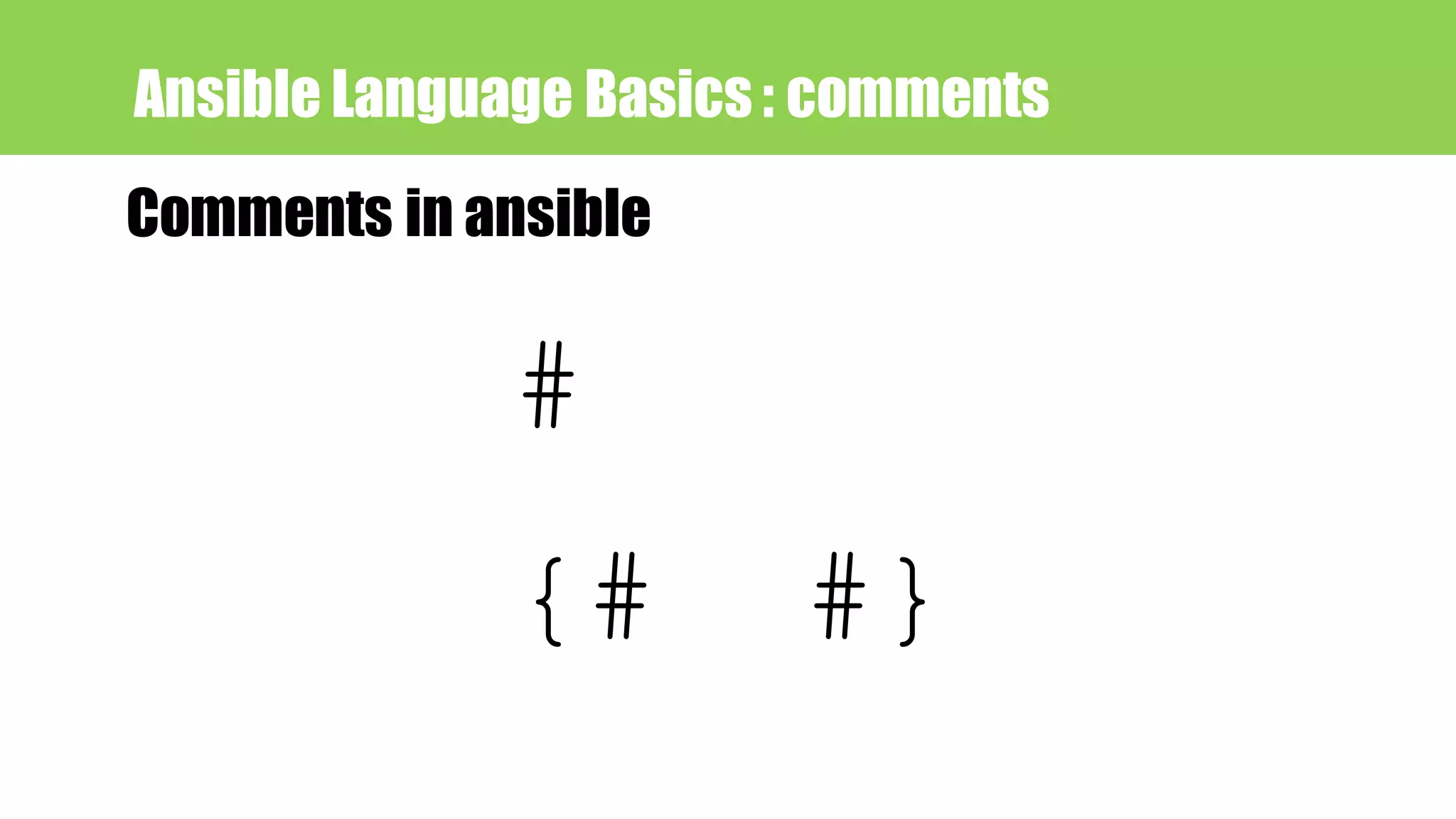
Comments in ansible
#
{# #}
Ansible Language Basics
Conditionals
Ansible Language Basics : conditionals
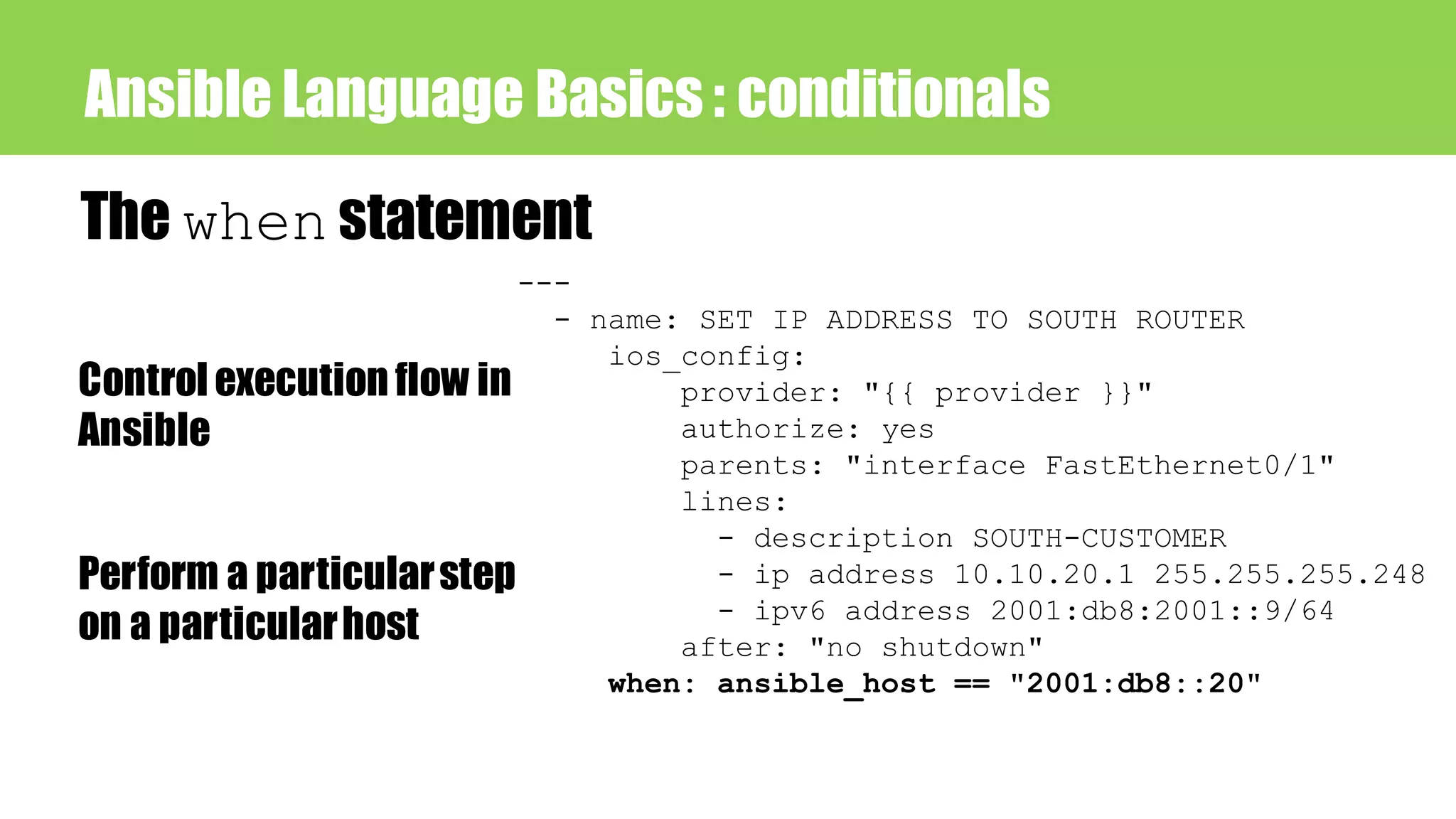
The when statement
Control execution flow in
Ansible
Perform a particularstep
on a particularhost
---
- name: SET IP ADDRESS TO SOUTH ROUTER
ios_config:
provider: "{{ provider }}"
authorize: yes
parents: "interface FastEthernet0/1"
lines:
- description SOUTH-CUSTOMER
- ip address 10.10.20.1 255.255.255.248
- ipv6 address 2001:db8:2001::9/64
after: "no shutdown"
when: ansible_host == "2001:db8::20"
Ansible Language Basics
Filters
Ansible Language Basics : filters
Introduction to filters
Filters are from jinja 2
used for transforming data inside a template
expression
Filters are separated from the variable by a
pipe symbol (|)
Ansible Language Basics : filters
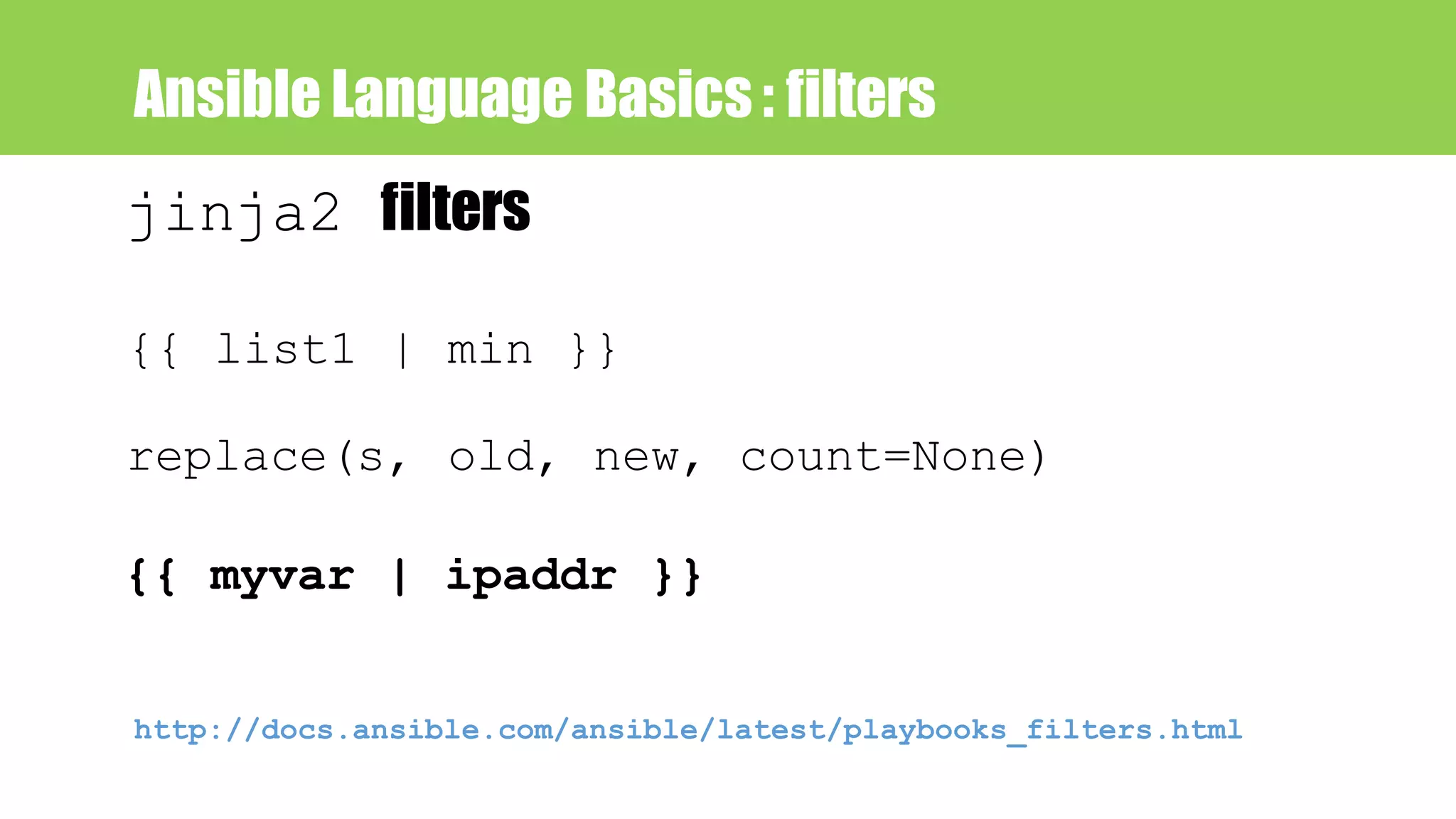
jinja2 filters
{{ list1 | min }}
replace(s, old, new, count=None)
{{ myvar | ipaddr }}
http://docs.ansible.com/ansible/latest/playbooks_filters.html
Ansible Language Basics : filters
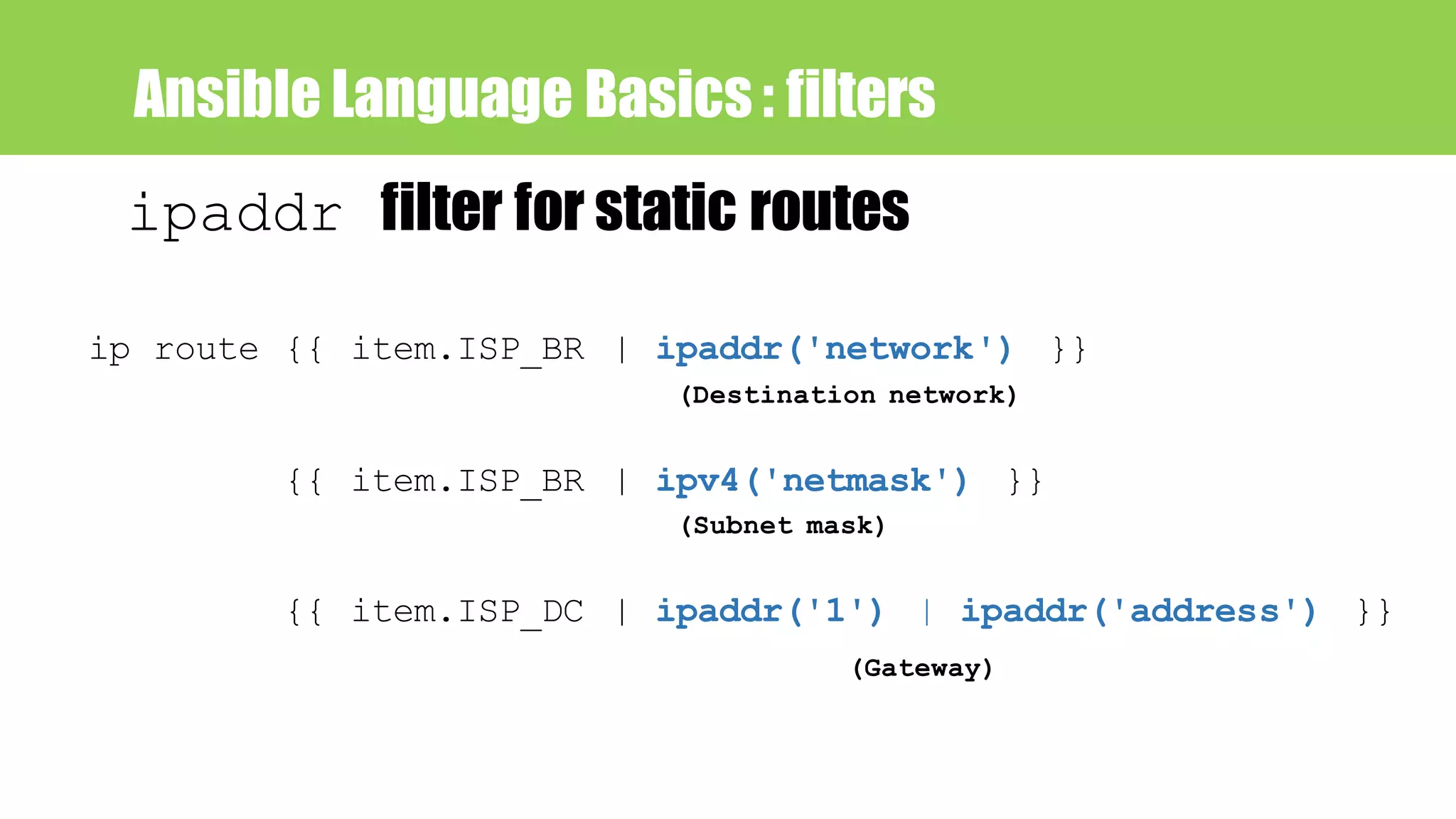
ipaddr filter for static routes
ip route {{ item.ISP_BR | ipaddr('network') }}
(Destination network)
{{ item.ISP_BR | ipv4('netmask') }}
(Subnet mask)
{{ item.ISP_DC | ipaddr('1') | ipaddr('address') }}
(Gateway)
Ansible Language Basics
Facts
Ansible Language Basics : facts
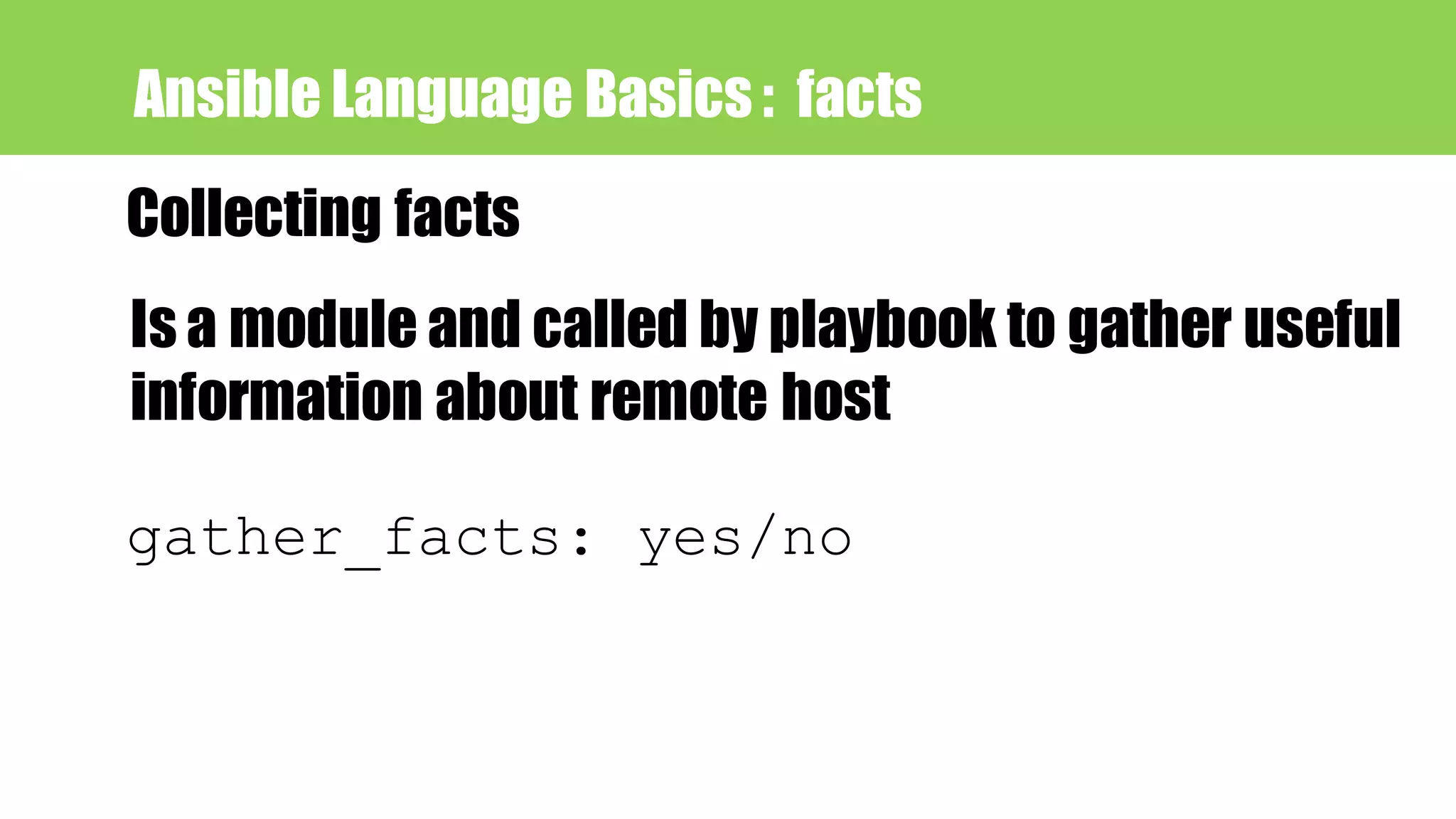
Collecting facts
Is a module and called by playbook to gather useful
information about remote host
gather_facts: yes/no
Ansible Language Basics
Templating (jinja2)
Ansible Language Basics : jinja2 templating
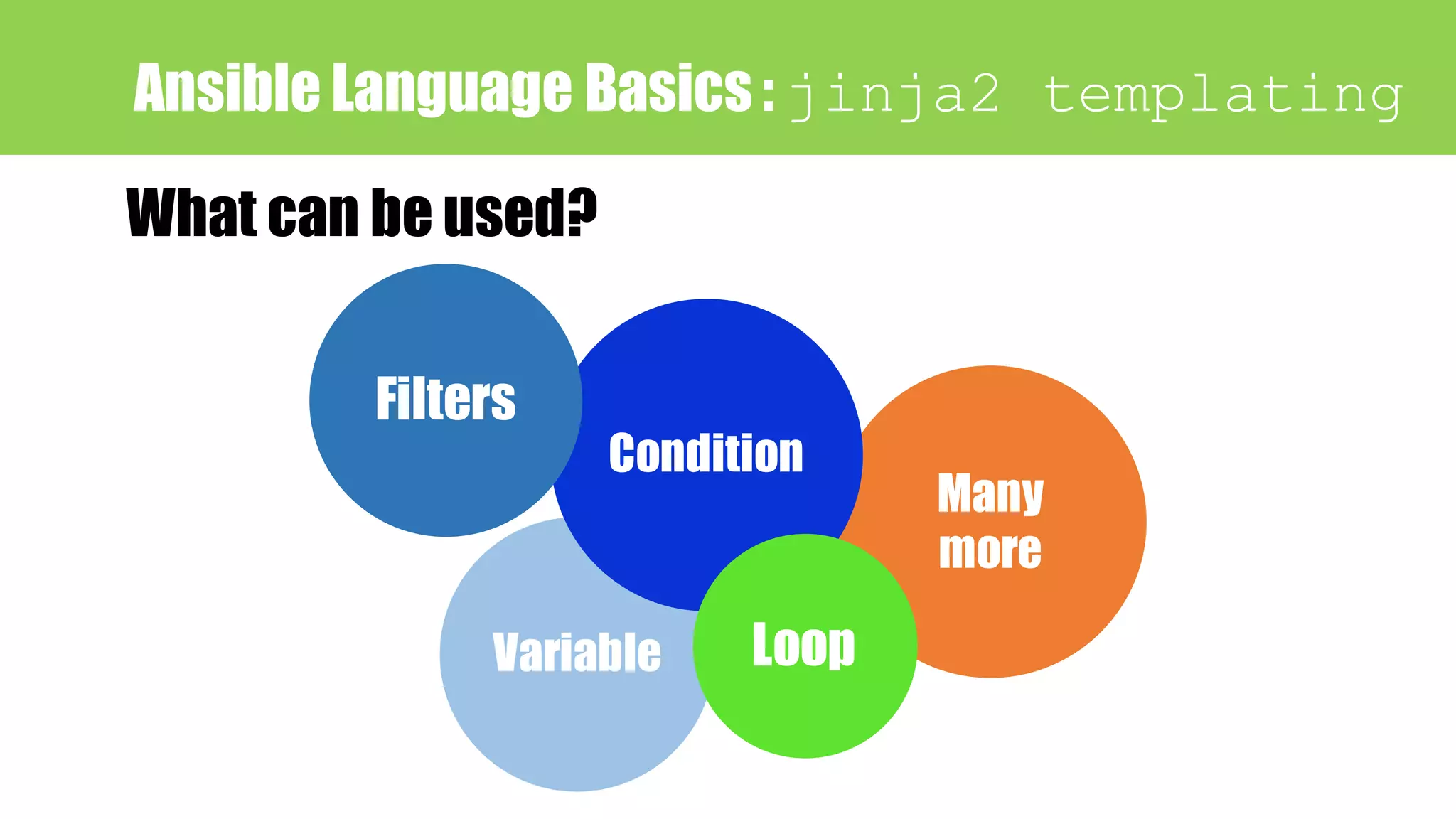
What can be used?
Many
more
Variable
Condition
Loop
Filters
Ansible Language Basics : jinja2
├── router_config
│ ├── inventory
│ │ └── hosts
│ ├── output
│ │ └── SOUTH.cfg
│ ├── playbook.yml
│ └── roles
│ └── router
│ ├── tasks
│ │ └── main.yml
│ ├── templates
│ │ └── router_config.j2
│ └── vars
│ └── main.yml
Ansible Language Basics : jinja2
hostname {{ item.hostname }}
{# Physical interface #}
{% for interface in cisco_1921_int %}
interface {{ interface }}
description ->> {{ cisco_1921_int[interface].dess }}
ip address {{ cisco_1921_int[interface].addrs }}
{{ cisco_1921_int[interface].sub }}
no shutdown
exit
{% endfor %}
Jinja2 template
Ansible Language Basics
Roles setup
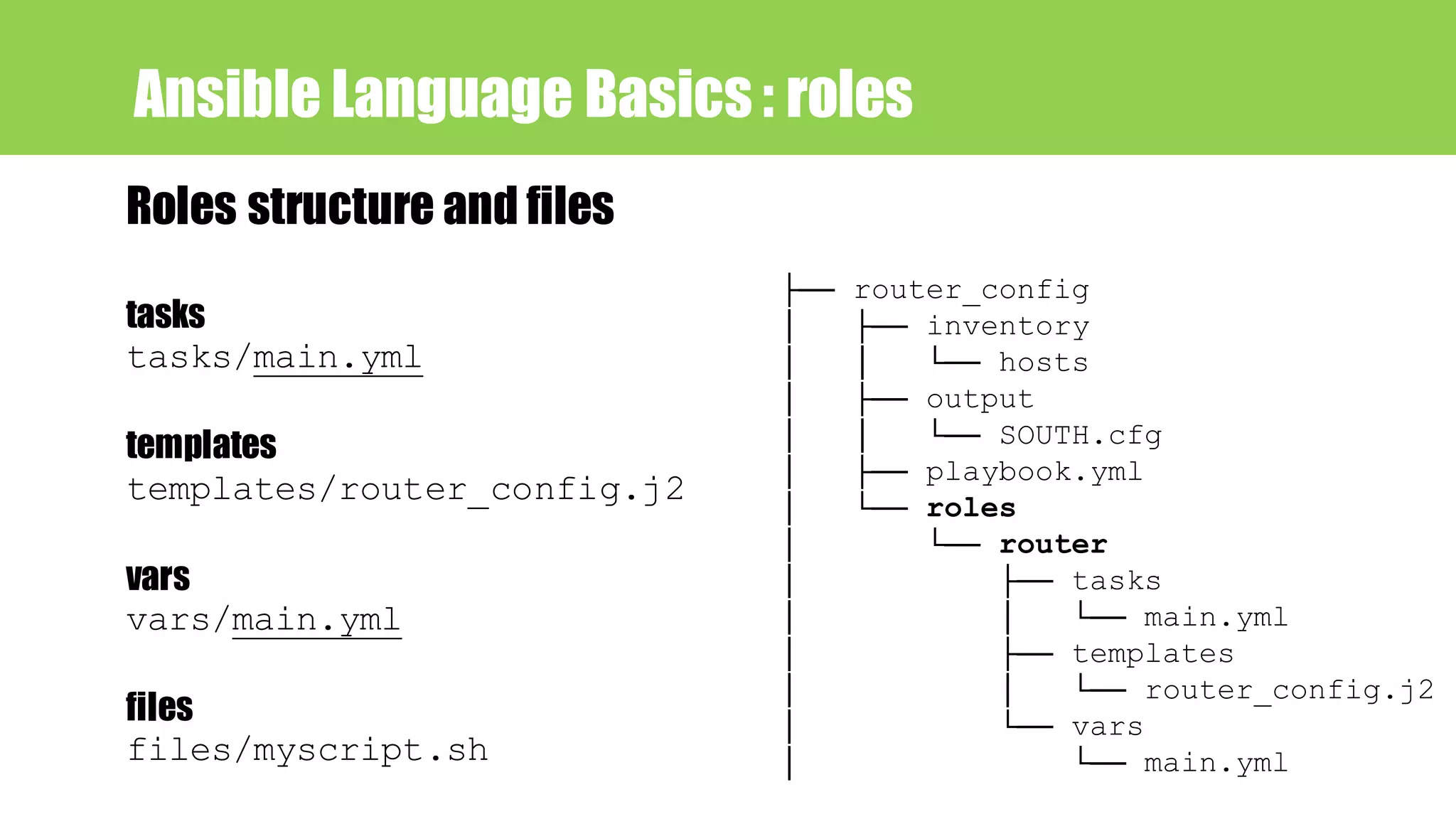
Ansible Language Basics : roles
Roles structure and files
├── router_config
│ ├── inventory
│ │ └── hosts
│ ├── output
│ │ └── SOUTH.cfg
│ ├── playbook.yml
│ └── roles
│ └── router
│ ├── tasks
│ │ └── main.yml
│ ├── templates
│ │ └── router_config.j2
│ └── vars
│ └── main.yml
tasks
tasks/main.yml
templates
templates/router_config.j2
vars
vars/main.yml
files
files/myscript.sh
Ansible Language Basics
Debugging
Ansible Language Basics : debugging
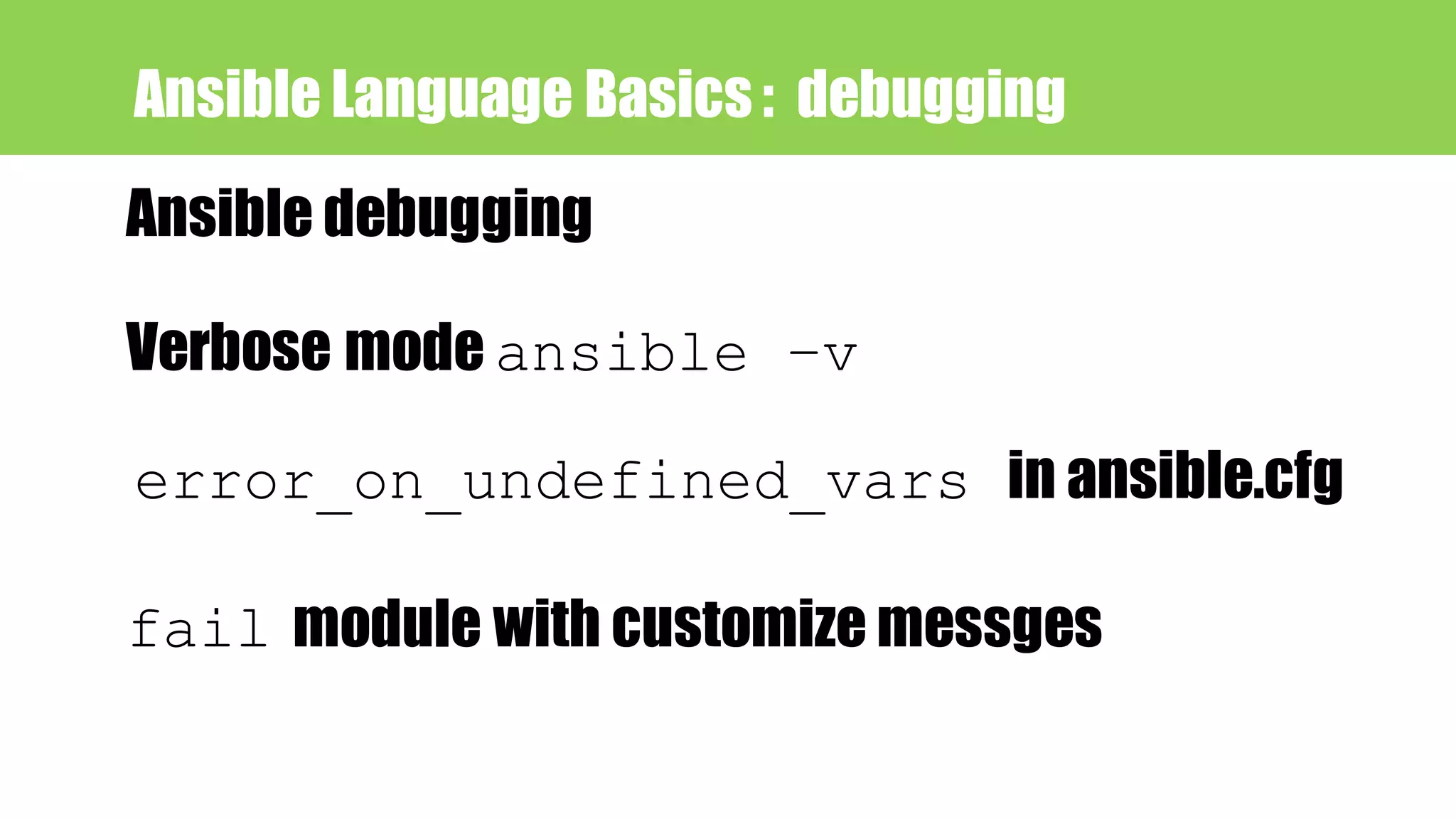
Ansible debugging
Verbose mode ansible –v
error_on_undefined_vars in ansible.cfg
fail module with customize messges
Ansible Language Basics
Ansible encryption decryption
ANSIBLE Security
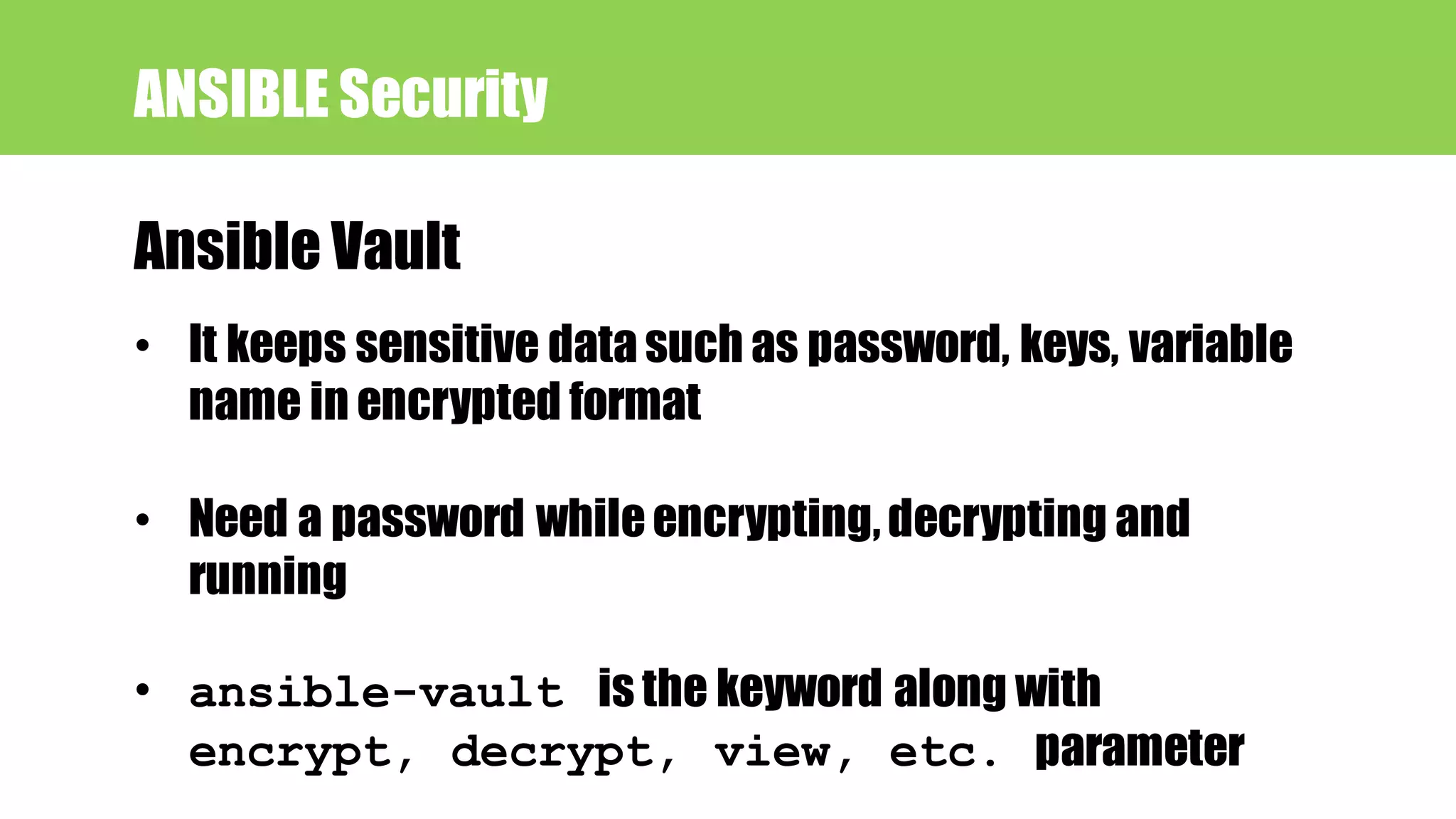
Ansible Vault
• It keeps sensitive data such as password, keys, variable
name in encrypted format
• Need a password whileencrypting,decrypting and
running
• ansible-vault is the keyword along with
encrypt, decrypt, view, etc. parameter
ANSIBLE Security
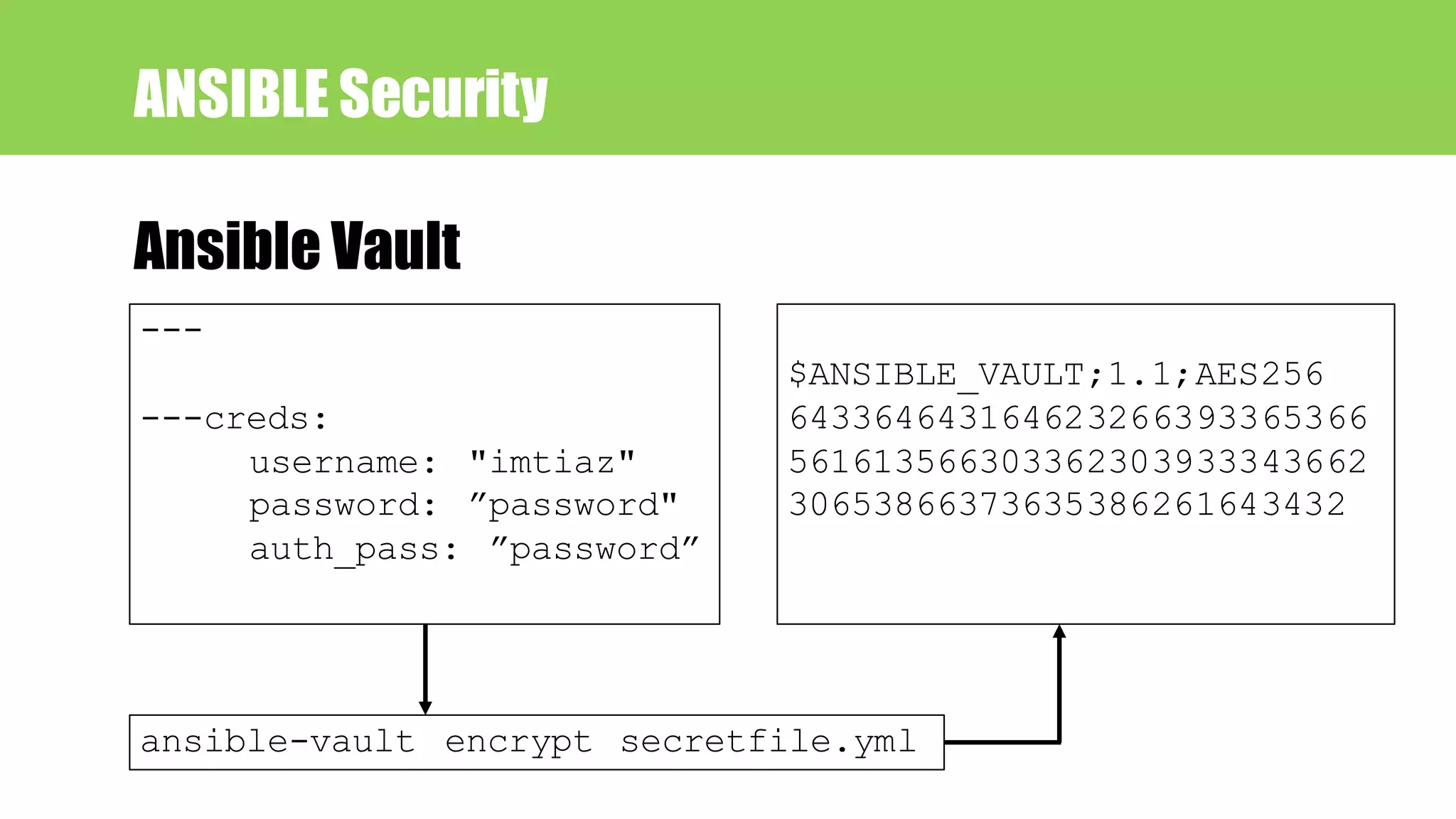
Ansible Vault
---
---creds:
username: "imtiaz"
password: ”password"
auth_pass: ”password”
$ANSIBLE_VAULT;1.1;AES256
643364643164623266393365366
561613566303362303933343662
30653866373635386261643432
ansible-vault encrypt secretfile.yml
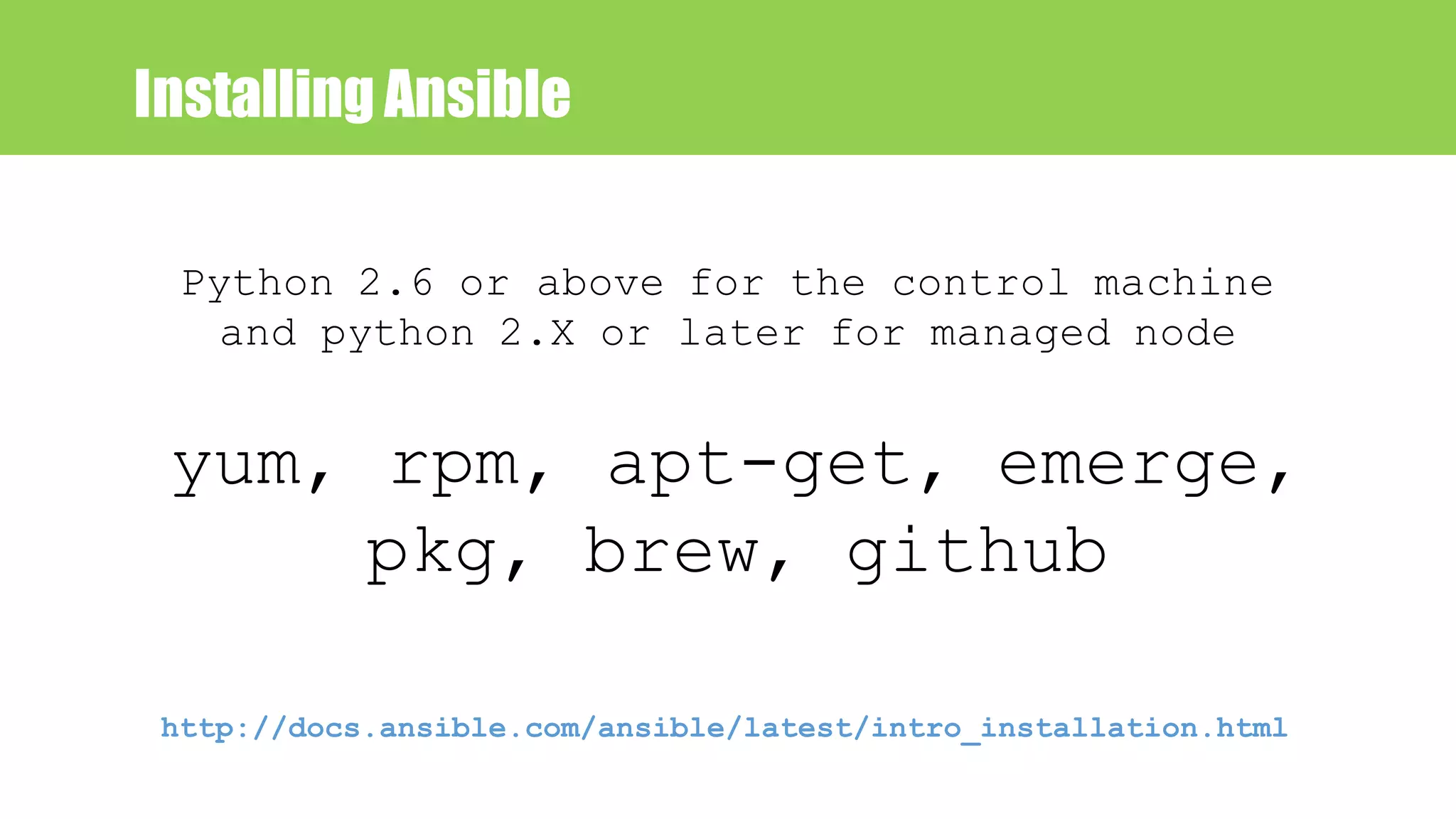
Installing Ansible
yum, rpm, apt-get, emerge,
pkg, brew, github
Python 2.6 or above for the control machine
and python 2.X or later for managed node
http://docs.ansible.com/ansible/latest/intro_installation.html
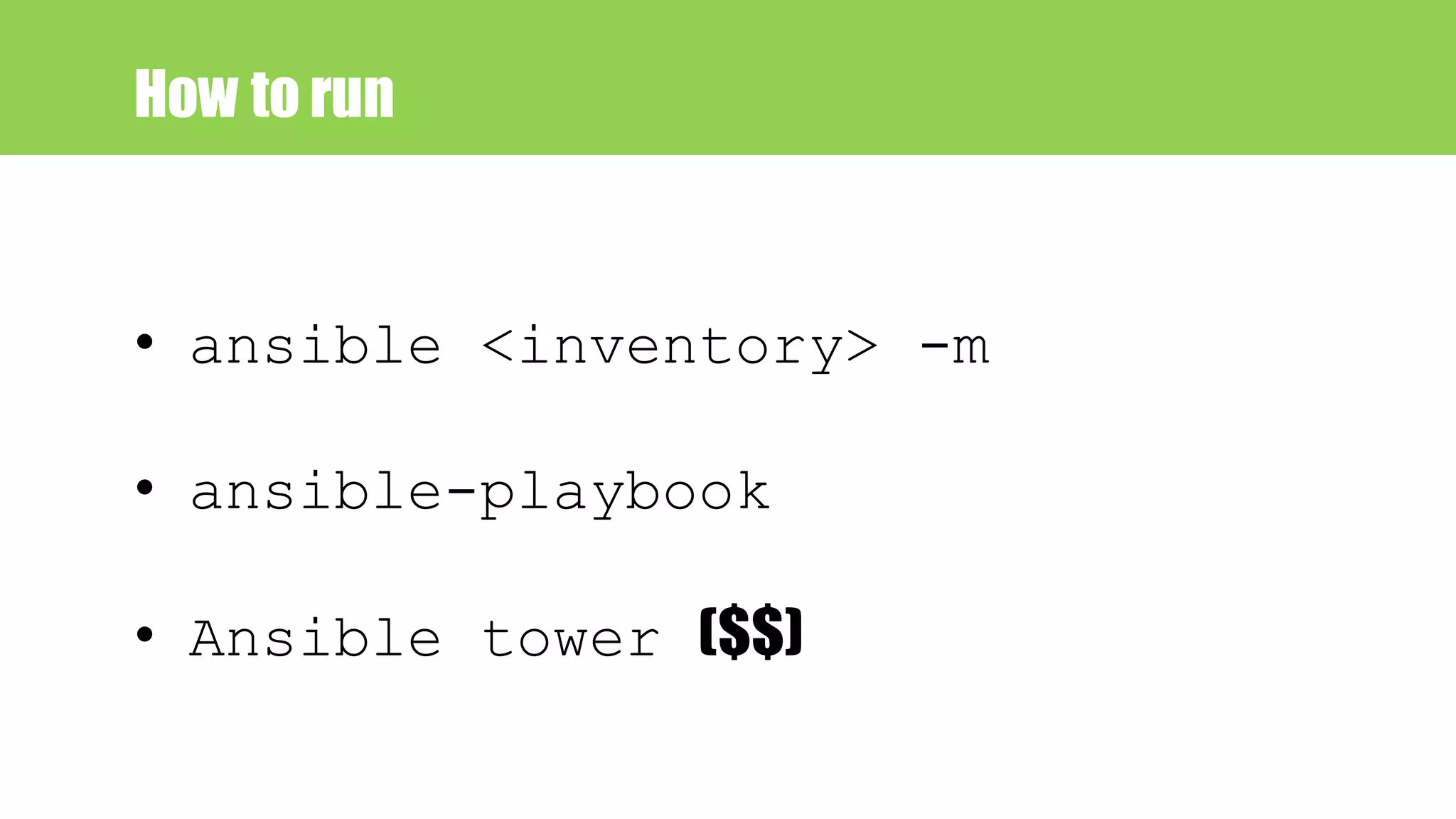
How to run
• ansible <inventory> -m
• ansible-playbook
• Ansible tower ($$)
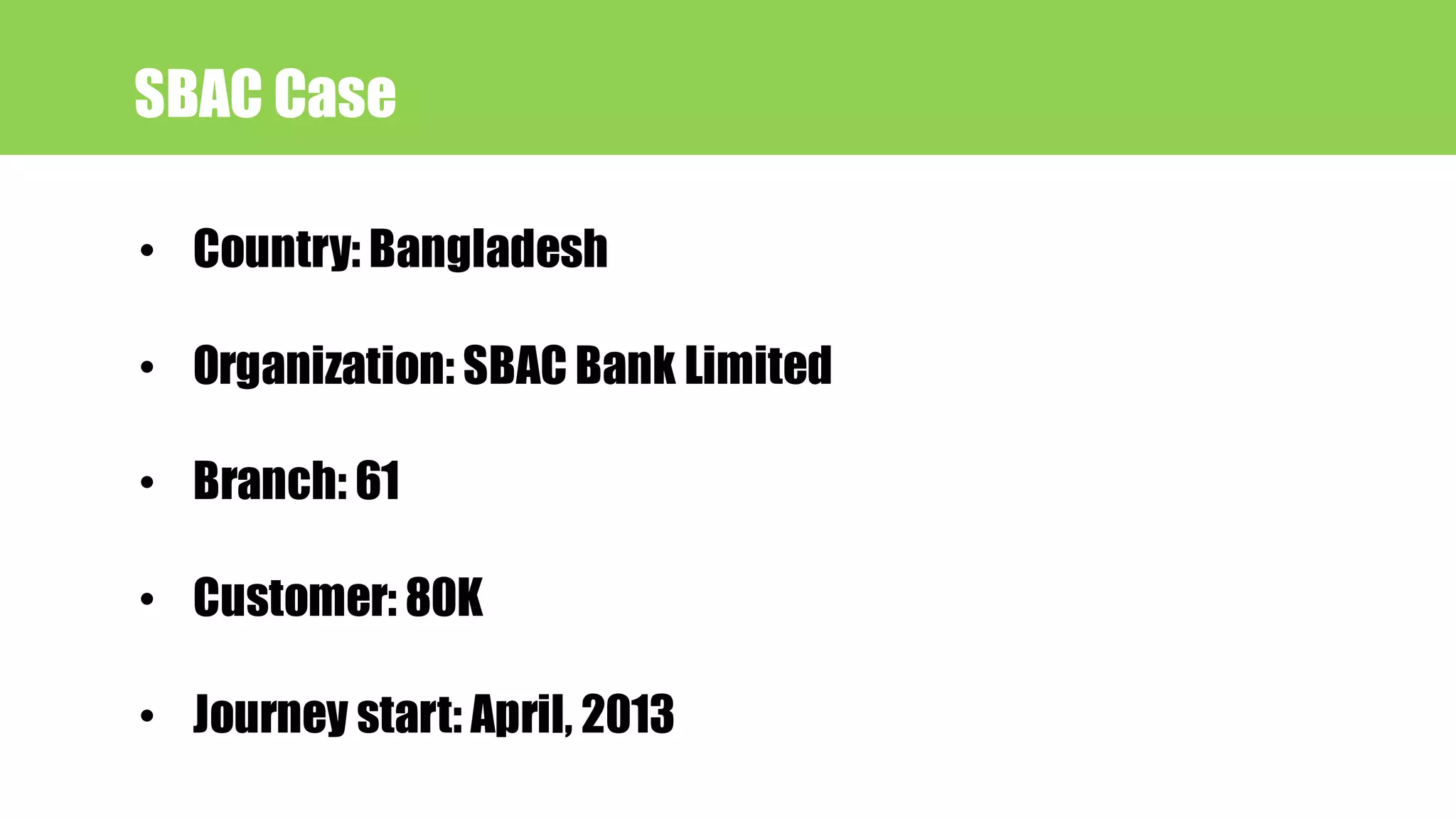
SBAC Case
• Country: Bangladesh
• Organization: SBAC Bank Limited
• Branch: 61
• Customer: 80K
• Journey start: April, 2013
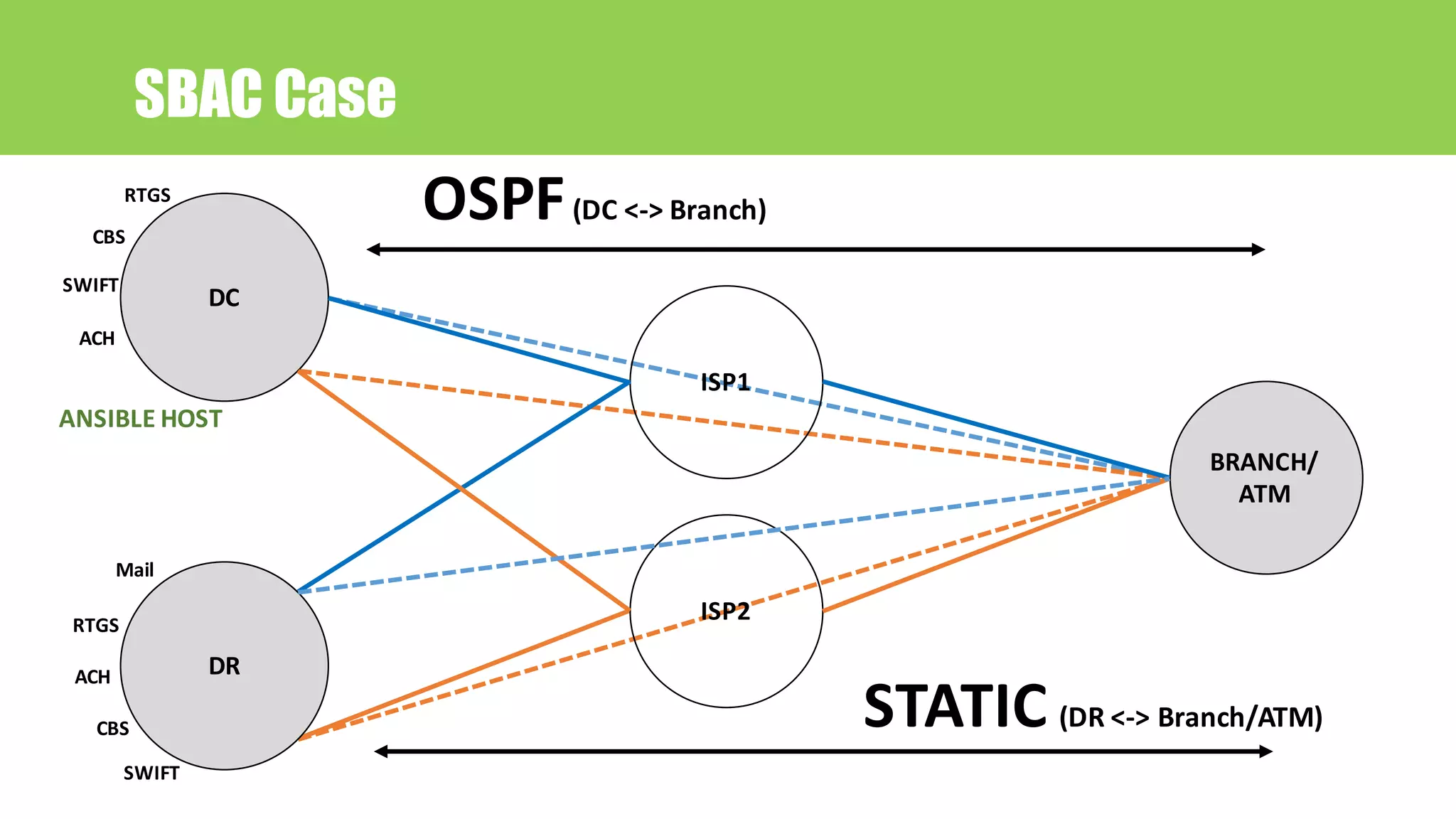
SBAC Case
DC
DR
ISP1
ISP2
BRANCH/
ATM
OSPF(DC	<->	Branch)
STATIC	(DR	<->	Branch/ATM)
ANSIBLE	HOST
CBS
SWIFT
RTGS
ACH
Mail
RTGS
ACH
CBS
SWIFT
SBAC Case
• Generate router configuration for new
branch or ATM
• Manage static route, access list, ospf cost
etc.
Demo Time
Demo 1
Introduction to Ad-Hoc commands
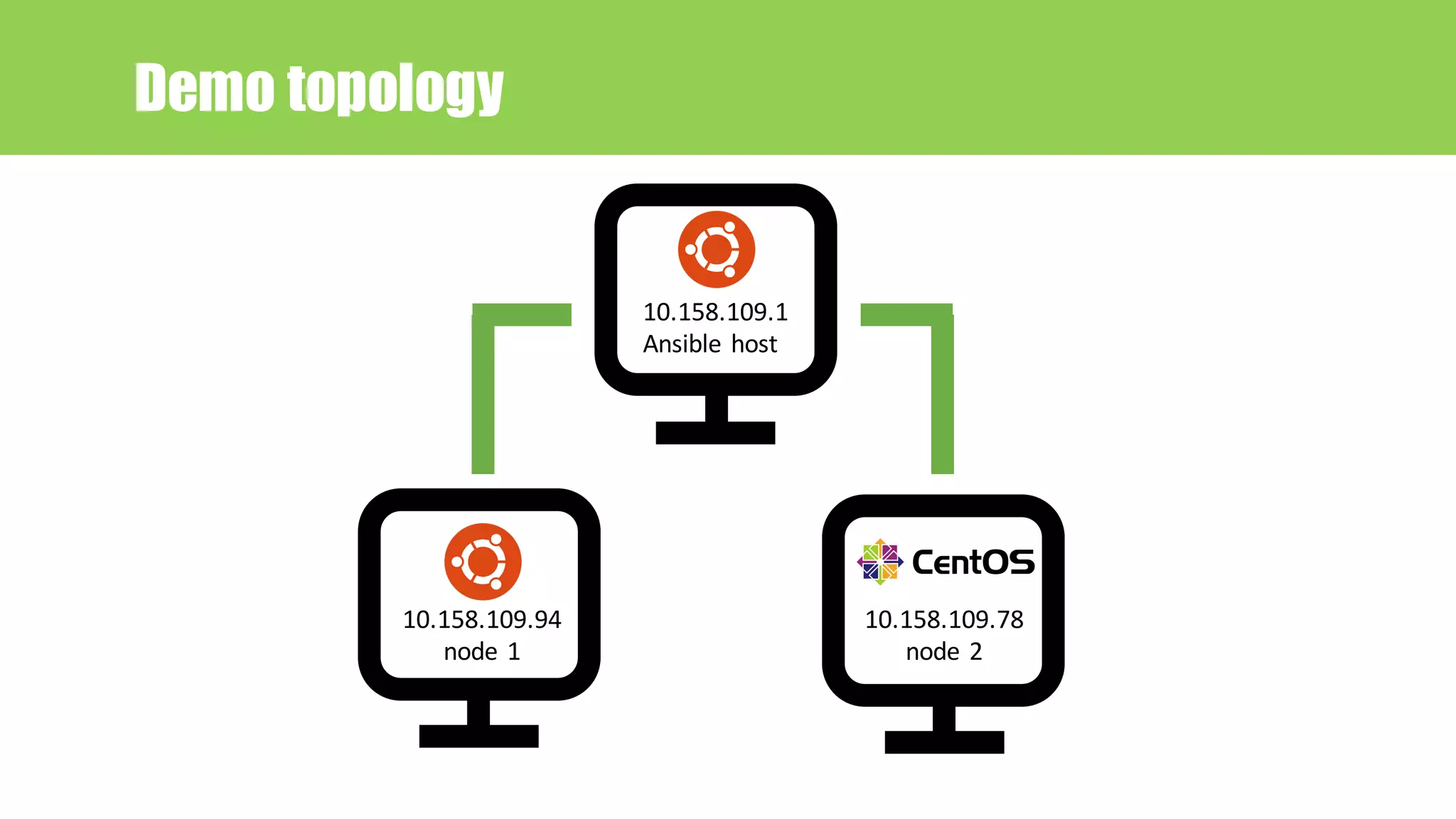
Demo topology
10.158.109.1
Ansible host
10.158.109.94
node	1
10.158.109.78
node	2
Demo 2
Introduction to Ansible playbook
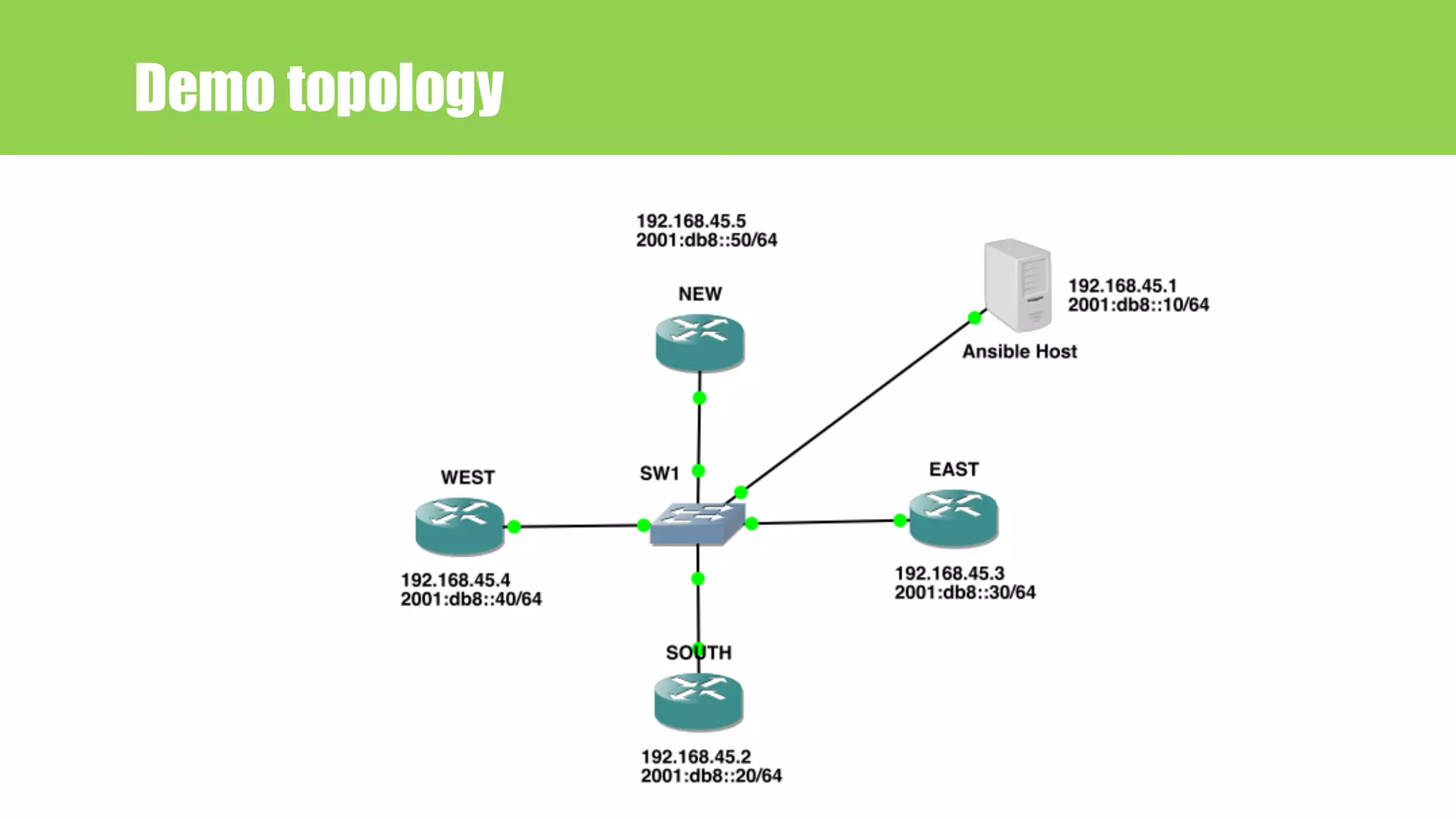
Demo topology
Demo 3
Introduction to Ansible role
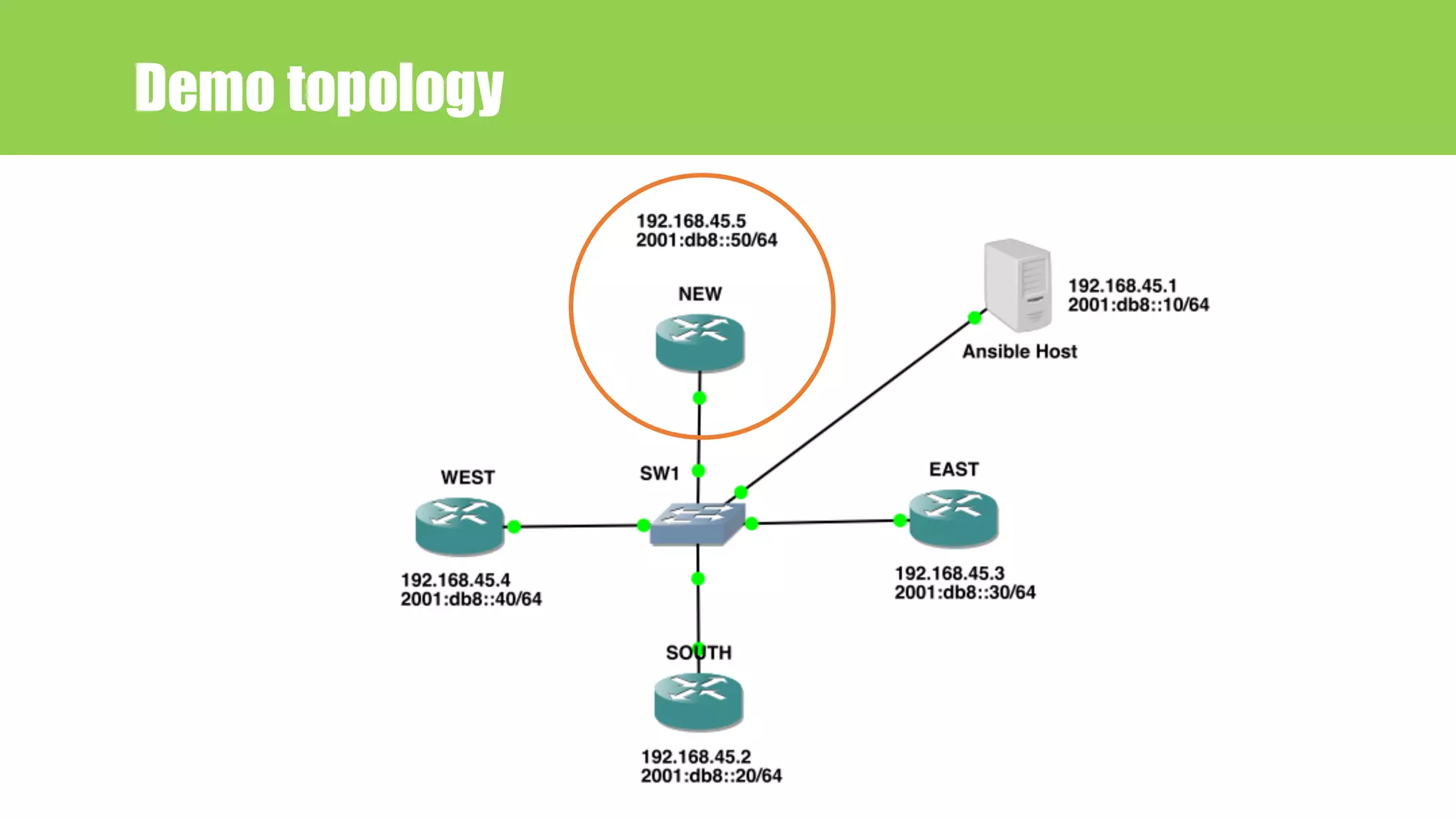
Demo topology
Thank You
writeimtiaz@gmail.com
https://imtiazrahman.com
?	?	?

Network Automation (NetDevOps) with Ansible

  • 1.
    Imtiaz Rahman SBAC BankLimited NETWORK AUTOMATION (NetDevOps) with ANSIBLE writeimtiaz@gmail.com https://imtiazrahman.com APRICOT 2018 24 – 28 Feb 2018 Kathmandu, Nepal APNIC 45
  • 2.
    Today’s Talk 1. Devops/NetDevOps? 2. Why automation ? 3. Tools for automation 4. Why Ansible ? 5. Ansible introduction 6. Ansible Language Basics 7. Ansible encryption decryption 8. How to run 9. SBAC Case (case study) 10. Configuration & Hands on LAB
  • 3.
  • 4.
  • 5.
    DevOps integrates developersand operations teams In order toimprove collaboration and productivityby automatinginfrastructure, automatingworkflows and continuouslymeasuring applicationperformance Dev + Ops = DevOps DevOps
  • 6.
    NetDevOps = Networking+ DevOps infrastructure as code NetDevOps
  • 7.
    Identical configuration Faster deployment Why automation ? Avoidrepeated task Avoid typographical error (Typos)
  • 8.
  • 9.
    • Open sourceIT automation tool • Red hat Enterprise Linux,CentOS,Debian, OS X, Ubuntuetc. • Need python What is ANSIBLE?
  • 10.
    Why ANSIBLE? • Simple •Push model • Agentless
  • 11.
  • 12.
  • 13.
  • 14.
    ANSIBLE Introduction Build ahouse Master Plan (small plan) work tools Real world Ansible world Configure a device playbook (play, play) tasks modules --- - hosts: ios-routers gather_facts: no connection: local name: load new acl ios_config: lines: name: Add banner ios_config: lines: ios_config ios_command
  • 15.
    • Start with- - - • File extention .yml/.yaml • Easy for a human to read ANSIBLE Introduction YAML --- - hosts: ios-routers gather_facts: no connection: local tasks: - name: Save Configuration ios_command: commands: - write memory host: "{{ ansible_host }}"
  • 16.
    Playbook ANSIBLE Introduction • TellAnsiblewhat to do • Send commands toremote devices • Plain text YAML file • Each playbook contains one or more plays
  • 17.
    ANSIBLE Introduction playbooksample --- - name: PLAY START hosts: ios-routers gather_facts: no connection: local tasks: - name: LOGIN INFORMATION include_vars: secrets.yml - name: ADD BANNER ios_config: provider: "{{ provider }}" lines: - banner motd ^Welcom to APRICOT 2108^
  • 18.
    Module ANSIBLE Introduction • Modulescontrol system resources, packages, files. • Can be executed directlyon remote hosts or throughPlaybooks • Over 450 shipswithAnsible • User can also write theirown modules
  • 19.
    ANSIBLE Introduction (Networkmodules) • asa_acl - Manage access-lists on a Cisco ASA • asa_command - Run arbitrary commands on Cisco ASA devices • eos_banner - Manage multiline banners on Arista EOS devices • eos_config - Manage Arista EOS configuration sections • bigip_command - Run arbitrary command on F5 devices. • bigip_hostname - Manage the hostname of a BIG-IP. • ios_banner - Manage multiline banners on Cisco IOS devices • ios_command - Run commands on remote devices running Cisco IOS • ios_config - Manage Cisco IOS configuration sections • iosxr_command - Run commands on remote devices running Cisco IOS XR • iosxr_config - Manage Cisco IOS XR configuration sections • junos_command - Run arbitrary commands on an Juniper JUNOS device • junos_config - Manage configuration on devices running Juniper JUNOS http://docs.ansible.com/ansible/list_of_network_modules.html
  • 20.
    Task ANSIBLE Introduction • Ata basic level, a taskis nothingmore than a call to an ansiblemodule • Task run sequentially
  • 21.
    ANSIBLE Introduction tasksample - name: configure interface settings ios_config: lines: - description test interface - ip address 172.31.1.1 255.255.255.0 parents: interface Ethernet1 - name: load new acl into device ios_config: lines: - 10 permit ip host 1.1.1.1 any log - 20 permit ip host 2.2.2.2 any log parents: ip access-list extended test before: no ip access-list extended test match: exact
  • 22.
    Task Task Task ModuleModuleModule Play Play Play 1 2 3 Playbook ANSIBLE Introduction
  • 23.
    --- - hosts: all-ios gather_facts:no connection: local tasks: - name: OBTAIN LOGIN INFORMATION include_vars: secrets.yml - name: DEFINE PROVIDER set_fact: provider: host: "{{ ansible_host }}" username: "{{ creds['username'] }}" password: "{{ creds['password'] }}" auth_pass: "{{ creds['auth_pass'] }}" - name: ADD BANNER ios_config: provider: "{{ provider }}" authorize: yes lines: - banner motd ^Welcom to BDNOG7^ Play task Module task Module task Module 1 2 3 Playbook ANSIBLE Introduction
  • 24.
    Hosts ANSIBLE Introduction • Listof devices or group of devices where ansiblepushconfiguration • Name and variable assign • Default location /etc/ansible/hosts • Can make yourown
  • 25.
    ANSIBLE Introduction Hostsfile sample [ios-routers] R_2691 ansible_host=192.168.45.3 R_3745 ansible_host=192.168.45.4 [v6-router] R_7200 ansible_host=2001:db8::1001::1 groups groups INI-like (one of Ansible defaults)
  • 26.
    Inventory ANSIBLE Introduction • Collectionsoffiles or directoriesinsidea directory • ansible-playbook -i <directory-name> playbook.yml • Can have (not mandetory) • hosts (file) • host_vars (dir) • group_vars (dir) • Can be accessed across multipleroles
  • 27.
    Roles ANSIBLE Introduction • Ansibleroles are a special kind of playbook that are fully self-contained with tasks, variables, configuration templates and other supportingfiles • Has it’s own directory structure
  • 28.
    ANSIBLE Introduction rolessample ├── router_config │ ├── inventory │ │ └── hosts │ ├── output │ │ └── SOUTH.cfg │ ├── playbook.yml │ └── roles │ └── router │ ├── tasks │ │ └── main.yml │ ├── templates │ │ └── router_config.j2 │ └── vars │ └── main.yml
  • 29.
    Jinja2 ANSIBLE Introduction • templateengineforthe Python programming language • Fileextension .j2 • Supportconditions,loops • Variable declaration
  • 30.
    ANSIBLE Introduction jinja2sample {% for interface in cisco_1921_interfaces %} interface {{ interface }} {% if interface == 'GigabitEthernet0/0' %} description {{ item.int_descp }} ip address {{ item.ipv4_addp }} {{ item.ipv4_mus }} {% elif interface == 'GigabitEthernet0/1' %} description {{ item.int_descs }} ip address {{ item.ipv4_adds }} {{ item.ipv4_mus }} {% endif %} no shutdown exit {% endfor %} ip route {{ item.static_route1 }} {{ item.static_gw1 }} ip route {{ item.static_route2 }} {{ item.static_gw1 }}
  • 31.
  • 32.
  • 33.
    Ansible Language Basics: Variable Introduction to ansible variable • Variable names should be letters, numbers,and underscores. • isp1, ISP1, isp_dc1, ispdc is valid • 1ISP_DC, 10, ISP DC is not valid • Variables should always start with a letter.
  • 34.
    Ansible Language Basics: Variable Variable declaration and assignment Variables isp1_dc: 10.x.x.2 Lists isp : - isp1_dc: 10.x.x.2 - isp2_dc: 20.x.x.6 Dictionaries isp : - isp_dc: 10.x.x.2 subnet: 255.255.255.252 - isp_dc: 20.x.x.6 subnet: 255.255.255.248
  • 35.
    Ansible Language Basics: Variable Accessing Variable Variables {{ ips1_dc }} Lists (looping) {{ item }} Dictionaries(looping) {{ item.isp_dc }} {{ item.subnet }}
  • 36.
    Ansible Language Basics: Variable host_vars and group_vars ├── apricot │ ├── inventory │ │ ├── group_vars │ │ │ ├── all.yml │ │ │ └── ipv4_router.yml │ │ ├── host_vars │ │ │ └── south_router.yml │ │ └── hosts │ ├── playbook.yml │ └── roles
  • 37.
    Ansible Language Basics: Variable host_vars Host-specefic variables host_vars/south_router.yml Variable tobe used bysouth_router host
  • 38.
    Ansible Language Basics: Variable group_vars Host group-specefic variables group_vars/ipv4_router.yml Variable tobe used byany host in ipv4_router group
  • 39.
  • 40.
    Ansible Language Basics: loops Introduction to Loops • A loop is an instructionthat repeats untila specified condition is reached • Used for doing thesame thingfor multipletimes
  • 41.
    Ansible Language Basics: loops Types of Loops • Standard • Nested • Do-Until • for
  • 42.
    Ansible Language Basics: loops cat vars/main.yml interface_address: - INTERFACE: “GigabitEthernet0/0” DESC: “ISP1” DC_IP: "10.X.X.1" MASK: “255.255.255.252” - INTERFACE: “GigabitEthernet0/1” DESC: “ISP2” DC_IP: "172.X.X.5” MASK: “255.255.255.252” cat templates/interface.j2 {% for i in interface_address %} interface {{ i.INTERFACE }} description ->> {{ i.DESC }} ip address {{ i.DC_IP }} {{ i.MASK }} no shutdown {% endfor %} Output interface GigabitEthernet0/0 description ->> ISP1 ip address 10.x.x.1 255.255.255.252 interface GigabitEthernet0/1 description ->> ISP2 ip address 172.x.x.5 255.255.255.252 1 2 3 roles │ └── router │ ├── tasks │ │ └── main.yml │ ├── templates │ │ └── interface.j2 │ └── vars │ └── main.yml
  • 43.
  • 44.
    Ansible Language Basics: comments Comments in ansible # {# #}
  • 45.
  • 46.
    Ansible Language Basics: conditionals The when statement Control execution flow in Ansible Perform a particularstep on a particularhost --- - name: SET IP ADDRESS TO SOUTH ROUTER ios_config: provider: "{{ provider }}" authorize: yes parents: "interface FastEthernet0/1" lines: - description SOUTH-CUSTOMER - ip address 10.10.20.1 255.255.255.248 - ipv6 address 2001:db8:2001::9/64 after: "no shutdown" when: ansible_host == "2001:db8::20"
  • 47.
  • 48.
    Ansible Language Basics: filters Introduction to filters Filters are from jinja 2 used for transforming data inside a template expression Filters are separated from the variable by a pipe symbol (|)
  • 49.
    Ansible Language Basics: filters jinja2 filters {{ list1 | min }} replace(s, old, new, count=None) {{ myvar | ipaddr }} http://docs.ansible.com/ansible/latest/playbooks_filters.html
  • 50.
    Ansible Language Basics: filters ipaddr filter for static routes ip route {{ item.ISP_BR | ipaddr('network') }} (Destination network) {{ item.ISP_BR | ipv4('netmask') }} (Subnet mask) {{ item.ISP_DC | ipaddr('1') | ipaddr('address') }} (Gateway)
  • 51.
  • 52.
    Ansible Language Basics: facts Collecting facts Is a module and called by playbook to gather useful information about remote host gather_facts: yes/no
  • 53.
  • 54.
    Ansible Language Basics: jinja2 templating What can be used? Many more Variable Condition Loop Filters
  • 55.
    Ansible Language Basics: jinja2 ├── router_config │ ├── inventory │ │ └── hosts │ ├── output │ │ └── SOUTH.cfg │ ├── playbook.yml │ └── roles │ └── router │ ├── tasks │ │ └── main.yml │ ├── templates │ │ └── router_config.j2 │ └── vars │ └── main.yml
  • 56.
    Ansible Language Basics: jinja2 hostname {{ item.hostname }} {# Physical interface #} {% for interface in cisco_1921_int %} interface {{ interface }} description ->> {{ cisco_1921_int[interface].dess }} ip address {{ cisco_1921_int[interface].addrs }} {{ cisco_1921_int[interface].sub }} no shutdown exit {% endfor %} Jinja2 template
  • 57.
  • 58.
    Ansible Language Basics: roles Roles structure and files ├── router_config │ ├── inventory │ │ └── hosts │ ├── output │ │ └── SOUTH.cfg │ ├── playbook.yml │ └── roles │ └── router │ ├── tasks │ │ └── main.yml │ ├── templates │ │ └── router_config.j2 │ └── vars │ └── main.yml tasks tasks/main.yml templates templates/router_config.j2 vars vars/main.yml files files/myscript.sh
  • 59.
  • 60.
    Ansible Language Basics: debugging Ansible debugging Verbose mode ansible –v error_on_undefined_vars in ansible.cfg fail module with customize messges
  • 61.
    Ansible Language Basics Ansibleencryption decryption
  • 62.
    ANSIBLE Security Ansible Vault •It keeps sensitive data such as password, keys, variable name in encrypted format • Need a password whileencrypting,decrypting and running • ansible-vault is the keyword along with encrypt, decrypt, view, etc. parameter
  • 63.
    ANSIBLE Security Ansible Vault --- ---creds: username:"imtiaz" password: ”password" auth_pass: ”password” $ANSIBLE_VAULT;1.1;AES256 643364643164623266393365366 561613566303362303933343662 30653866373635386261643432 ansible-vault encrypt secretfile.yml
  • 64.
    Installing Ansible yum, rpm,apt-get, emerge, pkg, brew, github Python 2.6 or above for the control machine and python 2.X or later for managed node http://docs.ansible.com/ansible/latest/intro_installation.html
  • 65.
    How to run •ansible <inventory> -m • ansible-playbook • Ansible tower ($$)
  • 66.
    SBAC Case • Country:Bangladesh • Organization: SBAC Bank Limited • Branch: 61 • Customer: 80K • Journey start: April, 2013
  • 67.
  • 68.
    SBAC Case • Generaterouter configuration for new branch or ATM • Manage static route, access list, ospf cost etc.
  • 69.
  • 70.
    Demo 1 Introduction toAd-Hoc commands
  • 71.
  • 72.
    Demo 2 Introduction toAnsible playbook
  • 73.
  • 74.
  • 75.
  • 76.