Net Zero Energy Buildings Karsten Voss Eike Musall
Net Zero Energy Buildings Karsten Voss Eike Musall
Net Zero Energy Buildings Karsten Voss Eike Musall
Net Zero Energy Buildings Karsten Voss Eike Musall
Net Zero Energy Buildings Karsten Voss Eike Musall
1.
Net Zero EnergyBuildings Karsten Voss Eike
Musall download
https://ebookbell.com/product/net-zero-energy-buildings-karsten-
voss-eike-musall-4914504
Explore and download more ebooks at ebookbell.com
2.
Here are somerecommended products that we believe you will be
interested in. You can click the link to download.
Net Zero Energy Buildings International Projects Of Carbon Neutrality
In Buildings Karsten Voss Eike Musall
https://ebookbell.com/product/net-zero-energy-buildings-international-
projects-of-carbon-neutrality-in-buildings-karsten-voss-eike-
musall-51761394
Net Zero Energy Buildings Case Studies And Lessons Learned Linda
Reeder
https://ebookbell.com/product/net-zero-energy-buildings-case-studies-
and-lessons-learned-linda-reeder-16592476
Solution Sets For Net Zero Energy Buildings Feedback From 30 Buildings
Worldwide Aelenei
https://ebookbell.com/product/solution-sets-for-net-zero-energy-
buildings-feedback-from-30-buildings-worldwide-aelenei-6625118
Modeling Design And Optimization Of Netzero Energy Buildings 5th
Edition Andreas Athienitis
https://ebookbell.com/product/modeling-design-and-optimization-of-
netzero-energy-buildings-5th-edition-andreas-athienitis-5099230
3.
Design Professionals GuideTo Zero Net Energy Buildings Charles Eley
Auth
https://ebookbell.com/product/design-professionals-guide-to-zero-net-
energy-buildings-charles-eley-auth-5890910
Design Professionals Guide To Zero Net Energy Buildings Charles Eley
https://ebookbell.com/product/design-professionals-guide-to-zero-net-
energy-buildings-charles-eley-57414144
Advanced Energy Design Guide For Small Retail Buildings Achieving 30
Energy Savings Over Toward A Net Zero Energy Building American Society
Of Heating Refrigerating And Airconditioning Engineers
https://ebookbell.com/product/advanced-energy-design-guide-for-small-
retail-buildings-achieving-30-energy-savings-over-toward-a-net-zero-
energy-building-american-society-of-heating-refrigerating-and-
airconditioning-engineers-994114
Net Zero Energy Building Predicted And Unintended Consequences Ming Hu
https://ebookbell.com/product/net-zero-energy-building-predicted-and-
unintended-consequences-ming-hu-33573722
Advanced Energy Design Guide For Grocery Stores Achieving 50 Energy
Savings Toward A Net Zero Energy Building Ashrae
https://ebookbell.com/product/advanced-energy-design-guide-for-
grocery-stores-achieving-50-energy-savings-toward-a-net-zero-energy-
building-ashrae-5143804
5.
∂ Green Books
NETZERO ENERGY
BUILDINGS
KARSTEN VOSS
EIKE MUSALL
INTERNATIONAL PROJECTS OF CARBON NEUTRALITY IN BUILDINGS
5
CONTENTS
5
CONTENTS
A BACKGROUND INFORMATION
KarstenVoss with contributions by
Monika Hall, Sonja Geier and Armin Binz
1 TOWARDS CLIMATE NEUTRAL
BUILDINGS 10
2 METHODICAL PRINCIPLES OF
BALANCING 28
3 ENERGY BALANCING: PRACTICE,
STANDARDISATION, AND LEGISLATION 40
B PROJECTS AND LESSONS LEARNED
OVERVIEW OF PROJECTS AND THEIR
CHARACTERISTICS – PART 1 50
Eike Musall, Karsten Voss
SMALL RESIDENTIAL BUILDINGS
01 RESIDENTIAL HOUSE 56
Monika Hall, Eike Musall
02 ÉCOTERRA HOME 60
Andreas Athienitis, José Candanedo,
Eike Musall
03 LIGHTHOUSE 64
Masa Noguchi, Eike Musall
04 HOME FOR LIFE 68
Eike Musall
LARGE RESIDENTIAL BUILDINGS
05 KRAFTWERK B 72
Monika Hall, Eike Musall
06 RENOVATION BLAUE HEIMAT 78
Florian Kagerer, Sebastian Herkel
07 KLEEHÄUSER 84
Jörg Lange, Eike Musall, Michael Gies
08 MULTI-FAMILY DWELLING 89
Beat Kämpfen
HOUSING DEVELOPMENTS
09 SOLAR COMMUNITY 94
Eike Musall, Karsten Voss
10 ENERGY PLUS COMMUNITY 100
Sonja Geier
11 BEDZED COMMUNITY 103
Masa Noguchi, Audrius Ringaila,
Eike Musall
CITIES
12 MASDAR URBAN DEVELOPMENT
PROJECT 108
Tanja Siems, Katharina Simon,
Arnulf Dinkel, Eike Musall
OVERVIEW OF PROJECTS AND THEIR
CHARACTERISTICS – PART 2 114
Eike Musall, Karsten Voss
OFFICE BUILDINGS
13 CORPORATE HEADQUARTERS 120
Monika Hall, Eike Musall
14 WWF HEADQUARTERS 125
Eike Musall
15 OFFICE BUILDING WITH APARTMENT 129
Sonja Geier
16 PIXEL BUILDING 134
Shane Esmore, David Waldren, Dylan
Brady, Beatrix Lehnert
PRODUCTION AND ADMINISTRATION
17 COMPANY HEADQUARTERS 138
Stefan Plesser, Henrik Langehein,
Norbert Fisch
18 ZERO EMISSIONS FACTORY 144
Dietmar Riecks, Eike Musall, Martin Ufheil
EDUCATIONAL BUILDINGS
19 SCHOOL RENOVATION 150
Sabine Erber, Gerhard Zweier, Ferde
Hammerer, Eike Musall
20 UNIVERSITY BUILDING 154
Aurélie Lenoir, François Garde
21 DAY CARE CENTRE 158
Bert Tilicke, Lars Rössing, Patrick Jung
22 ELEMENTARY SCHOOL 163
Ingo Lütkemeyer, Jens Krause,
Marko Brandes
EXPERIMENTAL BUILDINGS
23 SOLAR DECATHLON EUROPE 168
Soara Bernard
C APPENDIX 178
11.
6
PREFACE
PREFACE
Discussions on theappropriate energy policy for
the future and the growing concerns about climate
change regularly focus on the built environment in
particular. On the one hand, the construction, main-
tenance, and operation of buildings throughout their
life cycle consumes large amounts of energy and
causes emissions. On the other hand, we are al-
ready aware of and have tested measures for all
kinds of buildings that can dramatically reduce the
level of consumption and emissions.
However, the net zero energy and plus energy
buildings dealt with in this book go further than these
concepts. They indicate how an equalised annual
energy balance can be achieved by bringing to-
gether architectural design, energy efficiency and
the local use of renewables. They stand for inde-
pendence from finite resources and immunity to
fluctuating energy prices. A zero-carbon building
does not contribute to climate change.
INTERNATIONAL ENVIRONMENT In the new ver-
sion of the building guidelines published in 2010
the European Union calls upon member states to
introduce the energy standard “Nearly Zero Energy
Building” for all new buildings by no later than the
end of 2020. The building technology programme of
the United States of America formulates the goals of
arriving at marketable zero energy residential build-
ings by 2020 and non-residential buildings by 2025.
Nevertheless, standards that precisely define the
goals in relation to the respective national building
practice standards do not yet exist. The Swiss MIN-
ERGIE-A Certificate, which was released in March
2010, has become a pioneer in this important area
of establishing definitions.
A proposal towards a calculation process in the
context of German standardisation has been formu-
lated and accompanied by a relevant calculation
tool. The basic material needed to acquire a general
understanding of the theme is conveyed in Section A
of this book, “BACKGROUND INFORMATION”.
CLIMATE NEUTRAL BUILDINGS Under extreme
conditions, autonomous buildings point the way.
Far removed from any kind of energy infrastructure
and without a connection to an energy grid, they
are generally entirely self-supplying by means of
renewables. But for the broad mass of buildings
connected to the grid, this can't represent the model
of the future.
The long-term storage of energy, in particular of
electricity, is a significant technological bottleneck.
Equipping buildings to produce their own electricity
is not only technologically demanding, the mainte-
nance of such systems is complex and expensive,
which means that connecting the building to an elec-
tricity grid offers a significant advantage. However, a
building can only be described as climate neutral if
the electricity grids are based to 100% on renewa-
bles. But today and in the long term there is too little
of this certified green electricity to waste it through
inadequate building efficiency. The planned intro-
duction of electro-mobility will increase the demand
for clean electricity, allowing even less room for
wastage.
PROJECTS AND LESSONS LEARNED Buildings
have sufficient surface area, space, and infrastruc-
ture to operate their own plants to generate energy
and feed it into grids. Here, photovoltaic systems
and (above all, in larger and more energy intensive
non-residential buildings) combined heat and power
plants integrated in the building and run on biomass
are suitable. Many of the projects presented in this
book are so-called all-electric houses. This applies
in particular to the residential buildings. Their energy
systems are restricted to photovoltaic systems and
heat pumps, so that electricity is their only energy
source.
Because net zero energy buildings manage without
long-term storage of electrical energy, the national
power grid takes on this function and balances
seasonal fluctuations in energy generation in relation
to varying energy demands. The buildings present-
12.
PREFACE
7
7
ed in SectionB of this book, "PROJECTS AND LES-
SONS LEARNED", differ clearly with regard to the
extent to which this “service” for grid based balanc-
ing is used and how flexibly the building energy
system can react to the demands of the grids. In the
future, to ensure an optimally functioning grid infra-
structure, also with a substantially higher quota of
electricity from renewables (smart grids), buildings
will have to be more intensively integrated in genera-
tion and load management than has been the case
thus far.
The case studies show that very high energy effi-
ciency is imperative for a realistic chance of achiev-
ing an equalised annual energy balance. Through
the interaction of architecture, building construction,
and energy technology the studies presented utilise
diverse possibilities: from the geometry to the U-
values of the parts of the building envelope to the
performance of combined heat and power units
or photovoltaic arrays. The 23 projects selected
present buildings of different sizes, typologies, loca-
tions, and construction methods, ranging from resi-
dential and non-residential buildings to housing
developments and even an entire city. Many projects
use the passive house standard as their starting
point, while the first renovation projects point the way
towards zero energy for an existing building fabric.
Designing and building a net zero energy building
means that from the very start energy demand and
energy generation must be consistently kept in bal-
ance: If the demand in the annual sum exceeds the
possibilities for energy generation, further savings
must be implemented. Here, an integrated planning
team of architects, structural designers, and energy
engineers is the decisive and essential requirement.
This book documents in detail the results of energy
monitoring and the experience gained from the
planning and use phases, as well as the individual
steps on the way to an equalised energy balance.
The fact that a number of buildings don't achieve
this balance in practice emphasises the difficulty of
this task and the gap between planning and reality.
However, this does not reduce their value. Cross-
sectional analyses of more than 50 further projects
carried out all around the world supplement the
overview and broaden knowledge of possible strate-
gies. Research has revealed the dynamics with
which the field of zero energy is currently being
developed.
NETWORK OF RESEARCHERS The collaboration
in the international energy agency IEA titled “To-
wards Net Zero Energy Solar Buildings” involves
representatives of 19 nations who participate in
an intensive dialogue on suitable definitions and
assessment procedures, discussing the experi-
ence they have gained from national demonstration
projects, and publishing their findings. These activi-
ties also underline the international dimensions of
the theme and its growing importance.
ACKNOWLEDGEMENTS We thank the numerous
authors whose contributions are of such significant
importance for the success of this book. With their
buildings, committed clients and designers have
created the conditions under which net zero energy
buildings can become reality.
The work on this book was assisted by the German
Federal Ministry of Economics and Technology, the
Swiss Federal Office of Energy, and the Austrian
Federal Ministry of Transport, Innovation and Tech-
nology. The English language edition is a slightly
modified follow-up of the German language book
published in June 2011. The translation was sup-
ported by the Government of Canada's Program of
Energy Research and Development as well as the
Grocon group of companies in Australia.
Wuppertal October 2011
Karsten Voss, Eike Musall
The editors
The IEA joint “Solar Heating and Cooling (SHC)
Programme Task 40/Energy Conservation in Build-
ings and Community Systems (ECBCS) Programme
Annex 52: Towards Net-Zero Energy Solar Build-
ings” (NZEBs) is a 5-year international collaboration
between approximately 75 national experts from
19 nations in Europe, North America, Oceania, and
Southeast Asia. It seeks to study current net-zero,
near net-zero and very low energy buildings and to
develop a common understanding of a harmonised
international definitions framework, tools, innovative
solutions and industry guidelines to support the
conversion of the NZEB concept from an idea into
practical reality in the marketplace. I am pleased
to present the English edition of “Net-Zero Energy
Buildings”, a major accomplishment in this field, and
which encapsulates the many and varied concepts
and views of defining net-zero energy buildings by
government research organizations, international
and regional research centres, academia, and in-
dustry that have been discussed in this Task/Annex
since its inauguration in the fall of 2008. I am confi-
dent this book will find many interested readers.
Varennes, Canada October 2011
Josef Ayoub
Operating Agent, IEA SHC Task 40/ECBCS Annex 52,
CanmetENERGY/Natural Resources Canada
9
CONTENTS
A 1 TOWARDSCLIMATE NEUTRAL
BUILDINGS 10
A DESCRIPTIVE EXAMPLE 10
AMBITIOUS POLICY GOALS 12
EUROPEAN UNION 12
GERMANY 13
SWITZERLAND 13
AUSTRIA 14
USA 15
CANADA 15
ZERO ENERGY BUILDINGS ARE ENERGY-
EFFICIENT 16
ZERO ENERGY EXTREME:
SELF-SUFFICIENT BUILDINGS 18
SELF-SUFFICIENT HEATING SUPPLY
– POSSIBLE, BUT BETTER NOT ENTIRELY 18
SELF-SUFFICIENT POWER SUPPLY
– ONLY IF NECESSARY 20
PRACTICAL APPLICATIONS OF ZERO ENERGY
BUILDINGS: MORE OR LESS GRID-BASED 23
A FIRST CONCLUSION 26
A 2 METHODICAL PRINCIPLES OF
BALANCING 28
INPUT/OUTPUT BALANCE 28
SOLAR CONCEPTS AND THEIR EXPANSION IN
ENERGY-INTENSIVE BUILDINGS 28
MANY DIFFERENCES BETWEEN ZERO ENERGY
BUILDINGS ARE HIDDEN BY DETAIL 29
THE BALANCING INDICATORS 30
PRIMARY ENERGY 30
GREENHOUSE GASES 30
ENERGY COSTS 31
DIFFERENT PRIMARY ENERGY FACTORS 31
THE BALANCE BOUNDARY 33
USE-SPECIFIC ENERGY CONSUMPTION 33
ELECTROMOBILITY 33
EXTERNAL ENERGY PRODUCTION SYSTEMS 33
THE BALANCING PERIOD 34
THE GRID OF THE FUTURE 34
THE INFLUENCE OF EMBODIED ENERGY ON
THE LIFECYCLE BALANCE 34
LOAD-MATCH AS CRITERION OF DIFFEREN-
TIATION 35
THE SELECTION OF BUILDING TECHNOLOGY
INFLUENCES LOAD-MATCH 37
ACTUAL LOAD-MATCH IS SMALLER 37
GRID INTEGRATION 37
A 3 ENERGY BALANCING: PRACTICE, STAND-
ARDISATION, AND LEGISLATION 40
GERMANY 40
LEGISLATION AND STANDARDISATION 40
CONCEPT FOR REDEFINING THE
ZERO ENERGY BUILDING 42
CALCULATION TOOL 42
SWITZERLAND 42
LEGISLATION AND STANDARDISATION 43
THE MINERGIE LABEL 44
MINERGIE-A 45
MINERGIE-P AND MINERGIE-A 45
AUSTRIA 45
LEGISLATION AND STANDARDISATION 46
15.
10
BACKGROUND INFORMATION
10
Electricity Districtheating Direct fuel use
100%
100%
Agriculture
Energy and
waste management
Buildings
Transport
Industry
33
37
6
6
18
7
8
57
41
36
51
Residential buildings
61%
Non-residential buildings
39%
[Breakdown in %]
1025 Million t CO2
equivalent
324 Million t CO2
equivalent
TOWARDS CLIMATE
NEUTRAL BUILDINGS
A DESCRIPTIVE EXAMPLE In Germany, buildings
and their use account for approximately one-third of
total energy consumption and emissions. The majori-
ty of this demand is generated by living in residential
buildings and the remainder by so-called non-resi-
dential buildings, i.e. for commercial uses, trade,
and services. Only half of emissions is generated on
site by fossil fuel combustion. The other half is pro-
duced by power plants and heating stations that
supply buildings with power and district heating [1].
Residential buildings are the clear leader due to
their quantity: they constitute the majority of existing
buildings (Fig. A 1.01).
In existing residential buildings, heating comprises
the highest share of energy consumption. In non-
residential buildings, the impact of electrical power
consumption is growing. Significant energy loads
are caused by lighting, ventilation, and cooling, in
addition to use-specific appliances, such as com-
puters and production machinery (Fig. A 1.02). This
trend is emphasized in new construction, since
heating consumption is significantly lower here than
in existing buildings. As result, electrical power
consumption, particularly of household appliances
(“white goods”), is becoming the dominant factor in
residential buildings as well. Heating has a typically
high impact in central Europe’s climate, leading to a
pronounced seasonal character of energy consump-
tion profiles of buildings: annual electrical power
consumption is contrasted by high heating con-
sumption in winter, (still) predominantly covered by
fossil fuel combustion. This results in a very distinct
seasonal imbalance between consumption and
on-site solar energy provision. Addressing this im-
balance is one of the major challenges on the path
towards climate neutral architecture.
BUILDINGS ENDURE Approximately 70% of exist-
ing residential buildings in Germany are older than
30 years of age. They were built at a time when no
significant energy efficiency or energy savings
requirements were in place [2, 3]. Current annual
renovation rates hardly reach one percent. Without
additional efforts, an energy upgrade of all existing
buildings will take more than 100 years to complete.
From today’s point of view, this is much too long to
deal with finite resources or to turn around climate
change. This is why incentives for increasing renova-
tion rates, such as financial benefits or tax credits,
are of particular interest. Such incentives gain im-
portance due to rising energy costs, since these
lead to renovation measures becoming economically
feasible.
Renovations of high architectural quality can further
drive a related future market. An example for this
is the renovated “Neue Burse” dormitory at the Uni-
versity of Wuppertal. More than 600 students cur-
rently live there. In 2003 the deteriorating, 1970s-era
A 1.01
16.
11
TOWARDS CLIMATE NEUTRALBUILDINGS
Small appliances
and other
Lighting
Hot water
Space heating
Entertainment
electronics, IT,
communications
Appliances
(white goods)
Hot water
Space heating
Other
Hot water
Space
heating
3 3
4
6
7
13
50
6
1
1
6
Air
conditioning
Cooling (esp. commercial)
Office equipment
Hot water
Process heat
Ventilation
(esp. fans)
Other motors
Lighting
Hot water
Space heating
Hot water
Processing
heat
Space
heating
Space heating
2 3
4
4
6
31
7
7
8
10
1
6
3
8
208 Million t CO2
equivalent 124 Million t CO2
equivalent
[Breakdown in %]
a b
A 1.02
A 1.03
A 1.01 Percentage and breakdown of greenhouse gas emis-
sion as CO2 equivalent in Germany. Approximately
one third of total annual emission of about one million
tonnes is attributable directly or indirectly to the build-
ing sector.
A 1.02 Structure of climate gas emission as CO2-equivalent
forexisting residential and non-residential buildings
in Germany (based on German energy survey 2004
consumption data of the “household” and “commercial,
trade, and services” sectors).
a Residential buildings
b Non-residential buildings
A 1.03 Student dormitory in the ecological model city of
Masdar City, United Arab Emirates (UAE) 2007,
Foster + Partners.
building was renovated in a two-stage approach as
part of a demonstration project. The new building
envelope meets the passive house standard. Heat
recovery ventilation contributed to a reduction of
energy consumption for technical infrastructure,
emissions, and energy costs by more than 50% [4].
The renovated building is currently one of the most
economically efficient dormitory buildings. At this
standard, occupants’ energy consumption for hot
water and electricity comprises the major share of
the energy balance, since the typical rent for student
housing includes a utility flat rate (Figs. A 1.04 and
A 1.05, p. 12).
DIFFERENT CLIMATE, DIFFERENT TASKS The
presented data exemplarily describe the situation
in Germany. This is comparable to the situation in
most central European countries. In regions with
higher annual temperatures and high humidity, air
conditioning comprises the major share of energy
consumption. This results in different consumption
profiles and energy provider structures.
In large parts of Asia and the Arab world, greater
economic dynamics cause extensive new construc-
tion activity at scales unimaginable in the current
European context. Day after day, entire cities and
urban quarters are created out of thin air, and glazed
office towers ascend ever higher into the sky. Grow-
ing prosperity causes an enormous demand for
small air conditioning units and an increase in power
consumption in existing buildings. Low or even no
requirements at all on energy consumption in new
construction constitute a wasted opportunity that
will lead to disproportionately high levels of energy
consumption in upcoming decades. In Asia, blindly
copying European or North American architecture
and construction techniques leads to inadequately
high consumption rates. This sets the wrong tone
in the pioneering spirit of these emerging markets.
Typical office buildings there consume approximate-
ly five times more energy than their average central
European counterparts.
However, the signs of the time are recognized here
as well, as early examples demonstrate: an eco-
logical model city for 50,000 inhabitants is under
construction in the United Arab Emirates as a large
scale model project for the post-oil era (see Masdar
Urban Development Project, p. 108ff.). The first
buildings are already complete (Fig. A 1.03). 2022
World Cup officials plan to build CO2 neutral soc-
cer stadiums. A pilot stadium for 500 spectators
has already been designed and completed in 2010.
Solar cells and parabolic collectors placed along
the stadium perimeter provide solar energy for
cooling. During non-service hours, the photovoltaic
system feeds energy into the power grid. During
service, the grid covers stadium peak demands
(Fig. A 1.06, p.13).
17.
12
BACKGROUND INFORMATION
1
2
3
4
1
2
3
4
1
2
3
4
Electricity
Heat
1 User
3Hot water
2 Service technology
4 Space heating
Primary
energy
[kWh/m
2
a]
Neue Burse
0
200
250
300
150
50
100
Climate
gas
emissions
[kg/m
2
a]
Neue Burse
0
60
80
40
20
Site
energy
[kWh/m
2
a]
Neue Burse
∅ Dormitory
0
150
200
250
50
100
∅ Dormitory ∅ Dormitory
A 1.04
A 1.05
THE BUILDING SECTOR IN THE SPOTLIGHT OF
ENERGY AND CLIMATE POLICY Many architec-
tural, structural, and technical equipment designs for
constructing new, energy-efficient buildings and for
renovating existing buildings are already tried and
tested. Therefore, it is easy to understand why politi-
cal decisionmakers today particularly emphasize the
relevance of the building sector for energy savings
and climate protection regulations. It seems that
goals are easier to achieve here than in other sec-
tors. In the case of mobility, technological aspects
still dominate discussions on post-oil era sustainable
individual transport. Early electric vehicles display
difficulties, for instance during driving tests, since
currently available battery technology doesn’t yet
permit broad use. Questions on supplying emission-
free electricity at necessary scales are still unan-
swered.
The situation is different in the building sector. At
increasing scales, zero energy buildings, energy
plus buildings, and entire related housing projects
are under construction and in operation in Europe
and worldwide. The project section of this book
will illustrate the various reasons for these develop-
ments. In Europe, zero energy buildings are con-
sidered the logical continuation of a long chain of
developments from low-energy houses towards
passive houses. The claim is made that zero energy
buildings completely balance their annual energy
consumption and related CO2 emissions. Compared
to cars, the technological advantage of buildings
is their connection to the electrical power grid.
AMBITIOUS POLICY GOALS Against the back-
ground of climate change, global population in-
crease, and finite resources, it comes as no surprise
that energy policy goals are so ambitious.
At present, terminology related to net zero energy
buildings is important for strategy papers on energy
policy in many countries. This is partly due to posi-
tive connotations of the term “zero energy”. In the
context of finite resources and increasing energy
costs, it suggests independence, no costs, or an
orientation towards the future. Also, “zero” leaves
no room for discussion on quantification of suitable
parameters. The interpretation of energy parameters
as quantitative target definitions remains the domain
of experts and offers no real basis for communica-
tion with the general public. However, at first glance,
“zero” seems to doubtlessly demand highest possi-
ble standards regardless of building type or climate,
only to be superseded by the term “plus”.
EUROPEAN UNION The amendment to the EU
Energy Performance in Buildings Directive (EPBD)
prominently addresses the related subject matter.
The first directive in 2002 initiated the introduction
of integrated energy balancing methods throughout
Europe. These were required to take air condition-
ing, lighting, and use of renewable energy into
account [5]. In the 2010 recast the European Com-
mission introduced the term “near zero energy build-
ing” and specified timeframes for the implementation
of related construction standards within its member
states:
• “Article 2(2): Definitions:
Nearly zero-energy building means a building
that has a very high energy performance …. The
nearly zero or very low amount of energy required
should be covered to a very significant extent
by energy from renewable sources, including
energy from renewable sources produced on-site
or nearby.
• Article 9: Nearly Zero Energy Buildings:
Member States shall ensure that:
a) by 31 December 2020, all new buildings are
nearly zero-energy buildings; and
b) after 31 December 2018, new buildings occu-
pied and owned by public authorities are
nearly zero-energy buildings.
Member States shall draw up national plans for
increasing the number of nearly zero-energy
buildings. These national plans may include tar-
gets differentiated according to the category of
building.” [6]
18.
TOWARDS CLIMATE NEUTRALBUILDINGS
13
A 1.06
“zero emission” or “climate neutrality.” However, this
can’t hide the fact that the focus is on energy sav-
ings, at least until an affordable, climate-neutral
energy source available on a broad scale is in sight.
The 2010 energy concept of the German federal
government states:
• “The central goal is a long term reduction of heat-
ing demands of existing buildings, in order to
attain a nearly climate-neutral stock of existing
buildings by 2050. Climate neutrality entails that
buildings have very low energy demands and that
remaining energy demands are predominantly
covered by renewable energy sources [...]
• The amendment of the Energy Savings Directive
of 2012 introduces the concept of “climate-neutral
building” as standard for all new construction until
2020 on the basis of primary energy parameters.
The related renovation roadmap for existing build-
ings set up in this amendment begins in 2020 and
leads to a step-by-step target of reducing primary
energy demands by 80% until 2050. Maintaining
cost-efficiency is required […]
• The federal government will assume a pioneering
role in reducing energy consumption for its exist-
ing and future new construction stock.” [10]
INCENTIVE CONCEPT FOR ENERGY-OPTIMIZED
CONSTRUCTION Within the Research Focus
Energy Optimized Construction, or “Energieopti-
miertes Bauen” (EnOB), the German Federal Min-
istry of Economics and Technology (BMWi) has
continually addressed energy research since 1995,
among others via multi-faceted demonstration
projects [11]. Initial zero energy and zero emis-
sion buildings can be found among numerous
administration buildings, schools, production facili-
ties, and residential buildings. This activity also
includes the successful participation of student
teams in the Solar Decathlon program in America
and Europe (see Solar Decathlon Europe, p.168ff.).
For 2011, climate neutrality and energy efficiency
are keywords for the “Architecture with Energy” prize
of the BMWi, awarded for the second time since
2009 [12].
SWITZERLAND Since 2009 the “Energieleitbild
Bau” (guiding energy paradigm for construction) of
the Swiss Association of Engineers and Architects
(Schweizerischer Ingenieur und Architektenverein, or
SIA) demands a sustainable basis for Switzerland’s
building stock as well as intelligent handling of ener-
gy resources [13]. Its implementation is based on
SIA’s “Effizienzpfad Energie” (efficiency path for en-
ergy) [14, 15] that, due to clearly specified limits and
targets, supports quantitative definition and imple-
mentation of energy-related goals for the “2000-watt
society” in the building categories of housing, office,
and education [16, 17].
As is typical in such strategy papers, interpreting
the implementation of measures and methods of
calculation are left to member states. How close
“nearly zero” to “zero” should be remains unan-
swered. The draft of the directive still contained the
phrase ”zero energy buildings”, but this was appar-
ently considered too ambitious as a goal. A provision
on the passive house standard already effectively
implemented in European countries such as Austria,
Germany, and Switzerland (there comparable with
the “MINERGIE-P” standard), was discussed, yet
rejected. While the passive house standard is de-
fined by a method of calculation [7], the concept
of a “near zero energy building” lacks authority,
while further procedures are open to interpretation
by each respective nation. Despite numerous efforts
to streamline construction standards internationally,
the respective national planning and policy context
remains decisive for related definitions. In 2011 this
process is only in its beginnings. The chapter “Ener-
gy Balancing: Practice, Standardization, and Legis-
lation” (pp. 40ff.) reflects on this subject in detail.
GERMANY The currently ongoing energy research
program [8] and the German federal government’s
energy concept, agreed upon in September 2010,
particularly address the building sector. It is remark-
able that, in both cases, the main focus is climate
protection: not “zero energy buildings,” but instead
A 1.04 The “Neue Burse” student dormitory, an award-winning
application of the passive house strategy in the renova-
tion of a 1970s-era building. University of Wuppertal,
Germany, 2003, Architect: Contor Müller Schlüter.
A 1.05 Comparison of consumption characteristics of 24 student
dormitories, 2005 to 2008 mean values in Germany
(total values) with metered values of the “Neue Burse”
dormitory from 2007 (partial target values). Typical for
residential use, thermal energy consumption for hot
water is high, and user demands dominate electricity
consumption. Primary energy factors and emission
factors according to A 2.07, p. 31.
A 1.06 CO2-neutral 500-seat model stadium for the 2022 soccer
World Cup in Qatar, 2010, Arup Associates. Solar cells
and collectors adjacent to the stadium supply energy for
solar cooling.
19.
BACKGROUND INFORMATION
14
Interim goal:
Reduce
fossilfuels
by 50% by 2050
Non-fossil fuels
Fossil fuels
Foreign energy supply
[W/Person]
2150
2100
2000 2050
1950
1900
0
4000
5000
6000
8000
3000
1000
2000
[W/Person]
USA
Western
Europe
Africa Switzerland
Bangladesh
World
0
8000
10000
12000
14000
6000
2000
4000
2000-WATT SOCIETY The 2000-watt society is a
strategy developed in the late 1990s at the Swiss
Federal Technical University in Zurich (ETH). Since
then it has become the official planning paradigm
not only of various Swiss cities and communities,
but also the federal government and several mu-
nicipalities [18]. It aims at sustainability as well
as just and balanced consumption of global re-
sources and addresses all aspects of life: consum-
er behaviour, mobility (Fig. A 1.11), recreation,
and of course, construction and housing as well.
In the 2000-watt society, 2000 W (primary energy)
of continuous power will be available per person,
which corresponds to current global average fig-
ures (Fig. A 1.07). Of this, a maximum of 500 W
may be provided by fossil fuel sources (Fig. A 1.08).
This policy entails that greenhouse-gas emissions
equivalent to one ton of CO2 [19] annually are per-
missible per person. This represents an implemen-
tation of the Intergovernmental Panel on Climate
Change (IPCC) recommendation for limiting global
warming at 2°C [20]. Swiss rates will lead to a re-
duction of the total energy consumption per person
from approximately 6500 W today to 2000 W, and
of CO2 emissions from 8.5 tons to 1 ton by 2150.
For this purpose, three-quarters of the 2150 demand
are supposed to be covered by renewable energy
sources. To reach these goals, total energy con-
sumption must be reduced by half and greenhouse-
gas emissions must be reduced by a factor of four
by 2050. The comparatively long time frame reflects
the large scale of required changes.
The 2000-watt society has found broad acceptance
in Switzerland as a concept within political programs
and within institutional documents on target specifi-
cations. The SIA has made the 2000-watt society the
basis of its “Efficiency Path for Energy.”
A PATH TOWARDS ENERGY EFFICIENCY The
Efficiency Path for Energy (“Effizienzpfad Energie”)
sets target specifications for primary energy and
for greenhouse gas emissions [21]. The targets are
set to meet preconditions for reaching the 2050 in-
terim goal of the 2000-watt society. They comprise
target values for three usage types: production
(embodied energy for production/replacement and
A 1.07
A 1.08
A 1.07 Comparison of continuous power consumption per
person.
A 1.08 2000-watt society as strategic goal.
A 1.09 The canopy structure of an open-air ice skating rink next
to the UPC Arena in Graz, Austria, features 1400 m2
of
solar collectors that have supplied over 500 MWh of
climate neutral heat into the district heating grid since
2002.
A 1.10 Various neologisms represent comparable goals in a
national context.
A 1.11 Mobility and buildings
disposal of building materials), operation (air-con-
ditioning, hot water, lighting and equipment) and
building-induced mobility (everyday mobility). Here,
production, mobility, and energy for service and op-
erations as classic use type receive equal emphasis.
The Efficiency Path for Energy permits calculation
of total energy consumption and corresponding
greenhouse gas emissions for these three use types
already at early planning phases.
AUSTRIA In Austria, the term “energy plus build-
ing” is much more prevalent than the term “zero-
energy building,” which has received attention only
since the “Energy Strategy” was presented in March
2010 [22]. One of the three pillars of this strategy
aims at the “nearly zero energy building” standard.
This standard originates in the “Building of Tomor-
row” technology program and was used as basis for
the further development of the energy plus building
concept [23].
STRATEGY PROCESS ENERGY 2050 The “Strate-
gieprozess Energie 2050” (Strategy Process Energy
2050) project initiated by the Austrian Federal
Ministry for Transport, Innovation and Technology
(BMVIT) aims at identifying possible future develop-
ments within a long-term perspective as basis for
targeted research and development projects. The
focus is on energy efficiency, renewable energy
sources, and intelligent energy systems. One of
seven focal subjects involves “Energy in Buildings”;
it envisions an integration of buildings into both
electrical and heating grids [24].
District heating in Austria dates back 60 years.
However, by 1982, supply only reached 2%. The
completion of the 1982 Act Promoting District Heat-
ing triggered growth in the development of heating
grids. A number of large projects and approximately
7400 smaller systems contributed to district heating
or local heating grids providing 19% of heating in
Austria in 2008. District heating boomed particularly
in urban areas: as the “district-heating city” of Aus-
tria, Linz boasts a supply rate of 60%, while Vienna
achieved “only” 34%. In rural areas, grid energy
sources are primarily based on regionally available
biomass [25]. Many of these regional and local
20.
TOWARDS CLIMATE NEUTRALBUILDINGS
15
A 1.09
A 1.10
A 1.11
heating grids are also powered by large scale solar
systems. The largest feed into a heating grid in Aus-
tria takes place in Graz [26]. More than 10,000 m2
of
collectors feed approximately 4 GWh annually into
the district heating grid (Fig. A 1.09).
BUILDING OF TOMORROW For more than ten
years, the “Building of Tomorrow” research and tech-
nology program of BMVIT in Austria has been a driv-
ing force for innovation in the construction sector
[27]. This was made possible by a combination of
research grants and economic subventions. The first
program phase between 1999 and 2007 focused on
the passive house standard and low-energy solar
houses. The pioneering effect of these demonstra-
tion projects significantly contributed to Austria,
in comparison to other states of the EU, currently
having the highest density of completed passive
houses, equalling a total usable area of 3.2 million
square meters. The second phase, Building of To-
morrow Plus, started in 2008. It now concentrates
more on technologies and the implementation of
energy plus buildings and residential areas.
USA In the United States, the focus is on signifi-
cantly reducing the energy consumption of build-
ings to the point that renewable energy can meet
remaining loads. These efforts are implemented by
the Department of Energy (DOE [28]). Other organi-
zations actively pursue this goal as well, including
the American Society of Heating, Refrigeration &
Air-Conditioning Engineers (ASHRAE), the Ameri-
can Institute of Architects (AIA), and the U.S. Green
Building Council (USGBC). These energy policies
are related to the goal of increasing independence
from energy imports (Fig. A 1.07). In 2007, Congress
passed the Energy Independence and Security Act.
DOE’s current building technologies program states
[29]: “The long-term strategic goal is to create tech-
nologies and design approaches that lead to mar-
ketable zero-energy buildings by 2020 and to zero-
energy commercial buildings by 2025.” Definitions
for Net Zero Energy have been established to in-
clude all building laods and a hierarchy of energy
supply after energy efficiency has been maximized
[30, 31].
Four critical metrics have been established as part
of the definition:
• Net Zero Site Energy
The control boundary is established around
the site and includes purchased energy crossing
the boundary at the site. It includes all building
loads.
• Net Zero Source Energy
Even though the measurement point is at the
site, these values are scaled to account for ineffi-
ciencies in the supply system and reflect energy
consumption at the primary or source energy.
Currently these source-to-site weighing factors
are fixed annually and don’t account for seasonal
or time-of-day dependencies [32].
• Net Zero Emission
The balance is based on emission factors and not
primary energy.
• Net Zero Site Energy Cost
Buildings with no energy costs: consumption costs
don’t exceed income from feeding electricity into
the grid.
The new building of the Research Support Facility
completed in 2011 for the National Renewable Ener-
gy Lab (NREL) in Golden, Colorado, is currently the
largest structure claiming to be a net-zero energy
building (Fig. A 1.13, p. 16).
CANADA Canada lacks an official roadmap for
the building sector addressed towards Net ZEB.
In 2006, the Canadian government, through its Can-
ada Mortgage and Housing Corporation (CMHC),
announced the launch of the EQuilibrium Housing
Initiative (formerly known as the Net Zero Energy
Healthy Housing initiative). In the EQuilibrium hous-
ing initiative, the private and public sectors are
supposed to jointly develop homes that address
occupant health and comfort, energy efficiency,
renewable energy production, resource conserva-
tion, reduced environmental impact, and affordabili-
ty. EQuilibrium housing integrates a wide range of
technologies, strategies, products, and techniques
to reduce the environmental impact of homes to an
absolute minimum. At the same time, EQuilibrium
housing also features commercially available, on-site
renewable energy systems to provide clean energy
INFOBOX MOBILITY AND BUILDINGS Building induced
mobility is the sum of all distances travelled on foot, by vehi-
cle or aircraft and induced by a building in use. In addition
to energy used for driving vehicles, embodied energy that is
expended for the manufacture and upkeep of vehicles and
traffic infrastructure in use is taken into account. Differentia-
tion takes place between daily mobility – all distances in
connection to daily activities with maximum transit times
of three hours within typical surroundings – and non-daily
mobility – all distances in connection to day trips (transit time
of more than three hours and beyond typical surroundings)
as well as trips that include overnight accommodation. The
definition is based on Swiss average values and takes into
account the influences of different location-dependent as-
pects, or how the availability of cars or public transport fees
influence basic mobility, with correction factors. The refer-
ence values featured in the Efficiency Path for Energy apply
to daily mobility [33].
D Nullenergiehaus, Plusenergiehaus,
Nullemissionshaus
E net zero energy building, equilibrium
building, nearly zero energy building,
carbon neutral building
F bâtiment zéro énergie, les maisons
equilibrium, bâtiment à énergie positive,
bâtiment zéro émission
21.
BACKGROUND INFORMATION
16
Necessary savings[%]
0 20 40 60 80 100
59
67
6
43
44
53
54
32
73
90
91
64
77
62
43
80
96
58
Mean value
Offices
Storage (non-cooled)
Education
Retail
Exhibitions
Services
Churches
Lodging
Restaurants
Healthcare (inpatient)
Healthcare (outpatient)
Public safety
Grocery store
Nursing care
Laboratories
Storage (cooled)
5
Unoccupied
Other
A 1.12
A 1.13
and to help reduce annual consumption and costs.
The ultimate goal is a highly energy efficient build-
ing with low environmental impact that provides
healthy indoor living for its occupants and produc-
es as much energy as it consumes annually [34].
The initiative is intended to significantly increase
consumer interest in and awareness of the impor-
tant role that solar and other renewable energy
technologies can play in meeting Canada’s com-
mitment to a clean energy future and healthy com-
munities. By the beginning of 2011, there were
fifteen approved EQuilibrium projects in Canada
(see Ecoterra Home, p. 60 ff.).
ZERO ENERGY BUILDINGS ARE ENERGY-
EFFICIENT Regardless of the sources, the ener-
gy efficiency of buildings is covered – the reduction
of energy demands – is a central element of any
sustainability strategy. Even if energy demands
were covered in a climate-neutral way by renewable
energy,
• the basically finite availability of many renewable
energy sources
• often variable temporal availability (sun, wind,
water)
• manufacturing expenditure of energy converters,
and
• economic considerations
lead to a clear recognition: net zero energy buildings
are primarily energy-efficient buildings!
One American study shows this in an impressive
way [35]. If the total annual electricity consumption
of existing buildings were to be covered solely
by solar electricity generated by available rooftop
areas, an average reduction in electricity consump-
tion of almost 60% would be necessary (Fig. A 1.12).
Predominantly single-story construction prevalent in
the United States is suited for this comparison, since
the ratio of roof area per usable floor area is high.
Heating consumption isn’t even taken into account
here. Conclusion: without a consistent efficiency
strategy, a path towards net zero energy buildings
isn’t available!
22.
TOWARDS CLIMATE NEUTRALBUILDINGS
17
District heating feed-in 0.3 kWh/m2
a
Solar yield
2.4 kWh/m2
a
District heating supply
6 kWh/m2
a
Waste heat of refrigeration
1.4 kWh/m2
a
Losses 0.3 kWh/m2
a
Heating including circulation losses
2.6 kWh/m2
a
Space heating
including distribution losses
6.6 kWh/m2
a
THE PASSIVE HOUSE In terms of energy efficien-
cy, the passive house (Passivhaus) concept has
assumed a leading position in Europe, especially
in the sector of residential construction [36]. In late
2010, this type of construction comprised build-
ings with over seven million square meters of usable
area in all of Europe. In Switzerland, the passive
house has become known under the “MINERGIE-P”
label [37]. With the development of high-perfor-
mance thermal insulation components for building
envelopes, as well as energy-efficient heating,
ventilation, and air-conditioning units, important
incentives have been set for new construction and
renovation in the past 20 years. Updating of legal
requirements will lead to components and systems
that are currently still considered special features
of passive house construction becoming future
standards for new construction and energy-related
building renovations.
Following an initial focus on a target figure for heat-
ing power and space heating demands [38], the
passive house concept for central European climates
aimed at a uniform primary energy parameter of
120 kWh/m2
[39] early on. This reflects the fact that,
if heating demands are very low, energy demands
are dominated by hot water supply and particular-
ly by the electricity consumption of household
appliances. According to the passive house plan,
more than 40% of primary energy is consumed by
household appliances (recommended PHPP value:
< 50 kWh/m2
a) [40]. Since, in most cases, more
than only electrical power is used in buildings, pri-
mary energy is more suitable as an indicator than
the sum of electricity and other energy sources such
as natural gas, oil, etc. The advantage of conversion
into primary energy is that varying energy expendi-
ture for providing electricity and heat is taken into
account. However, conversion factors aren’t physi-
cal constants, but differ according to the structure
of national electricity-generating systems (see
Fig. A 2.08, p. 31).
THE SEARCH FOR SIMPLE RULES DESPITE COM-
PLEX REQUIREMENTS In practice, the transition
to calculating energy demands based on primary
nergy is already increasing complexity for practical
applications in residential buildings. Prior to this,
specifications for maximum permissible heat transfer
coefficient values of components or of area-related
heating demands were easily comprehensible. In
contrast, interpreting primary energy limit values to
produce clear recommendations is only possible in
the context of on-site energy supply systems and
based on experience. The data in the project exam-
ples in this book provide actual and practical solu-
tions to abstract requirements (see Projects and
Experiences, p. 56ff.).
Target definitions and energy demand calculations
for non-residential buildings are even more complex.
According to the first building directive of the EU
in 2002 [41], all member states are obligated to
adapt their national standardisation and legislation
so that electrical energy demands of lighting and
air conditioning are also taken into account within
mandatory total energy parameters. For the first
time, clients and system manufacturers have an in-
centive to consider energy efficiency as a decisive
developmental aspect in these sectors. Such a pa-
rameter system has been in place only in Switzer-
land since the beginning of the 1990s: the SIA 380-4
– Electrical Energy in Building Construction directive
[42]. Due to the diversity of uses, the total energy
parameters for non-residential buildings are differen-
tiated to varying degrees according to type. For
mixed use, total energy parameters are determined
from data for individual building parts, emphasized
according to area.
Against this background, demonstration projects
play an important pioneering role. Beyond calcu-
lation results, they offer a basis for defining total
energy target values for national standards via
operative performance. One excellent example is
the Forum Chriesbach research and administrative
building, completed in late 2006 in the Swiss munici-
pality of Dübendorf and awarded numerous prizes
(Figs. A 1.14 and A 1.15, p. 17) [43, 44]. The waste
heat recovery from commercial chillers and the
output of a 50 m2
tube collector system cover ap-
proximately 40% of heating demands. The roughly
12,000 m2
building draws just under 6 kWh/m2
a heat
from the district-heating grid. Through an earth-air
A 1.12 Necessary reduction in electricity consumption of exist-
ing buildings in the United States if corresponding roof-
mount photovoltaic systems are to annually balance
consumption.
A 1.13 The 1.6-MWp photovoltaic systems of the 20,500 m2
“Research Support Center” of the National Renewable
Energy Laboratory (NREL) in Golden, Colorado, USA
2011, RNL Design, aim at a zero-energy balance.
A 1.14 Energy flow diagram for the heat supply of Forum
Chriesbach based on metered values from 2007 (values
refer to a heated floor area of 11,170 m2
)
A 1.15 The Aquatic Research Institute of ETH Zurich (Eawag)
is located in the Forum Chriesbach office and research
building, conceived as a passive house building
(MINERGIE-P). Dübendorf, Switzerland 2006, Architect:
Bob Gysin + Partner, Energy planner: 3-Plan Haustech-
nik AG.
A 1.14
A 1.15
23.
BACKGROUND INFORMATION
18
Lighting
Use-specific electricityconsumption
Space heating
Heat pump
Ventilation
Cooling
Primary
energy
[kWh/m
2
a]
0
600
500
100
200
300
400
A B C D E F G H I J K L M N O P Q R
Institute Production Administration
A 1.16
heat exchanger and passive cooling, the build-
ing interiors require almost no active cooling. The
power demand without central servers is just below
17 kWh/m2
a. In comparison, the output of the 77 kWp
photovoltaic system is at 6.4 kWh/m2
a annually.
For some building types, comparative studies al-
ready provide sufficient results. Primary energy
parameters of energy efficient office and adminis-
trative buildings in central European climates today
are of the order of 80 to 100 kWh/m2
a without appli-
ances and equipment. Including equipment, values
of 120 to 190 kWh/m2
a are attained during service
(Fig. A 1.16) [45, 46], as in approximately half of
typical new construction. Individual projects can
be even significantly more efficient. Economic com-
parisons of demonstration buildings show that their
investment costs are no more than 5% above those
of comparable buildings, while energy costs com-
prise only half the average value [47].
ZERO ENERGY EXTREME: SELF-SUFFICIENT
BUILDINGS At first glance, and considering these
degrees of energy efficiency, a building that can
supply its own energy seems to be just a step away.
A self-sufficient building, i.e. a building that isn’t
connected to energy infrastructure, guarantees
continuous energy supply based on the size of the
building’s own, typically solar energy system, and
particularly of energy storage devices, without re-
verting to other, external resources. Particularly in
European climates, the seasonal balance between
energy supply and demand requires significant
technical investment in energy storage. In climates
without pronounced seasonal differences, signifi-
cantly simpler concepts are possible. Designs at
scales of complex solutions for multiple buildings
and for entire residential areas are easier as well.
The aim isn’t the sum total of self-sufficient build-
ings, but instead the self-sufficiency of the entire
complex. The temporal and structural differences
in energy demands of individual buildings permit
time-related compensation, and thus, reduction of
storage volume.
SELF-SUFFICIENT HEATING SUPPLY – POSSI-
BLE, BUT BETTER NOT ENTIRELY The interior
temperature of a solid-construction passive house
typically doesn’t fall below 10 °C in central European
climate, even without any heating (Figs. A 1.17 and
A 1.18) [48]. This temperature is the result of ba-
lancing heat gains from the use of solar energy and
waste heat generated by individuals and devices
with heat losses from transmission and ventilation.
Heat storage capacity of building construction en-
sures, even during longer phases of absence of use
and at lower heat gains, that interior temperatures
don’t decline drastically or rise to extremely high
interior temperatures when solar gains are high. In
A 1.16 Measured primary energy parameters for the demon-
stration building of the EnOB development programme
(data are standardized according to heated net floor
area). For the administrative building, mean primary
energy target values are 98 kWh/m2
without and
188 kWh/m2
with use-specific consumption.
A 1.17 Adobe construction office building as passive house,
Tattendorf, Austria, 2006, Architekturbüro Reinberg
A 1.18 Cooling curve for the Tattendorf passive house. In late
2007 and early 2008 the building wasn’t occupied.
practice, interior temperatures have upper limits
based on user behaviour (window ventilation, sun
protection), so that during times of high solar intake
unlimited storage charging isn’t possible. Neverthe-
less, would it be possible to increase heat storage
capacity of necessary structural elements of a build-
ing to such a degree that interior temperatures no
longer fall below 20 °C solely by passive use of solar
energy?
PHASE CHANGE MATERIALS Phase change ma-
terials (PCM) in the form of micro-encapsulated par-
affins can be added to mineral materials of walls and
ceilings. Such paraffins (waxes) absorb heat within a
defined temperature range, such as from 21 to 22°C
during the melting process, and discharge this heat
again during solidification. Special salt hydrates
have even higher heat storage capacities and are
being processed as components e.g. in suspended
ceilings. Calculations show, however, that even if all
available surfaces in a building were improved in
this way or an extremely solid construction type was
selected, the resulting storage capacity would in-
deed contribute to a further reduction of heating de-
mands, but would not make heating systems redun-
dant. In summer, in connection with sun screens and
nighttime ventilation, more significant effects and
even entirely avoiding active cooling systems are
possible (see company headquarters in Kemptthal,
p. 120ff.). This is primarily because heat is stored
24.
TOWARDS CLIMATE NEUTRALBUILDINGS
19
19.12. 23.12. 27.12. 31.12. 04.01. 08.01.
Temperature
[°C]
-10
-5
0
5
10
15
20
25
30 Exterior temperature
Interior temperature
A 1.17
A 1.18
and discharged only in daily cycles. These systems
don’t permit buffering of longer heating phases.
SOLAR COLLECTORS AND HOT-WATER STORAGE
DEVICES In active solar energy use via collectors,
a water tank serves as heat storage. As result, the
maximum acceptable interior temperature isn’t appli-
cable as the upper limit for storage temperature,
while the heat insulation of water tanks permits
longer storage phases.
A simple example, the full heating supply of a 150 m2
house for four occupants, indicates the dimensions
required [49]. This system is based on optimally
oriented flat tube collectors and a large-volume
water storage tank within the building (Figs. A 1.19
and A 1.20, p. 20). If both hot water heating and the
entire space heating demands (25 kWh/m2
a) are to
be covered by solar energy, then the required col-
lector area needs to be at least 30 m2
. Even more
importantly, the storage volume needs to be at least
50 m3
. Together with the necessary heat insulation of
the storage device, required space equals 5–10%
of the building volume. Geometric optimization is, in
practice, a very significant factor in determining how
much usable space is actually needed.
In Europe, the pioneer of self-sufficient system con-
cepts was the Jenni house in 1991 in the Swiss mu-
nicipality of Oberburg. The 200 m3
house has a col-
lector surface area of 84 m2
and a thermal energy
storage device holding 118 m3
[50]. The storage
device proved much too big. The numerous follow-
up projects mainly in Switzerland and Austria oper-
ate successfully with significantly smaller systems
supplemented by wood furnaces. Advantageously,
smaller storage devices also require lower em-
bodied energy. Considering the limited number of
charge/discharge cycles, this comprises a signifi-
cant parameter in the life cycle balancing of large
metal storage devices. Large water storage devices
made of plastic, however, haven’t proven effective
to date in terms of long-term stability, due to occa-
sionally high summer storage temperatures.
One example for solar heating with high solar frac-
tion is the residential system for the Samer Mösl
passive house residential complex in the Austrian
city of Salzburg (Figs. A 1.22 and M 1.23, p. 21) [51].
The 60 residential units were completed in 2006 by
Heimat Österreich (public housing and residential
development corporation) as public housing. The
climate-neutral heating supply is based on a solar
system with 200 m2
flat tube collectors mount on the
building’s flat roof and a 21 m3
buffer storage device
connected to a 100 kW pellet boiler. The 11 m tall
storage tank with a diameter of 1.6 m (measured
without insulation) is integrated vertically in the stair-
case and extends across all three stories plus the
basement. The solar energy system covers approxi-
mately half of heating demands.
When a system is designed to cover demands to
100% according to a location’s average climate
data, experience has shown that, depending on
actual weather patterns, energy is sufficient in one
year (no additional heating demand). However, in
the following year there can be a shortfall [52]. This
is primarily due to the sequence of sunny and cloudy
days. Long-lasting periods of bad weather or fog
are critical. Many successful projects are located in
mountain regions that experience more sunny winter
days. To omit any service gaps, the required storage
volume increases significantly. This effect impacts
hot water use first, since higher temperatures are re-
quired here than for space heating. In general, heat
storage devices for large buildings or residential
areas show better results, because the ratio of area
loss to storage volume is significantly improved.
STORAGE WITH HIGHER HEAT CAPACITY In the-
ory, alternatives to large water storage tanks exist
with higher storage densities and lower heat losses.
If one cubic meter of water is heated or cooled by
30°C, this corresponds to an energy content of
30 kWh. Such a heating process increases the heat
energy in a 50 m3
storage tank by only 1500 kWh. In
contrast, a suitable phase-change material, such as
sodium sulphate, stores approximately 100 kWh/m3
when melting at a temperature of around 30 °C and
releases this heat again during solidification. Storage
devices with thermo-chemical substances may be
The troops wereunder canvas, and Harry found Fanshawe joint
occupant of a tent with a fellow subaltern.
"Hullo!" he cried when he saw Harry. "I wondered when I
should run up against you. I have heard all about your feat—
rescuing beauty and all that. What in the world brought you to this
country?"
"'Twould be long in the telling. You shall know all in season. I
am here on a very special errand. You remember Sherry Minshull?"
"As well as I do you. Many's the trout we've caught together. A
right good fellow!"
"At this moment he is lying under sentence of death in the
town-house at Breda. Unknown to me, he had been a soldier, and
deserted after thrashing an officer——"
"D'ye know him, then?" interposed the other lieutenant.
"He is my man."
"Oh! Sorry for you both. I had heard about it from an officer of
Coy's—Cadogan's, I should say; their name's changed."
"Do you know, sir, how he came to be smoked?"
"'Twas an Englishman peached—a soldier of fortune, as it
appears, who wished to be nameless. He met the men of Cadogan's
when they landed at Rotterdam, and arranged a trick by which they
got him alone on the open road. 'Twas rather cleverly managed."
"And a dirty mean thing to do," said Fanshawe warmly.
"Can't something be done for him?" asked Harry.
"'Tis hopeless," was Lieutenant Tettefall's reply. "Robins was
very vindictive; he painted the man in the blackest colours in his
evidence before the court-martial, and not one of the officers of the
27.
court knew yourman. He has a double offence to answer for; 'tis
certain he'll be shot as soon as the forms are completed."
Harry's face was then the picture of blank despair.
"On my life, 'tis a thousand pities!" said Fanshawe. "I fear there
is not the ghost of a chance for him." His face gloomed for a
moment; then his high spirits asserted themselves. "But come,
Harry, 'tis no good taking on about it; come and forget it over a
bottle. I want to hear your story."
"No, I'm in no humour for racketing. Would to God I could do
something for the poor fellow! Would the colonel intercede if we
asked him?"
"Not he. He would laugh and crack a joke. If Sherry were a
Dutchman, now! The duke is very sweet to the Hollanders at this
time, and a word from one of the States might turn him."
"General van Santen!" exclaimed Harry. "I had not thought of
him. 'Twas he I happened to be of use to, and Sherry did his share
too. Yes, 'twould be no harm to try him. Do you know where he is?"
"At Lillo," said Tettefall, "full thirty miles away."
"I'll ride there. Fanshawe, can you lend me a horse? Mine
brought me from the Hague, forty miles and more, and is done up."
"I'll lend you mine. I'd like to save Sherry, but 'tis a poor
chance. Leave your horse; I'll send him and another to meet you on
the way back, in case you have to ride for it."
"'Tis good of you. Do you know the road?"
"The easiest for you is by Bergen-op-Zoom. You are less likely to
be interrupted that way than by the Antwerp road; our forces are
camped at Calmpthout on that road, and you might be delayed in
28.
passing through thelines, to say nothing of falling in with the French
beyond."
"Thanks and thanks again!"
"You'll have to ride hard," added Tettefall. "The duke's at
Thielen, twenty miles east of Lillo; and there's no time to lose."
"No, I will start at once."
"And good luck go with you!"
Harry was soon riding at a smart pace along the road to
Bergen-op-Zoom, whence he made due south for Lillo, reaching that
small fortified place about seven o'clock in the evening. To his
intense disappointment he found that General van Santen was at the
British head-quarters at Thielen. He had been absent all day, but
was expected to return before night. Had it not been so late Harry
would have started to meet him on the road, but he did not care to
risk missing him. He waited impatiently; the general arrived soon
after nine, and when he had heard Harry's story he consented at
once to write to Marlborough, mentioning that the bearer of the
letter had earned some consideration by his excellent stratagem at
Lindendaal, where the condemned man also had done good service.
Armed with the letter, Harry set off at ten, hoping to cover the
twenty miles to Thielen before the duke had retired to rest.
Before starting, General van Santen warned him that parties of
French horse were out observing the movements of the confederate
army. Finding that he was not familiar with the road, the general
sent one of his own orderlies with him, warmly wishing him success.
The two riders struck across the fields and by narrow bridle
paths almost due east, and passing through one or two ruined
villages—among them Eckeren, the scene of the Dutch defeat on
29.
June 30th—came tothe site of the French camp, vacated and burnt
on the approach of Marlborough some ten days before. The air was
murky, the sky dark, and Harry was glad of his companion. He was
oppressed by the louring prospect of Sherebiah's fate, and the
heaviness of the night was not apt to lighten his care. They had
ridden for about a third of the distance, and had just left the
highway for a cross-road that saved a mile, when all at once, from
behind a hedge, there came a sharp challenge in French.
"Who goes there?"
"A friend," said Harry, and, pulling up, walked his horse slowly
forward.
"Halt, and give the countersign!" said the voice peremptorily,
and dimly, a few yards before him, Harry saw a horseman come into
the road.
"Now for a dash; keep close!" whispered Harry to the orderly.
Setting spurs to his horse, he rode straight at the piquet, hoping
that when the inevitable shot was fired it would miss him in the
darkness. As the horse sprang forward there was a report and a
blinding flash, and a choking sob behind. Harry closed with the
Frenchman. There was no time to draw his sword, and he did not
wish to raise a further alarm by discharging his pistols. Forcing his
horse against the flank of the enemy's, he struck the man with all
the weight of his fist, and, taking him by surprise, knocked him from
his saddle. He turned to look for his companion; he was prone on
the ground, and his startled steed had taken flight. Dismounting in
haste, Harry found in a moment that the man was dead, killed by
the shot intended for himself. At the same instant he heard a sound
of hoofs from behind on his right. Springing on to his horse he set
30.
him at thegallop across a flat grassy plain, bearing, as nearly as he
could judge, due east. Suddenly he heard the thud of more hoofs,
still on his right, but this time in front of him. Evidently he was being
headed off by another party approaching from the south-east. He
swerved to the left, intending to make a detour; as he did so, there
was the report of a carbine from behind a hedge a few yards away.
He felt his horse quiver, but it galloped on, the man who had fired
plunging through the hedge in hot pursuit.
Harry's nerves were now at high tension. It was clear that he
had stumbled upon a piquet or patrol, or even a more numerous
party of the enemy, and the odds were in favour of his meeting the
same fate as the poor fellow his guide. Unhappily his horse was
beginning to flag. Bending forward to encourage it, and patting its
neck, he felt that his hand was covered with blood. The horse had
been struck. Harry remembered how it had quivered. The wound
accounted for its laboured breathing; it was a good horse, and, not
having as yet been seriously pressed, could have held its own with
those of the troopers behind. But it was plain to Harry that, with the
horse severely wounded, the race must now be short, and the result
inevitable. The distance between himself and his pursuers was
already lessening; a glance behind showed him four dark figures
close upon his heels; a few seconds would decide his fate.
At the moment of danger, some men lose their heads, others
are braced to the quickest exercise of their faculties. Harry,
fortunately for himself, was of the latter class. He saw that to ride on
must mean speedy capture; the only chance of escape was to
dismount and slip away on foot. But the country here was quite
open, he would instantly be seen. He peered anxiously ahead; yes,
31.
there, against theindigo sky, was a dense mass of black; it was a
plantation of some kind; could he but gain that, there was a bare
possibility. He dug his spurs into his panting steed, with pity for the
poor wounded beast carrying him so gallantly; but he dared not
spare it; apart from his own fate, another life hung in the balance. A
brief effort was needed; the horse nobly responded, and by the time
it reached the edge of the wood had slightly increased the gap
between pursuer and pursued. Pulling up suddenly, Harry sprang
from the saddle, struck the trembling animal with his scabbard, and
as he slipped among the trees heard it dash forward.
Being wounded, Harry argued, the horse would certainly slacken
its pace when no longer urged by the voice and spur of its rider, and
must soon be overtaken. The enemy would immediately guess his
device, and if the wood should be of no great extent, they would
probably surround it, wait till morning, and capture him at their
leisure. He waited breathlessly for the coming of the enemy; he saw
them sweep past, bending low in their saddles, two men abreast,
like phantom horsemen, so quietly did they ride on the turf. His
heart gave a jump when he estimated them as at least half a troop.
When they were past he left the wood, and ran across the open
plain at right angles to his previous line of flight.
As he expected, his manoeuvre was soon discovered. He heard
the Frenchmen call to one another; then the thud of returning hoofs
on his right, and in a few minutes he saw several dark forms
approaching. They were spreading out fanwise. Only the men at the
right of the line were directly approaching him at a trot, searching
the ground as they rode. The sky was lightening behind them; the
32.
moon was rising;fortunately, Harry being on foot, the pursuers
could not see him so clearly as he saw them.
In a moment he perceived that it was a race between him and
the man at the end of the line. If he could get beyond the point at
which the trooper's present line of march would intersect his own
path, he had a reasonable chance of safety. To his dismay he noticed
that the man was edging still farther from his comrades, as though
suspecting that he was not taking a sufficiently wide sweep. Harry
was now panting with his exertions, and in a bath of sweat; he could
run no faster over the heavy ground; he felt that the game was up,
wondering indeed that the "view halloo!" had not already been
given. Plunging blindly, despairingly, on, he was almost at his last
gasp when he suddenly fell headlong. He had stumbled into an
irrigation ditch. It was overgrown with weeds; in the stress of war
the culture of the fields had been neglected; the bottom was dry.
The weeds grew high on either side; Harry scrambled on hands and
knees into the rank vegetation, and lay still, his flanks heaving, his
breath coming and going in quick pants which he felt must be
audible yards away.
For some seconds he heard nothing but his deep breathing and
the thumping of his heart; then the beat beat of hoofs drawing
nearer. A horseman passed within a few yards of him, luckily on the
right. Another few seconds, and the Frenchman ejaculated an angry
"Nom d'un tonnerre!" as his horse struck the ditch and stumbled. He
called to his left-hand man, and Harry, cautiously peering through
the enveloping weeds, saw him alight and begin to examine the
ditch. But he moved away from the fugitive. As soon as he was at a
safe distance, Harry, who had by this time recovered his breath,
33.
crept out andstealthily crawled along the watercourse on hands and
knees. For some minutes he continued this arduous progress,
rejoicing to hear the men's voices receding moment by moment.
Then, judging it safe, he rose and broke into a trot, left the ditch by
and by, and continued to pound over fields and paths, through
hedges and over ditches, for what seemed to him miles. Then he
stopped. All sounds had now ceased save the chirp of crickets, the
raucous cry of the corn-crake, and the croak of frogs. He had lost his
way; he knew not whether he was near a highway; he was dead
tired, his knees trembling under him. But he remembered Sherebiah
spending his lonely vigil in the town-house of Breda, waiting for the
dawn of his last day, and he set his lips and breathed a vow that the
faithful fellow should not die if the last ounce of energy would save
him.
CHAPTER XIV
Harry Rides for a Life
The Hour before Dawn—A Trivial Interruption—Recollections—Another
Memorandum—The Road to Breda—The Town Clock—Seven Minutes—Against
Time—Orange Wins
Years afterwards, when Harry was a father and a grandfather, and
the children came about his knees clamouring for a story, nothing
held them more entranced, nothing caused them such delicious
34.
creepiness, as hisaccount of the hours that followed his escape from
the French.
"There was I," he would say, "in the dead of night, a white mist
rising from the fields, growing thicker moment by moment—and I
knew not where I was, knew not but an unlucky step might bring
me again among the enemy. My knees were trembling under me;
my mouth was parched; my breast like to burst with the striving of
my breath; I was ready to drop and sleep as I fell. But the thought
of my faithful servant in that prison; of his being led out and
blindfolded, and standing up helpless to be the mark of bullets; of
his poor old father that doted on him—ah! my boys, those thoughts
were like a goad to me; 'twas as if I was urged on by some unseen
power.
"I could not now see the stars, so thick was the mist. I could
not choose my way. I could but go forward at a venture, praying
that my steps might be directed aright. I staggered into slimy
ditches; forced my way through quickset hedges, waded weedy
streams; once I came full upon a river that I must needs swim.
There was never a cottage light to guide me, for though I crossed
many a field of corn and flax, many a broad space of pasture land, I
came nowhere near a house or farm, and durst not turn aside,
feeling as if some strange power bade me go on and on. I know not
for how many hours I struggled on thus, taking no count of time;
nor did I feel conscious of my great fatigue, but moved on as though
I was a soul without body.
"It grew darker and darker. The night seemed to press upon
me, the mist was like cold clammy hands seizing me to hold me
back. Then all at once, going blindly as I did, I well-nigh struck my
35.
head against alow wall, and was immediately conscious of the smell
of tobacco. 'Twas like a breath of heaven to me, boys. I cried aloud,
and the echo of my voice seemed that of a startled ghost. A rough
voice answered me; I stood still, my heart thumping against my ribs.
Footsteps drew near, and I saw the blessed light of a lantern, and in
a moment a man had me by the sleeve, and drew back his hand
with a cry, for my garments were cold and wet, and the light was
flashed in my face, and I saw a big Dutch farmer, who took his pipe
from his mouth and bade me tell whence I had come and what was
my business.
"What I said I know not now, boys, but soon I was wrapped in
a cloak, lying upon hay in the bottom of a jolting wain, and my new-
found friend driving through the dawn towards Thielen. I fell asleep,
and when the farmer's heavy hand stirred me, I was in Thielen, and
all around me were soldiers and horses and wagons; 'twas the great
duke's camp. The village clock was striking four; the sky was already
bright; the camp was astir, for the duke purposed that day to bridge
the Nette.
"What figure I cut you may imagine. Wet, cold, dishevelled, my
face and hands and clothes all bemired, I crawled as best I might
from the cart, and staggered to the house where the duke was
quartered. There was a sentry at the door: when I said I wished to
see the duke he flouted me, laughed in my face, and was for turning
me away. But I was in no mood to be delayed. I took from my tunic
the sodden letter of General van Santen, and showed it to the fellow,
bidding him on peril of his life to stay me. 'Twas enough: he called to
a servant; they talked together, eyeing me as though I were some
sorry cur: then the man roughly bade me follow him, and within a
36.
little I stoodin a small chamber, looking with dazed eyes at the man
seated at a table there: 'twas my lord Marlborough himself."
"A letter from General van Santen, my lord."
Marlborough looked up as the servant spoke, but did not
straighten himself from his bent position at the table, nor remove his
hands from the pair of compasses that were stretched on the map
there outspread. Several officers were grouped about him; at a
smaller table sat a gentleman dealing with a mass of
correspondence.
"Mr. Cardonnel," said the duke briefly; then resumed his
discussion with the officers.
The secretary turned sideways and took the letter. He broke the
seal, ran his eye hurriedly over the paper, then laid it on the table.
"It shall be looked to," he said, and bent again to his writing.
Harry stood for a moment; all his blood seemed to run cold.
Then, his whole body a-tingle, he stepped forward.
"Pardon me, sir, the matter is most urgent; 'tis a case of life or
death. If you would be so good as to lay the letter at once before
my lord——"
Mr. Cardonnel turned and stared with a sort of scornful wonder
at the dishevelled, bedraggled object who addressed him in an
English and a cultivated accent.
"'Tis too late. My lord's despatch left last night; the man will be
shot in a few hours; the matter must e'en take its course."
"Sir, may I beg of you——" Harry's voice, unknown to himself,
was raised to a tone of passionate entreaty. "My lord——"
"What is it, Mr. Cardonnel?" asked Marlborough.
37.
"General van Santen,my lord, asks the pardon of the deserter
Minshull, sentenced by court-martial to be shot. 'Tis too late."
"Write and tell the general so, and be done with it."
"My lord," broke in Harry, "do but read the general's letter. I
have rid and run all night to deliver it; the execution will not yet
have taken place, and I know well——"
"Who are you, sir?"
The duke looked puzzled at the discrepancy between the tone
of voice and the disreputable appearance of the youth before him.
"My name is Rochester, my lord, the letter—I entreat your
lordship to read it—will tell the rest."
Marlborough signed to the secretary, received the letter from his
hand, and read it quickly. It was not long, and the last paragraph
read as follows:—
"Perchance, my lord, you may feel that the man's gallantry in the
affair at the Comtesse de Vaudrey's may be set against his offence,
which though heinous was not unprovoked and is now some years
old. If your lordship can reconcile it with the demands of discipline to
pardon this unfortunate man, you will I trust find that your clemency
is not ill-bestowed."
Marlborough fixed his eyes upon Harry. "I understand from this letter
that the man is your servant?"
He spoke in the low pleasant tone that never varied, whether he
addressed peer or peasant.
"Yes, my lord, a very true and faithful servant."
"And your name is Rochester? Have I not met you before?"
38.
"Yes, my lord,well-nigh a year ago."
"Where?"
"At my lord Godolphin's."
"At my lord Godolphin's?" A slight ruffle marked his broad white
brow. He looked keenly at Harry. All at once his expression changed.
"I remember. I had clean forgotten it. You are the young fellow who
intervened in my lord's roadside adventure? Ah! and now I bethink
me, 'twas your man that did the shouting. The same man?"
"Yes, my lord."
"That is enough.—Mr. Cardonnel, make out at once an order
pardoning the man—what is his name?—and discharging him from
the army.—The man whose lungs saved the Lord Treasurer has
decidedly a claim to indulgence. But I fear, Mr. Rochester, you are
late. These little matters are usually determined by eight o'clock in
the morning. It is near five: 'twill be some little time before I can
despatch an orderly, and there are fifty odd miles to ride."
"With your leave, my lord, I will go myself."
"So be it. Mr. Cardonnel will give you the pardon and discharge.
It rests with you. I hope you will be in time. Don't spare your
horses."
"I thank you, my lord, from the bottom of my heart."
"There, no more: get to horse. Yet one moment: did I not—I
seem to remember it—did I not promise to do something for you?"
"'Twas not a promise, my lord."
Marlborough smiled, and looked at the boy with approval.
"But I intended it as such. I wrote your name, I recollect;
papers have a trick of losing themselves: I should have done
39.
something for youbut for sheer forgetfulness.—Mr. Cardonnel, will
you please make a note? Mr.—your full name, sir!"
"Henry Winterborne Rochester."
"Mr. Henry Winterborne Rochester for an ensigncy.—I had heard
of the ruse at the Comtesse de Vaudrey's: naturally I did not connect
it with you. You are with Grootz the contractor, I believe?"
"I was, my lord, but I have just been commissioned cornet in
the Anspach dragoons."
Marlborough and the group of officers laughed outright.
"Begad, my lord, you're behind the fair," cried Colonel Cadogan,
a big burly Irishman of twenty-eight, Marlborough's quartermaster-
general.
"Ay, indeed, an angel has stirred the pool. But I am delaying
you, Mr. Rochester; you must ride hard. Good-bye!"
Harry had been itching to get away. Every moment was of
importance. Bowing himself out, he hurried to the inn where
Fanshawe had promised to stable a horse. It was there ready
saddled, in charge of a trooper of Fanshawe's regiment, who said
that Harry's own charger Orange was awaiting him half-way to
Breda. Harry leapt to the saddle, flung a coin to the man, and in less
than two minutes was making his way at a sharp trot among the
press of villagers and soldiers thronging the street. Clear of the
village he went at a canter through the camp, where all was bustle
in preparation for the day's march: then, gaining the free highroad,
he set his steed to the gallop. Some minutes later he heard a village
clock strike five.
Two hours after Harry started on his ride, Godfrey Fanshawe left
his tent in company with Lieutenant Tettefall, and mounted his horse
40.
to ride intoBreda. He had passed a sleepless and anxious night, his
mind haunted by the impending fate of Sherebiah, with whom he
had spent many a pleasant day on the banks of the Avon, or in the
coverts of his father's estate. The execution had been fixed for eight
by the clock of the Hervormde Kerk near the market-place,
Marlborough's despatch confirming the sentence having arrived late
on the previous evening. Fanshawe had seen the major in command,
explaining that Harry had gone to see the duke with a view to a
remission of the sentence. The major had laughed at the idea,
swearing that he would not delay the execution a moment.
Galloping into Breda, Fanshawe's first care was to enquire
whether Harry had arrived, or whether any message had come from
Marlborough countermanding the execution. But nothing had been
heard of the one or the other. Fanshawe made a last appeal to the
major, but Robins had that officer's ear, and had convinced him that
the condemned prisoner was a rascal of whom the army would be
well rid.
At a quarter after seven the regiment was paraded and marched
to the castle park, where the execution was to take place. Fanshawe
meanwhile paced moodily up and down, watching the inexorable
clock. Suddenly, as he looked at its face for the tenth time, he
remembered a legend of the Civil War, which his father had told him:
the story of a Royalist trooper who, condemned to die at the ringing
of the curfew, had been saved by the heroism of his sweetheart,
who climbed the belfry tower, caught the clapper of the bell, and
with her delicate hands had prevented the fatal sound. His
recollection suggested an idea. There was still forty minutes to
spare.
41.
At the parkgate a knot of idlers had gathered to see the
condemned man pass to his doom. Singling out from among these a
likely youth, Fanshawe held with him a rapid conversation in
whispers; and the two hurried away.
They went straight to the sacristan of the Hervormde Kerk,
whose cottage was known to the Dutch youth. By the aid of this
interpreter Fanshawe explained to the old man that, being much
interested in church clocks, he would like to climb the tower and see
the mechanism, at the same time slipping a coin into the man's
hand. The sacristan was a feeble, tottering old fellow, and was
persuaded without difficulty to hand over the key of the tower, on
the promise of the English officer to return it within an hour. Armed
with the key, Fanshawe then hurried under the boy's guidance to the
chief clock-maker's in the town. His shop was not yet open for
business, but when he learnt that a clock was in urgent need of
attention he agreed to send a young apprentice to oblige the
Englishman. At twenty minutes to eight Fanshawe with the young
clock-maker ascended the church tower. The boy remained at the
door.
The clock chimed the three-quarters.
"Pray God Harry arrive in time!" was Fanshawe's thought as he
returned to the park gate.
The clock was too far off for any movement of the hands to be
noted. Had it been nearer, a close observer comparing with his own
watch might have seen that from this time the long hand of the
clock advanced one minute for every two.
It still marked ten minutes to eight when Sherebiah, with bound
wrists, came up under guard. He smiled serenely when, entering the
42.
park, he sawFanshawe, whose pale anxious looks betrayed his
suffering.
"Don't 'ee take on, now, Master Godfrey," he said. "Let 'em aim
well and ha' done wi't. Bless 'ee, I bean't afeard. But, Master
Godfrey, where be Master Harry? To say good-bye, I mean."
"He—he couldn't come, Sherry."
"Ah! Well, 'tis no sight for a man o' peace, and he ha'n't donned
the breastplate yet. Gi' un my love and respect, an 'ee please, sir;
and axe un to remember the old gaffer." Fanshawe gripped his hand,
and he passed into the park. "Nay, I won't ha' my eyes tied up," he
said to one of the firing squad who approached to bandage him.
"Must, must I? Well, I'm not one to go agen the law at the last. Got
a clean firelock, mate? Ah! there's the bell a-dingen. Tell Robins—
nay, I was gwine to forgive un, but I won't; I'll leave that for Them
above."
By this time he was standing, with eyes bandaged, against the
wall. He ceased to speak; the last stroke of eight had already
sounded from several steeples; but the clock of the Hervormde Kerk
still wanted seven minutes of the hour. Fanshawe's eyes were riveted
on the hands; the soldiers stood at ease, waiting.
Meanwhile, what of Harry?
The road through Turnhout to Breda passes through a wide
moorland region and crosses the river Merk. It was a somewhat
heavy road at the best, and the recent passage of troops and
baggage wagons had made it rutty and uneven. Harry had started at
a stiff gallop; his horse was fresh, and seemed to catch the infection
of his eagerness. On he went, scarcely varying his pace, his head
43.
low, his earsbent back for his rider's encouraging words. At that
hour the road was free; Harry met with no obstruction. He dashed
through Turnhout, crossed the river to Hoogstraaten, and there
found his own black charger awaiting him. He was not quite half-way
to Breda.
"Orange, my beauty, you must go as you never went before," he
cried, as he set the animal at a gallop. The horse pricked his ears in
response. He galloped on for mile after mile, scattering dust around
him, getting many a stare of wonderment from the peasants at work
in the fields. As the miles slipped by, Harry anxiously watched his
gallant steed. Great flakes of foam fell from the animal's quivering
lips; his nostrils were distended wide; his white eye-sockets were
rimmed with red; and still he galloped, panting, striving nobly to
respond to the caressing pats and cheering words of his master.
"Twenty minutes more, old fellow!" whispered Harry in the
beast's ear. "Twenty minutes; if you can only hold out!"
He was nearing the end of his ride, but the poor horse was in
distress. Spots of blood crimsoned the white foam; Harry fancied
that he saw despair in the animal's starting eyes; and when, still a
mile on the wrong side of Ginneken, he heard the little church clock
strike eight, his heart sank within him. He dared not press the horse
further; he might urge it to a short spurt, but the effort would
probably be its last; and he had still three miles to go!
"Well done, Orange, my beauty!" he cried, patting its ear. "Good
horse! Near home now; a few minutes more, old fellow, and then
——"
Thus he rode on, inspiriting words on his lips, black despair at
his elbow. He knew what military punctuality meant; his ears were
44.
strained to catchthe sharp rattle of musketry. How far could a volley
be heard? He could not pause to speculate on the question; all he
could hear was the ringing of his flagging steed's hoofs.
He was a mile from Breda. He saw the whole of the little town
before him, smoke rising from the chimneys; he overtook a few carts
slowly wending towards the market, and heard the wondering
exclamations of the wagoners as his blood-flecked steed flashed by.
His eyes were straining towards the church tower; pray God the
Ginneken clock was fast! But he was too far away to see the hands.
On he rode; he came to the open gate; the sentry challenged him,
but he was gone before the man had finished the phrase. Now he
dug his spurs into the horse's heaving flanks for a last spurt; he
clattered through the ill-paved street, shouting to the pedestrians to
make way; into the busy little market-place, cumbered with the stalls
of apple-women, poulterers, and other purveyors. Boys scurried like
rabbits out of his path; women raised shrill cries as stalls were
thrown down and apples rolled wide; dogs barked and girls shrieked;
but he was past; the church clock said one minute to eight! Out of
the market-square, round the corner,—and there was Tettefall,
hastening to meet him.
"To the park!" cried the lieutenant.
Harry shouted in the horse's ear. In half a minute he was in at
the park gate, and saw as in a mist the red uniforms of the firing-
party, the solitary figure of the condemned man, and the officer in
advance of the line with his eyes on the clock.
"Saved!" he cried, flinging the duke's order into the air. In a
moment he was off the horse, which sank a trembling, heaving heap
upon the ground.
45.
"Just in time—thankGod!" gasped Harry, as he sat with the
horse's head between his knees.
And upon his dazed ear there fell the first chimes of the
beneficent clock, mingled with the loud curt tones of the officer in
command as he gave his squad the order to march.
CHAPTER XV
The Waterof Affliction
The New Cornet—A Visit to Lindendaal—Fanshawe is Presented—The Family
Skeleton—Madame Protests—Mademoiselle Insists—Mynheer is Mysterious—A
Silent House—The Law Allows It—Not in the Bond—In the Canal—Sherebiah Owns
Up
By his famous ride from Thielen to Breda Harry became doubly a
popular hero. Neither citizens nor soldiers, Dutch or English, felt any
particular concern with Sherebiah; but Harry's feat, coming before
the memory of his former exploit at Lindendaal had died out, raised
him to a pitch of estimation that might well have made him vain, but
which in truth he found only embarrassing. Fanshawe, on the other
hand, whose ready device with the clock had, as Harry was the first
to acknowledge, really been the means of saving Sherebiah, was
regarded with cold unfriendliness and even dislike by the townsfolk.
To tamper with the town clock they regarded as a monstrous and
unpardonable offence, and there was some talk of laying a formal
complaint before the Duke of Marlborough. The proposal was
warmly debated in the borough council, and the burgomaster had to
exercise all his tact to prevent the hotter heads from carrying the
day.
As for Sherebiah, he was a different man. By his formal
discharge from the army the cloud that had pressed upon him for
48.
nearly nine yearswas dissolved; and now that he had become by
official licence, as it were, a man of peace in good earnest, he
developed, not merely an unexpected lightness of spirits, but a
surprising partiality for the company of soldiers. Every leisure
moment he now spent in camp or barrack, retailing endless
anecdotes of his former experiences as a man of war, and basing on
these a right to criticise and instruct which younger men admitted
with humility, to the immense disgust and chagrin of Robins.
A few days after the incident, Harry's regiment marched into
quarters at Breda, and General van Santen himself paid a flying visit
to the town in order to introduce the new cornet to his messmates.
Harry was welcomed with open arms, less through the general's
sponsorship than through the fame of his own exploits and the proof
he had given of courage and daring. One little fact also, which
leaked out in course of time, did much to consolidate Harry's
reputation as a thoroughly good fellow. He made it his business to
find out the relatives of the man who had been killed during the
night ride from Lillo. The poor fellow had left a wife and six children,
the eldest a boy of sixteen—a slow, earnest, dogged youth who was
overcome with shyness when Harry, at the interview with his tearful
mother, asked to see him. Harry liked the look of the boy, and
offered to apprentice him to an armourer. The mother gladly
accepted; and Mynheer Grootz further undertook, at Harry's
persuasion, to provide employment for the widow and those of her
children who were of age to work. This solicitude of Harry for the
family of a man who after all had only been killed by the fortune of
war, and had no claim upon him, made an impression on the officers
of his regiment; and though it was never mentioned in his presence
49.
at mess, itdoubtless accounted in large measure for his popularity
with officers and men.
For some weeks Harry was fully occupied in learning his new
duties, practising with sword and rapier, and improving his
knowledge of Dutch: Sherebiah's command of the language was of
course no longer a mystery. Schomberg's Horse, to which Fanshawe
belonged, being likewise quartered outside Breda, Harry often had
opportunities of conversation with his friend. Naturally Fanshawe
was amazed to hear of the strange enmity of Mr. Berkeley, and
shrewdly guessed that the soldier of fortune who had informed on
Sherebiah was Captain Aglionby.
"And mark my words," he said, "'twas another move against
you. Sherry seems to have been a sort of watchdog to you; him out
of the way, so much the less difficulty in aiming at you. Though what
cause the squire has to wish you ill it passes my wit to divine."
"And mine too. 'Tis a desperate revenge on me for being my
father's son."
"Have a care, Harry. Having gone so far they will not easily be
baulked, and in these cut-and-thrust times a blow in the dark, eh?—
exit Harry Rochester."
"I'll be on my guard, never fear; and I still have Sherry."
Harry had not forgotten his friends at Lindendaal. He rode over
one free afternoon some three weeks after joining his regiment, and
found that the ladies had heard of his promotion, and of his ride,
from Mynheer Grootz. Madame de Vaudrey was ecstatic in her
congratulations, and only deplored that his new coat was not more
brilliant.
50.
"It suits youwell, mon ami," she said, "but for myself I should
like better the red than the blue."
"Indeed, Madame," replied Harry with a laugh, "I hadn't given it
a thought. There's one advantage in a dull garb: it presents a less
conspicuous mark to the enemy."
"A point, Monsieur, to which also you had not given a thought
till this moment," said Adèle.
Harry laughed; then, changing the subject, he added: "Have
you heard or seen anything more of Monsieur de Polignac and his
friend?"
"Nothing, Monsieur Harry," said the comtesse. "And indeed we
do not wish to. I only fear lest his silence augurs no good for us. As
for his friend, that odious captain——prrrut!"
Madame's indignation was too great for articulate expression.
The idea of Aglionby daring to pay his addresses to her was too
monstrous. As was her wont in this mood, she prattled away about
her late husband, Harry listening sympathetically and wondering at
the half-smile on Adèle's face. When taking his leave, he said:
"An old friend of mine, an English officer, is in camp at Breda.
May I bring him, Madame, to call on you one day?"
"I shall be charmed, mon cher ami."
"Fanshawe speaks little French, I fear, but——"
"Ah bah!" interrupted the lady, "that matters nothing at all.
Adèle shall teach him."
"I shall be charmed, as Mamma says," said Adèle.
Harry smiled; nevertheless the suggestion set him thinking as
he rode back, and he felt a shade of annoyance when Fanshawe, to
whom he mentioned the circumstance, laughed heartily and quoted:
51.
"'Amo, amas, Ilove a lass'. Is she pretty, Harry? By George! I
like the notion."
The two rode out together in the following week; Fanshawe
made a good impression on Madame de Vaudrey, and his
stammering French and good-humoured laughter at his own
mistakes appeared to form a bond of union between him and Adèle,
for she was soon chatting and smiling with a friendliness and
freedom quite different from her reserved attitude towards Harry.
Fanshawe talked and laughed gaily all the way back; Harry on the
contrary was decidedly glum; and when Sherebiah came to him at
night as usual for orders his master's unaccustomed moodiness did
not escape him.
"What med be the meanen o' this?" he muttered as he went
away.
"'Yanker didee dudel down
Dida dudel launter——'
I must ride out-along to Lindendaal one o' these fine days, and putt
a question to Katrinka—ay sure."
One afternoon in the second week of September Harry, having
finished his duties for the day, paid a visit by himself to Madame de
Vaudrey. He found the good lady in tears, and Adèle with very pale
cheeks and a suspicious redness about her eyes.
"Oh, Monsieur Harry!" cried the comtesse as he was shown in,
"how glad I am to see you! This is a moment when I need a friend.
Look at this letter from that odious Monsieur de Polignac. My poor
52.
dear husband! Iam glad—it is horrible to say it—but yes, I am glad
he did not live to see this terrible day. Read it, cher ami."
Harry looked at the letter. It was a curt and formal note from
Polignac intimating that, failing compliance with his suit, he was
resolved to foreclose his mortgage on the estate one month from the
date of the letter, as the terms of the deed provided. He still offered
Mademoiselle his hand and heart; did she accept him as a husband
he would immediately destroy the mortgage; he gave her a week to
decide.
"The villain!" ejaculated Harry.
"He is within his right, Monsieur," said Adèle.
"Right! Legal right, yes; no doubt it is so; but who but a villain
would put the matter in this way!"
"What I do not understand," said Madame de Vaudrey, "is his
motive. If Adèle were a great heiress, I can understand that he
should press his suit; but she is not; this poor little estate would not
tempt an ambitious man; and as for herself, she has shown her
aversion so plainly——"
"I hate him!" cried the girl, with a vehemence that surprised
Harry, so unlike was it to her usual cold self-contained air.
"It is wrong to hate," said her mother; "but the dear girl has no
liking for him, and how should a man desire for a wife one to whom
he is so indifferent?"
"Tell me," said Harry, "is the mortgage for a large sum?"
"Alas! yes, for several thousand guilders; that is for the estate
alone: the house is separately mortgaged, and the mortgagee in that
case is content to receive his interest."
"Have you no relatives who would advance the money?"
53.
Welcome to ourwebsite – the perfect destination for book lovers and
knowledge seekers. We believe that every book holds a new world,
offering opportunities for learning, discovery, and personal growth.
That’s why we are dedicated to bringing you a diverse collection of
books, ranging from classic literature and specialized publications to
self-development guides and children's books.
More than just a book-buying platform, we strive to be a bridge
connecting you with timeless cultural and intellectual values. With an
elegant, user-friendly interface and a smart search system, you can
quickly find the books that best suit your interests. Additionally,
our special promotions and home delivery services help you save time
and fully enjoy the joy of reading.
Join us on a journey of knowledge exploration, passion nurturing, and
personal growth every day!
ebookbell.com





![10
BACKGROUND INFORMATION
10
Electricity District heating Direct fuel use
100%
100%
Agriculture
Energy and
waste management
Buildings
Transport
Industry
33
37
6
6
18
7
8
57
41
36
51
Residential buildings
61%
Non-residential buildings
39%
[Breakdown in %]
1025 Million t CO2
equivalent
324 Million t CO2
equivalent
TOWARDS CLIMATE
NEUTRAL BUILDINGS
A DESCRIPTIVE EXAMPLE In Germany, buildings
and their use account for approximately one-third of
total energy consumption and emissions. The majori-
ty of this demand is generated by living in residential
buildings and the remainder by so-called non-resi-
dential buildings, i.e. for commercial uses, trade,
and services. Only half of emissions is generated on
site by fossil fuel combustion. The other half is pro-
duced by power plants and heating stations that
supply buildings with power and district heating [1].
Residential buildings are the clear leader due to
their quantity: they constitute the majority of existing
buildings (Fig. A 1.01).
In existing residential buildings, heating comprises
the highest share of energy consumption. In non-
residential buildings, the impact of electrical power
consumption is growing. Significant energy loads
are caused by lighting, ventilation, and cooling, in
addition to use-specific appliances, such as com-
puters and production machinery (Fig. A 1.02). This
trend is emphasized in new construction, since
heating consumption is significantly lower here than
in existing buildings. As result, electrical power
consumption, particularly of household appliances
(“white goods”), is becoming the dominant factor in
residential buildings as well. Heating has a typically
high impact in central Europe’s climate, leading to a
pronounced seasonal character of energy consump-
tion profiles of buildings: annual electrical power
consumption is contrasted by high heating con-
sumption in winter, (still) predominantly covered by
fossil fuel combustion. This results in a very distinct
seasonal imbalance between consumption and
on-site solar energy provision. Addressing this im-
balance is one of the major challenges on the path
towards climate neutral architecture.
BUILDINGS ENDURE Approximately 70% of exist-
ing residential buildings in Germany are older than
30 years of age. They were built at a time when no
significant energy efficiency or energy savings
requirements were in place [2, 3]. Current annual
renovation rates hardly reach one percent. Without
additional efforts, an energy upgrade of all existing
buildings will take more than 100 years to complete.
From today’s point of view, this is much too long to
deal with finite resources or to turn around climate
change. This is why incentives for increasing renova-
tion rates, such as financial benefits or tax credits,
are of particular interest. Such incentives gain im-
portance due to rising energy costs, since these
lead to renovation measures becoming economically
feasible.
Renovations of high architectural quality can further
drive a related future market. An example for this
is the renovated “Neue Burse” dormitory at the Uni-
versity of Wuppertal. More than 600 students cur-
rently live there. In 2003 the deteriorating, 1970s-era
A 1.01](https://image.slidesharecdn.com/2457252-250606121300-1f4b8548/85/Net-Zero-Energy-Buildings-Karsten-Voss-Eike-Musall-15-320.jpg)
![11
TOWARDS CLIMATE NEUTRAL BUILDINGS
Small appliances
and other
Lighting
Hot water
Space heating
Entertainment
electronics, IT,
communications
Appliances
(white goods)
Hot water
Space heating
Other
Hot water
Space
heating
3 3
4
6
7
13
50
6
1
1
6
Air
conditioning
Cooling (esp. commercial)
Office equipment
Hot water
Process heat
Ventilation
(esp. fans)
Other motors
Lighting
Hot water
Space heating
Hot water
Processing
heat
Space
heating
Space heating
2 3
4
4
6
31
7
7
8
10
1
6
3
8
208 Million t CO2
equivalent 124 Million t CO2
equivalent
[Breakdown in %]
a b
A 1.02
A 1.03
A 1.01 Percentage and breakdown of greenhouse gas emis-
sion as CO2 equivalent in Germany. Approximately
one third of total annual emission of about one million
tonnes is attributable directly or indirectly to the build-
ing sector.
A 1.02 Structure of climate gas emission as CO2-equivalent
forexisting residential and non-residential buildings
in Germany (based on German energy survey 2004
consumption data of the “household” and “commercial,
trade, and services” sectors).
a Residential buildings
b Non-residential buildings
A 1.03 Student dormitory in the ecological model city of
Masdar City, United Arab Emirates (UAE) 2007,
Foster + Partners.
building was renovated in a two-stage approach as
part of a demonstration project. The new building
envelope meets the passive house standard. Heat
recovery ventilation contributed to a reduction of
energy consumption for technical infrastructure,
emissions, and energy costs by more than 50% [4].
The renovated building is currently one of the most
economically efficient dormitory buildings. At this
standard, occupants’ energy consumption for hot
water and electricity comprises the major share of
the energy balance, since the typical rent for student
housing includes a utility flat rate (Figs. A 1.04 and
A 1.05, p. 12).
DIFFERENT CLIMATE, DIFFERENT TASKS The
presented data exemplarily describe the situation
in Germany. This is comparable to the situation in
most central European countries. In regions with
higher annual temperatures and high humidity, air
conditioning comprises the major share of energy
consumption. This results in different consumption
profiles and energy provider structures.
In large parts of Asia and the Arab world, greater
economic dynamics cause extensive new construc-
tion activity at scales unimaginable in the current
European context. Day after day, entire cities and
urban quarters are created out of thin air, and glazed
office towers ascend ever higher into the sky. Grow-
ing prosperity causes an enormous demand for
small air conditioning units and an increase in power
consumption in existing buildings. Low or even no
requirements at all on energy consumption in new
construction constitute a wasted opportunity that
will lead to disproportionately high levels of energy
consumption in upcoming decades. In Asia, blindly
copying European or North American architecture
and construction techniques leads to inadequately
high consumption rates. This sets the wrong tone
in the pioneering spirit of these emerging markets.
Typical office buildings there consume approximate-
ly five times more energy than their average central
European counterparts.
However, the signs of the time are recognized here
as well, as early examples demonstrate: an eco-
logical model city for 50,000 inhabitants is under
construction in the United Arab Emirates as a large
scale model project for the post-oil era (see Masdar
Urban Development Project, p. 108ff.). The first
buildings are already complete (Fig. A 1.03). 2022
World Cup officials plan to build CO2 neutral soc-
cer stadiums. A pilot stadium for 500 spectators
has already been designed and completed in 2010.
Solar cells and parabolic collectors placed along
the stadium perimeter provide solar energy for
cooling. During non-service hours, the photovoltaic
system feeds energy into the power grid. During
service, the grid covers stadium peak demands
(Fig. A 1.06, p.13).](https://image.slidesharecdn.com/2457252-250606121300-1f4b8548/85/Net-Zero-Energy-Buildings-Karsten-Voss-Eike-Musall-16-320.jpg)
![12
BACKGROUND INFORMATION
1
2
3
4
1
2
3
4
1
2
3
4
Electricity
Heat
1 User
3 Hot water
2 Service technology
4 Space heating
Primary
energy
[kWh/m
2
a]
Neue Burse
0
200
250
300
150
50
100
Climate
gas
emissions
[kg/m
2
a]
Neue Burse
0
60
80
40
20
Site
energy
[kWh/m
2
a]
Neue Burse
∅ Dormitory
0
150
200
250
50
100
∅ Dormitory ∅ Dormitory
A 1.04
A 1.05
THE BUILDING SECTOR IN THE SPOTLIGHT OF
ENERGY AND CLIMATE POLICY Many architec-
tural, structural, and technical equipment designs for
constructing new, energy-efficient buildings and for
renovating existing buildings are already tried and
tested. Therefore, it is easy to understand why politi-
cal decisionmakers today particularly emphasize the
relevance of the building sector for energy savings
and climate protection regulations. It seems that
goals are easier to achieve here than in other sec-
tors. In the case of mobility, technological aspects
still dominate discussions on post-oil era sustainable
individual transport. Early electric vehicles display
difficulties, for instance during driving tests, since
currently available battery technology doesn’t yet
permit broad use. Questions on supplying emission-
free electricity at necessary scales are still unan-
swered.
The situation is different in the building sector. At
increasing scales, zero energy buildings, energy
plus buildings, and entire related housing projects
are under construction and in operation in Europe
and worldwide. The project section of this book
will illustrate the various reasons for these develop-
ments. In Europe, zero energy buildings are con-
sidered the logical continuation of a long chain of
developments from low-energy houses towards
passive houses. The claim is made that zero energy
buildings completely balance their annual energy
consumption and related CO2 emissions. Compared
to cars, the technological advantage of buildings
is their connection to the electrical power grid.
AMBITIOUS POLICY GOALS Against the back-
ground of climate change, global population in-
crease, and finite resources, it comes as no surprise
that energy policy goals are so ambitious.
At present, terminology related to net zero energy
buildings is important for strategy papers on energy
policy in many countries. This is partly due to posi-
tive connotations of the term “zero energy”. In the
context of finite resources and increasing energy
costs, it suggests independence, no costs, or an
orientation towards the future. Also, “zero” leaves
no room for discussion on quantification of suitable
parameters. The interpretation of energy parameters
as quantitative target definitions remains the domain
of experts and offers no real basis for communica-
tion with the general public. However, at first glance,
“zero” seems to doubtlessly demand highest possi-
ble standards regardless of building type or climate,
only to be superseded by the term “plus”.
EUROPEAN UNION The amendment to the EU
Energy Performance in Buildings Directive (EPBD)
prominently addresses the related subject matter.
The first directive in 2002 initiated the introduction
of integrated energy balancing methods throughout
Europe. These were required to take air condition-
ing, lighting, and use of renewable energy into
account [5]. In the 2010 recast the European Com-
mission introduced the term “near zero energy build-
ing” and specified timeframes for the implementation
of related construction standards within its member
states:
• “Article 2(2): Definitions:
Nearly zero-energy building means a building
that has a very high energy performance …. The
nearly zero or very low amount of energy required
should be covered to a very significant extent
by energy from renewable sources, including
energy from renewable sources produced on-site
or nearby.
• Article 9: Nearly Zero Energy Buildings:
Member States shall ensure that:
a) by 31 December 2020, all new buildings are
nearly zero-energy buildings; and
b) after 31 December 2018, new buildings occu-
pied and owned by public authorities are
nearly zero-energy buildings.
Member States shall draw up national plans for
increasing the number of nearly zero-energy
buildings. These national plans may include tar-
gets differentiated according to the category of
building.” [6]](https://image.slidesharecdn.com/2457252-250606121300-1f4b8548/85/Net-Zero-Energy-Buildings-Karsten-Voss-Eike-Musall-17-320.jpg)
![TOWARDS CLIMATE NEUTRAL BUILDINGS
13
A 1.06
“zero emission” or “climate neutrality.” However, this
can’t hide the fact that the focus is on energy sav-
ings, at least until an affordable, climate-neutral
energy source available on a broad scale is in sight.
The 2010 energy concept of the German federal
government states:
• “The central goal is a long term reduction of heat-
ing demands of existing buildings, in order to
attain a nearly climate-neutral stock of existing
buildings by 2050. Climate neutrality entails that
buildings have very low energy demands and that
remaining energy demands are predominantly
covered by renewable energy sources [...]
• The amendment of the Energy Savings Directive
of 2012 introduces the concept of “climate-neutral
building” as standard for all new construction until
2020 on the basis of primary energy parameters.
The related renovation roadmap for existing build-
ings set up in this amendment begins in 2020 and
leads to a step-by-step target of reducing primary
energy demands by 80% until 2050. Maintaining
cost-efficiency is required […]
• The federal government will assume a pioneering
role in reducing energy consumption for its exist-
ing and future new construction stock.” [10]
INCENTIVE CONCEPT FOR ENERGY-OPTIMIZED
CONSTRUCTION Within the Research Focus
Energy Optimized Construction, or “Energieopti-
miertes Bauen” (EnOB), the German Federal Min-
istry of Economics and Technology (BMWi) has
continually addressed energy research since 1995,
among others via multi-faceted demonstration
projects [11]. Initial zero energy and zero emis-
sion buildings can be found among numerous
administration buildings, schools, production facili-
ties, and residential buildings. This activity also
includes the successful participation of student
teams in the Solar Decathlon program in America
and Europe (see Solar Decathlon Europe, p.168ff.).
For 2011, climate neutrality and energy efficiency
are keywords for the “Architecture with Energy” prize
of the BMWi, awarded for the second time since
2009 [12].
SWITZERLAND Since 2009 the “Energieleitbild
Bau” (guiding energy paradigm for construction) of
the Swiss Association of Engineers and Architects
(Schweizerischer Ingenieur und Architektenverein, or
SIA) demands a sustainable basis for Switzerland’s
building stock as well as intelligent handling of ener-
gy resources [13]. Its implementation is based on
SIA’s “Effizienzpfad Energie” (efficiency path for en-
ergy) [14, 15] that, due to clearly specified limits and
targets, supports quantitative definition and imple-
mentation of energy-related goals for the “2000-watt
society” in the building categories of housing, office,
and education [16, 17].
As is typical in such strategy papers, interpreting
the implementation of measures and methods of
calculation are left to member states. How close
“nearly zero” to “zero” should be remains unan-
swered. The draft of the directive still contained the
phrase ”zero energy buildings”, but this was appar-
ently considered too ambitious as a goal. A provision
on the passive house standard already effectively
implemented in European countries such as Austria,
Germany, and Switzerland (there comparable with
the “MINERGIE-P” standard), was discussed, yet
rejected. While the passive house standard is de-
fined by a method of calculation [7], the concept
of a “near zero energy building” lacks authority,
while further procedures are open to interpretation
by each respective nation. Despite numerous efforts
to streamline construction standards internationally,
the respective national planning and policy context
remains decisive for related definitions. In 2011 this
process is only in its beginnings. The chapter “Ener-
gy Balancing: Practice, Standardization, and Legis-
lation” (pp. 40ff.) reflects on this subject in detail.
GERMANY The currently ongoing energy research
program [8] and the German federal government’s
energy concept, agreed upon in September 2010,
particularly address the building sector. It is remark-
able that, in both cases, the main focus is climate
protection: not “zero energy buildings,” but instead
A 1.04 The “Neue Burse” student dormitory, an award-winning
application of the passive house strategy in the renova-
tion of a 1970s-era building. University of Wuppertal,
Germany, 2003, Architect: Contor Müller Schlüter.
A 1.05 Comparison of consumption characteristics of 24 student
dormitories, 2005 to 2008 mean values in Germany
(total values) with metered values of the “Neue Burse”
dormitory from 2007 (partial target values). Typical for
residential use, thermal energy consumption for hot
water is high, and user demands dominate electricity
consumption. Primary energy factors and emission
factors according to A 2.07, p. 31.
A 1.06 CO2-neutral 500-seat model stadium for the 2022 soccer
World Cup in Qatar, 2010, Arup Associates. Solar cells
and collectors adjacent to the stadium supply energy for
solar cooling.](https://image.slidesharecdn.com/2457252-250606121300-1f4b8548/85/Net-Zero-Energy-Buildings-Karsten-Voss-Eike-Musall-18-320.jpg)
![BACKGROUND INFORMATION
14
Interim goal:
Reduce
fossil fuels
by 50% by 2050
Non-fossil fuels
Fossil fuels
Foreign energy supply
[W/Person]
2150
2100
2000 2050
1950
1900
0
4000
5000
6000
8000
3000
1000
2000
[W/Person]
USA
Western
Europe
Africa Switzerland
Bangladesh
World
0
8000
10000
12000
14000
6000
2000
4000
2000-WATT SOCIETY The 2000-watt society is a
strategy developed in the late 1990s at the Swiss
Federal Technical University in Zurich (ETH). Since
then it has become the official planning paradigm
not only of various Swiss cities and communities,
but also the federal government and several mu-
nicipalities [18]. It aims at sustainability as well
as just and balanced consumption of global re-
sources and addresses all aspects of life: consum-
er behaviour, mobility (Fig. A 1.11), recreation,
and of course, construction and housing as well.
In the 2000-watt society, 2000 W (primary energy)
of continuous power will be available per person,
which corresponds to current global average fig-
ures (Fig. A 1.07). Of this, a maximum of 500 W
may be provided by fossil fuel sources (Fig. A 1.08).
This policy entails that greenhouse-gas emissions
equivalent to one ton of CO2 [19] annually are per-
missible per person. This represents an implemen-
tation of the Intergovernmental Panel on Climate
Change (IPCC) recommendation for limiting global
warming at 2°C [20]. Swiss rates will lead to a re-
duction of the total energy consumption per person
from approximately 6500 W today to 2000 W, and
of CO2 emissions from 8.5 tons to 1 ton by 2150.
For this purpose, three-quarters of the 2150 demand
are supposed to be covered by renewable energy
sources. To reach these goals, total energy con-
sumption must be reduced by half and greenhouse-
gas emissions must be reduced by a factor of four
by 2050. The comparatively long time frame reflects
the large scale of required changes.
The 2000-watt society has found broad acceptance
in Switzerland as a concept within political programs
and within institutional documents on target specifi-
cations. The SIA has made the 2000-watt society the
basis of its “Efficiency Path for Energy.”
A PATH TOWARDS ENERGY EFFICIENCY The
Efficiency Path for Energy (“Effizienzpfad Energie”)
sets target specifications for primary energy and
for greenhouse gas emissions [21]. The targets are
set to meet preconditions for reaching the 2050 in-
terim goal of the 2000-watt society. They comprise
target values for three usage types: production
(embodied energy for production/replacement and
A 1.07
A 1.08
A 1.07 Comparison of continuous power consumption per
person.
A 1.08 2000-watt society as strategic goal.
A 1.09 The canopy structure of an open-air ice skating rink next
to the UPC Arena in Graz, Austria, features 1400 m2
of
solar collectors that have supplied over 500 MWh of
climate neutral heat into the district heating grid since
2002.
A 1.10 Various neologisms represent comparable goals in a
national context.
A 1.11 Mobility and buildings
disposal of building materials), operation (air-con-
ditioning, hot water, lighting and equipment) and
building-induced mobility (everyday mobility). Here,
production, mobility, and energy for service and op-
erations as classic use type receive equal emphasis.
The Efficiency Path for Energy permits calculation
of total energy consumption and corresponding
greenhouse gas emissions for these three use types
already at early planning phases.
AUSTRIA In Austria, the term “energy plus build-
ing” is much more prevalent than the term “zero-
energy building,” which has received attention only
since the “Energy Strategy” was presented in March
2010 [22]. One of the three pillars of this strategy
aims at the “nearly zero energy building” standard.
This standard originates in the “Building of Tomor-
row” technology program and was used as basis for
the further development of the energy plus building
concept [23].
STRATEGY PROCESS ENERGY 2050 The “Strate-
gieprozess Energie 2050” (Strategy Process Energy
2050) project initiated by the Austrian Federal
Ministry for Transport, Innovation and Technology
(BMVIT) aims at identifying possible future develop-
ments within a long-term perspective as basis for
targeted research and development projects. The
focus is on energy efficiency, renewable energy
sources, and intelligent energy systems. One of
seven focal subjects involves “Energy in Buildings”;
it envisions an integration of buildings into both
electrical and heating grids [24].
District heating in Austria dates back 60 years.
However, by 1982, supply only reached 2%. The
completion of the 1982 Act Promoting District Heat-
ing triggered growth in the development of heating
grids. A number of large projects and approximately
7400 smaller systems contributed to district heating
or local heating grids providing 19% of heating in
Austria in 2008. District heating boomed particularly
in urban areas: as the “district-heating city” of Aus-
tria, Linz boasts a supply rate of 60%, while Vienna
achieved “only” 34%. In rural areas, grid energy
sources are primarily based on regionally available
biomass [25]. Many of these regional and local](https://image.slidesharecdn.com/2457252-250606121300-1f4b8548/85/Net-Zero-Energy-Buildings-Karsten-Voss-Eike-Musall-19-320.jpg)
![TOWARDS CLIMATE NEUTRAL BUILDINGS
15
A 1.09
A 1.10
A 1.11
heating grids are also powered by large scale solar
systems. The largest feed into a heating grid in Aus-
tria takes place in Graz [26]. More than 10,000 m2
of
collectors feed approximately 4 GWh annually into
the district heating grid (Fig. A 1.09).
BUILDING OF TOMORROW For more than ten
years, the “Building of Tomorrow” research and tech-
nology program of BMVIT in Austria has been a driv-
ing force for innovation in the construction sector
[27]. This was made possible by a combination of
research grants and economic subventions. The first
program phase between 1999 and 2007 focused on
the passive house standard and low-energy solar
houses. The pioneering effect of these demonstra-
tion projects significantly contributed to Austria,
in comparison to other states of the EU, currently
having the highest density of completed passive
houses, equalling a total usable area of 3.2 million
square meters. The second phase, Building of To-
morrow Plus, started in 2008. It now concentrates
more on technologies and the implementation of
energy plus buildings and residential areas.
USA In the United States, the focus is on signifi-
cantly reducing the energy consumption of build-
ings to the point that renewable energy can meet
remaining loads. These efforts are implemented by
the Department of Energy (DOE [28]). Other organi-
zations actively pursue this goal as well, including
the American Society of Heating, Refrigeration &
Air-Conditioning Engineers (ASHRAE), the Ameri-
can Institute of Architects (AIA), and the U.S. Green
Building Council (USGBC). These energy policies
are related to the goal of increasing independence
from energy imports (Fig. A 1.07). In 2007, Congress
passed the Energy Independence and Security Act.
DOE’s current building technologies program states
[29]: “The long-term strategic goal is to create tech-
nologies and design approaches that lead to mar-
ketable zero-energy buildings by 2020 and to zero-
energy commercial buildings by 2025.” Definitions
for Net Zero Energy have been established to in-
clude all building laods and a hierarchy of energy
supply after energy efficiency has been maximized
[30, 31].
Four critical metrics have been established as part
of the definition:
• Net Zero Site Energy
The control boundary is established around
the site and includes purchased energy crossing
the boundary at the site. It includes all building
loads.
• Net Zero Source Energy
Even though the measurement point is at the
site, these values are scaled to account for ineffi-
ciencies in the supply system and reflect energy
consumption at the primary or source energy.
Currently these source-to-site weighing factors
are fixed annually and don’t account for seasonal
or time-of-day dependencies [32].
• Net Zero Emission
The balance is based on emission factors and not
primary energy.
• Net Zero Site Energy Cost
Buildings with no energy costs: consumption costs
don’t exceed income from feeding electricity into
the grid.
The new building of the Research Support Facility
completed in 2011 for the National Renewable Ener-
gy Lab (NREL) in Golden, Colorado, is currently the
largest structure claiming to be a net-zero energy
building (Fig. A 1.13, p. 16).
CANADA Canada lacks an official roadmap for
the building sector addressed towards Net ZEB.
In 2006, the Canadian government, through its Can-
ada Mortgage and Housing Corporation (CMHC),
announced the launch of the EQuilibrium Housing
Initiative (formerly known as the Net Zero Energy
Healthy Housing initiative). In the EQuilibrium hous-
ing initiative, the private and public sectors are
supposed to jointly develop homes that address
occupant health and comfort, energy efficiency,
renewable energy production, resource conserva-
tion, reduced environmental impact, and affordabili-
ty. EQuilibrium housing integrates a wide range of
technologies, strategies, products, and techniques
to reduce the environmental impact of homes to an
absolute minimum. At the same time, EQuilibrium
housing also features commercially available, on-site
renewable energy systems to provide clean energy
INFOBOX MOBILITY AND BUILDINGS Building induced
mobility is the sum of all distances travelled on foot, by vehi-
cle or aircraft and induced by a building in use. In addition
to energy used for driving vehicles, embodied energy that is
expended for the manufacture and upkeep of vehicles and
traffic infrastructure in use is taken into account. Differentia-
tion takes place between daily mobility – all distances in
connection to daily activities with maximum transit times
of three hours within typical surroundings – and non-daily
mobility – all distances in connection to day trips (transit time
of more than three hours and beyond typical surroundings)
as well as trips that include overnight accommodation. The
definition is based on Swiss average values and takes into
account the influences of different location-dependent as-
pects, or how the availability of cars or public transport fees
influence basic mobility, with correction factors. The refer-
ence values featured in the Efficiency Path for Energy apply
to daily mobility [33].
D Nullenergiehaus, Plusenergiehaus,
Nullemissionshaus
E net zero energy building, equilibrium
building, nearly zero energy building,
carbon neutral building
F bâtiment zéro énergie, les maisons
equilibrium, bâtiment à énergie positive,
bâtiment zéro émission](https://image.slidesharecdn.com/2457252-250606121300-1f4b8548/85/Net-Zero-Energy-Buildings-Karsten-Voss-Eike-Musall-20-320.jpg)
![BACKGROUND INFORMATION
16
Necessary savings [%]
0 20 40 60 80 100
59
67
6
43
44
53
54
32
73
90
91
64
77
62
43
80
96
58
Mean value
Offices
Storage (non-cooled)
Education
Retail
Exhibitions
Services
Churches
Lodging
Restaurants
Healthcare (inpatient)
Healthcare (outpatient)
Public safety
Grocery store
Nursing care
Laboratories
Storage (cooled)
5
Unoccupied
Other
A 1.12
A 1.13
and to help reduce annual consumption and costs.
The ultimate goal is a highly energy efficient build-
ing with low environmental impact that provides
healthy indoor living for its occupants and produc-
es as much energy as it consumes annually [34].
The initiative is intended to significantly increase
consumer interest in and awareness of the impor-
tant role that solar and other renewable energy
technologies can play in meeting Canada’s com-
mitment to a clean energy future and healthy com-
munities. By the beginning of 2011, there were
fifteen approved EQuilibrium projects in Canada
(see Ecoterra Home, p. 60 ff.).
ZERO ENERGY BUILDINGS ARE ENERGY-
EFFICIENT Regardless of the sources, the ener-
gy efficiency of buildings is covered – the reduction
of energy demands – is a central element of any
sustainability strategy. Even if energy demands
were covered in a climate-neutral way by renewable
energy,
• the basically finite availability of many renewable
energy sources
• often variable temporal availability (sun, wind,
water)
• manufacturing expenditure of energy converters,
and
• economic considerations
lead to a clear recognition: net zero energy buildings
are primarily energy-efficient buildings!
One American study shows this in an impressive
way [35]. If the total annual electricity consumption
of existing buildings were to be covered solely
by solar electricity generated by available rooftop
areas, an average reduction in electricity consump-
tion of almost 60% would be necessary (Fig. A 1.12).
Predominantly single-story construction prevalent in
the United States is suited for this comparison, since
the ratio of roof area per usable floor area is high.
Heating consumption isn’t even taken into account
here. Conclusion: without a consistent efficiency
strategy, a path towards net zero energy buildings
isn’t available!](https://image.slidesharecdn.com/2457252-250606121300-1f4b8548/85/Net-Zero-Energy-Buildings-Karsten-Voss-Eike-Musall-21-320.jpg)
![TOWARDS CLIMATE NEUTRAL BUILDINGS
17
District heating feed-in 0.3 kWh/m2
a
Solar yield
2.4 kWh/m2
a
District heating supply
6 kWh/m2
a
Waste heat of refrigeration
1.4 kWh/m2
a
Losses 0.3 kWh/m2
a
Heating including circulation losses
2.6 kWh/m2
a
Space heating
including distribution losses
6.6 kWh/m2
a
THE PASSIVE HOUSE In terms of energy efficien-
cy, the passive house (Passivhaus) concept has
assumed a leading position in Europe, especially
in the sector of residential construction [36]. In late
2010, this type of construction comprised build-
ings with over seven million square meters of usable
area in all of Europe. In Switzerland, the passive
house has become known under the “MINERGIE-P”
label [37]. With the development of high-perfor-
mance thermal insulation components for building
envelopes, as well as energy-efficient heating,
ventilation, and air-conditioning units, important
incentives have been set for new construction and
renovation in the past 20 years. Updating of legal
requirements will lead to components and systems
that are currently still considered special features
of passive house construction becoming future
standards for new construction and energy-related
building renovations.
Following an initial focus on a target figure for heat-
ing power and space heating demands [38], the
passive house concept for central European climates
aimed at a uniform primary energy parameter of
120 kWh/m2
[39] early on. This reflects the fact that,
if heating demands are very low, energy demands
are dominated by hot water supply and particular-
ly by the electricity consumption of household
appliances. According to the passive house plan,
more than 40% of primary energy is consumed by
household appliances (recommended PHPP value:
< 50 kWh/m2
a) [40]. Since, in most cases, more
than only electrical power is used in buildings, pri-
mary energy is more suitable as an indicator than
the sum of electricity and other energy sources such
as natural gas, oil, etc. The advantage of conversion
into primary energy is that varying energy expendi-
ture for providing electricity and heat is taken into
account. However, conversion factors aren’t physi-
cal constants, but differ according to the structure
of national electricity-generating systems (see
Fig. A 2.08, p. 31).
THE SEARCH FOR SIMPLE RULES DESPITE COM-
PLEX REQUIREMENTS In practice, the transition
to calculating energy demands based on primary
nergy is already increasing complexity for practical
applications in residential buildings. Prior to this,
specifications for maximum permissible heat transfer
coefficient values of components or of area-related
heating demands were easily comprehensible. In
contrast, interpreting primary energy limit values to
produce clear recommendations is only possible in
the context of on-site energy supply systems and
based on experience. The data in the project exam-
ples in this book provide actual and practical solu-
tions to abstract requirements (see Projects and
Experiences, p. 56ff.).
Target definitions and energy demand calculations
for non-residential buildings are even more complex.
According to the first building directive of the EU
in 2002 [41], all member states are obligated to
adapt their national standardisation and legislation
so that electrical energy demands of lighting and
air conditioning are also taken into account within
mandatory total energy parameters. For the first
time, clients and system manufacturers have an in-
centive to consider energy efficiency as a decisive
developmental aspect in these sectors. Such a pa-
rameter system has been in place only in Switzer-
land since the beginning of the 1990s: the SIA 380-4
– Electrical Energy in Building Construction directive
[42]. Due to the diversity of uses, the total energy
parameters for non-residential buildings are differen-
tiated to varying degrees according to type. For
mixed use, total energy parameters are determined
from data for individual building parts, emphasized
according to area.
Against this background, demonstration projects
play an important pioneering role. Beyond calcu-
lation results, they offer a basis for defining total
energy target values for national standards via
operative performance. One excellent example is
the Forum Chriesbach research and administrative
building, completed in late 2006 in the Swiss munici-
pality of Dübendorf and awarded numerous prizes
(Figs. A 1.14 and A 1.15, p. 17) [43, 44]. The waste
heat recovery from commercial chillers and the
output of a 50 m2
tube collector system cover ap-
proximately 40% of heating demands. The roughly
12,000 m2
building draws just under 6 kWh/m2
a heat
from the district-heating grid. Through an earth-air
A 1.12 Necessary reduction in electricity consumption of exist-
ing buildings in the United States if corresponding roof-
mount photovoltaic systems are to annually balance
consumption.
A 1.13 The 1.6-MWp photovoltaic systems of the 20,500 m2
“Research Support Center” of the National Renewable
Energy Laboratory (NREL) in Golden, Colorado, USA
2011, RNL Design, aim at a zero-energy balance.
A 1.14 Energy flow diagram for the heat supply of Forum
Chriesbach based on metered values from 2007 (values
refer to a heated floor area of 11,170 m2
)
A 1.15 The Aquatic Research Institute of ETH Zurich (Eawag)
is located in the Forum Chriesbach office and research
building, conceived as a passive house building
(MINERGIE-P). Dübendorf, Switzerland 2006, Architect:
Bob Gysin + Partner, Energy planner: 3-Plan Haustech-
nik AG.
A 1.14
A 1.15](https://image.slidesharecdn.com/2457252-250606121300-1f4b8548/85/Net-Zero-Energy-Buildings-Karsten-Voss-Eike-Musall-22-320.jpg)
![BACKGROUND INFORMATION
18
Lighting
Use-specific electricity consumption
Space heating
Heat pump
Ventilation
Cooling
Primary
energy
[kWh/m
2
a]
0
600
500
100
200
300
400
A B C D E F G H I J K L M N O P Q R
Institute Production Administration
A 1.16
heat exchanger and passive cooling, the build-
ing interiors require almost no active cooling. The
power demand without central servers is just below
17 kWh/m2
a. In comparison, the output of the 77 kWp
photovoltaic system is at 6.4 kWh/m2
a annually.
For some building types, comparative studies al-
ready provide sufficient results. Primary energy
parameters of energy efficient office and adminis-
trative buildings in central European climates today
are of the order of 80 to 100 kWh/m2
a without appli-
ances and equipment. Including equipment, values
of 120 to 190 kWh/m2
a are attained during service
(Fig. A 1.16) [45, 46], as in approximately half of
typical new construction. Individual projects can
be even significantly more efficient. Economic com-
parisons of demonstration buildings show that their
investment costs are no more than 5% above those
of comparable buildings, while energy costs com-
prise only half the average value [47].
ZERO ENERGY EXTREME: SELF-SUFFICIENT
BUILDINGS At first glance, and considering these
degrees of energy efficiency, a building that can
supply its own energy seems to be just a step away.
A self-sufficient building, i.e. a building that isn’t
connected to energy infrastructure, guarantees
continuous energy supply based on the size of the
building’s own, typically solar energy system, and
particularly of energy storage devices, without re-
verting to other, external resources. Particularly in
European climates, the seasonal balance between
energy supply and demand requires significant
technical investment in energy storage. In climates
without pronounced seasonal differences, signifi-
cantly simpler concepts are possible. Designs at
scales of complex solutions for multiple buildings
and for entire residential areas are easier as well.
The aim isn’t the sum total of self-sufficient build-
ings, but instead the self-sufficiency of the entire
complex. The temporal and structural differences
in energy demands of individual buildings permit
time-related compensation, and thus, reduction of
storage volume.
SELF-SUFFICIENT HEATING SUPPLY – POSSI-
BLE, BUT BETTER NOT ENTIRELY The interior
temperature of a solid-construction passive house
typically doesn’t fall below 10 °C in central European
climate, even without any heating (Figs. A 1.17 and
A 1.18) [48]. This temperature is the result of ba-
lancing heat gains from the use of solar energy and
waste heat generated by individuals and devices
with heat losses from transmission and ventilation.
Heat storage capacity of building construction en-
sures, even during longer phases of absence of use
and at lower heat gains, that interior temperatures
don’t decline drastically or rise to extremely high
interior temperatures when solar gains are high. In
A 1.16 Measured primary energy parameters for the demon-
stration building of the EnOB development programme
(data are standardized according to heated net floor
area). For the administrative building, mean primary
energy target values are 98 kWh/m2
without and
188 kWh/m2
with use-specific consumption.
A 1.17 Adobe construction office building as passive house,
Tattendorf, Austria, 2006, Architekturbüro Reinberg
A 1.18 Cooling curve for the Tattendorf passive house. In late
2007 and early 2008 the building wasn’t occupied.
practice, interior temperatures have upper limits
based on user behaviour (window ventilation, sun
protection), so that during times of high solar intake
unlimited storage charging isn’t possible. Neverthe-
less, would it be possible to increase heat storage
capacity of necessary structural elements of a build-
ing to such a degree that interior temperatures no
longer fall below 20 °C solely by passive use of solar
energy?
PHASE CHANGE MATERIALS Phase change ma-
terials (PCM) in the form of micro-encapsulated par-
affins can be added to mineral materials of walls and
ceilings. Such paraffins (waxes) absorb heat within a
defined temperature range, such as from 21 to 22°C
during the melting process, and discharge this heat
again during solidification. Special salt hydrates
have even higher heat storage capacities and are
being processed as components e.g. in suspended
ceilings. Calculations show, however, that even if all
available surfaces in a building were improved in
this way or an extremely solid construction type was
selected, the resulting storage capacity would in-
deed contribute to a further reduction of heating de-
mands, but would not make heating systems redun-
dant. In summer, in connection with sun screens and
nighttime ventilation, more significant effects and
even entirely avoiding active cooling systems are
possible (see company headquarters in Kemptthal,
p. 120ff.). This is primarily because heat is stored](https://image.slidesharecdn.com/2457252-250606121300-1f4b8548/85/Net-Zero-Energy-Buildings-Karsten-Voss-Eike-Musall-23-320.jpg)
![TOWARDS CLIMATE NEUTRAL BUILDINGS
19
19.12. 23.12. 27.12. 31.12. 04.01. 08.01.
Temperature
[°C]
-10
-5
0
5
10
15
20
25
30 Exterior temperature
Interior temperature
A 1.17
A 1.18
and discharged only in daily cycles. These systems
don’t permit buffering of longer heating phases.
SOLAR COLLECTORS AND HOT-WATER STORAGE
DEVICES In active solar energy use via collectors,
a water tank serves as heat storage. As result, the
maximum acceptable interior temperature isn’t appli-
cable as the upper limit for storage temperature,
while the heat insulation of water tanks permits
longer storage phases.
A simple example, the full heating supply of a 150 m2
house for four occupants, indicates the dimensions
required [49]. This system is based on optimally
oriented flat tube collectors and a large-volume
water storage tank within the building (Figs. A 1.19
and A 1.20, p. 20). If both hot water heating and the
entire space heating demands (25 kWh/m2
a) are to
be covered by solar energy, then the required col-
lector area needs to be at least 30 m2
. Even more
importantly, the storage volume needs to be at least
50 m3
. Together with the necessary heat insulation of
the storage device, required space equals 5–10%
of the building volume. Geometric optimization is, in
practice, a very significant factor in determining how
much usable space is actually needed.
In Europe, the pioneer of self-sufficient system con-
cepts was the Jenni house in 1991 in the Swiss mu-
nicipality of Oberburg. The 200 m3
house has a col-
lector surface area of 84 m2
and a thermal energy
storage device holding 118 m3
[50]. The storage
device proved much too big. The numerous follow-
up projects mainly in Switzerland and Austria oper-
ate successfully with significantly smaller systems
supplemented by wood furnaces. Advantageously,
smaller storage devices also require lower em-
bodied energy. Considering the limited number of
charge/discharge cycles, this comprises a signifi-
cant parameter in the life cycle balancing of large
metal storage devices. Large water storage devices
made of plastic, however, haven’t proven effective
to date in terms of long-term stability, due to occa-
sionally high summer storage temperatures.
One example for solar heating with high solar frac-
tion is the residential system for the Samer Mösl
passive house residential complex in the Austrian
city of Salzburg (Figs. A 1.22 and M 1.23, p. 21) [51].
The 60 residential units were completed in 2006 by
Heimat Österreich (public housing and residential
development corporation) as public housing. The
climate-neutral heating supply is based on a solar
system with 200 m2
flat tube collectors mount on the
building’s flat roof and a 21 m3
buffer storage device
connected to a 100 kW pellet boiler. The 11 m tall
storage tank with a diameter of 1.6 m (measured
without insulation) is integrated vertically in the stair-
case and extends across all three stories plus the
basement. The solar energy system covers approxi-
mately half of heating demands.
When a system is designed to cover demands to
100% according to a location’s average climate
data, experience has shown that, depending on
actual weather patterns, energy is sufficient in one
year (no additional heating demand). However, in
the following year there can be a shortfall [52]. This
is primarily due to the sequence of sunny and cloudy
days. Long-lasting periods of bad weather or fog
are critical. Many successful projects are located in
mountain regions that experience more sunny winter
days. To omit any service gaps, the required storage
volume increases significantly. This effect impacts
hot water use first, since higher temperatures are re-
quired here than for space heating. In general, heat
storage devices for large buildings or residential
areas show better results, because the ratio of area
loss to storage volume is significantly improved.
STORAGE WITH HIGHER HEAT CAPACITY In the-
ory, alternatives to large water storage tanks exist
with higher storage densities and lower heat losses.
If one cubic meter of water is heated or cooled by
30°C, this corresponds to an energy content of
30 kWh. Such a heating process increases the heat
energy in a 50 m3
storage tank by only 1500 kWh. In
contrast, a suitable phase-change material, such as
sodium sulphate, stores approximately 100 kWh/m3
when melting at a temperature of around 30 °C and
releases this heat again during solidification. Storage
devices with thermo-chemical substances may be](https://image.slidesharecdn.com/2457252-250606121300-1f4b8548/85/Net-Zero-Energy-Buildings-Karsten-Voss-Eike-Musall-24-320.jpg)


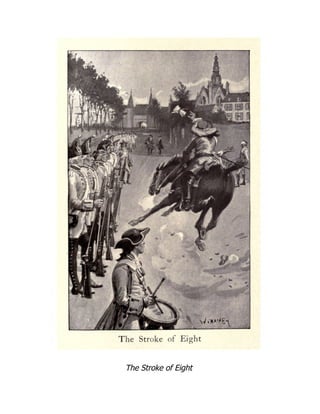


![[Metropolia Student Project Seminar 24.5.] Zero Energy Buildings, Group B](https://cdn.slidesharecdn.com/ss_thumbnails/zeroenergybuildingsgroupb-120529021343-phpapp01-thumbnail.jpg?width=640&height=640&fit=bounds)

![[Metropolia Student Project Seminar 24.5.] Zero Energy Buildings, Group A](https://cdn.slidesharecdn.com/ss_thumbnails/zeroenergybuildings-presentation24-5-2012-120528082031-phpapp01-thumbnail.jpg?width=640&height=640&fit=bounds)


