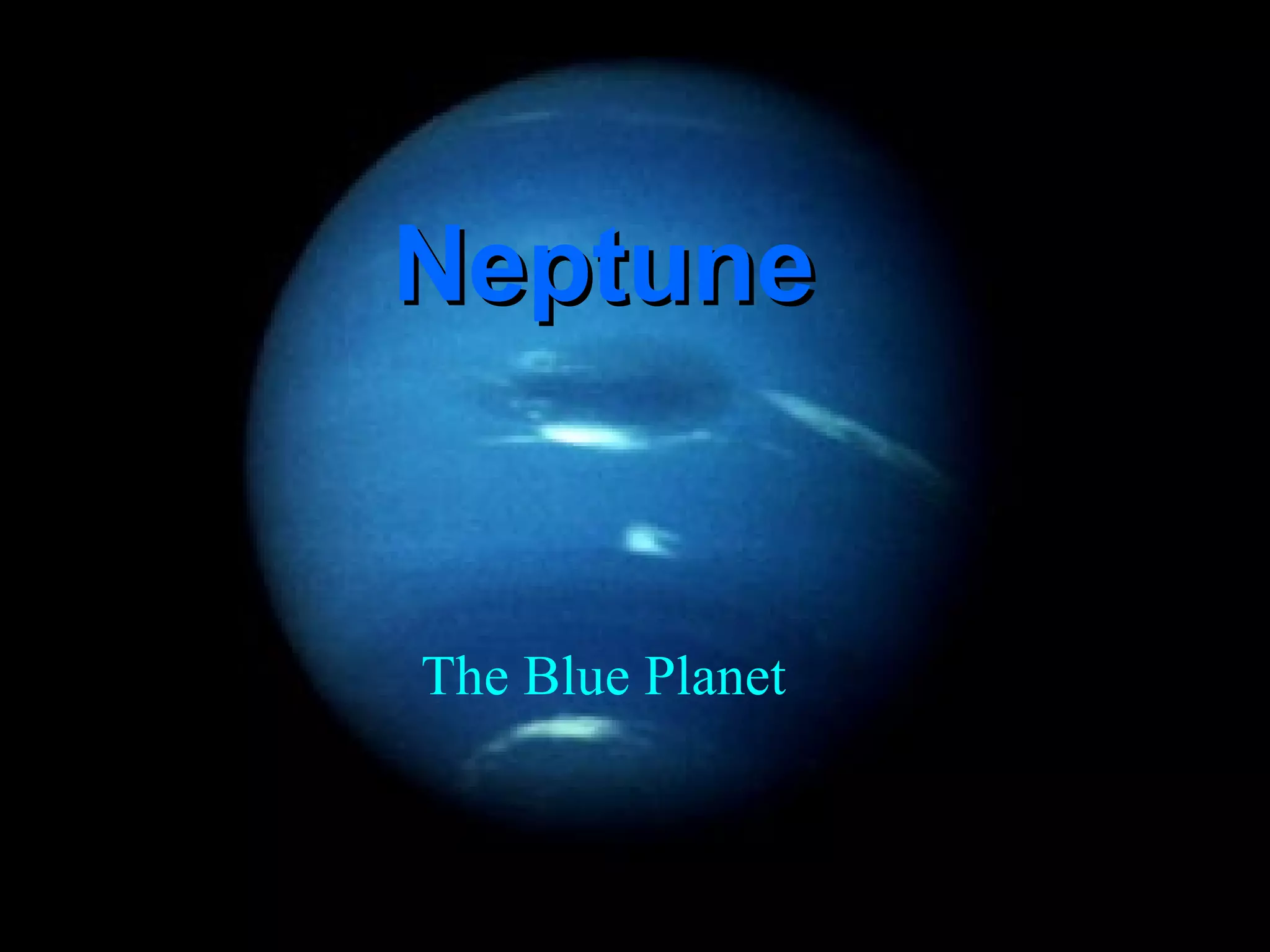
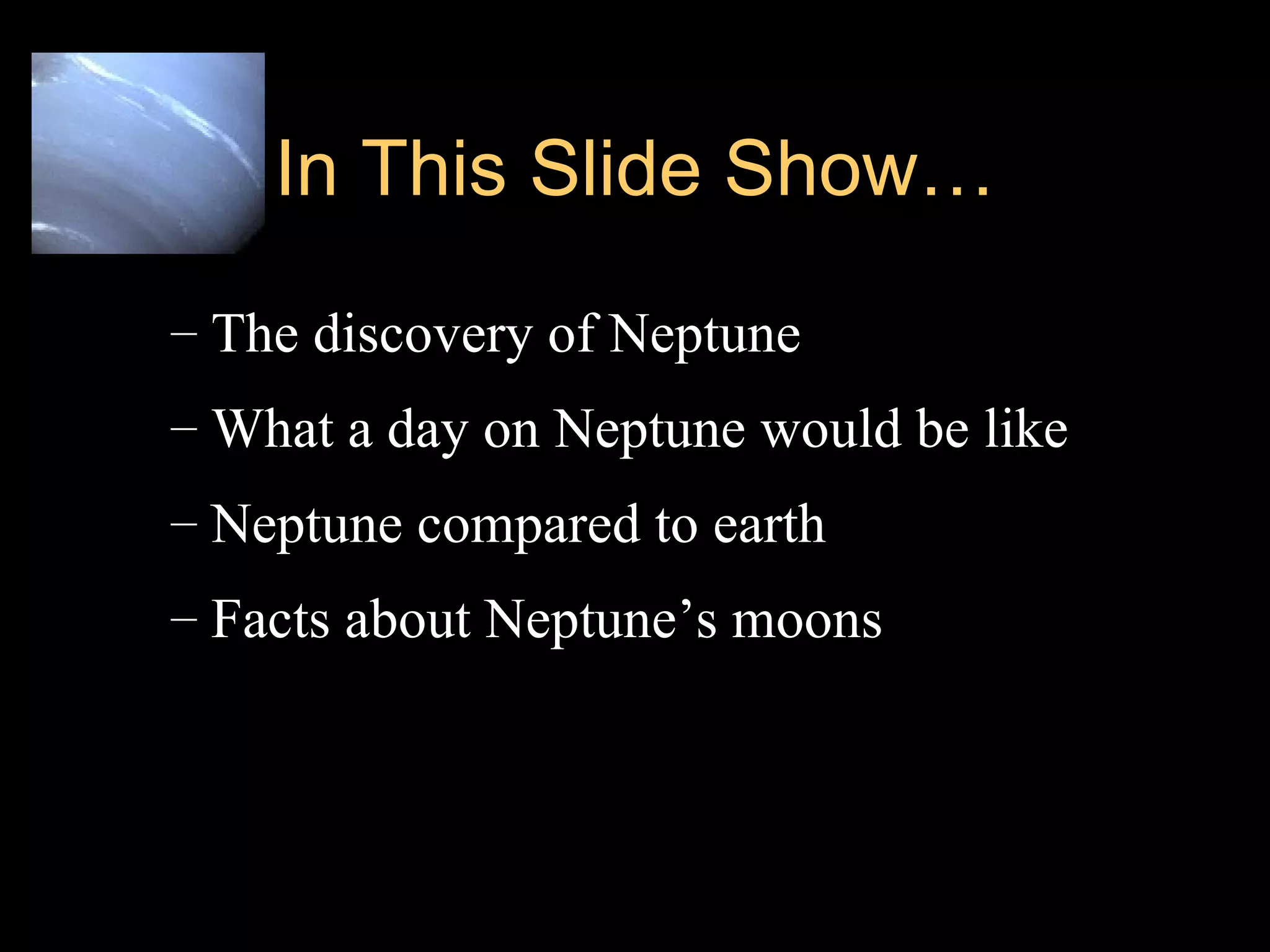
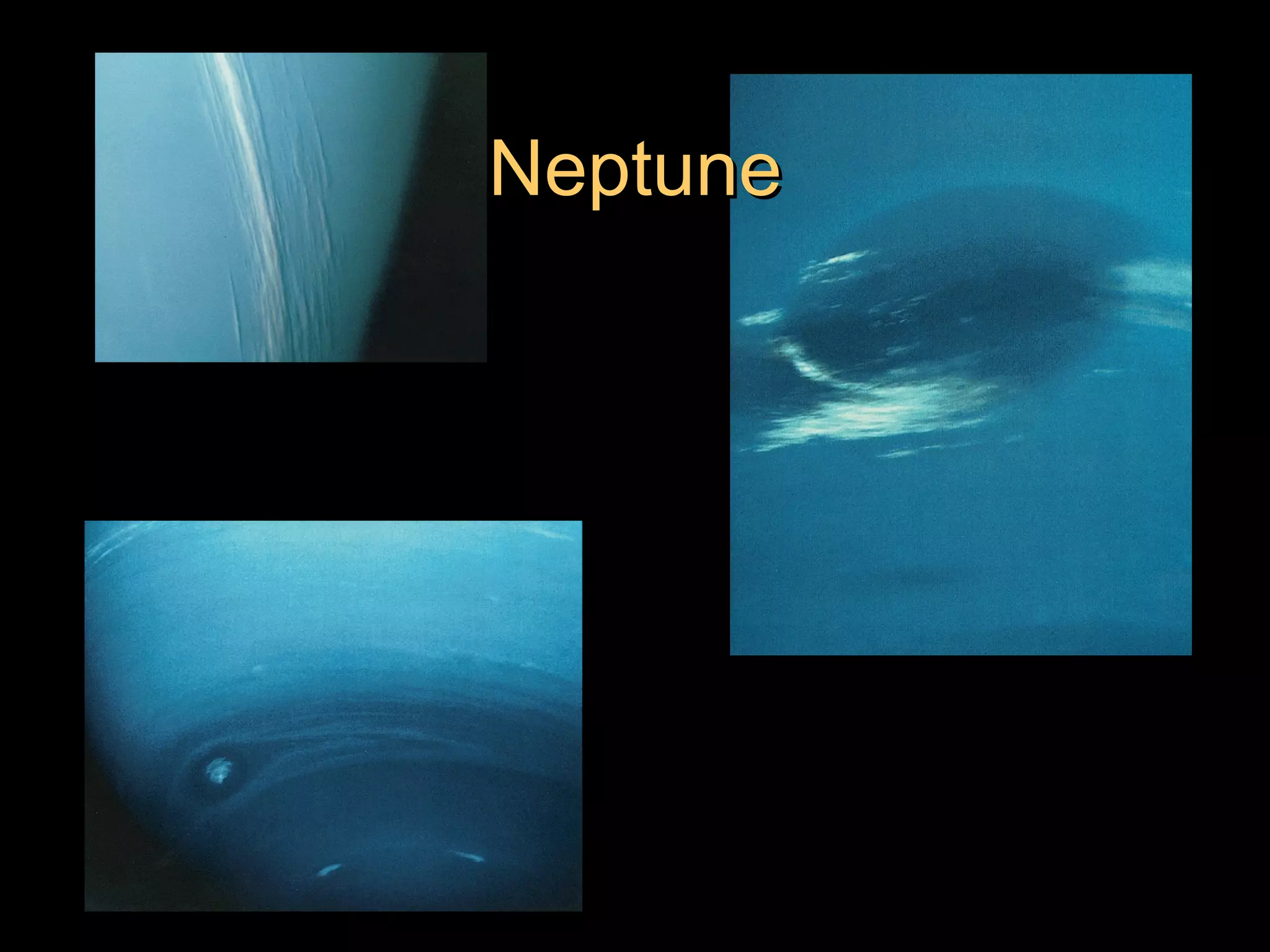
Neptune


The Blue Planet
In This Slide Show…
– The discovery of Neptune
– What a day on Neptune would be like
– Neptune compared to earth
– Facts about Neptune’s moons
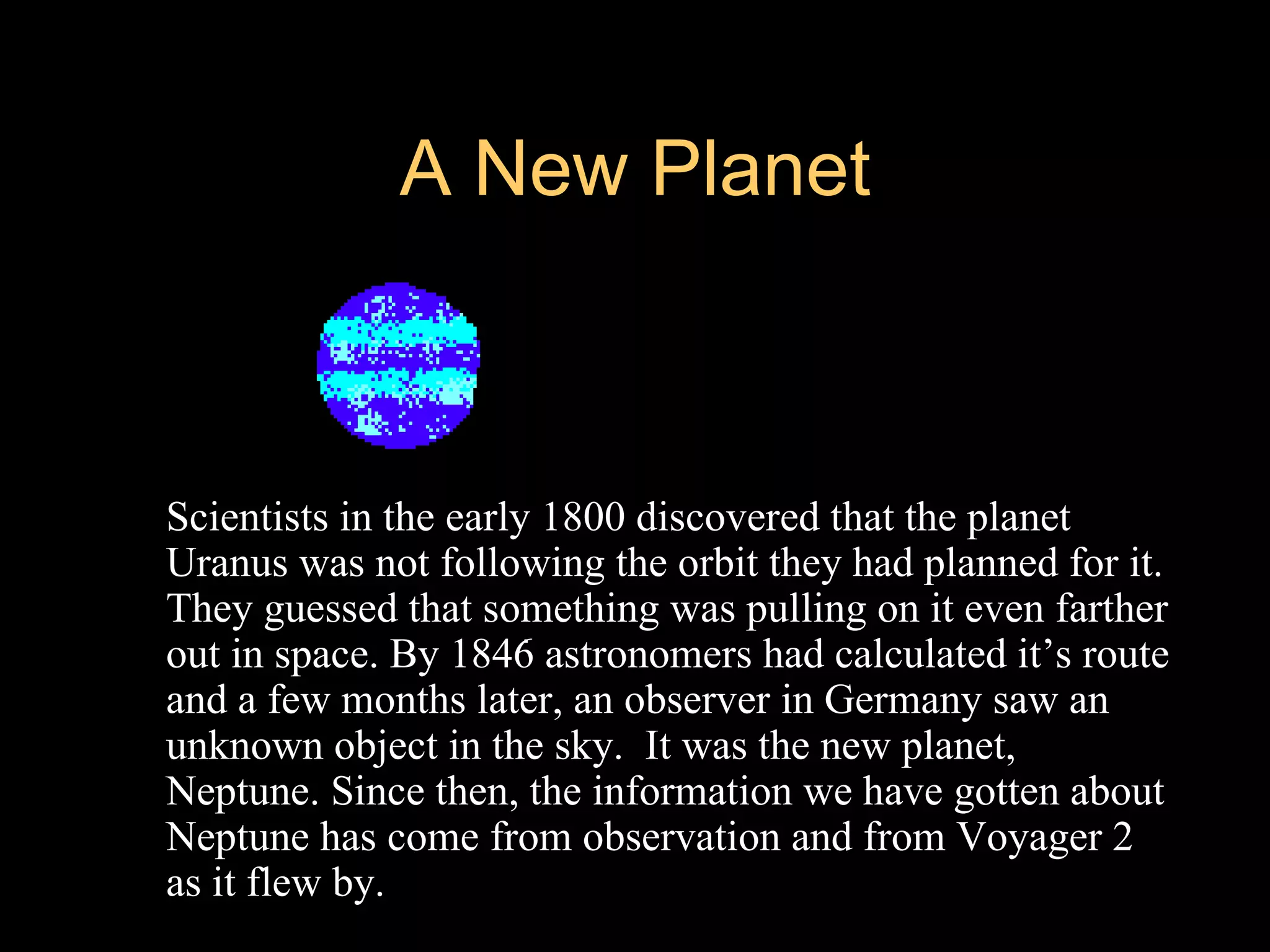
A New Planet


   Scientists in the early 1800 discovered that the planet
    Uranus was not following the orbit they had planned for it.
    They guessed that something was pulling on it even farther
    out in space. By 1846 astronomers had calculated it’s route
    and a few months later, an observer in Germany saw an
    unknown object in the sky. It was the new planet,
    Neptune. Since then, the information we have gotten about
    Neptune has come from observation and from Voyager 2
    as it flew by.
Neptune
Composition
   You could put 60 Earths into Neptune and still
    have some room.
   Neptune is mostly made of Hydrogen, Helium and
    Methane gas.
Interesting Facts

• Neptune actually has not even orbited the sun once
   since we discovered it in 1846! It takes 165 years
   for it to orbit the sun.
• Triton is moving in the opposite direction that
   Neptune is moving and is steadily moving closer
   to Neptune. When it collides with Neptune it will
   create a ring system that will rival and may exceed
   Saturn’s.
• Neptune’s Temperature is about –235 degrees F.
• The Great Dark Spot at Neptune’s equator is not
   there anymore, but in 1997, Hubble Space
   Telescope saw another similar storm in Neptune’s
Statistics
   Neptune has an average distance from the sun of
    about 4,497,000,000 kilometers.
   Neptune is about 49,500 kilometers across.
   Neptune rotates once in about 14 hours.
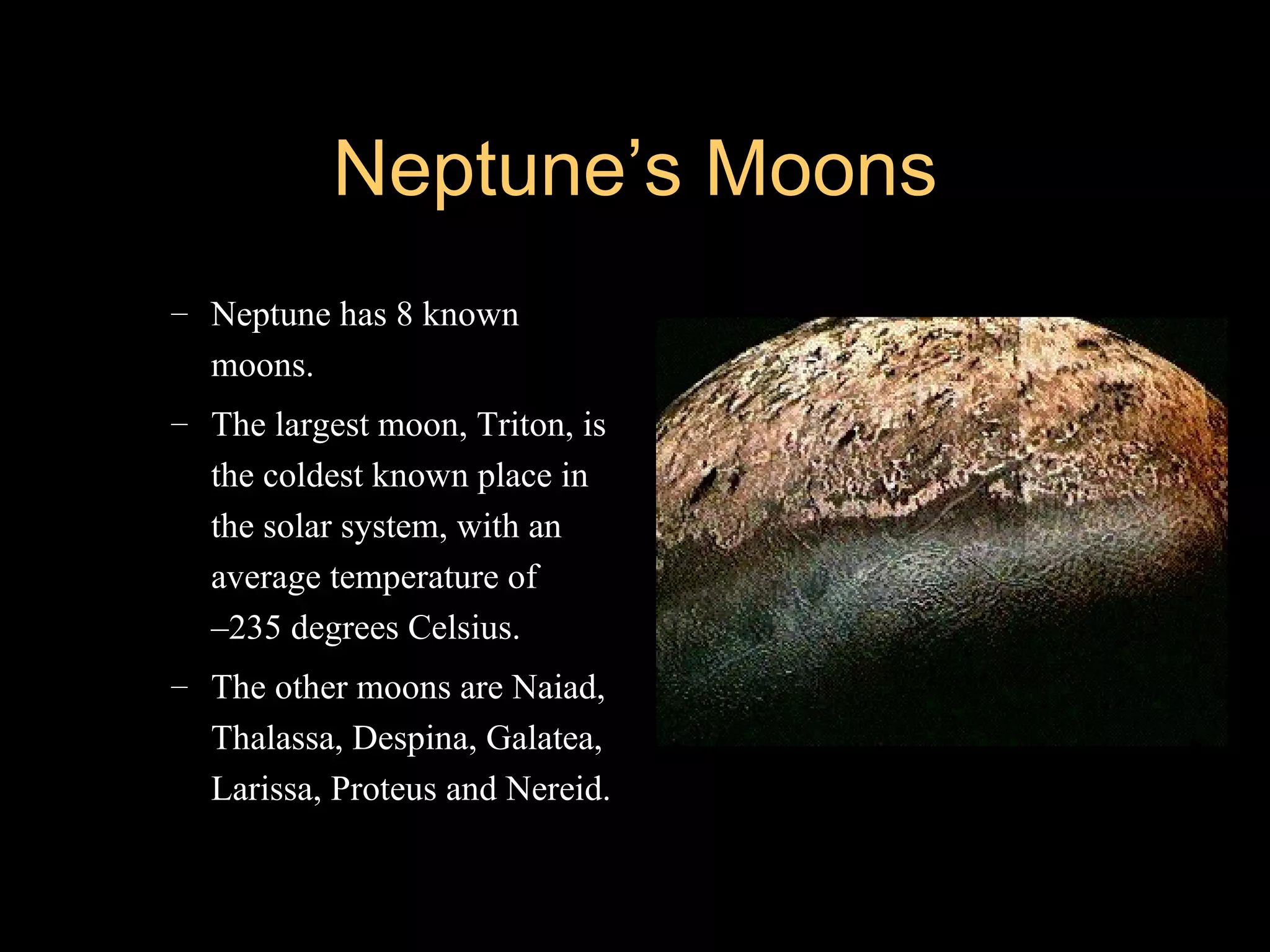
Neptune’s Moons
– Neptune has 8 known
  moons.
– The largest moon, Triton, is
  the coldest known place in
  the solar system, with an
  average temperature of
  –235 degrees Celsius.
– The other moons are Naiad,
  Thalassa, Despina, Galatea,
  Larissa, Proteus and Nereid.
THE END
 Special Thanks To NASA for the
    information and Pictures!
Copyright Information
 Images for this presentation were acquired
  at:
 http://solarsystem.jpl.nasa.gov/features/planets/ne

Neptune

  • 1.
  • 2.
    In This SlideShow… – The discovery of Neptune – What a day on Neptune would be like – Neptune compared to earth – Facts about Neptune’s moons
  • 3.
    A New Planet  Scientists in the early 1800 discovered that the planet Uranus was not following the orbit they had planned for it. They guessed that something was pulling on it even farther out in space. By 1846 astronomers had calculated it’s route and a few months later, an observer in Germany saw an unknown object in the sky. It was the new planet, Neptune. Since then, the information we have gotten about Neptune has come from observation and from Voyager 2 as it flew by.
  • 4.
  • 5.
    Composition  You could put 60 Earths into Neptune and still have some room.  Neptune is mostly made of Hydrogen, Helium and Methane gas.
  • 6.
    Interesting Facts • Neptuneactually has not even orbited the sun once since we discovered it in 1846! It takes 165 years for it to orbit the sun. • Triton is moving in the opposite direction that Neptune is moving and is steadily moving closer to Neptune. When it collides with Neptune it will create a ring system that will rival and may exceed Saturn’s. • Neptune’s Temperature is about –235 degrees F. • The Great Dark Spot at Neptune’s equator is not there anymore, but in 1997, Hubble Space Telescope saw another similar storm in Neptune’s
  • 7.
    Statistics  Neptune has an average distance from the sun of about 4,497,000,000 kilometers.  Neptune is about 49,500 kilometers across.  Neptune rotates once in about 14 hours.
  • 8.
    Neptune’s Moons – Neptunehas 8 known moons. – The largest moon, Triton, is the coldest known place in the solar system, with an average temperature of –235 degrees Celsius. – The other moons are Naiad, Thalassa, Despina, Galatea, Larissa, Proteus and Nereid.
  • 9.
    THE END SpecialThanks To NASA for the information and Pictures!
  • 10.
    Copyright Information  Imagesfor this presentation were acquired at:  http://solarsystem.jpl.nasa.gov/features/planets/ne