SURFACTANT
THERAPY
PRESENTED BY:-
NEHA MALIK
INTRODUCTION
• In 1959, Avery and Mead reported on the deficiency of surface-
active material in the lungs of preterm babies with respiratory
distress syndrome (RDS). This led to clinical trials of artificial
surface-active materials in babies with RDS
• Acute lung disease of the newborn caused by surfactant deficiency.
RDS is the clinical expression of surfactant deficiency and its
histologic counterpart, Hyaline Membrane Disease (HMD).
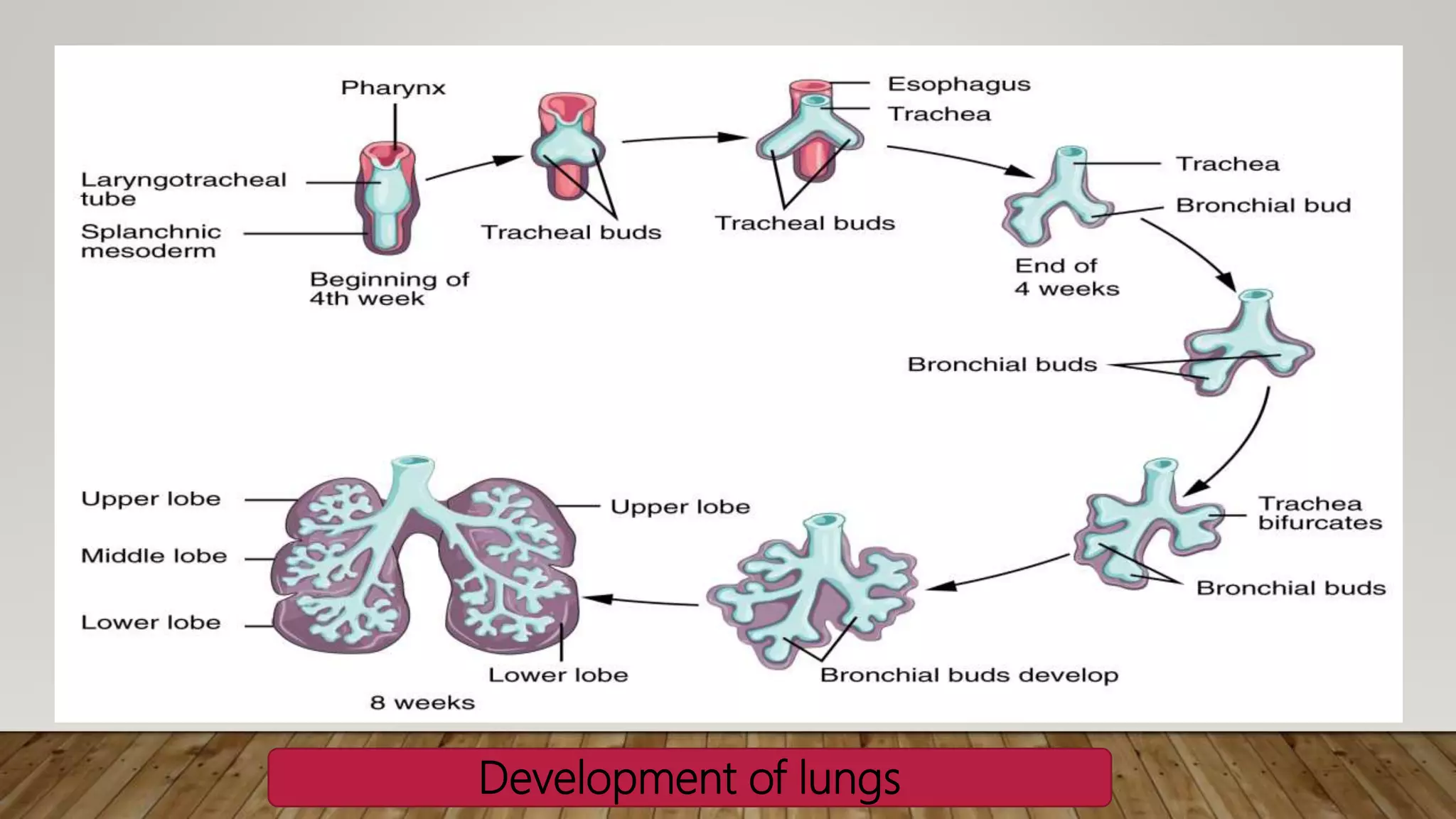
Development of lungs
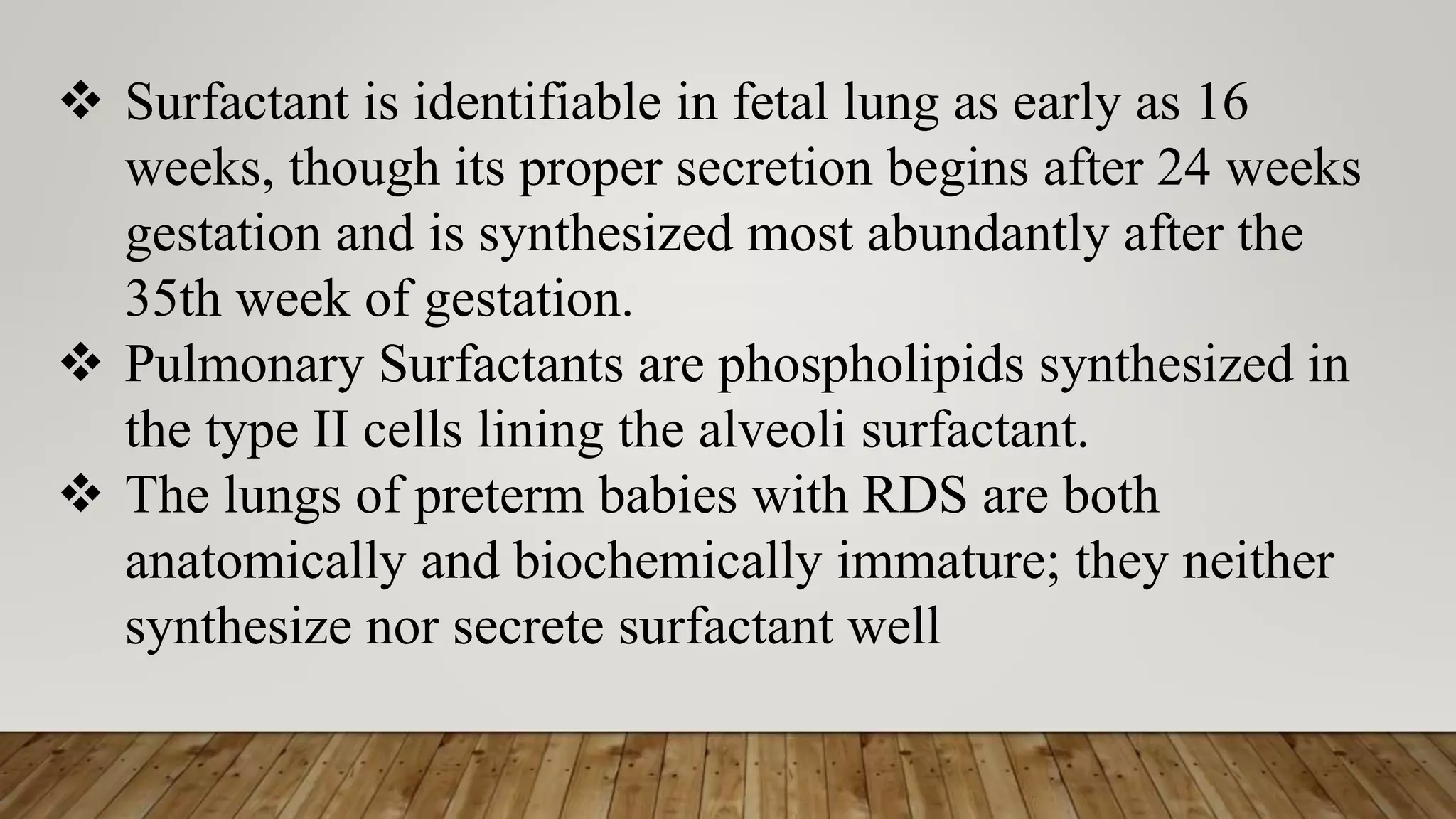
 Surfactant is identifiable in fetal lung as early as 16
weeks, though its proper secretion begins after 24 weeks
gestation and is synthesized most abundantly after the
35th week of gestation.
 Pulmonary Surfactants are phospholipids synthesized in
the type II cells lining the alveoli surfactant.
 The lungs of preterm babies with RDS are both
anatomically and biochemically immature; they neither
synthesize nor secrete surfactant well
As alveoli radius decreases, surfactant's
ability to lower surface tension
increases.
The half-life of surfactant is 30 hours
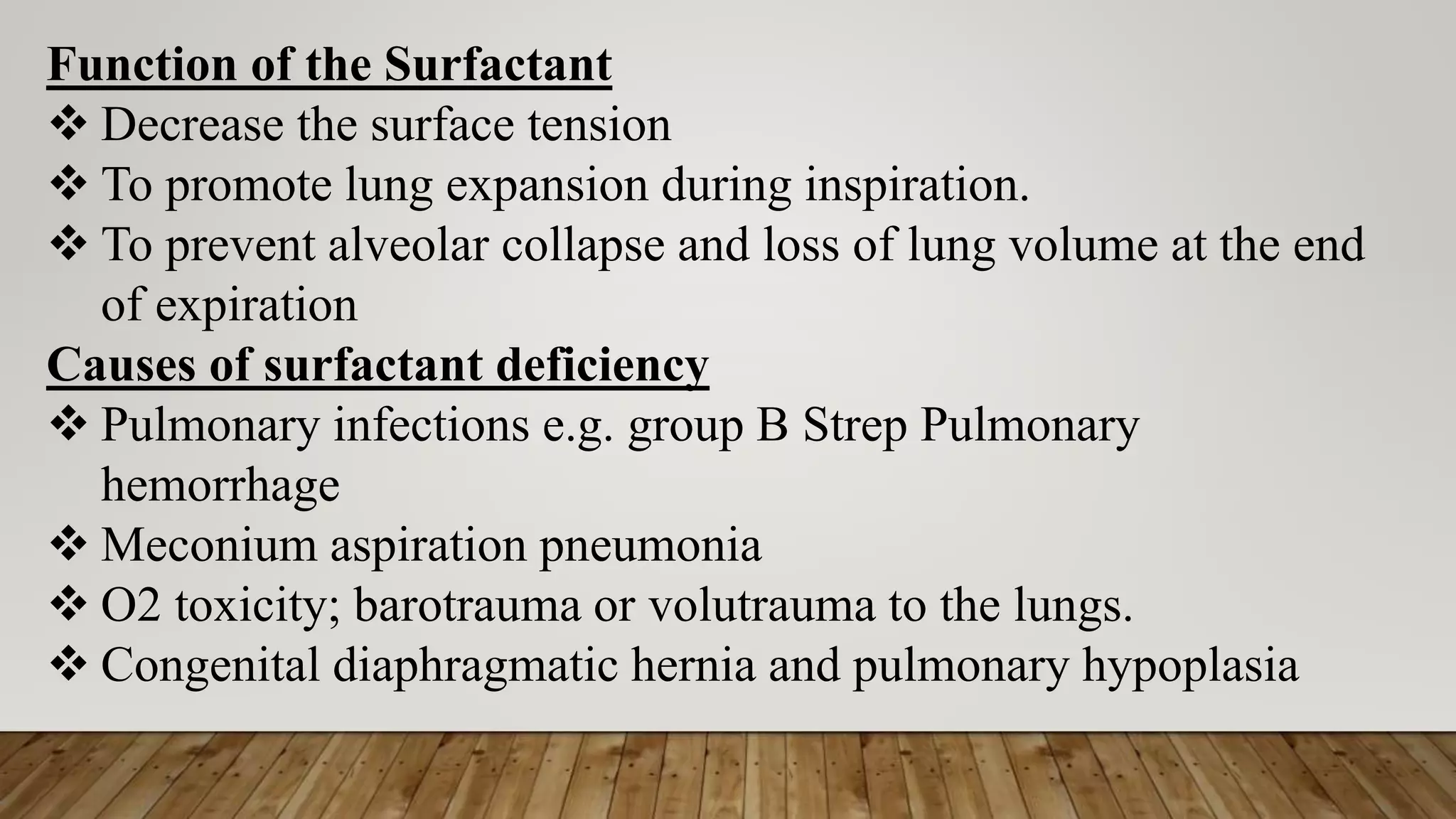
Function of the Surfactant
 Decrease the surface tension
 To promote lung expansion during inspiration.
 To prevent alveolar collapse and loss of lung volume at the end
of expiration
Causes of surfactant deficiency
 Pulmonary infections e.g. group B Strep Pulmonary
hemorrhage
 Meconium aspiration pneumonia
 O2 toxicity; barotrauma or volutrauma to the lungs.
 Congenital diaphragmatic hernia and pulmonary hypoplasia
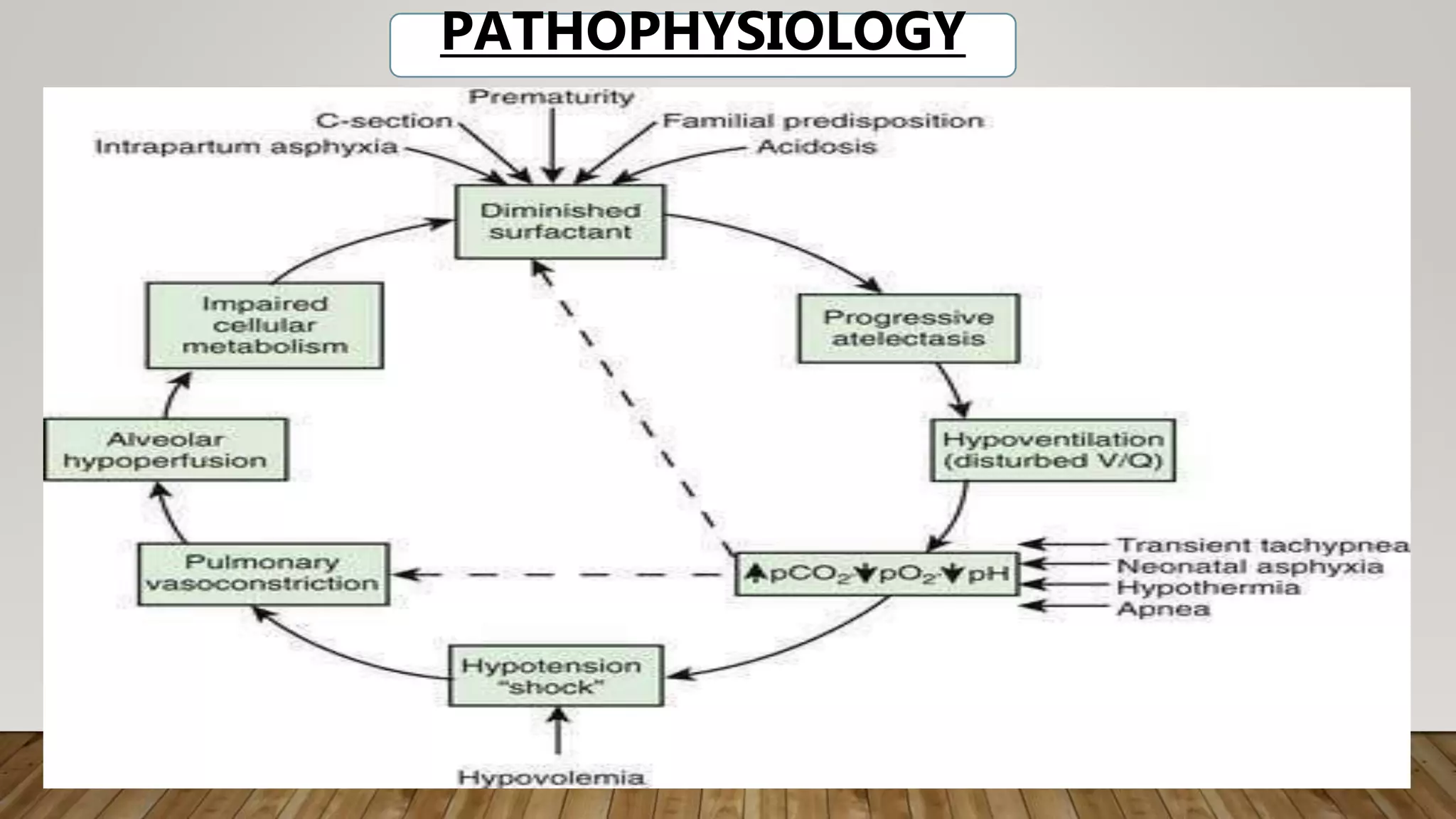
PATHOPHYSIOLOGY
SURFACTANT REPLACEMENT THERAPY
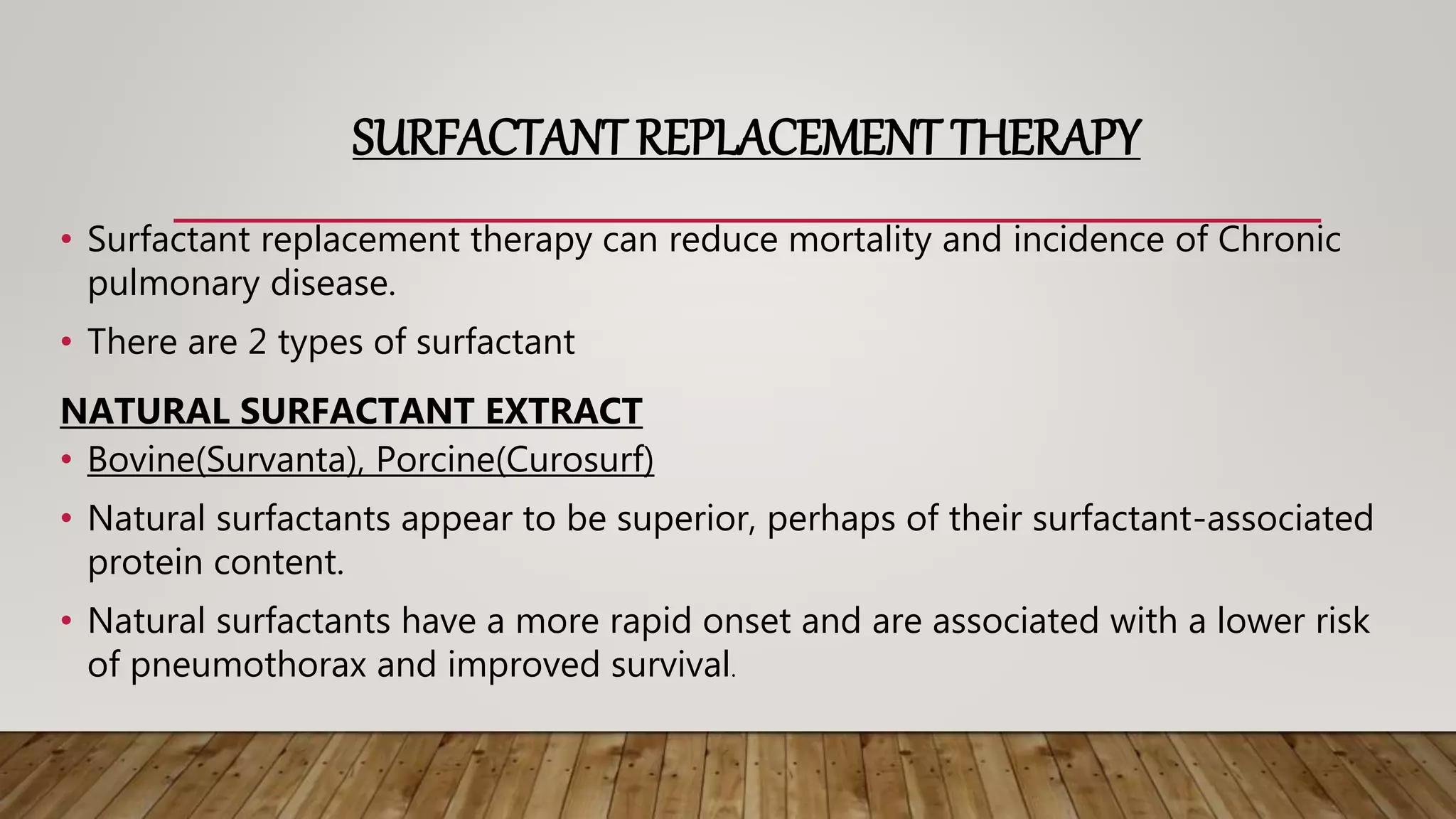
• Surfactant replacement therapy can reduce mortality and incidence of Chronic
pulmonary disease.
• There are 2 types of surfactant
NATURAL SURFACTANT EXTRACT
• Bovine(Survanta), Porcine(Curosurf)
• Natural surfactants appear to be superior, perhaps of their surfactant-associated
protein content.
• Natural surfactants have a more rapid onset and are associated with a lower risk
of pneumothorax and improved survival.
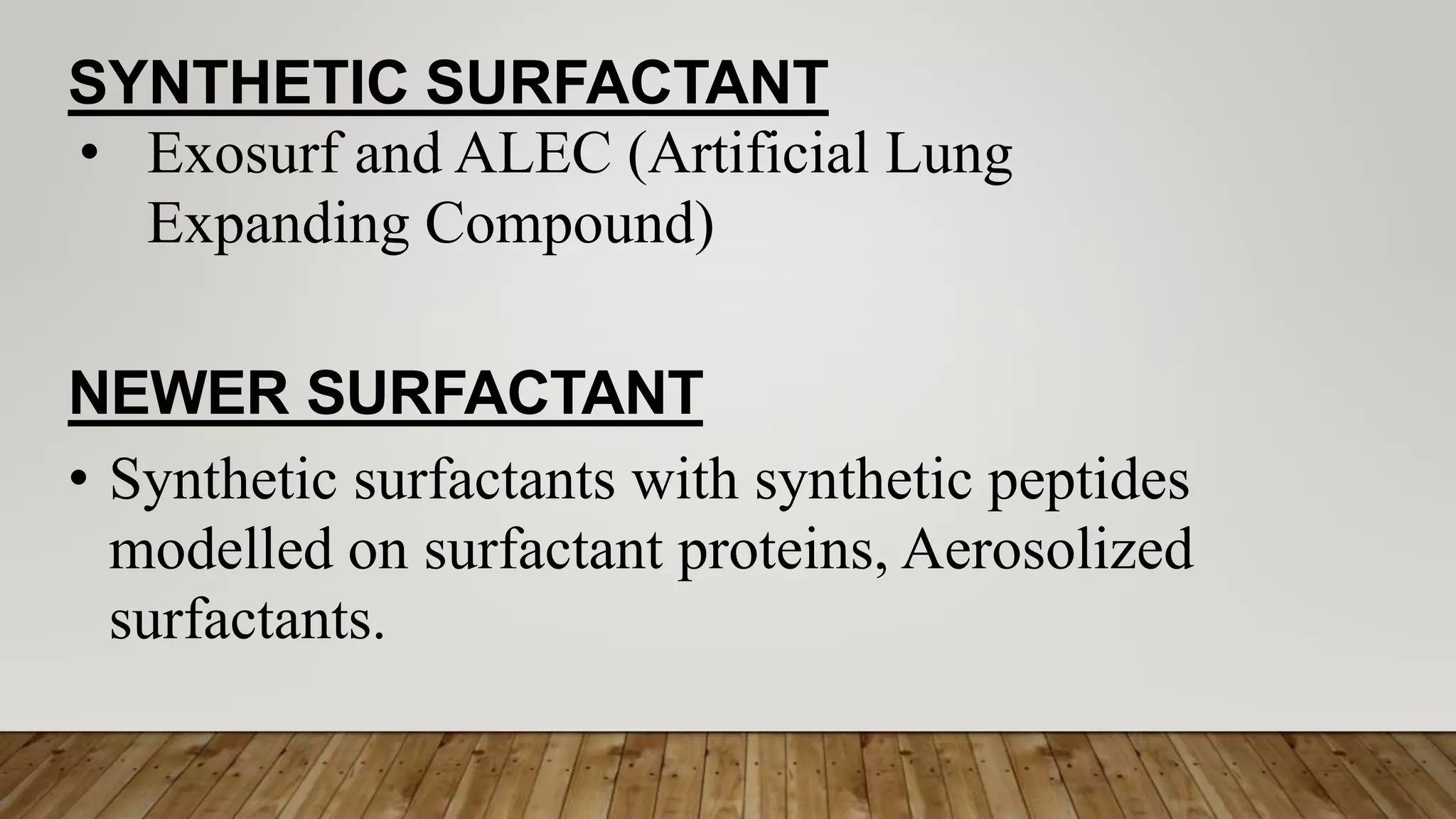
SYNTHETIC SURFACTANT
• Exosurf and ALEC (Artificial Lung
Expanding Compound)
NEWER SURFACTANT
• Synthetic surfactants with synthetic peptides
modelled on surfactant proteins, Aerosolized
surfactants.
INDICATIONS
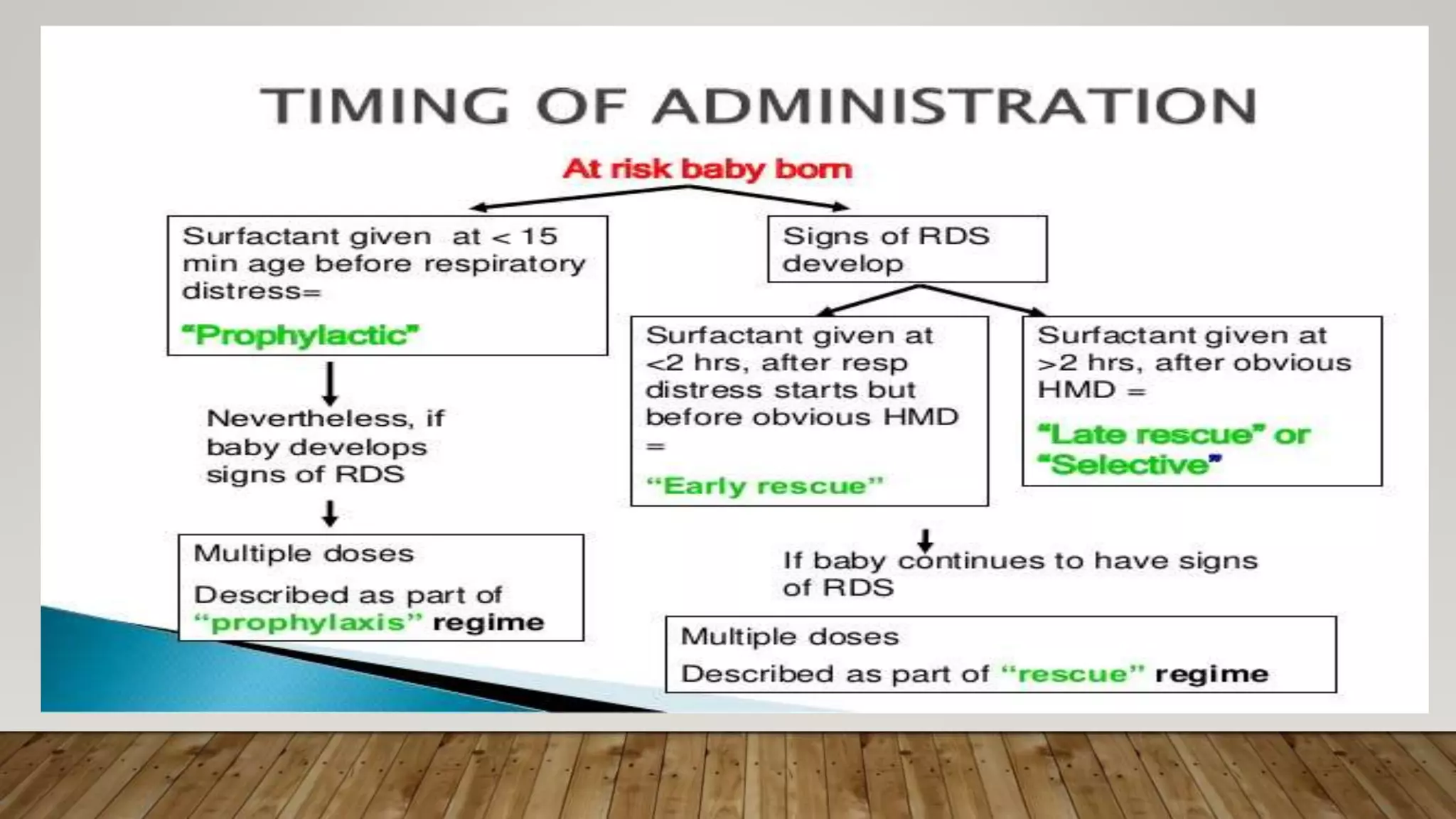
Prophylactic treatment:
• Being use for infant delivered during 23-29 wk of gestation and birth weight 600-1250
g
Neonates with gestation < 30 weeks of gestation.
Surfactant given within 15 minutes of birth before a diagnosis of RDS is made
Rescue treatment:
• RDS is usually defined by the presence of acute respiratory distress with
disturbed gas exchange in a preterm infant
Cont….
• Intubated infants with meconium aspiration syndrome
requiring more than 50% oxygen should receive
exogenous surfactant therapy
• sick newborn infants with pneumonia
• Intubated newborn infants with pulmonary
hemorrhage
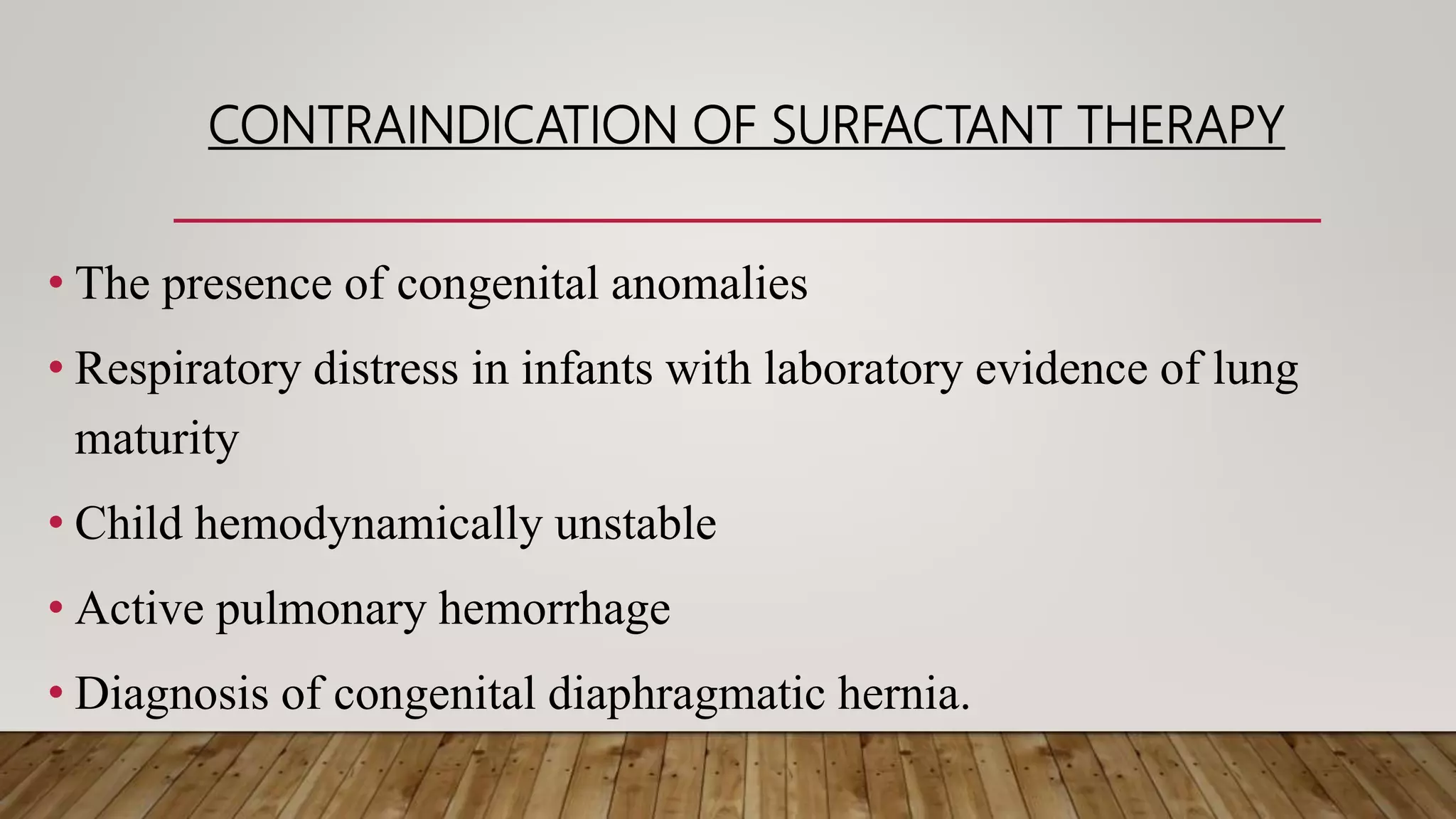
CONTRAINDICATION OF SURFACTANT THERAPY
• The presence of congenital anomalies
• Respiratory distress in infants with laboratory evidence of lung
maturity
• Child hemodynamically unstable
• Active pulmonary hemorrhage
• Diagnosis of congenital diaphragmatic hernia.
RESULTS
• Improve dyspnea in first 48-72 hr of life (Decrease O2
requirement, ventilation improved)
• Decreased incidence of pneumothorax
• Decrease mortality
• There is often a very rapid improvement in gas exchange in
surfactant-treated infants who are surfactant deficient.
DOSEAGE:
• Survanta 100mg/kg for the first and subsequent
doses.
• Curosurf 200mg/kg for the first dose and
100mg/kg for the subsequent doses or
100mg/kg for all the doses.
ROUTE OF ADMINISTRATION
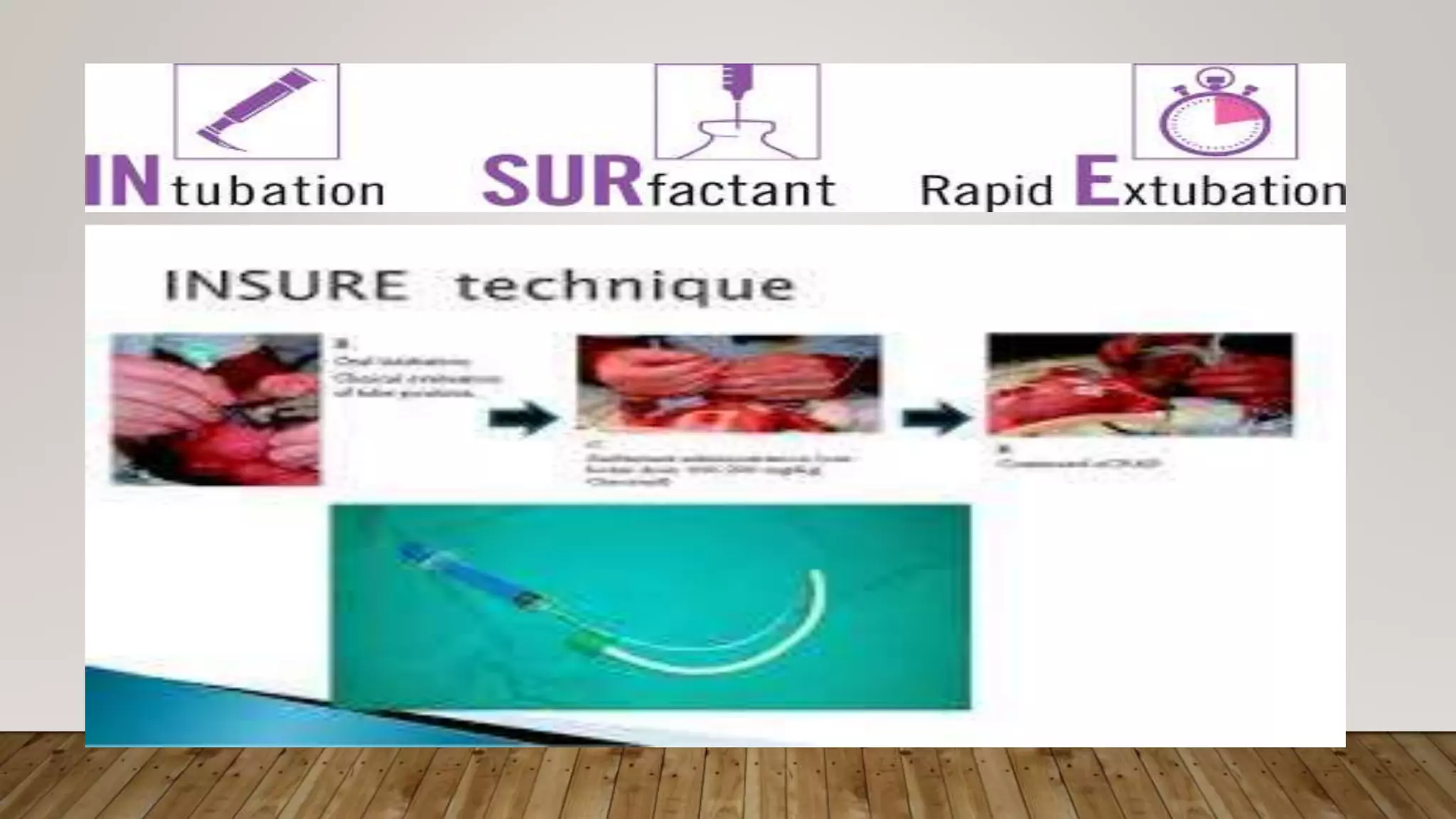
In most cases surfactant replacement therapy is instilled in liquid form via the
endotracheal tube. The surfactant is administered via a thin catheter into the
trachea in small aliquots.
METHOD
Slowly withdraw a little over the required dose into a 3 or 5 mL plastic
syringe using a large-gauge needle.
Attach the pre-cut 5 Fr catheter to the syringe, prime or fill the catheter
with surfactant to the end.
Discard excess surfactant through the catheter so that only the dose to
be given remains in the syringe.
CONT……
Other modes
Pharyngeal instillation before first breath:-. It is to instill surfactant into
the posterior pharynx as soon as the baby’s head appears, just before
delivery of the shoulders.
Laryngeal mask airway (LMA)administration
Bronchoalveolar lavage
Aerosolized surfactant
SURFACTANT LAVAGE
This takes advantage of the detergent-like property of pulmonary
surfactant, in which meconium might be solubilized and literally
“washed” from the lung .
In addition to repleting the lung with functional surfactant, lavage might
theoretically remove particulate meconium.
Two 15-mL/kg aliquots of surfactant diluted in normal saline, with
suctioning performed after each.
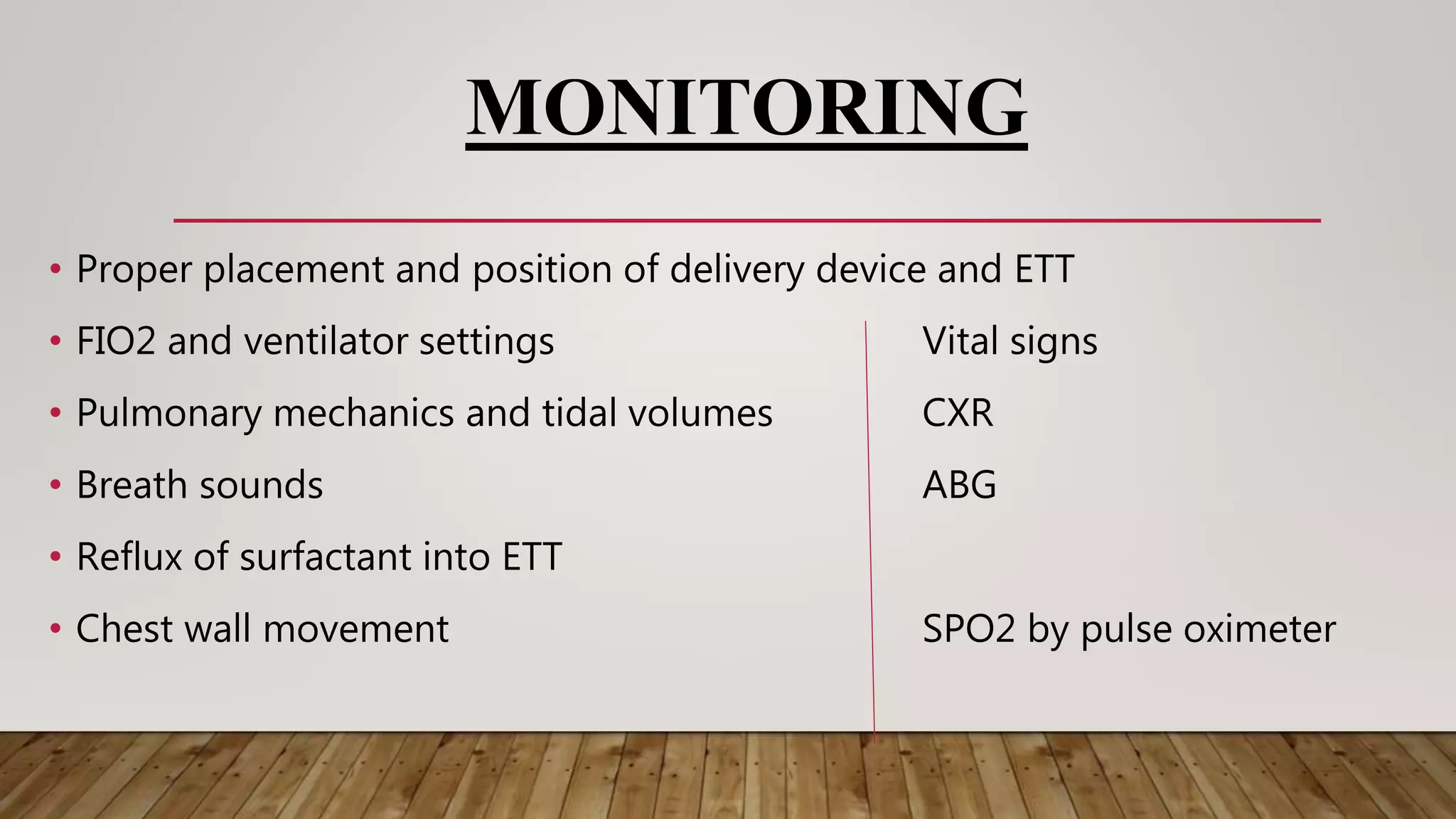
MONITORING
• Proper placement and position of delivery device and ETT
• FIO2 and ventilator settings Vital signs
• Pulmonary mechanics and tidal volumes CXR
• Breath sounds ABG
• Reflux of surfactant into ETT
• Chest wall movement SPO2 by pulse oximeter
LIMITATIONS OF METHOD
• When surfactant is administered prophylactically in the delivery room, ETT placement
may not have been verified by chest radiograph, resulting in the inadvertent
administration to only one lung or to the stomach.
• Atelectasis and lung injury may occur prior to therapeutic administration.
• Tracheal suctioning should be avoided immediately following surfactant administration if
ventilation can be adequately maintained. Most studies suggest a time period of 1–6 hours
following surfactant delivery.2Therefore, good clinical judgment SHOULD BE USED
FOR tracheal suctioning following surfactant, as needed.
• Not all infants who are treated with a single dose of surfactant experience a positive
response, or the response may be transient.
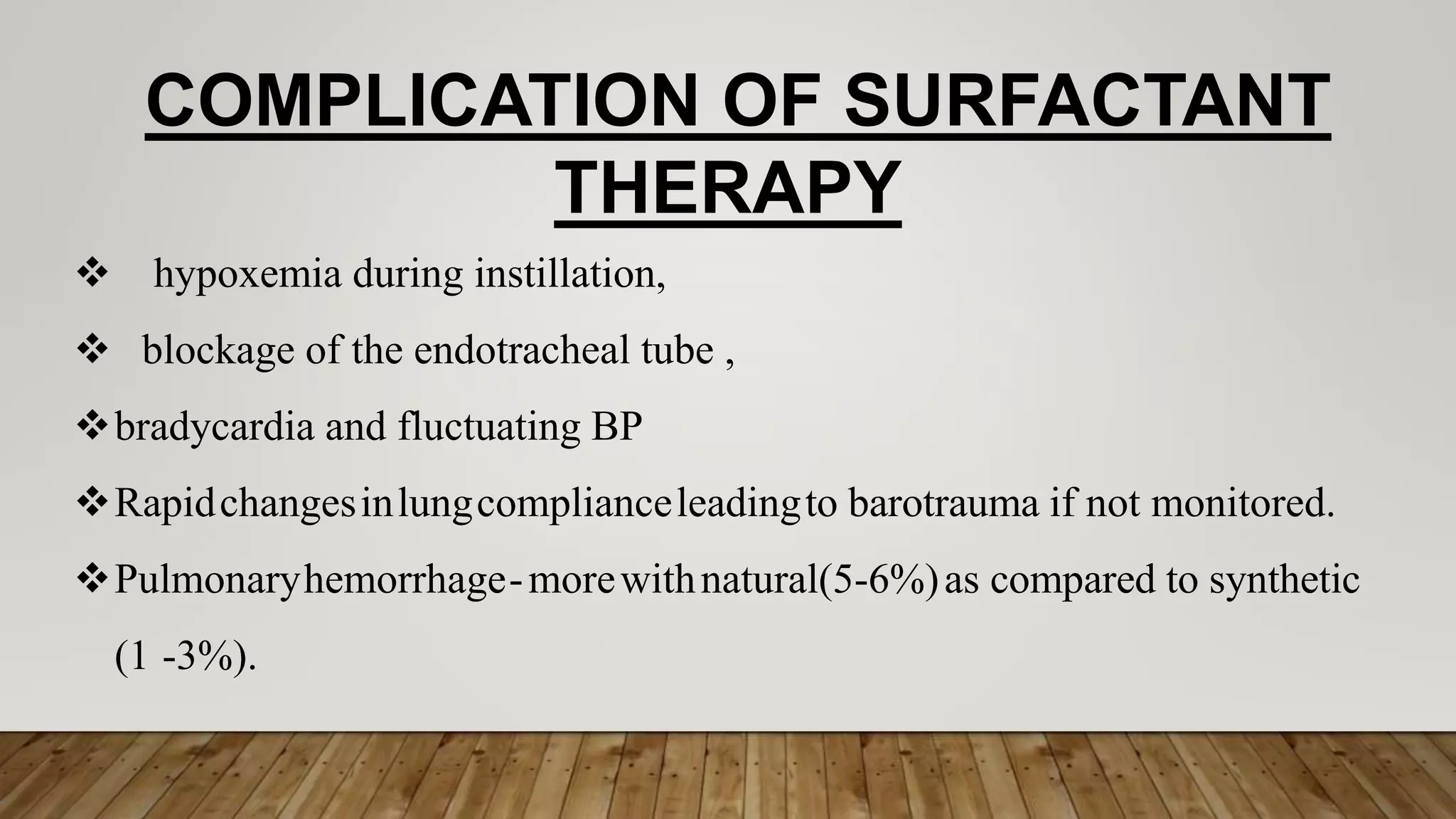
COMPLICATION OF SURFACTANT
THERAPY
 hypoxemia during instillation,
 blockage of the endotracheal tube ,
bradycardia and fluctuating BP
Rapidchangesinlungcomplianceleadingto barotrauma if not monitored.
Pulmonaryhemorrhage-morewithnatural(5-6%)as compared to synthetic
(1 -3%).
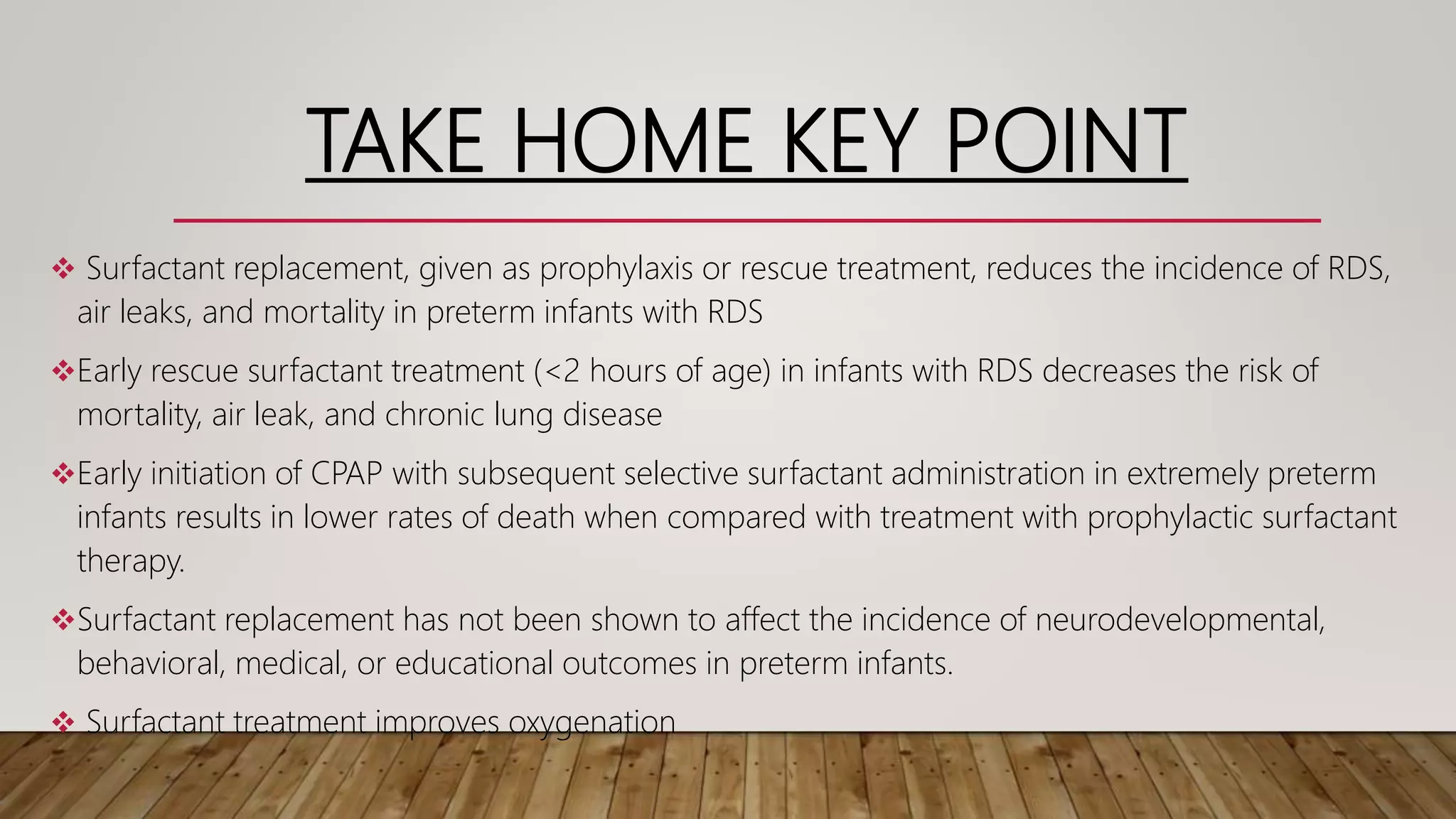
TAKE HOME KEY POINT
 Surfactant replacement, given as prophylaxis or rescue treatment, reduces the incidence of RDS,
air leaks, and mortality in preterm infants with RDS
Early rescue surfactant treatment (<2 hours of age) in infants with RDS decreases the risk of
mortality, air leak, and chronic lung disease
Early initiation of CPAP with subsequent selective surfactant administration in extremely preterm
infants results in lower rates of death when compared with treatment with prophylactic surfactant
therapy.
Surfactant replacement has not been shown to affect the incidence of neurodevelopmental,
behavioral, medical, or educational outcomes in preterm infants.
 Surfactant treatment improves oxygenation
THANKYOU!!!!!

Surfactant therapy |medical administration of exogenous surfactant

  • 1.
  • 2.
    INTRODUCTION • In 1959,Avery and Mead reported on the deficiency of surface- active material in the lungs of preterm babies with respiratory distress syndrome (RDS). This led to clinical trials of artificial surface-active materials in babies with RDS • Acute lung disease of the newborn caused by surfactant deficiency. RDS is the clinical expression of surfactant deficiency and its histologic counterpart, Hyaline Membrane Disease (HMD).
  • 3.
  • 4.
     Surfactant isidentifiable in fetal lung as early as 16 weeks, though its proper secretion begins after 24 weeks gestation and is synthesized most abundantly after the 35th week of gestation.  Pulmonary Surfactants are phospholipids synthesized in the type II cells lining the alveoli surfactant.  The lungs of preterm babies with RDS are both anatomically and biochemically immature; they neither synthesize nor secrete surfactant well
  • 6.
    As alveoli radiusdecreases, surfactant's ability to lower surface tension increases. The half-life of surfactant is 30 hours
  • 7.
    Function of theSurfactant  Decrease the surface tension  To promote lung expansion during inspiration.  To prevent alveolar collapse and loss of lung volume at the end of expiration Causes of surfactant deficiency  Pulmonary infections e.g. group B Strep Pulmonary hemorrhage  Meconium aspiration pneumonia  O2 toxicity; barotrauma or volutrauma to the lungs.  Congenital diaphragmatic hernia and pulmonary hypoplasia
  • 9.
  • 10.
    SURFACTANT REPLACEMENT THERAPY •Surfactant replacement therapy can reduce mortality and incidence of Chronic pulmonary disease. • There are 2 types of surfactant NATURAL SURFACTANT EXTRACT • Bovine(Survanta), Porcine(Curosurf) • Natural surfactants appear to be superior, perhaps of their surfactant-associated protein content. • Natural surfactants have a more rapid onset and are associated with a lower risk of pneumothorax and improved survival.
  • 11.
    SYNTHETIC SURFACTANT • Exosurfand ALEC (Artificial Lung Expanding Compound) NEWER SURFACTANT • Synthetic surfactants with synthetic peptides modelled on surfactant proteins, Aerosolized surfactants.
  • 12.
    INDICATIONS Prophylactic treatment: • Beinguse for infant delivered during 23-29 wk of gestation and birth weight 600-1250 g Neonates with gestation < 30 weeks of gestation. Surfactant given within 15 minutes of birth before a diagnosis of RDS is made Rescue treatment: • RDS is usually defined by the presence of acute respiratory distress with disturbed gas exchange in a preterm infant
  • 13.
    Cont…. • Intubated infantswith meconium aspiration syndrome requiring more than 50% oxygen should receive exogenous surfactant therapy • sick newborn infants with pneumonia • Intubated newborn infants with pulmonary hemorrhage
  • 14.
    CONTRAINDICATION OF SURFACTANTTHERAPY • The presence of congenital anomalies • Respiratory distress in infants with laboratory evidence of lung maturity • Child hemodynamically unstable • Active pulmonary hemorrhage • Diagnosis of congenital diaphragmatic hernia.
  • 16.
    RESULTS • Improve dyspneain first 48-72 hr of life (Decrease O2 requirement, ventilation improved) • Decreased incidence of pneumothorax • Decrease mortality • There is often a very rapid improvement in gas exchange in surfactant-treated infants who are surfactant deficient.
  • 17.
    DOSEAGE: • Survanta 100mg/kgfor the first and subsequent doses. • Curosurf 200mg/kg for the first dose and 100mg/kg for the subsequent doses or 100mg/kg for all the doses.
  • 18.
    ROUTE OF ADMINISTRATION Inmost cases surfactant replacement therapy is instilled in liquid form via the endotracheal tube. The surfactant is administered via a thin catheter into the trachea in small aliquots. METHOD Slowly withdraw a little over the required dose into a 3 or 5 mL plastic syringe using a large-gauge needle. Attach the pre-cut 5 Fr catheter to the syringe, prime or fill the catheter with surfactant to the end. Discard excess surfactant through the catheter so that only the dose to be given remains in the syringe.
  • 21.
    CONT…… Other modes Pharyngeal instillationbefore first breath:-. It is to instill surfactant into the posterior pharynx as soon as the baby’s head appears, just before delivery of the shoulders. Laryngeal mask airway (LMA)administration Bronchoalveolar lavage Aerosolized surfactant
  • 24.
    SURFACTANT LAVAGE This takesadvantage of the detergent-like property of pulmonary surfactant, in which meconium might be solubilized and literally “washed” from the lung . In addition to repleting the lung with functional surfactant, lavage might theoretically remove particulate meconium. Two 15-mL/kg aliquots of surfactant diluted in normal saline, with suctioning performed after each.
  • 25.
    MONITORING • Proper placementand position of delivery device and ETT • FIO2 and ventilator settings Vital signs • Pulmonary mechanics and tidal volumes CXR • Breath sounds ABG • Reflux of surfactant into ETT • Chest wall movement SPO2 by pulse oximeter
  • 26.
    LIMITATIONS OF METHOD •When surfactant is administered prophylactically in the delivery room, ETT placement may not have been verified by chest radiograph, resulting in the inadvertent administration to only one lung or to the stomach. • Atelectasis and lung injury may occur prior to therapeutic administration. • Tracheal suctioning should be avoided immediately following surfactant administration if ventilation can be adequately maintained. Most studies suggest a time period of 1–6 hours following surfactant delivery.2Therefore, good clinical judgment SHOULD BE USED FOR tracheal suctioning following surfactant, as needed. • Not all infants who are treated with a single dose of surfactant experience a positive response, or the response may be transient.
  • 27.
    COMPLICATION OF SURFACTANT THERAPY hypoxemia during instillation,  blockage of the endotracheal tube , bradycardia and fluctuating BP Rapidchangesinlungcomplianceleadingto barotrauma if not monitored. Pulmonaryhemorrhage-morewithnatural(5-6%)as compared to synthetic (1 -3%).
  • 28.
    TAKE HOME KEYPOINT  Surfactant replacement, given as prophylaxis or rescue treatment, reduces the incidence of RDS, air leaks, and mortality in preterm infants with RDS Early rescue surfactant treatment (<2 hours of age) in infants with RDS decreases the risk of mortality, air leak, and chronic lung disease Early initiation of CPAP with subsequent selective surfactant administration in extremely preterm infants results in lower rates of death when compared with treatment with prophylactic surfactant therapy. Surfactant replacement has not been shown to affect the incidence of neurodevelopmental, behavioral, medical, or educational outcomes in preterm infants.  Surfactant treatment improves oxygenation
  • 29.