

International Negotiations
NEERAJ MANDHAN
ROLL NO-45
Negotiation
• In the business customs and culture come into play more frequently
and are more obvious in the negotiating process than any other
aspect of business.
• The basic elements of business negotiation are the same in any
country; they relate to the product, its price and terms, services
associate with the product, and, finally, friendship between vendor
and customers.
• But it is important to remember that the negotiating process is
complicated and the risk of misunderstanding increases when
negotiating with someone from another culture.
Cross-cultural Negotiations
• The keystone of effective relationship marketing is effective
negotiations. Poorly conducted negotiations can leave the seller and
the buyer frustrated and do more to destroy effective relationship
than anything one can do.
• The basic elements of business negotiations are the same in every
country; they related to the
• Product
• Price and terms
• Services associated
• Friendship between vendor and customer
• In international sales, the selling transaction is almost always a
negotiated exchange.
• Price
• Delivery dates
• Quality of goods or services
• Volume of goods sold
• Financing
• Exchange rate risk
• Shipping mode
• Insurance
Three Steps in Negotiating Process
1. Positioning
2. Reflection, Evaluation, and Persuasion
3. Adjustment
Positioning
• That is each party present its concept of the matter under
negotiation, objective, expectations, and preferences.
Reflection, Evaluation, and Persuasion
• That is evaluations of the other position to determine points of
conflict, agreement, strengths or weaknesses, and attempts to
persuade the other side to accept one position.
Adjustment
• That is a series of reasonable adjustments or concessions by each
party until a mutually acceptable agreement is reached, or until it is
determined that a mutually acceptable agreement cannot br reached
and negotiations are terminated.
Cross-cultural Negotiations
Non-task Sounding
The reason is the need to establish rapport on a personal level before
proceeding with actual business discussion. In many cultures, if a sound
personal relationship is not established, a successful conclusion is more
difficult if not impossible, to attain.
1. Non-task sounding or establishing rapport
2. Positioning
3. Reflection, Evaluation, and Persuasion
4. Adjustment and agreement
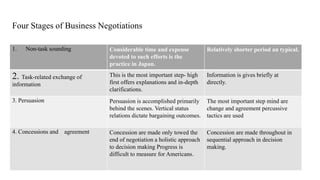
1. Non-task sounding Considerable time and expense
devoted to such efforts is the
practice in Japan.
Relatively shorter period an typical.
2. Task-related exchange of
information
This is the most important step- high
first offers explanations and in-depth
clarifications.
Information is gives briefly at
directly.
3. Persuasion Persuasion is accomplished primarily
behind the scenes. Vertical status
relations dictate bargaining outcomes.
The most important step mind are
change and agreement percussive
tactics are used
4. Concessions and agreement Concession are made only towed the
end of negotiation a holistic approach
to decision making Progress is
difficult to measure for Americans.
Concession are made throughout in
sequential approach in decision
making.
Four Stages of Business Negotiations

International negotiations

  • 1.
  • 2.
    Negotiation • In thebusiness customs and culture come into play more frequently and are more obvious in the negotiating process than any other aspect of business. • The basic elements of business negotiation are the same in any country; they relate to the product, its price and terms, services associate with the product, and, finally, friendship between vendor and customers. • But it is important to remember that the negotiating process is complicated and the risk of misunderstanding increases when negotiating with someone from another culture.
  • 3.
    Cross-cultural Negotiations • Thekeystone of effective relationship marketing is effective negotiations. Poorly conducted negotiations can leave the seller and the buyer frustrated and do more to destroy effective relationship than anything one can do. • The basic elements of business negotiations are the same in every country; they related to the • Product • Price and terms • Services associated • Friendship between vendor and customer
  • 4.
    • In internationalsales, the selling transaction is almost always a negotiated exchange. • Price • Delivery dates • Quality of goods or services • Volume of goods sold • Financing • Exchange rate risk • Shipping mode • Insurance
  • 5.
    Three Steps inNegotiating Process 1. Positioning 2. Reflection, Evaluation, and Persuasion 3. Adjustment
  • 6.
    Positioning • That iseach party present its concept of the matter under negotiation, objective, expectations, and preferences. Reflection, Evaluation, and Persuasion • That is evaluations of the other position to determine points of conflict, agreement, strengths or weaknesses, and attempts to persuade the other side to accept one position.
  • 7.
    Adjustment • That isa series of reasonable adjustments or concessions by each party until a mutually acceptable agreement is reached, or until it is determined that a mutually acceptable agreement cannot br reached and negotiations are terminated.
  • 8.
    Cross-cultural Negotiations Non-task Sounding Thereason is the need to establish rapport on a personal level before proceeding with actual business discussion. In many cultures, if a sound personal relationship is not established, a successful conclusion is more difficult if not impossible, to attain. 1. Non-task sounding or establishing rapport 2. Positioning 3. Reflection, Evaluation, and Persuasion 4. Adjustment and agreement
  • 9.
    1. Non-task soundingConsiderable time and expense devoted to such efforts is the practice in Japan. Relatively shorter period an typical. 2. Task-related exchange of information This is the most important step- high first offers explanations and in-depth clarifications. Information is gives briefly at directly. 3. Persuasion Persuasion is accomplished primarily behind the scenes. Vertical status relations dictate bargaining outcomes. The most important step mind are change and agreement percussive tactics are used 4. Concessions and agreement Concession are made only towed the end of negotiation a holistic approach to decision making Progress is difficult to measure for Americans. Concession are made throughout in sequential approach in decision making. Four Stages of Business Negotiations