By: Mechele Seville,
Heather Schwartzmiller, & Lisa Gardner
Introduction
There are obvious benefits of using
 technology in the classroom.
What might not be so apparent are
 the negative aspects.
Research question “What are the
 pitfalls of technology usage in k-12
 classrooms?”
Literature Review
 Student Effects


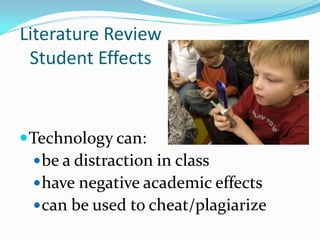
 Technology can:
  be a distraction in class
  have negative academic effects
  can be used to cheat/plagiarize
Literature Review
 Teacher Effects


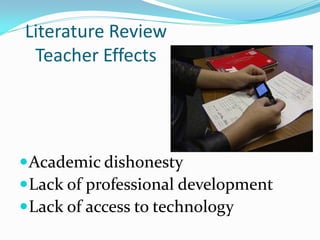
 Academic dishonesty
 Lack of professional development
 Lack of access to technology
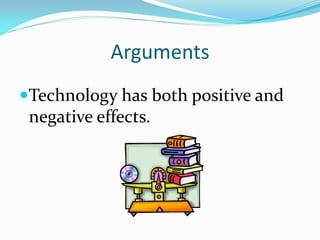
Arguments
Technology has both positive and
 negative effects.
Recommendations
 Model appropriate and proper usage of technology in
  the classroom.
 Incorporate technology into the lesson only if it is the
  most effective way of presenting the content.
 To avoid plagiarism, teach students how to properly
  cite information in a creative way E.g. reader’s theater.
 Develop a class website that contains appropriate
  student resources.
Our Experiences
 Computer tests
 Number of student computers
 Lack of teacher technology training
 Classroom distractions
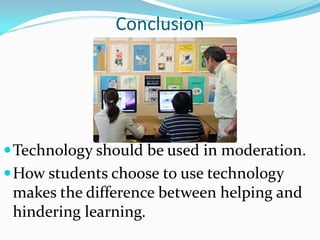
Conclusion


 Technology should be used in moderation.
 How students choose to use technology
 makes the difference between helping and
 hindering learning.
Conclusion continued…
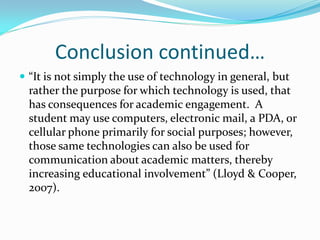
 “It is not simply the use of technology in general, but
  rather the purpose for which technology is used, that
  has consequences for academic engagement. A
  student may use computers, electronic mail, a PDA, or
  cellular phone primarily for social purposes; however,
  those same technologies can also be used for
  communication about academic matters, thereby
  increasing educational involvement” (Lloyd & Cooper,
  2007).
Resources
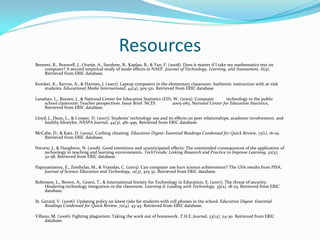
Bennett, R., Braswell, J., Oranje, A., Sandene, B., Kaplan, B., & Yan, F. (2008). Does it matter if I take my mathematics test on
    computer? A second empirical study of mode effects in NAEP. Journal of Technology, Learning, and Assessment, 6(9),
    Retrieved from ERIC database.

Kemker, K., Barron, A., & Harmes, J. (2007). Laptop computers in the elementary classroom: Authentic instruction with at-risk
   students. Educational Media International, 44(4), 305-321. Retrieved from ERIC database.

Lanahan, L., Boysen, J., & National Center for Education Statistics (ED), W. (2005). Computer        technology in the public
    school classroom: Teacher perspectives. Issue Brief. NCES            2005-083. National Center for Education Statistics,
    Retrieved from ERIC database.

Lloyd, J., Dean, L., & Cooper, D. (2007). Students' technology use and its effects on peer relationships, academic involvement, and
     healthy lifestyles. NASPA Journal, 44(3), 481-495. Retrieved from ERIC database.

McCabe, D., & Katz, D. (2009). Curbing cheating. Education Digest: Essential Readings Condensed for Quick Review, 75(1), 16-19.
   Retrieved from ERIC database.

Nworie, J., & Haughton, N. (2008). Good intentions and unanticipated effects: The unintended consequences of the application of
   technology in teaching and learning environments. TechTrends: Linking Research and Practice to Improve Learning, 52(5),
   52-58. Retrieved from ERIC database.

Papanastasiou, E., Zembylas, M., & Vrasidas, C. (2003). Can computer use hurt science achievement? The USA results from PISA.
    Journal of Science Education and Technology, 12(3), 325-32. Retrieved from ERIC database.

Robinson, L., Brown, A., Green, T., & International Society for Technology in Education, E. (2007). The threat of security:
    Hindering technology integration in the classroom. Learning & Leading with Technology, 35(2), 18-23. Retrieved from ERIC
    database.

St. Gerard, V. (2006). Updating policy on latest risks for students with cell phones in the school. Education Digest: Essential
     Readings Condensed for Quick Review, 72(4), 43-45. Retrieved from ERIC database.

Villano, M. (2006). Fighting plagiarism: Taking the work out of homework. T.H.E. Journal, 33(15), 24-30. Retrieved from ERIC
     database.

Negative Effects of Technology pdf

  • 1.
    By: Mechele Seville, HeatherSchwartzmiller, & Lisa Gardner
  • 2.
    Introduction There are obviousbenefits of using technology in the classroom. What might not be so apparent are the negative aspects. Research question “What are the pitfalls of technology usage in k-12 classrooms?”
  • 3.
    Literature Review StudentEffects  Technology can:  be a distraction in class  have negative academic effects  can be used to cheat/plagiarize
  • 4.
    Literature Review TeacherEffects  Academic dishonesty  Lack of professional development  Lack of access to technology
  • 5.
    Arguments Technology has bothpositive and negative effects.
  • 6.
    Recommendations  Model appropriateand proper usage of technology in the classroom.  Incorporate technology into the lesson only if it is the most effective way of presenting the content.  To avoid plagiarism, teach students how to properly cite information in a creative way E.g. reader’s theater.  Develop a class website that contains appropriate student resources.
  • 7.
    Our Experiences  Computertests  Number of student computers  Lack of teacher technology training  Classroom distractions
  • 8.
    Conclusion  Technology shouldbe used in moderation.  How students choose to use technology makes the difference between helping and hindering learning.
  • 9.
    Conclusion continued…  “Itis not simply the use of technology in general, but rather the purpose for which technology is used, that has consequences for academic engagement. A student may use computers, electronic mail, a PDA, or cellular phone primarily for social purposes; however, those same technologies can also be used for communication about academic matters, thereby increasing educational involvement” (Lloyd & Cooper, 2007).
  • 10.
    Resources Bennett, R., Braswell,J., Oranje, A., Sandene, B., Kaplan, B., & Yan, F. (2008). Does it matter if I take my mathematics test on computer? A second empirical study of mode effects in NAEP. Journal of Technology, Learning, and Assessment, 6(9), Retrieved from ERIC database. Kemker, K., Barron, A., & Harmes, J. (2007). Laptop computers in the elementary classroom: Authentic instruction with at-risk students. Educational Media International, 44(4), 305-321. Retrieved from ERIC database. Lanahan, L., Boysen, J., & National Center for Education Statistics (ED), W. (2005). Computer technology in the public school classroom: Teacher perspectives. Issue Brief. NCES 2005-083. National Center for Education Statistics, Retrieved from ERIC database. Lloyd, J., Dean, L., & Cooper, D. (2007). Students' technology use and its effects on peer relationships, academic involvement, and healthy lifestyles. NASPA Journal, 44(3), 481-495. Retrieved from ERIC database. McCabe, D., & Katz, D. (2009). Curbing cheating. Education Digest: Essential Readings Condensed for Quick Review, 75(1), 16-19. Retrieved from ERIC database. Nworie, J., & Haughton, N. (2008). Good intentions and unanticipated effects: The unintended consequences of the application of technology in teaching and learning environments. TechTrends: Linking Research and Practice to Improve Learning, 52(5), 52-58. Retrieved from ERIC database. Papanastasiou, E., Zembylas, M., & Vrasidas, C. (2003). Can computer use hurt science achievement? The USA results from PISA. Journal of Science Education and Technology, 12(3), 325-32. Retrieved from ERIC database. Robinson, L., Brown, A., Green, T., & International Society for Technology in Education, E. (2007). The threat of security: Hindering technology integration in the classroom. Learning & Leading with Technology, 35(2), 18-23. Retrieved from ERIC database. St. Gerard, V. (2006). Updating policy on latest risks for students with cell phones in the school. Education Digest: Essential Readings Condensed for Quick Review, 72(4), 43-45. Retrieved from ERIC database. Villano, M. (2006). Fighting plagiarism: Taking the work out of homework. T.H.E. Journal, 33(15), 24-30. Retrieved from ERIC database.