National eResearch Collaboration Tools and Resourcesnectar.org.auNeCTAR is an Australian Government project conducted as part of the Super Science initiative and financed by the Education Investment Fund. The University of Melbourne has been appointed the lead agent by the Commonwealth of Australia, Department of Innovation, Industry, Science and Research. Objectives: to enhance research collaboration through the development of eResearch infrastructure.
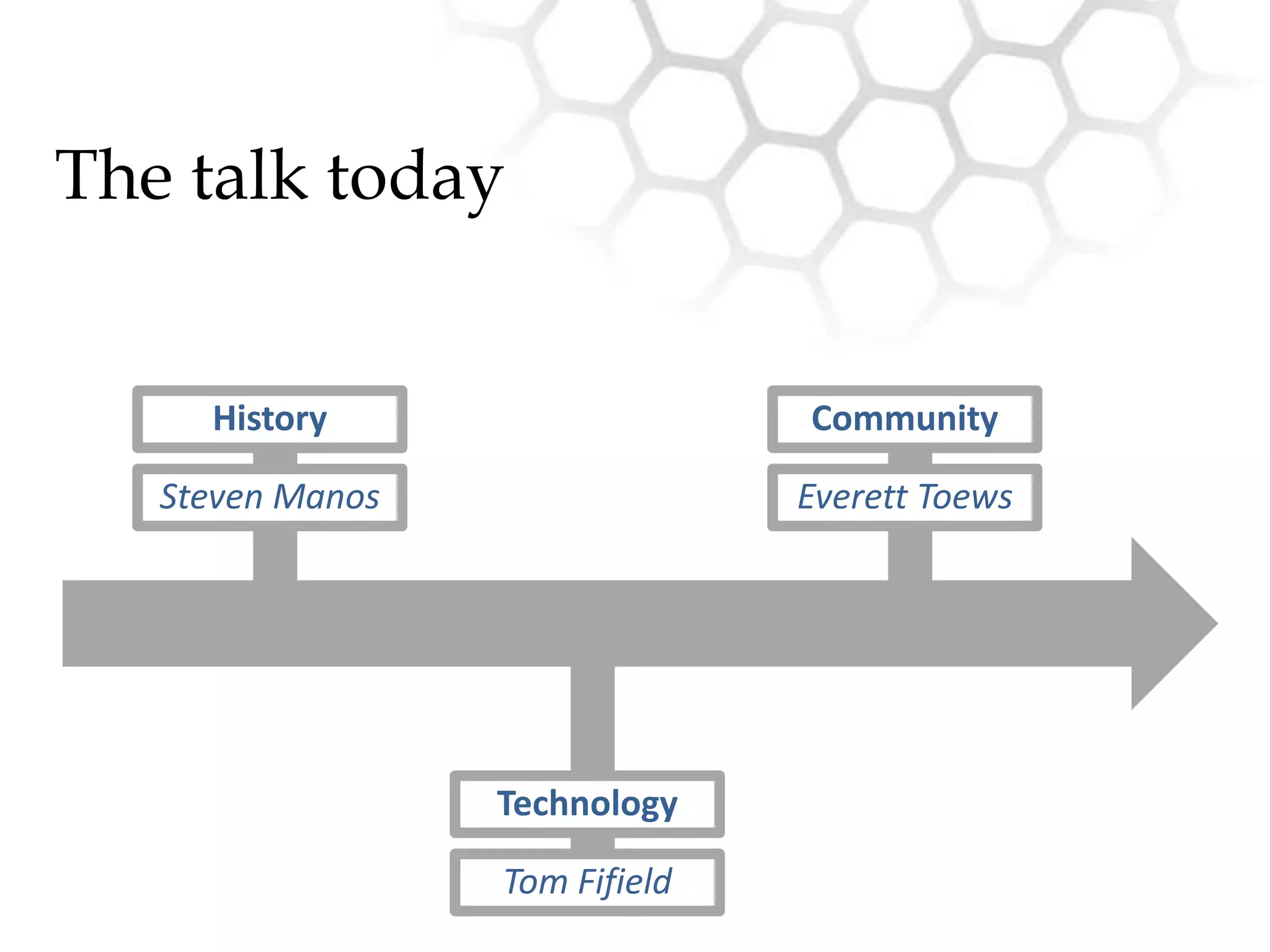
The talk todayHistoryCommunityEverett ToewsSteven ManosTechnologyTom Fifield
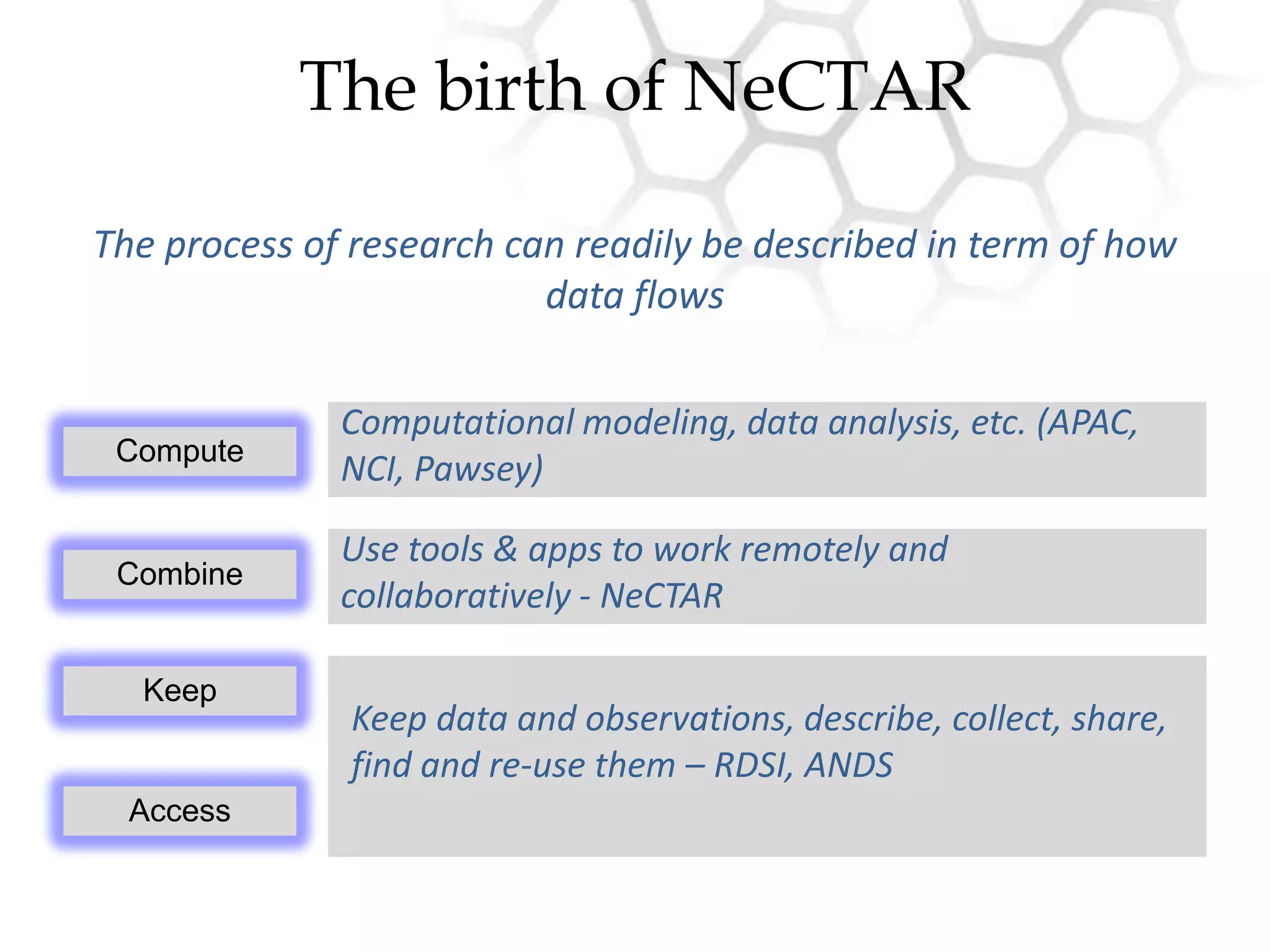
The birth of NeCTARThe process of research can readily be described in term of how data flowsComputational modeling, data analysis, etc. (APAC, NCI, Pawsey)ComputeUse tools & apps to work remotely and collaboratively - NeCTARCombineKeepKeep data and observations, describe, collect, share, find and re-use them – RDSI, ANDSAccess
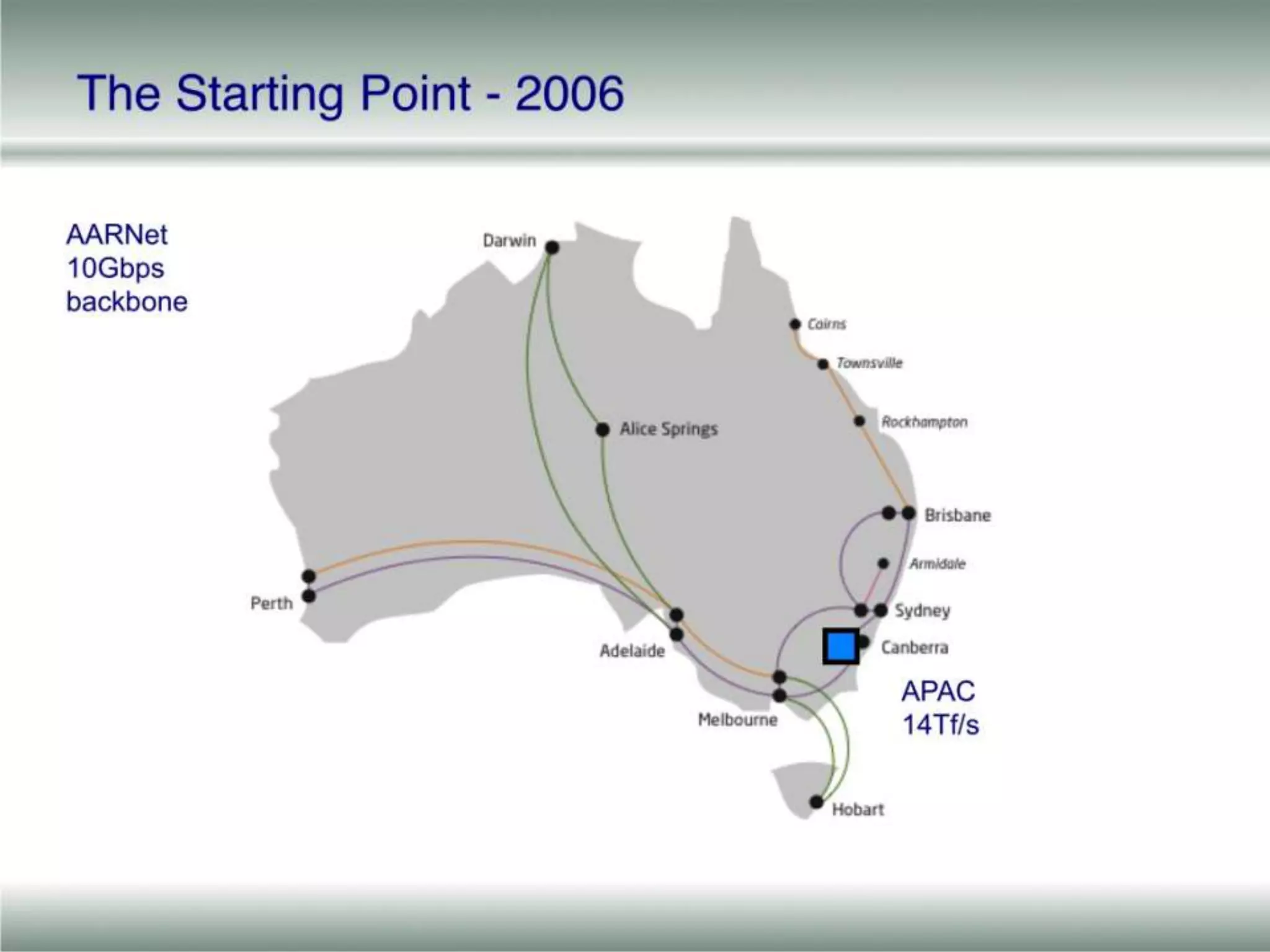
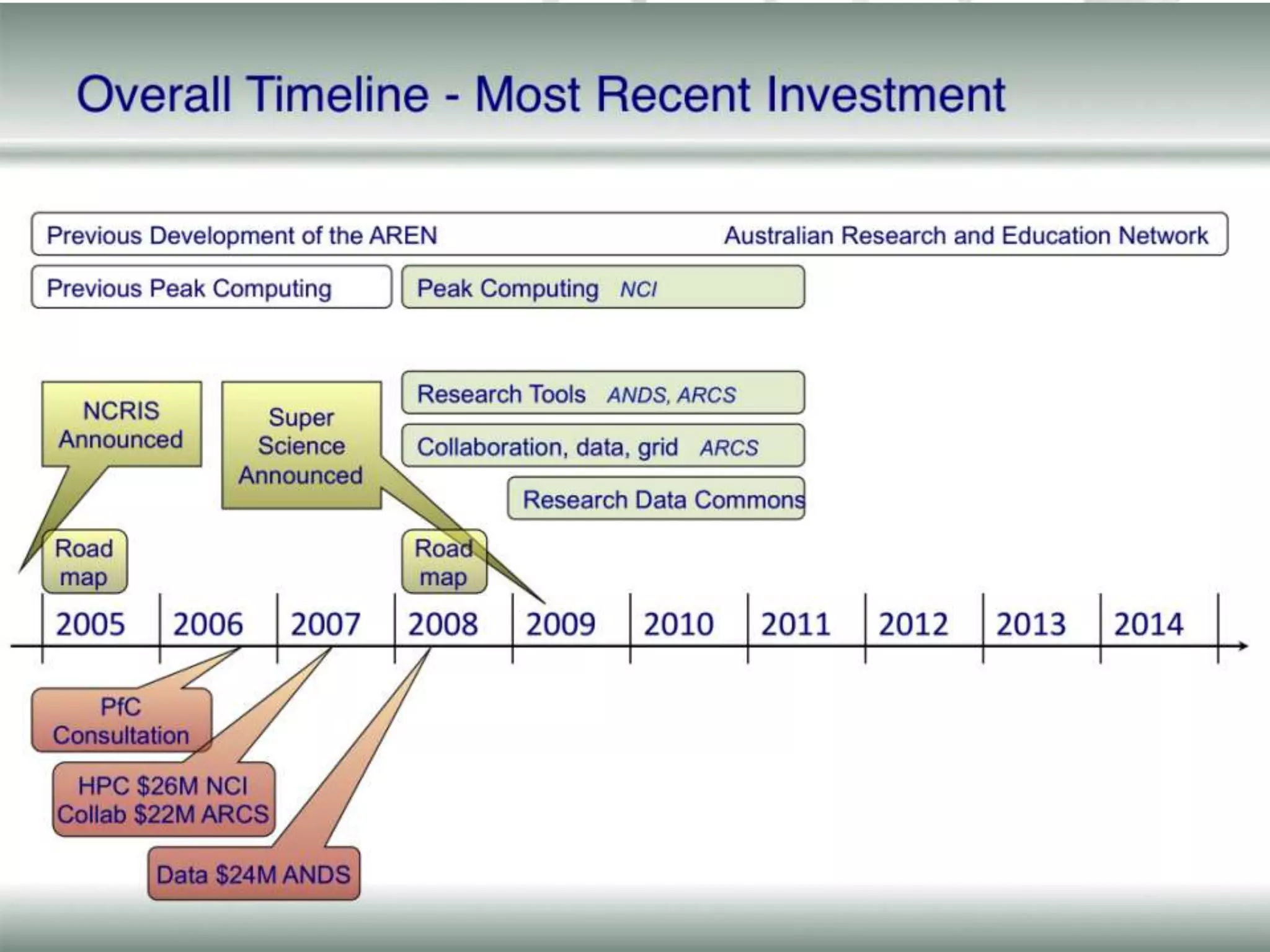
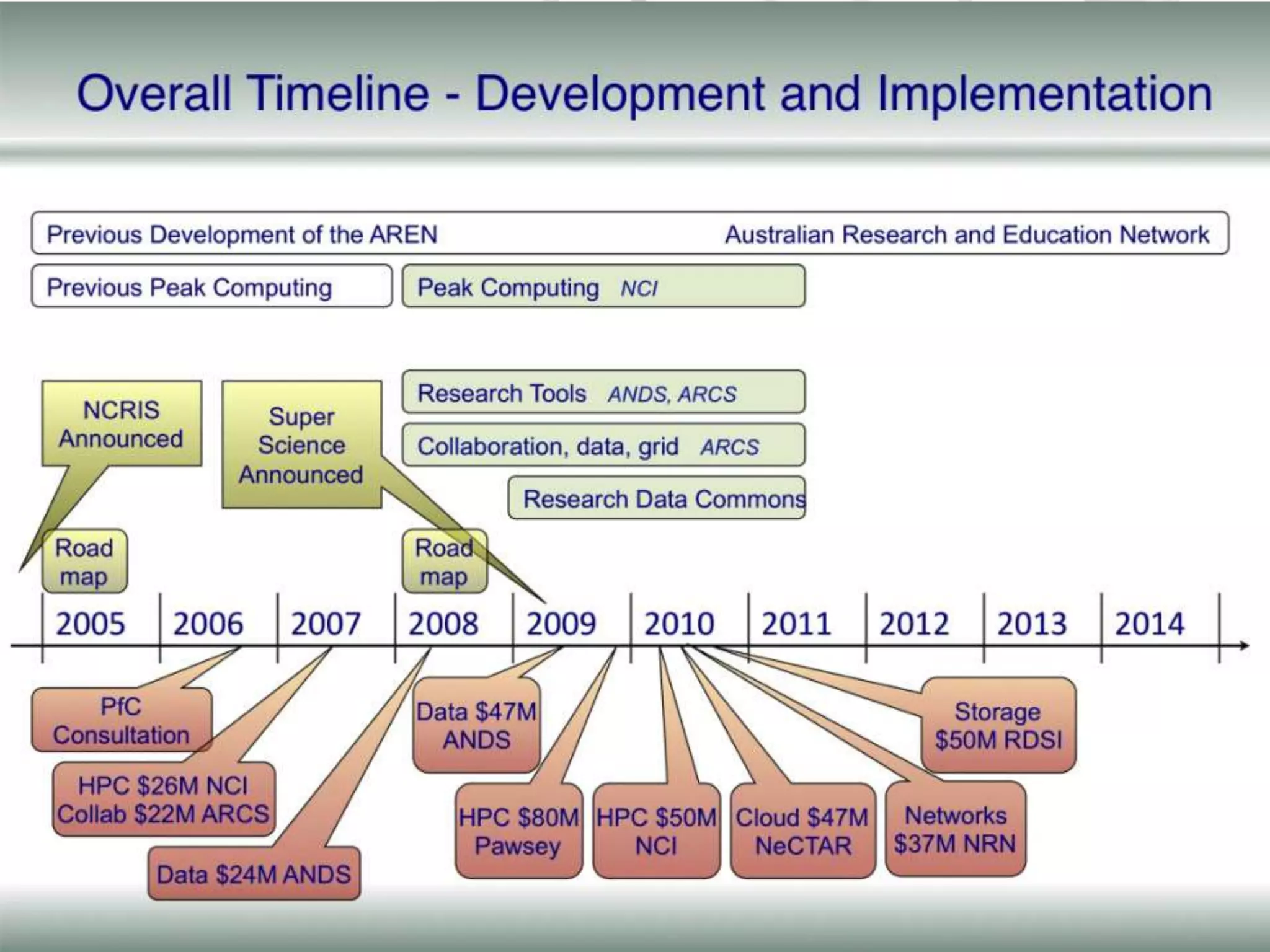
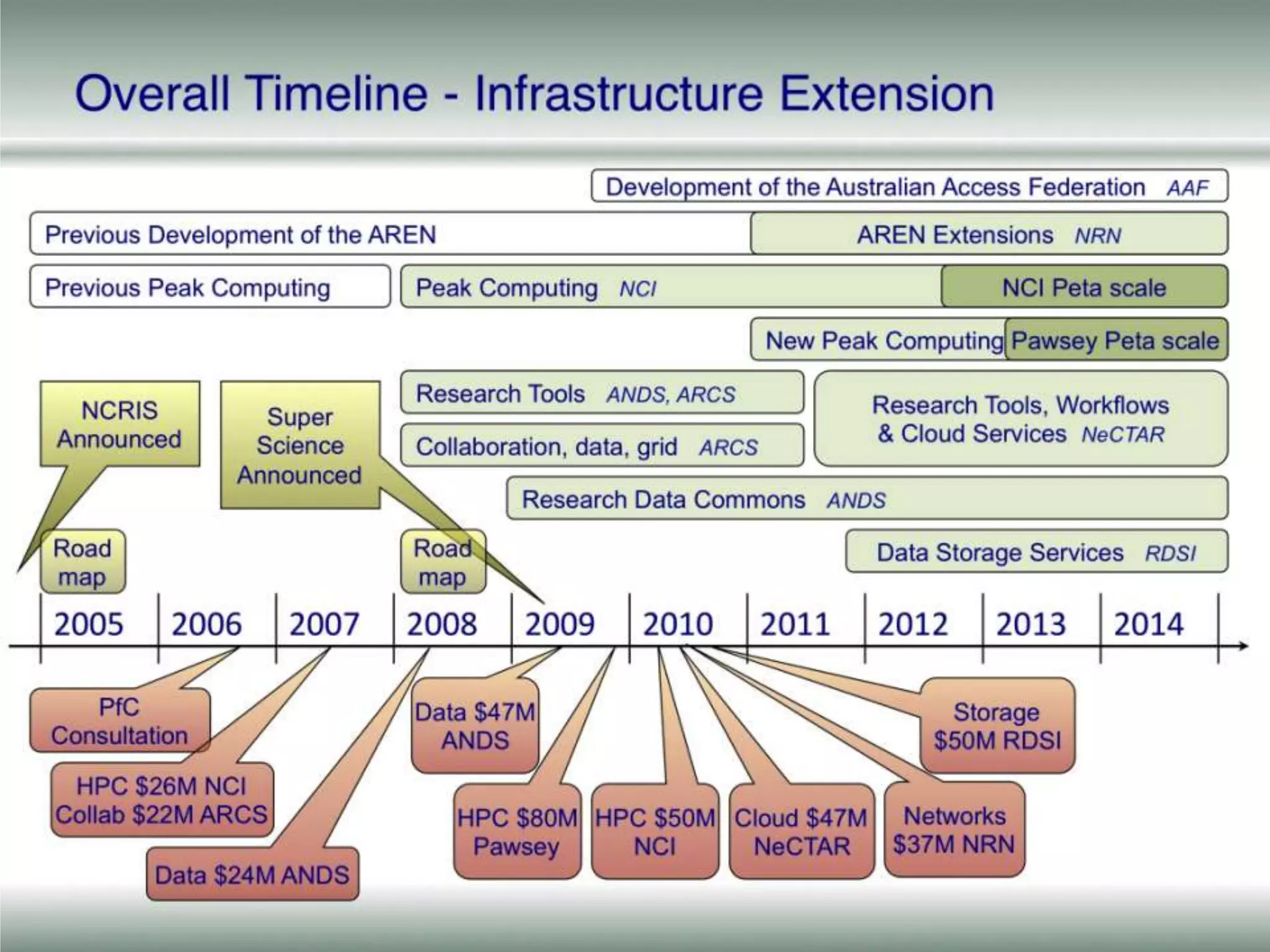
The StorySuperScience Story from RhysNational Infrastructure4
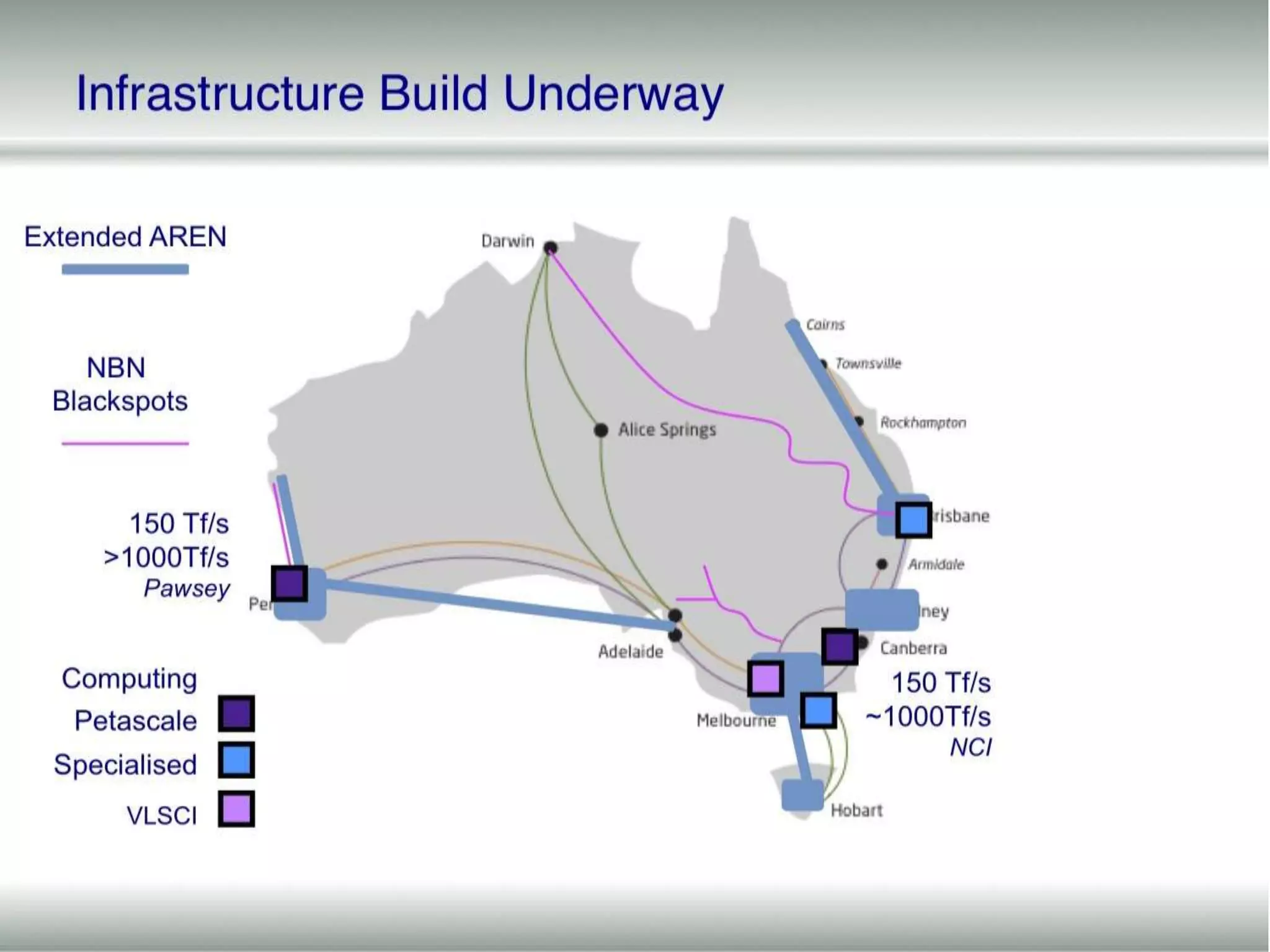
The StorySuperScience Story from RhysNational Infrastructure5
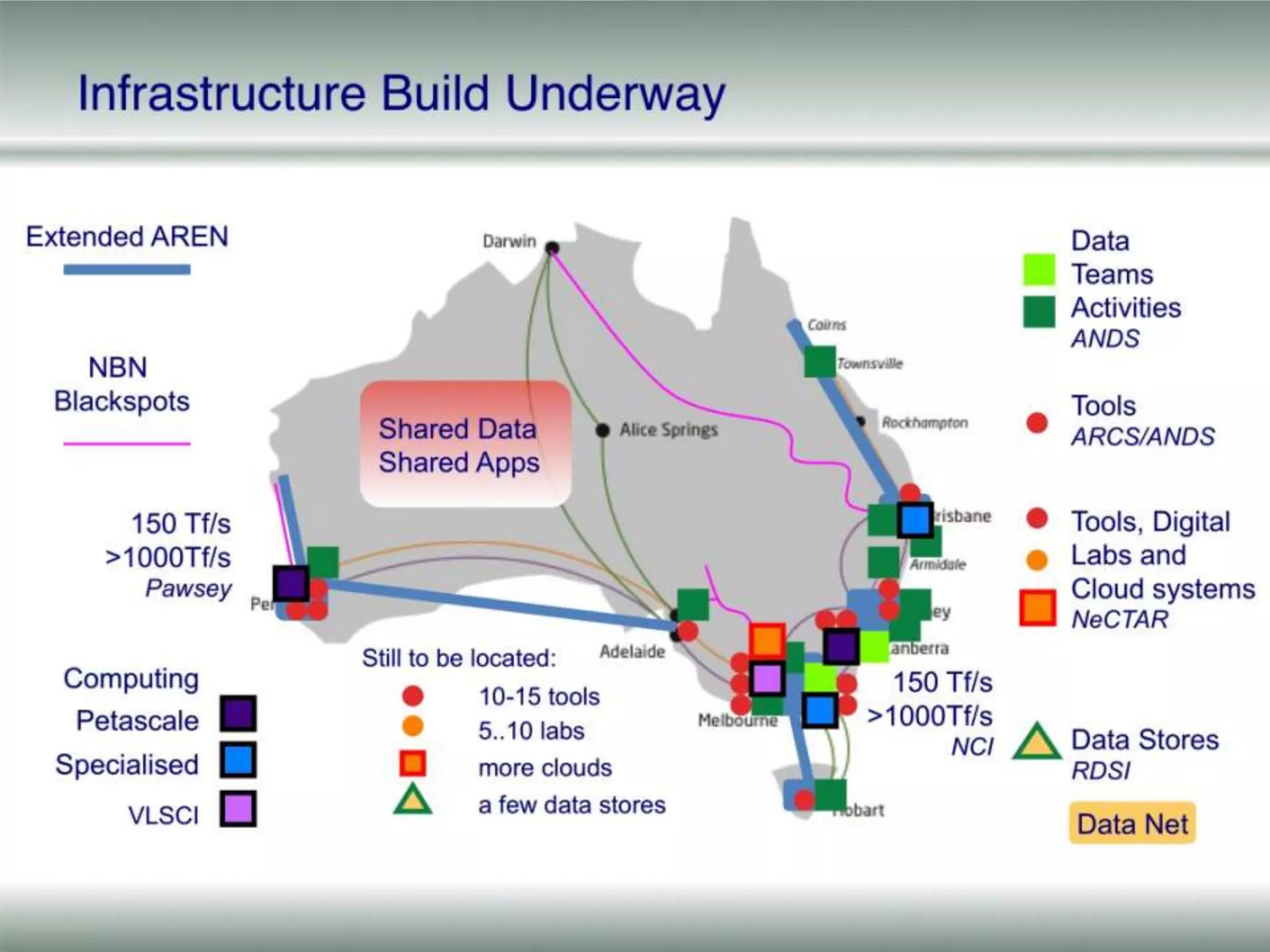
The StorySuperScience Story from RhysNational Infrastructure6
The StorySuperScience Story from RhysNational Infrastructure7
The StorySuperScience Story from RhysNational Infrastructure8
The StorySuperScience Story from RhysNational Infrastructure9
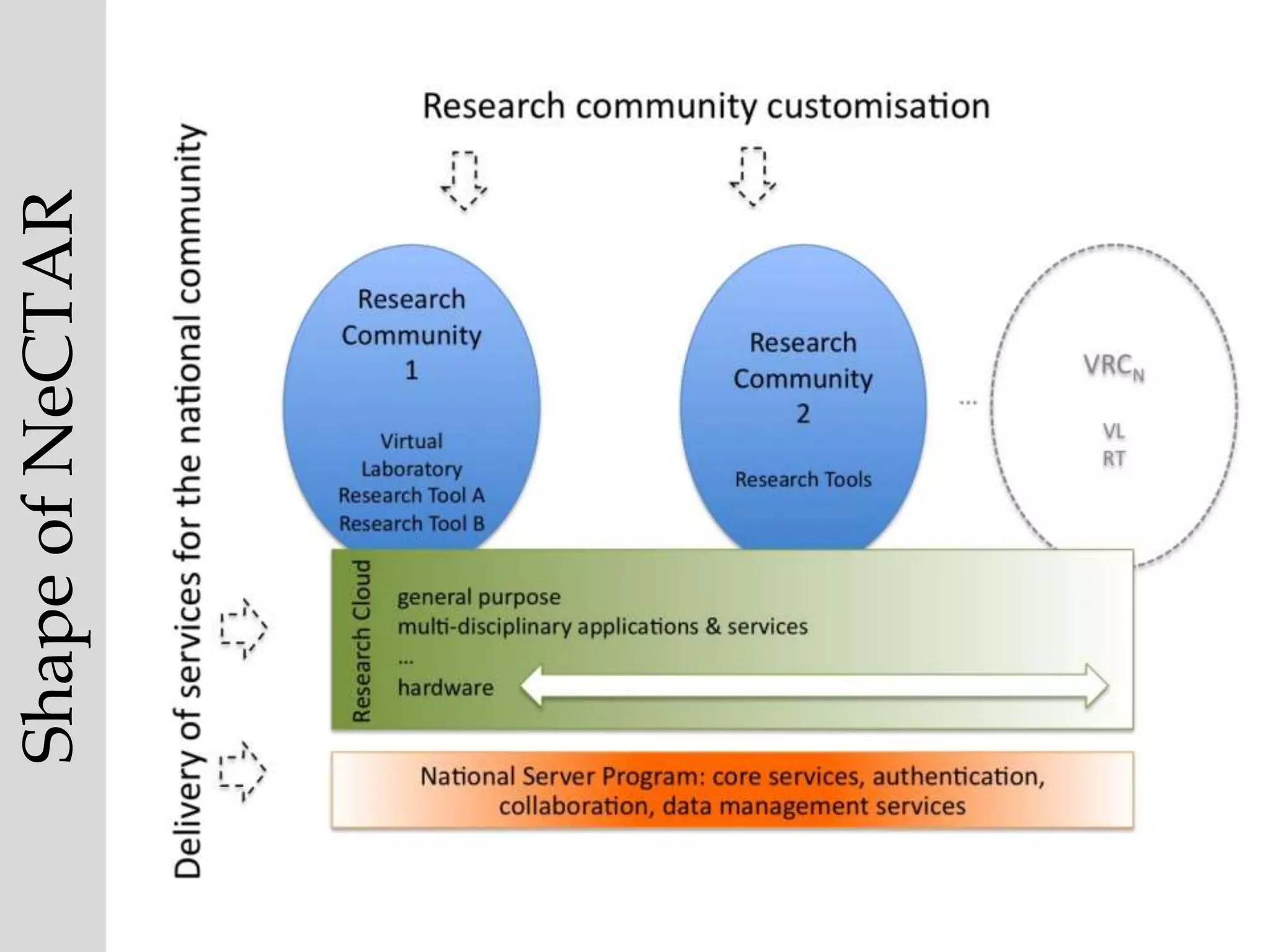
Shape of NeCTAR
Why build itourselves?1. Proximity – the honeypot – infrastructure attracts community2. Local infrastructure is more responsive to research needs3. Service offering and charging models suitable for research4. Locality to instruments, research networks and other infrastructure.
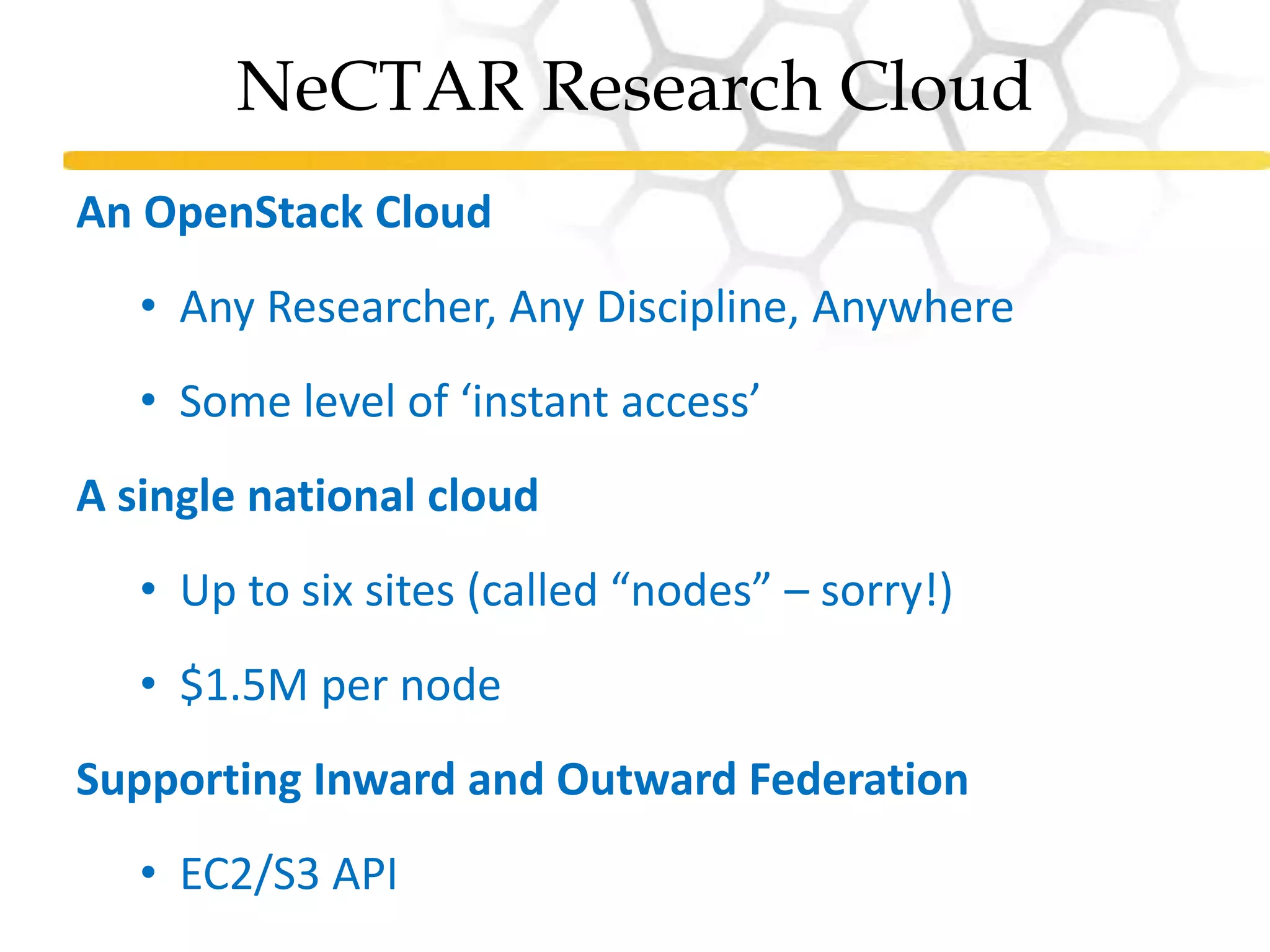
NeCTAR Research CloudAn OpenStack CloudAny Researcher, Any Discipline, Anywhere
Some level of ‘instant access’A single national cloud Up to six sites (called “nodes” – sorry!)
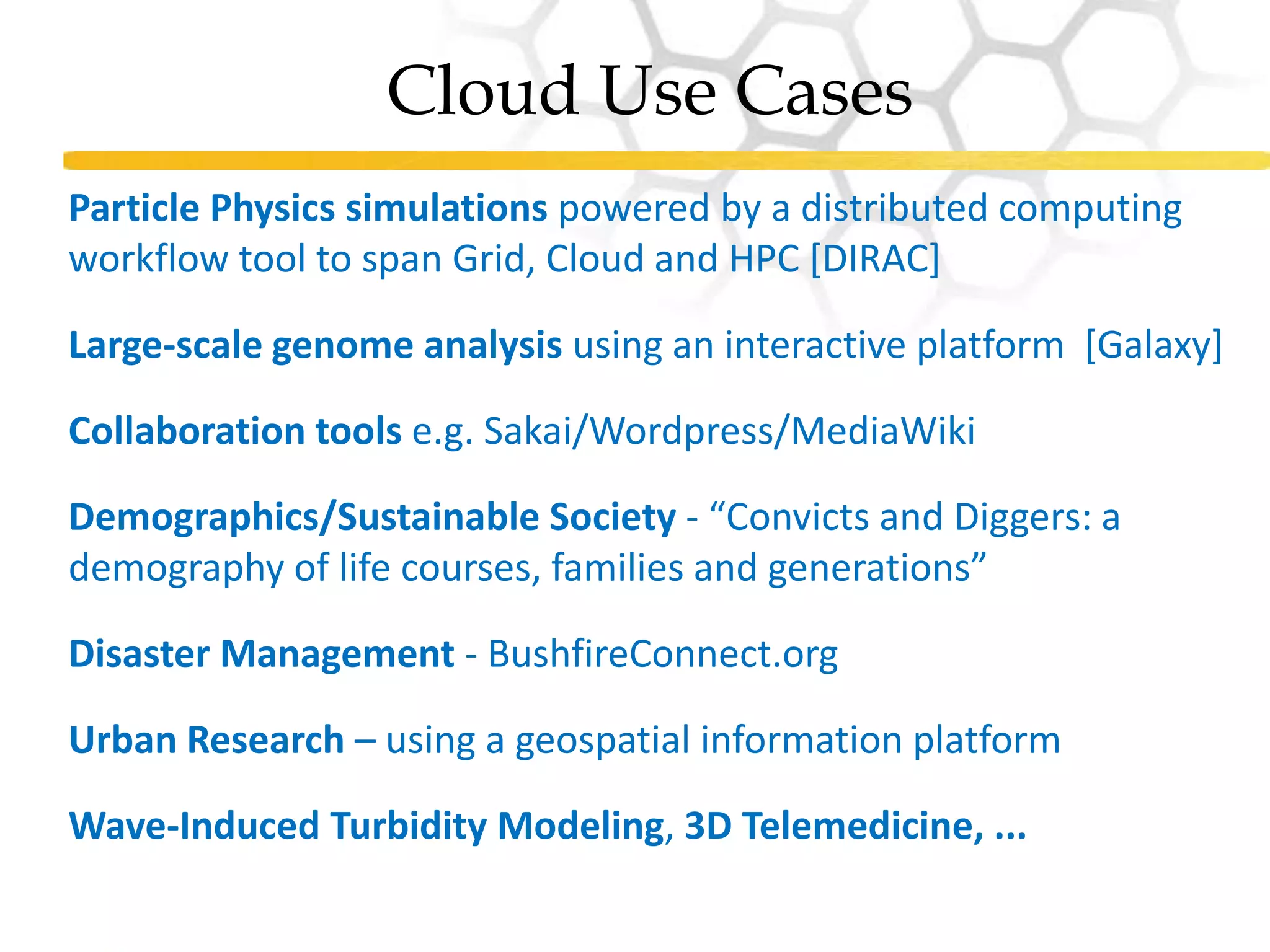
$1.5M per nodeSupporting Inward and Outward FederationEC2/S3 APICloud Use CasesParticle Physics simulations powered by a distributed computing workflow tool to span Grid, Cloud and HPC [DIRAC]Large-scale genome analysis using an interactive platform  [Galaxy]Collaboration toolse.g. Sakai/Wordpress/MediaWikiDemographics/Sustainable Society - “Convicts and Diggers: a demography of life courses, families and generations”Disaster Management - BushfireConnect.orgUrban Research – using a geospatial information platformWave-Induced Turbidity Modeling, 3D Telemedicine, ...
Research Cloud TimelineNational cloudFirst nodePilot20,000 cores+6 PB3,000 cores+1 PB300 cores195 TBNowQ1 20122013
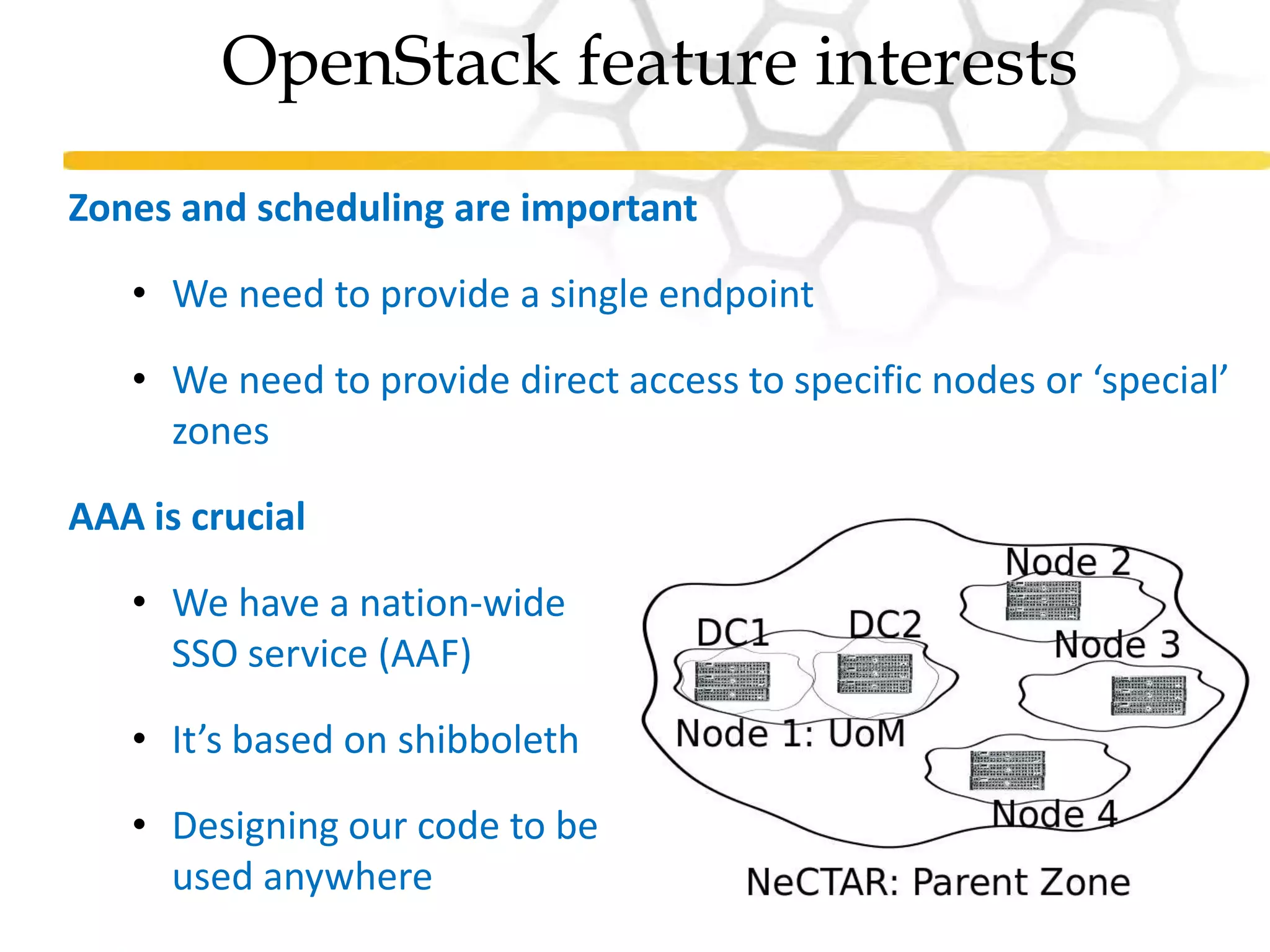
OpenStack feature interestsZones and scheduling are importantWe need to provide a single endpoint
We need to provide direct access to specific nodes or ‘special’ zonesAAA is crucialWe have a nation-wide							                                     SSO service (AAF)
It’s based on shibboleth
Designing our code to be                                                                    used anywhere15
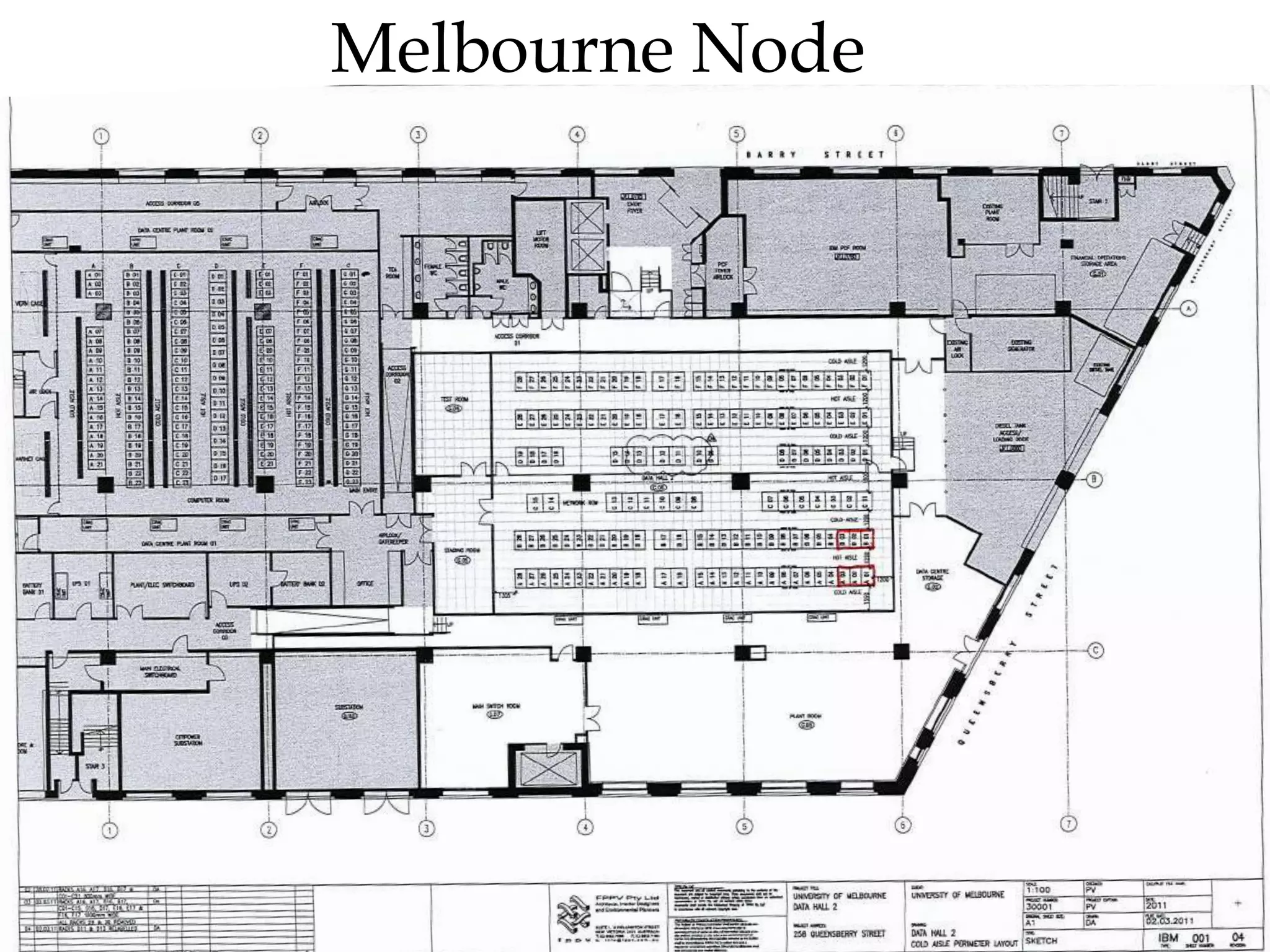
Melbourne Node16

NeCTAR Presentation

  • 1.
    National eResearch CollaborationTools and Resourcesnectar.org.auNeCTAR is an Australian Government project conducted as part of the Super Science initiative and financed by the Education Investment Fund. The University of Melbourne has been appointed the lead agent by the Commonwealth of Australia, Department of Innovation, Industry, Science and Research. Objectives: to enhance research collaboration through the development of eResearch infrastructure.
  • 2.
    The talk todayHistoryCommunityEverettToewsSteven ManosTechnologyTom Fifield
  • 3.
    The birth ofNeCTARThe process of research can readily be described in term of how data flowsComputational modeling, data analysis, etc. (APAC, NCI, Pawsey)ComputeUse tools & apps to work remotely and collaboratively - NeCTARCombineKeepKeep data and observations, describe, collect, share, find and re-use them – RDSI, ANDSAccess
  • 4.
    The StorySuperScience Storyfrom RhysNational Infrastructure4
  • 5.
    The StorySuperScience Storyfrom RhysNational Infrastructure5
  • 6.
    The StorySuperScience Storyfrom RhysNational Infrastructure6
  • 7.
    The StorySuperScience Storyfrom RhysNational Infrastructure7
  • 8.
    The StorySuperScience Storyfrom RhysNational Infrastructure8
  • 9.
    The StorySuperScience Storyfrom RhysNational Infrastructure9
  • 10.
  • 11.
    Why build itourselves?1.Proximity – the honeypot – infrastructure attracts community2. Local infrastructure is more responsive to research needs3. Service offering and charging models suitable for research4. Locality to instruments, research networks and other infrastructure.
  • 12.
    NeCTAR Research CloudAnOpenStack CloudAny Researcher, Any Discipline, Anywhere
  • 13.
    Some level of‘instant access’A single national cloud Up to six sites (called “nodes” – sorry!)
  • 14.
    $1.5M per nodeSupportingInward and Outward FederationEC2/S3 APICloud Use CasesParticle Physics simulations powered by a distributed computing workflow tool to span Grid, Cloud and HPC [DIRAC]Large-scale genome analysis using an interactive platform [Galaxy]Collaboration toolse.g. Sakai/Wordpress/MediaWikiDemographics/Sustainable Society - “Convicts and Diggers: a demography of life courses, families and generations”Disaster Management - BushfireConnect.orgUrban Research – using a geospatial information platformWave-Induced Turbidity Modeling, 3D Telemedicine, ...
  • 15.
    Research Cloud TimelineNationalcloudFirst nodePilot20,000 cores+6 PB3,000 cores+1 PB300 cores195 TBNowQ1 20122013
  • 16.
    OpenStack feature interestsZonesand scheduling are importantWe need to provide a single endpoint
  • 17.
    We need toprovide direct access to specific nodes or ‘special’ zonesAAA is crucialWe have a nation-wide SSO service (AAF)
  • 18.
    It’s based onshibboleth
  • 19.
    Designing our codeto be used anywhere15
  • 20.
  • 21.
  • 22.
  • 23.
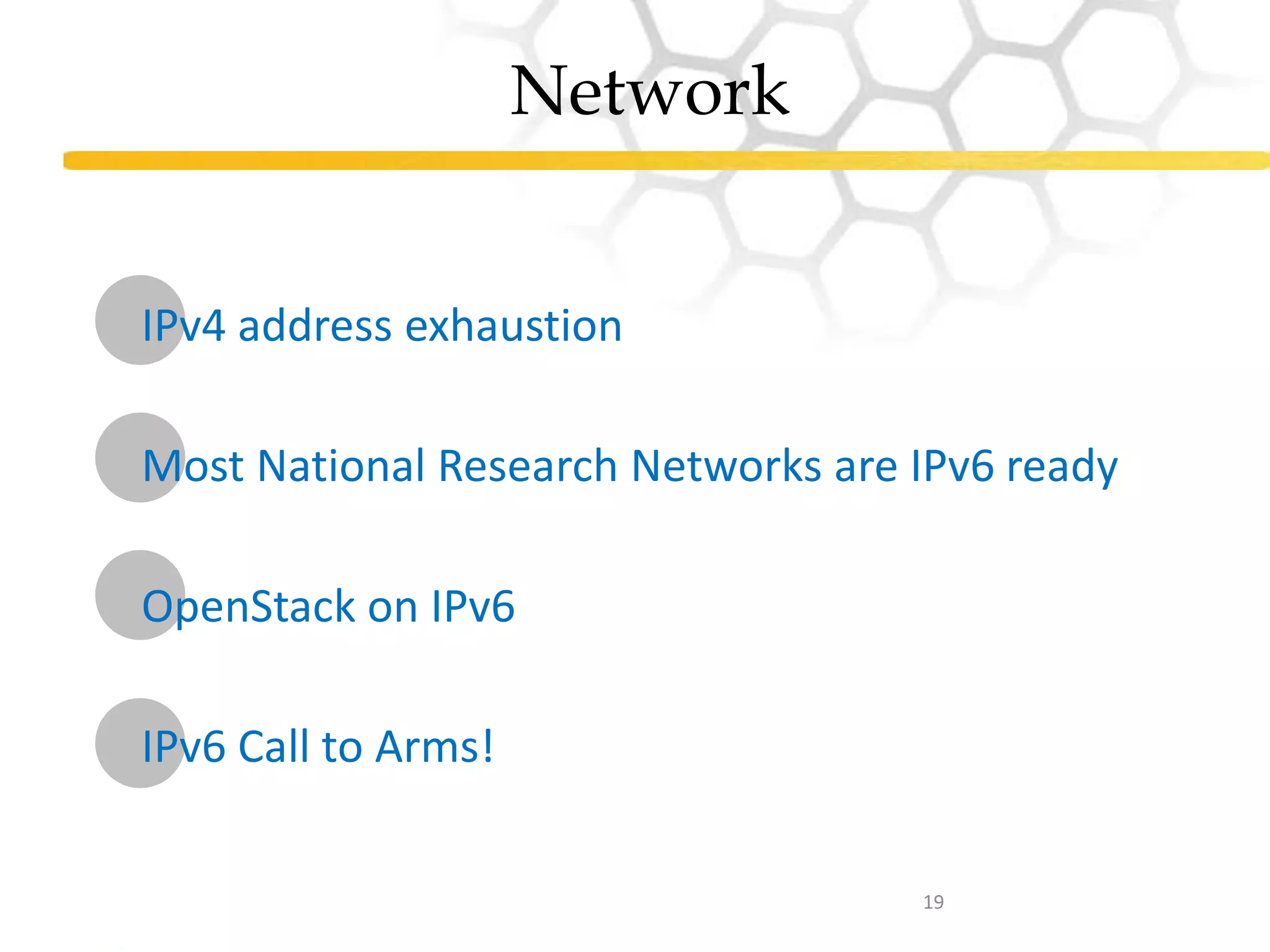
    NetworkIPv4 address exhaustionMostNational Research Networks are IPv6 readyOpenStack on IPv6IPv6 Call to Arms!19
  • 24.
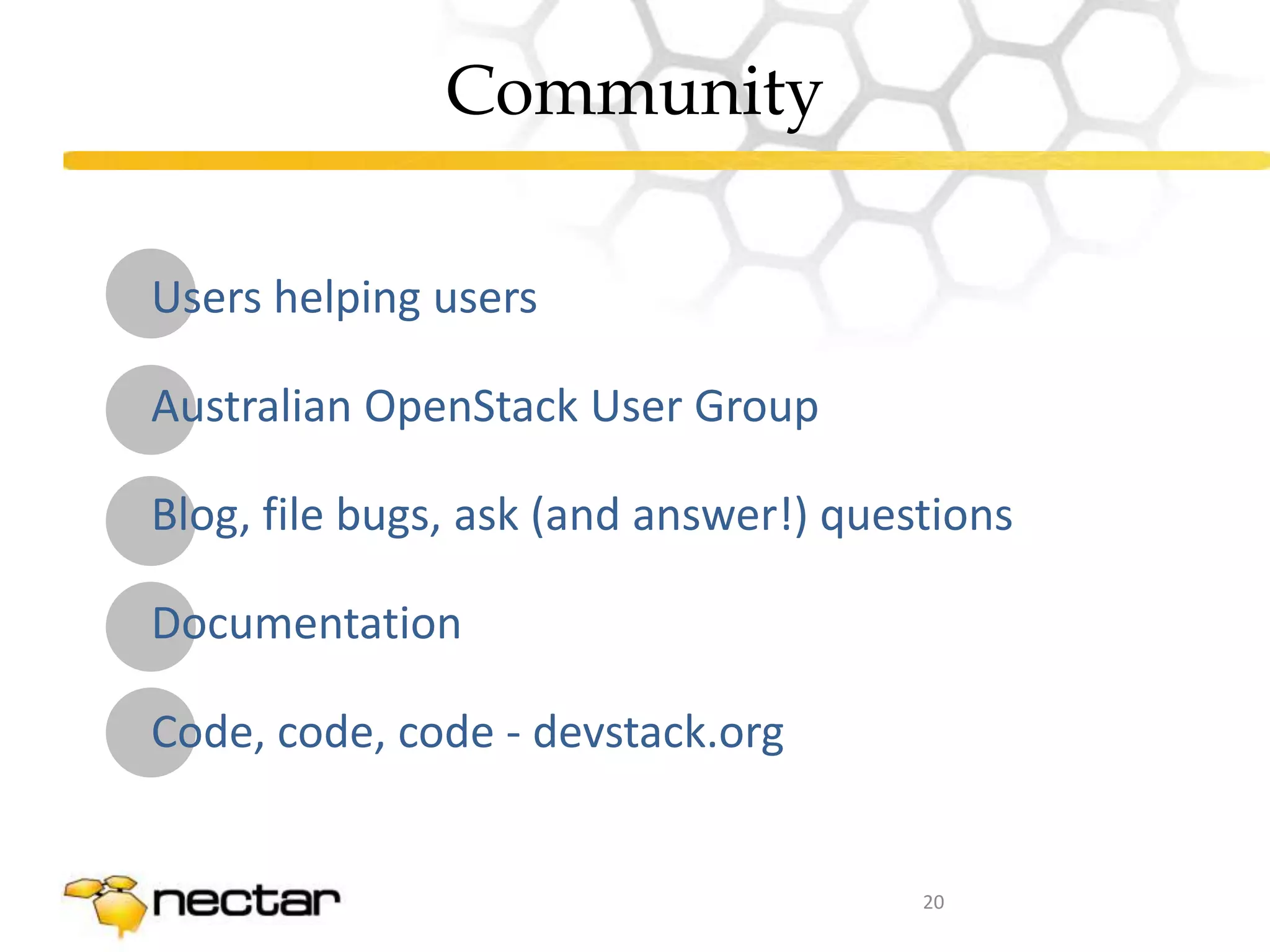
    CommunityUsers helping usersAustralianOpenStack User GroupBlog, file bugs, ask (and answer!) questionsDocumentationCode, code, code - devstack.org20